


Statement of Research Significance
Research Question(s) or Topic(s): This study investigated whether people with mild cognitive impairment (MCI) or early dementia from Alzheimer’s disease could be grouped based on patterns in their thinking, emotional health, social support, physical abilities, and sensory skills. Main Findings: Researchers identified four distinct patient profiles. The most important differences among them were in emotional and social functioning, while physical and sensory differences were less consequential. Some people had strong social connections and emotional well-being, while others experienced low mood or isolation, even when their memory or thinking was similar. Study Contributions: This research highlights that emotional and social health are key parts of how people experience early dementia. It provides a clearer way to identify which patients may need support for mood or social engagement. These insights may help healthcare providers better match patients with personalized care and guide future interventions.
Introduction
The core clinical features of Alzheimer’s disease (AD) relate to cognitive skills and daily functioning (Albert et al., Reference Albert, DeKosky, Dickson, Dubois, Feldman, Fox, Gamst, Holtzman, Jagust, Petersen, Snyder, Carrillo, Thies and Phelps2011; Dubois et al., Reference Dubois, Feldman, Jacova, Hampel, Molinuevo, Blennow, DeKosky, Gauthier, Selkoe, Bateman, Cappa, Crutch, Engelborghs, Frisoni, Fox, Galasko, Habert, Jicha, Nordberg and Cummings2014). However, AD commonly affects other domains of health and well-being, including behavioral/psychological, motor, sensory, and social functioning (Kew et al., Reference Kew, Juengst, Kelley and Osborne2022) and the significance of symptoms in these “other” domains is becoming increasingly appreciated. For example, hearing loss and social isolation were recently identified as among the most significant modifiable risk factors for dementia, accounting for 7 and 5% of cases of dementia, respectively (Livingston et al., Reference Livingston, Huntley, Liu, Costafreda, Selbæk, Alladi, Ames, Banerjee, Burns, Brayne, Fox, Ferri, Gitlin, Howard, Kales, Kivimäki, Larson, Nakasujja, Rockwood and Mukadam2024). Mild behavioral impairment (MBI, Ismail et al., Reference Ismail, Smith, Geda, Sultzer, Brodaty, Smith, Agüera‐Ortiz, Sweet, Miller and Lyketsos2016), characterized by neuropsychiatric symptoms, and motoric cognitive risk (MCR) syndrome (H. Zhang et al., Reference Zhang, Hu, Jiang, Hao, Li, Liu, Jiang, Jin and Wang2024), characterized by subjective cognitive complaints and slow gait speed, have been identified as risk factors or early manifestations of AD, separate from MCI. Unfortunately, signs and symptoms like these are often studied by considering performance within a single domain (e.g., cognitive or neuropsychiatric), which permits only a piecemeal understanding of AD symptoms and clinical presentations.
The NIH Symptom Science Model (Cashion et al., Reference Cashion, Gill, Hawes, Henderson and Saligan2016) is one framework used to guide research from complex, multifaceted clinical data toward a more precise characterization and understanding of patients and their symptoms (e.g., Mahoney & Pierce, Reference Mahoney and Pierce2022) and of matching people to interventions (Cashion et al., Reference Cashion, Gill, Hawes, Henderson and Saligan2016; Dorsey et al., Reference Dorsey, Griffioen, Renn, Cashion, Colloca, Jackson-Cook, Gill, Henderson, Kim, Joseph, Saligan, Starkweather and Lyon2019; Miaskowski et al., Reference Miaskowski, Barsevick, Berger, Casagrande, Grady, Jacobsen, Kutner, Patrick, Zimmerman, Xiao, Matocha and Marden2017), for example, by using data reduction techniques. Recently, our group used exploratory factor analysis (EFA) to examine cross-domain symptom clusters in older adults with amnestic MCI (aMCI) or dementia of the Alzheimer’s type (DAT; Weintraub et al., Reference Weintraub, Karpouzian-Rogers, Peipert, Nowinski, Slotkin, Wortman, Ho, Rogalski, Carlsson, Giordani, Goldstein, Lucas, Manly, Rentz, Salmon, Snitz, Dodge, Riley, Eldes and Gershon2022)(Tyner et al., Reference Tyner, Boulton, Slotkin, Cohen, Weintraub, Gershon and Tulsky2024).This work revealed symptom patterns both within and across domains of functioning. For example, negative affect, stress, loneliness, and pain loaded together, while olfaction loaded with cognitive functioning. These variable-oriented clusters may suggest a shared etiology (e.g., frontal lobe pathology may contribute to both cognitive and olfactory dysfunction) and lead to a clearer conceptualization of challenges faced by people with MCI or dementia.
This previous EFA (Tyner et al., Reference Tyner, Boulton, Slotkin, Cohen, Weintraub, Gershon and Tulsky2024) was conducted using data from the NIH Toolbox® for Assessment of Neurological and Behavioral Function (NIHTB) (Gershon et al., Reference Gershon, Wagster, Hendrie, Fox, Cook and Nowinski2013). The NIHTB was found to be a useful set of instruments for this purpose because it contains measures of cognitive, emotional, social, motor, and sensory health and functioning that are co-normed and can form composite scores (Babakhanyan et al., Reference Babakhanyan, McKenna, Casaletto, Nowinski and Heaton2018; Heaton et al., Reference Heaton, Akshoomoff, Tulsky, Mungas, Weintraub, Dikmen, Beaumont, Casaletto, Conway, Slotkin and Gershon2014), have evidence for validity in older adults both with and without cognitive impairment (R. Gershon et al., Reference Gershon, Nowinski, Peipert, Bedjeti, Ustsinovich, Hook, Fox and Weintraub2020; Giordani et al., Reference Giordani, Goldstein, Rigby, Gregoire, Reader, Fisher, Gurecki, Bhaumik, Ho, Ustsinovich, Gershon and Weintraub2022; Hackett et al., Reference Hackett, Krikorian, Giovannetti, Melendez-Cabrero, Rahman, Caesar, Chen, Hristov, Seifan, Mosconi and Isaacson2018; Ma et al., Reference Ma, Carlsson, Wahoske, Blazel, Chappell, Johnson, Asthana and Gleason2021; Nolin et al., Reference Nolin, Cowart, Merritt, McInerney, Bharadwaj, Franchetti, Raichlen, Jessup, Hishaw, Van Etten, Trouard, Geldmacher, Wadley, Porges, Woods, Cohen, Levin, Rundek, Alexander and Visscher2023), and correlate with AD biomarkers (Cheng et al., Reference Cheng, Ho, Weintraub, Rentz, Gershon, Das and Dodge2024; Snitz et al., Reference Snitz, Tudorascu, Yu, Campbell, Lopresti, Laymon, Minhas, Nadkarni, Aizenstein, Klunk, Weintraub, Gershon and Cohen2020).The present study sought to further explore the potential to differentiate distinct clinical profiles of aMCI and DAT using the NIH Toolbox. Whereas EFA is a variable-centered analysis, this investigation aimed to conduct a latent profile analysis (LPA), which is a person-centered analysis that can be useful for identifying patient subtypes (Harris et al., Reference Harris, Dodd, Kober, Dhruva, Hammer, Conley and Miaskowski2022).
Previous LPA investigations related to AD have produced interesting findings with clinical translational potential. For example, Machulda et al. (2019) conducted an analysis of cognitive data from people with MCI to reveal empirically derived subtypes, including a group that they posited might be most responsive to early intervention. Jang et al. (Reference Jang, Ho, Blanken, Dutt and Nation2020) and Leoutsakos et al. (Reference Leoutsakos, Forrester, Lyketsos and Smith2015a) conducted analyses of neuropsychiatric symptoms in people who were cognitively unimpaired or had MCI and identified profiles that were at elevated risk of disease progression, independent of age, sex, cognition, and genotype. However, one limitation of previous LPA investigations is that many have been restricted to one domain of functioning – for example, specific to psychosocial variables only (Roberto et al., Reference Roberto, Portella, Marquié, Alegret, Hernández, Mauleón, Rosende-Roca, Abdelnour, de Antonio, Gil, Tartari, Vargas, Espinosa, Ortega, Pérez-Cordón, Sanabria, Orellana, de Rojas, Moreno-Grau and Valero2021; Siew et al., Reference Siew, Yu, Kua and Mahendran2023), cognitive variables only (Jester et al., Reference Jester, Andel, Cechová, Laczó, Lerch, Marková, Nikolai, Vyhnálek and Hort2021; Romero et al., Reference Romero, Ladyka-Wojcik, Heir, Bellana, Leach and Proulx2022; J. Yu & Lee, Reference Yu and Lee2018), or daily functioning variables only (Mis et al., Reference Mis, Devlin, Drabick and Giovannetti2019). Two or three domain types (e.g., cognitive and neuropsychiatric) have occasionally been combined when one domain is an indicator variable (used to define the profile) and the other is a criterion variable, used to predict profile classification (Mis et al., Reference Mis, Devlin, Drabick and Giovannetti2019; J. Yu & Lee, Reference Yu and Lee2018). Du et al. (Reference Du, Langhough, Hermann, Jonaitis, Betthauser, Cody, Mueller, Zuelsdorff, Chin, Ennis, Bendlin, Gleason, Christian, Plante, Chappell and Johnson2023) is an exception and demonstrates the potential value of profiles with cross-domain indicator variables. These authors identified a subgroup of people with MCI who had especially poor cognitive functioning alongside poor sleep, insulin resistance, and elevated symptoms of depression. A cross-domain profile like this is potentially very useful because it could help clinicians think to assess for common comorbidities and match people to interventions that might strategically address multiple issues, for example, cognitive-behavioral therapy for insomnia and behavioral activation (Cassidy-Eagle et al., Reference Cassidy-Eagle, Siebern, Unti, Glassman and O’Hara2018). Notably, people in this profile identified by Du et al., did not have a worse disease burden (amyloid PET estimates), indicating the importance of symptom profiles beyond disease severity alone. To our knowledge, no study of AD has conducted an LPA with both cognitive and psychosocial indicator variables, along with motor and sensory variables. An analysis of our NIHTB data with a person-oriented (LPA) approach offers a new opportunity to study patient profiles across domains, which might ultimately lead to a better understanding of patient experiences, improved prognostic accuracy, and better tailoring of therapeutic strategies.
Method
Study overview and research participants
The dataset analyzed in this study was drawn from a large, multi-wave, multi-cohort study of older adults: the Advancing Reliable Measurement in Alzheimer’s Disease and cognitive Aging (ARMADA) study. The ARMADA study consisted of several hundred older adults measured using the NIHTB on up to three occasions over a two-year period. The primary goal of the ARMADA study was to expand validity evidence for NIHTB performance tests and patient-reported outcome measures in a diverse older adult population. Details regarding the methodology and sample characteristics of the ARMADA study, including the comprehensive diagnostic process followed for cohort assignment, have been published elsewhere (Karpouzian-Rogers et al., Reference Karpouzian-Rogers, Ho, Novack, Chinkers, Bedjeti, Nowinski, Giordani, Gershon and Weintraub2023; Weintraub et al., Reference Weintraub, Karpouzian-Rogers, Peipert, Nowinski, Slotkin, Wortman, Ho, Rogalski, Carlsson, Giordani, Goldstein, Lucas, Manly, Rentz, Salmon, Snitz, Dodge, Riley, Eldes and Gershon2022). For this study, we examined baseline data from 209 older adults ages 65-85 with diagnoses of aMCI (n = 136) or DAT (n = 73). Participants were recruited from nine Alzheimer’s Disease Research Centers (ADRCs) across the United States. In addition to completing NIHTB measures, participants completed selected cognitive tests and patient-, informant-, and clinician-report measures from the National Alzheimer’s Coordinating Centers’ Uniform Data Set (UDS) version 3 (Weintraub et al., Reference Weintraub, Besser, Dodge, Teylan, Ferris, Goldstein, Giordani, Kramer, Loewenstein, Marson, Mungas, Salmon, Welsh-Bohmer, Zhou, Shirk, Atri, Kukull, Phelps and Morris2018).
Assessments
Two types of variables were included in the current analyses: (a) variables of motor, sensory, emotional, and cognitive functioning drawn from the NIHTB (“LPA indicators”), which defined the aMCI/DAT profiles, and (b) associated, non-NIHTB variables to provide evidence of validity for profile classifications (“criterion variables”). Based on iterative review of available data, nine NIHTB variables and/or composite scores were selected as LPA indicators (Babakhanyan et al., Reference Babakhanyan, McKenna, Casaletto, Nowinski and Heaton2018; Heaton et al., Reference Heaton, Akshoomoff, Tulsky, Mungas, Weintraub, Dikmen, Beaumont, Casaletto, Conway, Slotkin and Gershon2014). All individuals in the study had memory impairment, and thus two memory tests from the NIHTB (i.e., Picture Sequence Memory Test and List Sorting) were not included as indicator variables.
-
• Cognition (k = 4): Four cognitive variables were selected as LPA indicators: (1) Crystallized Cognition composite score (Heaton et al., Reference Heaton, Akshoomoff, Tulsky, Mungas, Weintraub, Dikmen, Beaumont, Casaletto, Conway, Slotkin and Gershon2014) – comprised of the Picture Vocabulary Test and Oral Reading Recognition Test; (2) the Dimensional Change Card Sort Test, (3) Flanker Inhibitory Control and Attention Test, and (4) Pattern Comparison Processing Speed Test.
-
• Psychosocial (k = 3): Psychological Well-Being composite, Negative Affect composite, and Social Satisfaction composite (Babakhanyan et al., Reference Babakhanyan, McKenna, Casaletto, Nowinski and Heaton2018). Specifically, the Psychological Well-Being composite includes the following measures from the NIHTB Emotion Battery: Meaning, Life Satisfaction, Positive Affect, and Self-Efficacy. The Negative Affect composite includes the following measures: Fear Affect, Anger Affect, Sadness, Perceived Stress, Anger Hostility, Fear Somatic Arousal, and Anger Physical Aggression. The Social Satisfaction composite includes Perceived Hostility, Loneliness, Perceived Rejection, Friendship, Emotional Support, and Instrumental Support.
-
• Motor (k = 1): 2-Minute Walk (endurance) Test. This test was selected because it was found to load strongly on a motor test factor (Tyner et al., Reference Tyner, Boulton, Slotkin, Cohen, Weintraub, Gershon and Tulsky2024) and gait relates to current and future cognitive impairment (Dodge et al., Reference Dodge, Mattek, Austin, Hayes and Kaye2012; Xu et al., Reference Xu, Bai, Liang and Lin2024; H. Zhang et al., Reference Zhang, Hu, Jiang, Hao, Li, Liu, Jiang, Jin and Wang2024).
-
• Sensory (k = 1): Words-In-Noise (hearing) Test. This test, which uses a multi-talker babble paradigm, was selected because of the intricate relationship between hearing and cognition (Powell et al., Reference Powell, Oh, Reed, Lin and Deal2022), strong relevance of hearing to the development and progression of AD (Johnson et al., Reference Johnson, Marshall, Weil, Bamiou, Hardy and Warren2021), and the potential to clarify its lack of loading on any of the factors that we previously reported from an EFA (Tyner et al., Reference Tyner, Boulton, Slotkin, Cohen, Weintraub, Gershon and Tulsky2024).
Cognition and motor scores used were demographically uncorrected standardized scores (M = 100, SD = 15), whereas emotion scores were on a T-score metric (M = 50, SD = 10); all were co-normed on a sample whose demographics mirrored the 2010 U.S. census (Cella et al., Reference Cella, Riley, Stone, Rothrock, Reeve, Yount, Amtmann, Bode, Buysse, Choi, Cook, DeVellis, DeWalt, Fries, Gershon, Hahn, Lai, Pilkonis, Revicki, Rose, Weinfurt and Hays2010). Scores for the Words-In-Noise Test were better ear threshold scores, defined as the lowest score – indicative of better auditory function – observed in either ear, in decibels of signal-to-noise ratio (dB S/N). Prior to LPA estimation, all NIHTB variables were standardized within the full sample. Negative Affect composite scores and Words-in-Noise test scores were inverted so that all variables were on a similar scale with similar directionality (i.e., higher scores equal better health and function). In addition, all variables were screened for outliers (defined as values outside ± 3 SDs); as a result, one outlying value was removed.
Criterion variables that assess cognitive and functional status included the B-minus-A score from the Trail Making Test (TMT B-A), which correlates broadly with cognitive test scores across domains (Corrigan & Hinkeldey, Reference Corrigan and Hinkeldey1987); the Clinical Dementia Rating (CDR) Sum of Boxes (CDR-SB) score, a clinician-rated tool used to stage overall cognitive and functional status (Morris, Reference Morris1993; O’Bryant, Reference O’Bryant2008); and the Functional Assessment Questionnaire (FAQ) total score (Brown et al., Reference Brown, Devanand, Liu and Caccappolo2011), a patient-report measure of functional impairment. Criterion variables to assess neuropsychiatric symptoms were rates of clinical diagnosis of major depressive disorder within the past 2 years; the severity score from the Neuropsychiatric Inventory Questionnaire (NPI-Q), an informant-reported measure of anxiety, depression, apathy, disinhibition, eating and sleep changes, and other neuropsychiatric symptoms (Kaufer et al., Reference Kaufer, Cummings, Ketchel, Smith, MacMillan, Shelley, Lopez and DeKosky1992); and the total score from the Geriatric Depression Scale - 15 item version (Yesavage & Sheikh, Reference Yesavage and Sheikh2008), a patient-report measure of depressive symptoms. We also compared profiles on a small number of demographic variables (age, gender, ethnicity, race, and education).
Data analysis
LPA – also referred to as model-based clustering or Gaussian mixture modeling – was used (Lanza & Cooper, Reference Lanza and Cooper2016; McLachlan et al., Reference McLachlan, Lee and Rathnayake2019). To analyze the data, we fit and compared several LPA models to select a model that (a) fit the data well, such that estimated profiles were distinct and homogeneous and model fit was optimal relative to other models (see below for the selection criteria used), and (b) identified profiles that were substantively interpretable and qualitatively as well as quantitively distinguishable – that is, the profiles did not differ solely by the degree or severity of the measured outcomes. All LPA models were estimated in the R (version 4.2.0) package mclust (version 6.0.0; Scrucca et al., Reference Scrucca, Fop, Brendan Murphy and Raftery2016), which provides 14 LPA model specifications that differ according to how indicator variances and covariances are structured. Detail regarding the choice of LPA model is provided in the Supplementary Material. Within the chosen specification, nine models were fit that differed by the number of profiles extracted (between one and nine); a maximum of nine profiles were considered sufficient given the sample size as well as the expected number of profiles based on prior research.
Rates of missing data were low; all NIHTB variables exhibited rates less than 6% missing except the 2-Minute Walk Test, which was 16.3%. A single imputation was performed within mclust to generate a complete dataset for analysis due to the small amount missing data. An expectation-maximization (EM) algorithm was used to estimate LPA model parameters, and solutions were judged using the Bayesian Information Criterion (BIC; Schwarz,Reference Schwarz1978), Integrated Complete-data Likelihood (ICL; Scrucca et al., Reference Scrucca, Fop, Brendan Murphy and Raftery2016), bootstrap likelihood ratio test (BLRT; McLachlan & Peel, Reference McLachlan and Peel2000), entropy (ideally > .80, and, at a minimum, > .60; Bauer, Reference Bauer2022; Celeux & Soromenho, Reference Celeux and Soromenho1996), and within-profile posterior probabilities (ideally > .70; Masyn, Reference Masyn and Little2013).
Once a final solution was chosen, bootstrapped standard errors were computed for all parameter estimates based on 1000 bootstrap samples. To assess the validity of the extracted profiles, we utilized an external validation strategy (van Rentergem et al., Reference Agelink Van Rentergem, Deserno and Geurts2021) by comparing the profiles on the clinician-, informant-, and patient-report criterion variables described above. One-way analysis of variance was conducted for each outcome, followed by pairwise post hoc comparisons via Tukey’s honestly significant difference (HSD; Tukey, Reference Tukey1949), with the family-wise error rate set at .05.
Results
Sample and indicator variable characteristics
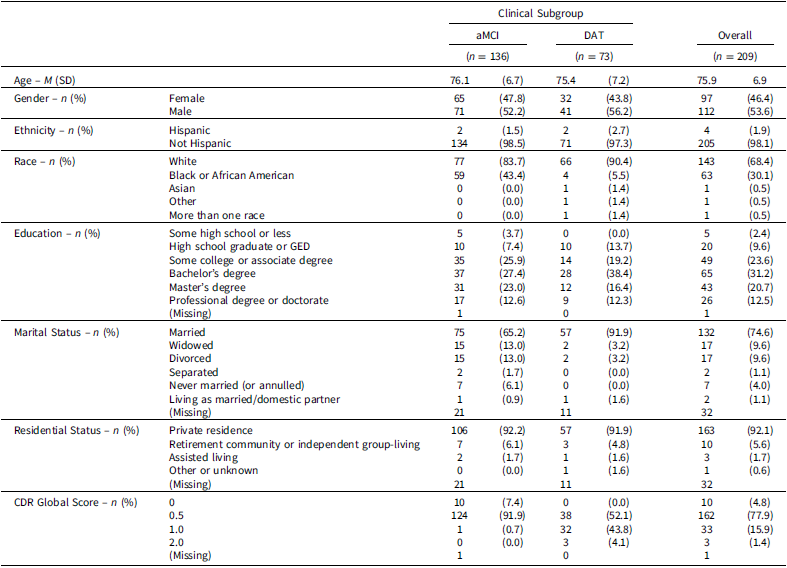
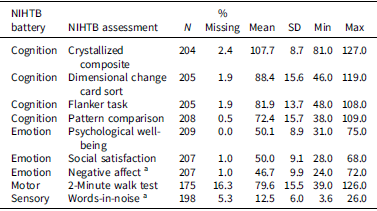
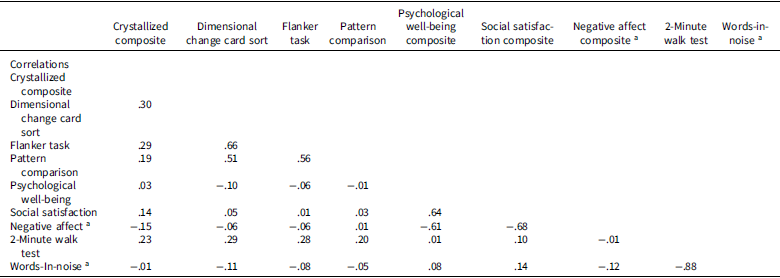
Demographic and clinical characteristics of the aMCI/DAT sample are shown in Table 1. Participant ages ranged between 62 and 91 years. On average, the DAT subsample was slightly younger (M = 75.4) than the aMCI subsample (M = 76.1). Gender frequencies skewed slightly male (approximately 53% male to 47% female in each subsample). Self-reported racial and ethnic identities were predominately non-Hispanic White. In addition, most participants resided in a private residence (e.g., single- or multi-family apartment, condo, or house) and were married. Univariate and bivariate descriptive statistics for the LPA indicators are provided in Tables 2 and 3, respectively. The Dimensional Change Card Sort Test, Flanker Inhibitory Control and Attention Test, and Pattern Comparison Processing Speed Test were strongly correlated (rs = .66, .56, and .51), which was expected because they are all related to speed of information processing and contribute to the Fluid Cognition Composite Score (Heaton et al., Reference Heaton, Akshoomoff, Tulsky, Mungas, Weintraub, Dikmen, Beaumont, Casaletto, Conway, Slotkin and Gershon2014). Those three tests also exhibited weaker correlations with the Crystallized Cognition composite score (rs = .19–.30). The three emotion composites also exhibited strong correlations (absolute rs = .61–.68). All other associations between indicators were small or negligible.
Sample characteristics

LPA model indicator univariate descriptives

Note: aTest scores were inverted for analyses to facilitate profile interpretation. Statistics presented here are based on original test metrics, prior to z standardization. All Cognition and Motor tests (Crystallized Composite, Dimensional Change Card Sort, Flanker, Pattern Comparison, 2-Minute Walk) are demographically uncorrected standardized scores (M = 100, SD = 15) co-normed to the 2010 U.S. Census. Emotion measures composites (Psychological Well-Being, Social Satisfaction, Negative Affect) are T scores (M = 50, SD = 10) also co-normed to the 2010 U.S. Census. The sensory test (Words-In-Noise) is defined as the better ear threshold, that is, the lower signal-to-noise decibels ratio (dB S/N).
LPA model indicator correlations

Note: a Test scores were inverted for analyses to facilitate profile interpretation.
Latent profile analysis model selection
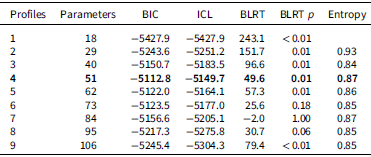
Model fit information for the nine LPA models is provided in Table 4. A 4-profile solution was considered preferable based on fit as well as the interpretations and sizes of the profiles. The 4-profile solution had the largest BIC and ICL value among models. According to the BLRT, significant improvements in fit were found when 2-5 profiles were extracted; however, addition of a sixth profile did not significantly improve model fit. Entropy was acceptable for the 4-profile solution (.87). Finally, the 4-profile solution resulted in an additional class beyond the 3-profile solution that was evaluated to be clinically interpretable, yet the addition of a fifth profile, though supported by the BLRT, was deemed to not add any additional clinical information. Given these observations, the 4-profile solution was selected for additional examination.
LPA model selection indices

Note: BIC = Bayesian information criterion. ICL = Integrated complete-data likelihood. BLRT = Bootstrap likelihood ratio test. BLRT values compare the fit of anLPA model withmprofiles to a model with m + 1 profiles. The BLRT value for the 9-profile solution is compared to a 10-profile solution (additional fit information not provided).
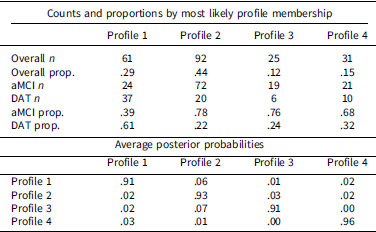
Estimated profile sample sizes based on each participant’s most likely profile membership (highest posterior probability) are shown in Table 5 for the 4-profile solution, along with cognitive diagnosis subgroup sizes and average profile posterior probabilities within profiles. Profile mean and standard deviation estimates for model indicators are displayed in Figure 1 (within-sample z-score metric) and Figure 2 (on original NIHTB metric). The cross-domain patterns for each profile are readily observed in Figure 1, whereas normative information within profiles for different NIHTB domains can be seen in Figure 2. Estimates shown in these figures, as well as the demographic characteristics of individuals within each profile, are provided numerically in the online supplement to this article. Average posterior probabilities were high in all four profiles (minimum = .91, maximum = .96).
Within-Sample Mean and SD Estimates for Model Indicators.

NIHTB Metric Mean and SD Estimates for Model Indicators.

Profile counts and average posterior probabilities, 4-profile solution

Note: Estimated profile proportions for the overall sample are relative across the 4 profiles (i.e., row-wise). Estimated profile proportions for the cognitive diagnosis subgroups are relative within each profile (i.e., column-wise) across the 2 diagnosis subgroups. prop. = proportion.
Profile descriptions
Profile 1: dysexecutive / low functioning
Profile 1 contained 61 participants (29% of sample) who exhibited poor executive functioning, processing speed, endurance, and auditory function when compared to the general population (Figure 2) and other profiles (Figure 1), yet average to below-average emotional health and social satisfaction. This profile contained approximately 50% of all participants with DAT and outnumbered participants with aMCI approximately 2 to 1 (61 to 39%). The remaining three profiles were highly similar in cognitive and motor functioning and were most distinguished by differences in psychosocial functioning: low (Profile 3), average (Profile 2), or high (Profile 4).
Profile 2: average psychosocial functioning
Profile 2 contained 92 participants (44% of sample). Individuals in this profile exhibited above-average levels of crystallized cognitive ability and below average levels of executive function and endurance compared to those in the general population (Figure 2). Moreover, individuals in Profile 2 exhibited approximately average levels of emotional and social satisfaction, both within the sample and compared to the general population. Most participants in Profile 2 had aMCI (78%).
Profile 3: low psychosocial functioning
Profile 3 contained 25 participants (12% of sample) who, like members of Profile 2, exhibited above-average levels of crystallized cognitive ability and below-average levels of executive function compared to individuals in the general population. Individuals in this profile also demonstrated very low (negative) levels of psychosocial health, both within the sample and compared to the general population. In fact, the levels of psychosocial health for those in Profile 3 were lower than individuals in Profile 1, who predominantly had more advanced disease and lower functioning overall. Profile 3 had the best average performance on the Words-in-Noise test, although all four profiles were comprised of individuals who on average met this test’s clinical threshold score (10 or higher) that suggests test takers seek additional clinical evaluation of their hearing. Similar to Profile 2, more individuals with aMCI (76%) than DAT (24%) constituted Profile 3.
Profile 4: high psychosocial functioning
Profile 4 contained 31 individuals (15% of sample) who exhibited very high (positive) levels of psychosocial health and average levels of cognition, endurance, and auditory function that were comparable to Profiles 2 and 3. Similar to Profiles 2 and 3, this profile contained more people with aMCI than DAT (68% aMCI, 32% DAT).
Preliminary evidence for profile validity
Preliminary evaluations of profile validity revealed no significant differences across profiles with regard to age, sex, race, or education, indicating that the profiles were classified by clinical rather than demographic differences. For each criterion variable, within-profile descriptive statistics are provided in Table 6, pairwise comparison results are provided in Table 7, and demographic results are provided in Supplementary Table 3. Due to low sample size for some profiles – Profiles 3 and 4 in particular – we note here that these results provide only preliminary evidence of validity and should be replicated in a larger sample.
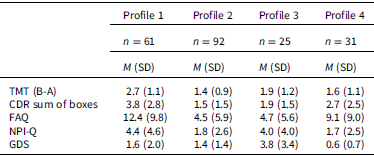
Criterion variable descriptive statistics by profile

Note: TMT (B-A) = Trail Making Test. The TMT (B-A) was rescaled to minutes. CDR = Clinician Dementia Rating (clinician-report). FAQ = Function Activities Questionnaire (patient-report). NPI-Q = Neuropsychiatric Questionnaire (informant-report). GDS = Geriatric Depression Scale (patient-report).
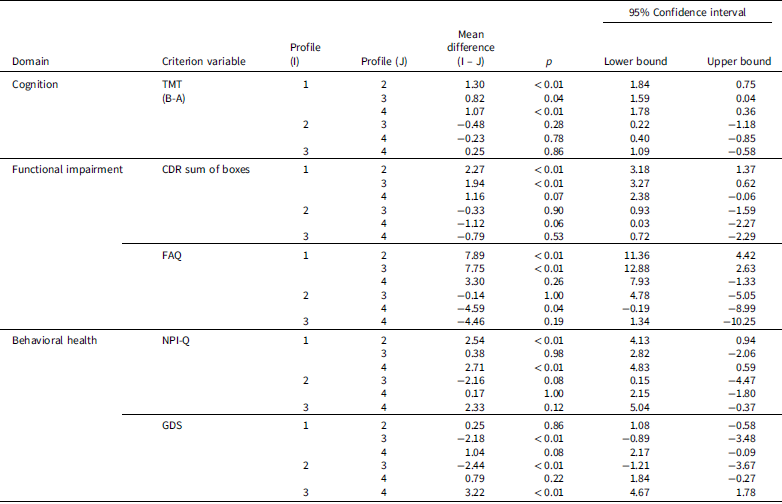
Pairwise comparisons across profiles (Tukey’s HSD)

Note: For each outcome, the family-wise error was fixed at p < .05. TMT (B-A) = Trail Making Test-B minus A. The TMT (B-A) was rescaled to minutes. CDR = Clinician Dementia Rating (clinician-report). FAQ = Function Activities Questionnaire (patient-report). NPI-Q = Neuropsychiatric Questionnaire (informant-report). GDS = Geriatric Depression Scale (patient-report).
Cognition: TMT-B-A. The one-way ANOVA test was significant [F (3,151) = 12.86, p < .01]. Profile 1 (Dysexecutive/Low Functioning) had the largest (i.e., worst) values on this variable, indicative of cognitive impairment. The other groups did not differ significantly from one another, as was observed with the NIHTB-CB indicator variables.
Functional Impairment: CDR Sum of Boxes and FAQ. One-way ANOVA tests were significant for the CDR Sum of Boxes [F (3,196) = 14.85, p < .01] and FAQ [F (3,183) = 12.97, p < .01]. Profile 1 (Dysexecutive/Low Functioning) members self-reported and were rated to have the worst functioning of the groups, which were significantly lower than Profiles 2 (Average Psychosocial Functioning) and 3 (Low Psychosocial Functioning), but not Profile 4 (High Psychosocial Functioning). Moreover, Profile 4 had higher scores on both variables compared to Profiles 2 and 3, though pairwise comparisons were not significantly different.
Mental and Behavioral Health: NPI-Q, GDS, and Clinical Diagnoses of Depression. NPI-Q [F (3,173) = 7.40, p < .01] and GDS [F (3,168) = 11.93, p < .01] scores differed significantly across profiles. Profiles 1 (Dysexecutive/Low Functioning) and 3 (Low Psychosocial Functioning) were rated to have the most severe neuropsychiatric symptoms on the NPI-Q, although Profile 3 scores were not quite significantly different from Profiles 2 and 4 (p = .08, p = .12), likely due to small sample sizes. Individuals in Profile 3 self-reported the most depressive symptoms on average on the GDS, including more than Profile 1, whereas the GDS scores produced by other profiles did not significantly differ from one another. This indicates that Profile 3 experienced the most mood challenges specifically, whereas the NPI-Q scores of Profile 1 were more influenced by other neuropsychiatric symptoms. This finding was further supported by members of Profile 3 being the most likely (75% of profile members) to have received clinical diagnoses of depression within the previous two years, although this variable had a high rate of missing data (59.8%).
Discussion
AD is a complex and heterogeneous condition that affects many domains of health and well-being, including behavioral/psychological, motor, sensory, and social functioning (Cheng et al., Reference Cheng, Ho, Weintraub, Rentz, Gershon, Das and Dodge2023; Kew et al., Reference Kew, Juengst, Kelley and Osborne2022). Data reduction approaches, for example, following the NIH Symptom Science Model framework (Cashion et al., Reference Cashion, Gill, Hawes, Henderson and Saligan2016), offer researchers and clinicians opportunities to identify trends in symptoms and patient subtypes with the ultimate goal of providing patients with more effective and person-centered care (Jang et al., Reference Jang, Ho, Blanken, Dutt and Nation2020; Leoutsakos et al., Reference Leoutsakos, Forrester, Lyketsos and Smith2015b; Machulda et al., Reference Machulda, Lundt, Albertson, Kremers, Mielke, Knopman, Bondi and Petersen2019). Whereas most previous LPA research has focused on patient profiles within a single domain of functioning, the work presented here investigated profiles across domains of functioning measured by the NIHTB. This work benefited from all NIHTB tests being co-normed and from the sample overrepresenting Black/African American participants (30%) compared to the U.S. population (14.2%) (Martinez & Passel, Reference Martinez and Passel2025).
Our data from 209 older adults with aMCI or DAT were best modeled with a 4-profile solution. Profile 1 was characterized by average to low-average psychosocial functioning but otherwise low functioning across other domains. Profiles 2, 3, and 4, which contained 82% of individuals with MCI, differed most notably based on emotional and social functioning: low (Profile 3), average (Profile 2), or high (Profile 4). Crystallized cognitive abilities, motor functioning (endurance), and sensory (hearing) functioning did not strongly differ among the profiles. Although others have described heterogeneity in MCI/DAT patient presentations of motor and sensory signs and symptoms (Albers et al., Reference Albers, Gilmore, Kaye, Murphy, Wingfield, Bennett, Boxer, Buchman, Cruickshanks, Devanand, Duffy, Gall, Gates, Granholm, Hensch, Holtzer, Hyman, Lin, McKee and Zhang2015), they did not systematically cohere with patient subtypes in our sample. These data indicate that although low physical functioning and poor hearing are related to cognitive and functional health, ambulatory endurance and hearing in a multi-talker babble paradigm do not significantly differentiate among people with MCI and DAT syndromes.
Recently reported data from the ARMADA cohort indicated that, based on group means, people with aMCI and DAT generally reported average psychosocial functioning (M. Zhang et al., Reference Zhang, Ho, Nowinski, Fox, Ayturk, Karpouzian-Rogers, Novack, Dodge, Weintraub and Gershon2023) compared with the general population. The profiles reported here, however, reveal distinct subgroups of people with low, average, and high psychosocial functioning, and these may provide a broader context for the cognitive-only profiles reported by others. As many as one-third of people who meet clinical diagnoses of MCI produce grossly normal or only mildly low cognitive test scores compared to normative group means (Blanken et al., Reference Blanken, Jang, Ho, Edmonds, Han, Bangen and Nation2020; Edmonds et al., Reference Edmonds, Delano-Wood, Clark, Jak, Nation, McDonald, Libon, Au, Galasko, Salmon and Bondi2015). Blanken et al. (Reference Blanken, Jang, Ho, Edmonds, Han, Bangen and Nation2020) discussed the possibility that those participants may be influenced by noncognitive factors. Our results support this possibility. People in Profile 3 (mostly people with aMCI) produced relatively normal cognitive test scores, but low psychosocial functioning. The preliminary validity analyses also revealed that this group reported the most/worst symptoms of depression on the GDS and were the most likely to have been diagnosed with depression. This may be the same subgroup of people in the “subtle cognitive impairment” reported by Machulda et al. (Reference Machulda, Lundt, Albertson, Kremers, Mielke, Knopman, Bondi and Petersen2019), who comprised a subset of their aMCI cluster (other clusters were dysexecutive and dysnomic). If so, our findings additionally indicate that people with that cognitive profile may be influenced by emotional (e.g., low mood) and social (e.g., isolation) challenges, and may benefit from special attention from psychologists and social workers. Their cognitive test scores are not that low (generally within - 1SD), yet they have clinical diagnoses of MCI and DAT. It may be the case that their low social-emotional functioning amplifies the effects of mild cognitive weaknesses on everyday cognitive tasks and independent living. These group members likely have the worst quality of life, and mood disorders and social isolation are known to accelerate cognitive decline (Livingston et al., Reference Livingston, Huntley, Liu, Costafreda, Selbæk, Alladi, Ames, Banerjee, Burns, Brayne, Fox, Ferri, Gitlin, Howard, Kales, Kivimäki, Larson, Nakasujja, Rockwood and Mukadam2024).
Whereas most research about the cognitive effects of psychosocial factors has been correlational, more recent evidence provides experimental evidence for the modifiability of social isolation and its effects on cognition. For example, the Internet-based Conversational Engagement Clinical Trial (I-CONECT) evaluated whether socially isolated older adults with and without MCI could enhance cognitive function and psychological well-being through increased social interactions (e.g., video conversations for 30 minutes/day, four times/week) with trained conversational staff (Dodge et al., Reference Dodge, Yu, Wu, Pruitt, Asgari, Kaye, Hampstead, Struble, Potempa, Lichtenberg, Croff, Albin, Silbert, Alfaro, McDonald, Lindsey, Scavone, Sheridan and Bhaumik2024; K. Yu et al., Reference Yu, Wild, Potempa, Hampstead, Lichtenberg, Struble, Pruitt, Alfaro, Lindsley, MacDonald, Kaye, Silbert and Dodge2021). This social intervention displayed efficacy in improving global cognition among the MCI participants with a large effect size (Cohen’s d of 0.73) after 6 months of the intervention. Notably, both the intervention and control groups – the latter receiving brief weekly check-in calls – also showed improvements in psychological well-being (Dodge et al., Reference Dodge, Yu, Wu, Pruitt, Asgari, Kaye, Hampstead, Struble, Potempa, Lichtenberg, Croff, Albin, Silbert, Alfaro, McDonald, Lindsey, Scavone, Sheridan and Bhaumik2024). This research suggests that even brief weekly contacts could effectively enhance emotional well-being among socially isolated older individuals, such as those in Profile 3.
Profile 4 (High Psychosocial Functioning) was particularly intriguing. Not only was this profile notable for the absence of negative emotions, but also a remarkable degree of positive emotions. On average, individuals displayed only mild cognitive weaknesses, similar to Profiles 2 and 3, but reported and were rated to have more functional challenges than Profiles 2 or 3, although the difference was not quite significant statistically. Siew et al. (Reference Siew, Yu, Kua and Mahendran2023) reported three latent profiles (low, average, and high psychosocial functioning) similar to our Profiles 2, 3, and 4, based on their study of community-dwelling adults with MCI in Singapore. Their high psychosocial group was their largest group (45.2% of sample), whereas it was our smallest (15% of sample). These differences between the Singaporean and U.S. samples might indicate that high psychosocial functioning relates to cultural/psychological/environmental variables, such as resilience and coping with chronic conditions, rather than biological/neuropathological differences between the psychosocial profiles. Indeed, resilience has been shown to relate to positive emotions in people with MCI (Tsormpatzoudi et al., Reference Tsormpatzoudi, Moraitou, Papaliagkas, Pezirkianidis and Tsolaki2023). Individuals in this profile group may be well suited for exercise or dietary interventions that require resolve and grit, as opposed to mental health interventions more appropriate for Profile 3. A less likely possibility is that Profile 4 may represent people with the cognitive subtype of functional neurological disorder, which is increasingly recognized as being common in memory disorder clinics, perhaps affecting as many as 12–56% patients in those settings (Ball et al., Reference Ball, McWhirter, Ballard, Bhome, Blackburn, Edwards, Fleming, Fox, Howard, Huntley, Isaacs, Larner, Nicholson, Pennington, Poole, Price, Price, Reuber, Ritchie and Carson2020). The fact that Profile 4 may display more functional problems than others with similar cognitive abilities (Profiles 2 and 3) might be a sign of functional neurological disorder, and their unexpected positive affect might reflect what some have termed “la belle indifference,” known to accompany functional neurological disorders (Gokarakonda & Kumar, Reference Gokarakonda and Kumar2024). A third possibility is that this group experiences anosognosia (Tagai et al., Reference Tagai, Nagata, Shinagawa and Shigeta2020) - a lack of awareness of their limitations. This might explain the relative lack of negative affect, but it does not explain the presence of positive affect. These three and other possible interpretations of Profile 4 would need to be supported with future research.
Because all participants with MCI had the amnestic subtype as an inclusion criterion, the inclusion of memory scores as an LPA indicator or covariate was not productive in distinguishing profiles. This potentially limits our findings because we cannot represent participants with non-aMCI or evaluate the effects of memory scores on latent profiles. On the other hand, the psychosocial aspects of Profiles 2, 3, and 4, in particular, closely resemble the psychosocial profiles reported by Siew et al.(2023), who included a list-learning memory test as an indicator variable. Similar to our findings, Siew et al., also found that their MCI profiles differed only on psychosocial variables rather than demographic or cognitive variables, and they included participants with multiple MCI subtypes (including non-aMCI). The fact that they found similar profiles provides confidence that our findings were not overly influenced by only including amnestic participants and the absence of an episodic memory indicator variables, although this needs to be confirmed with future research.
Future research with broader inclusion criteria and more participants might produce a richer connection with previous single-domain investigations, for example, that more clearly show cognitive subtypes of MCI or mild behavioral impairment. Furthermore, the ARMADA data we analyzed lacked an assessment of auditory sensitivity, although an NIHTB Hearing Threshold Test has subsequently been developed (Wiseman et al., Reference Wiseman, Slotkin, Spratford, Haggerty, Heusinkvelt, Weintraub, Gershon and McCreery2022). This is a limitation and future research should include this or a similar measure to be able to understand the role of other hearing variables in differentiating profiles of aMCI/DAT further.
Our sample of 209 participants is on the lower end of reported studies using LPA. Although we have presented evidence for why we believe the identified solution would replicate in a larger sample, this would need to be determined empirically. A larger sample size would be especially valuable for detecting smaller differences between the profiles as part of the validity analyses. Because of the relatively small number of people in Profiles 2, 3, and 4, some of the validity analyses presented here that compared these profiles were likely underpowered.
This work highlights the value of modeling cognitive and psychosocial variables together to understand patient profiles in MCI and early-stage DAT. Future studies might consider more detailed investigations of individuals with high, average, and low psychosocial profiles to better understand risk and resilience factors, the stability of these profiles over time, and responses to intervention. The most recent report from the Lancet Commissions revealed that up to 40% of cases of dementia are potentially modifiable in middle and later life by addressing hearing loss, high LDL cholesterol, hypertension, excessive alcohol intake, obesity, smoking, depression, social isolation, physical inactivity, visual loss, air pollution, and diabetes (Livingston et al., Reference Livingston, Huntley, Liu, Costafreda, Selbæk, Alladi, Ames, Banerjee, Burns, Brayne, Fox, Ferri, Gitlin, Howard, Kales, Kivimäki, Larson, Nakasujja, Rockwood and Mukadam2024). Current multicomponent interventions generally target diet, exercise, cognitive training, and management of cardiometabolic conditions (Cohen et al., Reference Cohen, Ryan and Lanzi2021). The work presented here highlights the additional importance of emotional and social variables as well and may eventually help to match people to interventions based on their profile.
Supplementary material
The supplementary material for this article can be found at https://doi.org/10.1017/S1355617725101276.
Acknowledgements
This work was supported by the National Institute of Nursing Research (D.T., C.T., A.B., J.S., and M.C., grant number 1R01NR018684), and the National Institute on Aging (R.G., S.W, and J.S., grant number U2C AG057441).
Competing interests
No author has a conflict of interest.




 Open access

