





A fundamental part of Kuwaiti culture is Diwaniyyah, which refers to a place where men socially gather and discuss local and national issues related to policy, education, health, society and the economy(Reference Al-Kandari1,Reference Al-Sejari2) . Usually, Diwaniyyah are located in residential areas attached to private houses and have regular members who attend it daily or weekly depending on the host’s schedule and resources. In addition to the main function of Diwaniyyah as a source of social interaction and information exchange, attendees share meals, play traditional games and freely express their thoughts and opinions about any topic(Reference Al-Kandari1).
Owing to its significant impact on Kuwaitis’ daily life schedules, physical activities, dietary habits and mental health, many studies of Diwaniyyah in Kuwait have been conducted from different academic perspectives(Reference Al-Ansari and Al-Kandari3–Reference El Sahary6). The outcomes of previous studies have confirmed the essential role of attending Diwaniyyah in Kuwaiti families. The current study aimed to investigate the lifestyle behaviours of Kuwaiti men attending Diwaniyyah during Ramadan.
Ramadan is the ninth month of the Islamic lunar calendar. During Ramadan, Muslims fast daily from dawn until sunset, a fasting period when it is prohibited to partake of food and drink(Reference Eskin and Senel7). Culture has a significant influence on food choices, especially during special occasions such as Ramadan(Reference Bawadi, Al-Hamdan and Bawadi8). In Kuwait, food options change drastically and some food items are consumed only during Ramadan(Reference Al-Kandari9), such as sambosa (deep-fried filled triangular pasties), tashreeb (broth-soaked bread topped with meat and/or vegetables), harees (made with wheat grain, meat and ghee) and qatayef (sweet folded pancake filled with cream or nuts)(Reference Al-Kandari9). All these dishes are high in carbohydrates, fat and energies. Therefore, the energies consumed daily during Ramadan differ from those consumed during other months(Reference Daradkeh, Abuzaid and Al-Muhannadi10).
Daily physical activity patterns during Ramadan also change as a result of fasting among men who attend Diwaniyyah. Previous studies(Reference Al-Maiman, Al-Orf and Bawazeer11–Reference Soh, Soh and Ruby14) have shown that physical activity levels often decrease – or remain unchanged – compared to pre-Ramadan periods. This reduction is linked to several factors: most physical activity typically occurs during daylight hours when the body is not in its optimal state for exertion, and many Muslims engage in Taraweeh prayers after Iftar, limiting time and energy for exercise. Research also indicates that fasters often adopt more sedentary behaviours during the day, such as watching television or sleeping for longer periods(Reference Sadiya, Ahmed and Siddieg15–Reference Karaağaoğlu and Yücecan19).
The significance of the current study lies in its focus on providing a descriptive comparative analysis of daily activities and dietary habits among Kuwaiti men during Ramadan, particularly those who attend the Diwaniyyah. While previous studies have examined energy and macronutrient intake during Ramadan in general(Reference Al-Maiman, Al-Orf and Bawazeer11,Reference Sadiya, Ahmed and Siddieg15,Reference Alkandari, Maughan and Roky20–Reference Templeman, Smith and Chowdhury31) , none have explored how these nutritional patterns are shaped within the cultural and social context of the Diwaniyyah. By adopting an anthropological perspective, this study goes beyond measuring dietary intake and situates eating behaviours within a central Kuwaiti cultural institution. This approach offers a unique contribution by linking nutritional practices and physical activity to cultural traditions, thereby providing a deeper understanding of how social environments influence men’s routines and food consumption during Ramadan.
The major objective of this study was to examine the interaction between visiting Kuwaiti Diwaniyyah, dietary habits and daily activities during Ramadan among Kuwaiti men.
This study aimed to answer the following research questions:
-
- What is the relationship between demographic characteristics, Diwaniyyah attendance patterns and dietary habit and physical activity scores among regular and non-regular Diwaniyyah attendees?
-
- Which factors predict dietary habits and physical activity level?
Ecological model of food and nutrition
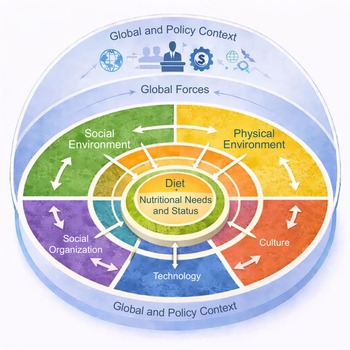
This study aimed to use an ecological model of food and nutrition to enhance the understanding of dietary changes among Kuwaiti men who visit Diwaniyyah. The strength of this model lies in the reciprocal relationship it posits among various environmental factors (social environment, technology, physical environment, social organisation and culture), where the position of each factor can affect the nutritional requirements and status of specific populations. This feature makes the model dynamic and interactive, allowing modifications in one sector to trigger changes in other parts of the model, showcasing the interconnectedness of the elements(Reference Pelto, Dufour, Goodman, Dufour, Goodman and Pelto32). Furthermore, the incorporation of global forces enhances the model’s biocultural perspective, making it an excellent framework for analysing changes in diet, diet quality and energy balance within modern populations(Reference Himmelgreen, Cantor and Arias33).
The ecological model emphasises that health behaviours, such as food choices and physical activity, are shaped by multiple interacting levels of influence (see Figure 1). In this study, we apply the model by focusing specifically on two key levels: the cultural and the social–environmental influences. At the cultural level, Ramadan represents a powerful set of religious and social norms that restructure daily life. Fasting during daylight hours alters eating schedules, influences the types of foods traditionally consumed during Iftar and Suhoor and may modify patterns of physical activity. Cultural expectations during Ramadan often promote communal eating, increased evening socialisation and specific culinary traditions that may encourage higher-energy or carbohydrate-rich foods. In addition, the spiritual and social rhythm of Ramadan – such as late-night prayers (Taraweeh) and altered sleep patterns – further affects when individuals choose to rest, exercise, or engage in sedentary behaviours.
Ecology model.

At the social–environmental level, the Diwaniyyah serves as a central social institution that shapes men’s daily routines and behaviours. It influences dietary choices through the types of foods commonly served, the social pressure to eat with peers and the hospitality norms that encourage sampling multiple dishes. The Diwaniyyah may also affect physical activity patterns by providing an evening social space that can replace time otherwise spent in active pursuits. For many attendees, visiting the Diwaniyyah becomes a routine that structures their evening and night-time behaviours, potentially reinforcing more sedentary lifestyles during Ramadan.
By examining both the cultural context of Ramadan and the social dynamics of the Diwaniyyah, this study applies the ecological model to highlight how broader cultural norms and immediate social environments interact to shape men’s dietary habits and physical activity. This approach allows for a more comprehensive understanding of health-related behaviours by recognising that individual choices are embedded within, and influenced by, the cultural and social structures surrounding them.
Methods
Sample
A total of 736 respondents were selected from an opportunistic sample. Participants were approached in public and social settings, and those who met the study criteria were invited to participate. Inclusion criteria were being Kuwaiti, Muslim men who were fasting during Ramadan. Individuals who were non-Kuwait, non-Muslim, female or not fasting were excluded from the study. Participation was voluntary in this study. Three months of data were gathered immediately following Ramadan in 2023, and all findings were presented prior to December 2023. This research is a part of a large project that conducted in Kuwait by the researcher. The men voluntarily responded to the questionnaire. Informed consent was obtained from all participants, and all study procedures were conducted in accordance with the ethical guidelines and regulations of College of Social Sciences at Kuwait University.
Variables
An electronic questionnaire was used to collect data. The questionnaire included questions about various sociocultural factors, frequency of visiting Diwaniyyah, dietary habits and physical activity variables. For the sociocultural variables, information about the respondents’ age, level of education and governorate was collected. Age was divided into four categories: 20 years or below, 21–40 years, 41–59 years and 60 years or above. A single-item self-rating scale of the participants’ economic status (from very low = 1 to very high = 10) was used to measure their socioeconomic status. Eight educational levels were identified and divided into three categories: low (high school or below), medium (university level) and high (higher education). Questions about the number of days visiting Diwaniyyah weekly and the average hours spent in Diwaniyyah daily on weekdays and weekends during the first 20 d of Ramadan were included; the last 10 d were excluded because many Kuwaiti men go to the mosque then for late-night prayers (Qeyam). The number of days visiting Diwaniyyah was divided into four categories: 6–7 d, 3–5 d, 1–2 d and less than 1 d or never visited. For comparison purposes, it also divided participants into those regularly visiting Diwaniyyah (6–7 d, 3–5 d and 1–2 d) and those not visiting it. A single-item self-rating scale of social individuals (people who are social) (from very low = 1 to very high = 6) was used to measure respondents’ social networking.
Two scales were used in this study:
-
1. Dietary habit scale: This scale was developed by the first and fourth researchers. It includes fourteen items for different types of food. These foods were chosen based on two criteria: first, they fall into one of the six food pyramid divisions; second, they are among the most popular foods in the local culture. This scale was developed after reviewing the food pyramid, and it includes meat, chicken, seafood, pastry, vegetables, dairy products, fruits, whole grains, rice, sweet and traditional sweets. It also includes the ways or types of cooking, such as barbeque, frying and juice. After examining the sections of the gendered food pyramid – grains, vegetables, fruits, protein foods, dairy, fats and sweets – the dietary habit scale was created. Researchers have selected these foods because they are the most popular in Kuwaiti culture. Five Kuwait University academic members examined and validated various kinds of food. The respondents were asked to determine the degree to which they ate these types of food at night after Iftar during the first 20 d of Ramadan. In addition, the respondents were asked to determine the extent to which they eat dinner late at night (Qabka), scored on a six-point Likert scale, ranging from very much (6) to never (1).
-
2. Physical activity scale: This scale included three items developed by the first and fourth researchers, showing how active the respondents were at night during Ramadan in the first 20 d. The respondents were asked to determine the degree to which they practised walking, going to gyms and playing sports with friends. A panel of experts from the College of Social Sciences (from sociology, social work and anthropology in biocultural, clinical and medical disciplines) assessed the items’ clarity, relevance and suitability for measuring physical activity at night during Ramadan in order to establish content validity, scored on a six-point Likert scale, ranging from very much (6) to never (1).
These two scales were created for this study. Construct validity was examined using exploratory factor analysis, which indicated that all items loaded onto a single factor, supporting the unidimensional acceptable of the scales. Tests and retests were performed to measure the stability of the instrument. Alpha Cronbach’s was used for reliability. The reliability was 0·84 and 0·70 for the two scales, respectively.
Statistical analysis
SPSS (version 25) was used for data analysis. Descriptive and inferential statistical analyses were conducted. Percentages, means, sd and rankings were used to examine the extent to which different types of food were eaten at night. ANOVA was used to examine the differences among age groups and number of days visiting Diwaniyyah in the types of food eaten at night and among age groups and educational level in all samples, regularly visiting Diwaniyyah and not visiting Diwaniyyah on the dietary habit scale and physical activity scale. A t test was used to examine the differences among age groups and educational levels regularly and among those who did not visit Diwaniyyah. To examine the relationship between some demographic variables and Diwaniyyah visiting days and time, and types of food eaten at night, Pearson’s correlation analysis was used to predict the most associated and predicted variables of dietary habits and physical activity.
Results
A total of one thousand men were approached, with 736 (74 %) completing the questionnaire. Response rate was 75·8 %. Participants ranged in age from 18–82 years. All participants were aged 18–82 years, and their average age was 41·54 years (sd = 15·622). Respondents came from different and various subgroups of the Kuwaiti population and from all six governorates (22·8 % from the Capital, 22·8 % from Hawalli, 11·8 % from Ahmedi, 17·1 % from Farwaniyyah, 12·3 % from Jahra and 11·1 % from Mubarak Al-Kabeer). Of the respondents, 32·2 % had completed high school or below, 45·5 % were college graduates and 22·3 % were postgraduates. Only 1·87 % of the questionnaires were excluded because of incomplete answers. Response rate of the questionnaire was very high. The initial response rate was almost 74 %.
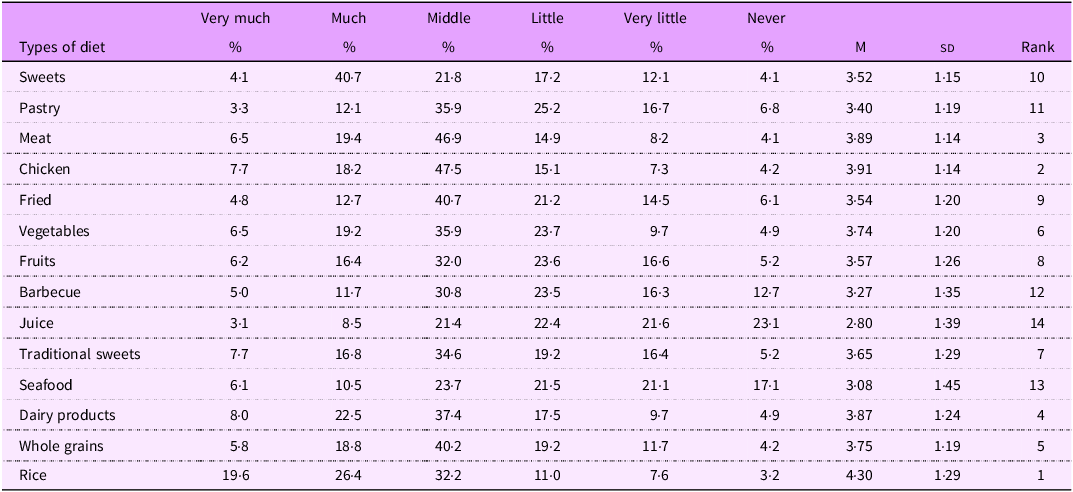
To understand the most eaten types of food at night in Ramadan (after Iftar), Table 1 shows the percentages and means (sd) of the extent of food consumption to determine the most consumed types of food at night during Ramadan (after Iftar).
Percentages, means and sd of the extent to which these types of food are eaten at night

The results show that the food most eaten at night after Iftar in general was rice, chicken, meat and dairy products, with a high proportion of these types of food (Table 1). On the other hand, the less eaten types of food at night were juices, seafood (in general), barbeque and pastries, with a lower mean than the most popular eaten types of food (Table 1).
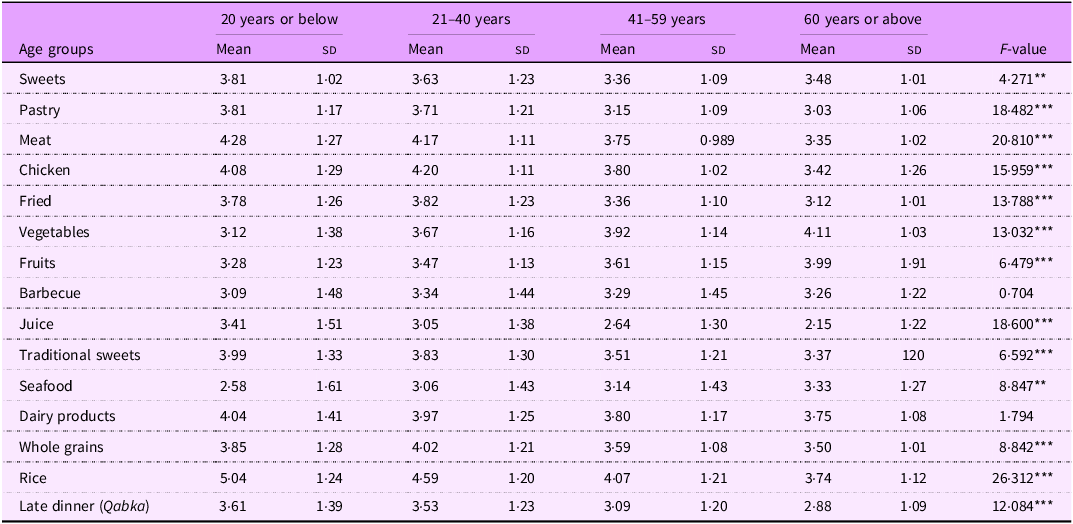
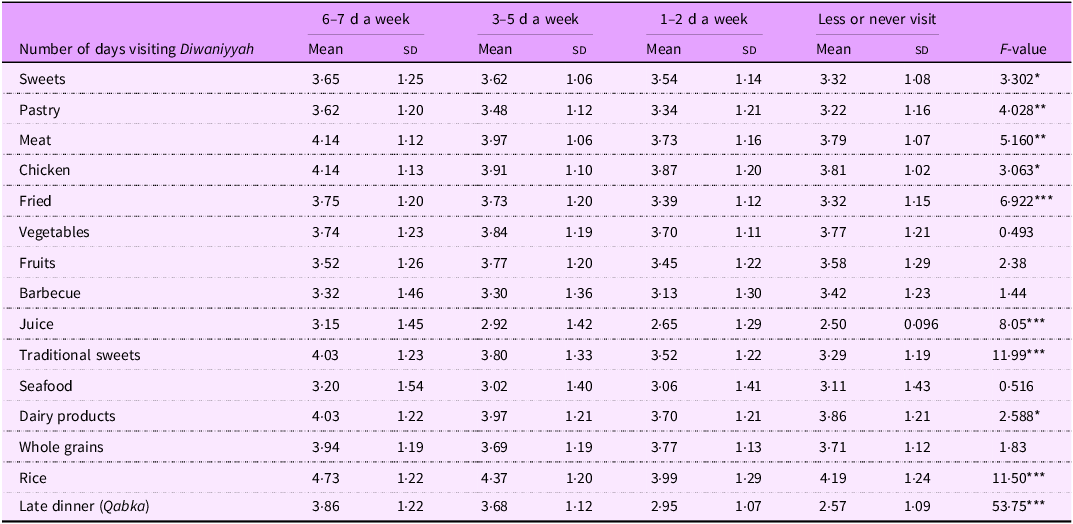
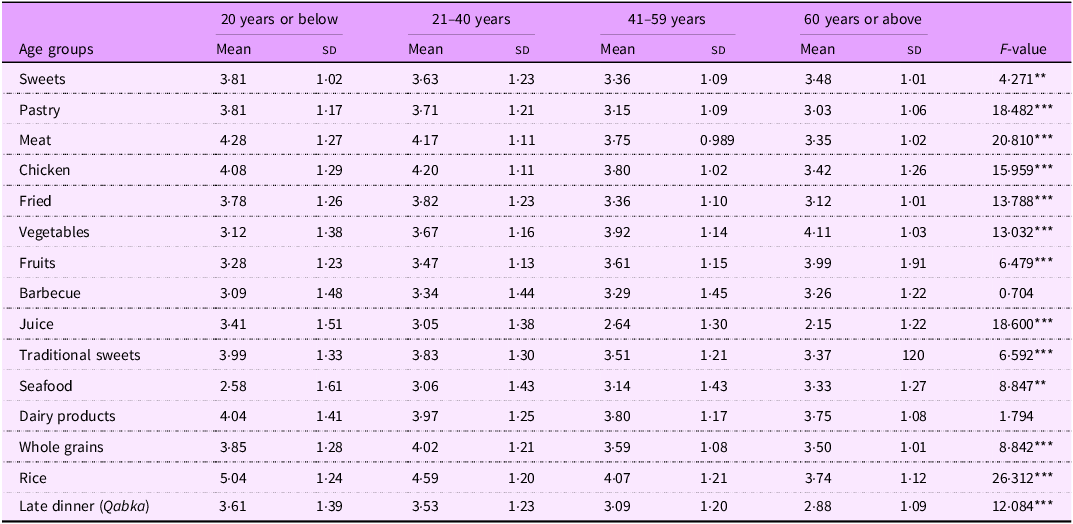
Table 2 compares these types of food eaten at night (after Iftar) by age group and the frequency of visiting Diwaniyyah by providing the mean, sd and F-values.
Means, sd, F-ratios and F-values by age group for types of food eaten at night using one-way ANOVA
**P < 0·01; ***P < 0·001.
Differences by age groups: The data in Table 2 show that there were significant differences among the four age groups in all types of food eaten at night except barbeque and dairy products. Younger age groups eat more sweets, pastry, meat, juices, traditional sweets, dairy products and rice than the other age groups (Table 2), and more generally, the younger age groups consume more of these types of foods at night during Ramadan. On the other hand, the older age groups had a higher mean for consuming vegetables, fruits and seafood at night during Ramadan. The older age group consumed more vegetables, fruit and other foods. For the middle-aged group, data show that they consume more chicken, fried food, barbeque and grains (bread and wheat) than the other age groups. They were also more likely to eat late at night (Qabka) than the other age groups.
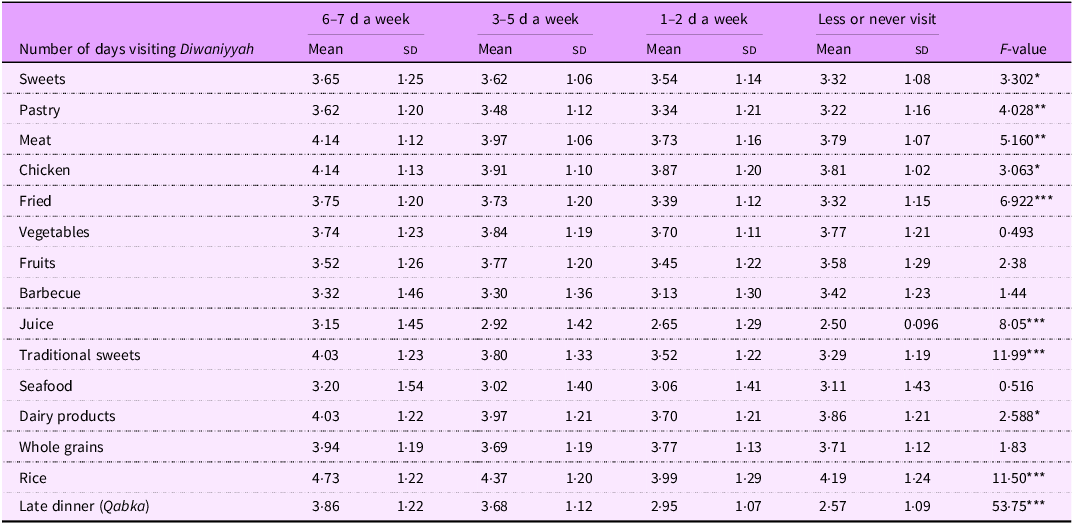
Differences by visiting Diwaniyyah frequency: When comparing the types of food consumed at night during Ramadan with the frequency of visiting Diwaniyyah, Table 3 shows that there are significant differences among the frequencies of men visiting Diwaniyyah weekly during Ramadan in ten of the fourteen types of food eaten at night. The data show that men who usually go to Diwaniyyah daily have a higher mean consumption of sweets, pastry, meat, chicken, fried foods, juice, traditional sweets, dairy products and rice. The data show that the higher the frequency of visiting Diwaniyyah, the greater the consumption of these types of food at night. In addition, the data show that the higher the frequency of visiting Diwaniyyah, the higher the frequency of eating late at night (Qabka). No significant differences were found among the frequencies of men visiting Diwaniyyah weekly during Ramadan in their consumption of vegetables, fruits, barbeque, seafood or grains.
Means, sd, F-ratios and F-values by number of days visiting Diwaniyyah for types of food eaten at night using one-way ANOVA
*P < 0·05; **P < 0·01; ***P < 0·001.
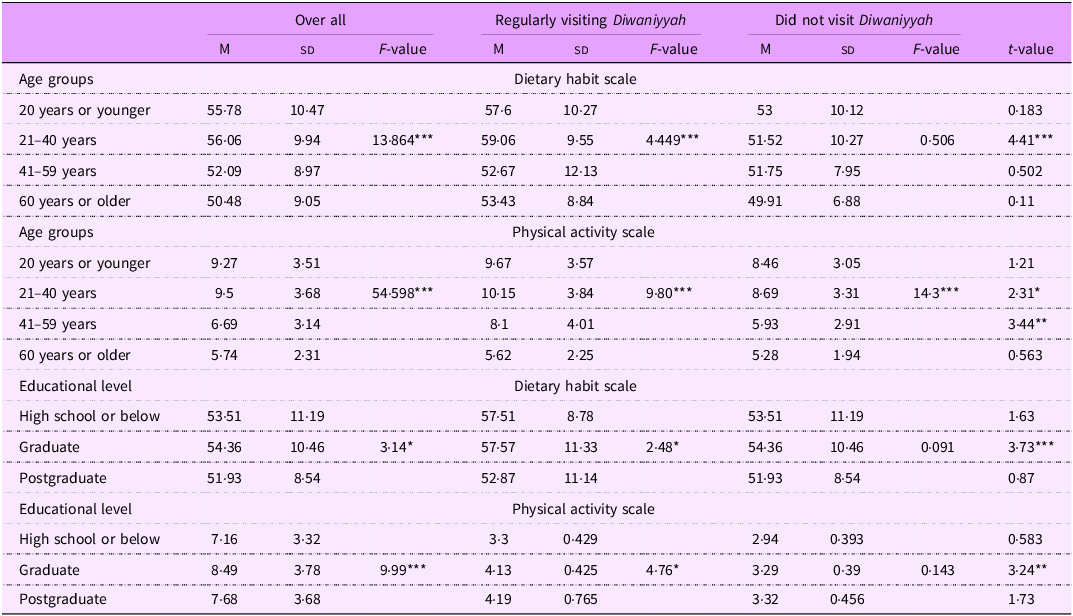
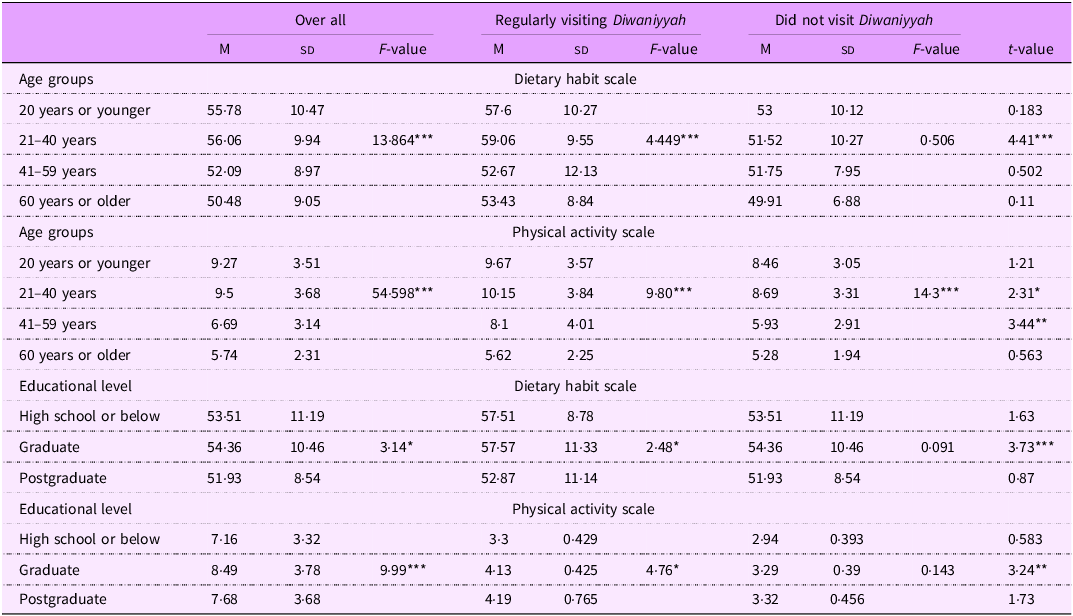
To examine the significant differences by age group and educational level of those regularly and never visiting Diwaniyyah in their dietary habits and physical activities during the nights of Ramadan, and to determine whether there were significant differences between regularly visiting the Diwaniyyah individuals during Ramadan, Table 4 shows these differences using one-way ANOVA and t tests.
Means, sd, F-ratios and F-values by age group and educational level overall and in those regularly visiting Diwaniyyah and not visiting Diwaniyyah for dietary habit scale and physical activity scale scores using one-way ANOVA and differences between those regularly and not visiting Diwaniyyah by t test
*P < 0·05; **P < 0·01; ***P < 0·001.
Differences by age groups: Table 4 shows that there were significant differences by age group between men regularly visiting or never visiting Diwaniyyah on both the diet habit and physical activity scales, such that the older age groups had lower mean scores on the diet habit and physical activity scales. Older men eat fewer types of food and have lower physical activity levels at night during Ramadan than other age groups. The middle-aged group had a higher mean in all samples, whether regularly or never visiting Diwaniyyah. They consume more of the selected types of food and engage in more physical activity than other age groups.
Differences by visiting Diwaniyyah frequency: When examining the significant differences between men who regularly visit Diwaniyyah and men who do not, the data show that there are significant differences between these two variables in the dietary habit scale in the middle-aged group only. Men in this age group who regularly visit Diwaniyyah consume more food than men who do not. No significant differences were observed among the other age groups. There are also significant differences in physical activity scale scores between men who regularly visit Diwaniyyah and men who do not in two age groups (21–40 and 41–59 years old), such that men in the middle-aged groups visiting Diwaniyyah regularly practised more physical activity than those in the younger and older age groups.
Differences by educational level: Regarding educational level, Table 4 shows that postgraduate respondents showed a lower mean score on the dietary habit scale overall and in men regularly visiting Diwaniyyah. Men with higher education consume less food at night overall and in both those regularly or never visiting Diwaniyyah in Ramadan. Lower educational levels were associated with less physical activity than other educational levels. When comparing the educational levels of men who regularly visit Diwaniyyah and men who do not during Ramadan, the data show that the only significant difference is in those with a medium educational level (graduates). Men with graduate educational levels who regularly visit Diwaniyyah consume more types of food at night than those who do not visit the Diwaniyyah.
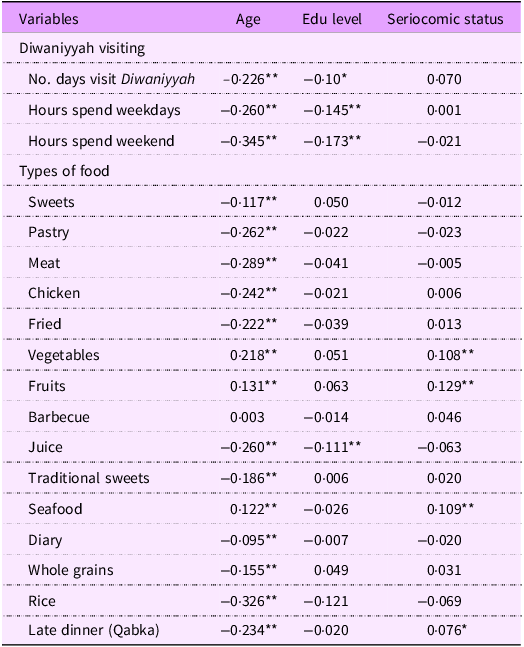
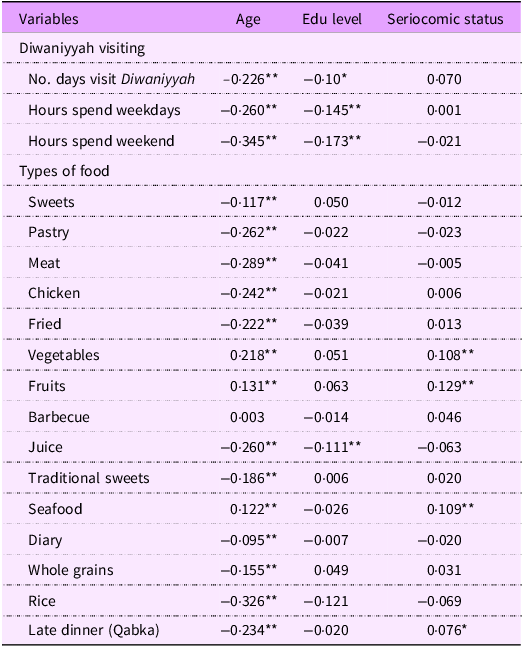
Table 5 presents the results of an examination of whether there were significant correlations of demographic variables (age, educational level and socioeconomic status) with the number of days visiting Diwaniyyah weekly and average hours spent there on weekdays and weekends, and with types of food eaten at night during Ramadan.
Correlation coefficients between demographic variables, days visiting Diwaniyyah and time and types of food eaten at night
*P < 0.05; **P < 0·01.
Correlation by age and educational level: Significant negative correlations were found between respondents’ age and educational level, and both the number of days visiting Diwaniyyah weekly and the average hours spent there on weekdays and weekends, such that the higher the average number of days and hours on weekdays and weekends spent at Diwaniyyah, the younger the age group. In contrast, men with higher educational levels spend fewer days and hours on weekdays and weekends in Diwaniyyah. No significant correlations were found between socioeconomic status and the number of days and hours spent on weekdays or weekends in Diwaniyyah.
Correlation by demographic variables: For the correlation between the demographic variables and types of food eaten at night in Ramadan, Table 5 shows that there are negative significant correlations between age and the consumption of sweets, pastry, meat, chicken, fried, juice, traditional sweets, dairy, grains and rice at night during Ramadan, such that the younger the age, the greater the consumption of these types of food at night during Ramadan. Significant positive correlations were found between age and eating vegetables, fruits and seafood, meaning that the older the person, the more they eat those types of food. No significant correlation was found between age and the consumption of barbeque meals. Regarding participants’ educational levels, only significant negative correlations were found between educational levels and juice consumption. No significant correlations were found for other types of foods. Significant positive correlations were found between socioeconomic status and vegetable, fruit, and seafood consumption.
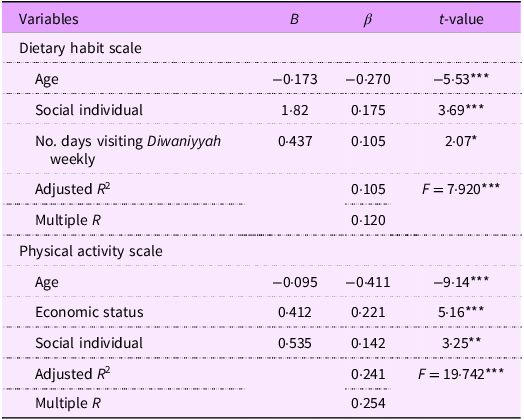
To predict the variables and factors that affect dietary habits and physical activity at night during Ramadan, Table 6 shows the association between dietary habit and physical activity scale scores with various variables using linear regression.
Regression coefficients of social factors with dietary habit scale and physical activity scale scores

*P < 0·05; **P < 0·01; ***P < 0·001.
Association and prediction: Table 6 shows that age, social individuals and number of days visiting Diwaniyyah were associated with and predicted the number of types of food eaten at night during Ramadan. The data showed that age, socioeconomic status and social status were associated with and predicted physical activity.
Discussion
The study findings reveal that lifestyle behaviour among Kuwaiti men change during Ramadan, including the timing and number of meals, the type and portion sizes of food consumed and patterns of physical activity. Within the ecological model of food and nutrition, individual diet is positioned at the centre of the model and refers to ‘the actual foods that individuals or groups consume to meet their nutrient needs’(Reference Bryant34). The findings illustrate how multiple layers of influence shape Kuwaiti men’s dietary behaviours during Ramadan. At the individual level, men largely maintain their usual diet but make minor adjustments to accommodate fasting requirements, including changes in meal timing, portion size, and the selection of foods that promote hydration and satiety. Age and educational level further contribute to variations in men’s daily routines and food choices.
At the interpersonal and social–environmental level, shared family meals and community gatherings during Ramadan reinforce social norms surrounding traditional Iftar dishes such as rice, meat and chicken, while limiting the consumption of foods like seafood, barbeque and pastries at night due to shared beliefs about comfort and hydration during fasting. At the cultural level, Ramadan strongly shapes food beliefs and traditions, with men favouring familiar dishes that reflect religious expectations and cultural heritage. Cross-cultural findings from Ghana and Bangladesh indicate that dietary changes during Ramadan vary across societies, highlighting the role of local cultural contexts(Reference Ali and Abizari21,Reference Seiermann, Al-Mufti and Waid35) . At the socioeconomic and environmental level, food availability and income further influence dietary patterns(Reference Bakhotmah36). In Kuwait, access to large traditional Iftar meals and the higher consumption of energy-dense foods among wealthier individuals exemplify how socioeconomic conditions shape Ramadan eating behaviours.
The study also revealed age-related differences in dietary intake during Ramadan, consistent with the ecological model of food and nutrition. At the individual level, younger men consumed more unhealthy foods, such as sweets, pastries and sugary dairy products, while older men chose more balanced, nutrient-rich meals(Reference Bojang and Manchana37–Reference Chen, Liu and Huang39), likely reflecting greater health awareness and a higher prevalence of chronic conditions. At the interpersonal level, younger men appear more influenced by peer-oriented gatherings where high-carbohydrate foods are common, while older men were supported by family environments that encourage healthier eating. Culturally, although Ramadan emphasises celebratory sweets, younger men tended to engage more with these traditions, whereas older men prioritise health considerations. At the socioeconomic and environmental level, older adults often have more stable routines and better access to healthy foods, while younger men relied more on convenient, high-energy options available at night.
This study also found a positive association between Kuwaiti men’s night-time consumption of sugar- and carbohydrate-rich foods during Ramadan and their frequency of Diwaniyyah attendance. Men who attend Diwaniyyah daily – often after Taraweeh prayer and visiting multiple gatherings in one night – tend to consume traditional sweets, dairy products and pastries in line with cultural expectations of hospitality. These findings are consistent with previous studies reporting the negative health impacts of Diwaniyyah attendance, where large meals followed by sweets, coffee and tea serve as customary symbols of generosity(Reference Al-Sejari2). Within the ecological model, the Diwaniyyah represents a key social-environmental influence, where shared foods carry cultural meaning, reinforce social bonds and shape men’s dietary practices during Ramadan.
In conclusion, this study found a significant effect of attending Diwaniyyah during Ramadan on Kuwaiti men’s lifestyle behaviours, including the type, amount and timing of food consumption, which might negatively affect their physical health, especially among younger respondents. Further longitudinal studies are suggested to examine the influence of attending Diwaniyyah during Ramadan among Kuwaiti men and whether their dietary habits change after the month ends or remain the same. In addition, comparative studies should be conducted to investigate the differences between men’s lifestyle behaviours and daily schedules of those attending and not attending Diwaniyyah during Ramadan. Since the Kuwaiti population is reported to have one of the highest rates of diagnosed cases of chronic disease, these studies are essential to assess men’s current health behaviour in order to predict their health outcomes in the future and acknowledge them through their social network, health centres and social media tools by reporting information about the impact of attending Diwaniyyah on men’s physical health.
Limitation of the study
There are several limitations that should be acknowledged. One of them is employing an electronic questionnaire and a non-random sampling technique to gather data. Furthermore, recollection and social desirability biases could affect the use of self-reported data. Lastly, the results might not be very generalisable beyond the particular features of the research sample.
Acknowledgements
We would like to thank all the participants of the current study for their invaluable collaboration.
Financial support
This work did not receive any funding.
Competing interests
All authors declare no conflicts of interest.
Authorship
M.M.A.S. designed research and wrote the introduction, discussion and conclusion, had primary responsibility for the final content, approved the final manuscript as submitted and agreed to be accountable for all aspects of the work; J.B.A.F. and F.K.A.K. wrote the introduction and literature review; Y.Y.A.K. had primary responsibility for final content, cleaned and analysed the data, wrote the methodology, aims, significant and questions, critically revised the manuscript and approved the final manuscript. All authors read and approved the final manuscript.
Ethics of human subject participation
This study was conducted according to the guidelines laid down in the Declaration of Helsinki, and all procedures involving research study participants were approved by the rules and regulations of Kuwait University for research methodology. It is followed by the procedures of The Scientific Research Support Committee in the College of Social Sciences at Kuwait University. Written informed consent was obtained from all subjects/patients.
Declaration of generative AI use
During the preparation of this manuscript, we used generative AI tools solely to improve language, grammar and clarity. The AI tool did not generate any scientific content, data, analysis, interpretations or conclusions. All intellectual and scholarly contributions were made by the authors. We reviewed, edited and verified all AI-assisted outputs to ensure accuracy and appropriateness.

 Open access

