


INTRODUCTION
The modes in which classical Greek temples were illuminated have fascinated scholars for the past three centuries. Whereas the earlier Archaic architecture of Doric temples, with its sturdy walls and thick columns, has frequently been considered heavy and dark, designed to elicit fear and reverence from worshippers (Marconi Reference Marconi2004, 222), the temples of the Classical period appear to have been more conscious of light and brilliance. This shift can be attributed in part to the increasing incorporation of gleaming marble, the enlargement of door thresholds, and several other distinctive architectural elements that suggest deliberate light effects within the temple’s interior, which will be discussed below.
Out of all the Greek temples, the Parthenon has garnered the most attention regarding the way in which it may have been illuminated. This heightened interest is largely due to its enduring status as a symbol of the refinement of Classical style or, as stated by R.E. Wycherley (Reference Wycherley1978, 111) and then reiterated by the head of the Acropolis Restoration Service (YSMA), Manolis Korres (Reference Korres and Haselberger1999, 85–101), the ‘refinement of the refinements’ of Classical architecture. Consequently, it has been of paramount importance for scholars to understand not only how the building was constructed but also how it was experienced (Mylonopoulos Reference Mylonopoulos2023).
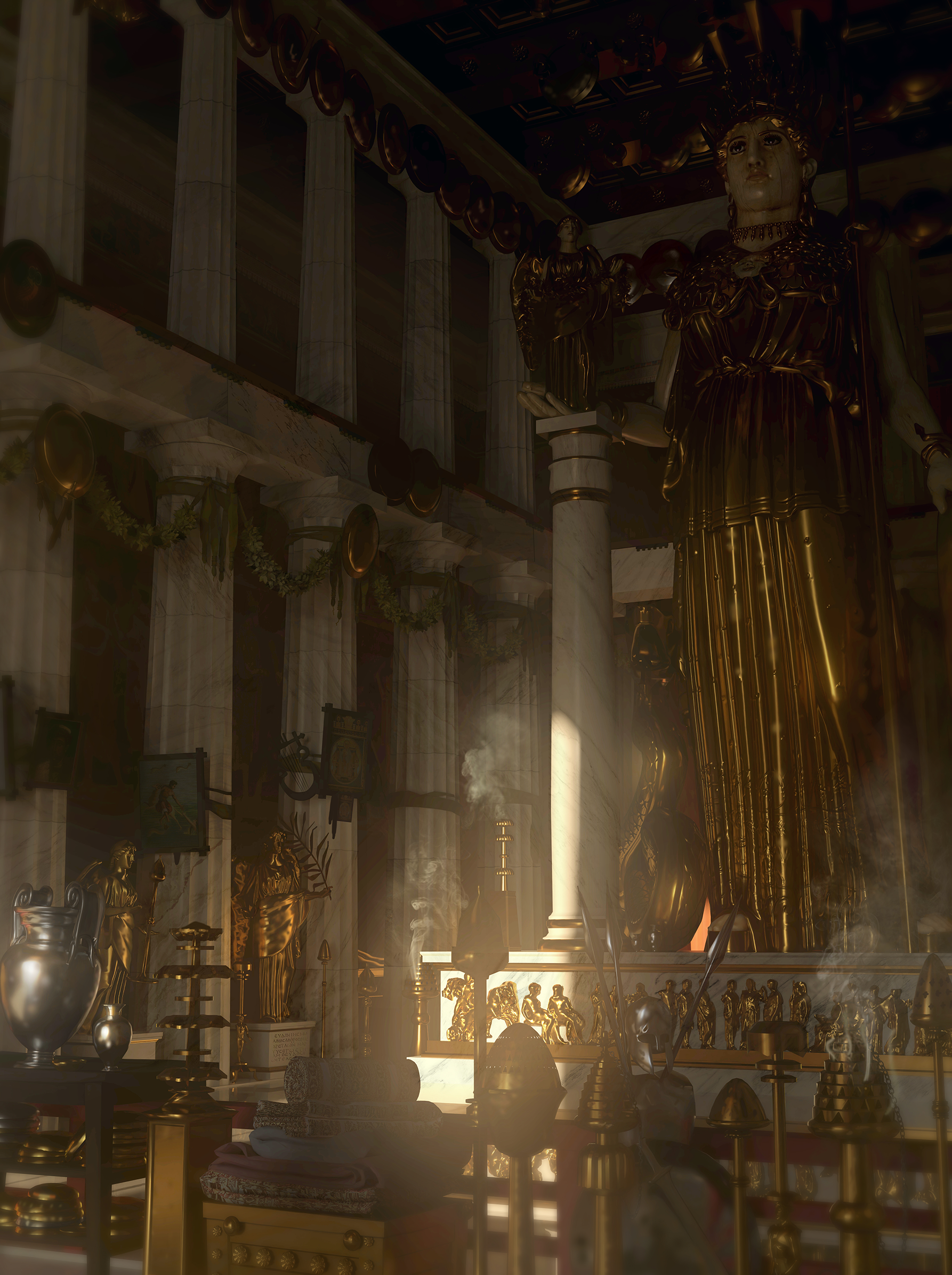
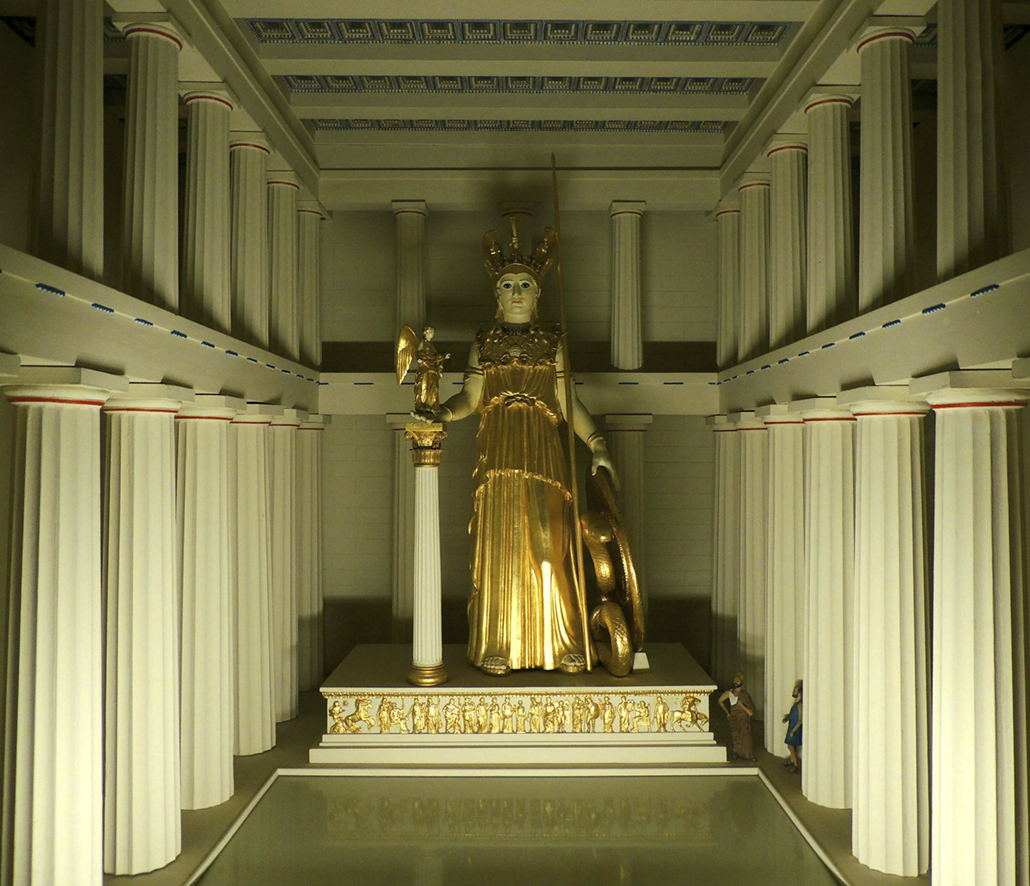
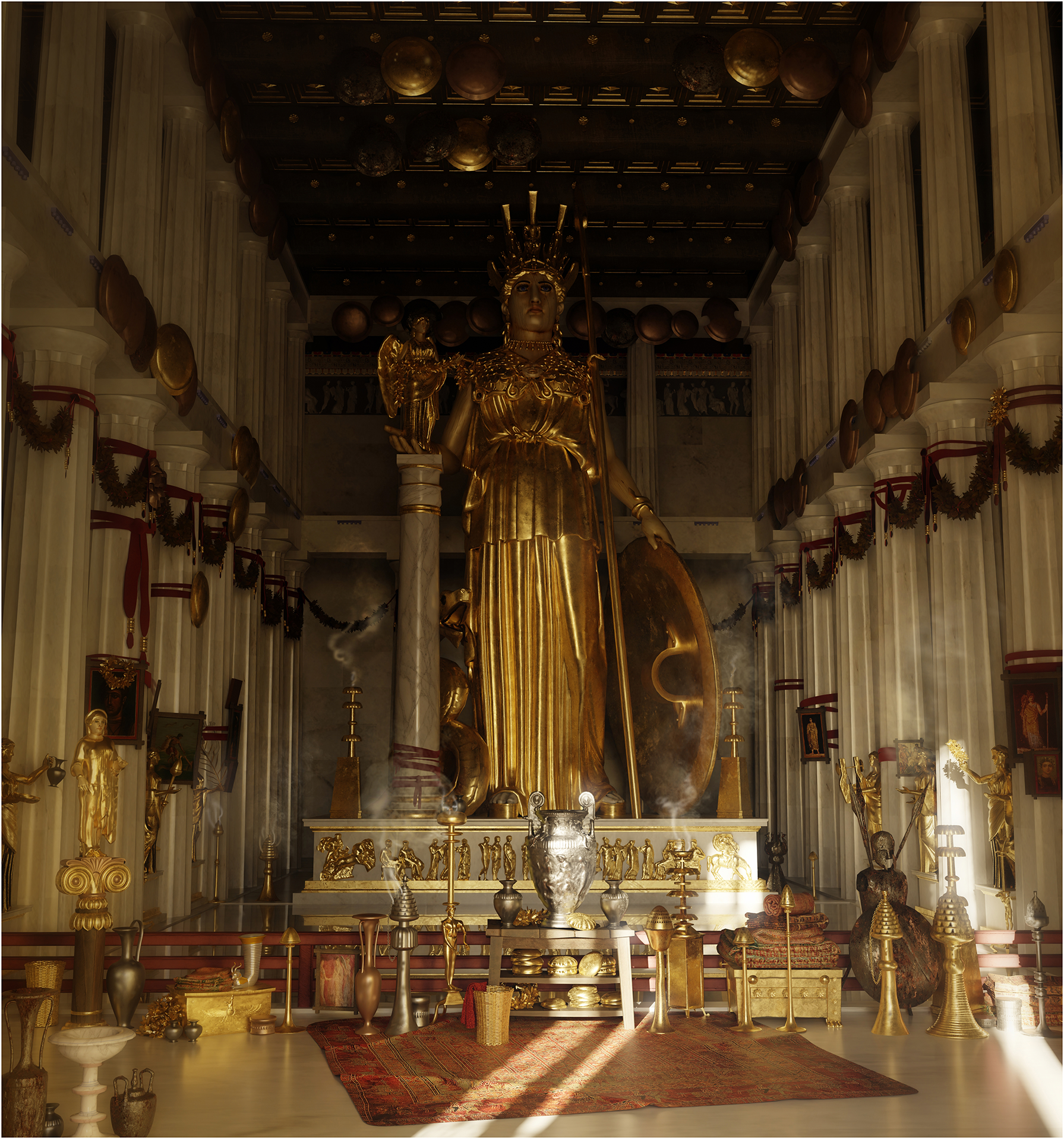
Among the features related to the visual experience within the Parthenon, the most prominent was the chryselephantine statue of Athena – an extraordinary statue whose size and materials were unmatched at the time (Lapatin Reference Lapatin2001, 63 and 78; van Rookhuijzen Reference Rookhuijzen2020, 10). Through the adroit incorporation of unconventional dimensions, standardised iconographies, and large-scale use of gold and ivory, the colossal statue acquired epiphanic potential, meant to symbolise the god’s sacred presence on earth. The golden Athena also acted as an ‘icon’ of the Athenian community and beyond, as copies of this particular statue spread across the Greek world for centuries after construction of the original (Platt Reference Platt2011, 88–9; Fig. 1).
Hypothetical reconstruction of the Parthenon interior, enriched with elements documented in ancient inventories, including numerous incense burners, shields, gold statues of Nikai, and various items such as panoplies, musical instruments, tables, and libation bowls. Render: Juan de Lara.

Post-Classical writers lauded the statue’s ‘beauty and magnitude’, which inspired religious reverence, a feeling akin to what the Greeks knew as thauma idesthai: a ‘wonder to behold’ (e.g. Dio Chrysostom, Oration 12.49–52; Pliny, Natural History 36.18–9).Footnote 1 The combination of beauty, grandeur, wonder, and charis in a single creation was undoubtedly one of Phidias’ greatest triumphs. But the placement of this statue in the presumably dark abode of the temple invites us to ponder under what lighting conditions the artist and architect conceived the space that housed this statue, and in which way it may have maximised its grandeur and the visual encounter.Footnote 2 Therefore, this paper aims to investigate and evaluate the feasibility of a range of visual techniques and strategies related to allowing both natural and artificial light into the Parthenon.
A number of techniques are presumed to have been intentionally linked to illumination in this and other temples, and include windows, reflective pools of water, skylights, translucent roofs of marble, solar alignments during the morning hours, lamps, and torches. Until now, it has only been possible to approximate and hypothesise most of these elements and their corresponding theories, leading to both misinterpretations and assumptions, which wider scholarship has recycled and taken at face value. To avoid these pitfalls, a full methodology has been crafted to produce a three-dimensional replica model of the Parthenon, which was then subjected to advanced simulations of natural and artificial light. The final observation of the behaviour of these lighting systems over the complex volumetric spaces of the temple will assist us in the validation or disproval of these theories, and help us gain a better understanding of the visual experience within the temple.
ILLUMINATION STRATEGIES
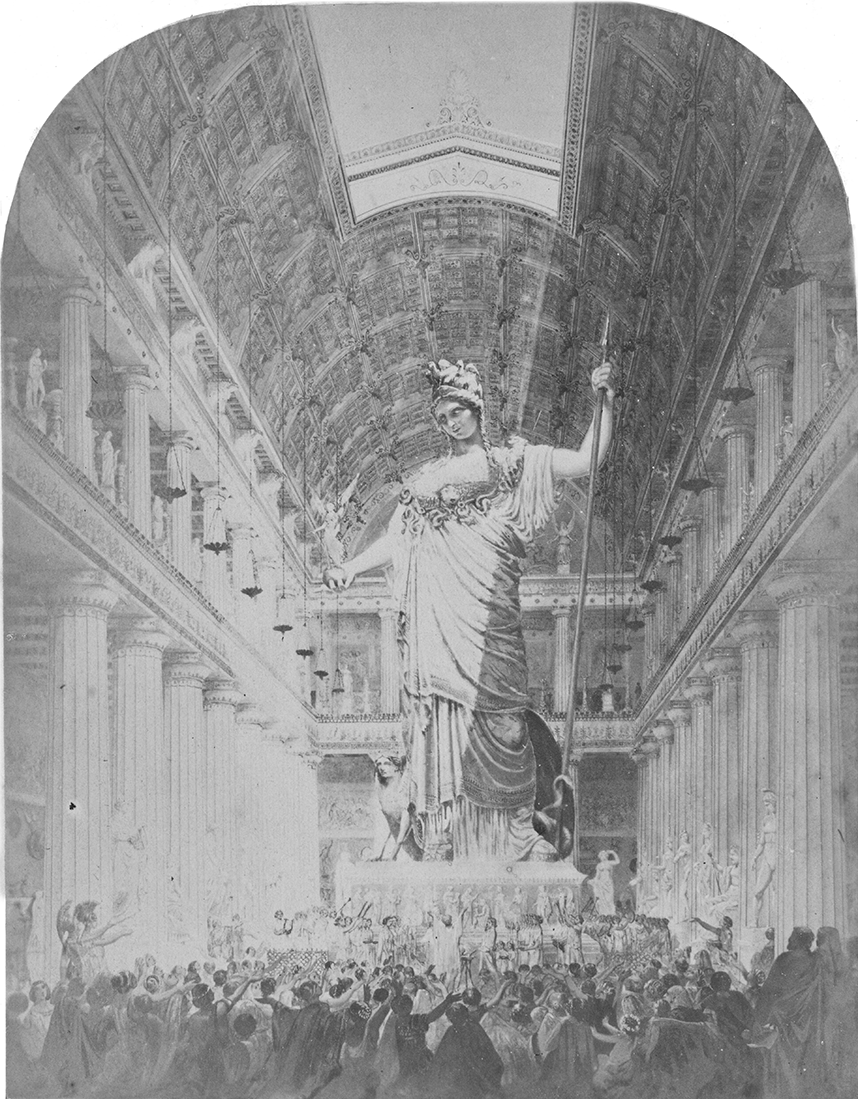
These discussions on illumination have been a subject of interest since the European Enlightenment.Footnote 3 The earliest study was conducted by the pre-eminent art historian, architect and archaeologist of his era, Antoine Chrysostome Quatremère de Quincy (1755–1849). In Reference Quatremère de Quincy1815, Quatremère de Quincy published his seminal work, Le Jupiter Olympien, an investigation of sculpture and toreutics which sought to distance itself from the idealised and colourless portrayal of ancient Greece advocated by J.J. Winckelmann (1717–68). Quatremère de Quincy strove to offer innovative solutions by visualising descriptions based on Pausanias’ writings (such as 1.24.5–7). Pausanias’ words were not the sole influence on Quatremère de Quincy’s perception of the temples’ interior. Drawing inspiration from Vitruvius’ descriptions of roofless spaces (i.e. hypaethral temples), and acknowledging the inherent darkness of Greek temples, Quatremère de Quincy imagined and visualised Greek temples with statues beneath open skylights (3.2.8; cf. Fig. 2). This preliminary investigation on the subject of light led Quatremère de Quincy (Reference Quatremère de Quincy1818) to publish a second piece of research exclusively on this same topic of light.
View of the interior of the cella of the Parthenon, following Quatremère de Quincy models, by Edward Falkener (British, 1814–96). J. Paul Getty Museum, Los Angeles, 84.XB.944.4.1. Photo: Falkener Reference Falkener1861.

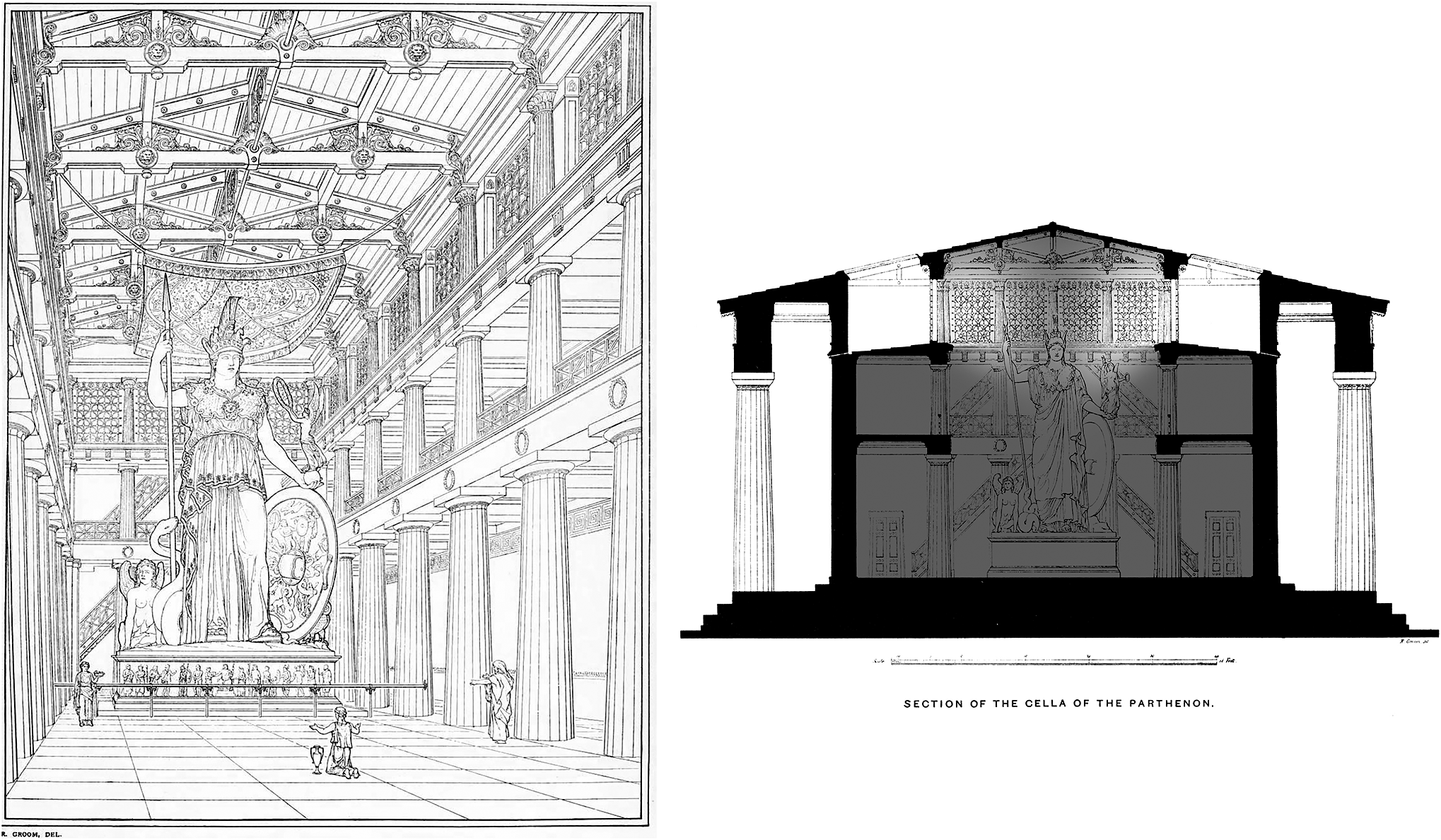
After this, one of the most comprehensive and daring investigations of the illumination of the Parthenon was carried out by architect James Fergusson between 1849 and 1883.Footnote 4 Fergusson contested the notion that light coming from the main entrance or lamplight alone was sufficient to illuminate both the statue and the interior. Instead, he proposed a structural arrangement inspired by the hypostyle halls found in Egyptian temples, and argued that the Parthenon might have included a series of clerestory windows above the cella to enhance illumination (Fig. 3).Footnote 5 While innovative, this hypothesis has since been discredited due to its inconsistency with archaeological evidence, and the issue of a lack of any practical drainage system for the water that would have accumulated in the clerestories (Orlandos Reference Orlandos1949; Reference Orlandos1976–7).
View of the interior of the cella of the Parthenon, by Fergusson and Groom. Photo: Fergusson Reference Fergusson1883, 144 and pl. IV.

In 1897, when a life-size replica of the Parthenon was completed in Nashville for the Tennessee Centennial Exposition, the dark nature of this Greek temple interior became apparent. Architects and historians of this epoch struggled to fathom the possibility of such seemingly dimly lit spaces housing intricate gold and ivory statues of colossal dimensions. This data somehow contested the first-hand accounts of ancient travellers, which suggested that the counterpart of the Parthenon, the temple of Zeus in Olympia – built in 479 BCE by Libon and refurbished around 432 BCE by Phidias – appeared to be relatively well lit. Pausanias (5.11.1–5.12.8) provides descriptions of the temple indicating a discernible level of visibility, where all details were evidently perceivable, even those found in the innermost part of the temple.
Since the nineteenth century, the issue of how temples were illuminated has continuously piqued academic interest (e.g. Partida Reference Partida and Kokkorou-Alevra2020; Williamson Reference Williamson and van Opstall2018; Miles Reference Miles and Miles2016a; Schneider and Wulf-Rheidt Reference Schneider and Wulf-Rheidt2011; Hennemeyer Reference Hennemeyer2011; Varanese Reference Varanese2011; Bettini Reference Bettini2010; Saget Reference Saget2005; Berard Reference Berard2002; Williamson Reference Williamson1993; Dörpfeld Reference Dörpfeld and Hirsch1913). Notably, the contributions of scholars such as Wolf-Dieter Heilmeyer and Wolfram Hoepfner (Reference Heilmeyer and Hoepfner1990), as well as Arnd Hennemeyer (Reference Hennemeyer2011; Reference Hennemeyer and Patay-Horváth2015), have enriched research in this field. The author of the present article has recently joined in the efforts to gain a better understanding of the illumination of ancient Greek temples (de Lara Reference de Lara2023a; Reference de Lara2023b).
Now, back to the mode by which temples may have been illuminated: scholars have consistently identified a number of hypothetical tools and methods of illumination, which are succinctly elaborated upon below.
Solar alignments and hierophanies
The Parthenon, like many other Greek temples, was oriented towards the east.Footnote 6 A widely accepted view among researchers and scholars is that the primary motivation behind the cardinal alignment of Greek temples towards the east was symbolic.Footnote 7 Some scholars have assumed this arrangement facilitated the flow of morning light into the building, and functioned as a visual axis that guided light towards the cult statue.Footnote 8 Because of this, attempts have been made to link the morning sun with the phenomenon of a beam of sunlight entering the interior of the temple at dawn and illuminating the statue – in a mode that evokes Aeschylus’ ‘sun-facing gods’ (Agamemnon 519).Footnote 9
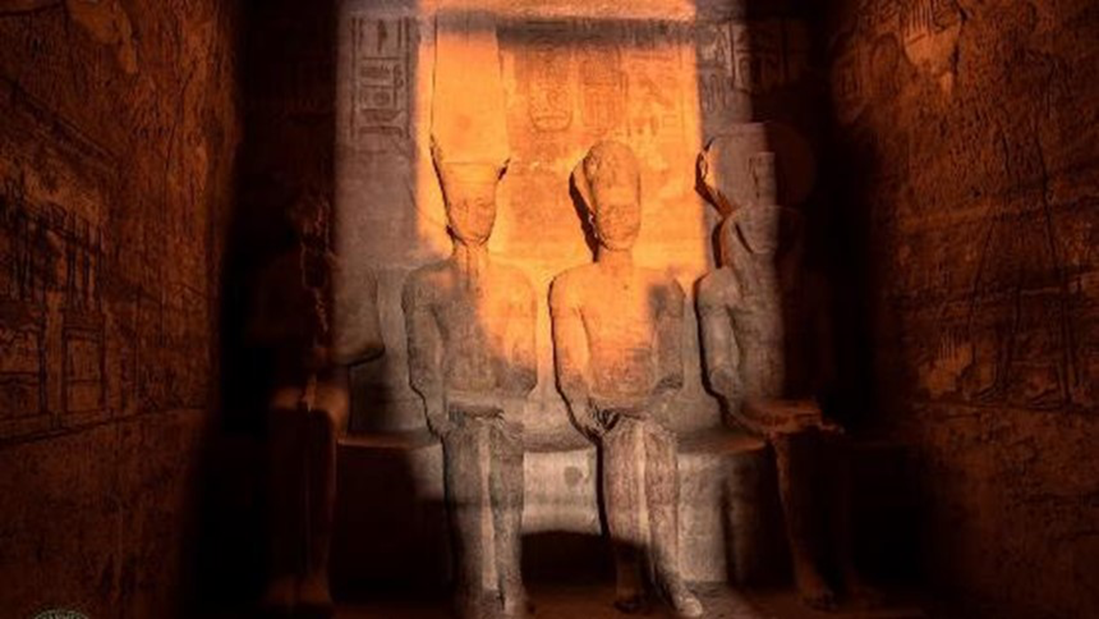
This alignment of the temple entrance with the cult statue has been considered as a way in which to communicate the manifestation of the divine, also termed hierophany by some authors.Footnote 10 The effect is common in other cultures, and can be observed, for example, in pharaonic Egypt (Fig. 4). In the case of the Parthenon, and due to the unobstructed eastward view of the temple towards the hills of Mount Hymettos, it is not surprising that this specific phenomenon has been widely assigned to this building.Footnote 11
The ‘hierophany’ in the inner room of the main temple of Abu Simbel at dawn on 22 February 2004. Photo: courtesy of Enrico Sandorini.

Studies of temple entrances have revealed a trend over the Archaic and Classical periods: that the style of these openings gradually widened over time (Williamson Reference Williamson1993, 13). This evolution could, of course, indicate advancements in building techniques, allowing for better distribution of weight in the walls and therefore larger openings, but it could also reflect a growing desire to allow more natural light into the temple.
Fergusson (Reference Fergusson1883, 109) also noted that the door of the Parthenon did not open directly to a wide-open sky – indeed, the distance between the door and the beginning of the stylobate was more than 12 meters, and was covered by a roof. For this reason, he has expressed reservations regarding the extent to which light managed to penetrate the interior from the main door. To make matters worse, it must be emphasised that the porch that extended over the main door was also walled by some sort of wooden lattice or fence, which probably would have filtered and blocked light.Footnote 12
To date, no study has effectively quantified the volume of morning light that entered this building, nor have the resulting effects, their duration and their implications been examined. The acquisition of this data, broken down in the second part of this article, contributes to a better understanding of the visual experience within the interior and the effects of these phenomena.
Translucent roofs
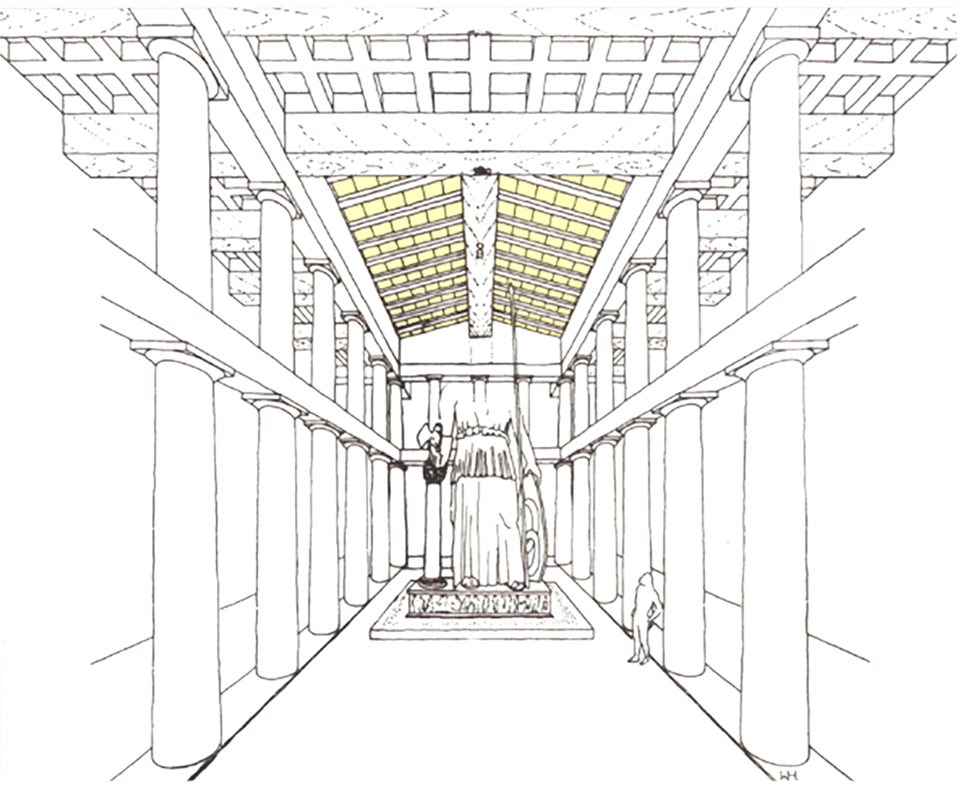
Around the same time Fergusson was working on his study, another unconventional theory took root when Francis Penrose (Reference Penrose1851, 46, note 3) noted the thickness of the marble roof tiles of the Parthenon. He came to believe that they were, in reality, translucent, and he pondered whether their purpose may have been to diffuse light in the cella: as sunlight passed through the tiles, the transmitted light was scattered in all directions through the interior, creating a bright and diaphanous space. Penrose was convinced that the original tiles of the building were carved out of Parian marble, as opposed to the local Pentelic marble used in the rest of the structure. This particular choice would have entailed the additional cost of shipping and land transportation from the Cyclades, significantly raising the net total cost of the construction project. If such cost was incurred, there must have been something special about this material: one possible reason is that Parian marble offered superior translucency compared to other types of marble (Fig. 5).Footnote 13
View of the interior of the Parthenon with a suggested arrangement of the roof with visible translucent roof tiles (in yellow). Image: Hoepfner Reference Hoepfner2001, 505.

In later years, translucent roofs were also attributed to other buildings, notably some Cycladic temples (Hoepfner Reference Hoepfner2001) and the temple of Zeus in Olympia, which was equipped with marble roof tiles that Pausanias (5.10.3), in the Roman era, identified as made of ‘Pentelic’ marble. This choice suggests once again a deliberate intention, which some authors have linked to translucency (Hennemeyer Reference Hennemeyer and Patay-Horváth2015; Reference Hennemeyer2013; Reference Hennemeyer2011; Patay-Horváth Reference Patay-Horváth2014).
Ohnesorg (Reference Ohnesorg2011) has argued against the existence of a configuration in which the roof tiles would have been visible for most of these temples: structural limitations demonstrate the presence of a ceiling over the cella. However, Ohnesorg (Reference Ohnesorg2011; Reference Ohnesorg and Ainian2017, 60) did note that in some temples from the island of Naxos, like the temple of Sangri, the effect may have been possible. In more recent times, Ohnesorg (Reference Ohnesorg and Katsonopoulou2021) has questioned and raised doubts on whether achieving optimal lighting was the ultimate goal of such a design.
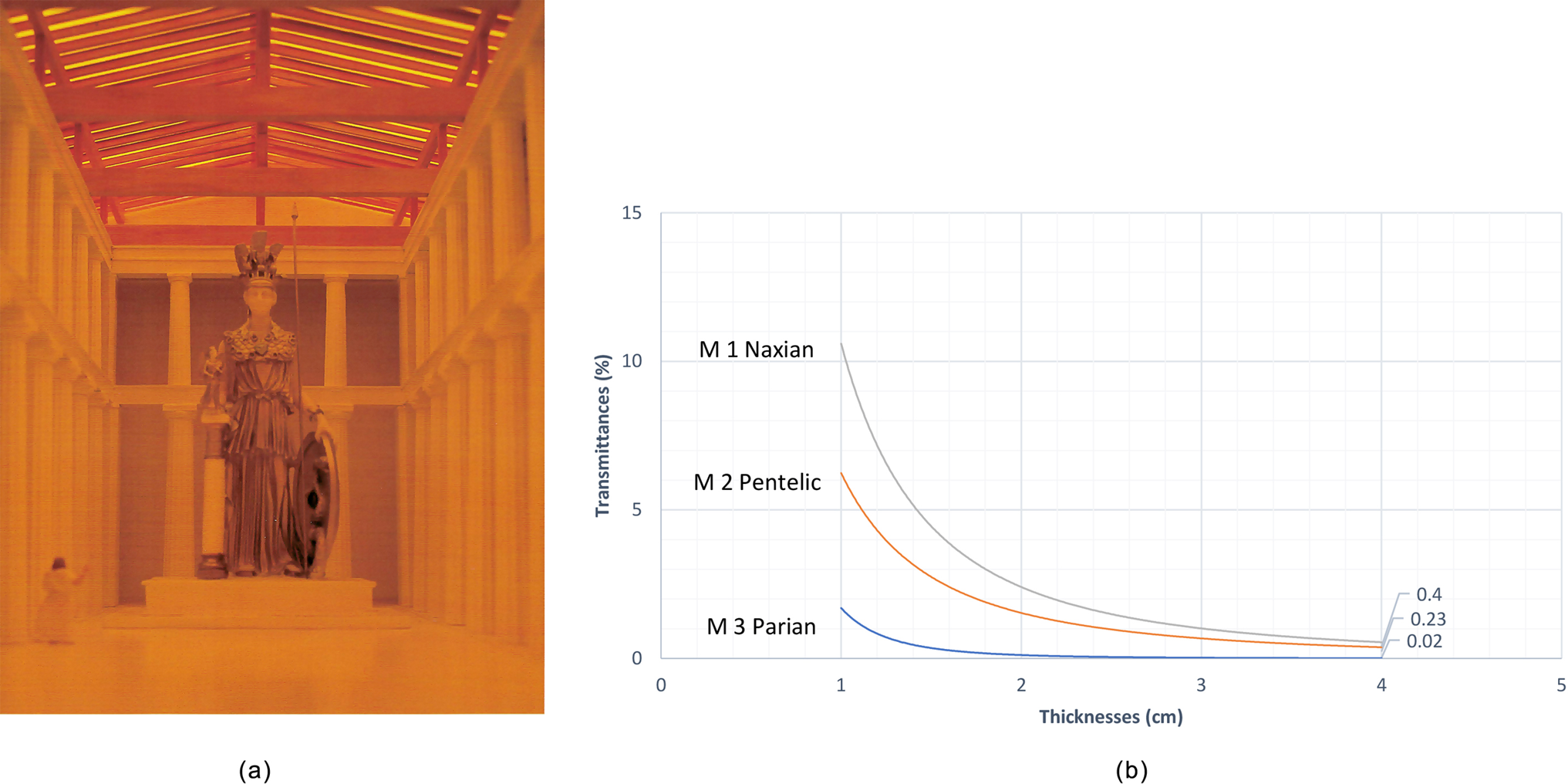
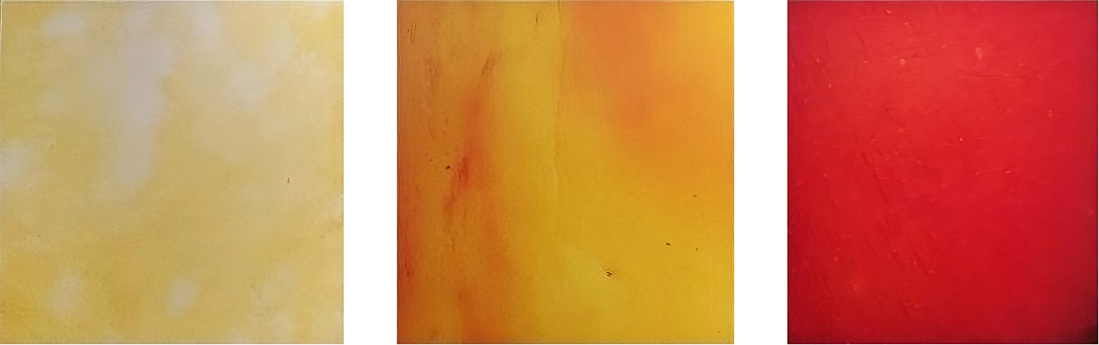
The major proponent of this lighting strategy in the Parthenon has been Kozo Ike (Reference Ike2006, 117–35; Ike and Otaki Reference Ike and Otaki1998) (Figs 6 and 7). His studies aimed to show the translucency levels of various marble samples, and the effect that Parian marble, in particular, had in the Parthenon. The experimental reconstruction calculated the translucency values of different marble samples and measured the amount of light that was therefore blocked when passing through the material. The results showed that Naxian marble had the highest translucency, followed by Pentelic and finally Parian. While Ike’s methodology initially may seem sound, his resulting scale model of the temple, which featured an exceptionally translucent roof and a remarkably luminous interior, did not account for other elements that might have affected interior illumination. This raises questions about the accuracy of his metrics and prompts a re-evaluation of his findings (de Lara Reference de Lara2023b).
(a) Scale model of the Parthenon showing red-tinted light coming through the marble tiles (photo: Ike and Otaki Reference Ike and Otaki1998, 239). (b) Variation graph of the transmittance values in proportion to the thickness for the three marble specimens of M1 Naxian, M2 Pentelic and M3 Parian marble (image: Juan de Lara, after Ike and Otaki Reference Ike and Otaki1998, 239).

Variation of the visible transmittance in three marble specimens of Naxian, Pentelic and Paros marble. Image: Ike and Otaki Reference Ike and Otaki1998, 239.

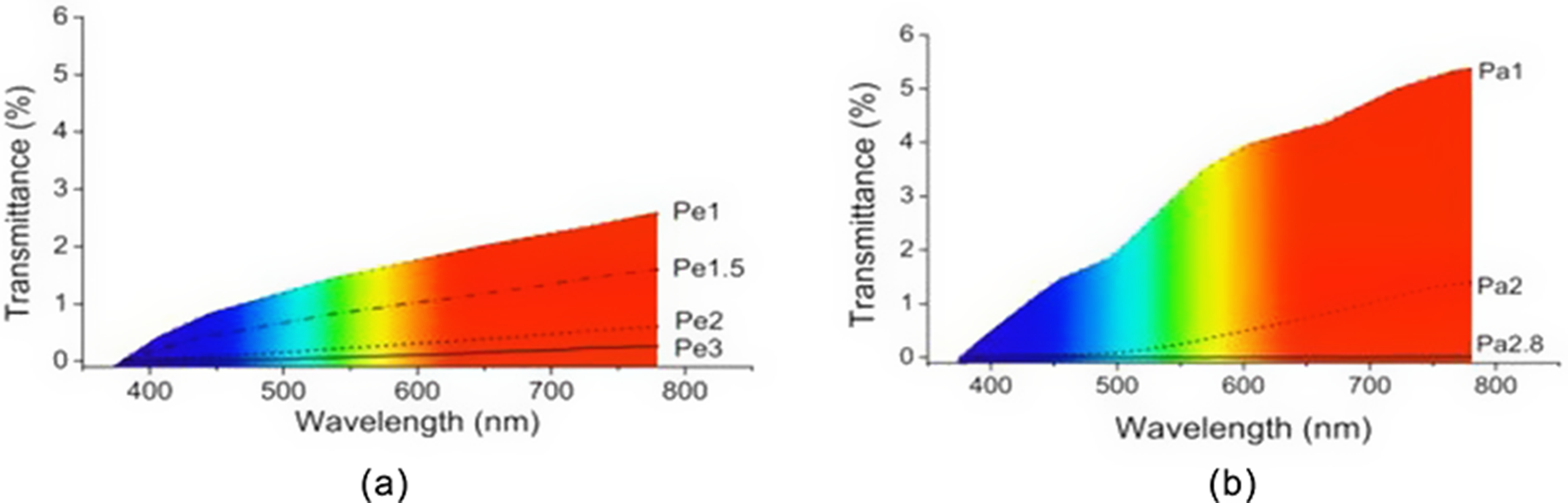
In addition to Ike’s work, we must also mention a recent study that has suggested the tiles of the Parthenon were not of Parian but of Pentelic marble (T.L. Shear Reference Shear2016, 91). This new attribution challenges the aforementioned assumptions regarding the intentionality of using tiles as translucent devices to channel natural light into the interior (cf. Ohnesorg Reference Ohnesorg1993; Reference Ohnesorg2011; Reference Ohnesorg and Katsonopoulou2021). Weigand, García Campos Acosta and Storch de Gracia (Reference Weigand, García Campos Acosta and Storch de Gracia2015) have attempted to obtain more data on the translucency of marble samples that may have been used in the similar roof conceived for the temple of Zeus in Olympia. Their research challenges Ike’s results (shown in Fig. 5b), as it shows that the translucency of Parian marble on a 1 cm thick sample is very high, and particularly good at transmitting the red spectrum of colour, but when the sample thickness is over 2.8 cm, it falls below the factor of Pentelic marble (Fig. 8).
Total spectral transmittance measurements for samples of Pentelic (a) and Parian (b) marble, sampled by thickness (Pe1, Pe1.5, Pe2, Pe3 and Pa1, Pa2, Pa2.8). Image: Juan de Lara, after Weigand, García Campos Acosta and Storch de Gracia Reference Weigand, García Campos Acosta and Storch de Gracia2015.

In conclusion, these two research pieces now reveal that Parian marble was indeed the type of marble with the highest translucency, but only for very thin samples. If a roof tile was to be carved with a thickness of 4 cm, as is the case of the Parthenon, Naxian marble would have been the best choice, with the highest translucency index. However, the historical evidence confirms that the roof tiles of the Parthenon were actually made of Pentelic marble, a material with mid-translucency, and consistent with the rest of the building. Moving forward, we will evaluate the impact of this material on the overall interior viewing experience and determine whether its effect, a persistent trope in recent scholarship, was indeed achievable (Berard Reference Berard2002; Saget Reference Saget2005, 32; Malacrino Reference Malacrino2010, 18; García Pastor Reference García Pastor2013, 200–22; Weigand, García Campos Acosta and Storch de Gracia Reference Weigand, García Campos Acosta and Storch de Gracia2015; Barry Reference Barry2020, 15–33; Barringer Reference Barringer2021, 131; Anguissola Reference Anguissola, Anguissola, Castiglione and Guidetti2021).
Skylights and apertures in the ceilings
As noted earlier, one of the illumination methods that scholars initially argued in favour of was open roofs. This type of temple configuration, known as hypaethral, was primarily documented by Vitruvius (1.2.5, 3.2.1, and 8), and gave rise to the historical ‘hypaethral question’, a complex and intricate debate on whether certain temples were intentionally designed to be open to the sky (Herrmann Reference Herrmann1844; Ross Reference Ross and Ross1846; Boetticher Reference Boetticher1847; Falkener Reference Falkener1860, 1–24; Reference Falkener1861; Clarke Reference Clarke1879; Hellmann, Fraisse and Cazalas Reference Hellmann, Fraisse and Cazalas1982).
Today, the accepted answer to this question is that some sacred structures were indeed designed as open-air spaces, but this peculiarity was largely concentrated in sanctuaries in Sicily and Asia Minor.Footnote 14 In the case of the Parthenon, the notion of a hypaethral design was considered by figures such as Cockerell (Reference Cockerell1860) and Falkener (Reference Falkener1860). However, this hypothesis of an open roof (as with Fergusson’s clerestories) now needs to be discarded due to the lack of archaeological and structural evidence to support such an arrangement (Wikander Reference Wikander1983, 96).
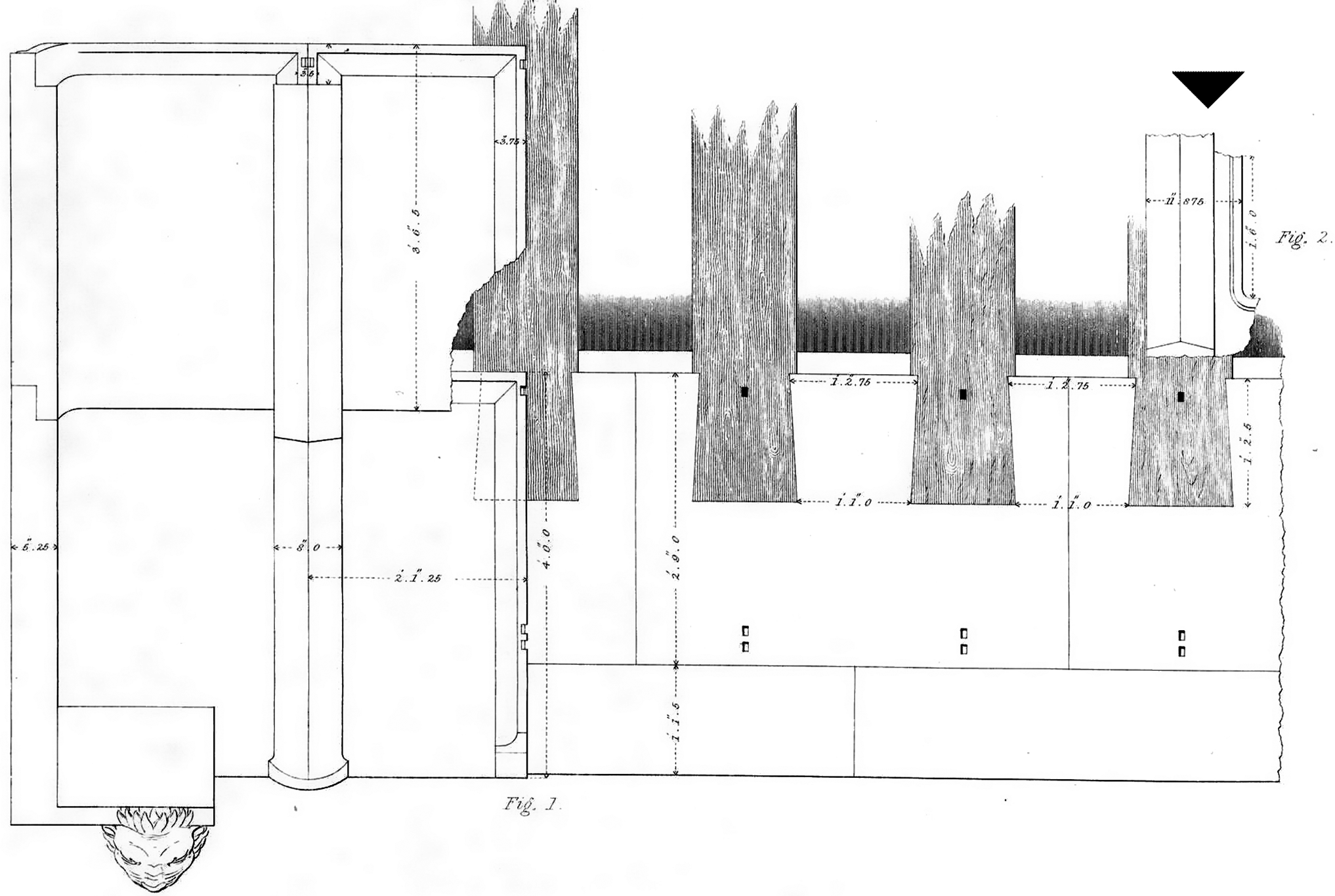
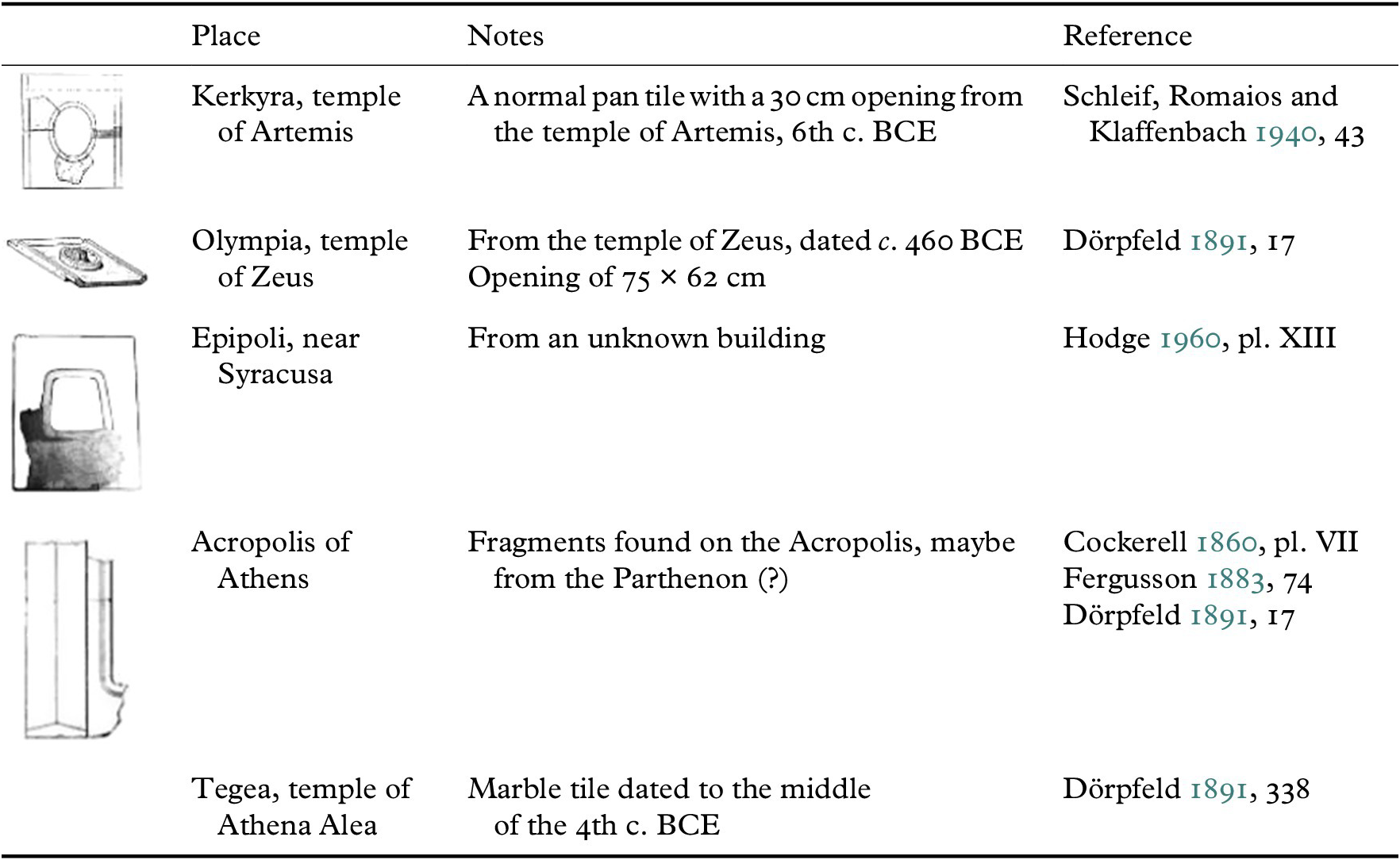
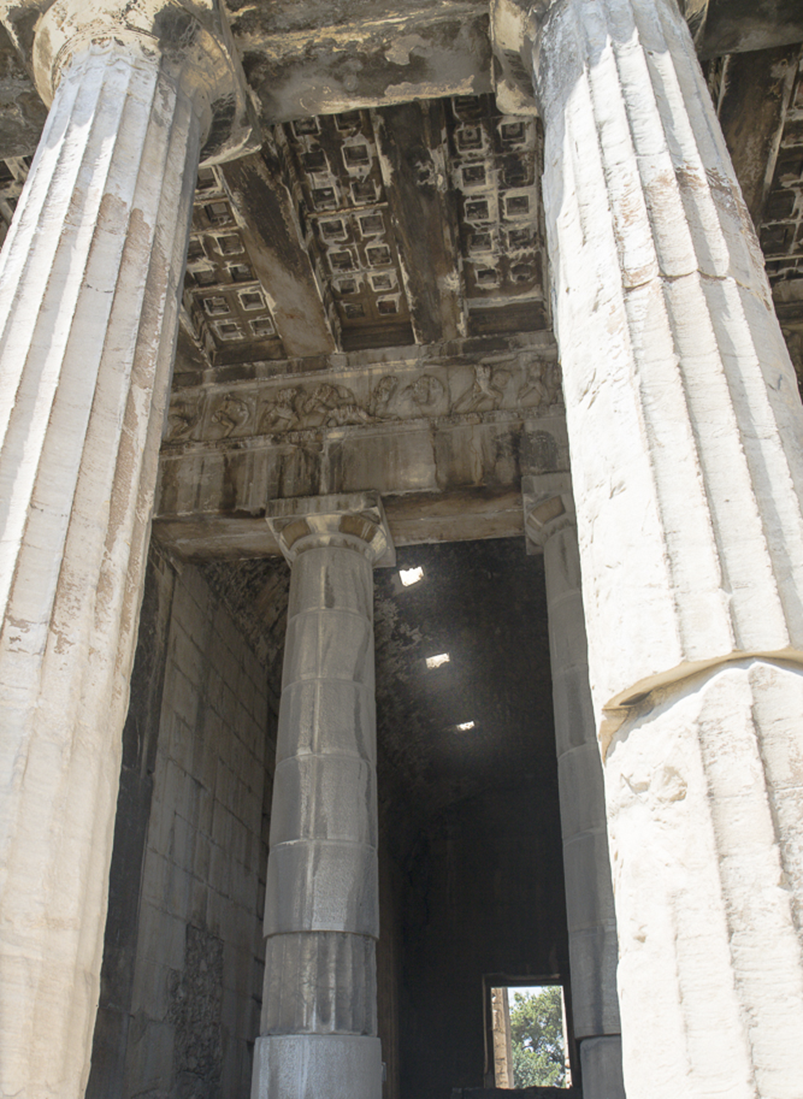
There is another pertinent theory associated with openings in the ceiling, involving the presence of smaller apertures in the roof. In Reference Falkener1860, Cockerell identified in certain marble pan tiles from the Acropolis – presumably originating from the Parthenon itself – some irregularities, namely cuts that seemed to outline the edges of an opening, a shape referred to as opaia (Fig. 9). Historically, tiles bearing such cuts and with such shapes were not confined to any specific type of structure; they have been discovered in a plethora of contexts, including stoas, private residences, kitchens and temples (Table 1). In these settings, opaia could have improved lighting conditions and increased air circulation. In kitchens, providing outlets for smoke would have been a primary concern. In temples, the burning of large quantities of incense or the use of lamps and fires produced significant smoke, making ventilation outlets a necessity (Fitchen Reference Fitchen1981, 496). But in addition to this, we could imagine that these small holes might have created shafts of light that enhanced the ambient lighting within a temple (compare with Fig. 10).
Drawing showing the architectural roof structure of marble slabs in the rooftiles of the Parthenon. The arrow shows the opaion. Image: Cockerell Reference Cockerell1860, pl. VII:2.

Selection of pierced stone roof tiles found in temple contexts.

View of the barrel vault in the Hephaistion in Athens. During the later medieval reconstruction of the building, holes were added in the new vault, possibly to improve illumination or air circulation. Courtesy of ancient-greece.org.

While this theory is intriguing, archaeologists and artists involved in meticulous reconstructions have encountered the challenge of physically locating the fragments of opaia in modern storehouses. For instance, this is the case of the temples of Zeus in Olympia and Apollo in Bassai, where similar tiles were documented in the previous century, but all of which are currently missing from the records, and efforts to locate them have been fruitless (including the present author’s). Consequently, archaeologists are working with highly speculative material, as for an accurate reconstruction, a number of tiles will need to be placed to test and determine the quantity of apertures required for an effective lighting effect.Footnote 15
Pools of water as reflective tools
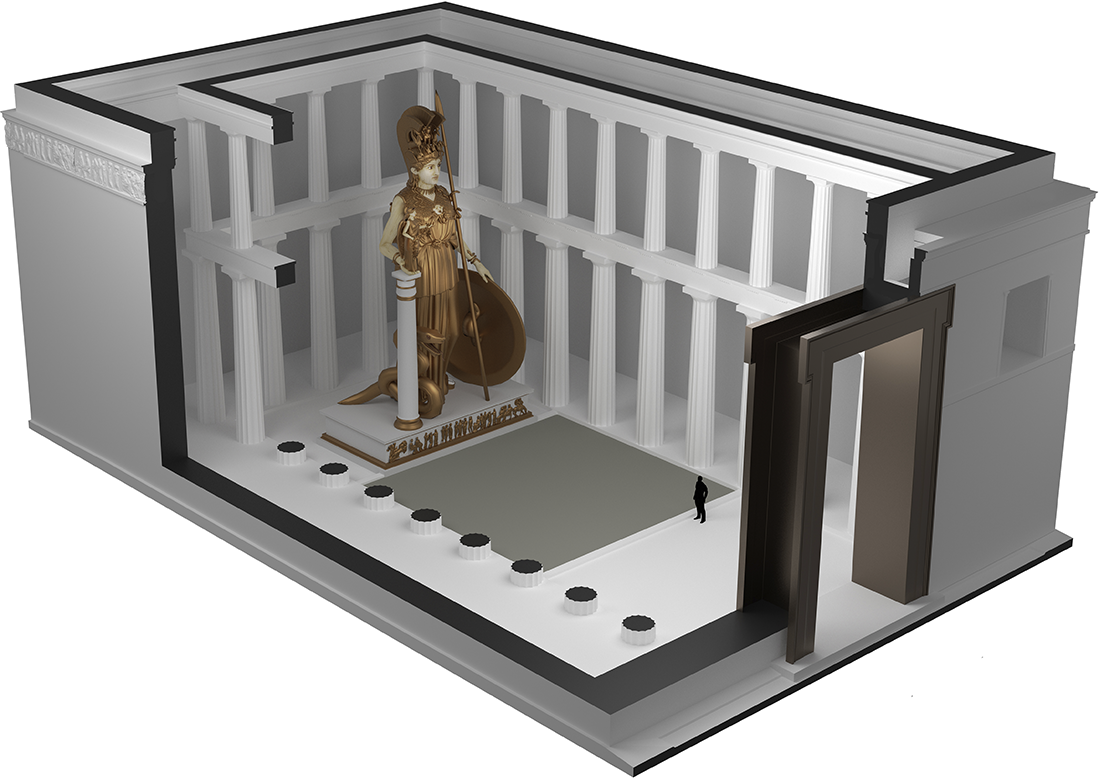
In the second century, Pausanias (5.11.10–1) documented the presence of a pool filled with water in the Parthenon’s interior (Fig. 11). Its existence was later confirmed by Stevens (Reference Stevens1955, 267–70), who identified marks in front of the statue of Athena that once fixed the curb that contained water. It is worth mentioning that Pausanias had also seen a similar pool in the temple of Zeus, filled with oil (Fig. 12), which was incorporated into the temple following an intricate readaptation process undertaken by Phidias around 432 BCE, parting from the older temple designed by Libon of c. 470 BCE (Hennemeyer Reference Hennemeyer and Patay-Horváth2015). It has been argued that the pool in Athens was a direct response to or influenced by the design of the pool in the temple of Zeus in Olympia, and finished shortly after the one in Olympia was completed (Hurwit Reference Hurwit, Barringer and Hurwit2005, 142; Taraporewalla Reference Taraporewalla, McWilliam, Puttock, Stevenson and Taraporewalla2011, 42–4).
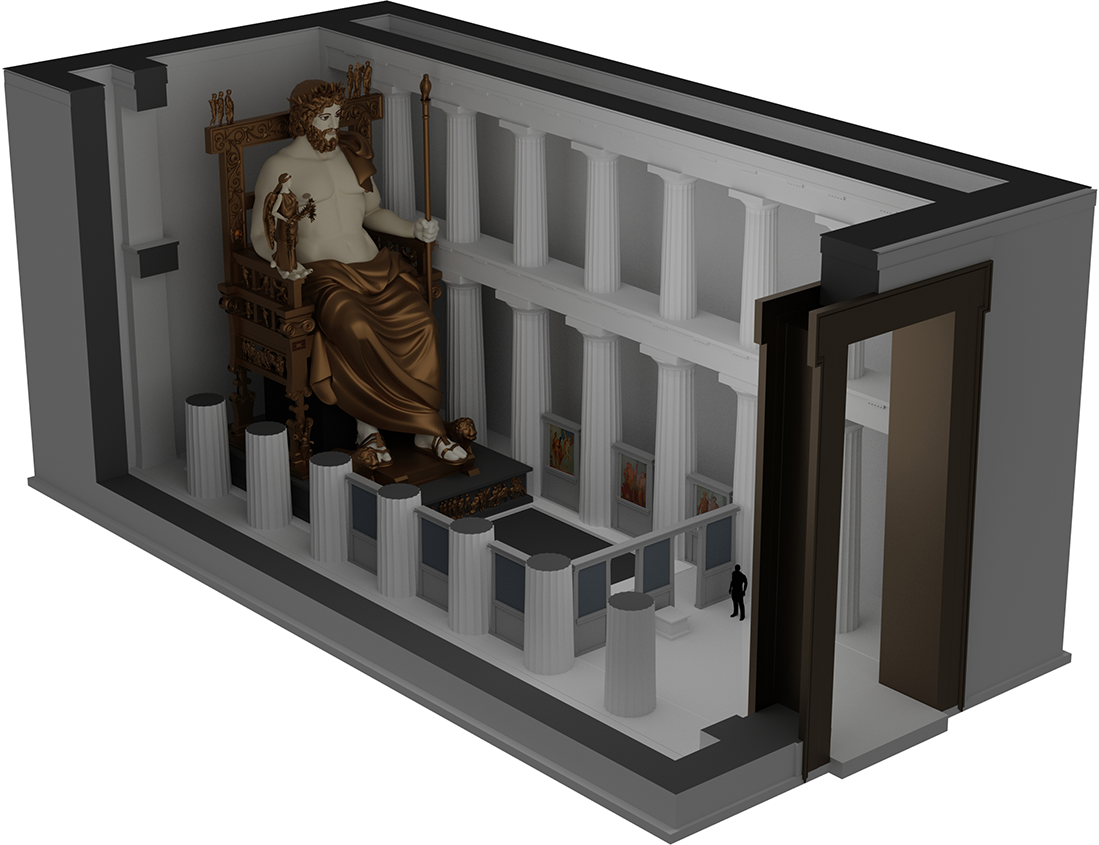
Cutaway view of the cella of the Parthenon, with the area for the pool shown in dark grey. Render: Juan de Lara.

Cutaway view of the cella of the temple of Zeus in Olympia, with the area for the pool shown in dark grey, surrounded by a hypothesised reconstruction of the parapets described by Pausanias. Render: Juan de Lara.

But what were these pools for? The periegetes remarked that they were installed to regulate humidity within the interior spaces: the water in the Parthenon helped to preserve the ivory and wooden core of the statue in the dry environment of Athens, while the oil in the temple of Zeus helped to regulate the humidity coming up from the marshy ground in which the structure was built. For Kenneth Lapatin (Reference Lapatin2001, 86), the authority on chryselephantine statuary and ivory sculpture in antiquity, neither of these purposes can be ruled out.
In addition to these properties, in Reference Boardman1967 Boardman proposed that these pools and their liquids could have been used to better illuminate the statues, acting as mirrors to redirect sunlight onto them. The potential aesthetic effect of this pool becomes more pronounced in Phidias’ refurbishing of the old Olympian temple. Here the artist had to disassemble and reassemble part of the older temple to accommodate for the new chryselephantine statue. But the artist went a step further – he incorporated a novel basin, quite sophisticated and complex, lined with dark stone and placed it in front of the statue (Taraporewalla Reference Taraporewalla, McWilliam, Puttock, Stevenson and Taraporewalla2011, 44). In the eyes of other scholars, this choice of a dark material was presumably to enhance reflectivity (Gaugler and Hamill Reference Gaugler and Hamill1989).
In 1989, an experiment led by Gaugler and Hamill aimed to measure how much the presence of oil or water affected the humidity of an enclosed room, and whether the reflected image of the statue would have been visible to an observer standing at the edge of the pool. Both authors used environmental chambers that could simulate dry and hot versus cold and damp climates. Strips of ivory glued to cedar were placed in these chambers in order to determine any preservative effect over them. But upon observation of the results, Gaugler and Hamill eliminated any practical benefits over the material. In their view, water could help to keep the glue more elastic, but the contribution was marginal. In the case of oil, no effect on the relative humidity was noted other than providing a suitable reflective surface. Therefore, they concluded the pools may have had an aesthetic function. Another experiment led by Claudia Wölfel (Reference Wölfel1990) also aimed to demonstrate a reflective function, but due to the use of inaccurate surface materials – such as cardboard and tinfoil attempting to replicate marble and water – the results lack accuracy, as these materials do not have the same reflective indexes as marble or gold.
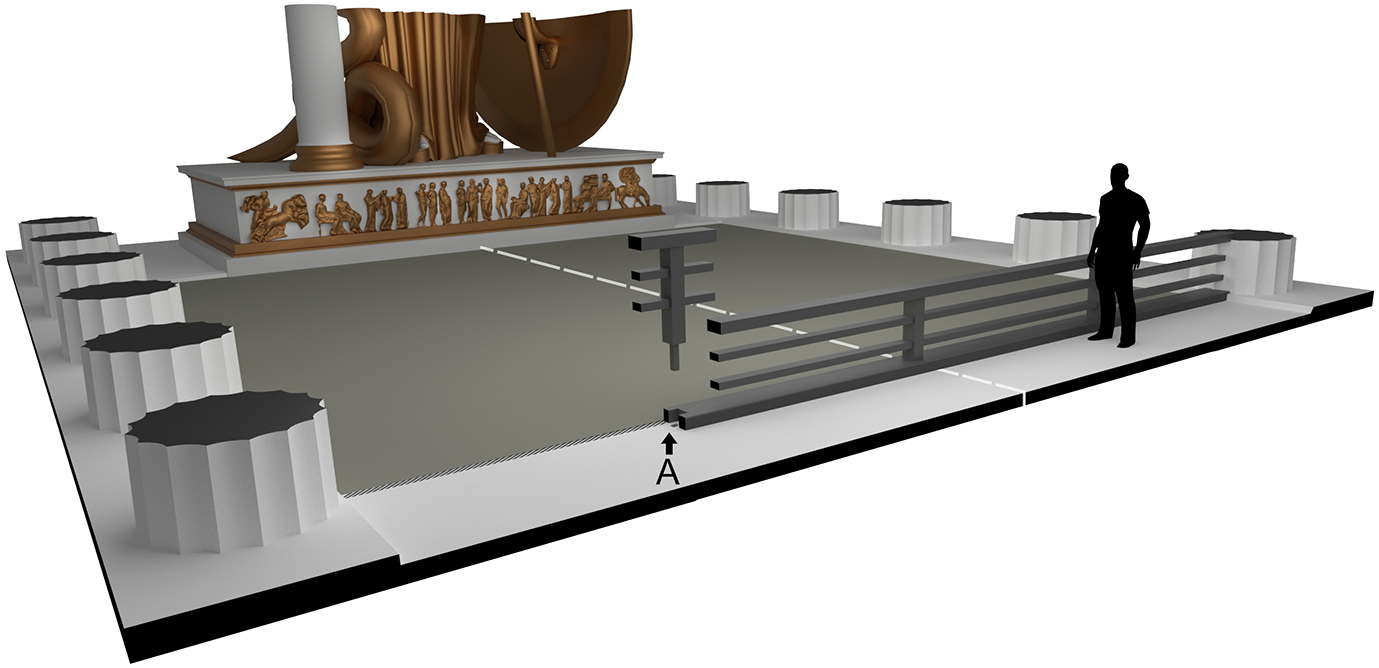
As a result of all these experiments and debates, the practical function of these pools for reflecting light remains widely accepted within current scholarship (Leipen Reference Leipen1971; Lapatin Reference Lapatin2001, 134; Barry Reference Barry2007, 639–40; Reference Barry2020, 32–3; Boutsikas Reference Boutsikas2020, 14). However, there are some who have questioned this idea. For instance, Hennemeyer (Reference Hennemeyer2011) challenged the efficacy of this theory and proposed an alternative interpretation for the temple of Zeus, suggesting that the pool’s purpose was to reflect light from skylights and not from the main entrance. The consideration of the pools as reflecting mirrors for light is further complicated by recent reinterpretations of fences or barriers that might have been positioned in front of the pools in both the Parthenon and the temple in Olympia. If such barriers of unknown height and unknown shape did exist in the Parthenon, they could have blocked sunlight coming from the door from reaching the pools (Fig. 13; Stevens Reference Stevens1955, 267–71; Mattern Reference Mattern, Mylonopoulos and Roeder2006; Reference Mattern2007, 152–3; Mylonopoulos Reference Mylonopoulos, Wallensten and Haysom2008, 272–5; de Lara Reference de Lara2023a, 193–212).
Pool area (light grey) contained within the rim of the cella colonnade and curbs. Stevens’ (Reference Stevens1955, 268) dowel location marked as ‘A’. The fence has been reconstructed as railed, following ancient Greek models. Render: Juan de Lara.

Windows
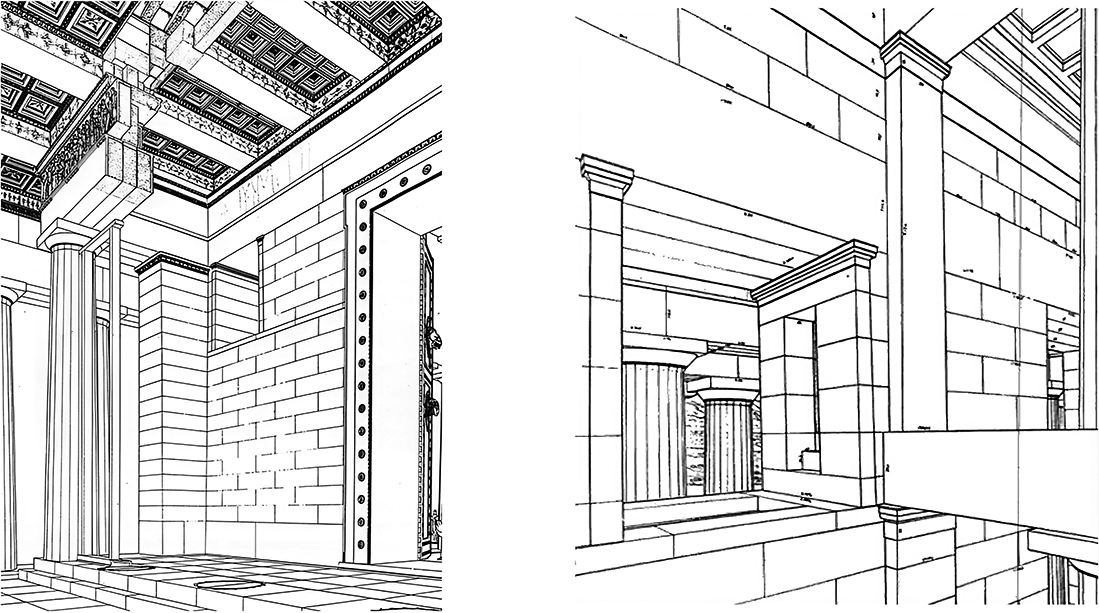
One of the most important discoveries in relation to light in the Parthenon involved the identification of two windows flanking the east-facing door (Figs 14 and 15; Korres Reference Korres and von Zabern1984; see also Herbig Reference Herbig1929; Skrabei Reference Skrabei1990; Williamson Reference Williamson1993, 25; Bankel Reference Bankel1993; Montel Reference Montel, Jockey, Seccaroni and Glanville2018, 43). Each of these openings was 2.5 m wide and 2.5–3 m high, and no marks for grilles or shutters were found.Footnote 16
Perspective drawings of the north window containing the staircase found in the Parthenon. Image: Korres Reference Korres and von Zabern1984.

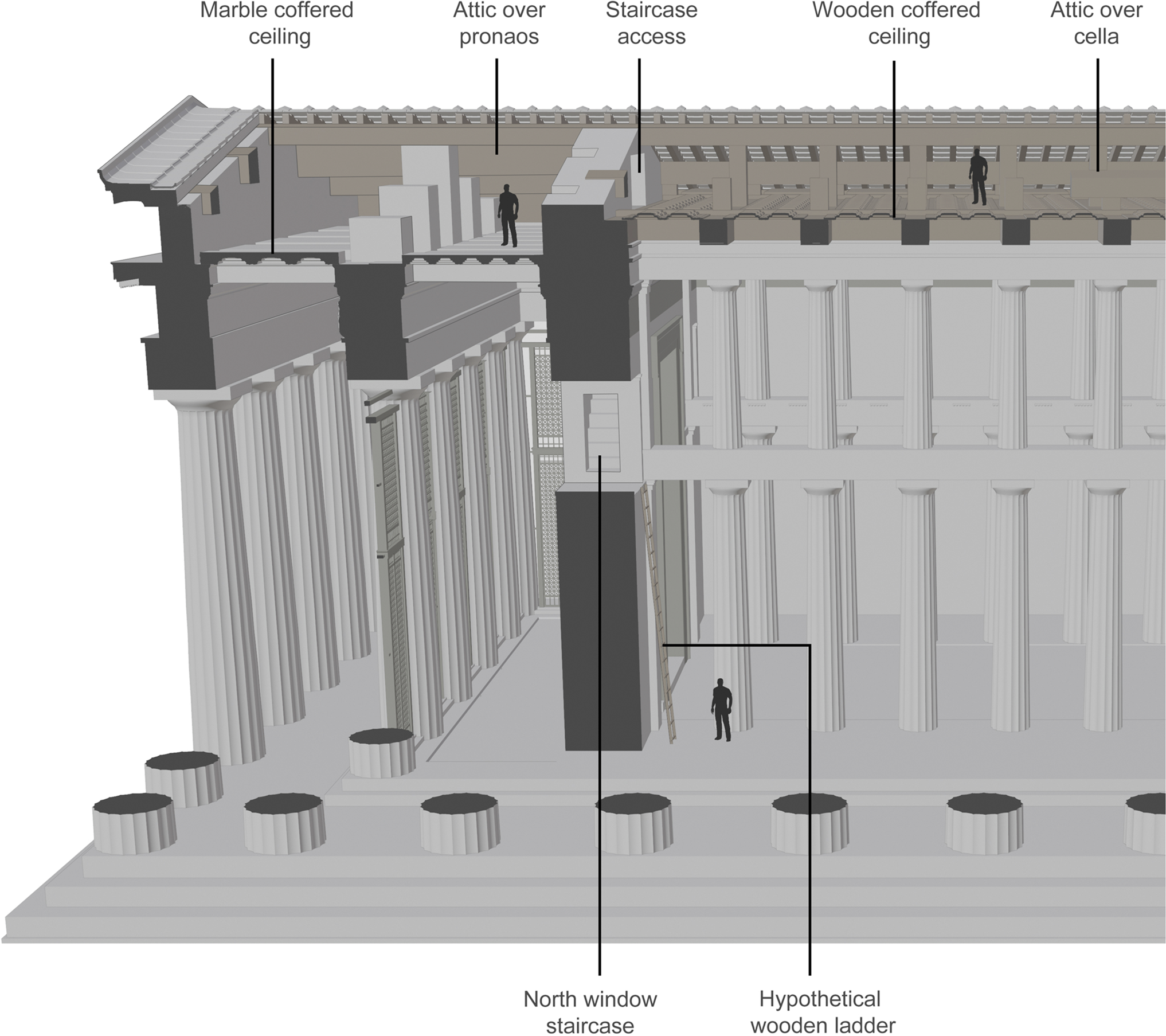
Cross-section view of the Parthenon from the north, showing the concealed areas above the cella. Render: Juan de Lara.

These windows were positioned in line with and above the lateral aisles formed by the interior colonnade of the temple. Lighting was presumably needed in these lateral corridors, as they accommodated a vast number of votive offerings, many of which could be considered artworks of some significance (Harris Reference Harris1991; Reference Harris1995). In addition, recent archaeological investigations led by Vasileia Manidaki (Reference Manidaki, Neils and Palagia2022) have brought to light the existence of a decorative band on the upper segment of the interior wall, likely a carved or painted narrative frieze. Both the ritual equipment and the frieze would have required additional ambient light, as the sturdy pi-shaped colonnade blocked light coming from the door. In this context, the windows seem to have been a convenient solution.
Lamps
When considering an interior with limited natural light, a logical solution to this shortcoming is to resort to artificial illumination through lamps and/or fire. However, an archaeological quandary arises in relation to lamps: Pausanias’ descriptions of sacred enclosures scarcely reference them (2.17.7; 1.26.6–7; 7.22.2), with only three instances in which they are mentioned among the numerous temples he visited. Given this insignificant representation, one might question whether lamps were a commonplace fixture within temples and taken for granted, or on the contrary, whether they were a rarity.
Archaeological evidence primarily supports the existence of small portable and votive lamps, in many cases not meant to be lit, as was the case with a silver boat-shaped lamp found at the Erechtheion (Wachsmann Reference Wachsmann2012, 248). Other equipment, such as lampstands, candelabra and lamps/torch holders were not characteristic of the Classical period in the Aegean, though they were used in the Italian peninsula (Testa and Sannibale Reference Testa and Sannibale1989; Ambrosini Reference Ambrosini, Micheli and Santucci2021). The evaluation of more permanent fixtures, such as hanging lamps, presents greater challenges.
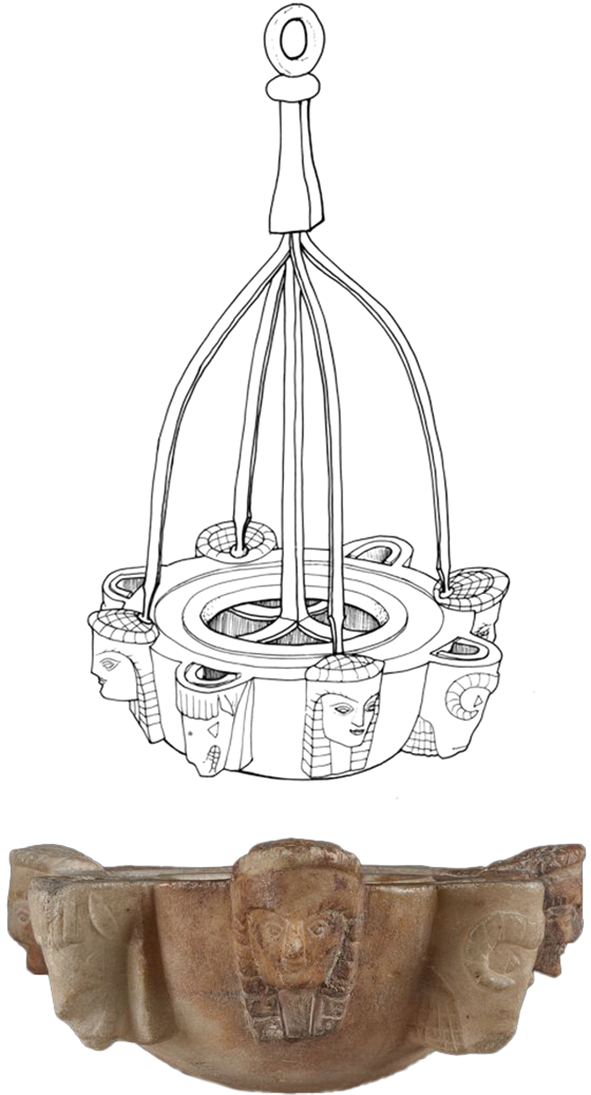
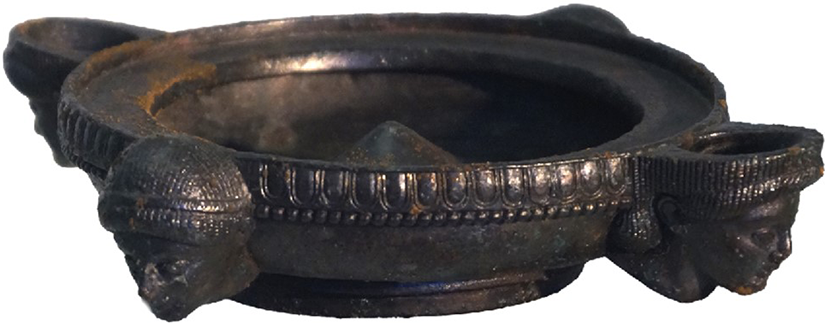
Hanging lamps made of marble were common in the Archaic period, and a number were found in the Acropolis (Fig. 16; Schrader Reference Schrader1939, 330, no. 451; Beazley Reference Beazley1940, 38; Payne and Mackworth-Young Reference Payne and Mackworth-Young1950, pl. 17). Nonetheless, marble lamps fell into disuse in the fifth century, after which archaeological records no longer provide further examples (Bailey Reference Bailey1975, 24; Beazley Reference Beazley1940, 29, 33, 34). That hanging lamps made of metal existed is evidenced by a number of them found in archaeological contexts. The most remarkable example, for instance, is a monumental fifth- or fourth-century lamp found in a tomb in Cortona (Italy), measuring 60 cm in diameter.Footnote 17 That similar lamps existed in mainland Greece between the fifth and fourth centuries is demonstrated by the discovery of one example in Phagres, now in the Kavala Museum, dated to the mid-fifth century (Fig. 17). On this same topic, Pliny (Natural History 34.8.14) describes a suspended sacred lamp, in the form of a hanging tree, which Alexander the Great had seized during his attack on Thebes (335 BCE) and dedicated to Apollo at Kyme (Carey Reference Carey2003, 83; Castoldi Reference Castoldi2014). ‘Arboreal’ lamps of this sort, like the golden palm tree crafted by Callimachus within the cella of the Erechtheion in the Acropolis (Pausanias 1.26.6–7), may have been a common configuration, as tree-shaped lamps became a popular theme in later Roman times (Castoldi Reference Castoldi2014, 7–23). Bearing in mind all this data, it is possible to hypothesise that lamps of precious metals may have once existed, before being melted down in some later period, and this might explain their absence in archaeological contexts.
A multi-nozzle marble lamp, probably from Naxos, found on the Acropolis of Athens and dating to the 6th century BCE. Acropolis Museum (Ακρ. 190). Photo: courtesy of the Acropolis Museum.

Bronze hanging lamp with decorative heads of youths, from a house in ancient Phagres, Kavala Museum, mid-5th century BCE. Photo: Schuppi, Wikicommons.

In the case of the Parthenon, only two small lamps – one of gold (weighing 38 drachmas) and one of silver (of 22 drachmas) – were documented in an inventory of the pronaos of the temple, but not in the cella (Harris Reference Harris1995, 66–7). The general absence of these in the inventories is peculiar, and there might be three reasons why these were not documented (or even found within the archaeological record). One, as said, is that they were taken for granted, and therefore not included. Alternatively, it is possible that they were made of bronze, in which case their inclusion in the inventories was unnecessary. A final possibility, which cannot be ruled out, is that lamps were not a common element of Greek temples. This was the opinion of Quatremère de Quincy (Reference Quatremère de Quincy1818, 176–80), who considered that the smell of burnt fat and the smoke produced by the sheer quantity of lamps that would have been needed to illuminate a temple as big as the Parthenon would have been overwhelming and that therefore artificial light was not desired within these spaces.
We may also want to contemplate the notion proposed by Dorina Mollou; she suggests that a solitary flame, likely positioned near the statue, was a more likely custom in Greek temples.Footnote 18 Assessing the evidence within a broader context that draws parallels from the religious landscape of different cultures, the arrangement of a single lamp can be proven a popular and effective practice, with clear spiritual purposes behind its use. The feature has been commonly called ‘the eternal flame’, an allegorical element with meanings beyond mere illumination.Footnote 19 For example, in the Bible the menorah is mentioned as the sacred lamp of the western section of the Temple of Jerusalem (Exodus 27:20–1 and Leviticus 24:2). In Jewish synagogues there is a lamp, the ner tamyd, which perpetually burns near the Ark of the Law (Yarden Reference Yarden1971, s.v. Eternal Light). In Ireland, remnants of a pagan practice survived Christendom. An example is the flame of St Brigid in Kildare, a fire that remained alight until it was extinguished by Henry de Loundres, archbishop of Dublin, in 1220 CE (Bray Reference Bray1992).
In a similar context, a fire was also often equated to the divine presence. This was, for instance, the case of the perpetual sacred fire of Vesta in Rome, a symbol of the goddess and her protection over the city (Frazer Reference Frazer1885). In Iran, the Achaemenids had three ever-burning Great Flames distributed across different temples within their Empire, one of which was extinguished by Alexander after the death of Hephaestion (Boyce Reference Boyce1979, 87 and 108). In a much later period, the early Muslim dynasties equipped their mosques with a symbolic single lamp hanging in front of the concave mihrab niche, its light meant to symbolise God’s brilliant presence on earth (Bonnéric Reference Bonnéric, Chrzanovski, Vidrih Perko and Nestorovic2019). Considering these tropes and the importance of a single perpetual flame in many sanctuaries of antiquity throughout various cultures, and with some records that appear to associate the practice with the ancient Greek world (e.g. Pausanias 1.26.6–7), the possibility that a similar tradition existed in Greek temples cannot be dismissed.
Digital reconstruction and experimental methodology
In order to assess all the aforementioned light strategies, a new methodology that can account for the physical properties of light and materials is needed. However, the current condition of the Parthenon hinders the examination of any of these phenomena on site. For this reason, the original conditions in this temple must be recreated in a spatially explicit form, modelled rather than imagined, so that they can be treated under physical simulations of static and dynamic natural laws of light and optics.Footnote 20
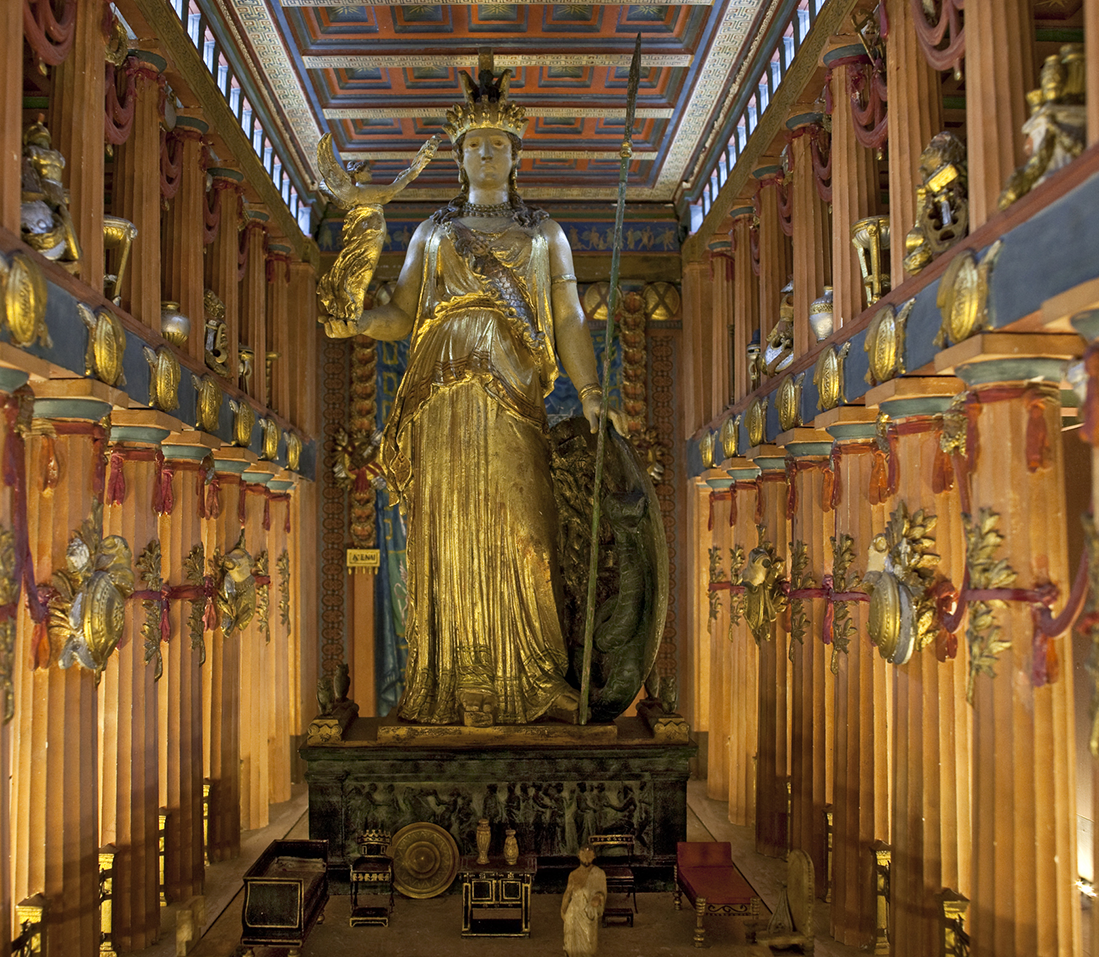
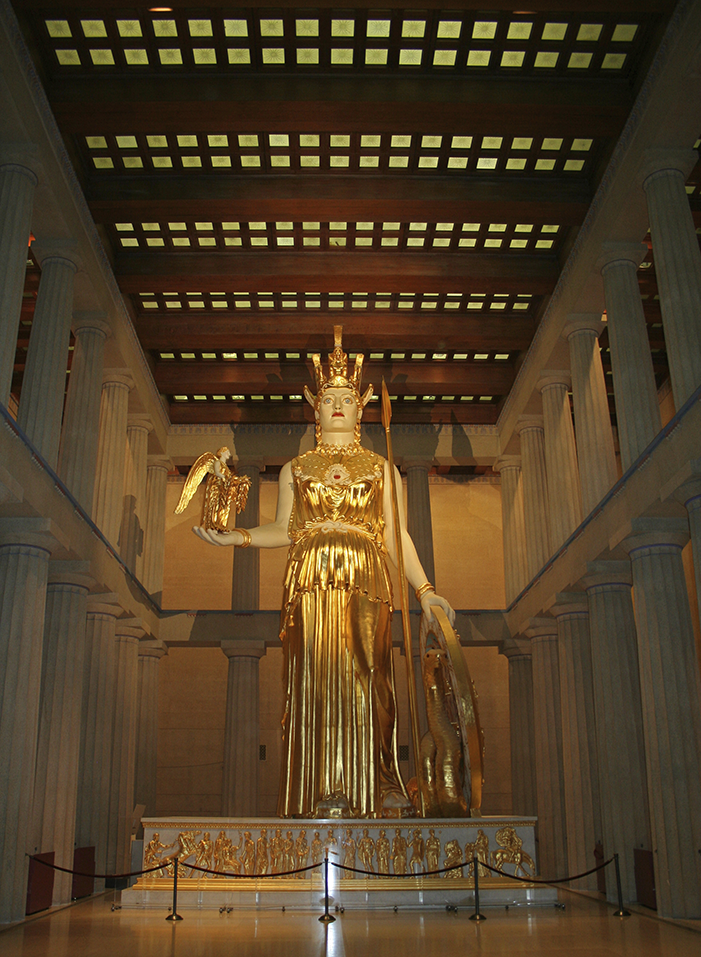
Such an approach, using physical spaces, has been embraced by archaeologists and artists since the late nineteenth century. For instance, Fergusson’s theory was put to test by a scale model funded by the Willard Architectural Commission and created by Adolfe Jolly and French architect Charles Chipiez in 1883 (Fig. 18). Later on, in 1897, when the Parthenon replica was constructed in Nashville, the dimness of its interior strengthened earlier suspicions concerning the actual aspect of the classical temple. In fact, the lighting in the building was so subdued that in 1930 electric lights had to be installed in the coffers to improve the interior illumination (Fig. 19), perhaps evoking the translucent tiles argued for by Penrose (Reference Penrose1851; Stair and Tathwell Reference Stair and Tathwell1930). In 1962, the Royal Ontario Museum created a scale model of the interior of the temple to evaluate the lighting conditions with an incorporated pool (Fig. 20; Graham Reference Graham1963; Leipen Reference Leipen1971). Finally, there is the aforementioned maquette used by Ike and Otaki, which was aimed at demonstrating the effect of translucent tiles in the Parthenon (Fig. 6; Ike and Otaki Reference Ike and Otaki1998; see also Ike Reference Ike2006). As already noted, their approach aimed to provide photometric values such as colour hues and luminous intensity within the cella.
Model of the Parthenon interior by Chipiez and Jolly, 1883. Photo: courtesy of Electrum Magazine.

Interior view of the Parthenon from Nashville, built in 1897. Photo: Aaron Archuleta, Wikicommons.

Maquette of the Parthenon interior by Leipen and Hahn, 1962. Photo: Wikicommons.

In 1985, the advent of 3D technology and computer graphics (CG) marked a gradual departure from relying on physical maquettes for experimentation.Footnote 21 This technological advancement enabled the creation of photorealistic images of historical sites, subsequently allowing the visualisation of realistic ambient effects. The 3D render of the Parthenon’s interior created by Paul Devebec in 2004 is remarkable for portraying a brightly illuminated cella (Fig. 21). However, the issue with this specific image is that it has been accepted by general media as an absolute historical snapshot, without contextualisation or rigorous critical assessment to accompany it.
3D model of the Parthenon interior, 2004. Photo: Paul Devebec – VEL3D.

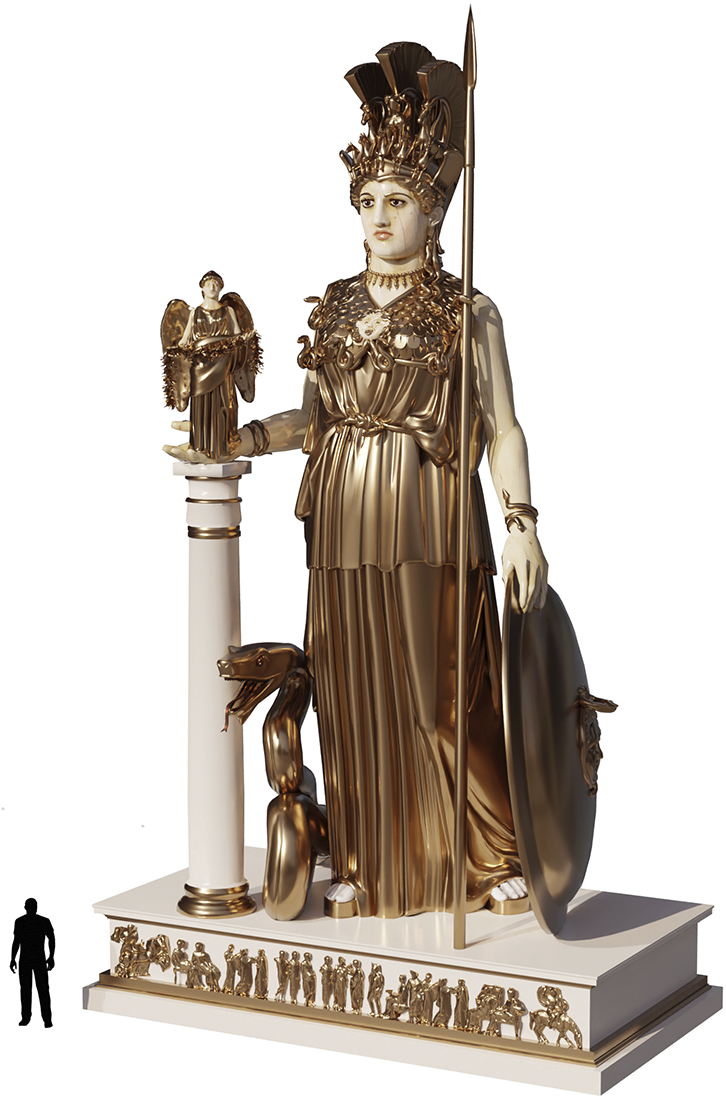
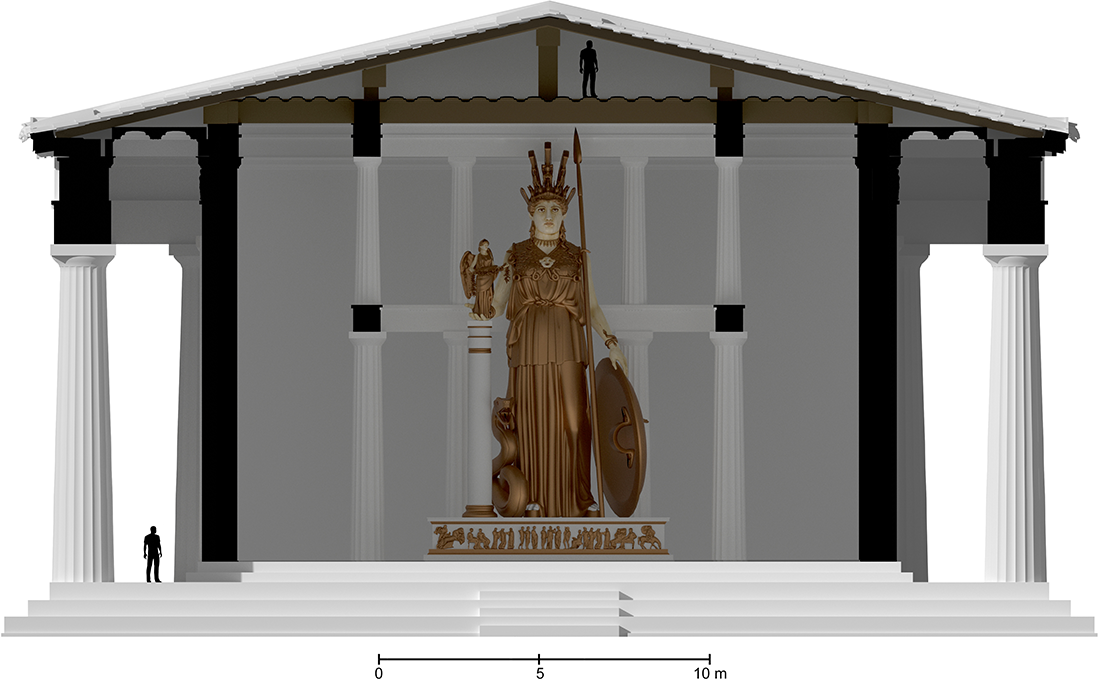
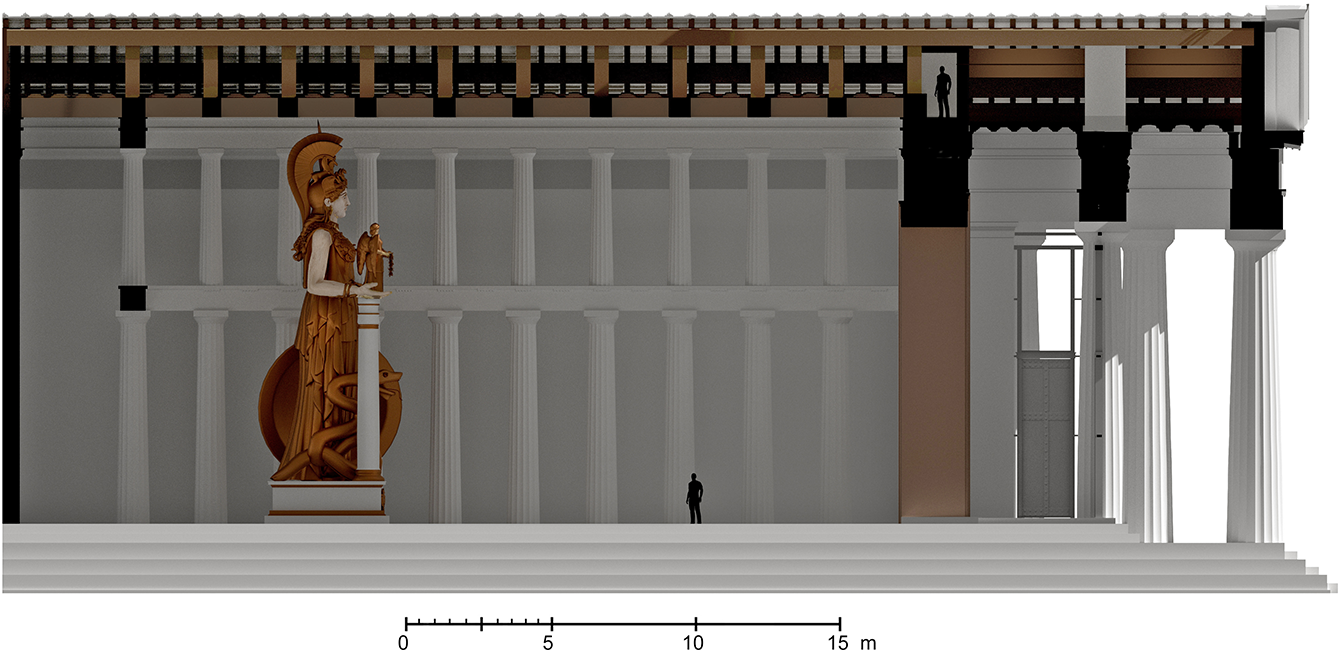
As we have seen, for centuries, antiquarians, architects and archaeologists alike based their comprehension of the material past on linear, pictorial reconstructions, heavily relying on textual descriptions over actual scientific data. Such an approach calls for a revised methodology that benefits from the latest technology while also providing a proper critical framework to re-evaluate the way the Parthenon was illuminated. To this end, new three-dimensional models of the Parthenon and the statue of Athena were created (Figs 22–26) and subsequently subjected to physically corrected lighting, an approach that seeks to render graphics in a way that accurately models not only the flow of light but also the surface material qualities of objects. This process, called physically based rendering (PBR), has been adopted as it observes physical and optical phenomena while respecting as much as possible the photometric qualities of a scene, that is, the mathematical formulas used in the propagation of light through space and materials (Pharr, Jakob and Humphreys Reference Pharr, Jakob and Humphreys2016). This method also recognises that all surfaces in the real world reflect light in small degrees. For this reason, each material of the scene was assigned appropriate reflectance valuesFootnote 22 and colours to match as closely as possible their real-world counterparts.Footnote 23
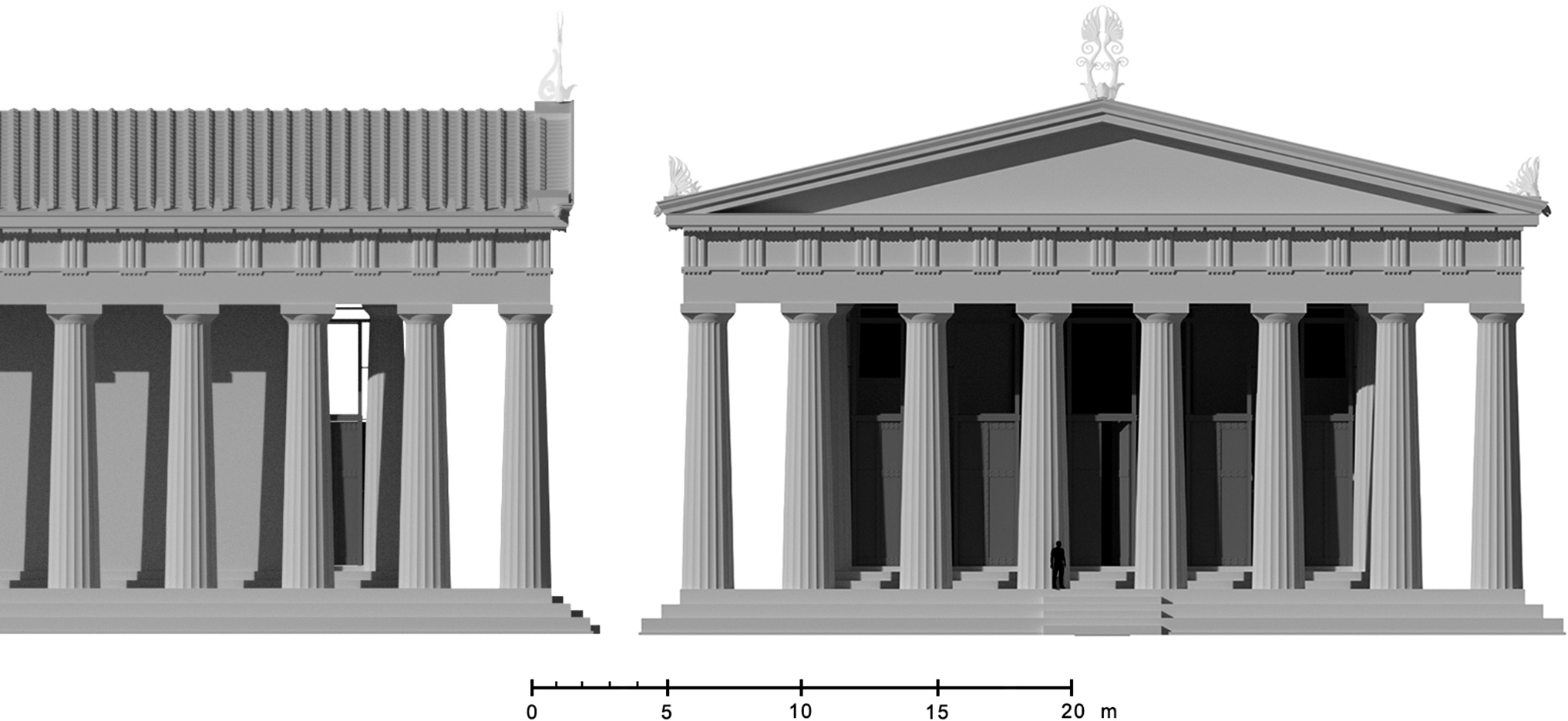
Restored lateral and front elevation of the Parthenon. Render: Juan de Lara.

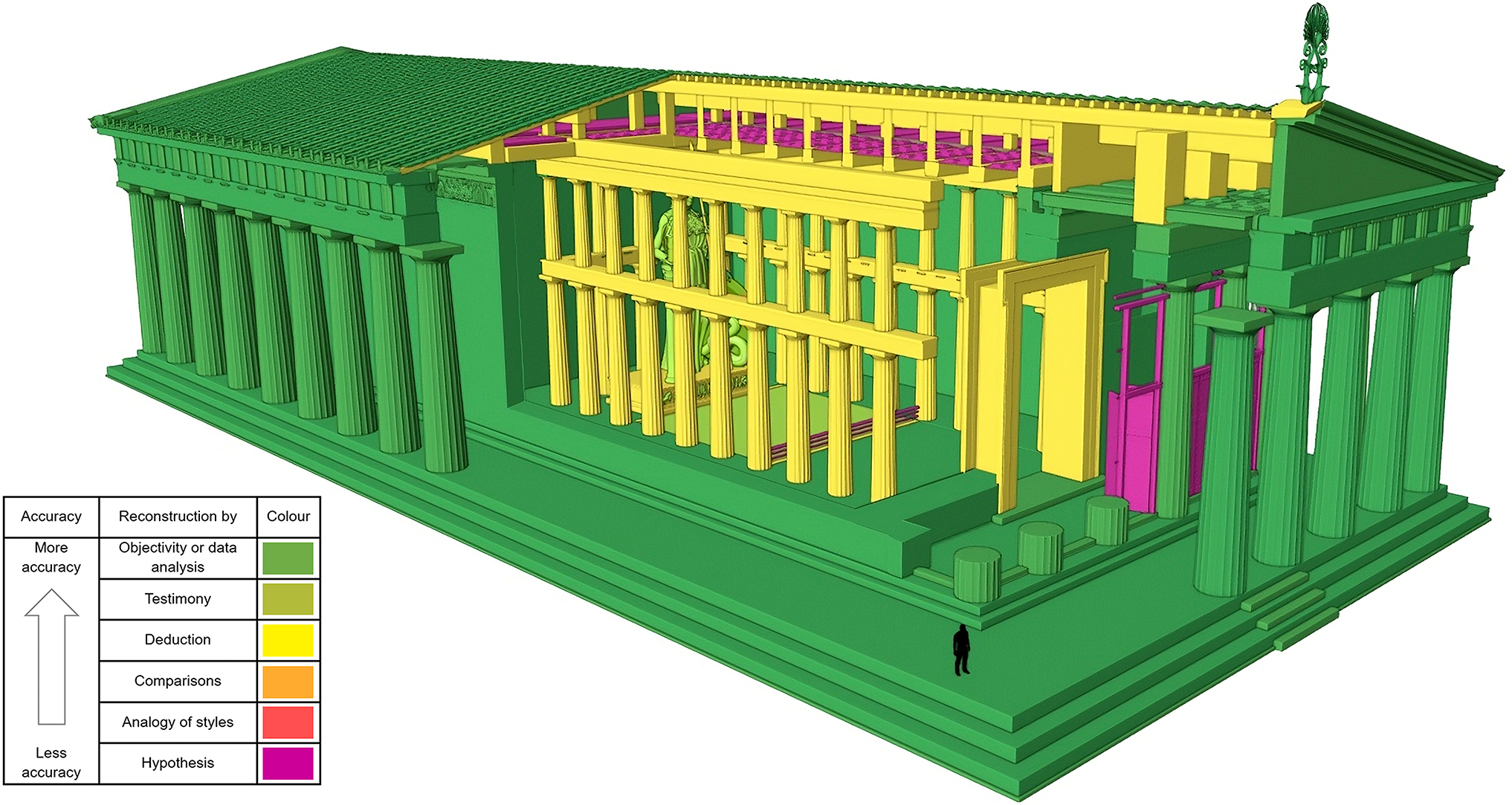
Uncertainty visualisation of various architectural elements in the restored Parthenon. Render: Juan de Lara.

A 3D reconstruction of the chryselephantine statue of Athena. Render: Juan de Lara.

Cross-section elevation of the Parthenon. Render: Juan de Lara.

Restored lateral cross-section elevation of the Parthenon’s cella and pronaos. Render: Juan de Lara.

The Seville Principles and the London Charter have established the guidelines for best practices in creating digital models of historical monuments such as the Parthenon.Footnote 24 These principles ensure transparency in the reconstruction process, mitigating the presence of ‘black boxes’ – a term denoting concealed methodologies, where the internal processes to obtain a desired outcome are not readily visible to researchers (Wilson and Edwards Reference Wilson and Edwards2015, 98; Marwick Reference Marwick2016; Marwick et al. Reference Marwick, d’Alpoim Guedes, Barton, Bates, Baxter and Bevan2017). Furthermore, these principles outline a complete list of sources as well as the processes that guided the choice of one reconstruction hypothesis over others (Alusik and Sovarova Reference Alusik, Sovarova, Gonzalez-Aguilera, Remondino, Boehm, Kersten and Fuse2015). Consequently, the reconstruction remains aligned with the available evidence and contradictions are avoided.
The metric data for the model of the Parthenon were obtained mostly from the works of Anastasios Orlandos (Reference Orlandos1949; Reference Orlandos1976–7; Orlandos and Vranouses Reference Orlandos and Vranouses1973), Manolis Korres (Reference Korres1983; Reference Korres1989a; Reference Korres1989b; Reference Korres1994a; Reference Korres1994b; Reference Korres1994c; Reference Korres and Economakis1994d; Reference Korres and Tournikiotis1994e; Reference Korres and Economakis1994f; Reference Korres and Economakis1994g; Reference Korres and Economakis1994h; Reference Korres and Tournikiotis1994i; Reference Korres1996) and Vasileia Manidaki (Reference Manidaki2015; Reference Manidaki, Sapirstein and Scahill2019; Reference Manidaki, Neils and Palagia2022). Other studies, such as those by Penrose (Reference Penrose1851) and Stevens (Reference Stevens1940; Reference Stevens1942; Reference Stevens1943; Reference Stevens1955; Reference Stevens1957; Reference Stevens1961), were also consulted.Footnote 25
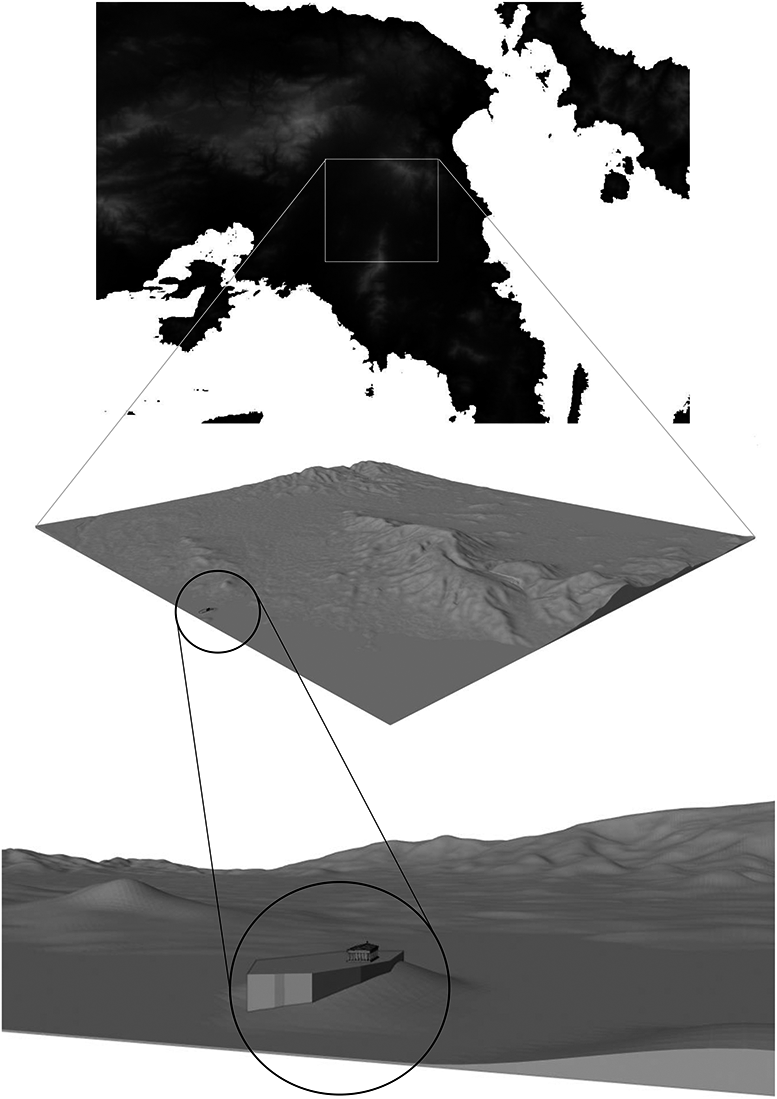
The digital Parthenon was placed on a digital space and oriented using the most recent azimuth measurements.Footnote 26 To this scene, a 3D model of the profile of the perceptible horizon (the skyline) was added (Fig. 27).Footnote 27 The horizon plays a significant role in the amount of sunlight allowed into the building – high mountains dictate the angle of light available and delay the appearance of the sun on the horizon, and this reduces the amount of time the temple interior is exposed to sunlight.
Portion of Attica surrounding the Acropolis of Athens and exported as a 3D Digital Elevation Map. Render: Juan de Lara.

Another significant challenge was addressing the Earth’s axial tilt, or obliquity. This means that the imagined axis running through the Earth oscillates between 22.1 and 24.5 degrees over a 41,000-year cycle. This leads to a slight deviation of approximately 2 degrees (as observed from Earth) in the sun’s position from the time of the Parthenon’s construction to the present. For the experiment, the year 430 BCE was used as a reference year, and to determine the sun’s position in that year, data were extracted from ephemeris software.
Finally, with the scene set, the resulting analyses are presented below as observations on the distribution of natural and artificial illuminance levels. Illuminance is a photometric parameter measured in lux that assesses the spatial distribution of light on a surface. Colours have been assigned to different lux levels on each surface (or ‘false colour scale’). This technique was employed in order to better visualise the illuminance levels, through a day and throughout the year; the sunbeams were tracked as they were admitted in the temple and collided with solids.
THE RESULTING EFFECT OF SOLAR ALIGNMENTS AND HIEROPHANIES
An initial physically based experiment, designed to observe the average ambient illumination within the structure during daylight, revealed that in cases where direct sunlight did not penetrate the cella, the interior remained dim throughout the year (average 100–150 lux, measured in the centre of the cella). This result implied that with such levels of illuminance, the entirety of the statue would have been visible enough to perceive some colours and shapes.Footnote 28
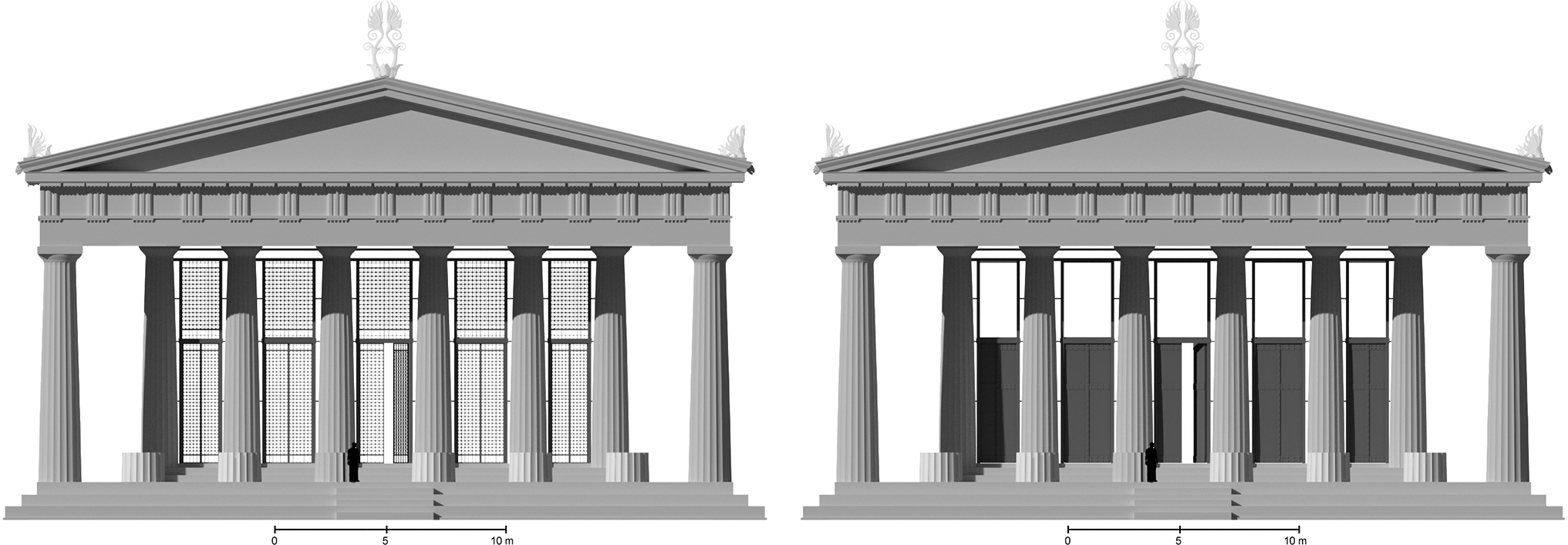
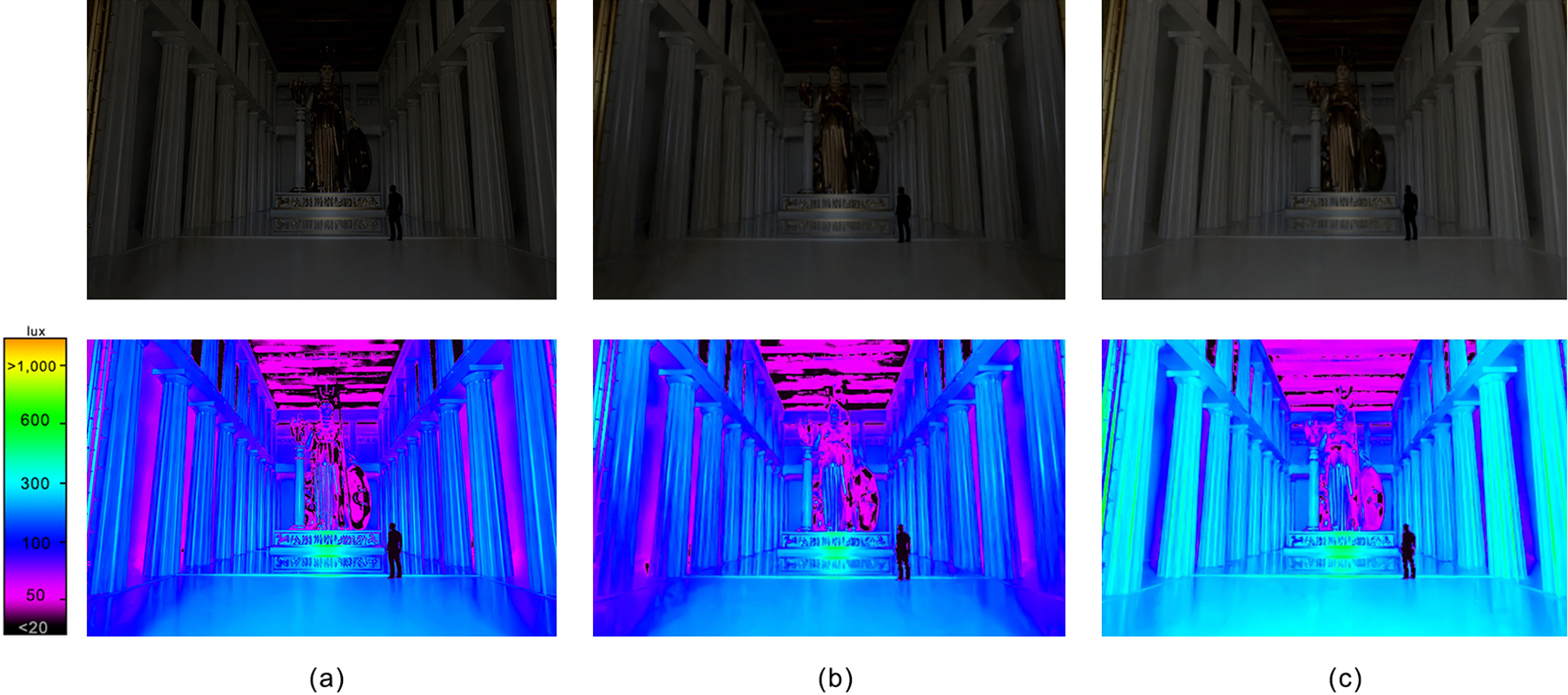
A major observation was also that the amount of ambient light coming into the cella was limited by whatever was the configuration of the grilles installed in the pronaos. The pronaos of many temples, including the Parthenon, were equipped with high fences composed of solid or latticed panels of wood covered with metal sheets.Footnote 29 Experiments with two different arrangements were carried out (Fig. 28). Regardless of whether the spaces were pierced, both configurations significantly reduced the illuminance in the cella (from 150 lux to 300 lux). Of course, if light was a concern, the leaves of these intercolumnar parapets could be opened on special occasions, but the architects only designed three out of the five sets of doors in the pronaos to be opened – the centre one and the ones on each side. This reveals that light was then not a concern when placing the grilles, as otherwise all the door leaves would have been designed to be opened (Fig. 29). Additionally, the presence of curtains and sunshield at the door – as seen in other temples (Schrenk Reference Schrenk2011, 152–3; Brøns Reference Brøns2017, 78) – remains uncertain and warrants consideration, but should not distract us here.
Restored elevation view of the barriers of the pronaos, with lattice (left) and solid (right) walls installed between the columns. The pteron columns have been removed for better visualisation. Render: Juan de Lara.

Comparative physically based renderings depicting the cella at 10 a.m. on 1 August 430 BCE with different types of grilles in the pronaos and illuminance level analysis shown as false colour. (a) The cella viewed with normal latticed screens raised up to the architrave of the pronaos. (b) The cella with a screen featuring a solid lower parapet and an open upper portion. (c) The cella with no grilles in the pronaos. Render: Juan de Lara.

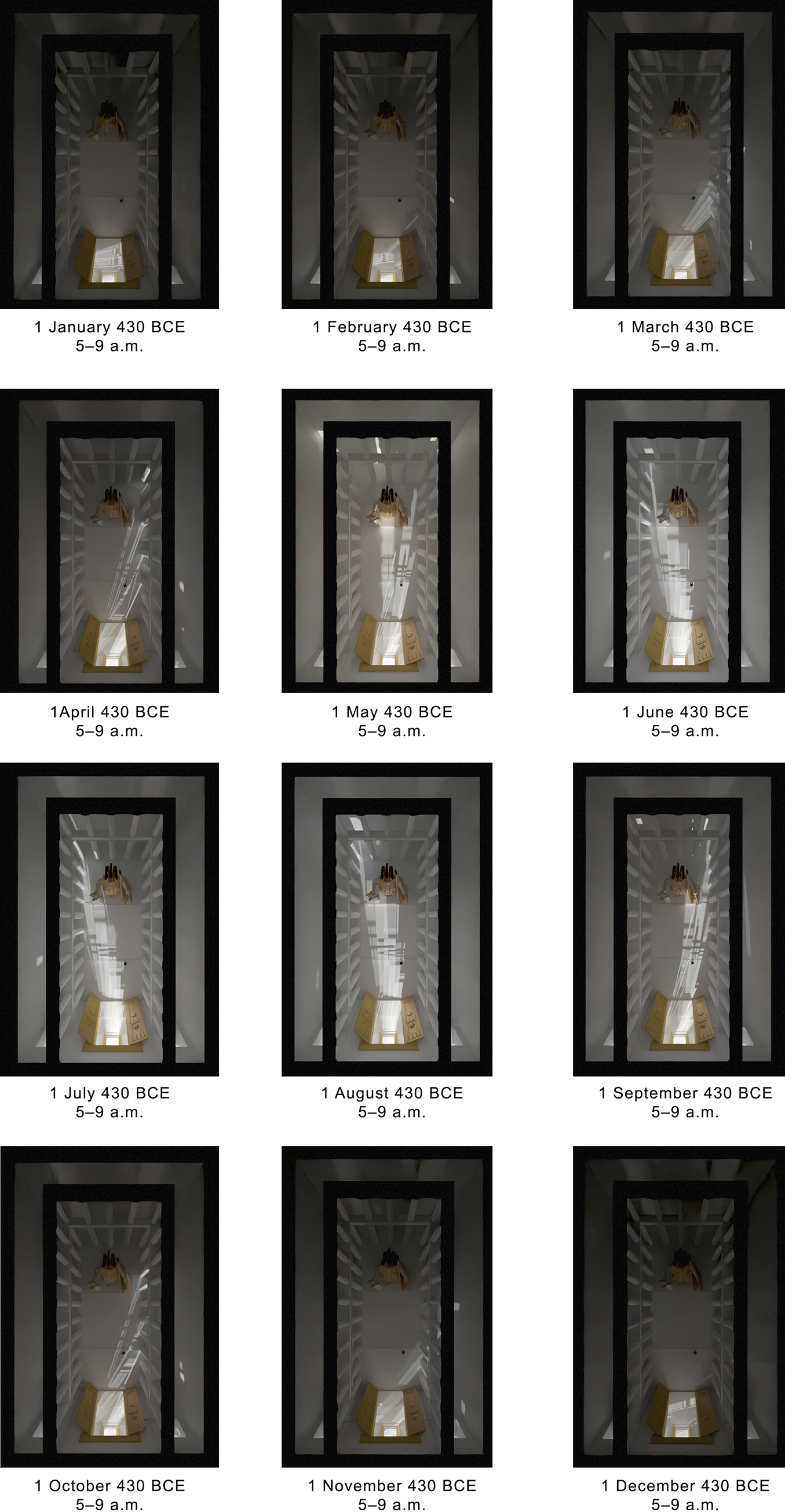
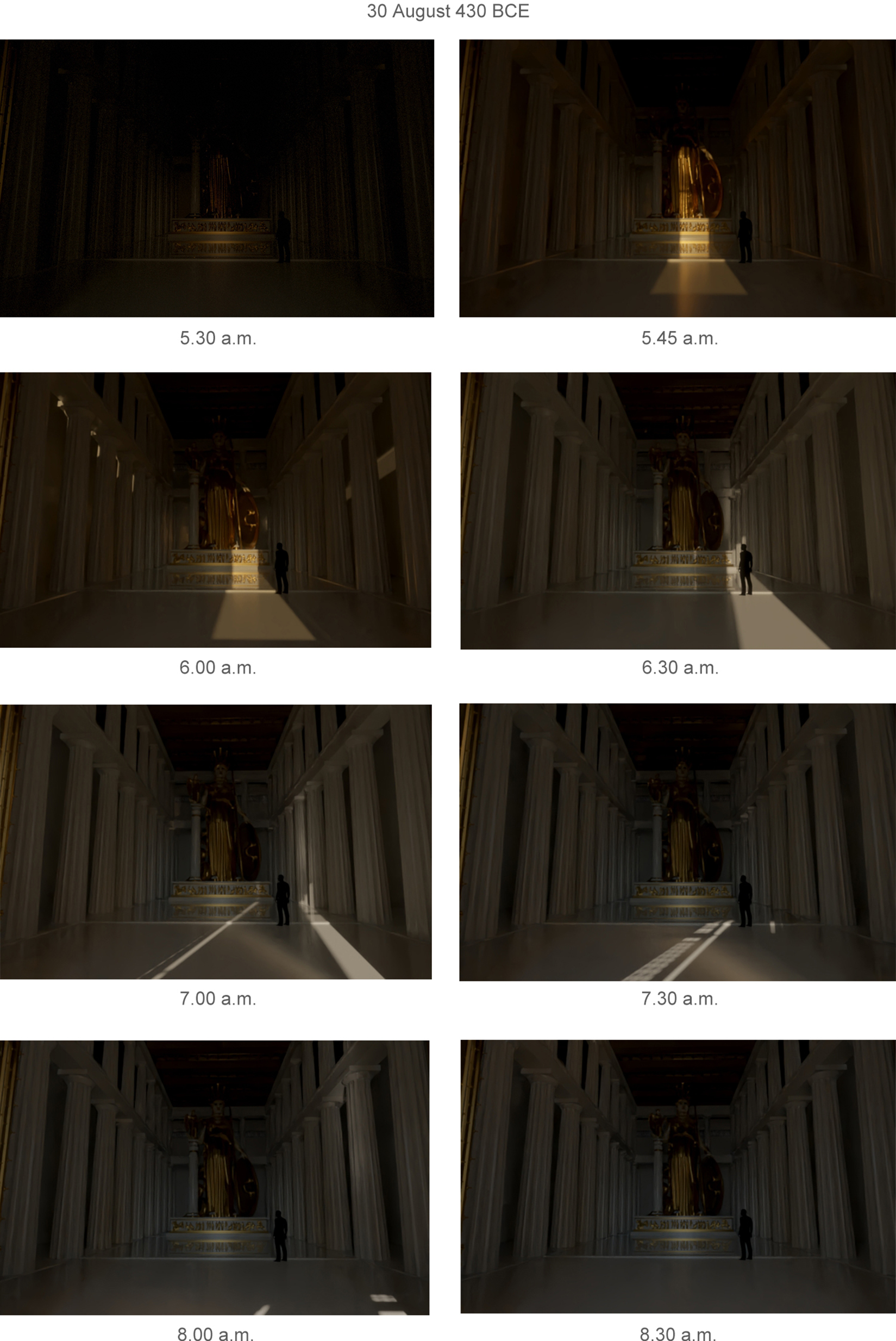
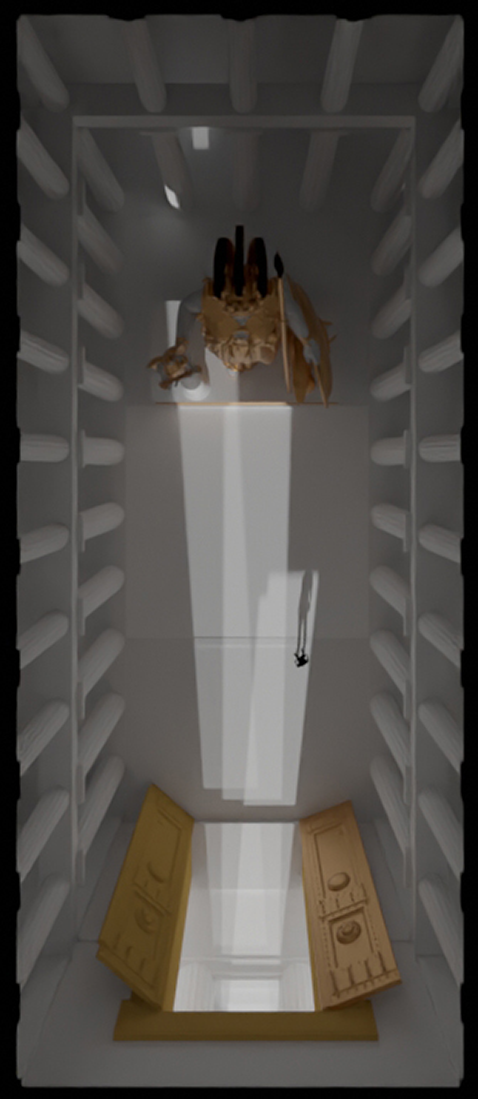
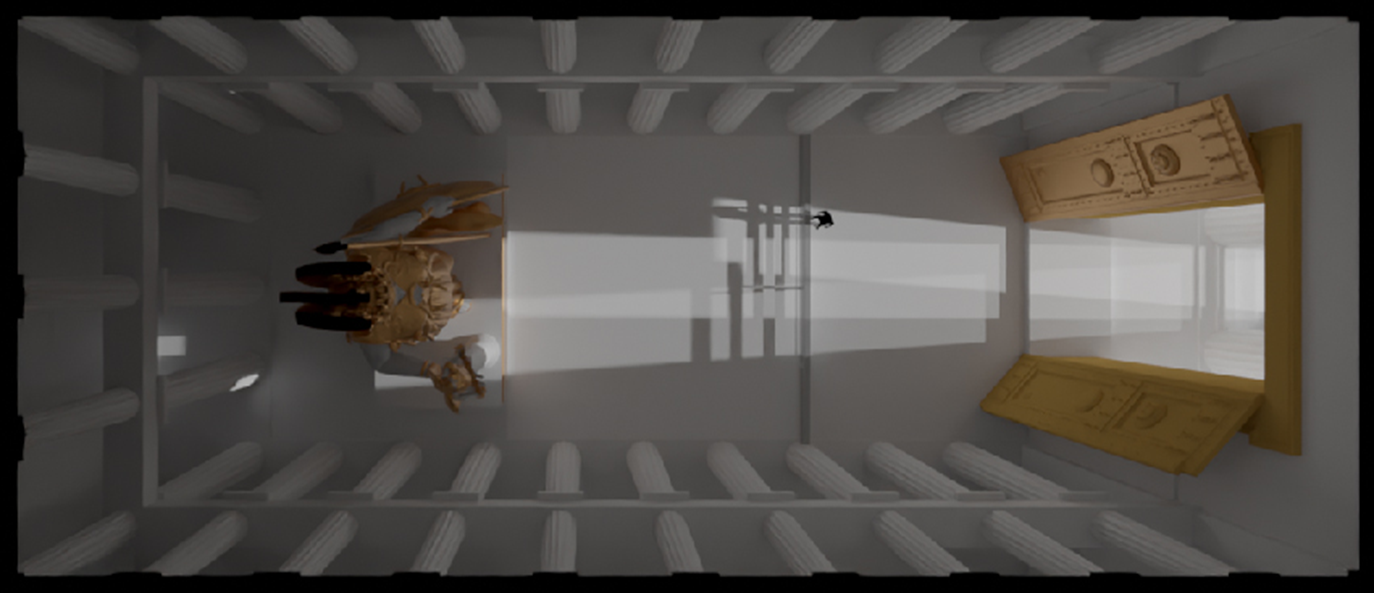
Sun rays reached directly into the cella’s interior between March and November, starting around 5.30 a.m., continuing until approximately 10.00 a.m. (Figs 30–32).Footnote 30 The sun’s azimuth aligned with the long axis of the Parthenon twice a year, around 25 April and 30 August, at approximately 5.30 a.m., as the sun made its first appearance over the horizon behind Mount Hymettus. At this time, the statue was subjected to what we describe as a ‘hierophany’, and was bathed in sunlight. However, an unanticipated realisation from this experiment is that the statue was not illuminated by this direct sunlight at its full height, as the isolation angle (2°) of the sun (determined by the altitude of both the Parthenon [158 m] and Mount Hymettus in front [approximately 674 m]) only allowed for the statue’s legs and waist to be illuminated, never the entirety of the statue.
Time-lapse view of the cella, top-down perspective, depicting the morning sun’s hourly movement from 5 a.m. to 9 a.m. in 430 BCE. Render: Juan de Lara.

Time-lapse view of the cella captured from the perspective of an observer standing at the door threshold, showing the effect and movement of the sun’s rays on the statue from 5.30 a.m. to 8.30 a.m. of 30 August 430 BCE. Render: Juan de Lara.

Physically based render of the cella on 30 August 430 BCE at 5.45 a.m. The image shows the alignment between the sun behind Mount Hymettus, the temple threshold, and the statue; the sun beam’s maximum reach is only up to the statue’s waist. Render: Juan de Lara.

Regardless of whether the statue was pushed back to the colonnade or remained in its current position (closer to the centre of the cella), the area of illumination during these dates did not change much. This observation is important because it has been claimed that the positioning of Athena towards the centre of the cella, and not to the back, was to benefit from better solar exposure, a claim that this experiment does not support (Winter Reference Winter1915, 12–14; Schrader Reference Schrader1924, 39; Dörpfeld Reference Dörpfeld1935, 2.16).
Furthermore, Phidias’ statues in the Parthenon and the temple of Zeus in Olympia were both placed at the same distance – 17 meters – from the cella door, as first noted in modern scholarship by Ferdinand Noack (Reference Noack1927, 294–8). We are uncertain about the reason for such measurements. While the distance from the door to the statue was the same in both temples, the distance from the door to the border of the stylobate differed, and hence illumination may not have been the reason for this placement.
It should also be noted that at the moment of this solar hierophany, the light was not too intense. This was because at this time photons had to travel through a longer distance in the atmosphere, causing them to scatter and lose luminous intensity. This means that at dawn, the face of Athena would be observed under 50 lux. Now, if a visitor wanted to have an optimal view of Athena’s ivory face, a recommended time for a visit would have been at 7.00–7.30 a.m. during the summer months. This was the time when the sun’s rays would have directly hit the marble pavement of the cella, just in front of the pool, and which would have been relatively reflective due to the crystalline matrix of the stone, acting like a mirror and reflecting light onto Athena’s face (300 lux) (Fig. 33).
Physically based render of the statue of Athena on 1 July 430 BCE at 7.30 a.m. The image shows minimal direct sunlight admitted into the cella at this time, with only atmospheric illumination remaining. The illumination is enough to make the statue and the interior perceptible. The light coming through the large door is reflected on the pedestal and particularly in the ceiling. Render: Juan de Lara.

This observation emphasises the importance of determining the extent of the polishing applied to the marble surfaces within the Parthenon. However, this task is hindered by weathering and the poor condition of the remaining stone pavement, although it has been noted that certain marble floor surfaces, such as the stylobate of the opisthonaos, south of the medieval staircase, were deliberately treated via a soft chiselling. Korres thinks these markings were performed after the final smoothing of the surface, only on the floor and not on the columns. Manidaki also wonders if the marks had any impact on the lighting of the cella and whether they reduced reflection, and leans towards the idea that the marks are simply remnants of the tools used for smoothing the surface.Footnote 31
Nevertheless, it is reasonable to assume that some form of buffing could have been employed – the temple of Nemesis in Rhamnous serves as a noteworthy example, where the marble blocks had an extremely fine polished finish, as noted by Margaret Miles (Reference Miles1989, 147). The surfaces of walls and floors may have also been treated with a technique akin to ganōsis, a polishing method used in sculpture to safeguard paint and enhance lustre.Footnote 32
To further illustrate the importance of determining polishing degrees to calculate the reflection of marble, tests were conducted to adjust various indexes for the stone materials in the 3D software, revealing distinct illuminance levels corresponding to the different variances. This proves that the difference between polished or unpolished marble could vary the illuminance of the interior by up to ±100 lux – a quite relevant figure. Due to challenges in determining the level of polishing present in the original Parthenon of Iktinos, a mid-range reflectance value (65% Light Reflectance Value) was employed in the subsequent figures (Fig. 34).Footnote 33
Render showing the interior of the Parthenon sometime at noon with (a) marble being treated and polished (65% Light Reflectance Value) and (b) the same stone left rough (20% Light Reflectance Value). Render: Juan de Lara.

In conclusion, a solar alignment might not initially strike us as an awe-inspiring feature, as it would have illuminated only Athena’s skirt. In light of these finds, we might ponder on the different purposes associated to the effect. For example, we could explore a practical timekeeping tool for marking important events on the calendar (Ruggles Reference Ruggles2005, 419; Hannah Reference Hannah2013). Let us take for instance the 30 August date, which as has been discussed was one of the two dates in which an alignment occurred. This date roughly coincided with the summer procession of the Greater Panathenaia festival celebrated on the 27/28 of the Attic month of Hekatombaion (Proklos, Commentary on Plato’s Timaeus 17b and Scholia on Plato’s Republic 327a; see Greene Reference Greene1938, 187–8; Parker Reference Parker2005, 257; Håland Reference Håland2017, 306–10).
Hekatombaion 27/28 was erroneously associated with Athena’s birthday by modern scholars,Footnote 34 and identified by Dinsmoor as occurring on 31 August in the years c. 490–480 BCE, when the foundation of the pre-Parthenon was established (Dinsmoor Reference Dinsmoor1939, 120–2; see Hannah Reference Hannah2013 for further insights). However, if the same effect was sought every year afterwards, this posed the problem of matching a solar effect to the lunisolar calendar. In the lunisolar Attic calendar, Hekatombaion began with the visible new moon after the summer solstice, around July/August (Meritt Reference Meritt1928, 112). Therefore, an exact alignment could not have been the prime concern of the architects, as a solar event could not be synchronised with a lunar calendar annually. Its lunar aspect meant that in some years 28 Hekatombaion would begin in early August, and in other cases, at the end of August. Thus, the position of the sun on this specific date of the Attic calendar would differ slightly each year. A possible solution to the problem of matching calendars and times is to consider that the solar alignment with the building axis did not necessarily mark a specific day, but rather a timeframe (July–August), which could have coincided with the festival of the goddess.Footnote 35
VISUALISING REFLECTIONS IN POOLS OF LIQUID
The pool of water in the cella of the Parthenon covered an area of roughly 90 m2. During solar alignments with the statue, the beam of light that fell on the pool covered one-third of the pool’s total area (23 m2). This area shrank as the sun transited throughout the morning from 5.30 to 7.00 a.m. Such a result challenges, a priori, the proposed use of the pool as a mirror, as such a large area would not have been needed: a smaller one would have sufficed for the ‘special effect’ without the need to sacrifice such a large area from the cella (Fig. 35).
Top-down perspective view of the cella’s interior, showing superimposed sunlight over the pool for one hour (from 6 to 7 a.m.) on 1 August 430 BCE. Render: Juan de Lara.

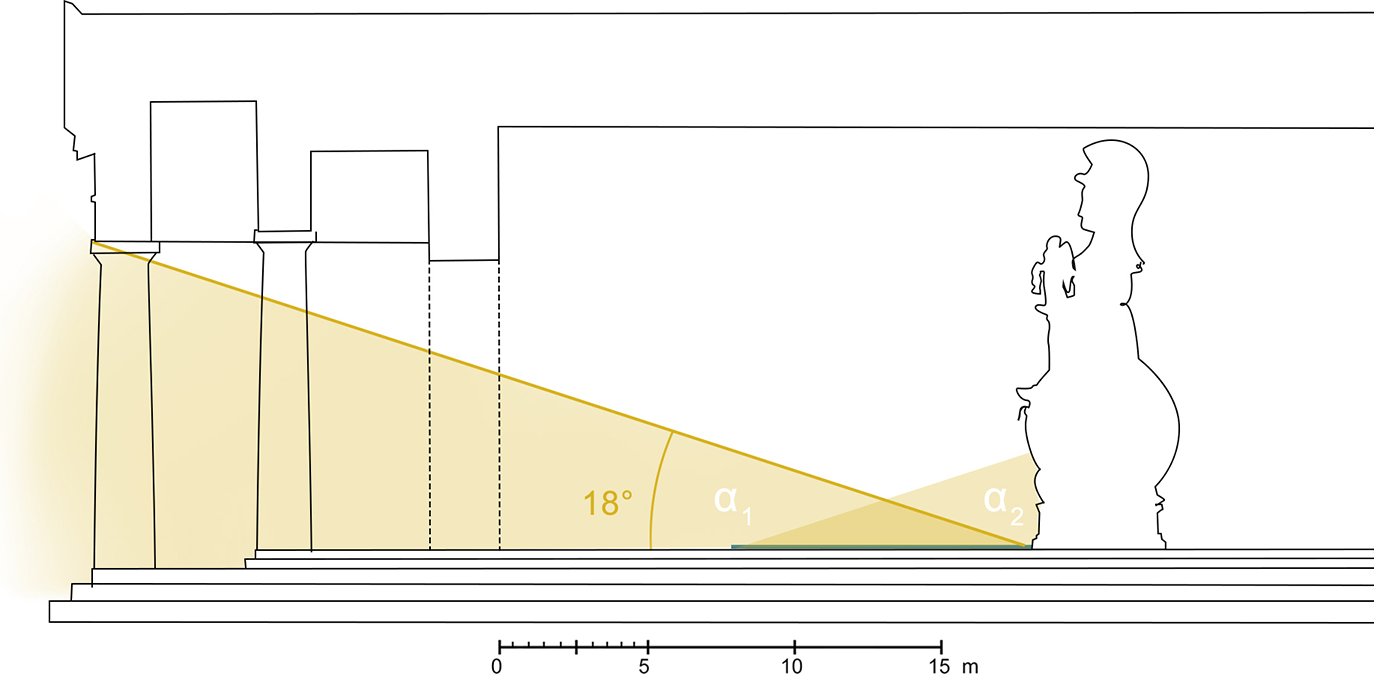
Furthermore, the efficacy of the reflected light on the pool as a lighting mechanism for the statue has here been tested with negative results. In this experiment, the reflected light from the pool falls short of adequate, as it only reaches up to Athena’s shins (Fig. 36). It is also crucial to dispel the notion that water hugely amplifies reflection on an already polished surface. The thin layer of water, just 3 cm deep, has a negligible effect on the reflection index of the overall layout of the temple interior. This layer primarily refracts the light rays, which then encounter the marble underneath the water’s surface, and subsequently they are reflected by the marble stone (rather than the water). This means that in essence, the reflection on the polished marble basin is realised by the reflection index of the marble and not by the water.Footnote 36
Side elevation of the Parthenon showing the ideal solar altitude angle (α1) for impact on the pool, and the reflection angle (α2). Render: Juan de Lara.

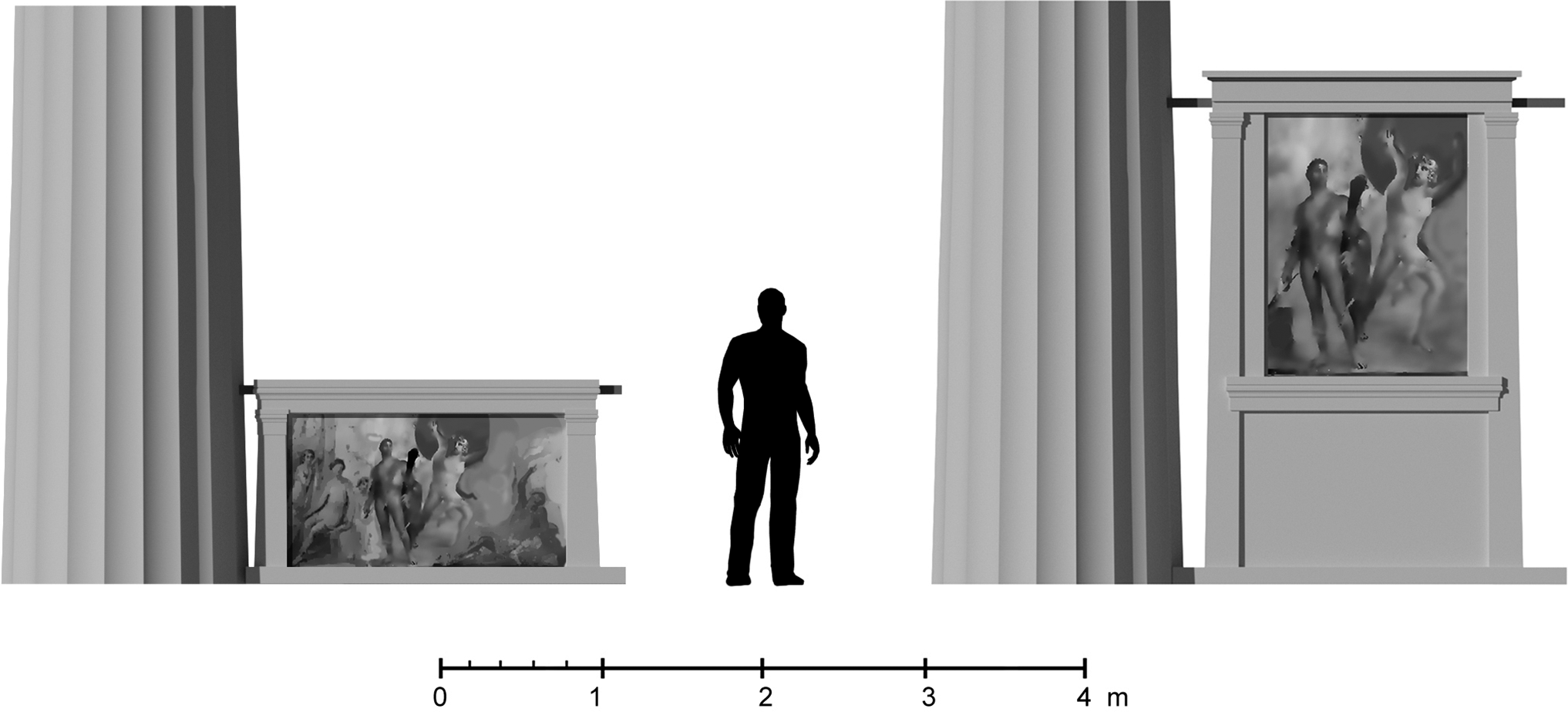
Lastly, it is essential to consider the conjectural parapets located in the Parthenon, contrasted against the better-evidenced ones at the temple of Zeus in Olympia. Such structures, often missing from reconstructions, would have presumably blocked any sunlight coming through the doors. For this experiment, parapets have been reconstructed using a standard type of fence found in several temples (e.g. the monument of the Eponymous Heroes in the Athenian Agora, c. 350–300 BCE; the temple of Nemesis in Rhamnous, fifth century BCE; or the fences in the temple of Despoina in Lykosoura, second century BCE).Footnote 37 As Fig. 37 shows, such an arrangement would have decreased the intensity of the light coming through. If we were to consider larger and more solid parapets, like those in the temple of Zeus in Olympia (Fig. 38),Footnote 38 it becomes evident that these pools were not designed to augment the illumination of the chryselephantine statues.
Top-down perspective view of the cella’s interior showing superimposed sun streaks over the pool for one hour (from 6 to 7 a.m.) on 1 August 430 BCE. A low fence has been placed to demonstrate the blocked surface of sun light over the pool area. Render: Juan de Lara.

Elevation showing hypothetical arrangements for the parapets surrounding the pool in the temple of Zeus in Olympia. The left side of the image depicts a low parapet, while the right side shows a high parapet, the most likely option when looking at the evidence. Render: Juan de Lara.

ILLUMINATION LEVELS FROM WINDOWS AND OPAIA
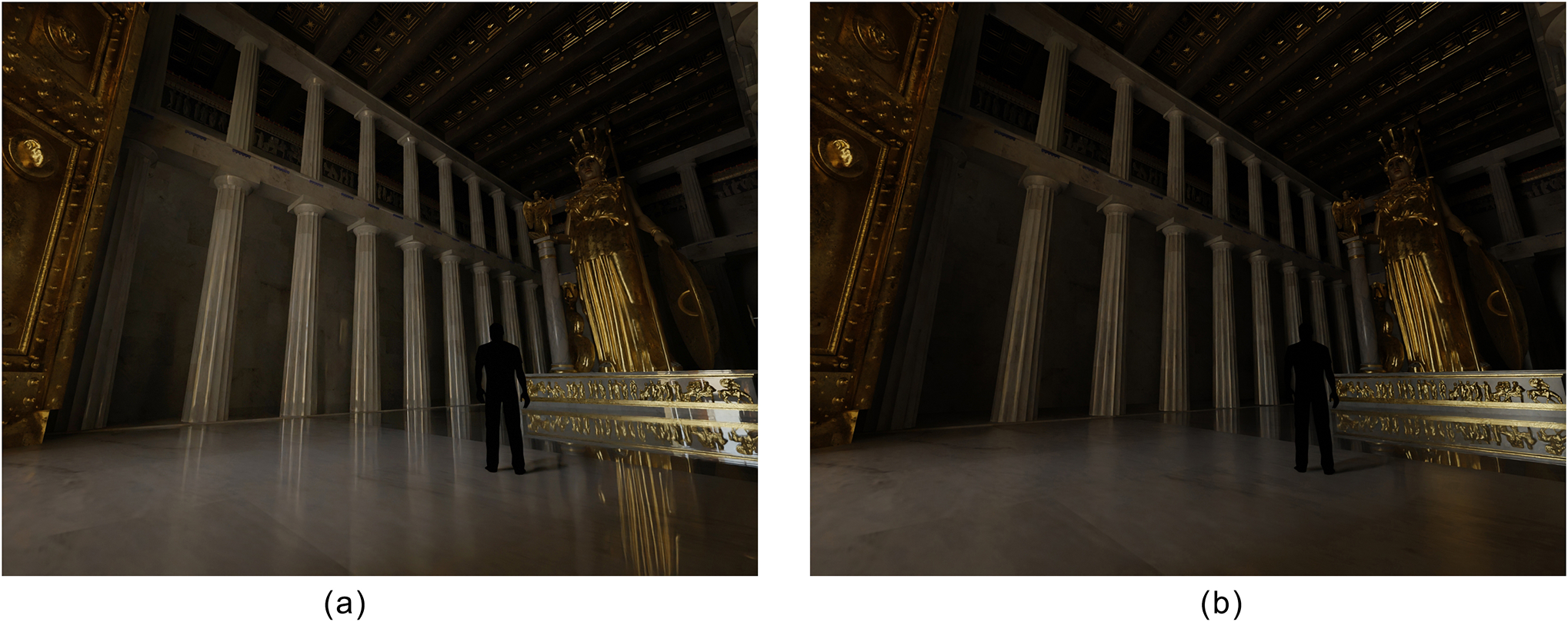
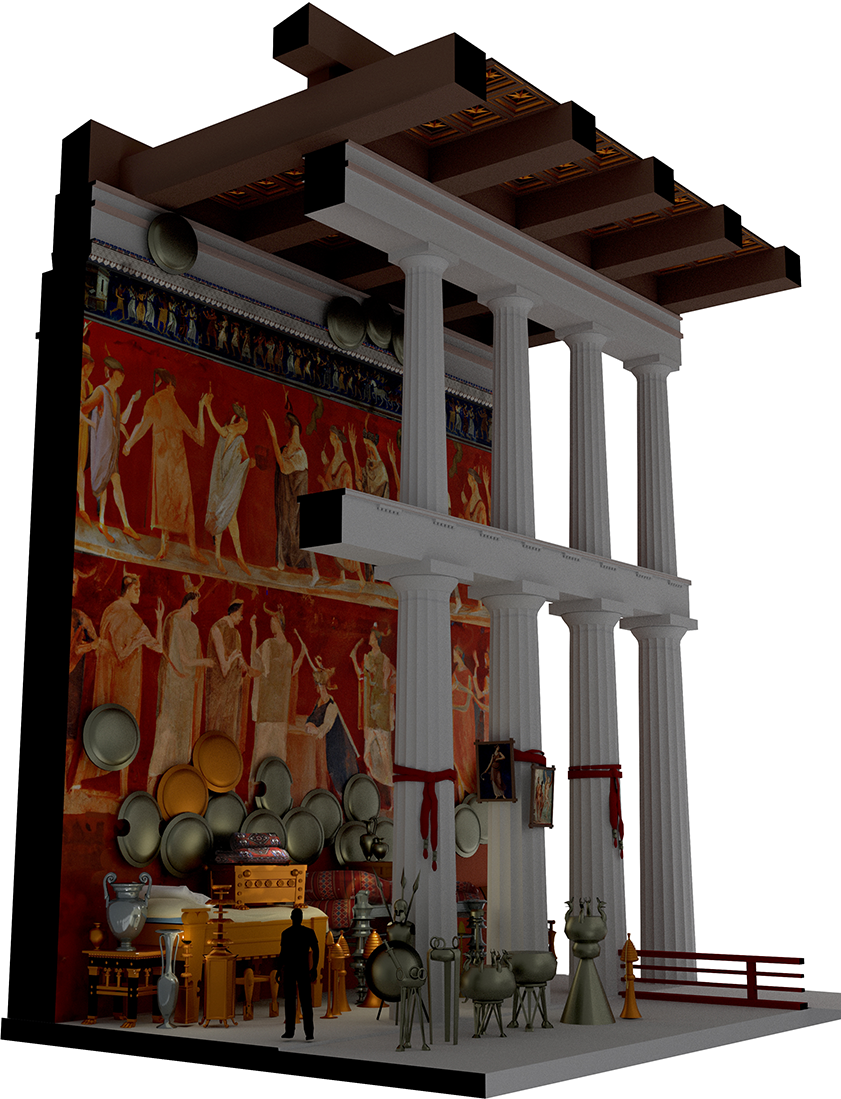
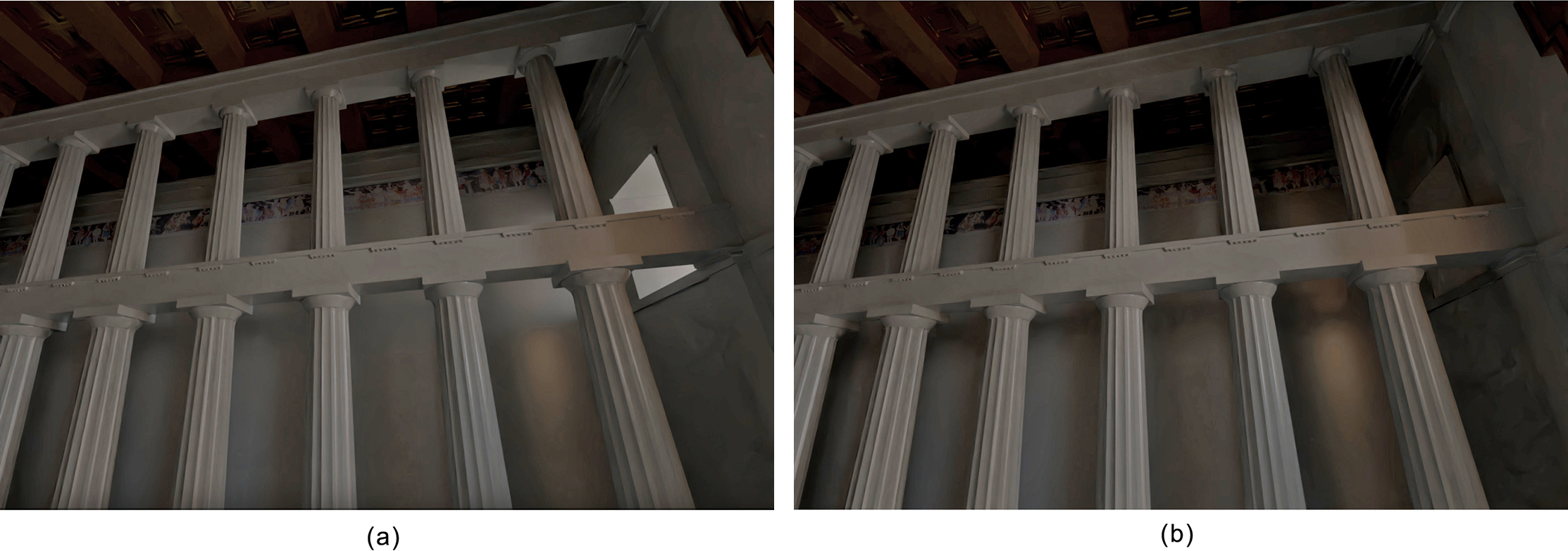
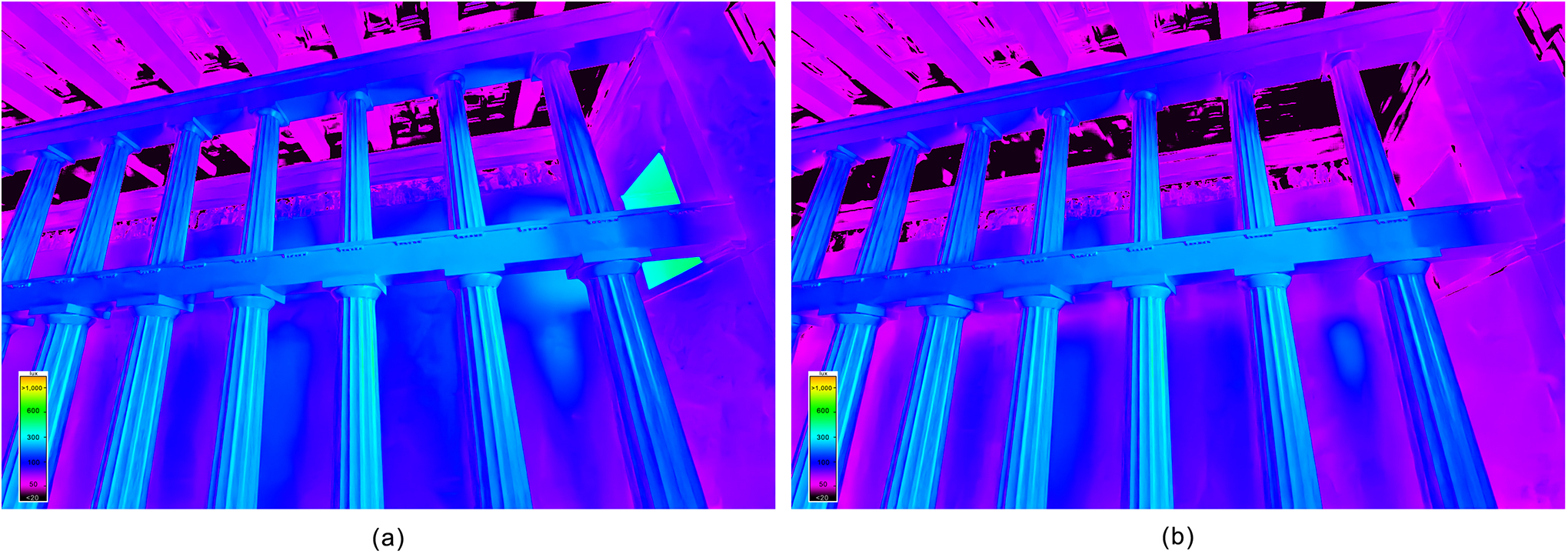
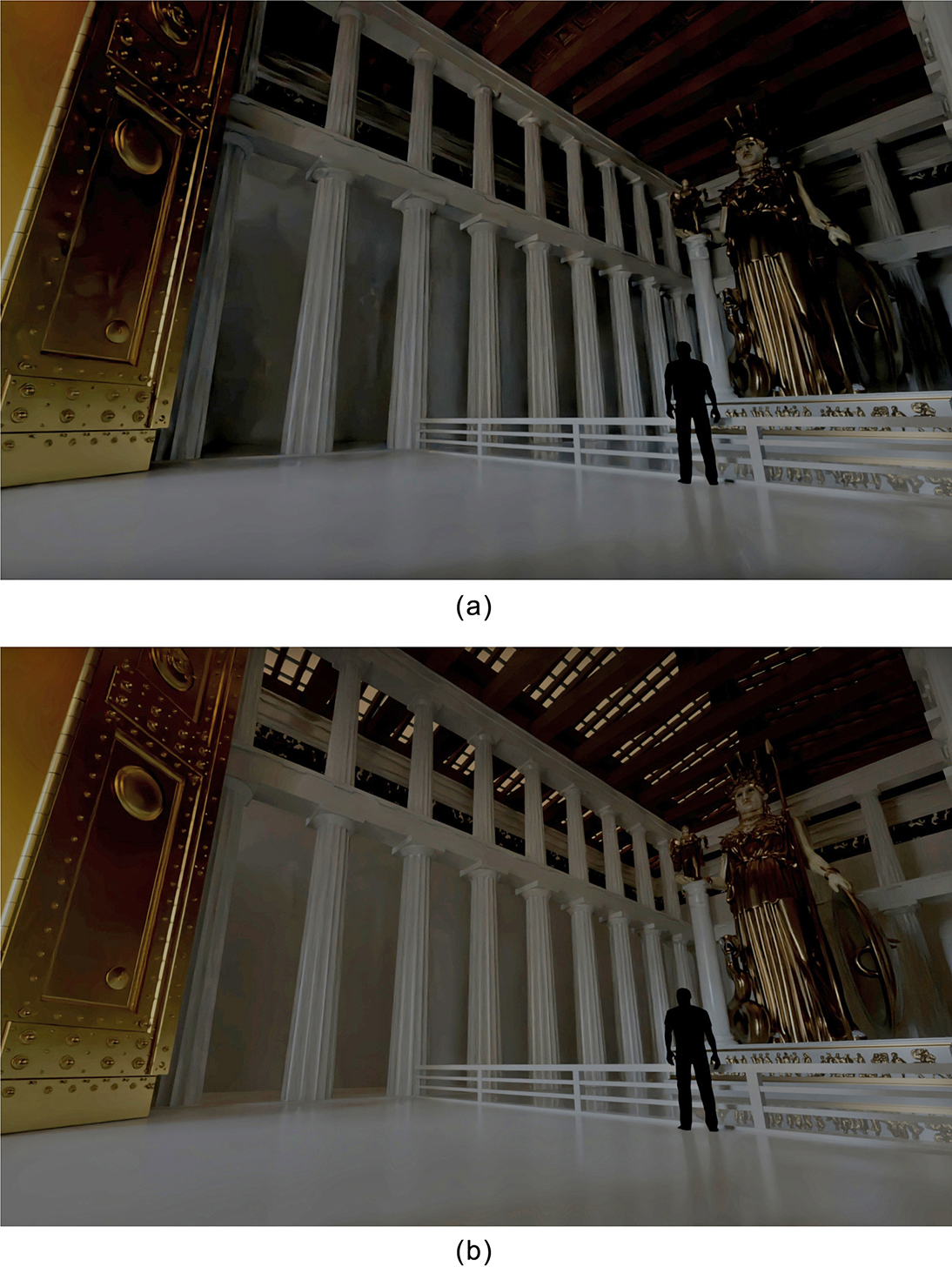
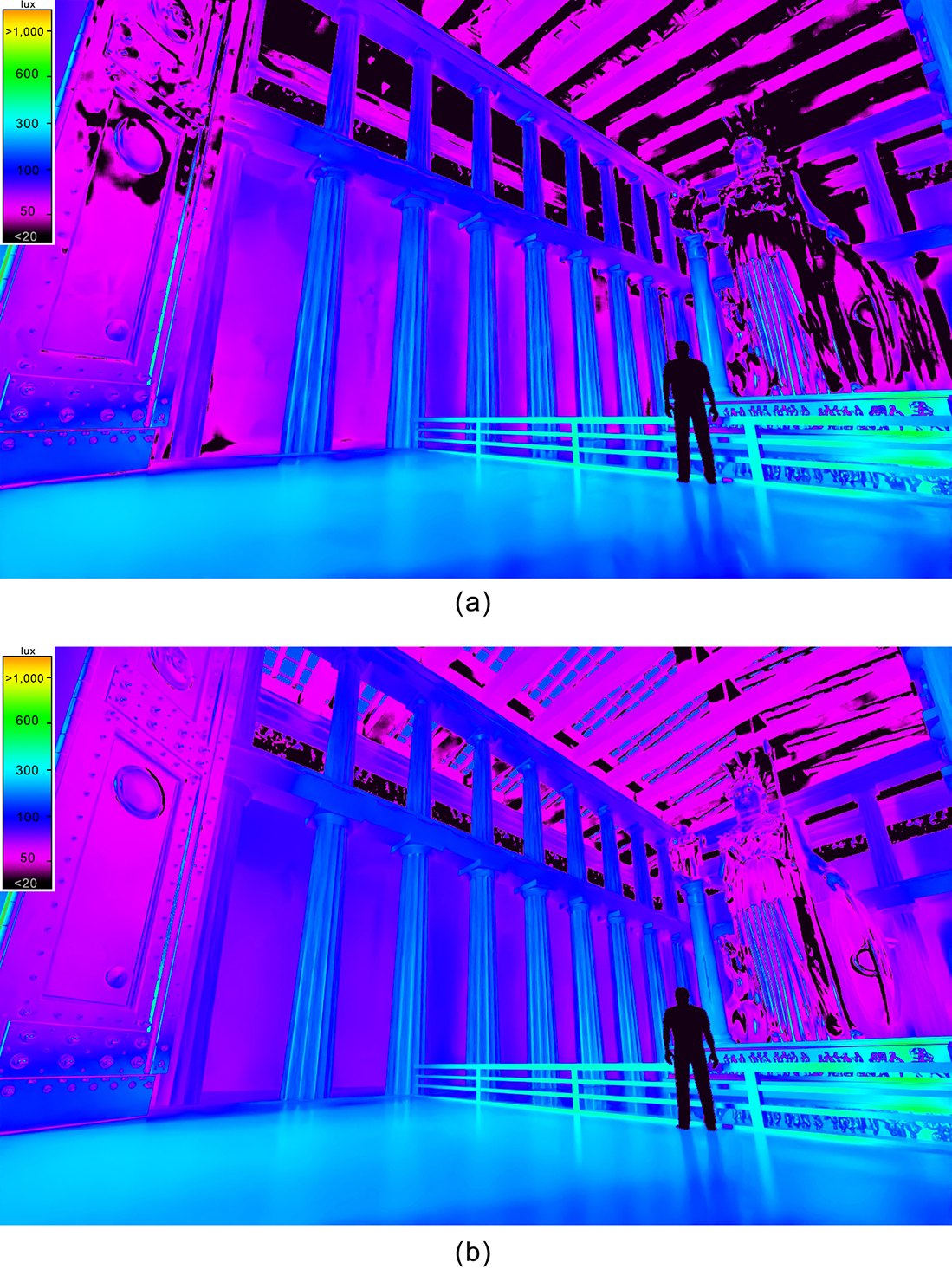
As anticipated, the renders reveal that the openings of the windows have a notable impact on the overall ambient lighting of the continuous frieze positioned atop the walls and the aisles. Ritual equipment and the frieze may have required additional ambient light as the pi-shaped colonnade significantly blocked the light coming from the door (Fig. 39).Footnote 39 These windows managed to increase the illuminance levels on the lateral walls of the temple from 50–100 to 300 lux in the morning (Figs 40 and 41). However, it is important to note that due to the colonnade, the windows did not contribute to the illumination of Athena’s statue.
Hypothetical reconstruction of a Doric temple segment, with wall paintings and votive militaria hanging from the wooden beams and the walls. Render: Juan de Lara.

Physically based render of the cella’s interior on 30 August at 10.00 a.m. showing the amounts of light allowed into the building (a) with windows and (b) without windows. Render: Juan de Lara.

Comparative illuminance analysis of Fig. 40. Render: Juan de Lara.

Regarding the roof opaia, a hypothetical set-up with pierced tiles was laid out in our 3D model, demonstrating that the inclusion of sporadic opaia (i.e. one hole per flat tile) in the roof tiles of the Parthenon would have provided only minimal illumination (Fig. 42). An experiment was done with two arbitrary values for comparison. The first test was conducted with a small quantity, 14 pierced tiles over the statue, whereas a second experiment incorporated a hundred openings. The results showed that only one hundred of them would increase the overall illumination of the interior to perceptible illuminance values. Yet the idea of having one hundred, or even hundreds, of tiles with openings goes against the rationale of roofs as impermeable surfaces, and contradicts the archaeological evidence: such pierced tiles cannot be found in modern inventories at Olympia, Athens, or Bassai, despite nineteenth-century travellers documenting their existence. Had they been used extensively, the number of extant finds would have been much higher. Therefore, based on the results, it is unlikely that dozens of opaia were used in this temple. The most logical interpretation is to think that a few of them existed to illuminate a wooden attic above the cella that was used for storage (Fig. 15), as lamps and fires could not be bought to this area due to the flammability of the construction material.
Physically based render of the cella’s interior on 30 August at 10.00 a.m. showing opaia on the ceiling of the temple (coffers have been removed). Render: Juan de Lara.

LIGHT THROUGH MARBLE TILES
The results of the experimentation on translucent marble roof tiles have been more broadly addressed elsewhere, but a summary is provided here (see de Lara Reference de Lara2023b).
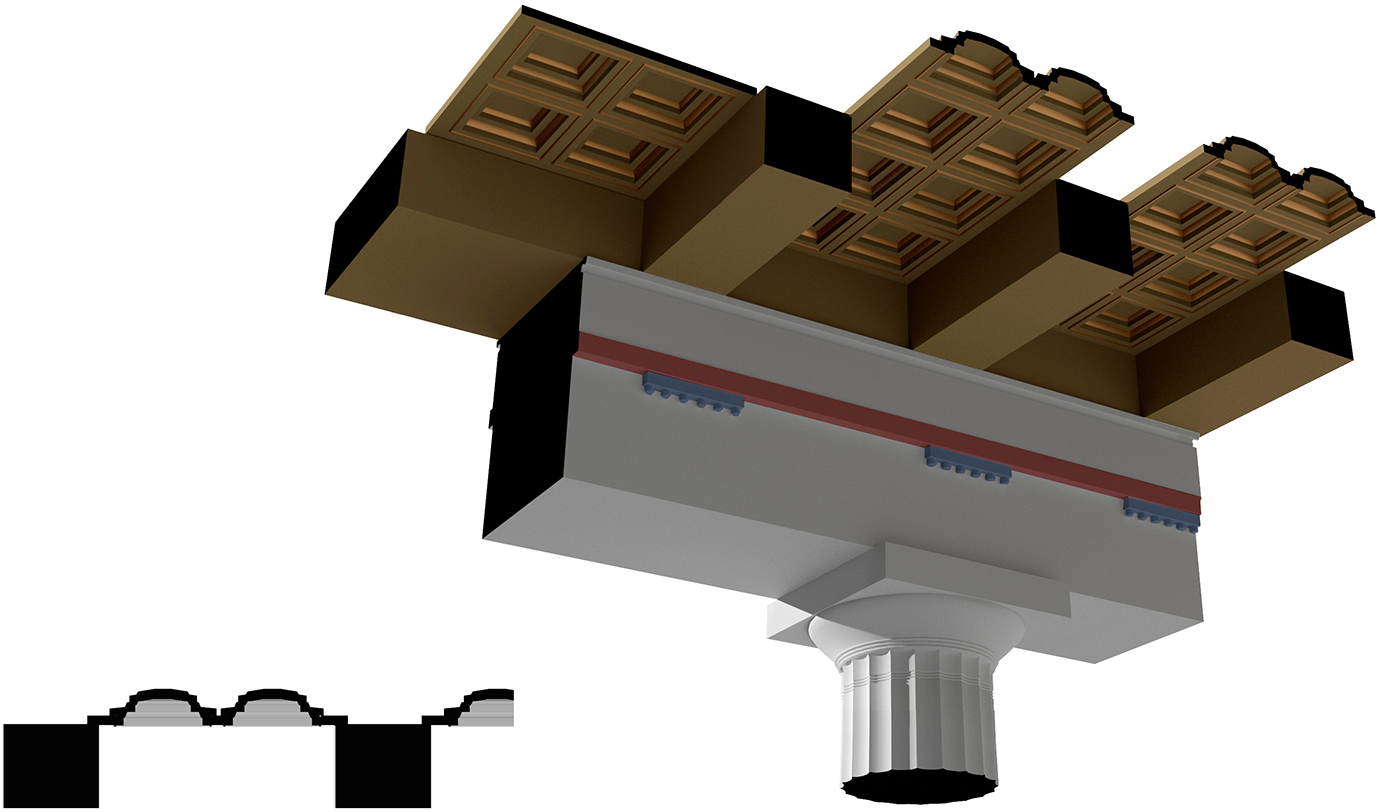
An experiment, set solely as a working hypothesis to assess an old theory, tested the illuminance levels under natural light conditions at 11.00 a.m. on 1 August 440 BCE with a cella with coffered ceilings (Fig. 43).Footnote 40 In this scene, the main light source was unidirectional from the door and the windows. The physically based render shows a relatively lit interior, where the back of the cella is gradually enshrouded in shadows. The illuminance at the centre of the cella (ambient) was calculated at 200–250 lux.
Perspective view section of the architrave and column segment from the interior colonnade, complete with wooden beams and coffer slabs on top. Render: Juan de Lara.

Simultaneously, further calculations were made under the same conditions but removing the coffered ceiling just for experimental purposes, and bearing in mind the long tradition of arguments that favoured visible roof tiles from the interior. The transmittance level of the Pentelic marble tiles in the roof was set at 0.23 per cent, a figure sourced from the research from Ike and Otaki (Reference Ike and Otaki1998) and Weigand, García Campos Acosta and Storch de Gracia (Reference Weigand, García Campos Acosta and Storch de Gracia2015). The colour of the transmitted light was set at a red tone, in accord with the data provided by the same authors.Footnote 41
The result in this case was that the light transmitted through the tiles increased the illuminance at the centre of the cella from 200–250 lux to approximately 270–280 lux. This is barely a meaningful contribution for the purpose of illumination. It is also worth noting that the little light coming through translucent tiles creates an effect known in rendering as ambient occlusion, which blurs the shadows in the interior, creating a diaphanous space (Figs 44 and 45). Such an effect has the shortcoming of reducing the contrast between light and shadows (chiaroscuro), which is unlikely to have been a desired effect over the carefully sculpted creases and folds of the statue. Therefore, these marginal results seem to suggest that the use of translucent tiles made of Pentelic marble was not effective to enhance the light within the interior, and contests the bright result achieved by Ike and Otaki.
Physically based render of the cella’s interior on 30 May 430 BCE at 8 a.m., captured from the north-east side of the central nave. (a) The interior rendered with a ceiling with coffers. (b) Same as previous but with a ceiling without coffers, exposing marble tiles set up with the equivalent transmittance factor of Pentelic marble. Render: Juan de Lara.

Illuminance analysis of Fig. 44. Render: Juan de Lara.

LAMPS AND OTHER FIRES INSIDE THE PARTHENON
The final experiment assessed the potential impact of artificial light through the use of lamps and torches. This is one of the more contentious and debated issues within this article. And this is because of the scarcity of archaeological evidence and the speculative nature of the use of lamps and torches in temple interiors.
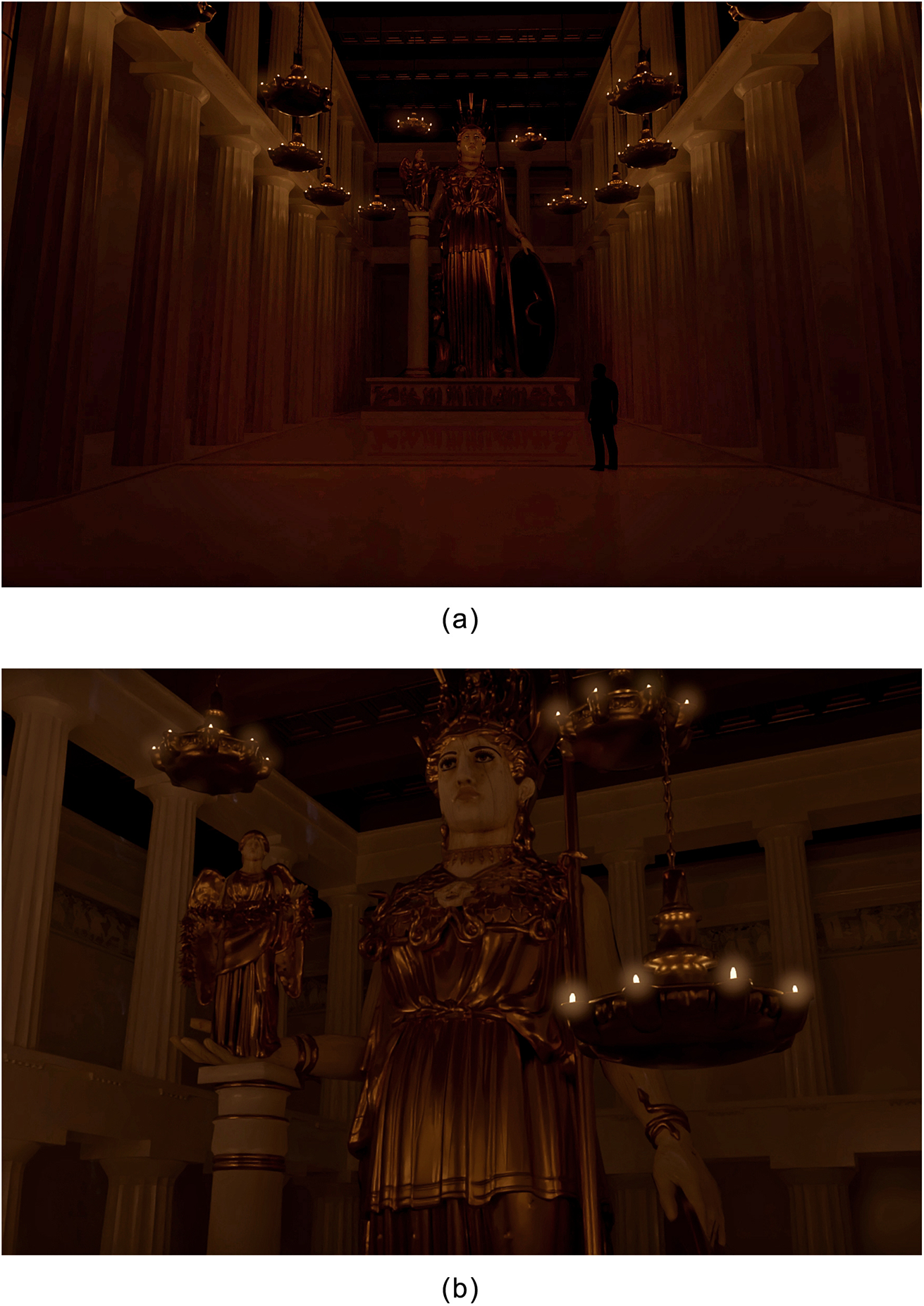
As there is no data on the number of lamps that could have been used in a temple of the size of the Parthenon, only assumptions can be made. Undoubtedly, lamps would have made the interior brighter and more luminous. However, more lamps would have also produced more, and at some point uncontrollable, amounts of smoke and soot. Therefore, a working hypothesis consisted in strategically placing a total of 12 lamps, each with a diameter of 40 cm, with eight nozzles each along the main nave. Ten lamps would be distributed across the long axis, and two would be positioned at the head level of the statue.Footnote 42 The lamps were suspended at a height of eight meters above the pavement of the cella. This arrangement, again, is purely speculative and greatly relied on observation of temples in other cultures.Footnote 43
The wicks chosen for the experiment were made of 2 cm width twisted flax, the material that would have been available that has emits the strongest power of visible light (lumens). This choice also determined the light attenuation, or decay factor over distance, a figure that can be obtained from other studies (Moullou and Topalis Reference Moullou, Topalis, Papadopoulos and Moyes2017; Doulos, Moullou and Topalis Reference Doulos, Moullou and Topalis2015, 124). The resulting render illustrated the potential illumination achieved by this configuration, encompassing the head of Athena’s statue, with an average brightness ranging from 10 to 50 lux, extending to her face. The lower part of the cella remained dimly lit. However, it is important to emphasise that despite the low levels of illumination, this level would have been sufficient to facilitate safe human transit through the cella.
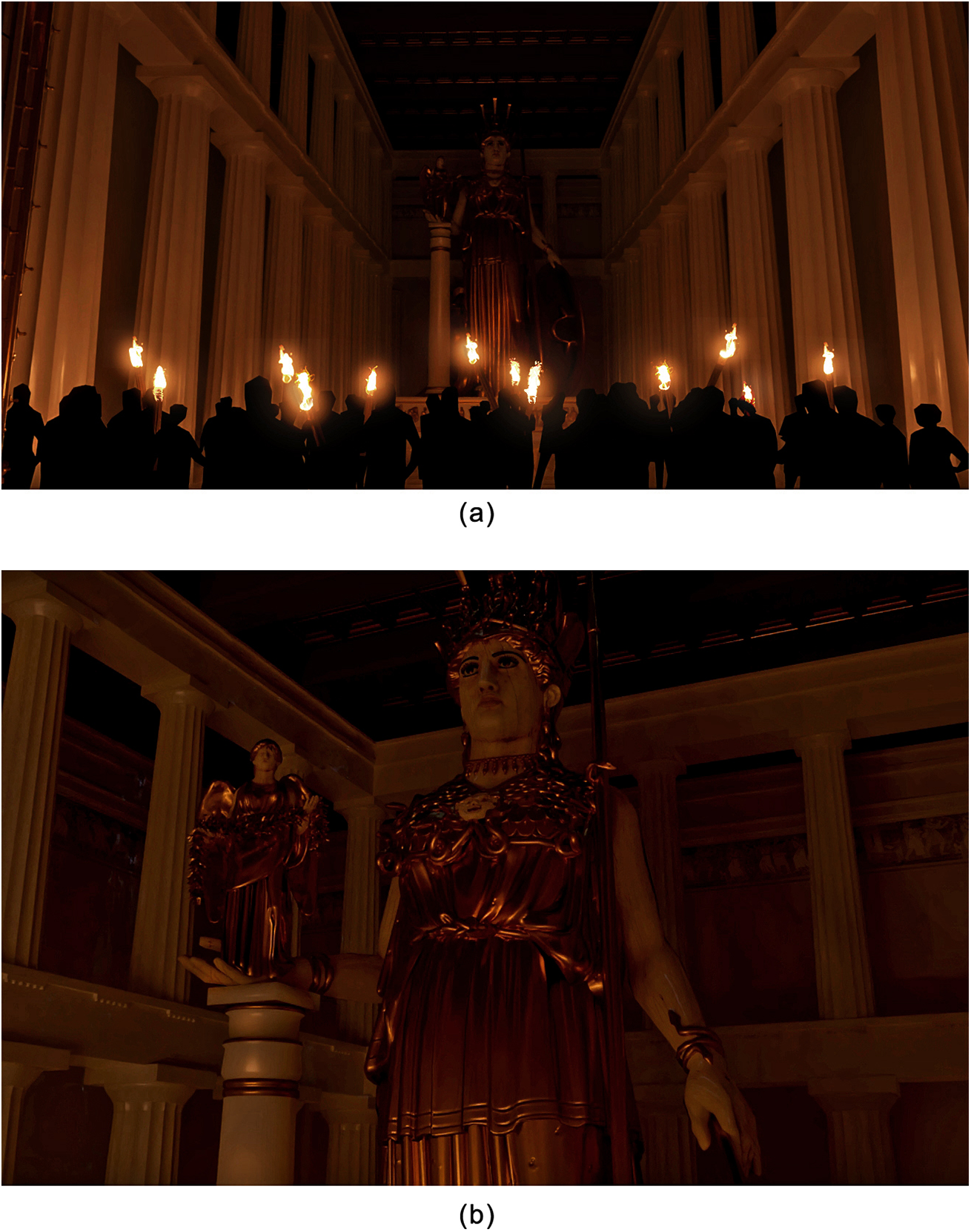
The digital scene was then modified to accommodate torches brought in by a hypothetical group of visitors. Whereas the multitude of lamp flames provided consistent and even illumination, eliminating shadows and reducing contrasts, the torchlight offered a more captivating result. In particular, it generated a highly uplifting effect and a more intense and directional light, capable of casting deeper shadows and highlighting intricacies in the statue’s features (Figs 46 and 47). In this case, the surfaces closer to the flame could receive up to 80 lux. Torches were found to have a more pronounced effect on the statue’s face than lamps.
(a) Interior view of the cella with a hypothetical configuration of hanging lamps strategically distributed across the central nave. (b) Closeup of statue of Athena in the cella showing the effect of the same lamp arrangement. Render: Juan de Lara.

(a) Interior of the cella with an imagined gathering of people in the entrance of the cella, some of them holding torches. The scene is meant to illustrate the potential visual impact of torches on the interior illumination of the temple. (b) Closeup view of the statue of Athena and the effect of the illumination by torchbearers. Render: Juan de Lara.

Assessing whether the scenario with torches was even plausible is undoubtedly challenging. It could be hypothesised that such visits could have occurred during night vigils for a select group of citizens (see next subchapter). But even if these did occur, they must have been of brief duration: there would have been a need to allow for dispersal of the fumes from the torches. If such visits ever happened, this is perhaps one of the reasons why windows were incorporated, assuming the doors had to be closed for religious purposes.
All in all, the experiment has proven to be of use to demonstrate the potential of an effect, but limited data exists to prove that anything was ever a real scene in such a space.
LIGHT AND DARKNESS IN GREEK RELIGIOUS EXPERIENCE
The previous physically based three-dimensional reconstructions have revealed that the interior of the Parthenon maintained a subdued illumination during daytime.Footnote 44 On a sunny day, the ambient light coming from the door was sufficient to accentuate the fundamental outlines and spatial forms within the interior, namely the colonnade and the statue. This unidirectional light arrangement allowed the ivory veneers and gold plating of Phidias’ monumental statue to interact with the incoming light through the doorway on the opposite side. This effect must have given rise to the sensation that the deity, bedecked in her golden attire, emerged from the shrouding darkness.
This analysis has also demonstrated that spectacle-making in the interior of the Parthenon was relatively modest, and was not as sophisticated as modern works have attempted to portray. Firstly, the presence of liquid pools might have been related to rituals rather than illumination – perhaps activities related to the maintenance of the statue, such as washing and anointing (de Lara Reference de Lara2023a, 478–86). Furthermore, Korres sees no reason to doubt the existence of a coffered ceiling,Footnote 45 so translucent tiles or opaia were more relevant in the use of the dark attic of this particular structure. In either case, we have demonstrated how opaia could not have contributed to the general illumination of such a large temple. Additionally, the windows served to illuminate areas of the cella where works of art were located, such as the shadowy aisles laden with valuables and decorative friezes. Nonetheless, these windows may have also operated as ventilation channels, addressing the need to extract the copious amounts of smoke from the incense (and/or perhaps lamps) burned in the temple. Of course, ultimately these two functions were not mutually exclusive.
In summation, most of the strategies that have been historically attributed to temple lighting in the Parthenon did not fulfil the function of enhancing the lighting of the temple. Confirmation of the Parthenon as a dimly lit temple introduces a fresh perspective on approaching Greek sacred structures. To provide an analogy for the way in which Greek temples could be studied, a parallel could be drawn with the doctrines of mystical darkness in Egyptian and Indian sacred architecture. These temples have been identified as symbols of the sacred cave, a persistent religious trope replicated across time and space as a symbol of creation and the point of emergence of celestial bodies (Eliade Reference Eliade1958/9, 37; Smith Reference Smith and Moyes2012, 118). In the Egyptian context, revelatory practices held great significance, as seen in instances where deities were believed to emerge from a primeval dark ocean-womb, acting as the source of light and divine beings (Quirke Reference Quirke1992, 80; Smith Reference Smith and Moyes2012, 117; Magli Reference Magli, Papadopoulos and Moyes2017). The expulsion of darkness by light also held profound social, religious and emotional implications within Egyptian religious beliefs (Strong Reference Strong2018, 185 and 251; Reference Strong2021, 63–96; Hosny Reference Hosny2020, 37–42).
Scholars have recently highlighted how light and darkness played a role in the worshiping routines of the ancient Greeks, emotionally manipulating the observer’s perception (Christopoulos, Karakantza and Levaniouk Reference Christopoulos, Karakantza and Levaniouk2010; Boutsikas Reference Boutsikas, Papadopoulos and Moyes2017). In Boutsikas’ view, darkness was an integral element that shaped mystical and religious atmospheres in all sorts of acts of piety. In fact, many Greek acts of worship occurred at night. Ritual observation of cult proceedings during night-time were termed pannychis: these ceremonies appear to have shared characteristics with later Christian vigils. Such festivities could be held in the name of various deities, such as Demeter (IG II2 1363, 17), Dionysos (IG XII 2 499), Artemis (Pausanias 6.22.9), and Athena (at the Panathenaia, including a second vigil that followed the sacrifice and dedication of Athena’s new peplos; see IG II3 1, 447; Shapiro Reference Shapiro and Neils1992, 56; Lefkowitz Reference Lefkowitz and Neils1996, 79; Boutsikas Reference Boutsikas2020, 51; J.L. Shear Reference Shear2021). Even though the pannychides took place at night, a characteristic that may suggest their mystical nature, they do not seem to have been associated with the negative undertones of darkness. On the contrary, darkness seems to have provided the ritual a sought-after concealment, with the atmosphere being enhanced by the assistance of artificial light (Boutsikas Reference Boutsikas2020, 51). Other rituals, too, such as the Athenian Arrephoria (Pausanias 1.27.3), or Partheneion in Sparta at the shrine of Artemis Orthia, occurred at night-time (Alcman, Partheneion 61, 87).
Certain nocturnal ceremonies relied extensively on torches and lamps, although the evidence is limited.Footnote 46 If torches and lamps were indeed introduced into the temple, the internal environment and the magnificent statues must have been radically altered, transforming the visual experience into a radiant spectacle, albeit momentarily, as we have shown. Then, the break of dawn could have signalled the commencement or conclusion of one or another part of the ritual (as seen in Euripides’ Ion 45, for instance).
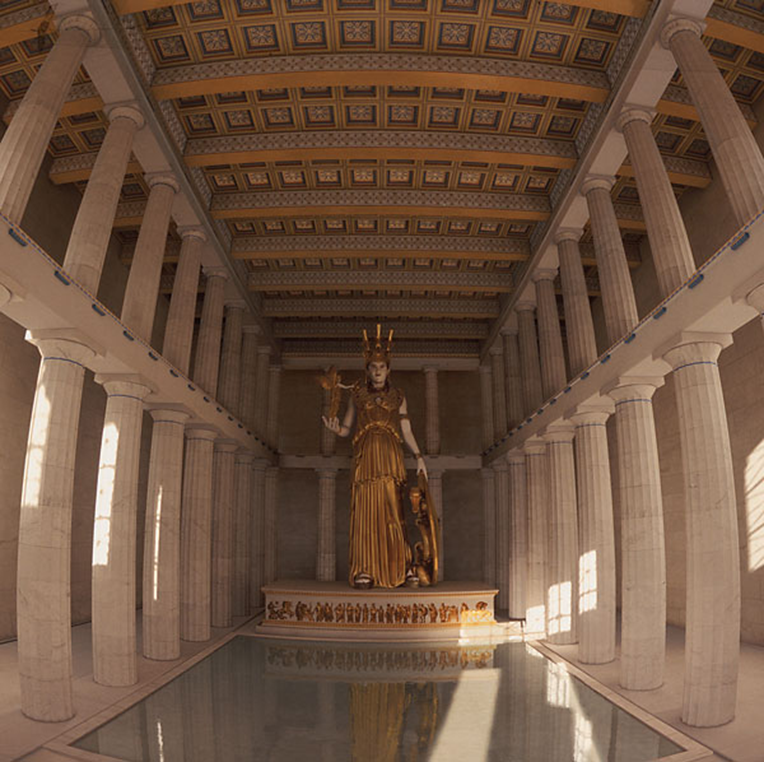
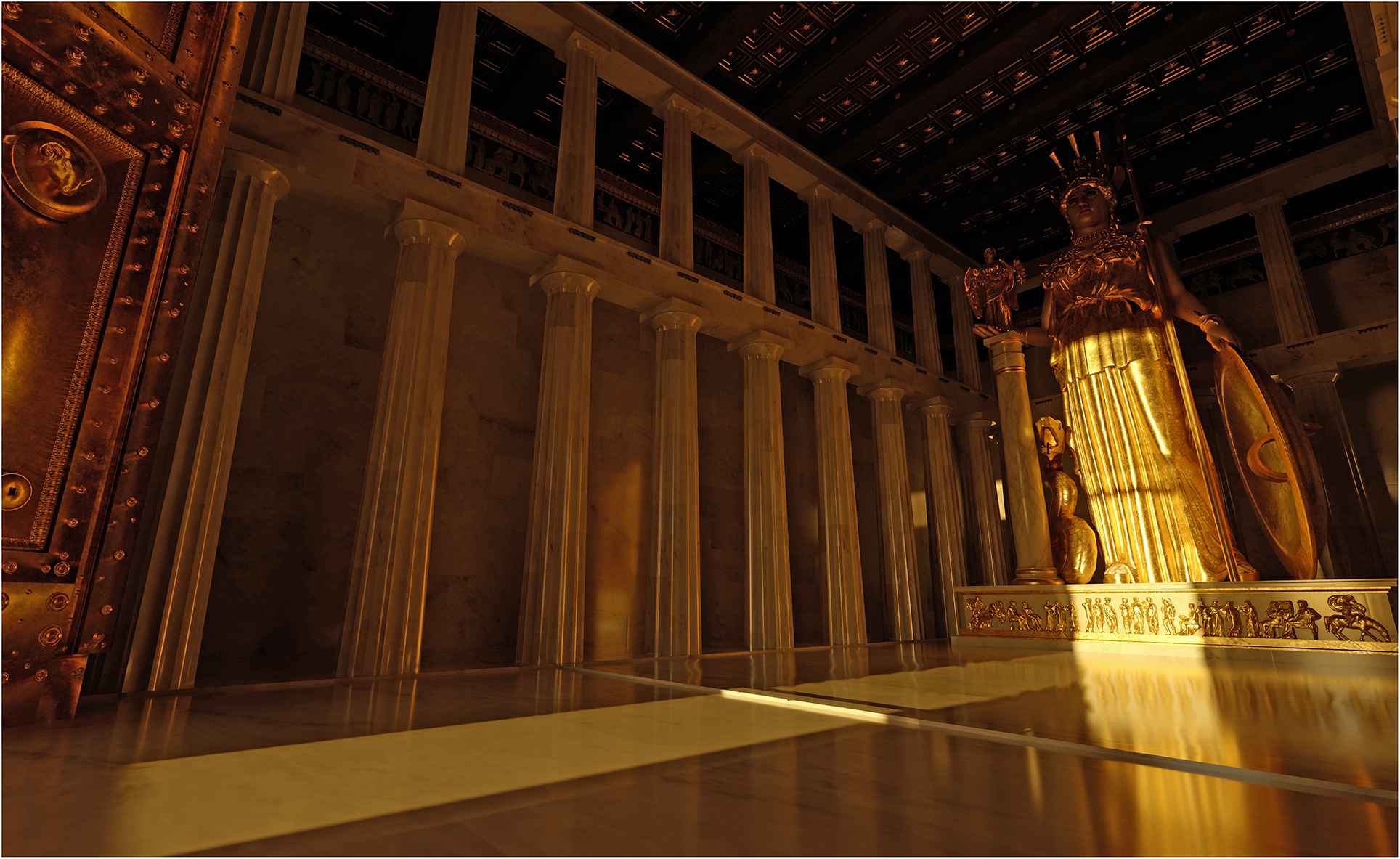
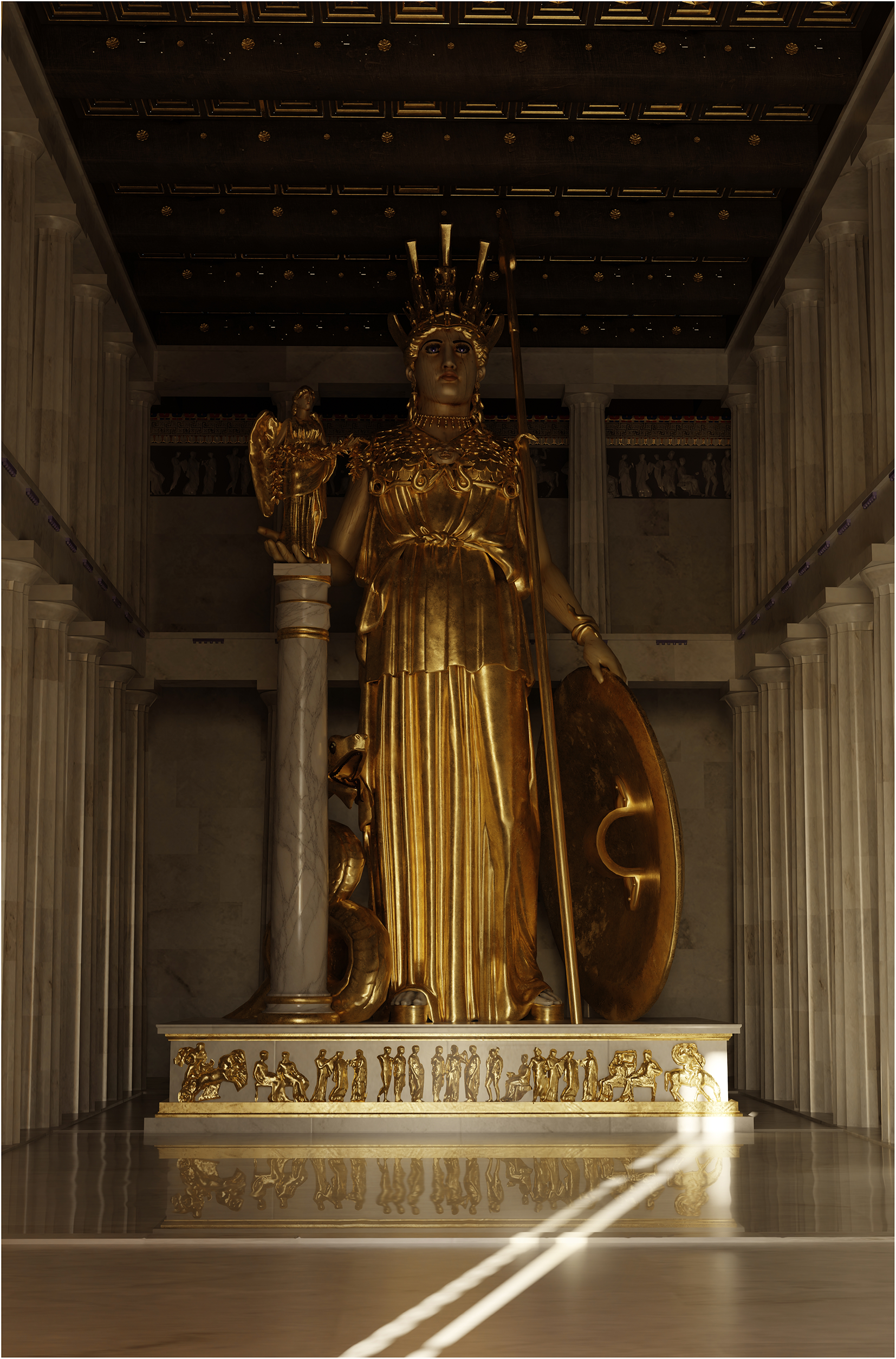
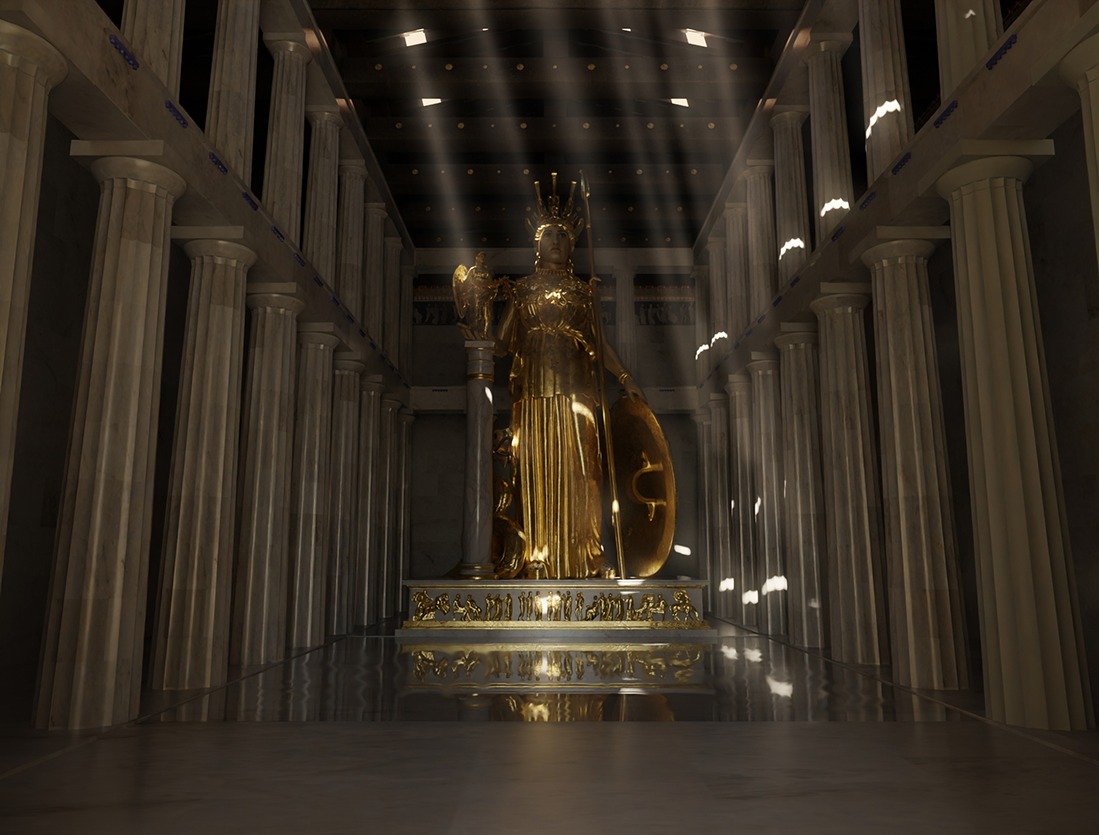
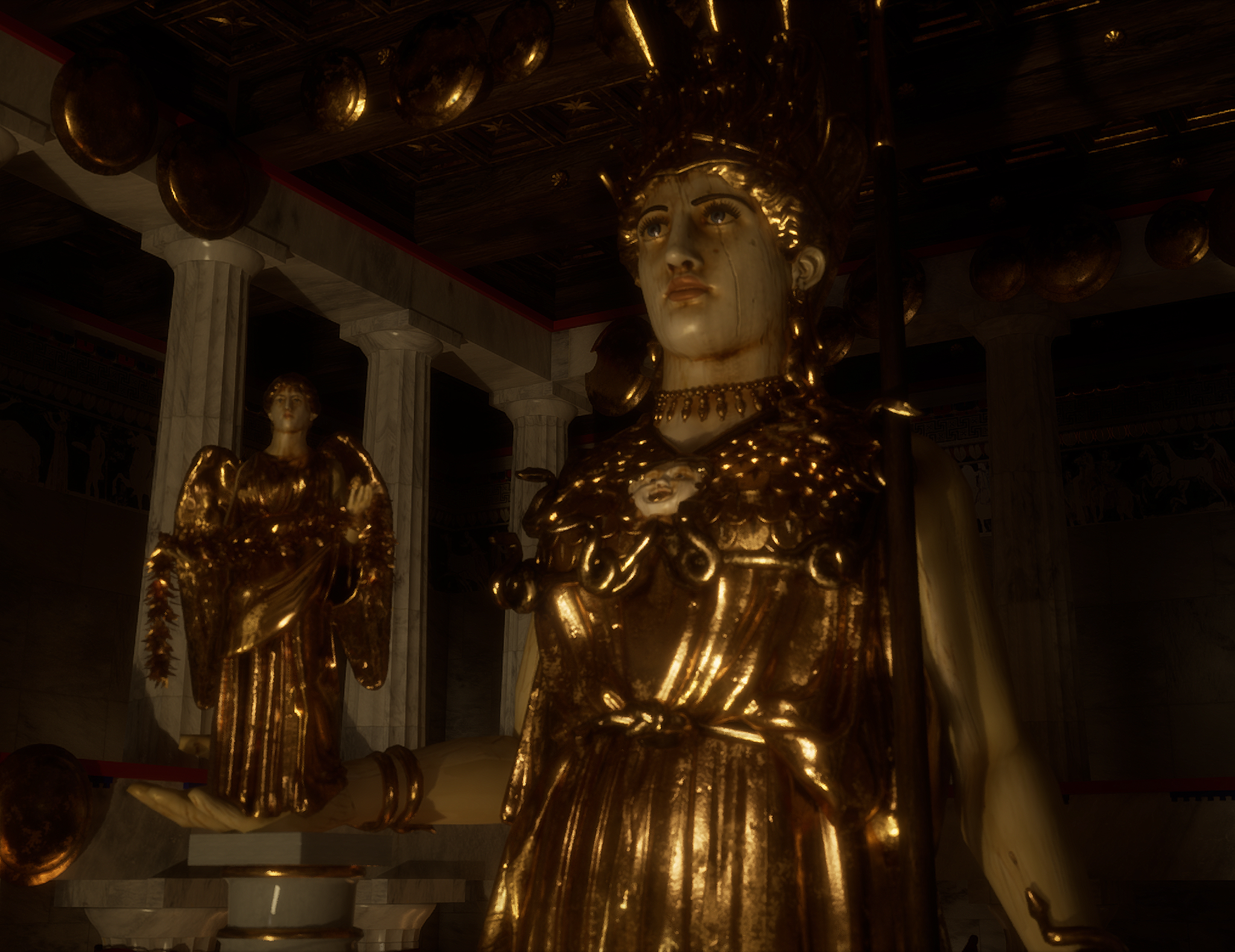
To conclude, the experiments and literature discussed here suggest that whenever access was granted to the temple, the vision of the divine statue was filtered through a variety of material and immaterial veils, such as diaphanous grilles, gate thresholds, curtains, parapets, and ultimately darkness. Both natural and artificial light shone and gleamed in the darkness. The occasional shining of the repoussé gold, alongside the reflections of the stone, and the colours, drifting shadows, and kinetic occlusion of smoke, would have created a sensorial stage apt for epiphanies. Within this space, gods were revealed in a multitude of experiences that marked liminal transitions, culminating in the temple’s core dramatic experience: the charm in realising the unseen – the gods (Fig. 48).
Physically based render reconstruction of the close-up view of Athena holding Nike in her right hand. Render: Juan de Lara.

CONCLUSION
The present study has demonstrated the utility of 3D modelling for assessing questions of illumination and visibility. The result of such a line of inquiry has addressed and illustrated theories related to light that have previously been only approximated. The study reveals that many of these purported tools did not serve to effectively illuminate an interior, which, under natural conditions, was in a rather dim state.
Greek temples have stereotypically been assessed as highly illuminated, highly rational, pristine spaces, with unbroken daylight – the canonical structures of Western civilisation and European Enlightenment. However, these are not accurate reflections but rather tropes of certain eras projected onto ancient Greek realities, in which one can sense the enduring presence of Winckelmann’s neo-classical scholarship and his idealised world of pure light on gleaming surfaces (Stolow and Meyer Reference Stolow and Meyer2021; Lindberg Reference Lindberg1986; Spelman Reference Spelman1997, 12–15; Schützinger, Paparella and Howell Reference Schützinger, Paparella, Howell and Fastiggi2013; Zwi Werblowsky and Iwersen Reference Zwi Werblowsky, Iwersen and Jones2005, 5450). Winckelmann conceived an immaculate world of ‘white marble, since white is the colour that reflects the most rays of light, and thus is most easily perceived’ (Pater Reference Pater and Hill1837; Winckelmann Reference Winckelmann2006, 195; Hodne Reference Hodne2020), and believed that the ideal quality of Classical sculpture was best reflected in its marmoreal whiteness (Bruel Reference Bruel1958, 182–3; cf. Dates, Logan and Knudstrup Reference Dates, Logan and Knudstrup1945). And it is under these parameters of aesthetic purity that Greek temples seem to have been replicated and copied over centuries.
But we can now have a better grasp at the dynamic and complex conditions of a temple interior such as that in the Parthenon (Fig. 49). Analyses of this nature underscore the significance and benefits of experimentation, particularly through digital means, as a potent tool for exploring the experiential dimensions of architectural spaces. Quatremère de Quincy’s words written in 1829 have never resonated as much as they do today:
[A reconstruction,] far from treating of the intrinsic beauty of the building, has no other purpose than to enable the reader to understand how it was built, and the effect it has on the senses, and to eliminate the prejudices of modern taste […]. (Antoine Chrysostome Quatremère de Quincy Reference Quatremère de Quincy1829, IV)
Enriched reconstruction of the interior of the Parthenon. Render: Juan de Lara.

ACKNOWLEDGEMENTS
This study was funded by The London Arts and Humanities Partnership (LAHP) and additional support from the Institute of Archaeology at University College London. I would like to thank Professor Jeremy Tanner and Professor Andrew Bevan for their superb guidance and dedicated support on this research. I am equally indebted to Vasileia Manidaki and the Acropolis Restoration Service (YSMA) team for generously sharing their invaluable time and expertise. Manidaki’s charisma, guidance, and insights were instrumental in shaping my research and deepening my understanding of this magnificent monument. I also thank Margaret M. Miles, Dorina Moullou, Aenne Ohnesorg, and Kenneth Lapatin, who provided valuable comments at different points of the research. Finally, I would like to thank Katerina Argyraki, Robert Davies, and the editor of the journal, Peter Liddel, for their assistance in editing this manuscript.

 Open access

