


Background
Gambling represents a significant global public health concern. It is therefore important to implement various and multilevel policy measures to mitigate gambling harm (Wardle et al., Reference Wardle, Degenhardt, Ceschia and Saxena2021). An effective public health response to gambling requires measures at system level (so-called s-frame measures) as well as individual levels (i-frame measures) (Chater and Loewenstein, Reference Chater and Loewenstein2023; Ukhova et al., Reference Ukhova, Marionneau, Nikkinen and Wardle2024). Among these measures are mandatory player identification and limit-setting, such as personal monetary limits. Player identification refers to a regulatory requirement whereby individuals must create a customer account and verify their identity – typically through an official ID, player card or digital identification – prior to engaging in gambling at a venue or online. A player account enables the use of mandated personal monetary limits, such as predefined thresholds for losses or deposits over a specified period. The current paper draws on a unique dataset comprising player-level gambling behaviour and examines how individuals respond to these policy interventions and explores how they are associated with changes in gambling behaviour.
Prior research into the implementation of health-related public policy interventions shows that it is critical to consider the interplay between the intervention and the implementation context. This is essential to account for potential dynamic feedback effects between the intervention and the context (Selin, Reference Selin2017; Skivington et al., Reference Skivington, Matthews, Simpson, Craig, Baird, Blazeby, Boyd, Craig, French, McIntosh, Petticrew, Rycroft-Malone, White and Moore2021). The same is likely to apply to the implementation of mandatory identification and limit-setting for gambling. Prior addiction research has established that behavioural status and demographic characteristics of target groups are key contextual factors influencing the implementation and effectiveness of harm reduction or prevention interventions (Diepeveen et al., Reference Diepeveen, Ling, Suhrcke, Roland and Marteau2013). However, in gambling research, the interaction between policy interventions and implementation context has been infrequently examined (Nisbet et al., Reference Nisbet, Jackson and Christensen2016; Selin et al., Reference Selin, Pietilä and Kesänen2020). In this paper, implementation context is understood as the set of situational factors that shape the policy implementation process, including the behavioural responses of the target population (May et al., Reference May, Johnson and Finch2016; Watson et al., Reference Watson, Adams, Shue, Coates, McGuire, Chesher, Jackson and Omenka2018). We therefore contribute to the literature on the importance of the implementation context in gambling policy research, with a particular focus on the implementation of mandatory player identification on electronic gambling machines. Electronic gambling machines are of particular interest from a public health policy perspective because they are among the most harmful gambling products, for example due to their combination of rapid play speed and attractive audiovisual elements (Yücel et al., Reference Yücel, Carter, Harrigan, Van Holst and Livingstone2018).
Mandatory identification of players is a prerequisite for various policy measures aimed at preventing and reducing gambling harms in both land-based and online gambling (Rintoul and Thomas, Reference Rintoul and Thomas2017; Swanton et al., Reference Swanton, Tsang, Collard, Garbarino and Gainsbury2024; Ukhova et al., Reference Ukhova, Marionneau, Nikkinen and Wardle2024). Mandatory identification is prevalent in online gambling globally and particularly in Europe (Ukhova et al., Reference Ukhova, Marionneau, Nikkinen and Wardle2024; Marionneau et al., Reference Marionneau, Luoma, Turowski and Hayer2025). Mandatory identification is also closely related to discussions on cashless payment methods in the context of gambling machines in particular (Nisbet et al., Reference Nisbet, Jackson and Christensen2016; Swanton et al., Reference Swanton, Tsang, Collard, Garbarino and Gainsbury2024). Mandatory identification can reduce gambling expenditure and harm by restricting access to gambling and enabling more accurate age verification, enforcement of self-exclusion regimes, the setting of personal monetary or time limits, account-based tracking to detect harmful gambling patterns and the provision of accurate and relevant feedback to consumers on their gambling behaviour (Newall and Swanton, Reference Newall and Swanton2024; Swanton et al., Reference Swanton, Tsang, Collard, Garbarino and Gainsbury2024).
Little research has focused on the implementation and effects of mandatory limits. Yet, it is likely that the effects of identification and accompanying limit-setting policies on gambling harm and expenditure have differed due to important differences in their implementation context.
Voluntary identification systems, which allow players to choose between anonymous and identified gambling, have been less effective in reducing gambling expenditure, due to low uptake (Ladouceur et al., Reference Ladouceur, Blaszczynski and Lalande2012; Rintoul and Thomas, Reference Rintoul and Thomas2017; Delfabbro and King, Reference Delfabbro and King2021). In a study on online gambling, only a fraction (1.3%) of players in a large sample had set a voluntary deposit limit (Auer, Hopfgartner and Griffiths, Reference Auer, Hopfgartner and Griffiths2020). Individuals experiencing gambling harm are particularly unlikely to use identification-based limit-setting voluntarily (Drawson et al., Reference Drawson, Tanner, Mushquash, Mushquash and Mazmanian2017; McMahon et al., Reference McMahon, Thomson, Kaner and Bambra2019). In contrast, there are findings suggesting that mandatory systems can be more effective. The implementation of mandatory player cards in Norway in 2009, alongside other gambling policy reforms (Leino et al., Reference Leino, Torsheim, Blaszczynski, Griffiths, Mentzoni, Pallesen and Molde2015), translated into reduced overall problematic gambling in the country (Rossow and Hansen, Reference Rossow and Hansen2016). Similarly, in Nova Scotia a mandatory identification trial for land-based gambling machines resulted in 63% of card users reducing their gambling expenditure while 72% decreased time spent gambling in comparison to before (Omnifacts Bristol Research, 2007).
The effectiveness of identification systems also depends on whether they are implemented in conjunction with mandatory or voluntary limit-setting tools (Wohl et al., Reference Wohl, Davis and Tabri2024). In many cases, identification and linked limit-setting policies have been operator-specific or limited to certain gambling products, rather than covering the entire regulated gambling offering or being implemented consistently across all operators. This fragmented implementation allows individuals to bypass restrictions by turning to alternative gambling options or websites once their personal pre-set monetary limits are reached (McMahon et al., Reference McMahon, Thomson, Kaner and Bambra2019). Particularly, people experiencing gambling harm have been shown to be more likely to continue gambling despite reaching their limits (Drawson et al., Reference Drawson, Tanner, Mushquash, Mushquash and Mazmanian2017; McMahon et al., Reference McMahon, Thomson, Kaner and Bambra2019). These findings suggest that without a unified and comprehensive approach, the protective potential of identification and limit-setting tools may be undermined.
In some instances, identification has been integrated into existing loyalty programmes of the gambling companies. While this integration may increase user engagement with identification systems, it can also send contradictory messages by simultaneously promoting gambling and attempting to limit it (Rintoul and Thomas, Reference Rintoul and Thomas2017). This dual messaging may reduce the perceived seriousness of harm-reduction efforts and weaken their effectiveness.
The way different player groups respond to the implementation of player identification and limit-setting policies also plays a crucial role in determining their effectiveness. Public policy literature shows that factors such as demographics and behaviour are critical to the implementation context and influence the effectiveness of public policy interventions (Skivington et al., Reference Skivington, Matthews, Simpson, Craig, Baird, Blazeby, Boyd, Craig, French, McIntosh, Petticrew, Rycroft-Malone, White and Moore2021). Support for restrictive policies tends to be higher among those not engaging in the targeted behaviour, with women and older individuals more likely to favour such measures (Diepeveen et al., Reference Diepeveen, Ling, Suhrcke, Roland and Marteau2013). However, existing evidence in the gambling field, utilising account-based online gambling data, suggests that younger age groups and female players may be more likely to set voluntary limits and to set personal spending limits at lower levels than older age groups and men (Gainsbury et al., Reference Gainsbury, Angus, Procter and Blaszczynski2020; Heirene et al., Reference Heirene, Vanichkina and Gainsbury2021; Auer and Griffiths, Reference Auer and Griffiths2022).
In addition to demographic factors, levels of gambling engagement have been found to influence how individuals respond to identification and limit-setting. Survey-based evidence from Australia, Germany and Finland shows that individuals with heavier gambling consumption are more likely to oppose new limits and restrictions (McAllister, Reference McAllister2014; Selin and Raisamo, Reference Selin and Raisamo2021; Auer and Griffiths, Reference Auer and Griffiths2022). In a Norwegian sample of online gamblers (Auer, Reiestad and Griffiths, Reference Auer, Reiestad and Griffiths2020) 79% of all respondents expressed a positive attitude towards mandatory loss limits. However, when their gambling engagement was considered, only 67% of those at high risk of problem gambling supported limits, compared to 82% of players at low risk. Two qualitative Australian studies (Nisbet et al., Reference Nisbet, Jackson and Christensen2016; Newall and Swanton, Reference Newall and Swanton2024) on cashless gambling on electronic gambling machines found that the most common reason players opposed cashless gambling was that they did not consider it relevant to themselves – unlike for those experiencing gambling harm. Other reasons for reluctance include concern over data privacy, as mandatory identification requires a proof of identity such as a player card (Ladouceur et al., Reference Ladouceur, Blaszczynski and Lalande2012)
As different player groups comply with identification and limit-setting policies differently, it is also likely that they are differently affected by these. In this paper, we investigate the implementation of mandatory identification for gambling machines in Finland. Our analysis utilises a large longitudinal gambling account-based dataset (2017–2022; N = 100,000 original sample). The primary aim is to assess differences in gambling behaviour among those who had voluntarily identified before the mandatory scheme and those who only identified once the mandatory identification was implemented, focusing on demographic variables and gambling consumption patterns. The secondary aim is to evaluate the impact of mandatory monetary limits with fixed cap on gambling losses across these groups.
Methods and data
Setting
Finland is one of the few countries globally that have introduced a centralised and mandatory identification scheme for all gambling products, covering the full regulated gambling market in both online and land-based environments. Finland has a public monopoly that covers all gambling provision. Before 2021, mandatory identification concerned online offers of the monopoly, only, while voluntary identification was possible for land-based products. In 2019, mandatory player identification was decreed by law (Laki arpajaislain muuttamisesta, 2019) for gambling machines placed outside of casinos and arcades. The decree was justified by public health concerns and the need to better enforce age limits. The decree was set to take effect in 2022. However, the gambling monopoly started to implement mandatory identification in stages already in 2021. A later amendment to the law (Laki arpajaislain muuttamisesta, 2021) extended the mandatory identification regime to gambling machines located in gambling arcades.
Before identification at gambling machines is possible, players must first complete the registration and creation of a player account by verifying their identity through an electronic authentication service or an official identity document. Identification at gambling machines is implemented as a hybrid model where the player can select a cash or cashless payment option. For cashless payments, a debit card is used for both identification and payment. Credit cards are not accepted. With cash payments, identification takes place using a mobile device or loyalty card. While each player must have a personal player account, funds cannot be transferred from the account to play the machines (cf. Swanton et al., Reference Swanton, Tsang, Collard, Garbarino and Gainsbury2024).
Machine gambling has been comparatively prevalent in Finland and constituted the bulk of gambling monopoly’s revenue before COVID-19 (Marionneau et al., Reference Marionneau, Kristiansen and Wall2024b). Availability and accessibility of gambling machines in Finland is high (Raisamo et al., Reference Raisamo, Toikka, Selin and Heiskanen2019; Selin et al., Reference Selin, Okkonen and Raisamo2024): There were about 18,500 machines located in supermarkets, restaurants and petrol stations and about 2,500 in arcades in 2019. However, the number of machines has been reduced since. In 2022 there were about 2,200 gambling machines in arcades and approximately 10,000 non-arcade machines. Prior to 2021, gambling machines were the most prevalent type of gambling amongst those seeking help for gambling harms (Grönroos et al., Reference Grönroos, Salonen, Latvala, Kontto and Hagfors2024; Marionneau et al., Reference Marionneau, Kristiansen and Wall2024b). The mandatory identification regime was therefore expected to tackle these harms and to enable more public health–oriented gambling policy in the country (Selin et al., Reference Selin, Simonen, Alho, Castrén, Järvinen-Tassopoulos, Karlsson, Nikkinen, Salonen and Warpenius2017).
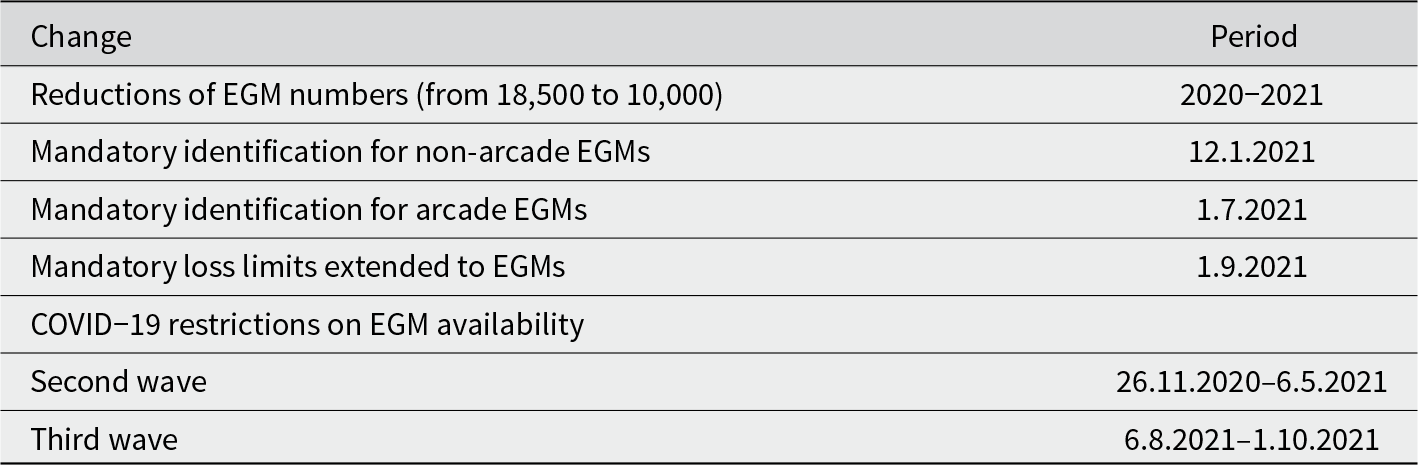
The implementation of mandatory identification was followed by the introduction of mandatory loss limits, set at a maximum of 500 euros a day and 2,000 euros a month, as per ministerial decree (Sisäministeriön asetus Veikkaus Oy:n rahapelien pelisäännöistä, 2021). These loss limits cover identified gambling, with the exception of land-based casino, poker, lotteries and sports betting. The period also coincided with other changes in the gambling machine market, including reductions in the number of machines and COVID-19-related restrictions. Table 1 details the sequence of the policy changes addressing the gambling machine market during 2021 in Finland.
Major changes affecting the Finnish land-based electronic gambling machine (EGM) gambling during 2021
Data
According to the section 55 of the Lotteries Act (Arpajaislaki, 1047/2001, 2001) the gambling monopoly Veikkaus has a statutory obligation to hand over data to the AA [anonymised for peer review] for research purposes. The data are not publicly available.
The original dataset consists of a random sample of 100,000 active players from Veikkaus’ customer registry. Variables in this dataset include identified gambling activity aggregated at day, game and channel (land-based or online) level for each customer, from 12 December 2017 to 31 May 2022, as well as basic demographic variables (residence area, categorised age, gender). During the sample period, Veikkaus had nearly 2 million Finnish registered customers in total. The original sample contains only individuals with identified gambling activity on at least one day during the sample period. As the individuals were drawn randomly from the customer registry, the sample can be seen as representative of the (registered) player population.
Before the introduction of mandatory identification, customers could still voluntarily identify when gambling on electronic gambling machines. However, only 10% of machine gambling was identified according to Veikkaus (2020). The same individuals could also gamble on machines without identification before mandatory identification was implemented on 12 January 2021, for non-arcade machines or 1 July 2021, for arcade machines. As our dataset focuses on identified machine gambling, this unidentified gambling behaviour is not included in our data. Therefore, individuals could gamble on non-arcade machines under the mandatory identification and on arcade machines without identification between 12 January 2021 and 1 July 2021.
As our focus is on the machine gambling, all individuals with at least one identified machine gambling session were considered as machine gamblers and included in the final dataset and the analysis. The final sample consists of 28,351 individuals. The randomly drawn sample is representative of the machine gambling population.
Methods
Based on prior research, we presumed that different player groups may adhere to identification and limit-setting policies in varying ways and are likely to be differentially impacted by these policies. We therefore formed three distinct player groups, based on their gambling behaviours during the different phases of the implementation of the player identification (Table 1). These groups are the focus of our subsequent analyses.
The Voluntary Identifiers (VI) consist of machine gamblers who had voluntarily identified prior to the mandatory scheme in 2021. The Post-Mandate Identifiers (PMI) include machine gamblers who began identified machine gambling only after the mandatory scheme took effect in 2021. The PMI group was further subdivided into two groups. The Post-Mandate Identifiers with existing account (PMI-E) consist of individuals who, although they had not identified in machine gambling, had an existing registered account, and had identified in other gambling before 2021. The Post-Mandate Identifiers with new account (PMI-N) consist of individuals who had not identified in any gambling prior to the mandatory identification scheme.
In our analysis, we compared these three groups (VI, PMI-E, PMI-N) in terms of their identified machine gambling behaviour and demographic characteristics. Gender and age group of the clients was recorded in the client database for every year. For our analysis, we used the age group recorded in 2021. The age groups were: 18–24 years, 25–34 years, 35–44 years, 45–54 years, 55–64 years, 65–74 years and those above 75 years. We summed all daily machine gambling losses of each individual client on monthly and annual levels and furthermore computed monthly and annual means of sums for each three groups.
Before conducting formal statistical testing, we examined the potential differences between the groups’ monthly mean losses using descriptive longitudinal analysis at the aggregate level. Subsequently, a regression analysis was carried out to identify potential differences between the groups and to determine whether the implementation of loss limits was associated with changes in gambling losses. We examined annual mean losses in different groups together with the background variables. Statistical significance was determined by using 95% confidence intervals (CI 95%) and two-sided testing with significance levels of α = 0.05.
A linear regression model was fitted for monthly machine gambling losses as the dependent variable starting from January 2021. Explanatory variables included gambling group and age group as categorical variables, while gender, mandatory identification at arcades and loss limit were dichotomous variables. Month was tested as continuous and categorical variable to find possible time-related trends or seasonality. The resulting parameter estimates can be interpreted directly as monthly mean loss related to the group. While the estimates over different groups are additive, the mean loss can be estimated as a sum of the estimates.
The distribution of losses was skewed to the right and some large outliers of the monthly losses were observed. An additional regression model for median losses and a non-parametric regression model for mean losses were compared to the linear model to assess the possible bias. The results on the estimates mainly matched across the different models.
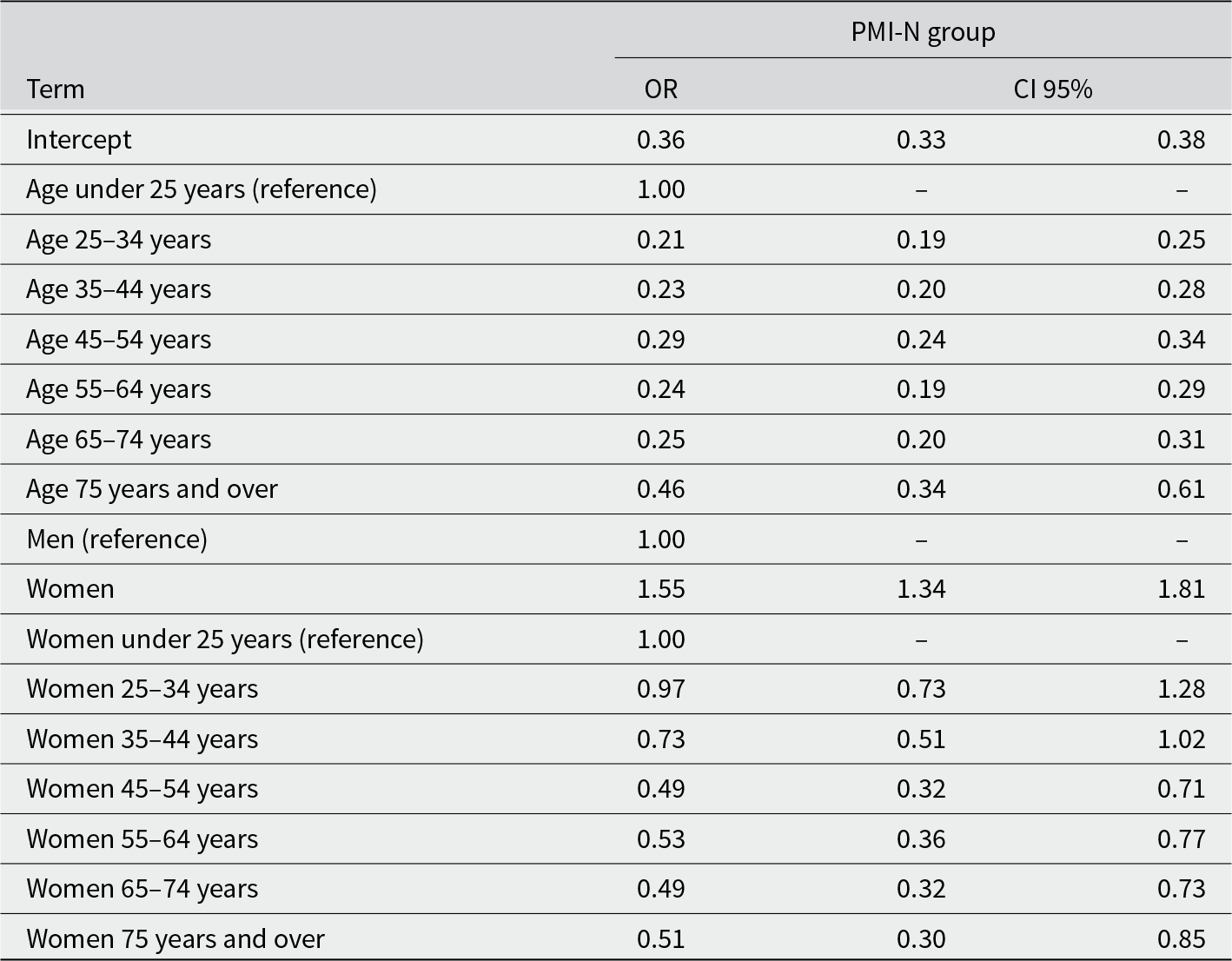
A logistic regression model was used to test how the gambling group was associated with age and gender. Odds ratios were used to describe the probability of a person in certain demographic group to belong in the PMI-N group. The odds ratios are multiplicative and individual odds are computed by multiplying over all the related groups.
Results
Demographic and expenditure differences
Table 2 details key demographic and expenditure differences across the three compared groups. The group that had voluntarily identified in machine gambling already before mandatory identification scheme took place (the VI group) was the largest in size. However, 43% of all identified players after the mandatory scheme was implemented were new identifiers in machine gambling.
Sample characteristics by EGM gambling group, 2021
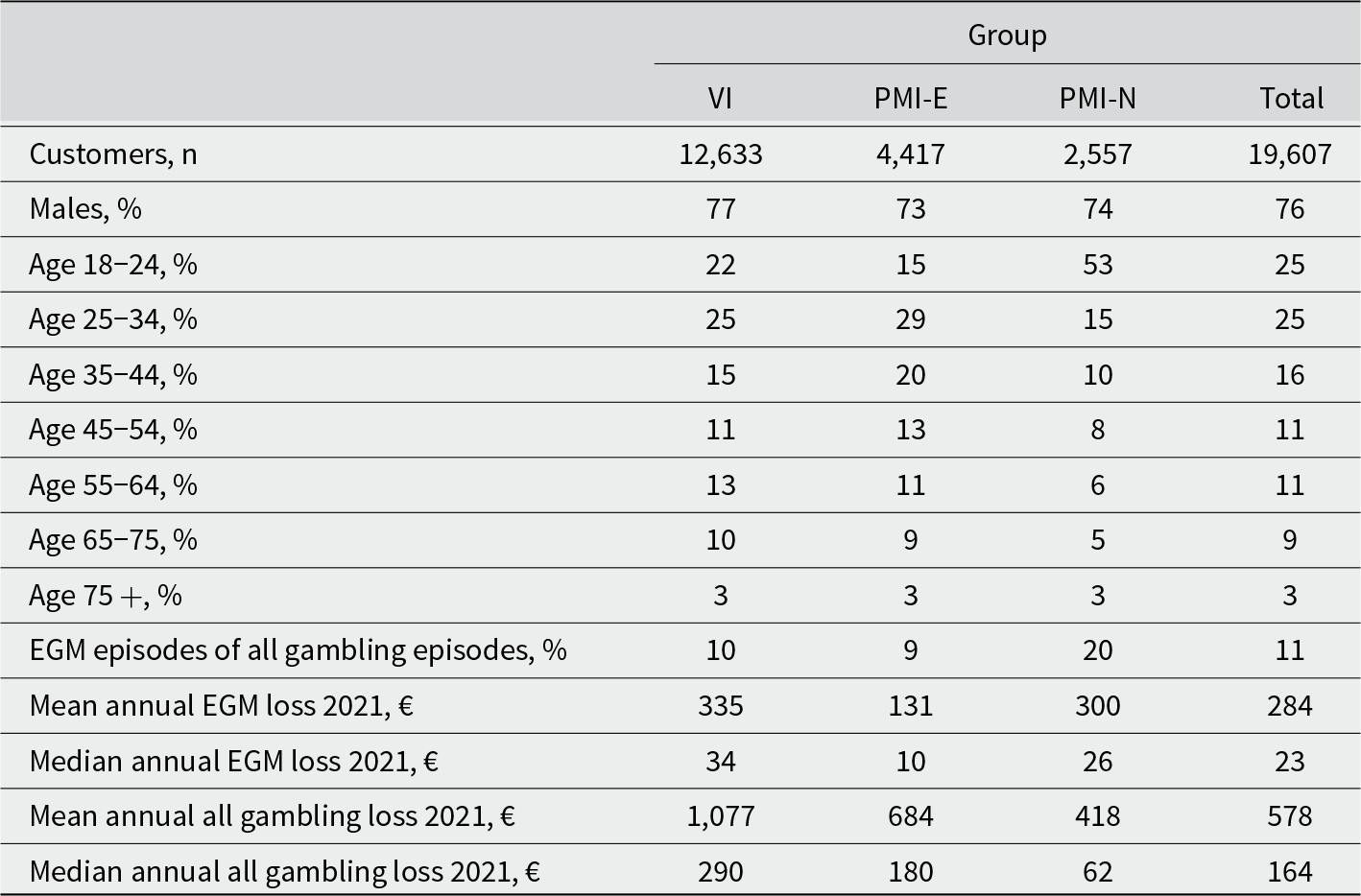
The group that had identified in other gambling but not machine gambling prior to 2021 (PMI-E) differs from the other two groups in terms of lower average annual losses. The group of new identifiers who had not registered prior to the mandatory identification scheme in 2021 (PMI-N) was the smallest in size and included a higher share of young individuals. Mean losses in every group were higher than median losses.
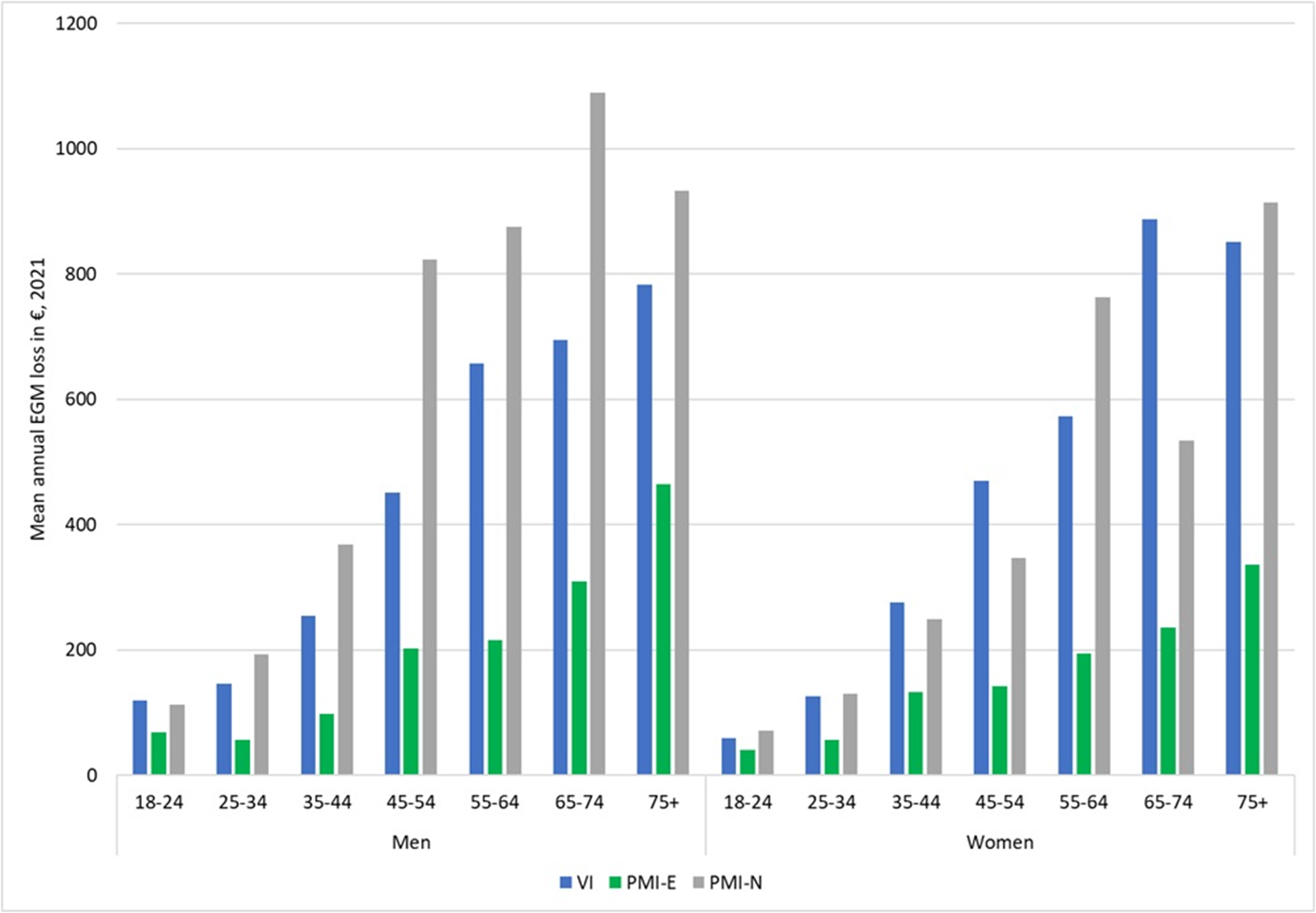
Figure 1 shows the main gender and age differences across the three different machine gambling groups. In both groups of new identifiers (PMI groups), males across age groups had higher average annual gambling machine losses than females. However, females had higher average annual gambling machine losses than men in the VI group particularly in the two oldest age groups (65 + years). Across all compared groups, older individuals had higher annual gambling machine losses than younger groups. The group with the highest average annual gambling machine losses were older males in the PMI-N group. The group who had identified in other gambling but not gambling machines prior to 2021 (the PMI-E group) had significantly lower total annual gambling machine losses in comparison to the two other groups.
Mean annual electronic gambling machine losses by gambling group, age and gender in 2021.
Time-series analysis
The mandatory identification scheme was implemented in stages during 2021. The period was also characterised by other changes in the Finnish gambling machine market, including COVID-19-related closures and reductions in the number of machines and arcade venues (cf. Table 1). Figure 2 presents a time series analysis of mean monthly gambling machine losses by gambling group (VI, PMI-E, PMI-N).
Time series of mean monthly EGM loss by gambling group. Note: The drop in average monthly losses in April and May 2020 was due to COVID-19 restrictions which included closure of all land-based gambling machines.
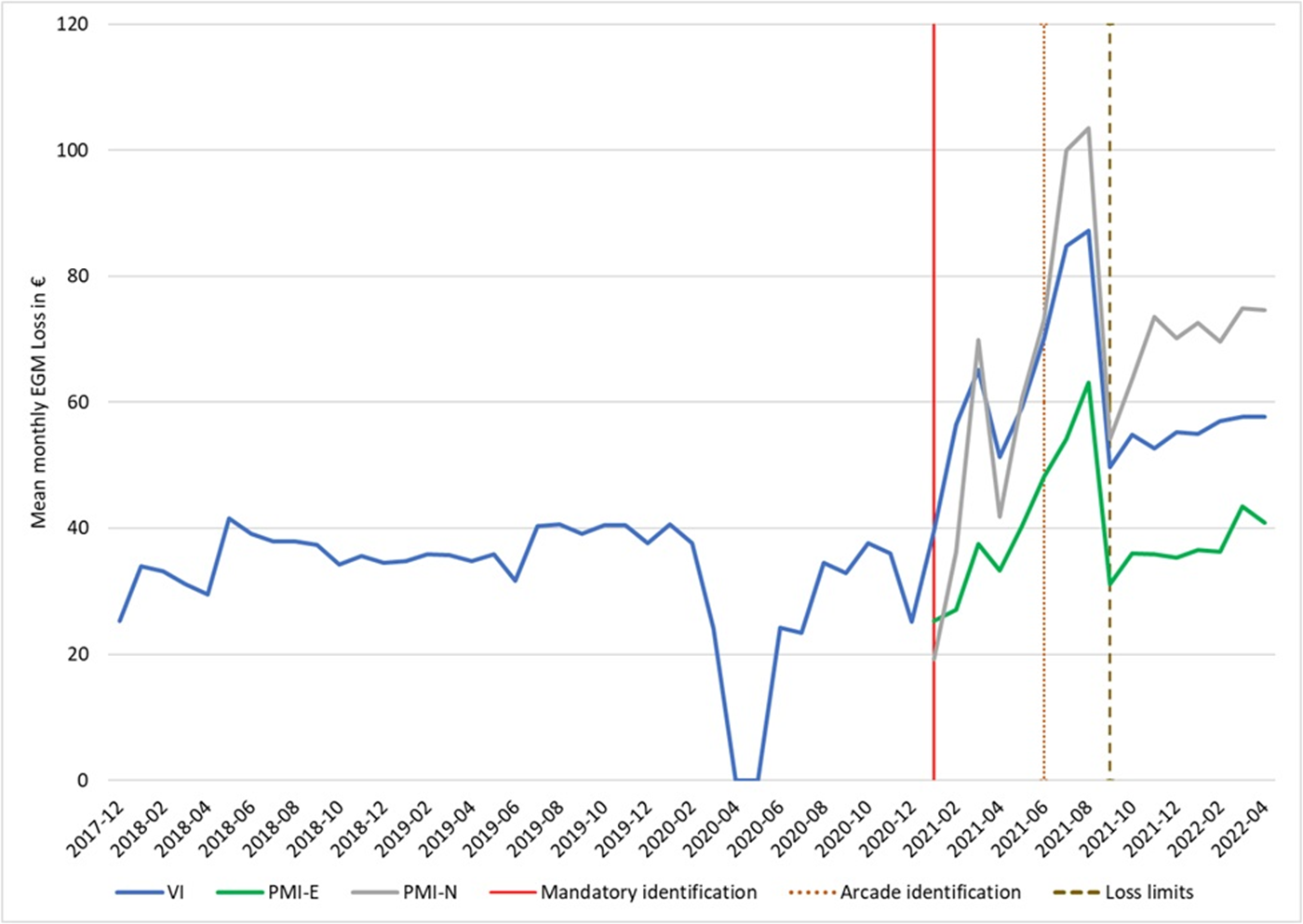
Results show that individuals who had voluntarily identified in machine gambling already before the mandatory scheme had relatively stable average monthly losses between December 2017 and December 2020. After identification became mandatory for non-arcade machines, the average monthly gambling machine losses in the VI group doubled, as co-occurring COVID-19-related restrictions were lifted (May 2021–August 2021). This result suggests that, on average, individuals who had voluntarily identified did not systematically identify during all gambling sessions. If consumption remained constant, identification occurred, on average in 50% of gambling sessions.
In the PMI-N group (new identifiers), average monthly losses were lower or similar than in the VI group during the first phase of the mandatory identification that only included machines located in convenience locations such as supermarkets. However, when mandatory identification was extended to arcade machines, average monthly losses in the PMI-N group increased, becoming higher than in the VI group. The PMI-E group had the lowest average monthly losses, but similarly to the two other groups, average losses in this group also increased when COVID-19 restrictions were lifted, and mandatory identification was extended to arcades.
Across all groups, the introduction of mandatory loss limits to all machine gambling in September 2021 was associated with a significant drop in average monthly losses.
Regression analysis
Table 3 presents the results of a linear regression model for the monthly losses, fitting to the data starting from the point of mandatory gambling machine identification. The model’s explanatory variables were gambling group (VI, PMI-E, PMI-N), arcade identification, mandatory loss-limits, gender, age group and month.
Linear regression for mean monthly EGM loss after mandatory identification. Explanatory variables include gambling group, mandatory identification at arcades, loss limits, gender, interaction between gender and group, and age group. Model n = 90,617; R 2 = 0.483
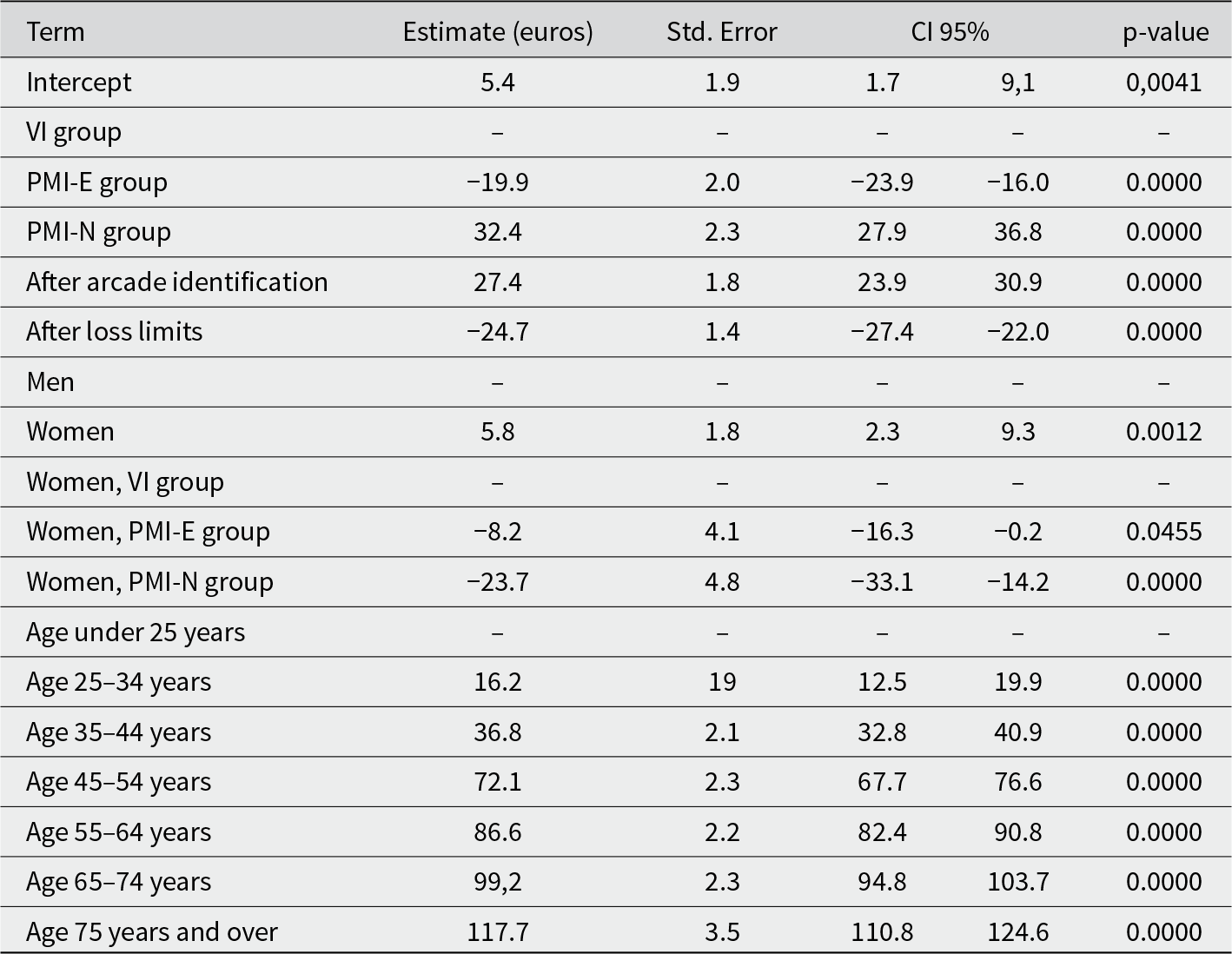
A regression model analysed mean monthly machine gambling in 2021. Compared to the VI group, PMI-E individuals spent 20 euros less, while PMI-N spent 32 euros more. Mandatory arcade identification increased gambling by 27 euros, while loss limits decreased it by 25 euros. Gambling machine spending increased with age, with 18- to 24-year-olds spending the least and those over 75 years spending 118 euros more. Gender interacted with gambling group. Women in the VI group spent 6 euros more than men, but in PMI-E and PMI-N groups, they spent 2.4 and 18 euros less, respectively. No significant linear relationship between time (months) and spending was found.
We further investigated the relationship between age, gender and belonging to the PMI-N gambling group (Table 4). Individuals under 25 years were most likely to be identified as new players. This may be partially explained by the fact that they could not have been in the dataset before reaching the legal gambling age of 18 years. Analysing age and gender interactions, younger women were more likely to belong to the PMI-N group than men, up to age 45 years. However, women aged 45 years and older were less likely to be classified as new players.
Logistic regression for odds of an individual belonging to gambling group PMI-N in 2021 according to age, gender and interaction between age and gender, n = 19,607
Discussion
This paper has investigated the implementation context of mandatory player identification in land-based electronic gambling machines in Finland during 2021, across different player subgroups. Our results show that mandatory identification may induce different responses in different gambler populations. We compared those who had already identified voluntarily before 2021 (the VI group), and those who identified for the first time only after this was made mandatory (the two PMI groups). Players who identified for the first time after the mandatory identification (PMI-N group) experienced the highest average losses. In all groups, losses were highest in older age brackets (cf. prior research from Norway: Sagoe et al., Reference Sagoe, Pallesen, Griffiths, Mentzoni and Leino2018; Syvertsen et al., Reference Syvertsen, Leino, Pallesen, Smith, Mentzoni, Griffiths and Erevik2024). We also conducted a time series analysis of the spending patterns of these different groups across 2019–2022. The clear rise in monthly losses only after the introduction of arcade identification suggests that many players across all three groups opted for anonymous gambling while the option remained available. Our results also show that if identification is linked to mandatory personal loss limits, gambling expenditure is likely to decrease. The mandatory loss limits were associated with a clear reduction in overall consumption across all three groups.
The results have several implications on existing literature and future policy implementation of identification regimes in gambling.
First, our results support prior evidence on the ineffectiveness of voluntary identification at a population level (Rintoul and Thomas, Reference Rintoul and Thomas2017; Delfabbro and King, Reference Delfabbro and King2021). It is likely that the players who do not consider identification relevant to themselves will not voluntarily opt in. In our data, 43% of those who identified in machine gambling after it was made mandatory were new identifiers. Yet, most of these individuals had identified in other gambling offers of the monopoly, such as online gambling that was already under a mandatory identification scheme before 2021. Furthermore, even amongst those who had voluntarily identified before 2021, identification is very unlikely to have been systematic (McMahon et al., Reference McMahon, Thomson, Kaner and Bambra2019). Our time-series analysis shows that mean monthly losses doubled in this group after identification became mandatory. The data suggest that at least half of all gambling machine consumption was non-identified among voluntary identifiers, but this estimate is likely to be conservative, as overall machine gambling reduced significantly during 2021 (Marionneau et al., Reference Marionneau, Kristiansen and Wall2024b). In 2019, the gambling monopoly Veikkaus reported that only 10% of machine gambling had taken place under voluntary identification (Veikkaus, 2020).
Second, the step-by-step implementation of the mandatory identification in the Finnish context (starting with non-arcade gambling machines in January 2021, extending to arcades in July 2021) translated into a step-by-step increase in average monthly gambling machine losses in the time series analysis. This suggests that if identification is not mandatory across all machine gambling, those reluctant to identify are likely to delay the adoption of identification or at least continue to also gamble partly without identifying. When identification became mandatory in arcades, effectively eliminating the final opportunity for gambling without identification, we found a significant increase in the average losses in all three groups. This increase in losses stems from the inability to continue gambling un-identified rather than from increased gambling overall: During the same period, the overall volume of land-based machine gambling decreased in the Finnish context. In 2022, the indexed total revenue that the gambling monopoly derived from gambling machines was reduced to about a quarter of the total revenue in 2019 (Marionneau et al., Reference Marionneau, Kristiansen and Wall2024b).
Third, the increase in average monthly gambling machine losses after mandatory identification was extended to arcades suggests that those who were reluctant to identify were also more likely to be those with higher average consumption. This finding supports previous research showing that people who gamble excessively or who experience gambling harm are less likely to identify or set monetary limits (McMahon et al., Reference McMahon, Thomson, Kaner and Bambra2019). Older age groups in our data had the highest average monthly gambling losses, consistent with recent Finnish survey findings (Grönroos et al., Reference Grönroos, Salonen, Latvala, Kontto and Hagfors2024), possibly due to their relatively stable income and wealth as well as prolonged exposure to machine gambling. Thus, it is also possible that the bulk of the late adopters of mandatory identification were older machine gamblers who were reluctant to change behavioural patterns, considered the technology inaccessible, or were perhaps concerned over data privacy issues (Nower and Blaszczynski, Reference Nower and Blaszczynski2010; Swanton et al., Reference Swanton, Tsang, Collard, Garbarino and Gainsbury2024). As the volume of machine gambling dropped at the same time (Marionneau et al., Reference Marionneau, Kristiansen and Wall2024b), the increase in average monthly losses per gambler in our data would suggest that many lower-than-average spenders, possibly casual gamblers, may have stopped machine gambling. This interpretation is supported by the results of the 2023 Finnish population study showing that while overall gambling participation has declined, the levels of harmful gambling have increased (Grönroos et al., Reference Grönroos, Salonen, Latvala, Kontto and Hagfors2024). It is possible that casual gamblers found the mandatory identification process too laborious or chose to stop gambling for other reasons.
Fourth, it can be concluded that mandatory identification can reduce average losses if accompanied by mandatory loss limits. Our analysis showed that average monthly gambling machine losses dropped in all three gambler groups after the introduction of mandatory loss limits. This finding corroborates prior research showing that mandatory loss limits covering all gambling offer are more effective than voluntary limits in terms of limiting gambler consumption (Blank et al., Reference Blank, Baxter, Woods and Goyder2021; Wohl et al., Reference Wohl, Davis and Tabri2024). The reduction in average losses is likely not indicative of a shift in player preferences but rather a mechanical outcome of the imposed loss limits. Moreover, the introduction of mandatory loss limits is likely to be one of the main reasons why overall consumption as well as harms from machine gambling has reduced in Finland across 2019–2022 (Marionneau et al., Reference Marionneau, Kristiansen and Wall2024b).
Our study was conducted in the context of Finland. Finland differs somewhat from most gambling contexts across Europe, owing to the monopolistic system of gambling provision. Monopolistic provision can arguably render the implementation of mandatory identification and limit-setting policies easier. Yet, as identified in a recent European-wide policy review, centralised systems for limit-setting can also be implemented in license-based systems (Marionneau et al., Reference Marionneau, Luoma, Turowski and Hayer2025). Furthermore, recent initiatives in cashless gambling and identification in land-based machine gambling in other jurisdictions (Newall and Swanton, Reference Newall and Swanton2024) suggest that our results can be generalised to other jurisdictions. Future studies should focus on comparative settings to identify effects of different identification and limit-setting systems across jurisdictions.
This study has some limitations. We were not able to compare identified gambling behaviour with unidentified gambling behaviour. It is possible that some of our findings are a result of differences between these groups, as many individuals who chose not to gamble on machines under the identification regime may have differed significantly from those who did. Our analysis was also limited by the important number of policy changes impacting the Finnish gambling machine market during the period of observation (2019–2022). The implementation of mandatory identification in machine gambling coincided with COVID-19-related restrictions as well as ongoing reductions in machine numbers. The combined effect of these changes makes it difficult to draw causal conclusions on the impacts of the identification regime only.
Furthermore, our focus on machine gambling only did not allow us to look at possible behavioural patterns across different gambling products. Although prior research shows that, at a population level, reductions in land-based machine gambling have not translated to increases in online gambling (Marionneau et al., Reference Marionneau, Kristiansen and Wall2024a), it is possible that substitution has occurred at the individual level. Further studies would be needed to investigate gambler behaviours across product groups in more detail. More studies would also be needed on the concentration of consumption, and the effects of public health policy measures on skews in spending distribution.
Conclusion
This study has demonstrated that mandatory identification, coupled with mandatory limit-setting, can be an effective public health measure to reduce average monthly machine gambling losses. Our results highlight that different gambler groups adhere to identification and loss limits in varying ways, with particularly high-risk gamblers tending to avoid identification when it is not mandatory. These findings have significant implications for gambling policy and harm prevention. The formulation and implementation of harm prevention policies requires giving careful consideration to the implementation context and the behavioural and demographic differences across player groups. Moreover, preventive policies should be grounded in a robust rules-based framework. Voluntary measures, while advocated for by the gambling industry, are less effective. Effective reduction of gambling harm requires population-level prevention policies. It is also important to actively communicate the underlying rationale for these measures to those involved in gambling.
Funding statement
This work was supported by the Ministry of Social Affairs and Health, Helsinki, Finland, an appropriation within the objectives of section 52 of the Lotteries Act. The funder had no role in study design, data collection and analysis, decision to publish, or preparation of the manuscript.
Data availability
The player account data supporting this study are not publicly available based on legislation defined in the Section 55 of the Lotteries Act.
Competing interests
The authors report no competing interests.
Ethics approval
According to the guidelines of the Finnish National Board on Research Integrity, ethical review nor informed consent are not required for register-based research.
Author contributions
All authors contributed to the study conception and design. Material preparation and analysis were performed by A.I. and T.R. The first draft of the manuscript was written by V.M. and J.S. All authors commented on versions of the manuscript. All authors read and approved the final manuscript.


 Open access

