




In this editorial note, the editors of RHE-JILAEH would like to pay special tribute to Pablo Martín-Aceña, who served as editor of this Journal for over eight years (1995–2003). His dedication and contributions were instrumental in shaping the growth and prestige of this publication. His passing in July 2024 is a profound loss to the academic community. We extend our deepest condolences to his family, colleagues, and friends.
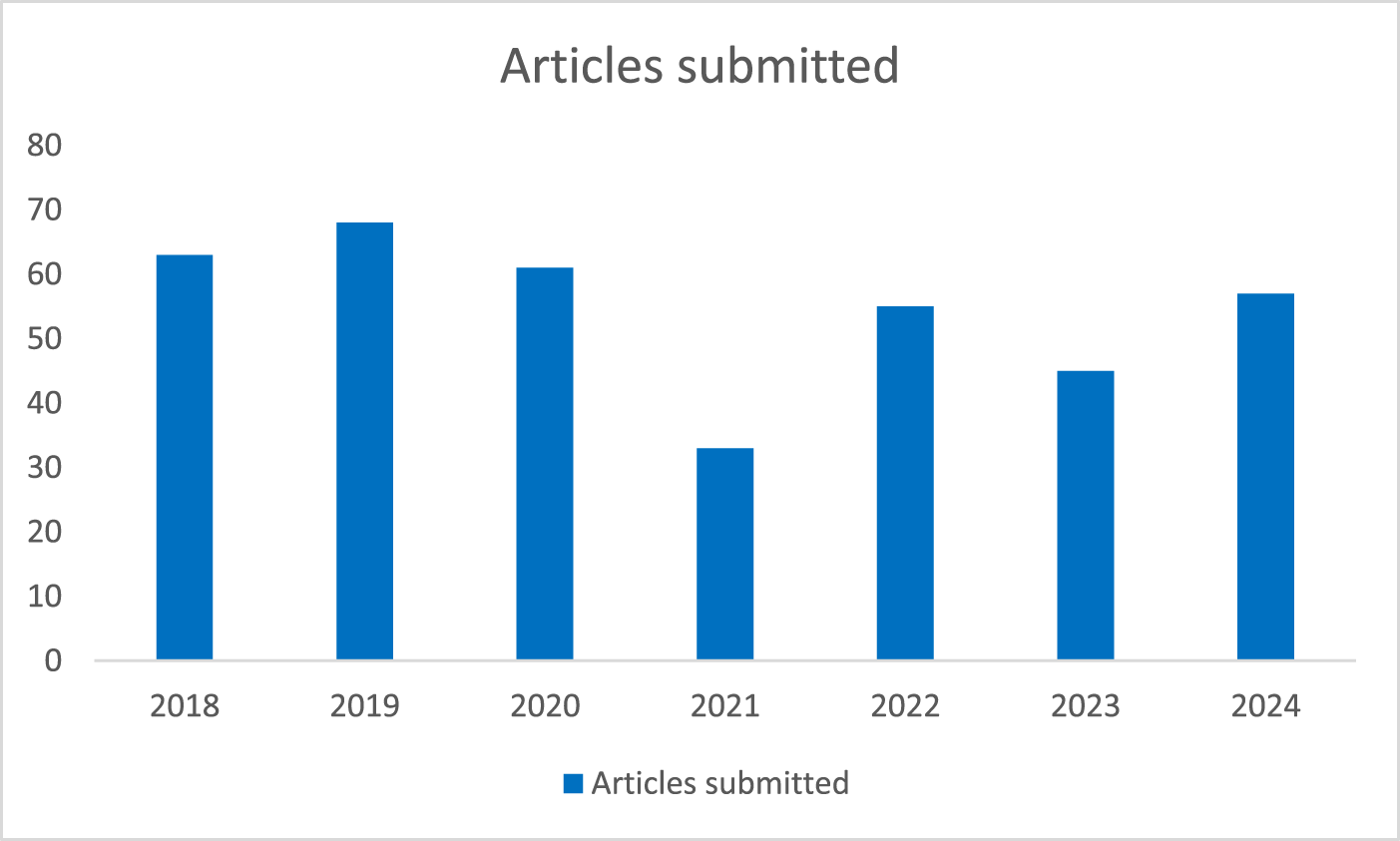
We present key statistics and data on the Journal’s evolution in 2024. Figure 1 illustrates the trend in submitted articles since 2018. Notably, RHE-JILAEH received 57 original research papers in 2024. We have observed a significant recovery in article submissions over the past year, reaching levels comparable to those of the pre-pandemic period.
Number of original articles submitted to RHE-JILAEH, 2018–2024.

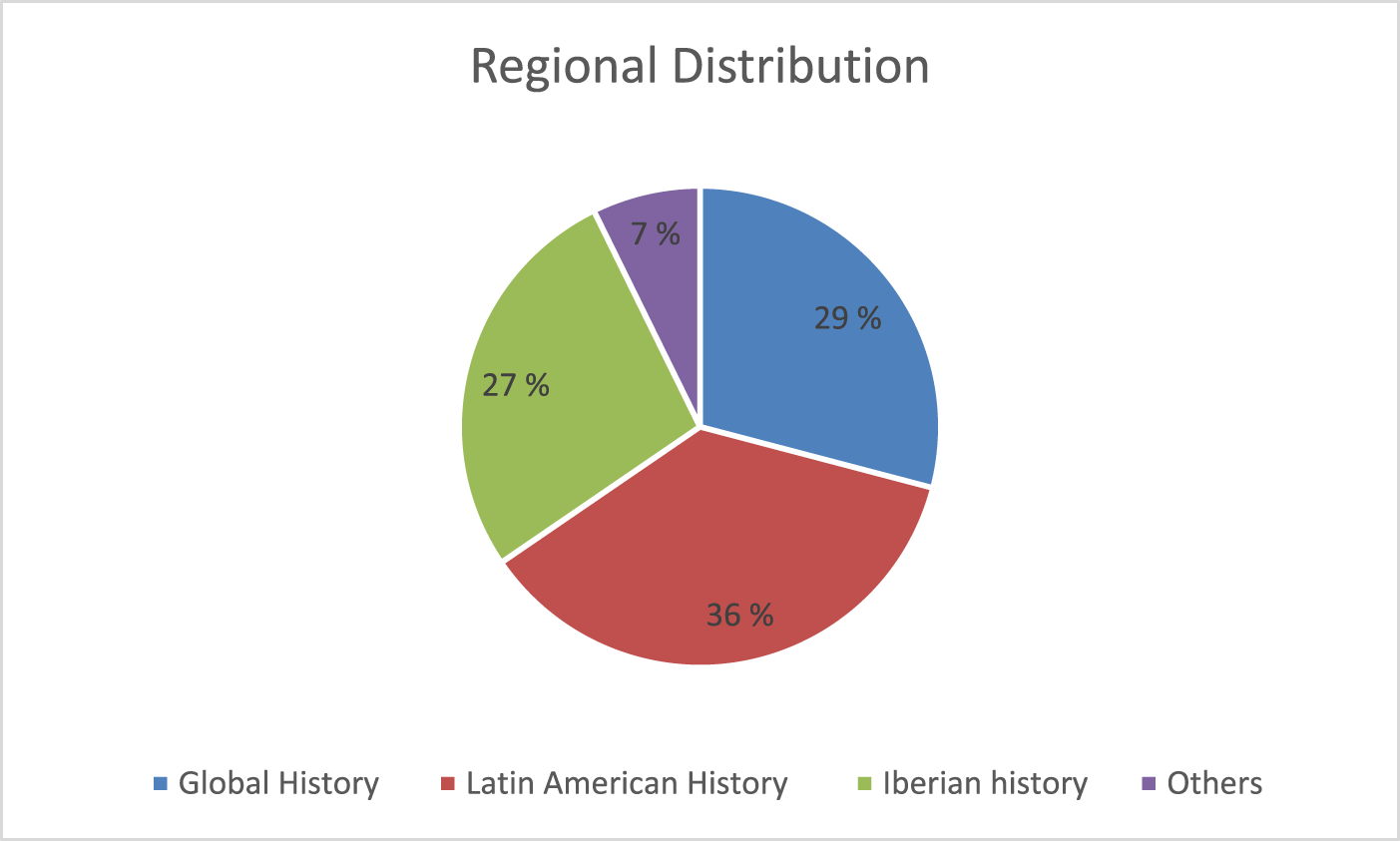
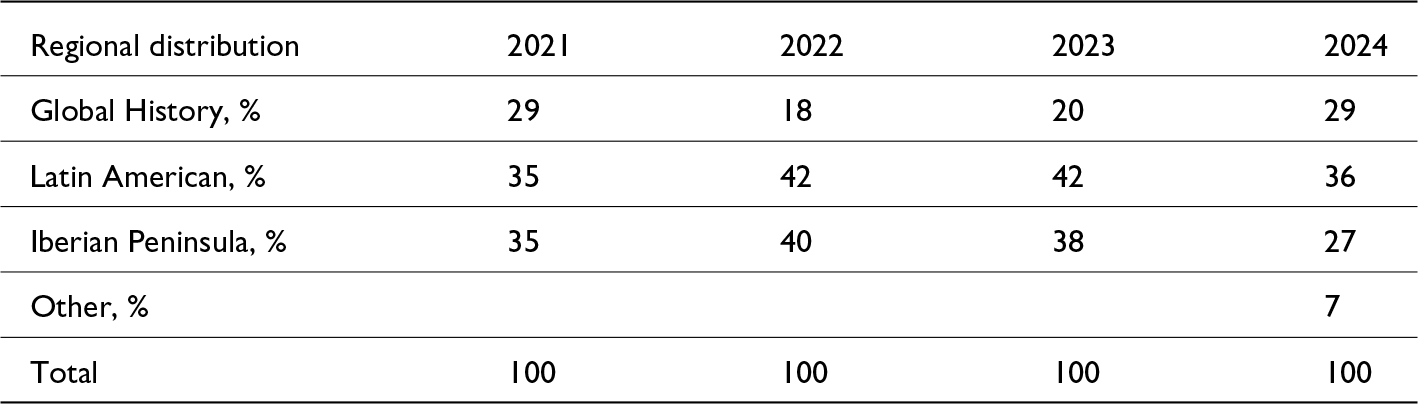
As of 2023, a plurality of articles (36%) dealt with Latin America. However, in 2024, there was an increase in submitted articles on global history, which accounted for 29% of the total submissions. Articles on Spanish and Portuguese economic history represented 27% of the total submitted articles (Figure 2).
Regional distribution of topics; total submissions in 2024 (%).

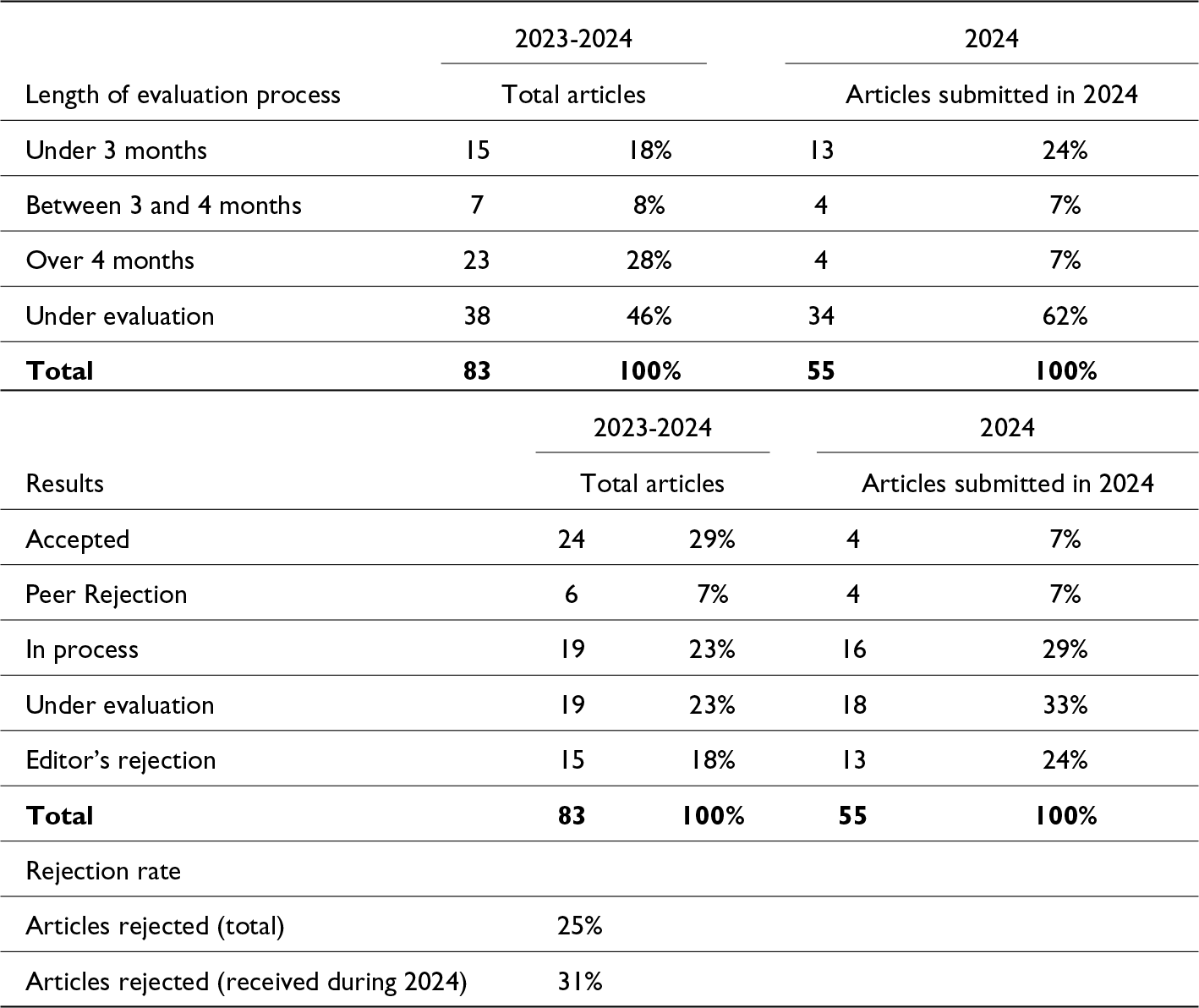
In terms of the length of evaluation periods and Editors’ acceptance or rejection decisions, we experienced some delays related to technical difficulties. We are working to resolve these difficulties.
According to the 2024 JCR Social Science Edition, the impact factor was lower than in the previous year (0.6). If we look at the evolution of the JIC index (which does not consider self-citations), the trend is much more favorable, standing at 1.3. We remained in Q1 in both the “History” and ‘History of Social Sciences” categories; however, we reverted to the Q4 category in “Economics”. Regarding Scopus, the Journal had an impact factor of 2.1.
The editorial team will make every possible effort to improve the impact factors. We would like to thank the referees of RHE-JILAEH for their extraordinary collaboration. Their names are listed at the end of this editorial note.
Geographical distribution and topics of articles in 2023

Statistics for evaluation periods and the situation of original research papers during 2024



 Open access

