



Improving diet and physical activity behaviours is an important means of lowering the risk of non-communicable diseases, promoting healthy ageing and increasing well-being( Reference Ng, Fleming and Robinson 1 , 2 ). Given that the burden of ill-health is increasing( Reference Ng, Fleming and Robinson 1 , Reference Sepúlveda and Murray 3 ), alternative strategies for improving dietary behaviours based on predictive, personalised, preventive and participatory interventions may be more effective than conventional ‘one size fits all’ generalised dietary advice( Reference Hood and Friend 4 , Reference Celis-Morales, Lara and Mathers 5 ). Personalised nutrition (PN) may be a more effective approach for improving dietary and physical activity behaviours than non-personalised advice( Reference Celis-Morales, Lara and Mathers 5 – Reference Livingstone, Celis-Morales and Navas-Carretero 7 ). However, the relevance of the outcomes of PN interventions may be limited if there are systematic sociodemographic or behavioural differences between study completers and dropouts, which may result in specific target groups (e.g. obese individuals) not benefiting from PN. Sociodemographic variables such as age, social class, occupation and financial factors are key determinants of dropouts in lifestyle-based interventions( Reference Roumen, Feskens and Corpeleijn 8 , Reference Moroshko, Brennan and O’Brien 9 ), with more recent evidence also suggesting that behavioural characteristics are important predictors of attrition( Reference Huisman, Maes and De Gucht 10 ). Dropouts from dietary and lifestyle interventions may differ considerably from one intervention to another( Reference Roumen, Feskens and Corpeleijn 8 ), with approximately a third of participants dropping out of weight-loss interventions( Reference Bennett and Jones 11 – Reference Colombo, Ferretti and Ferraris 14 ) and 20 % from other diet and lifestyle interventions( Reference Roumen, Feskens and Corpeleijn 8 , Reference Groeneveld, Proper and van der Beek 15 ). For reasons of cost-effectiveness, reach and scalability, Internet-based lifestyle interventions are increasingly popular( Reference Williams, Hamm and Shulhan 16 , Reference Shuger, Barry and Sui 17 ) although more information is needed on the characteristics of dropouts from such studies. Understanding the determinants of attrition from Internet-based PN intervention studies will inform the design of more efficiently targeted lifestyle interventions.
The aim of the present paper was to characterise participants who dropped out of the Food4Me Proof-of-Principle Internet-based trial of PN, which was designed to improve dietary and physical activity behaviours. Sociodemographic, anthropometric, dietary, behavioural and health-related characteristics were compared between completers and those who dropped out.
Methods
Study design
The Food4Me Proof-of-Principle study was a 6-month, four-arm, Internet-based, randomised controlled trial conducted across seven European countries via www.food4me.org ( Reference Celis-Morales, Livingstone and Marsaux 18 ). The randomised controlled trial was designed to emulate a real-life Internet-based PN service and aimed to investigate: (i) whether personalisation of dietary advice assists and/or motivates participants to eat a healthier diet in comparison with non-personalised, conventional healthy eating guidelines; and (ii) whether personalisation based on individualised phenotypic or genotypic information is more effective in assisting and/or motivating study participants to make, and to sustain, appropriate healthy changes than personalisation based on diet alone. The Research Ethics Committees at each University or Research Centre delivering the intervention granted ethical approval for the study. The Food4Me trial was registered as a randomised controlled trial (NCT01530139) at Clinicaltrials.gov. All participants expressing an interest in the study were asked to sign online consent forms at two stages in the screening process.
Recruitment and eligibility criteria
Participants were recruited via the Internet to emulate an Internet-based PN service. This was aided by local and national advertising of the study via the Internet, radio, newspapers, posters, e-flyers, social media and word of mouth. Recruitment sites were as follows: University College Dublin (Ireland), Maastricht University (The Netherlands), University of Navarra (Spain), Harokopio University (Greece), University of Reading (UK), National Food and Nutrition Institute (Poland) and Technical University of Munich (Germany). Participants were excluded if they were: <18 years of age; pregnant or lactating; had no or limited access to the Internet; were following a prescribed diet for any reason, including weight loss, in the last 3 months; or had diabetes, coeliac disease, Crohn’s disease, or any metabolic disease or condition altering nutritional requirements such as thyroid disorders (if condition was not controlled), allergies or food intolerances. Participants were incentivised to join the study by receiving a personalised feedback report at month 6 based on their dietary, phenotypic and genotypic information, regardless of their treatment arm allocation.
Intervention arms
A total of 1607 participants were randomised to one of four intervention arms. Participants received non-personalised, generalised dietary and physical activity (PA) advice (Control) or one of three levels of PN: Level 1 (L1), based on personal current PA plus diet alone; Level 2 (L2), based on PA plus dietary and phenotypic data; Level 3 (L3), based on PA plus dietary, phenotypic and genotypic data. Participants randomised to L1, L2 or L3 were further randomised into ‘low intensity’ or ‘high intensity’ intervention groups. Participants in the low intensity group received personalised feedback three times during the intervention (at baseline, month 3 and month 6), whereas those randomised to the high intensity group received personalised feedback five times during the intervention (at baseline and months 1, 2, 3 and 6). In addition, the high intensity group had access to an online forum for discussion of topics related to the intervention, personalised recipes and had more personalised feedback on PA. Further details of the Food4Me Proof-of-Principle study are provided elsewhere( Reference Celis-Morales, Livingstone and Marsaux 18 ).
Personalised feedback report
At baseline, month 3 and month 6, intakes of five food groups (fruits and vegetables, whole grains, low-fat dairy products, oily fish, and red meat and processed meat) and seventeen nutrients were categorised as too high or too low for each participant randomised to PN. Contributing foods were identified and specific messages were developed, according to standardised algorithms, to advise change in intake of those foods. For participants randomised to L2 and L3, feedback also included phenotypic measures (L2) and phenotypic and genotypic data (L3)( Reference Celis-Morales, Livingstone and Marsaux 18 ).
Screening questionnaires and dietary intakes
Individuals who were interested in participating in the study completed an online screening questionnaire to collect information on sociodemographic, health and anthropometric characteristics. This questionnaire also included information on dietary habits (e.g. meal skipping) and reasons for interest in participation in the study (e.g. weight loss). Likert scale responses were aggregated into three categories: ‘disagree’ (‘completely disagree’ and ‘disagree’), ‘neither disagree nor agree’ and ‘agree’ (‘agree’ and ‘completely agree’); and questions relating to frequency of the occurrence into two categories: ‘often’ (‘every day’ and ‘4–6 times per week’) and ‘rarely’ (‘1–3 times per week’ and ‘(almost) never’; see online supplementary material, Supplemental Table 1).
Participants were asked to complete an online FFQ to estimate usual dietary intake at screening, baseline (month 0) and at months 3 and 6 (also at months 1 and 2 for the high intensity group only). This FFQ was developed and validated for the Food4Me study( Reference Forster, Fallaize and Gallagher 19 , Reference Fallaize, Forster and Macready 20 ), and included 157 food items consumed frequently in each of the seven recruitment countries. Intakes of foods, total energy and macronutrients were computed in real time using a food composition database based on McCance and Widdowson’s The Composition of Foods ( 21 ). BMR was estimated using the Oxford equation( Reference Henry 22 ). Intakes were assessed using standardised recommendations( Reference Celis-Morales, Livingstone and Marsaux 18 ) for foods and food groups that were integrated and harmonised across eight European countries (UK, Ireland, Germany, The Netherlands, Spain, Greece, Poland and Norway)( 23 – 26 ). The following five food group recommendations were used in the present analysis: (i) eat at least five portions of fruits and vegetables every day (operationalised as ≥400 g); (ii) eat at least three portions of wholegrain products daily (≥50 g); (iii) eat at least three portions of low-fat dairy products daily (≥600 g); (iv) eat at least one portion of oily fish per week (≥150 g); and (v) eat fewer than three portions of red meat and processed meat per week (≤450 g)( Reference Celis-Morales, Livingstone and Marsaux 18 ).
Sociodemographic and health-related measures
Body weight, height and waist circumference were self-measured and self-reported. BMI was estimated from body weight and height. Self-reported measurements were validated in a sub-sample of the participants (n 140) and showed a high degree of reliability( Reference Celis-Morales, Livingstone and Woolhead 27 ). Participants were sent finger-prick based Dry Blood Spot cards (collected five drops equivalent to 150 µl of blood per card) which were completed and returned by post to recruitment centres and used to estimate blood total cholesterol concentrations. PA level and time spent in sedentary behaviour were estimated from triaxial accelerometers (TracmorD, Philips Consumer Lifestyle, The Netherlands). Participants self-reported smoking habits and occupation. Based on European classifications of occupations the following groupings were used: ‘Professional and managerial’ (professionals; managers); ‘Intermediate’ (armed forces occupations; technicians and associate professionals; clerical support workers); and ‘Routine and manual’ (craft and related trades workers; plant and machine operators and assemblers; service and sales workers; elementary occupations; skilled agricultural, forestry and fishery workers)( 28 , 29 ). Categories for ‘Students’ and ‘Retired and unemployed’ were added. See the online supplementary material, ‘Supplementary Methods’ for further information on the study design.
Statistical analyses
Data were analysed using the statistical software package Stata version 13. Screening data (dietary habits, FFQ, reasons for interest in the study, ethnicity, medication use and health characteristics) plus measurements of waist circumference, sedentary behaviour and PA level, which were collected at baseline, were used in the present analysis. Logistic regression and multiple linear regression were used to test for significant differences between categorical and continuous variables, respectively. The odds ratio for dropping out before month 6 was estimated for categorical variables. All analyses were adjusted for baseline age, sex and country. PA outcomes were further adjusted for time spent wearing the accelerometer and season. Sensitivity analyses were performed to estimate odds ratios for dropping out at the interim time point (month 3). Results were deemed significant at P<0·05.
Results
A total of 1607 participants were randomised into the study at baseline. As summarised in Fig. 1, 337 participants (21 %) dropped out and 1270 participants completed the 6-month intervention period. Of the 337 participants who dropped out, 127 (38 %) dropped out before completing baseline measurements and a total of 291 (86 %) had dropped out by month 3 (Fig. 1).
Flow diagram of cumulative dropouts from the Food4Me Proof-of-Principle study

Health and lifestyle-related characteristics
Dropouts were on average 6 years younger than completers and were predominantly female (Table 1). In addition, dropouts weighed more, had higher BMI and lower waist circumference (Table 1). More participants who dropped out of the study (8 %) than those who completed it reported being interested in participating because they wanted to lose weight. No significant differences in occupation classification were observed between completers and those who dropped out. Furthermore, there were no significant differences in height, PA level, sedentary behaviour or total cholesterol concentration between groups. The percentage of individuals following a restricted diet, taking medication or presenting with clinically diagnosed diseases did not differ significantly between completers and dropouts (Table 1).
Baseline sociodemographic characteristics of participants who completed the intervention and those who dropped out by month 6, Food4Me Proof-of-Principle study

PAL, physical activity level.
* Multiple linear regression and logistic regression were used to test for significant differences between groups in continuous and categorical variables, respectively. Analyses were adjusted for age, sex and country. Significant P values are indicated in bold.
Dietary characteristics
No significant differences in total energy intake or ratio of energy intake to BMR were identified between individuals who completed the 6-month intervention and those who dropped out (Table 2). Completers reported consuming more energy from PUFA and less salt than dropouts. Percentage energy intakes from total fat, SFA and MUFA, protein and carbohydrate were not significantly different between dropouts and completers (Table 2). The percentage of individuals who met the dietary recommendations for oily fish, whole grains, red meat, fruit and vegetables, and low-fat dairy products did not differ significantly between completers and dropouts (Table 2).
Baseline dietary characteristics of participants who completed the intervention and those who dropped out by month 6, Food4Me Proof-of-Principle study

EI:BMR, ratio of energy intake to BMR.
* Multiple linear regression and logistic regression were used to test for significant differences between groups in continuous and categorical variables, respectively. Analyses were adjusted for age, sex and country. Significant P values are indicated in bold.
OR of dropping out by intervention arm
Attrition did not differ significantly depending on whether individuals were randomised to receive generalised dietary guidelines (Control) or any level of PN (L1, L2 or L3; Table 3). When levels of PN were grouped together (L1, L2 and L3), there was no significant difference in OR for dropping out between participants who received generalised dietary advice (Control) and those who received PN advice (Table 3). However, when intervention arms were grouped according to whether individuals received high or low intensity feedback, the odds of participants dropping out were higher in those randomised to receive high intensity feedback than low intensity feedback (OR=1·81; 95 % CI 1·36, 2·41; P<0·001).
Odds of participants dropping out at month 6 by intervention arm, Food4Me Proof-of-Principle study
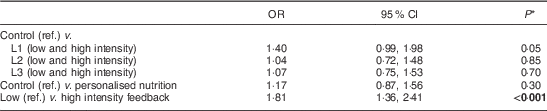
ref., reference category; L1, Level 1 (personalised advice based on diet alone); L2, Level 2 (personalised advice based on diet and phenotype); L3, Level 3 (personalised advice based on diet, phenotype and genotype).
* Logistic regression was used to test for significant differences between groups. Analyses were adjusted for age, sex and country. Significant P values are indicated in bold.
OR of dropping out by sociodemographic and dietary characteristics
Stratification by age revealed that the odds of participants dropping out were higher if they were under 45 years of age than if they were over 45 years (Table 4). In addition, the odds of females dropping out were higher than for males. Compared with normal-weight individuals, the odds of dropping out were higher in obese individuals. Attrition was not significantly different in overweight compared with normal-weight individuals, between non-smokers and current smokers, or between individuals with low v. high PA level or low v. high sedentary behaviour (Table 4).
Odds of participants dropping out at month 6 by baseline sociodemographic characteristics and dietary adequacies, Food4Me Proof-of-Principle study

ref., reference category.
* Logistic regression was used to test for significant differences between groups. Analyses were adjusted for age, sex and country. Significant P values are indicated in bold.
Compared with the average for all countries, the odds of dropping out were higher in participants from Ireland, whereas the odds in participants from The Netherlands were lower. Attrition was not significantly different for participants from Germany, Greece, Poland, Spain or the UK when compared with the overall average (Table 4). Being in an intermediate or routine/manual occupation, or being a student or retired/unemployed, did not significantly affect the odds of dropping out from the study compared with being in a professional/managerial occupation (Table 4). Baseline diet was not a predictor of dropping out. Attrition did not differ significantly between individuals who met the recommendations for oily fish, whole grains, red meat, fruit and vegetables, and low-fat dairy products compared with those who did not (Table 4).
OR of dropping out by behavioural characteristics
As illustrated in Fig. 2, the odds of dropping out were higher in participants who had signed up to the study with the aim of losing weight (OR=1·53; 95 % CI 1·19, 1·97; P<0·001). Attrition was not significantly different if participants had, or had not, signed up with the aim of gaining weight, wanting to know what foods are best for them, wishing to improve their own or their family’s health, for well-being reasons, or in individuals with an interest in sports performance or preventing a future illness (see online supplementary material, Supplemental Table 2).
The odds for participants dropping out according to their dietary behaviours and reasons for participation in the study at baseline, Food4Me Proof-of-Principle study*. Values are adjusted odds ratios, with their 95 % confidence interval represented by vertical bars. *Logistic regression was used to test for significant differences between groups. Models were adjusted for age, sex and country. Variables are dichotomous (reference group is ‘no’/‘disagree’)

Odds of attrition were higher if participants ate their main meal away from home (OR=1·33; 95 % 1·04, 1·72; P=0·023) and higher if they regularly skipped meals (OR=1·75; 95 % CI 1·16, 2·65; P=0·008; Fig. 2). Odds for dropping out were not significantly different depending on whether participants prepared a meal from scratch, ate many or few hot meals per day, or spent little time preparing a main meal (Supplemental Table 2).
Odds of dropping out were lower if participants reported that they frequently ate healthily (OR=0·62; 95 % CI 0·45, 0·86; P=0·003) and lower if they reported eating healthily without having to think about it consciously (OR=0·74; 95 % CI 0·56, 0·97); P=0·031; Fig. 2). Attrition was not significantly different depending on whether participants reported being in control of their health, staying healthy by taking care of themselves, agreed that efforts to improve their health were a waste of time, agreed that there was no use in concerning themselves with their health or felt weird if they did not eat healthily (Supplemental Table 2).
Sensitivity analyses
Factors predicting the likelihood of dropping out by month 3 were similar to those observed at month 6. However, odds of early attrition were higher if participants reported having a clinically diagnosed disease (see online supplementary material, Supplemental Table 2). Furthermore, odds of dropping out in overweight individuals were higher by month 3, compared with normal-weight individuals. The odds of dropping out by month 3 were lower in individuals who indicated that they had signed up to the study because they thought it was important to support academic studies, and lower among those who were curious to find out what happened in academic studies (Supplemental Table 2).
Discussion
The present study is the first to investigate the sociodemographic, anthropometric, dietary, behavioural and health-related characteristics of participants who dropped out of a 6-month Internet-based study of PN. Our main findings suggest that dropouts were more likely to be younger, obese individuals who skipped meals more often and were motivated by weight loss. Furthermore, more frequent data collection and PN feedback increased the likelihood of individuals dropping out.
The dropout rate observed in the present study is well within the range expected from a traditional face-to-face lifestyle intervention of this duration( Reference Clark, Jackson and Carlson 30 ). A recent meta-analysis on the effectiveness of web-based interventions( Reference Neve, Morgan and Jones 31 ) concluded that web-based interventions were as effective as face-to-face interventions in achieving weight loss and that the dropout rate was 21 %, which is similar to the dropout rate in our study. However, the studies included in the meta-analysis were heterogeneous, with dropout rates as high as 40 %( Reference Tate, Wing and Winett 32 , Reference Harvey-Berino, Pintauro and Buzzell 33 ). Our findings suggest that individuals interested in joining the Food4Me study for the purpose of losing weight were more likely to drop out. The present study was not designed, or advertised, as a weight-loss study, but rather as a PN intervention aiming to improve diet and physical activity. Thus, some participants may have felt discouraged by their lack of weight loss during the intervention, which has been highlighted as a predictor of attrition in previous obesity-related studies( Reference Colombo, Ferretti and Ferraris 14 , Reference Grossi, Dalle Grave and Mannucci 34 ).
Our characterisation of dropouts v. completers is broadly similar to previous lifestyle-based intervention studies. We found that younger age and higher BMI were strong predictors of greater attrition, which confirms previous findings( Reference Wanner, Martin-Diener and Bauer 35 , Reference Susin, Boff and Ludwig 36 ). Older individuals may be more interested in sustained participation due to increased health concerns and heightened perceived susceptibility to disease. Obese individuals are often characterised by poor diet and low levels of physical activity( Reference Mesas, Guallar-Castillón and León-Muñoz 37 ), which may make lifestyle changes challenging. In contrast to an earlier report that individuals from lower socio-economic status are more likely to drop out of lifestyle interventions( Reference Roumen, Feskens and Corpeleijn 8 ), we found no differences in attrition between occupation groups. This may be due to the personalised nature of the Food4Me intervention; recent research suggests that lifestyle interventions may be more effective in individuals with low socio-economic status if they use tailored, or personalised, advice based on information about individual physical condition such as being overweight or having high cholesterol concentration( Reference Bukman, Teuscher and Feskens 38 ). However, it may also be due to the higher socio-economic status of our participants and that our measure of socio-economic status was limited to occupation. We did not identify any difference in health and disease status between completers and those who dropped out. Although some associations between attrition and health-related characteristics have been observed( Reference Graffagnino, Falko and La Londe 39 ), results have been inconsistent( Reference Gripeteg, Karlsson and Torgerson 40 ).
Inter-country differences in attrition observed in our analyses may partly be explained by the timing of the interventions. Ireland and the UK were the first centres to commence the Food4Me intervention and so the higher dropout rates (although not significant for the UK) may be a result of initial teething problems in delivering the intervention, such as responding to queries from participants, which were resolved when the other centres initiated recruitment. There is no obvious explanation for the significantly lower dropout rate in The Netherlands, but may have been due to centre-to-centre variation in the perseverance of researchers. Attrition was similar for control and PN intervention arms; however, individuals were more likely to drop out if they were in the high intensity feedback group. The burden associated with the higher number of occasions that participants were contacted to complete their FFQ and provide their phenotypic data between baseline and month 3 may explain these results more than receiving more frequent PN feedback per se. Alternatively, although individuals in the high intensity group had access to online discussion forums, personalised recipes and additional PA advice, while those in the low intensity group did not, the perceived value to participants of the more frequent feedback may not have been sufficient to outweigh the added burden of completing extra questionnaires. As a result, further consideration of the nature and frequency of such feedback may be important for future study designs.
Our study is the first Internet-based PN study to characterise dropouts based on their dietary habits. Although many studies have associated sociodemographic characteristics, such as age and social class, with attrition( Reference Roumen, Feskens and Corpeleijn 8 , Reference Groeneveld, Proper and van der Beek 15 ), behavioural determinants, such as reasons for participation and dietary habits, require further elucidation( Reference Moroshko, Brennan and O’Brien 9 , Reference Davis and Addis 41 ). Improved understanding of these factors may help in tailoring interventions to the needs of participants( Reference Huisman, Maes and De Gucht 10 ) and hence reduce dropout. Furthermore, a systematic review of predictors of dropout in weight-loss interventions reported that poor eating habits were associated with higher dropout rates( Reference Moroshko, Brennan and O’Brien 9 ). We found that participants were more likely to drop out if they skipped meals and if they ate their main meal away from home, suggesting that it may be more difficult for individuals with these dietary habits to comply with a PN intervention. As a result, future design of PN advice would benefit from incorporating eating behaviour characteristics. Participants in the Food4Me study were also less likely to drop out if they reported that they often ate healthily, did not have to consciously think about eating healthily and had lower PUFA and higher salt intakes. These findings are consistent with previous studies, where healthier individuals are more interested and willing to participate in and complete lifestyle interventions( Reference Moroshko, Brennan and O’Brien 9 ). However, participants in the Food4Me Proof-of-Principle study were broadly representative of the European population in terms of obesity prevalence and dietary adequacies, and so would benefit from improved diet and PA( Reference Livingstone, Celis-Morales and Navas-Carretero 42 ). Although psychological determinants of attrition have been studied( Reference Post, Gilljam and Bremberg 43 , Reference Cochrane 44 ), the role of influences such as life stress, motivation and perceived self-efficacy on attrition in a PN intervention is poorly understood( Reference Mutsaerts, Kuchenbecker and Mol 45 ).
The present study had a number of strengths. The Food4Me Proof-of-Principle study included a large number of participants from seven different European countries. By collecting information on sociodemographics, anthropometrics, PA and dietary intakes, as well as information on dietary habits, we had a comprehensive overview of the characteristics of participants who dropped out of an Internet-based PN intervention.
A limitation of the present study is that psychological determinants of attrition were not investigated. Psychological constructs, such as perceived self-efficacy, may affect behaviour change and thus attrition. For example, an individual with a low perceived self-efficacy may be less likely to follow dietary advice and thus be less likely to remain in a dietary intervention( Reference Schwarzer and Renner 46 ). However, as a proof-of-principle study, assessment of psychological determinants was not within the scope of the present study. As a result, the present findings should be interpreted with the understanding that psychological constructs may have played a role in determining attrition and further research into these specific determinants is warranted. A potential limitation of the study is that our data were self-reported via the Internet, which may have introduced measurement error. However, the validity of Internet-based, self-reported anthropometric data is high( Reference Pursey, Burrows and Stanwell 47 ) and has been confirmed in the present study( 27 ). Dietary intakes were estimated by an FFQ, which is known to be subject to misreporting error( Reference Macdiarmid and Blundell 48 ), but this was minimised by validating our FFQ against a 4 d weighed food record( Reference Fallaize, Forster and Macready 20 ). Occupations were not asked for the purpose of socio-economic status and so the specificity of the classification of the occupations could not always be guaranteed. Our study participants were predominantly Caucasian so further research among wider ethnicity groups is required to generalise our findings to other populations.
Our findings suggest that future PN interventions would benefit from strategies designed to sustain compliance from younger participants and those who are obese. Importantly, future PN interventions should consider dietary habits, such as the frequency of meal skipping and eating main meals away from home, and psychological characteristics of their participants to develop strategies to help such participants remain in the study. In addition, our finding of a higher dropout rate among those completing more FFQ and receiving more frequent feedback suggests that the extra burden of completing additional questionnaires may be detrimental to their compliance with the intervention.
Conclusions
Attrition in the Food4Me PN intervention study delivered via the Internet was close to the average for other lifestyle-based interventions. There was no difference in dropout rate between those randomised to the Control group (generalised dietary advice) and those randomised to receive PN advice. However, more frequent data collection and PN feedback and behavioural barriers to healthy eating were strong determinants of attrition. Future PN interventions would benefit from improved strategies to minimise dropouts among younger and obese individuals. Findings from the present study will be of value to researchers who wish to design and implement Internet-delivered PN interventions which have considerable potential to deliver improved lifestyle behaviours and, therefore, benefits for public health.
Acknowledgements
Financial support: This work was supported by the European Commission under the Food, Agriculture, Fisheries and Biotechnology Theme of the 7th Framework Programme for Research and Technological Development (265494). The European Commission had no role in the design, analysis or writing of this article. Conflict of interest: None of the authors had a personal or financial conflict of interest. Authorship: K.M.L. and C.C.-M. are joint first authors. Author responsibilities were as follows: Y.M., I.T., C.A.D., E.R.G., L.B., J.A.L., J.A.M., W.H.M.S., H.D., M.G. and J.C.M. contributed to the research design. J.C.M. was the Food4Me Proof-of-Principle study leader. C.C.-M., C.F.M.M., H.F., C.B.O., C.W., A.L.M., R.F., S.N.-C., R.S.-C., S.K., L.T., C.P.L., A.S., M.C.W., E.R.G., L.B. and J.C.M. contributed to developing the standardised operating procedures for the study. C.C.-M., S.N.-C., R.S.-C., C.W., C.B.O., H.F., C.F.M.M., A.L.M., R.F., S.K., L.T., C.P.L., A.S., M.C.W. and J.C.M. conducted the intervention. C.C.-M., C.F.M.M. and W.H.M.S. contributed to physical activity measurements. K.M.L. and C.C.-M. wrote the paper and performed the statistical analysis for the manuscript. All authors contributed to a critical review of the manuscript during the writing process. All authors approved the final version to be published. Ethics of human subject participation: This study was conducted according to the guidelines laid down in the Declaration of Helsinki and all procedures involving human subjects/patients were approved by the Research Ethics Committees at each University or Research Centre delivering the intervention. The Food4Me trial was registered as a randomised controlled trial (NCT01530139) at Clinicaltrials.gov. All participants expressing an interest in the study were asked to sign online consent forms at two stages in the screening process. These consent forms were automatically directed to the local study investigators to be counter-signed and archived.
Supplementary material
To view supplementary material for this article, please visit http://dx.doi.org/10.1017/S1368980016002020



