


Introduction
In contexts in which native (L1) and non-native (L2) speakers study together, it is essential to understand how proficient and literate in the language of instruction they are, how language and literacy develop, and how they affect learning and academic success. Research on school-age immigrant and language minority populations shows that starting education with limited proficiency in the language of instruction puts students at a disadvantage (August, Shanahan & Escamilla, Reference August, Shanahan and Escamilla2009; Collier, Reference Collier1989; Hakuta, Butler & Witt, Reference Hakuta, Butler and Witt2000; Heppt, Haag, Böhme & Stanat, Reference Heppt, Haag, Böhme and Stanat2015; Strand, Malmberg & Hall, Reference Strand, Malmberg and Hall2015). Much less is known about how language and literacy skills differ in higher education (HE) between home students who study in their L1 and international students for whom the language of instruction is a foreign language. This large and growing bilingual population of adults is worth investigating because unlike immigrant children, they arrive cognitively mature, with fully developed L1 and literacy skills, and having attained a level of proficiency in the language of instruction considered adequate for academic pursuit by the receiving universities. Although research from the UK context suggests that international students do not experience the same level of academic success as home students (Morrison, Merrick, Higgs & Métais, Reference Morrison, Merrick, Higgs and Le Métais2005), the role of language is disputed, precisely because international students come with required language qualifications. Yet direct comparison of language and literacy skills of home and international students is lacking.
By focusing on the populations of ChineseFootnote 1 and British students in UK HE, this study explored the difference between English language and literacy skills of international students for whom English is a foreign language and those of home students who had been exposed to it since birth. Specifically, we examined whether differences observed at the point of entry to the university persist or disappear over time, and to what degree the level of language and literacy skills with which students start their programme affects their academic achievement.
Academic achievement of international students in UK higher education
UK HE is going through a period of rapid internationalisation. In 2014–15, international students represented 18% of all full-time undergraduate students, and as much as 68% of those registered for full-time masters degrees (HESA, 2016). By far the largest and fastest growing subgroup amongst them are students from China. In 1998–99, just over 4,000 Chinese students were enrolled in UK universities (Iannelli & Huang, Reference Iannelli and Huang2014), while in 2014–15 this number rose to over 90,000, accounting for around 3% of full-time undergraduates and 22% of masters students (HESA, 2016). China now sends more students abroad than any other country in the world and the UK is one of their top destinations (OECD, 2016).
Internationalisation brings both opportunities and challenges (Altbach & Knight, Reference Altbach and Knight2007). While it enables an increasing number of individuals from all over the world to benefit from education previously only available to home students, data collected centrally by the UK Higher Education Statistics Agency (HESA) suggest that international students experience lower academic attainment than home students (Morrison et al., Reference Morrison, Merrick, Higgs and Le Métais2005). Within the UK undergraduate degree classification, only first-class and upper second-class (i.e., 1st and 2:1, respectively) are considered ‘good degrees’ and are a usual requirement for post-graduate study and most graduate jobs. Morrison et al. (Reference Morrison, Merrick, Higgs and Le Métais2005) show that international students gain proportionately fewer 1st and 2:1 class degrees than home students. Exploring the HESA data with reference to Chinese students in particular, Iannelli and Huang (Reference Iannelli and Huang2014) found that this population may be particularly vulnerable, being less likely to obtain a 1st or 2:1 class degree in comparison to both home students and other international students. Over the three periods (1998-2004; 2004–5; 2008–9) covered in the study, Chinese students were most likely to obtain a lower second-class degree, and their performance worsened historically: between 1999 and 2009 the percentage of those obtaining a lower second-class degree declined from 50% to 43%, and the percentage of those receiving a third-class degree increased from 14% to 21%. By 2009, their odds of obtaining a 1st or 2:1 class degree were just 32% of a British home student's. Similarly, Crawford and Wang (Reference Crawford and Wang2015) found that although Chinese students start competitively on year 1 assessment in relation to their British peers, by year 2 a gap opens in their ability to cope with academic demands of the programme and it continues to widen until the end. By the end of the programme 80% of the British but only 43% of the Chinese students obtained a first or an upper-second class degree.
What accounts for the attainment differences observed in these studies is not entirely clear. Factors such as age, gender, mode of study, university attended, highest qualification on entry, and even prior academic achievement failed to explain much variance (Crawford & Wang, Reference Crawford and Wang2015; Iannelli & Huang, Reference Iannelli and Huang2014; Morrison et al., Reference Morrison, Merrick, Higgs and Le Métais2005), suggesting that other factors must be critical. Language proficiency is sometimes implied as a probable contributor (Iannelli & Huang, Reference Iannelli and Huang2014; Morrison et al., Reference Morrison, Merrick, Higgs and Le Métais2005) but it is also rejected (Crawford & Wang, Reference Crawford and Wang2015) on the grounds that policies are in place to verify that international students who do not speak English as their first language meet an English proficiency criterion deemed adequate for the programme of study they are applying for. However, these suppositions are difficult to substantiate in the light of the fact that HESA does not report data related to the language background and English proficiency of international students. While few would dispute that there exist differences in English language and literacy skills between home and international students, there is considerable theoretical uncertainty on the nature and extent of these differences, or how they affect academic attainment at university.
What is less controversial is the importance of strong language and literacy skills for learning and academic achievement. Challenges involved in pursuing education with limited proficiency in the language of instruction and the effects it has on attainment differences are particularly well documented in research on school-age immigrant populations. Below, we present a short overview of this research, as it provides a useful theoretical background against which we frame the current study.
Limited English proficiency and academic success in school-age immigrant populations
A substantial body of research in the context of primary and secondary education has established that literacy in the language in which education is delivered is essential to achievement in every academic subject (August & Shanahan, Reference August and Shanahan2006; Prevoo, Malda, Mesman & van IJzendoorn, Reference Prevoo, Malda, Mesman and van IJzendoorn2016; Strand et al., Reference Strand, Malmberg and Hall2015; Whiteside, Gooch & Norbury, 2017). Text level skills such as reading comprehension are particularly important as they facilitate the acquisition of content knowledge; as such, they are a key requirement for successful learning (Chall, Reference Chall1996; OECD, 2001). Reading is also an important source of academic vocabulary acquisition (Nagy & Herman, Reference Nagy, Herman, McKeown and Curtis1987), and academic vocabulary, in turn, is required to pass high-stakes exams (Slama, Reference Slama2012) and to enable further development of reading and writing skills (Stanovich, Reference Stanovich1986).
However, literacy cannot develop until its precursor skills are in place. Both first- and second-language reading literature shows that reading comprehension is underpinned by efficient word recognition (decoding) and general language proficiency (measured as oral language comprehension) – ability to process lexical and syntactic information to interpret sentences and discourse meaning (Hoover & Gough, Reference Hoover and Gough1990). Furthermore, the latter becomes increasingly important as reading develops (Geva & Farnia, Reference Geva and Farnia2012; Pasquarella, Gottardo & Grant, Reference Pasquarella, Gottardo and Grant2012; Vellutino, Tunmer, Jaccard & Chen, Reference Vellutino, Tunmer, Jaccard and Chen2007), which emphasises the importance of developing strong English language proficiency for reading and academic success.
Yet, developing language proficiency requires time. Based on the research from the U.S. and Canadian contexts, school-age children take between 2–5 years to acquire basic communicative skills in English (also known as basic interpersonal communicative skills, or BICS; Cummins, Reference Cummins1979; Reference Cummins1981), and at least 4–7 years to master academic English needed for school (also known as cognitive academic language proficiency, or CALP; Cummins, Reference Cummins1979; Hakuta et al., Reference Hakuta, Butler and Witt2000). This is estimated to take even longer – up to 10 years – for young children without any prior schooling in their L1, and for later arrivals of 12–16 years of age (Collier, Reference Collier1987). Thus despite the widespread popular belief that young immigrant children learn new languages quickly and effortlessly, there is a general agreement amongst researchers that “policies that assume rapid acquisition of English [. . .] are wildly unrealistic” (Hakuta et al., Reference Hakuta, Butler and Witt2000, p.1).
Limited English proficiency is a barrier to academic achievement in that it both constrains the opportunity to learn and presents a handicap when taking high-stakes assessment (Hakuta et al., Reference Hakuta, Butler and Witt2000; NCES, 2010). Therefore, starting education with limited English proficiency puts students at a disadvantage that is often difficult to overcome. Research by Collier and colleagues (Collier, Reference Collier1987; Reference Collier1989; Collier & Thomas, Reference Collier and Thomas1989) suggests that young immigrants only reach the level of average academic performance by age-equivalent L1 English peers once they have caught-up with them on academic English: a period of 4 to 10 years (see also Strand et al., Reference Strand, Malmberg and Hall2015). Other research suggests that rather than disappearing with improved language proficiency, the achievement gap may even increase over time (Hakuta et al., Reference Hakuta, Butler and Witt2000). For example, a study by Kieffer (Reference Kieffer2008) on a nationally representative U.S. sample shows that language minority students who enter kindergarten with limited English have reading development trajectories that diverge significantly from L1 English students’, resulting in large differences in achievement by the 5th grade. Importantly, language minority students who enter proficient in English are found to have similar reading trajectories as L1 English students, confirming that it is limited English proficiency at the point of starting education in English that is a barrier to academic success, rather than knowing and using another language.
In sum, the literature suggests that academic literacy is a cornerstone of academic achievement, but that it cannot be developed without strong general language proficiency. Children who start schooling with limited proficiency in English face considerable educational challenges; it takes years to develop basic communicative proficiency in English and even longer to have adequate command of academic English required for school learning. Limited English proficiency at the point of starting education can have far-reaching consequences for academic achievement.
English proficiency and academic success of international students: Theoretical framework
A growing body of research on students who arrive at university directly from their countries of residence and who speak English as a foreign language (EFL students, henceforth) shows that individual variation in language and literacy skills with which they enrol influences what they can achieve academically (Elder, Bright & Bennett, Reference Elder, Bright and Bennett2007; Elder & von Randow, Reference Elder and von Randow2008; Murray, Reference Murray2010; Read, Reference Read2008; Read & Hayes, Reference Read, Hayes and Tulloh2003). Vocabulary knowledge, as one proxy of general proficiency, is found to be a particularly powerful predictor of various aspects of EFL university students’ academic performance, including reading comprehension (Qian, Reference Qian2002, Schmitt, Jiang & Grabe, Reference Schmitt, Jiang and Grabe2011), academic writing (Harrington & Roche, Reference Harrington and Roche2014; Roche & Harrington, Reference Roche and Harrington2013), and ultimate academic achievement (Daller & Phelan, Reference Daller and Phelan2013; Daller & Xue, Reference Daller, Xue, Richards, Daller, Malvern, Meara, Milton and Treffers-Daller2009). Reading comprehension and writing, in turn, explain additional variance in academic success, as does the speed of language processing (Harrington & Roche, Reference Harrington and Roche2014).
While these findings confirm that literacy, underpinned by general language proficiency, remains vitally important for academic achievement at university level, this in itself does not provide evidence that EFL students’ overall language and literacy skills are necessarily weaker than L1 English students’, nor that they affect their academic outcomes differently. EFL university students, unlike immigrant and language minority school populations, are typically required to meet English proficiency criteria deemed adequate for academic pursuit before they can commence their studies. While their language and literacy skills may not be in every way matched to that of home students, meeting the criteria presumes that they arrive with English language and literacy skills which are considered appropriate for the needs and requirements of academic study at their university. Based on this argument, English proficiency is questioned as a likely contributing factor in attainment differences between home and international students (Crawford & Wang, Reference Crawford and Wang2015).
Furthermore, international students who are admitted to pursue a university degree arrive with their first language and literacy skills fully developed. Strong L1 oral and literacy skills, at least in immigrant populations, are known to facilitate the development and use of corresponding skills in a second language (Collier, Reference Collier1987). This advantage, known as the ‘linguistic interdependence hypothesis’ (Cummins, Reference Cummins1979), may arise from transfer of language-independent knowledge that supports academic literacy: meaning-making strategies, metacognitive and metalinguistic processes, as well as phonological and syntactic awareness (Edele & Stanat, Reference Edele and Stanat2016; Durgunoğlu, Reference Durgunoğlu2002).
Finally and crucially, there are large individual differences in academic language and literacy abilities amongst native speakers of a language, too (Hulstijn, Reference Hulstijn2011). While this is not generally identified as one of the major determinants of academic success at university (Abraham, Richardson & Bond, Reference Abraham, Richardson and Bond2012), at least some research suggests that it may still play a role. For example, Milton and Treffers-Daller (Reference Milton and Treffers-Daller2013) found that vocabulary size was a predictor of academic success in a sample of British home students; moreover, they speculate that the average vocabulary size of British home students may not be too dissimilar from international EFL students’.
The question therefore remains: upon meeting the English proficiency criteria for enrolment on their programme, how different are EFL students’ language and literacy skills from that of L1 English students? If starting education with limited proficiency in the language of instruction puts students at a disadvantage (Kieffer, Reference Kieffer2008), and if these students only reach the level of academic performance by L1 peers once they have caught up on academic English (Collier, Reference Collier1989), then we need to understand, in the context of university education where L1 English and EFL students study together, the magnitude of this difference and how quickly it can be overcome.
Overview of the present study
The present study compared newly arrived Chinese students in the UK and British students on a number of language and literacy measures. Specifically, we focused on reading comprehension and academic writing as the key skills for learning and performance at university, and a number of components that underpin them: vocabulary (as a proxy of overall proficiency), word-reading accuracy and spelling, phonological awareness, and the speed of language processing. The aim of the study was to address three research questions:
RQ1: How much do English language and literacy skills differ at university, between newly-arrived Chinese EFL and British (L1 English) students?
RQ2: Do initial differences persist or disappear over the course of an academic year?
RQ3: How critical are language and literacy skills on arrival for academic success?
Method
Participants
Sixty-three Chinese (60 female) and 64 British (52 female) students attending a UK university participated in this study. Chinese participants were all native speakers of Mandarin. Mandarin-speaking Chinese students were selected as they represent the largest subgroup of international students in the UK. Furthermore, as typologically distant languages, Mandarin and English differ in important ways at all levels of linguistic analysis, including phonology (Archibald, Reference Archibald1997), word formation (Zhang, McBride-Chang, Wong, Tardif, Shu & Zhang, Reference Zhang, McBride-Chang, Wong, Tardif, Shu and Zhang2014), grammatical properties expressed in the verbal and nominal domains (Jiang, Reference Jiang2004; Luk & Shirai, Reference Luk and Shirai2009; Trenkic, Reference Trenkic2008), sentence and information structure (Li & Thompson, Reference Li, Thompson and Li1976; Su, Reference Su2001), a near complete lack of cognates, as well as employing different writing systems to represent the language. If difficulties with English influence academic attainment of international students, then we expected this effect to be salient in our chosen population.
The Chinese participants’ average age at the time of testing was 23.61 (SD = 1.82) and their first contact with English was through school, at the age of 10 years (SD = 2.01). They were graduates of recognised Chinese universities and were, at the time of testing, enrolled on one-year social sciences masters programmes in the UK. Prior to starting their studies, all Chinese participants sat the International English Language Testing System (IELTS) test, one of the officially recognised English language proficiency qualifications for UK HE institutions. It is assessed along a 9-band scale, ranging from non-user (band score 1) through to expert (band score 9), with band score 6 equivalent to a competent user and band score 7 equivalent to a good user. IELTS requirements (or their equivalents) will vary from university to university, and may vary form programme to programme within a university, but are nevertheless aligned with the minimum requirements set by the UK Home Office; that is, students must achieve a score which is equivalent to level B2 of the Common European Framework of Reference for Languages (CEFR), which corresponds to IELTS band scores between 5.5 and 6.5. Participants in this study reported mean IELTS band score of 6.92 (SD = .36; range 6.5–7.5). Twenty-four participants who met the minimum Government requirement but fell slightly short of achieving the language proficiency level required for their programme of study attended a 6–10 week-long preparatory course aimed to bring their English to the appropriate level. As international students who do not speak English as their first language, all Chinese participants attended English language support classes along with their academic programmes.
All British participants were native speakers of English. Similar to the Chinese participants, they were enrolled on social sciences degrees. They were, however, first year undergraduate students, with the average age of 19 years (SD = .82). Several important considerations led us to choose L1 English undergraduates rather than postgraduate students as the comparison group. Although masters and undergraduate students differ on the dimensions of age and prior academic qualification, EFL students entering at masters level and British masters students differ, too, on another important dimension: familiarity with the academic system and norms. With few exceptions, British masters students will have accumulated at least 3 years’ prior experience in UK HE, an extensive period to adjust to the demands of degree-level academic literacy. As one of the key aims of this study was to explore the magnitude of the difference in academic language and literacy skills between newly arrived EFL students and their L1 peers, we felt that it would be fairer, if more conservative, to base the comparison on the population of British students that are also new arrivals, i.e., undergraduates. While this comparison potentially obscures developmental changes that may occur in the younger (British) group, it ensures that any observed group differences in academic language and literacy are not inflated by the amount of experience the British group has had with the system.
None of the participants had a history of language related disorders (e.g., dyslexia) or hearing difficulties. They were recruited through adverts around the campus and received course credit or payment for their participation.
Design
Participants were administered a battery of tests that measured their cognitive, language and literacy skills shortly after starting their degree (Time 1: T1); a subset of language and literacy tests was repeated 7–8 months later (Time 2: T2). This timing was critical as the teaching period at UK universities typically lasts 9 months (October–June); T2 coincided with the onset of the last wave of course assessment which masters students had to pass in order to start work on their dissertation projects, and first-year undergraduates had to pass to progress to year two. It is therefore a key point at which students need to put their language abilities to use. Data from 63 Chinese and 64 British participants was collected at T1. Fifty-nine Chinese participants and 52 British participants agreed to be re-tested at T2. In addition to language and literacy measures, the participants’ credit-weighted average mark and the number of failed credits were obtained through the relevant academic departments at T2. Participants were tested individually on all measures other than the measure of vocabulary size. This test was administered in groups of 15 to 30 participants under exam conditions in a computer classroom. All tests were administered in English. The testing sessions lasted between 60 to 75 minutes. The study was approved by the Psychology Department Ethics Committee, University of York.
Materials and measures
A range of materials and measures were used to assess language and literacy skills known from previous research to influence academic outcomes of international students in higher education. The central consideration in selecting instruments and materials was that they are appropriate for our target population of university students. Furthermore, we needed instruments that can detect a wide range of abilities in both the Chinese and the British group, so that neither group performs at either floor or ceiling level. Although most of the instruments used in this study were originally developed for L1 English speakers (with the exception of the vocabulary size test (Nation & Beglar, Reference Nation and Beglar2007) – a rare example of an instrument validated for use with both EFL and L1 English populations) – this choice was appropriate here: our Chinese group has met English proficiency requirements considered adequate for studying and being academically assessed on the same tasks and criteria as British students. These instruments allowed us to quantify the magnitude of the difference in academic language and literacy skills between the two groups, while adequately detecting individual variation in these abilities in both populations (see Tables 1 and 3).
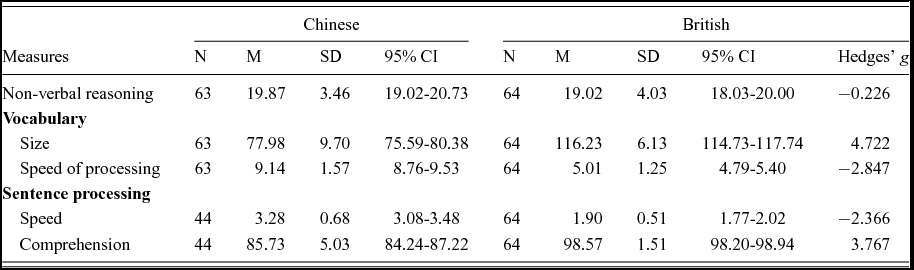
Descriptive statistics and group difference effect sizes for indicators of cognitive, language and literacy abilities measured at T1 only.
Vocabulary
Vocabulary knowledge was assessed in two ways: as vocabulary size (receptive vocabulary needed for reading and listening), and as ability to explain the meaning of words (expressive vocabulary needed for writing and speaking). The measures of vocabulary knowledge were used as an index of overall language proficiency that subserves literacy skillsFootnote 2.
Vocabulary size
The participant's total receptive vocabulary size in English was estimated through an online tool, Vocabularysize.com, based on Paul Nation's Vocabulary Size Test (Nation & Beglar, Reference Nation and Beglar2007). This is a multiple-choice word-level test that involves 140 vocabulary items presented in a minimal context (e.g., He had many whims); participants’ task is to select the definition that corresponds to the word from a set of four alternatives. The test was originally designed to accurately estimate vocabulary size up to a maximum of 14,000 word families (each item in the test representing 100 word families). However, the on-line tool employs a revised (but undisclosed) algorithm to provide estimates beyond that level. We used the sum of the correct responses in our analyses, which can range between 0 and 140, but also report the revised vocabulary size estimates. This test was administered at T1 only. Cronbach's alpha for the internal consistency of the scale in our study was .97. For further key descriptive information about the scale (mean, standard deviation, confidence intervals), see Table 1. The tool additionally records the time taken to answer each question, which we used as a proxy of overall processing speed in English in the analyses (Cronbach's alpha = .96).
Expressive vocabulary
Participants were administered the vocabulary subtest from the Wechsler Abbreviated Scale of Intelligence II (WASI-II: Wechsler, Reference Wechsler2011), which required them to provide spoken English definitions for English words, presented visually and orally and ranging in frequency of occurrence from common to very rare. The test consists of 31 items, some worth 1 and others 2 points. We used the sum of scores in our analyses, which can range from 0 to 80 (see Table 3). This test was administered at both T1 and T2; test-retest reliability was .80.
Literacy
Literacy skills were assessed through a text-reading and a text-writing task. The tasks elicited both higher-level literacy measures (reading comprehension, ability to summarise a text in writing), which have been previously shown to predict academic outcomes of international students, and lower-level literacy measures (word-reading accuracy and spelling), which have received considerably less attention in research with these populations, but are known to influence text-level literacy abilities in school-age populations. Measures of reading speed were also included on the grounds that quick processing (e.g., in exam settings) and extensive reading are prerequisites for success in tertiary education.
Text reading
To assess reading rate, accuracy and comprehension, participants were administered the Reading Comprehension test – The History of Chocolate – from the York Adult Assessment Battery-Revised (YAA-R: Warmington, Stothard & Snowling, Reference Warmington, Stothard and Snowling2013), a test specifically designed for assessing these skills in university students. The passage was a non-fictional piece concerning the history of chocolate, and contained 492 words and 15 comprehension questions. Reading rate was expressed as words per minute, word-reading accuracy as the number of correctly read words, and comprehension as the percentage of correctly answered questions (test-retest reliability for reading accuracy = .87; for reading comprehension = .70; for reading rate = .93).
Text writing
Immediately after the reading comprehension task, participants were administered the written précis task from the YAA-R in which they were required to write a summary of The History of Chocolate. A maximum of 10 minutes were given to complete this task, without referring back to the text. Summarisation skills (number of correctly recalled content points) and spelling (percentage of spelling errors) were assessed. Test-retest reliability for summarisation was .70; for spelling, test-retest reliability was low (.42), as the spelling error rate was low for both groups at both times (Table 3).
Sentence comprehension and the speed of sentence processing
In addition to text reading, sentence reading measures were obtained for 44 Chinese participants who took part in a concurrently-ran study by Mattys and Baddeley (unpublished manuscript), as well as for the 64 British participants. The speed and accuracy of sentence comprehension were assessed on the Speed of Comprehension component of the Speed and Capacity of Language-Processing Test (Baddeley, Emslie & Nimmo Smith, Reference Baddeley, Emslie and Nimmo-Smith1992). The test contains 100 short sentences, half of which are true (Dogs have four legs; Birds have wings) and half are false (Dogs have wings; Birds have four legs). In the pen and paper format, participants were asked to verify the statements as quickly as they could. The total reading time and accuracy scores (scale 0–100) were used in the analyses (Table 1). The test was administered at T1 only. The performance was timed at 50 and at 100 sentences; the split-half reliability for the speed of reading was .85; Cronbach's alpha for accuracy was .92.
Phonological processing
Phonological processing, as a theoretically important component of reading comprehension, was measured in two ways. To assess phonological awareness participants were administered the Elision subtest taken from the Comprehensive Test of Phonological Processing (Wagner, Torgesen & Rashotte, Reference Wagner, Torgesen and Rashotte1999), which required participants to delete a specified phoneme from a word to produce a new word (e.g., say cup without /k/ → up). The test contains 20 items, and the sum of correct answers (0-20) was used in the analyses. The test was administered at both T1 and T2. Test-retest reliability was .67. To assess phonological retrieval participants were administered the Rapid Automatised Naming (RAN) task taken from YAA-R. In this task participants had to name an array of 50 digits from left to right arranged in 10 rows, as quickly and accurately as possible. RAN rate is expressed as number of correctly named digits per second. Test-retest reliability was .80.
Non-verbal reasoning
To assess non-verbal, fluid intelligence participants were administered the Matrix Reasoning subtest from WASI-II. In this measure, participants view a series of geometrical forms arranged according to an implicit logical principle, and select the form that completes the matrix from a set of options. The scale has 30 items, and the sum of correct answers (0–30) was used in the analyses. This test was conducted at T1 only. Cronbach's alpha was .80.
Analyses
Group means and standard deviations were calculated for all measures and both time points; the magnitude of group differences were calculated as the number of standard deviations by which the group means differed, expressed as Hedges’ g. Hedges’ g is an adjustment to Cohen's d for groups with different sample size, and is interpreted in the same way as Cohen's d. The independent t-test was used to compare the performance of the British and Chinese participants on measures that were taken at T1 only; their performance on measures taken at both T1 and T2 was compared via mixed-design ANOVAs, with time as a within-subject and group as a between-subject factor. Bivariate correlations and linear regression were used to explore the effect of language and literacy measures at the point of entry on academic outcomes at the end of the year in each group.Footnote 3
Missing data and outliers
Reading rate and word-reading accuracy data for one Chinese participant at T1, and Elision test data for four Chinese participants at T2, were lost due to recording equipment malfunction. Normality of data for each measure was checked, and where either skewness or kurtosis had a value of 3 or above, data points that were three standard deviations below or above the group mean were inspected (10 in total). This led to the removal of 7 data points on 2 tasks where procedural errors occurred: 5 reading accuracy scores (1 Chinese and 2 British at T1; 2 Chinese at T2) and 2 Elision scores (1 Chinese and 1 British at T1). Three scores that were identified as true outliers (the results of 1 Chinese and 1 British participant on Sentence comprehension, and 1 Chinese on RAN) were capped at 3 standard deviations relative to the group mean for parametric analyses. After dealing with outliers, the distribution was normal for all measures and for both groups.
Results
Descriptive statistics and group comparisons
Table 1 reports the means, standard deviations and 95% confidence intervals for the indicators of cognitive, language and literacy abilities measured at T1 only, for the Chinese and British participants, respectively. Hedges’ g indicates the size of the difference of group means expressed as the number of standard deviations. Table 3 does the same for measures taken at both T1 and T2. The results of t-test for measures taken at a single time, and the results of mixed ANOVAs for measures taken at both time points are reported in Tables 2 and 4, respectively.
Comparison of British and Chinese participants’ group means on cognitive, language and literacy measures taken at T1 only.

Note. To allow for multiple comparisons, the alpha level was adjusted from .05 to .01. The Pearson's correlation coefficient r represents an effect size (small effect r = .10; medium effect r = .30; large effect r = .50).
Non-verbal reasoning
There was no significant group difference on the matrix reasoning component of WASI-II, suggesting similar levels of general, non-verbal cognitive ability of the Chinese and the British group (Tables 1 and 2).
Language and literacy measures overview
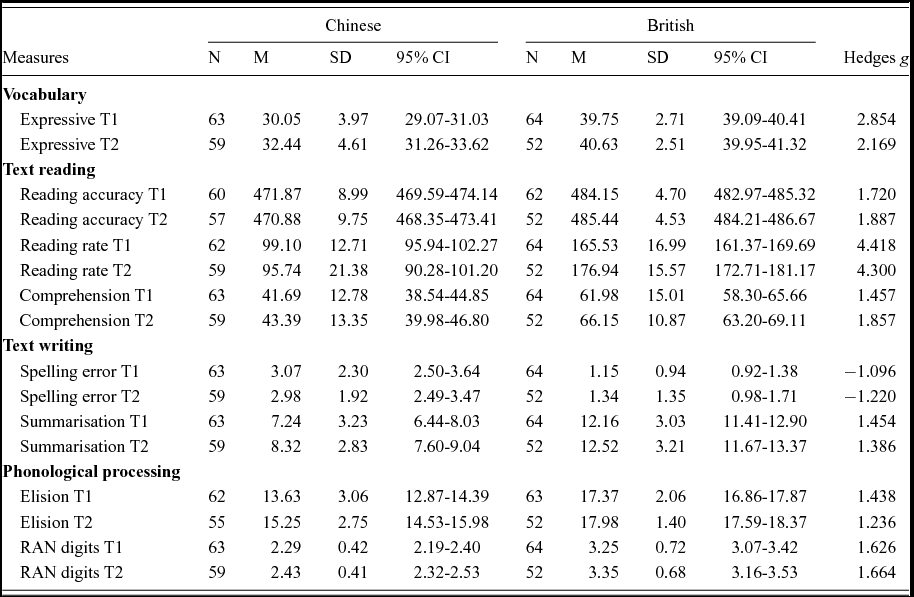
There were significant and large group differences on all measures related to English language abilities, at both T1 and T2 (Tables 1 and 3). While performance on some measures improved for both groups over time (expressive vocabulary, Elision, and RAN), there was no closing of the gap between the Chinese and the British group (Table 4). What is more, on reading rate, the group by time interaction showed widening of the gap between the groups.
Descriptive statistics and group difference effect sizes for indicators of language and literacy abilities measured at T1 and T2.
A 2x2 comparison of British and Chinese participants’ group means on language and literacy measures, taken at T1 and T2
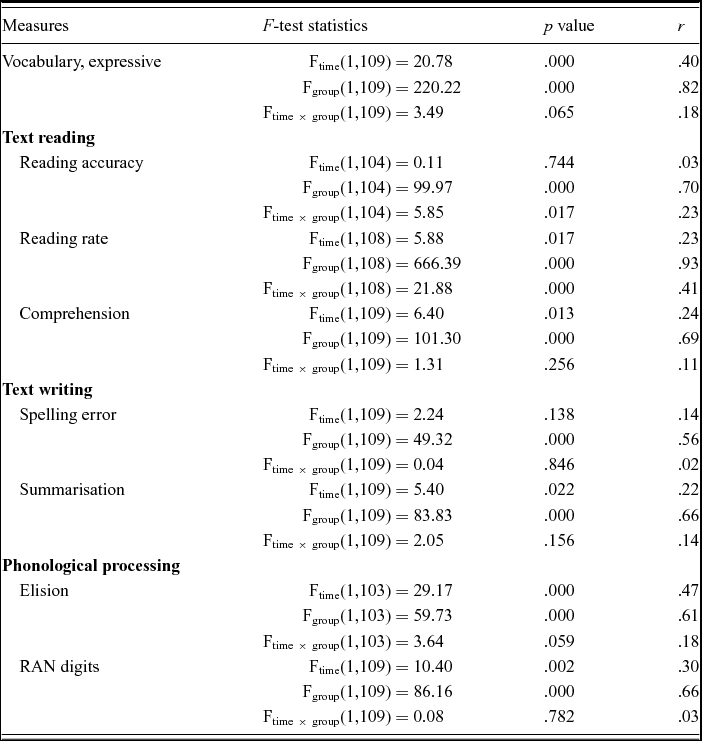
Note. To allow for multiple comparisons, the alpha level was adjusted from .05 to .006. The Pearson's correlation coefficient r represents an effect size (small effect r = .10; medium effect r = .30; large effect r = .50).
Vocabulary measures
Based on the raw scores on the vocabulary size test (Table 1), the average vocabulary size of the Chinese participants was estimated to be just under 8,000 word families (range 6,100–10,600) at the point of commencing their studies in the UK. This number is considered adequate for university education and argued to be a sensible vocabulary learning target for international students (Nation & Waring, Reference Nation, Waring, Schmitt and McCarthy1997); it is also consistent with international students’ vocabulary reported elsewhere in the literature (e.g., Nation, Reference Nation2006), confirming that our sample was fairly typical. The British participants’ vocabulary size, estimated by the VocabularySize.com tool based on the revised algorithm, was slightly over 15,000 word families (range 9,700-24,400). This is in line with Goulden, Nation and Read (Reference Goulden, Nation and Read1990) who estimate the university-educated L1 English speakers’ vocabulary at about 17–20,000 word families. While this is slightly higher number, recall that our British participants were first year undergraduate students; assuming the rate of learning of 1,000 word families per year (Nation & Waring, Reference Nation, Waring, Schmitt and McCarthy1997), they would complete their education with 18,000 word families on average.
The group difference on the vocabulary size test (based on raw scores) was highly significant and large, with the Chinese group lagging almost 5 SDs behind the British group (g = 4.72). None of the Chinese participants approached the average level for the British group, and only two out of 63 had a score higher than the lowest scoring British participant. Significant and large vocabulary differences were also confirmed on the WASI-II vocabulary subtest, used here as the expressive vocabulary measure (Table 3): the Chinese participants were 2.85 SDs behind the British participants at T1, and 2.17 SDs at T2. The mixed ANOVA of the WASI-II Vocabulary subtest results confirmed that there was a significant main effect of time on vocabulary learning (Table 4), but no group by time interaction, with both groups showing stronger performance at T2 than at T1.
Literacy measures
Significant and large group differences were also evident in the two key indicators of higher literacy skills central for academic work at university level: reading comprehension (g = 1.46 at T1; g = 1.86 at T2), and written summarisation (g = 1.45 at T1; g = 1.39 at T2). The Chinese participants’ could correctly answer 42% and 43% of the comprehension questions at T1 and T2, respectively – significantly weaker than the corresponding British group's results of 62% and 66%, respectively. Similarly, on the written summarisation measure, the Chinese group could recall 7.24 content points on average at T1 and 8.32 at T2, while the British participants averaged 12.16 at T1 and 12.52 at T2. Although the performance on both measures was somewhat better at T2 than T1, this was true of both groups; there was no significant time by group interaction to suggest closing of the gap between the groups. Significant and large group differences were also confirmed for lower literacy skills (reading accuracy and spelling) at both T1 and T2 (Tables 3 and 4).
Speed of processing
One of the indicators of the speed of processing in English was the time it took participants to read the question and select an answer in the Nation's vocabulary size test (Table 1). While the Chinese participants took 9 seconds on average to answer (M = 9,143; SD = 5,573), the British participants could do the same in almost half the time (M = 5,097; SD = 1,254), a significant and large difference (g = −2.85). Similarly, the Chinese participants’ reading aloud rate at 99 words per minute at T1 and 96 words per minute at T2 was significantly and substantially slower than the British participants’ rate, which was 166 words per minute at T1 (g = 4.42) and 177 at T2 (g = 4.30) (Table 3). Finally, it took the Chinese participants on average 3.28 seconds to verify the truth of simple sentences in the sentence reading task, while the British participants needed 1.90 seconds on average (g = −2.37). While taking longer to read a sentence, the Chinese participants were also less accurate in their verification judgements, getting on average 86 out of 100 right, compared to 99 on average for the British participants (g = 3.77), highlighting a double disadvantage: slower processing and more limited comprehension (Table 1).
Phonological skills
Significant and large group differences were also evident on the indices of phonological measures (RAN and Elision), suggesting that the Chinese participants’ retrieval and articulation rate in English were slower than the British participants', and that their phonological awareness in English was also weaker (Table 3).
Academic outcomes
Of the 63 Chinese participants, one withdrew from the university during the course of the year. The weighted average mean of the 62 who attempted 120 credits of assessment was 60.93 (SD = 7.02) on the 0–100 masters scale, where 50 is a pass mark. Nineteen participants failed some credit on the first attempt: 12 failed 20 credits, 3 failed 40, and 4 failed 60 credits. Sixty out of 62 eventually completed the programme of study.
Participants who attended a 6–10 week-long English pre-sessional programme to compensate for narrowly missing the language entry requirements (n = 24) achieved significantly lower academic grades (M = 58.33, SD = 6.85) than the rest of the cohort (n = 38; M = 62.58, SD = 6.70; t(60) = 2.41, p = .019). However, this association disappeared (F(1,59) = 0.01, p > .05) when participants’ IELTS band prior to joining the university was entered as a covariate. Although IELTS is not designed to be a predictor of academic success, in our sample it showed a robust association with academic grades (F(2,59) = 6.80, p = .002), with each drop of half a point in IELTS band score corresponding to a drop of about 4 points in grades: participants entering with IELTS 7.5 (n = 12) achieved a weighted average of 65.58 (SD = 8.69), those coming with IELTS 7.0 (n = 29) averaged 61.70 (SD = 5.29), and those with IELTS 6.5 (n = 21) just 57.24 (SD = 6.44) . The results confirm that attending a pre-sessional programme had no significant influence on academic attainment of our participants (beyond arriving with a lower proficiency in English) and was therefore excluded from further analyses.
In the British group of 64 participants, two withdrew from their studies, and data for 4 students were missing. The average mark of the remaining 58 participants was 63.53 (SD = 5.98) on the 0–100 undergraduate scale, where 40 is a pass mark. Two students failed 20 credits on the first attempt, but all progressed to the next stage.
Coming from a population of masters students and undergraduate students, respectively, the academic outcomes results were not directly comparable. The weighted average, however, was used as a dependent variable in within-group correlation and regression analyses.
Correlations
Table 5 displays intercorrelations among the end-of-year academic grades and T1 indicators of cognitive, language and literacy skills for both groups. For the Chinese participants, T1 vocabulary measures (size, and expressive vocabulary), word-reading accuracy, reading comprehension, spelling, written summarisation skills, and phoneme awareness (Elision) all correlated moderately and significantly with academic grades (all positively, apart from spelling errors, which were associated negatively). This is in line with the literature suggesting that in populations where these skills are still developing, individual differences in language and literacy skills play an important role in academic performance. In contrast, for the British participants most language and literacy measures correlated weakly and non-significantly with academic grades, with the exception of spelling errors, which were associated moderately and significantly negatively with academic marks. Non-verbal reasoning was associated positively, and the processing time negatively with academic outcomes for both groups, but these correlations were weak and non-significant.
Correlations among the end-of-year academic outcome and indicators of cognitive, language and literacy skills on entry to university.
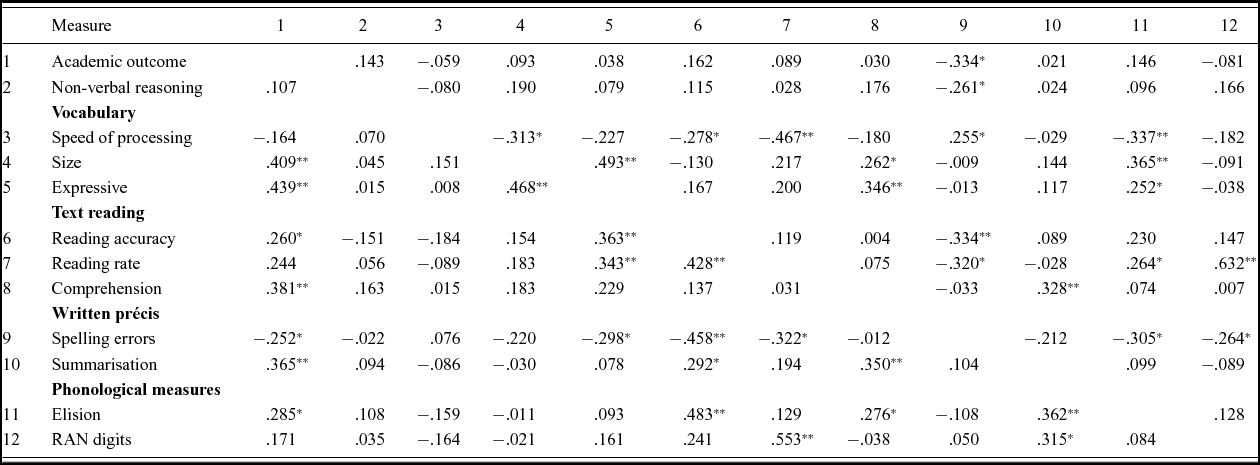
Note. *p < .05, **p < .01. Correlations for Chinese participants below the diagonal and British participants above the diagonal.
Regression analyses
A multiple hierarchical linear regression analysis was conducted for each group to test which of the language and literacy skills at entry predicted the end-of-year academic grades. Given the moderate and significant association between vocabulary size and expressive vocabulary in the correlation analyses (Table 5), for the purposes of regression analyses a composite English vocabulary measure was created by summing the z scores from the two tests. For the same reason and in the same manner, reading comprehension and written summarisation results were transformed into a composite higher literacy skills score, and phonological awareness (elision) and decoding (word-reading accuracy) into a composite phonological processing score. The variables were selected and entered in the model in the order of their importance in predicting academic attainment attested in previous research: general intelligence (non-verbal reasoning), vocabulary (composite), higher literacy (composite reading comprehension and writing), and speed of processing in English. Spelling and phonological processing measures were added to the model last, based on their correlation with academic results in the present study. Table 6 shows the final model for the Chinese sample, and Table 7 for the British sample.
Multiple linear regression model examining the role of English language and literacy skills in academic outcomes of Chinese international students.
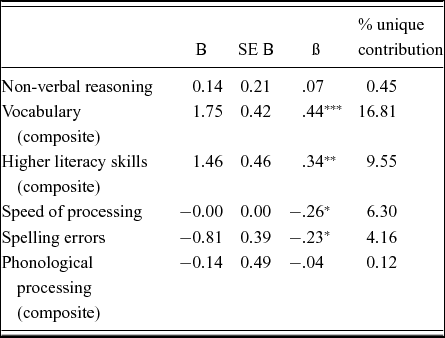
Note: N = 58; R2 = .511. *p<.05, **p<.01, ***p<.001
Multiple linear regression model examining the role of English language and literacy skills in academic outcomes of British home students.
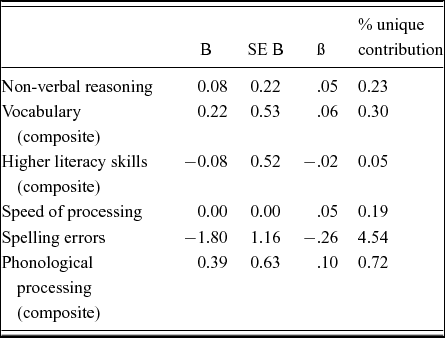
Note: N = 55; R2 = .107
For the Chinese participants, the model accounted for 51.10% of the variance in academic performance (F(6, 51) = 8.87, p = .000). The unique contributions of vocabulary (16.81%), higher literacy skills (9.55%), speed of processing in English (6.30%), and spelling (4.16%) were statistically significant (Table 6), confirming that the mastery of these skills on arrival is positively related to Chinese students’ academic outcomes. An additional 13.71% of variance explained by the model was shared between the six predictors, reflecting the commonality between the variables. Thus the linear regression model confirmed that for students who do not speak the language of instruction as their first language, individual differences in language proficiency and literacy skills are highly predictive of academic outcomes.
In contrast, for the British participants, the model accounted for only 10.70% of the variance in academic performance, F(6, 48) = 0.96, p = .46. None of the predictors contributed unique significant variance to the model. The model suggests that for students at an academically selective university who speak the language of instruction as their native language, variation in language and literacy skills is not highly predictive of academic grades. Group differences in means and standard deviations (Tables 1 and 3) demonstrate that the British participants’ language and literacy skills occupy a narrower range at the high end of ability. As such, their language and literacy skills appear to fall above the threshold that would present a barrier for learning in higher education.
Discussion
Group differences in language and literacy skills are large and significant
In contexts where native and non-native speakers study together, it is crucial to understand the extent of the difference in language and literacy skills with which these populations pursue their education and go through assessment. Previous research addressing this issue has largely focused on school-age immigrant and language minority students (Collier, Reference Collier1987; Hakuta et al., Reference Hakuta, Butler and Witt2000, Kieffer, Reference Kieffer2008). Expanding this research, our study provides evidence that large differences in language and literacy skills also exist at university level, between international students at and slightly above the minimum language entry requirements (B2/C1 CEFR level) and those who speak the language of instruction as a native language.
Comparing native English-speaking students and Chinese EFL students on a range of indicators of language and literacy skills, the study found that the Chinese group performed considerably weaker on all measures, both on arrival and 8 months later (RQ1 and RQ2). The largest initial differences were found on the indicators of the speed of verbal processing and vocabulary, with the gap in text reading speed and in vocabulary size both exceeding 4 SDs. The Chinese group also understood considerably less of what they read and had poorer written summarisation skills. There was no difference between the groups on general cognitive abilities (non-verbal reasoning), which can thus be ruled out as the explaining factor for the results. Neither was our Chinese group of untypically low proficiency in English for international students in the UK: in fact, with the average IELTS score of 6.92 at entry, it was well exceeding the Government's proficiency requirement, equivalent to IELTS score of at least 5.5.
The results further show that these initial group differences are difficult to overcome. While some improvement on key academic skills was observed in both groups over the course of the academic year, no significant catching up by the Chinese group on any of the indicators of language and literacy abilities in English was observed. The study thus demonstrates that just as expectations of rapid language and literacy development for students of limited proficiency are unrealistic in young immigrant populations, so they are for newly-arrived university students who speak the language of instruction as a foreign language. Furthermore, it shows that even when L1 language and literacy skills are fully in place, as they would be in university graduates, transfer of generic abilities that underpin academic language use (Cummins, Reference Cummins1979) are not sufficient to offset the disadvantage of limited proficiency in the language of instruction. Finally, the study also confirms that L1 English students continue to improve their language and literacy skills even at university, making the task of catching up for EFL students all the more challenging.
Language and literacy skills are predictive only of international students’ academic outcomes
In the present study, the mastery of a foreign language in which university education is pursued predicted academic outcomes in a sample of Chinese EFL students in the UK. English language and literacy measures accounted for over half of the variance in academic grades, with the strongest unique predictors being vocabulary, text-level skills (reading comprehension and ability to summarise a text in writing), speed of verbal processing, and spelling. The effect persisted even when non-verbal reasoning was taken into account. In contrast, no strong link between language and literacy skills and academic grades was found in the sample of British students who spoke English as their native language.
These findings extend the current state of research in several regards. First, they corroborate the view that the level of language and literacy ability in the language of instruction with which international students start their university education affects their learning outcomes and academic results (Daller & Phelan, Reference Daller and Phelan2013; Daller & Xue, Reference Daller, Xue, Richards, Daller, Malvern, Meara, Milton and Treffers-Daller2009; Harrington & Roche, Reference Harrington and Roche2014; Roche & Harrington, Reference Roche and Harrington2013). Second, although the study confirms vocabulary and higher literacy skills as the strongest predictors of academic success, it also reveals that lower literacy skills such as spelling, and the speed with which EFL students perform language-based tasks in English, are linked with their academic success. Third, by including measures of non-verbal reasoning, we demonstrate that the observed positive relationship between English language and literacy skills and learning outcomes of international university students cannot be due to variation in students’ general cognitive ability.
Most importantly, by including a comparison group of students who speak the language of instruction as a native language, and showing that their academic outcomes are not predicted by individual differences in language and literacy skills, our study rules out the possibility that this is a universal effect observed in all students. Rather, the results demonstrate that this association is present only before a certain threshold in language proficiency is reached, and that this threshold does not correspond to the minimum language requirements which UK institutions set for incoming international students.
One particular point of both theoretical and practical significance is the finding that the vocabulary size of approximately 8,000 word families is predictive of academic results, but an average vocabulary of 15,000 is not. Knowledge of the 8,000 most frequent word families in English is often taken as a target for international students (Nation & Waring, Reference Nation, Waring, Schmitt and McCarthy1997) on the grounds that it covers about 98% of running words in complex written texts in English (Nation, Reference Nation2006); this coverage is argued to be sufficient for unassisted comprehension (Hu & Nation, Reference Hu and Nation2000). Our findings, however, support Carver (Reference Carver1994) who shows that with 2% of unknown words, texts are difficult to understand, and that for optimal comprehension and learning 99% text coverage – which for academic texts corresponds to vocabulary size of 14,000 word families (Nation, Reference Nation2006) – is needed. This suggests that for international EFL students who hope to study at the level of their general ability, a much more ambitious target than 8,000 word families is necessary. We found no support for the suggestion that the average vocabulary size of British students may be smaller than normally estimated, or that it may be close in size to international students’ (Milton & Treffers-Daller, Reference Milton and Treffers-Daller2013).
Taken together, large differences in language and literacy skills between the groups, coupled with the finding that individual differences in these skills predict academic grades for non-native but not native speakers, provide strong support for the view that differential attainment between home and international students observed in previous research (Crawford & Wang, 2015; Iannelli & Huang, Reference Iannelli and Huang2014; Morrison et al., Reference Morrison, Merrick, Higgs and Le Métais2005) could be in large part due to differences in language abilities. The results suggest that the minimum language requirements may be sufficient for completing a programme of study, but not for fulfilling one's academic potential.
Practical implications, limitations, and future directions
Our study focused on Mandarin-speaking Chinese students as the largest population of international students in the UK. A non Indo-European language, written in logographic script, Mandarin radically differs from English at all level of linguistic analysis, and this could be contributing to the magnitude of differences in English language and literacy skills between the Chinese and the British students observed here. Further research needs to establish whether our findings generalise to other international students, particularly to speakers of languages that are typologically closer to English, or to those who study with fewer fellow speakers of their native language. As our participants were mostly female, gender balance in future research should also be addressed.
The central limitation of our study, however, is that our findings must be seen as conservative in several ways. First, as students at a selective university with the average IELTS band score of almost 7 (range 6.5-7.5), our Chinese participants’ level of proficiency in English was substantially higher than the minimum national requirement of 5.5. To what degree English language and literacy skills of students at IELTS band levels between 5.5 and 6.5 differ from that of home students, and how much of variance in their academic performance they explain, remain for future studies to investigate.
Our results are also conservative in that we compared language and literacy skills of Chinese masters students against British first year undergraduates. While this ensured that experience with and accommodation to the UK HE system could be ruled out as a factor in observed group differences, future research may find the gap between home and international students at the same level of study larger than observed here. In addition, in accounting only for how language and literacy skills predict academic outcomes after a year of study, we may be underestimating the effect that starting university with limited proficiency in English may cumulatively have on academic developmental trajectories over several years (cf. Crawford and Wang, Reference Crawford and Wang2015; Kieffer, Reference Kieffer2008).
These limitations notwithstanding, the results of our study must not be taken to suggest that international students cannot do well: many students pursuing tertiary education in a foreign language flourish and benefit from opportunities that they may not have otherwise had (Altbach & Knight, Reference Altbach and Knight2007). Rather, our findings suggest that international students are often capable of doing much better than their language abilities allow them to. With substantially smaller vocabulary, weaker reading comprehension and considerably slower reading speed than home students, international EFL students pursue their studies with a confound handicap: not only are they able to cover fewer texts than home students, but they also derive more limited learning from the text they do read. They are similarly affected in exam settings, which require quick and accurate understanding of instructions and questions, and fast and fluent performance in answering them. Foreign language is not a disability, but it can be a considerable disadvantage when native and non-native speakers directly compete academically. As any systematic disadvantage, it needs addressing. For example, students with the vocabulary size several standard deviations below the norm may find access to a dictionary helpful in exams; the disadvantage in the speed of processing could be offset by extra exam time. As far as we are aware, few UK universities makes such exam accommodations for students who speak English as a foreign language (though slow processing, as a specific learning difficulty, is normally accommodated for, for native speakers of English, as are language comprehension and writing difficulties for students disadvantaged by dyslexia).
The hardest problem is how to help international students, who arrive having met the minimum language requirement, improve their English during the course of their studies, so that they can benefit from learning opportunities as much as possible. Most UK universities do acknowledge the need for, and provide English language support classes to, EFL students. The provision, however, differs from university to university, and there is little research on how effective it is. The results of our study show no language development in the EFL group – despite the dedicated language support they received along with their academic programmes – that goes beyond what native speakers also experience simply by attending the university. Research is urgently needed to explore what interventions work best in the HE context. One might expect a focus on intensive vocabulary development to be beneficial, not only because vocabulary is consistently identified as the best predictor of academic success for EFL students in HE, but because vocabulary-based interventions have already proven helpful with other populations (Bowyer-Crane, Snowling, Duff, Fieldsend, Carroll, Miles, Götz & Hulme, Reference Bowyer-Crane, Snowling, Duff, Fieldsend, Carroll, Miles, Götz and Hulme2008).
Our study also underscores the point that language development, even at university, is slow. In the light of this finding, universities need to be cautious when setting language entry requirements, particularly so if expecting that candidates below the required proficiency may make dramatic gains through attending preparatory programmes. Research from Australia suggests that students who meet the language entry criteria on one of the internationally recognised language proficiency tests, even at the minimum level, experience greater academic success than students who bypass this requirement by joining the same universities through their pre-sessional and pathway programmes (Oliver, Vanderford & Grote, Reference Oliver, Vanderford and Grote2012). We observed the same in our results: participants who attended a pre-sessional English course to compensate for narrowly missing the language entry requirements achieved significantly lower academic grades than the rest of the cohort; this association disappeared when participants’ IELTS band score prior to joining the university was accounted for.
Conclusion
In sum, our study found that differences in language and literacy skills between home (L1 English) and international (EFL) students at B2/C1 level of proficiency are large and significant. In particular, EFL university students seem to have significantly smaller vocabulary, are slower in language processing, understand considerably less of what they read, and are less able to summarise what they read in writing. This puts them at a disadvantage when they compete with L1 peers academically, in the context which requires a lot of independent learning through reading, and where almost all learning outcomes are assessed in writing. Our results also show that any initial differences are hard to overcome since rapid development of second language and literacy, even at university and even with L1 language and literacy fully developed, appears unrealistic. Therefore, language proficiency at entry to university seems crucially important for international students’ academic success.
Furthermore, our finding that language and literacy skills of international EFL students, but not of native English-speaking students, predict academic outcomes suggests that language and literacy skills cease to be predictive of academic success after a certain threshold is reached; unfortunately, this threshold does not appear aligned with the minimum language entry requirements. Just how developed language and literacy skills need to be to allow an individual to perform academically at the level of their true ability is the key question that future research should address.


 Open access

