





Introduction
The outbreak of the COVID-19 pandemic focused attention on young people’s mental health. It disrupted a critical developmental phase characterized by significant psychosocial changes, identity exploration, and increasing autonomy for adolescents (Steinberg & Morris, Reference Steinberg and Morris2001) as well as frequent change and exploration of possible life directions in love, work, and worldviews for young adults (Arnett, Reference Arnett2000). However, it is also a period marked by sensitivity to environmental influences, highlighting the need to investigate the effects of potential stressors, such as those associated with the COVID-19 pandemic, on mental health and wellbeing. Amidst the challenges posed by the pandemic, it is perhaps not surprising that there has been a renewed focus on resilience research, with governments seeking evidence and advice to reduce risks and improve the capacity to withstand or bounce back from adversity. The UK government, for instance, emphasized preventive measures and resilience-building strategies, with a particular focus on children and young people, in their COVID-19 mental health and wellbeing recovery action plan in the first year following the pandemic (HM Government, Department of Health and Social Care & Cabinet Office, 2021).
Resilience research diverges from risk research in its emphasis on identifying the assets and resources that enable individuals to overcome the negative effects of risk exposure (Fergus & Zimmerman, Reference Fergus and Zimmerman2005). Its roots are closely linked to the history of developmental psychopathology, gaining momentum during the second world war which brought global attention to the challenges faced by children amidst widespread devastation (Masten, Reference Masten2014). Since then, resilience research has evolved substantially, increasingly recognizing resilience as a dynamic process of adaptation to adversity rather than merely the absence of pathology or the presence of particular traits. This shift in understanding emphasizes the distinction between resilience itself – the outcome of maintaining or quickly regaining good mental health during and after adversity – and resilience factors, which are variables that may increase the probability of a resilient outcome (Kalisch et al., Reference Kalisch, Baker, Basten, Boks, Bonanno, Brummelman, Chmitorz, Fernàndez, Fiebach, Galatzer-Levy, Geuze, Groppa, Helmreich, Hendler, Hermans, Jovanovic, Kubiak, Lieb, Lutz and Kleim2017). This distinction is crucial for advancing our understanding of how resilience unfolds in response to adversity, particularly in the context of global challenges like the COVID-19 pandemic.
Although resilience research has advanced considerably over the past decades, opportunities to study its application in global health crises have been limited. The last significant pandemic, the Spanish flu of 1918, occurred over a century ago. Consequently, contemporary psychiatry had limited opportunities to assess the impact of infectious disease outbreaks with pandemic potential through its clinical and scientific lens (Huremović, Reference Huremović2019). Between 1894 and 2019, PubMed indexed over 20,000 articles on the intersection of infectious disease outbreaks and mental health; however, in the four years since the COVID-19 pandemic began, over 84,000 articles on this topic have been added. Additionally, PROSPERO has registered nearly 1,500 review protocols specifically focusing on COVID-19 and mental health. Nonetheless, there remains a scarcity of reviews on psychological resilience, especially among young people. Existing resilience reviews have predominantly focused on frontline workers and cross-sectional data, revealing insufficient study quality to draw substantial conclusions (for a meta-review, see Seaborn et al., Reference Seaborn, Henderson, Gwizdka and Chignell2022). This trend is consistent with broader findings; Jung et al. (Reference Jung, Di Santo, Clifford, Prosperi-Porta, Skanes, Hung, Parlow, Visintini, Ramirez, Simard and Hibbert2021) revealed that the methodological rigor of early COVID-19 studies was below average across various research designs.
Our systematic review aims to bridge existing gaps in current literature synthesis efforts. To achieve this, we focus exclusively on compiling longitudinal studies, aiming to draw from the best available evidence. We include studies examining both resilience factors and resilience processes, acknowledging that studies focusing on resilience factors may predominate due to methodological constraints and the unexpected nature of the pandemic. Our review aims to enhance our understanding of resilience during key developmental stages – especially adolescence and young adulthood – within the context of the pandemic. Despite demographic shifts over decades marking young adulthood as a phase of significant change into the mid-twenties, it has often been overlooked in pandemic mental health literature as a distinct developmental phase. By including both adolescents and young adults in our systematic review, we aim to promote positive outcomes and mitigate negative effects within this age group, both presently and in the future.
Method
The present systematic review followed the Preferred Reporting Items for Systematic Reviews and Meta-Analyses (PRISMA; Page et al., Reference Page, McKenzie, Bossuyt, Boutron, Hoffmann, Mulrow, Shamseer, Tetzlaff, Akl, Brennan, Chou, Glanville, Grimshaw, Hróbjartsson, Lalu, Li, Loder, Mayo-Wilson, McDonald and Moher2021) guidelines and a structured protocol pre-registered on PROSPERO CRD42023428631 (Wiedemann et al., Reference Wiedemann, Gupta, Okey, Galante and Jones2023).
Search strategy
We searched medical as well as multidisciplinary databases including ASSIA, CINAHL, EMBASE, MEDLINE, PsycINFO, Scopus, and Web of Science. We also searched two of the main repositories of medical and biological science preprints, that is, medRxiv and bioRxiv, as part of our MEDLINE search. As both repositories have only been integrated into MEDLINE in 2021, we conducted additional searches directly through medRxiv and bioRxiv looking for any relevant pre-prints from 2020. The publication timeframe was restricted to start in December 2019, when COVID-19 was first identified. The initial search was conducted on 27 June 2023, and subsequently updated on 12 August 2024.
Language was not an exclusion criterion in our review, that is, we included all retrieved records in our screening process, regardless of the language they were written in. For articles written in languages other than those spoken by the team, namely English, French, German, or Spanish, we relied on the assistance of fellow researchers proficient in those languages to facilitate the translation process. Our search strategy combined five superordinate concepts including search terms related to COVID-19, mental health, resilience, study design, and population of interest. We used the pre-defined search strategy on adolescence and young adults developed by the Canadian Health Libraries Association (CHLA, 2018). We conducted a comprehensive search for each concept by exploring both database-specific subject headings and text word fields. To identify keywords and subject headings, we scrutinized relevant systematic reviews on related or similar topics. The initial search was constructed in MEDLINE and subsequently adapted for the other databases. The keywords were consistent across all databases while subject headings were established for each specific database. The database-specific search strategies and results can be found online on OSF (https://osf.io/cznyq/).
Selection criteria
Our systematic review focused on longitudinal studies of youth populations, including adolescents (aged 10 to 19 years) and young adults (up to 30 years), affected by the COVID-19 pandemic, with an essential requirement for a pre-pandemic baseline prior to December 2019. We included studies that either focused entirely on youth populations, or those that provided relevant separate analyses for these age groups. We allowed for some flexibility in the age criteria, for instance, including studies where only a very small proportion of participants would fall outside of the age criteria. If the age range was unclear, we relied on the reported mean and standard deviation or median and interquartile range, excluding studies where these measures indicated ages below 10 or above 30. For instance, a sample with a mean age of 27 years and a standard deviation of 2 years would have been included, while a sample with a standard deviation of 4 years would have not. We excluded cross-sectional studies (including repeated cross-sectional designs) and any interventions specifically targeting mental health and wellbeing.
We included studies that assessed both resilience factors and resilience processes. Resilience factors were defined as pre-pandemic variables potentially increasing the likelihood of resilient mental health outcome during the pandemic. Resilience processes were conceptualized as dynamic adaptations occurring over time, measured as changes in potential factors over time related to mental health outcomes. We anticipated a prevalence of studies focusing on resilience factors due to the pandemic’s unexpected nature and methodological challenges in capturing dynamic processes. All studies needed to assess resilience at least once before the pandemic, examining it at individual, family, or community levels across behavioral, cognitive, emotional, social, or cultural domains. Our criteria for resilience factors were guided by a systematic review by Fritz et al. (Reference Fritz, Graaff, Caisley, Harmelen and Wilkinson2018), excluding studies attributing resilience to unchangeable traits like gender or genetic predispositions, or limited resilience to financial or economic advantage. In addition, we excluded studies that equated the absence of risk with resilience; for instance, a study assessing peer bullying instead of peer support would be excluded, even if low bullying is considered protective. Despite using Fritz et al.’s framework as a guideline, we dynamically expanded our scope, incorporating resilience factors not covered in their review as they emerged during selection. Decisions on inclusion were made by a team member blinded to study outcomes, ensuring unbiased consideration.
Furthermore, only studies employing validated measures for mental health and wellbeing with baseline and follow-up assessments were included. We focused on common mental health outcomes such as depression and anxiety, while also considering broader measures such as mental wellbeing or perceived stress. If there were any uncertainties about the eligibility of resilience or mental health measures, a team member blinded to the study’s outcome evaluated them for clarification. For a more comprehensive explanation of our selection criteria, please refer to our detailed protocol pre-registered on PROSPERO CRD42023428631 (Wiedemann et al., Reference Wiedemann, Gupta, Okey, Galante and Jones2023).
Data screening and extraction
Data screening and extraction was performed using Covidence software. Initial steps included merging search results from multiple databases and removing duplicates to facilitate the screening process. Titles and abstracts of all identified records were independently screened by two reviewers against our pre-defined study selection criteria. Any disagreements between the two reviewers at this stage were resolved through a third reviewer. Following the initial screening, the full texts of potentially eligible studies were then independently assessed for inclusion by two reviewers, again, with a third reviewer resolving any disagreements. Data extraction from studies that met the inclusion criteria was also independently performed by two reviewers using a standardized form. Discrepancies encountered during this process were discussed between the two reviewers to achieve consensus. The extraction form captured key information such as study characteristics, population demographics, outcomes, and findings. The form was pilot-tested and refined and can be found online on OSF (https://osf.io/cznyq/).
Quality appraisal
We used the NIH Quality Assessment Tool for Observational Cohort and Cross-Sectional Studies (NIH, 2021) to systematically appraise the methodological rigor and reliability of included studies. This tool facilitates the evaluation of each study against a set of criteria designed to identify potential sources of bias, including selection, measurement, and confounding biases. The appraisal process was conducted by two independent reviewers, with any discrepancies resolved through discussion or, if necessary, consultation with a third reviewer. We deviated from our initial protocol by adding an additional item to assess if studies included any measures of pandemic impact.
Data synthesis
Due to the heterogeneity of included studies, we conducted a narrative synthesis. This approach allowed us to collate and interpret data across individual, family, and community levels, focusing on the qualitative assessment of study results.
Results
Study characteristics
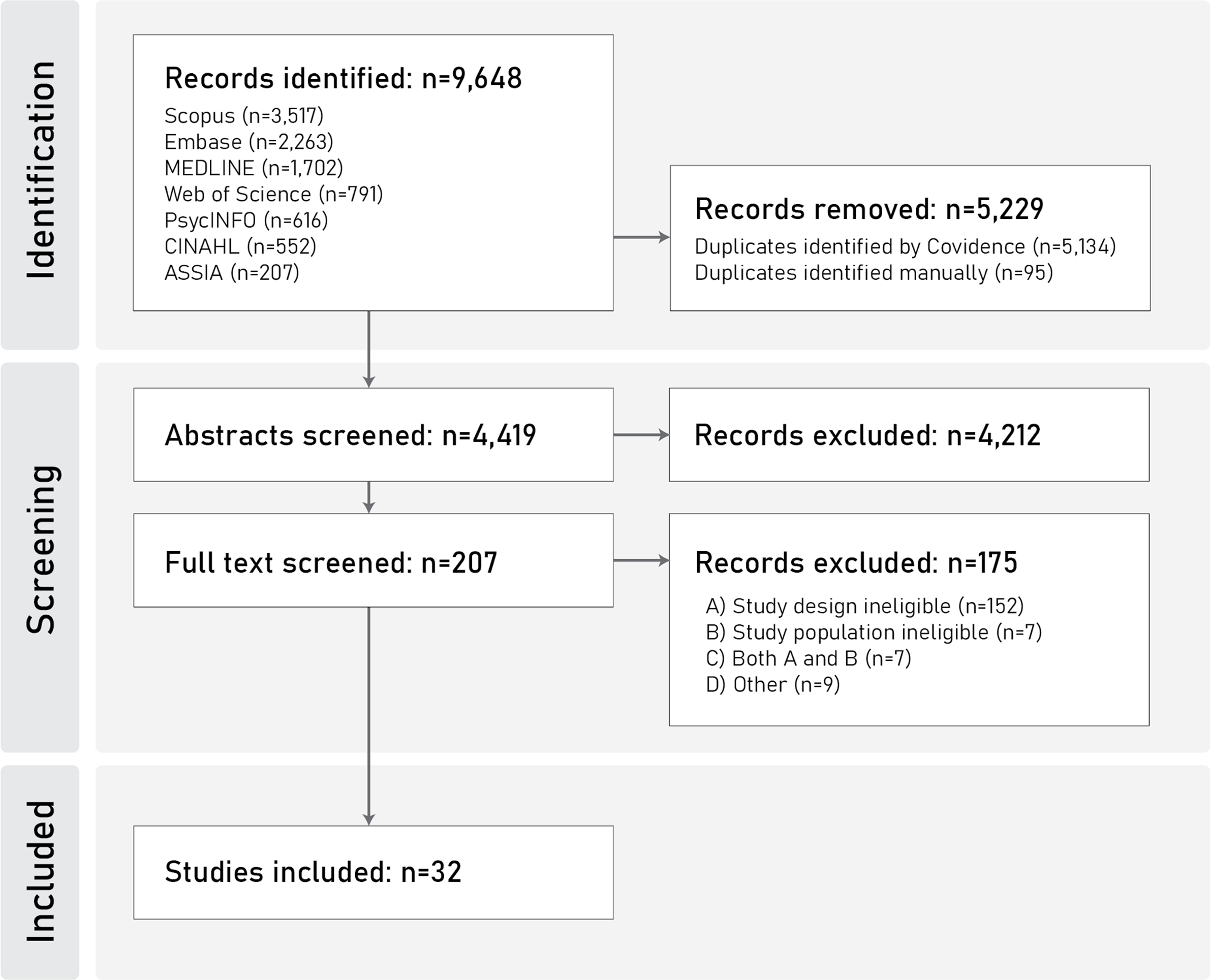
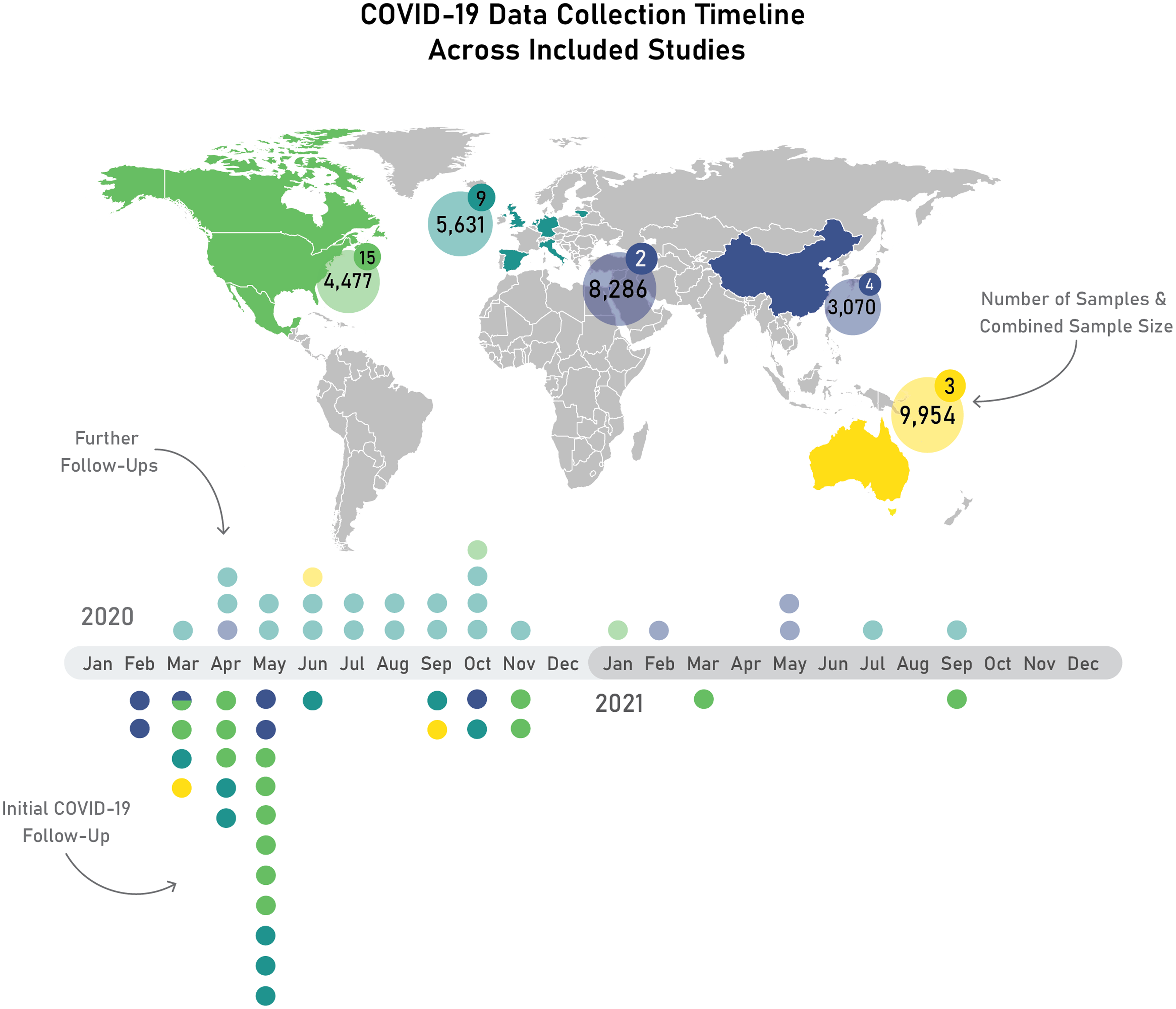
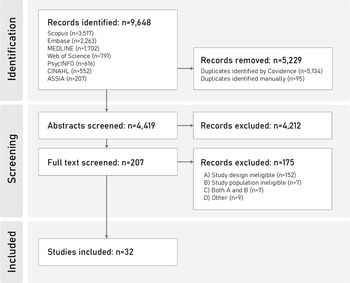
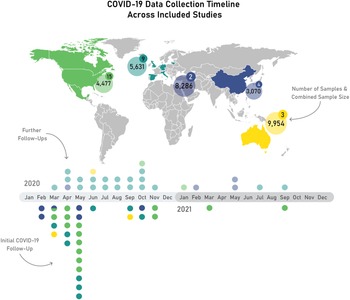
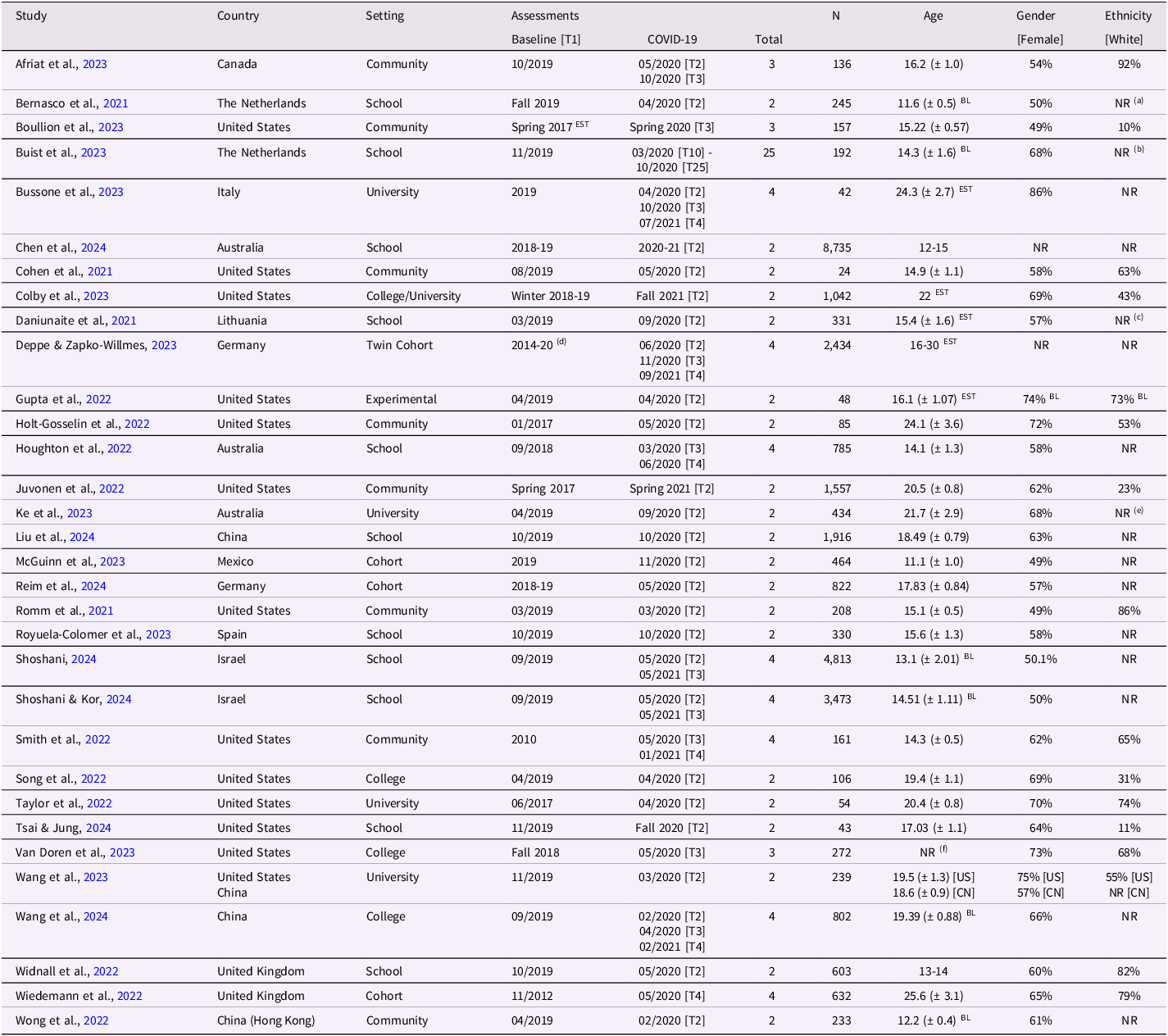
From a total of 9,648 records identified through database searches, we extracted 4,419 unique records, out of which 32 were included in the review (see Figure 1). Detailed study characteristics are presented in Table 1. The majority of included studies assessed pandemic-related mental health outcomes during the first year of the COVID-19 pandemic, with the median month for the initial assessment being May 2020. Among these studies, 20 conducted two assessments only, one before and one during the pandemic. Twelve studies conducted multiple assessments either before and/or throughout the pandemic. The COVID-19 data collection timeline has been illustrated in Figure 2. Geographically, the United States was the most frequently represented country (n = 12), followed by Australia (n = 3), China (n = 3), Germany (n = 2), Israel (n = 2), the Netherlands (n = 2), and the United Kingdom (n = 2). Further individual studies were conducted in Canada, Italy, Lithuania, Mexico, and Spain, with one additional study including participants from both the United States and China. Data collection primarily relied on schools (n = 11), universities/colleges (n = 8), and communities (n = 8). Four studies used cohort data, while one adopted an experimental approach. Sample sizes showed substantial variability, ranging from 24 to 8,735 (Median = 331, IQR 152 – 807). Nineteen studies primarily focused on adolescent populations, with their combined sample size contributing to over two thirds of the total sample across all included studies. The remaining studies targeted young adults.
PRISMA diagram.
COVID-19 data collection timeline across included studies. Map: color-coded by continent where data were collected. Green = North America, turquoise = Europe, blue = Asia, yellow = Australia/Oceania. Total samples exceed included studies by one due to one study collecting data in two countries. Timeline: spans January 2020 to December 2021. Initial COVID-19 assessments (bottom) and follow-ups (top) shown as colored dots matching continental regions. Estimated dates were used when precise information was unavailable. One study was omitted from this timeline due to providing only the year of data collection.
Study characteristics
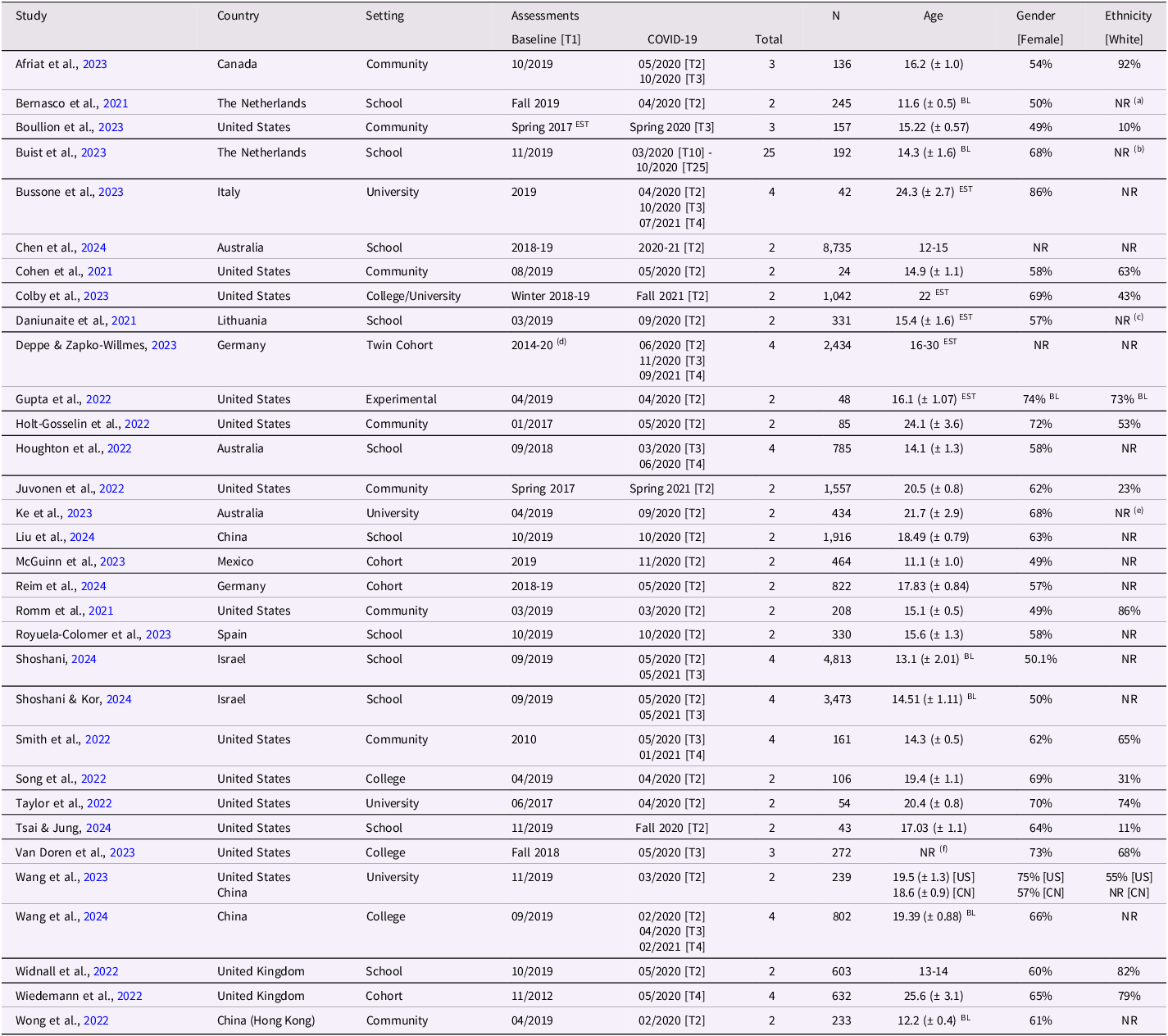
Note: Reported sample sizes are based on data collected during the COVID-19 pandemic follow-up(s). In cases of differing sample sizes across longitudinal analyses due to multiple pandemic follow-ups or various sub-samples, the largest relevant pandemic sample size is reported. Age is reported for the initial (first) COVID-19 follow-up. If age data were available only at a single time point, it is estimated and denoted as EST. If age is reported exclusively at baseline and the interval between baseline and the first COVID-19 follow-up is less than one year, we present the baseline age followed by BL. Abbreviations: BL = Baseline, EST = Estimate, NR = Not Reported, T# = Time point (assessment) followed by number, US = United States, CN = China.
(a) Ethnicity data were not reported, but nationality data indicated that 97% of participants were Dutch.
(b) Ethnicity data were not reported, but nationality data indicated that 97% of participants were Dutch.
(c) Ethnicity data were not reported, but nationality data indicated that 99% of participants were Lithuanian.
(d) Three pre-pandemic assessments were collapsed into a single pre-pandemic/baseline assessment.
(e) Ethnicity data were not reported, but study focused on Chinese international students.
(f) Age not reported but 84.9% were freshmen (time point unspecified).
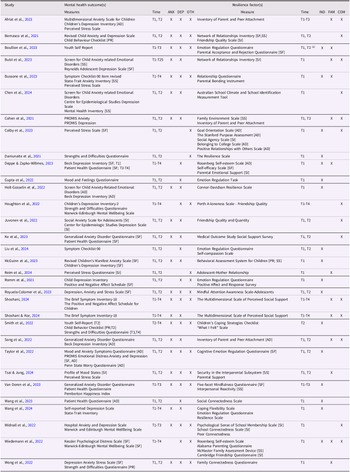
A total of 46 different resilience measures have been used. Studies primarily assessed pre-pandemic resilience factors (n = 26) rather than changes in such factors over time (n = 6). The majority of studies assessed these at a single level, focusing either on the individual, family, or community. However, ten studies examined resilience factors across two of these domains, while one study included resilience factors across all three levels. Specifically, factors at the individual level were explored in 17 studies, community-related in 14, and family factors in 13. Both measures of mental health outcomes and resilience measures are specified in Table 2.
Study measures

Abbreviations: ANX = Anxiety, DEP = Depression, OTH = Other, IND = Individual, FAM = Family, COM = Community, T# = Time point (assessment) followed by number, AD = Adapted, SF = Short-Form, SI = Selected Items, SS = Subscale, PR = Parent-Report.
(a) Both measures were assessed only once pre-pandemic; the Parental Acceptance and Rejection Questionnaire at T1 and the Emotion Regulation Questionnaire at T2.
Individual factors
Studies evaluating more general individual-level resilience factors and coping abilities found limited evidence of their protective effects during the COVID-19 pandemic when research was restricted to the initial outbreak or first year of the pandemic. For example, Daniunaite et al. (Reference Daniunaite, Truskauskaite-Kuneviciene, Thoresen, Zelviene and Kazlauskas2021) and McGuinn et al. (Reference McGuinn, Rivera, Osorio-Valencia, Schnaas, Hernandez-Chavez, DeFelice, Harari, Klein, Wright, Téllez-Rojo, Wright, Rosa and Tamayo-Ortiz2023) reported either no protective effect or inconsistent findings regarding the impact of pre-pandemic general resilience on pandemic mental health outcomes in adolescence. Additionally, Holt-Gosselin et al. (Reference Holt-Gosselin, Cohodes, McCauley, Foster, Odriozola, Zacharek, Kribakaran, Haberman, Hodges and Gee2022) found no association between pre-pandemic adaptive coping and pandemic depression or anxiety symptoms in a sample of young adults. Studies including more than one pandemic assessment, however, found some evidence of protective effects. Smith et al. (Reference Smith, Parrish, Shimomaeda, Zalewski, Rosen, Rodman, Kasparek, Mayes, Meltzoff, McLaughlin and Lengua2022), for instance, assessed pandemic outcomes at two intervals eight months apart, and found that while pre-pandemic coping abilities had no impact on psychopathology during the initial outbreak in a sample of adolescents, they were associated with decreased internalizing symptoms as time progressed. Similarly, Wang et al. (Reference Wang, Tan, Jia, Mao, Feng, Lei, He, Chen, Nie, Teng, Blain and Qiu2024) found that higher pre-pandemic coping flexibility as well as subjective resilience was associated with an increased likelihood of following resilient trajectories for both depressive and anxiety symptoms in a sample of college students followed up three times during the pandemic. Bussone et al. (Reference Bussone, Pesca, Carola and Tambelli2023) identified a comparable trend, although focusing on a different kind of individual-level resilience factor. They found that despite an overall increase in anxiety symptoms during lockdown, students with secure pre-pandemic attachment styles reported a notable reduction in anxiety symptoms as the pandemic progressed, whereas their counterparts with pre-pandemic insecure attachment styles continued to report elevated levels.
Studies examining more specific individual-level resilience factors generally found these factors were associated with better overall mental health outcomes both prior to and during the pandemic. However, they often did not specifically mitigate pandemic-related mental health effects. For example, Wiedemann et al. (Reference Wiedemann, Stochl, Neufeld, Fritz, Bhatti, Hook, Dolan, Goodyer, Fonagy, Jones, Moutoussis, Hauser, Neufeld, Romero-Garcia, Clair, Vértes, Whitaker, Inkster, Prabhu and Jones2022) reported that young adults with high pre-pandemic self-esteem experienced lower-than-expected (had there been no pandemic) mental wellbeing during the initial outbreak of the pandemic, yet their overall wellbeing remained higher than that of individuals with lower initial self-esteem. The study also found that higher pre-pandemic self-esteem was related to lower-than-expected psychological distress during the pandemic, but the effect size was small. Deppe and Zapko-Willmes (Reference Deppe and Zapko-Willmes2023) found that pre-pandemic self-esteem and self-efficacy were not associated with reduced depression symptoms during the pandemic. However, they were linked to pre-pandemic depression levels, which served as the strongest predictor of depression during the pandemic. Colby et al. (Reference Colby, Fereday, Le and Malin2023) reported that pre-pandemic goal-directedness and social agency were associated with lower stress levels during the pandemic but did not predict changes in stress from one year before the outbreak to about eighteen months into it. Similarly, Royuela-Colomer et al. (Reference Royuela-Colomer, Fernández-González, Orue and Calvete2023) found dispositional mindfulness was associated with fewer depression and stress symptoms but did not protect against COVID-19 stress. Van Doren et al. (Reference Van Doren, Mahlobo, Galla, Colaianne, Hirshberg, Inkelas and Roeser2023) did not specifically assess COVID-19 stress, but found that higher pre-pandemic mindfulness was generally associated with fewer internalizing symptoms and higher wellbeing during the pandemic. Additionally, pre-pandemic compassion was (weakly) associated with higher wellbeing, but not with internalizing symptoms. Furthermore, Liu et al. (Reference Liu, Xu, Cao, An, Li, Li, Gao and Han2024) assessed changes in self-compassion from pre- to mid-pandemic in a large sample of young adults and found that those who increased their use of self-compassion from pre-pandemic levels reported fewer depressive symptoms during the pandemic.
Studies assessing emotion regulation strategies reported mixed results. Romm et al. (Reference Romm, Park, Hughes and Gentzler2021) reported that positive affect regulation, particularly through savoring, was linked to better adolescent adjustment by minimizing reductions in positive emotions overall but did not specifically buffer against pandemic-related mental health outcomes. They further found that regulating negative affect, such as through cognitive reappraisal, showed no link to pandemic mental health outcomes. Similarly, Taylor et al. (Reference Taylor, Wicks, Fassett-Carman and Snyder2022) found no evidence for a protective effect from changes in regulating negative affect on internalizing symptoms during the pandemic. Furthermore, Wang et al. (Reference Wang, Tan, Jia, Mao, Feng, Lei, He, Chen, Nie, Teng, Blain and Qiu2024) found no support of pre-pandemic cognitive reappraisal predicting resilient trajectories for both depressive and anxiety symptoms in a sample of college students followed up three times during the pandemic. Nonetheless, Buillion et al., (Reference Boullion, Linde-Krieger, Doan and Yates2023) found a marginal relationship between pre-pandemic cognitive reappraisal and pandemic internalizing symptoms. Liu et al. (Reference Liu, Xu, Cao, An, Li, Li, Gao and Han2024) further found that young adults who increased their use of cognitive reappraisal strategies from pre-pandemic levels reported fewer depressive symptoms during the pandemic. However, their assessment of changes in self-compassion, as mentioned earlier, showed that the link between increased self-compassion and reduced depressive symptoms was stronger than the effect of cognitive reappraisal. Gupta et al. (Reference Gupta, Dickey and Kujawa2022) further reported that those with effective pre-pandemic emotion regulation capabilities demonstrated reduced susceptibility to stress-induced increases in depressive symptoms during the COVID-19 pandemic. Specifically, the study found that the interaction between neural markers of emotion regulation and COVID-19 related stressors predicted depressive symptoms, indicating that individuals with greater pre-pandemic emotion regulation proficiency were less affected by pandemic-related stress in terms of depressive symptomatology.
Family factors
Studies evaluating family-level resilience factors generally found positive impacts on pandemic mental health under certain conditions. For example, Afriat et al. (Reference Afriat, De France, Stack, Serbin and Hollenstein2023) reported that the quality of pre-pandemic relationships with parents had no impact on changes in mental health symptoms during the pandemic. However, adolescents reporting improvements in their relationships with parents during the pandemic experienced fewer depression and stress symptoms. In contrast, those with deteriorating relationship quality saw an increase in mental health issues. Similarly, Song et al. (Reference Song, Vicman and Doan2022) found that parental attachment security among young adults remained stable from before the pandemic to the initial months of its outbreak; however, this stability alone did not offer protection against pandemic-related mental health issues. In contrast, those reporting positive changes in their parental attachment security were protected against pandemic-related mental health effects observed in the broader sample. Moreover, Tsai and Jung (Reference Tsai and Jung2024) found that changes in self-reported parental support from pre- to mid-pandemic were associated with changes in perceived stress among adolescents, with increases in parental support related to decreases in perceived stress during the pandemic. However, they found no association between self-reported changes in family emotional security and changes in mental health outcomes. Shoshani (Reference Shoshani2024) and Shoshani and Kor (Reference Shoshani and Kor2024) conducted longitudinal studies tracking large, likely overlapping samples of adolescents before and during the COVID-19 pandemic. Both studies found that higher social support from family (and friends) was associated with fewer mental health symptoms throughout the pandemic. Shoshani (Reference Shoshani2024) additionally found an interaction between social support and time, indicating that the effect of social support on mental health outcomes varied across the pandemic period, though this interaction was not analyzed in further detail. Further support comes from studies assessing family-level resilience factors at baseline only. For example, Wong et al. (Reference Wong, Tung, Li, Chui, Tso, Lee, Chan, Wing, Fu, Wong and lp2022) reported that high pre-pandemic family life satisfaction offered protection against adolescent adjustment problems during the pandemic, but only when parental stress did not increase during this period. Moreover, Bussone et al. (Reference Bussone, Pesca, Carola and Tambelli2023) found that the protective effect of high pre-pandemic parental care only emerged as the pandemic progressed.
A few studies evaluating family-level resilience factors found more limited evidence for their protective effects during the COVID-19 pandemic. For example, Buist et al. (Reference Buist, Boele, Bülow, Reitz, Verhoeven and Keijsers2023) found that higher pre-pandemic levels of family support were associated with lower mean levels of depressive and anxiety symptoms across the entire study period. However, it was not associated with changes in internalizing problems during the pandemic or reopening phase. Wiedemann et al. (Reference Wiedemann, Stochl, Neufeld, Fritz, Bhatti, Hook, Dolan, Goodyer, Fonagy, Jones, Moutoussis, Hauser, Neufeld, Romero-Garcia, Clair, Vértes, Whitaker, Inkster, Prabhu and Jones2022) found that better general family functioning and positive and involved parenting prior to the pandemic was related to lower-than-expected (had there been no pandemic) distress during the initial outbreak of COVID-19. However, the effect size was small. Further, Deppe and Zapko-Willmes (Reference Deppe and Zapko-Willmes2023) found that pre-pandemic parental emotional support was not predictive of pandemic depression symptoms but was linked to pre-pandemic depression which was the strongest predictor for depression symptoms during the pandemic. Two studies found no significant association between pre-pandemic family-level resilience factors and pandemic mental health outcomes. Buillion et al., (Reference Boullion, Linde-Krieger, Doan and Yates2023) reported no direct relationship between pre-pandemic warm and affectionate parenting and internalizing symptoms during the pandemic. Similarly, Reim et al. (Reference Reim, Alt, Gniewosz and Walper2024) found that self-reported pre-pandemic adolescent-mother relationship was not related to changes in perceived stress from pre- to mid-pandemic.
Community factors
Studies evaluating community-level resilience factors, predominantly focusing on relationships with peers, generally found these factors were associated with better overall mental health outcomes, but not necessarily protective in the pandemic context. For example, Buist et al. (Reference Buist, Boele, Bülow, Reitz, Verhoeven and Keijsers2023) reported that higher pre-pandemic levels of best friend support were associated with lower mean levels of depressive and anxiety symptoms across the entire study period. However, best friend support was not associated with changes in internalizing problems during the pandemic or reopening phase. Both Bernasco et al. (Reference Bernasco, Nelemans, van der Graaff and Branje2021) and Houghton et al. (Reference Houghton, Kyron, Hunter, Lawrence, Hattie, Carroll and Zadow2022) found that adolescents with stronger pre-pandemic friendship quality and support experienced fewer mental health symptoms at the onset of the pandemic. However, Bernasco et al. (Reference Bernasco, Nelemans, van der Graaff and Branje2021) additionally illustrated that greater pre-pandemic friendship support did not mitigate the impact of pandemic-related stress. Likewise, Song et al. (Reference Song, Vicman and Doan2022) reported that changes in peer attachment among young adults did not serve as a buffer against the impact of stressors on adjustment problems. Correspondingly, Afriat et al. (Reference Afriat, De France, Stack, Serbin and Hollenstein2023) found that improvements in the quality of adolescent-peer relationships were not associated with mental health outcomes during the pandemic. Widnall et al. (Reference Widnall, Winstone, Plackett, Adams, Haworth, Mars and Kidger2022) did not find an association between pre-pandemic peer connectedness and pandemic mental health outcomes at all. In contrast, Cohen et al. (Reference Cohen, Cosgrove, DeVille, Akeman, Singh, White, Stewart, Aupperle, Paulus and Kirlic2021) found that despite an overall decline in peer trust and communication, adolescents who sustained trust and communication in their peers experienced better outcomes during the pandemic. Additionally, Wiedemann et al. (Reference Wiedemann, Stochl, Neufeld, Fritz, Bhatti, Hook, Dolan, Goodyer, Fonagy, Jones, Moutoussis, Hauser, Neufeld, Romero-Garcia, Clair, Vértes, Whitaker, Inkster, Prabhu and Jones2022) reported that higher pre-pandemic friendship quality was association with lower-than-expected (had there been no pandemic) psychological distress in young adults during the initial outbreak, albeit with a minimal effect size. Similarly, Juvonen et al. (Reference Juvonen, Lessard, Kline and Graham2022) found an association between the quality and quantity of friendships and pandemic mental health among young adults; however, it was relatively modest.
Few studies assessed broader community-level resilience factors, with mixed findings. For example, Widnall et al. (Reference Widnall, Winstone, Plackett, Adams, Haworth, Mars and Kidger2022) found that adolescents who reported medium-to-high school connectedness appeared to exhibit greater resilience, experiencing fewer changes in their mental health and wellbeing. Similarly, Chen et al. (Reference Chen, Cárdenas, Zhou and Reynolds2024) found that more positive pre-pandemic school climate and stronger school identification were associated with lower levels of depression and anxiety, and higher levels of positive affect during the pandemic in a large sample of adolescents. However, students with more positive pre-pandemic school experiences showed greater increases in depression and greater decreases in positive affect from pre- to pandemic periods compared to those with less positive school experience. Colby et al. (Reference Colby, Fereday, Le and Malin2023) found that young adults who reported more positive pre-pandemic relationships and a sense of belonging to college experienced lower stress levels during the pandemic. However, these pre-pandemic indicators did not predict changes in stress from one year before the outbreak to approximately eighteen months into it. Both Ke et al. (Reference Ke, Li, Sanci, Reavley, Williams and Russell2023) and Wang et al. (Reference Wang, Havewala, Fan, Wang and Bali2023) did not find support for an association between pre-pandemic social connectedness or support and pandemic mental health outcomes. However, Ke et al. (Reference Ke, Li, Sanci, Reavley, Williams and Russell2023) did find that higher social support during the pandemic was associated with better pandemic mental health outcomes.
Quality appraisal
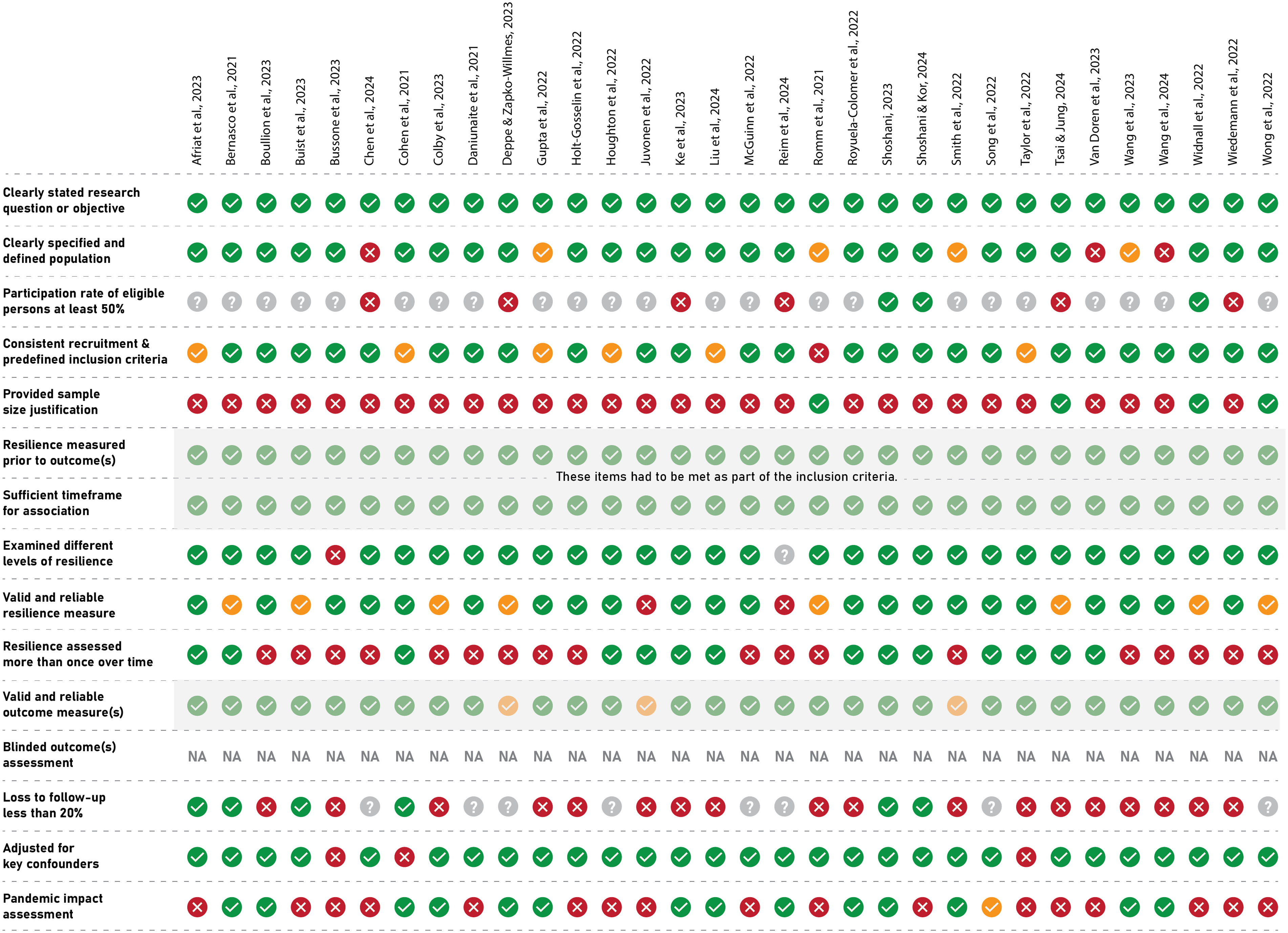
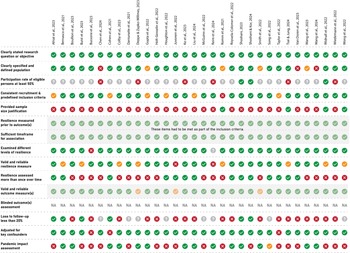
The results of our quality appraisal are presented in Figure 3. The overall quality assessment was conducted by two independent reviewers, finding a consistent quality level across all studies with a clear consensus. Only three of the studies achieved the highest quality rating “good” (Liu et al., Reference Liu, Xu, Cao, An, Li, Li, Gao and Han2024; Shoshani and Kor, Reference Shoshani and Kor2024; Shoshani, Reference Shoshani2024). The remaining articles were rated as “fair” in quality, with three approaching the threshold between “fair” and “poor.” Generally, each study clearly stated its research question or objective. Similarly, the majority clearly defined their study population, with most providing detailed information on recruitment and selection of participants. However, nearly all studies omitted information on participation rate for eligible participants, particularly at baseline. Only nine studies provided enough information or references to assess whether the participation rate reached the recommended 50% threshold, with just three meeting this criterion. Notably, only four studies offered a justification for sample size or described the statistical power needed for their planned analysis. We weighted the absence of this information more heavily in the overall quality rating for studies with particularly small sample sizes.
Quality appraisal of included studies. Green circles indicate criteria met, yellow circles indicate criteria partially met or borderline cases, red crosses indicate criteria not met, and question marks indicate insufficient information to assess the criterion. NA = not applicable.
All selected studies were required to use validated and reliable outcome measures (i.e., mental health or wellbeing), leading to consistently good quality in this aspect. Nonetheless, there were a few exceptions. One study used a significantly condensed version of a validated mental health scale, and two studies used different validated mental health scales across assessments, which were considered conceptually similar in measuring outcomes and therefore included. However, these modifications could have influenced the overall reliability of results from these studies. Furthermore, most studies used validated and reliable measures for assessing resilience factors, yet modifications to existing scales were common (please note that using validated and reliable resilience measures was not a requirement for inclusion in this review). These ranged from minor changes, such as removing one item, to more significant adjustments such as selecting and combining individual items from various validated scales. Seven included studies made amendments that we considered to be more than minor or negligible. However, only one study used a self-constructed, non-validated resilience measure. Nearly all studies assessed resilience factors as continuous (or categorical with more than two categories) rather than binary variable. Furthermore, around 40% of included studies conducted repeated measurements of resilience over time, although the extent of inclusion in their analyses varied. The majority measured resilience factors once, specifically pre-pandemic, as set out in our inclusion criteria.
Most studies measured and adjusted for key potential confounders in their analyses. However, attrition was high among most studies. Notably, a considerable number of studies provided insufficient information to accurately assess loss to follow-up. Finally, we added one additional item in our quality appraisal to assess whether studies included some measure on pandemic impact. Fourteen studies incorporated such measures, yet the specific aspects assessed and how these were integrated into the analyses varied significantly. Some studies focused on government restrictions and adherence to these measures, while others examined perceived threat, lifestyle changes, or direct health impacts. The diversity in assessment methods ranged from single items to multi-dimensional scales, and from objective measures to subjective perceptions. For instance, while some studies used dichotomous indicators of COVID-19 infection or quarantine experiences, others employed adapted versions of existing stress questionnaires or developed study-specific measures to capture a broader range of pandemic-related stressors.
Discussion
The aim of our systematic review was to identify resilience-enhancing factors measured before the outbreak of the COVID-19 pandemic and assess their association with mental health and wellbeing in adolescents and young adults during the pandemic. We reviewed 32 longitudinal studies from 12 countries which collectively used 46 different measures of resilience. In summary, while many of the investigated resilience factors were associated with better overall mental health both before and during the pandemic, they did not necessarily mitigate pandemic-related mental health effects. Notably, the evidence presented primarily relates to the initial outbreak and subsequent months, with limited follow-ups as the pandemic progressed. Moreover, the included studies were predominantly conducted in developed nations, particularly in North America, Europe, Israel, and Australia which may limit their applicability to other youth populations. Nonetheless, our findings suggest that certain resilience factors, particularly on a family level, may positively impact pandemic mental health outcomes under specific conditions.
The COVID-19 pandemic has resulted in increased time spent at home for many adolescents due to school closures and restrictions, while similarly prompting many young adults to return to their parents’ home (Prattley et al., Reference Prattley, Evans-Whipp, O’Donnell, Wong, Quinn and Rowland2023; Preetz et al., Reference Preetz, Greifenberg, Hülsemann and Filser2022). In this context, it is perhaps unsurprising that our review highlights family-level resilience factors as the most promising in mitigating pandemic-related mental health effects (Afriat et al., Reference Afriat, De France, Stack, Serbin and Hollenstein2023; Bussone et al., Reference Bussone, Pesca, Carola and Tambelli2023; Shoshani and Kor, Reference Shoshani and Kor2024; Shoshani, Reference Shoshani2024; Song et al., Reference Song, Vicman and Doan2022; Tsai and Jung, Reference Tsai and Jung2024; Wiedemann et al., Reference Wiedemann, Stochl, Neufeld, Fritz, Bhatti, Hook, Dolan, Goodyer, Fonagy, Jones, Moutoussis, Hauser, Neufeld, Romero-Garcia, Clair, Vértes, Whitaker, Inkster, Prabhu and Jones2022; Wong et al., Reference Wong, Tung, Li, Chui, Tso, Lee, Chan, Wing, Fu, Wong and lp2022). For instance, adolescents and young adults experiencing improvements in their relationships with parents reported fewer mental health symptoms during the pandemic compared with those whose parent relationship remained stable (or deteriorated), demonstrating the importance of adaptation to changing circumstances (Afriat et al., Reference Afriat, De France, Stack, Serbin and Hollenstein2023; Song et al., Reference Song, Vicman and Doan2022). In contrast, we did not find evidence supporting community-level resilience factors such as quality of friendships in a similar manner. Although associated with better overall mental health outcomes, such factors did not necessarily provide protection against pandemic-related mental health effects (Afriat et al., Reference Afriat, De France, Stack, Serbin and Hollenstein2023; Bernasco et al., Reference Bernasco, Nelemans, van der Graaff and Branje2021; Buist et al., Reference Buist, Boele, Bülow, Reitz, Verhoeven and Keijsers2023; Chen et al., Reference Chen, Cárdenas, Zhou and Reynolds2024; Song et al., Reference Song, Vicman and Doan2022). This may be due to various potential reasons, but most likely attributable to the shift in the nature of interactions between adolescents, young adults, and their peers during the pandemic, which led to fewer community-level interactions.
The finding that most resilience factors, particularly at an individual and community level, were associated with better overall mental health but not necessarily protective against pandemic-related mental health effects, may result from the timing of data collection rather than definitively suggesting that these factors lack extended protective benefits. The majority of included studies focused on the early phases of the pandemic. The median month of initial COVID-19 data collection was May 2020, just two months after COVID-19 was declared a pandemic. We now know that these initial months saw an increase in mental health symptoms across the general population, which took several months to revert to pre-pandemic levels (Robinson et al., Reference Robinson, Sutin, Daly and Jones2022). By late April 2020, for example, a quarter of the population in the United Kingdom reported considerable mental distress, with the most pronounced increase compared to pre-pandemic levels observed in those aged 18-34 (Pierce, Hope, et al., Reference Pierce, Hope, Ford, Hatch, Hotopf, John, Kontopantelis, Webb, Wessely, McManus and Abel2020). It is reasonable to assume that resilience-enhancing factors might demonstrate their full protective effect after the initial shock subsided and the pandemic progressed. However, only a handful of studies included in our systematic review conducted multiple COVID-19 follow-ups and employed a study design that could answer such an important question. For instance, Smith et al. (Reference Smith, Parrish, Shimomaeda, Zalewski, Rosen, Rodman, Kasparek, Mayes, Meltzoff, McLaughlin and Lengua2022) assessed pandemic outcomes at two intervals eight months apart, and found that while pre-pandemic coping abilities had no impact on psychopathology during the initial outbreak, they were associated with decreased internalizing symptoms as time progressed. Bussone et al. (Reference Bussone, Pesca, Carola and Tambelli2023) reported similar findings, however, their study lacked methodological robustness. Nonetheless, additional evidence is provided by Deppe and Zapko-Willmes (Reference Deppe and Zapko-Willmes2023) through their genetic analyses of a large twin cohort. Although our review only addressed their behavioral analysis, as their genetic analyses lacked resilience factors meeting our inclusion criteria, it offers valuable insight into the question of adaptation. The authors identified large time-specific unique environmental effects, that is, unexplained variance, influencing pandemic youth depression symptoms. Yet, as the pandemic progressed, the explanatory power of the investigated predictors grew, mirroring pre-pandemic levels, suggesting that young people adapted to the pandemic and key individual and social characteristics regained their protective function. This would support findings from smaller-scale behavioral studies; however, this needs further investigation. It is likely to be several more years before sufficient evidence becomes available to fully address the question at hand.
The findings of our systematic review further raise important questions about how we assess resilience. Even though resilience research has long highlighted the importance of considering several resilience factors at once, acknowledging that factors often interact rather than operate independently, many of the studies included in our systematic review examined potential resilience factors in isolation or with limited scope. Even among studies that assessed resilience factors at two levels, most still examined these factors in isolation, often using separate models for each level of impact. Only one study assessed resilience factors across all three levels simultaneously and considered their interactions using a psychological network approach (Wiedemann et al., Reference Wiedemann, Stochl, Neufeld, Fritz, Bhatti, Hook, Dolan, Goodyer, Fonagy, Jones, Moutoussis, Hauser, Neufeld, Romero-Garcia, Clair, Vértes, Whitaker, Inkster, Prabhu and Jones2022). However, as an isolated example, this is insufficient to draw broad conclusions about how these levels of resilience factors interact. This persistent limitation in examining resilience factors across multiple levels reflects a broader, long-standing issue in resilience research, as highlighted by Fergus and Zimmerman almost two decades ago (2005). More recent research by Fritz et al. (Reference Fritz, Graaff, Caisley, Harmelen and Wilkinson2018) has further confirmed that studying resilience factors in isolation remains common, highlighting the enduring nature of this limitation in the field. Likewise, many of the included studies assessed resilience only once. Yet, a comprehensive understanding of resilience processes can only be attained by evaluating (multiple) potential factors over time. Although some studies included in this systematic review assessed resilience factors more than once, only a small number evaluated how changes in these factors impacted pandemic mental health outcomes (Afriat et al., Reference Afriat, De France, Stack, Serbin and Hollenstein2023; Cohen et al., Reference Cohen, Cosgrove, DeVille, Akeman, Singh, White, Stewart, Aupperle, Paulus and Kirlic2021; Liu et al., Reference Liu, Xu, Cao, An, Li, Li, Gao and Han2024; Song et al., Reference Song, Vicman and Doan2022; Taylor et al., Reference Taylor, Wicks, Fassett-Carman and Snyder2022; Tsai & Jung, Reference Tsai and Jung2024). These studies are particularly valuable as they allow us to examine resilience as a dynamic process of adaptation to adversity, which provides a more comprehensive understanding compared to solely assessing the probability of a resilient outcome. Moreover, it is equally important to evaluate exposure to risk, as resilience implies encountering factors that increase the likelihood of adverse outcomes, a core tenet of resilience theory (Fergus & Zimmerman, Reference Fergus and Zimmerman2005). Understandably, the pandemic has presented methodological challenges, as there is no agreed-upon approach how to precisely assess its impact on mental health. This is evident in the variability of pandemic impact assessments across studies. Many studies did not include such assessments, instead referring to the pandemic’s indirect effects on their overall sample rather than assessing individual-level exposure and stress. Studies that did include pandemic impact measures showed considerable variation in approaches and analytical integration. This diversity in methods highlights the challenges in standardizing the evaluation of the pandemic’s effects across studies, making direct comparisons and broader conclusions about the pandemic’s impact on resilience factors difficult. These methodological issues reflect a broader challenge in resilience research. As Fergus and Zimmerman (Reference Fergus and Zimmerman2005) argued nearly two decades ago, a comprehensive understanding of resilience requires the assessment of cumulative risks, assets, and resources over time. The majority of studies included in our systematic review fall short of this standard.
This leads us to further consider the quality of the included studies. Overall, studies showed generally fair quality, with insufficient high-quality ratings and absence of important details regarding participation rates, sample size justification, and attrition. Despite the use of validated measures, albeit often with modifications, and the addressing of key potential confounders, there was considerable variability in whether and how pandemic impact was assessed. Importantly, studies with larger sample sizes did not necessarily result in better quality. For example, one of the larger studies included used different outcome measures across assessments, likely affecting the overall reliability of the results. However, the biggest concern remains the quality of the samples themselves. Included studies largely relied on non-probability and convenience samples and the lack of sufficient information to assess participation rates of eligible individuals is alarming. Employing rigorous population-wide sampling methods is important to reduce bias and reduce erroneous conclusions, as emphasized by Matthias Pierce in the Lancet Psychiatry early in the pandemic: “Cutting corners to provide quick, cheap answers will result in poorer quality evidence, poorer policy, and wasted resources in the longer term. We can and must do better” (Pierce, McManus, et al., Reference Pierce, McManus, Jessop, John, Hotopf, Ford, Hatch, Wessely and Abel2020).
In addition to these quality considerations, we acknowledge a potential limitation in our review process itself. As our resilience framework evolved during the screening phase, there is a possibility that some relevant studies may have been overlooked. While we implemented strategies to mitigate this risk, including an inclusive approach at the title and abstract screening stage and regular team discussions during the full-text screening, we cannot entirely rule out this possibility. However, it is worth noting that one of the most common reason for exclusion at the full-text stage was lack of pre-pandemic data, rather than issues related to our resilience framework. This gives us additional confidence that our evolving criteria did not substantially impact study inclusion.
Future directions in resilience research
In light of the overall quality concerns raised by the included studies in our systematic reviews, we propose five recommendations for advancing resilience research in both pandemic and non-pandemic contexts. Firstly, researchers should consider adopting a multi-level perspective, acknowledging the dynamic and complex nature of resilience and exploring its interactions across various levels. Secondly, incorporating repeated measurements is essential to accurately capture the evolving nature of resilience. Thirdly, prioritizing individual-level impact assessments, particularly in future pandemic contexts, will enhance our understanding of the effects of risk exposure on resilience and mental health outcomes. Retrospectively validating existing pandemic impact scales would be a first step. Fourthly, emphasizing research quality over quantity is crucial, focusing on meaningful sampling methods, robust statistical analyses, and transparent reporting practices. Lastly, the ongoing conduct and periodic updates of systematic reviews is paramount. This would enable us to navigate the vast landscape of COVID-19 literature, derive meaningful insights, and expand our understanding of resilience in the pandemic context and beyond.
Conclusions
Our systematic review offers an important examination of pre-pandemic resilience factors and their impact on mental health outcomes during the COVID-19 pandemic among adolescents and young adults. While family-level resilience factors emerged as promising in mitigating pandemic-related mental health effects, the protective role of individual and community-level factors was less evident. The timing of data collection, mainly restricted to the initial outbreak and subsequent months in the included studies, may have influenced these findings. Consequently, the evidence included in the review that provides data as the pandemic progressed is limited. The resilience factors investigated were generally associated with better mental health and wellbeing overall. Yet, we found considerable limitations in how resilience was assessed, including a tendency for studies to examine resilience factors in isolation, lacking longitudinal evaluation (i.e., assessing how changes in resilience factors impact mental health outcomes over time), or failing to adequately assess risk exposure. Our review highlights the critical need for a standardized definition of resilience to enhance research clarity and comparability in mental health studies. Additionally, we identified quality concerns, particularly regarding sample quality, with the majority of studies relying on non-probability and convenience samples. Moving forward we need to adopt a multi-level perspective of resilience, integrating repeated measurements, prioritizing individual-level impact assessments, and emphasizing research quality. These efforts are essential to advance resilience research in both pandemic and non-pandemic settings.
Acknowledgements
The authors would like to thank the medical librarians at the University of Cambridge, School of Clinical Medicine, particularly Mrs Eleanor Barker, for their help in reviewing the search strategies for this review.
Author contribution
AW, JG, and PBJ conceived the study and developed the study protocol. All authors participated in screening eligible studies, with AW, RG, and CO taking the lead in screening and conducting the quality appraisal. AW led the analysis and interpretation of the results and drafted the manuscript with important contributions from JG and PBJ. All authors reviewed and approved the final manuscript.
Funding statement
The Department of Psychiatry at the University of Cambridge benefits from support by the NIHR ARC East of England and the Cambridge Biomedical Research Centre. AW and PBJ received support from the NIHR ARC East of England at Cambridgeshire and Peterborough NHS Foundation Trust. The views expressed in this review are those of the authors and do not necessarily represent the views of the NIHR or the NHS. The funding bodies played no role in the study design, analysis, interpretation, writing of the report, or decision to submit the paper.
Competing interests
The authors declare that they have no conflict of interest.

 Open access

