

INTRODUCTION
In 2012, the 18th Chinese Communist Party (CCP) National Congress elected Xi Jinping as General Secretary. His father, Xi Zhongxun, was one of CCP's first-generation revolutionaries and once served as Vice-Premier of the People's Republic of China (PRC). Two other Politburo Standing Committee (PBSC) members have similar family backgrounds: Wang Qishan is the son-in-law of former PBSC member and Vice Premier Yao Yilin, and Yu Zhengsheng is the son of the first CCP Mayor of Tianjin, Yu Qiwei 俞启威 (also known as Huang Jing 黄敬). As the PBSC, the CCP's paramount leadership body, has only seven members, the “rise of the princelings” is striking (Brown Reference Brown2014; Li Reference Li2016).
In the context of contemporary China, the term “princelings” refers to the descendants of senior CCP leaders who themselves become senior CCP leaders. If the princelings’ parents are of the first generation of CCP revolutionaries, they are also called “the second Red Generation” (红二代), the “Red Heirs” (红后) and “the Red Nobility” (红贵). Princelings also include the daughters and sons of later generations of top leaders, such as the children of Jiang Zemin, Li Peng, and Hu Jintao.Footnote 1 Princelings exert influence on the country either by holding critical positions in the party-state apparatus (party, government, military services) or by controlling large state-owned enterprises (Ho Reference Ho2013).
The rising prominence of the princelings has fascinated observers and social scientists (Bo Reference Bo2006; Chen and Kung Reference Chen and Kung2018; Li Reference Li2012; Reference Li2016; Wang Reference Wang2016; Zheng and Chen Reference Zheng and Chen2009). However, given the sensitivity of the topic and the limited data available, arguments on princelings are far from conclusive. Scholars still disagree about whether princelings have advantages over others and how they achieve their successes (Shih, Adolph, and Liu Reference Shih, Adolph and Liu2012; Zeng Reference Zeng2013). Meritocracy and factionalism approaches are helpful to some extent in understanding their rise, but the uniqueness of the princelings as a group lacks proper theorization.
This paper proposes a complementary perspective and contends that the princelings benefit from their membership in an affiliative status group that differs from traditional factions. Their status is fostered and enjoyed in a collective manner allowing for what I call “collective elite reproduction.” To support this argument, I employ three interconnected analyses, two quantitative and one qualitative. First, using a self-collected quantitative dataset of 293 princeling profiles, I compare the princelings and non-princelings on the CCP Central Committee (hereafter CCP CC or simply CC). I find princelings have substantial advantages over non-princelings. Second, within the princelings, regression analysis shows that parents’ rank or longevity do not significantly contribute to their children's career outcomes. To summarize, the two quantitative examinations find princelings’ advantages are salient, but they are not directly dependent on family patrons, which suggests princelings benefit from their status in other ways.
Following the quantitative findings, I use qualitative materials to test the thesis of “collective elite reproduction.” I provide evidence that princelings as a group benefit from family ties that also generate collective life experiences. Princelings’ political status and early advantages were provided by the state; their identity and social ties were fostered by their shared life courses, especially the common experiences during the Mao-era. Their education and personal development were closely intertwined with the state's practical and ideological needs, and the party-state system managed their political career paths in a holistic way. In sum, Chinese princelings enjoy advantages as a group, and their collective status distinguishes China's elite reproduction from those that rely on market mechanisms and/or individualized social networks.
POLITICAL ELITE STUDIES IN CHINA AND PRINCELINGS
The topic of the PRC's political elite formation and cadre promotion fascinates political scientists and China experts. Most studies so far tend to treat the princelings’ rise as part of a more general process of cadre promotion or elite selection. Some believe China's princelings show no significant advantages over other bureaucrats in career advancement (Li Reference Li2012; Jia, Kudamatsu, and Seim Reference Jia, Kudamatsu and Seim2015; Zeng Reference Zeng2013). Other scholars, depending on their theoretical leanings, approach the topic through the lens of either factionalism (Choi Reference Choi2012; Nathan Reference Nathan1973; Shih Reference Shih2004) or meritocracy (Bell Reference Bell2016; Li and Zhou Reference Li and Zhou2005).
Both approaches show some limitations when attempting to interpret princelings’ rise in contemporary China. A methodological challenge of the factionalist perspective is identifying factions correctly (Keller Reference Keller2016). Victor Shih has rightly noted that “[factions] are extremely difficult to observe in a systematic manner, especially in China's opaque political system” (Shih Reference Shih2004, 7). When the sample size is small, incorrect labelling can lead to faulty inference. For example, Zeng Jinghan argues, “Princeling background either does not matter or has a negative impact on promotion” (Zeng Reference Zeng2013, 233). However, Zeng erroneously designates Zhang Dejiang as a “princeling” and Wang Qishan as “Jiang Zemin's protégé.” The former designation has no solid support and has been denied by various media sources, and the latter has been proven wrong in the anti-corruption campaign (2012–present).
Similarly, Zeng Jinghan (Reference Zeng2013) categorizes Liu Yunshan (linked to both Jiang and Hu) and Li Yuanchao (both Hu faction and princeling) as Hu's protégés when multiple identities could apply. Four princelings are arguably mislabelled in an eight-person qualitative sample in Zeng's study, throwing the validity of his findings into question. Similar errors appear in other researchers’ works, including Li (Reference Li2012) and Rosa (Reference Rosa2014).Footnote 2 Factionalist studies also have problems dealing with individuals who lack a clear factional identity, who belong to multiple factions, or who share common career paths or origins but are rivals instead of allies.Footnote 3
The meritocracy perspective faces challenges as well. Establishing a reliable causal link between merit and promotion is difficult. An impressive performance could be the reason for an official's promotion, but it could also be the result of strong ties to higher-level leaders. It is possible that selected officials are assigned to desirable positions where economic performance is guaranteed. In such a scenario, performance is only an indicator of powerful ties and serves as a legitimation of further promotions. What we observe as meritocracy might be spurious.
Measuring merit through educational credentials is problematic too: is degree an indicator of competence or ties? Adding to the confusion, many senior leaders in China receive postgraduate degrees from part-time graduate programs (Zaizhi Yanjiusheng 在职研究生). These credentials are often questionable, as the leaders earn them while busily serving in municipal or provincial offices. In such cases, educational credentials are not the prerequisites for promotion, but the products and rewards of promotion, and they justify future promotion.
For the reasons above, the findings on princelings in existing studies are often inconsistent or even conflicting. While some scholars find the princeling identity has a significant positive role in promotion (Zhang Reference Zhang2014), others say it does not (Jia, Kudamatsu, and David Seim Reference Jia, Kudamatsu and Seim2015; Zeng Reference Zeng2013). Shih, Adolph, and Liu (Reference Shih, Adolph and Liu2012) point to a more complex pattern: the princelings stood out in the 13th and 14th CCP Congresses, but their prominence has declined since the 15th Congress. However, the 17th and 18th CCP Congresses challenge their argument with the notable rise of princelings in the PBSC (also see Figure 1).
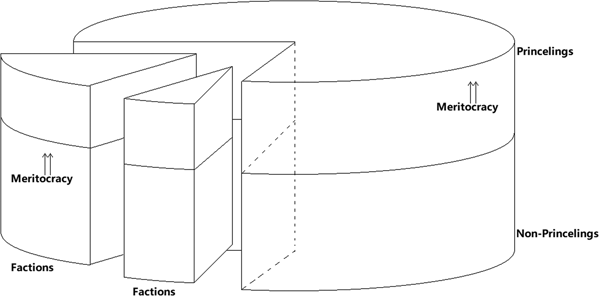
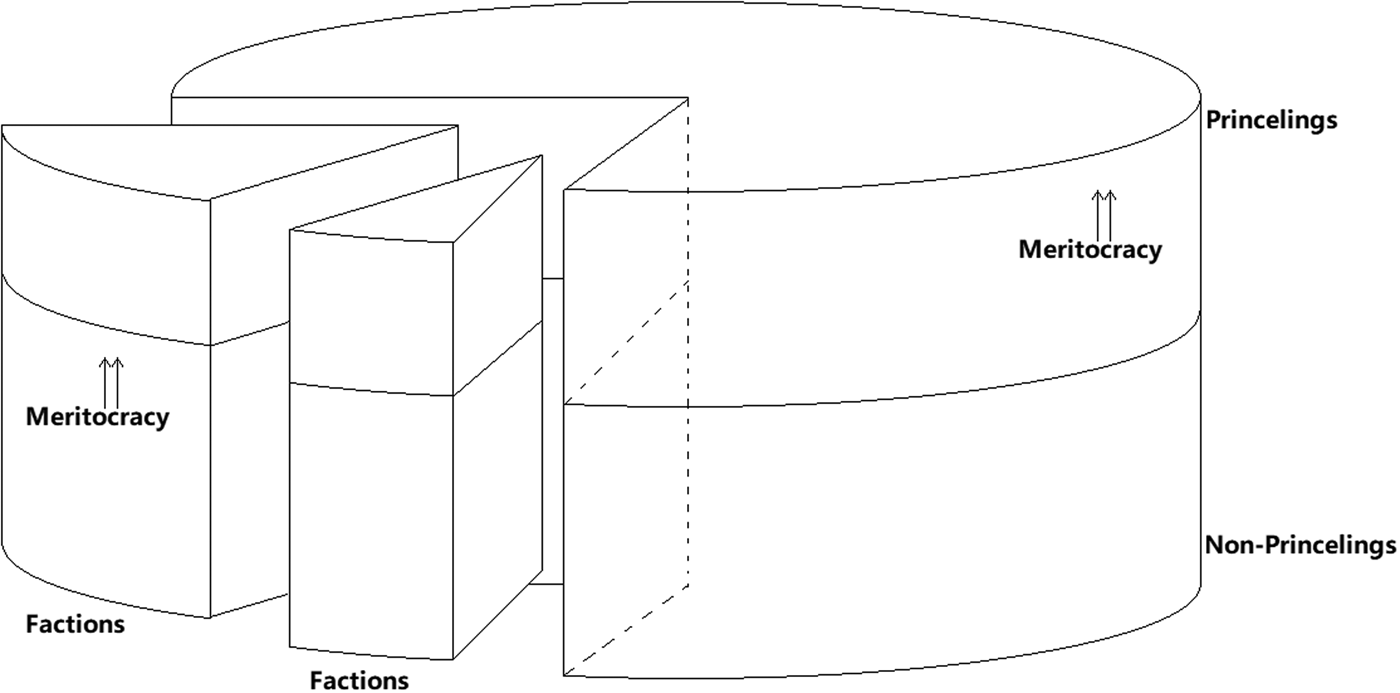
Illustration of Incorporating Princelings, Factions, and Meritocracy
PRINCELINGS: COLLECTIVE IDENTITY OF AN AFFILIATIVE STATUS GROUP
The limitations and problems discussed above are not merely empirical and methodological, they reflect difficulties in theorization as well. For example, in some quantitative analyses, “princelings” are considered merely another faction, as in the discussion of Jiang Zemin's Shanghai Gang or Hu Jintao's Communist Youth League faction (hereafter CYL). Such theorization influences research design and operationalization. For instance, Choi (Reference Choi2012) treated princelings, the Shanghai Gang, and the CYL faction as mutually exclusive categories. Other researchers consider princelings as overlapping or interacting with factions (Jia, Kudamatsu, and David Seim Reference Jia, Kudamatsu and Seim2015; Shih, Adolph, and Liu Reference Shih, Adolph and Liu2012). Findings from the meritocracy camp face similar problems. Regression analyses may suggest that princeling status does not contribute to their promotion, but this non-finding may be inaccurate due to confounding effects. Having competence (measured by education), performance (measured by economic outcomes) and princeling status (which could associate with elite education and high-yielding positions) in the same model could obscure the actual mechanisms. In sum, different theorizations and operationalizations have led to divergent results, which suggests the need for a better framework.
I argue that princelings are unique because of how they were formed as a group and how this, in turn, facilitated elite reproduction. I suggest seeing China's princelings not as another faction, but as an affiliative status group. Princeling status differs from factions in the following ways. First, it is ascribed status instead of achieved status (with the only exception of in-laws through marriages). Therefore, princeling status is more exclusive, the composition is more stable, and members have a higher level of loyalty than is found in faction affiliation. Second, princeling status is less dependent on individual ties and more on collective identity, which cannot easily be lost. As a result, princeling status can survive political attack and the decline of the patrons. For example, Shih, Adolph, and Liu find that “although in many cases the parents of these princelings have retired or died, political leaders in China still find it useful to promote these princelings over the average member” of the CPP (Shih, Adolph, and Liu Reference Shih, Adolph and Liu2012, 179). Third, different from cadres with regular family backgrounds, princelings’ political advancement is assisted by the party-state in a collective manner. With their higher legitimacy and state's assistance, princelings as a status group are superior to other cadres, which will be supported by both the quantitative and qualitative analyses.
To summarize, I argue that princelings belong to an affiliative status group, and their rise signifies a process of “collective elite reproduction.” In proposing a “collective elite reproduction” thesis, I am not negating existing approaches. Instead, my approach allows for the reconciliation of meritocracy and factionalism interpretations of the princelings’ rise. A visualization of my theorization can be seen in Figure 1, which shows how princelings, meritocracy and factionalism coexist in the context of Chinese elite promotion.
As Figure 1 illustrates, China's political officials are stratified into princelings and non-princelings, represented by the top and bottom layers. In my theorization, princelings are a group intrinsically different from and superior to factions; this will be discussed with more empirical evidence. Meanwhile, there are various clustered factions within both groups, represented by the separated slices in Figure 1. That means princelings and non-princelings could unite and become allies in the same faction. For example, Zeng Qinghong 曾庆红, a princeling, and Chen Liangyu 陈良宇, a non-princeling, could form an alliance in the Shanghai Gang with common interests and shared career paths. Within each stratum (princelings vs. non-princelings) and cluster (faction), a meritocracy rationale may still apply, as represented by the upward arrows. After all, whether princelings or factions, a political group's best strategy is always to designate their most qualified candidate to compete with rivals for key offices.
Nonetheless, I argue that the “princeling vs. non-princeling” rule often trumps the competence rule. My quantitative findings support this; I find that princelings have salient advantages in four ways (entry age, entry rank, total terms, and promotion) over non-princeling officials even at the very top rank of the CCP party system, namely the CCP CC. In the next section, I introduce my quantitative data and collection methods and discuss the two quantitative analyses. I begin by comparing the princelings and non-princelings on the CC. I then examine the princelings’ careers and take a closer look at their parents, to see if having a more powerful parent leads to a better career outcome, even among princelings.
DATA AND METHODS
Chinese Princelings Dataset (CPD)
As discussed above, one important reason for the underdevelopment of princeling studies is the limited data.Footnote 4 This paper fills the gap by drawing on self-collected quantitative and qualitative datasets. My Chinese Princelings Dataset (CPD) includes the biographical profiles of individuals who are at least vice-prefectural level leaders and whose parents/relatives are at least vice provincial and vice-ministry level (副省部级) leaders. For the children's generation, I include prefectural and vice-prefectural princelings in the CPD because some of the princelings are still young; their early arrival at these levels indicates exceptional advantages and is worth studying.
For the parents’ generation, I set the bar at the vice-provincial and vice-ministry levels. I opt for these criteria for the following reasons. Being a vice-provincial leader is the minimum requirement of being considered a “senior cadre” (Gaoji Ganbu 高级干部); therefore, their children would be considered “senior cadres’ children” (Gaogan Zidi 高干子弟). This standard is supported by numerous qualitative sources. For instance, Teng Xuyan 腾叙兖, a military journalist and biographer and an alumnus of PLA Military Institute of Engineering in Harbin (hereafter Ha Jungong 哈军工), states that “in Ha Jungong there was a commonly acknowledged, but non-written definition that ‘senior cadres’ children’ usually refers to students whose parents are at or above the rank of vice-provincial in local governments or vice-ministry in the central government” (Qualitative Source, hereafter QS: A-6–103)Footnote 5.
I collect the princelings’ names, profiles, and parental information from publicly available and reliable records, especially legal publications and news reports published by Chinese media. The sources include autobiographies, biographies, CV/resumes from official sources, memorial articles, and obituaries of the revolutionaries, and other media coverage of the revolutionaries and their children. In scenarios where mainland China resources were not available, I looked for overseas media sources and established an entry only when there were two independent sources for the same fact.Footnote 6 The number of qualified princeling observations to date is 293.
Of course, the data collection method favors the most famous and visible princelings.Footnote 7 Though my research design is not ideal, I have several justifications for adopting such a strategy. First, due to the secrecy and sensitivity of the topic, it is difficult for researchers to acquire an ideal sample. Second, I designed several analytical strategies that help to get around the bias. For instance, my first quantitative analysis compares princelings and non-princelings at the level of the CCP CC. As members of the CCP CC are all high-profile persons, omission in this category (e.g. a princeling being labelled as non-princeling) is unlikely. My second analysis is an intra-princeling comparison. I test for whether, among princelings at the same rank, those with a national-level parent get promoted sooner than a princeling with a lower-rank parent. In such comparisons, selection bias is a smaller concern as well. Third, existing datasets of Chinese political elites often contain only individuals’ biographies, without details about their parents and families. Having a dataset that exclusively focuses on princelings and their links to their parental backgrounds furthers the knowledge of Chinese political elites.
Analytical Strategies and Descriptive Findings
Given my methodological critique of other approaches, the Chinese Princelings Dataset (CPD) avoids using arbitrary and subjective measurements. It sticks to objective measures only, such as the highest rank achieved by an individual, the year of promotion, and the longevity of the parent, based on birth year and death year. Whether an official belongs to the military system is controlled as a dummy variable as well. In addition, the CPD includes the nature of the relationship between the parent and the heir. This item is more explicit and objective than the ambiguous measure of “ties” or “networks.” For this variable, the most common value is “father/mother,”Footnote 8 and the next most common is “father-in-law” and “uncle.” Other relationships include “grandparent,” “aunt,” “cousin,”Footnote 9 and so on.
Though variables like age/birth year, relationship, and military identity (marked by having military rank) are relatively objective and easy to code, variables like official's rank need further clarification. In the Chinese Princelings Dataset (CPD), I use rank in an ordinal way, creating categories from “national level,” “vice-national level,” “provincial level,” “vice-provincial level,” “prefectural level,” to the lowest category of “vice-prefectural level.”
The CPD treats individual princelings as observations while capturing their parental information. This design allows me to test how parental political power (measured by rank and year of rank) and longevity (by birth year, death year, lifespan overlap with children) contribute to the princelings’ political advantages. Table 1 displays the descriptive statistics of the CPD on some key variables.
Descriptive Statistics, Chinese Princelings Dataset

The descriptive statistics yield some interesting patterns. First, the demographics of the two generations show a clear pattern: most first-generation revolutionaries were born between 1890 and 1910 (Mean = 1908.87, SD = 12.93). The second generation, the princelings, were mainly born between 1935 and 1955 (Mean = 1944.90, SD = 10.47). The reason for a condensed wave of “princeling baby-boomers” during those 20 years is that after December 1936, the CCP regime in Shaanxi was more secure from military threats. At that point, many CCP veterans married young, female, revolutionary admirers who arrived in the Red capital, Yan'an. These included Jiang Qing (wife of Mao, married in 1938), Ye Qun 叶群 (wife of Lin Biao, married in 1941), and Pu Anxiu 浦安修 (wife of Peng Dehuai, married in 1938). After 1945, especially after the establishment of PRC in 1949, more princelings were born in Shaan-Gan-Ning border region, Hebei province, and then Beijing. These children of revolutionaries “grew up under the Red Flag,” enjoying the benefits guaranteed by their family backgrounds.
In addition to the age distribution, the descriptive statistics reveal a few other patterns. For example, most of the princelings in the CPD are males (78.80 percent), indicating an apparent gender gap among China's political elites. Also, most of the family ties are father/mother and son/daughter, which makes sense as it is the closest type of family relationship. We need to be cautious about possible bias: compared to other types of relations, parent–son/daughter ties are more easily identified and verifiable because of the family name and place of origin. Finally, even though the bias towards and the overrepresentation of the famous/senior officials (e.g. national and vice-national) are unavoidable, the CPD has good diversity and wide coverage, with rich information on lower level cases (e.g. 120 prefectural and 23 vice-prefectural officials).
QUANTITATIVE FINDINGS: STATUS MATTERS, PARENTS DO NOT
Princelings vs. Non-Princelings
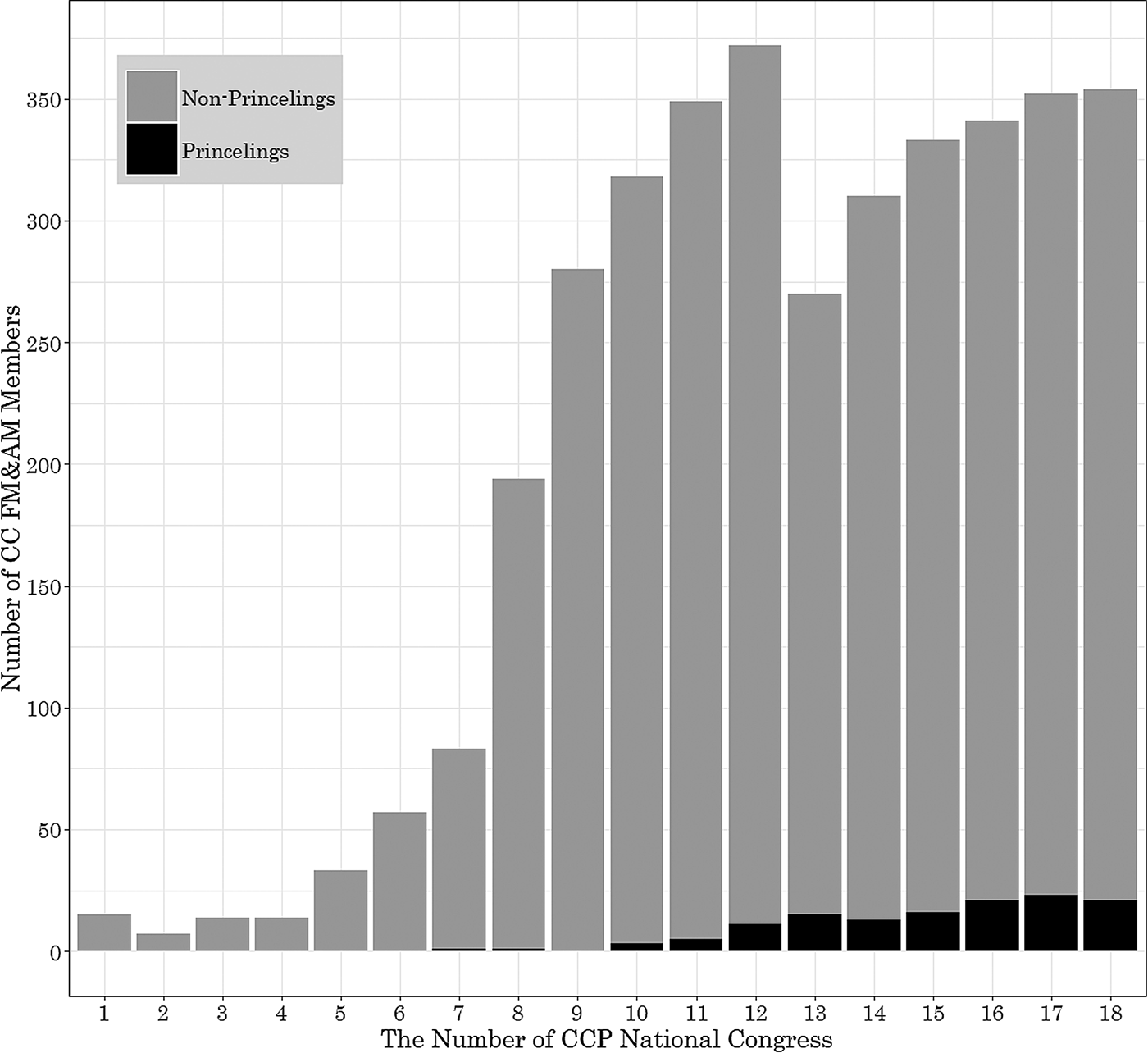
I begin with a quantitative analysis of princelings’ career advantages. First, I combine the Chinese Princeling Dataset (CPD) with the complete listing of all CCP Central Committee members. Next, I analyze princeling and non-princeling performance on the Central Committee (CC) to find possible differences between the two groups in career advancement. Figure 2 shows the merging of the CPD with the Central Committee members’ list since CCP's establishment (1921–2012). As the figure shows, before the 11th CCP National Congress, princelings were not a significant component group of the Central Committee; only a handful of elder princelings were recruited, such as Li Dazhao's son Li Baohua 李葆华 and Tang Mingzhao's daughter Tang Wensheng 唐闻生 (Mao's Translator). Since 1977's 11th National Congress, the princelings have had a great presence in the Central Committee; especially since 1987's 13th National Congress, princelings have steadily comprised 5–6 percent of all CC members, which is impressive considering their relatively small number in relation to the national population. This descriptive finding challenges Shih's argument (Reference Shih, Adolph and Liu2012) that princelings’ power peaked at the 14th and 15th National Congresses. Figure 2 indicates that the number of princelings increased in 2002 and 2007 at the 15th and 16th National Congress, respectively.
Distribution of CCP Central Committee Members, Princelings, and Non-Princelings (1921–2012)Footnote 10
Building on the previous sections, I now focus on the time span from the 11th Congress in 1977 to the 18th Congress in 2012, as before the 10th Congress princelings had not yet become a significant group. The data contain information on each individual's birth year, year of entry into CC, terms served in office and rank at each CCP National Congress. After identifying the princelings on the CC name list, I can compare the princelings and non-princelings using the t-tests and Chi-square tests to see if they differ in their career paths. Please note in Table 2 the observation is based on each “entry to each level” (N = 75 for princelings); in Figures 3–5, the observation is based on each “person” (N = 50 for princelings); the different observational levels explain the differences in numbers of observations.
Age at First Leadership Role, Non-Princelings vs. Princelings (1977–2012)

Rank when Entering CC, Non-Princelings vs. Princelings (1977–2012)

Terms on CC, Non-Princelings vs. Princelings (1977–2012)

Promotions since Joining CC, Non-Princelings vs. Princelings (1977–2012)

I first look at the individual's age upon first entering CC leadership ranks. Table 2 displays the average age of non-princeling and princeling members when they enter CC as alternative members (AM), full members (FM), and Politburo (PB) members (both AM and FM). As the average age comparison and t-test results show, princelings enter all three levels earlier than non-princelings. At the PB level, the difference is the most salient: princelings achieve their rank 1.82 years earlier than their non-princeling colleagues (p = 0.100). Age differences indicate a pattern favouring the princelings at CC FM and AM levels: they are, on average, 0.97 years and 0.48 years younger than non-princelings when entering the Central Committee. Though some differences are either insignificant or marginally significant, they still cannot be underestimated considering the seniority of the CCP CC and the small sample sizes.
Figure 3 displays the rank to which a person is appointed when he/she first enters CC. There are four possible scenarios: I would spell these out as (1) CC AM; (2) CC FM; (3) PB AM; and (4) PB FM. Both the count and the column percentage are included in Figure 3. The result shows a pattern favouring the princelings. Scenario (1), the lowest rank among the four scenarios, occurs more frequently among non-princeling CC members (62.23 percent) than princeling members (34 percent). In contrast, Scenarios (3) and (4), the most senior rank, occur more often among the princeling members (22 percent) than the non-princeling ones (5.2 percent). Scenario (2) also favours the princelings (44 percent) over non-princelings (32.58 percent). The Chi-square test yields 31.33 (p = 0.000), indicating the pattern is statistically significant: princelings are more likely to be directly appointed to higher level positions when they first enter the CC.
Figure 4 examines whether princelings are more likely to serve multiple terms than non-princelings. As shown in the table, this is indeed the case. Among the princelings, 38 percent have served two terms, 16 percent three terms, and 22 percent more than four terms. For the non-princelings, the corresponding numbers are 31.36 percent, 13 percent, and 6.58 percent, respectively. The difference is significant (Chi-square = 23.19, p = 0.000). In short, princelings serve more terms on the Central Committee than non-princelings.
Lastly, Figure 5 shows the promotion history of princeling and non-princeling CC members, comparing their rank upon first entry and their later ranks. If an individual only works for one term, it usually means there is no promotion. Some serve multiple terms, but they do not move up. Others serve several terms and are promoted. The possible scenarios of promotion include from CC AM to CC FM, from non-PB member to PB member, and from PB AM to PB FM.Footnote 11 According to Figure 5, more princelings (34 percent) are promoted than non-princelings (23.72 percent). Princelings’ advantage is not significant (Chi-square = 2.24 and p value = 0.134) but close to the threshold of 0.10. I argue that this difference, though insignificant, should not be underestimated. First, the sample size is small. Second, the likelihood of promotion is contingent on the rank at entering. Since princelings tend to enter directly to a higher level already (as Figure 3 shows), the likelihood of their being promoted again is expected to be lower. However, we still see some visible differences in Figure 5. Findings above corroborate my argument that they enter higher, stay longer, and climb even higher than non-princelings.
The above analyses support previous work finding that princelings have substantial advantages over non-princelings at the municipal, prefectural, and provincial levels; to this, I add a more senior level, the Central Committee and above. The findings raise some challenges to the meritocracy explanation. First, since we see significant gaps when looking only looking at the senior level CCP officials, early advantages (elite education) and competence (gifts and training) cannot sufficiently explain the variations. Second, even if meritocracy is a viable explanation of promotion, the meritocracy evaluation system seems to work separately for princeling and non-princeling groups.
Princelings vs. Princelings: Parental Advantages and Career Outcomes
This section compares princelings to other princelings in two aspects. First, when we look at individuals of the same rank, do some achieve it sooner than others? If so, could parental privileges explain the observed advantages? Second, for all princelings who have completed their political advancement (e.g. due to retirement or reaching the highest level), are their family backgrounds related to their highest achieved ranks?
To answer the first question, I choose four groups of princelings whose rank is vice prefectural and prefectural (Obs. = 109), vice provincial (Obs. = 80), provincial (Obs. = 37) and vice-national or above (Obs. = 28). I run a regression analysis with the dependent variable the age they reach that rank, an interval-ratio variable measured in years. The independent variables include dummy variables of gender (reference group: male), the relationship (reference group: parent), patron's highest rank (reference group: national level), interval-ratio variables of parent's birth year and the overlapping years of parents’ and children's lives. To calculate the overlap, I subtract the child's birth year from parental death year if the parent has passed away. If not, I subtract the child's birth year from 2012, the upper limit of the CPD's time span. The overlapping time measures how long the parent can use his/her influence (patron-clientelism argument) and educate his/her child (traditional elite reproduction argument). None of the regression models yields any significant estimates, indicating neither parental rank nor longevity contributes to a princeling's advancement.Footnote 12
The insignificant effects of parental rank can be seen in Figure 6. In Figure 6, the point ranges represent the estimated entry age (in years) and standard error terms. The lines are grouped according to children's ranks, and each colour/shape represents a political rank held by the parent. We can clearly see that all the confidence intervals at the 95 percent level overlap across different parental ranks. This indicates that parental rank makes no significant difference in how early a princeling reaches a certain level.Footnote 13 A possible explanation is that parental influences may be bounded by the increasingly institutionalized cadre management system in the CCP, which sets strict age-based rules about promotion and retirement (Qiao Reference Qiao2017; Zheng and Chen Reference Zheng and Chen2009).
Parental Rank and Children's Age of Entry at Each Level (Estimates with 95 percent Confidence Interval)

To answer the second question, I use ordinal regression modelling, with the children's highest achieved ranks as the response variable. The dependent variable is recorded in four categories: (1) prefectural; (2) vice-provincial; (3) provincial; (4) vice-national and national levels. In all four levels, ordinal regression finds the parents’ ranks are not associated with the children's highest achieved ranks. Parental longevity does not significantly contribute to the children's achievements either. To ensure the results are robust, I test different modelling strategiesFootnote 14 with various transformations on the focal predictor, parental rank, and the response variable, child's rank. Models based on transformed independent and dependent variables all yield similar patterns, confirming the robustness of the findings. The estimates are in Table 3, and the insignificant parental effects are visualized in Figure 7.
Estimates from Ordinal Regression Models Predicting the Highest Ranks Achieved by the Princelings

***p < 0.001, **p < 0.01, *p < 0.05
Effect of Parental Rank on Children's Highest Achieved Rank

In Table 3, we see that the only significant predictors are gender and service in the military system. Being a female or being a military leader will reduce the likelihood of achieving higher ranks for a princeling. The former reflects the fact that in China females have a lower likelihood of being promoted to top leadership, especially the CCP Politburo.Footnote 15 Females’ disadvantage in Chinese politics has been confirmed in previous studies as well (Shih, Adolph, and Liu Reference Shih, Adolph and Liu2012). The military disadvantage is due to a “grass-ceiling” in China's party-state apparatus: only a handful of vice-national positions are available for military figures.Footnote 16 The findings above are consistent in Models 1–3.
Model 1 controls the relationship between the patron and the princeling. As we can see, the different types of relationship do not matter. Biological parents do not provide more assistance than other relatives. This finding is surprising to some extent, but it might be explained by a compensation mechanism: princelings who have indirect ties, such as uncles and in-laws, must be more outstanding to be chosen as the family representative. Model 2 and Model 3 add the focal predictor of patron's rank and longevity, respectively. Neither predictor is associated with the princeling's achieved status. The BIC values support that Model 1 is the best fit; Model 2 and 3 do not improve the model by adding the predictors.
Figure 7 displays the pattern clearly. Parental ranks (represented by the four groups on the X-axis) do not have significant differences in predicting children's likelihood of reaching each rank (the Y-axis). In every rank (represented by the four dashed-lines), princelings who have national or vice-national rank parents do not show higher likelihood in success than those having provincial or vice-provincial rank parents. Such insignificance is visualized by the overlapping confidence intervals. Taken together, we can conclude that princelings’ advantages do not rely on their direct patrons—mostly their parents—directly. The qualitative analysis adds to our understanding of these findings.
QUALITATIVE FINDINGS: COLLECTIVE ELITE REPRODUCTION SHAPED BY THE STATE
In addition to quantitative data, I also collected qualitative materials from trustworthy sources. The sources are mainly books legally and publicly published in mainland China. Considering the potential bias and censorship of PRC published sources, I also used materials published in Hong Kong and Taiwan by academic publishers. In selecting the sources, I avoided publications containing political hearsay, gossip, rumours or other unverified information to ease any reliability-related concerns. The sources include autobiographies and memoirs authored by the revolutionaries and the princelings. These sources provided detailed information of princelings’ life courses, social networks, and privileges. The sources also include books authored by insiders in Chinese politics, such as Zhang Chunqiao 张春桥, Qi Benyu 戚本禹 and Li Rui 李锐, who are close to either the first-generation revolutionaries or the princelings and can also provide rich details of princelings.
In addition to the books authored by princelings and politicians, interviews with the princelings published in newspapers and magazines, and on authoritative websites are included as qualitative sources as well. The Internet sources employed include the People's Daily and its affiliated website Renmin Wang 人民网 (www.people.com.cn); the Xinhua News Agency and its affiliated website, Xinhua Wang 新华网 (www.xinhuanet.com); the Official News Site of the CCP, Zhongguo Gongchandang Xinwen Wang 中国共产党新闻网 (http://cpc.people.com.cn/).To date in this ongoing work, the qualitative dataset covers more than 120 princelingsFootnote 17 who also appear in the CPD (N = 293), indicating its wide coverage.
From the above sources, I selected, transcribed, and translated direct quotations of princelings, their parents and other insiders into English. The quotations are related to various features of princelings’ life histories. The chosen quotations are cross-coded and numbered by source, the main princeling involved, the main theme, and other themes that apply. The themes cover the following categories of information: (1) advantages related to a Leninist state and centralized resource allocation system; (2) advantages in human capital, i.e., education, job entry, early promotion; (3) advantages in social capital, i.e., the networks between princelings, between princelings and their parental generation leaders (parents, parents’ friends and colleagues, etc.); (4) advantages in cultural capital, like the habitus in the political arena (e.g., inside information on top-clearance secrets, knowledge of top politics etc.) and exposure to exclusive cultural resources (e.g., access to banned books and movies from Western societies, friendship with elite intellectuals and artists etc.); (5) and the collective identity shaped by a shared life course during the Cultural Revolution. Based on the qualitative materials, I find that the state played a central role in shaping princelings’ identity and advantages. This finding supports my “collective elite reproduction” model to interpret the rise of princelings in China.
Recall that my quantitative analyses resulted in two main findings. First, princelings have substantial advantages over non-princelings. Second, within the princeling group, parental rank and longevity do not directly result in career advantages. The former finding and the latter non-finding together suggest princelings may benefit from their privileges in a collective manner instead of through person-specific ties. In other words, as long as a person qualifies as a princeling by virtue of his or her Red family background, he or she will always have this entitlement. Princelings in China do not heavily rely on their biological parents; the loss of the direct patron, generally parents, does not revoke their princeling identity. Instead, princelings can still enjoy the resources provided by the grand network comprised of their parents’ colleagues, friends, and comrades, as well as their peer princelings. In sum, such advantages are redeemed in a collective way, not through direct one-to-one ties. What makes the process even more “collective,” is that the Chinese party-state plays a central role in elite formation.
In the following sections, I describe how Chinese princelings obtained early advantages, became aware of their identity, strengthened their bonds while surviving political shocks together, and eventually realized their career goals. As the qualitative analysis shows, the party-state profoundly influenced the process of collective elite reproduction at all stages.
Centralized Resource Allocation and Princelings’ Early Advantages in a Leninist State
I first examine how the party-state plays a role in providing the princelings with early advantages. With the establishment of the PRC, Mao and his colleagues assumed influential positions in all CCP party systems, the state apparatuses, and the armed forces. The CCP extended its control to the SOEs, the top-tier universities and institutes, and semi-governmental organizationsFootnote 18 by appointing Party members to the leading positions. Like other Communist states, the PRC adopted a strong Leninist state apparatus and planned economy to allocate valuable resources and opportunities. Under Leninist rule and the planned economy, market ceased its role in allocating resources. Even though the old upper classes could afford desirable residence and elite school access, they had nowhere to purchase them anymore. Meanwhile, senior leaders and cadres in the party-state apparatus were provided with those exclusive resources.
In Mao's China, resources, opportunities, and privileges for the cadre and their families were provided by a supply system (供给制) in the early years of PRC (Yang Reference Yang2008). In 1955, the supply system was reformed to a duty-graded salary system (职务等级工资制), but the continued lack of a free market, the “ticket-pass” supply system (票证制度), and the limited access to special goods (特供) ensured the retention of a Soviet-style resource allocation system.
The princelings’ advantages often began at an early stage. From birth, they began to enjoy state-provided resources, such as medical care, access to adequate nutrition, and daycare. General Luo Ruiqing's daughter, Luo Diandian 罗点点(罗峪平) describes how she and her mother survived her premature birth and an obstructed labour, with the best medical resources people could imagine in 1949 Beijing, right after World War II and the Chinese Civil War:
Luckily, my mom is the wife of a PRC founding father, and she is an important comrade among the revolutionaries. She deserved the most thorough medical service. Back then, the newly established People's Republic provided a supply system to all cadres. … Under the direction of the top Chinese obstetrician and gynecologist, Professor Lin Qiaozhi 林巧稚, I was placed in an incubator, one of the most advanced apparatuses available at that time in Peking Union Medical College Hospital. (QS: E-5-005)
Advantages also included favourable residential arrangements. “Favorable” refers not only to location and property condition but also to the “elite” networks operating in that location. In Beijing, Shanghai, and other politically central cities (e.g. Nanjing, Wuhan, etc.), the density of elites was extremely high. Deng Xiaoping's daughter, Deng Rong 邓榕, mentions the residential arrangements for some senior CCP leaders in the early years of PRC:
Our house was in a small hutong near Huairen Tang 怀仁堂. There were four houses from south to north. Li Fuchun's family lived in No. 1; Tan Zhenlin's in No. 2; Deng's in No. 3 and Chen Yi's in No. 4. Four vice-premiers, four families. The adults are close friends and comrades; the children grew up together happily like brothers and sisters. (QS: B-3-003-D)
Deng Rong describes another housing arrangement, with four officials living in close proximity, before the Cultural Revolution:
My father arranged for Marshal Luo Ronghuan to live in the house in Dong Jiaomin Xiang. … Before the Cultural Revolution, four families lived in the courtyard in Dong Jiaomin Xiang: Marshal Luo Ronghuan's, Marshal He Long's, Marshal Chen Yi's and the Procurator-General of the Supreme People's Procuratorate Zhang Dingcheng's family. (QS: B-3-004-C)
And in Shanghai, CCP First Secretary Chen Pixian's son, Chen Xiaojin 陈小津, talks about his childhood neighbours:
There were eight 2-floor houses in the Residential Courtyard of Shanghai CCP committee in No. 165 Kangping Road. From east to west, there lived four families and supporting staffs. The families are my father's, Ke Qingshi's, Wei Wenbo's, and Cao Diqiu's.Footnote 19 (QS:D-2-001-BE)
Not surprisingly, the centralized residential arrangements generated strong social ties among the political leaders’ families, but princelings also benefitted from interactions with cultural elites. Chen Xiaojin says he often met with famous neighbours like Ba Jin 巴金(Chairman of the Chinese Writers’ Association) and Peking Opera master Zhou Xinfang 周信芳. By the same token, General Ye Fei's daughter, Ye Xiaomao 叶小毛 recalls that as a child, she talked to her neighbour, the influential Communist artist-politician, Zhou Yang 周扬, about Zhou's translation of Leo Tolstoy's Anna Karenina. The attainment of such exclusive cultural capital made princelings unique: in the Mao era, as economic elites were banned and cultural elites were condemned, political elites and their children became the “new class” (Djilas Reference Djilas1957). From the beginning, their identity clearly separated the senior-cadre children (高干子弟) from cadre children (干部子弟) and civilian children (平民子弟). These three groups were separated by salient gaps in terms of lifestyles, living standards, and access to exclusive resources, fostering a strong stratum or even class identity.
Princelings’ identity came not only from their higher living standards, but also from their parents’ and the state's intentional guidance. The revolutionary generation wanted their children to embrace the identity of being in a Red Family. Chen Pixian once hosted a seminar for the Kangping Road Courtyard (康平路大院, Shanghai CCP committee residence) children, in which he passionately encouraged an awareness of being “successors” (Jiebanren Yishi 接班人意识). As Chen Xiaojin recalls:
In 1965, Mao gave an important speech about “cultivate the revolutionary successors,” calling the entire Party to care and educate the youth—but the key points of this speech have been confidential and not yet released to the public. My father planned to meet with some cadres’ children, to care about their growth. … On Jan 27, 1966, he invited the university and middle school students in the Kangping Road Courtyard to meet with him. … He said, “In the future, the First Secretary of Shanghai CCP committee won't be me, the mayor won't be Comrade Cao Diqiu; it will be you. Not any specific person, it is your generation. You need to get ready for that.” Time flies. After more than 30 years, the group of children who sat in the Kangping Road Hall and heard my father's speech had reached their middle age. They did become the successors in various occupations and positions, among which there are a group of provincial-level senior cadres.
To sum up, as a powerful Leninist state, the People's Republic controlled and allocated the critical resources during its early years. Under such a system, all citizens are highly dependent on the state (Szelenyi and Szelenyi Reference Szelenyi and Szelenyi1995). In the case of the princelings, the state provided access to exclusive material and cultural resources. As I show in the next section, the head start provided by the state helped the princelings gain competence; this competence, in turn, provided the princelings with a justification of their further successes.
Princelings’ Opportunities in Education and Job Entry
As discussed above, the leaders of the party-state intended to educate the Red Heirs to be their “successors.” Accordingly, the princelings received spots in the best schools, mostly in Beijing and Shanghai or other metropolitan centres. Luo Diandian describes the elementary school that she and her sister attended:
Since our parents were too busy to take care of us, they sent my sister and me to the Shiyi Elementary School (十一学校) in Western Beijing. Shiyi was a school exclusively for cadres’ children. It was funded by the military and mostly recruited military leaders’ children … . The classrooms were grand and bright, equipped with sets of desks and chairs which were adapted to each child's body size. The school covered the living expenses such as rent and food. Before the abandonment of the supply system, the school also paid for our clothing. Parents did not need to pay for clothing until the supply system was replaced with a salary system. However, in our class, there were still students whose expenses were covered by the school. They were either children of martyrs or children whose parents worked for secret services. (QS: A-5-018-BE)
Please note tht the advantages described here were in the early 1950s. Though this may not seem impressive today, at the time it was luxurious, especially when we compare the lives of the princelings with those of regular Chinese people. The advantages not only applied to elementary schools, but also to middle schools and higher levels. Luo Diandian recalls the experiences of her sister Luo Duoduo 罗朵朵(罗峪治) in middle school:
My sister Luo Duoduo and her good friend, Marshal Liu Bocheng 刘伯承’s daughter Liu Yanling 刘雁翎, studied at Jingshan School together. … The journal of “Middle School Students (Zhongxuesheng Zazhi 中学生杂志)” once reported them in the cover story as outstanding revolutionary individuals, which made them exemplars for students nationwide. (QS: A-5-009-C)
From these and many other stories in the qualitative sources, we know the princelings had access to exceptional educational resources, highly centralized in a small number of elite schools. These included high schools like Beijing No. 4 High School and Jingshan School, and universities like Tsinghua University, Peking University, and Ha Jungong.
In addition to attending the elite schools, princelings had other advantages. For example, Liu Yanling and Luo Duoduo appeared in a cover story by the Middle School Students journal. The journal, which was administrated by the Communist Youth League and had a title handwritten by Mao, made the two teenage girls nationwide celebrities and role models for millions of fellow students.
Again, the resources and opportunities were strongly influenced by the totalitarian state. The state's expectations and orientations could determine a young student's decisions about which college to enter, which major to choose, or which job to acquire. The state had both ideological and practical expectations of citizens and its future leaders. As an ideologically oriented regime, the PRC was cautious about the loyalty of the “revolutionary successors” (Geming Jiebanren 革命接班人). And as a developmental state eager to achieve industrialization and military modernization, China had explicit plans for how to cultivate and use its young cultural elites. Finally, as a Leninist state, it controlled the key educational resources, such as college entrance. The three characteristics together led to PRC's “revolutionary and professional” (Youhong Youzhuan 又红又专) intellectual policy.
When it came to political loyalty, revolutionary dedication, or “Redness,” who could be better qualified than the children of revolutionary families? For the latter criterion of “professional,” although it often led old cultural elites back to power (Andreas Reference Andreas2009), princelings were prioritized over others to enrol in majors related to military technology. Statistics on the demographics of the Ha Jungong alumni indicate that “the department of missile engineering recruited the highest proportion of senior-cadre-children … . Because they were considered politically reliable … thus, they were disproportionately assigned to study advanced and confidential technologies” (QS:A-6-106). Other departments of advanced military technology also recruited a higher percentage of princelings. In Ha Jungong, about 8 percent of the students are said to have had a parent with a vice-provincial or higher rank, and the majority of the student population were composed of cadre-children, leaving little room for students from civilian families.
In addition to their educational advantages, princelings developed extraordinary human capital that civilian children could not imagine. At times, political pull could directly influence the admission of individual students. For instance, Ha Jungong did not recruit female students in its earliest cohorts. Song Renqiong's daughter, Song Qin 宋勤, complained about this to Premier Zhou Enlai in person. Song Qin's complaints changed Ha Jungong's recruitment policies: a few months later, she was enrolled for the upcoming school year, together with other girls. In another case, Marshal Chen Yi's daughter, Chen Shanshan 陈珊珊 (also known as Cong Jun 丛军) was selected to study at London School of Economics and Political Science in 1974 with the approval of Premier Zhou Enlai (QS:A-5-009-C), long before ordinary Chinese had the opportunity to study abroad. In these and many other cases, the students’ personal dreams, their family backgrounds and human capital, and the state's practical needs and the Communist ideological requirements intertwined to shape their educational and career paths.
Shared Life Course: The Cultural Revolution and Princelings’ Collective Identity
From 1949 to 1966, princelings enjoyed good times, but with the Cultural Revolution, their parents were removed from office, and the younger generation suffered. Many princelings were “sent down” (Shangshan Xiaxiang 上山下乡) to rural areas; some were put in custody or even arrested (QS: A-5-009-C). At the peak of the Cultural Revolution (1966–69), the children of the senior leaders developed a type of brother/sisterhood by taking care of and protecting each other from political repression. When the state decided to “send them down,” princelings often arranged to go together. For example, Luo Ruiqing's daughters and Deng Xiaoping's daughter Deng Rong went together (QS: D-5-083). Similarly, at the farm where Chen Xiaojin worked, other princelings included General Ye Ting's 叶挺 son and Marshal Ye Jianying's daughter (QS: D-2-074).
These were negative experiences, but the shared life experience helped build a solid bond, especially among the princelings born 1945–55, the current power holders in Chinese politics. Chen Xiaojin describes friendships formed in this period in the following way:
The sudden strike to our families made us closer. To save our parents, all the children helped each other, planned together and we formed a deep friendship. (QS: D-2-001-BE)
Bonds formed between the princelings and across generations among the senior leaders and the children. The memoirs of many princelings mention senior leaders and their wives who were still in power but who took care of children in trouble. Such senior leaders are often referred to as “common mothers/fathers.” Lin Feng's 林枫 family residence protected many senior “capitalist roaders’ children,” including the children of Liu Shaoqi, Deng Xiaoping, Peng Zhen, Bo Yibo, Luo Ruiqing, Yang Shangkun, and Lv Zhengcao 吕正操 (QS:D-5-084-BE). Another exemplary “heroic mother” was General Zhong Qiguang's 钟期光 wife, Ling Ben 凌奔. During the Cultural Revolution, Ling “adopted and helped 19 children of old comrades in Beijing; most were children of the CCP Eastern China bureau's leaders who were under repression.” For those 19 children, Ling was considered “our mom” (QS: D-2-076-B).
As political tension loosened in the 1970s, many young princelings managed to get back to Beijing and Shanghai. They reunited and started to fight for their own careers and their parents’ fates. Since the senior leaders were often in custody or being monitored, their children played an irreplaceable role in networking and communicating. These efforts helped their parents in regaining security, medical care, and eventually political power. Luo Diandian and her sister Luo Duoduo recall what happened when they could not meet with their parents and an elder brother:
For visiting our brother Luo Yu and our parents … we, like many other cadre-children, started to write letters to all the offices that we remembered and all our parents’ old colleagues. … Once we brought our letter to see Geng Biao, the head of the CCP International Department … we went to the headquarters of the International Department … After a short while, Geng Biao's wife, Aunt Zhao Lanxiang walked out … we gave her the letter, and she promised that she and Uncle Geng Biao would figure this out as soon as possible. (QS: D-5-087-ABE)
In 1973, Mao and Zhou Enlai started to “implement the policies” (落实政策) to “liberate the old cadres” (解放老干部). Chen Xiaojin seized this opportunity to help his father and some other leaders, guided by Hu Yaobang's advice:
Uncle Hu Yaobang once told me his conclusion after his long-term observation. He said that Premier Zhou Enlai only approved medical care for suppressed leaders and allowed them access to files and information. He seldom authorized the liberation of specific individuals. Uncle Hu said, “Liberating someone is the right of Mao—only Mao can play the good guy and use his power to do so. Premier Zhou knows this. So, your father has to confess to Mao directly.” (QS: C-2-078-E)
After Chen Pixian wrote a confession letter to Mao in 1973, he was released and regained access to medical care. This case also shows the importance of cultural capital or habitus and suggests how princelings like Chen Xiaojin could acquire such capital from their mentors—not necessarily their parents, but an entire generation of Communist leaders.
The stories above show that the close ties formed by princelings and the older generation leaders helped them survive political turbulence. During the Cultural Revolution, leaders who were still in power took care of the children in crisis. Meanwhile, the young princelings acquired rich social and cultural capital from the older generation. When the Cultural Revolution came to an end, the growing princelings protested in the 1976 Tiananmen Incident and fought to reinstate their parents. Ultimately, the strong bonds formed in the Cultural Revolution between the parents, between parents and youth, and among the young princelings became powerful ties in the post-Mao era.
State-led Elite Formation: Princelings’ Career Advancement
After they had finished their education, the Red Heirs were given priority in the assignment of favorable positions in local and central governments, party systems and military services. Even during the Cultural Revolution, which proclaimed itself an anti-bureaucratic-privilege movement, Red Heirs such as Mao Yuanxin 毛远新 (nephew of Mao), Li Ne 李讷 (daughter of Mao), and Lin Liguo (son of Lin Biao) were promoted to provincial level in their twenties because of their family backgrounds. Such promotion is unusual; CCP officials normally reach this rank in their late forties and fifties. With Zhou's “adjustment” (调整) in 1973 and Deng's “total fix” (Quanmian Zhengdun 全面整顿) in 1975, many senior leaders came back to power. One side effect was their use of political influence to assign desirable jobs to their children. A piece of paper with a leader's written notes could be given to provincial leaders to deal with a princeling's job request:
Days later, I (Chen Xiaojin 陈小津) visited Uncle Hu Yaobang again, hoping to ask for his handwritten note to help me find another job. Uncle Hu Yaobang is a Hunan province native and once served the CCP secretary in Xiangtan City, Hunan. He's familiar with all Hunan provincial leaders at that time. What a coincidence—on that day of my visit, He Ping 贺平Footnote 20 was there too. He Ping's father, He Biao, a Red Army veteran and medical chief of the 2nd Red Army, served as the vice minister of Ministry of Health after 1949. … Uncle Hu Yaobang told both He Ping and me, “Alright, I will write a note for you two.” His note was addressed to Hunan provincial leader, Wan Da 万达, indicating that He Ping and I need job re-arrangement. … My Beijing trip in 1972 was very productive. Not only did I meet Hu Yaobang, Su Yu 粟裕, Zeng Shan 曾山, Ji Pengfei 姬鹏飞, and Zhou Hui 周惠, my father's longtime superiors, and friends, but also I learned valuable information and trends in top politics. I got their unsparing help and care, and I learned greatly from their guidance. (QS: A-2-037-BD)
Such early advantages accumulated and widened the gap between the early birds and the rest. Li and Walder (Reference Li and Walder2001) find that when the Party identifies someone as promising it will sponsor him or her, or as the Party calls it “cultivate with extra care” (Zhongdian Peiyang 重点培养). The party's sponsorship is usually indicated by an early advantage, such as reaching a rank sooner than peers, as the quantitative analyses have shown. Since the younger age of entry is seen as an asset, a princeling's early advantage will accumulate at each level, reinforce itself and become advantages at all stages of his or her entire political career.
This practice applied to princelings in the 1980s during Deng's “cadre rejuvenation” reform (Li Reference Li2012; Manion Reference Manion2014). In the 1980s, most contemporary well-known princelings punched a ticket to a rocketing career. For instance, Liu Yuan 刘源 (1951–) served as vice township chief (副乡长) in 1982, and one year later, he became the vice magistrate (副县长). Two years later, he achieved the rank of vice mayor in the city of Zhengzhou, and in 1988, he was “recommended” by Henan CCP committee to be vice governor of Henan Province. Such high-speed promotion—from the township to the provincial level in six years—is extremely rare in China's bureaucratic system. It is hard to argue this as merit-based; it is a delicate procedure to promote certain individuals without violating the procedural legitimacy. Ma (Reference Ma2016) also notices the interactive dynamics between informal and patronage-based promotion and the institutionalization in China. Wu Guoguang calls such manoeuvring “institutional manipulation” (Wu Reference Wu2015).
Evidence of institutional manipulation is found in a comment from Marshal Chen Yi's son, Chen Haosu 陈昊苏, where he discusses how his success became obstacles to his brothers’ careers:
I felt guilty somewhat. Actually, my younger brothers are all very talented; it is due to my promotion that they lost some opportunities. I often felt this way.(QS: A-7-029)
Chen's words have two implications. First, the party-state does not assign princelings to all desirable positions, and there are some limits to the privileges. For instance, there is an implicit “cap” for each family, as in Chen Haosu's case. In a family, a brother who gets a chance at promotion will lower his siblings’ opportunities. We can see similar situations in Deng Xiaoping's family, Chen Yun's family, Bo Yibo's family among many others—where each family has only one princeling member serving in the top leadership. Second, the promotion of the princelings is a well-planned process. Decision makers at the top level usually have a big picture in mind to make sure each family has a representative while no family exceeds its implicit “cap.” It is not a purely merit-based promotion as some scholars contend. Instead, it is an artificial and complex intervention, affected by the CCP leaders’ decisions and guaranteed by the bureaucratic institutions, such as the Organization Department of the CCP Central Committee.
In sum, the qualitative materials I have examined demonstrate that the princelings’ identity originated in the cadre management system of the party-state. Princelings’ early advantages were secured by the centralized resource allocation system. Their identity awareness and interpersonal ties were fostered and strengthened by a shared life course that was deeply influenced by the state politics in the Mao era. Meanwhile, their education and career choices were intertwined with the state's ideological and practical needs. Their career advancement was further secured by the centralized nomenklatura system, which endows elite reproduction with more collective qualities. Taken together, these mechanisms have generated an exclusive group of elite politicians with strong identity awareness. Given the qualitative findings, the quantitative results are easier to understand: Chinese princelings enjoy their advantageous status not just individually, but collectively.
DISCUSSION AND CONCLUSION
Chinese princelings are an influential group that fascinates political scientists and observers. This article adds to our understanding of this group and its formation. It asks whether princelings enjoy career advantages and how such advantages are realized. Using a self-collected quantitative dataset, I find princelings have various advantages over non-princelings on the CCP Central Committee. In addition, their princeling identity or status is what counts: among princelings, parental rank and longevity do not significantly contribute to better career outcomes. The quantitative findings should be interpreted with caution. The nature of the topic and data availability might have generated a sample biased towards more famous individuals. Future research will need to continue to probe below the top leadership. Given the small sample size, overfitting may also be a concern. To avoid that, I employed a simple model with a limited number of variables. I also stick to only objective measures and avoid using subjective measures to ease concerns of multicollinearity and endogeneity.Footnote 21 Nonetheless, future endeavors could improve on the econometric work by expanding the data, or adding appropriate covariates or instrumental variables.
However, the findings are also supported by detailed qualitative analysis. My qualitative findings suggest that Chinese princelings’ advantages are fostered and redeemed collectively, what I term “collective elite reproduction.” Here the term “collective elite reproduction” has two layers of meaning. First, it points to the critical role of the state in shaping elite reproduction in China. China's totalitarian state in the Mao era provided material and educational advantages for all princelings. The Cultural Revolution experiences fostered a unified identity awareness that went beyond individual families. In the post-Mao era, the party-state system helped the princelings, as a group, to get not only a head start in their early careers but also a fast track in later promotions. Second, princelings enjoy benefits as an affiliative status group, regardless of their direct family patron's longevity and power.
By describing China's princelings as an affiliative status group, I reconcile the collective elite reproduction thesis with meritocracy and factionalism approaches. I contend that China's political officials are stratified into princelings and non-princelings, and the former group enjoys a higher status. But members of the two groups also belong to clustered factions as well. Within each stratum and each faction, meritocracy may still apply; after all, factions have the incentive to designate their most qualified candidate to compete for key positions (also see Figure 1). That being said, my finding that princelings have salient advantages over non-princeling officials even at the very top rank of the CCP system, the Central Committee, strongly suggests that the “princeling vs. non-princeling” divide trumps the competence rule in selecting political elites.
This article adds to scholarly debates on China's elite selection and contributes to the literature on elites in Communist and post-Communist societies and general sociological debates on elite reproduction. The analysis finds supportive evidence for the “new class” or the “new grand bourgeoisie” thesis (Djilas Reference Djilas1957; Ho Reference Ho2013). Dominant bureaucrats use political power to guarantee advantageous living standards and pass on advantages to the next generation. In China, the natural motivation of nurturing one's children has been intertwined with the Communist state's ideological, economic, and political goals; economic, educational, and political advantages are realized by the state apparatuses instead of through the free market; friendships and networks are embedded in the existing power structure and historical contexts (e.g. socio-political movements like the Cultural Revolution). This collectiveness distinguishes elite reproduction in China from that of other societies.