


Introduction
Threats to biodiversity are intensifying (CBD, 2010; Harrop & Pritchard, Reference Harrop and Pritchard2011), driven by human activities (Millennium Ecosystem Assessment, Reference Hassan, Scholes and Ash2005), and conservation projects have had little success in reducing the consequent loss of biodiversity (Hayes, Reference Hayes2006). One explanation for this lack of success is that conservation researchers are failing to communicate their findings to inform conservation practice (Possingham, Reference Possingham2009; Sunderland et al., Reference Sunderland, Sunderland-Groves, Shanley and Campbell2009). The failure of researchers to work collaboratively with policy-makers, practitioners and local people to define, implement and communicate their research means that decisions about the management of natural resources are made without the benefit of scientific data (Shanley & López, Reference Shanley and López2009).
The difficulty of communicating peer-reviewed science beyond academia is not a new problem. Soulé (Reference Soulé1985) noted two key points about conservation science: that it was a crisis discipline and that the communication between ‘on the ground’ professionals and academics was ‘poor at best’. Meffe (Reference Meffe2001) referred to this communication issue as a ‘crisis in this crisis discipline’ and Knight et al. (Reference Knight, Cowling, Rouget, Balmford, Lombard and Campbell2008) defined the problem as the ‘research–implementation gap’. Subsequently, a growing body of literature has called for more synergy between conservation academics and conservation practitioners (Sutherland et al., Reference Sutherland, Pullin, Dolman and Knight2004; Knight et al., Reference Knight, Cowling, Rouget, Balmford, Lombard and Campbell2008; Born et al., Reference Born, Boreux and Lawes2009; Sunderland et al., Reference Sunderland, Sunderland-Groves, Shanley and Campbell2009). However, field practitioners and academics live and work in different environments (Sunderland et al., Reference Sunderland, Sunderland-Groves, Shanley and Campbell2009). Margoluis & Salafsky (Reference Margoluis and Salafsky1998, p7) defined practitioners as ‘managers, researchers, and local stakeholders who are responsible for designing, managing, and monitoring conservation and development projects’. There is a continuum between researchers and practitioners, particularly in the developed world, and the gap between the two may be narrowing. However, much of the research carried out to date on the research–implementation gap is based on the perceptions of academics and academic-practitioners rather than those of practitioners who are not based in academia. Here we focus on the perceptions of practitioners; i.e. decision-makers whose main occupation is not research but the implementation of conservation actions to protect and manage natural resources.
Although there is still little evidence that better and more scientific data would improve conservation outcomes (Lach et al., Reference Lach, List, Steel and Shindler2003), initiatives have been developed to enhance communication in science (Fonseca & Benson, Reference Fonseca and Benson2003), which may be achieved by improving access to peer-reviewed literature and increased collaboration between scientists from developed and developing countries and between institutions such as universities and conservation organizations (de la Rosa, Reference de la Rosa2000). Surveys have asked researchers, mainly from developed countries, for their opinions on whether their articles influence conservation and environmental management (Flaspohler et al, Reference Flaspohler, Bub and Kaplin2000; Ormerod et al., Reference Ormerod, Barlow, Marshall and Kerby2002; Campbell, Reference Campbell2007; Knight et al, Reference Knight, Cowling, Rouget, Balmford, Lombard and Campbell2008). On the other side, practitioners from English-speaking developed countries have been asked what information they use to make decisions (Pullin & Knight, Reference Pullin and Knight2005; Turner, Reference Turner2006; Cook et al., Reference Cook, Hockings and Carter2010). However, there is no published assessment of how conservation practitioners and researchers from developing countries access and use scientific information.
Here we examine the media that conservation practitioners and researchers in developing countries use to access scientific information, with a particular focus on the communication gap between these two groups, given the financial, technical and language difficulties they face. We also examine whether, and if so why, researchers and practitioners in developing countries consider a journal's Impact Factor (Web of Science, 2014) in deciding which scientific research to use in their work. The Impact Factor may be irrelevant in determining whether published research has a conservation impact (Shanley & López, Reference Shanley and López2009) but there is pressure on researchers to publish their work in high-impact journals (Milner-Gulland et al., Reference Milner-Gulland, Barlow, Cadotte, Hulme, Kerby and Whittingham2012). Finally, we consider the responses of practitioners when asked what would make the peer-reviewed literature more useful for them.
Methods
During 7 June–7 August 2012 we ran an online survey of researchers and practitioners from developing countries who were working in conservation in their home countries. Based on the World Bank classification (The World Bank Group, 2012), which is revised annually on 1 July, developing countries are those with low- and middle-income economies. Respondents whose country of origin was not classified as a low- or middle-income economy (UN, 2012) were removed from the sample. The survey included open and closed-format questions, based on the surveys of Pullin et al. (Reference Pullin, Knight, Stone and Charman2004) and Campbell (Reference Campbell2007). Depending on the answers chosen, the shortest version of the survey contained 23 questions and the longest 33 questions. We conducted a pilot survey in English on 10 people working for NGOs in developing countries, whom we accessed through personal contacts. Based on their feedback some questions were reformulated and the vocabulary simplified. The final version was translated into French and Spanish and sent to two native French speakers and two native Spanish speakers to test for potential misunderstanding. The survey was created using SurveyMonkey (SurveyMonkey, 2012).
We contacted potential respondents directly via the Conservation Leadership Programme alumni mailing list, and indirectly via contacts of students in the Imperial College Conservation Science group and via authors who had published in Oryx between July 2009 and July 2012. Oryx authors were asked to provide contact details of practitioners who may have used the results they had published. This journal was chosen because a high proportion of its published studies are carried out in developing countries (Campbell, Reference Campbell2007) and because it has a particular focus on research that improves conservation practice and management. We received responses from both researchers and practitioners, with researchers falling into two groups: those working in universities and those working in other institutions such as governments and NGOs. The sample thus comprises three groups, which we refer to as practitioners, non-university researchers and university researchers. Any respondents who were not developing-country nationals were removed from the sample. The sample was then analysed to assess representativeness, given that it was a purposive sample and therefore likely to be subject to a number of biases.
Both qualitative and quantitative data were collected. Open questions were coded to carry out content analysis, combined with mainly descriptive statistics to explore patterns in responses to closed questions. Statistical analysis was conducted in R v. 2.1.5.1 (R Development Core Team, 2011).
Results
Of 216 individuals who started the online survey, 124 completed it. Of these, 25 were excluded as they were nationals of developed countries. Therefore the total sample used for the analysis was 99 responses, from 46 practitioners, 25 non-university researchers and 28 university researchers. Overall, responses came from Asia-Pacific (41%), South America (32%), Africa (18%) and Central America (8%).
We asked the respondents to rank their favourite media for accessing online scientific information and all three groups cited open-access journals as the most important source of information (Table 1). For practitioners, databases were the second most important source of information, whereas databases were ranked third by both non-university and university researchers. Subscription-based journals were ranked second by university researchers but relatively low by the two other groups. Practitioners ranked most information sources similarly, in contrast to university researchers, who ranked peer-reviewed literature higher than any other sources: open-access journals were ranked as the most important by 92%, and subscription-based journals by 81%. Among non-university researchers open-access journals were ranked as the most used source of information by 91%. However, subscription-based journals were ranked fifth and sixth by non-university researchers and practitioners, respectively.
Relative importance of online and non-online sources of scientific information for conservation practitioners (n = 41 online, n = 42 non-online), non-university researchers (n = 22, 24) and university researchers (n = 24, 26). The sources are ranked by decreasing importance for practitioners. The three most important sources for each group are highlighted in grey.

* The percentage of respondents who ranked the source as their first, second or third most important sources of information
When asked to choose their favourite media for accessing non-online information, practitioners cited hard-copy reports, followed by books and local community knowledge (Table 1). Non-university researchers ranked books first, followed by local conferences, hard-copy reports and subscription-based journals. University researchers ranked books first, followed by historical documents and subscription-based journals. Hard copies of subscription-based journals are the third most valued for both groups of researchers, indicating the importance of peer-reviewed literature for academic activities, but these journals were ranked lower by practitioners. As with their use of online sources, practitioners ranked most non-online information sources similarly. The two groups of researchers singled out the importance of books, which were ranked as most important by 82% of non-university researchers and 73% of university researchers.
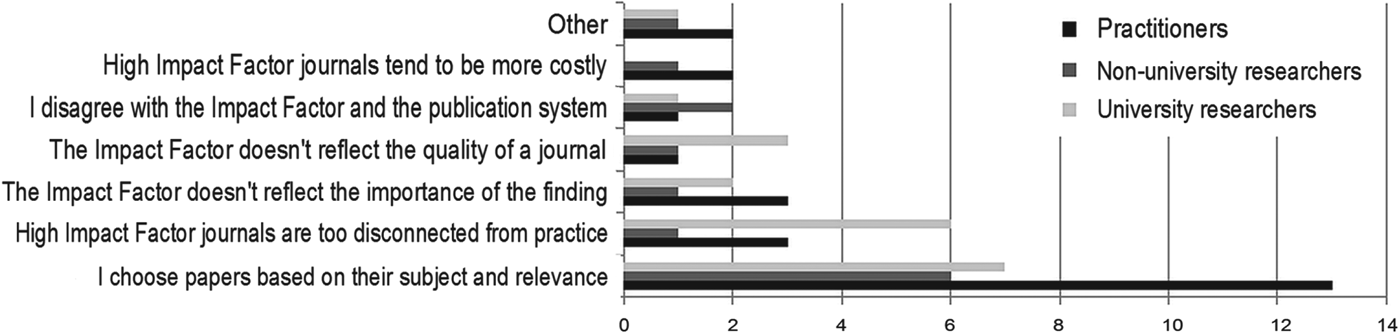
When asked if they use the Impact Factor to choose which articles to read, 70% of all respondents answered no, with no significant difference between the groups (χ2 = 0.4, df = 2, P = 0.978). The main reason given for ignoring the Impact Factor was that articles are chosen according to their relevance rather than the quality of the journal as ranked by the Impact Factor (Fig. 1), and seven practitioners added in the comments that they couldn't afford to be selective. University researchers noted that journals with a high Impact Factor were too disconnected from practice and therefore their choice of literature was not based on Impact Factor rankings.
Reasons given by 58 of 99 respondents for not taking the Impact Factor into account when looking for scientific articles. These were in response to an open question; no suggestions were provided.
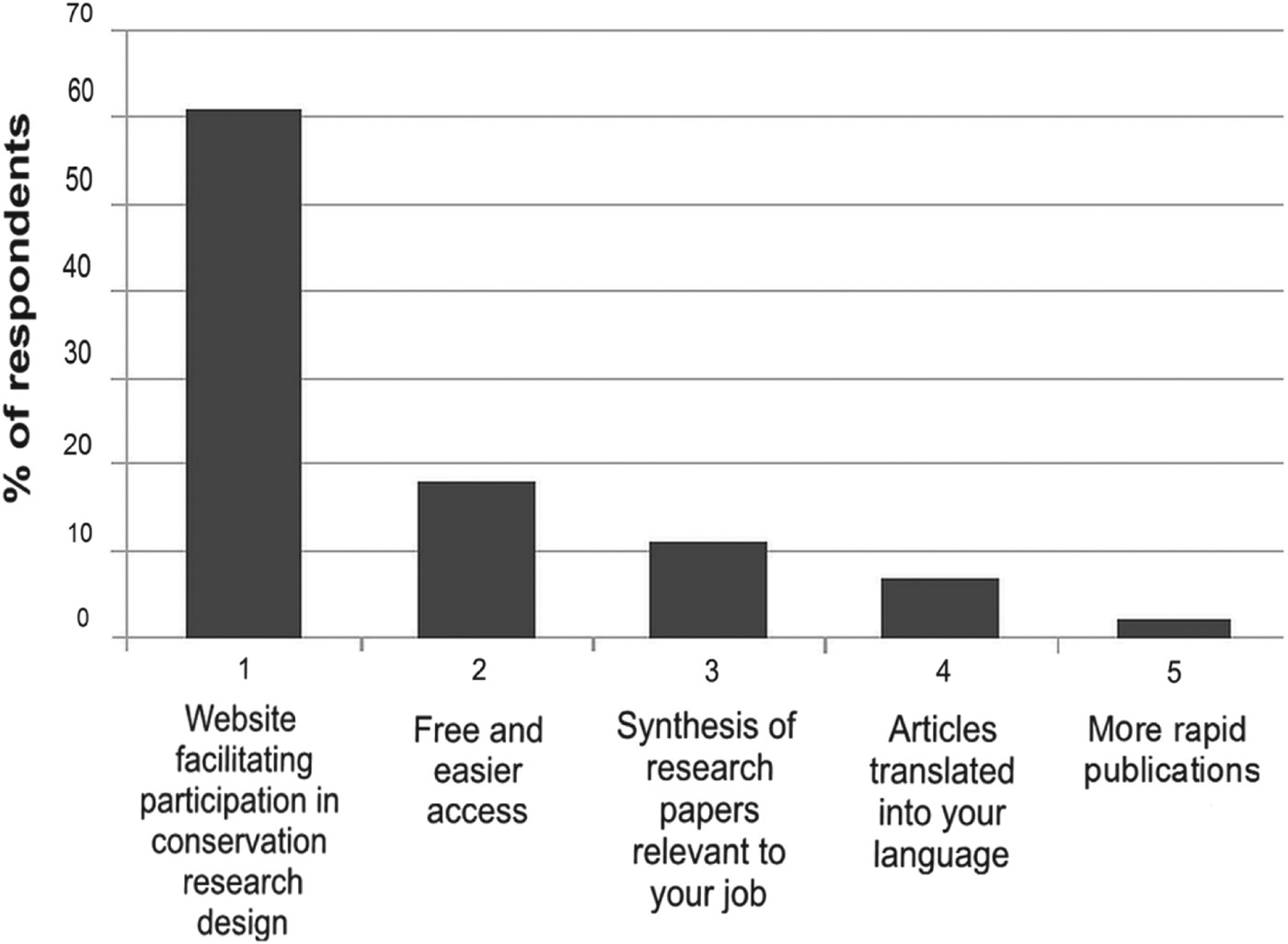
In terms of improving the peer-reviewed literature 61% of the practitioners agreed that a website allowing them to collaborate with researchers on research design would make the peer-reviewed literature more useful (Fig. 2). Free access to journals and translation of articles were ranked second and third. These results were confirmed by the answers of the last (open) question on how best to improve collaboration and communication in conservation science. Four main axes emerged from the answers to this question (n = 76): the importance of free access to research, the need for a new approach to communication, more direct collaboration, and the use of simpler language.
Practitioners’ responses to the question ‘What would make peer-reviewed literature more useful for you?’ (n = 46). Respondents were asked to choose only one answer.
Both practitioners and researchers called for more dissemination of information via open-access journals and free-access online databases. One university researcher suggested that publishers’ policies are hindering the advancement of science and its communication and that this is why open journals such as PLoS One are successful.
The need to develop new ways in which researchers and practitioners can communicate was expressed mainly by practitioners (n = 11/46). Suggestions offered in response to open questions included forums, websites and networks for information exchange, online libraries providing access to books in PDF format, free databases such as ODINAFRICA (2014), and the use of outlets such as TED (2014) to broadcast scientific talks online.
Others suggested the use of blogs for researchers to disseminate their information but, overall, our findings indicated that few practitioners would use a blog to access scientific information.
Almost 50% of respondents expressed a wish for more collaboration between practitioners and researchers at the site level and also at national and international levels, with some respondents highlighting that the needs of NGOs are not always the same as those of academics. The call for more collaboration via workshops and meetings came equally from practitioners and researchers. Some practitioners suggested that researchers should spend more time in the field to improve the credibility of their research and that they should ensure the involvement of local people and include the interests of local NGOs. Such direct collaboration is crucial as gaps can appear between research and practice, especially when different nationalities are involved and a language barrier exists. There was also general agreement on the necessity to share results freely between stakeholders in the location where the results have most significance. One practitioner explained that ‘results can be published in any type of scientific journal as long as they are first shared freely between the different conservation stakeholders involved’.
Eight practitioners and four researchers underlined the need for simpler English in publications. Titles should be shorter, the vocabulary less complex and the papers written using less jargon. Two practitioners expressed the need for translation of conservation science papers into more accessible articles such as in Science, potentially on a continent-by-continent basis. One respondent noted that the most important research conducted in isolated areas by foreign scientists rarely reaches practitioners once published in English journals and therefore does not influence their work.
Discussion
The means currently used to access scientific information do not appear to suit either conservation practitioners or researchers from developing countries. Our results suggest that there are a number of disconnects and impediments to the free flow of information between and among researchers and practitioners (Fig. 3a). These could be remedied in three main ways: (1) publication of scientific research in open-access journals, (2) making grey literature and other outputs from practitioners available in online archives, and (3) the co-production of knowledge by researchers and practitioners (Fig. 3b). The co-production of knowledge can be facilitated by encouraging practitioners to submit their findings to peer-reviewed journals or to take advantage of initiatives such as Practitioners’ Perspectives (Ewen et al., Reference Ewen, Adams and Renwick2013). It can also take the form of collaboration between scientists and managers from the start of a project, as suggested by Milner-Gulland et al. (Reference Milner-Gulland, Fisher, Browne, Redford, Spencer and Sutherland2010), which would help ensure that all context-dependant criteria are integrated into research, making the results more relevant for practitioners. Co-production of knowledge can lead to more evidence-based conservation, better interactions between scientists and managers, and ultimately better conservation outcomes (Ewen et al., Reference Ewen, Adams and Renwick2013).
(a) The research–implementation gap, based on the responses to the survey. (b) Proposed solutions to improve the situation.

The importance of open-access journals was highlighted many times in our results. The development of open-access scientific literature therefore appears to be a prerequisite for improving the flow of knowledge between researchers and also between researchers and practitioners. One of our main findings is that 80% of practitioners use the peer-reviewed literature but they use open-access journals to a greater extent than subscription-based journals. This shows the importance of open-access literature in disseminating information in the developing world, confirming previous studies (Evans & Reimer, Reference Evans and Reimer2009). Studies of the research–implementation gap have focused on the uptake of science from subscription-based journals (Ormerod et al., Reference Ormerod, Barlow, Marshall and Kerby2002; Campbell, Reference Campbell2007; Cook et al., Reference Cook, Hockings and Carter2010), to which access is more restricted. Changes in open access are therefore likely to improve the uptake of peer-reviewed science by practitioners in the developing world as well as by other groups. As practitioners use all the sources of information available to them, including the grey literature, which may be linked to peer-reviewed articles, it is difficult to assess precisely the degree of disconnection between practitioners and the scientific literature.
Of the conservation practitioners who used peer-reviewed literature, 70% indicated they didn't take into account the Impact Factor when choosing articles to read. Rather, they looked for information relevant to their needs and did not consider the Impact Factor to be an appropriate measure of an article's interest. Respondents indicated that journals with a high Impact Factor tend to be disconnected from practice and therefore, ironically, publication in a journal with a high Impact Factor may be a reason not to read an article. For the same reasons 69% of non-university researchers and 68% of university researchers who used peer-reviewed literature did not use the Impact Factor as a guide. These results confirm the general disregard for the Impact Factor (Lawrence, Reference Lawrence2006) and the need for a new measure integrating the impact of research beyond academia (Shanley & López, Reference Shanley and López2009).
Although peer review provides an indicator of academic quality, the grey literature, such as NGO reports, websites, and newsletters written by practitioners, could be an important source of locally relevant information for researchers and practitioners. For example, Sáenz-Arroyo et al. (Reference Sáenz-Arroyo, Roberts, Torre, Cariño-Olvera and Enríquez-Andrade2005) contested the belief that the Gulf grouper is a naturally rare fish, partly on the basis of grey literature from the 20th century. However this literature is not systematically accessible (Knight et al., Reference Knight, Cowling, Rouget, Balmford, Lombard and Campbell2008) and it can be difficult to assess the reliability of the data (Parr & Chown, Reference Parr and Chown2003). As a result, researchers mainly use the peer-reviewed literature and rarely seek out the literature in which practitioners communicate their own work (Shanley & López, Reference Shanley and López2009). The fact that researchers do not use the information produced by practitioners may contribute to the lack of relevance of their research, and therefore more recognition of, but also more access to, the science led by practitioners is necessary to facilitate its uptake by researchers, who could in turn develop research projects relevant to practitioners’ needs. Schindler et al. (Reference Schindler, Curado, Nikolov, Kret, Cárcamo and Catsadorakis2011) measured the effectiveness of conservation projects in Bulgaria and Greece. They reported that even experts who regularly published scientific papers obtained information more often from local management plans and unpublished reports than from peer-reviewed literature. The information produced by practitioners needs to be recognized by academic researchers, at least as guidelines to direct their research and ensure they produce results that are of value for conservation implementation.
Practitioners expressed a wish for more collaboration with researchers, to increase the relevance of research. As well as more direct communication on site, we suggest that more online collaboration between researchers and practitioners would be useful. More than translation of articles and free access to subscription journals, practitioners are interested in cooperation at the beginning and during the development of projects. However, language barriers are a hindrance to this process. As innovations such as SciELO (2014) have shown, a concerted effort at the national level can address language barriers while also improving scientific quality and the relevance of research to local users. SciELO was launched in 1997 in Brazil, with the aim of improving local research and prompting local authors to publish in national journals rather than foreign ones with higher Impact Factors (Packer, Reference Packer2001). It achieves this by (1) offering free online access to Brazilian journals, (2) improving scientific quality and methodological rigour, presentation and the relevance of the articles published in national journals, and (3) developing an ISI-style bibliometric database of papers published in local journals (Meneghini et al., Reference Meneghini, Mugnaini and Packer2006). Its publications are now multilingual to facilitate both local and international readership (Packer, Reference Packer2009). In 2012 16% of SciELO publications were published in Portuguese and English, 37% only in English and 46% only in Portuguese (Santos et al., Reference Santos, Packer, Santos and Meneghini2013).
Our study is limited by a relatively small sample size and purposive sampling. It is therefore unlikely that the conservation practitioners who responded were representative of the majority of developing-country professionals. Rather, they represent those practitioners who have regular internet access, good skills in one of the three languages used in the survey, and some understanding and experience of using academic research. Some of them were contacted through Oryx, which has a relatively modest Impact Factor and is focused on publishing research with the potential for real-world conservation impact; these characteristics may also have influenced the results. This bias was inevitable given the difficulty of accessing the diverse group we wished to survey. However, our sample represents a group that is likely to engage with new ideas and communication mechanisms Our study therefore highlights the views of an important group of potential leaders in conservation, who could be champions of future initiatives to bridge the research–implementation gap in developing countries.
Acknowledgements
We thank all the practitioners and researchers who took the time to answer the survey or provide useful comments, and the Conservation Leadership Programme for their help with the dissemination of the survey. EJMG acknowledges the support of a Royal Society Wolfson Research Merit award.
Biographical sketches
Céline Gossa specializes in citizen science in conservation, working with volunteers in Costa Rica and France. Her research interests are how to link research, practice and economic activities and how to raise public awareness of biodiversity. Martin Fisher is interested in the natural history and conservation of deserts and rainforests, and in addressing the problems faced by developing-country conservationists in carrying out and publishing their research to a high standard and for an international audience. E.J. Milner-Gulland is interested in the relationship between conservation science and human motivations.


 Open access

