


Vitamin D deficiency is a global public health problem. Alarming rates of vitamin D deficiency are found throughout the world(Reference Vieth, Bischoff-Ferrari and Boucher1, Reference Holick2). In one recent study of 7437 white British adults, the prevalence of serum 25-hydroxyvitamin D (25(OH)D) concentrations < 40 and < 75 nmol/l was 47 and 87 %, respectively(Reference Hypponen and Power3). Ethnic minorities living in Britain and other northern countries are at even greater risk(Reference Pal, Marshall, James and Shaw4–Reference Calvo and Whiting7). Vitamin D is unique in that it is either ingested orally or produced photochemically in the skin through exposure to UVB radiation. Pregnant women and their fetuses, the elderly, individuals with dark skin and individuals exposed to insufficient sunlight are particularly vulnerable to vitamin D deficiency(Reference Bodnar, Simhan, Powers, Frank, Cooperstein and Roberts8–Reference Salamone, Dallal, Zantos, Makrauer and Dawson-Hughes10). In regions at high latitude, vitamin D status also worsens in winter, when less sunlight is available to synthesise cutaneous vitamin D(Reference Webb, Kline and Holick11–Reference Harris and Dawson-Hughes14).
While awareness of this public health problem increases, a growing body of compelling research relates vitamin D insufficiency to a host of adverse outcomes. Low serum 25(OH)D, the major circulating vitamin D metabolite and marker of vitamin D nutritional status(Reference Haddad and Stamp15, Reference Hollis16), has been associated with skeletal problems, diabetes, certain cancers, asthma, multiple sclerosis, rheumatoid arthritis, CVD and schizophrenia(Reference Holick2). Moreover, maternal vitamin D deficiency may increase risk of adverse pregnancy outcomes(Reference Bodnar, Catov, Simhan, Holick, Powers and Roberts17), and in utero vitamin D deficiency may be involved in fetal ‘programming’ of adult disorders(Reference McGrath18). Serum banks from large epidemiological studies conducted decades ago provide a valuable opportunity to confirm and expand our knowledge of the adverse health effects of low serum 25(OH)D, including its role in fetal origins of adult disease. Serum 25(OH)D is extremely stable at − 20°C for 2 years(Reference Ellis and Dixon19–Reference Zerwekh21) and is not sensitive to UV light exposure or repeated freezing and thawing(Reference Zerwekh21, Reference Lissner, Mason and Posen22). Teams of investigators have used sera frozen for several decades to assess vitamin D–outcome associations(Reference Braun, Helzlsouer, Hollis and Comstock23–Reference Nomura, Stemmermann, Lee, Kolonel, Chen, Turner and Holick26). However, it is unknown whether prolonged storage causes analyte deterioration to an extent that prevents reliable testing of vitamin D-related hypotheses. Our objective was to determine whether 25(OH)D is stable enough after extremely long storage to test vitamin D–disease associations by comparing differences in 25(OH)D by race and season (two powerful predictors of vitamin D status) in maternal sera frozen for over 40 years with maternal sera frozen for up to 2 years in two pregnancy cohort studies.
Experimental methods
Data and sera came from two pregnancy cohort studies. The Collaborative Perinatal Project (CPP; 1959–66) included 55 908 pregnancies from women receiving care at twelve medical centres in the USA(Reference Niswander27). At enrolment, each prenatal visit, and during labour and delivery, detailed demographic, socio-economic and behavioural information and medical history were collected by in-person interview. Non-fasting maternal blood samples were drawn at repeated visits throughout gestation.
For our analysis, we selected women enrolled at the Boston CPP site (42°N latitude) who had non-fasting serum drawn at 29–32 weeks' gestation and delivered a singleton birth at 39–40 weeks' gestation. Based on an a priori power analysis to detect racial and seasonal differences in 25(OH)D, we randomly selected twenty non-Hispanic white women with serum drawn in winter, twenty non-Hispanic white women with serum drawn in summer, twenty non-Hispanic black women with serum drawn in winter, and twenty non-Hispanic black women with serum drawn in summer. Winter was defined as January–February, and summer was defined as July–August. One vial of serum broke in transport, which left seventy-nine samples available for the final analysis. These seventy-nine samples were drawn from seventy-nine unique women.
The modern cohort was a group of pregnant women who participated in the Pittsburgh, Pennsylvania (40°N latitude) Antidepressant Use during Pregnancy (ADUP) study, an observational study of the effects of depression and antidepressant use on infant development. Women enrolled at < 20 weeks' gestation after giving informed, written consent. At 20, 30 and 36 weeks' gestation, women provided a blood sample, and interviewer-administered questionnaires were used to collect detailed data on maternal factors. Beginning in May 2004, serum was banked for the analysis of nutritional biomarkers, including 25(OH)D. The study was approved by the University of Pittsburgh Institutional Review Board.
A total of 385 blood samples were analysed for serum 25(OH)D. For this analysis, we selected all samples from women who self-identified their race as non-Hispanic white or non-Hispanic black and had a serum sample collected at 20–36 weeks' gestation in either January–February (winter), or July–August (summer). A total of 124 samples were available (ninety-eight white and twenty-six black) from 102 unique women. Although women had up to three pregnancy blood draws, only a fraction of women in this analysis had repeated samples because of the restrictions we put on the season of blood sampling. There was not an even distribution of women into the two racial groups because the study was small and only 20 % were non-Hispanic black. Women using antidepressants were included in this analysis because we are unaware of any published evidence suggesting that such agents affect measurements of vitamin D metabolites.
Quantification of serum 25-hydroxyvitamin D
In the CPP, blood samples were allowed to clot for 30–60 min, refrigerated for 8–24 h at 8°C, and centrifuged. Serum was stored in clear vials at − 20°C and then shipped to the National Institutes of Health for permanent storage at − 20°C. In September 2006, the selected samples were shipped to Pittsburgh on sufficient dry ice and stored at − 80°C. In the over 40 years that CPP samples were available, the vast majority of the seventy-nine sera had never been thawed before assaying. In the ADUP study, blood samples were kept in the dark and allowed to clot. After centrifuging, serum was put into amber vials within 3 h of blood collection and stored at − 80°C until assay. A majority of the samples had never been thawed before assaying.
From June 2006 to September 2006, serum 25(OH)D in both cohorts was quantified in the same laboratory using a commercial ELISA from Immunodiagnostic Systems Limited (IDS; Tyne and Wear, UK) using 25 μl serum as previously described(Reference Bodnar, Simhan, Powers, Frank, Cooperstein and Roberts8). The inter-assay CV for the ELISA was 11·8 %. The ELISA could detect 25(OH)D in the range 5–300 nmol/l. No sample in our analysis fell outside this detectable range. The ELISA recognised 100 % of 25(OH)D3 and 75 % of 25 (OH)D2, but did not distinguish between these two forms. In our initial HPLC validation in a separate modern pregnancy cohort(Reference Bodnar, Simhan, Powers, Frank, Cooperstein and Roberts8) we observed that only three of thirty-two samples ( < 10 %) had any measurable 25(OH)D2, and within these samples, 25(OH)D2 accounted for only 10 % of the total measurable 25(OH)D.
We validated the ELISA results with those obtained using an HPLC method. The HPLC method for the quantification of 25(OH)D was modified from those published by Horst et al. (Reference Horst, Reinhardt and Hollis28) and Alvarez & De Mazancourt(Reference Alvarez and De Mazancourt29). Briefly, thirty-two serum samples collected from 1997–2001 and stored under similar conditions as above were spiked with an internal standard (1-α-hydroxyvitamin D3) purchased from Sigma (St Louis, MO, USA) to a final concentration of 50 nmol/l. Samples were processed two times by solid-phase extraction, first using C18 Sep-pak Cartridges and then using Silica Sep-pak Cartridges. After extraction, samples were evaporated to dryness under an N2 stream at 37°C and reconstituted in 100 % acetonitrile. Fifty microlitres of the extracted samples were injected onto a prepared HPLC system that consisted of a Waters 600E pump, a Waters 717 plus autosampler and a Waters 996 photodiode array. Samples were separated on a C18 column (150 × 4·8 mm, 5 μm, Supelco) with a 20 × 4·8 mm guard column in line. The HPLC method could separate 1-α-hydroxyvitamin D3, 25(OH)D2 and 25(OH)D3 using isocratic conditions with a mobile phase that consisted of 87 % acetonitrile with all components being detected at a wavelength of 265 nm. The inter-assay CV for 25(OH)D3 using the HPLC method was 5·8 %. The sensitivity of the HPLC method was < 10 nmol/l and had a linear range to 1000 nmol/l. The relationship between serum 25(OH)D concentrations obtained from the ELISA compared with HPLC was as follows: slope = 1·14, intercept = 22, r 0·88.
In the 1960s when the CPP samples were collected, vitamin D-fortified foods in the USA were fortified with vitamin D2 rather than vitamin D3. Therefore, 25(OH)D2 may have been a larger proportion of total circulating 25(OH)D in the 1960s than today. Because the IDS ELISA was able to quantify 75 % of 25(OH)D2, a concern was that total circulating 25(OH)D concentrations in the CPP samples were underestimated using this method, and that this underestimation would obscure findings generated from our data. Thus, we performed a sensitivity analysis by additionally analysing CPP sera using a DiaSorin RIA (Stillwater, MN, USA), which detects 100 % of 25(OH)D2 and 100 % of 25(OH)D3. This assay required 50 μl serum. The inter-assay CV was 9·0 %. The RIA could detect 25(OH)D in the range 3·75–250 nmol/l. No sample in our analysis fell outside this detectable range.
Season of sample collection was defined as winter (January, February) or summer (July, August). Pre-pregnancy BMI (weight (kg)/height (m)2) was based on measured height and maternal self-report of pre-pregnancy weight at the initial visit. Self-reported data were available from both cohorts on parity (0, ≥ 1), marital status (married, unmarried), smoking status (smoker, non-smoker) and maternal education ( < 12 years, 12 years, >12 years). In the CPP, education, occupation and family income data were combined into a composite socio-economic status score (range 1 to 5)(Reference Myrianthopoulos and French30).
Statistical analysis
Serum 25(OH)D was not normally distributed, so we performed a log-transformation before performing statistical tests. We used an unpaired Student's t test to compare unadjusted serum 25(OH)D by race and season within each cohort. Multivariable linear regression models were used to simultaneously test main and joint effects of race and season on log-serum 25(OH)D concentrations after adjusting for confounders. Separate models were built for the CPP and ADUP study. In the ADUP study model, generalised estimating equations were used to account for the non-independence of repeated serum measurements among women (Stata Statistical Software, release 8.0; Stata Corp. LP, College Station, TX, USA)(31). We fitted parsimonious regression models by specifying full models with potential confounding variables (parity, age, marital status, pre-pregnancy BMI, gestational age, smoking, education (in the ADUP model only) and socio-economic status (in the CPP model only)). Potential confounders were considered to not be influential and were removed from the model if their inclusion did not satisfy our a priori change-in-estimate criterion (a change in the coefficient of >8 %). In the CPP model, marital status and socio-economic status met our definition of confounding, and in the ADUP model, marital status met our definition of confounding. Married women and women with high socio-economic status had higher 25(OH)D concentrations and were less likely to be non-Hispanic black. Race × season interactions were tested using Wald P values (α = 0·10).
Lastly, we pooled data from both studies into one linear regression model employing generalised estimating equations for the repeated measures among ADUP participants that included indicator variables for race, season, cohort, sample gestational age categories, marital status, parity and maternal age categories. This model allowed us to test whether log-serum 25(OH)D concentrations were significantly different in the CPP compared with the ADUP study. Additionally, we included race × cohort and season × cohort interaction terms to test whether the race and/or season effects on 25(OH)D levels differed between the CPP and ADUP study (α = 0·10).
Results
Most women in the Boston CPP cohort were 20–29 years old, married, non-smokers, had one or more previous births, 12 years of education, and were in the middle socio-economic status group (Table 1). In the selected ADUP cohort, over three-quarters of women were white. The proportion of samples drawn in winter and summer was similar. A majority of ADUP women were 30 years or older, married, and non-smokers, and had one or more previous birth and some college education.
Characteristics of women selected from the Boston Collaborative Perinatal Project (CPP) and the Pittsburgh Antidepressant Use during Pregnancy (ADUP) study

N/A, not applicable.
* Some totals may not add to 124 because of missing data on some variables.
† For participants in the CPP, education, occupation and family income data were combined into a composite socio-economic status score(Reference Myrianthopoulos and French30).
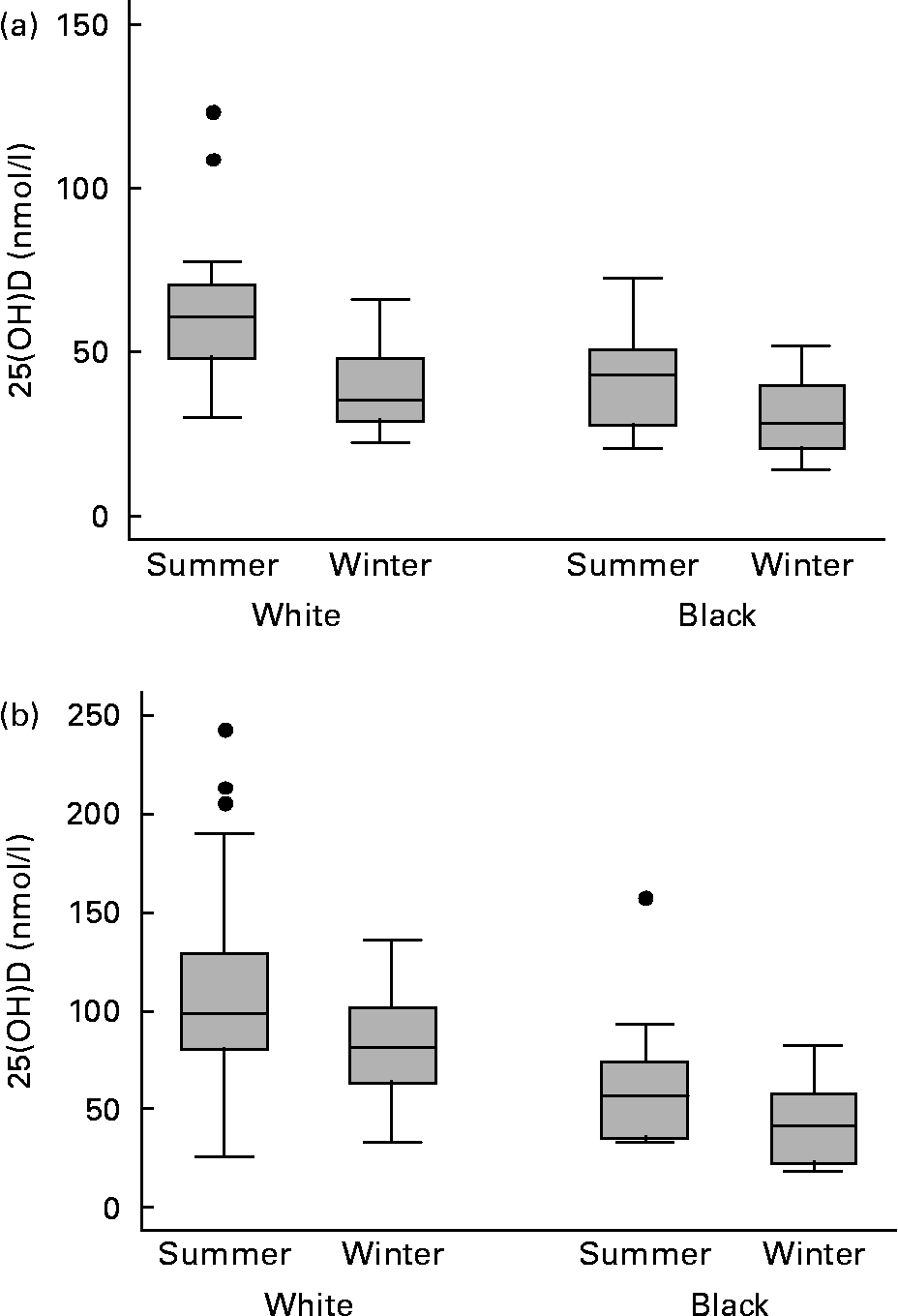
When assayed with the IDS ELISA, the Boston CPP serum 25(OH)D concentrations were significantly lower among black than white women (33·3 (95 % CI 29·4, 37·9) v. 46·7 (95 % CI 41·0, 53·1) nmol/l; P < 0·001) and in winter than in summer (32·7 (95 % CI 29·1, 36·7) v. 47·6 (95 % CI 41·7, 54·4) nmol/l; P < 0·0001). As illustrated in Fig. 1 (a), the seasonal differences in 25(OH)D levels were similar among white (P < 0·001) and black women (P < 0·05), with no race × season interaction detected (P = 0·26). In the multivariable model, serum 25(OH)D levels were 24 % lower in black women than white women (P < 0·01) and 32 % lower in winter than summer (P < 0·001) (Table 2), independent of marital status and socio-economic status. The race × season interaction remained non-significant. When the CPP samples were assayed with the DiaSorin RIA, 25(OH)D concentrations were, on average, 38 % higher than when assayed with the IDS ELISA. However, the differences in mean 25(OH)D levels by race (white 63·3 (95 % CI 54·7, 73·2) v. black 46·8 (95 % CI 40·4, 54·1) nmol/l; P < 0·01) and season (summer 65·5 (95 % CI 56·5, 76·0) v. winter 45·2 (95 % CI 39·2, 51·7) nmol/l; P < 0·001) persisted. Moreover, multivariable-adjusted 25(OH)D levels remained 20 % lower in black women than white women (P < 0·05) and 32 % lower in winter than summer (P < 0·001), with no evidence of a race × season interaction.
Box plots of maternal serum 25-hydroxyvitamin D (25(OH)D) (nmol/l) by race and season among seventy-nine pregnant women in the Boston Collaborative Perinatal Project (CPP) (a) and 124 pregnant women in the Pittsburgh Antidepressant Use during Pregnancy (ADUP) study (b). Results are shown for Boston CPP sera assayed with an ELISA from Immunodiagnostic Systems Limited (Tyne and Wear, UK). Values are illustrated by box plots with the box representing the 25th and 75th percentiles (ends of boxes). The upper and lower whiskers are drawn from the box to the most extreme point within 1·5 interquartile range. The median is represented by the horizontal line in the box. Outliers are represented by dots. The mean concentration of serum log-25(OH)D in summer differed from that in winter for both white (P < 0·001) and black women (P < 0·05) in the CPP. In the Pittsburgh ADUP study, the mean concentration of log-serum 25(OH)D in summer differed from that in winter for white women (P < 0·01) and was borderline significant in black women (P = 0·05).
Relationship of race and season with maternal log-serum 25-hydroxyvitamin D (25(OH)D) concentration in the Boston Collaborative Perinatal Project (CPP) and the Pittsburgh Antidepressant Use during Pregnancy (ADUP) study

* Calculated as (eβ − 1) × 100.
† Results shown here are with sera from the CPP assayed with an ELISA from Immunodiagnostic Systems Limited (Tyne and Wear, UK). Similar results were observed with sera were analysed with a DiaSorin RIA (Stillwater, MN, USA; data not shown).
‡ Adjusted for marital status and socio-economic status. Adjustment for other covariates had no meaningful impact on the results. The race × season interaction was not significant.
§ Adjusted for marital status. Adjustment for other covariates had no meaningful impact on the results. The race × season interaction was not significant.
Similar results were observed in the Pittsburgh ADUP study. Significantly lower concentrations of serum 25(OH)D were found among black compared with white women (47·1 (95 % CI 38·0, 50·9) v. 89·6 (95 % CI 82·7, 97·2) nmol/l; P < 0·0001) and in winter than in summer (66·7 (95 % CI 58·6, 76·0) v. 89·8 (95 % CI 79·9, 100·9) nmol/l; P < 0·001). Fig. 1 (b) shows that these seasonal differences in 25(OH)D levels were evident among whites (P < 0·01) and were of borderline statistical significance in blacks (P = 0·05), probably due to the small size (n 26). There was no race × season interaction in the ADUP data (P = 0·39). In the multivariable model adjusting for marital status, concentrations of 25(OH)D were 41 % lower in black women than white women (P < 0·001) and 24 % lower in winter than summer (P < 0·001) (Table 2). The race × season interaction remained non-significant after controlling for confounders. Exclusion of women with major depression had no impact on the results.
When the CPP and ADUP data were pooled into one multivariable model adjusting for sample gestational age, race, season, education, marital status, parity and maternal age, serum 25(OH)D concentrations were 42 % lower in the CPP cohort than in the ADUP cohort (P < 0·001). We did not observe either a race × cohort or a season × cohort interaction on log-serum 25(OH)D levels after covariate adjustment. When this analysis was repeated with CPP sera analysed with the DiaSorin RIA kit, 25(OH)D concentrations were 18 % lower in the CPP than the ADUP cohorts after multivariable adjustment (P < 0·05), with no race × cohort or season × cohort effects present.
Discussion
In the 40-year-old sera from pregnant women in the CPP, we detected expected racial and seasonal differences in 25(OH)D, the indicator of vitamin D nutritional status. Serum 25(OH)D levels in the CPP samples were significantly lower in black women than white women, which is consistent with the knowledge that individuals with deeply pigmented skin produce vitamin D less efficiently than do individuals with less skin pigmentation(Reference Holick32). Serum 25(OH)D levels were also significantly lower in winter, when UVB light is reduced, than in summer, when UVB light is plentiful(Reference Holick32). Similar differences were observed in the ADUP cohort. These findings are consistent with previous literature on race and seasonal effects on 25(OH)D in childbearing-aged women (for example, Bodnar et al. (Reference Bodnar, Simhan, Powers, Frank, Cooperstein and Roberts8); Harris & Dawson-Hughes(Reference Harris and Dawson-Hughes14); Nesby-O'Dell et al. (Reference Nesby-O'Dell, Scanlon, Cogswell, Gillespie, Hollis, Looker, Allen, Doughertly, Gunter and Bowman33)).
Multivariable-adjusted serum 25(OH)D levels in the Boston CPP were 42 % lower than the concentrations in the Pittsburgh ADUP samples when the IDS ELISA was used. Some of this difference was probably due to the assay's underestimation of 25(OH)D2, which probably made up a larger proportion of total circulating 25(OH)D in the CPP samples than modern samples because vitamin D2 was used to fortify foods in the 1960s. Indeed, when the CPP samples were analysed with the DiaSorin RIA, which captured 100 % of both 25(OH)D2 and 25(OH)D3, we observed that concentrations were only 18 % lower in CPP than the Pittsburgh ADUP samples. This lowering may, in fact, reflect analyte deterioration, though we lacked the repeated measures of the same samples and standard over time to test this possibility. Nevertheless, it is important to note that even if there was deterioration in 25(OH)D, it was not enough to reduce or eliminate our ability to detect relative racial and seasonal differences consistent with the literature. Indeed, we observed no race × cohort or season × cohort interactions when data from both the CPP and ADUP study were pooled. The lack of an interaction demonstrated that the magnitudes of the racial and seasonal differences in the 40-year-old CPP sera were similar to the racial and seasonal differences observed in sera from pregnant women in the ADUP study that were stored for up to 2 years. The similarity in the relative change in 25(OH)D in these two cohorts by two powerful predictors of vitamin D status suggests that, even if 25(OH)D deteriorated somewhat, it did so similarly across samples. Therefore, trends could be obtained from the decades-old serum data that would be relevant in exploring vitamin D-related hypotheses in future studies. Notably, if some degradation is present, traditional cut-points to define vitamin D sufficiency and insufficiency may not apply, and exploring vitamin D status as defined by the distributional cut-points (i.e. fourths based on quartiles) may be more appropriate.
The 25(OH)D levels in the CPP cohort were somewhat lower than the ADUP cohort; however, comparable with similar analytes measured in decades-old sera(Reference Stroud, Solomon, Shenassa, Papandonatos, Niaura, Lipsitt, Lewinn and Buka34), their distribution was well within the range published from other modern pregnancy cohorts(Reference Hollis and Pittard35–Reference van der Meer, Karamali, Boeke, Lips, Middelkoop, Verhoeven and Wuister37). Thus, the lower 25(OH)D concentrations in the CPP cohort may not be explained solely by analyte deterioration. Indeed, unmeasured lifestyle factors that varied between cohorts may also have contributed to differences we observed. On one hand, one might expect vitamin D status to be better in the 1960s than today, given the temporal increase in the public's awareness of the link between UVB exposure and skin damage; a reduction in the time spent outdoors, and the advent of topical sunscreens and sun-protective clothing. Yet, over the same period there has been a rise in both the use of dietary supplements(Reference Millen, Dodd and Subar38) and the availability and use in the USA of foods fortified with vitamin D (for example, some breakfast cereals, yogurts)(Reference Calvo, Whiting and Barton39). Dietary intake becomes an important source of vitamin D when sunlight exposure is limited(Reference Holick40), so intake patterns may be especially relevant for populations residing in the northeastern USA, where there is limited ability to synthesise cutaneous vitamin D year round(Reference Webb, Kline and Holick11). Certainly, the difference in the vitamin D status of these cohorts may be due to variation in sunlight exposure (as determined by time spent outdoors, environmental pollution and latitude(Reference Holick9)), use of prenatal vitamins; and/or intake of vitamin D through fortified foods. We did not have the appropriate covariate data or a large-enough sample size to rigorously explore these relationships in the present study.
Maternal third-trimester serum 25(OH)D has been previously measured among seventy-eight participants in the Boston and Providence CPP as part of a nested case–control study of maternal vitamin D and risk of schizophrenia in the offspring(Reference McGrath, Eyles, Mowry, Yolken and Buka25). After measuring 25(OH)D with a DiaSorin RIA, the authors demonstrated similar differences in mean unadjusted 25(OH)D by race (black 27·4 nmol/l; white 55·2 nmol/l) and season (winter 30·5 nmol/l; summer 64·0 nmol/l), with absolute levels also lower than our modern cohort. Although these investigators used different analytical methods and did not design their study to compare relative differences in confounder-adjusted mean 25(OH)D by race and season with a modern cohort in a set of uncomplicated pregnancies, their findings support our conclusions that 25(OH)D is stable enough in 40-year-old sera to detect hypothesised differences by maternal exposures.
It would have been best to use fresh samples as the comparator in the present study. However, sera stored for up to 2 years, like the ADUP samples, have been shown to have no 25(OH)D deterioration(Reference Ellis and Dixon19–Reference Zerwekh21). We did not measure serum vitamin D-binding protein in the CPP and ADUP samples. Such analysis would have provided interesting information about the relative stability of bound v. free 25(OH)D. Future studies will also be needed to precisely quantify the amount of deterioration in 25(OH)D over time so that appropriate absolute cut-points of vitamin D deficiency can be determined.
Our data, which revealed that the relative differences in 25(OH)D by powerful predictors of vitamin D status remained in sera stored for over 40 years, suggest that 25(OH)D can be quantified in decades-old sera to reveal trends that can be used to explore vitamin D-related hypotheses, including studies of in utero vitamin D and risk of adult disease. Such studies may further clarify the role of vitamin D in the pathophysiology of disease states, broaden our understanding of the public health relevance of the epidemic of vitamin D deficiency, and cultivate ideas for preventing adverse health outcomes with nutritional interventions in susceptible populations.
Acknowledgements
The present study was partially supported by National Institutes of Health grants K01 MH074092, P30 DK046204 and R01 MH060335. M. A. K. was supported by intramural funds from the National Institutes of Child Health and Human Development. L. M. B., J. M. C. and M. A. K declare no conflicts of interest. K. L. W. is on the Speaker's Bureau of GlaxoSmithKline and receives funding from the National Institute of Mental Health, the Stanley Medical Research Foundation, the American Society for Bariatric Surgery and Pfizer. We gratefully acknowledge Dr Robert Powers and Marcia Gallaher at the Magee-Women's Research Institute for their technical assistance with the 25(OH)D assays.
L. M. B. and M. A. K. conceived of the idea for this paper; K. L. W. secured funding for the ADUP study; K. L. W. and M. A. K. provided data for the study; L. M. B. analysed the data and was primarily responsible for writing the manuscript. J. M. C., K. L. W. and M. A. K. critically reviewed drafts of the manuscript.



