


In 2011, at least 165 million children under the age of 5 years suffered from linear growth faltering worldwide, a consequence of chronic undernutrition( Reference Black, Victora and Walker 1 ). Chronic nutritional deficiencies in childhood can lead to an increased risk of morbidity and mortality( Reference Pelletier, Frongillo and Schroeder 2 , Reference Bhutta, Das and Rizvi 3 ), as well as impaired growth and cognitive development, diminished reproductive and work capacity, poor school performance, lowered income-earning potential and an increased risk of several adult-onset chronic diseases( Reference Martorell and Haschke 4 , Reference Semba and Bloem 5 ). The diets of children in their first years are predominantly determined by the decisions and behaviours of their mothers and other household members who feed and care for them. Caregivers’ breast-feeding and complementary feeding practices then are essential to the healthy growth and development of children early in life.
Providing education, counselling and complementary foods to caregivers has been shown to improve infant and young children feeding (IYCF) practices in many settings( Reference Imdad, Yakoob and Bhutta 6 ). However, very little evidence is available to evaluate nutrition-sensitive approaches to improving these practices; that is, approaches that aim to address the underlying causes of child undernutrition rather than the immediate determinants( Reference Ruel and Alderman 7 ). Agricultural-sector interventions have traditionally aimed to improve agricultural yields, animal production and incomes from agriculture. These programmes and interventions have rarely included improving nutrition as an explicit objective. Hence, nutrition-sensitive approaches to improving nutrition through the agricultural sector have been limited overall, and those that have been implemented have focused predominantly on increasing food availability and raising household incomes( Reference Masset, Haddad and Cornelius 8 ). Yet, agricultural production and the farming livelihoods that agriculture supports may strongly influence the capacity of caregivers to meet recommended IYCF practices. Depending on the extent to which a household's diet consists of foods that the household produces itself, the diversity of crops and animals reared could directly influence the diversity of child diets( Reference Gillespie, Harris and Kadiyala 9 ). The income generated from agriculture may also influence child diets to greater or lesser extents depending on who controls the income( Reference Kennedy, Ballard and Dop 10 , Reference Hoddinott and Haddad 11 ). In addition, the labour caregivers devote to agriculture, both the amount and nature of the labour, can affect time available for feeding, the kinds of foods that are able to be fed, the responsiveness of the caregiver to the child, the quality of feeding environments, and the health and nutritional status of the caregiver herself( Reference McGuire and Popkin 12 , Reference Jones, Agudo and Galway 13 ).
These multiple pathways of influence emerge because child feeding is complex and encompasses multiple dimensions. The diversity of the diet, the texture and nutrient density of complementary foods, the maintenance of exclusive and partial breast-feeding and the manner and frequency with which foods are fed are all components of child feeding( 14 ). Appropriate child feeding practices also change over time. As children get older they adapt to different food textures and require more frequent meals and a larger variety of foods. Therefore, measuring the quality of IYCF practices is challenging. While the set of IYCF indicators developed by the WHO( 15 ) is incredibly valuable for describing IYCF practices globally and advocating for increased attention to child feeding, these indicators may lack sensitivity and specificity and may not be the best tools for all uses( Reference Jones, Ickes and Smith 16 ).
One previous tool used to assess IYCF practices, a child feeding index, derives separate scores for distinct child feeding behaviours and combines these scores into a single, age-specific summary index( Reference Ruel and Menon 17 ). If positive child nutrition outcomes are associated with some minimum number of proper child feeding and care practices, a summary index would be more likely to detect these associations than would a measure of any single practice( Reference Arimond and Ruel 18 ).
In the present study we examine the determinants of IYCF practices in a rural, agricultural region of the Bolivian highlands using a summary infant and child feeding index (ICFI) derived from quantitative dietary data. We first aim to determine the validity of the ICFI by examining its association with child anthropometry and the adequacy of child diets. We then seek to identify the determinants of IYCF practices in this region of Bolivia using an integrated data set that includes comprehensive data on household agricultural production as well as the health and nutritional status of children and other household members. We hypothesize that the nature and extent of agricultural production in sample households will influence the quality of caregivers’ IYCF practices.
Materials and methods
Study setting
The mean prevalence of stunting (i.e. height-for-age Z-score <−2) in children under 5 years of age in Latin America is lower than in most other world regions at 11·7 % (compared with a prevalence of stunting in sub-Saharan Africa and South Asia of approximately 40 %)( 19 ). Bolivia, however, remains well below Latin American regional averages in many health, nutrition and development indicators. More than one-quarter of under-5 children in Bolivia are stunted (27 %), with an especially high burden in rural areas (37 %)( 20 ). The northern region of Bolivia's Potosí department where the current research was conducted is one of the poorest and most isolated regions of the country, with a high prevalence of extreme poverty, household food insecurity and high rates of child mortality( 21 ). The inhabitants of this highland region are predominantly farmers and herders engaged in subsistence agriculture. Food availability, the kinds of crops grown, the amount of land available for raising crops and pasturing animals, and certain farm management practices vary across agroecological zones in the region that are differentiated primarily by elevation and seasonal temperatures. Nearly all households grow potatoes, although cultivation is more extensive at elevations above 3200 metres above sea level (masl). Maize is grown in lower and middle elevation zones between 2700 and 3500 masl, wheat below 3600 masl and barley at high elevations up to 4200 masl. Nearly all households raise mixed herds of sheep and goats with llamas being herded only at higher elevations. Women are responsible for tending to these flocks in addition to their many other agricultural and domestic responsibilities that include planting, harvesting and maintaining crops, preparing food, collecting firewood and water, and caring for children and elderly family members. The IYCF practices of caregivers generally do not meet recommendations. In many households, complementary foods fed to young children are nutrient-poor, are not prepared so that young children can easily eat the foods, are not fed frequently throughout the day, and children are not often assisted while eating or are not fed in environments where feeding is the focal activity( Reference Cruz, Jones and Berti 22 ). Similarly, children are rarely exclusively breast-fed beyond 3 months of age and any breast-feeding is often terminated by 15 months of age.
Data collection and sampling
In March 2009, a survey of 331 households with children aged 0–23 months was conducted in forty-four communities aligned with eight health-post jurisdictions that were identified by the Bolivian Ministry of Health as high-priority regions for improving maternal and child nutrition. All communities containing five or more households with children aged 6–23 months were included in the sample (n 252). Community census data from health posts were used to ensure all eligible communities were included. These data were then verified with community authorities using current household roster data.
Four teams of enumerators administered the survey to mothers and heads of household using questionnaires programmed into hand-held computers (ASUS MyPal A696) for direct data capture. The use of these computers allowed for immediate data access during nightly data cleaning and review sessions with survey teams. Communities were visited by survey enumerators on multiple days to ensure all eligible families were offered the opportunity to participate in the study. Ninety-one per cent of eligible families participated. All but one of the households that did not participate in the survey were engaged in temporary wage or reciprocatory labour outside their communities and were not available for interview.
Infant and child feeding index
An ICFI was constructed based on previously published summary feeding indices( Reference Ruel and Menon 17 , Reference Arimond and Ruel 18 ). Formative research indicated that the diversity of child diets and frequency with which meals and snacks were fed to children in northern Potosí were frequently not meeting recommendations. However, the responsiveness of caregivers to children during feeding and the consistency (i.e. texture) of foods fed to children were also often inadequate( Reference Cruz, Jones and Berti 22 ). Therefore, the ICFI was adapted to include component indicators of all of these practices (Table 1).
Component practices and scoring of the infant and child feeding index (ICFI)
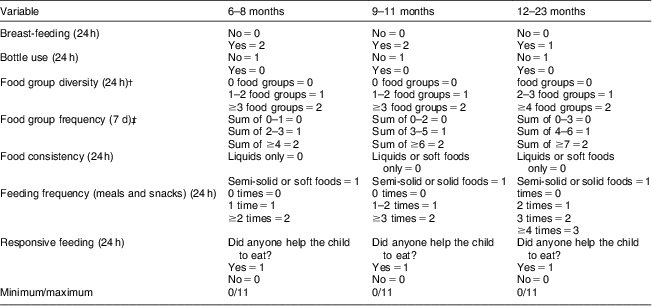
24 h, based on 24 h recall; 7 d, based on 7 d recall.
†Sum of: cereal grains, roots, tubers; legumes and nuts; dairy products (milk, yoghurt, cheese); flesh foods (meat, fish, poultry and liver/organ meats); eggs; vitamin A-rich fruits and vegetables; other fruits and vegetables (received or did not receive each food/group).
‡Each food group is scored as 0 if not given at all in the previous 7 d, 1 if given on 1–3 d and 2 if given on ≥4 d. These scores are then summed to give a possible range of 0 to 14.
The food groups for the 24 h dietary diversity and 7d food group frequency components of the index were modified to reflect the food groupings of the WHO minimum dietary diversity indicator( 15 ). Dietary diversity and food group frequency scores were calculated using data from quantitative 24 h dietary recalls and 7 d food group frequency questionnaires collected using standard methods( Reference Gibson 23 , Reference Berti, Jones and Cruz 24 ). Data on the type, amount, consistency and preparation method of foods fed to children, including foods fed outside the home, as well as the amount left unconsumed by children were collected during 24 h dietary recall interviews to estimate children's dietary intakes on the day preceding interviews. Standard serving dishes were presented to caregivers so that they could directly indicate the amount of food served to the child as well as the amount left in the child's dish after finishing the meal. Photographs depicting solid, semi-solid foods and porridges of varying consistencies (i.e. from watery to dense and viscous) that are commonly fed to young children in the region were shown to respondents to determine, for each food, the consistency of the final preparation fed to the child. The frequency with which foods and snacks of different consistencies were fed was calculated from these data. Age-specific index score cut-offs based on distributions of 24 h dietary diversity data and 7 d food group frequency consumption data were used to calculate dietary diversity and food group frequency scores.
The feeding frequency scoring criteria of the ICFI closely reflect those of the WHO minimum meal frequency indicator (i.e. breast-fed infants aged 6–8 months should receive solid, semi-solid or soft foods at least two times per day and breast-fed children aged 9–23 months should received these foods at least three times per day). The feeding frequency component indicator of the ICFI that we use includes data on the frequency with which solid and semi-solid foods were fed to children as well as soft foods and thick porridges. Feeds that consisted entirely of liquids or watery porridges were not considered true meals or snacks for purposes of calculating this indicator. Because we consider thick porridges in addition to solid, semi-solid and soft foods in the calculation of this component indicator though, it may differ from the WHO minimum meal frequency indicator for some children. We examine as a separate component indicator whether solid or semi-solid foods in particular were fed in the previous day. Current recommendations to practise exclusive breast-feeding to 6 months of age and continue breast-feeding to at least 2 years of age( 25 ) informed the breast-feeding and bottle-feeding components of the ICFI. The responsive feeding and food consistency components of the index were based on current recommendations for complementary feeding of young children( 14 ) and were adapted from similar components used in previously published studies using summary feeding and care indices( Reference Ruel, Levin and Armar-Klemse 26 , Reference Ma, Zhou and Hu 27 ).
The continuous ICFI score (0–11) was divided into age-specific feeding tertiles in models examining the association of the ICFI with child anthropometry and dietary adequacy. Although creating tertiles from the ICFI score is an arbitrary division of the data and results in loss of information, we carried out our analyses using these tertiles (Table 3) to facilitate comparisons with previous authors’ analyses using ICFI tertile groupings.
Dietary adequacy
Child energy and nutrient intakes were estimated using 24 h recall data combined with data from the Bolivian Food Composition Table( 28 ). The micronutrient adequacy of child diets was assessed using nutrient densities (amount per unit energy of complementary food) as previously described( Reference Dewey, Cohen and Arimond 29 , Reference Moursi, Treche and Martin 30 ). Individual nutrient densities were calculated as the nutrient intake divided by the child's total energy intake (MJ) in the previous 24 h. This amount was then divided by the recommended nutrient density calculated by dividing the RDA for the nutrient( 31 ) (i.e. the Estimated Average Requirement plus 2 sd) by the child's age-specific energy requirement from complementary foods assuming an ‘average’ breast milk intake( Reference Dewey and Brown 32 ). The RDA was adjusted by subtracting out the amount of the given nutrient consumed from an ‘average’ intake of breast milk to provide an estimate of the RDA from complementary foods only. When RDA data were not available, Adequate Intakes were used. Estimates of recommended energy requirements for infants and children aged 6–23 months were based on data from developing countries that accounted for breast milk intake( Reference Dewey and Brown 32 ).
The Bolivian Food Composition Table was incomplete for Zn and folate; food composition data for these two micronutrients were imputed from the Peruvian Food Composition Table( 33 ). In total, the individual micronutrient density adequacy scores of nine key micronutrients (thiamin, riboflavin, niacin, folate, vitamin C, vitamin A, Fe, Zn, Ca) were averaged and capped at 100 % to create a mean micronutrient density adequacy (MMDA) score for each child.
Anthropometry
Child lengths were measured by survey enumerators trained in anthropometry using locally manufactured replicas of child measuring boards (Shorr Productions, Olney, MD, USA) and child weight data were collected using Seca spring scales (Seca Medical Scales and Measuring Systems, Hamburg, Germany) calibrated daily using standardized weights and recalibrated between individual weighings. Intra- and inter-anthropometrist errors in measuring child length were assessed during anthropometry reliability trials( Reference Cogill 34 ) prior to survey implementation. Mean intra- and inter-observer measurement imprecision for child length for the four survey teams, expressed as the technical error of measurement, were 0·19 and 0·33, respectively. These figures are within the upper limits of total technical error of measurement for a high level of reliability( Reference Ulijaszek 35 ). Length-for-age Z-scores (LAZ) were calculated in the statistical software package Stata version 12·1 using macros provided by the WHO based on data from the Multicentre Growth Reference Study( 36 ).
Other variables
Socio-economic status
An index of household socio-economic status (SES) was generated using a principal components analysis. Thirteen continuous variables, selected a priori based on formative research with communities to identify locally relevant indicators of wealth, were transformed to approach normally distributed variables and then standardized to account for differences in unit scales. Measures of land and animal ownership, agricultural production, utilization of health services, access to improved sanitation and household size were included. Factors with eigenvalues ≥1 were first rotated using a varimax rotation and then divided into tertile groupings for inclusion in statistical models as three-level discrete variables. Two extracted factors were included as covariates in analyses performing the regression of LAZ, energy intake and MMDA v. the ICFI. Agricultural yields and land and animal ownership demonstrated the highest factor loadings for the first factor, while household utilization of health services and household size had the highest factor loadings for the second factor.
Household food insecurity
Household food insecurity was measured using the Household Food Insecurity Access Scale (HFIAS) for Measurement of Food Access( Reference Coates, Swindale and Bilinsky 37 ). The generic nine-item HFIAS questionnaire measures three domains of food insecurity including: (i) anxiety and uncertainty about food access; (ii) insufficient food quality; and (iii) insufficient food intake. We adapted the questionnaire to the local Bolivian context through key informant interviews with community leaders and focus group discussions with families. The continuous, 27-point HFIAS score was used in analyses.
Agricultural production and assets data
Respondents identified all plots of land on which they planted crops during the previous sowing season and reported the amount of each crop that was planted. Farm diversity was calculated based on the total number of different crop species planted including in homestead gardens. Total area cultivated was calculated based on empirically measured seeding rates of each crop. Households also reported the total number of livestock owned of each species. The latitude, longitude and elevation of each household were recorded using Global Positioning System software (SiRE Star III chipset GPS; SiRF Technology, San Jose, CA, USA).
Maternal knowledge of recommended infant and young child feeding practices
We used a ten-item questionnaire to assess mothers’ knowledge of several domains of recommended IYCF practices for children of different ages between 6 and 23 months, including initiation of breast-feeding, duration of exclusive breast-feeding and any breast-feeding, responsive feeding, dietary diversity, texture of complementary foods, feeding frequency and feeding during illness.
Statistical analysis
We used ANOVA and Pearson χ 2 tests for assessing differences in means and proportions of sample characteristics, respectively, across elevation zones. We assessed the internal consistency of the ICFI using Cronbach's α coefficient and determined the correlation of individual index items with an index composed of all other component items. All multiple regression analyses were conducted using mixed-effects models (the xtmixed command in Stata) that included a community-level variable as a random effect to account for the clustering of households within communities. Multiple regression models that performed the regression of child LAZ, energy intake and dietary micronutrient adequacy v. the ICFI controlled for several covariates including child age, child sex, report of the child experiencing diarrhoea symptoms in the previous two weeks, maternal education level, maternal height (only in models using child LAZ as the dependent variable) and household SES. Models were run separately for each dependent variable and for children 6–11 months, 12–23 months and all children 6–23 months combined. Models that performed the regression of the summary ICFI score v. potential determinants of the score included the following independent variables: child age, child sex, report of the child experiencing diarrhoea symptoms in the previous two weeks, maternal education level, maternal knowledge of recommended IYCF practices, number of children in the household, household access to electricity, distance to nearest health facility, household food security, number of livestock owned by the household, crop diversity of household farm, amount of agricultural land cultivated by the household and household elevation. These variables were each included as main effects to examine their individual associations with the ICFI. We tested two-way interaction terms based on a priori hypotheses from formative research and field observations about the relationship between child feeding practices and nutrition outcomes, as well as potential determinants of the IYCF practices. Significant interaction terms were included in the final models along with the main effects of every potential confounding variable. Standard assumptions of homoscedasticity and normality of errors were tested for all models. All statistical analyses were performed using Stata version 12·1. Associations were considered significant at P < 0·05.
The study was conducted according to the guidelines laid down in the Declaration of Helsinki and all data collection involving human subjects was approved by the Cornell University Institutional Review Board for Human Participants. Verbal informed consent was obtained from all individuals surveyed. Consent was witnessed and formally recorded.
Results
Sample characteristics
Of the 331 households in the baseline survey, 252 had children aged 6–23 months. Six of these households had two children in this age range. One child was randomly selected from each of these six households to be included in analyses. One additional observation was excluded because of unreliable birth date data. Therefore, data on 251 children aged 6–23 months from 251 households were included in final analyses.
While less than one-fifth of children in the sample were underweight in any elevation zone, approximately half of all children suffered from linear growth faltering (Table 2) with a mean LAZ of −2·0 (sd 1·2) in mid and high elevations and slightly higher LAZ, mean −2·2 (sd 1·3), in low elevations. Nearly all of the mothers interviewed (87–96 %, depending on elevation zone) either never attended school or never finished primary school and a large proportion of women did not visit a health clinic or hospital for antenatal checkups during their most recent pregnancy (39–50 %, depending on elevation zone). Household access to electricity ranged from 12 % at low elevations to 34 % at mid elevations. Mid-elevation households grew a larger diversity of crops (mean 6·9 (sd 1·8)) compared with households at high elevations (mean 5·8 (sd 2·0); P<0·05), while households at low elevations cultivated larger land areas (mean 0·88 (sd 1·2) ha) compared with those at high elevations (mean 0·58 (sd 0·58) ha; P < 0·05). However, the mean land area cultivated did not exceed one hectare for any elevation zone.
Child, maternal and household-level characteristics of the sample by elevation zone and IYCF practices by child age range, northern region of Potosí department, Bolivian Andes, March 2009Footnote †
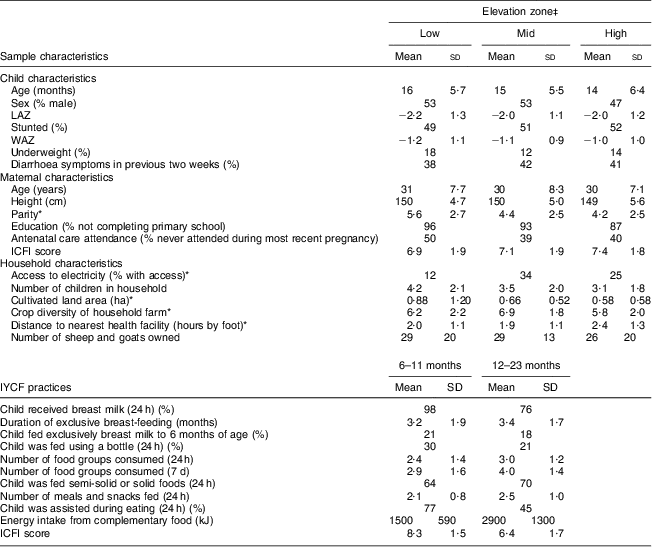
IYCF, infant and young child feeding; LAZ, length-for-age Z-score; WAZ, weight-for-age Z-score; ICFI, infant and child feeding index.
Data are presented as means and standard deviations or as proportions.
* Differences across elevation zones significant at P < 0·05.
† n 251 for the entire sample; n 95 children aged 6–11 months; n 156 children aged 12–23 months.
‡ Elevation (in metres above sea level): low = 2700–3300, n 84; mid = 3300–3800, n 84; high = 3800–4200, n 83.
Infant and young child feeding practices
Breast-feeding was practised by nearly all mothers through the first year of life. Mothers of children aged 12–23 months reported exclusively breast-feeding (i.e. feeding the child only breast milk, oral rehydration solution, vitamins, minerals or medicines) for 3·4 (sd 1·7) months (Table 2). Only 18 % of these mothers reported feeding exclusively breast milk until their child was 6 months of age.
The mean number of food groups consumed by children aged 12–23 months as reported in 24 h dietary recalls was 3·0 (sd 1·2). The mean number of food groups consumed in the previous week was higher at 4·0 (sd 1·4). More than three-quarters of children aged 6–11 months were assisted during eating (77 %), although fewer than half of older children were assisted (45 %). Children aged 12–23 months received meals and snacks less than three times daily (mean 2·5 (sd 0·96)).
The mean summary ICFI score was 8·3 (sd 1·5) and 6·4 (sd 1·7) for children aged 6–11 months and 12–23 months, respectively. The Cronbach's α coefficient of the ICFI was 0·67 including all children aged 6–23 months.
Association of infant and child feeding index with child length-for-age Z-score
In multiple regression models controlling for variables that could potentially confound the relationship between child feeding practices and child LAZ, the summary ICFI demonstrated a positive association with child LAZ such that increasing tertiles of the ICFI were associated with higher LAZ in children 6–11 months, 12–23 months and 6–23 months of age combined (P < 0·05; Table 3). The mean difference in LAZ between children aged 6–23 months in the high ICFI tertile compared with the low ICFI tertile was 0·47. Neither the breast-feeding and bottle-feeding component indicators of the ICFI, nor the 24h food group diversity indicator were associated with child LAZ. However, several component scores of the ICFI were positively associated with child LAZ. The 7 d food group frequency and 24 h feeding frequency indicators showed positive associations with child LAZ in children 12–23 months and 6–23 months of age (P < 0·05). Children who were fed semi-solid or solid foods in the previous 24 h or who were assisted during eating had higher LAZ than children fed only liquids or not assisted during eating. Among the covariates included in the regression models, child age was consistently negatively associated with child LAZ (P < 0·01) although no other covariates were associated with child LAZ in the models (data not shown). We also tested the interactions of maternal education with the summary ICFI and household SES with the summary ICFI. The interaction terms were not statistically significant and were therefore not included in final models.
Adjusted regression coefficients from models performing the regression of LAZ, energy consumption and MMDA v. the summary ICFI and ICFI component indicators, northern region of Potosí department, Bolivian Andes, March 2009Footnote †,Footnote ‡
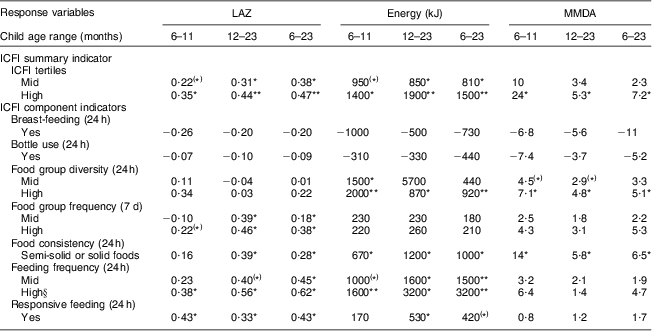
LAZ, length-for-age Z-score; ICFI, infant and child feeding index; MMDA, mean micronutrient density adequacy.
(*) P < 0·1; *P < 0·05; **P < 0·01.
† n 251 children aged 6–23 months; n 95 children aged 6–11 months; n 156 children aged 12–23 months.
‡ The following covariates were included in each model with the exception that maternal height was only included in models using child LAZ as the dependent variable: child age, child sex, child reported to have diarrhoea symptoms in the previous two weeks, maternal height, maternal education and household socio-economic status (using two rotated factors derived from factor analysis).
§ The highest two scores for the feeding frequency indicator were combined in the ‘high’ category shown for children aged 12–23 months.
Association of infant and child feeding index with child energy intake and dietary micronutrient adequacy
In multiple regression analyses controlling for variables that could potentially confound the relationship between child feeding practices and energy intake or the micronutrient adequacy of diets, the summary ICFI was positively associated with both child energy intake (kJ) and MMDA (Table 3). The 24 h food group diversity and food consistency indicators were positively associated with both energy intake and MMDA. The feeding frequency indicator was positively associated only with energy intake, as was the responsive feeding indicator (P < 0·05). No other component indicators of the ICFI were associated with energy intake or MMDA. Among the covariates included in the regression models, child age was positively associated with energy intake and MMDA in all models (P < 0·001) although no other covariates were associated with either outcome. The same interaction terms were tested in these models as in models using child LAZ as the outcome variable, but were similarly not statistically significant and not included in final models.
Determinants of infant and young child feeding practices
In multiple regression analyses performing the regression of the summary ICFI score v. potential determinants of child feeding practices, child age was consistently negatively associated with the ICFI (P < 0·05; Table 4). Maternal-level characteristics were not strongly associated with the ICFI. Mothers of children aged 6–23 months completing schooling beyond primary school did show higher scores on the ICFI compared with mothers completing no school or only some primary school (P < 0·05). The number of children in households and the amount of agricultural land cultivated by households were negatively associated with the ICFI (P < 0·05), whereas the number of livestock owned by households was positively associated with the ICFI score (P < 0·01). Based on differences in household characteristics observed across elevation zones, we hypothesized that the influence of agricultural production and livelihood factors on child feeding practices may differ depending on the elevation zone within which the household was located. We examined the interaction of household elevation with household food security, crop diversity of the household farm, livestock ownership and amount of agricultural land cultivated. In models that excluded any interaction terms, crop diversity was positively associated with the ICFI score (P < 0·05; data not shown). However, crop diversity also interacted with household elevation such that the crop diversity was more positively associated with child feeding practices in households at high elevations as compared with mid elevations (Table 4).
Adjusted regression coefficients from models performing the regression of the summary ICFI score v. potential determinants of IYCF practices, northern region of Potosí department, Bolivian Andes, March 2009
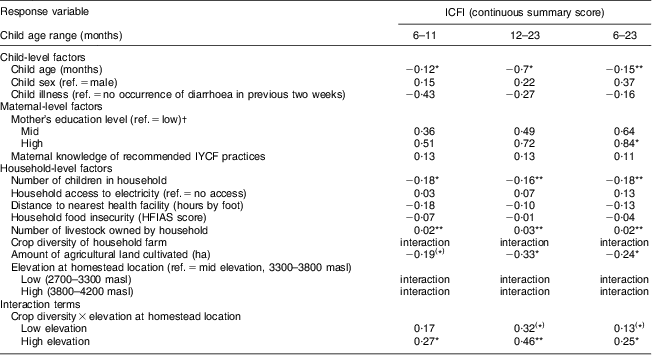
ICFI, infant and child feeding index; ref., reference category; IYCF, infant and young child feeding; HFIAS, Household Food Insecurity Access Scale; masl, metres above sea level.
(*) P < 0·1; *P < 0·05; **P < 0·01.
†Mother's education level: ‘low’ = no schooling or did not complete primary school; ‘mid’ = completed primary school, but no higher; ‘high’ = completed some schooling after primary school.
Discussion
Summary of findings
After controlling for several potential confounding variables, IYCF practices as measured by an ICFI showed positive associations with child LAZ (mean difference of 0·47 in LAZ between children aged 6–23 months in the high ICFI tertile compared with the low ICFI tertile), child energy intake (mean difference of 1500 kJ between high and low ICFI tertiles) and the micronutrient adequacy of child diets (mean difference of 7·2 % in MMDA between high and low ICFI tertiles). Examining determinants of IYCF practices as measured by the ICFI, mother's education, livestock ownership and the crop diversity of household farms were positively associated with the summary ICFI while amount of agricultural land cultivated was negatively associated with the ICFI. The association between crop diversity and child feeding practices was more strongly positive among households at high elevations (i.e. 3800–4200 masl) compared with households at mid elevations (i.e. 3300–3800 masl).
Associations of infant and child feeding index with child anthropometry and measures of dietary adequacy
The finding of a positive association between the ICFI and child LAZ in this Bolivian population aligns well with previous studies that have examined the relationship between summary child feeding indices and child anthropometric outcomes. Results from these studies generally show that in multiple regression analyses controlling for potential determinants of child anthropometric status, the ICFI is positively associated with child length/height-for-age Z-score, especially in rural populations (Table 5). The adjusted effect size of 0·47 in LAZ found in the current study (i.e. the difference in mean LAZ of children of caregivers in the lowest tertile of the ICFI compared with those in the highest tertile) is similar to the range of effect sizes reported in previous studies of 0·26 to 0·55 in height-for-age Z-score.
Studies examining the association between an ICFI and child anthropometry

ICFI, infant and child feeding index; HAZ, height-for-age Z-score; LAZ, length-for-age Z-score; BF, 24 h breast-feeding; RF, responsive feeding; BU, 24 h bottle use; DD, 24 h dietary (food group) diversity; FGF, 7 d food group frequency; MF, 24 h meal or feeding frequency; FV, 24 h food variety (individual foods); CF, complementary foods or feeding; FC, 24 h food consistency (liquid v. semi-solid); ES, effect size (refers to the difference in the indicator between the lowest and highest ICFI tertiles); WAZ, weight-for-age Z-score; WHZ, weight-for-height Z-score; WLZ, weight-for-length Z-score; MMDA, mean micronutrient density adequacy.
†Values in parentheses after DD and FGF are the maximum number of food groups.
‡'p’ indicates a positive association; ‘n’ indicates a negative association; ‘ø’ indicates no significant association.
§The ICFI was also positively associated with energy intake and MMDA (P < 0·0001).
The breast-feeding and bottle-feeding component indicators of the ICFI were not associated with child LAZ, child energy intake or MMDA (Table 3). It is possible that these indicators lack sensitivity and do not adequately capture the dynamics of the behaviours they seek to describe. Alternatively, the assumption of an average, age-specific breast milk intake for all children in the sample when calculating the recommended energy intakes from complementary foods for the MMDA may have dampened the relationship observed between breast-feeding and MMDA. Reverse causality, whereby smaller children are perceived as more vulnerable and are weaned later( Reference Simondon, Simondon and Costes 38 , Reference Habicht 39 ), may explain the negative relationship observed between continued breast-feeding and child LAZ.
The frequency of feeding different food groups throughout the previous week was positively associated with child LAZ. Dietary diversity indicators consistently show positive relationships with child LAZ in many contexts( Reference Arimond and Ruel 40 – Reference Menon, Bamezai and Subandoro 42 ). Similar to findings from other studies( Reference Arimond and Ruel 18 , Reference Sawadogo, Martin-Prevel and Savy 43 , Reference Wang, Chen and He 44 ), the number of meals and snacks consumed in the previous day was also positively associated with child LAZ. Women in northern Potosí bear numerous responsibilities both in the home and on the farm that limit the amount of time they can dedicate to child feeding( Reference Jones, Agudo and Galway 13 ). In this population where young children may only receive complementary foods twice in a day, finding ways to allow mothers to incorporate more frequent feeds into their daily routines may be particularly beneficial for the nutritional status of children. The finding that children who were assisted while eating were more likely to have a higher LAZ than children who were unassisted suggests that creating feeding environments wherein the caregiver is able to assist and actively respond to the needs of the child during feeding is also important.
The association observed between child feeding practices as measured by the ICFI and child LAZ is supported by the finding that the adequacy of child diets based on quantitative dietary recall data was substantially different across ICFI tertiles as well. Energy intakes demonstrated a dose–response relationship across increasing ICFI tertiles for all age groupings such that energy intakes were successively higher in higher tertiles. A greater frequency of feeding meals and snacks throughout the day and feeding semi-solid or solid foods (and therefore very likely more energy-dense foods as compared with liquids) were especially strongly associated with higher energy intakes (Table 3). Furthermore, the overall micronutrient adequacy of diets was also associated with the ICFI in a dose–response manner. As in previous studies that showed a positive association between more diverse diets and adequate micronutrient intakes( Reference Torheim, Ouattara and Diarra 45 , Reference Steyn, Nel and Nantel 46 ), more diverse diets in the current study were associated with higher MMDA. Overall, these patterns of associations, similar to those found in previous analyses in Latin American countries( Reference Ruel and Menon 17 ), indicate that the ICFI in our study may be an appropriate metric for assessing overall child feeding practices in this region of Bolivia.
Determinants of infant and young child feeding in the Bolivian highlands
The quality of IYCF practices was associated with several household-level indicators of wealth and social standing including the education level of the mother, the number of livestock owned by the household and the size of the household. Although more highly educated mothers showed more positive child feeding practices than those with less education, this relationship was not strong. This may be due to the marked homogeneity in levels of maternal education across the sample. The large majority of mothers in the sample never attended or completed primary school (Table 2). More than education, however, community leaders during formative research interviews identified livestock ownership as the main indicator of household wealth and social standing in the study region. Not surprisingly then, this variable was positively associated with child feeding practices. Measures of household SES have been shown to be associated with the quality of feeding behaviours, especially dietary diversity( Reference Rah, Akhter and Semba 47 , Reference Thorne-Lyman, Valpiani and Sun 48 ) and child anthropometric outcomes( Reference Wamani, Astrom and Peterson 49 ), in other settings.
Two indicators of farm system management and agricultural livelihoods also emerged as associated with the quality of child feeding practices, independent of other household SES factors (e.g. access to electricity and distance to health services). The crop diversity of household farms and the total amount of agricultural land dedicated to cultivating crops were both associated with IYCF practices, albeit in opposite directions. More diverse farms were associated with higher ICFI scores (P < 0·05). In sub-analyses we examined the association between crop diversity and the individual component ICFI indicators as well (data not shown). Crop diversity was most strongly associated with the frequency of feeding different food groups in the previous week (P < 0·05). However, it was not associated with the 24 h dietary diversity indicator. The 7 d food group frequency indicator may better represent usual diets than the 24 h dietary diversity indicator and therefore more accurately reflect variation in the sample with respect to dietary diversity. For subsistence households such as those in northern Potosí that do not purchase many food items, but rather consume mostly what they produce themselves, diversified production systems may be an important foundation for diversifying household and individual diets. Notably, the association between crop diversity and child feeding practices was more strongly positive among households above 3800 masl where the crop diversity of farms is not as great as at mid elevations (Table 2). At mid elevations, agroclimatic conditions are amenable to planting a wider breadth of crops than is possible in the extreme highlands. This finding suggests that efforts to diversify production systems in subsistence regions with low existing crop diversity may yield especially high returns with respect to diversifying diets.
While diversified agricultural production was positively associated with child feeding practices, the total amount of land devoted to agricultural production was negatively associated with these practices. This may seem counterintuitive and, indeed, formative research with community leaders indicated that larger agricultural landholdings were indicative of wealthier households. Yet, in-depth interviews with a sub-sample of the caregivers who participated in the study revealed that one of the most salient barriers to improving caregiving and feeding practices was the high burden of agricultural labour that they shouldered( Reference Jones, Agudo and Galway 13 ). Women in these rural communities are responsible for herding and pasturing animals, planting and harvesting crops, maintaining those crops throughout the growing season, and tending to numerous domestic responsibilities. The negative association between agricultural land area and child feeding practices, then, may well reflect the additional burden of labour placed on women from households cultivating more extensive land areas. Cultivated land area was correlated with the feeding frequency indicator (P < 0·05) and modestly correlated with the responsive feeding indicator of the ICFI (P = 0·07; data not shown). These findings align with the overwhelming sentiment expressed in the aforementioned qualitative interviews with caregivers that high agricultural labour burdens for women are a considerable barrier to improving the quality of child feeding practices.
Study weaknesses
Previous authors have remarked that child feeding practices may be endogenous to multiple regression models using child anthropometric status as an outcome( Reference Ruel and Menon 17 ). No suitable instrumental variables were identified from available data to address this concern and so the problem of endogeneity remains a limitation of these analyses. In addition, families in participating communities self-selected to participate in the household survey. Survey coverage was high, however, with 91 % of eligible families participating. Only one household refused to participate while all other households were not available for interview on any of the days that enumerators visited the community. The high proportion of participating households and the minimal refusals suggest that selection bias did not strongly influence results.
Conclusion
The feeding practices that mothers undertake to care for children in their first years of life are crucial for the healthy growth and development of children. The potential for agriculture to influence these practices is substantial. Diversifying agricultural production may not only help to sustain ecosystem services that support and sustain the natural environment (e.g. soil and water conservation, biodiversity or regeneration of organic materials)( 50 ), but may also positively influence the quality of household and child diets, especially for subsistence farming families. Increasing productivity and enhancing access to market opportunities are also important routes through which agriculture may influence nutrition and food security for smallholder farmers. However, investments in agriculture must recognize the important role of women in supporting healthy children and families as well as vibrant farms. Changes in production scales or farm management practices may improve yields and incomes, but they could also deleteriously impact women's caring capacity, health and nutritional status, especially if changes result in higher labour burdens for women or their loss of control over productive resources. Further research is needed to understand what investments are needed and how to implement them in order to support an agriculture that is productive, sustainable and profitable, but also supportive of the health and nutrition of farmers and their families.
Acknowledgements
Sources of funding: This research was supported by The McKnight Foundation and the National Institute of Diabetes and Digestive and Kidney Diseases (NIDDK; T32-DK 07158). The author takes responsibility for this content, which does not necessarily represent the official views of the NIDDK or the National Institutes of Health. The McKnight Foundation and the NIDDK had no role in the design, analysis or writing of this article. Conflict of interest: None. Authorship: A.D.J. designed the study, led all aspects of the field research and analysis, and wrote and revised the manuscript. Acknowledgements: The author is grateful to Drs Per Pinstrup-Andersen, Jere Haas, Rebecca Nelson, Dennis Miller and Peter Berti for reading and providing comments on earlier drafts of this manuscript. He is also grateful to Yesmina Cruz for her assistance with research implementation and data cleaning.



