


The economic downturn in 2008 has resulted in food insecurity becoming a huge public health burden in Europe( Reference Loopstra, Reeves and Stuckler 1 , Reference Loopstra, Reeves and McKee 2 ). The aftermath of the crisis led to an increase in unemployment and poverty in developed countries like Spain as well as contributed to issues in food affordability and nutritional status( Reference Ortiz-Miranda, Pérez and Alegre 3 ). In Spain, the gap between upper and lower social classes has widened significantly and child poverty rates are considerably higher than the rich world average( 4 ). The onus falls on notable reductions in social benefits and meal subsidies, which have greatly affected the well-being of individuals in Spain, particularly children( Reference Frazer and Marlier 5 ). Specifically, 20 % of the population in Catalonia, Spain are living under the poverty line( 6 ). This region also reported an increase of 23 % in child poverty in 2017, with 261 970 children living in severe poverty( 7 ). There have been studies that have explored the relationship between poverty and food insecurity and it has been noted that higher levels of food insecurity are experienced in households living near or under the poverty line( Reference Nord, Andrews and Carlson 8 ). However, it is not necessary that all households living in poverty are food insecure or all food-insecure households face poverty( Reference Coleman-Jensen, Rabbitt and Gregory 9 ). It is thereby essential to understand the definition of food insecurity.
Food insecurity does not simply refer to the lack of access to food. It is defined as ‘the limited or uncertain availability of nutritionally adequate and safe foods or limited or uncertain ability to acquire acceptable foods in socially acceptable ways’( Reference Anderson 10 , 11 ). Considering high food prices and low income, food-insecure individuals often find it difficult to afford nutritionally essential foods prepared under sanitary conditions( Reference Barrett 12 , Reference Kirkpatrick and Tarasuk 13 ). Moreover, food insecurity is paradoxical, as both forms of malnutrition – namely hunger and overnutrition – can exist within food-insecure households( Reference Tanumihardjo, Anderson and Kaufer-Horwitz 14 ).
Food insecurity can be measured indirectly through household income surveys or dietary interviews. However, one of the most reliable methods of direct assessment is through food insecurity questionnaires. The earliest instruments that measure household food insecurity include the Radimer–Cornell, which focuses on food quality and quantity in households( Reference Radimer, Olson and Greene 15 ). Since then other instruments have been developed, such as the Household Food Security Access Scale (HFIAS)( Reference Coates, Swindale and Bilinsky 16 ) by the US Agency for International Development and the Household Food Security Survey Module (US-FSSM)( 17 ) by the US Department of Agriculture.
There are household food insecurity questionnaires adapted and validated in different languages, including Spanish. The Spanish version of the US-FSSM( Reference Harrison, Stormer and Herman 18 ) particularly addresses Hispanic American households, while the Latin American and Caribbean Scale (ELCSA)( 19 ) has been developed to focus on food insecurity issues in Latin America and the Caribbean. Neither of these instruments has been validated in Spain.
In addition, all these instruments are focused on adults and their understanding of the food insecurity situation in the households, but do not represent the individual experiences of children, especially adolescents( Reference Fram, Frongillo and Draper 20 ). The Child Food Security Survey Module (CFSSM)( Reference Connell, Nord and Lofton 21 ), part of the US Department of Agriculture survey instruments, is a valid and reliable tool that can effectively measure adolescents’ perceptions of food insecurity in their households. The instrument is unique in its ability to be self-reported by adolescents and does not require the presence of adults. The specific aim of the CFSSM was to determine children’s perceptions from the eighteen-item US-FSSM instrument, suitably modify the items to make the language and formatting easier for older children and retain the originality of the items( Reference Connell, Nord and Lofton 21 ).
In this regard, based on qualitative interviews with children, nine items were chosen from the US-FSSM. There were two major changes made in the CFSSM. The first change was introduced in the response sets of the instrument, which maintained a multiple-choice format, but the responses were set as ‘all/most of the time’, ‘some of the time’ and ‘none of the time’, which makes it easier for children to answer. The second change was in the time frame of the items. The US-FSSM suggests a 12-month reference period. However, the authors shortened the time frame for the CFSSM to 1 month, considering possible recall bias in children( Reference Connell, Nord and Lofton 21 ). The nine-item CFSSM was piloted in a multiracial sample of 467 adolescent children aged 12–15 years in a secondary school in Mississippi, USA. The Rasch model was employed to analyse the responses to the food insecurity items. The reliability reported for the CFSSM was considered modest but acceptable by the authors. Both validity and reliability were determined to be adequate for both genders and for older children (≥12 years) but unsuitable for younger children( Reference Connell, Nord and Lofton 21 ).
Considering the lack of previous validated self-reported food insecurity instruments for adolescents in Spain, the main objectives of our study were to determine the: (i) internal structure of the Child Food Security Survey Module–Spanish version (CFSSM-S) with exploratory and confirmatory factor analysis (EFA and CFA) in a sample of Spanish adolescents; (ii) measurement invariance across gender, grade, weight status, socio-economic status (SES) and family affluence; and (iii) relationship of food insecurity scores with external variables (gender, grade, weight status, SES and family affluence). For the latter objective, no differences are expected by gender as not many studies have determined gender differences in food insecurity. Further, the existing few studies that have found differences have been in a developing country( Reference Hadley, Lindstrom and Tessema 22 ) and a rural community( Reference Shanafelt, Hearst and Wang 23 ). With respect to age or grade, no differences are expected. Adolescents are considered at a higher risk of food insecurity than younger children( Reference Shtasel-Gottlieb, Palakshappa and Yang 24 ), but our study includes only adolescents. There have been contradictory results regarding weight status and food insecurity, since some studies have determined an association between overweight and food insecurity in adolescents( Reference Holben and Taylor 25 , Reference Casey, Simpson and Gossett 26 ), while others have found no associations( Reference Dinour, Bergen and Yeh 27 , Reference Gundersen, Garasky and Lohman 28 ). Finally, food insecurity scores are anticipated to be higher in participants with lower SES and family affluence, as the risk of food insecurity increases in economically disadvantaged classes( Reference Sarlio-Lahteenkorva and Lahelma 29 ).
Methods
Participants
The initial sample consisted of 475 adolescents from a secondary public school in Terrassa, the third most populous (>200 000 inhabitants) urban industrial city in Catalonia( 30 ) (Spain). During the assessment, due to absenteeism (n 46) and lack of consent (parental or self; n 3), 426 adolescents (53 % boys and 47 % girls) took part in the study. The age of the participants ranged from 12 to 17 years (mean 13·8 (sd 1·2) years). Adolescents from the four years of Compulsory Secondary Education as per the Spanish education system (equivalent to US grades 7–10) took part in the present study. Participants were roughly distributed across grades: 26·1, 28·6, 25·6 and 19·7 % in grade 7, 8, 9 and 10, respectively. The origin of participants included 85·2 % Spanish, 4·2 % mixed origins, 3·8 % Hispanic Americans, 2·8 % Europeans, 2·1 % other origins, 1·2 % Sub-Saharan Africans and 0·7 % North Africans. The following categories of SES( Reference Hollingshead 31 ) were derived in participants: high, 14·0 %; medium-high, 24·5 %; medium, 24·7 %; medium-low, 27·1 %; low, 9·7 % (as explained in the ‘Measures’ section, ‘Socio-economic status’ subsection).
Measures
Child Food Security Survey Module–Spanish version
The CFSSM-S contains nine items focusing on participants’ perceptions of food insecurity in the households and their worries such as running out of food, eating only cheap foods, not being able to eat a balanced diet, eating less, cutting down on portions of food, skipping meals, going hungry and not eating for a whole day. The instructions, format, response sets and scoring of the CFSSM-S (see online supplementary material) were identical to the original instrument. In this regard, the responses were based on a Likert scale. Affirmative responses of ‘mucho’ (a lot) and ‘a veces’ (sometimes) were scored 1, while negative response ‘nunca’ (never) was scored 0. The scores were added and higher scores indicated food insecurity. The food security classification as per the original study( Reference Connell, Nord and Lofton 21 ) and the US Department of Agriculture’s new nomenclature( 32 ) established the following categories: 0–1=food secure; 2–5=low food security; and 6–9=very low food security. The reference period was set to 12 months as our sample included only adolescents.
Socio-economic status
We used the Four-Factor Index of Social Status( Reference Hollingshead 31 ) to determine SES of the household using a weighted average of each parent’s education and occupation level. It takes account of education scores ranging from 1 to 7 (i.e. primary school to graduate degree) and occupation scores ranging from 1 to 9 (i.e. unemployed to higher executives). According to Hollingshead, SES was calculated by adding Education score×3 and Occupation score×5; then, total scores, which ranged from 8 to 66, were categorized into five different levels: high (55–66), medium-high (40–54), medium (30–39), medium-low (20–29) and low (8–19).
Family Affluence Scale III
The Spanish version of the Family Affluence Scale III (FAS-III)( Reference Moreno, Ramos and Rivera 33 ) was used to measure family wealth based on material assets. Although parental income based on education and occupation is a good indicator of social class, the FAS is considered an effective predictor of household affluence, since adolescents often face difficulties in reporting the measure of family wealth( Reference Svedberg, Nygren and Staland-Nyman 34 ). It consists of six questions asking participants about the possession of a car and dishwasher, number of bedrooms, bathrooms, computers/mobile phones and vacations per year. A four-point ordinal scale ranging from 0 to 3 was used for the six questions. The scores were added. The range of responses varies from 0 to 13 and the cut-off points set for purchasing power were 0–6 for low, 7–9 for medium and 10–13 for high.
Weight status
Height in centimetres was measured by a SECA portable stadiometer, model 214 (20–207 cm; accuracy range of 0·1 cm) and weight in kilograms using SECA portable scales, model 8777021094 (0–200 kg; accuracy range of 0·1 kg). Height and weight of participants were taken in order to achieve the same consecutive measurements. Participants were requested to remove heavy articles of clothing including shoes, jackets, watches and mobile phones. Considering the weight of clothing worn by participants, corrected weight was assessed by subtracting 0·9 kg from males and 0·7 kg from females. BMI Z-scores and weight status using the WHO 2007 growth reference criteria( 35 ) were calculated based on participants’ height, weight and age.
Procedure
The Community and Health Services of the City Council of Terrassa facilitated the access to the secondary school. To ensure maximum participation, all details concerning the study were previously coordinated with the executive team of the secondary school. The administration of questionnaires and anthropometric measurements were completed during normal class hours within four days (1 h per class) in April 2017. Participants completed a paper-and-pencil booklet with a battery of validated questionnaires and socio-economic data. The research staff included postgraduate students who were trained to administer questionnaires, take the anthropometric measurements and provide instructions to participants. Following a standardized procedure, anthropometric measurements were carried out in situ in a private room near the classroom where the questionnaires were administered.
The adaptation of the CFSSM-S from English to Spanish was conducted in three main steps following the International Test Commission Guidelines( 36 , Reference Muñiz, Elosua and Hambleton 37 ). First, an expert, native in the target language (Spanish) and possessing a good level of the source language (English), translated the CFSSM instrument from English to Spanish. Second, the translated document was examined by a panel of experts comprising various academics from the field of eating behaviours and disordered eating. The expert panel compared the translated version with the original one, taking account of parameters such as item format, grammar and writing, culture, etc. by using a scoring based on a Likert scale of 1–5. In the case of discrepancies, the items were re-modified by the panel that further introduced minor changes to the translated document. Further, the translated document was administered to a group of fifteen adolescent boys and girls aged 12–16 years to make sure that it was easily comprehensible. Minor changes were made to the document. Finally, the official translation services of our university further corrected and approved the translated document according to the standards of the Council of Europe’s Common European Framework of Reference for Languages.
Statistical analysis
Analyses were conducted with the statistical software packages Mplus version 8 and IBM SPSS Statistics version 23. First, to determine the internal structure of the nine CFSSM-S items a cross-validation design was employed, by splitting the sample randomly in two sub-samples. In the first sub-sample, EFA with extraction of one and two factors was conducted, with geomin rotation for the two-factor solution. And in the second sub-sample, CFA was conducted to test if the EFA solutions could be replicated. For both analyses, the WSLMV (weighted least-squares means and variance) method of estimation for categorical items was applied, using the polychoric correlation matrix, given that responses to items were dichotomous. Goodness-of-fit was evaluated with the common indices( Reference Jackson, Gillaspy and Purc-Stephenson 38 ): χ 2, root-mean-square error of approximation (RMSEA), comparative fit index (CFI) and Tucker–Lewis index (TLI). We followed the usual cut-off points( Reference Brown 39 ). RMSEA<0·08 and CFI and TLI>0·90 would indicate acceptable fit, and RMSEA<0·06 and CFI and TLI>0·95 would indicate excellent fit.
Once dimensionality was established in the whole sample, assessment of measurement invariance was conducted to determine whether the questionnaire measured the same trait across different subgroups. Measurement invariance was conducted across the following groups of responses: gender, grade, weight status, SES and FAS. For variables with low (n<100) or very unequal sample sizes in some categories, the following groupings were considered: grade 7 and 8 v. grade 9 and 10; overweight and obesity v. normal weight (data for participants with underweight were excluded because of very low sample size, n 8); high, medium-high and medium v. medium-low and low SES; and low and medium v. high FAS. Measurement invariance involved four sequential steps: (i) configural (equal form); (ii) equivalence of factor loadings (metric or weak measurement invariance); (iii) item thresholds (scalar or strong measurement invariance); and (iv) item uniquenesses (strict measurement invariance). Model identification for each step was established using the fixed-factor method( Reference Ezpeleta and Penelo 40 ). Comparison between nested models was conducted with the scaled difference χ 2 test (DIFFTEST option of Mplus; α level set at 0·05).
Next, internal consistency was assessed with the omega coefficient( Reference McDonald 41 ). Finally, once measurement invariance was established, comparisons of observed CFSSM-S scores among gender, grade, weight status, SES and FAS was conducted with one-way ANOVA.
Results
The mean BMI of the total sample was 21·11 (sd 3·95) kg/m2. As per the WHO growth reference criteria for BMI-for-age( 35 ), participants in the present study were classified as: severely thin, 0·5 %; thin, 1·5 %; normal, 67·7 %; overweight, 21·6 %; and obese, 8·7 %.
Internal structure: dimensionality. Internal consistency
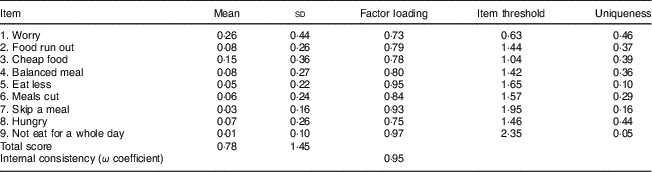
Descriptive statistics for the nine CFSSM-S items are displayed in Table 1. Mean values ranged from 0·01 (sd 0·10) to 0·26 (sd 0·44). There were no missing values for any item.
Descriptive statistics of items and standardized parameters for the one-factor solution obtained by confirmatory factor analysis (model F in Table 2): Spanish adaptation and validation of the Child Food Security Survey Module (CFSSM-S)
Regarding the cross-validation strategy, no differences were observed for gender, grade, weight status, SES and FAS between the two random sub-samples (P≥0·410). Two eigenvalues for EFA in the first sub-sample (n 205) were above 1 (5·89 and 1·24), with the scree test suggesting the extraction of only one factor. The one-factor model with EFA showed acceptable fit ( $\chi _{{(27)}}^{2} $
=66·0, RMSEA=0·084, CFI=0·952, TLI=0·937); all factor loadings were above 0·30 (0·54, 0·97) and statistically significant (P<0·05). The one-factor model with CFA in the second sub-sample (n 221) showed excellent fit (
$\chi _{{(27)}}^{2} $
=66·0, RMSEA=0·084, CFI=0·952, TLI=0·937); all factor loadings were above 0·30 (0·54, 0·97) and statistically significant (P<0·05). The one-factor model with CFA in the second sub-sample (n 221) showed excellent fit ( $\chi _{{(27)}}^{2} $
=29·5, RMSEA=0·021, CFI=0·995, TLI=0·993), with all standardized factor loadings above 0·30 (0·71, 0·96) and statistically significant (P<0·05). Moreover, we also examined a two-factor solution in both sub-samples. The two-factor model with EFA and geomin rotation in the first sub-sample showed better fit than the one-factor model (
$\chi _{{(27)}}^{2} $
=29·5, RMSEA=0·021, CFI=0·995, TLI=0·993), with all standardized factor loadings above 0·30 (0·71, 0·96) and statistically significant (P<0·05). Moreover, we also examined a two-factor solution in both sub-samples. The two-factor model with EFA and geomin rotation in the first sub-sample showed better fit than the one-factor model ( $\chi _{{(19)}}^{2} $
=22·2, RMSEA=0·029, CFI=0·96, TLI=0·993), but some parameters were unsatisfactory and a simple structure was not attained: item 7 showed a standardized factor loading above 1, items 2 and 5 showed cross-loadings (factor loadings above 0·30 in both factors) and the factor correlation was high (r=0·62). However, we tried to replicate this two-factor model with CFA in the second sub-sample, by allocating each item on to the factor with a higher factor loading (items 1–3–4 and 2–5–6–7–8–9). This two-factor model with CFA and correlated factors in the second sub-sample did not exhibit improved fit when compared with the one-factor solution (
$\chi _{{(19)}}^{2} $
=22·2, RMSEA=0·029, CFI=0·96, TLI=0·993), but some parameters were unsatisfactory and a simple structure was not attained: item 7 showed a standardized factor loading above 1, items 2 and 5 showed cross-loadings (factor loadings above 0·30 in both factors) and the factor correlation was high (r=0·62). However, we tried to replicate this two-factor model with CFA in the second sub-sample, by allocating each item on to the factor with a higher factor loading (items 1–3–4 and 2–5–6–7–8–9). This two-factor model with CFA and correlated factors in the second sub-sample did not exhibit improved fit when compared with the one-factor solution ( $\chi _{{(18)}}^{2} $
=28·1, RMSEA=0·019, CFI=0·996, TLI=0·994) and factor correlation was excessively high (r=0·92), indicating overlap between factors(
Reference Brown
39
).
$\chi _{{(18)}}^{2} $
=28·1, RMSEA=0·019, CFI=0·996, TLI=0·994) and factor correlation was excessively high (r=0·92), indicating overlap between factors(
Reference Brown
39
).
Considering these results, we selected the one-factor model. Table 1 shows the parameters for this model with CFA in the whole sample (n 426). Factor loadings (all statistically significant, P<0·05) and item thresholds ranged, respectively, from 0·73 and 0·63 (item 1) to 0·97 and 2·35 (item 9). Goodness-of-fit (model F in Table 2, which is commented upon in the ‘Internal structure: measurement invariance’ subsection) was excellent ( $\chi _{{(27)}}^{2} $
=43·4, RMSEA=0·038, CFI=0·984, TLI=0·979).
$\chi _{{(27)}}^{2} $
=43·4, RMSEA=0·038, CFI=0·984, TLI=0·979).
Fit indices for measurement invariance analyses across gender, grade, weight status, socio-economic status (SES) and family affluence (FAS): Spanish adaptation and validation of the Child Food Security Survey Module (CFSSM-S)
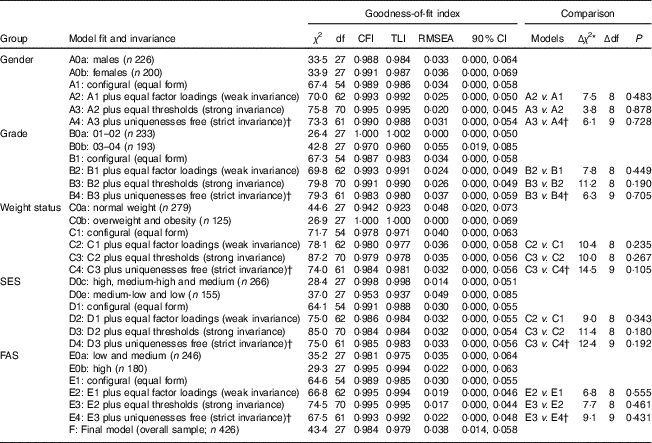
CFI, comparative fit index; TLI, Tucker–Lewis index; RMSEA, root-mean-square error of approximation.
* Δχ 2 based on DIFFTEST approach obtained from Mplus (scaled difference χ 2 test for WLSMV (weighted least-squares means and variance) method of estimation).
† Test for invariance of uniquenesses for categorical indicators proceeds backwards (for more details, see Muthén and Muthén( Reference Muthén and Muthén 51 ); also, e.g., http://www.lesahoffman.com/CLP948/CLP948_Lecture07_Invariance.pdf).
Omega internal consistency value derived from CFA in the whole sample was excellent (ω=0·95).
Internal structure: measurement invariance
Table 2 displays the results of CFA baseline models by group and measurement invariance analyses. Fit for baseline models (model 0) and for configural invariance across groups of responses (model 1) was satisfactory (RMSEA≤0·055, CFI≥0·942, TLI≥0·923). Full weak (equivalence of factor loadings), strong (equivalence of item thresholds) and strict (equivalence of uniqueness invariance) was achieved (P≥0·105) for all the groups of responses considered. These findings provide support for the equivalence of CFSSM-S scores across gender, grade, weight status, SES and FAS, and comparisons among these groups will be readily interpretable.
Relationship with external variables
Direct CFSSM-S scores were calculated by applying the simple weighting method( Reference Abad, Olea and Ponsoda 42 ) given the adequate results for CFA and measurement invariance analyses. Table 3 shows descriptive statistics and comparison among groups. No differences were found by gender (P=0·344), grade (P=0·765) and weight status (P=0·061), whereas CFSSM-S scores differed for SES and FAS (P≤0·001) showing a linear trend (P≤0·05): the lower the SES and FAS, the higher the CFSSM-S scores. Additionally, for SES, a slightly but statistically significant quadratic trend was also observed (P=0·031), because the increase in CFSSM-S between participants with medium-low and low SES was higher than that for the remaining contiguous SES levels.
Descriptive statistics for the total CFSSM-S score and comparison by gender, grade, weight status, socio-economic status (SES) and family affluence (FAS): Spanish adaptation and validation of the Child Food Security Survey Module (CFSSM-S)
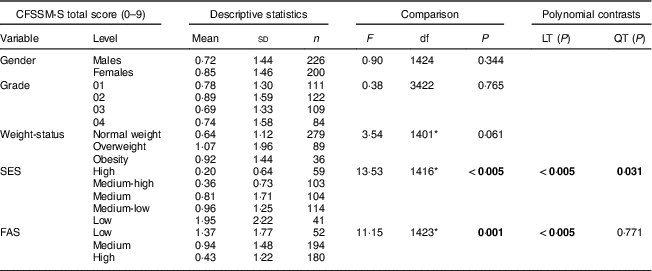
LT, linear trend; QT, quadratic trend.
Significant P values (P<0·05) are indicated in bold font.
* Df corrected for non-homogeneity of variances (Levene’s test).
Frequency of food insecurity
Following the food security classification established in the original instrument( Reference Connell, Nord and Lofton 21 ) and according to the US Department of Agriculture’s new nomenclature( 32 ), 1·9 % of participants experienced very low food security, 16·4 % had low food security and 81·7 % were found to be food secure; no differences were found by gender (P=0·540) or grade (P=0·812). As in Table 1, 26 % of participants worried a lot or sometimes about food running out, 8 % ran out of food, 15 % consumed cheap foods, 8 % could not eat a balanced meal, 5 % had to eat less, 6 % had to cut the size of their meals, 3 % had to skip a meal, 7 % were hungry and 1 % did not eat for a whole day.
Discussion
The current study examined the validity of the CFSSM-S scores in terms of internal structure, measurement invariance and relationship with external variables. Our study is the first in Spain to carry out the adaptation and validation of a self-reported food insecurity questionnaire for adolescents. The results indicate that this instrument is valid and reliable for measuring perceptions of food insecurity adequately in Spanish adolescents.
The first objective was to examine the internal structure of the instrument. Our results showed that a one-factor model obtained a better fit, supporting the unidimensionality of the CFSSM-S and that all nine items belong to one factor, namely ‘food insecurity’. We found that the endorsement of items in our sample was similar to the original instrument( Reference Connell, Nord and Lofton 21 ); moreover, the ordering by groups of items based on threshold estimates in our CFA was almost identical to those obtained in the CFSSM with the Rasch model. Item 1, the least severe item of food insecurity, received the maximum number of affirmative responses. Worry or uncertainty about food was an expected psychological response from participants who were anxious about maintaining sufficient food supplies in their household( Reference Tarasuk 43 ). In our study, the second and third most endorsed items, items 3 and 4 about ‘consumption of cheap food’ and ‘lack of balanced diets’, respectively, indicate that the adolescents were aware of the differences in diet quality. This affirms the fact that adolescents despite their knowledge about diet quality may have less control over the management of food resources at home( Reference Connell, Nord and Lofton 21 ). As expected, item 9 was the most severe indicator of food insecurity that questions participants about not eating for a whole day, thus depicting insufficient food intake, and it was also the item which was least endorsed in both studies.
The second objective of the current study was to examine the measurement invariance of the instrument. The results indicate that this instrument can be used for both boys and girls, within a wide age range of adolescence (12–17 years) and for different levels of weight status, SES and FAS. This ensures that the instrument is measuring the same construct across these groups, providing support for making comparisons among these groups in a readily interpretable way.
As equivalence for these groups had been established, further we proceeded with our third objective, which was to study the mean differences in food insecurity scores of the groups. The results indicate that there were no differences with gender. There are very few studies focused on gender differences in food insecurity. These studies indicate that both adolescent boys and girls were equally likely to experience severe food insecurity in their households, although girls were more likely to report food insecurity than boys( Reference Hadley, Lindstrom and Tessema 22 , Reference Shanafelt, Hearst and Wang 23 ). Further, gender differences were found to be more prominent in severely food-insecure households( Reference Hadley, Lindstrom and Tessema 22 ). However, these studies were conducted in a rural community and a developing country while our sample included adolescents from a large city in the Barcelona area (Spain), which could explain the lack of gender differences. We concur that more studies are required to determine the association between gender and food insecurity. With regard to age, there have been studies indicating that food insecurity is more common in older children than younger children( Reference Shtasel-Gottlieb, Palakshappa and Yang 24 ). Food insecurity is notably higher in households with adolescents because parents often protect younger children( Reference Nord 44 ). Our study included only adolescents; hence, as expected, we were unable to find these differences based on age or grade.
Regarding weight status, our results are in alignment with previous studies( Reference Eisenmann, Gundersen and Lohman 45 , Reference Nguyen, Ford and Yaroch 46 ) indicating that even though there are no statistically significant differences compared with the normal group, the overweight and obese groups showed slightly higher food insecurity scores. Weight status has been a highly debated subject in the field of food insecurity. There have been inconsistent findings about the association of overweight and obesity with food insecurity( Reference Dinour, Bergen and Yeh 27 ). However, some studies have confirmed this association in food-insecure adolescents aged 12–17 years( Reference Holben and Taylor 25 , Reference Casey, Simpson and Gossett 26 ). Food-insecure households in general consume cheap, energy-dense foods and experience intermittent patterns of eating less when resources are limited and overeating when resources are readily available( Reference Tester, Lang and Laraia 47 ). This results in drastic changes in food intake, which in turn could contribute to weight gain( Reference Olson, Bove and Miller 48 ). With respect to SES and FAS, our results showed that food insecurity scores increased with lower SES and FAS. These results are in alignment with previous studies that indicate food insecurity is associated with low SES( Reference Sarlio-Lahteenkorva and Lahelma 29 , Reference Wight, Kaushal and Waldfogel 49 ) and greater material hardships( Reference Loopstra and Tarasuk 50 ).
Based on the food security classification of the original instrument( Reference Connell, Nord and Lofton 21 ) and the US Department of Agriculture’s new nomenclature( 32 ), 1·9, 16·4 and 81·7 % of participants in our study and 5·1, 18·4 and 76·7 % in the original study belonged to the groups ‘very low food security’, ‘low food security’ and ‘food secure’, respectively. Our results indicate that 18·3 % of participants experienced food insecurity, which is a fairly high percentage for a developed country like Spain. It would be important to emphasize that 26 % of adolescents in our study worried about food, 15 % considered the quality of their food to be cheap, 7 % have been hungry and 3 % skipped meals. Although the results in both studies are very similar, there are slight differences in the ‘very low food security’ group. There are more participants with ‘very low food security’ in the original study compared with ours. Our sample consisted of a majority of participants from medium and medium-low SES, from the large metropolitan city of Terrassa, which could explain the reduced number of participants with ‘very low food security’. Although the original study did not provide socio-economic information of their participants, the data were collected from a local school in the state of Mississippi, which reports the highest prevalence rate of food insecurity in the USA( Reference Coleman-Jensen, Rabbitt and Gregory 9 ). This could explain the differences in the ‘very low food security’ group in both studies. However, the results of the prevalence rate of food insecurity in our study should be considered with caution, given that our sample is not representative of the entire population. It is important to remember that the main objective of the study was to determine the internal structure of the CFSSM-S, measurement invariance across different variables and its relationship with external variables. Future studies with representative samples will be able to determine prevalence figures of food insecurity in different Spanish populations. In general, the relationships of food insecurity scores with all external variables assessed are in line with results from previous studies, providing support for the validity of the questionnaire.
There are some limitations that warrant considerations. Our study included a community sample. As a result, due to insufficient number of cases, we could not analyse the measurement invariance and mean differences for the weight status categories of ‘thin’ and ‘severely thin’, while the ‘overweight’ and ‘obese’ groups had to be paired together. Another limitation that we must consider is that adolescents self-reported their sociodemographic information. Also, future research could focus on the test–retest reliability of CFSSM-S scores, as our study determined internal consistency only.
However, our study has a number of strengths. The CFSSM-S is the first validated self-reported instrument in Spain, which can be used with psychometric guarantees to measure food insecurity in adolescents. Our study not only assessed the dimensionality of the instrument, but also carried out the measurement invariance, which indicates that the CFSSM-S is a suitable instrument for older children aged 12–17 years of both genders and across a wide range of weight status, SES and FAS categories. Further, the anthropometric measurements of weight and height were not self-reported by adolescents, rather they were collected in situ by trained research staff following a standardized protocol.
Conclusion
We found the CFSSM-S to be a valid and reliable instrument which can be used by researchers, public health professionals and interested non-governmental organizations. Even though the prevalence rate of food insecurity might vary across different regions in Spain and within Catalonia itself, our findings indicate that the Spanish adaptation of CFSSM can be used in different regions of Spain. The CFSSM-S can be employed to assess food insecurity and gain more information about adolescent health in relation to food insecurity in both genders and across a wide age group and different weight status categories, SES and FAS levels in Spanish adolescents.
Acknowledgements
Acknowledgements: The authors would like to thank the Health and Community Services of the City Council of Terrassa and the Catalan Public Health Agency for facilitating access to the data sample. They are also grateful for the participation and support of the staff and students of the secondary school, IES Torre del Palau. Financial support: This research received no specific grant from any funding agency in the public, commercial or not-for-profit sectors. Conflict of interest: N.S.K., E.P., A.F.D. and D.S.-C. declare no conflicts of interests. Authorship: D.S.-C., A.F.D. and N.S.K. contributed to the study design and data collection procedure. D.S.-C. and A.F.D. carried out the adaptation of the questionnaire into Spanish. E.P. and A.F.D. carried out the statistical analyses. N.S.K. wrote the paper supervised by D.S.-C. except the ‘Statistical analysis’ and ‘Results’ sections, which were written by E.P. and A.F.D. The drafts were reviewed by D.S.-C., E.P. and A.F.D. All authors consented to the final manuscript. Ethics of human subject participation: This study was conducted according to the guidelines laid down in the Declaration of Helsinki and all procedures involving human subjects were approved by the ethics committee of Universitat Autònoma de Barcelona. Written informed consent was obtained from both participants and parents of participants.
Supplementary material
To view supplementary material for this article, please visit https://doi.org/10.1017/S1368980018001672



