



Bread, most commonly wholegrain bread, is the main breakfast and lunch food in Norway, and is also often eaten at the evening meal( 1 ). This makes bread the most important source of whole grains in the country( 2 ). The consumption of wholegrain foods has been calculated to be four times higher in Norway than in the USA( Reference Jacobs, Meyer and Solvoll 3 ). Wheat flour is the most frequently sold flour in Norway; in 2005, 81 % of the flour sold was wheat and 8 % was rye( 4 ).
Whole grains contain bran, germ and endosperm, and contain more fibre, vitamins, minerals and phytochemicals than refined grains( Reference Slavin 5 ). There has been growing interest in the possible associations between the consumption of whole grains and disease risk. Inverse associations have been found between the consumption of whole grains and the incidence of CVD( Reference Mellen, Walsh and Herrington 6 , Reference Akesson, Andersen and Kristjansdottir 7 ), type 2 diabetes( Reference Akesson, Andersen and Kristjansdottir 7 – Reference Priebe, van Binsbergen and de Vos 9 ) and colorectal cancer( Reference Akesson, Andersen and Kristjansdottir 7 , Reference Aune, Chan and Lau 10 ). In Norway, wholegrain bread consumption has been found to be inversely associated with total mortality( Reference Jacobs, Meyer and Solvoll 3 ).
Several studies have indicated that consumption of whole grains is associated with a healthy lifestyle and favourable socio-economic factors. In the USA, consumers of whole grains were found to be more likely have a higher income, be more educated, be non-smokers and be exercisers( Reference Cleveland, Moshfegh and Albertson 11 ). Among British adults, consumption of wholegrain foods was more prevalent in non-smoking individuals and individuals from higher socio-economic groups( Reference Lang, Thane and Bolton-Smith 12 ). In Denmark, consumption of wholegrain products was positively associated with cycling, taking dietary supplements and high school education; and negatively associated with alcohol consumption, BMI and smoking( Reference Egeberg, Frederiksen and Olsen 13 ). On the other hand, a study from Finland found that rye bread consumption was associated with low education and rural area of residence( Reference Prättälä, Helasoja and Mykkänen 14 ).
Bread is an important energy source in Norway( 15 ). Little research has been done to determine the characteristics of Norwegian wholegrain bread eaters. The aim of the present paper was to investigate dietary and non-dietary characteristics of female Norwegian wholegrain bread eaters in a population with a high consumption of wholegrain bread.
Methods
Study population and exclusion criteria
The present paper includes a cross-sectional sample of the Norwegian Women and Cancer (NOWAC) study. The NOWAC study is a nationwide prospective cohort study consisting of approximately 172 000 women. Enrolment has taken place over a 15-year period. The first NOWAC study participants were enrolled in 1991 and follow-up questionnaires are sent approximately every 6th year after enrolment. The NOWAC study, including validation studies, is described elsewhere( Reference Lund, Dumeaux and Braaten 16 – Reference Borch, Ekelund and Brage 19 ).
In the present paper, 90 592 women who answered a questionnaire in the period 2002–2005 (27 434 first questionnaires, 28 499 second questionnaires and 34 659 third questionnaires) were eligible for inclusion. Women with zero energy intake (n 93) and missing information for weight (n 3049) were excluded, followed by participants in the top 1 % (n 875) and bottom 1 % (n 875) of the ratio of energy intake to BMR, and women with missing information for all three bread questions (n 1123). Finally, women with missing information for one or more of the non-dietary factors (education, height, level of physical activity, smoking, number of persons in household and self-reported health status; n 15106) were excluded, leaving 69 471 women for the present analyses.
The study was conducted according to the guidelines laid down in the Declaration of Helsinki. The NOWAC study was approved by the Regional Committee for Medical Research Ethics and the Norwegian Data Inspectorate. Informed consent to take part in the NOWAC study was obtained.
Data
All information used in the analyses consisted of self-reported data from the most recent questionnaire except for information on age and municipality, which were extracted from national registries, and information on education, which was taken from the first questionnaire for all included participants. The questionnaire included a semi-quantitative FFQ by which participants reported their average intake of food items during the last year by ticking fixed frequencies. The FFQ has been validated( Reference Hjårtaker, Andersen and Lund 20 ) and a test–retest reproducibility study of the questions therein has also been conducted( Reference Parr, Veierod and Laake 21 ).
To calculate the intake of each food item (in grams), the Norwegian Weight and Measurement Table was used( 22 ). Daily intakes of energy and nutrients were computed based on the Norwegian Food Composition Table( 23 ).
Standardization of bread consumption and creation of two wholegrain bread consumption groups
Participants reported their consumption of wholegrain bread, partly refined bread and refined bread (in slices). Six different frequency options for bread consumption were included in the questionnaire (zero/seldom, 1–4 slices/week, 5–7 slices/week, 2–3 slices/d, 4–5 slices/d and ≥6 slices/d). Wholegrain bread consumption was standardized. One slice of wholegrain bread was defined as one standardized slice of wholegrain bread. The National Council on Nutrition has estimated that the proportion of whole grains in wholegrain bread is 40 % of the product weight; in partly refined bread the proportion is 20 %( 2 ). The product weight of partly refined bread has been estimated to be three-quarters that of wholegrain bread( 22 ). Therefore one slice of partly refined bread was defined as 0·375 (0·5×0·75) of a slice of wholegrain bread. It was assumed that refined bread did not contain whole grains. Zero/seldom intake was categorized as no consumption. Missing information for any type of bread was regarded as no consumption for that particular type.
The participants were further divided into two groups according to daily consumption of standardized slices of wholegrain bread: the high wholegrain bread consumption group (≥4 standardized slices of whole grain bread daily) and the low wholegrain bread consumption group (<4 standardized slices of wholegrain bread daily). Twenty-four per cent of the participants (16 729 women) were in the high consumption group, with the rest in the low consumption group.
Statistics
The descriptive characteristics of the participants are presented as percentages or as median values with 5th and 95th percentiles. The associations between the non-dietary factors and the dietary factors and wholegrain bread consumption were investigated in binary logistic regression models with the wholegrain bread consumption group as the dependent variable. Odds ratios, 95 % confidence intervals, Wald tests and, for relevant factors, tests for linear trend across medians within each category were performed. All logistic regression models were adjusted by sub-cohort (answering first, second or third questionnaire). Stratification by sub-cohort instead of adjusting for sub-cohort did not influence the estimates. Unadjusted estimates and age-adjusted estimates were similar. The Hosmer–Lemeshow goodness-of-fit test was performed for all logistic regression models. Possible interaction effects were examined (age v. BMI, age v. number of persons in household, age v. self-reported health status and BMI v. energy intake).
When investigating the associations between non-dietary factors and wholegrain bread consumption, age-adjusted, sociodemographic-adjusted (age, area of residence, education, number of persons in household) and mutually adjusted models were used. The independent variables were modelled as categorical: age (5-year groups), area of residence (East, Oslo, South-East, West, Middle, North), education (<10 years, 10–12 years, >12 years), BMI (<20·0 kg/m2, 20·0–24·9 kg/m2, 25·0–29·9 kg/m2, ≥30· kg/m2), level of physical activity (according to a 10-point scale: 1–3, low; 4–7, moderate; 8–10, high), smoking (never, former, current), number of persons in household (1, 2, >2) and self-reported health status (bad/very bad, good, very good).
When investigating the associations between the dietary factors and wholegrain bread consumption, age-adjusted models, age- and energy-adjusted models and models adjusted for energy intake and all non-dietary factors were used. Energy intake was modelled continuously. Food items and alcohol consumption were independent variables that were categorized according to the number of women with zero/seldom intake, i.e. when less than 5000 women had zero/seldom intake (white and brown cheese, fruit, vegetables, fish and fish products, meat and meat products, sugar), the food item was categorized into quartiles; when more than 5000 women had zero/seldom intake (milk, coffee, alcohol), those with zero/seldom intake made up one category and the rest were divided by the median into two groups. Yoghurt was categorized according to the four categories in the FFQ. Energy intake was categorized into quartiles.
The following micronutrient intakes from food were also included in the analyses: thiamin, vitamin B6, niacin equivalents, folate, riboflavin, vitamin E, Fe, P, Mg, Zn, Se and Cu. Means and 95 % confidence intervals adjusted for age (continuously) and sub-cohort (categorically) are presented for micronutrient intake per day and per 10 MJ. The unadjusted means per day and unadjusted means per 10 MJ for the micronutrients were almost the same as the age- and sub-cohort-adjusted means; therefore only adjusted means are presented. The difference between the micronutrient mean intake per day and per 10 MJ in the low and the high wholegrain bread consumption groups was examined by linear regression analysis. The dependent variable was micronutrient intake per day or micronutrient intake per 10 MJ, and the independent variables were wholegrain bread consumption group (low, high), age (continuously) and sub-cohort (categorically).
Analyses were carried out using the STATA statistical software package version 13·0. Stratification by sub-cohort was performed in the SAS statistical software package version 9·2.
Results
Dietary and non-dietary characteristics
Total daily bread intake in grams and the median intake of slices of wholegrain bread in the high wholegrain bread consumption group were almost twice as high as values from the low wholegrain bread consumption group (Table 1). The median consumption of partly refined and refined bread was zero in both groups. The median daily consumption of standardized slices of wholegrain bread was 2·5 in the low consumption group and 4·5 in the high consumption group.
Bread consumption in the low and high wholegrain bread consumption groups (standardized slices of wholegrain bread) in the Norwegian Women and Cancer study

P5–P95, 5th–95th percentile.
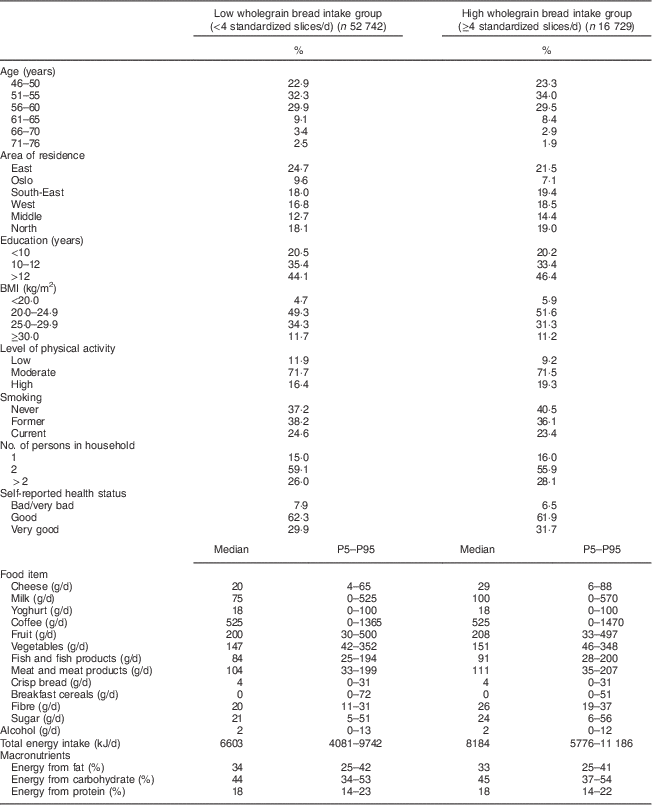
In both consumption groups the highest proportion of women was aged 51–55 years old and about 50 % lived in South or East Norway (Table 2). Moreover, almost half of the women had more than 12 years of schooling, half reported having a BMI between 20·0 and 24·9 kg/m2, almost three-quarters reported a moderate level of physical activity and almost a quarter reported that they were smokers.
Participant characteristics in the low and high wholegrain bread consumption groups (standardized slices of wholegrain bread) in the Norwegian Women and Cancer study
P5–P95, 5th–95th percentile.
The median consumption of the following food items was the same in the two wholegrain bread consumption groups: yoghurt, coffee, crisp bread and breakfast cereals. The median consumption of cheese, milk, fruit, vegetables, fish and fish products, meat and meat products, fibre and sugar was higher in the high consumption group. Median daily energy intake was 8184 kJ in the high and 6603 kJ in the low consumption group. The median proportions of energy from fat, carbohydrate and protein were almost the same in the two consumption groups (Table 2).
Associations between non-dietary factors and wholegrain bread consumption
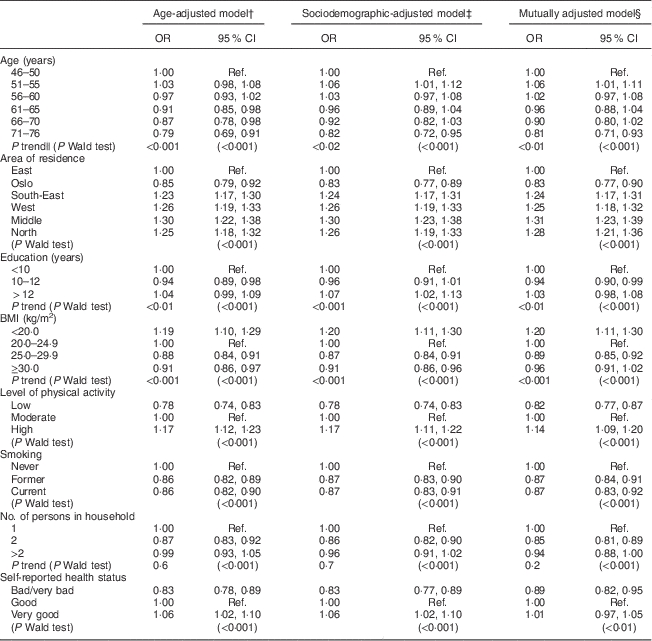
All of the investigated non-dietary factors were significantly associated with wholegrain bread consumption in all models (P Wald test <0·01; Table 3). The sociodemographic-adjusted OR and mutually adjusted OR for the different non-dietary factors did not differ much from the age-adjusted OR.
Odds ratios for high wholegrain bread intakeFootnote * according to non-dietary factors in the Norwegian Women and Cancer study
Ref., referent category.
* Intake of standardized slices of wholegrain bread: high, ≥4 slices (n 16 729); low, <4 slices (n 52 742).
† Adjusted by age and sub-cohort.
‡ Adjusted by age, area of residence, education, number of persons in household and sub-cohort.
§ All variables are mutually adjusted for each other and sub-cohort.
|| P trend: trend across medians within each category.
Age was inversely associated with wholegrain bread consumption group in all models (P trend <0·02). Women aged 71–76 years had the lowest odds of being in the high wholegrain bread intake group compared with women aged 46–50 years in the mutually adjusted model (19 % lower odds). Living in Oslo was associated with lower odds of being in the high wholegrain bread intake group compared with living in East Norway (17 % lower odds in the mutually adjusted model). With the exception of Oslo, living in all other geographical regions compared with East Norway gave higher odds of being in the high wholegrain bread consumption group (24–31 % higher odds in the mutually adjusted model). Education was found to have little impact on the odds of being in the high wholegrain bread consumption group. BMI was inversely associated with wholegrain bread consumption (P trend <0·001 in the mutually adjusted model). Those with a BMI below 20·0 kg/m2 compared with 20·0–24·9 kg/m2 had 20 % higher odds of being in the high wholegrain bread consumption group in the mutually adjusted model. Having a low or high level of physical activity, compared with a moderate level, gave lower or higher odds of being in the high wholegrain bread consumption group in the mutually adjusted model (respectively 18 % lower and 14 % higher odds in the mutually adjusted model). In all models current and former smokers had slightly lower odds of being in the high wholegrain bread consumption group compared with never smokers. Living with one other person gave slightly lower odds of being in the high wholegrain bread consumption group in all models compared with living alone. The same was found for bad/very bad self-reported health status compared with good self-reported health status. No relevant interactions were found.
Associations between dietary factors and wholegrain bread consumption
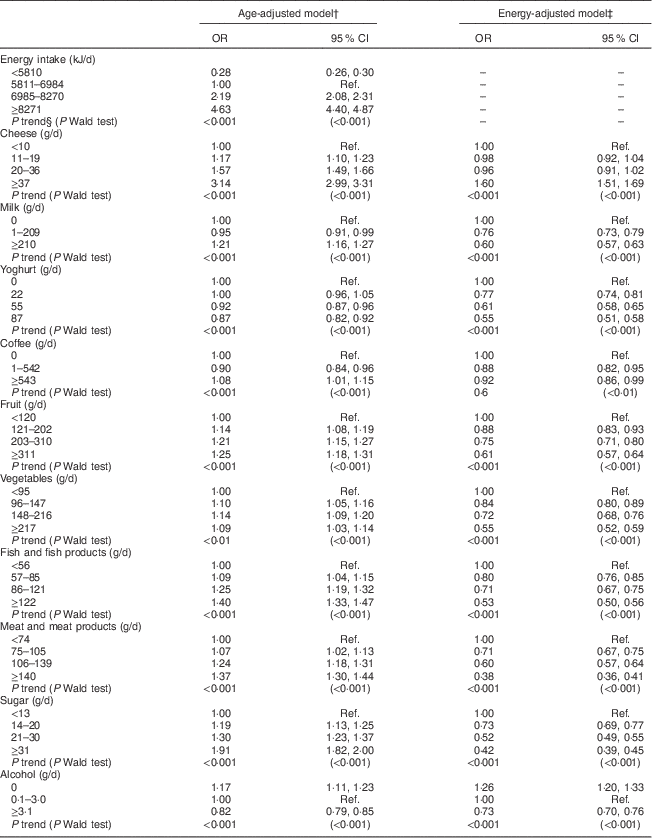
All of the dietary factors (total energy intake, consumption of investigated food items and alcohol consumption) were significantly associated with wholegrain bread consumption in the age-adjusted and energy-adjusted model (P Wald test <0·001 for all factors except for coffee, P Wald test <0·01 for coffee; Table 4). When the women were divided into quartiles according to energy intake, the OR for being in the high wholegrain bread consumption group was 0·28, 2·19 and 4·63 for the first, third and fourth quartile, respectively, compared with the second quartile.
Odds ratios for high wholegrain bread high intakeFootnote * according to dietary factors in the Norwegian Women and Cancer study
Ref., referent category.
* Intake of standardized slices of wholegrain bread: high, ≥4 slices (n 16 729); low, <4 slices (n 52 742).
† Adjusted by age and sub-cohort.
‡ Adjusted by age, energy intake and sub-cohort.
§ P trend: trend across medians within each category.
Intake of many of the food items was positively associated with wholegrain bread consumption in the age-adjusted model (cheese, fruit, fish and fish products, meat and meat products, and sugar; P trend <0·001). In the same model yoghurt and alcohol consumption were inversely associated with wholegrain bread consumption (P trend <0·001).
In the energy-adjusted model consumption of all the investigated food items, except for cheese and coffee, was inversely associated with wholegrain bread consumption (P trend <0·001). High cheese consumption was associated with high wholegrain bread consumption in the energy-adjusted model (OR=1·60; 95 % CI 1·51, 1·69).
Further adjustment for the rest of the non-dietary factors did not alter the OR for the food items or alcohol in the energy-adjusted model in Table 4 much (results not shown). An interaction was found between BMI and energy intake on wholegrain bread intake. However, including the interaction term in the analyses did not alter the OR for the food items or alcohol in the energy-adjusted model in Table 4 much (results not shown).
Intakes of micronutrients in the two wholegrain bread consumption groups
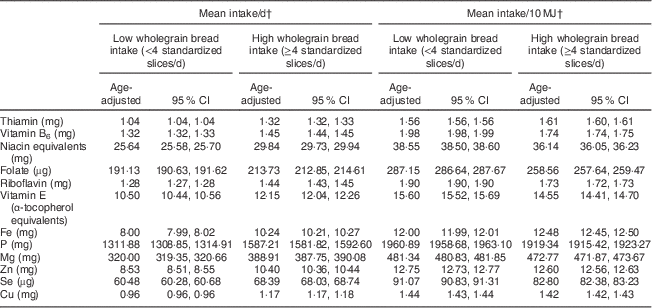
The mean age-adjusted intakes of all investigated micronutrients were higher in the high wholegrain bread consumption group (Table 5). After taking energy intake into account, the mean intake per 10 MJ for most micronutrients was lower in the high wholegrain bread consumption group. The exceptions were thiamin and Fe, for which the mean intake per 10 MJ was significantly higher in the high wholegrain bread consumption group compared with the low wholegrain bread consumption group.
Age-adjustedFootnote * mean intake per day and mean intake per 10 MJ of micronutrients from food by intake of wholegrain bread in the Norwegian Women and Cancer study
* The mean intake per day and the mean intake per 10 MJ are adjusted by age and sub-cohort.
† In linear regression, P values <0·001 were found when examining difference between the low and high intake group.
Discussion
In the present study investigating dietary and non-dietary characteristics of female Norwegian wholegrain bread eaters, we found that energy intake was strongly positively associated with wholegrain bread consumption. High level of physical activity and living outside Oslo or in East Norway were associated with higher wholegrain bread consumption. The age-adjusted, sociodemographic-adjusted and mutually adjusted OR for the different non-dietary factors did not differ much. Compared with the lowest intake group of many of the investigated food items (fruit, fish and fish products, meat and meat products, sugar), higher intake of these items was associated with higher odds of high wholegrain bread consumption in age-adjusted models, but after adjustment for energy intake, opposite results were found for these food items. Only high intake of cheese was associated with high wholegrain bread consumption regardless of energy adjustment. Further adjustment for the rest of the non-dietary factors did not alter the age- and energy-adjusted OR for the food items much. Women in the high wholegrain bread consumption group had the highest absolute mean intakes of all the examined micronutrients, but after taking energy intake into account, only the mean intakes of thiamin and Fe were found to be higher in the women with high wholegrain bread consumption.
The results of the present study must be considered in the light of its limitations. Retrospective assessment of the ‘usual amount’ of wholegrain, partly refined and refined bread consumption is difficult; assessing the amount consumed and choosing the right bread categories are assumed to be difficult. At the time of the present study, no standardized classification of wholegrain bread according to whole grains content existed in Norway. NOWAC participants who reported an ‘intake of six or more slices of bread/day’ were categorized as consuming 6 slices/d in our analyses. This may contribute to an underestimation of wholegrain bread consumption in this population. It is also possible that women who want to be healthy and who think eating wholegrain bread is healthy reported eating more wholegrain bread than they actually did, thus leading to misclassification( Reference Johansson, Solvoll and Bjørneboe 24 ). Correct measurement of food intake, including total energy intake, is difficult to obtain( Reference Willett 25 , Reference Trabulsi and Schoeller 26 ). Studies have reported that energy intake is more difficult to assess in individuals with a higher BMI( Reference Johansson, Solvoll and Bjørneboe 24 , Reference Hill and Davies 27 ). The present study also has many strengths. It includes women from all over Norway, has a large sample size, and reproducibility and validation studies have been performed in the NOWAC cohort( Reference Lund, Kumle and Braaten 17 , Reference Borch, Ekelund and Brage 19 – Reference Parr, Veierod and Laake 21 ).
Bread was found to account for 21 % of the total energy intake in a national diet survey (Norkost 3) among adults in 2010–2011( 15 ). In our study there was a strong positive association between energy intake and wholegrain bread consumption. The mean bread intake among women has been found to be 144 g/d in Norway( 15 ). We found a median bread intake of 100 g/d and 180 g/d in the low and high wholegrain bread consumption group, respectively. Median wholegrain bread consumption was quite high in both consumption groups, and the median intake of partly refined and refined bread was zero in both groups. Others have also found that bread consumption is common among Norwegian women, particularly wholegrain bread( 1 , Reference Jacobs, Meyer and Solvoll 3 , 15 ). In Europe it has been reported that consumption of dark bread (which refers primarily to rye and coarse wholegrain bread in the Nordic countries) varies substantially, and that the mean consumption among Norwegian women is high( Reference Roswall, Olsen and Boll 28 ). The median proportions of energy intake from the macronutrients fat, carbohydrate and protein were the same in the low and high wholegrain bread consumption groups in our study. We found that the mean proportions of energy intake from fat, carbohydrate and protein were the same as the medians in the two groups. The Norkost 3 study (2010–2011) found the same distribution of mean energy intake from fat, carbohydrate and protein among Norwegian women as we did in the two wholegrain bread consumption groups in our study( 15 ). It is possible that bread intake in the present study was influenced by the focus on carbohydrate intake in Norway( 1 ).
Those who ate more wholegrain bread were found to have a more favourable dietary profile in another Norwegian study( Reference Jacobs, Meyer and Solvoll 3 ). In a Scandinavian study, which also included women from the NOWAC study, it was found that consumption of whole grains was associated with a healthy diet( Reference Kyro, Skeie and Dragsted 29 ). Our study does not support these findings. When examining our results on the associations between some food items and wholegrain bread consumption, as well as our finding that the proportions of energy intake from different macronutrients were the same in the two wholegrain bread consumption groups, they do not indicate that those eating more wholegrain bread generally have a healthier diet than those eating less wholegrain bread.
We found that being in the high wholegrain bread consumption group was associated with a higher level of physical activity. This finding is in accordance with another Norwegian study( Reference Jacobs, Meyer and Solvoll 3 ).
We also observed that living outside Oslo and in East Norway was associated with high wholegrain bread consumption. Our study suggests that women in Oslo (the capital and the largest city in Norway) have the lowest consumption of wholegrain bread in Norway. Another Norwegian survey found that people living in Oslo ate bread as the main food item to a lesser extent at breakfast and in the evening( 1 ).
In dietary pattern analysis of an earlier data collection in the NOWAC study, geographical differences in the areas of residence of ‘traditional bread eaters’ were observed in Norway( Reference Engeset, Alsaker and Ciampi 30 ). In Great Britain, where bread comprised 48 % of the consumption of wholegrain foods, geographical differences in the consumption of wholegrain foods have also been observed( Reference Lang, Thane and Bolton-Smith 12 ).
BMI was inversely associated with high wholegrain bread consumption in our study (P trend <0·001). An association between high BMI and low bread consumption has been reported from a study performed in the biggest city in the northern part of Norway( Reference Jacobsen and Thelle 31 ). An inverse association has been found between consumption of whole grains and BMI in Scandinavian countries( Reference Egeberg, Frederiksen and Olsen 13 , Reference Kyro, Skeie and Dragsted 29 ).
Age was inversely associated with high wholegrain bread consumption (P trend <0·01 in the mutually adjusted model). However, the youngest age group in the study was 46–50 years and when older age groups were compared with this age group, most of the associations were non-significant in the mutually adjusted model. The Norkost 3 study found that mean bread intake among Norwegian women did not differ much across the same age groups as those in our study( 15 ).
Compared with never smokers in our study, former and current smokers were found to have slightly lower odds of high wholegrain bread consumption (13 % lower odds in the mutually adjusted model). This finding is in agreement with other studies regarding smoking and wholegrain consumption conducted inside and outside Norway( Reference Jacobs, Meyer and Solvoll 3 , Reference Lang, Thane and Bolton-Smith 12 , Reference Egeberg, Frederiksen and Olsen 13 , Reference Kyro, Skeie and Dragsted 29 ).
Education had little impact on the odds of being in the high wholegrain bread consumption group in our study. In a dietary pattern analysis in an earlier paper from the NOWAC study, traditional bread eaters were more likely to have a lower education( Reference Engeset, Alsaker and Ciampi 30 ); in Denmark the intake of wholegrain products was positively associated with a high school education( Reference Egeberg, Frederiksen and Olsen 13 ).
In our study alcohol consumption was inversely associated with being in the high wholegrain bread intake group (P trend <0·001), which is in agreement with a study from Denmark involving alcohol consumption and consumption of wholegrain food products( Reference Egeberg, Frederiksen and Olsen 13 ).
The parts of the grains removed during the milling process contain more vitamins and minerals than the rest of the grain( 2 ). The Norkost 3 study found that bread consumption accounted for 30 %, 30 %, 25 %, 11 % and 9 % of the total daily intake of thiamin, Fe, folate, vitamin B6 and riboflavin, respectively( 15 ). In many European countries, including Norway, it has been found that the majority of Fe is supplied from cereals and cereal products( Reference Welch, Fransen and Jenab 32 ). In our study the mean intakes of all the investigated micronutrients were higher in the high wholegrain bread intake group. But after taking energy intake into account, only mean thiamin and Fe intakes were higher in the high wholegrain bread consumption group.
Generalization of findings from observational studies to populations other than the one studied always needs to be carefully considered. This may especially be the case when the study, as the present one, explores associations between eating habits and different sociodemographic and lifestyle factors. Eating habits, other lifestyle factors and sociodemographic factors may be closely linked to cultural behaviours. The results regarding physical activity, BMI, smoking and alcohol intake in the present study are, though, in accordance with associations revealed in other populations examining consumption of whole grains( Reference Cleveland, Moshfegh and Albertson 11 – Reference Egeberg, Frederiksen and Olsen 13 , Reference Kyro, Skeie and Dragsted 29 ). Our results contribute with respect to this to an overall picture of whole grains intake being associated with a generally healthy lifestyle. Consequently, potential confounding needs to be thoroughly considered when investigating associations between intake of whole grains and risk of disease in Norwegians as well as other populations.
Conclusion
Wholegrain bread was commonly eaten by the Norwegian women included in the present study, including among those in the low wholegrain bread consumption group. Higher energy intake was strongly positively associated with wholegrain bread consumption. The lowest consumption of wholegrain bread was observed in Oslo and in East Norway. Our study suggests that women who eat more wholegrain bread generally do not have a healthier diet than those eating less wholegrain bread, but the age-adjusted mean intakes of thiamin and Fe were higher in the high wholegrain bread intake group, even after taking energy intake into account. The study suggests that women with high wholegrain bread consumption have more non-dietary lifestyle factors that are regarded as healthy.
Acknowledgements
Financial support: This research received no specific grant from any funding agency in the public, commercial or not-for-profit sectors. Conflict of interest: None. Authorship: E.L., collection of data and Principal Investigator of the NOWAC study. T.Ba. and G.S., formulation of the research question. T.Ba., writing of the article. T.Ba. and T.Br., statistical analyses. T.Ba., T.Br., A.O., E.L. and G.S., interpretation of data, revising the manuscript critically for intellectual content and final approval of the version to be published. Ethics of human subject participation: The NOWAC study was approved by the Regional Committee for Medical Research Ethics and the Norwegian Data Inspectorate.



