





Globally, four million deaths are related to overweight and obesity(Reference Afshin, Forouzanfar and Reitsma1), and this high mortality rate is driven by comorbidities(Reference Flegal, Graubard and Williamson2). In Australia, at least 67 % of adults were overweight/obese, with more than half of them being men(3). Both excessive weight and unhealthy diet largely accounted for Australians’ poor health and preventable deaths, despite a set of recommendations for obesity and disease prevention being outlined in the dietary guidelines(3–5).
Food-based dietary guidelines have been developed in many countries, but there are some variations in messages relating to protein food sources. Firstly(Reference Herforth, Arimond and Álvarez-Sánchez6), animal protein sources were mentioned in all dietary guidelines, but many of them separate dairy products from other animal-source foods, which has been criticised for not accounting for dairy’s contribution to animal protein intake(Reference Herforth, Arimond and Álvarez-Sánchez6,Reference Hess and Slavin7) . Secondly, other guidelines combine animal and plant sources in their protein message by grouping high-quality plant proteins, such as legumes and nuts, with meats and other animal-source foods(Reference Herforth, Arimond and Álvarez-Sánchez6,Reference Fischer and Garnett8) . Nonetheless, animal and plant protein foods may benefit human health differently due to their distinct nutrient contents(Reference Mariotti9). Most animal protein sources are rich in essential amino acids, Fe and vitamin B12, whereas plant-based proteins contain more fibre and flavonoids(Reference Mariotti9). Furthermore, with current recommendations on transitioning to plant-based diets for environmental sustainability(10), there is a need to investigate the differential influences of animal and plant protein sources on population diet quality and obesity.
Several studies have suggested plant protein’s benefits for diet quality improvement and obesity prevention, with less consistent findings for animal protein. Previous studies have found that adults having a higher intake of plant protein or lower intake of animal protein had higher overall diet quality(Reference Chen, Glisic and Song11–Reference Salomé, de Gavelle and Dufour13). Hoy et al.(Reference Hoy, Murayi and Moshfegh14) also reported better diet quality scores among American adults whose animal protein intake constituted less than half of their total protein intake. However, overall diet quality scores were still low among those with higher plant protein intake, possibly due to the low intake of high-quality plant protein(Reference Hoy, Murayi and Moshfegh14). Similarly, plant protein was inversely associated with BMI and abdominal obesity in some(Reference Lin, Bolca and Vandevijvere15,Reference Moon, Krems and Heuer16) , but not all studies(Reference Berryman, Agarwal and Lieberman17,Reference Hemler, Bromage and Tadesse18) , whereas, animal protein was positively correlated with BMI and other metabolic risk factors(Reference Shang, Scott and Hodge19). However, in contrast, two studies(Reference Berryman, Agarwal and Lieberman17,Reference Hemler, Bromage and Tadesse18) found that higher animal protein intake was associated with lower central adiposity and body weight. Given the inconsistent findings for the associations between animal protein with diet quality and obesity, further investigation is needed to understand the potential distinct effects of plant and animal proteins, which can also be used to inform dietary recommendations in relation to protein from different food sources.
Dietary guidelines generally suggest consuming protein from a wide range of plant and animal sources yet protein food selection could vary depending on individual considerations of health benefits, protein quality, sustainability and cultural factors(Reference Herforth, Arimond and Álvarez-Sánchez6,Reference Wolfe, Baum and Starck20) . When considering health, it is also acknowledged that animal and plant protein foods might have different effects due to different nutrient profiles, such as amino acids, fibre and micronutrients(Reference Herforth, Arimond and Álvarez-Sánchez6,Reference Wolfe, Baum and Starck20) . Understanding the differential influence of animal and plant protein on diet quality and obesity in the Australian context would contribute to the current protein intake recommendations and inform the population when selecting protein food sources for optimal health. Therefore, this study aimed to examine the associations between animal (with and without dairy foods) and plant (low- v. high-quality) protein intake, based on different classification approaches, and the diet quality and obesity of Australian adults.
Methods
Sample and study design
This study included data from the Australian National Nutrition and Physical Activity Survey 2011–2012, which was conducted by the Australian Bureau of Statistics (ABS) across private dwellings in eight states and territories(21). The stratified multi-stage probability sampling design was applied and included 12 153 individuals(21). This study only focused on adults but excluded pregnant and lactating women given their possibility to consume unusual diets. After excluding those aged < 19 years (n 2812), pregnant and lactating women (n 226) and those with no anthropometric (n 1477) or dietary measurement data (n 1), this analysis included 7637 adults aged ≥ 19 years.
Ethics statement
The ethics approval for the ABS in conducting National Nutrition and Physical Activity Survey was provided through the Census and Statistics Act 1905(21). The adults’ informed consent was sought through the completion of a consent form(21). All secondary data analyses in this study were conducted using deidentified data and have been exempt from ethics review by the Deakin University Human Research Ethics Committee (DUHREC no. 2023-135).
Dietary assessment
The first 24-h recalls were collected by trained ABS interviewers through computer-assisted personal interview(21). The second 24-h recalls were conducted through computer assisted telephone interview among approximately 65 % of participants, at least 8 days after computer-assisted personal interview(21). The USDA Automated Multiple 5-Pass Method was adopted for the recall, started by collecting a quick list of foods and beverages and probing for forgotten items(21). The participants were also requested to report the amount of food and beverage intake at each eating occasion and time of consumption, as well as portion size, ingredients and other details(21). Following the recalls, each food and beverage was coded and used to calculate energy and nutrient intakes referring to the AUSNUT13 food nutrient database(22).
Plant and animal protein classification
All foods from the 2011 to 2013 Australian Health Survey Food and Supplement Classification (n 5740) were classified as plant or animal protein food sources by referring to the Food Standards Australia New Zealand major and sub-major groups codes(22). Two approaches were used to define whether certain food items are considered plant protein sources: (1) Plant-based protein consisting of grains, nuts, vegetables and other plant-based, protein-containing foods and (2) High-quality plant protein, such as grains, beans, legumes, nuts and seeds, considering their high-protein quantity (at least 5 g protein per 100 g food) and comparable nutritional values to animal proteins (containing at least 10 number of amino acids but limited in essential amino acids), of which protein and amino acid contents were based on the previous literature(Reference Manickavasagan, Lim and Ali23,Reference Langyan, Yadava and Belwal24) . For example, peas contain 8 g protein and 17 amino acids but are limited in tryptophan, methionine and cysteine(Reference Manickavasagan, Lim and Ali23,Reference Hertzler, Lieblein-Boff and Weiler25) and were classified as high-quality plant proteins. Two approaches for classifying animal protein were also implemented: (1) total animal protein (including dairy) and (2) non-dairy animal protein, given that dairy foods were classified as a separate food group in many dietary guidelines due to their high Ca and vitamin D content(Reference Comerford, Miller and Boileau26).
Mixed dishes were disaggregated into protein types based on the ingredients (e.g. plant, animal, high-quality plant and dairy protein) by referring to the AUSNUT 2011–2013 food recipe file, food details file and Australian Dietary Guidelines food classification system(27,28) The detailed steps used to estimate intake of each protein type are presented in Figure 1. For mixed dishes where recipes were available, the protein content of plant- and animal-based ingredients were summed separately, after accounting for weight change during food processing. From there, the proportions of plant and animal protein contents in the mixed dishes were later calculated and multiplied by the amount of protein from the AUSNUT Food Nutrient Database. High-quality plant protein and dairy protein were calculated using the same steps.
Plant and animal protein food classification.
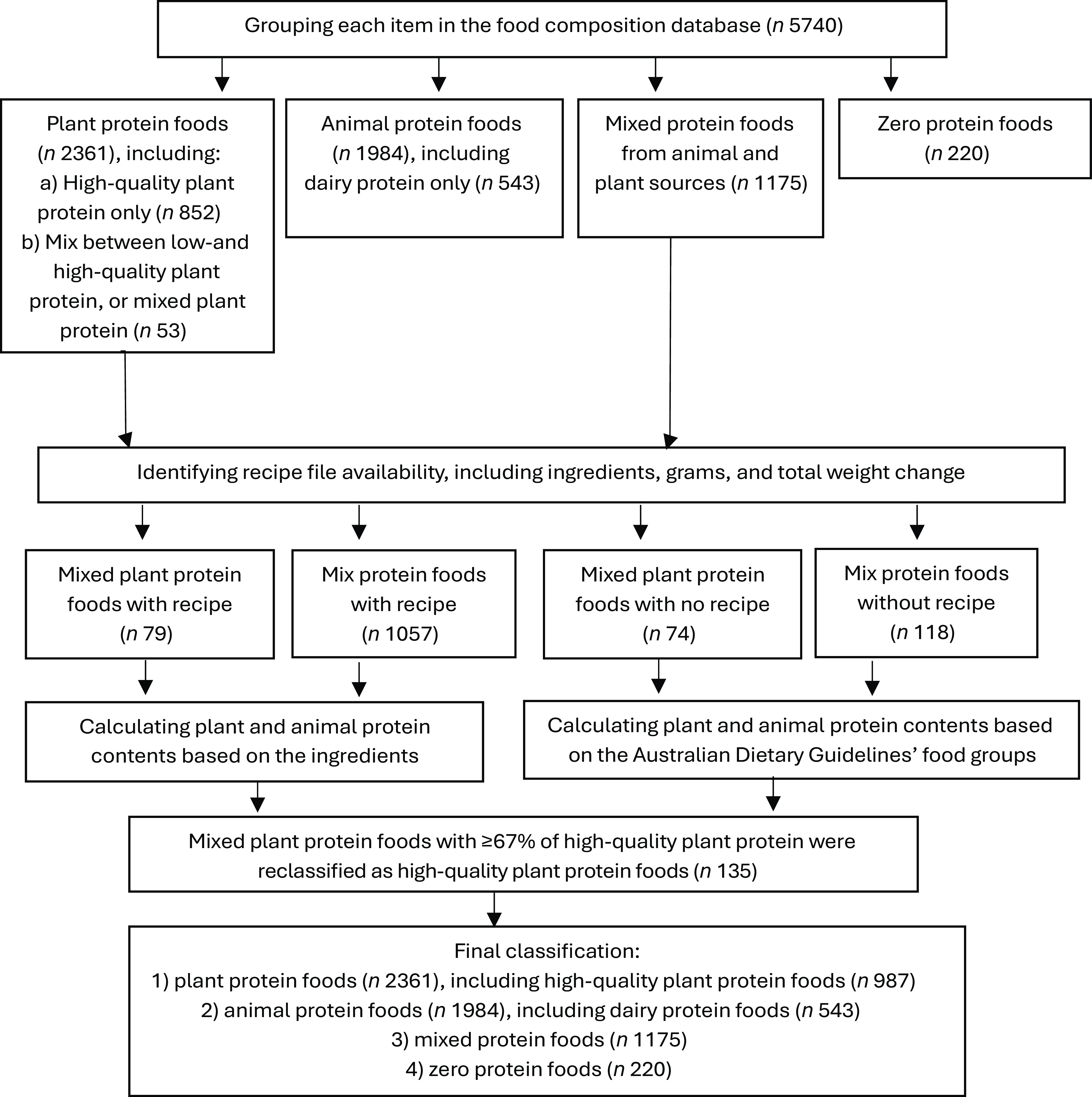
The plant and animal protein contents of mixed dishes with no recipe in the AUSNUT 2011–2013 were estimated using grams and proportions of plant- and animal-based ingredients of each dish provided in the Australian Dietary Guidelines food classification system(28). Each ingredient was classified into plant, animal, high-quality plant and dairy protein food groups, and then, the protein content of each group was estimated and summed across protein sources. For example, animal protein content of a mixed dish was obtained by summing the protein content of dairy, eggs, fish, meats and poultry food groups. Following this calculation, plant and animal protein contents of each mixed dish were obtained by calculating the plant and animal proportions of each dish and multiplying them by their respective amounts of protein (g), as estimated in the AUSNUT Food Nutrient Database. A similar approach was used to calculate low- and high-quality plant protein contents in mixed plant protein foods, and mixed plant protein foods with a proportion of high-quality plant protein foods ≥ 67 % were later classified as high-quality plant protein foods. The protein composition database is available in online Supplementary Data 1.
Protein and energy intake
The usual intake of different protein sources (g/d), total protein (g/d) and energy (kJ/d) estimated from the first and second 24-h recall was modelled separately using the Multiple Source Method(Reference Harttig, Haubrock and Knüppel29) by including number of recall days, age, sex and age–sex interaction term in the models. The usual non-protein energy intake variable was created by calculating energy from the usual protein intake and subtracting it from the usual energy intake. The variables of low-quality plant protein and non-dairy animal protein were generated by subtracting high-quality plant protein from plant protein and dairy protein from animal protein, respectively.
Diet quality
The Dietary Guideline Index (DGI) was used to measure diet quality given its ability to measure adherence to the 2013 Australian Dietary Guidelines and predict BMI(5,Reference Thorpe, Milte and Crawford30,Reference Livingstone, Milte and Torres31) . The DGI comprised seven recommended dietary components and six discouraged components, with each item scored 0–10(Reference Thorpe, Milte and Crawford30,Reference Livingstone, Milte and Torres31) . The recommended dietary components consisted of food variety, fruits, vegetables, meats and high-protein foods, milk and dairy alternatives, grain foods and water, while the discouraged components included added salt, added sugar, saturated fat, unsaturated fat, discretionary foods and alcohol(Reference Thorpe, Milte and Crawford30,Reference Livingstone, Milte and Torres31) .
The disaggregated foods from ABS data were used to calculate the DGI score from each component(21). The consumption of non-discretionary fruits, whole grains, low-fat dairy, vegetables and protein foods in grams was used to calculate the food variety component score, as written elsewhere(Reference Livingstone and McNaughton32). The scores of fruits, vegetables, grains and dairy products were calculated using the number of daily servings. The same applied to the high-protein food component, which included daily servings of lean and non-lean red meats and poultry, eggs, fish and seafood, tofu, legumes, beans and nuts. The water component score consisted of water and other beverage intakes, such as juices, tea and coffee.
Energy intake from items labelled as discretionary foods was summed and divided by 600 kJ to obtain the discretionary food component score(33). The saturated fat component score was based on the intake of low-fat milk, lean red meats and poultry (< 10 % fat), while unsaturated fat score was obtained from margarine, seeds and nuts intake(Reference Livingstone and McNaughton32). The added sugar and alcohol scores were based on the daily servings(33), while the salt use score was obtained from the National Nutrition and Physical Activity Survey questions on salt addition during meals and cooking(Reference Thorpe, Milte and Crawford30).
Anthropometric measurements
Anthropometric measurements were performed by trained ABS staff, including weight, height and waist circumference (WC) measurements(21). Height and WC measurements were validated through an additional measurement among 10 % of randomly selected participants(21). BMI scores (kg/m2) were obtained from the weight and height data(21), and individuals were categorised as overweight/obese if BMI ≥ 25 kg/m2. Another binary variable was drawn from WC categories, i.e. non-centrally overweight/obese v centrally overweight/obese if women had WC ≥ 80 cm or men had WC ≥ 94 cm(21,34) .
Socio-demographic and health behaviour characteristics
Several socio-demographic variables were used as covariates referring to the previous literature, namely age (in years), country of birth, Socio-Economic Indexes for Areas and physical activity level (PAL)(Reference Andreoli, Bagliani and Corsi35–Reference Gaspareto, Previdelli and Aquino39). Country of birth was categorised as (a) Australia; (b) Mainly English-speaking countries and (c) Other(21). Socio-economic Indexes for Areas ranked Australia’s areas according to socio-economic advantage and disadvantage, occupation, educational status and economic resources(40). Individuals in this analysis were ranked in quintiles, where a lower Socio-economic Indexes for Areas quintile indicated a greater disadvantage(40). Following Australia’s Physical Activity and Sedentary Behaviour Guidelines, individuals’ physical activity was categorised as meeting and not meeting the recommendation for having ≥ 150 min of physical activity from at least 5 sessions/week(21,41) .
Energy misreporting
Energy misreporting was examined in this analysis by calculating the ratio between reported energy intake (rEI) and predicted total energy expenditure (pTEE; rEI:pTEE)(Reference Leech, Livingstone and Worsley42,Reference Huang, Roberts and Howarth43) , given the previous findings on energy and protein underreporting in self-reported dietary intake(Reference Freedman, Commins and Moler44). pTEE was calculated using the validated equations and considering body weight, height, age, sex and PAL(45). To deal with the absence of occupational physical activity measurement in the National Nutrition and Physical Activity Survey, a low-active PAL was assumed (1·4 ≤ PAL < 1·6)(Reference Leech, Livingstone and Worsley42,Reference Huang, Roberts and Howarth43) .
The ±1sd cut-off for rEI:pTEE and the CV of rEI, pTEE and the technical error of measuring total energy expenditure were calculated to categorise individuals as underreporters, plausible reporters or overreporters(Reference Leech, Livingstone and Worsley42,Reference Huang, Roberts and Howarth43) . The CVrEI and CVpTEE for those having one-day 24 h recall in this analysis were 43·2 % and 17·6 %, respectively. For those with two recall days, the CVrEI and CVpTEE were 34·5 % and 17·7 %, respectively. The CVmTEE of 8·2 % was used, drawn on the previous research using the doubly labelled water method(Reference Black and Cole46). Incorporating those values, the ±1sd cut-off applied in this analysis was 47 % for individuals having 1-day recall and 31 % for those with 2 days recall.
Statistical analysis
Statistical analyses were performed using Stata v.18. The benchmarked replicate and person-level survey weights were used in all statistical analyses to produce population estimates. All analyses were considered statistically significant if P< 0·01. Proportions and means with standard deviation were reported separately between men and women, and the differences were tested using Chi-square test and one-way ANOVA.
Multiple linear regressions were used to examine the association between plant and animal protein intake with diet quality, and all models were stratified by sex to account for differences in dietary protein sources and diet quality between men and women(Reference Sokolowski, Higgins and Vishwanathan12,Reference Hoy, Murayi and Moshfegh14) . Model 1 was adjusted for age (continuous), Socio-economic Indexes for Areas (categorical), PAL (categorical) and country of birth (categorical). Accounting for different protein sources, Model 2 for plant protein intake was further adjusted for animal protein intake and vice versa, as done in the previous protein studies(Reference Berryman, Agarwal and Lieberman17,Reference Hemler, Bromage and Tadesse18) . Models for high-quality plant protein intake were adjusted for low-quality plant protein and animal protein intakes, while models for non-dairy animal protein intake were adjusted for dairy and plant protein intakes. Model 3 was additionally adjusted for usual non-protein energy intake (continuous).
Multiple linear and logistic regressions were performed to examine protein associations with obesity measures. Separate models were performed for BMI and WC using continuous and categorical variables, stratified by sex. Similar to the diet quality models, Model 1 for each protein approach was adjusted for socio-demographic covariates, followed by additional adjustments for other protein types in Model 2. The conditional dependency between protein and other macronutrients in influencing obesity(Reference Arnold, Berrie and Tennant47,Reference Tomova, Arnold and Gilthorpe48) was addressed in Model 3 by including usual non-protein energy intake (continuous). Sensitivity analysis was conducted for the continuous outcomes using the fully adjusted Model 3 with an additional adjustment for energy misreporting status (categorical). Another sensitivity analysis for BMI and WC outcomes was also performed with adjustment for usual total energy intake instead of non-protein energy intake, as shown in online Supplementary Material 2.
Regression assumptions were tested for each model. Linear relationships between variables were tested by added-value plots, and the qnorm function was used to assess normality. Models were also tested for multicollinearity using variance inflation factor, and no models suggested multicollinearity (all models, variance inflation factor < 5). The hettest and rvfplot commands were used to assess heteroscedasticity. Following these tests, BMI outcome was log-transformed to improve normality, and jackknife standard errors were estimated in all models to address heteroscedasticity issues(Reference Hansen49).
Results
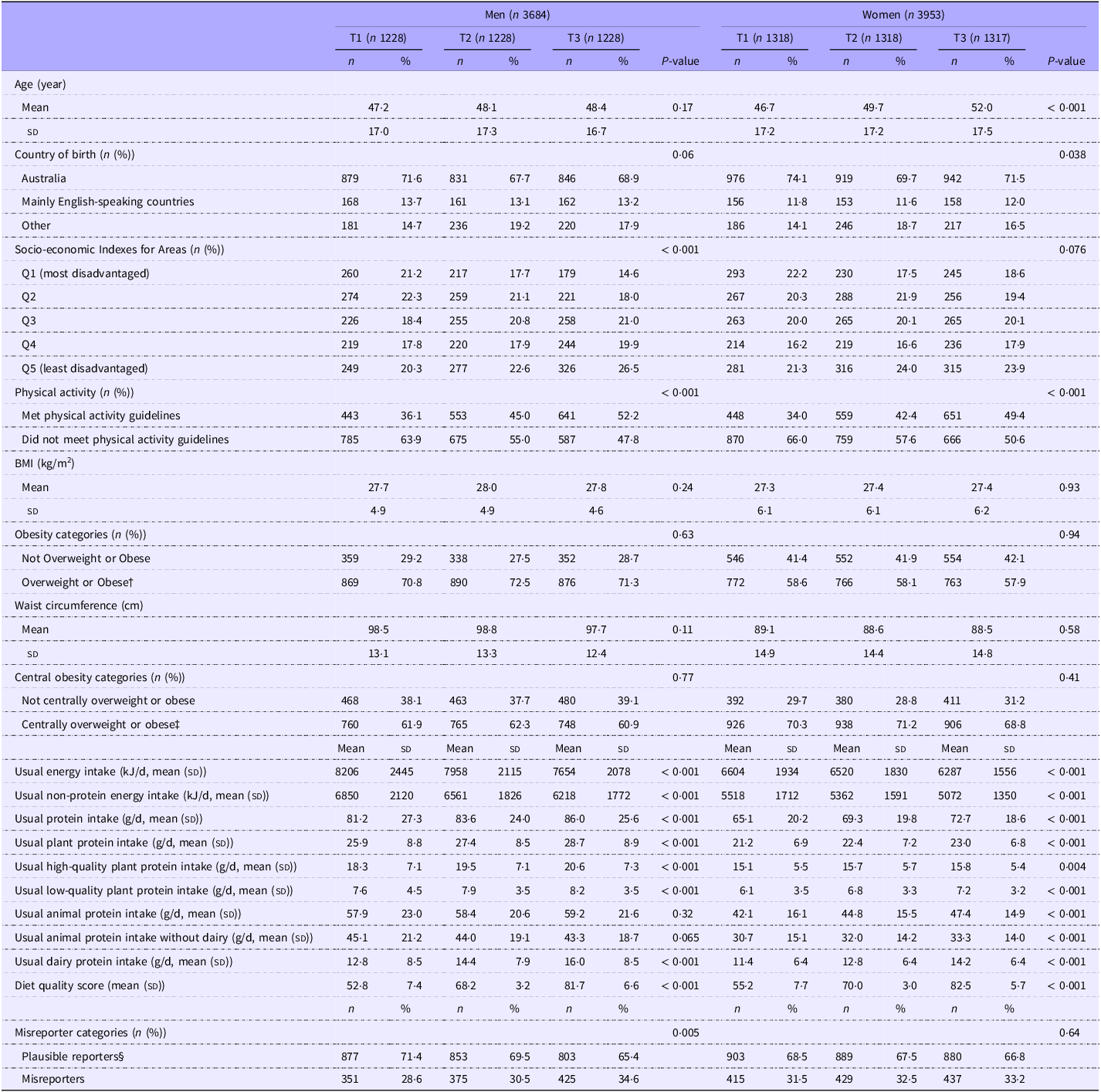
A total of 7637 adults were included in this study, and their characteristics are provided in Table 1. Women in the highest tertile of DGI scores were younger than those in lower tertiles (P< 0·001), and the highest tertile of DGI had the lowest proportion of men from the least disadvantaged areas (P< 0·001). There was no significant difference in obesity status across DGI tertiles of Australian men and women.
Descriptive characteristics of adults (n 7637) by tertiles of DGI*
(Numbers and percentages; mean values and standard deviations)
DGI, Dietary Guideline Index.
* Differences across tertiles for continuous variables were assessed by using ANOVA. Differences across tertiles for categorical variables were assessed by using Pearson’s chi-square test.
† Defined as BMI ≥ 25.
‡ Defined as waist circumference ≥ 94 cm for men and ≥ 80 cm for women.
§ Defined by using 1sd cut-off for energy intake: energy expenditure between 53 % and 147 % for individuals with one recall day and between 69 % and 131 % for individuals with two recall days.
Both men and women in the highest DGI tertile consumed the largest amount of total protein, had the lowest non-protein energy intake and had higher intakes of plant and dairy protein than those in the lowest tertile (all P< 0·001). Women in the highest DGI tertile consumed more animal protein (P< 0·001), but no difference in animal protein intake was observed across DGI tertiles in men.
Association between protein intake and diet quality
Plant protein intake was positively associated with DGI scores in both men and women across all statistical models, as shown in Table 2. In women, higher plant protein intake was associated with higher DGI scores, while in men, high-quality plant protein was consistently associated with higher DGI units across all statistical models. Further adjustment for non-protein energy intake resulted in 3- to 5-fold stronger associations with DGI in both men and women.
Associations between intake of protein types and diet quality of Australian men and women*
(Coefficients and 95 % CI)
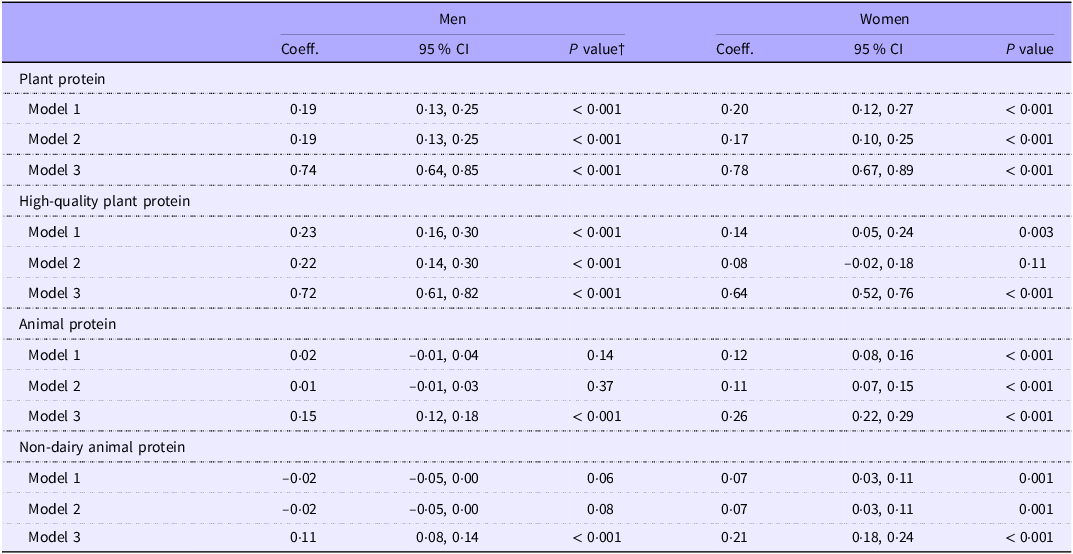
* Model 1 was adjusted for age, country of birth, socio-economic status, physical activity; Model 2 also included other protein types and Model 3 also included non-protein energy intake.
† Statistical significance at P< 0·01.
Animal protein, with and without dairy, was positively associated with DGI in men (Model 3 only) and women (all models). In women only, the observed associations were weaker for non-dairy animal protein than for total animal protein across all models. Again, further adjustment for non-protein energy intake (Model 3) resulted in stronger associations (with dairy, β = 0·26 (95 % CI 0·22, 0·29) P< 0·001; without dairy, β = 0·21 (95 % CI 0·18, 0·24) P< 0·001).
Association between protein intake and obesity measures and prevalence
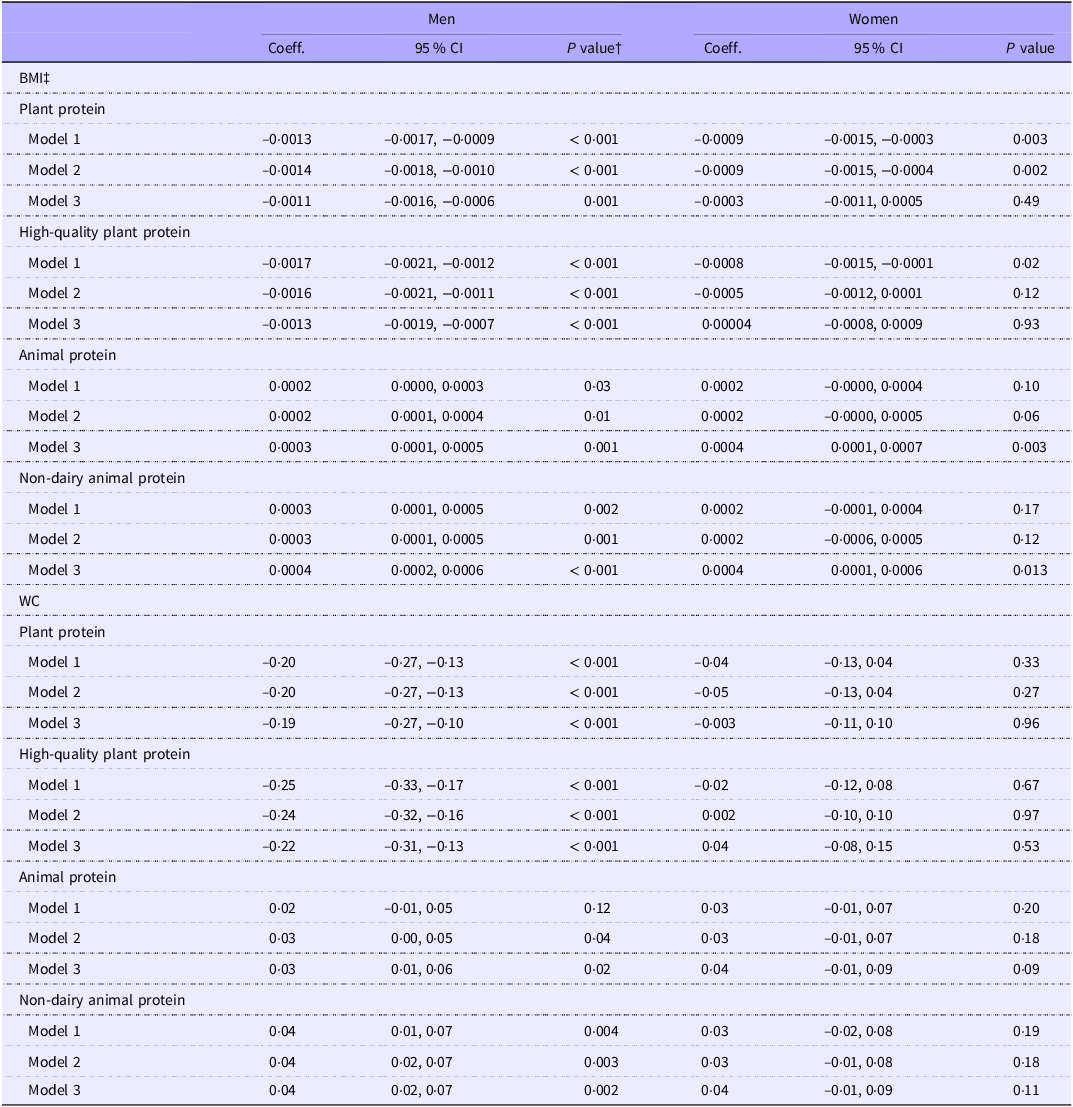
Plant protein intake was inversely associated with BMI and WC as shown in Table 3, and these associations did not differ whether non-protein energy or total energy intake were adjusted for. With animal protein intake and all other covariates held constant (Model 2), each g/d increase in plant protein was associated with lower BMI in men and women. However, additional adjustments for non-protein energy intake attenuated this association in women only. With animal protein and non-protein energy intake being held constant (Model 3), each g/d higher high-quality plant protein intake was associated with lower BMI in men but not women. Both plant protein and high-quality plant protein intakes were inversely associated with WC in men only. For men’s BMI and WC, all models using high-quality plant protein showed stronger associations.
Associations between intake of protein types, BMI and WC of Australian men and women*
(coefficients and 95 % CI)
WC, waist circumference (cm).
* Model 1 was adjusted for age, country of birth, socio-economic status, physical activity; Model 2 also included other protein types; Model 3 also included non-protein energy intake.
† Statistical significance at P< 0·01.
‡ The interpretation of the β-coefficient estimates is 100 × (coefficient), referring to the percentage change for a 1-unit increase in protein intake with all other variables constant.
In men only, non-dairy animal protein was positively associated with BMI and WC, with comparable coefficients across all models and sensitivity analyses. Total animal protein intake was positively associated with BMI in both men and women but only after additional adjustment for non-protein energy intake (Model 3). However, total animal protein was not associated with WC across all models in both sexes.
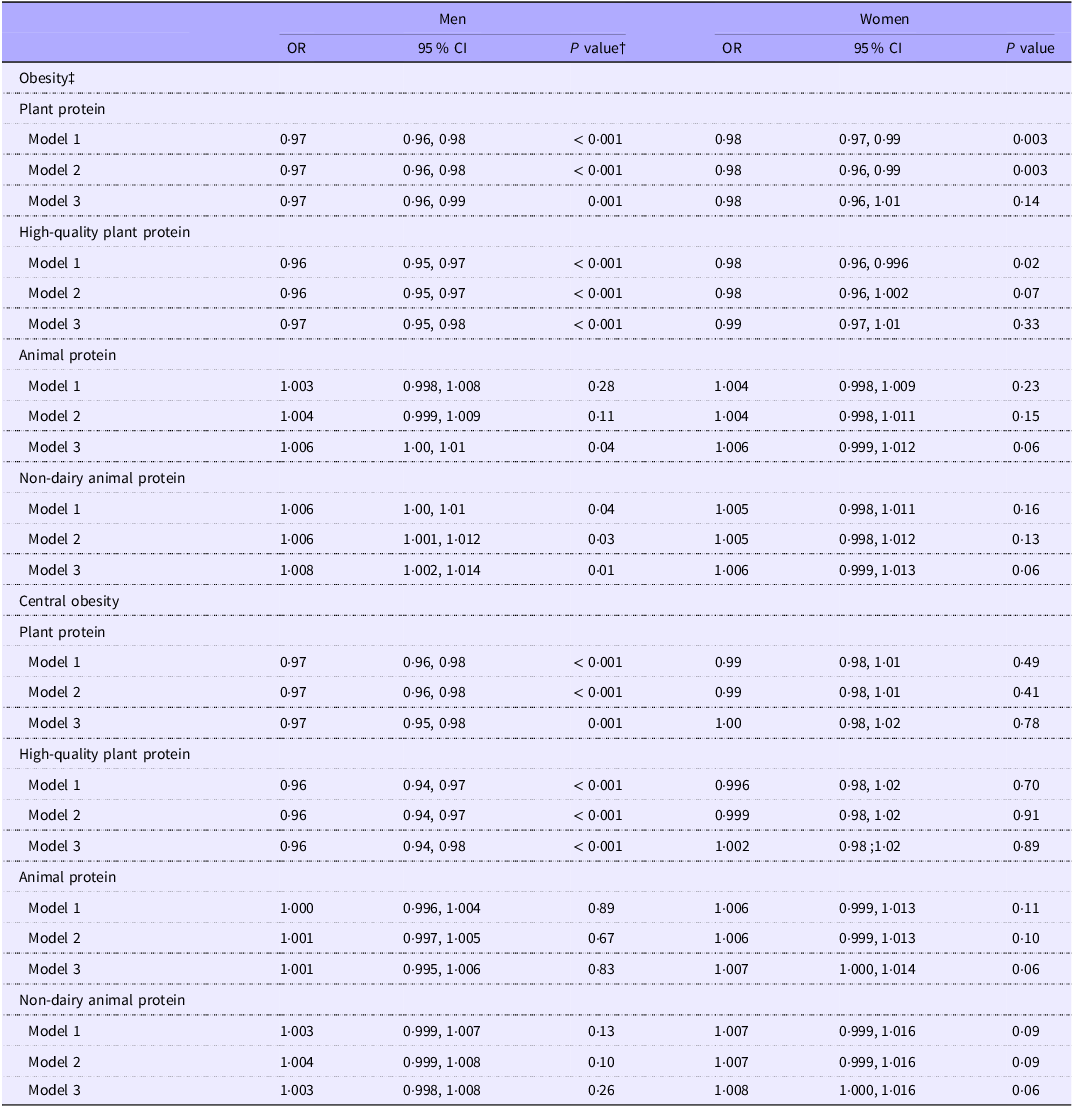
Multiple logistic regressions suggested an inverse association between plant protein intake and obesity prevalence, but no association between animal protein and obesity prevalence was observed, as presented in Table 4. A statistically significant inverse association between high-quality plant protein and obesity (Model 3, OR = 0·97 (95 % CI 0·95, 0·98) P= 0·001) was observed in men only; in women, adjustment for non-protein energy intake attenuated the inverse association that was observed in Model 2. Again, in men only, all three models suggested that each g/d increment in plant protein intake was associated with 3–4 % lower odds of central obesity. However, no associations were observed between animal protein and central obesity prevalence in either men or women.
Associations between intake of protein types and obesity of Australian men and women*
(OR and 95 % CI)
WC, waist circumference (cm).
* Overweight/obesity was defined as a BMI ≥ 25. Centrally overweight/obesity was defined as a waist circumference ≥ 94 cm for men or ≥ 80 cm for women.
† Statistical significance at P< 0·01.
‡ Model 1 was adjusted for age, country of birth, socio-economic status and physical activity; Model 2 also included other protein types and Model 3 also included non-protein energy intake.
Discussion
In this cross-sectional study of Australian adults, both plant and animal protein intakes showed positive associations with diet quality in both men and women. However, associations with diet quality were stronger for plants than for animal protein. The findings also suggested that men’s plant protein intake was inversely associated with obesity measures and prevalence whereas men’s non-dairy animal protein intake was positively associated with obesity measures.
Plant and animal protein associations with diet quality
Positive associations between plant and animal protein with diet quality were observed in this study. However, the associations for plant protein were 3–5 fold stronger than for animal protein. The stronger association when non-protein energy intake held constant also implied these positive associations between plant protein and diet quality being independent of energy intake of other dietary components that may contribute to higher diet quality scores.
Current findings on plant protein support previous evidence suggesting a positive association between plant protein and diet quality(Reference Chen, Glisic and Song11–Reference Salomé, de Gavelle and Dufour13). A cross-sectional study among young American adults found that those with higher plant protein intake (≥ 30 % of total protein) had a higher modified Healthy Eating Index score(Reference Sokolowski, Higgins and Vishwanathan12). Similarly, Chen et al.(Reference Chen, Glisic and Song11) reported that middle-aged Dutch adults consuming the highest plant protein intake also scored highest in overall diet quality score. Accounting for nutrient adequacy, the overall diet quality score of French adults was based on how the consumption of different foods contributes to the probability of adequate nutrient intake(Reference Salomé, de Gavelle and Dufour13). Interestingly, while plant protein intake was positively associated with overall diet quality in French adults, high plant protein intake did not significantly influence the probability of having adequate micronutrient intakes(Reference Salomé, de Gavelle and Dufour13). Rather, high plant protein intake lowered the probability of excessive intake of saturated fat and cholesterol(Reference Salomé, de Gavelle and Dufour13).
Previous literature on animal protein and diet quality suggests an inverse association(Reference Sokolowski, Higgins and Vishwanathan12,Reference Hoy, Murayi and Moshfegh14,Reference Aggarwal and Drewnowski50) , which is in contrast to the modest positive association found in this study. This dissimilarity is potentially related to the different contributions of animal protein foods to diet quality. For example, processed meats, eggs and cheese intakes were inversely associated with diet quality, whereas fish, yoghurt and milk were positively associated(Reference Camilleri, Verger and Huneau51). Higher animal protein intake might lead to a higher score, but the intake of animal-source foods with high moderation nutrients, such as Na and saturated fats, might lead to a lower diet quality score(Reference Hoy, Murayi and Moshfegh14). Therefore, depending on the absolute amount and type of animal-source foods, the association between total animal protein intake with diet quality might vary.
Plant and animal protein associations with obesity
Our findings suggest that plant protein intake was inversely associated with obesity measures and prevalence in men, which aligns with previous observational studies among Belgian(Reference Lin, Bolca and Vandevijvere15) and American adults(Reference Berryman, Agarwal and Lieberman17,Reference Bujnowski, Xun and Daviglus52) . Inverse associations with obesity outcomes in this study were slightly stronger when including only high-quality plant protein sources, which is also in line with previous evidence reporting the stronger inverse associations between obesity with nuts and legumes, compared to fruits and grains(Reference Schlesinger, Neuenschwander and Schwedhelm53). This might be explained by their amino acid profiles, which might be different in terms of types and quantity(Reference Mariotti54). However, it remains unclear whether inverse associations between plant protein and obesity and other health outcomes were rather explained by their amino acid patterns than the combination of other nonprotein compounds(Reference Richter, Skulas-Ray and Champagne55), which therefore warrants further studies.
Positive associations between animal protein and obesity outcomes were observed in this study. Previous studies found positive associations between total animal protein with men’s BMI and WC(Reference Lin, Bolca and Vandevijvere15,Reference Moon, Krems and Heuer16,Reference Shang, Scott and Hodge19) , but only non-dairy animal protein was positively associated with WC in this study. The positive association with WC after excluding dairy products suggested the mixed influence of animal protein on WC, as found previously where dairy was inversely associated with European men’s WC, but no association between meats, fish, poultry or total animal protein with WC(Reference Halkjær, Olsen and Overvad56). Similarly, the mixed influence of different animal-source foods could be the explanation for no association between animal protein and neither obesity nor central obesity prevalence in this study, whereas other studies found a positive association with obesity in American men(Reference Bujnowski, Xun and Daviglus52) but no association with central obesity in Korean men(Reference Chung, Chung and Choi57). The mixed influence of animal protein foods could be due to the different absolute amounts of intake, nutrient profiles and processing techniques(Reference Halkjær, Olsen and Overvad56), and therefore, still need further studies to confirm associations between animal-source foods and obesity outcomes. Other potential causes of diverse findings include adjustment for potential confounders (e.g. total energy and other dietary intakes) and different body composition measurements(Reference Bujnowski, Xun and Daviglus52,Reference Halkjær, Olsen and Overvad56,Reference Chung, Chung and Choi57) , which also need to be considered in investigating associations between different protein food sources with obesity or other health outcomes.
In contrast to the findings in men, the fully adjusted model only produced a significantly positive association between total animal protein and women’s BMI, but not WC, and no association between plant protein and either obesity measures or prevalence. This finding aligns with previous studies, which also suggested that despite the positive association between animal protein and BMI, the mixed influence of different animal protein sources might explain no association between animal protein with women’s WC and obesity prevalence(Reference Halkjær, Olsen and Overvad56,Reference Chung, Chung and Choi57) . In contrast, other studies reported inverse associations between plant protein and women’s obesity(Reference Lin, Bolca and Vandevijvere15,Reference Moon, Krems and Heuer16) . Adjustments for different confounders might explain this dissimilarity as Lin et al.(Reference Lin, Bolca and Vandevijvere15) did not adjust for energy intake and PAL, while Moon et al.(Reference Moon, Krems and Heuer16) adjusted for total energy intake and used different physical activity measurements. Meanwhile, inverse associations between plant protein with women’s BMI and obesity in this study were attenuated by adjustment for non-protein energy intake, suggesting that the relationship between plant protein and women’s obesity was primarily explained by differences in non-protein energy intake.
In terms of adjusting for energy intake, adjustment for either non-protein or total energy intake in our study produced similar results. Consideration of adjustment for total energy intake or only non-protein energy intake will depend on whether the aim is to examine the impact of different protein types without changes in other macronutrients as done in other similar studies(Reference Arnold, Berrie and Tennant47,Reference Berryman, Lieberman and Fulgoni58,Reference Pasiakos, Lieberman and Fulgoni59) or the impact of different protein types while overall energy intake is constant.
Strengths and limitations
To our knowledge, this is the first among a few studies investigating different approaches in classifying protein foods using the Australian food composition database. Another strength of this study includes the analyses of a large, nationally representative sample of Australian adults. The analyses also include estimation of usual dietary intake, sex stratification and adjustment for non-protein energy intake and other covariates to attempt representative models of populations’ protein intake.
There are some limitations of this study. First, this cross-sectional study is unable to draw causality, and therefore, interventional and prospective follow-up studies are needed to confirm the findings. Second, further analyses are recommended once the nationally representative data has been updated, given this study used survey data from more than 10 years ago. The third limitation is related to the absence of certain data required in classifying protein foods and estimating different protein intakes, particularly mixed protein dishes and high-quality plant protein. The current Australian food nutrient database only includes data on the amount of total protein and the essential amino acid, tryptophan(22). Therefore, the classification of high-quality plant protein foods in this study was additionally based on their amino acid and plant protein content, as documented in the literature(Reference Manickavasagan, Lim and Ali23,Reference Langyan, Yadava and Belwal24) . Additionally, protein contents of mixed dishes whose recipe files were unavailable were estimated using similar recipes and other databases. Other dietary information, such as amino acid profiles and protein digestibility(60), would be a significant addition to future protein quality estimates. Fourth, despite the recommendations for healthy protein foods, this study did not include recommended protein intake portions, and therefore, future studies focusing on the amount of different protein food sources required for health outcomes will be essential. Another limitation is the absence of advanced body composition measurements, including lean body mass and fat mass, which therefore warrant further studies investigating the differential effects of plant v animal protein on body composition.
Future directions/implications
Our findings suggest differential influences of animal and plant protein on diet quality and obesity, which may inform future dietary recommendations in relation to protein from different food sources. This could be supported by future investigations on the required amounts of different protein food sources to develop clear protein messages in the dietary guidelines. Given that meats, dairy products and other animal-source foods might affect health differently, separate studies investigating the influences of different animal-source foods are still required to improve current dietary recommendations. For plant protein, there are still gaps in determining its quality compared to animal protein, so examining data on amino acid scores and digestibility of protein foods will be important.
Additionally, studies investigating the nutrient adequacy of plant-based protein diets may consider matching foods based on protein content (e.g. animal, plant and mixed proteins), as suggested in earlier literature(Reference Leonard, Leydon and Arranz61). The same literature reported lower micronutrient intakes resulting from plant-based diets, such as Zn and vitamin B12, possibly related to the lower micronutrient bioavailability caused by certain components in plant-based foods(Reference Leonard, Leydon and Arranz61). However, this finding could also be influenced by the fact that many dietary modelling studies of plant-based protein diets calculated nutrient intake from individual foods without accounting for nutrients obtained from mixed protein dishes(Reference Leonard, Leydon and Arranz61). Furthermore, given that plant and animal protein were analysed separately in this study, future investigations focusing on dynamic changes in both sources (e.g. partial animal protein replacement with plant protein) may have additional benefits in formulating dietary recommendations. Lastly, reflecting on the different findings between men and women, we recommend future protein studies to adjust for non-protein energy intake and stratify analyses by sex, so the studies may capture the different influences of dietary protein on men’s and women’s health, as well as suggest that the associations are attributed to animal or plant protein instead of non-protein energy intake.
Conclusion
Plant and animal protein have different influences on diet quality and obesity. Both plant and animal protein are linked with better diet quality in both men and women, but higher plant protein intake is associated with higher diet quality scores. High plant protein intake is associated with lower obesity risk in men, while animal protein is positively associated with men’s and women’s BMI. Further investigations are needed to examine the influence of different animal protein sources on diet quality and obesity. Given that protein contribution to obesity and overall health can be influenced by energy balance and vary between sexes, future studies also need to consider energy adjustment and sex-specific associations.
Supplementary material
For supplementary material/s referred to in this article, please visit https://doi.org/10.1017/S0007114525000674
Acknowledgements
This work was supported by the Deakin University Postgraduate Research Scholarship (H.R.B.A) and the National Health and Medical Research Council Emerging Leadership Fellowship L1 (R.M.L. APP1175250).
H. R. B. A. was responsible for conceptualisation, methodology, formal analysis and interpretation and writing the first draft of the manuscript. All co-authors (R. M. L., S-Y. T. and S. A. M.) supervised the research process, as well as contributed to study conceptualisation, development of methodology and statistical models and interpreted the results. All authors edited and reviewed the final manuscript. R. M. L. is a statistical editor, and S-Y. T. is the first editor of the British Journal of Nutrition, respectively.
H.R.B.A and S.A.M have no conflicts of interest to declare.


 Open access

