


There is epidemiological evidence suggesting that whole grains have a beneficial role in several chronic diseases(Reference Seal, Jones and Whitney 1 ), including obesity. It has been proposed that whole grains may have a beneficial role in obesity prevention due to potential effects on regulating satiety and food intake, via the lower energy density of whole-grain foods, and delaying the digestion and absorption of nutrients(Reference Slavin 2 , Reference Pereira, Marquart, Slavin and Fulcher 3 ). It has also been proposed that effects on weight regulation may simply be due to high amounts of dietary fibre within whole grains and its associated effects(Reference Pereira, Marquart, Slavin and Fulcher 3 ). However, currently, there are few intervention studies directly examining the effects of whole grains on appetite and weight regulation(Reference Koh-Banerjee and Rimm 4 ).
As the majority of evidence for a beneficial effect of whole grains on weight comes from cohort studies, it is not possible to show changes to an individual's diet. These studies alone do not provide evidence of a causal relationship.
There are currently no UK recommendations for the amount of whole grains that should be included in the diet. In the USA, it is recommended that individuals consume three or more servings of whole grains/d, with a serving equating to 16 g of whole-grain ingredient, suggesting an ideal intake of >48 g/d. Whole grain intake in the UK falls short of this, at a median intake of 14 g/d, calculated from data collected in 2000–1(Reference Thane, Jones and Stephen 5 ).
The present pilot study aimed to determine the effects of 3 weeks' consumption of 48 g whole-grain wheat per d (incorporated into bread rolls) on appetite, satiety, food intake, body weight and blood pressure compared with matched refined-grain rolls (control), when consumed within habitual diets of healthy normal-weight individuals.
Experimental methods
Participants
A total of fourteen young healthy adults (five males and nine females; mean age 26 (sem 1·4) years, BMI 21·8 (sem 0·8) kg/m2) were recruited, with mean scores for emotional, external and restrained eating (based on the Dutch Eating Behaviour Questionnaire(Reference van Strien, Frijters and Bergers 6 )) of 2·3 (sem 0·2), 2·9 (sem 0·1) and 1·9 (sem 0·2), respectively. The participants had median baseline whole grain intakes of 15·4 g/d. The participants had no history of gastrointestinal disease, were weight stable and were not following any dietary restrictions. The present study was conducted according to the guidelines laid down in the Declaration of Helsinki, and all procedures involving human participants were approved by the University of Surrey's Ethics Committee. Written informed consent was obtained from all participants.
Products
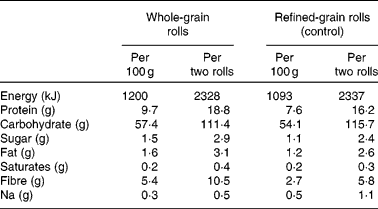
The bread rolls were manufactured and supplied by Premier Foods (High Wycombe, Bucks, UK). The whole-grain bread roll provided 48 g of whole grains in a two-roll serving. The whole grains were milled wheat grains that fulfilled the definition of a whole grain (the three principle components (bran, germ and endosperm) were present in amounts naturally found in the grain). A refined-grain roll, baked from identical dough, but containing no whole grains, was also produced and used as the control. The nutritional composition of the products is shown in Table 1.
Nutritional composition of the developed bread rolls, per 100 g and per two-roll serving
The glycaemic index of the rolls was assessed according to the current guidelines(Reference Brouns, Bjorck and Frayn 7 ). The whole-grain rolls and the control rolls were matched with high-glycaemic index values (81 and 78, respectively). The organoleptic acceptability of the products was also assessed, with no significant differences between the products.
Study design
The study was a randomised balanced cross-over design. Participants consumed two whole-grain rolls or two control rolls daily for 3 weeks, separated by a 3-week wash-out period. Participants were able to consume the rolls at any time of the day and with any fillings of their choice.
Participants attended for a postprandial test at the beginning and end of each 3-week intervention. Before each study, participants consumed an identical evening meal before fasting for 12 h. They were required to avoid alcohol, caffeine and strenuous exercise for at least 24 h before the study.
On arrival at the investigation unit, anthropometric measurements were recorded. Height and weight were taken, and percentage of body fat was measured by bioimpedance (Tanita TBF-300; Tanita, Amsterdam, The Netherlands); waist circumference was taken at the level of the umbilicus and hip circumference at the widest point around the hip bone. Blood pressure was recorded on arrival using an automated blood pressure cuff (Omron MX3 Plus; Omron Healthcare Europe, Milton Keynes, Bucks, UK). After the participants had rested for 5 min, three measurements were taken on the non-dominant arm; the final measurement was recorded.
At baseline, two fasting appetite ratings (measured using 100 mm visual analogue scales, as validated by Flint et al. (Reference Flint, Raben and Blundell 8 )), were taken, and then participants consumed a fibre-free liquid meal providing 1820 kJ, 21 g protein, 61 g carbohydrate and 12 g fat. Following the breakfast, further visual analogue scales were completed every 30 min for 180 min.
At 180 min, participants were placed in individual booths and provided with a large pre-weighed ad libitum homogeneous pasta test meal (providing 9765 kJ energy, 81·5 g protein, 339·1 g carbohydrate, 70·0 g fat and 15·9 g fibre). Participants were instructed to consume freely until comfortably full and informed that they could take home any leftovers to prevent overconsumption. The remaining excess test meal was weighed to quantify food intake.
Diet diaries to assess habitual food intake were completed during the final week of each intervention. All dietary analyses were performed using the WinDiets Professional Version program (Robert Gordon University, Schoolhill, Aberdeen, UK).
Statistical analysis
Each visual analogue scale question was analysed using repeated-measures ANOVA and paired-sample t tests on calculated areas under the curve. Comparisons were made between treatments using paired t tests as the data were normally distributed. Statistical analyses were carried out using SPSS version 16 for Windows (SPSS, Inc., Chicago, IL, USA), with significance assumed as P < 0·05. All results are means with their standard errors.
Results
Anthropometrics
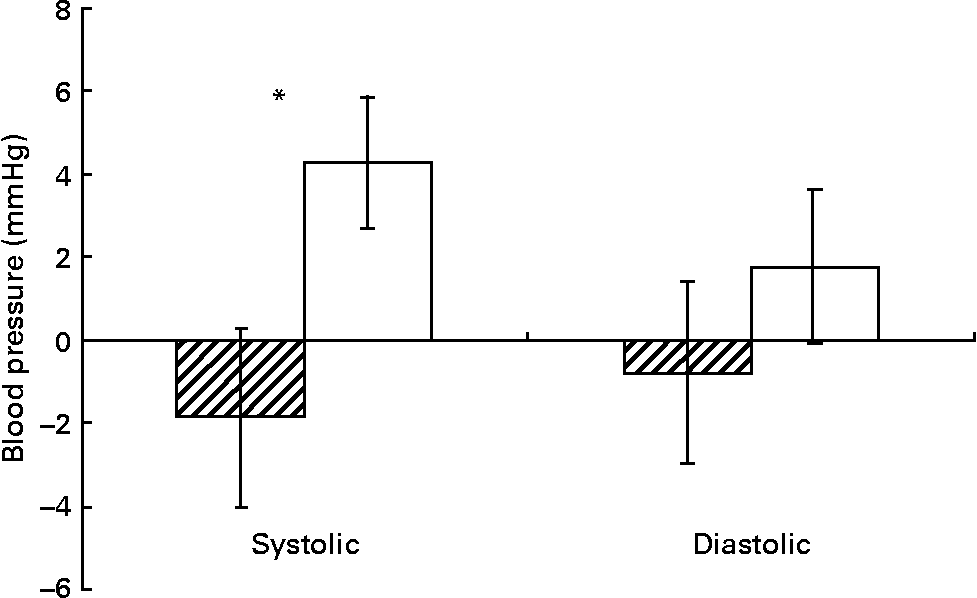
There was no effect of whole grains compared with the control on body weight, percentage of body fat, waist or hip circumference. While there was no significant difference between interventions for diastolic blood pressure, systolic blood pressure decreased on the whole-grain intervention and increased on the control intervention ( − 2 v. 4 mmHg, P = 0·015; Fig. 1).
Change in systolic and diastolic blood pressure from the beginning to the end of
the whole grain (
 ) and control (□) interventions. Values are means, with
standard errors represented by vertical bars, n 14. Paired-sample
t test showed a significant difference between the interventions
for systolic blood pressure (*P = 0·015)
and no significant difference for diastolic blood pressure
(P = 0·358).
) and control (□) interventions. Values are means, with
standard errors represented by vertical bars, n 14. Paired-sample
t test showed a significant difference between the interventions
for systolic blood pressure (*P = 0·015)
and no significant difference for diastolic blood pressure
(P = 0·358).
Subjective appetite ratings
There were no significant differences between the interventions for any of the visual analogue scale ratings (hunger, prospective food consumption, fullness or desire for different foods).
Energy and macronutrient intake
There was no difference between the interventions for either the weight of food consumed or energy intake at the ad libitum test meal. However, during the control intervention, there was an increase in energy intake (mean increase of 367 (sem 270) kJ), which was not observed with the whole-grain intervention (mean decrease of 1 (sem 300) kJ), but this difference was not significant (P = 0·410).
Mean daily energy, protein and fat intakes (calculated from the diet diaries) showed no significant differences between the interventions. Daily carbohydrate intake was higher on the control intervention compared with the whole-grain intervention (369·3 (sem 21·2) v. 344·5 (sem 19·8) g, P = 0·054). Dietary fibre intake was significantly higher with whole grains compared with the control (30·1 (sem 1·7) v. 25·5 (sem 1·8) g, P ≤ 0·001), as would be expected.
Discussion
The present short-term pilot intervention study indicated no effect on appetite or food intake following a 3-week consumption of whole-grain rolls (providing 48 g of whole grain/d) compared with refined-grain rolls. However, systolic blood pressure was significantly reduced following the whole grains.
This lower systolic blood pressure, on the whole-grain intervention, occurred in individuals who were normotensive (114 (sem 3)/70 (sem 2) mmHg) on recruitment and therefore was a clinically significant change. Indeed, epidemiological studies have provided indirect evidence for the beneficial effects of high whole grain intakes on hypertension as a risk factor for CVD; for example, in one prospective study, high whole grain intake at baseline resulted in less hypertension at 10 years' follow-up(Reference Wang, Gaziano and Liu 9 ), and an inverse relationship between whole grain intake and hypertension in males has also been reported in another prospective cohort study(Reference Flint, Hu and Glynn 10 ). Direct evidence from intervention studies is more mixed and often confounded by study design. A recent parallel study has found no significant effect of whole grain (consumed for 16 weeks) on any of the markers of CVD measured, including blood pressure; however, in this study, refined-grain foods in habitual diets were replaced with whole-grain alternatives resulting in diets that were not well matched(Reference Brownlee, Moore and Chatfield 11 ). A cross-over study compared a 6-week diet rich in whole grains with a 6-week diet containing the same amount of refined grain, and also found no effect of whole grain on blood pressure(Reference Andersson, Tengblad and Karlstrom 12 ). However, in another cross-over intervention, different types of whole grain (barley, whole wheat/brown rice and a half and half mix of the two) were consumed for 5 weeks each, in conjunction with the Step 1 American Heart Association diet, and all whole-grain diets resulted in significantly lower systolic and diastolic blood pressures(Reference Behall, Scholfield and Hallfrisch 13 ). Our controlled randomised cross-over study therefore adds to the evidence that consumption of whole-grain wheat can have direct beneficial effects on blood pressure compared with that of refined grain intake.
Our investigation found no effect between the interventions on body weight; as the participants in the present study were of normal weight, this was unsurprising. There is epidemiological evidence that suggests a beneficial role of whole grains in weight regulation and obesity prevention. In a recent systematic review of the relationship between whole grain intake and adiposity, it has been found that higher whole grain intakes were related to lower BMI and reduced central adiposity(Reference Harland and Garton 14 ).
To our knowledge, this is the first study that has directly compared whole-grain wheat intake (at the amount recommended for the US population) with matched refined grain intake, and measured the effects of short-term consumption on actual food intake and subjective appetite ratings. We found no effects of whole grains on measured body weight, food intake or appetite, which is in stark contrast to the epidemiology that relies on self-reported intakes and body weight.
A recently published intervention study has investigated the effects of whole grains (rye) compared with refined grains (wheat) on food intake over 24 h(Reference Isaksson, Sundberg and Aman 15 ). Incorporating the whole grains had no effect on energy intake at an ad libitum meal, in the evening or the following morning(Reference Isaksson, Sundberg and Aman 15 ).
There are few previous intervention studies that have investigated the effects of whole grains on satiety using subjective appetite ratings. The study by Isaksson et al. (Reference Isaksson, Sundberg and Aman 15 ) has found that consumption of whole grain (rye) at breakfast resulted in reports of greater satiety. A study by Pereira et al. (Reference Pereira, Jacobs and Pins 16 ) has found that consumption of whole grains (80 % wheat and 20 % mixed whole grain) indicated a trend towards less hunger between meals compared with refined-grain consumption; and in an older study, satiety scores were found to be higher following less-processed grains compared with refined grains(Reference Holt and Miller 17 ).
The present study has shown that when 48 g of whole grains are consumed daily for 3 weeks, there is no effect on appetite or food intake, and therefore would oppose the expert opinion that high-whole-grain diets could be directly beneficial for weight management due to effects on satiety. In the absence of any acute change in satiety in response to food, following whole grains, it is unclear how whole grain intake per se would have an impact on chronic life-course dietary habits, as suggested in the epidemiological studies. It is well established that those who eat high-whole-grain diets also tend to follow other healthier lifestyle choices, such as consuming high amounts of fruits and vegetables, being non-smokers and being more physically active. It may therefore be a combination of these factors that exerts the beneficial effects observed with whole grains in epidemiological studies rather than with the whole grains themselves.
Acknowledgements
We thank all participants for their time. C. L. B. was involved in designing the study protocol, recruiting the volunteers, conducting the study, analysing the data and writing the manuscript. K. L. H. and P. J. Y. were involved in recruiting the volunteers and conducting the study. G. S. F. was involved in obtaining the funding, designing the intervention material and refining the manuscript. M. D. R. was involved in designing the study protocol, assisting on study days, analysing the data and refining the manuscript. There were no conflicts of interest. C. L. B. was supported by an educational fellowship from Premier Foods, and the bread roll products were manufactured and supplied by Premier Foods. G. S. F. is supported by the Imperial College Biomedical Research Centre and an NIHR Senior Investigator Award.



