


Obesity is associated with numerous comorbidities such as CVD, type 2 diabetes, hypertension, certain cancers and several other health problems. In fact, obesity is considered an independent risk factor for CVD. As the prevalence of obesity is increasing worldwide, data from epidemiological studies in Greece demonstrate that a considerable proportion of the population is overweight or obese. A recent study conducted in Greece and in particular in the Attica region verified this major health issue and showed that the prevalence of adult overweight and obesity were 53 and 20 % in men and 31 and 15 % in women, respectivelyReference Panagiotakos, Pitsavos, Chrysohoou, Risvas, Kontogianni, Zampelas and Stefanadis1. In addition, obesity was associated with various CVD risk factors, such as diabetes, hypertension and hypercholesterolaemia.
Overweight and obesity are defined as a BMI ≥ 25 kg/m2 and a BMI ≥ 30 kg/m2, respectively. The WHO2 defines obesity as a condition with excessive fat accumulation in the body, to the extent that health and wellbeing are adversely affected. It is therefore clear that excess body fat is the cause of comorbid conditions and not the excess weight. BMI is generally well correlated with body fat percentage and is a good indicator of disease risk. However, there is increasing evidence that these cut-offs are not valid for all populations as the relationship between BMI and body fat percentage varies between populations and ethnic groups. Moreover, investigators suggest that the classification of weight status should be population-specific as well as age- and sex-specificReference Gallagher, Visser, Sepulveda, Pierson, Harris and Heymsfield3.
In addition to fat mass and fat mass percentage, fat mass index (FMI) is another index of adiposity that has been used in recent studies. The original idea of calculating FMI was proposed several years ago. Van Itallie et al. Reference Van Itallie, Yang, Heymsfield, Funk and Boileau4 suggested normalising fat mass for height (fat mass divided by height squared), deriving an index adjusted for body size. Expression of a change in body fat mass in absolute value fails to allow an appropriate comparison among subjects of different sizes. Therefore, it has been suggested that reference intervals of FMI can be used as indicative values for the evaluation of nutritional status and body composition (overnutrition and undernutrition)Reference Schutz, Kyle and Pichard5, Reference Wells and Victora6. However, reference ranges for FMI have not been yet clearly defined, at least for healthy individuals; therefore the values obtained from measurements can not be used to categorise subjects. Additionally, future investigations are necessary to clarify the relationship between the magnitude of FMI and potential risk factorsReference Schutz, Kyle and Pichard5.
There are many direct and indirect methods of assessing body composition and body fat. Dual-energy X-ray absorptiometry (DXA) provides precise and accurate measurements of body fat and lean tissue and it has therefore been used as the reference method to validate field methodsReference Genton, Hans, Kyle and Pichard7. Although DXA has many advantages in assessing body composition, it is not appropriate outside research settings. Simple anthropometric measurements, besides BMI, have been used extensively as surrogate measurements of obesity and have more practical value in both clinical practice and for large-scale epidemiological studies. Waist circumference (WC) measurements, waist:hip ratio (WHpR) and waist:height ratio (WHtR) have been used extensively to assess body fat distribution and abdominal obesityReference Hsieh, Yoshinaga and Muto8, Reference Misra and Vikram9, Reference Janssen, Katzmarzyk and Ross10. Since it has been proposed that excess intra-abdominal fat is greater associated with obesity-related morbidity and CVD than overall adiposity, the efficacy of these simple anthropometric indices as screening tools for CVD risk has received great attentionReference Ho, Chen, Woo, Leung, Lam and Janus11, Reference Karelis, St-Pierre, Conus, Rabasa-Lhoret and Poehlman12.
Although the development of obesity is affected by a host of contributing factors, the childhood and young adulthood roots of adult obesity and CVD is widely recognised. Dietary habits and physical activity levels, two of the most important factors that promote or protect against overweight and obesity, are adopted during the ages of childhood and young adulthood. It is therefore critical to determine accurate screening tools to identify young subjects at risk for later CVD. Since there is a lack of data regarding young adult groups, the aim of the present study was to determine the relationships of different obesity indices (BMI, body fat, WC, WHpR, WHtR) with metabolic CVD risk factors and to examine which of these indices could better predict the presence of such risk factors. We also determined the optimal cut-off values of these indices as indicators of CVD risk factors in this young adult female population.
Methods
Subjects
The study was carried out in the Harokopio University between the years 2003 and 2005. All female undergraduate students of the university were invited to participate in the study after explaining the aim of the study and the kind of measurements. In total, 233 Greek female students gave their informed written consent and participated in the study. Thirteen students were excluded from the analysis because of missing data. The final sample included 220 students, all Caucasians and Athens residents, with complete measurements for all variables. The study protocol was approved by the Harokopio University Institutional Review Board.
Anthropometry
Body weight and standing height were measured in light clothing and with no shoes using a digital scale (Seca 861; Seca Ltd, Vogel & Halke, Hamburg, Germany) with an accuracy of ± 0·1 kg and a stadiometer (Seca Leicester Height Measure; Seca Ltd, Vogel & Halke, Hamburg, Germany) to the nearest 0·5 cm, respectively. BMI was calculated as weight (kg) divided by height squared (m2). WC was measured with a plastic tape measure midway between the inferior margin of the last rib and the crest of the ilium at the level of the umbilicus and hip circumference at the level of the greater trochanters and pubic symphisis to the nearest 0·1 cm. WHpR as well as WHtR were estimated. Left arm circumference was measured at the mid-upper-arm point, between the acromion and the olecranon. All the above procedures were performed by a single, well-trained researcher from the research team.
Dual-energy X-ray absorptiometry
Total body bone mineral content and soft tissue (fat mass, fat mass percentage, fat-free mass) composition were determined by DXA (Lunar DPX-MD, Madison, WI, USA) with the analysis software version 4.6. A fast scan mode was used, unless a slower mode was suggested by the manufacturer, for obese subjects. A daily quality assurance check was performed, using an aluminium phantom provided by the manufacturer. The scans were performed in the morning by an experienced technician. Percentage of fat mass ≥ 30 % was used as a criterion to classify subjects as obese13, Reference Deurenberg, Yap and van Staveren14.
Biochemical indices
Early-morning venous blood samples were obtained from each subject for biochemical and haematological screening tests, following a 12 h overnight fast. Professional staff performed venepuncture to obtain a maximum of 25 ml blood. The blood was collected in vacutainers with no added anticoagulant and was kept at room temperature for approximately 2 h, where it was allowed to clot as this was designated for serum separation. Biochemical analyses were conducted at the Nutrition and Metabolism Laboratory of Harokopio University, following centrifugation for serum separation at 3000 rpm for 15 min.
Total cholesterol (TC), HDL-cholesterol (HDL-C) and TAG were determined in duplicate using commercially available enzymic colorimetric assays (Roche Diagnostics GmbH, Mannheim, Germany) on an automated analyser (Roche/Hitachi Modular). LDL-cholesterol (LDL-C) was calculated by the Friedewald equationReference Friedewald, Levy and Fredrickson15. The TC:HDL-C ratio was also calculated.
Assignment of cardiovascular disease risk factors
Based on the WHO classification2, overweight was defined as BMI between 25 and 29·99 kg/m2 and obesity was defined as BMI ≥ 30 kg/m2. WC as well as WHpR and WHtR were used to determine the extent of central adiposity. For WC and WHpR the cut-off points of ≥ 80 cm and ≥ 0·8 were used, respectively, because they correspond to increased risk for metabolic complicationsReference Dobbelsteyn, Joffres, MacLean and Flowerdew16. Additionally, waist (cm):height (m) ratio was estimated, and values of ≥ 50 were adopted as cut-offsReference Hsieh, Yoshinaga and Muto8, Reference Ko, Chan, Cockram and Woo17.
Dyslipidaemia was defined as TC ≥ 2000 mg/l, TAG ≥ 1500 mg/l, LDL-C ≥ 1300 mg/l and HDL-C < 500 mg/l18, Reference Bray and Champagne19. Impaired fasting glucose was defined as blood glucose ≥ 1100 mg/l20. Finally, TC:HDL-C ≥ 4 was also considered as an adverse lipid profileReference Bertsias, Mammas, Linardakis and Kafatos21.
Statistical analysis
Results are presented as means and standard deviations, or as percentages where appropriate. Partial correlation analysis was used to examine the associations between adiposity, anthropometrical variables and metabolic risk factors. Student's t test was used to compare the mean values between different groups. All subjects were also divided into quartiles of percentage fat mass, BMI, WC, WHpR and WHtR. Logistic regression analysis was used to estimate the OR of risk factors across the quartiles of the above variables. The lowest quartile of each variable was used as the reference group (OR = 1). The OR was thus determined for each of the other quartiles relative to the reference group. BMI, percentage body fat, WC, WHpR and WHtR were used to predict the prevalence of having specific CVD risk factors or having at least one CVD risk factor. Receiver operating characteristic (ROC) analysis was used to determine the optimal cut-off values to predict dyslipidaemia or having at least one CVD risk factor. Sensitivity and specificity were calculated for these cut-offs. The overall performance of the ROC analysis was quantified by computing the area under the curve. An area of 1 indicated perfect performance, while 0·5 indicated a performance that was not different from chance. SPSS 11·0 (SPSS Inc., Chicago, IL, TX, USA) software was used to conduct all statistical analyses. A level of P < 0·05 was used to indicate statistical significance in all analyses.
Results
Prevalence of overweight, obesity and other cardiovascular disease risk factors
When BMI was used as the criterion to define overweight or obesity, 16 % of all subjects were identified as overweight or obese (13·3 % of the total subjects were overweight and 2·7 % were obese). However, when percentage fat mass was used for the same purpose the overall percentage of overweight or obese subjects was significantly higher and reached 48·6 %. Thus, the study group was divided into normal and obese groups according to the percentage fat mass to better describe our data and to identify any anthropometric or metabolic differences between these two groups. Tables 1 and 2 show the physical characteristics, adiposity variables and the CVD risk factor profiles of all subjects as well as of normal and obese subjects, respectively. Although obese subjects had significantly greater BMI, WHtR, hip and mid-arm circumferences, no differences were detected for WC and WHpR (Table 1). Concerning the metabolic profiles of the whole study group, 27·5, 28 and 40 % of subjects had abnormal TC, LDL-C and HDL-C values, respectively. The proportion of subjects with at least one risk factor present was 60·4 %. Regarding the prevalence of central adiposity, results varied depending on the index assessed. More specifically, 16 % of all subjects had increased WC, 20·5 % had increased WHpR and the respective percentage for WHtR was 10·6 %.
Table 1 Physical characteristics
(Mean values and standard deviations)
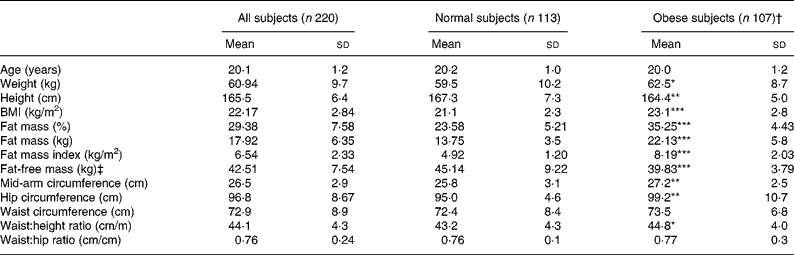
Mean value was significantly different from that of the normal subjects:*P < 0·05, **P < 0·01, ***P < 0·001 (t test).
† Obesity was defined as percentage fat mass ≥ 30 %.
‡ Fat-free mass is calculated by adding lean body mass and bone mass (dual-energy X-ray absorptiometry).
Table 2 Risk factor profiles of subjects
(Mean values and standard deviations)

* Obesity was defined as percentage fat mass ≥ 30 %.
Although no significant correlations were found between percentage fat mass or FMI and metabolic CVD risk factors, all central adiposity anthropometric variables (WC, WHpR and WHtR) were inversely associated with HDL-C values and positively correlated with TC:HDL-C, TAG and fasting glucose levels (P < 0·01). BMI was significantly correlated with fasting glucose and TC:HDL-C levels and inversely associated with HDL-C (P < 0·05). However, when the whole study group was divided into normal-weight and overweight or obese subjects according to their BMI values, no significant differences were detected in the percentage of subjects with abnormal CVD risk factors. When mean values of percentage fat mass, FMI and central adiposity anthropometric indices were compared between subjects with at least one CVD risk factor and subjects without any present risk factors, no significant differences were observed.
Comparison of risk-factor profiles among quartiles of anthropometric variables
Using the OR for the prediction of the presence of CVD risk factors, subjects of the highest quartiles of the central anthropometric adiposity variables had higher risk (OR) for low HDL-C and for having at least one abnormal risk factor relative to the first quartile (Tables 3 and 4). For example, the highest quartile of WHpR had significantly higher risk (P < 0·01) for low HDL-C levels (OR 3·40 (95 % CI 1·44, 7·99)) and the highest quartile of WHtR had significantly higher risk (P < 0·01) for low HDL-C levels (OR 3·54 (95 % CI 1·42, 8·82)) (data not presented in Tables). On the contrary, no significant higher risk was detected for the subjects of the highest quartiles relative to the first quartile for any of the adiposity variables (percentage fat mass and FMI).
Table 3 Odds ratios of prevalence of at least one risk factor
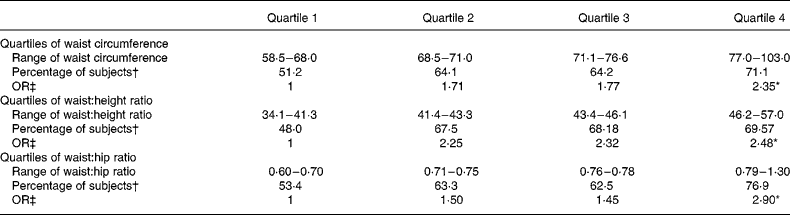
* OR significantly different from 1 (P < 0·05).
† Percentage of subjects with at least one risk factor/total number of subjects in each quartile.
‡ Relative to the first quartile in all subjects, obtained by logistic regression analysis.
Table 4 Odds ratios of prevalence of abnormal high-density lipoprotein-cholesterol

* OR significantly different from 1 (P < 0·05).
† Percentage of subjects with abnormal HDL-cholesterol values/total number of subjects in each quartile.
‡ Relative to the first quartile in all subjects, obtained by logistic regression analysis.
Cut-off points for the prediction of cardiovascular disease risk factors
The optimal cut-off values of various central adiposity anthropometric indices for the prediction of low HDL-C levels or at least one CVD risk factor produced from the results of ROC analysis are presented in Table 5. Table 6 summarises the areas under the ROC curves for these indices. The predictive ability of BMI, percentage fat mass and FMI was not satisfactory; therefore no cut-off values were determined.
Table 5 The optimal cut-off values, sensitivities and specificities for various anthropometric indices predictive of cardiovascular disease risk factors

Table 6 Receiver operating characteristic areas under the curve for various anthropometric indices and cardiovascular disease risk factors in all subjects
(Mean values and 95 % confidence intervals)

Discussion
In the present study, the proportion of female university students that were overweight or obese, when BMI was used as the criterion, is in agreement with the percentages reported by a recent survey conducted in the Attica region of Greece where it was shown that 11 and 3 % of young women aged 20–29 years were overweight and obese, respectivelyReference Panagiotakos, Pitsavos, Chrysohoou, Risvas, Kontogianni, Zampelas and Stefanadis1. However, when percentage fat mass, as determined by DXA measurements, was used to define overweight or obesity the percentage of overweight or obese subjects was significantly higher and reached 48·6 %. This large discrepancy between the ability of BMI and percentage body fat to identify overweight or obese subjects has been mentioned in previous studies for a large range of age groups. Arroyo et al. Reference Arroyo, Rocandio, Ansotegui, Herrera, Salces and Rebato22 compared anthropometric methods and bioelectrical impedance analysis for evaluating body fat percentage in university students. Although the results of this study are not comparable with the present study, since we used DXA to evaluate percentage fat mass, it was shown that BMI was a poor predictor of body fatness since the sensitivity was low in comparison with bioelectrical impedance analysis. Similar results, when DXA was compared with anthropometric methods, have been detected in several studies, revealing that BMI does not reflect the actual body fat content, causing mistakes in the diagnosis of overweight or obesityReference Morabia, Ross, Curtin, Pichard and Slosman23, Reference Kontogianni, Panagiotakos and Skopouli24.
The body composition assessment method we used in the present study was DXA. This method is widely used to assess body composition in research and clinical practice. Although the precision of the method is well established and is generally considered accurate, there are recent studies highlighting some limitations of the technique. A recent study that evaluated the level of agreement between DXA and a four-compartment model in estimating body fat in young women showed significant bias between the two methodsReference Wong, Hergenroeder, Stuff, Butte, O'Brian Smith and Ellis25. Moreover, Williams et al. Reference Williams, Wells, Wilson, Haroun, Lucas and Fewtrell26 have reported that the bias of DXA varies according to body size, body fatness, sex, and health status. Because of these limitations caution is needed when comparing the results between different studies with different populations.
A significant finding of the present study was the high prevalence of CVD risk factors among young students. Analysis of the metabolic profiles of the whole study group showed that a high percentage of the students had abnormal TC, LDL-C and HDL-C values. In addition, when we examined the proportion of subjects with at least one CVD risk factor present, the respective proportion was much higher and reached 60·4 % of the whole study group. These percentages of dyslipidaemia are among the highest reported in the literature for young womenReference Dobbelsteyn, Joffres, MacLean and Flowerdew16, Reference Bertsias, Mammas, Linardakis and Kafatos21.
Because there is no standard anthropometric measure of abdominal obesity that is widely accepted, we used all three (WC, WHpR, WHtR) of the most commonly assessed measures. WC has been recognised as a good measure of the metabolically active intra-abdominal fat that is associated with insulin resistance, hypertension and atherogenic dyslipidaemia consisting of hypertriacylglycerolaemia, small LDL-C particles, and suboptimal HDL-C levelsReference Ross, Shaw, Martel, de Guise and Avruch27–Reference Sowers29. Increased WHpR is also acknowledged as a clinically accepted measure of identifying patients with excess abdominal fat accumulation and has been reported to be associated with increased incidence of CVD in womenReference Li, Engström, Hedblad, Calling, Berglund and Janzon30, while WHtR has been reported to identify subjects at increased risk for metabolic disorders because of central fat distributionReference Hsieh, Yoshinaga and Muto8. Moreover, there is evidence that WC and WHpR are stronger markers of health risk than is BMIReference Janssen, Katzmarzyk and Ross10, Reference Ardern, Katzmarzyk, Janssen and Ross31.
Analysis of the present results showed that a considerable proportion of female students were characterised by central fat distribution irrespective of the anthropometric index used. Furthermore, all central obesity indices were associated with metabolic CVD risk factors. Using OR analysis, we found that the prevalence of CVD risk factors varied according to levels of central obesity indices, with higher prevalence in the higher levels of these anthropometric variables. More specifically, the fourth quartile of all central obesity indices had more than two times the prevalence of at least one CVD risk factor and low HDL-C levels compared with the first quartile of each variable.
A significant finding of the present study was the lack of association between percentage body fat, as well as FMI, and any of the metabolic CVD risk factors. Even when the whole study group was divided into normal and overweight or obese subjects according to their percentage fat mass, as evaluated by the DXA method, no differences were observed in mean values of the metabolic variables (Table 2). Several investigatorsReference Prentice and Jebb32, Reference Deurenberg33 as well as the WHO2 have emphasised that it is the amount of body fat, rather than the amount of excess body weight, which determines the health risks of obesity, highlighting this way the importance of conducting body fat measurements in order to correctly assess the health risks of an individual. However, there are data showing that not all obese individuals display the same metabolic profiles and CVD risk factorsReference Karelis, St-Pierre, Conus, Rabasa-Lhoret and Poehlman12, Reference Ruderman, Schneider and Berchtold34. Actually, different subtypes of obesity have been described, each of which has different body composition profiles. Preliminary evidence emphasises the importance of visceral fat levels which are associated with many of the constituents of the metabolic syndromeReference Karelis, St-Pierre, Conus, Rabasa-Lhoret and Poehlman12, Reference Sowers29, Reference Ruderman, Schneider and Berchtold34. This way it is possible to have subjects with large quantities of body fat mass, but low visceral fat, who demonstrate normal CVD risk profiles. In the present study, obese subjects (percentage fat mass ≥ 30 %) had significantly greater hip and mid-arm circumferences, but no differences were detected for WC and WHpR. Since it has been shown that WC adequately reflects visceral and particularly intra-abdominal fatReference Ross, Shaw, Martel, de Guise and Avruch27, it can be hypothesised that there were no differences between normal and obese subjects in intra-abdominal fat deposition. Additionally, these results reveal a tendency for the gynaecoid type of obesity. Therefore, although there is a substantial proportion of subjects with high levels of body fat, it seems that it is mainly distributed at the lowest segment of the body and may not contribute to an increase of obesity-related risk factors. Moreover, it has been shown that thigh fat may have protective effects against CVD risk factorsReference Seidell, Pérruse, Després and Bouchard35.
It has been shown that age modifies the discriminant ability of anthropometric indices to identify subjects with CVD risk factors. However, redefining different cut-off points for anthropometric variables for different populations or ethnic groups should be based on proper evidence. This evidence should not only be based on the relationship between BMI and percentage fat mass, but also on morbidity risks in relation to the anthropometric variablesReference Deurenberg33. Therefore, it has been suggested that using anthropometric indices for CVD risk screening needs specific studies in different ages and in populations of varied ethnic backgrounds. In the present study, besides evaluating the predictive ability of existing and recommended cut-offs of anthropometric indices to identify subjects with increased metabolic risk for CVD, we also determined the optimal cut-offs of WC, WHpR and WHtR to predict low HDL-C levels or at least one CVD risk factor using the ROC analysis (Table 5). The fact that we found lower than suggested cut-off values for these indices agrees with the results of previous studies showing that lower cut-off points are more appropriate for women, at younger ages, and for more prevalent risk factors such as dyslipidaemiaReference Dobbelsteyn, Joffres, MacLean and Flowerdew16, Reference Mirmiran, Esmaillzadeh and Azizi36.
The health profile of Greeks has dramatically changed during the last decades, leading to high rates of obesity as well as one of the most rapidly increasing death rates from CVDReference Manios, Panagiotakos, Pitsavos, Polychronopoulos and Stefanadis37. Being overweight at 20 to 22 years of age is associated with a substantial incidence of obesity by the age of 35 to 37 yearsReference McTigue, Garrett and Popkin38. Therefore, assessing the risk for the presence of CVD risk factors is of particular importance, since it would allow us to promptly identify individuals at high risk for development of CVD later in life. Since the relationship between visceral obesity and CVD appears to develop at a relatively young ageReference Sowers29 it is very important to correctly classify subjects with central obesity. Results of the present study demonstrate that using and assessing central obesity anthropometric indices in young women seems to better explain obesity-related health risks rather than percentage fat mass. These cut-offs should be used as a threshold to alert young individuals about their increased health risk, to encourage them to lose weight and to seek help from professionals.



