

Questions regarding continuity and change and the persistence of Indigenous traditions and lifeways impelled by the limitations of the colonial system are at the center of current archaeological investigations of Spanish missions in the American West. Daily foodway activities are ideal media through which to study these interactions and the resultant continuity, change, and integration of ideas and goods (Gifford-Gonzalez and Sunseri Reference Gifford-Gonzalez, Sunseri and Twiss2007; Mintz and Du Bois Reference Mintz and Du Bois2002; Sallum and Noelli Reference Sallum and Noelli2020; Twiss Reference Twiss2012). The study of food as a daily sociocultural and economic activity refers to the production, procurement, cooking, and consumption of food items (Gifford-Gonzalez and Sunseri Reference Gifford-Gonzalez, Sunseri and Twiss2007). Food refuse provides a unique lens through which the persistence of Indigenous traditions and alteration of daily practices can be explored within the layered social, cultural, and political situation of Spanish missions (Mathwich et al. Reference Mathwich, Pavão-Zuckerman and Ruff2019; Sunseri Reference Sunseri2017). Social identity is fluid, negotiated, and progressive; it is therefore important to recognize that food-related materials are not a pristine marker of identity but rather a significant yet flexible sociocultural practice (Dietler Reference Dietler and Twiss2007; Meskell Reference Meskell2002). The long-term persistence of identity and culture of communities relies on the rearticulation of traditional practices within the layered social, economic, and political facets of colonialism. Indeed, persistence refers not to unchanging practices and activities but instead to the ability of people to examine their own history and to mobilize this knowledge in the present (Hunter et al. Reference Hunter, Silliman and Landon2014).
This article examines the subsistence strategies and culinary traditions of Native Californians and Spanish soldiers and settlers who resided within Mission Santa Clara de Asís during the mission period (1769–1833). Previous research at Mission Santa Clara focused on the daily diet of Indigenous families who resided within the rancheria (see Garlinghouse Reference Garlinghouse2009; Kiel Reference Kiel2016; Noe Reference Noe2021, Reference Noe2022; Potter, Clark, and Reddy Reference Potter, Clark and Reddy2021). However, the diet of the priests, officials, and settlers within Mission Santa Clara has yet to be assessed, limiting the discussion surrounding the divergences between Indigenous and colonial foodways within this setting. This contribution presents the differing strategies employed within Mission Santa Clara in the procurement and utilization of domestic and wild food resources. These faunal assemblages from Mission Santa Clara are then evaluated alongside published faunal assemblages from mission and presidio settlements throughout Alta California, providing a regional understanding of subsistence strategies and culinary practices.
This evaluation progresses beyond faunal identification to an assessment of how domestic and wild food resources were procured and utilized in daily meals by the soldiers, settlers, and Indigenous residents. To this end, I argue that although availability of domestic mammals resulted in cattle meat serving as the dietary base for all meals consumed within this colonial settlement, there is a stark difference between how Indigenous residents and colonial settlers, officials, guests, and priests prepared daily meals. Not only were traditional wild food resources hunted and consumed by Native Californians, but cattle meat was also cooked in colonial-style dishes using traditional culinary techniques of grease rendering and marrow extraction. The absence of evidence of these traditional foods and the extraction of grease and marrow in the daily meals of priests, soldiers, and settlers represents a pattern of Indigenous foodway persistence and reorientation of culinary practices within the constraints of the mission system.
The Alta California Mission System
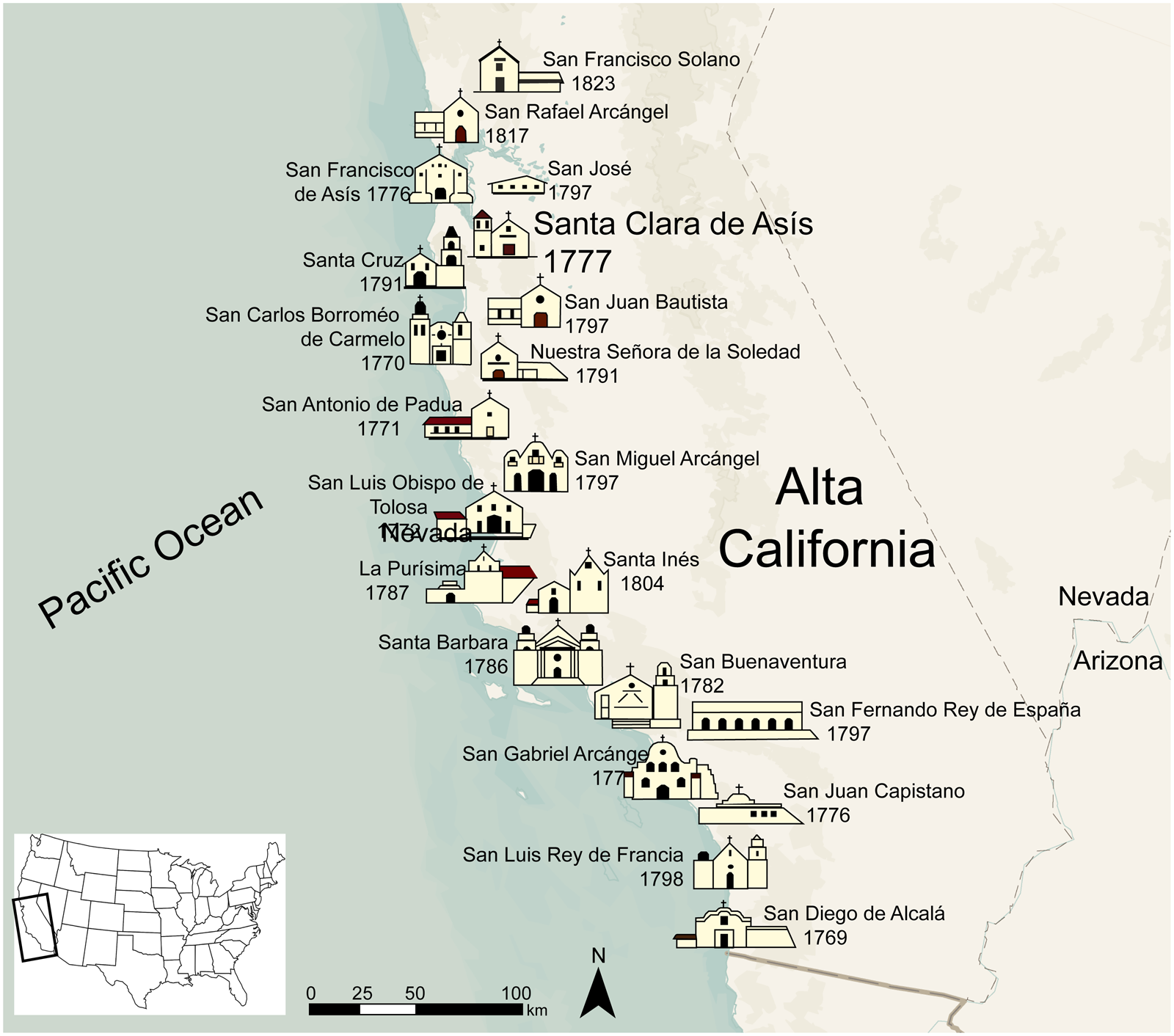
In the eighteenth century, Alta California became the final frontier of Spain's colonial expansion in North America. The Alta California Spanish mission period began in 1769 with the founding of 21 Franciscan missions that extended along the coast from modern-day San Diego northward to San Francisco (Figure 1). This colonial enterprise consisted of mission complexes, presidios (military outposts), and pueblos (towns) for Spanish citizens. In addition to Franciscan padres from Spain, soldiers and settlers of Alta California were of Iberian, Mesoamerican, and African ancestry, including Native people from Mesoamerica and the northern provinces of Sonora and Baja California.
Location of Alta California missions with their names and founding years (adapted from Newman Reference Newman1949).
Within Alta California, Franciscan padres led by Junípero Serra relocated Indigenous peoples from a multitude of villages and linguistic groups into single, centralized missions with the intention of creating self-supporting agrarian labor forces (Lightfoot Reference Lightfoot2005; Wade and Wade Reference Wade and de Fátima Wade2008). Presidios housed soldiers of European and Mesoamerican ancestry as well as Native Californian prisoners and contract laborers. Mission settlements, however, were the primary institution of colonization. They developed into locations of cultural entanglement where priests, soldiers, settlers, and Indigenous people of Alta California engaged in complex sociocultural and economic negotiations grounded in the exchange, disregard, adoption, and rejection of goods, practices, and ideas.
In the early mission years, settlements in the Alta California mission system were reliant on supply ships from Spain. The Mexican War for Independence in the early nineteenth century resulted in communication with and support from Spain to become increasingly sporadic (1805–1820), and mission settlements came to rely on foreign markets for the sale of their surplus goods (Hackel Reference Hackel1997). This economic outlet led to an increase in the specialization of manufactured goods as foreign companies vied for access to California's lucrative hide and tallow production (Hackel Reference Hackel1997). In 1821, Mexico successfully ceded from Spain and acquired the expansive Alta California colonial system (Jackson and Castillo Reference Jackson and Castillo1995:98). This transition resulted in the conversion of these colonial institutions from social to economic organizations as the hide and tallow industry developed into a market economy. Hides had a variety of uses, including bed mattresses, horse blankets, saddles, knapsacks, coverings, and ropes. Tallow—fat derived from the skin and organs within a cattle carcass—was used to make candles and soap (Hackel Reference Hackel2005). In 1833, Mexico passed the law of secularization, privatizing all 21 mission settlements and ending the Alta California mission system.
Labor within the Alta California Mission System
The success of the Alta California mission system was grounded in an agrarian work force consisting of relocated and baptized Native Californians (Lightfoot Reference Lightfoot2005). Within the mission system, Indigenous men had various jobs, including tanning, blacksmithing, wine making, and maintaining cattle herds, whereas women were tasked with cooking, clothing production, and grain processing (Hackel Reference Hackel2005). Indeed, it was solely through the labor of Indigenous residents that the Spanish mission system was able to operate.
Historically, European livestock and agricultural practices are viewed as almost purely colonial enterprises, negating the skills and labor of Indigenous men in caring for these expansive herds (Mathwich et al. Reference Mathwich, Pavão-Zuckerman and Ruff2019). In fact, for the Indigenous residents of Mission Santa Clara, husbandry practices that kept the mission system functioning required an enormous amount of time, skill, and energy. It is important to acknowledge and recognize the impressive skill set learned by many Indigenous residents that articulates with current herding practices in Alta California. The rise of vaqueros, or cowboys, during the mission period is one such example of how many Indigenous peoples actively incorporated horses into a range of local traditions that have persisted into the present (Panich 2017; Phillips Reference Phillips2010). Accordingly, animal husbandry practices during the mission period must be appropriately characterized through the recognition of the role of Indigenous peoples in operating this complex agricultural system while acknowledging the purposeful maintenance of traditional hunting and fishing practices.
Native Californian men were tasked with maintaining the expansive herds as well as butchering cattle for meat and secondary products. Gust's (Reference Gust and Frierman1982) research defined the “Californio”-style butchering practices of cattle within Alta California missions. Analyses of matanzas, or butchering locations, have documented the processing of cattle carcasses where the hide was carefully removed alongside the large fat deposits, called the sebo (located near the kidney), and manteca (located just below the hide; Davis Reference Davis1889; Wessel Reference Wessel and Bente1980). Specialized processing locations with tallow-rendering facilities and tanning vats existed outside of the matanzas, where hide was manufactured into leather and rope and where tallow was boiled to make candles and soap (Allen Reference Allen1998; Wessel Reference Wessel and Bente1980). Within the matanzas, cattle meat was stripped from long bones to make jerky. Vertebral and rib elements, from which it is notably difficult to strip meat, were segregated from this butchering process; instead, they were brought back to the mission complex to be utilized in a colonial-style stew of pozole (Gust Reference Gust and Frierman1982). Analyses of matanzas have noted a preponderance of long bones and absences of ribs and vertebrae (Burson Reference Burson1999; Gust Reference Gust and Frierman1982; Potter, Clark, and Reddy Reference Potter, Mirro and Wheelis2021), whereas analyses of refuse features associated with dietary practices within the mission system have noted high frequencies of ribs and vertebral elements (Kiel Reference Kiel2016; Langenwalter and McKee Reference Langenwalter, McKee, Hoover and Costello1985; Noe Reference Noe2021; St. Clair Reference St. Clair2005; Walker and Davidson Reference Walker, Davidson and Costello1989).
The meals of the residents of the Alta California mission system were distinct from those in earlier Spanish colonial settlements established in the Americas. Indeed, the daily meals were not really Iberian but rather an amalgamation of Iberian, Mesoamerican, and African influences, developed from the prolonged years of contact and interracial marriage. The morning and evening meals were grain-based gruel (called atole) whereas lunch was a thick-broth soup or stew (called pozole) made from vegetables and cattle meat from ribs and vertebrae (Lightfoot Reference Lightfoot2005:60; Mora-Torres Reference Mora-Torres2005; Webb Reference Webb1952). Pozole, specifically, was originally a special meal for the privileged of the Aztec Empire before being modified by the Spanish and adopted as a daily meal within the Alta California mission system.
Women from Baja California who had accompanied the priests, soldiers, and settlers into Alta California educated Native Californian women in the preparation of atole and pozole (Lightfoot Reference Lightfoot2005:60; Mora-Torres Reference Mora-Torres2005; Webb Reference Webb1952). Written records state that Indigenous women were charged with preparing the three daily meals for all residents of the mission settlements (Reyes Reference Reyes2009; Skowronek et al. Reference Skowronek, Thompson, Johnson and Cohen-Williams2006). These records make no indication of the identities of the cooks, whether the same women partook in the preparation of all meals or specific peoples were tasked in the preparation of meals for particular groups of people (Geiger and Meighan Reference Geiger and Meighan1976:83; Mora-Torres Reference Mora-Torres2005:209–213). Although special dishes were often prepared for priests and missionaries, historic records detail the standardized preparation and consumption of these daily meals by all residents within mission complexes (Popper Reference Popper2016; Reyes Reference Reyes2009).
Foodways within the Alta California Mission System
Previous studies on daily foodway activities in California emphasized the profound disruption the arrival of the Spanish had on Native Californian lifeways and practices (Lightfoot Reference Lightfoot2005; Panich Reference Panich2010; Panich and Schneider Reference Panich and Schneider2019). Indeed, the definition of “colonialism”—an unequal and exploitative economic and social relationship—tainted early archaeological investigations of colonial sites with assumptions that the intentions of colonists dictated all activities within mission settlements. Perceptions of colonialism and precontact practices established from a baseline coinciding with the arrival of the Spanish resulted in a narrative affirming the almost complete loss of social identity and authenticity (Montón-Subías and Hernando Reference Montón-Subías and Hernando2018; Silliman Reference Silliman, Orser, Zarankin, Funari, Lawrence and Symonds2020). Recent research has instead provided a wealth of evidence centered on the persistence of Native Californian lifeways and practices amid—or perhaps in spite of—the pressures of colonialism (see Brown Reference Brown2018; Panich Reference Panich2013; Panich and Schneider Reference Panich and Schneider2015; Pavao-Zuckerman and LaMotta Reference Pavão-Zuckerman and LaMotta2007; Reddy Reference Reddy2015). Despite the clear deleterious ecological and demographic impact of the arrival of Europeans, our understanding of this period has progressed beyond models of acculturation and extinction to a greater recognition of the complexity of relations within a colonial setting. As a result, much research has shifted toward the interwoven nature of continuity and change, with an explicit consideration of Native Californians’ agency.
Although the erroneous perception of the absolute authority held by the Spanish within the mission system has been refuted, this colonial setting undoubtedly restricted and constrained movement and choices (Lightfoot Reference Lightfoot2005; Panich Reference Panich2014). Implicit within this is an understanding of the myriad of limiting factors inherent within colonial settings, as well as the agency of people as they actively choose to give meaning to certain goods and practices (Silliman Reference Silliman, Scheiber and Mitchell2010). For this reason, the assumed superiority of the introduced colonial goods and practices cannot be used to explain acceptance or utilization (Beck Reference Beck2020; Cipolla Reference Cipolla2017; Scaramelli and Tarble de Scaramelli Reference Scaramelli and de Scaramelli2005). Consequently, the mere presence of particular colonial objects and goods cannot be used to assess their adoption or usage, just as their absence cannot be wholly explained by Indigenous resistance (Silliman and Witt Reference Silliman and Witt2010). The identification of apparent or assumed changes in traditional Indigenous goods and practices must be understood as internally organized rather than imposed by external, colonial power (Panich Reference Panich2013; Silliman Reference Silliman2009). In this article, attention therefore is shifted from a basic identification of faunal remains to the specific procurement and utilization of foodway practices within the limits of the mission system (Cipolla Reference Cipolla2017; Lightfoot et al. Reference Lightfoot, Nelson, Grone, Apodaca, Panich and Gonzalez2021; Panich Reference Panich2014).
Previous Foodways Research
In the context of Spanish mission sites, this conceptual focus on foodways considers both the importance of socially meaningful cultural preferences in the acquisition and consumption of food as well as the necessity of practical decision-making within the limitations of colonialism (Silliman and Witt Reference Silliman and Witt2010). Foodways and subsistence strategies within Spanish mission settlements have long interested scholars working within these colonial sites across North America. Early research within Alta California highlighted the reliance on cattle meat in the daily diets of settlers, soldiers, priests, and Indigenous residents of mission settlements. Pioneering research focused on Indigenous diet at Missions San Buenaventura (Romani and Toren Reference Romani, George Toren and Greenwood1975), San Antonio (Langenwalter and McKee Reference Langenwalter, McKee, Hoover and Costello1985), and San Juan Bautista (Farris Reference Farris1991); and colonial diet at Mission Santa Inés (Walker and Davidson Reference Walker, Davidson and Costello1989) provided clear evidence for the preponderance of cattle bones, confirming the importance of beef within the daily meals of mission inhabitants. Although this research indicates that Indigenous residents of mission settlements adopted some aspects of colonial cuisine, faunal analyses also illustrate that wild food resources were consistently acquired and eaten throughout the mission period. Diversity of wild resources including mule deer, fish, and various bird species were documented at Missions Santa Cruz (Allen Reference Allen1998), San José (Panich et al. Reference Panich, Allen and Galvan2018), San Juan Bautista (St. Clair Reference St. Clair2005), Santa Clara (Garlinghouse Reference Garlinghouse2009; Kiel Reference Kiel2016), and La Purísima (Brown et al. Reference Brown, Brian J, Barbier, Ixta, Mosqueda-Lucas, Rotella and Willoughby2021). This consumption of wild resources extends to the settlers’ and soldiers’ diet, with prey native to California consistently identified (Buitenhuys Reference Buitenhuys2015; Dietler et al. Reference Dietler, Gibson and Potter2015; Gust Reference Gust, Hamilton and Abdo-Hintzman2004).
The alignment of written records detailing (1) the use of ribs and vertebrae in atole and pozole and (2) faunal patterning from butchering and dietary assemblages reveals a standardization of colonial-style meals within mission settlements (Mora-Torres Reference Mora-Torres2005). These previous archaeological investigations laid the groundwork for this study of the daily diets of the colonists and Indigenous residents. By focusing on the procurement and utilization of food resources within mission settlements, this research sheds light on how Indigenous and colonial residents actually used and gave different meanings to the food resources acquired. This contributes to the growing body of literature on how different practices articulate with broader understanding of Indigenous autonomy within situations of colonialism.
Mission Santa Clara de Asís
Mission Santa Clara de Asís is an ideal case study to assess issues of foodways within a colonial setting. The mission was established in the southern portion of the modern-day San Francisco Bay in January 1777, in the homeland of the Tamien Ohlone. Due to flooding and earthquakes, the main quadrangle at Mission Santa Clara was relocated five times, creating five iterations of the mission complex. Accordingly, Mission Santa Clara has been denoted the “Moveable Mission.”
The third quadrangle at Mission Santa Clara (1781–1818) is well documented historically and archaeologically, with many university and city projects exposing much of this complex. Mark Lynch and Dave Huelsbeck excavated and identified the third mission complex and associated trash deposits through a series of excavations in the 1980s (Huelsbeck Reference Huelsbeck1988). In comparison, archaeological work associated with the fourth (1818–1822) and fifth mission (1822–1926) compounds is less abundant, focused primarily on outlining architectural footprints (D'Oro et al. Reference D'Oro, Blount, Rebecca and Hylkema2011).
The mission quadrangle of Mission Santa Clara served as the primary living quarters for Father José Viader and Father Magin Catalá, and it included storage areas, the kitchen, and reading rooms attached to the church and sacristy. In addition to Fathers Viader and Catalá, who resided in the convento, the complex included rooms for travelers and living quarters for settlers and high-ranking officials of Mesoamerican, Indigenous, and African ancestry. Meals for the padres, guests, and other residents of the complex were prepared inside the quadrangle, whereas dishes for the mission workers—specifically Native Californian—were prepared outside in the rancheria. The location of the trash deposits adjacent to the residential living areas and kitchens, as well as the contents of the refuse features (discussed below), indicate that the contents reflect daily dietary activities. Moreover, the identification of outlying buildings adjacent to the complex—including tanneries, corrals, and matanzas (butchering locations)—further indicates the refuse features focused on in this analysis relate to domestic dietary activities. It is imperative to emphasize that the daily activities and dietary practices of the settlers, soldiers, and priests of Mission Santa Clara cannot be characterized as European or Iberian; instead, they reflect adopted and modified practices of European, African, and Indigenous origins.
Although the quadrangle and church were moved several times, the rancheria remained in a single location throughout the mission period. The rancheria was a small settlement just outside the mission quadrangle that housed married, baptized Native Californian families. Numerous archaeological investigations of the rancheria have unearthed the spatial footprint of house and community refuse features (Allen et al. Reference Allen, Baxter, Hylkema, Blount and D'Oro2010; Garlinghouse Reference Garlinghouse2009). Food refuse features were excavated during a multiyear project conducted by Albion Environmental under the direction of Santa Clara University that focused on uncovering and exposing features from within the rancheria.
In the early years, Mission Santa Clara housed primarily Ohlone peoples from a multitude of adjacent villages speaking various linguistic dialects. Ohlone refers to a broadly defined ethnolinguistic unit whose people lived within the San Francisco Peninsula. In 1811, people from groups who spoke the Yokuts language, who were originally from the Central Valley, were gradually incorporated into the mission (Milliken Reference Milliken1995:110). Later in time, Miwok peoples from the Sierra Nevada foothills were brought into the mission in smaller numbers until secularization in 1836 (Milliken Reference Milliken1995:60). Prior to being identified and classified by Spanish colonists and anthropologists into singular groups, the Ohlone, Yokuts, and Miwok peoples were organized into multiple village communities speaking related but variant languages. Ohlone (previously called Costanoan by the Spanish) specifically describes eight related but distinct groups of people: Karkin, Chochenyo, Ramaytush, Tamien, Awaswas, Mutsun, Rumsen, and Chalon (Leventhal et al. Reference Leventhal, Field, Alvarez, Cambra and Bean1994). The diversity of the Indigenous population that resided at Mission Santa Clara is characteristic of Alta California, with each mission settlement housing peoples from differing cultural and ethnolinguistic groups.
Material and Methods
Alta California Faunal Assemblages Considered
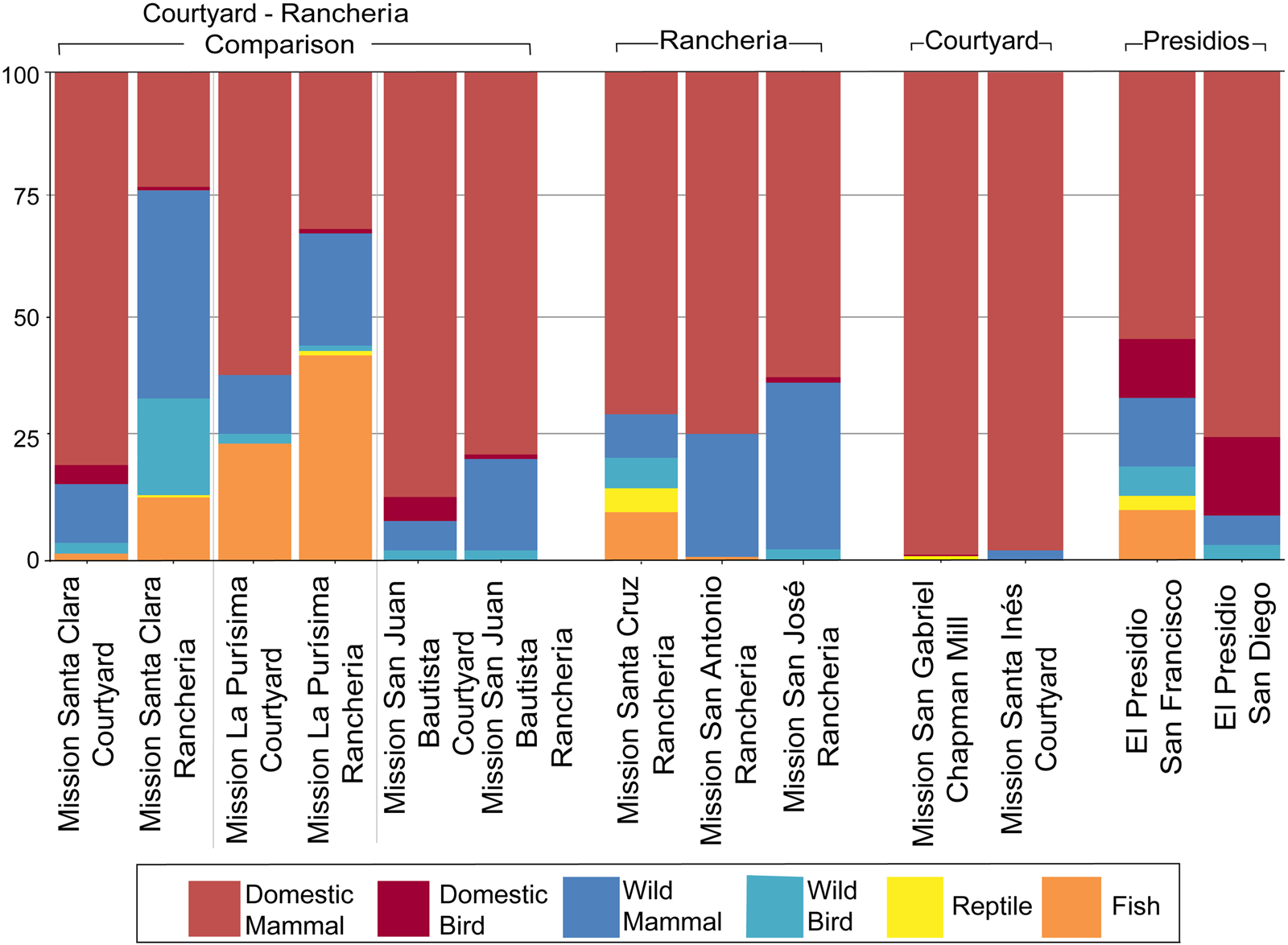
The focus of this study is twofold. First, a regional assessment of Indigenous and colonial diet within Alta California missions and presidios is completed (Figure 2; Table 1). Second, faunal assemblages from two distinct areas within Mission Santa Clara are thoroughly examined and situated within this regional assessment (Figure 3). This first assemblage is from food refuse features excavated from within the rancheria, and it represents daily dietary practices from the 1780s through the early 1820s, during which Ohlone- and Yokuts-speaking people primarily resided within the mission boundaries (Noe Reference Noe2021, Reference Noe2022). A diachronic analysis of Indigenous foodways at Mission Santa Clara throughout the mission period has been previously completed (see Noe Reference Noe2021, Reference Noe2022). The second assemblage is derived from food refuse features associated with the kitchen and living quarters within the third mission quadrangle (1781–1818), representing the diet of settlers, officials, travelers, and priests (Huelsbeck Reference Huelsbeck1988). Currently, there is a lack of chronological control within the assemblage from the courtyard, negating analyses of changes through time.
Map showing the missions and presidios discussed in the article, situated within the approximate locations of Indigenous language groups (adapted from Native Land Digital 2023). (Color online)

Overview of Alta California Mission Faunal Assemblages (see Supplemental Table 1).

Map of Mission Santa Clara indicating the excavation united from the rancheria (red) and courtyard (blue) that were assessed. The extended rancheria area is outlined by the dashed line, with the gray bars delineating the adobe housing structures. The layout of the third mission complex, including the courtyard and church, is outlined in black (adapted from Panich Reference Panich2014). (Color online)

Zooarchaeological Methods
The faunal assemblages considered in this study are derived from excavations by cultural resource management and university field schools published in reports and dissertations (Table 1). Assemblages confirmed to contain food refuse were chosen, whereas assemblages associated with specialty buildings within the mission complex (i.e., corrals or tallow stations) that do not reflect dietary practices were omitted. Additionally, faunal analyses of assemblages from missions such as San Buenaventura, which included the identification of only mammals, and San Luis Obispo, which lacked contextual information, were not included. Materials identified within communal refuse features cannot be attributed to a specific person or ethnolinguistic group. Given that refuse features represent the activity of an entire community over time, analyses represent collective daily practices throughout the mission period.
For the purpose of the regional foodway analysis, only bones identified to family were included, excluding remains identified to broad categories such as artiodactyl, which includes remains from domestic sheep and goat as well as wild deer and elk. Similarly, intrusive species such as gophers as well as commensal animals, including domestic dogs and cats, were not included. Following the compiling of these disparate datasets, the measures of the number of identified specimens (NISP) were recorded. Measures of count eliminate biases associated with derived quantitative indexes such as MNE, allowing comparisons between projects and researchers (Lyman Reference Lyman2008). All assemblages were screened using ⅛ in. (3.18 mm) mesh save for the assemblage from the rancheria at Mission Santa Clara, which was screened through  in. (1.59 mm) mesh, as well as the assemblages from Mission San Juan Bautista, which were screened through ¼ in. (6.35 mm) mesh. The San Juan Bautista assemblages provide a rich dataset comparing dietary habits associated with cattle, whereas the extensive and robust dataset from Mission Santa Clara provides insight into the potential data lost with the use of larger screen sizes. Preservation biases and variations in sampling strategies employed during excavation can influence the representativeness and sample size of remains collected during excavation and are considered in the interpretation.
The identification and analysis of the faunal remains from Mission Santa Clara, considered in this study, was conducted by the author following standard zooarchaeological methods (Reitz and Wing Reference Reitz and Wing1999). Measures of relative abundance calculated include number of identified specimens (NISP), biomass derived from measures of weight, and minimum number of elements (MNE). NISP is a simple tally of the number of specimens recovered from various taxonomic categories, excluding unidentified fragments. MNE is calculated by determining whether fragments are from the same elements by assessing whether two elements overlap and whether they are from the same side (i.e., right or left). If the bone fragments do not overlap, then they may be from the same element and the MNE is 1 (Lyman Reference Lyman1994:290). Biomass is calculated from measures of weight, and it is an estimate for the amount of meat associated with a bone based on measures of the weight of a bone (Reitz and Wing Reference Reitz and Wing1999:211; Reitz et al. Reference Reitz, Quitmyer, Stephen Hale, Scudder and Wing1987). Biomass is calculated using a taxon-specific allometric regression formula that provides estimates for the dietary contribution of both invertebrate and vertebrate specimens (Reitz and Wing Reference Reitz and Wing1999):

Y = estimated biomass for a taxon
X = weight of specimens for a taxon
a = the Y-intercept (Reitz and Wing Reference Reitz and Wing1999:68; Reitz et al. Reference Reitz, Quitmyer, Stephen Hale, Scudder and Wing1987)
b = the slope (Reitz and Wing Reference Reitz and Wing1999:68; Reitz et al. Reference Reitz, Quitmyer, Stephen Hale, Scudder and Wing1987)
Modifications examined include evidence of cooking and butchering methods, the extraction of secondary animal products such as marrow and tallow, and natural processes including rodent or carnivore gnawing and weathering. Spiral fracturing is a process that occurs when a long bone is first hit with an impact, followed by the twisting of the bone by an agent to break the fracture. This causes the shaft of a bone to be splintered while the epiphysis remains intact. Although there is evidence that this breakage can occur through natural or taphonomic means such as trampling, this method is also a common technique used by California Native Americans and other modern and prehistoric hunter-gatherer groups for the purpose of marrow extraction (Lyman Reference Lyman1994).
Results
Alta California Assemblage Comparison
The faunal assemblages from distinct mission settlements within Alta California confirm that although animal use varied between mission complexes, the greatest variation occurred at the intrasite level, especially when comparing food refuse associated with Native Californian populations with that of the settlers, soldiers, and priests residing in the mission complexes (Figure 5).
In comparing assemblages from within Missions Santa Clara, La Purísima, and San Juan Bautista, refuse features associated with the diets of Native Californians contain higher proportions of wild species than those associated with the priests, settlers, and soldiers. This is especially notable in the two assemblages from Mission La Purísima and Mission San Juan Bautista, where the sampling strategies were consistent (St. Clair Reference St. Clair2005). Disparities in proportions of small mammal and domestic chicken are noteworthy in the dual assemblages from Mission San Juan Bautista. The recovery of these smaller elements signifies key differences in dietary choices, with members of both the Ohlone- and Yokuts-speaking groups targeting wild species, whereas settlers, soldiers, and priests focused on the consumption of colonial-style foods. Within Mission La Purísima, there are comparably higher quantities of wild species in the assemblages associated with Chumash residents’ subsistence strategies and diet than the courtyard assemblage, which reflected settlers’ and soldiers’ diet.
This patterned variation is consistent in the assemblages associated with Native Californians from Missions Santa Cruz and San José, which contain significantly higher quantities of wild species. Comparatively, assemblages associated with settlers, soldiers, and priests at Missions Santa Inés, San Antonio, and San Gabriel contain significantly lower quantities of wild species. Notably, there is comparably high diversity in the assemblages from the two presidios. In the future, the use of consistent sampling strategies would provide more robust evidence confirming the stark distinctions between assemblages associated with Native Californian subsistence strategies and culinary traditions and those of the priests, settlers, and soldiers. Nevertheless, the consistent sharp differences in proportions of domestic and wild species between the different food-refuse features indicate that traditional food resources continued to be acquired and consumed throughout Alta California during the colonial mission period.
Mission Santa Clara Assemblage Comparison
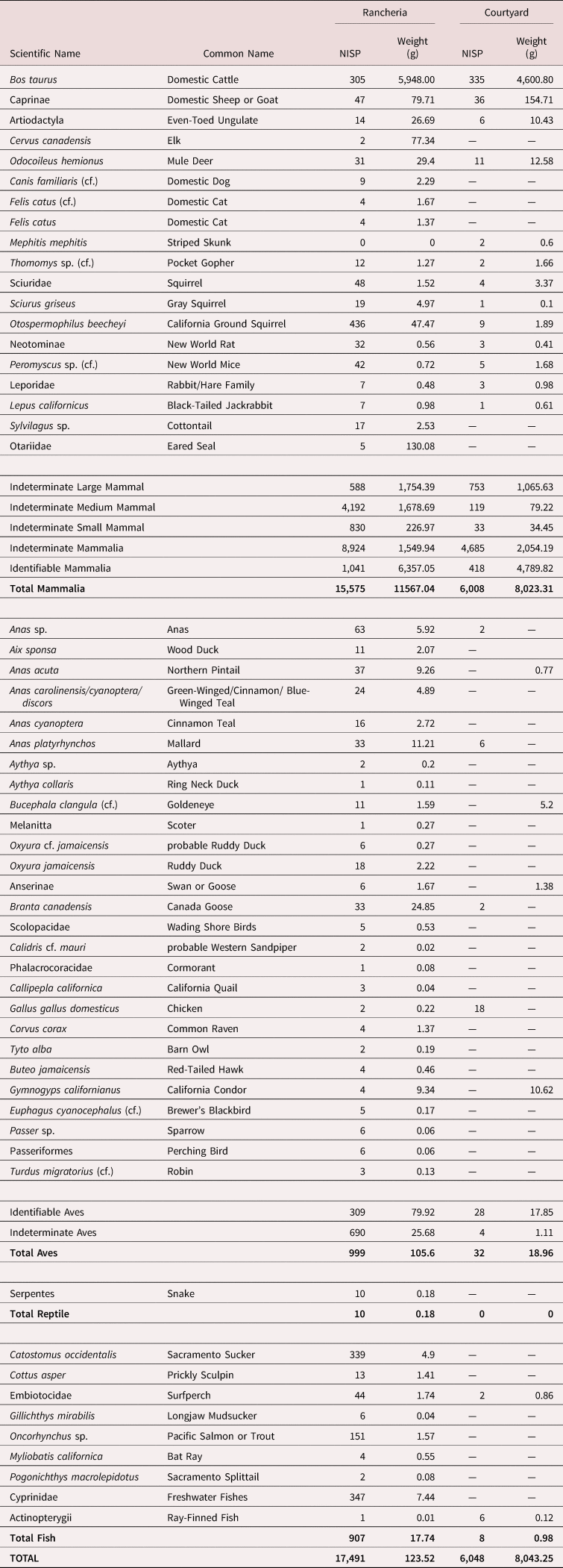
The faunal assemblages from Mission Santa Clara lend significant insights into subsistence strategies and culinary processes of Native Californians as compared to those of settlers, soldiers, and priests within the mission boundaries (Table 2). To highlight the divergences between assemblages, identified taxa are summarized in categories of domestic mammals (cow, sheep, goat, and pig); wild mammals (e.g., jackrabbit, cottontail, ground squirrel, and skunk); domestic birds (chicken); wild birds (e.g., geese, ducks); reptiles and amphibians; and fish (Figure 4; Noe Reference Noe2022). Commensal mammals that were not included in daily diet and therefore not included in this analysis include domestic dog (Canis familiaris) and domestic cat (Felis catus).
List of Identified Taxa, Number of Identified Species (NISP), and Weight (g).
Summary of vertebrate remains from the rancheria and courtyard of Mission Santa Clara. Biomass was calculated following Reitz and Wing (Reference Reitz and Wing1999). (Color online)

In examining biomass (quantity of meat associated with the weight of bone), the proportion of domestic ungulates indicates that cattle (Bos taurus) were the dietary base of daily meals within the mission settlement. The prevalence of cattle meat is consistent between both assemblages, whereas, comparatively, few sheep/goat (caprine) and chicken (Gallus gallus) remains were identified. Although the estimate of biomass of domestic mammals is higher in the courtyard assemblage (97.6%) as compared with the assemblage from the rancheria (95.2%), this difference is not significant.
Although estimates of biomass suggest that cattle were the dietary base of daily meals within Mission Santa Clara, this metric is biased toward large animals, and in assessing the measure of count (NISP), this dominance is shown to be false. In the assemblage from the rancheria, the quantity of cattle included in the Indigenous daily diet is greatly diminished and is replaced by a significant increase in prey diversity that includes a wide array of wild species. A great deal of variation exists within the wild animals present, with mule deer (Odocoileus hemionus) and squirrel species (Sciuridae) the most prevalent taxa. Conversely, few wild species were identified within the courtyard assemblage associated with the daily diet of priests, settlers, and soldiers. Domestic birds, specifically chicken (Gallus gallus), appeared in significantly lower quantities within the assemblage from the rancheria as compared to wild bird species. Conversely, wild birds were uncommon in the courtyard assemblage, with only duck (Anas; n = 6) identified.
The identification of smaller-boned animals such as squirrels, ducks, and chickens suggests that a lack of higher quantities of wild mammalian and bird species in the assemblages associated with the courtyard cannot be solely attributed to screen size. The lack of diversity within the courtyard assemblage thus also reflects the dietary preferences of the priests, settlers, and soldiers, with choices made to focus on the consumption of domestic animals rather than wild species native to Alta California.
The prevalence of fish remains within the assemblage associated with the daily diet of Native Californians demonstrates a preference for shallow-water marine species over freshwater fishes. Within this assemblage, the high quantity and diversity of fish is reflective of the  in. (1.59 mm) screening method, which allowed for the recovery of minute fish species (i.e., minnows and suckers) that are unable to be recovered with larger screen sizes. The identification of fish remains in the courtyard assemblage suggests that, similar to birds, the dearth of additional fish species reflects a dietary choice and cannot be solely justified through differing sampling strategies.
Alta California Cattle: Body-Part Distribution
Although measures of count (NISP) indicate the prominence of beef in daily meals within the Alta California mission system, this metric is unable to assess the skeletal portions present, which obfuscates the quantity and quality of meat consumed. Identifying the portions of the cattle consumed can shed light on the preparation of dishes, which cannot be captured by assessments of taxonomic categories alone (Newman Reference Newman2010; Pitts Reference Pitts, Nadeau and Wilkins2015). Therefore, the skeletal completeness of cattle remains from the 10 missions are assessed (Figure 6). Following Marean (Reference Marean1991), element frequency data are compiled along eight anatomical groupings: head (skull, mandible, teeth, atlas and axis vertebrae), axial (ribs and cervical, thoracic, and lumbar vertebrae), forequarter (scapula, sternum, humerus, radius, and ulna), hindquarter (innominate, sacrum, femur, patella, and tibia), foot (carpals, metacarpals, tarsals, metatarsals, astragalus, calcaneus, sesamoids, and phalanges), and tail (caudal vertebrae).
As depicted in Figure 6, there is consistency in the cattle portions allocated for daily meals by all residents of mission settlements. The category of ribs and vertebrae is the most numerous for each of the mission assemblages, with significantly higher proportions of these elements as compared to the standard quantities of bones in each category. Although it is important to note that assemblages from the Mission Santa Clara courtyard contains higher quantities of hindquarter and forequarter elements, this pattern is not consistent in comparison to other mission assemblages and is not pronounced enough to suggest that priests, soldiers, and settlers had access to higher-quality cuts of meat. Furthermore, the high quantities of rib and vertebral elements in the Mission San Gabriel and Santa Inés assemblages most likely stems from disparate sampling and identification techniques rather than differential dietary practices.
Summary of vertebrate remains from Alta California. Data compiled from sources listed in Table 1. (Color online)
Summary of skeletal completeness from rancheria and courtyard assemblages from Alta California. (Color online)
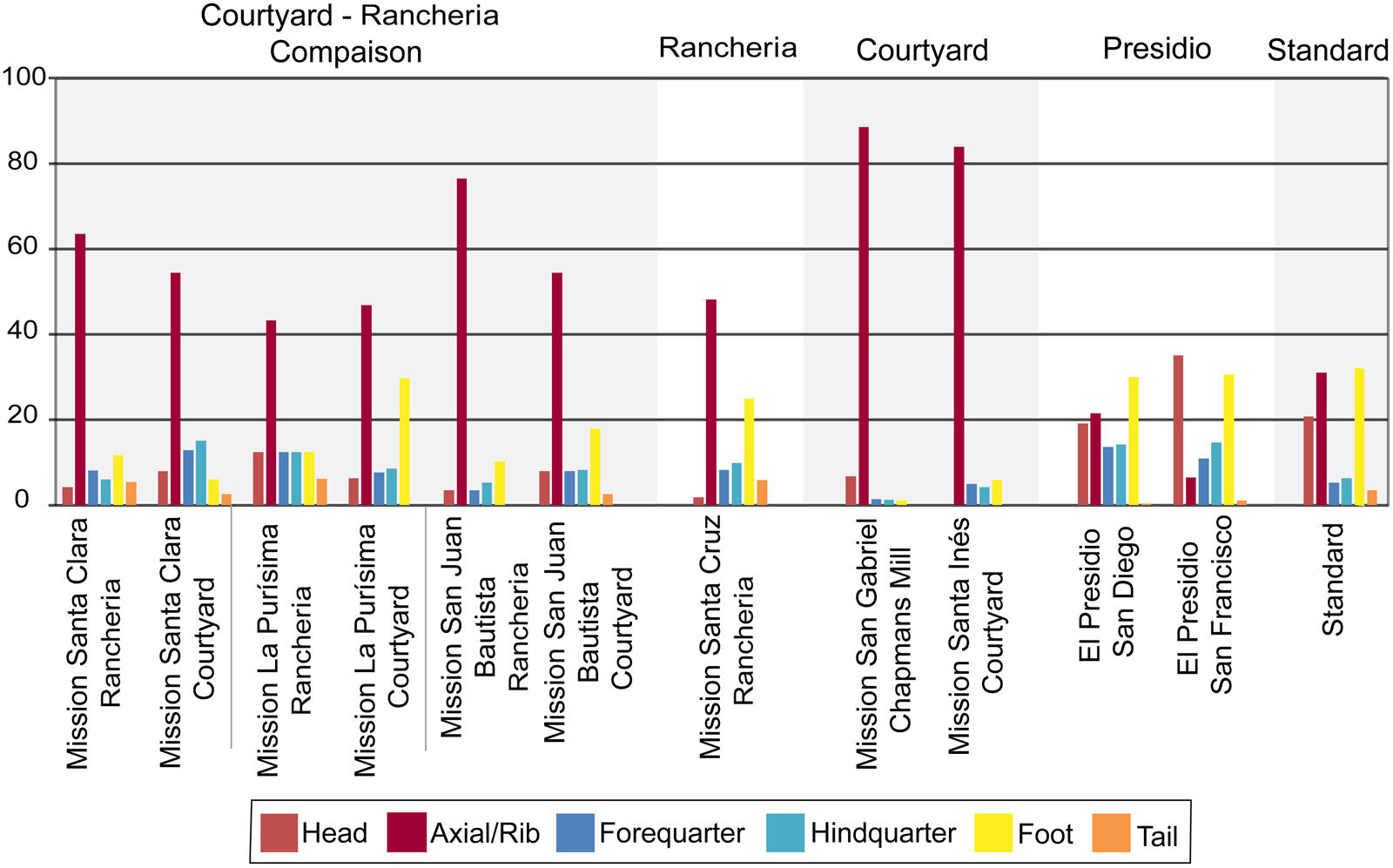
Assemblages within mission boundaries derived from refuse features associated with Native Californians and the settlers, soldiers, and priests contain similarly high preponderances of rib and vertebral elements, indicating a standardization of the ingredients for daily meals. This aligns with ethnographic literature and previous faunal research of daily meals within mission establishments, indicating that the consumption of meat from vertebral and rib elements stems from Spanish butchering practices (Burson Reference Burson1999; Gust Reference Gust and Frierman1982). In the two presidio assemblages, there is a notable lack of rib and vertebral elements, signaling differential access to cattle, with the inclusion of differing portions of meat in daily meals.
Mission Santa Clara Cattle: Marrow Extraction and Grease Rendering
Aligning with analyses of cattle-part distribution, patterns of bone breakage shed light on the intensity of mammal bone utilization and consumption. This spectrum includes cut marks from butchering and chopping, the extraction of marrow indicated by single breaks in long bone, and the intensive pulverization of bones to render grease (Morin and Soulier Reference Morin and Soulier2017; Outram Reference Outram, Miracle and Milner2002). Tallow and bone grease are both by-products of cattle carcasses. Tallow was acquired from the fat from the carcass and was used to make candles and soap, whereas bone grease was acquired through fragmented and boiled bone fragments and was used for culinary purposes (Pavao-Zuckerman Reference Pavão-Zuckerman2011). Identifying bone-grease rendering can be difficult because patterns of bone fragmentation can be caused by either human activity or taphonomic processes of weathering, carnivore gnawing, and trampling. The analysis to identify the purposeful breakage of bones for culinary bone grease requires careful consideration of the bones themselves. Therefore, patterns of bone breakage were only assessed in the assemblages from Mission Santa Clara. This research follows a detailed analysis of bone-grease rendering practices identified in the rancheria assemblage (Noe Reference Noe2021).
To first address the intensity of the bone fragmentation from the rancheria and courtyard assemblages from Mission Santa Clara, MNE was divided by NISP for all large and medium mammalian elements (Lyman Reference Lyman2008; Pavao-Zuckerman Reference Pavão-Zuckerman2011). Given that only elements that could be identified definitively as large or medium were included, the screen size would not have impacted this assessment.
Fragmentation Index = MNE/NISP
Scaled from 0 to 1, lower MNE/NISP values indicate higher bone fragmentation rates, which are indicative of grease and marrow extraction, whereas higher values indicate fewer broken elements, suggesting that marrow and grease were not extracted. MNE of large animal bones was carefully calculated via assessments of diagnostic features, fusion indicative of age of death, side, and element portion to ensure the estimate's accuracy (see Lyman Reference Lyman2008). As shown in Table 3, the assemblage from the rancheria is highly fragmented (Outram Reference Outram, Miracle and Milner2002; Pavao-Zuckerman Reference Pavão-Zuckerman2011). Indeed, the degree of fragmentation in the rancheria assemblage cannot solely be attributed to meat processing practices; instead, it is indicative of the extraction of marrow and grease (see Noe Reference Noe2021). Conversely, the mission courtyard assemblage is significantly less fragmented, indicating that grease or marrow were not extracted from these bones.

To determine whether the bone breakage in both assemblages was the result of taphonomic processes or purposeful human action, density-mediated attrition was evaluated (Lyman Reference Lyman1994; Pavao-Zuckerman Reference Pavão-Zuckerman2011). Density-mediated attrition assesses the breakage of more porous—and therefore fragile—bones against denser bones, which can better withstand the effects of weathering and trampling (Lyman Reference Lyman1994). Therefore, if cattle elements with higher density values are present in higher quantities, the fragmentation of the assemblage is attributed to taphonomy rather than food preparation. Bone survivorship was determined by dividing MNE values by expected MNE values given 100% survivorship (Lyman Reference Lyman1994:239).
Percent Survivorship = MNE / Expected MNE
The percent survivorship was then plotted against previously calculated cattle-specific bone mineral density (BMD) values (Ioannidou Reference Ioannidou2003; Figure 7). The Pearson's r correlation coefficient for both the courtyard (r = 0.03) and rancheria (r = −0.05) assemblages indicates a lack of correlation between bone density and bone breakage. This implies that the fragmentation pattern of the two assemblages cannot be attributed to nonhuman taphonomic processes; instead, it is due to human action.
Bone mineral density and survivorship of cattle remains from the rancheria and courtyard assemblages from Mission Santa Clara (Ioannidou Reference Ioannidou2003).

To further assess whether the fracture patterns within the two assemblages occurred when the bones were “fresh”—indicating purposeful human breakage—the Fracture Freshness Index (FFI) was employed. The breakage of fresh bones results in a helical or spiral fracture at an acute or obtuse angle, whereas the fractures of older, dryer bones following deposition have a rough texture, and they break perpendicular to the cortical surface (Outram Reference Outram2001, Reference Outram, Miracle and Milner2002, Reference Outram, Mulville and Outram2005). If grease and marrow were extracted from bones, the intensive fragmentation of fresh bones should be evident.
As outlined by Outram (Reference Outram, Miracle and Milner2002), the estimation of fracture freshness relies on measurements of the angle, fracture outline, and edge texture on cortical, long-bone shaft fragments. Cancellous or spongy bone fragments cannot be assessed and were not included in this study. Fragments with evidence of weathering and rodent or carnivore gnawing were also not assessed, given that these taphonomic modifications can prohibit analyses of fracture angles and texture. For the specimens included in this study, each criterion received a score of 0, 1, or 2: 0 indicated fresh features, and 2 indicated “unfresh” features. These scores were then summed with a maximum possibility of 6; all means are summed to provide the index score.
In examining the assemblage from the courtyard, the average FFI score from each feature was greater than 2, indicating that the breaks of the long-bone fragments cannot be attributed to the extraction of marrow and grease (Figure 8). For this reason, although the assemblage as a whole is not structured by carnivore-ravaging and density-mediated attrition after discard, the breakage of bone fragments also suggests that cattle bones were not processed for their grease and marrow for daily meals. The FFI scores for the rancheria conversely demonstrate that fracture patterns occurred perimortem while the bones were fresh and were therefore the result of the purposeful breakage of bones. This result points to the intensive extraction of marrow and grease by Native Californians throughout the mission period (Noe Reference Noe2021).
Fracture Freshness scores for large and medium mammal remains from the rancheria and courtyard assemblages from Mission Santa Clara (see Outram Reference Outram, Miracle and Milner2002).

Discussion
The comparison between the daily diet of Native Californians and the daily diet of priests, guests, and settlers serves to illuminate the intertwined nature of Indigenous persistence, change, and innovation within the constraints of these disparate—though related—colonial settings. The juxtaposition of attributes of two related yet definitively different culinary, technological, and economic foodway systems articulates with the critical element of postcolonial and Indigenous archaeology: the recognition that within asymmetrical colonial situations, influence and change are by no means all-encompassing (Lightfoot Reference Lightfoot2005; Stein Reference Stein2005). Rather than rehashing past discussions concerning the creation of stiff boundaries and uncritically assigning artifacts as either “Indigenous” or “colonial,” the aim of this research is to necessarily complicate foodway research by assessing the culturally specific choices concerning how food resources were acquired and utilized by Indigenous residents and settlers, soldiers, and priests (Cipolla Reference Cipolla2017; Dietler Reference Dietler and Twiss2007; Lightfoot Reference Lightfoot2005; Panich Reference Panich2014; Silliman and Witt Reference Silliman and Witt2010).
Ingredient Acquisition
At a regional level in Alta California, evidence for the continuation of traditional subsistence strategies in acquiring wild resources within the constraints of the colonial system can be seen in all the assemblages associated with Native Californian daily diet. Indeed, the persistent evidence of wild species in assemblages acquired via differing sampling strategies further emphasizes the widespread pattern of continuity in foodway practices within the colonial mission system. Although wild food resources may have been acquired via trade, Native people also participated in and manipulated a system of approved leaves, which were called paseos. The autonomy and flexibility acquired through participation in these temporary leaves provided Indigenous peoples with the opportunity to maintain traditional subsistence strategies. This pervasive pattern of persistence directly counters ideas of abandonment or loss of traditional foodways following the arrival of the Spanish and the incorporation of diverse peoples into mission settlements (Lightfoot Reference Lightfoot2005; Panich et al. Reference Panich2014; Silliman Reference Silliman2009).
Notably, assemblages from the two presidios contained a high taxonomic diversity consisting of high quantities of wild animals that were native to California. This may signal differential access to cattle meat, given that herds were not raised within presidios and were instead acquired via trade with adjacent mission settlements.
The composition of the dual faunal assemblages from Mission Santa Clara signals divergent food acquisition practices. The physical borders of the mission complex itself were designed as boundaries limiting Native Californians’ ability to partake effortlessly in traditional subsistence strategies (Panich and Schneider Reference Panich and Schneider2015). With restrictions in acquiring wild game outside of the mission complex, Native Californians shifted to targeting game easily available within the confines of the mission boundaries, especially those that took advantage of the food and cover provided by newly created agricultural fields. This is particularly evident with the high quantities of small game (i.e., squirrels and rabbits) as well as bird species (e.g., geese) that continued to be prevalent within the changing landscapes (Clinton and Peres Reference Clinton and Peres2011; Guiry et al. Reference Guiry, Orchard, Needs-Howarth and Szpak2021). Nevertheless, both high quantities of aquatic fish species and the presence of mule deer signal the continuation of expeditions outside of the mission boundaries.
The presence of wild species native to California in the assemblage from the courtyard assemblages indicates that Indigenous foods were occasionally incorporated into daily meals of the settlers and soldiers. Although fish, wild duck, and deer meat were never dietary staples, their inclusion indicates the adoption of or experimentation with local, wild foods by the priests, guests, settlers, and soldiers. Although it is possible that these wild foods were acquired without assistance, it is likely that either the colonists learned the necessary skills to hunt deer and catch fish in California or the animals were provided for them by persons with the necessary abilities. Although the context of this exchange remains unknown, the acquisition of wild foods signals the reciprocal nature of colonial encounters; colonists similarly acquire knowledge and goods from local populations. This complicates the perception of power dynamics in colonial situations by rejecting the notion of one group exerting complete power over another group. Instead, it articulates with the critical facet of colonialism that stresses the selective adoption and filtering of ideas and objects by both groups, resulting in dual reconfigurations of cultural traditions and practices (Silliman Reference Silliman2005, Reference Silliman, Orser, Zarankin, Funari, Lawrence and Symonds2020).
Cooking Techniques
At first glance, this assessment of the consumption of cattle meat indicates equality in terms of meals within the mission system and the adoption of colonial-style meals by the Indigenous residents (see Figure 6). Indeed, the analysis of the cow body-part distribution from each of the mission complexes assessed indicates a standardization in the ingredients used in the colonial version of pozole. Although this pattern is lacking in the contexts from the two presidios, all residents of the mission settlements consumed cattle meat from the rib and vertebrae in their daily meals of pozole. When focusing on the preparation and consumption of cattle meat in pozole in Mission Santa Clara, however, the daily meals of the residents of the courtyard were markedly different from those of the residents of the rancheria. The assemblage from the rancheria within Mission Santa Clara reflective of Indigenous daily diet consists of a higher occurrence of bone fragmentation and spiral fracturing than the assemblage from the courtyard (see Table 3 and Figure 8).
This purposeful breakage of bones within the assemblage of the rancheria was completed to acquire marrow and grease from cattle carcasses for culinary purposes (see Noe Reference Noe2021). Previous analysis of courtyard and rancheria features as well as their proximity to the dwelling and culinary buildings within Mission Santa Clara confirm that the faunal assemblages discussed in this article represent the remains of consumption activities (see Noe Reference Noe2021, Reference Noe2022). Butchering locales within Mission Santa Clara, specifically within the rancheria, have been identified. Previous analyses of these faunal assemblages have noted the distinct lack of rib and vertebral elements, further reinforcing that the assemblages discussed in this article are not related to butchering activities (Burson Reference Burson1999; Potter, Clark, and Reddy Reference Potter, Clark and Reddy2021). Within Mission Santa Clara, the locations of tallow-rendering facilities and tanning vats have not yet been identified archaeologically. The identification of these work stations within other Alta California mission settlements suggests that the specialized activities related to the tallow and hide production occurred outside of the main mission complex and rancheria (Allen Reference Allen, Baxter, Hylkema, Blount and D'Oro2010; Deetz Reference Deetz2019). Within the expansive Spanish mission system outside of Alta California, Native Americans rendered grease from cattle bones to manufacture candles and soaps as part of the mission economic system (see Pavao-Zuckerman Reference Pavão-Zuckerman2011). Although it is not possible to distinguish between marrow-extraction grease rendering for culinary purposes versus tallow manufacturing, it is unlikely that the fragmentation patterns from the rancheria assemblage reflect tallow rendering for industrial use.
The ethnographic literature reporting on the preparation and ingredients for the daily stews specifies the inclusion of corn, wheat, beans, and meat within a water-based soup. There is no mention of a bone-grease–infused broth, indicating that grease and marrow extraction were not a specialized step in the Spanish preparation of atole and pozole (Geiger and Meighan Reference Geiger and Meighan1976:86; Jackson and Castillo Reference Jackson and Castillo1995; Skowronek et al. Reference Skowronek, Thompson, Johnson and Cohen-Williams2006; Webb Reference Webb1952). The extraction of grease and marrow from mammalian bones is considered a widespread practice among hunter-gatherers, and Indigenous peoples of California were no exception (see Broughton Reference Broughton1999:64; Cuthrell Reference Cuthrell2013; Driver Reference Driver1939:315; Mora Reference Mora2020; Noe Reference Noe2021; Wake Reference Wake1995, Reference Wake1997; Whitaker Reference Whitaker, Glassow and Joslin2012:58). The presence of heavily fragmented remains in this assemblage from the rancheria has been previously confirmed to be indicative of a routinized culinary-related behavior rather than a response to dietary stress (see Noe Reference Noe2021; Figures 9 and 10).
Sample of cattle bones to illustrate evidence of (A) spiral fracturing in the rancheria assemblage and (b) lack of spiral fracturing in the courtyard assemblage.

Sample of large mammal remains from the (A) rancheria and (B) courtyard assemblages to illustrate the degree of fragmentation.

Cattle meat was the primary meat consumed during daily meals for all inhabitants of Mission Santa Clara (Allen Reference Allen1998; Garlinghouse Reference Garlinghouse2009; Panich et al. Reference Panich, Allen and Galvan2018; Potter, Mirro, and Wheelis Reference Potter, Clark and Reddy2021). The significance of the divergence in daily meals within Mission Santa Clara lies in their preparation; specifically, in the identity of those who prepared the daily stews. Although Indigenous women were charged with preparing meals for all residents of the mission settlement, the techniques they used were distinctive. This variability in daily colonial meals cooked by Indigenous women reflects a culturally specific choice to cook mammalian meat for fellow Indigenous residents using traditional culinary practices. Conversely, when Indigenous women prepared the same three daily meals for the colonial residents of the courtyard, these traditional processing techniques were decisively excluded, resulting in two differing dishes. It is important to emphasize that the priests, visitors, officials, and settlers consuming these daily meals were not all Spanish colonists. Instead, they were individuals from diverse backgrounds. Nevertheless, the preparation and consumption of the meals within the mission quadrangle differed significantly from that of Native Californians.
This purposeful or practical divergence in culinary practices provides a clear demonstration of Indigenous agency and choices made as traditional foodway practices were reconfigured within a circumscribed range of options. Within the constraints imposed by this colonial system, Native Californians residing within Mission Santa Clara continued to prepare and cook colonial-style stews using traditional processing techniques and past knowledge of how to prepare and consume mammalian bone.
Conclusion
Through this assessment of colonial and Indigenous daily diets, the intricacies embedded within the foodway practices within the Alta California mission system can be better recognized. It is important to emphasize that the acceptance of a foreign culinary activity within circumstances of coercion and pressure, or mere practicability, does not equate to assimilation or cultural loss (Panich Reference Panich2013; Silliman Reference Silliman2009). Instead, the juxtaposition of the two assemblages from Mission Santa Clara provides empirical evidence for Indigenous cultural persistence within the mission system, manifested in the continuation of precolonial subsistence strategies and culinary practices alongside the integration of colonial crops, animals, and agricultural practices in preexisting foodway traditions. What superficially may appear as a wholesale adoption of colonial foods and consumption of identical daily meals is becoming increasingly more complex. Instead, daily meals within these mission settings must be viewed as a conscious reorientation of foodways within constraints imposed by colonialism. Although detailed investigations of the more nuanced ways in which differing Indigenous people navigated these negotiations are required to fully assess cultural persistence, this overview provides substantive evidence for the widespread maintenance of traditional subsistence strategies in differing colonial contexts. It is only by examining the people and practices associated with food remains that one can reveal the complex ways Indigenous people creatively exercised autonomy within the constraints of the colonial mission system, providing evidence of cultural persistence that has continued to the present, long after the colonial mission system ended.
Acknowledgments
I would like to thank the Critical Mission Studies for funding the analysis of the faunal remains from Mission Santa Clara de Asís for this study. I would also like to thank Linda Hylkema who provided me with the opportunity to examine this collection. An additional thank you to Dr. Amber VanDerwarker and Dr. Sarah McClure for their assistance throughout the analysis and writing process. I would also like to acknowledge Tom Wake (UCLA) and Paul Collins (Santa Barbara Museum of Natural History), who provided important assistance during the laboratory research. I am deeply thankful to the anonymous reviewers for their thoughtful feedback and valuable suggestions on this manuscript, which contributed immensely to the improvement of this work. An additional thank you to the employees of Albion and students of Santa Clara University who assisted in the Franklin Block 448 excavation and analysis. Many thanks to fellow graduate student Matt Lobiondo for taking the many pictures of the bones. Finally, I would like to express my gratitude to my undergraduate researchers at the University of California, Santa Barbara for their contribution to this project.
Funding Statement
This study was funded by a Critical Mission Studies UC Graduate Student Fellowship.
Data Availability Statement
The author confirms that the data supporting the findings of this study are available within the article and its supplemental material.
Competing Interests
The author declares none.
Supplemental Material
The supplemental material for this article can be found at https://doi.org/10.1017/aaq.2023.53.
Supplemental Table 1. Faunal data from Alta California Missions and Presidios.


 Open access

