


Introduction
Balmford et al. (Reference Balmford, Bruner, Cooper, Costanza, Farber and Green2002) calculated that effective conservation of wilderness would benefit the global community by at least 100 times more than the USD 45 billion that it would cost. Although this may be true at the global level, many rural communities face substantial losses to wildlife, which may exceed the actual and even the potential wildlife-related benefits accrued by these communities (Hemson et al., Reference Hemson, Maclennan, Mills, Johnson and Macdonald2009; Bowen-Jones, Reference Bowen-Jones2012). This is particularly pertinent to large carnivores, which often cause high-value damage to livestock, which in many cultures are more valuable and culturally more important to the community than crops. The cost of effective lion Panthera leo range management, for example, is USD 2,000 per km2 for unfenced reserves and USD 500 for fenced reserves (Packer et al., Reference Packer, Loveridge, Canney, Caro, Garnett and Pfeifer2013).
The discussion on fencing continues elsewhere (e.g. Creel et al., Reference Creel, Becker, Durant, M'Soka, Matandiko and Dickman2013); here we focus on lion conservation on communal pastoral land, where free movement of livestock is essential and fences are impractical or unacceptable to land owners. There are vast tracts of community lands in sub-Saharan Africa where wildlife persists, and these areas offer essential connectivity and range to many conservation-dependent species, especially large carnivores (e.g. Woodroffe, Reference Woodroffe2011; Dolrenry et al., Reference Dolrenry, Stenglein, Hazzah, Lutz and Frank2014). In such landscapes, management of both lions and livestock can help to mitigate conflict by reducing depredation to a tolerable level (Ogada et al., Reference Ogada, Woodroffe, Oguge and Frank2003; Bauer et al., Reference Bauer, de Iongh and Sogbohossou2010). This study focuses on efforts to mitigate lion damage in rangelands of eastern Kenya, and in particular on financial compensation for livestock losses.
Compensation for damage caused by wildlife has been described as inefficient, ineffective, expensive, unfeasible and corruption-prone (Human–Elephant Conflict Task Force, 2001). However, in principle compensation can create a win–win situation by redistributing costs and benefits between local, national and global levels (Dickman et al., Reference Dickman, Macdonald and Macdonald2011). Human–wildlife conflict is intense in many areas, and solutions are often beyond the means of local and national stakeholders; Balmford & Whitten (Reference Balmford and Whitten2003) showed that funds from the global community are needed to facilitate an equitable arrangement but did not specify how those funds should be delivered. We investigate one delivery method: whether direct but partial and conditional compensation can be effective (leading to more abundant wildlife and better livelihoods) and cost-effective (lower transaction cost per unit of outcome than alternative conservation approaches). We focus on lion conservation in Kuku Group Ranch in the Chyulu Hills of south Kenya, where the Maasai Wilderness Conservation Trust has been running a compensation scheme, the Wildlife Pays programme, since 2008. Kuku Group Ranch is adjacent to Mbirikani Group Ranch, where the Maasailand Preservation Trust has been running the Mbirikani Predator Compensation Fund since 2003 (Maclennan et al., Reference Maclennan, Groom, Macdonald and Frank2009). In 2007 community members of Kuku requested a similar programme, saying they would also be willing to tolerate predators if such a compensation programme was in place. Killing and poisoning of lions was common on Kuku Group Ranch before and after the Mbirikani compensation programme was established. Despite other initiatives (e.g. ranger interventions, wildlife benefits, scholarships) the killing of lions continued, and therefore the Maasai Wilderness Conservation Trust decided to follow the example of Mbirikani Group Ranch, which appeared to be successful.
The Trust held community meetings in the major villages, and a meeting with all leaders at its project office to discuss the establishment of a compensation programme. Kuku Group Ranch was divided into 10 compensation zones so that all members could report their claims in person to the ranger or elder in their zone. Meetings were held in all 10 zones so that all members of the ranch could participate in setting up the programme. An agreement was reached and then signed by the ranch officials on behalf of the community. The agreement was explained to the community in a series of meetings prior to implementation. Since then, meetings have occurred every quarter in each of the 10 zones to discuss the compensation programme, and there have been additional meetings in cases of high predation levels or community grievances in particular areas.
As a result of this process the programme has received broad support within the community and among the local leadership. The Maasai Wilderness Conservation Trust is not a tourism enterprise; it is a conservation NGO with 101 rangers from the local Maasai community, 64 of whom were trained by Kenya Wildlife Service at its Manyani Law Enforcement Academy. Under national legislation Kenya Wildlife Service manages only the National Parks, not community land, but community rangers have the capacity and the authority to carry out law enforcement.
The Wildlife Pays programme compensates ranch members for damage to livestock but direct financial rewards are only part of a larger set of community benefits derived from such schemes, such as employment, education and health services. Compensation is paid for direct damage to livestock caused by any species, even occasional trampling of livestock by elephants or ungulates, but our discussion will focus on losses caused by lions. Other wildlife species known to prey upon livestock in the study area include the spotted hyaena Crocuta crocuta, leopard Panthera pardus, cheetah Acinonyx jubatus, black-backed jackal Canis mesomelas, yellow baboon Papio cynocephalus and martial eagle Polemaetus bellicosus.
We monitored all incidents of depredation, killing of lions, and the costs of the programme from the start; the results are presented to stakeholders in annual reports and are synthesized here. To show the impact on lions, we contrast the number of lions killed in years with compensation (2008–2013) and years without compensation (2002–2008). We also discuss how husbandry practice improved over time. We were not able to measure the impact of the programme on lion abundance directly, and therefore we used the frequency of lion killings as a proxy. We discuss our findings in the context of all positive and negative aspects of compensation identified in a review of the literature.
Study area
The Chyulu Hills consist of an upper-level plateau rising to 2,000 m surrounded by lava flows and a mixture of smaller lava ridges, uplands and foot slopes (Groom, Reference Groom2007). To the south and west of these uplands lie undulating erosional plains, which extend to the foothills of Kilimanjaro. The study area straddles the semi-arid and arid zones, also known as the Lower Midland Ranching Zone, where rain-fed crops only succeed in exceptionally good seasons (De Leeuw, Reference De Leeuw, Bekure, de Leeuw, Grandin and Neate1991). The short rainy season is October–December and the long rainy season March–May.
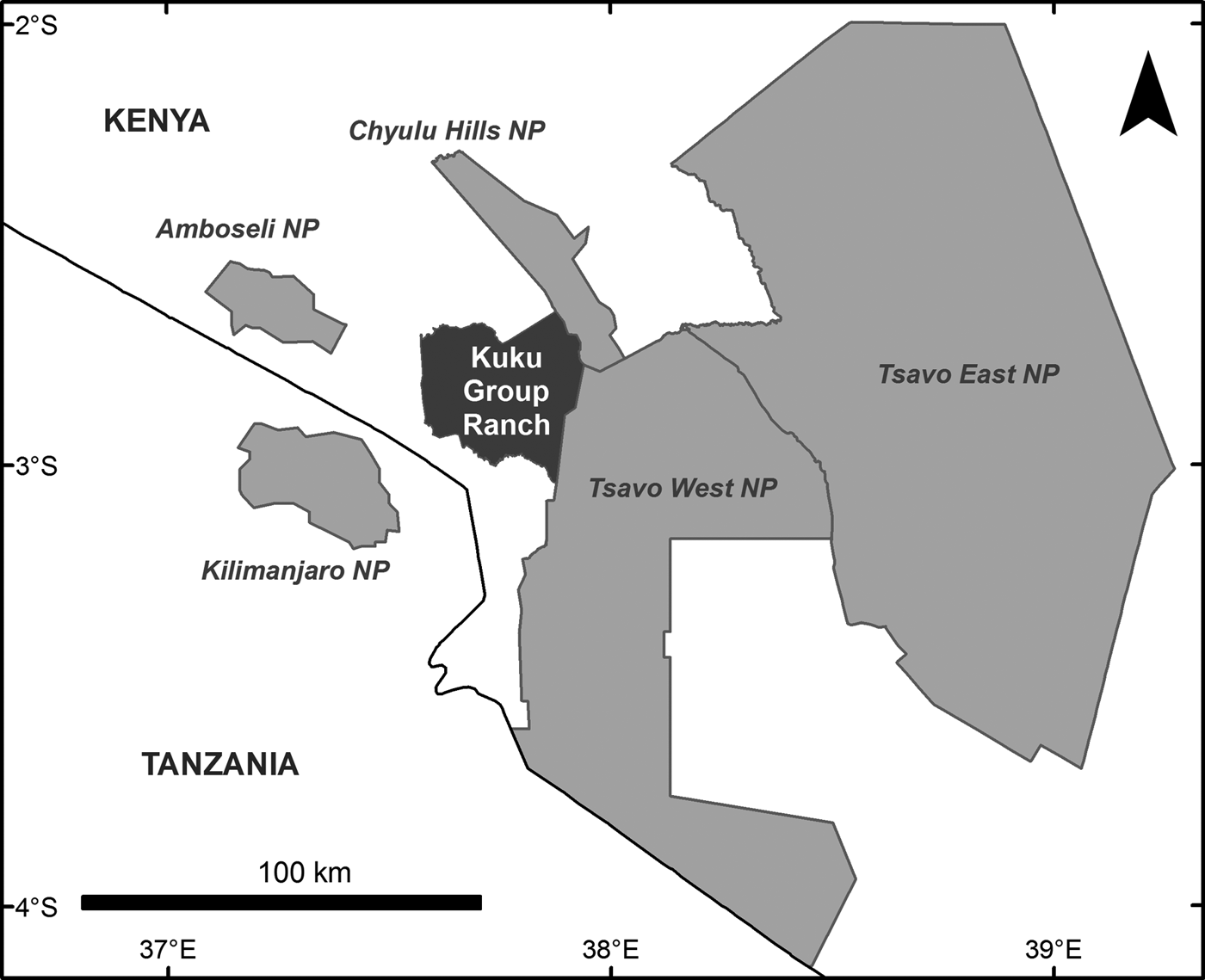
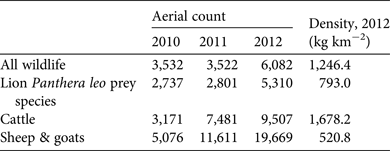
On Kuku Group Ranch (Fig. 1) c. 17,000 people live on 1,133 km2. Annual rainfall is erratic (250–600 mm). Both livestock and wildlife populations increased during 2010–2012; wildlife represent c. 25% of ungulate biomass (Table 1; Maasai Wilderness Conservation Trust, unpubl. data). There are an estimated 20–30 lions on the ranch and they are part of the Amboseli–Tsavo population, which is estimated to comprise 880 individuals (Riggio et al., Reference Riggio, Jacobson, Dollar, Bauer, Becker and Dickman2013). The dominant livelihood is semi-nomadic pastoralism and the majority of household income is derived from livestock sales (Groom, Reference Groom2007). Pastoralists are organized in so-called bomas, settlements around collectively managed corrals where livestock is kept at night, of which there are 1,240 on the ranch.
The location of Kuku Group Ranch in Kenya, showing the location of the neighbouring National Parks (NP).
Numbers of wildlife and livestock in Kuku Group Ranch, Kenya (Fig. 1) according to annual aerial counts during 2010–2012, and estimated biomass density in 2012.
Methods
Modalities of compensation payments
The Wildlife Pays programme on Kuku Group Ranch is funded by conservation surcharges of USD 100 per person per night at Campi ya Kanzi; there is no institutional or philanthropic funding involved. Revenues from tourism to the community are approaching USD 400,000 per year. The outreach programme of the Maasai Wilderness Conservation Trust has a wider funding base and also includes social investments (e.g. employment, schools, clinics) worth USD > 1.5 million per year. The programme adjusts the reference price of livestock every year, based on mean local market prices. Compensation payment logs use quarterly updated KES–USD exchange rates. Compensation payments are made quarterly, capped at a total of USD 15,730 per quarter. Livestock owners can claim 70% of the reference price for losses without negligence (i.e. good husbandry practices were applied, such as having livestock attended by a herder during the day, and keeping livestock in a boma at least 1.2 m high and wide at night). When depredation occurs in sub-standard bomas (e.g. too low) compensation payments are subject to 50% retention, and therefore payments are only 35% of the market value. In the case of negligence outside the boma, such as poor herding, payments are subject to 77% retention (payment of 23% of market value). In practice this is most commonly assessed by the condition of the carcass, as good herding entails rapid response, and thus recovery of an almost intact carcass. A ranch member will receive compensation only once per quarter for depredation in a bad boma or in the case of poor husbandry; no compensation will be paid for subsequent negligent incidents in the same quarter. Some refer to this approach as a consolation programme because payments are never 100%; we consider this a semantic issue and prefer to use the term compensation.
The programme was established after extensive discussion with the community and at the request of the community, whose interest was raised by the compensation programme on the neighbouring Mbirikani Group Ranch (Maclennan et al., Reference Maclennan, Groom, Macdonald and Frank2009). The terms of the programme are outlined in a contract that is evaluated and updated every 2 years and signed by all community elders. This contract between the Maasai Wilderness Conservation Trust and Kuku Group Ranch leaders also contains mutually agreed punitive clauses; for example, if any predator is killed, poisoned, wounded or attacked other than in self-defence on the ranch the community will report all members involved to the Kenya Wildlife Service. Those responsible and their first-degree relatives are excluded from all Trust benefits (not only compensation but also employment, school and health services) for a minimum of 1 year. False claims are avoided by a layered verification system involving the livestock owner, a community wildlife ranger, a verification officer and a programme officer. Verification officers are community members who are sent out to the site of every incident to take a global positioning system-tagged photograph of every animal killed, gather evidence of the wildlife species involved (e.g. spoor, scats, drag marks, bite marks) and record the specifications of the boma when applicable. They offer moral support and advice, and communicate a tentative settlement amount on the basis of their findings against the criteria; programme staff review all evidence and may revise the amount retrospectively.
Data analysis
We used the archives of the Wildlife Pays programme to analyse livestock losses, payments and negligence over time and across wild and domestic species. Data on incidents of lion killing were obtained from the Maasai Wilderness Conservation Trust and Maasailand Preservation Trust; such incidents attract considerable attention in the Maasai community and are unlikely to go unnoticed. Two lions died in snares (in 2002 and 2006) but these were not included in the analysis as the snares did not target lions. We report poisoning as a separate category, so henceforth killing refers to direct lethal methods; in practice this is almost always spearing. We collected data on depredation events on Kuku Group Ranch during 2008–2013, differentiated by owner, livestock species, predator species, year, context, time and location. Context includes biophysical parameters and whether the owner had practised good husbandry. Decline in negligence and comparison between predator species, both in terms of number of incidents and the value of the loss, were tested with Friedman ANOVA by ranks. Lion killings were compared between years using a t-test. All analyses were carried out with SPSS v. 20 (IBM, Armonk, USA).
We compared our findings qualitatively with arguments for and against compensation; we searched the literature using Science Direct and Google Scholar to find all papers with the keywords ‘compensation’ and ‘wildlife’ or ‘carnivores’ or ‘lion’, and also used all relevant papers cited therein. Table 2 lists the 36 unique arguments found, with analogous categories grouped by row.
Arguments in favour of and against compensation, found in a literature review.

Results
The Wildlife Pays programme costs c. USD 100,000 per year, of which two thirds is spent on compensation payments and one third on running costs (Table 3). The number of lions killed and poisoned per year dropped significantly (P < 0.05 and P < 0.01, respectively) after the introduction of compensation (Table 4).
Breakdown of the costs (USD) of the compensation scheme for wildlife damage to livestock on Kuku Group Ranch (Fig. 1).

* Overhead calculated as all programme costs except compensation payments
Numbers of lion killing and poisoning incidents on Kuku Group Ranch (Fig. 1) during 2002–2013. Shaded cells indicate the years when the compensation scheme was in place; blank cells indicate no data.

* Two poisoning incidents in the first weeks of 2008, just before the start of compensation, were included in 2007
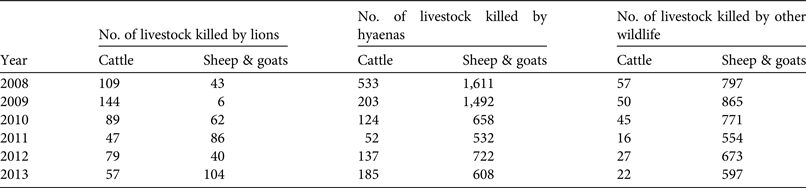
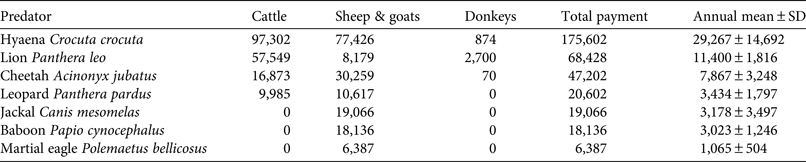
The number of livestock killed per carnivore species per year is presented in Table 5, with the associated compensation payments in Table 6. Only c. 30% of the bomas presented claims for incidents in or near (< 250 m) the boma, and payments amounted to c. USD 100 per affected boma per year. Incidents in or near bomas accounted for a mean of 57% of the compensation paid; the remainder was paid for incidents further afield. Table 7 shows that the majority of incidents involving all species except leopards occurred during herding, whereas leopards caused more incidents at the boma.
Numbers of livestock killed by lions, hyaenas and other wildlife on Kuku Group Ranch (Fig. 1) each year during 2008–2013.
Compensation payments (USD) made for losses of cattle, sheep & goats and donkeys to wildlife in Kuku Group Ranch (Fig. 1) during 2008–2013.
Total number of incidents of predation by wildlife species on livestock on Kuku Group Ranch (Fig. 1) during 2012 and 2013, with the number of incidents that occurred during herding and in the boma.
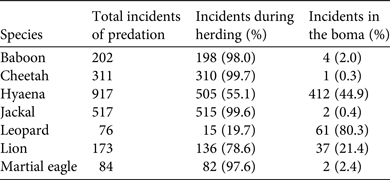
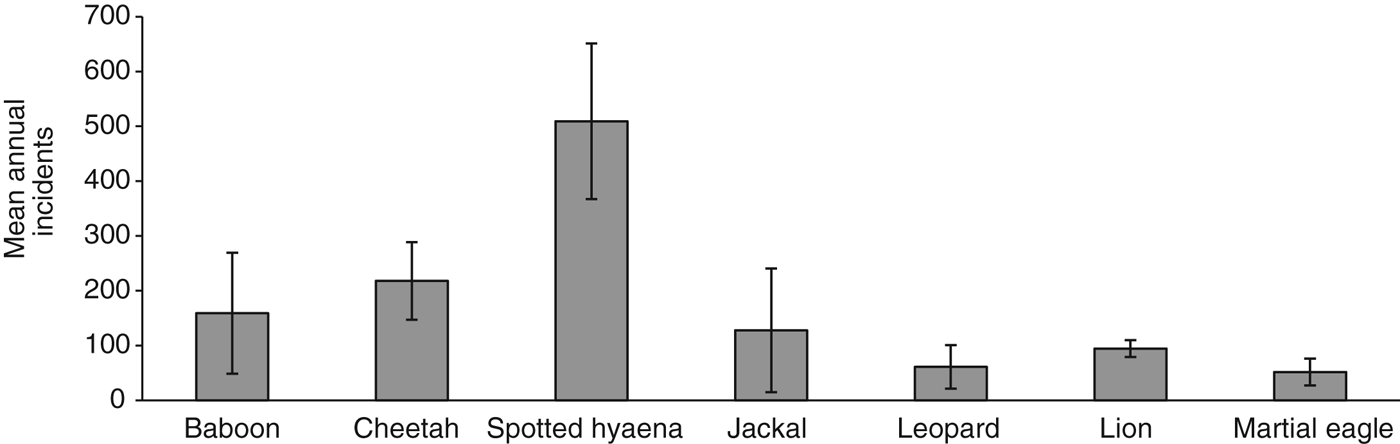
There was a significant difference among carnivore species in the number of incidents (P < 0.001) and the amount of compensation paid (P < 0.001). Fig. 2 shows the annual mean number of incidents per predator; the spotted hyaena was the most frequent raider and the most expensive, accounting for 49% of the total compensation, more than the sum of payments for damage by lions, leopards, cheetahs and jackals. The number of incidents and magnitude of payments did not vary significantly between dry and rainy seasons for any of the carnivores but damage caused by baboons was significantly higher during the rains (P < 0.001).
Mean annual numbers of incidents of livestock depredation by wildlife predators on Kuku Group Ranch during 2008–2013, with standard deviation.
Livestock losses did not vary significantly between years. Losses as a result of negligence were significantly (P < 0.05) reduced gradually over time, from 85.7% of all claims in 2008 to 49.1% in 2013. In 77.4% of these incidents negligence consisted of poor herding; the remainder were a result of poor bomas.
Discussion
There are two unavoidable shortcomings in our data. The first is that we do not have annual lion population data. Apart from the effort this would require, the area is small compared to lion ranges and population monitoring thus only makes sense at the landscape scale. In the absence of such monitoring we use incidents of lion killing as a proxy to measure the effectiveness of compensation. The second shortcoming is that this is a longitudinal study, and factors unrelated to compensation may also have changed during the study period, with a direct or indirect impact on lion conservation. However, we are not aware of any factor that could have had an impact as significant as the introduction of compensation. The factor with highest potential impact is the initiation of a new age-set, when newly circumcised men attempt to kill a lion to show bravery and leadership qualities (Goldman et al., Reference Goldman, Roque de Pinho and Perry2010, Reference Goldman, Roque de Pinho and Perry2013). These initiations occurred in 1994, 2007 and 2013, and therefore only the most recent initiation occurred during the compensation programme. The number of lions killed in 2013 was higher than in any other year with compensation, and therefore one can speculate that initiation led to a temporary increase in lion killing but this is not statistically detectable. This increase was modest and did not compromise the significant decrease in killing on the scale of our time series.
Our data suggest that conflict mitigation reduced lion killing from the previous levels, at which lions could not persist in the study area. Although self-reported data, information on illegal activities and data gathered under difficult field conditions may suffer from bias, and therefore any conclusions should be considered cautiously, our data on lion killing and poisoning are reliable as such incidents are inevitably discussed among the local communities and stakeholders. The decline in poisoning suggests that even hyaenas are tolerated, despite their lack of prestige in Maasai culture, as hyaenas can be poisoned more easily (Kissui, Reference Kissui2008).
Our results show that compensation has been effective, as the significant reduction in lion killings is a proxy for the ultimate goal of population viability. Compensation is also affordable compared to other conservation activities, adding only 10% to the overall conservation budget. We cannot dissociate and compare the costs and benefits of each activity exactly (e.g. compensation vs patrolling or social services) but the marginal budget increment brought about by compensation demonstrates a cost-effective approach. As stated above, we cannot exclude that other explanatory variables obscure the real impact of compensation but the conservation programme is not one of them. The amount of effort in conservation activities other than compensation remained constant throughout the study period. The overall conservation budget was approximately half of the recommended budget for lion conservation (Packer et al., Reference Packer, Loveridge, Canney, Caro, Garnett and Pfeifer2013) and by that standard it is cost-effective.
After effectiveness and cost we must consider whether any such conflict mitigation scheme is sustainable (Dickman et al., Reference Dickman, Macdonald and Macdonald2011). The cost of the compensation scheme reported here was covered entirely by local tourism surcharges, and therefore theoretically it is sustainable. This is a crucial improvement compared to the scheme on Mbirikani Group Ranch, which depends partly on funds from charity; on Kuku Group Ranch there is a virtuous circle linking lions, revenues, compensation and conservation. In practice, however, the scheme operates in an institutionally and environmentally dynamic context, which may affect its sustainability. Firstly, the programme is an add-on to an enterprise that is affected by funding, leadership, tourism market forces, regional infrastructure and security, and global economic trends. Secondly, land-use by the community could change with changes in the demography of people and livestock, possibly leading to land conversion in the long term. However, these considerations are relevant not only for compensation but also for other conservation activities. The programme is therefore exploring more sustainable funding options, such as carbon credits.
Our review of the literature on compensation unveiled arguments both in favour of and against compensation (Table 2). We found no evidence compromising the arguments in favour. The arguments against included those related to impact, cost, sustainability, corruption/bureaucracy, fraudulent claims, literacy and transaction costs. These are not prohibitive, however, and can be countered by smart design with conditionality, rigorous verification, appropriate finance, combined with outreach and mitigation activities, and partitioning to a modest spatial scale. The arguments related to property rights (both land and wildlife) are important and compensation projects can try to address them, but this complex set of socio-economic considerations was outside the scope of this case study.
The most serious argument against compensation that we found in our review is the risk of post-project collapse of any such scheme. We fear that lions would decline or even disappear if compensation were to stop completely. In the present case compensation was introduced in response to an imminent threat of local lion extinction. In cases without imminent threat this would be a valid argument against the introduction of compensation.
Compensation was described as leading to perverse incentives (i.e. unintended incentives that are contrary to the interests of the incentive makers; Table 2) but we did not find a habitat or hunting effect in this case, possibly because of the arid conditions. Permanent rain-fed agriculture is not a real alternative to pastoral livelihoods in the Chyulu Hills but in areas like the Maasai Mara to the west, where commercial agriculture is possible, a similar compensation scheme would be more complex.
The literature mentions moral hazard as a problem; this is the risk that compensation reduces the incentive to prevent damage. This argument is partially countered by the significant decrease in depredation incidents involving negligence. Livestock losses did not decline over time but the number of depredation incidents may have decreased proportionally, as livestock and wildlife numbers have increased since the 2009 drought but depredation has not. Unfortunately our data cannot be used to test trends in proportional incidents. Even though negligence decreased it is still high, particularly in relation to herding; many herds are accompanied by too few or too inexperienced herders. This could be an opportunity for improvement as herding does not require a lot of capital or know-how. Lions almost never attack herds attended by adult herders in the study area. Maclennan et al. (Reference Maclennan, Groom, Macdonald and Frank2009) found the same situation on Mbirikani Group Ranch and they suggested an extension of the scheme to provide professional herding services; Hazzah et al. (Reference Hazzah, Dolrenry, Naughton-Treves, Edwards, Mwebi, Kearney and Frank2014) described the Lion Guardians approach, which tackled the problem successfully. We found no indication of a moral hazard in the form of staged depredation of sick or poor-condition livestock to elicit bogus claims.
We realize that perceptions of lions by the local community vary and that relations between the Maasai and lions are complex, nuanced and dynamic (Goldman et al., Reference Goldman, Roque de Pinho and Perry2010, Reference Goldman, Roque de Pinho and Perry2013). Ultimately, compensation aims to buy tolerance, but the decision whether or not to hunt a lion is not made solely on the basis of rational choice theory. Lion hunts are an important cultural event for the Maasai around Chyulu Hills and will continue to take place, especially when a new age-set of youngsters is initiated, typically every 12 years (Goldman et al., Reference Goldman, Roque de Pinho and Perry2013). Moreover, Maasai have used lion hunts as a political statement in arguments with government over policy (Western, Reference Western1982; Goldman et al., Reference Goldman, Roque de Pinho and Perry2013). However, considering the importance of lions for the Maasai, their culture is still conducive to coexistence with lions, as it has always been (Goldman et al., Reference Goldman, Roque de Pinho and Perry2013). In line with literature on participation in wildlife management (e.g. Treves et al., Reference Treves, Jurewicz, Naughton-Treves and Wilcove2009) Lichtenfeld (Reference Lichtenfeld2005) stated that Maasai–lion relations depend critically on the degree of control the Maasai perceive to have over conservation-related decisions. In the case of the Group Ranches around Amboseli, the Maasai are in control; it is their land and within the boundaries of national law they can and will decide the fate of lions on their land. Conservation organizations, including the Maasai Wilderness Conservation Trust, are powerful but can influence decision making only with incentives, dialogue and technical support. In this context of empowerment and benefits from tourism it appears that compensation schemes influenced motivations and were associated with the substantial reduction in lion killing.
Bulte & Rondeau (Reference Bulte and Rondeau2005) advocated an alternative payment per lion instead of compensation. This nature production payment model is conceptually interesting and works in some contexts (Persson et al., Reference Persson, Rauset and Chapron2015) but its implementation would not be practical in this case because of the challenge of estimating lion numbers accurately. The viability and sustainability of compensation as one of the tools to protect large carnivores has become important, as Kenya's wildlife bill now states that damage caused by wildlife should be compensated across the nation and across species. It remains to be seen how this will be implemented, as it is unlikely that the Kenya Wildlife Service will in the short term have the capacity to implement such refined compensation schemes. The scale of the funding required for effective compensation schemes is formidable and probably beyond the remit of national coffers and philanthropic contributions. Macdonald (Reference Macdonald, Gittleman, Funk, Macdonald and Wayne2001) proposed a permanent biodiversity fund comparable to the Kyoto protocol for international offsetting of carbon emissions, which merits renewed consideration. We believe that the scheme described here offers valuable inspiration for further policy development.
Acknowledgements
We are grateful for the collaboration of the Maasai community of Kuku Group Ranch and to L. Belpietro, Director of the Maasai Wilderness Conservation Trust. We thank T. Muia, S. Parashina and E. Norton for their contributions.
Biographical sketches
Hans Bauer is based in Ethiopia, working on lion conservation in West, Central and the Horn of Africa. Lana Müller and Dirk Van Der Goes have worked extensively on carnivore research and community-based wildlife conservation in various conservation areas in Africa. Claudio Sillero-Zubiri works on carnivore conservation and human–wildlife conflict and is the Chair of the IUCN Canid Specialist Group.



