




Introduction
Engaging in behaviours that are high in cognitive complexity, social interaction, and physical activity is beneficial for maintaining healthy cognitive functioning in later life. The hypothesis is that engaging in these beneficial behaviours provides resilience against cognitive decline and neurodegeneration (Cabeza et al., Reference Cabeza, Albert, Belleville, Craik, Duarte, Grady and Lindenberger2018; Yaakov Stern et al., Reference Stern, Arenaza-Urquijo, Bartrés-Faz, Belleville, Cantilon, Chetelat and Ewers2020, Reference Stern, Albert, Barnes, Cabeza, Pascual-Leone and Rapp2023). This resilience is achieved through the improved utilization of available neural resources, despite a potential increased pathological burden, and is referred to as cognitive reserve (CR) (Yaakov Stern, Reference Stern2002, Reference Stern2009). More CR delays cognitive decline and the diagnosis of more severe forms of disease.
As discussed in the Lancet Commission reviews (2020, 2024), several factors influence an individual’s risk of developing dementia (Livingston et al., Reference Livingston, Huntley, Sommerlad, Ames, Ballard, Banerjee and Brayne2020, Reference Livingston, Huntley, Liu, Costafreda, Selbæk, Alladi and Ames2024), likely through the development of CR. Some modifiable risk factors typically occur in early and mid-life and affect dementia risk in late life. Education is the prime example of this. Other modifiable risk factors are addressable in late life, such as smoking, depression, social isolation, physical activity, air pollution, and diabetes (Livingston et al., Reference Livingston, Huntley, Liu, Costafreda, Selbæk, Alladi and Ames2024). Modifying most of these risk factors requires interventions of varying difficulty or complexity. However, social isolation and physical activity are factors that an individual can address independently. Their relevance and addressability have led to their use as intervention tools (Belleville et al., Reference Belleville, Cloutier, Mellah, Willis, Vellas, Andrieu, Coley and Ngandu2022).
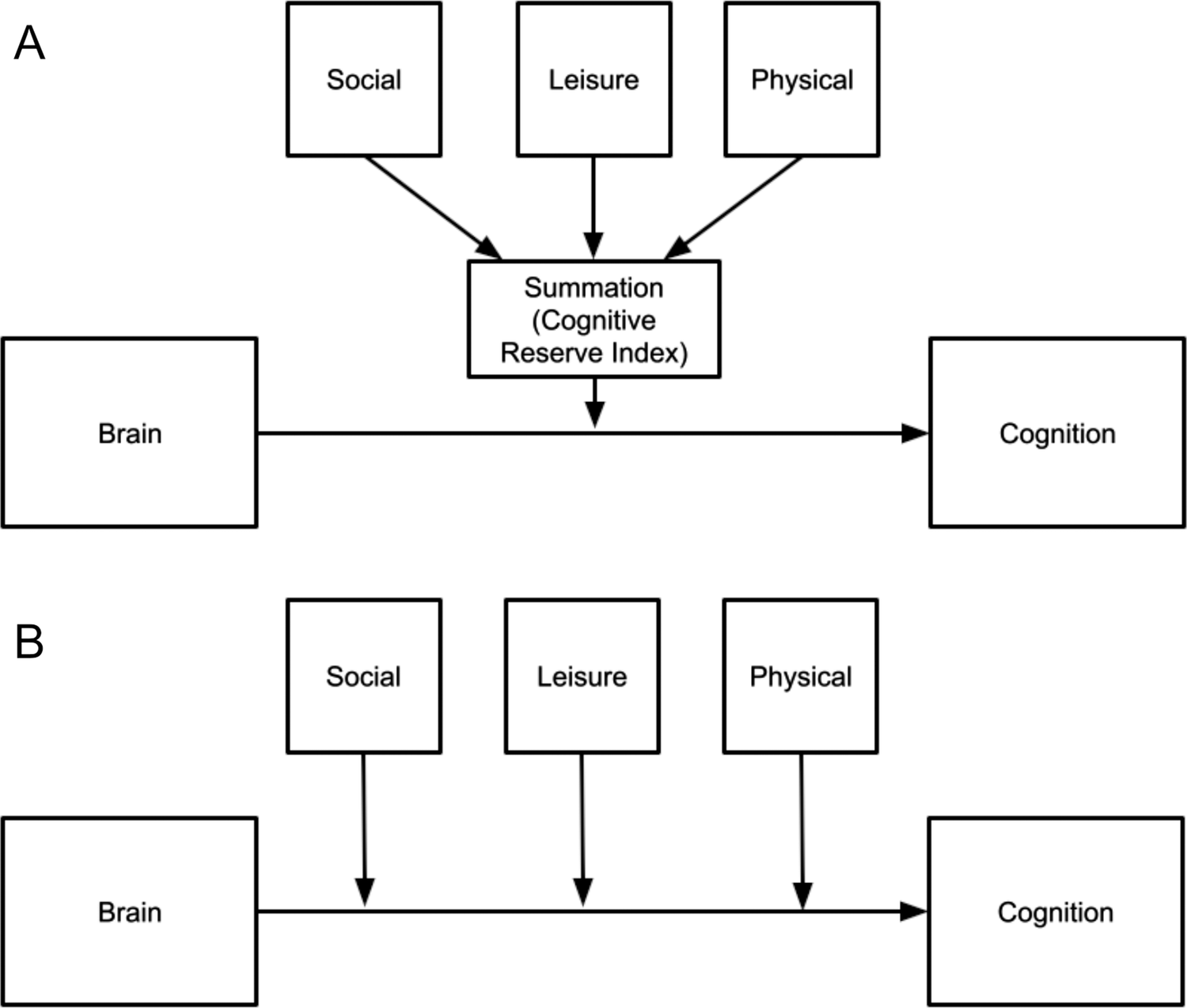
When a modifiable risk factor moderates the relationship between neural and cognitive measures, it is considered a proxy for CR (Yaakov Stern, Reference Stern2002, Reference Stern2009; Yaakov Stern et al., Reference Stern, Albert, Barnes, Cabeza, Pascual-Leone and Rapp2023; Steffener & Stern, Reference Steffener and Stern2012). Therefore, greater engagement in a beneficial behavior alters the neural-cognitive relationship that benefits cognitive performance. Since multiple activities protect the brain and cognition in later life, combinations of engagements are often used in interventions and analyses. With analyses and statistical modeling, various methods exist to combine the effects of different risk factors. One approach uses continuous variables to calculate average normalized scores across multiple measures (Steffener et al., Reference Steffener, Reuben, Rakitin and Stern2011, Reference Steffener, Barulli, Habeck, O’Shea, Razlighi and Stern2014). This approach identifies the common variance shared between various factors as a measure of CR. This approach has been used extensively with measures of education and premorbid estimates of intelligence; however, it ignores any individual contributions of the measures beyond their shared variance. Another approach utilizes the sum of multiple categorical measures to generate a total CR score or index, as shown in Figure 1A (Nucci et al., Reference Nucci, Mapelli and Mondini2012). This approach counts the total number of CR proxy points an individual has based on their engagement in various activities. This summative approach does not distinguish between the size of the benefits of any individual activity. This approach treats each modifiable risk factor similarly. Although straightforward, this approach contrasts with the calculated population attributable fractions of potentially modifiable risk factors for dementia presented in Livingston et al. (Reference Livingston, Huntley, Liu, Costafreda, Selbæk, Alladi and Ames2024) (Livingston et al., Reference Livingston, Huntley, Liu, Costafreda, Selbæk, Alladi and Ames2024). A third approach allows multiple measures to each have a unique contribution, and the combination is considered CR (see Figure 1B) (Steffener et al., Reference Steffener, Nicholls, Farghal and Franklin2024). In this approach, the effects are combined and not the measures themselves. This approach aligns with the theory that CR is formed by combining individual effects (Jones et al., Reference Jones, Manly, Glymour, Rentz, Jefferson and Stern2011).
Models of cognitive reserve. (A) Engagement in three lifetime modifiable risk factors is summed and used to moderate the relationship between the brain measure and cognition. (B) Engagement in the three modifiable risk factors is individually entered as moderator of the relationship between the brain measure and cognition.

The need to investigate the individual effects of modifiable risk factors arises from observations that different factors each have unique effects. For instance, physical activity appears to have the greatest benefits for executive functioning compared to other cognitive domains (Erickson et al., Reference Erickson, Donofry, Sewell, Brown and Stillman2022). Social engagement has specific benefits for working memory, but not for inhibitory control or selective attention (Guiney et al., Reference Guiney, Keall and Machado2021; Keefer et al., Reference Keefer, Steichele, Graessel, Prokosch and Kolominsky-Rabas2023). Leisure activities were beneficially related to non-verbal and visual information tasks, but not to fluid ability or perceptual reasoning, above and beyond the effects of education, depression, and occupation (Mashinchi et al., Reference Mashinchi, McFarland, Hall, Strongin, Williams and Cotter2024). Therefore, the benefits of CR vary across cognitive processes (Petkus et al., Reference Petkus, Resnick, Rapp, Espeland, Gatz, Widaman and Wang2019). Since different modifiable risk factors play unique physiological and psychological roles in protecting against cognitive decline, their use in statistical models should reflect this. As proposed here, the individual inclusion of measures into statistical models provides a means to explore the various roles of modifiable risk factors.
One role is that not all modifiable risk factors have the same benefit across cognitive measures. This differential impact may explain why a CR index is significantly related to verbal memory and fluid ability but not processing speed, attention, or working memory (León et al., Reference León, García-García and Roldán-Tapia2014). This finding suggests that CR, as measured by a CR index, is not a general measure but is specifically sensitive to certain cognitive domains and not others. Another role is that the benefits of modifiable risk factors may vary across the lifespan or disease severity (Ding et al., Reference Ding, Fitzmaurice, Arvizu, Willett, Manson, Rexrode, Hu and Chavarro2022; Kuhn et al., Reference Kuhn, Skau and Nyberg2024; LaPlume et al., Reference LaPlume, McKetton, Levine, Troyer and Anderson2022; Lee et al., Reference Lee, Seo, Roh, Minyoung, Oh, Seung Jun, Kim and Jeong2021). Although CR protects against cognitive decline, at some point, the protective benefits are overwhelmed by neurodegeneration, resulting in rapid cognitive decline (Y. Stern, Reference Stern2012). The result is that the benefits of CR vary across the severity of cognitive decline, and the benefits of individual risk factors likely vary across disease severity. Combining modifiable risk factors into a single CR index or measure makes it hard to observe their individual roles.
According to the Lancet Commission’s review, the individual risk factors had population attributable fractions ranging from 1% to 7% (Livingston et al., Reference Livingston, Huntley, Liu, Costafreda, Selbæk, Alladi and Ames2024); therefore, when included in a statistical model, they are likely to be small and potentially non-significant. The current work incorporates multiple risk factors simultaneously into a model and employs post hoc contrast tests to combine their effects. The result is a method that assesses the overall impact of multiple modifiable risk factors and each individual effect.
An additional point is that the role of individual modifiable risk factors in neural-cognitive relationships may differ between neural measures as they are affected by normal and pathological neurodegeneration. Within the context of Alzheimer’s disease and its prodromal phases of subjective and mild cognitive impairment, there are multiple potential biomarkers of disease and cognitive decline. A primary biomarker is hippocampal volume loss (Braak & Braak, Reference Braak and Braak1997). A primary cognitive marker is the decline of memory function (Squire, Reference Squire1992). This work aims to compare results from two methods for including CR into statistical models of brain–behavior relationships. Despite the wealth of brain and cognitive measures within the data set used for this study, the Comprehensive Assessment of Neurodegeneration and Dementia (COMPASS-ND): Canadian Cohort Study, the current work limits its scope to focus on the methods. The current work focuses on clinically relevant risk factors that an individual may modify in late life (Livingston et al., Reference Livingston, Huntley, Liu, Costafreda, Selbæk, Alladi and Ames2024).
The COMPASS-ND: Canadian Cohort Study is a multi-site, longitudinal study that recruits participants with cognitive decline, neurodegenerative disease, and cognitively unimpaired older adults (Chertkow et al., Reference Chertkow, Borrie, Whitehead, Black, Feldman, Gauthier and Hogan2019). The cohorts used in the present work reflect a continuum and include cognitively unimpaired (CU) people, people living with subjective cognitive impairment (SCI), people living with mild cognitive impairment (MCI), and people living with Alzheimer’s disease (AD). Modifiable risk factors include social engagement, hobbies, and physical activity. The hypothesis is that the summation of modifiable effects will significantly decrease the strength of the relationships between hippocampal volume and memory performance. The expected results are that modifiable risk factors moderate brain–cognition relationships. As disease severity increases, CR is exhausted, eliminating beneficial effects. The beneficial effects of CR are expected to be evident in the CU group, to start varying within the SCI group, and to be primarily exhausted in the MCI and AD groups. The benefits of assessing the effects of each factor, as shown in Figure 1B, are compared to the approach of combining the individual measures first and then evaluating the impact of their summation, as illustrated in Figure 1A.
Within the COMPASS-ND data set, the brain measure will be hippocampal volume, and the measures of cognition will be scores on two memory tests, one verbal and one spatial. The verbal domain was assessed using the Rey Auditory Verbal Learning Test (RAVLT) (Rey, Reference Rey1964), and spatial memory was evaluated with the Brief Visuospatial Memory Test-Revised (BVSM) (Gurczynski, Reference Gurczynski2009). The RAVLT is shown to strongly correlate with hippocampal volume in a sample of 42 healthy older adults, those living with amnestic MCI, or those with AD (Marchiani et al., Reference Marchiani, Balthazar, Cendes and Damasceno2008). In a sample of 235 people living with amnestic MCI, there was also a significant correlation between RAVLT and hippocampal volume (Putcha et al., Reference Putcha, Brickhouse, Wolk and Dickerson2019). The spatial memory measure, BVSM, as part of a visual spatial factor, was significantly related to hippocampal volume in a sample of 648 cognitively unimpaired older adults (Aghjayan et al., Reference Aghjayan, Polk, Ripperger, Haiqing Huang, Wan and Marsland2025). In a sample of 226 older adults, some with amnestic or non-amnestic MCI and some with probable AD, there was a significantly strong correlation between hippocampal volume and BVSM scores (Bonner-Jackson et al., Reference Bonner-Jackson, Mahmoud, Miller and Banks2015). These findings demonstrate a functional connection between the hippocampus and the cognitive tests chosen, with the current work exploring the mechanisms of this relationship.
Methods
Study population
COMPASS-ND is a multi-site longitudinal cohort study recruiting participants living with MCI, AD, vascular MCI (V-MCI), mixed dementia, Lewy body dementia, Parkinson’s disease dementia, Parkinson’s disease MCI, frontotemporal dementia, primary progressive aphasia, SCI, and CU older adults (Chertkow et al., Reference Chertkow, Borrie, Whitehead, Black, Feldman, Gauthier and Hogan2019). Participants in the present study were selected from those whose data were included in the first or second wave of data released in November 2018 and May 2019, respectively. For this study, participants were included from the groups CU, SCI, MCI, and AD. General COMPASS-ND inclusion criteria included being between 50 and 90 years of age, having a study partner who sees the participant weekly and who can participate as required by the protocol, passing the safety requirements for the MRI scanning, and possessing sufficient proficiency in English or French (as judged by the examiner) to undertake self-report and neuropsychological testing. Exclusion criteria were as follows: the presence of significant known chronic brain disease unrelated to AD, ongoing alcohol or drug abuse which, in the opinion of the investigator, could interfere with the person’s ability to comply with the study procedures, severe cognitive impairment indicated by a score of ≤13/30 on the Montréal Cognitive Assessment (MoCA); (Nasreddine et al., Reference Nasreddine, Phillips, Bédirian, Charbonneau, Whitehead, Collin, Cummings and Chertkow2005) or a symptomatic stroke within the previous year. Written informed consent was obtained from all participants. All relevant Research Ethics Boards approved the COMPASS-ND study.
Measurements
Two different memory scores were used in the present analyses: the assessments of delayed recall on verbal and spatial domain memory tests. The verbal domain was assessed using the Rey Auditory Verbal Learning Test (RAVLT) (Rey, Reference Rey1964), and spatial memory was evaluated with the Brief Visuospatial Memory Test-Revised (BVSM) (Gurczynski, Reference Gurczynski2009).
Total hippocampal volume was calculated as the sum of the volumes from the left and right hemispheres. Hemispheric volumes were extracted from T1-weighted images using the ANIMAL (automatic non-linear image matching and anatomical labelling) segmentation method (Collins & Pruessner, Reference Collins and Pruessner2010; Collins et al., Reference Collins, Holmes, Peters and Evans1995). This atlas-based segmentation method uses non-linear transformations to create a pre-labelled template. The T1-weighted images were collected using 3 T scanners and the Canadian Dementia Imaging Protocol (CDIP) (Duchesne et al., Reference Duchesne, Chouinard, Potvin, Fonov, Khademi, Bartha and Bellec2019). The CDIP is a validated, harmonized protocol for multi-site MRI data acquisition to study neurodegeneration and is available for scanners manufactured by the GE, Philips, and Siemens vendors. The parameters for acquiring the 3D T1-weighted images can be found here: https://www.cdip-pcid.ca/. The CDIP established parameters for each scanner type and version, ensuring that images are as comparable as possible across scanners.
The variable ‘hobbies’ was assessed as a self-reported answer about whether a participant engaged in creative activities, and is dichotomous by definition. Physical activity was assessed using the Physical Activity Scale for the Elderly (PASE). The instrument consists of self-reported items on occupational, household, and leisure activities over one week (Washburn et al., Reference Washburn, Smith, Jette and Janney1993). A total physical activity score was calculated using a weighted sum of the individual responses with a potential range of 0–793. This was assessed as dichotomous based on a median split across all groups. Social engagement was assessed as a dichotomous variable using self-report, asking whether someone participated in social activities with family or friends at least once a month. Options for this question were once a week, monthly, yearly, or never.
Statistical methods
Memory scores and hippocampal volume were treated as continuous variables. Sex, social engagement, hobbies, and physical activity were dichotomous variables. Female and zero values were the reference levels for these variables. Four linear regression models were tested within each diagnostic group. These were the two regression models in Figure 1 for the verbal and spatial memory scores. The summed model (Figure 1A) utilized a single CR covariate in the model, resulting in a single interaction term. The individually entered model (Figure 1B) included the three CR proxy variables and their three interaction terms. All analyses were performed using RStudio (2024.12.1 Build 563) with R version 4.5.0 (2025-04-11) (R Core Team, 2021) and Jamovi (version 2.6.23.0) (Love, Reference Love, Dropmann and Delker2019).
Testing the effects of individual measures
The models included sex, social engagement, hobbies, physical activity, total hippocampal volume, and the interactions between the three modifiable risk factors and hippocampal volume. Hippocampal volume was mean-centered and rescaled to cubic centimeters by dividing it by 1000 to increase the computational accuracy and interpretation of regression parameters. Collinearity was assessed using the generalized variance inflation factor (GVIF(1/2df)) (Fox & Monette, Reference Fox and Monette1992). Collinearity is considered large and problematic if the $ GVI{F}^{\left\{1/2 df\right)} $
value is greater than 4. Collinearity with a
$ GVI{F}^{\left\{1/2 df\right)} $
value is greater than 4. Collinearity with a $ GVI{F}^{\left\{1/2 df\right)} $
value of 4.27 was found between hippocampal volume and social engagement. This was the only problematic relationship and is likely driven by heterogeneous variance in hippocampal volumes, which is greater in those who engage in social activities than in those who do not. This was likely driven by the fact that 103 people reported no social engagement compared to 503 people who did. Within the regression models, the estimated intercept terms refer to the mean cognitive score for a female with average hippocampal volume and no engagement with any of the modifiable risk factors. The main effects of the modifiable risk factor parameter estimates refer to the amount by which the memory score differs when someone engages in that activity. A t-contrast across these main effects sums up and tests their individual effects. The brain parameter estimate refers to how much the memory score differs when someone’s total hippocampal volume is one cubic centimeter larger. The interaction terms refer to how much the main effect of hippocampal volume on memory score differs when someone engages in the risk factor, that is, indicating a significant moderation effect. A t-contrast across the interaction terms sums and tests their individual effects. All parameter estimates and t-contrasts were assessed for significance using two-tailed hypothesis tests at ɑ < 0.05. Analyses were performed within each diagnostic group due to the presence of empty and small cells when crossing diagnostic groups and the categorical risk factor variables.
$ GVI{F}^{\left\{1/2 df\right)} $
value of 4.27 was found between hippocampal volume and social engagement. This was the only problematic relationship and is likely driven by heterogeneous variance in hippocampal volumes, which is greater in those who engage in social activities than in those who do not. This was likely driven by the fact that 103 people reported no social engagement compared to 503 people who did. Within the regression models, the estimated intercept terms refer to the mean cognitive score for a female with average hippocampal volume and no engagement with any of the modifiable risk factors. The main effects of the modifiable risk factor parameter estimates refer to the amount by which the memory score differs when someone engages in that activity. A t-contrast across these main effects sums up and tests their individual effects. The brain parameter estimate refers to how much the memory score differs when someone’s total hippocampal volume is one cubic centimeter larger. The interaction terms refer to how much the main effect of hippocampal volume on memory score differs when someone engages in the risk factor, that is, indicating a significant moderation effect. A t-contrast across the interaction terms sums and tests their individual effects. All parameter estimates and t-contrasts were assessed for significance using two-tailed hypothesis tests at ɑ < 0.05. Analyses were performed within each diagnostic group due to the presence of empty and small cells when crossing diagnostic groups and the categorical risk factor variables.
Results
A log-linear analysis demonstrated that sex and the diagnostic group were significantly related (X2(7) = 210, p < 0.0001). This effect was driven by significantly more males than females in the AD (43% Female) and MCI (43% Female) groups compared to the CU (77% Female) group (AD-CU: Z = 4.58, p < 0.0001; MCI-CU: Z = 5.35, p < 0.0001); the SCI group was 74% Female. The total sample size was 606, with group sample sizes being CU: 90, SCI: 133, MCI: 283, and AD: 100. The groups differed significantly in age, with the AD group being 3.4 years older than the SCI group and 4.2 years older than the CU group (see Table 1). The MCI group was significantly older than the SCI group by 2.7 years and the CU group by 3.5 years. Years of education differed significantly between groups, with the SCI group having 0.8 years more education than the MCI group. The MoCA scores significantly differed between groups, with the AD group score being significantly lower than the MCI group by 5.0 points, the SCI group by 8.8 points, and the CU group by 9.3 points. The MCI group score was significantly lower than the SCI group by 3.8 points and the CU group by 4.3 points.
Summary statistics on demographic variables for COMPASS-ND participants by diagnostic groups

Note: CU: Cognitively unimpaired, SCI: subjective cognitive impairment, MCI: mild cognitive impairment, AD: Alzheimer’s disease. M: mean, SD: standard deviation, X2: Chi-squared statistic from testing proportion of females in each group, F: F-statistic from one-way ANOVA, post hoc tests are Bonferroni corrected.
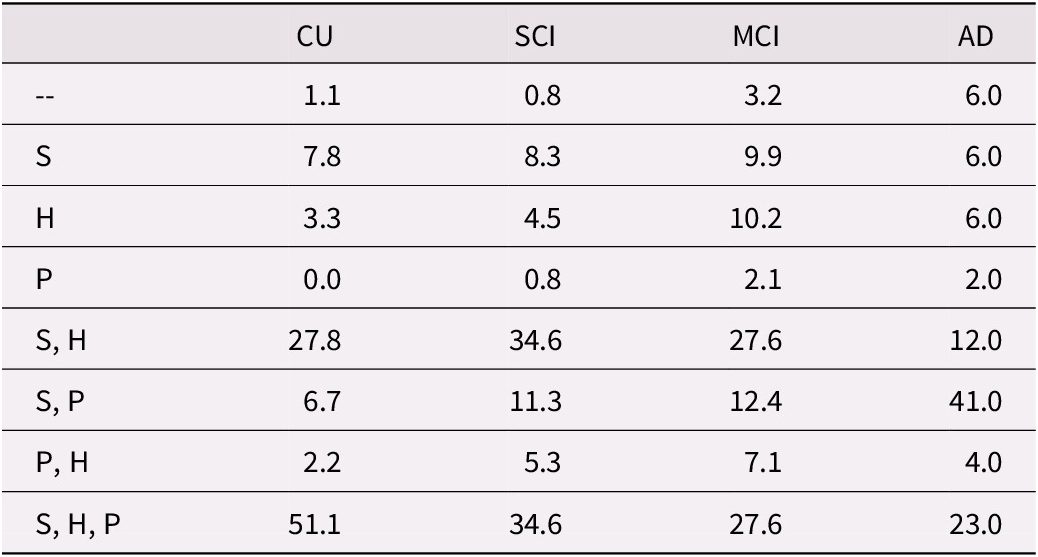
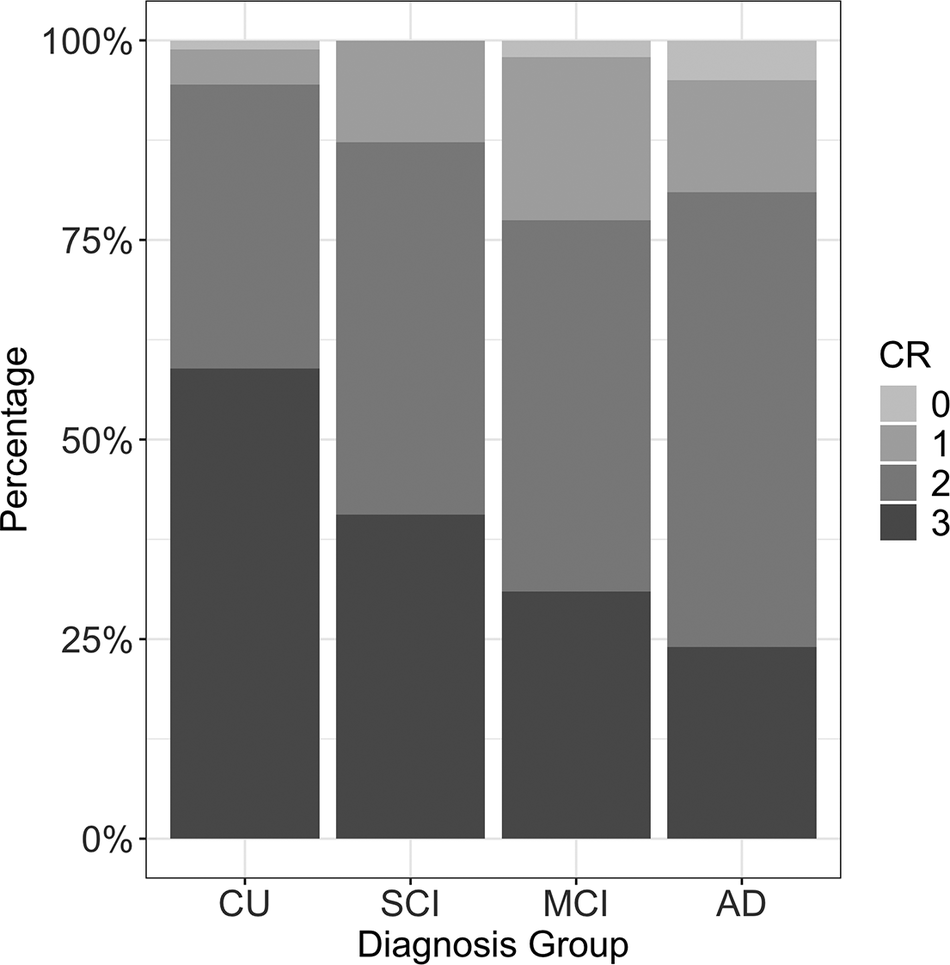
Table 2 presents the percentage of individuals in each group who reported engagement in the three modifiable risk factors. Due to the empty and small cells, no analyses were conducted to assess group differences in engagement frequencies. Frequencies after summing across modifiable risk factor engagement are shown in Figure 2. Group mean number of engagements significantly differed between groups (F(3, 602) = 11.65, p < 0.0001; means CU: 2.52, SCI: 2.28, MCI: 2.06, AD: 2.00).
Percentage of each group participating in each lifetime exposure and all combinations

Note: CU: Cognitively unimpaired, SCI: subjective cognitive impairment, MCI: mild cognitive impairment, AD: Alzheimer’s disease, --: no engagement in any of the three factors, S: Social, H: Hobbies, P: Physical Activity
Within each group, the percentage of engagement after summing across the modifiable risk factor engagement.

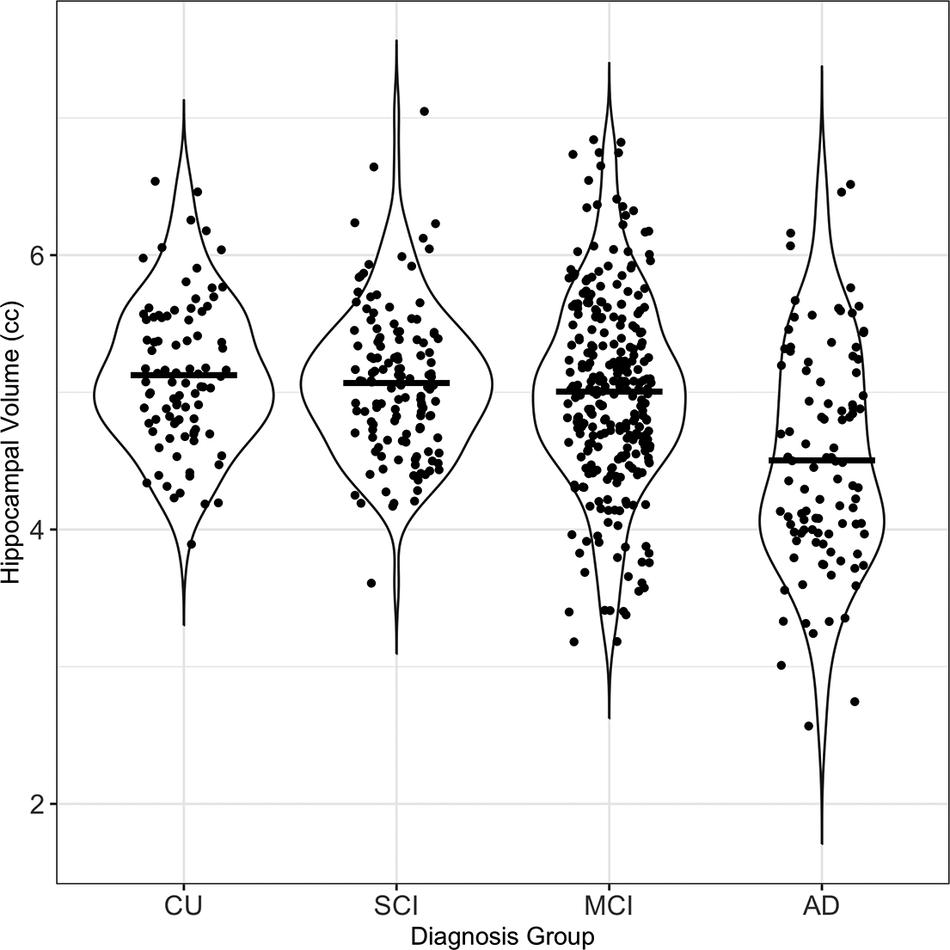
There were significant effects of the diagnostic group on hippocampal volume (F(3, 598) = 22.82, p < 0.0001) and sex (F(1, 598) = 112.97, p < 0.0001), and no significant interaction. Bonferroni-corrected post hoc analyses revealed that hippocampal volume was significantly lower in the AD group than in all other groups, with no other between-group differences (see Figure 3).
Hippocampal volume (in cubic centimetres, cc) for each group. The horizontal bars are the group means.

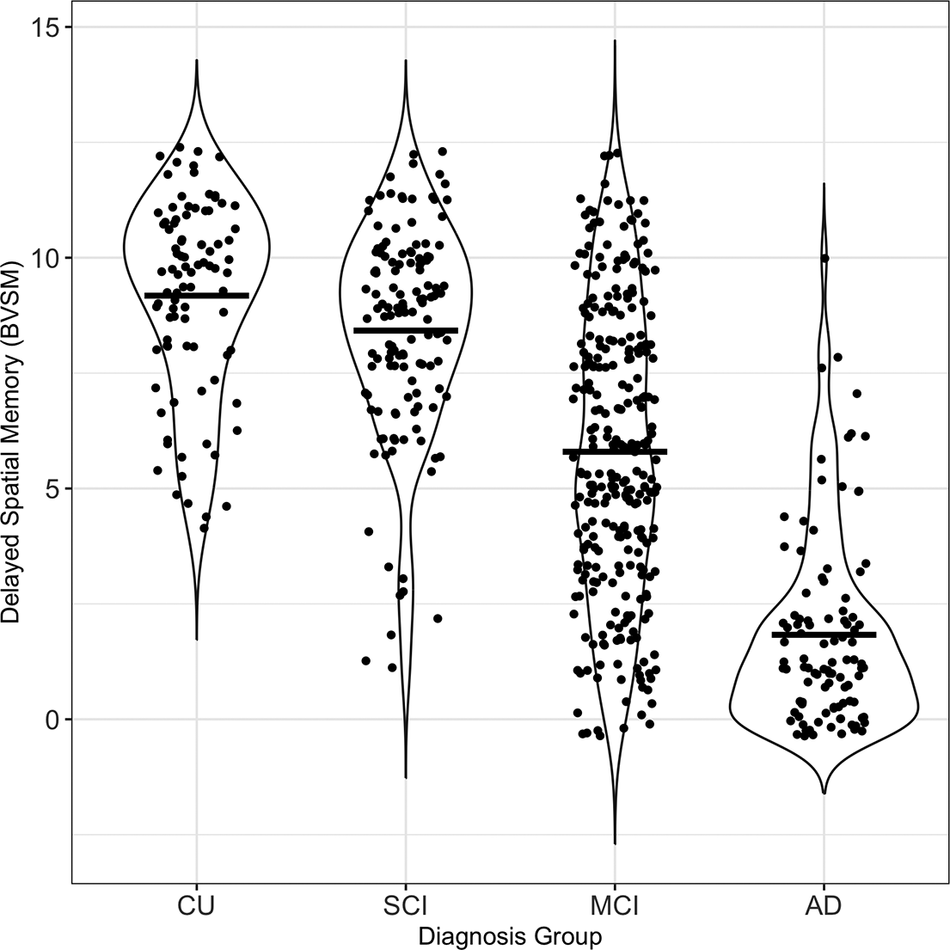
There was a significant effect of the diagnostic group on spatial memory scores (F(3,598) = 162.25, p < 0.0001) with no significant sex effect. Bonferroni-corrected post hoc analyses revealed that scores were significantly lower in the AD group than in all other groups, and that the MCI group scores were significantly lower than those of the SCI and CU groups, as shown in Figure 4.
Delayed spatial memory scores (BVSM) with a range of 0–15 for each group. The horizontal bars are the group means.

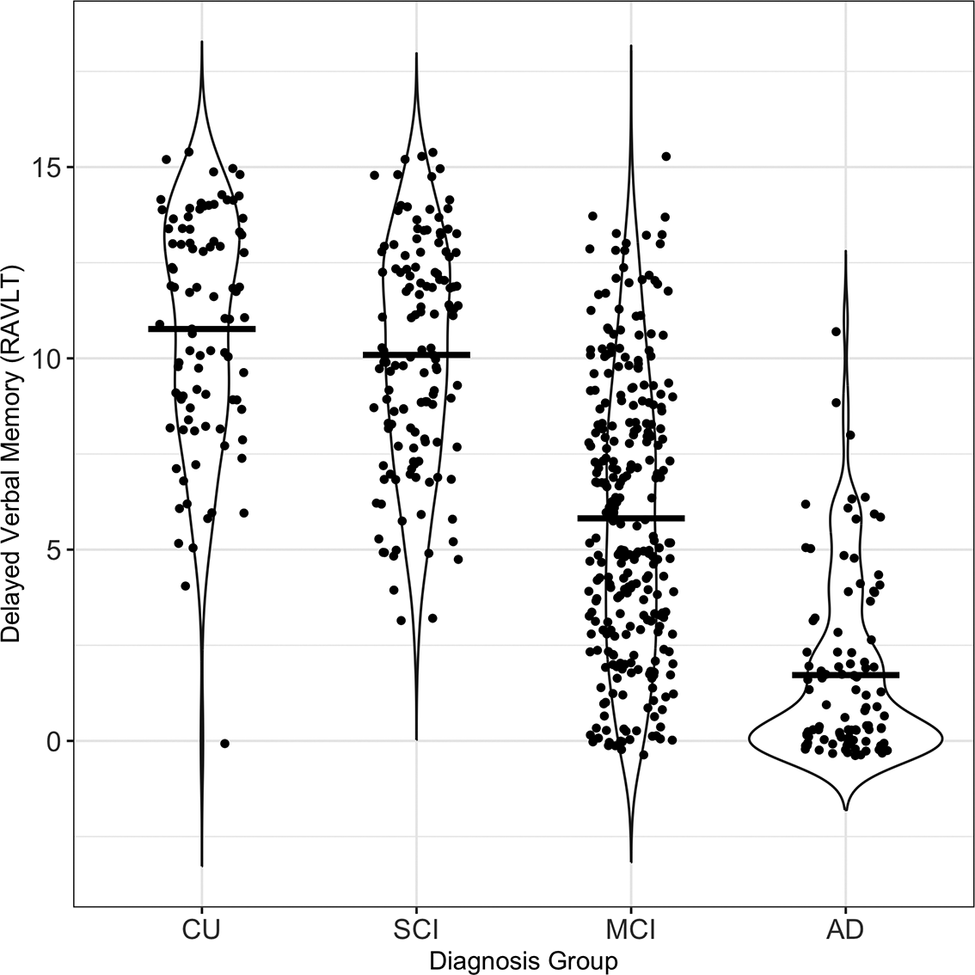
There was a significant effect of the diagnostic group on verbal memory scores (F(3,598) = 191.77, p < 0.0001), a significant sex effect (F(2,598) = 22.79, p < 0.0001), and a non-significant interaction. Bonferroni corrected post hoc analyses revealed that scores were significantly higher in females compared to males. Scores were significantly lower in the AD groups than all other groups, and the MCI group scores were significantly lower than the SCI and CU groups (see Figure 5).
Delayed verbal memory scores (RAVLT) with a range of 0–15 for each group. The horizontal bars are the group means.

Within the SCI group, the relationship between hippocampal volume and spatial memory was significantly moderated by the risk factors. The significant effects of hobbies and social engagement drove the moderating effect. Within the MCI group, there was a significant relationship between hippocampal volume and spatial memory, but no significant moderating effects were observed. Despite no significant main effects, the AD group’s overall engagement in modifiable risk factors significantly benefited spatial memory scores. These results are in Table 3 and Figure 6. Parameter estimates with confidence intervals are shown in Supplementary Table S1.
Unstandardized estimates for all parameters for the summation of effects models
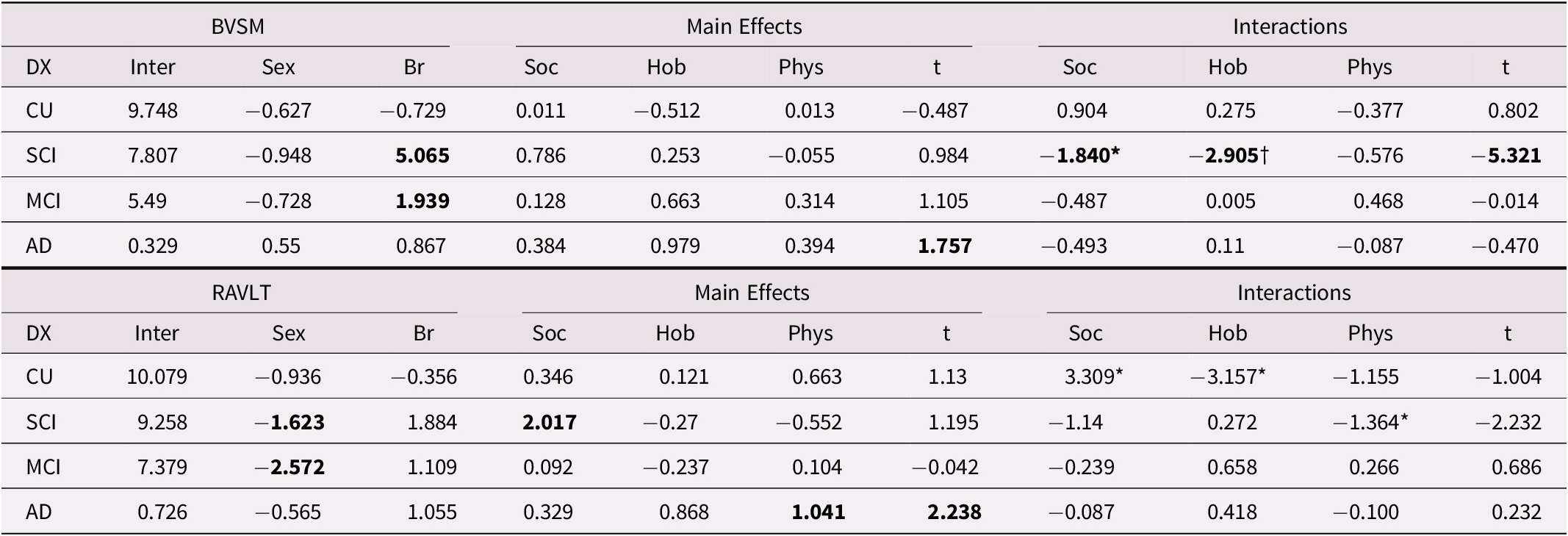
Note: Significant effects (α < 0.05) are in bold. * effect size for an interaction effect that is small (0.01–0.06); † effect size for an interaction effect that is small and significantly greater than zero. The values in this table are unstandardized parameter estimates from the regression models. The intercept term represents the estimated average memory value for each DX group among females with an average hippocampal volume and no engagement in modifiable risk factors. All parameter estimates refer to the difference in the number of points on the memory tests for a unit increase in each predictor. DX: diagnostic group, CU: cognitively unimpaired, SCI: subjective cognitive impairment, MCI: mild cognitive impairment, AD: Alzheimer’s disease, Inter: intercept term, Br: brain (Hippocampal volume), Soc: Social engagement, Hob: hobbies, Phys: physical activity, t: statistical t-value.
Spatial memory versus hippocampal volume for each group. Results from the model, individually including engagement in each modifiable risk factor, are in the left column, with the legend in the bottom panel (G). The three individual effects are noted, as well as no cognitive reserve effects (dashed line), and the effect of engaging in all modifiable risk factors. Results from the model, including the sum of the engagements in the modifiable risk factors, are in the right column, with the legend in the bottom panel (H). The effect of no engagement with any modifiable risk factor (dashed line) and one, two, or three factors is noted. (A) cognitively unimpaired, individual effects model, (B) cognitively unimpaired, sum of effects model, (C) subjective cognitive impaired, individual effects model, (D) subjective cognitive impaired, sum of effects model, (E) mild cognitive impaired, individual effects model, (F) mild cognitive impaired, sum of effects model, (G) Alzheimer’s disease, individual effects model, (H) Alzheimer’s disease, sum of effects model.

When predicting verbal memory, there were no significant relationships with hippocampal volume (see Table 3 and Figure 7). Parameter estimates with confidence intervals are shown in Supplementary Table S2. Social engagement had a significant main effect on verbal memory in the SCI group. In the AD group, there was a significant main effect of the modifiable risk factors, as evidenced by the significant t-contrast. The t-contrast effect was driven by a significantly large effect of physical activity and a smaller, non-significant effect of hobbies and social engagement. No other effects were significant when predicting verbal memory. Supplementary Table S3 shows the effect sizes for all interactions.
Verbal memory versus hippocampal volume for each group. Results from the model, individually including engagement in each modifiable risk factor, are in the left column, with the legend in the bottom panel (G). The three individual effects are noted, as well as no cognitive reserve effects (dashed line), and the effect of engaging in all modifiable risk factors. Results from the model, including the sum of the engagements in the modifiable risk factors, are in the right column, with the legend in the bottom panel (H). The effect of no engagement with any modifiable risk factor (dashed line) and one, two, or three factors are noted. (A) cognitively unimpaired, individual effects model, (B) cognitively unimpaired, sum of effects model, (C) subjective cognitive impaired, individual effects model, (D) subjective cognitive impaired, sum of effects model, (E) mild cognitive impaired, individual effects model, (F) mild cognitive impaired, sum of effects model, (G) Alzheimer’s disease, individual effects model, (H) Alzheimer’s disease, sum of effects model.

Effect of the summed measure
When the risk factors were combined into an index and then included in the model, results show a significant moderating effect in the SCI group for spatial memory (see Table 4). Within the AD group, there was a main effect of the CR index for both memory domains.
Unstandardized estimates for all parameters for the effect of the summed modifiable risk factors model
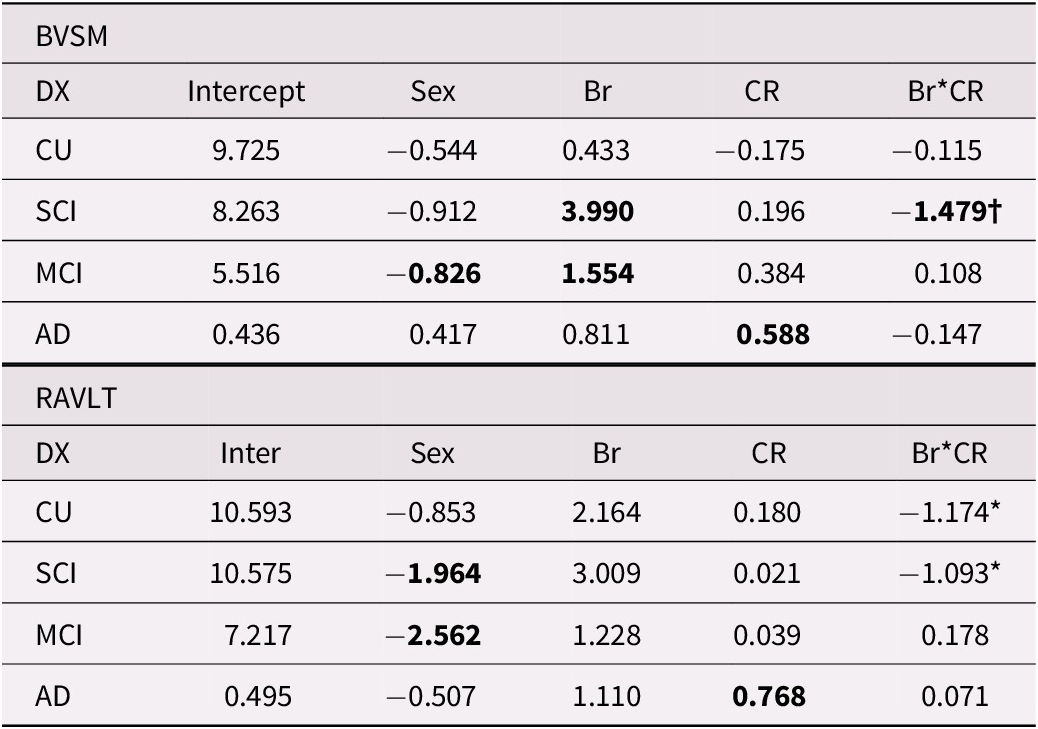
Note: Significant effects (α < 0.05) are in bold. * effect size for an interaction effect that is small (0.01–0.06); † effect size for an interaction effect that is small and significantly greater than zero. The values in this table are unstandardized parameter estimates from the regression models. The intercept term represents the estimated average memory value for each DX group among females with an average hippocampal volume and no engagement in modifiable risk factors. All parameter estimates refer to the difference in the number of points on the memory tests for a unit increase in each predictor. DX: diagnostic group, CU: cognitively unimpaired, SCI: subjective cognitive impairment, MCI: mild cognitive impairment, AD: Alzheimer’s disease, Inter: intercept term, Br: brain (Hippocampal volume), CR: CR index value, t: statistical t-value.
Discussion
Social engagement, hobbies, and physical activity significantly moderated the relationship between hippocampal volume and spatial memory in participants with SCI. Within the AD group, engagement in modifiable risk factors was significantly related to higher memory scores. Their individual effects were too small to be individually considered statistically significant; however, the sum of their effects was significant.
Memory differed across groups in both spatial and verbal domains, with significant decreases below the CU group occurring with the MCI and AD groups. The hippocampus volume was significantly lower than that of the CU group within only the AD group. Despite no significant difference in hippocampal volume in the SCI and MCI groups (compared to the CU group), there were significantly strong positive relationships between hippocampal volume and spatial memory. This relationship was not evident in the CU group and was diminished in the AD group. These results suggest that the processes underlying the observed cognitive decline include an increased dependency of spatial memory on an intact hippocampus. This is despite no significant volume or spatial memory decline in the SCI group. Engagement in beneficial modifiable risk factors eliminated this dependency within the SCI group but not the MCI group, demonstrating significant decreases in spatial memory. Although the directions of the results are similar for verbal memory in the SCI group, the results were non-significant. The AD group had significantly lower memory and hippocampal volume measures and a non-significant brain-cognition relationship. Despite an apparent floor effect in this group, modifiable risk factors had a significant main effect on memory scores. This interesting finding does not fit the definition of CR, since it benefits cognitive performance without a moderating effect of a physiological measure (Yaakov Stern et al., Reference Stern, Arenaza-Urquijo, Bartrés-Faz, Belleville, Cantilon, Chetelat and Ewers2020).
Within the verbal memory task, there were significant moderating effects within the CU group. The individual effects of social and hobby engagement both had effect sizes significantly greater than zero, despite non-significant t-values. These effects were in opposite directions, resulting in a non-significant t-contrast across risk factors.
There was no evidence of CR effects for the verbal memory task. Interestingly, within the SCI group, there was a small but significantly greater than zero effect size for the moderating role of physical activity. The effect sizes for social and hobbies were trivial. This is the opposite of the spatial memory results, where social and hobbies had small but significantly greater than zero effect sizes, and the effect size of physical activity was trivial.
One observation within the study of CR is the rapid decline that people with high proxies of CR experience once cognitive decline begins (Yaakov Stern, Reference Stern2009). This supposes that CR is a limited resource and, once exhausted, is followed by rapid cognitive decline. The current results provide additional insight into the possibility of a window by which CR operates. Within the current CU sample, there was no evidence of brain-cognition relationships, nor were any risk factors identified that fulfilled the definition of CR. Therefore, memory function was not impacted by hippocampal volume. However, within the SCI sample, a modifiable strong brain-cognition relationship existed. Once cognitive decline progressed to a diagnosis of MCI within this cross-sectional data set, the brain–cognition relationship was no longer modified by risk factors. This suggests that any benefits of modifiable risk factors were exhausted, leading to the MCI diagnosis.
The significant effect of modifiable risk factors on visuospatial memory scores in the SCI group was strong for the individual measures and their combination. In contrast, the beneficial effects in the AD group were all individually non-significant. If analysis stopped there, it could be concluded that the previously identified modifiable risk factors, which were beneficial, are not within the AD group of this data set. The use of a t-contrast across these individual effects, as shown in Table 3, demonstrated that when combined, the three measures had a significant beneficial impact on memory scores across both domains. When the risk factors are first summed and then included in the model, the same significant result is observed in Table 4. However, for both memory domains, the fact that the benefit of hobbies was more than twice as strong as social engagement is obscured. The role of hobbies is an important finding, given the relative ease of adopting or reinvigorating a previous passion. This benefit of hobbies is supported by evidence from a recent review on handicraft art leisure activities as proxies of CR (Mashinchi et al., Reference Mashinchi, McFarland, Hall, Strongin, Williams and Cotter2024). It is shown that solitary creative outlets relate to an individual’s happiness, well-being, and social connectedness (Gabriel & Bowling, Reference Gabriel and Bowling2004; Menec, Reference Menec2003). Furthermore, physical activity had a substantial effect on verbal memory. This insight guides follow-up investigation or intervention and is only observable when factors are individually included in the models. These findings support the notion that the benefits of modifiable risk factors are indeed a formative factor (Jones et al., Reference Jones, Manly, Glymour, Rentz, Jefferson and Stern2011) and should, therefore, be analysed as such.
The two approaches discussed here have very important similarities and differences. The similarities lie in their ability to provide insight into how greater engagement in multiple modifiable risk factors alters brain–cognition relationships. The difference is in the explanation of how the relationships between brain and cognitive variables change across levels of the risk factors. When including the sum of the risk factors in a model (Figure 1A), the modifiable effects are equally spaced. This assumes that social engagement, hobbies, and physical activity all have the same impact on brain-cognition relationships. Results show equally spaced stepwise effects of lifetime exposures without identifying the size of the individual effects. Including each risk factor in the models (Figure 1B) preserves the individual contributions of each exposure. Therefore, results show the overall impact, like the effect of the summation approach, and how each proxy contributed to the total effect. Within the SCI group, both approaches provide the same result: the combined effects of the risk factors moderate the hippocampal-to-memory relationship. However, only by testing the individual effects do we observe that social engagement and hobbies have much larger effects than physical activity.
The hobbies factor was derived from whether participants engage in creative activities, with available responses of ‘yes’ or ‘no’. The social engagement questionnaire asked about the frequency of participating in activities with family or friends. The available options were weekly, monthly, yearly, or never. Responses were split into weekly or monthly versus yearly or never. The type of hobbies and social activities was not available regarding the level of social engagement in the creative activities or the level of physical activity involved in the social engagements. Future exploration, with more detailed questionnaires, is necessary to investigate further the intriguing role of creative, social, and physical engagements. Furthermore, their benefits may be mediated through greater exposure to daylight, routine, cognitive stimulation, or improved sleep.
Sex was included in all models and was significant within the verbal memory models for the SCI and MCI groups when considering individual modifiable risk factors. Sex was again significant in the SCI and MCI groups for both memory domains when using the CR index variable. This simple inclusion of sex in the models controls for any main effect but does not fully investigate interactions. A comprehensive investigation of the effects of sex requires further stratification, which results in empty and small cells within the current sample. For instance, there are zero males and six females who did not engage in social activities with the CU group. Despite these statistical concerns, all regression analyses were performed stratifying groups by sex (see Supplementary Material). Supplementary Tables S4–S9 are cross-tabs showing the sex stratified counts across the diagnostic groups and engagements. Supplementary Table S10 is the result of a log-linear analysis on the counts data. Supplementary Tables S11–S18 present the regression analysis results for each diagnostic group and memory measure, incorporating sex fully into the models. In-depth interpretation of these results is beyond the scope of this paper; however, some highlights are noted. There were significant interactions between the number of males and females in their engagement in hobbies (M: 66%, F: 84%) and physical activity (M: 56%, F: 45%), independent of group. When predicting spatial (p = 0.08) and verbal (p = 0.02) memory, a sex by hippocampal volume by social engagement interaction effect was observed within the SCI group. This same effect had a p-value of 0.1 in the MCI group when predicting verbal memory. Further research with a larger sample is required to explore whether this is a true finding or the result of small cell effects related to the high proportion of people having social engagements (M: 83%, F: 83%).
The importance of the distinctions made here is a complex methodological detail. It is crucial to understand how different modifiable risk factors relate to cognitive performance and brain-cognition relationships across different brain or cognitive measures. It provides insight into how individual risk factors have varying effects depending on the scenario. This information is not available when focusing on the total impact of a CR index. Understanding the most effective modifiable risk factors provides greater guidance when selecting targets for intervention trials or public policy procedures.
This work’s main focus was on the methods for assessing multiple moderating effects of modifiable risk factors. This was done within a single cognitive domain, memory, and a single brain measure: bilateral hippocampal volume. Future directions will use the advances developed here to perform assessments of whole-brain and multi-domain cognition explorations. Similar to the current results with two cognitive measures, the effects of modifiable risk factors are expected to vary across brain regions and cognitive domains. The COMPASS-ND data set is very rich, comprising numerous brain, cognitive, and risk factors. Therefore, future work will incorporate the improved assessments of modifiable risk factors as proxies of CR presented here with previous approaches using full brain and multiple domain measures (Steffener et al., Reference Steffener, Barulli, Habeck, O’Shea, Razlighi and Stern2014). The R code for the analyses performed here is included in the Supplementary Materials to facilitate future directions.
The current work focused on multiple moderating effects on brain–cognitive relationships. A future direction is to embed this approach in more complex moderated-mediation models (Steffener et al., Reference Steffener, Barulli, Habeck, O’Shea, Razlighi and Stern2014, Reference Steffener, Gazes, Habeck and Stern2016). Moderated-mediation analyses would include additional factors as potential mediators to identify measures by which the modifiable risk factors contribute their benefits to cognitive health. For instance, frailty is an important modifiable risk factor; see Livingston et al. (Reference Livingston, Huntley, Liu, Costafreda, Selbæk, Alladi and Ames2024) for a brief overview (Livingston et al., Reference Livingston, Huntley, Liu, Costafreda, Selbæk, Alladi and Ames2024). Frailty may, therefore, be included as a modifiable risk factor, as in the current analyses, or as a mediator of modifiable risk factors (Ward et al., Reference Ward, Ranson, Wallace, Llewellyn and Rockwood2022). Sleep is another factor that may act as both a moderator and a mediator. Engagement in healthy sleep habits may act as moderators, similar to the factors included in the current analyses (Zijlmans et al., Reference Zijlmans, Riemens, Vernooij, Arfan Ikram and Luik2023). Improved sleep may be a key factor in how some modifiable risk factors relate to cognitive health (Parker et al., Reference Parker, Bucks, Rainey-Smith, Hodgson, Fine, Sohrabi, Martins and Weinborn2021).
The modifiable risk factors used were limited to three dichotomous values. Using dichotomous values facilitated comparisons with approaches that create summary scores of lifetime exposures (Nucci et al., Reference Nucci, Mapelli and Mondini2012). Their use, however, does not allow insight into the dose effects of risk factors. The methods discussed in this work could be replicated using multiple continuous variables. Assessment of the interactions between continuous variables also facilitates Johnson-Neyman approaches, which provide insight into ranges of significance (Johnson & Fay, Reference Johnson and Fay1950; Johnson & Neyman, Reference Johnson and Neyman1936). Therefore, dose effects can be investigated to identify the ranges of variable values needed to produce significant moderating effects. This will be a future direction.
Conclusions
The current work presents methods for evaluating the individual contributions of modifiable risk factors to the relationships between hippocampal volume and memory function. Results demonstrated that having hobbies had the most significant beneficial effect on spatial memory in participants living with SCI. Such a finding needs to be more evident when combining multiple lifetime engagements into a single index. This work presents a straightforward method for understanding how various risk factors contribute to CR and the preservation of cognitive function in late life.
Supplementary material
The supplementary material for this article can be found at http://doi.org/10.1017/S0714980825100366.
Financial support
This work was funded by the University of Ottawa.
Competing interests
The authors declare no conflicts of interest.
Use of AI in manuscript preparation
The software Grammarly: AI Writing and Grammar Checker App version 14.1216.0 was used in 2024 and 2025 to check the spelling and grammar of this document. The corresponding author, JS, takes full responsibility for the integrity of the content generated.



 Open access

