


Suicide attempts and self-harm are major public health concerns associated with death by suicide.Reference Turecki and Brent1–Reference Rodway, Tham, Ibrahim, Turnbull, Windfuhr and Shaw5 Despite the increased focus on these phenomena, there is still a lack of consensus about how best to conceptualise them. Some argue that self-harm with suicide intent (i.e. a suicide attempt) is distinct from self-harm without suicidal intent (i.e. non-suicidal self-injury, NSSI or non-suicidal self-harm, NSSH), whereas others argue that the motives underpinning self-harm are multiple and fluid, and others still view them as being on a continuum.Reference Hawton, Saunders and O'Connor2, Reference Kapur, Cooper, O'Connor and Hawton6–Reference Hamza, Stewart and Willoughby11 In this study, we aimed to investigate the prevalence of suicide attempts and NSSH separately and together.
Prevalence rates
Although the rates of suicide are recorded internationally,12–Reference Varnik15 nationally representative studies of the prevalence of suicide attempts and NSSH remain scarce. Among adolescents in the USA, the prevalence of suicidal ideation and suicide attempts is estimated to be 12.1 and 4.1%, respectively.Reference Nock, Green, Hwang, McLaughlin, Sampson and Zaslavsky16 Data from the World Mental Health Surveys across 17 countries suggest the cross-national prevalence of suicidal ideation is 9.2% and suicide attempts to be 2.7%.Reference Nock, Borges, Bromet, Alonso, Angermeyer and Beautrais17 The European Study of the Epidemiology of Mental Disorders reported the adult lifetime prevalence of suicidal ideation and suicide attempts to be 7.8 and 1.3%, respectively.Reference Bernal, Haro, Bernert, Brugha, de Graaf and Bruffaerts18 In Germany, the lifetime prevalence of NSSI was found to be 3.1% in a nationally representative sample.Reference Plener, Allroggen, Kapusta, Brahler, Fegert and Groschwitz19 In England, the most recent Adult Psychiatric Morbidity Survey (APMS) found that, across their lifetimes, 20.6% of respondents had thought about taking their own life, 6.7% had made a suicide attempt and 7.3% had engaged in self-harm without suicidal intent.Reference McManus, Hassiotis, Jenkins, Dennis, Aznar, Appleby, McManus, Bebbington, Jenkins and Brugha20, Reference McManus, Bebbington, Jenkins and Brugha21 The APMS is one of the only nationally representative large-scale studies to report the prevalence of NSSH as well as suicide attempts (see also Mars et al.Reference Mars, Heron, Crane, Hawton, Kidger and Lewis8).
For the most part, large-scale research has focused on school-based studies of adolescent self-harmReference Madge, Hewitt, Hawton, de Wilde, Corcoran and Fekete22–Reference Moran, Coffey, Romaniuk, Olsson, Borschmann and Carlin24 and monitoring or register-based/linkage studies of hospital-treated self-harm.Reference Perry, Corcoran, Fitzgerald, Keeley, Reulbach and Arensman25–Reference Hawton, Haw, Casey, Bale, Brand and Rutherford29 Although both types of studies are important, the adolescent findings cannot be generalised to older age groups and the hospital-linkage studies tell us little about suicide attempts and NSSH in the community. Indeed, given that the majority of people who think about or attempt suicide do not receive treatment,Reference Bruffaerts, Demyttenaere, Hwang, Chiu, Sampson and Kessler30 the generalisability of hospital-based studies is limited. To address these evidence gaps, we conducted the Scottish Wellbeing Study, a nationally representative interview-based survey of young adults aged 18–34 years. We targeted the 18- to 34-year-old age group because although suicide attempts and NSSH seem to be common among young adults,Reference Nock, Borges, Bromet, Alonso, Angermeyer and Beautrais17, Reference Meltzer, Corbin, Singleton, Jenkins and Brugha31 we know relatively little about their prevalence in this age group.
Current study
This is the first nationally representative population-based prevalence study of suicide attempts and NSSH in young adults ever conducted in the UK. As Scotland has a higher suicide rate than EnglandReference Armitage32 but both have similar rates of adolescent self-harm,Reference Hawton, Rodham, Evans and Weatherall33, Reference O'Connor, Rasmussen, Miles and Hawton34 it is important to establish whether the rates of suicide attempts and NSSH diverge in young adulthood. Given that some individuals engage in both behaviours, we also recorded the prevalence of the cooccurrence of suicide attempts and NSSH. In summary, this study aimed to estimate the prevalence of thoughts of NSSH, suicidal thoughts, NSSH and suicide attempts among 18- to 34-year-olds in Scotland.
Method
Study design, setting and participant recruitment
This is a cross-sectional study. Participant recruitment was conducted by Ipsos MORI, a social research organisation. We recruited a representative sample of young people aged 18–34 years from across Scotland to the Scottish Wellbeing Study. We employed a quota sampling methodology, with quotas based on age (three quota groups), gender and working status. Full details of the sampling design are provided in Appendix 1. It is now argued that a quota sampling design results in a sample with comparable quality to that achieved with a probability sample.Reference Raab, Davidson, Martin and Treanor35 After providing written consent, participants completed a 1 hour-long interview, carried out face-to-face in their homes, using computer-assisted personal interviewing and including a computer-assisted self-interviewing module (the questions about suicide attempts and NSSH were completed confidentially on the computer). The participants completed other psychological and social measures; however, only the prevalence of NSSH and suicide attempts information is reported here. All interviewers were trained in the administration of the measures. Ethical approval was obtained from the Department of Psychology Ethics Committee at the University of Stirling and the US Department of Defense, Human Research Protections Office. Participants received £25 in compensation for taking part. All participants were given a list of support organisations at the end of the interview.
Measures
Suicide attempts and NSSH
Suicide attempts and NSSH were assessed via the following questions, taken from the APMS, respectivelyReference McManus, Hassiotis, Jenkins, Dennis, Aznar, Appleby, McManus, Bebbington, Jenkins and Brugha20: ‘Have you ever made an attempt to take your life, by taking an overdose of tablets or in some other way?’ and ‘Have you ever deliberately harmed yourself in any way but not with the intention of killing yourself? (i.e. self-harm)’. The questions about self-injurious thoughts were adapted from the APMS and the Child and Adolescent Self-harm in Europe study.Reference Madge, Hewitt, Hawton, de Wilde, Corcoran and Fekete22 Presence of suicidal thoughts was determined as follows: ‘Have you ever seriously thought of taking your life, but not actually attempted to do so?’ and respondents completed the following NSSH thoughts question: ‘Have you ever seriously thought about trying to deliberately harm yourself but not with the intention of killing yourself but not actually done so?’. If respondents answered yes to either suicide attempts or NSSH, timing of last episode, frequency and age at first onset were asked.
We also report the demographic characteristics (gender, age, marital status, economic activity, ethnicity and accommodation) of the sample here.
Statistical analysis
Logistic regression analyses, Mann–Whitney U, correlations and chi-square analyses were used to investigate the association between prevalence and characteristics of suicide attempts and NSSH and demographic factors, as appropriate. We also present prevalence ratios to highlight demographic differences. Although it has been argued that error estimates (confidence intervals) cannot be used in quota sampling (because it does not adhere to classical sampling theory), other modelling-based approaches have found that sampling errors are essentially the same as via the classical approach and are reported herein.Reference Raab, Davidson, Martin and Treanor35, Reference Deville36
Weighting
The data were weighted to ensure that the achieved sample on the quota variables was in line with the population in the sample frame by random iterative method weighting. Overall, as the quotas were almost always met (30- to 34-year-olds, full-time students and full-time workers were slightly underrepresented in the unweighted profile compared with the target profile) the effect of the weights was small, with the weights ranging from 0.81 to 1.30 (therefore the weights would only increase the standard errors of estimates by 1%, see Appendix 1). All analyses were conducted with the weights on.
Missing data
As the data were collected via interview, most of the missing data were limited to participants declining to answer a question by selecting ‘would rather not say’. There were very few respondents with missing data on the lifetime NSSH (n = 39, 1.1%) or suicide attempts (n = 43, 1.2%) variables. In a small number of cases (n = 5) where a respondent indicated history of NSSH or suicide attempts but had missing data on the other variable, this was included as NSSH only or suicide attempt only (for the completed variable). Obviously, there is the possibility that these people had engaged in both behaviours, but we do not know for certain.
Results
Sample and participant characteristics
A total of 3508 young people were interviewed between 25 March 2013 and 12 December 2013. Over half (50.6%) of the respondents were male and 37.0% were aged 18–23 years, with 35.9 and 27.1% aged 24–29 and 30–34 years, respectively (see Table 1). The majority of the sample was White (93.8%) and 83% of participants were not married. Just over half were in full-time employment, one in five was (19.1%) in full-time education and 10% were unemployed. A total of 49.5% of participants lived in rental accommodation, with the majority of the remainder either owning their own home (24.1%) or living with parents/relatives (23.3%).
Demographic characteristics (n = 3508)
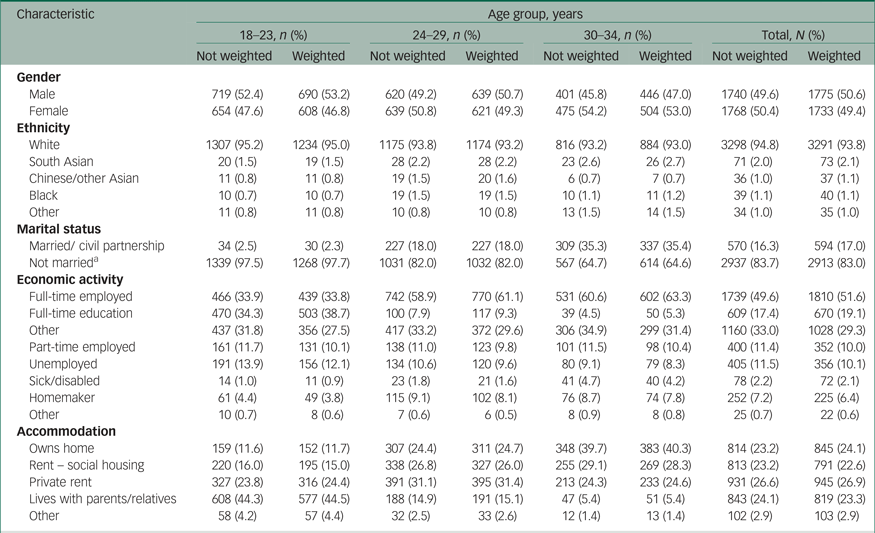
a Not married includes never married, separated, divorced and widowed.
Prevalence of suicidal thoughts, suicide attempts, self-harm thoughts and self-harm
Overall, 11.3 and 16.2% of the total sample reported a lifetime history of suicide attempts and NSSH, respectively (see Table 2). More than 20% reported lifetime suicidal thoughts, 2.4% reported that they last thought about suicide in the past week and 10.4% reported they last thought about suicide in the past 12 months. Further, 16% reported thoughts of NSSH at some stage in their lives, 1.7% reported that they last thought about NSSH in the past week and 7.3% reported they last thought about NSSH in the past 12 months. Very few respondents (0.3%) reported that they had last attempted suicide in the past week and 2.7% reported their last attempt in the past 12 months. Approximately 1% (1.1%) of respondents reported that their last NSSH episode was in the past week with 4.8% reported their most recent episode within the past 12 months (all of the past 12 month rates include the past week rates).
Rates of suicidal thoughts, suicide attempts, non-suicidal self-harm thoughts and non-suicidal self-harm by age group
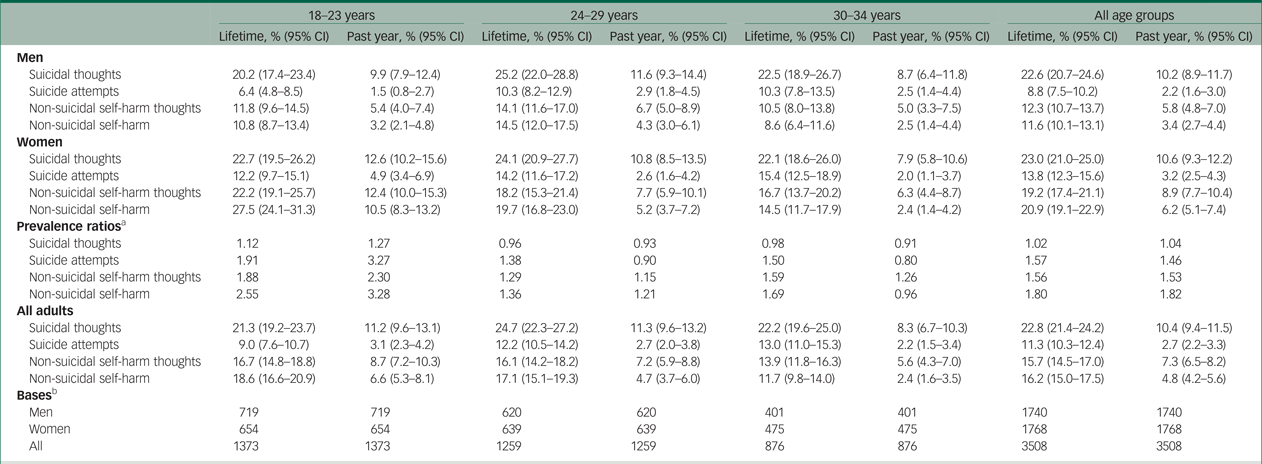
a A prevalence ratio >1 means that women are more likely to report the thought/behaviour, with a prevalence ratio <1 indicating that men are more likely to report the thought/behaviour and a prevalence ratio =1 means the rates for reporting the thought/behaviour are the same for men and women.
b Numbers are unweighted, percentages are weighted.
Approximately 10% of respondents (9.8%; 95% CI = 8.9–10.8%) engaged in NSSH only, 4.8% (95% CI = 4.2–5.6%) had attempted suicide only and 6.5% (95% CI = 5.7–7.3%) had attempted suicide and engaged in NSSH (the ‘both’ group). Of those who had attempted suicide, 57.3% had also engaged in NSSH and of those who reported NSSH, 39.7% also had a suicide attempt history.
Approximately 60% (60.8%) of those who have attempted suicide reported doing so more than once (range: 1–75 times, mean: 3.52 (s.d. = 7.23), median: 2) and 80% of those with an NSSH history had harmed themselves more than once (range: 1–99 times, mean: 9.39 (s.d. = 16.23), median: 4). The age at onset of the first episode of NSSH (mean: 16.05 (s.d. = 4.12), range: 5–32 years, median: 15 years) was younger than that for age at first suicide attempt (mean: 17.81 (s.d. = 4.99), range: 6–34 years, median: 17 years). Age at onset for first NSSH episode was significantly older in men (median: 16 years, mean: 16.56 (s.d. = 4.23), range: 6–29 years) compared with women (median: 15 years, mean: 15.77 (s.d. = 4.04), range: 5–32 years; Z = −2.64, P = 0.008). A similar gender × age association for first suicide attempt was also evident (median: 18 years, mean: 18.29 (s.d. = 5.00), range: 6–34 years for men v. median: 16 years, mean: 17.5 (s.d. = 4.97), range: 6–33 years for women; Z = −2.62, P = 0.009), with women reporting first episodes of NSSH younger than men. For both NSSH and suicide attempts, earlier age at onset was correlated with more frequent episodes of NSSH (Spearman's rho = −0.20, P < 0.001) and suicide attempts (Spearman's rho = −0.30, P < 0.001) in the whole sample and for men (Spearman's rho = −0.18, P = 0.018 for NSSH and Spearman's rho = −0.23, P = 0.006 for suicide attempts) and women separately (Spearman's rho = −0.21, P < 0.001 for NSSH and Spearman's rho = −0.33, P < 0.001 for suicide attempts).
As detailed in Table 2, lifetime suicide attempts were reported more often by women (13.8%) than men (8.8%; prevalence ratio, 1.02; odds ratio, 1.67; 95% CI = 1.35–2.07, P < 0.0001) and NSSH was also more commonly reported by women (20.9%) than men (11.6%; prevalence ratio, 1.80; odds ratio, 2.02; 95% CI = 1.68–2.43, P < 0.0001). Similar numbers of men (22.6%) and women (23.0%; prevalence ratio, 1.02; odds ratio, 1.02; 95% CI = 0.87–1.20, P = 0.80) reported suicidal thoughts across their lifetime whereas thoughts of NSSH were more common in women (19.2 v. 12.3% for men; prevalence ratio, 1.56; odds ratio, 1.69; 95% CI = 1.40–2.04, P < 0.0001).
Prevalence of lifetime history of suicide attempts was significantly lower among 18- to 23-year-olds, being 9% compared with 12.2% in 24- to 29-year-olds (prevalence ratio, 1.36; odds ratio, 1.40; 95% CI = 1.08–1.80, P = 0.010), with 30- to 34-year-olds reporting similar rates of suicide attempts to the 24- to 29-year-olds, at 13% (prevalence ratio, 1.07; odds ratio, 1.08; 95% CI = 0.84–1.39, P = 0.564). Although the lifetime prevalence of self-harm is similar in 18–23 (18.6%) and 24- to 29-year-olds (17.1%; prevalence ratio, 0.92; odds ratio, 0.90; 95% CI = 0.74–1.10, P = 0.315), it is markedly lower among 30- to 34-year-olds compared with 24- to 29-year-olds (11.7%; prevalence ratio, 0.68; odds ratio, 0.64; 95% CI, 0.50–0.82, P < 0.0001). The age distribution for female NSSH and suicide attempts mirrors that for the sample as a whole, whereas male NSSH peaks in the 24- to 29-year-old age group.
The sociodemographic characteristics as a function of lifetime NSSH and suicide attempt histories are summarised in Table 3. Not being married was associated with increased likelihood of NSSH (17.4 v. 10.5% for not married and married, respectively; prevalence ratio, 1.66; odds ratio, 1.79; 95% CI = 1.35–2.37, P < 0.0001) but not of suicide attempts (11.7 v. 9.2% for not married and married, respectively; prevalence ratio, 1.27; odds ratio, 1.31; 95% CI = 0.97–1.78, P = 0.077; see Table 3). The prevalence of NSSH and suicide attempts was significantly higher among those classified as unemployed (20.3%; prevalence ratio, 1.53; odds ratio, 1.67; 95% CI = 1.25–2.23, P < 0.0001 and 20.6%; prevalence ratio, 2.24; odds ratio, 2.53; 95% CI = 1.88–3.40, P < 0.0001 for NSSH and suicide attempts, respectively) and economically inactive (21.2%; prevalence ratio, 1.59; odds ratio, 1.76; 95% CI = 1.44–2.15, P < 0.0001 for NSSH and 12.3%; prevalence ratio, 1.34; odds ratio, 1.38; 95% CI = 1.09–1.76, P = 0.008 for suicide attempts) compared with those who were employed (13.3% for NSSH and 9.2% for suicide attempts). Ethnicity was not associated with prevalence of NSSH or suicide attempts. Compared with those who own their own home (10.3% reported NSSH), those living in rental (19.1% reported NSSH; prevalence ratio, 1.85; odds ratio, 2.06; 95% CI = 1.60–2.65, P < 0.0001) or other accommodation (16.3% reported NSSH; prevalence ratio, 1.58; odds ratio, 1.70; 95% CI = 1.28–2.25, P < 0.0001) were more likely to report NSSH. Those in rental accommodation were also significantly more likely to report a suicide attempt compared with those who owned their own home (16.0 v. 5.7%; prevalence ratio, 2.81; odds ratio, 3.17; 95% CI = 2.30–4.37, P < 0.0001).
Descriptive statistics for sociodemographic characteristics and lifetime non-suicidal self-harm and suicide attempt history
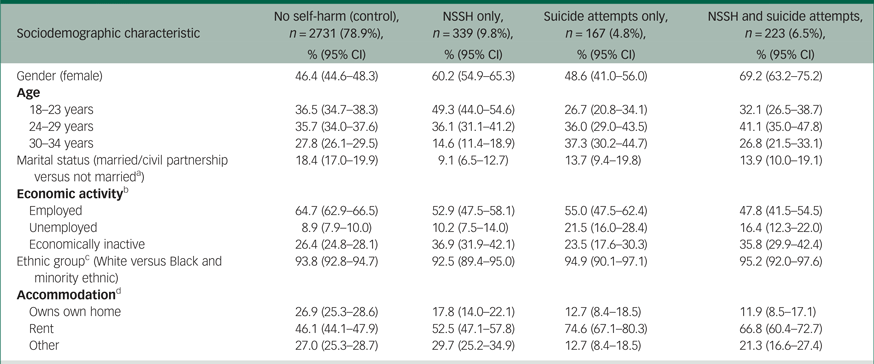
Note. Number of respondents with missing data was 0 for gender, 0 for age, 1 for marital status, 0 for economic activity, 2 for ethnic group, 5 for accommodation.
NHSS, non-suicidal self-harm.
a Not married includes never married, separated, divorced and widowed.
b Economic activity has been reduced to three categories based upon the Adult Psychiatric Morbidity Survey data-set: employed (economically active people), unemployed (those out of work but are available to start work) and economically inactive (including students, those looking after the home, long-term sick, disabled or retired).
c Ethnicity was collapsed into two ethnic groups (White versus Black and minority ethnic).
d Accommodation has been reduced to three categories: owns own home, rent (private rental and social housing) and other (lives with parents/relatives, other).
Discussion
Suicide attempts and NSSH are major public health concerns that affect large numbers of young people. Eleven per cent of young people aged 18–34 years report having attempted suicide and 16% report having self-harmed without suicidal intent at some stage in their lives. Women are 1.6 times more likely to report a suicide attempt than men and 1.8 times more women reported NSSH compared with men. Almost a quarter (22.8%) of young people also reported lifetime suicidal thoughts. For NSSH and suicide attempts, age at first episode tends to be during adolescence, with NSSH (mean age: 16.05 years, s.d. = 4.12) occurring, on average, 2 years earlier than suicide attempts (17.81 years, s.d. = 4.99). It is concerning that the majority of respondents who engaged in NSSH (80%) or suicide attempts (60%) did so more than once. Earlier age at NSSH or suicide attempt onset was associated with more frequent lifetime NSSH and suicide attempts and age at onset was younger in females compared with males. Moreover, 6.5% of the sample had engaged in both NSSH and attempted suicide at least once. Approximately 3% (2.7%) and 5% (4.8%) of young people have attempted suicide and engaged in NSSH, respectively, in the past 12 months. Among the total sample, rates of NSSH were highest among the 18- to 23-year-old age group, whereas suicide attempt rates were most common among the 30- to 34-year-olds. The same pattern was evident in women, whereas NSSH was most common among 24- to 29-year-old men. One in five young adults who were classified as unemployed reported an NSSH and a suicide attempt history, and another 20 and 12% of those who were economically inactive reported NSSH and suicide attempts, respectively.
History of suicide attempts and NSSH was ascertained in the same way in our study as in the English APMS.Reference McManus, Hassiotis, Jenkins, Dennis, Aznar, Appleby, McManus, Bebbington, Jenkins and Brugha20 So, although the raw data from the latter are not yet available, we used the published APMS summary tables to compare the rates of suicide attempts and NSSH in both countries. In the youngest age groups, the rates were similar in Scotland and England (the prevalence rates of lifetime suicide attempts in the Scottish Wellbeing Study (18- to 23-year-olds) and in the APMS (16- to 24-year-olds) were both 9%; rates of NSSH were 18.6 and 17.5% for Scotland and England, respectively). However, lifetime rates of suicide attempts and NSSH were higher in the Scottish sample among the older ages. Whereas the rates of suicide attempts and NSSH among 24- to 34-year-olds (we collapsed the 24- to 29-year-old and 30- to 34-year-old age groups) in this study were 12.6 and 14.8%, respectively, the comparable rates in the APMS were 8.5 and 12.1% for 25- to 34-year-olds in England. Given that the national suicide rates are higher in Scotland compared with England,Reference Mok, Kapur, Windfuhr, Leyland, Appleby and Platt37 these suicide attempt data may suggest that risk begins to diverge in the mid-twenties. Future research is required to determine why the rates begin to diverge in this age group; are there structural factors (which increase health inequalities, for example) in Scotland compared with England that may explain this age divergence? Caution is urged though, as the APMS is an adult lifespan study whereas the Scottish Wellbeing Study focused on young people specifically. Moreover, the APMS included young people aged 16 years and over whereas the Scottish Wellbeing Study was restricted to those who were at least 18 years old. It would be informative, therefore, to replicate the Scottish Wellbeing Study in England to yield directly comparable prevalence figures for young adults.
This study has many strengths (including large representative sample, being interview-based and confidential completion), however, it is important to recognise that suicidal history was assessed via self-report (albeit via computer) and, therefore, the responses were subject to standard reporting biases. Consistent with other large-scale surveys,Reference McManus, Hassiotis, Jenkins, Dennis, Aznar, Appleby, McManus, Bebbington, Jenkins and Brugha20 it was not optimal that suicide attempts and NSSH were assessed via single questions, although these specific questions have been widely used. Also, given the evidence that some people inconsistently report their self-harm/suicidal history, reliance on self-report may lead to the underreporting of suicide attempts and NSSH, therefore combining data from multiple sources may more accurately reflect the actual prevalence of suicide attempts and NSSH.Reference Mars, Cornish, Heron, Boyd, Crane and Hawton38 The use of quota sampling also requires comment. Historically, quota sampling may have yielded a biased sample (as non-responding individuals are ignored and the interviewer is selecting people or households), however, it is now argued that a rigorously designed quota sample (as conducted here) is as good as a probability sample.Reference Raab, Davidson, Martin and Treanor35, Reference Cumming39, Reference Groves, Fowler, Couper, Lepkowski, Singer and Tourangeau40 This is the baseline wave of a longitudinal study, therefore, the incidence rates of suicide attempts and NSSH over time will be reported in due course, as well as the associations with psychological risk and protective factors.
The findings are stark and clinically important as they highlight the scale of suicide attempts and NSSH among 18- to 34-year-olds and their demographic profile. Given that the vast majority of respondents who reported NSSH and suicide attempt did so more than once, clinicians should assess risk of repetition if a young person presents with an index suicide attempt or NSSH episode. Moreover, earlier onset of NSSH/suicide attempt is clinically significant in particular given its association with more frequent NSSH/suicide attempts. In such cases, clinicians should assess the factors (e.g. impulsivity, exposure, suicidal imagery, fearlessness about death, access to means) known to increase the likelihood that thoughts of suicide and self-harm are acted upon.Reference O'Connor, Cleare, Eschle, Wetherall, Kirtley, O'Connor and Pirkis41–Reference O'Connor and Kirtley45 From a public health perspective, the unemployment and economic inactivity findings are noteworthy. However, as these data are from a retrospective study, the direction of the relationship between unemployment and economic inactivity and NSSH/suicide attempts is unclear. Nonetheless, these findings are consistent with the extant suicide research literature on health and social inequality and highlight the importance of supporting those who are unemployed and economically inactive.Reference Platt, O'Connor and Pirkis46
Psychiatrists, psychologists and others involved in the care of young people should be vigilant. Given the prevalence of suicide attempts and NSSH in this age group, they should routinely enquire about history of self-injurious behaviour, especially as past behaviour is such a strong predictor of suicide.Reference O'Connor and Nock3 In conclusion, both NSSH and suicide attempts are common among young people in Scotland, with at least one in nine reporting lifetime prevalence of suicide attempts and one in six reporting NSSH, and 6.5% reporting a history of both behaviours.
Funding
This study was funded by a grant from US Department of Defense (W81XWH-12-1-0007). The funder had no role in study design, data collection, data analysis, data interpretation or writing of this article. The corresponding author had full access to all the data in the study and had final responsibility for the decision to submit for publication. Opinions, interpretations, conclusions and recommendations are those of the authors and are not necessarily endorsed by the funder.
Acknowledgements
Many thanks to Ipsos MORI (in particular Steven Trainor, Sara Davidson and Chris Martin), whose staff recruited the participants and conducted the interviews.
Supplementary material
Supplementary material is available online at https://doi.org/10.1192/bjo.2018.14.


 Open access


eLetters
No eLetters have been published for this article.