




Introduction
“We have just received, by grace of the King of Spain, a privilege to send eight vessels to Havana with a cargo of slaves…I can think of nothing more urgent than to inform you of this most fortunate event for our Trade.” Footnote 1 Thus Pierre François Schepers, associate of Romberg & Consors of Ghent, wrote hurriedly on 13 November 1782 to one of the firm's investors. The decision of Charles III of Spain to grant a licence to the company from the Austrian Netherlands fitted into the policy of opennenes to foreign trade which his country was forced to embrace during the American War of Independence, a period often regarded as laying the groundwork for the emergence of free trade by the decade's end. More broadly, the license underscored Madrid's enduring, century-long reliance on foreign traders in the slave trade, despite concerted efforts in the latter half of the eighteenth century to assert Spanish control over this crucial economic sector. At the same time, the generosity of the privilege—eight ships—extended to an Imperial ‘outsider’ to the Atlantic system was an expression of the Spanish government's growing unease with its dependence on rival Caribbean powers, particularly Great Britain, for slave imports. Although the slave trade during the American War of Independence has become progressively better understood in recent years, the role of Romberg & Consors remains little explored. By zooming in on the slaving activities of this Imperial firm, I shed light on this decisive period in the history of the Spanish Empire while simultaneaously contributing to the previously disregarded Atlantic history of the Habsburg Monarchy and the Austrian Netherlands.
The history of European expansion and the complex that developed in and around the Atlantic Ocean throughout the Early Modern period has long been studied from a national perspective. During recent decades, however, the emergence of Atlantic history, global history and a reinvigorated maritime history has led scholars to question the rigidity of Early Modern borders implied by such traditional national or imperial frameworks.Footnote 2 Taking a bird's eye view of Atlantic border regions or, through its methodological opposite, conducting in-depth studies of ‘microregions,’ historians have shown the permeability of demarcation zones with regard to people, commodities, and information.Footnote 3 Other scholars have challenged the perspective of the state or the national empire by calling for an actor-centred approach to the history of the Atlantic System. They have revealed a world other than the one dominated by institutions and central power strategies of empire-building such as monopolies: an ‘informal empire,’ built on transnational, cross-imperial, and cross-cultural networks and interactions of private actors.Footnote 4
These fresh perspectives on the European overseas project have enriched existing Atlantic histories of nations by incorporating new cross-imperial and informal connections. However, they also had the important consequence of drawing attention to the participation in the colonial project of European areas not yet considered. Elizabeth Buettner calls this the ‘Europeanizing’ of the imperial turn, shifting the study of empire beyond the exclusive focus on a few European nations with formal empires and embedding it within a broader, more inclusive European narrative.Footnote 5 This rethinking of the history of European expansion has inspired significant scholarship centred on the ‘margins of colonialism’ or ‘colonialism without colonies.’Footnote 6 A prime example is provided by the Austrian branch of the Habsburg dynasty, which has long been viewed as a ‘continental’ power devoid of a maritime or overseas history.Footnote 7 Although Vienna never acquired a formal colony of its own and was a modest maritime power, the Monarchy's subjects—either in a formal, informal, or hybrid role—participated in a wide array of intentional or unintentional colonial activities which contributed to European overseas expansion. These ranged from gathering intelligence on opportunities for formal empire, pursuing commercial opportunities, appropriating artifacts and knowledge, or engaging in missionary activities.Footnote 8 While early historical interest in the colonial past of the Habsburg monarchy primarily focused on the nineteenth and twentieth century, recent scholarship has increasingly highlighted how the Atlantic world during the Early Modern period likewise was a place of emphatic commercial, cultural, and scientific interest to the Habsburg Monarchy and its subjects.Footnote 9
Many of these overseas activities, ambitions, and aspirations were formulated, facilitated, and funded from the Southern Netherlands. Added to the Habsburg Empire through the Treaty of Rastatt (1714), this region along the North Sea provided Vienna with a new ‘window upon the world.’ During the latter half of the eighteenth century, the government undertook a concerted effort to develop the road, waterway, and port infrastructure of the Austrian Netherlands, while also implementing measures to enhance its commerce and manufacturing industries.Footnote 10 These developments came to exceptional fruition during the American War of Independence (1775–83), when the Habsburg Monarchy claimed neutrality and declared Ostend a free port. As a consequence, unprecedented opportunities ensued for Imperial subjects to participate in the Atlantic empires of other nations.Footnote 11
Famously, the Spanish Empire was prone to such trans-national interactions ever since its inception in the fifteenth century. This feature became even more pronounced during the American War of Independence. The conflict, joined by Spain in 1779, resulted in the significant disruption of trade routes to its overseas territories. However, it also provided opportunities for reshaping commercial flows within the Empire, especially the slave trade. Ever since the defeat to Great Britain in the Seven Years’ War (1756–63), Madrid had attempted to strengthen its empire and retain its spoils for Spanish subjects through the famous ‘Bourbon reforms.’Footnote 12 In the slave trade, too, the Crown undertook steps to bring the trade under Spanish control, or, at least, to reduce the Empire's reliance on British traders, who had dominated the business overtly or covertly since the end of the War of the Spanish Succession (1701–14). The war with Britain which erupted in 1779 cut these ties, while the distribution of slaving licenses and the establishment of comercio neutro welcomed new players to fill in the gaps.Footnote 13
In this paper, I study one of these newcomers in the form of Romberg & Consors, a Ghent-based subsidiary firm of the Brussels merchant Frederic Romberg. Romberg, of Westphalian descent, had moved to the Austrian Netherlands in the 1750s and quickly made a name for himself in the so-called transit trade, the commercial routes connecting Ostend with Central and Southern Europe.Footnote 14 During the 1780s, however, Romberg's firm cast its eyes toward the Atlantic complex and engaged in the trans-Atlantic slave trade, especially the trade directed towards Cuba.Footnote 15 While Romberg's slave trade has for the past few years been thoroughly studied in terms of its connection with its German hinterland through the work of Magnus Ressel, I approach his trade from a decidedly Atlantic perspective.Footnote 16
Although the picture of the Cuban slave trade during the American War of Independence has become clearer in recent years, drawing on a multinational array of sources, I argue that the role of Romberg & Consors has been overlooked. I begin this micro-study by discussing the evolution of slave trade in the Spanish Empire, particularly Cuba, during the second half of the eighteenth century and the steps taken to reduce the influence of other colonial nations. Subsequently, I show how Romberg & Consors leveraged its ‘outsider’ status in the Atlantic to acquire a trading permit from the Council of the Indies. While this position offered advantages in dealings with metropolitan authorities, it also carried the potential to become a liability in Havana itself, where the interests of local elites frequently diverged from those of the Court. To explore this hypothesis, I shift focus from the metropolitan perspective to an analysis of Romberg & Consors’ operations in Havana, where one of the firm's associates took up residence. My findings confirm that their outsider status indeed caused significant challenges for the firm. At the same time, I conclude that the large-scale imports of enslaved Africans organized by Romberg & Consors during the American War of Independence played a crucial role in steering Cuba toward an agricultural economy centered on plantation crops. Simultaneously, this paper contributes to the Atlantic history of the Austrian Habsburgs, while also shedding light on the little-understood pre-modern participation of ‘Belgian’ subjects to the European colonial project.
1. Opportunities for Outsiders: the Spanish Empire, Cuba, and Slave Trade
Ever since the Crown of Castile had claimed dominion over large parts of the Americas, it was forced to condone foreign participation in its empire as Spain struggled to provide the capital and manufactures necessary to provision the overseas territories and keep the carrera de Indias afloat.Footnote 17 Foreigners dominated the slave trade as well, although here the constraints were diplomatic in nature: the Treaties of Alcáçovas (1479) and Tordesillas (1494) had confined Spain's sphere of influence to the western hemisphere, preventing it from setting up African coastal outposts and thus directly participating in the slave trade. Thenceforward, the business was outsourced to foreign merchants using licencias—individual, non-binding, non-monopolistic trading permits—or, increasingly so, through the asiento, which monopolized the slave trade for its holder.Footnote 18
Of all Spanish overseas possessions during the eighteenth century, Cuba was the one which craved enslaved labour the most. Cuban slavery had its origins in the sixteenth century, when enslaved Africans came to replace the indigenous labour force deployed in the island's silver and gold mines. Additionally, as Cuba served as a way station astride important shipping routes, the Spanish Crown purchased ‘royal slaves’ in order for them to construct fortifications along the coast, build war vessels, and be deployed in militias.Footnote 19 In addition to state-sanctioned slavery, a significant private demand for enslaved labour emerged and grew dramatically throughout the eighteenth century as Cuba's plantation economy expanded and large swaths of La Isla were converted to sugar production.Footnote 20 Planters required an increasing number of enslaved Africans to work their growing cane fields, as well as to replace those who had died from the gruelling demands of plantation labour. Spain's tightly controlled slave trade, however, failed to deliver the bonded labourers necessary to meet the demands of plantation holders. Time and again, colonists pressed Cuban and metropolitan officials for greater imports, and to allow foreigners to trade in Havana. These foreigners were primarily British: the 30-year asiento won by the South Sea Company at the end of the War of the Spanish Succession (1701–13) had forged strong ties between Spanish and British traders and established a vibrant intra-American commercial system where slaves both legally and illegally moved in large numbers across imperial borders. These networks continued to function unabated during the War of Jenkins’ Ear (1739–48), which pitted Spain against Britain, and after the formal conclusion of the South Sea Company asiento in 1750.Footnote 21 The commercial ties between Spain's and Britain's Caribbean empires were strengthened still during the Seven Years’ War, when Havana fell to the British in 1762. The conquest of Cuba's capital immediately prompted a wave of immigration from British merchants, who subsequently imported thousands of captives.Footnote 22
The defeat by Britain in the Seven Years’ War famously initiated major reforms within the Spanish Empire aimed at reinforcing the overseas domains and establishing a more forceful protectionist framework in which Spanish industry could flourish and royal revenues would grow. Among the most important emanations of these so-called ‘Bourbon reforms’ were the comercio libre acts of 1765 and 1778, which broke the former monopoly of Cádiz and allowed eight other port cities access to the Spanish Caribbean.Footnote 23 As Elena Schneider has noted, however, the British occupation of Havana—which returned to the Spanish Crown after the war—proved not only a catalyst for imperial reform but also for a reassessment of slave trade in the Spanish Empire. Whereas Spanish policy makers had previously focused on South America and its mines of precious metals, it increasingly dawned on reformers that—emulating the empires of other Atlantic powers—more wealth could potentially be extracted from the Empire by focusing on developing a plantation complex. A larger population of enslaved Africans was key to enabling this economic transformation. Coincidentally, two officials with roots in the Austrian Netherlands proved to be among the most vocal supporters of promoting the slave trade: Francisco de Craywinkel, whose father had been an Antwerp merchant, and Agustín Crame, a military engineer born in the Southern Netherlands. Crame in particular viewed an expanded population of slaves an important source of security for the Empire, as Black militias had proven to be loyal soldiers—not least during the recent siege of Havana.Footnote 24 Lastly, the occupation of the Cuban capital had highlighted that the close commercial ties between local elites and British traders had significantly directed the former's allegiance towards Britain. If the Court could provide enough slaves to the slaveholding or slave-selling elites, so Madrid reasoned, it could disengage these merchants from their British contacts and again gear their loyalties towards King and country.Footnote 25
Although Cuban merchants had petitioned to keep the liberal slave trading policies of Britain intact after Havana returned to the Spanish Crown, the Council of the Indies quickly returned to its policies of exclusive permits and asientos. Metropolitan authorities had become wary of the importance of British commercial networks for providing Spain's imperial realm with essential supplies, which it increasingly viewed as a major security concern.Footnote 26 Yet as so often, the wishes of the metropolis did not align with the realities of the colonies, and immediately after the war Cuba again quickly became reliant on British traders, both through legal as well as illicit imports.Footnote 27 In an effort to bring the slave trade under Spanish control, the Council of the Indies granted the asiento in 1765 to a partnership of Cádiz and Basque merchants known as the Compañía Gaditana de Negros. The Compañia, however, organized a ‘Spanish’ slave trade in name only; once again, the firm quickly became a slaving enterprise dependent on British merchant houses, which sourced their human cargoes from Caribbean entrepôts such as Jamaica, Dominica, or Barbados.Footnote 28 Nevertheless, as was customary, the asentistas failed to supply enough enslaved individuals to meet the ever-increasing demand of Cuba's planters. In a bold attempt to boost imports and take control of the slave trade, Spain subsequently acquired Annobón and Fernando Po, two islets in the Gulf of Guinea, in a treaty with Portugal. However, strong resistance from the local population to Spain's claims of sovereignty, coupled with British military manoeuvres and a lack of experience in the slave trade, led to the swift failure of this initiative and resulted in lasting supply shortages for Cuba.Footnote 29
The contract of the Compañía Gaditana expired in 1779, the same year Spain, aligning with France and the fledgling United States, entered the American War of Independence. This marked a disruption in the longstanding commercial ties between Cuba and its neighboring British islands, leading to a collapse in the export of slaves to Havana.Footnote 30 Madrid, aware of the crucial importance of bonded labour for Cuba's nascent plantation complex, tried to shore up imports by taking several steps toward a more open imperial economy. First, in 1780, the Spanish Crown allowed the introduction of enslaved Africans from neighbouring French colonies in Spanish boats. Over the following year, however, this source of supply proved incapable of solving the shortages of slaves in Cuba. Madrid therefore decided to impose comercio neutro, which relaxed the restrictions of the mercantilist framework for merchants of neutral and allied nations.Footnote 31 In addition to these general policies, the Crown continued to issue slaving licenses to individual merchants.Footnote 32 Once again, the Spanish Empire in general and Cuba in particular became a commercial playground for enterprising, foreign merchants in the circum-Caribbean and in Europe's metropoles. In the space of only a few years, traders disembarked an unprecedented number of captives on the island. The massive imports of bonded labour under comercio neutro firmly set Cuba on a course of becoming a slave-based agricultural powerhouse, while also creating a major precedent and inspiration for the free trade act of 1789.Footnote 33
Due to its importance for the long-term economic, social, and cultural history of Cuba and the Spanish imperial project, the slave trade during the American War of Independence has received ample scholarly attention, with researchers continuing to deepen our understanding of the traffic in enslaved people during this period.Footnote 34 Recently, Alex Borucki and José Luis Belmonte Postigo made a major contribution by providing the first exact estimate of slave imports by each nation. The authors computed a total number of 14,476 enslaved Africans disembarked in Havana over the course of four years (1781–5), mainly by American traders plying intra-Caribbean and trans-imperial slaving routes.Footnote 35 Nevertheless, the mercantile networks underpinning these forced migrations remain obscure, a situation compounded by the limited and, at times, unreliable information found in colonial sources. As I show in the coming pages, previous studies of the slave trade during the American War of Independence have largely disregarded the operations of one particular player organising trans-Atlantic slave trade from the outskirts of the Atlantic system: a player whose petition appeared on the desks of the Council of the Indies in the Summer of 1782 and was signed with Romberg y Consortes del comercio de Gante.
2. Contracting with the Court: The Real Permiso of Romberg & Consors
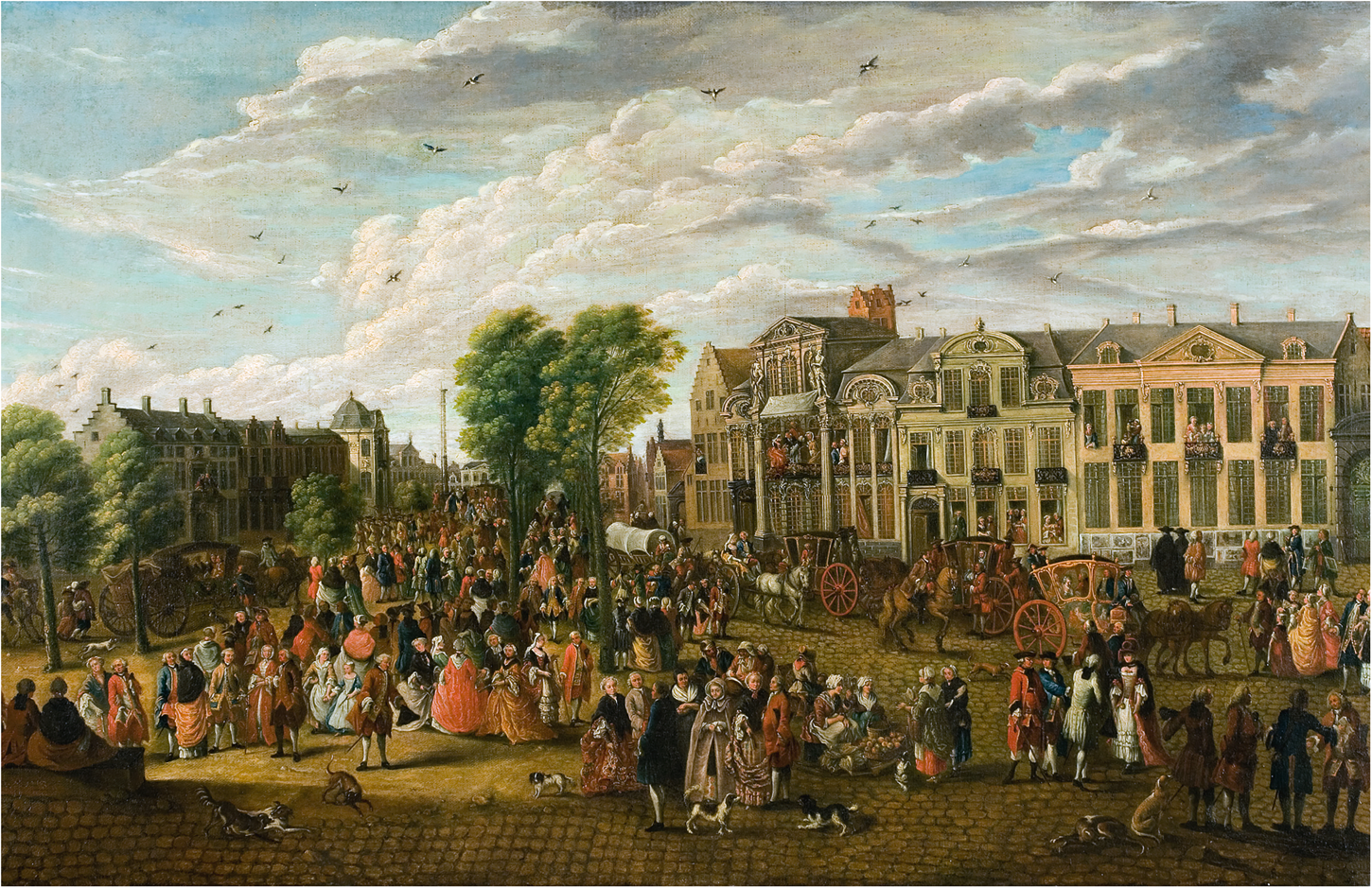
Romberg & Consors was established in Ghent on 5 August 1780 (see Figure 1).Footnote 36 The firm's principal in Brussels, Frederic Romberg, entrusted its leadership to three associates: Georg Christoph Bapst, François Carpentier, and Pierre François Schepers. Since the 1770s, Schepers (whom we have met in the introduction) had served as director of the Province of Flanders, a lucrative position overseeing tax collection from lower levels of government. On top of this public office, Schepers was a resourceful entrepreneur. In 1776, in a rather dramatic episode of his career, he had smuggled a British spinning device to Ghent in order to mechanically improve the production of cotton and linseed.Footnote 37 Around the same time, Schepers forged a partnership with Romberg. Together, they launched an ambitious venture to supply the French fermes générales with eight million pounds of tobacco, to be cultivated in the Austrian Netherlands. The ambitious scheme never panned out, but the commercial relationship between the two merchants remained intact.Footnote 38 Carpentier, the grandson of Nicolas Carpentier—a prosperous merchant who commanded multiple voyages to India for the Ostend Company and amassed considerable wealth later in life—had joined Romberg's firm in the 1770s as a regular employee, but through zeal and competence quickly rose to the rank of associate in Romberg & Consors.Footnote 39 Georg Christoph Bapst, contrary to his fellow associates, was no Flemish subject, but hailed from Romberg's German network. Being in his early twenties, Bapst was the junior member of Romberg & Consors and had previously gained experience by working in Romberg's offices in Brussels.Footnote 40 Romberg & Consors’ central task was the greasing of the main firm's commodity chain between France and the Dutch Republic, an axis which could be conveniently managed from Ghent.Footnote 41 From the outset, however, the firm sought to capitalize on the upheaval in international markets brought about by the American War of Independence. As Ressel has shown, in 1780, Romberg had brokered a deal with Versailles to supply French shipyards with naval materials from the Dutch Republic, and he had assigned Romberg & Consors to deal with the logistics of the contract.Footnote 42
The Kouter in Ghent, where Romberg & Consors was established (in the second house on the left).
Source: Engelbert Van Siclers, De Kouter in Gent in 1763, Stadsmuseum Gent.
From 1781 onward, however, Romberg & Consors expanded its operations to include the African shipping lanes. That year, the firm organized and dispatched two small expeditions from Ghent to the West African coast.Footnote 43 By the spring of 1782, they intensified their efforts, outfitting six additional slave ships bound for Saint-Domingue.Footnote 44 Around this time, however, news reached the firm of lucrative opportunities beckoning in the Spanish Caribbean. Perhaps this was by way of Jacques Chauvel, a French contact of the firm who was also petitioning Madrid for access to Cuban slave markets during this time.Footnote 45 Compared with the Spanish Empire, France's colonies presented a less appealing site of operations for the firm. French planters typically paid for their slaves in colonial produce rather than cash, and the realized profits often took years to be remitted to Europe.Footnote 46 In contrast, the Spanish overseas possessions abounded with cash. This applied especially to Cuba: in order to strenghten the island's position as the Spanish Empire's bulwark in the wake of the Seven Years War, the Council of the Indies ensured that substantial funds were transferred annually from the royal treasury in Veracruz, Mexico, to the state coffers in Havana. From there, these funds were distributed across other parts of the Spanish colonial realm. As authors such as Juan Marchena Fernández and Franklin Knight have shown, considerable parts of this subsidy (known as the situado) flowed towards non-military segments of the colonial economy, for example the sugar planting industry.Footnote 47 Likewise, Allan Kuethe stated that the situados turned Cuba into ‘a capital-rich island where financial liquidity abounded and where the quick-witted and the enterprising could find personal opportunity.’.Footnote 48 This was especially true during the American War of Independence, when 30 million pesos were injected into the island's economy in the space of a few years.Footnote 49
In a recent paper, Cátia Antunes explored the concept of ‘business diplomacy,’ which she defined as the ‘channel through which the diplomatic agency of Early Modern firms and entrepreneurs took place.’ Business diplomacy comprised the various ways in which businesses, both foreign and domestic, attempted to wrest commercial privileges from the state by drafting petitions or bidding for contracts. As Antunes highlights, successful commercial negotiations with state administrations were entirely dependent of the firm's knowledge of, and access to, these institutions.Footnote 50 The actions of Carpentier, Schepers, and Bapst, who began working the sinews of power in the Spanish Empire in the spring of 1782, are a great illustration of how business diplomacy worked in practice. Indicative of Antunes’ stress on the need for knowledge on how to access power brokers, the Ghent triumvirate did not attempt to make inroads into Spain's institutional framework by petitioning the Council of the Indies directly. Rather, the firm leveraged its growing network of high-ranking ministers in Paris, strengthened in recent years through the negotiation of the aforementioned contracts with the French Navy and the fermes générales.
On 17 June 1782, Romberg & Consors began making inroads into the Spanish administration by petitioning Pedro Pablo Abarca de Bolea y Jiménez de Urrea, Count de Aranda, the Spanish ambassador to France. Romberg's associates notified Aranda of their willingness to redirect the six slaving vessels they were preparing in the Austrian Netherlands from France to the Spanish colonial domains. The Ghent associates made sure to cast their plan as a wartime service ‘esencial para España,’ providing Cuba with highly sought-after enslaved labour and sparing the colonists from the excessive prices of the slaving markets in Cap Français and the privateer-infested waters of Cuba and Saint-Domingue. In return, the firm requested exemption of all duties in Cuba.Footnote 51 Aranda passed on the message to José Moñino y Redondo, the Count de Floridablanca, Spain's first minister. Floridablanca, in turn, presented it to José de Gálvez, governor of the Council of the Indies. With Cuba's supply problems in mind, Gálvez lent a ready ear to Romberg & Consors’ petition, and over the summer, the Council and the Ghent firm thrashed out the details of the deal. On 22 October 1782, Madrid officially granted the firm a licence to transport enslaved Africans to Havana.Footnote 52
There were several reasons which made Romberg & Consors an attractive contracting party for the Spanish Crown. Although he had little experience in the slave trade, the Council of the Indies conceded that Romberg, as the firm's principal, at least disposed of the necessary funds to set up a slaving venture (‘una de las poderosas [casas] de los Payses Baxos Austriacos’).Footnote 53 Closely linked to this commercial success was Romberg's wide network, which may have served as an additional motivation for the Council: what the merchant missed in expertise, he might be able to get through his international contacts. Undoubtedly Romberg's most important trait, however, was that he was a subject of the Holy Roman Empire. Since its defeat in the Seven Years’ War, Madrid, driven by both economic concerns and national security interests, sought to disentangle itself from the many traders affiliated with rival Caribbean powers operating within its overseas empire—chiefly British and French merchants, but also Portuguese, Danish and Dutch traders.Footnote 54 In contrast, Vienna lacked a formal empire and, despite numerous exploratory expeditions organized by the Court and countless ‘bottom-up’ petitions advocating the acquisition of overseas territories like Tobago, had no serious plans to pursue such ambitions.Footnote 55 The absence of a formal empire also meant that the Austrian Habsburgs lacked an entrepôt for their manufactures, one that could serve as a launching pad for introducing contraband into Cuba under the cover of slave trade. These traits afforded the Habsburg Monarchy, and by extension, Romberg & Consors, an outsider status in the Caribbean, a position they were able to leverage when negotiating with the Spanish Court.
For Romberg & Consors, the main attraction of the slaving license lay in the lucrative opportunity to tap into the mineral wealth of the Spanish Empire. Additionally, wartime disruptions to shipping lanes had caused a shortage of enslaved labor in Cuba, leading to higher-than-usual profits for slave traders.Footnote 56 On top, slaving firms could enjoy exceptionally beneficial fiscal conditions: Romberg & Consors was required to pay only 6% in duties on the importation of enslaved Africans whereas normally, slave traders were taxed a so-called derecho de marca of 40 pesos per prisoner brought to Havana, implying a tax of 16% on an average price of about 250 pesos per enslaved person.Footnote 57 Traditionally, one of the main prizes of slaving contracts was gaining access to the Spanish colonial market. Either in a legal way (cf. Britain's navio de permiso under the South Sea Company asiento) or an illegal way (through contraband trade), this entailed that foreign contract-holders had the opportunity to sell commodities such as flour in the Spanish colonies. In a chronically understocked market, these goods fetched high prices and often proved to be the most (or indeed the only) lucrative part of the slaving business.Footnote 58 In the case of Romberg & Consors, however, importing manufactures or staples in Havana seems not to have been a motive to apply for a licence. The firm readily accepted a contract which explicitly banned any contraband trading.Footnote 59 Although colonial officers frequently turned a blind eye to smuggling, there is no proof Romberg engaged in such activities as the accounting books of the firm do not report sales other than human cargoes, with the occasional leftover drinking water as an exception.Footnote 60 Carpentier, Romberg & Consors’ agent on the island (see below), struck a close friendship with the intendant of Cuba, Juan Ignacio de Urriza, a politician who vigorously pursued smugglers on the island; presumably, if Romberg & Consors engaged in such activities, Carpentier's friendship with Urriza would have been untenable.Footnote 61 Lastly, by the time Romberg's ships showed up in Havana, royal officials had assumed a firmer attitude against contraband trading as many captains had introduced illicit goods in 1781 and 1782, forcing foreign vessels to take on board Spanish guards while in port. Romberg's Négrier Impérial, arriving in May 1784, certainly received such treatment while in Havana.Footnote 62
Unlike licences of other trading houses, in which the details of the privilege were expressed in number of enslaved Africans or shipping tonnages, Romberg's permiso was stipulated in number of ships. Capped at six in the original proposal, the contract expanded during the discussions with the Council and comprised eight vessels, specified by name, by the time it was concluded in October.Footnote 63 In the six months following the acquisition of the privilege, all eight vessels were duly outfitted in Ghent, Bruges, and Ostend. Borucki and Belmonte Postigo observed that Danish slavers operating in the Cuban slave trade had a distinctly multinational character, and this characteristic also thoroughly applied to Romberg & Consors.Footnote 64 While the firm appointed supercargoes from its own circle of trustees, it also employed experienced captains and supercargoes from the ports of Le Havre and Honfleur.Footnote 65 The ships' crews were composed of a diverse array of nationalities, reflecting the international community of mariners who had migrated to Ostend in the early 1780s to take advantage of the high wages offered by the bustling port.Footnote 66 With regard to the venture's capital outlay, the firm drew funds from an equally international group of investors based in the Dutch Republic, France, the Holy Roman Empire, but primarily the Austrian Netherlands.Footnote 67
As Table 1 shows, the eight permission ships were grouped in several flotillas. Investors could only buy shares in a particular flotilla, not in a single ship, in order to spread the risks of the venture. The different flotillas also served as a commercial separation, as the constituent vessels were helmed by a common supercargo. The ships traded across a diverse range of African regions, from the small commercial stations of Upper West Africa to the major slaving ports of Ouidah and Malembo on the Loango Coast, routes largely determined by the previous experience of the captains and supercargoes in charge. Six vessels eventually made it to a Carribean destination, three ships calling at Havana, and three others finishing their journey prematurely on Saint-Domingue due to severe outbreaks of disease and high mortality rates during the Middle Passage (see Table 1). In January 1783, preliminary peace treaties were signed between the warring parties, marking the end of the privileged status enjoyed by foreign merchants in the Spanish Atlantic, and with the decree of 23 January 1783 admittance of foreign ships in Spanish ports was once more prohibited.Footnote 68 Seemingly uniquely, again brought about by his ‘outsider’ status, Romberg was allowed to (legally) continue his operations. A French contemporary observer confirmed the exclusive nature of Romberg's licence:
“The captives are worth or have been worth a lot in Havana, [but] it is not permitted to import them. Romberg of Brussels is the only house that has the permission of the Court and has made a treaty with the Spanish minister in Madrid…the port [of Havana] is closed to all foreigners, with the exception of the ships of Romberg.” Footnote 69
On 25 October 1784, the Council officially prolonged Romberg's permits for future purposes. The merchant made use of this peacetime extension to sell his remaining licences to the British merchant David Nagle, a resident in Havana, or an unknown firm represented by Nagle. On 22 December 1785, the Vlaemsch Zeepaerd [II] arrived in the Cuban port, disembarking 491 captive Africans. At some date in April 1786, the Prince de Saxe-Teschen [II] followed suit, carrying an unknown number of enslaved people.Footnote 70 It was not the first time that Romberg & Consors had transferred its Spanish priviliges: in 1783, the licence of the Comte du Nord was sold to the British merchants Miles Barber and Samuel Hartley, who used it to trade for 674 enslaved people in Malembo. Eventually, Barber and Hartley decided against going to Havana, and sold their human cargo in Charleston instead.Footnote 71
Enslaved Africans embarked on the permiso ships of Romberg & Consors, 1782–85
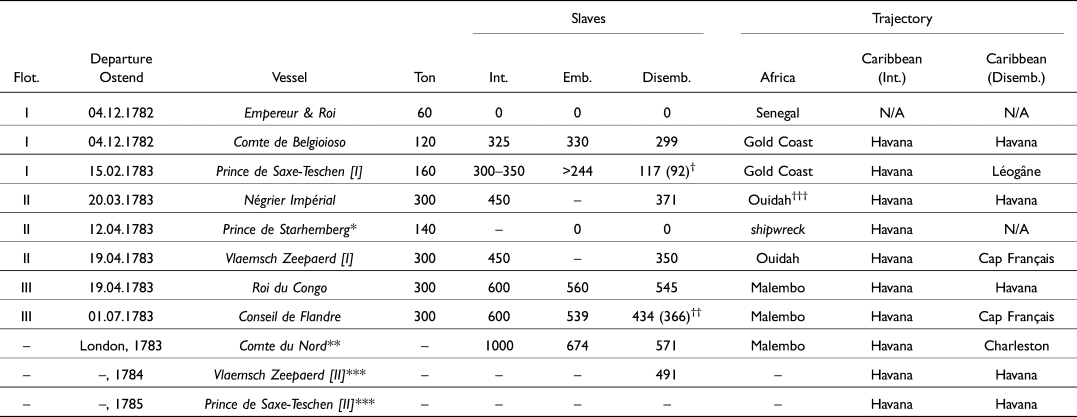
Sources: Algemeen Rijksarchief (Council of Brabant: Nobility Trials); University Archives Ghent (Gazette van Gendt); City Archives Saint-Omer (Ms 1037); Archives de Paris (Bankruptcies), Bibliothèque Nationale de France (Affiches Américaines), The National Archives (Records of the Exchequer), Archivo General de Indias (Gobierno: Indiferente and Papeles de Cuba), Archivo Nacional de la República de Cuba (Protocoles Notariales), Radburn, Traders in Men, 179–82. * Not included in the Spanish licence but still dispatched to Havana. ** Outfitted and owned by Miles Barber & Samuel Hartley after purchasing a permit from Romberg & Consors. *** Outfitted and owned by David Nagle after purchasing a permit from Romberg & Consors. † 25 people died between the first port of call (Cap Français) and actual disembarkation port (Léogâne). †† Shortly after arriving in Cap Français, another 68 enslaved Africans succumbed to the diseases that had plagued the ship's Middle Passage. ††† Ouidah was the ship's intended destination and sources confirm its presence in the latter port. However, Havana notary records claim the ship arrived from East Africa. As the Négrier spent almost a year on the coast of Africa, it would indeed not have been impossible for the captain to continue his journey after trading in Ouidah.
In total, the ships Romberg & Consors outfitted in the Austrian Netherlands disembarked 1,215 enslaved Africans in Havana over the course of half a year. This constituted 8.4% of the 14,476 slaves brought to Havana between 1781 and 1785, as calculated by Borucki and Postigo.Footnote 72 If we add the Vlaemsch Zeepaerd [II], outfitted outside of the Austrian Netherlands but part of the same permit, Romberg & Consors facilitated the importation of 1,706 people, or 11.4% of the total number.Footnote 73 This puts the activities of the Imperial firm at a comparable level to British (1,958 captives) and American traders (1,878), although the latter disembarked many additional captives in Danish ships.Footnote 74 If the 901 people landed and sold on Saint-Domingue had made it to Havana as planned, Romberg & Consors would have been the third most important slave trader in Havana. An additional indicator of the importance of the Imperial firm's slave trade is provided by the flows of silver returning to Europe from Havana. Gloria García, using Havana harbour records, noted that during the American War of Independence, 275,600 piasters earned in Cuba's slave trade were exported towards Ostend, 16.3% of the total exports in this period. This figure positioned the Austrian Netherlands as the third-largest recipient of Cuban silver during this period, surpassed only by Saint-Domingue and Saint-Thomas, which further underscores the significance of Romberg's operations—presumably the main source of these bullion exports.Footnote 75
3. “I have many enemies here”: Romberg & Consors in Cuba
To facilitate the marketing of the firm's human cargoes, Romberg & Consors deemed it prudent to send a trustee overseas to oversee its commercial operations. Moreover, to minimize the ships' turnover times, having a permanent agent on site would be beneficial for managing logistical tasks such as storage, debt settlement, and gathering intelligence on potential buyers. Logistics, however, would likely be the least of concerns for Romberg & Consors’ future agent. As we discussed, the commercial interests of Cuban elites had been firmly tied to the British Caribbean ever since the early eighteenth century, had only deepened during the brief British occupation of Havana in 1762, and remained intact during the asiento years of the Compañia Gaditana. Even though the American War of Independence had disrupted the traditional British-Cuban slaving circuits maintained by the Compañia Gaditana, scholars have asserted how merchants involved in the latter company—especially its director, Jerónimo Enrile y Guerci—rapidly forged new ties with primarily Danish and American traders.Footnote 76 Many other Cuban elites followed suit in order to profit from the wartime peak in prices.Footnote 77 While metropolitan authorities considered Romberg & Consors a useful newcomer, Cuba's mercantile classes would almost certainly view the firm as an unwelcome intruder, an outsider encroaching on a trade they claimed as their own. This section explores the operations of the firm in its periphery, and tests whether and how the hostile social and commercial environment affected its activities.
The person chosen to take up residence in Cuba was François Carpentier. When the need arose for an overseas agent after the acquisition of the Real permiso, the associate emerged as a logical choice: he was thoroughly familiar with the project, had demonstrated his ambition in recent years, and, at just twenty-seven years old, his youthful constitution offered a chance of withstanding the illnesses prevalent in the tropics. He was also a Catholic, and in light of his future actions he had at least a decent grasp of Spanish. Both traits would help him integrate more easily into Spanish society. In early 1783, Carpentier successfully applied for a Spanish passport and was allowed to make the Atlantic crossing. Carpentier's brothers, Jean-Baptiste and Philippe, joined Romberg's fleet as supercargoes. They were included simply to keep an eye on their French counterparts; neither Jean-Baptiste or Philippe had any experience with African trade, and their lack of habituation with the local disease environment cost them dearly as both men died shortly after arriving in Africa.Footnote 78 A fourth brother, Jean-Nicolas, was prompted by Carpentier to join him in Cuba. Much more than his supercargo brothers, Jean-Nicolas was fit for the job and well established in the Spanish realm, as he was stationed in Madrid as member of the Compañia Flamenca de la Guardia de Corps, the royal guard.Footnote 79 However, despite being employed in Spanish royal service, Jean-Nicolas’ petition was denied, presumably because Spain's colonial ministers deemed one foreigner in Havana sufficient.Footnote 80
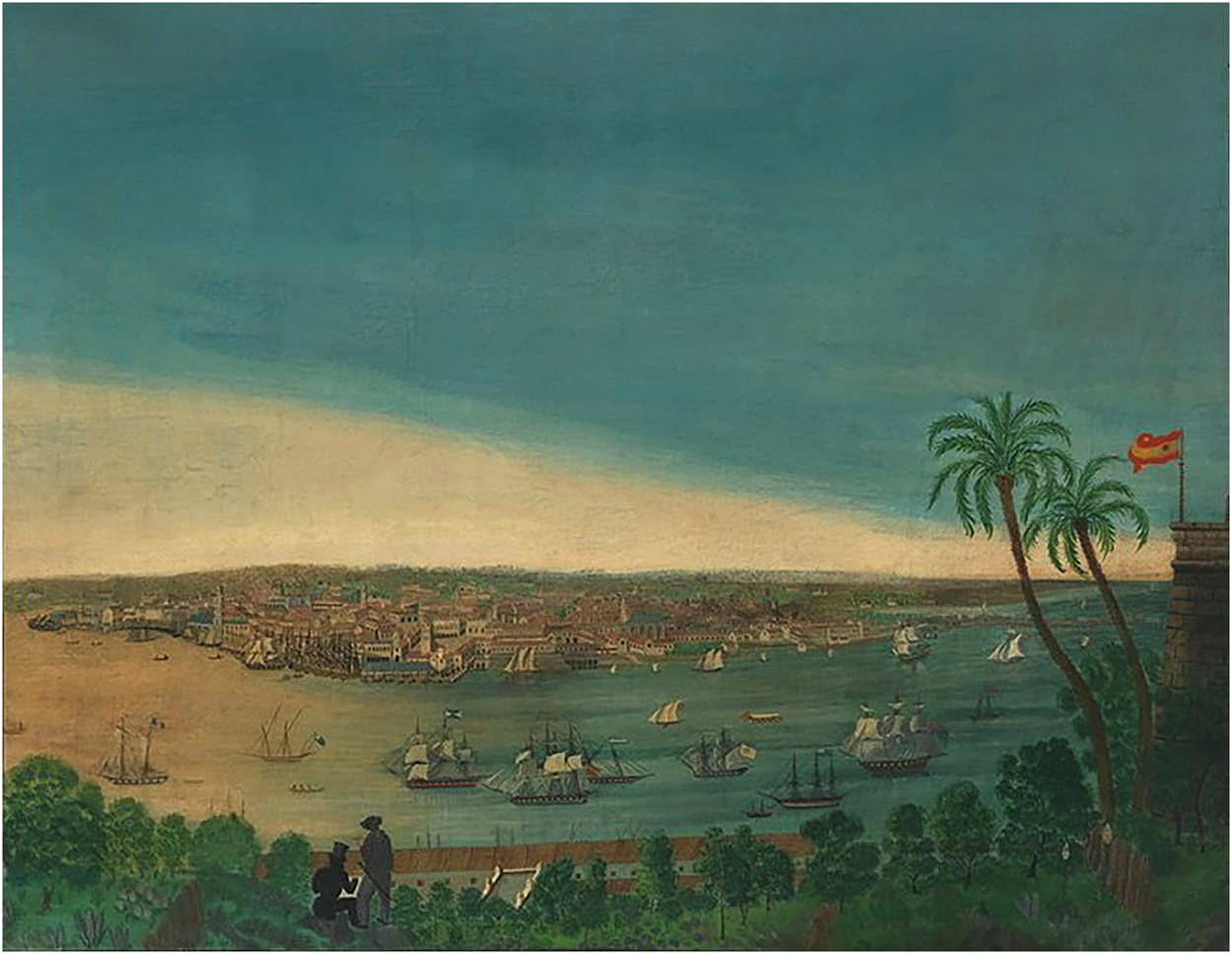
A few months after the decision to send him to Cuba, Carpentier traveled to Spain by coach, boarded a vessel in Cádiz, and sailed for Havana (see Figure 2).Footnote 81 Carpentier's crossing was a tumultuous one. The vessel routinely had to plough through violent seas and bad weather, and almost perished in a hurricane off the Virgin Islands. Near Baracoa, a town on the eastern outskirts of Cuba, he was first-hand witness to the brutal realities of the Atlantic slave trade, when a Spanish vessel transporting 200 enslaved Africans from the Danish West Indies disappeared beneath the waves. The crew was saved, the young man observed, but ‘nothing more.’Footnote 82 Undoubtedly, this ship hailed from Saint Thomas, neutral Denmark's commercial bulwark in the Caribbean which Borucki and Postigo identified as the principal source of slaves for Havana during the years of the American Revolution.Footnote 83 Arriving in Havana in mid-October, Carpentier was forced to hit the ground running, as the Comte de Belgioioso had docked on 4 September and had already begun the sale of its cargo by the time the agent arrived.Footnote 84
View of Havana, c. 1785.
Source: Unidentified artist, Colección Patricia Phelps de Cisneros.
Prior to departure, Romberg had provided his agent with a varied range of tasks. To what extent Carpentier followed those orders can be deduced from a couple of surviving letters and the expenses that were forwarded to Europe. A first instruction was for Carpentier to take up his place in Romberg's commercial network. Presumably, the associate was unfamiliar with anyone in Havana—a fellow Ghent émigre, Charles Habré, who had set up Havana's first printing company in the 1720s, had by now likely perishedFootnote 85—making the individuals referred to him by Romberg crucial to his integration into the town's social fabric. Carpentier's principal contact was Pedro Juan de Erice, a businessman originally from Navarra who furnished local planters with credit and who according to Moreno Fraginals became the ‘single most important sugar refiner’ on the island during the 1790s.Footnote 86 Erice also commanded a large network of foreign, chiefly American merchants. He maintained especially good contacts in New Orleans, where he sourced wood to furnish sugar boxes.Footnote 87 Additionally, Erice represented Diego Echagüe in Cuba, an important merchant from San Sebastián with whom Romberg had arranged that Carpentier would be able to rely on Erice for all his mercantile needs on the island.Footnote 88 Outside Cuba, Carpentier ought to establish contact with French correspondents of Romberg on Saint-Domingue (the Mesnier Brothers) and write to other houses in order to acquire information on market conditions.Footnote 89
In addition to integrating in the head office's existing mercantile network, Carpentier was also instructed to expand it. Romberg's main concern was to acquire precise information on the solidity of Havana's principal slave owners. This enabled the firm to make quick sales of the enslaved cargoes when they arrived—crucial given the sickly and worn-out conditions of the prisoners at arrival—and recover profits in cash or through short-term credit. Romberg provided clear instructions on how to interact and connect with what he perceived as the stereotypical Spaniard:
The cold and reserved Spaniard does not open up easily, it is advisable to imitate him, only opening up to him by degrees: a hasty confidence shocks him, he will take it as lightness, it is through prudence that you have to gain his esteem. Footnote 90
In addition to integrating into Cuba's commercial circles, Romberg had also thought it crucial to gain the goodwill of the key political figures of the Spanish colony, the Intendant and the Governor, ‘since all the difficulties that might arise will be submitted to their decision.’ Footnote 91 Not that Romberg necessarily expected trouble; to the contrary, he believed that the warrants of the Spanish Crown and the shortage of bonded labour would result in a warm welcome of his Imperial slavers. Yet he still advised Carpentier to keep his guard with regards to the former asiento holders—the Compañia Gaditana—‘which…will not be of any competition to us at this present time, but may attempt chicanery.’ Footnote 92 Romberg, however, had clearly misjudged the extent to which the company, as well as other Cuban elites, would continue their slave trade during the war. Carpentier very soon attested of the difficulties he experienced in making swift inroads with local networks. Barely a month after his arrival, the agent bemoaned the lack of opportunities for engaging with his peers in Havana. According to Carpentier, the town was a ‘backwater’ [‘un trou’], with ‘little society life’ going on.Footnote 93 On the rare occasions he managed to engage with Havana traders, the Habsburg merchant felt excluded from the local commercial community. “I have many enemies and jealous people here,” wrote Carpentier, “there is so little good faith in this country that one cannot exactly trust anyone.” Footnote 94 Undoubtedly, these reported ‘enemies and jealous people’ comprised members of the Cuban-British slaving circuits revolving around the Compañia Gaditana directed by Enrile. In confirmation of aforementioned scholarship, and in contrast to Romberg's assessment, these merchants did act as competition to his firm in the slave trade, and conversely, Romberg also did so to them. This explains why Carpentier, acting as the firm's representative, was viewed with hostility as an unwelcome interloper—an opportunistic outsider intent on exploiting wartime prices to the detriment of local merchants. Moreover, local elites, fully attuned to the anti-British sentiment within the government, perhaps recognized that this newcomer could become a more permanent fixture in Havana if Romberg & Consors demonstrated themselves to be a reliable partner.
Perhaps motivated by his experiences, Carpentier took his principal's instruction to heart and actively sought to earn the goodwill of Cuba's intendant, the highest political figure in Cuba after the Governor General. During most of Carpentier's residence, the Intendencia was held by Juan Ignacio de Urriza (in office between 1776 and 1787).Footnote 95 Among the intendant's principal responsibilities were increasing royal revenue and preventing fraud, particularly in relation to smuggling through the importation of enslaved people (see above). He was also tasked with procuring enslaved Africans for the Crown, making him a key figure with whom slave traders needed to maintain favourable relations.Footnote 96 In what can be considered an exceptional showcase of business diplomacy, Carpentier quickly managed to befriend Urriza, agreeing to have dinner together every Sunday. His nascent friendship helped him shape the commercial environment in Romberg's favour and remedy the envy he experienced in Havana: “If I did not have him as a friend, I would have experienced many difficulties which were now sought to facilitate,” Carpentier wrote on Urriza.Footnote 97
Carpentier's acquaintance with Urriza prompted him to sell the majority of his enslaved Africans to the Spanish Crown. The downside of the deal was that the Spanish Crown generally paid less than the prices offered by colonists on private slave markets.Footnote 98 The advantage for Romberg's firm was that Urriza, as Intendant, had privileged access to the silver flows arriving in Cuba, offering a greater opportunity to swiftly sell Romberg & Consors’ human cargo for hard currency. While the arrangement initially worked well, allowing Carpentier to remit large quantities of silver pesos back home, the situation changed dramatically after the war ended. With Romberg's licence being officially extended in peacetime, Carpentier was spared the fate of other foreign traders who were expelled from Havana.Footnote 99 However, after 1783, the Crown proved to be a far less reliable business partner than Carpentier had anticipated, directing only a meagre stream of silver to the merchant. Despite the substantial funds arriving in Cuba annually, the Havana treasury consistently ran a deficit, and by the end of the war, it was burdened with a debt of three million pesos, half of which Urriza had accumulated through his dealings with landowners and merchants like Carpentier. Additional silver was sent from Veracruz in the post-war years to address the arrears, but these extraordinary shipments were chronically insufficient, forcing Urriza to decide which creditors to prioritize.Footnote 100 Rather than favouring Romberg & Consors, however, the Intendant repeatedly told Carpentier that for the time being, the King had requisitioned the funds for different purposes, promising that payment would certainly take place in three months’ time.Footnote 101 Urriza's promises increasingly rang hollow, and in 1786, Frederic Romberg finally lodged a complaint at the Council of the Indies addressing the arrears, demanding a 0.5% interest for every month of non-payment and the reimbursement of Carpentier's costs of residency.Footnote 102 Yet Romberg's plea yielded very little. “I cannot take this anymore,” wrote Carpentier to his principal in Brussels as late as November 1790 when yet another situado passed by on him. One year later, the slave trader—who by now was, ironically, referring to his Havana assignment as his ‘imprisonment’—returned home, only to depart for Havana again several months later (despite being denied a new passport by the Council of the Indies) in order to continue collecting the sums owed to the firm.Footnote 103
Cuba's established elites likely exerted pressure on Urriza to prioritize their own payouts, effectively sidelining Romberg & Consors in the process. Another major factor is that, following the American War of Independence, Spain's slave trade reverted to its exclusive and predominantly British-dominated nature. In 1784, the Crown conferred the asiento on John Dawson and Peter Baker, experienced slave traders from Liverpool who were well connected in Havana and had been indirectly involved in supplying slaves to Cuba for the past decade.Footnote 104 For the Spanish Crown, therefore, the prospects of the British firm becoming a reliable, long-term partner in the slave trade seemed more promising than those of Romberg & Consors, which had failed to deliver its eight ships.Footnote 105 Consequentially, Carpentier and Romberg had little leverage for a swift debt repayment and Spanish officials preferred settling with the people of Dawson & Baker first—who, indeed, appear to have encountered few difficulties in collecting their dues.Footnote 106 Clearly, while Romberg & Consors’ outsider status had once been an asset, now it had become a liability.
4. Conclusion
In 1784, Francisco Xavier de Esteban addressed the Council of the Indies in order to petition for a slaving license worth six vessels. In his request, the Madrid merchant expressed the hope of receiving the same ‘powerful protection’ the King had bestowed on various Spanish and foreign firms during the past few years, ‘especially the [house] of Romberg of Brussels.’Footnote 107 The generous slaving policies of the American War of Independence to which Esteban referred, however, did not become a permanent situation after the war ended. As we have seen, the Council of the Indies returned to the old ways, granting an exclusive contract to the British firm of Dawson & Baker. Yet the seeds of free trade, sown during the Seven Years’ War and extensively nurtured during the American War of Independence, proved unstoppable in their growth. Pressed by Cuban commercial elites, Madrid declared a complete liberalisation of the slave trade in February 1789.Footnote 108
Previous scholars of the slave trade with Cuba during the years of the American Revolution have primarily focused on intra-Caribbean commerce and the trade conducted by established Atlantic powers. As my analysis—and the Esteban petition—shows, however, the importance of transatlantic slave trade organised by a Habsburg ‘outsider’ in the shape of Romberg & Consors has been overlooked. When the Imperial firm submitted its petition to the Spanish Crown in 1782, Madrid, keen to reduce the influence of traders from rival Atlantic powers—particularly Britain—within its empire, was quick to embrace the initiative originating from Ghent. Although Romberg & Consors ultimately failed to provide all eight ships and live up to the expectations of the Spanish Crown, its importation of more than a thousand captives during the span of only a few years facilitated Cuba's shift from a mining economy to an agricultural economy based on plantation crops, strengthened the local slaveholders’ perennial yearning for easier access to slaves, and eventually, contributed to the establishment of free trade in the Spanish Empire. More broadly, Romberg & Consors’ Spanish slaving activities, as well as Carpentier's decade-long residence in Havana, presents an obscure foray of the Habsburg Monarchy into the Atlantic as well as an important example of pre-modern, ‘Belgian’ participation in the European colonial project.
Acknowledgements
I would like to express my gratitude to the two anonymous peer reviewers for their helpful feedback. I also thank Alex Borucki, José Luis Belmonte Postigo, and Nicholas Radburn for answering my questions and providing information used in this article.
Funding information
This research was made possible through the support of an FWO scholarship (project code 1142121N).


 Open access

