



Sarcopenia is a progressive and generalised decline in muscle mass and function with age( Reference Schwartz 1 ) that is associated with increased risks of frailty fractures and mortality( Reference Bortz 2 , Reference Wannamethee, Shaper and Lennon 3 ). The prevalence of sarcopenia ranges from 5 to 13 % in 60–70-year-olds and rises to 11–50 % in people over 80 years of age( Reference Morley 4 ). Loss of muscle mass is a characteristic of ‘pre-sarcopenia’, which is the early stage of sarcopenia that does not impact muscle strength or physical performance( Reference Cruz-Jentoft, Baeyens and Bauer 5 ). Muscle mass decreases at a median annual rate of 0·37 % in women and 0·47 % in men from young (18–45 years) to old age (>65 years)( Reference Mitchell, Williams and Atherton 6 ). Notably, muscle mass exhibits a positive relationship with strength( Reference Newman, Haggerty and Goodpaster 7 ) and physical performance( Reference Buchner, Larson and Wagner 8 ). Sarcopenia-related annual healthcare expenditure is estimated at $18 billion in the USA alone( Reference Beaudart, Rizzoli and Bruyere 9 ). Effective preventive and therapeutic measures for sarcopenia, such as nutritional intervention, have become a medical and societal challenge because of the disabling complications and healthcare costs.
Betaine (trimethylglycine) acts as a methyl donor in the transmethylation of homocysteine and as an organic osmolyte, and it is abundant in spinach, beets and whole grains( Reference Craig 10 ). Betaine is commonly added to animal feeds to improve lean meat yield and quality in pigs and chickens( Reference Rojas-Cano, Lara and Lachica 11 , Reference Xing, Kang and Jiang 12 ). Previous human studies have also indicated a potential ergogenic value of betaine on athletic performance in endurance- and strength-based exercises( Reference Trepanowski, Farney and McCarthy 13 , Reference Pryor, Craig and Swensen 14 ). However, evidence of its effect on human lean mass (LM) is limited. Neither 10 d (2 g/d) nor 12 weeks (6 g/d) of betaine supplementation improved body composition or fat-free mass in thirty-four sedentary young male subjects or forty-two middle-aged subjects restricted from exercising( Reference del Favero, Roschel and Artioli 15 , Reference Schwab, Torronen and Toppinen 16 ). In contrast, a randomised-controlled trial demonstrated that a prescribed resistance training programme supplemented with betaine (2·5 g/d for 6 weeks) significantly improved body composition in twenty-three young males by increasing LM and reducing fat mass compared with placebo( Reference Cholewa, Wyszczelska-Rokiel and Glowacki 17 ). Our previous study( Reference Chen, Liu and Liu 18 ) demonstrated that higher circulating betaine is associated with better body composition by decreasing the percentage of visceral fat mass in a Chinese population. However, to our knowledge, there are no reports of an association between betaine and lean body mass in the elderly, who are at risk of sarcopenia.
The aim of this study was to investigate the association between serum betaine and lean body mass of the whole body, trunk and limbs including arms and legs in middle-aged and elderly adults in a large community-dwelling population.
Methods
Study population
Data for this analysis were collected from a community-based study, which was a cohort study investigating the determinants of cardio-metabolic outcomes and osteoporosis in Chinese adults( Reference Liu, Xu and Wen 19 ). A total of 3169 participants (50–75 years old) were recruited from July 2008 to June 2010. All participants resided in Guangzhou (South China) for at least 5 years. They were recruited through local advertisements or from referrals in the local community. Persons who were diagnosed with serious chronic diseases or were using weight-reducing aids were excluded. Trained interviewers conducted face-to-face interviews to collect information on socio-demographic characteristics, lifestyle and food consumption using structured questionnaires. A total of 1996 of the 3169 initial participants provided serum betaine baseline specimens, and 1590 completed the follow-up tests between April 2011 and January 2013 (after a mean of 3·2 years). General information, serum betaine from baseline, anthropometric measurements and dual-energy X-ray absorptiometry (DXA)-derived body composition from the follow-up tests were used for analysis in this study. The Ethics Committee of the School of Public Health at Sun Yat-sen University approved the study protocol. Written informed consent was obtained from all the participants at initial enrolment and follow-up.
Serum betaine
Fasting venous blood samples were collected at baseline. Serum was separated by centrifugation and stored at −80°C until analysis. Serum betaine was measured using HPLC-tandem MS as described previously( Reference Chen, Liu and Liu 18 , Reference Holm, Ueland and Kvalheim 20 , Reference Wang, Zhang and Zhou 21 ). In brief, 60 µl of either serum or standards was deproteinised using 100 µl acetonitrile containing 10 µm internal standards of d9-betaine, and the samples were centrifuged at 13 000 g for 10 min to precipitate the proteins. Supernatants were injected into spin columns and centrifuged at 3000 g for 2 min to filter and remove impurities. Supernatants were collected and analysed by HPLC-MS (Agilent 6400 Series Triple Quad LCMS). The CV for the between-run assays were 6·21 %.
Body composition
Weight and height were measured at baseline and follow-up while the participants were barefoot and wearing light clothes; BMI (kg/m2) was calculated. Waist circumference (WC) was measured twice, and the average value was used for subsequent analyses. LM was measured using DXA (Discovery W; Hologic Inc.) of whole-body scans. DXA results were analysed using Hologic Discovery software version 3.2. DXA measurements included LM and percentage values of the whole body, trunk and limbs (including arms and legs). Bone mineral content was subtracted from the original fat-free LM to determine non-bone LM, under the assumption that all non-fat and non-bone tissue is skeletal muscle. Percentage skeletal muscle index (SMI%) was defined as limb LM (kg)/body weight (kg)×100 %( Reference Hong, Hwang and Choi 22 ). The in vivo reproducibility values of LM in twenty-seven participants after re-positioning were 2·6, 3·2, 4·3 and 4·0 % for left arms, right arms, left legs and right legs, respectively.
Covariate assessments
An interviewer-administered questionnaire was used at baseline to ascertain the following information: socio-demographic characteristics (e.g. age, sex and occupation); lifestyle habits (e.g. consumption of tobacco, alcohol and tea); years since menopause (for women only); habitual dietary intake in the year before the interview; physical activities; and history of chronic diseases and use of medication. Participants who smoked at least 1 cigarette/d, drank alcohol once weekly for at least 6 months or drank tea at least twice weekly were defined as smokers, alcohol drinkers or tea drinkers, respectively. Menopause was defined as the natural cessation of menstrual periods for more than 12 months. Dietary intakes of energy and protein were assessed using a seventy-nine-item quantitative FFQ( Reference Zhang and Ho 23 ). Dietary intake of protein was adjusted by total energy content using the residual method proposed by Willet & Stampfer( Reference Willett and Stampfer 24 ). Daily physical activity was estimated using a nineteen-item questionnaire( Reference Ainsworth, Haskell and Herrmann 25 ), including daily occupation, leisure-time activity and household chores, and was evaluated using metabolic equivalent-h/d.
Statistical analysis
All data were analysed and reported by sex. LM was adjusted for body weight using the residual method( Reference Willett and Stampfer 24 ), and the results were used in subsequent linear regression analyses. Descriptive characteristics of the participants are presented as tertiles of serum betaine. Continuous data are reported as mean values and standard deviations or as medians and interquartile ranges in cases of non-normal distribution. Frequencies and percentages are reported for categorical data. One-way ANOVA, Kruskal–Wallis tests or χ 2 tests were used according to the above-mentioned types of data to test for overall differences between tertiles. Regression analysis adjusted for age was used to examine the linear associations between serum betaine (in Z scores) and LM indices. We further conducted subgroup analyses stratified by low- or high-level medians according to physical activities, BMI, WC, energy intake or energy-adjusted protein intake. Interactions were estimated via multiplicative interaction terms in the multivariate models. The logistic regression analysis was performed to obtain OR and 95 % CI of the presence of low lean mass (LLM) per sd of serum betaine. LLM were defined as the lowest quartile of percentage of lean mass (LM%) or SMI% of the whole body, trunk, limbs, arms or legs( Reference Rolland, Czerwinski and Abellan Van Kan 26 ). All tests were two-sided, and a P value<0·05 was considered to be statistically significant. Statistical analyses were performed using SPSS version 19.0 (SPSS Inc.).
Results
Participant characteristics
Table 1 presents participant characteristics in serum betaine tertiles. In all, 69 % of the 1590 subjects were women. Median ages and serum betaine levels in women and men were 56·0 and 61·8 years and 45·8 and 53·5 μmol/l, respectively. Participants with higher serum betaine levels exhibited lower weight, BMI, WC and total LM but a higher total lean:fat ratio in both sexes; higher percentage of total LM was seen in men (all P<0·05).
Association between serum betaine and characteristics and lean mass indices in women and men (Mean values and standard deviations; medians and interquartile ranges (IQR); numbers and percentages)

WC, waist circumference; SMI%, percentage skeletal muscle index, defined as limb lean mass (kg)/body weight (kg)×100 %; MET, metabolic equivalent.
Associations of serum betaine and indices of lean mass
Table 2 shows age-adjusted regression coefficients of the associations of serum betaine with weight-adjusted LM and LM%. Each sd increase in serum betaine (women: 17·2 μmol/l; men: 17·7 μmol/l) in men was associated with increases from 0·346 (legs) to 0·811 (trunk) of LM% (all P<0·05) and 0·342 of SMI% (P=0·001). Marginal significances were observed for the weight-adjusted LM of the total body, limbs and legs. The trunk exhibited the strongest association with betaine, followed by arms, and legs exhibited the weakest association. Almost no significant associations were observed in women, except at the trunk for LM% (P=0·016).
Differences in lean mass indices per sd of serum betaine in women and menFootnote * (β-Coefficients with their standard errors)
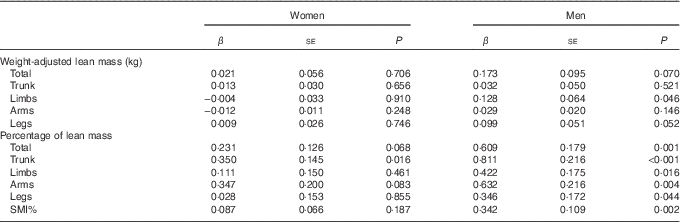
SMI%, percentage skeletal muscle index.
* The model was adjusted for age.
Associations of serum betaine and percentage of lean mass by subgroup
We examined whether the favourable associations with LM% were modified by age, physical activity, BMI, WC, energy intake and protein intake as stratified by medians. Significant associations were observed in women with lower physical activities, higher age and higher BMI at the trunk (all P<0·05). Associations of serum betaine and LM% tended to be more pronounced in men. However, no significant interactions were found (all P interactions>0·05) (Table 3).
Sex-specific differences in percentage of lean mass indices per sd of serum betaine stratified by sarcopenia risk factors (β-Coefficients with their standard errors)

MET, metabolic equivalent, WC, waist circumference.
* Median for women.
† Median for men.
OR of low lean mass for serum betaine
Logistic regression analyses in model 1 demonstrated that higher serum betaine levels were linearly associated with a lower risk of having lower LM% in the total body and trunk in women and in the total body, trunk and arms, as well as lower SMI%, in men (all P<0·05) (Fig. 1). The OR of LLM for each sd increase in serum betaine in model 2 were 0·83 (95 % CI 0·71, 0·95) (total body) and 0·86 (95 % CI 0·74, 0·99) (trunk) in women and 0·77 (95 % CI 0·62, 0·95) (total body), 0·72 (95 % CI 0·58, 0·90) (trunk) and 0·78 (95 % CI 0·63, 0·97) (arms) in men (all P<0·05). Greater betaine was also associated with a lower risk of having lower SMI% mainly in men (OR 0·74; 95 % CI 0·60, 0·92) (Fig. 1).
Sex-specific OR and 95 % CI of low lean mass per sd of serum betaine. Lower lean mass was defined as the lowest quartile of percentage of lean mass or percentage skeletal muscle index (SMI%). Model 1: adjusted for age. Model 2: model 1 further adjusted for energy intake, energy-adjusted protein intake, physical activity, alcohol consumption, smoking status, tea intake, years since menopause (women only).

Discussion
This large community-based study of 50–75-year-old Chinese adults demonstrated that higher serum betaine correlated to greater levels of LM% and a lower risk of having lower LM% at all studied sites except for legs in men, and a lower risk of having lower LM% in the total body and trunk in women, after adjusting for a variety of covariates. To our knowledge, this is the first study to directly examine and report positive associations between blood betaine levels and LM in humans.
Serum betaine levels in Chinese adults
In this study population, the serum betaine concentrations were 46·1 (sd 17·2) and 53·4 (sd 17·7) μmol/l in women and men, respectively, which was lower than that (65·4 μmol/l) of 631 normal Shanghai men (China) with mean age of 56 (sd 5) years( Reference Butler, Arning and Wang 27 ), but higher than the value of 39·5 (sd 12·5) μmol/l among 7045 Norwegians aged 47–74 years( Reference Konstantinova, Tell and Vollset 28 ) and of 16·89 (5·12) μmol/l in Californian pregnancies( Reference Shaw, Yang and Carmichael 29 ). The between-study heterogeneity in serum betaine might be due to varied dietary patterns with different intakes of betaine-rich foods in different populations. The variations in the measurements and the gene polymorphisms of betaine metabolic enzymes in different ethnic groups might also partly account for the between-study differences.
Betaine and lean body mass
Previous observational human studies have demonstrated that plasma or serum betaine is inversely associated with weight, BMI, WC and body fat( Reference Konstantinova, Tell and Vollset 28 ). These are consistent with our present results, in which higher serum betaine was associated with significantly lower body weight, BMI and WC. However, the relationship between serum betaine and body LM is not well elucidated. Although weight-adjusted LM did not show a significant association with serum betaine except in limbs in men, the LM% in our study exhibited a positive relationship with serum betaine. This may indicate that betaine influences body mass by reducing the fat mass while maintaining the LM. Higher serum betaine levels were linearly associated with a lower risk of having LLM. These observations are indirectly supported by previously published human studies. Previous studies have demonstrated that circulating betaine levels were inversely related to the percentage of body fat in a health examination population( Reference Konstantinova, Tell and Vollset 28 ) and dyslipidaemia patients( Reference Lever, George and Dellow 30 ), which may be consistent with betaine being positively associated with LM%. Betaine supplementation was also shown to increase LM gain in the whole body in pigs and ham( Reference Matthews, Southern and Higbie 31 ).
Several mechanisms for the beneficial effects of betaine on lean muscle are possible. (1) Betaine performs a methionine-sparing and homocysteine antidotal effect by transmethylating homocysteine to methionine. Betaine conserves methionine for protein synthesis. Excess homocysteine generates homocysteine thiolactone (HCTL), which inhibits insulin/insulin-like growth factor (IGF-1)-mediated mRNA expression and enzyme activity involved in protein synthesis( Reference Najib and Sanchez-Margalet 32 ). Betaine may increase muscle protein by reducing HCTL. (2) Betaine may stimulate growth hormone secretion and activate the IGF-1 pathway to promote muscle fibre differentiation( Reference Cholewa, Guimarães-Ferreira and Zanchi 33 , Reference Senesi, Luzi and Montesano 34 ). (3) Betaine increases sarcoplasmic osmolality via the osmoregulated betaine/GABA transporter-1 (BTG-1), which leads to cellular swelling under conditions of metabolic and ionic stress. Cellular swelling is sensed by sarcolemma integrins that are coupled to G proteins, which initiates a series of cascades via mitogen-activated protein kinase activation that results in protein synthesis and proteolysis inhibition( Reference Haussinger 35 ). Cellular swelling also promotes protein synthesis by enhancing amino acid uptake.
Betaine on body lean mass differences in sex
The present study found that high circulating betaine was a potential protective factor to improve or maintain LM and prevent LLM. However, the OR were significant for lower LM% in the limbs and arms in men but not in women, which was consistent with the linear regression results. This sex difference has not been directly proposed in previous human studies, but in a study by Konstantinova et al. ( Reference Konstantinova, Tell and Vollset 28 ) the authors demonstrated a stronger correlation between betaine and BMI, WC and percentage of body fat in men than in women. Previous animal studies have also demonstrated that betaine may be more effective in altering body composition in barrows than in gilts( Reference Lawrence, Schinckel and Adeola 36 ). The reason for this sex difference has not been clearly clarified, but the different functions of sex hormones may partially explain the sex differences. Testosterone, but not oestradiol, exerts an assimilation function and stimulates muscle protein synthesis. Serum betaine is higher in men than in women. These differences in sex may be explained by the transcriptional regulation of human phatidylethanolamine N-methyltransferase (PEMT), which is an oestrogen-responsive gene for the endogenous synthesis of choline. Most of the women in our study were postmenopausal, who exhibit a lower capacity for de novo biosynthesis of the choline moiety( Reference Fischer, daCosta and Kwock 37 ), which may ultimately influence the endogenous generation of betaine. Therefore, the less significant association in women may also be due to the lower levels of endogenous generation and the lower concentration of betaine in blood.
Betaine and body lean mass by subgroups
We found that the betaine–LM association tended to be more pronounced in subjects with higher levels of energy intake, BMI and WC, but the biological mechanisms are not clear. Animal studies have demonstrated that betaine influenced protein synthesis, reduced lipogenesis and promoted lipolysis, which might increase the LM%( Reference Cholewa, Guimarães-Ferreira and Zanchi 33 ). Betaine supplementation significantly decreased the activity of lipogenic enzymes in the subcutaneous adipose tissue of pigs( Reference Huang, Xu and Han 38 ) and abdominal adipose tissue of broilers( Reference Xing, Kang and Jiang 12 ). Betaine supplementation also increased the activity of hepatic carnitine palmitoyltransferase 1 and promoted fatty acid oxidation( Reference Xu, Huang and Hu 39 ). These results suggest that there is more potential for betaine to decrease fat mass and increase the LM% in people with higher (v. lower) BMI and WC.
Strengths and limitations
There are several strengths to our study. First, the relatively large sample size allowed us to obtain precise results. Next, the use of DXA allowed us to more precisely determine LM measurements than bioelectrical impedance analysis or body measures. Very strong correlations were reported previously between DXA-derived total-body lean soft tissue mass and MRI-derived total-body muscle mass in adult men and women aged 18–88 years (R 2 0·96)( Reference Kim, Wang and Heymsfield 40 ) and older women with a mean age of 71 years (r 0·94)( Reference Chen, Wang and Lohman 41 ). Serum betaine was also used to assess internal exposure, which was more accurate and precise than dietary surveys alone, as the total betaine included exogenous food sources, and endogenous generation was also considered. Some limitations must be acknowledged as well. As extensively discussed in our previous article( Reference Chen, Liu and Liu 18 ), our study used a cross-sectional study design and betaine sample collection and DXA measurements occurred 3 years apart. We could not address whether there was a causal relationship between betaine and LM in our study. Another defect is that we had little information on muscle function in this population. We could not infer the relationship between serum betaine and muscle strength or performance. DXA also cannot distinguish water retention or fat tissue infiltration within muscle, which may slightly overestimate muscle thickness. Kim et al. ( Reference Kim, Heshka and Gallagher 42 ) estimated that fatty infiltration of muscle inflated skeletal muscle mass estimates from DXA by 1–8 %.
Conclusions
Higher serum betaine is associated with increased LM% and a lower risk of LLM mainly in men. The finding that serum betaine related to decreased fat mass and improved or nearly unchanged LM suggested a beneficial effect on obesity-related sarcopenia. Further studies, particularly interventional studies, are needed to clarify whether there is a causative relationship between betaine and LM in humans.
Acknowledgements
The authors thank the numerous individuals who participated in this study.
This study was jointly supported by the National Science Foundation of China (nos 81273050 and 81472966) and the 5010 Program for Clinical Researches by Sun Yat-sen University, Guangzhou, China (no. 2007032). The funding sources had no role in the design, analysis or writing of this article.
H.-l. Z. and Y.-m. C. designed the study; Q.-y. L., C.-l. L., X.-y. T. and Y.-y. Z. conducted the study; B.-x. H. and Y.-m. C. analysed the data; H.-l. Z. and B.-x. H. wrote the paper. H.-l. Z. had primary responsibility for the final content. All the authors read and approved the final version of the manuscript.
There are no conflicts of interest.



