


Mr Robert Walpole stood up, and represented the great dangers this nation had been in, ever since the Reformation, from the constant endeavours of Papists to subvert our happy constitution and the Protestant Religion, by the most cruel, violent, and unjustifiable methodsFootnote 1
This view of Catholics as entirely untrustworthy was a commonplace of eighteenth-century anti-Catholicism. Memory of Catholic action across the seventeenth century, including the Gunpowder Plot of 1605 (commemorated yearly in Fifth of November parades and pope burnings) and the attempts of James II to pack parliament in 1687, allowed Protestant writers to portray Catholics as disloyal absolutists.Footnote 2 One sermon published in support of the Glorious Revolution by Gilbert Burnet, Bishop of Salisbury, in 1713 made a strong case for Catholicism arising from self-interest, accusing Catholic leaders ‘of raising their own authority’ and ‘of Wealth and Ease’ at the expense of others.Footnote 3 Burnet, as a Williamite minister who had been out of favour under James II, would have been expected to hold this position.Footnote 4 He was, however, far from isolated in his opinion. William Crookshank, minister of the Scots Church in Westminster, reminded his congregation in a sermon responding to the Jacobite Rising in 1745 that it was ‘incumbent upon all Protestants, to have an utter Aversion to Popery, which breathes forth nothing but Cruelty, Devastation, and Blood’.Footnote 5 Protestant ministers were not alone in stressing the political threat posed by Catholics. Whig publications in particular espoused anti-Catholic ideologies as a way of highlighting their own superiority in opposition to superstitious popery. The Occasional Paper and the Old Whig, both periodicals with a Dissenting whig connection, made a strong contrast between Protestants and “Papists” a frequent theme of their issues, bringing together religious criticism with an emphasis on political danger.Footnote 6
This deep mistrust of Catholics was also embedded in the language of the law. The accusations of sedition and violence made by Robert Walpole against Catholics in the above quote were used to back a broader justification of his £100,000 levy on Catholic estates in 1722 on the basis that Catholics would otherwise inevitably invest any spare money in bringing down the state. This argument rested on the assumption ingrained into legislation that, left to their own devices, Catholics would take any opportunity they could find to undermine the religion, peace, and government of the kingdom. A 1678 Act, for example, disabled Catholics from sitting in parliament on the grounds that this was necessary in order to protect the ‘Safety of His Majestyes Royall Person and Government’ from ‘the Increase and Danger of Popery’.Footnote 7 In 1698 the Act for the further preventing the Growth of Popery described how failure to implement properly the laws already in place against Catholics had allowed ‘Popish Bishops Priests and Jesuits’ to ‘daily endeavour to pervert His Majesties naturall borne Subjects’.Footnote 8 Both the law and widespread anti-Catholic stereotypes made it clear that Catholics could not be trusted to act in the common interest of the kingdom, and therefore had to be controlled by restrictive law for the sake of the wider good of church and state.
This was a prejudice with a long legacy. The mistrust of Catholics inherent in eighteenth-century law built on years of legislation that had portrayed Catholics as dangerous enemies to the state, beginning with the increasingly tough legislation against Catholic recusants under Elizabeth I.Footnote 9 Continuing suggestions of the threat of Catholicism displayed in legal measures encouraged a popular interpretation of the political developments of the seventeenth century through the lens of anti-Catholicism.Footnote 10 Much popular suspicion of Catholicism drew on the notion that the entire Catholic faith was built upon duplicity, with priests refusing to allow their followers to see the clear light of the gospel through access to God’s word.Footnote 11 This idea, developed in the early seventeenth century, remained prominent in print in the eighteenth. One pamphlet by a twenty-one year old gentleman, John Battersby, in 1714, for instance, stressed the underhand methods by which his Catholic correspondent attempted to trick him and others into the religion, including introducing him to two young ladies who had been converted to Catholicism.Footnote 12 Similarly a 1735 pamphlet described ‘Romish priests’ as deliberately deceiving the vulnerable into their religion through false promises and bodily temptation.Footnote 13 As the work of Colin Haydon has been particularly important in pointing out, by the eighteenth century anti-Catholicism also fulfilled an important function of social bonding and definition of identity. By showing what was unacceptable, anti-Catholicism was a useful tool for demonstrating what was accepted within society.Footnote 14 It is clear that both law and print defined Catholics as untrustworthy outsiders.
The negative consequences of the vitriolic untrustworthy identity that had been built around Catholics had the potential to spill out beyond the immediate penalties they faced under the law. Sociological studies of trust have defined it as a mechanism through which humans attempt to deal with the limits of our ability to predict the behaviour of others; to trust someone is to act on the basis that you can rely on them to behave in a certain way in the future.Footnote 15 The concept was employed in this sense across all areas of life in early modern England. Contemporary dictionaries define ‘trust’ as ‘confidence, assurance, credit &c’ and ‘To trust’ as ‘to depend or rely on, to credit’.Footnote 16 Thus as Craig Muldrew’s study of credit has shown, trustworthiness was crucial to economic interaction, in which financial relations were based around the belief that an individual would pay you in the future.Footnote 17 Trust has further been shown to have been important to late seventeenth-century political culture. Rachel Weil has highlighted how discussion of sham plots under William III pushed debates about the credibility of the government and its future ability to pay debts to the foreground. The Williamite regime could not rely on hereditary right and divine right for its legitimacy; its need for credibility based on the consent of the people placed trust at the heart of politics.Footnote 18
Early modern English society was built on extensive networks of trust relationships, and to be labelled as untrustworthy could therefore undermine an individual’s entire social and economic position. The reliance on credit for financial transactions meant that within single communities, debt accumulated from one transaction was often transferred onto another individual in lieu of actual payment, locking multiple participants into a ‘trust network’ that relied heavily on the assessment of personal worth based on reputation.Footnote 19 In the absence of sufficient hard currency a trustworthy reputation was therefore indispensable for economic survival. The repercussions of this for social and political status were significant. For gentry families economic stability was essential if they were to be ‘“accompted worthy much honour, or of great trust and credit”’.Footnote 20 This was not simply because a genteel lifestyle was impossible to maintain without riches. Insufficient funds might create dependence on others, a possibility which ran counter to notions of trustworthy men as independent. The assessment of the anonymous author “Philo Brittanicus” in a 1734 pamphlet instructing freeholders in their responsibility as electors emphasised this point, stating that anyone who held office for financial benefit could not represent a free people, as they ‘must be ungrateful to their Benefactors, before they can be True to their Principals’.Footnote 21 Public office was regarded as a ‘place of Trust’, and therefore taking on such positions was an important way for those of high social status to assert themselves as independent and trustworthy individuals.Footnote 22 The converse of this was that explicit exclusion from office, such as that applied to Catholics, was a sign that an individual could not be trusted, therefore potentially making it more difficult for them to maintain social status and a creditworthy reputation.
When the central importance of trust to early modern society is considered alongside the prominence of mistrust of Catholics in contemporary discourse and the language of the law, the consequences for Catholics would be expected to have been crippling. Unable to demonstrate their fitness to rule through political office and restricted economically by fines and double taxation, it might be assumed that Catholics in this period were social outcasts, unable to operate within the trust networks so central to the operation of local communities and wider society. And yet, as multiple studies of local interconfessional relations have shown, Catholics often had strong social and economic relationships with Protestants in their locality, stretching not just to employment and business transactions but also to sociability and defence against the worst excesses of the law.Footnote 23 Over the past two decades, studies of the realities of religious coexistence on a local level have helped to throw light on the role that both pragmatism in the face of daily needs and familiarity with individuals who might otherwise have been considered threatening played in shaping interconfessional relations in this period. Benjamin Kaplan has emphasised that across early modern Europe, local communities relied on pragmatic and sometimes elaborate arrangements to deal with the necessity of coexistence where religious, social, and political life were inextricably intertwined.Footnote 24 Neighbourliness and apparently peaceful coexistence in this period is now recognised to have been not a complete rejection of intolerance, but ‘a negotiation of its practical limitations’.Footnote 25
These studies have done much to reveal the different facets of interconfessional relations on a local level, complicating pictures of a straightforward ideological opposition between tolerance and intolerance by bringing the practical realities of daily life into the equation.Footnote 26 Yet in creating a more complex picture which acknowledges the role of the social as well as the political and ideological, descriptions of the often pragmatic nature of interconfessional relations open up as many questions as they answer. Why, for example, did tolerance and intolerance continue to persist alongside one another, in an apparently cyclical relationship,Footnote 27 if pragmatism made peaceful coexistence necessary and familiarity with individuals made it possible? Furthermore, if coexistence was a matter of pragmatic negotiation, what were the specific roles that each party played in these negotiations, and how did this affect the power dynamics between religious minority and ruling majority? ‘Pragmatism’ describes helpfully the shape of confessional coexistence, but the social mechanisms through which pragmatic action was possible are far from immediately evident.
Given that the issue of trust lay at the heart of both anti-Catholicism and the operation of early modern society, investigating how trust operated in interconfessional relationships in this period may help to illuminate these social mechanisms. In order to understand how Catholics could be sufficiently trusted within local society that they were embedded in economic and social relationships, we need first to understand how Catholics were able to throw off or at least suspend the labels of mistrust that the law and anti-Catholic polemic placed on them. The remainder of this article explores this by looking at the role that the active resistance of Catholics to the law played in shaping their trust relationships in every aspect of their lives. It suggests that, paradoxically, trust in Catholics at a local level was built on their refusal to comply with the restrictions that the state placed on their social, economic, and political capacity. Using the example of the political involvement of one Catholic gentleman, Cuthbert Constable of Burton Constable Hall, East Riding, the first part of this piece contributes to the recognition of the vibrancy of Catholic political involvement in this period by exploring Constable’s electioneering practices and political networks. This is followed by an analysis of the contribution that this may have made to Constable’s ability to build a trustworthy identity contrary to that assigned to him by the law. It concludes with some suggestions about the broader utility of the concept of trust for understanding early modern interconfessional relations, stressing its significance for recognising the part that minority groups played in creating coexistence based on two-way relationships of trust.
Catholicism, trust, and co-existence in East Riding
Cuthbert Constable of Burton Constable Hall, East Riding, was an educated, sociable, and well-connected Catholic gentleman. As the son of Francis Tunstall and Cecily Constable, he was tied into two important and long-established Yorkshire Catholic families in an area where a substantial Catholic population owned 11–20 per cent of the landed property.Footnote 28 His education at Douai College and the University of Montpellier, where he obtained the degree of Doctor of Medicine, set him up for a life-long pursuit of knowledge which he expressed mostly through his antiquarian interests and involvement in writing on Catholic theology and history.Footnote 29 He appears to have had a particular interest in the Catholic controversialist, Abraham Woodhead, whose Part III of Ancient Church government Constable published at his own expense in 1736.Footnote 30 This was a work that emphasised Woodhead’s belief that Protestants were guilty of heresy and schism, highlighting the authority of the Catholic Church in matters of faith and morality.Footnote 31 Constable also started a biography of Woodhead, and even had his first wife buried in the same grave as the controversialist in 1732.Footnote 32 Although Constable’s own ideological stance is hard to trace, his evident approval of Woodhead suggests both a strong loyalty to the authority of the Catholic Church and an alignment with the gentle and non-adversarial approach to controversy demonstrated by Woodhead.Footnote 33
A scholarly rather than aggressive approach is suggested in an obituary of Constable, which describes him as remarkable ‘for his hospitality’ as well as his ‘encouragement of learning’.Footnote 34 His participation in a gentlemanly community of learning was further evident from his use of a scholarly network to acquire knowledge and resources; Francis Nicholson, Roman Catholic executor of the scholar and Oxford fellow, Abraham Woodhead, described Constable as having had ‘Correspondence with the most eminent Persons for Learning in the Kingdom, both Catholicks and Protestants’.Footnote 35 Constable’s scholar-gentleman persona was displayed in the modifications he made to the impressive sixteenth-century property of Burton Constable Hall, which he had inherited, with its associated land and rental income of around £2,400, from his uncle, William Constable, in 1718.Footnote 36 Most impressively, he remodelled the Long Gallery to house his extensive library in thirteen glass-fronted elm and mahogany bookcases, but he also expressed his scholarly interests in his purpose-built private study, decorated with motifs relating to the natural world.Footnote 37 Through his correspondence and display of learning, Constable was engaged in a broad network of scholarly interests that appeared to cross the confessional divide.
Alongside this, however, he played his part in stubbornly maintaining Catholicism in the East Riding. In 1733 he was one of a number of Catholics in the area who were accused of attempting to spread their religion by encouraging some ‘Busy Priests’ to carry out conversions.Footnote 38 The charges were dropped, but there does appear to have been genuine reason for concern; the number of Catholics in the area was growing.Footnote 39 Furthermore, unwilling to bow meekly to the authorities in their attempts to suppress Catholic influence, Constable refused to attend sessions for taking oaths of allegiance, supremacy, and abjuration (which included a denial of the spiritual and ecclesiastical authority of the Pope). Writing to his kinsman, Marmaduke Constable, in 1722 regarding the oath of loyalty to George II, he insisted that he would
be glad to see you in any other place but Beverley next Munday, for I am resolved not to stop from home, because I am under no bail and by reason I imagin it will be as agreeable away to the Deputy Liuetenants to deny takeing the oaths by not appearing as by my takeing the trouble to goe ten miles to deny the same to their faces.Footnote 40
Constable’s expectation that he would be able to reject the oath on his own terms was an important assertion of his perceived rights as an English gentleman ‘under no bail’ over attempts to discriminate against him as a Catholic.
Despite this sometimes quite adversarial attitude, Constable had strong relationships with his Protestant neighbours, who on occasion were willing to defend him against the worst excesses of the law. This was not only the case in 1733, when the Archbishop of York dropped the charges against Constable and other Catholics following the intervention of Protestant gentlemen, including Viscount Irwin, on their behalf, but also in smaller expressions of local support.Footnote 41 Faced with the £100,000 levy against Catholics introduced by Robert Walpole in 1722, for instance, Constable reported that his Protestant neighbours had promised him that ‘no inconvenience or trouble shall befall me if they can hinder it’.Footnote 42 Although Constable did eventually have to pay his portion of the fine, this was evidently not for want of support from local Protestants. Indeed, the willingness of Protestants to protect Constable from the law was successful in mediating some of the economic pressures placed on Catholic estates; upon inheriting Burton Constable Hall he was assured that ‘noe notice shall be taken of your being a Papist’ by the local tax assessors, and that he would therefore not be charged the double land tax usually applied to Catholics.Footnote 43 When Constable was attacked in other ways on the basis of his Catholicism, he appears to have been generally supported by his neighbours. In 1724, for instance, when he was on the receiving end of verbal abuse from an individual named ‘French’, he was reassured by his steward shortly after that ‘I here nothing more of French, only this I find that now the most part of the people in the Country now begins to think he has been a great Knave’.Footnote 44 In a similar fashion to other examples of mutual support across confessional boundaries on a local level, noted in studies of interconfessional relations across early modern Europe, within his locality Constable could rely on a high level of support from his Protestant associates.Footnote 45
Constable evidently succeeded in being regarded as trustworthy in spite of the clear messages given against Catholics by penal legislation. He therefore provides a useful case study for exploring the means by which Catholics could build and maintain the trust relationships that were a prerequisite for their participation in early modern society. Constable is a particularly interesting example in the context of the importance of positions of public authority and influence for maintaining trust, because there is substantial evidence of his involvement in mainstream politics. It is to the detail of this, and the role it may have played in establishing him as a trustworthy individual, that we now turn.
Catholic political influence
That discussion of Catholic political influence is even conceivable owes much to recent historiographical shifts in understanding the position of Catholics within the political nation. This was a period in which Catholics, in some instances justifiably, were strongly associated with the seditious threat of Jacobitism. Genuine Jacobite plots and rebellions in 1696, 1715, 1722 (although no Catholics were involved in this instance), and 1745 were periodic reminders that many Catholics wanted to restore James II and his descendants to the throne, whilst a proliferation of Jacobite print sustained the sense of threat.Footnote 46 This allowed successive governments to exclude Catholics from politics on the basis of their political untrustworthiness.Footnote 47 Against this backdrop, it has been suggested that Catholics tended to keep ‘out of the political arena’ to ensure their survival.Footnote 48 However, this view has been much challenged by in depth studies such as those of Gabriel Glickman and Geoff Baker for the post-Restoration period, and the work of Michael Questier on the century before the Civil Wars.Footnote 49 As a result, recognition that Catholics did attempt to take part in mainstream politics has begun to be incorporated into general accounts of politics in this period.Footnote 50 Although Catholics were not able to vote, work on electoral participation has shown that political influence was not confined to the enfranchised in the eighteenth century.Footnote 51 Furthermore, by the mid-century many electors were disenchanted by what they saw as the ‘pervasiveness of corruption’ among the whig oligarchy, and sought the ‘restoration of virtue’ through the Country cause, which projected itself as restoring politics as a preserve of the honest, patriotic, and independent gentleman who would maintain England’s liberty.Footnote 52 This may have had some advantages for Catholics, who could present themselves as model Country gentlemen.Footnote 53 The potential for, and the reality of, Catholic political influence was far wider than previously supposed.
Nevertheless, evidence of Constable’s political involvement appears particularly striking because of the extent to which he was embroiled in mainstream politics. Through his local connections and economic power as a substantial landowner, Constable was able to maintain political contacts at the heart of the establishment. Catholics could not themselves vote in elections but they could, as some influential Protestant landowners did, pressurise their tenants into voting a particular way.Footnote 54 From his political correspondence, it appears that Constable may have done just that. Letters from and concerning the leader of the whig opposition and sometime MP for Hedon, William Pulteney (later Lord Bath), suggest a political friendship between the two. In writing to Constable about the candidate he recommended for Hedon in April 1734 (Pulteney having taken a seat elsewhere), Pulteney referred to Constable’s ‘goodness and Friendship’, while a letter from the mayor of Hedon, Henry Waterland in November of that year passed on Pulteney’s presentation of ‘his Service to all his friends’.Footnote 55 The friendship even survived Pulteney’s acceptance of a place in the House of Lords in 1742, seen by many as a betrayal of principle, and Pulteney wrote to Constable shortly after this event thanking him for his ‘constant and steady friendship’ and discussing his determination to regain control of Hedon borough.Footnote 56 The repeated reference to “friendship” in this context is significant. Although the term “friend” had multiple meanings in this period, political friends were those who used their local influence to support an electoral interest, often in turn receiving employment, character recommendations, or other benefits from members of a political network in return.Footnote 57 It seems likely, therefore, that Constable was one such ‘friend’ for Pulteney. Constable’s correspondence with others also suggests political interest and influence. A letter to his kinsman, Marmaduke Constable, about the threat of a £100,000 tax on Catholics in 1722 discussed his concerns about the possibility of the bill passing ‘since Walpole is so bent upon it, likely for his own end, and how our agents at London can satiate the purse of so rich a courtier or whether they have any heart to attempt it I know not’.Footnote 58 Constable clearly knew a number of individuals who might be willing to exercise their influence in his interest in Westminster.
This political influence becomes both more explicable and more apparent upon analysis of the votes of Constable’s tenants. Although evidence is sparse for most of the period, analysis of the surviving poll book from the hard-fought 1741 Yorkshire County by-election alongside lists of Constable’s tenants creates a strong suggestion that he was exerting influence over the way in which they voted. In the contest between the tory George Fox and the whig/independent Cholmeley Turner, Constable’s tenants voted overwhelmingly and disproportionately for Turner, as Table 1 demonstrates. In this analysis, the names of Constable’s tenants were taken from a 1744 record of rents, none having survived for 1741.Footnote 59 These were then compared with the names listed in the poll book, and votes recorded wherever possible.Footnote 60 Although twenty-eight names were too common in the poll book to identify the individuals, even if all twenty-five of the non-Catholic unidentifiable individuals did in fact vote for Fox, Turner still would have had a majority amongst Constable’s tenants. Taking only the votes that can be identified for certain, 85 per cent of Constable’s enfranchised tenants voted for Turner. This compares with 63.4 per cent in all of East Riding, and a narrow 53.2 per cent in all Yorkshire, suggesting that Constable’s tenants were disproportionately supportive of Turner. Of those who did not vote for Turner, one, William Lister, was a JP, and therefore unlikely to be vulnerable to electoral influence from Constable. The positions of the other five are not known.Footnote 61
Analysis of votes in Yorkshire County election, 1741. All figures are taken from my examination of the Yorkshire Poll book, with the exception of the overall county results, which are given by Collyer. See footnote 61.
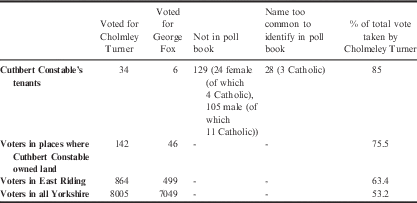
These figures should be read with caution. It may have been that there was genuinely strong support for Turner in this area, and that Constable’s influence did not affect the outcome of the election. Comparison of tenant and non-tenant votes in places where Constable owned land does however give these figures significance. Overall, in places where Constable owned land, 75.5 per cent of votes were placed for Turner. The fact that when Constable’s tenants are taken in isolation this figure rises to 85 per cent suggests that even on a very local level, Constable’s tenants turned out disproportionately for Turner’s interest. Constable may, therefore, have been influencing his tenants to vote this way. Turner, although nominally a court whig, had refused to stand directly for this interest in the by-election, and only put himself up for election following the support of over 100 squires and gentry at an election meeting, many of whom had a bias towards the Country interest.Footnote 62 Behind him was the support of the young Earl Carlisle, who was again a nominal court whig but was connected with Pulteney and the Prince of Wales and was being lined up for office post-Walpole.Footnote 63 It is not known whether Pulteney himself supported this candidate, although given his connections it seems possible. The fact that Constable appears to have encouraged his tenants to vote with this interest adds to the earlier suggestion that he was incorporated within a network of political ‘friends’.
Constable’s local political influence is further confirmed by his involvement in a thinly veiled political dispute that cut to the heart of contemporary party politics in the aftermath of the 1741 elections. The weakened position of Walpole’s government in the context of the divisive war against Spain was reflected in his much-reduced parliamentary majority and eventual resignation under pressure from Pulteney’s opposition in February 1742. It was against this backdrop that Constable was embroiled in a local dispute over land. In a seemingly unrelated manoeuvre in May 1742, Roger Hall, a local farmer, petitioned the crown for a grant of land called Cherry Cobb sands that he claimed to be derelict.Footnote 64 Constable was both surprised and angered by this news as the land was adjacent to his, and used by his sheep.Footnote 65 He called on the aid of Pulteney, who assured him that he ‘may depend upon my executing [help] with all the zeal and friendship I am capable of’ and proceeded to speak to the Chancellor of the Exchequer on Constable’s behalf.Footnote 66 Executing a political favour for Constable proved to be less than straightforward in this instance, however, as the case was tied up in party political conflict. In discussion of the case with Pennock Ward (Constable’s lawyer), Henry Musgrave, former collector of customs for Hull and at this time resident in London and aiding Constable’s cause, confirmed that the real cause of the petition was not Roger Hall, but the ‘uneighbourly dirty attacks’ of former MP Luke Robinson. Musgrave’s anger was all the greater for the fact that in public Robinson professed ‘a great Esteem and respect for Mr Constable’.Footnote 67 Following Robert Walpole’s resignation and retirement to the Lords, Pulteney had moved to secure his electoral interest and eject Robinson from his seat in Hedon, replacing him in March 1742 with Harry Pulteney, his brother, following this with a prosecution for bribery.Footnote 68 Robinson remained understandably determined to win back the borough.Footnote 69 His sly and unexpected attack on Constable’s land therefore seems likely to have been connected to Constable’s association with Pulteney.
This party political dimension is evident from the negotiations over the case. Musgrave suggested that William Crowle and William Carter, MPs for Kingston-Upon-Hull and both supporters of Walpole, might have been involved in the affair, and that Constable should be wary of the actions of Thomas Walker, Surveyor-General, as he ‘was a great friend of Lord Or---d’s [presumably Orford]’ whilst ‘Mr Carter is a great one of Mr Horace’s [Horace Walpole]’.Footnote 70 Although Crowle denied knowledge of the affair, the fact that Musgrave suspected him suggests that Constable was identified with Pulteney’s cause and was therefore vulnerable to attacks from the opposition. That Pulteney accepted his position as Lord Bath in July 1742 was highly unfortunate for Constable, as despite Pulteney’s hope that ‘I shall retain...a little interest with those who have power’, to assist his acquaintances, amongst which Constable was ‘in the foremost rank’, he was unable to hasten Constable’s cause, and the affair dragged on for another seven years.Footnote 71 What remains crucial here, however, is that an attack on Constable’s land was undoubtedly politically motivated, confirming the view that Constable was a central member of a local political interest with important connections further afield.
Cuthbert Constable was evidently an individual of substantial political influence who, despite his legal disabilities as a Catholic, was trusted to deliver the political objectives of his friends at the heart of power. This in turn meant that they were willing to support him when he ran into difficulty. His deep political involvement reiterates the conclusions of recent studies that Catholics were politically engaged in this period. But, more importantly for the purposes of this article, it also provides a useful case through which to explore how Catholic resistance to the disabilities imposed on them could serve to render them more trustworthy in the eyes of those they lived alongside. It is to this paradox that the next section turns.
Demonstrating trustworthiness and resisting exclusion
On the surface, it would appear that involvement in political controversy could both heighten animosity towards Catholics, and add to accusations of sedition against them, particularly in the context of the ever-present backdrop of the Jacobite threat. Constable’s actions were, after all, directly against the intention of the law. Yet if we think in terms of creating the persona of a trustworthy individual in local society, Constable’s behaviour appears more sensible. Office-holding and roles in local government were important parts of being regarded as trustworthy citizens of local communities.Footnote 72 The legal exclusion of Catholics from such positions simultaneously robbed them of the ability to gain such trust and suggested that they were unworthy of it in the first place. Conversely, demonstrating political clout was a means of expressing fitness to rule, and that in turn could demonstrate that an individual was a valuable and trustworthy member of society.
Political choice in the eighteenth century remained ‘subsumed within a wide system of social relations’ which meant that politics both developed out of and fed into social relationships.Footnote 73 This was particularly important for exercising electoral interest. While parliamentary candidates were beginning to use election agents during the first half of the eighteenth century, people remained highly suspicious of their views, and much preferred to receive the electoral advice of an honest man over that of a paid agent.Footnote 74 Thus engaging trustworthy individuals in promoting a candidate’s interest was essential for electoral success. This was certainly the case in Yorkshire, where the size of the county posed serious challenges to any electioneer. A list of all the nobility and gentry who might exercise interest in the county, identified by C. Collyer as having been compiled by the Whig party in 1734, reveals just how important influential individuals were perceived to be for general success.Footnote 75 In this sense the organisation of political campaigns depended on a calculation of trust. Given that candidates could not campaign everywhere, in some areas they relied upon local men of influence to operate in their interest. In West Yorkshire, for instance, campaigners needed to give particular attention to Hatfield, where the combination of a number of relatively independent landowners and a non-committal manorial lord made the actions of the electorate difficult to predict.Footnote 76 To be marked out as an individual of sufficient honesty, reliability, and influence to carry the local vote ensured inclusion within a network of mutual interest. This suggests that the social repercussions of electoral politics could be far-reaching.
Constable’s participation in a political network may therefore have had a significant impact on his social reception. It is not possible to trace a precise political network surrounding the Pulteney interest in the East Riding, but Pulteney’s friendship with Constable and Constable’s local electoral influence must have brought him into association with other people of that cause, marking him out as someone who could be trusted in a political context. This display of trustworthiness may have been important for maintaining his status. Office was not the sole route to influence. As Michael Braddick has emphasised, the authority of an office-holder rested strongly upon the ‘presentation of a self that conferred a natural authority on them’.Footnote 77 By taking on the persona of an individual with political influence, Catholics could act against the stamp of mistrust placed over them by the laws that excluded them from office, and it appears that this is what Constable did.
Crucially, Constable’s ability to overcome the label of political untrustworthiness perpetuated by anti-Catholic stereotypes rested on him acting directly contrary to the intention of the law. By resisting the law and building himself into a political network, Constable ensured that he was an important asset on the local level, as a member of the political class of men who were fit to rule. The potential power of such resistance in securing Catholic survival has been noted elsewhere. Sandeep Kaushik has found that the Elizabethan Catholic, Sir Thomas Tresham, resisted state anti-Catholicism through representing his religion in architecture, emphasising his social status, and refusing oaths. Tresham displayed his religious position in several buildings, including a ‘Triangular Lodge’ in the grounds of his main estate at Rushton which used biblical inscriptions, triangle shapes, and features such as windows in groups of three to emphasis his fervent belief in the doctrine of the trinity. At the same time, he attempted to change the state’s policies from within, combining ‘active’ and ‘defensive’ resistance.Footnote 78 A similar pattern is seen in Geoff Baker’s study of William Blundell after the Restoration, when Blundell represented himself as a passive victim of the state whilst employing a ‘series of defence mechanisms’ to engage in a resistance that was ‘not just reactive to the policies of successive Protestant regimes under which he lived’ but active in promoting Catholicism.Footnote 79
Catholic resistance included not just treasonous political activism in the form of Jacobitism, but technological innovation on Catholic estates to ensure economic survival.Footnote 80 Examples of careful management of economic affairs and display of social status may be seen as a mere negotiation of Catholic survival in contrast to more actively resistant Jacobite activity. Yet in acting against the intention of the law, such measures, although subtler, can be seen as crucial in pushing against the continued attempts to excluded Catholics from English society. As Kaushik highlights for the Elizabethan period, everyday acts of resistance ‘were political in large part because the state made them so’.Footnote 81 What remains to be explored is how such resistance may have acted to break down barriers to trust on a local level, providing the vital foundations for interconfessional coexistence.
As suggested earlier, the reputation Constable established for himself as a trusted member of a political network appears to have had wider-reaching social and economic consequences. He was able to use his influence in favour of the interests of individuals locally, corresponding with the Collector of Customs for Hull, Henry Musgrave, in 1733 over who would receive the place of controller there. Musgrave evidently trusted Constable to protect his interests, referring to money collected (illegally) from seizures, adding ‘this I must desire you will not communicate to any Body but who is concern’d and who I hope will make no bad use of it’.Footnote 82 The use of his political influence to ensure that other individuals in the local area had an economic interest in his survival may have further aided Constable’s local security, ensuring that he was able to exercise an authority commensurate with his social status. Attention to the language used in instances when Constable was able to avoid the persecution threatened to him under the law suggests that this was the case. When Constable refused to appear before the magistrates for the oath of loyalty in 1722, the terms in which he expressed his intention to his kinsman, Marmaduke, suggest that he was confident that the Deputy Lieutenants would already be resigned to his not taking the oaths, and that his ‘takeing the trouble to goe ten miles to deny the same to their faces’ would therefore be a pointless formality.Footnote 83 He was evidently confident that he was an individual of sufficient local authority that he would not be challenged for not complying with the petty requirements of the law when the outcome would be the same, and the fact that there appear to have been no repercussions for his actions (or lack thereof) suggests that his confidence was not misplaced. Constable was able to wield power commensurate with his social status because he had established himself as a figure of political authority trusted by those of his own rank. Such authority and defiance would have been difficult to maintain had Constable accepted the political impotence that was his sentence under the law.
It is further likely that Constable’s demonstration of his trustworthiness and fitness to rule through political participation was a crucial factor in the Archbishop of York’s decision to drop the charges against him, and others, for facilitating the spread of Catholicism in 1733. Given the continued threat of Jacobitism and the widely held view that Catholic priests and missionaries would ‘deceive the Protestants of this Kingdom, and deprive them of their Religion and Loyalty’, his action appears particularly remarkable.Footnote 84 York backed down following the intervention of Protestant gentlemen on the Catholics’ behalf, reassuring the Protestant Viscount Irwin in November 1733, after he had decided not to bring charges against the Catholics concerned, that ‘I am very glad The Gentlemen of Quality and Distinction among the Roman Catholics...are so good as to be satisfied in my true Intentions towards ‘em”.Footnote 85 It is crucial to note the terms that the Archbishop used here. His retreat was not simply based on doing a favour to a local Protestant gentleman. Rather, he acknowledged the high status of the Catholics involved, and appeared concerned not to offend them. As we have seen, being regarded as a gentleman of distinction was not just a matter of wealth or the technicalities of rank; gentlemen had to demonstrate their status through exercising authority. Debarred from office-holding, asserting electoral influence was one way in which Constable could exercise the authority worthy of his status, thereby allowing him to be regarded as one of ‘Quality and Distinction’. Catholic resistance to restriction of their social, political, and religious freedoms was not limited to outward opposition to Church and State. Rather, it could equally be expressed through ‘silent defenses of their social and religious position’ on a local level.Footnote 86
To be persecuted within a community was a mark of untrustworthiness and social exclusion. To resist this persecution was therefore a way of building the trust relationships that were a prerequisite for coexistence. Yet this was not a perfect solution. The actions of Constable, at the same time as they potentially opened up his opportunities for integration as a trusted member of local society, risked perpetuating a broader mistrust of Catholics by living up to precisely the stereotype he was trying to overcome. Constable’s assertion of political power where it was not allowed to him by the state could have been read as highly subversive. The fact that it was not regarded as such by members of his local community emphasises the importance of the local dynamic in shaping interconfessional relations. Trust in Catholics was often strong on a local level, boosted as it was by everyday interaction.Footnote 87 Outside of the local community abstract ideas of “the papist” were stimulated by all of the negative aspects of Catholic resistance, and none of the positive.
This is not to suggest a clear divide between local and national, where a general anti-Catholicism was somehow simply tempered by local familiarity with Catholics. Mistrust in Catholics did sometimes manifest itself locally, and there may further have been a social dimension to this. The traces of trust relationships in the records of Cuthbert Constable relate primarily to interactions with Protestants of a similar rank; Constable was part of a local gentry network, members of which were willing to support him when difficulty arose. This may have acted as fuel for occasional manifestations of mistrust among those of a lower social rank. The verbal abuse that Constable received at the hands of ‘French’ is suggestive in this respect. His parting shot that he ‘card not a farthing for your [Constable’s] service, for he had a nough to maintaine himself with all, but nether you nor never a Papist (God Dam em) In England should know what he had’ mixes anti-Catholicism with a resentment of any implication that he might be financially reliant on Constable.Footnote 88 Yet in general it appears that, at least in Constable’s case, occasional spikes of mistrust were outweighed by the trustworthy persona he was able to build on the basis of his political influence. It appears to have been defiance of the law, not compliance or compromise, that created the conditions for this Catholic’s peaceful relations with his Protestant neighbours, or at least with those of his own rank.
Conclusion
This article began with the suggestion that the current emphasis on the role of pragmatism in studies of interconfessional relations, whilst providing useful descriptions of the practical realities of coexistence, does not provide a full explanation of how that coexistence functioned. The discussion above indicates that trust is a useful tool to think with in attempting to unpick the social mechanisms through which pragmatic action was possible. This is apparent in several respects. Firstly, analysing the operation of trust relationships has the potential to throw light on why coexistence remained so unstable in this period. Understanding how and why trust relationships were possible on a local level can help us to see why local Catholics were treated differently from abstract “papists”. Sociological and psychological theories of trust demonstrate the importance of the setting in which relationships operate for the development of trust. David Good has shown that in laboratory experiments, trust will only develop between individuals when certain conditions prevail. There must be no ambiguity about the status of those involved; they must pose no threat to each other, be able to communicate, and recognise that there is long-term interest in development of trust.Footnote 89 However, while increased knowledge of a person makes trust more likely, trust does not rely on absolute certainty. Rather, for Diego Gambetta, trust is a device we use to cope with the limits of our ability to predict the behaviour of others.Footnote 90 This is reinforced by the fact that once we think we have identified a pattern in somebody’s behaviour, we have an innate bias towards evidence that supports our idea.Footnote 91 Furthermore, work on the idea of ‘trust networks’ highlights the ways in which transactions that create trust can be exclusive as well as inclusive, sharpening distinctions between those inside and outside networks of trust, an idea that has particular resonance for studies of interconfessional relations. Crucially for Charles Tilly, members participate in trust networks because the consequences of non-participation are greater than the risks of breach of trust.Footnote 92 Collectively, these theories highlight the extent to which trust is a relationship built on knowledge of others and our perceived ability to predict their behaviour, alongside the need to cooperate with someone else for pursuit of interest or avoidance of risk.
The conditions required for trust to develop between Protestants and Catholics in early modern England were all present on a local level, where communication between the respective parties was possible, and there was clear long-term mutual interest in the development of trust. In Constable’s case, he was an hospitable local gentleman who wielded considerable political power in his locality through his status as a landlord. It was therefore in the interest of local Protestants who wished to secure their own political interests to develop a relationship with him, just as it was in his interest to use his political influence in their favour, thereby locking them both into a relationship of mutual interest. Such dynamics could not, however, develop in the relationship between Catholics in general and the Protestant state, in which the precise extent and nature of a Catholic threat was unknown, and the risk of allowing that threat to grow unchecked was perceived to be great. Trust is highly contingent on specific context; it was far more likely to surface on a local interpersonal level than at the level of the state. Understanding these conditions for the operation of trust can therefore help us to explain, rather than simply describe, the role that a pragmatic familiarity with individual English Catholics played in shaping the local dynamic of interconfessional relations, allowing more inclusive local trust networks to develop alongside a general mistrustful exclusion of Catholics.
Thinking about interconfessional relationships in terms of trust further forces us to look at behaviour on both sides of the confessional divide. Studies of relations between Protestants and Catholics in early modern England have tended to focus either on the willingness of Catholics to keep their religion as inoffensively as possible, or on the willingness of Protestants to act pragmatically in the face of powerful and influential local Catholics.Footnote 93 The emphasis has therefore tended to be on vertical power relationships, largely determined by local social and economic factors outside of individual control. Yet as Geoffrey Hosking has shown in his general study of the utility of the concept for historians, trust, as a two way relationship in which the interests of the parties have to be balanced, has the power to reveal more fluid, horizontal relationships.Footnote 94 Studies of the role of trust in medieval society have shown how the need for trust relationships could allow those who were ostensibly in positions of weakness due to their social status were able to assert some degree of power in relationships with their social betters.Footnote 95 The influence of the dynamics of social status within these relationships of trust also merits attention here. While there is little evidence of relationships of trust or mistrust between Constable and those of lower social status, it is evident that his inclusion within a network of influential gentlemen was greatly to his advantage, and there is some indication of resentment towards him further down the social scale. Investigating the operation of interconfessional trust relationships may therefore also open up avenues for exploring social relations in local contexts.
Examining trust encourages us to recognise the agency of minority groups in shaping the nature of interconfessional relationships by recognising that, at least on a local level, coexistence relied on horizontal relationships of mutual interest, as well as vertical relationships built on the local power dynamic. This shifts the onus of explanation of peaceful interconfessional relations from looking at why majority groups were willing to tolerate minorities, towards explaining how minorities asserted their interests on a local level. Constable, although of high social status, was vulnerable to the whims of the magistrate because of his religion. Focusing on trust as an explanation of why this did not appear to have adverse consequences for him helps us to look at his role in reversing the political impotence laid on him by penal legislation. In the case of Constable, examining how it was possible for him to be trusted locally in the face of the mistrust evident in law and anti-Catholic stereotypes reveals that his relationships with Protestants were to a large extent based on his active efforts to resist the laws against him, creating the conditions in which it was possible for trust to operate. Catholics were severely disadvantaged under the law in early modern England. Thinking about coexistence in terms of two-way trust relationships enables us to recognise that their survival was just as much a product of their own determination to navigate around the law as it was a result of the pragmatic willingness of Protestants to tolerate them.
The exclusion of religious minorities from full participation in early modern society was an explicit statement that such groups could not be trusted to act in the common interest. In order to understand how minorities were able to operate successfully in such societies, we therefore need to explain how they overcame mistrust. For Cuthbert Constable, this meant resisting the laws against him in an assertion of Catholic political power that created trust locally, whilst risking the perpetuation of mistrust of Catholics on a wider level. This instance demonstrates both the potential extent of Catholic influence in mainstream politics in this period, and the central importance of the active resistance of early modern Catholics in securing their survival. It is but one case that was, by its very nature, highly dependent on local circumstances, and does not profess to have revealed the precise dynamics of how trust operated. Rather, by exploring the varied applications of trust in interconfessional relations, it seeks to highlight an approach which may prove illuminating elsewhere. Coexistence required more than simply pragmatic responses to local concerns; it relied on the refutation of the deeply ingrained principle that religious minorities would act contrary to the interests of wider society. With this in mind, trust clearly has the potential to help us understand the complex social mechanisms that underpinned a fragile coexistence in this period.



