





Thyroid disorders such as goitre, nodules, autoimmune disease and thyroid dysfunction affect many people worldwide. The spectrum and prevalence of thyroid diseases depend on age, sex, ethnicity and environmental factors, especially on I intake( Reference Teng, Shan and Teng 1 – Reference Bremner, Feddema and Leedman 3 ). As one of the major public health problems, I deficiency disorders have several consequences on human health, ranging from defective development of the central nervous system during fetal–neonatal life to goitre in adulthood( Reference Delange 4 , Reference Delange 5 ). I prophylaxis using iodised salt, recommended by the WHO and the Iodine Global Network, has been shown not only to exert an important role in eradicating I deficiency disorders but also to influence the thyroid disease pattern( Reference Laurberg, Bulow Pedersen and Knudsen 6 ). Indeed, several studies carried out on populations living in areas with different I intake have demonstrated that increase in I intake in I-deficient countries may determine hyperthyroidism( Reference Stanbury, Ermans and Bourdoux 7 , Reference Delange, de Benoist and Alnwick 8 ). On the other hand, a higher frequency of thyroid autoimmunity and hypothyroidism has been reported in I-sufficient than in I-deficient populations( Reference Vanderpump, Tunbridge and French 9 , Reference Laurberg, Pedersen and Hreidarsson 10 ). In line with these findings, longitudinal studies conducted in Denmark have also highlighted an increased incidence of thyroid autoantibodies( Reference Pedersen, Knudsen and Carlé 11 ) and hypothyroidism( Reference Pedersen, Laurberg and Knudsen 12 ) after adopting I prophylaxis. In addition, more than adequate I intake has been associated with thyroid disorders such as goitre, hypothyroidism and autoimmune thyroiditis( Reference Shan, Chen and Lian 13 – Reference Konno, Makita and Yuri 15 ). Recently, a reduction in the prevalence of goitre and thyroid autonomy in younger subjects along with a decreased frequency of non-autoimmune hyperthyroidism in older subjects has been reported in a small southern Italian village following a 15-year period of voluntary I prophylaxis. An increase in serum thyroid antibodies and hypothyroidism, particularly in its subclinical form, was observed in the same area( Reference Aghini Lombardi, Fiore and Tonacchera 16 ). The authors suggest that I induces thyroid autoimmunity by unmasking a cryptic epitope on thyroglobulin (TgAb)( Reference Latrofa, Fiore and Rago 17 ). In addition, the use of GM animal models has provided evidence that I intake can precipitate spontaneous autoimmune thyroid disease by increasing the immunogenicity of TgAb( Reference Ludgate 18 ).
For more than two decades, we have carried out studies on the prevalence of goitre in the populations living in southern Italy either in areas of adequate I intake or in communities with severe-to-moderate I deficiency. The introduction of voluntary I supply programmes in I-deficient areas resulted in increased urinary I excretion (UIE) together with decreased goitre prevalence( Reference Andò, Maggiolini and Di Carlo 19 , Reference Bonofiglio, Catalano and Perri 20 ). Despite the clear benefits of I prophylaxis, a continuous surveillance of I-induced adverse effects needs to be carefully recommended.
In the present study, we aimed to assess the frequency of thyroid disorders including goitre and nodules along with the levels of thyroid antibodies in the adult population of a small village previously investigated for I deficiency and in an I-sufficient town in the southern Italian region of Calabria.
Methods
Subjects
A total of 560 subjects (155 males; 405 females) were initially enrolled for this survey, which was carried out between July and November 2015. The subjects belonged to an adult population born and living in rural (274 subjects) and urban (286 subjects) areas in the southern Italian region of Calabria. The project was strongly supported by civil and health authorities, and informed written consent was obtained from all subjects. Ethical committees approved the protocol of the present study.
A questionnaire was completed including personal and family history of thyroid diseases. As we enrolled only working-age subjects in the urban area, seventy-one subjects aged <25 or >65 years from the rural area were excluded to match age between groups, thus resulting in 489 participants with 203 and 286 subjects from the rural and urban area, respectively. Sample size was calculated using the following formula derived from Cohen’s statistical power analysis:
 $$1{\minus}\beta \,{\equals}\,z_{{{\raise0.7ex\hbox{$\alpha $} \!\mathord{\left/ {\vphantom {\alpha 2}}\right.\kern-\nulldelimiterspace}\!\lower0.7ex\hbox{$2$}}}} {\minus}h\sqrt {{{n^{2} } \over {2n}}} ,$$
where α is the Type I error, β the Type II error, meaning 1−β is power,
 $$z_{{{\raise0.7ex\hbox{$\alpha $} \!\mathord{\left/ {\vphantom {\alpha 2}}\right.\kern-\nulldelimiterspace}\!\lower0.7ex\hbox{$2$}}}} $$
the two-sided Z-score for the Type I error and h the effect size calculated as
$$z_{{{\raise0.7ex\hbox{$\alpha $} \!\mathord{\left/ {\vphantom {\alpha 2}}\right.\kern-\nulldelimiterspace}\!\lower0.7ex\hbox{$2$}}}} $$
the two-sided Z-score for the Type I error and h the effect size calculated as $2\,{\rm arcsin}\sqrt {P_{1} } {\minus} 2\,{\rm arcsin}\sqrt {P_{2} } $
. The calculated minimum sample size was 191 subjects for each group. Given the number of participants in the two areas and the difference in the prevalence of goitre, we had an effect size of 0·287, resulting in a study statistical power of 87·8 %.
$2\,{\rm arcsin}\sqrt {P_{1} } {\minus} 2\,{\rm arcsin}\sqrt {P_{2} } $
. The calculated minimum sample size was 191 subjects for each group. Given the number of participants in the two areas and the difference in the prevalence of goitre, we had an effect size of 0·287, resulting in a study statistical power of 87·8 %.
In addition, thyroid-stimulating hormone (TSH) levels were determined in 447 samples after excluding forty-two subjects (thirteen and twenty-nine from the rural and urban area, respectively) for using thyroid medication (e.g. treatment with levothyroxine or antithyroid drugs). Alimentary habits and the use of iodised salt were also evaluated. In all, 131 subjects (64·5 %) from the rural area and 235 subjects (82·2 %) from the urban area declared using iodised salt routinely, whereas the coverage rate of iodised salt was approximately 65 % in the region of Calabria. Median I concentration in the iodised salt was 30 (interquartile range (IQR) 28–32) mg/kg.
Results were compared with data from a previous survey conducted in the same rural area in 2007( Reference Delange, de Benoist and Bürgi 23 ). At that time, 707 adults (185 males and 522 females) had been enrolled, and goitre prevalence was evaluated using the same sonographic criteria reported below. UIE was measured in 600 subjects using the methods described below.
Thyroid ultrasound
Thyroid volume (TV) was estimated using a real-time, ultrasound (Logic α100; General & Electrics Medical Systems), portable instrument, with a 10-MHz linear transducer. Thyroid ultrasound was performed by two expert physicians. The subjects were examined in the supine position, with the neck hyperextended. TV was calculated by using the formula of a rotation ellipsoid model: width×length×depth×0·52 for each lobe. Isthmus volume was not taken into account. Thyroid enlargement was defined as a TV >18 ml for women and >25 ml for men, which corresponds to the mean+3 sd in I-sufficient populations as previously reported( Reference Rasmussen, Ovesen and Bülow 21 ).
Laboratory evaluation
To evaluate the UIE, we collected morning spot urinary samples into tubes washed with de-ionised water and stored at −20°C until analysis. UIE was measured using a manual spectrophotometric method based on the Sandell–Kolthoff reaction, as described by Dunn et al.( Reference Dunn, Crutchfield and Gutekunst 22 ). I concentration was expressed as µg/l, and the I-deficiency grade was defined according to the WHO’s median UIE level criteria( Reference Delange, de Benoist and Bürgi 23 ).
Serum TSH was determined using the 125I-hTSH IRMA system that provides direct quantitative in vitro determination of this human hormone (Institute of Isotopes Co.). TSH levels, expressed in µIU/ml, were measured using a Packard RIASTAR Gamma Counter (Packard Instrument Company). Imprecision was determined by analysing the two levels of commercial control materials (low and high). The levels of TSH in euthyroid controls ranged from 0·35 to 4·0 μIU/ml.
TgAb and thyroperoxidase antibodies (TPOAb) were measured by an automated immunoassay system (Zentech s.a.) using a Packard RIASTAR Gamma Counter. TgAb and TPOAb levels were negative when <30 and 60 U/ml, respectively.
Statistical analysis
Results of UIE are presented as medians and IQR. A non-parametric test (χ 2, Fisher exact test, Mann–Whitney U test) was used as appropriate and considered statistically significant when P<0·05. All the analyses were performed using R (version 3.2.3; The R Foundation for Statistical Computing).
Results
A total of 489 subjects were analysed in the present study. Subjects were recruited from an adult population born and living in a small village (rural area=203), previously investigated for I deficiency, and in an I-sufficient town (urban area=286) in the region of Calabria in southern Italy. The features of the population studied are reported in Table 1. The percentage of subjects that declared to routinely use iodised salt was 64·5 and 82·2 %, from the rural and the urban areas, respectively. The median UIE was 77·1 (IQR 51·2–124) µg/l in the rural area and 103·3 (IQR 70·2–136) µg/l in the urban area (P=0·004), thus confirming the heterogeneity from mild/moderate to sufficient in I supply among different areas of southern Italy. This difference was higher in males (median 69·6 (IQR 47·3–117·9) µg/l rural v. 110·1 (75·8–151·4) µg/l urban area, P=0·009) than in females (median 78·5 (IQR 52·5–125·3) µg/l rural v. 101·7 (IQR 65·7–129·3) µg/l urban area, P=0·07) (Fig. 1).
Box-whisker plot of urinary I excretion (UIE) measured in rural ( ) and urban (
 ) areas. Values are medians (
 ) and interquartile ranges (IQR;
  ,
,  ) and data within 1·5× IQR of the 1st and 3rd quantile, respectively. Data beyond the end of the whiskers are outliers plotted as points. *P<0·05.

Features and urinary iodine excretion (UIE) of the population studied living in an iodine-deficient (rural) and in an iodine-sufficient (urban) area of southern Italy (Mean values and standard deviations; medians and interquartile ranges (IQR))
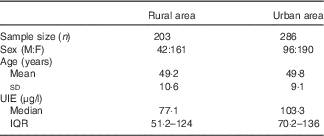
The prevalence of subjects affected by goitre was significantly higher in the rural than in the urban area (P=0·003) (Fig. 2), with a similar trend for both sexes (13·5 % rural v. 5 % urban area in females; 14 % rural v. 6·5 % urban area in males). When we analysed the cause of goitre, we found that the prevalence of diffuse goitre was higher in the rural than in the urban area (P<0·0001), whereas no significant difference was observed in nodular goitre between the two populations (Fig. 2). Difference in the UIE was more evident in subjects affected by goitre (median 61·1 (IQR 44·0–81·4) µg/l rural v. 103·7 (IQR 31·8–165·2) µg/l urban area, P=0·006) compared with unaffected subjects (median 80·8 (IQR 53·5–125·5) µg/l rural v. 103·3 (IQR 70·2–134) µg/l urban area, P=0·01) (Fig. 3).
Frequency (%) of goitre, diffuse goitre and nodular goitre in subjects resident in rural () and urban () areas. *P<0·05.

Box-whisker plot of urinary I excretion (UIE) measured in rural () and urban () areas according to the presence of goitre. Values are medians () and interquartile ranges (IQR; , ) and data within 1·5× IQR of the 1st and 3rd quantile, respectively. Data beyond the end of the whiskers are outliers plotted as points. *P<0·05.

We compared our results of UIE and goitre prevalence obtained from subjects of the rural area with data from the previous survey conducted in the same village in 2007( Reference Bonofiglio, Catalano and Perri 20 ). UIE was numerically lower, but within the same range of the levels reported in 2007 (median 97 (IQR 62·5–132·2) µg/l rural area in 2007 v. 77·1 (IQR 51·2–124) µg/l rural area in 2015, P=0·069), whereas goitre prevalence had decreased (42·6 % rural area in 2007 v. 13·8 % rural area in 2015, P<0·0001).
Thyroid nodules were detected in 164 subjects (33·5 %), with a slight prevalent increase in the urban compared with the rural area (36·4 v. 29·6 %, P=0·104). The proportion of nodular disease in males was similar in both areas (35·7 v. 34·4 %, P=0·9), whereas it was significantly higher in females in the urban compared with those in the rural area (38·6 v. 28·5 %, P=0·03).
Serum positivity of TgAb was significantly higher in subjects from the urban area (P=0·009), whereas the frequency of positive TPOAb (P=0·369) was similar between the screened populations (Fig. 4). Hypoechoic patterns at thyroid ultrasound (HT-US) did not differ between the two areas (24·7 % urban v. 19·3 % rural area, P=0·16). Serum levels of TgAb were higher only in HT-US subjects (Fig. 5) in the urban area compared with those in the rural area (P=0·01).
Bar plot representing frequency (%) of positive thyroglobulin (TgAb) and thyroperoxidase antibodies (TPOAb) in subjects resident in rural () and urban () areas. *P<0·05.

Frequency (%) of positive thyroglobulin (TgAb) and thyroperoxidase antibodies (TPOAb) in subjects with a hypoechoic pattern at thyroid ultrasound (HT-US) and normal hypoechoic pattern (non-HT-US) resident in rural () and urban () areas. *P<0·05.

The median of TSH value differed significantly between the two investigated areas (median 1·3 µg/l rural v. 1·5 µg/l urban area, P=0·004). The frequency of elevated TSH (≥4 µUI/ml) was similar in the two screened areas (3·2 % rural v. 5·8 % urban area, P=0·2), whereas low TSH (≤0·35 µUI/ml) was found more frequently in subjects from the rural area (9·5 % rural v. 3·5 % urban area, P=0·01). Interestingly, no significant differences were found for TgAb positivity in the urban with respect to the rural area (9·8 v. 7·68 %, P=0·87) for subjects with TSH serum levels ≥4 μIU/ml.
Discussion
The results of the present study confirm and extend our previous data( Reference Andò, Maggiolini and Di Carlo 19 , Reference Bonofiglio, Catalano and Perri 20 ), indicating the benefits of the persistent iodoprophylaxis campaign in the I-deficient areas of the region of Calabria. Following recommendations from WHO in 1993, I prophylaxis is monitored by assessing both goitre prevalence and UI concentration( Reference Zimmermann and Andersson 24 ). We observed decreased goitre prevalence, mainly due to the reduction of diffuse goitre, in the adult population living in an urban area with a documented long-standing I intake with respect to that of a rural area previously investigated for I deficiency.
In our surveyed population, UI concentration, a reliable index of recent dietary I intake, indicated an adequate assumption in the urban area and a persistent I deficiency in the rural area. We carried out previous investigations in rural areas of the region of Calabria in the early 1990s, demonstrating a heterogeneity in I supply, ranging from sufficient to moderate with pockets of severe I deficiency. A 2-year programme of I supplementation resulted in an increased UIE together with a decreased goitre prevalence, suggesting the usefulness of an effective iodoprophylaxis in this region( Reference Andò, Maggiolini and Di Carlo 19 ). On the basis of these results, we strongly supported the use of iodised salt in the I-deficient areas, and this process was further reinforced in 2005 when I salt supplementation was introduced by law. Furthermore, results from a survey conducted in the same area in 2007 demonstrated that, in spite of the conspicuous increase in the median UIE value, goitre prevalence was still high in older adult populations mostly living in a severe I-deficient environment before beginning I supplementation( Reference Bonofiglio, Catalano and Perri 20 ). This implies that the time lag to normalise thyroid size requires more than a decade in an area of chronic I deficiency. Interestingly, the present study found that the prevalence of goitre was significantly lower compared with that reported in 2007 in the adult population living in the same rural area. Hence, this confirms the benefits of sustained iodoprophylaxis in abating the frequency of I-deficiency disorders. A potential side-effect of I supplementation is the induction of autoimmune thyroiditis( Reference Fiore, Tonacchera and Vitti 25 ). Indeed, studies in both humans and animals have demonstrated that I administration may enhance autoimmune thyroiditis through several mechanisms( Reference Li, Teng and Shan 26 , Reference Vecchiatti, Guzzo and Caldini 27 ). In particular, it has been reported that I (i) has a toxic effect on thyroid cells( Reference Chen, Teng and Shan 28 ), (ii) directly stimulates immune and immunity-related cells( Reference Li, Cai and Gu 29 ) and (iii) increases the immunogenicity of TgAb, thereby precipitating an autoimmune process at both T- and B-cell levels( Reference Saboori, Rose and Bresler 30 ). Recently, it has been demonstrated that by unmasking a cryptic TgAb epitope, I contributes to the induction of thyroid autoimmunity in humans( Reference Latrofa, Fiore and Rago 17 ).
In this study, we have observed a significant increase only for TgAb and not for TPOAb in subjects living in a long-standing I-sufficient area compared with subjects with mild/moderate I intake. These results are in agreement with data reported in the literature, demonstrating an increased incidence of thyroid antibodies after the initiation of an effective iodisation programme( Reference Pedersen, Knudsen and Carlé 11 ). A direct pathogenic role for TgAb in autoimmune thyroid disease has been proposed by restricted epitope recognition patterns and experimental autoimmune thyroiditis produced by passive transfer of TgAb( Reference Tomer 31 ). It has also suggested that the positivity of TgAb may be an epiphenomenon with no pathogenic significance( Reference Tomer 31 ), whereas TPOAb are typical of a more advanced thyroid autoimmune involvement( Reference Chen, Hamidi and Braley-Mullen 32 ). However, the possibility that a high prevalence of TgAb may represent a marker of future autoimmune thyroiditis cannot be excluded. In our study, we did not find any significant differences between the two investigated areas when analysing the relationship between I intake and frequency of the HT-US. Nevertheless, we observed a significant increase in serum TgAb in HT-US subjects in the subgroup of individuals from the urban area, whereas no significant changes in thyroid antibodies positivity were evident in subjects with a non-HT-US pattern.
It is important to underline that hypoechogenicity is often the only finding in the initial phases of autoimmune thyroiditis, and it may be present even before detecting serum antithyroid antibodies( Reference Rago, Chiovato and Grasso 33 ). Indeed, thyroid hypoechogenicity has been shown to be more sensitive in predicting the development of hypothyroidism than the presence of antithyroid antibodies( Reference Marcocci, Vitti and Cetani 34 ). Our data suggest that the hypoechoic thyroid US pattern did not indicate alteration in thyroid function as no significant differences were found for TgAb positivity in subjects with high TSH levels in the urban area compared with those in the rural area.
In conclusion, this cross-sectional study highlighted a decrease in goitre prevalence and an increase in serum TgAb in the adult population living in an area with long-standing I intakes compared with subjects from a rural area with mild I deficiency. We did not observe any change in the pattern of thyroid diseases between the two populations investigated. However, new studies will be necessary to monitor the impact of I prophylaxis as an important part of preventive health care.
Acknowledgements
The authors thank Salvatore Panza and Daniela Rovito for providing technical support. The authors also thank Anna Franca Plastina for English language editing.
This study was financed by Osservatorio Epidemiologico e Promozione della Salute, ‘Sezione Gozzo Endemico e Iodoprofilassi’, Regione Calabria, Italy.
D. B. and S. C.: conception of idea and study design; D. B., S. C. and A. P.: manuscript writing; A. P.: thyroid ultrasound; M. S., M. G., S. M. and R. B.: blood and urinary analysis; L. S.: data collection; D. L.: analysis of data; D. B., S. C., A. P., C. G. and I. B.: analysis and interpretation of data; S. A.: conception of idea and manuscript review.
The authors declare that there are no conflicts of interest that could be perceived as prejudicing the impartiality of the study reported.


 Open access

