



Overweight and obesity (OWOB) are major health concerns in contemporary society leading to rises in non-communicable diseases, decreased quality of life( Reference Dietz 1 ) and increased health-care costs( Reference Lightwood, Bibbins-Domingo and Coxson 2 ). Excess weight early in life increases the risk of a child becoming an obese adult( Reference Whitaker, Wright and Pepe 3 ). The rates of OWOB in adults have been increasing globally over the last several decades in both developed and developing nations( Reference Prentice 4 ). The rate of the increase in OWOB is expected to be greater in middle-income nations and emerging economies( Reference Caballero 5 ) such as Barbados( 6 ). These changes have created an environment which has potentially put Barbadian children at risk for OWOB. The last nationally representative data collected on child weight status in Barbados date from 1981 and estimated that 10·5 % of children were underweight and 8·52 % were OWOB. Countries such as Barbados that have undergone significant economic development over the last 30–40 years( Reference Downes 7 ) may be at risk for high levels of child OWOB. It is therefore important to identify risk factors relevant to the Barbadian context of child obesity. Few research or surveillance activities examining weight status have taken place with regard to Barbadian primary-school children.
The present study was part of the Barbados Children’s Health and Nutrition Study (BCHNS) and proposed to obtain a baseline measure of the prevalence of child OWOB in Barbados and identify correlates of OWOB in a cross-section of students in class 3 (grade 5) between September and December 2010.
Methods
The study population consisted of children from class 3 (aged 8–11 years) in Barbadian public schools, representing approximately 80 % of children nationally within this age band. Sample size was based on a 27 % prevalence of OWOB among Barbadian children aged 10–16 years in 1999( Reference Gaskin, Broome and Alert 8 ). The Barbados Ministry of Education provided 2009 school population details required for sampling from the seventy-four public primary schools in the country. Based on these statistics, probability proportional to size was used to select fifteen schools. Seven of the fifteen schools had very few students enrolled and were paired with a school of comparable characteristics in the same neighbourhood. All invited schools agreed to take part; however, one school did not distribute consent forms in time for the BCHNS scheduled visit. Prior to measurements, the BCHNS team visited each selected school to explain the study to the principals, teachers and, when possible, class 3 students. At this time, consent forms and information pamphlets were provided to all schools. All class 3 students were invited to participate in the BCHNS: those who returned signed consent forms, and were present on the visit days, were measured and interviewed. Participation in the study was dependent on guardian informed consent and the assent of the student. All measurements were taken between September and December 2010 and were done in the morning as per a modified US National Health and Nutrition Examination Survey (NHANES) anthropometry procedures manual( 9 ). Three trained investigators measured the height and weight to the nearest 0·05 kg and 0·5 cm, respectively. Heights and weights were recorded for 581 children; one child wearing a cast was excluded from analyses.
Telephone interviews were conducted with a subset of guardians (n 229). The sociodemographic questionnaire included seventeen questions: relationship of guardian to the subject; marital status (married, separated or divorced, single or other); household size; head of household (father, mother, both parents, grandmother or other); highest level of education completed of both parents (none, primary, secondary, college, university or other); employment status of both parents (employed, unemployed or other); household access to a vehicle; household access to safe outdoor play-space; household composition by age group; maternal weight; maternal height; and annual household income (<BBD 9000, BBD 9001–15 000, BBD 15 001–25 000, BBD 25 001–49 200, BBD 49 201–100 000, >BBD 100 000, where BBD=Barbadian dollar). Face-to-face interviews at twenty-one schools were conducted with 494 students. The student questionnaire included nineteen questions about the subject’s household, eating habits and activities: principal guardian; number of televisions (TV) and computers in the home; access to the Internet; frequency of family dinner (every evening, never and sometimes); consuming breakfast on the morning of the interview; consuming snacks while watching TV (always, most of the time, sometimes and never); hours of sleep the night before the interview; method of transport to school; time spent commuting; time spent watching TV the night before the interview and the Sunday before the interview; time spent using a computer or playing video games the night before the interview and the Sunday before the interview; time spent reading and doing homework the night before the interview and the Sunday before the interview; participation in school sport teams; participation in non-organized team sports; and participation in extra-curricular instructor-led sports. Parent and student questionnaires were designed by the BCHNS team.
The prevalence of OWOB was calculated using WHO BMI-for-age Z-scores (BAZ)( 10 ). To compare OWOB prevalence with historical studies in Barbados as well as with other populations, the International Obesity Task Force (IOTF) OWOB cut-offs( Reference Cole, Bellizzi and Flegal 11 ), the US Centres for Disease Control and Prevention (CDC) growth percentiles( 12 ) and the Harvard weight-for-height-for-age (WHA) growth standards( Reference Nelson and Griffith 13 ) were also calculated. Various growth references were presented because there may be a significant discrepancy in prevalence between different cut-offs, particularly for boys aged 6–11 years( Reference Shields and Tremblay 14 ). The changes in OWOB and underweight were calculated based on the prevalence rates reported in the 1981 Barbados National Health and Nutrition Survey( Reference Ramsey and Trotter 15 ) using the Harvard WHA growth standards, which define underweight as <80 % WHA and overweight as ≥120 % WHA( Reference Nelson and Griffith 13 ). The statistical software package SAS version 9·2 was used to calculate IOTF prevalence rates, Harvard WHA growth standards, χ 2 tests, unadjusted relative risks (RR) and adjusted OR. WHO Anthro software version 3·2·2 was used to determine BAZ. Analyses including all children were weighted to reflect the population sex ratio. Statistical significance was set at P<0·05.
Variables from the student and parent interviews were analysed separately. The χ 2 test was used to examine sex differences for each variable and changes in prevalence between 1981 and 2010. A complete case analysis was conducted for the school interviews, resulting in the analysis of 423 complete student interviews. Responses were dichotomized for each variable and unadjusted RR were calculated from OWOB prevalence. A logistic multiple regression model was created using variables that had a significant RR in analyses of student interviews. The subset of parent interviews was too small to conduct a complete case analysis; therefore missing observations were compared with the non-missing observations for variables with significant amounts of missing data: income (n 42), maternal BMI (n 64), parental education (n 55) and parental employment (n 44). No bias in OWOB was noted between completed parent interviews (n 134) and non-completed parent interviews (n 95). Responses were dichotomized for each variable and RR were calculated and reported. Variables from parent interviews with a significant RR were entered into a multiple logistic regression model with other sociodemographic variables to further explain the relationship to OWOB. To minimize possible overestimations of OR due to missing observations, a conservative adjustment was done imputing each missing observation as ‘no’ for variables in parent interviews that were included in the logistic regression model: parental education (where 1=both parents with post-secondary education and 0=missing observation or one or no parents with post-secondary education); parental employment (where 1=both parents employed and 0=missing observation or one or no parents employed); and low income (where 1=annual household income <BBD 9000 and 0=missing observation or annual household income ≥BBD 9000).
Results
Population
A total of 580 children were measured; 255 males (44 %) and 325 females (56 %). The overall student response rate at the twenty-one schools visited was 48 %. Student response rates at individual schools varied between 16 % and 69 %. The study sample represented approximately 19 % of all class 3 public-school students in Barbados. Independent subsets of students (n 494) and parents (n 229) were interviewed.
Anthropometry
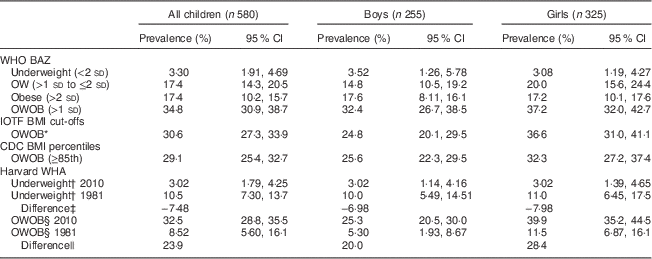
The mean age, height, weight and BMI were 9·70 (sd 0·36) years, 1·40 (sd 0·073) m, 36·30 (sd 10·32) kg and 18·21 (sd 3·99) kg/m2. Table 1 illustrates important differences in the prevalence in OWOB using different criteria. The WHO references yielded the highest rates of OWOB and the smallest difference between boys and girls. While there was no significant difference in prevalence between boys and girls using the WHO BAZ, Harvard WHA or CDC reference, a trend of more OWOB girls than boys was noted across growth references. IOTF cut-offs were unique in showing a significant disparity between the proportions of OWOB boys and girls (P<0·01), with girls having a higher prevalence of OWOB. Compared with the 1981 estimates of overweight( Reference Ramsey and Trotter 15 ), there was a statistically significant increase in OWOB, which was greater in girls than boys (Table 1). The prevalence of underweight was negligible with both the WHO BAZ and Harvard WHA growth references. From 1981 to 2010, there has been a statistically significant decrease in the prevalence of underweight (Table 1).
The prevalence of underweight, overweight and obesity of class 3 Barbadian public-school children (aged 8–11 years), the differences in prevalence according to various international growth references and the change in overweight and obesity from 1981 to 2010
BAZ, BMI-for-age Z-score; OW, overweight; OWOB, overweight and obese; IOTF, International Obesity Task Force; CDC, Centers for Disease Control and Prevention; WHA, weight-for-height-for-age.
* Significant difference in OWOB prevalence between boys and girls, P<0·01.
† <80 % WHA.
‡ Significant decrease in prevalence of underweight from 1981 to 2010, P<0·01.
§ ≥120 % WHA.
|| Significant increase in prevalence of overweight from 1981 to 2010, P<0·01.
Parent and household characteristics
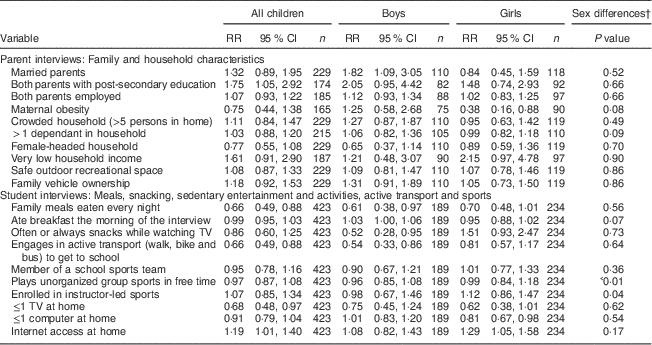
In unadjusted analyses, no associations with OWOB were noted for the family setting (child living with his/her mother, father, both parents or neither parent), employment status of parents, matriarchal-headed households, household crowding, number of dependants in the home, family vehicle ownership, access to a safe outdoor play-space or low household income (Table 2). There were no statistically significant differences between the frequencies of boys and girls for each variable (Table 2). There were no relationships between the weight status of mothers and sons; however, fewer girls were OWOB if their mothers were obese (Table 2). The sociodemographic variables most strongly associated with OWOB were post-secondary education of both parents, and married parents had more OWOB boys than those not married, but this was not the case for girls (Table 2).
Unadjusted relative risk of selected variables from parent and student interviews for combined overweight and obesityFootnote * in class 3 Barbadian public-school children (aged 8–11 years), 2010
RR, relative risk; TV, television; BAZ, BMI-for-age Z-score.
* Overweight and obesity as defined by WHO BAZ (>1 sd).
† Differences between frequencies of boys and girls for each variable; significant RR>1 or RR<1 at 95 % CI; significant at P<0·05.
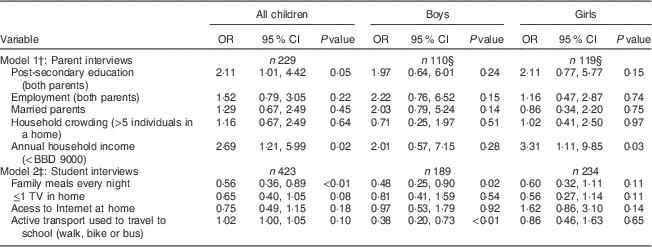
In order to further examine the association of parental education with higher OWOB, a multivariable logistic regression model was undertaken examining whether other sociodemographic variables might explain this relationship (Table 3). Controlling for marital status, unemployment, income and household crowding, the relationship between high parental education and OWOB was borderline significant (OR=2·11; 95 % CI 1·01, 4·42; n 229; Table 3). Low household income (noted as <BBD 9000 per annum), however, also emerged as a factor significantly related to OWOB (OR=2·69; 95 % CI 1·21, 5·99; n 229; Table 3). When model 1 was stratified by sex, low household income remained significantly associated with a higher prevalence of OWOB in girls (OR=3·31; 95 % CI 1·11, 9·85; n 119), but this relationship was non-existent in boys (Table 3).
Adjusted odds ratios of overweight and obesityFootnote * for selected variables from parent and student interviews with class 3 Barbadian public-school children (aged 8–11 years), 2010
TV, television; BAZ, BMI-for-age Z-score.
* Overweight and obesity as defined by WHO BAZ (>1 sd).
† Model 1 included parental education, employment, marital status, household crowding and annual household income.
‡ Model 2 included family dinners, TV, access to Internet and active transportation.
§ Sex-stratified multivariate analyses resulted in poor model 1 fit for boys and girls (P>0·5); significant at P<0·05.
Data from student interviews
Children reporting eating dinner every evening with their family had a lower prevalence of OWOB than children reporting not eating dinner every evening with their family (RR=0·66; 95 % CI 0·49, 0·88; n 423; Table 2). No significant relationships between breakfast eating and OWOB were noted. Among boys only, those who always or often snacked while watching TV had a lower prevalence of OWOB (RR=0·51; 95 % CI 0·28, 0·95; n 189; Table 2).
In the BCHNS, 25·5 % of children walked or rode their bikes to school, with an additional 12·8 % of children using a combination of walking and buses. Children who used active transport to get to school had a lower prevalence of OWOB than those who used motorized transport (RR=0·66; 95 % CI 0·49, 0·88; n 423; Table 2). This was significant in boys, with the girls having a trend in the same direction. About 50 % of both boys and girls played on one or more of their schools’ sporting teams: soccer, cricket, field hockey, netball, etc. No relationships were found between engagement in sporting activities and weight status.
No relationships existed between sedentary activities done on weeknights or Sundays, such as TV viewing, screen usage (computer and/or video games), reading or doing homework, and weight status.
All children interviewed had at least one TV and 29 % of children reported watching TV for <2 h/d. Children living in a home with no or just one TV had a lower prevalence of OWOB (RR=0·68; 95 % CI 0·48, 0·97; n 423; Table 2). Approximately 70 % of children had at least one computer at home. Girls living in homes with no or one computer had a lower prevalence of OWOB than girls living in homes with more than one computer (RR=0·88; 95 % CI 0·67, 0·98; n 234) but this was not evident in boys (Table 2). Children with access to the Internet in the home had a greater prevalence of OWOB (RR=1·19; 95 % CI 1·01, 1·41; n 423; Table 2). The relationship was seen in girls (RR=1·29; 95 % CI 1·05, 1·58; n 234), but was not evident in boys (Table 2). Significant differences between the frequencies of boys and girls were seen only for the variables engagement in unorganized sports during free time and enrolment in instructor led-sports, with boys having a higher frequency of both compared with girls (Table 2).
A multivariable analysis was done to examine the independent contributions of the four variables in student interviews that were statistically significant in the unadjusted models for all children: family meals eaten together (protective), active transport (protective), no or one TV in the household (protective) and Internet access (higher risk; Table 3). When the four variables were held constant in the multiple logistic regression model, family meals was the only variable that remained significant (OR=0·56; 95 % CI 0·36, 0·87; n 423). When model 2 was stratified by sex, the variable of family meals was not significantly associated with OWOB in girls. However, eating family meals every night remained significant for boys (OR=0·48; 95 % CI 0·25, 0·90; n 189). In addition, active transport re-emerged as very strongly and significantly associated with a lower prevalence of OWOB in boys (OR=0·38; 95 % CI 0·20, 0·73; Table 3).
Discussion
Overweight and obesity prevalence
The prevalence of OWOB in class 3 Barbadian children is high, regardless of which OWOB criterion is used. While the WHO cut-offs represent the highest OBOW rates, they remain the most appropriate as the IOTF cut-offs may underestimate OWOB prevalence( Reference Shields and Tremblay 14 ). Various cut-offs are presented in Table 1 permitting easy comparison with non-Hispanic Black Americans and neighbouring countries. The trend across cut-offs shows a higher percentage of girls are OWOB compared with boys. Higher prevalence of female OWOB is a trend consistent in Caribbean countries( Reference Xuereb, Johnson and Bocage 16 ) and is in keeping with the adult distribution measured in a representative sample of Barbadians in 1996( Reference Cooper, Rotimi and Ataman 17 ). The wide sex gap in the present study of 25·6 % in boys and 32·3 % in girls is in contrast to a narrow difference in a similar population of 6–11-year-old non-Hispanic Black Americans in 2009–2010 reporting an OWOB prevalence of 40·9 % in boys and 44·2 % in girls( Reference Ogden, Carroll and Kit 18 ). Higher obesity prevalence in women is consistently reported in nations across the world; however, understanding the basis for sex differences in the local context would help intervention planning( Reference Garawi, Devries and Thorogood 19 ). Despite sex differences, the entire study group had a very high prevalence of OWOB which appears to be much higher than in other Caribbean nations( Reference Penn and Ennis 20 , Reference Dubois, Francis and Burnier 21 ). When the current survey is compared with national prevalence data from 1981, using the same growth standards, a dramatic increase of 24·0 %in the prevalence of OWOB from 8·52 % in 1981 to 32·5 % in 2010 is noted. Additionally, underweight appears to have decreased from 1981 to a negligible prevalence in 2010. These results, however, should be interpreted with caution as it is necessary to point out that the present study is not a national representation of all Barbadian children; it is limited to class 3 public-school students and represents a larger sample (n 580 v. n 352 in 1981) from a narrower age band (8–11 years v. 5–14 years in 1981). Nevertheless, an obvious shift from undernutrition to overnutrition has occurred over the last 30 years indicative of the nutrition transition( Reference Popkin, Adair and Ng 22 ) and predictive of pending increases in obesity-related non-communicable diseases. There is evidence that the increase in prevalence seen over the last several decades is abating in certain developed countries( Reference Olds, Maher and Zumin 23 ). Repeated measurements over the following years from additional cohorts will be needed to ascertain whether the rate of OWOB continues to increase or has also attenuated in Barbados.
Child overweight and obesity influences in Barbados
Scientific literature generally supports an inverse relationship between education and obesity among adult populations, adolescents and children( Reference Giampietro, Virgone and Carneglia 24 – Reference Wardle, Waller and Jarvis 27 ). When related sociodemographic variables were held constant, the relationship between high parental education and increased prevalence of child OWOB remained consistent, albeit a borderline trend. The BCHNS may be unique in suggesting parental post-secondary education as a potential correlate of OWOB in a developed country. In addition, low income emerged as a positive correlate of OWOB independent of parental education, employment, marital status and household crowding. This latter result is congruent with findings from Canada and the USA relating poverty to obesity in children( Reference Phipps, Burton and Osberg 28 ) and adds to literature regarding health disparities seen in populations between poverty and OWOB prevalence. Sociodemographic variables with opposing influences on OWOB, such as low income and high parental education, would need to be further examined to better understand the interaction of these potential risk factors with child OWOB in the Barbadian context, with special attention given to potential sex disparities.
Parental weight status is a very strong indicator for children to develop adult obesity, especially in children under 10 years( Reference Whitaker, Wright and Pepe 3 ). Parental obesity or excess weight has been consistently associated with child obesity around the world( Reference Guigliano and Carneiro 29 , Reference Gibson, Byrne and Davis 30 ). Results from the BCHNS showed a link between maternal obesity and OWOB in daughters only, but in the protective direction. This should, however, be interpreted with caution as it is based solely on a very small sample of ninety girls whose mothers had BMI assessed. It is uncertain at this time whether there is no relationship between the weight status of Barbadian mothers and sons or whether this relationship could not be detected within a sample of seventy-five boys whose mothers had BMI assessed. An earlier study with 11–16-year-old Barbadian boys and girls found a significantly high risk of OWOB in youth with obese mothers( Reference Gaskin, Broome and Alert 8 ). The inverse association seen between mothers and daughters is inconsistent with the literature( Reference MacDonald, Baylin and Arsenault 31 ).
The protective effect of children eating dinner with their families every night in the BCHNS was very strong and consistent between boys and girls; categories used were limited to always, sometimes and never eating dinner with their families. Travers et al. found an OR of 0·85 (95 % CI 0·76, 0·96) for children 9–14 years old to be OWOB if they had dinner every day or most days compared with some days or never( Reference Taveras, Rifas-Shiman and Berkey 32 ). A subsequent retrospective study using carefully defined groups for family dinner frequency successfully showed a reduced risk of OWOB with increased number of nights per week an adolescent had a family meal; however, the relationship was only noted in Whites and not for Blacks and Hispanics( Reference Sen 33 ). Family meals at home were found to be inversely associated with BMI in both adults and adolescents in the USA( Reference Chan and Sobal 34 ) and family meals in Ottawa, Canada were protective against OWOB in females but not in males( Reference Goldfield, Murray and Buchholz 35 ). The consistency and strength of the protective relationship between family meals and OWOB in the BCHNS points to the importance of examining familial behaviours in future studies.
Most families in Barbados have access to only one TV channel, the local Caribbean Broadcasting Corporation (CBC), which broadcasts cost-free to all homes on the Island. While time spent watching TV found in the present study may be an underestimation, the limited access to TV channels could explain, in part, why relatively few (29 %) Barbadian children watch TV for >2 h/d. These numbers are drastically lower in contrast to other developed countries; for example, more than 60 % of Canadian grade 6–10 children watch TV for >2 h/d( Reference Mark, Boyce and Janssen 36 ) and 8–18-year-old Americans spend on average 2·4 h watching TV daily( Reference Rideout, Foehr and Roberts 37 ). While child obesity intervention trials aimed at reducing TV viewing have shown success( Reference Robinson 38 ), these approaches may not be relevant in Barbados.
The positive relationship in unadjusted analyses (Table 2) and lack of relationship in multivariate analyses between household media access (TV and Internet) and OWOB is not surprising. Direct links between other types of media access and child OWOB are not clearly established( 39 ). Children’s media access is known to be associated with increased technology use( Reference Cillero and Jago 40 ) and screen time has been positively associated with OWOB risk in children( Reference de Jong, Visscher and HiraSing 41 ). Media access, defined as the number of TV, computers and computer games available in a household, was linked to media usage in Portuguese children aged 3–10 years( Reference Jago, Stamatakis and Gama 42 ). In the Netherlands, children 4–13 years old had significantly greater risk of OWOB if they watched TV for >1·5 h/d, used a computer for >30 min/d, or had two or more TV in the household( Reference de Jong, Visscher and HiraSing 41 ). The media access findings of the BCHNS are similar to the studies relating bedroom TV access and household availability of media to technology usage and OWOB( Reference Jago, Page and Froberg 43 , Reference Pate, Mitchell and Byun 44 ), but need to be better studied and defined.
Children who used active methods of transport in the BCHNS were less likely to be OWOB; however, this was significant only for boys in the multivariate model. The percentage of youth participating in active transport in Barbados was similar to those seen in neighbouring countries of St. Lucia and Trinidad and Tobago, but lower than in Guyana and St. Vincent and the Grenadines( Reference Guthold, Cowan and Autenrieth 45 ). Worldwide, active transportation is an important mode of transportation; between 18·6 and 84·8 % of youth walk or ride bicycles to school, with the lowest rates in the United Arab Emirates and the highest rates in China( Reference Guthold, Cowan and Autenrieth 45 ). In Brazil, children and adolescents using less active transport had greater OWOB( Reference Duncan, Duncan and Fernandes 46 ) and adolescents in the Netherlands who cycled to school had a lower risk of being OWOB( Reference Bere, Seiler and Eikemo 47 ). Promoting walking or even taking the bus to school in Barbados may be a seemingly inexpensive way to increase non-planned physical activity in areas of Barbados where safe walking infrastructure already exists. While active transport has been inversely associated with OWOB in other countries, further investigation would be merited to determine if it is a relevant protective factor in Barbados.
Limitations
The BCHNS excluded private schools; therefore, fewer children from higher socio-economic backgrounds would have been included in the study sample. Lengthy validated questionnaires were not employed due to limited access to subjects during class-time. The inability to use validated questionnaires increases the risk of including systematic error in the results through the lack of content and criterion validity and reliability of the data collection tools. Furthermore, risk factors were not evaluated exhaustively, leaving the possibility that related or confounding risk factors may be driving forces behind relationships highlighted in the results. The small sample size of parent interviews and independent subsets of the interview groups prevented combined analysis; therefore variables in the student questionnaire could not control for income or other sociodemographic variables found in the parent questionnaire. Although the present study has provided insight into child OWOB trends and risk factors in Barbados, the measurement of a single age group prevents generalizability to all children. Nevertheless, based on large cohorts studies such as NHANES that have examined OWOB in various age bands, the prevalence of OWOB would not appear to vary significantly between age bands at any given year( Reference Ogden, Carroll and Kit 18 ). Despite study limitations, the data presented provide a strong baseline that can be employed as a starting point for further investigation.
Conclusions
An update of the prevalence of OWOB in Barbadian children has revealed an alarmingly high rate, a sharp increase over last few decades and an underlying sex disparity. Low household income and family meals eaten together were significant factors related to OWOB in the study population. Investigation into interactions between family behaviours, sociodemographic factors, sex differences and child OWOB would present an important avenue for future research in Barbados, helping to understand child health promotion at the family level. Measuring OWOB prevalence at regular intervals in nationally representative samples of children such as all schoolchildren entering primary and secondary schools would be a potential way to monitor the changes in OWOB as well as evaluate the impact of national prevention campaigns.
Acknowledgements
Acknowledgements: The authors would like to thank all the teachers and principals who facilitated the study and the Barbados Ministry of Education for their support. They are grateful to Gabriela Bernales, Elaine Chiu, Andrea Low and Rachel Malcangi for assistance with measurements. Financial support: This work was supported by a grant from the Campus Research Awards Committee in The Department of Graduate Studies at the University of the West Indies in 2010. The Campus Research Awards Committee had no role in the design, analysis or writing of the manuscript. Conflict of interest: None. Authorship: M.A.F. designed the study, carried it out, analysed the data and wrote the article. S.K. contributed to the study design, data analysis and edited the article. K.G.-D. contributed to the study design, data analyses and edited the article. J.K. assisted in sample selection methodology, data collection and reviewed the article. P.S.G. designed and supervised all aspects of the study and edited the article. All authors have seen the final version. Ethics of human subject participation: This study was conducted according to the guidelines laid down in the Declaration of Helsinki and all procedures involving human subjects were approved by the McGill Research Ethics Board III and The University of the West Indies Internal Review Board. Written informed consent was obtained from all subjects and their guardians. Access to enter schools was granted by the Barbados Ministry of Education.



