


Introduction
Loom weights, used to pull warp threads taught across the frame during weaving, are frequent finds at archaeological sites from late prehistory and antiquity in Europe and the Mediterranean region. Their presence indicates textile production on warp-weighted looms, tracing the use of this technology back to the Early Neolithic (seventh–sixth millennia cal BC) in regions between Anatolia and Central Europe (Barber Reference Barber1991). In the Iberian Peninsula, isolated loom weights have been found in Middle–Late Neolithic contexts (fifth–fourth millennia BC) and increase in frequency from the Chalcolithic (late fourth millennium–third millennium BC) (Cardito Rollán Reference Cardito Rollán1996; Basso Rial Reference Basso Rial2024). Concentrations of loom weights are documented at numerous sites in south-eastern Iberia during the Bronze Age (2200–750 BC) (Basso Rial et al. Reference Basso Rial2021, Reference Basso Rial2022, Reference Basso Rial2025), though their direct association with wooden remains that could correspond to a loom is rare.
Although loom weights are usually made of clay, they were not always fired and are often incomplete, suffering fractures and deformations due to post-depositional processes. These preservation issues complicate interpretations of their use and original arrangement. Accurate reconstructions of the space required for a loom, the types of fabrics produced and the ways in which loom weights were used rely on well-preserved archaeological contexts. This makes essential the thorough documentation of finds, including the weight, dimensions and spatial distribution—whether in a line, a cluster or otherwise—of loom weights and associated finds, and ensuring that all this information is published. Working towards this aim, this article examines the extraordinary preservation of artefacts at Cabezo Redondo (Villena, Spain), which provides an excellent context not only for the study of textile production, but also for deepening our understanding of the Bronze Age in the Iberian Peninsula.
Cabezo Redondo: settlement and context of the find
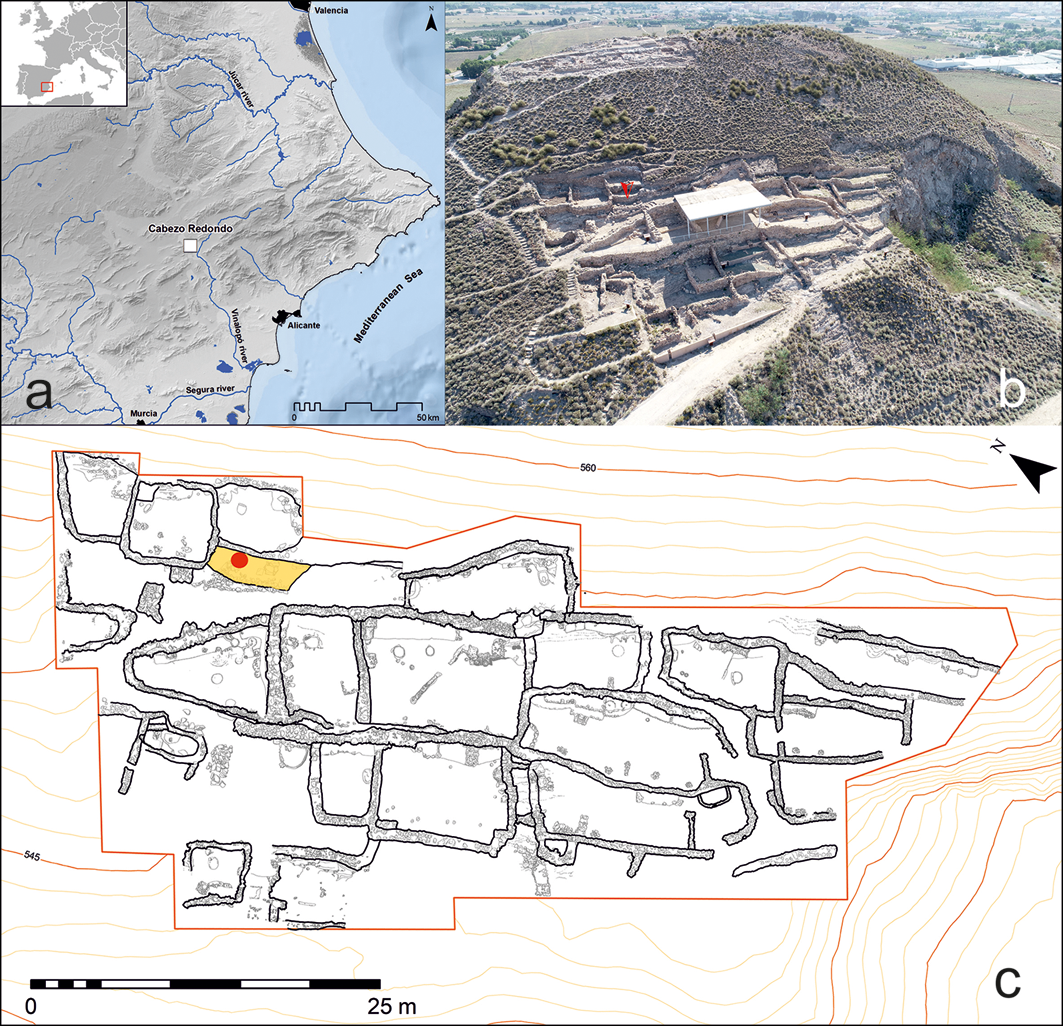
The Cabezo Redondo settlement occupies a hill located centrally within the Alto Vinalopó region, approximately 2km west of the current city of Villena (Alicante, Spain), with good connections to the central and southern Iberian Peninsula and the Mediterranean coast (Figure 1a). Excavations, conducted since 1950, indicate uninterrupted occupation of the site between 2100 and 1250 BC, although occupation of the western slope, where around thirty rooms have been excavated, may date from c. 1700 BC onwards. Approximately one-third of the estimated 1ha site has been explored and available data make Cabezo Redondo a key site for understanding the central centuries of the second millennium BC. The settlement comprises houses of 30–80m2 each and activity areas built on artificial terraces (Figure 1b & c), connected by streets and ramps (Hernández Pérez et al. Reference Hernández Pérez2016).
Location of Cabezo Redondo: a & b) aerial views; c) plan of the site. The red arrow and dot indicate the location of the raised platform on which the loom was documented (figure by authors).

Figure 1 Long description
The image contains three elements: a map, a photo, and a plan. The map shows the location of Cabezo Redondo in the Iberian Peninsula, highlighting its position relative to Valencia, Alicante, and the Mediterranean Sea. The photo depicts an aerial view of the Cabezo Redondo site, featuring a raised platform with a red arrow and dot marking a specific location. The plan provides a detailed layout of the site, with the red arrow and dot indicating the exact position of the raised platform where a loom was documented. The combination of these elements helps to locate and contextualize the archaeological findings at the Cabezo Redondo site.
The preservation of archaeological material at Cabezo Redondo is exceptional, and finds include numerous loom weights and abundant organic evidence related to textile production (Soler García Reference Soler García1987; Hernández Pérez et al. Reference Hernández Pérez2016; Basso Rial et al. Reference Basso Rial2023). Over 200 loom weights have been documented on the western slope, distributed across 16 different spaces—houses I, II, IV, VI, VII, XIII, XV, XVII, XVIII, XIX, XXVII, XXIX, XXXI and XXXII, an open space located at the western slope of the settlement and the raised platform of the circulation area—indicating intensive textile production, particularly after 1600 BC. House XV contained around 37 loom weights, while house XVIII contained a total of 70, 52 of which were associated with two 100mm-thick charred timbers that rested on top of a spirally plaited esparto mat covered with braided cords (Soler García Reference Soler García1987: 87). However, the documentation methods of the time were lacking in a detailed analysis of the relationship between the loom weights and the structural elements, which is essential for understanding the loom configuration and use.
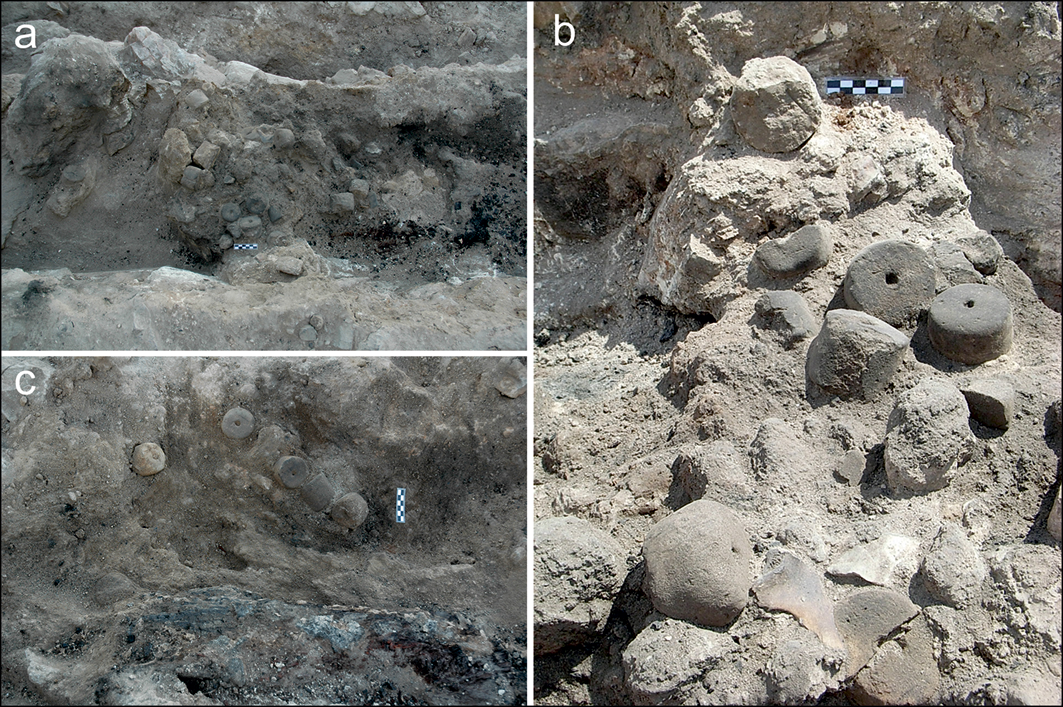
More recent excavations in the area connecting houses XXVII, XXX, XXXII and XXXIV (termed the circulation area, Figure 1c) uncovered a well-preserved context that helps answer questions around loom use. This space, interpreted as a gently sloping street, contained various activity areas and structures, including a stone bench surrounded by 15 ceramic vessels of different shapes and sizes, flint sickle blades, metal tools and bone artefacts. A raised platform, made of stone bonded with mud, measuring 4.20 × 1.80m and enclosed by walls—one doubling as a terrace wall for house XXXIV—was also discovered (Figure 1c). Two postholes indicate a roofing structure, suggesting that the platform was partially covered. A concentration of loom weights was found on the floor of the raised platform (Figure 2), along with several well-preserved, charred timbers and plant-fibre ropes. Together, these are interpreted as the archaeological remains of a warp-weighted loom.
Successive stages in the excavation of the loom weights concentration (figure by authors).

Figure 2 Long description
The image consists of three photos labeled a, b, and c, showing archaeological excavations at Cabezo Redondo. Photo a displays a section of the western slope with scattered loom weights. Photo b focuses on a concentration of loom weights on a raised platform, with a scale for measurement. Photo c shows another area with multiple loom weights and charred timbers. These findings indicate intensive textile production, particularly after 1600 BC, with over 200 loom weights documented across various spaces. The excavation reveals the relationship between loom weights and structural elements, essential for understanding loom configuration and use.
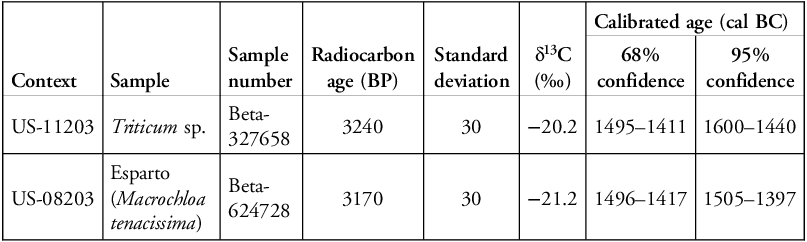
The circulation area, including the associated structures and adjacent dwellings, was destroyed by a fire that created a sealed context (Schiffer Reference Schiffer1972). This context has been dated through two samples (see Table 1): a wheat seed recovered from the street floor (Beta- 327658; 3240±30 BP) and a fibre (identified as esparto) from the ropes found on the raised platform (Beta-624728; 3170±30 BP). A chi-square test (Ward & Wilson Reference Ward and Wilson1978) shows that both dates are statistically identical (df = 1; T = 2.7 (5% 3.8)), dating the destruction of this space, and therefore of the loom, to 3205±22 BP (1507–1428 cal BC at 95% confidence).
Calibrated radiocarbon dates from the circulation area on the western slope (OxCal v.4.4, Bronk Ramsey Reference Bronk Ramsey2021; r: 5 IntCal20 atmospheric data from Reimer et al. Reference Reimer2020).

Table 1 Long description
The table presents data from two samples associated with an archaeological context destroyed by fire. The first row details a wheat seed sample labeled Beta-327658, with a radiocarbon age of 3240 years before present (BP) and a standard deviation of 30. The calibrated age for this sample is 1495-1411 cal BC at 68% confidence and 1600-1440 cal BC at 95% confidence. The second row describes an esparto fiber sample labeled Beta-624728, with a radiocarbon age of 3170 BP and a standard deviation of 30. The calibrated age for this sample is 1496-1417 cal BC at 68% confidence and 1505-1397 cal BC at 95% confidence. The table includes columns for context, sample, sample number, radiocarbon age, standard deviation, delta 13C percentage, and calibrated age ranges.
Materials and methods
Analysis of the loom weights and the preserved wood, as well as other associated elements, was conducted to provide systematic documentation of the remains of the warp-weighted loom. The methods proposed by the Centre for Textile Research (CTR) at the University of Copenhagen (Mårtensson et al. Reference Mårtensson2009) are used to identify the type of loom and the fabrics that it could have produced. These methods were developed to study Bronze Age textile tools from the Eastern Mediterranean (Andersson Strand & Nosch Reference Andersson Strand and Nosch2015). Results from experimental archaeology indicate that the weight and thickness of loom weights can provide information about the type and size of the loom and also allow speculation about the possible textiles produced (Mårtensson et al. Reference Mårtensson2009: 374–78). Here, weight refers to the tension exerted on a group of warp threads attached to the same loom weight, with the tension evenly distributed across each of the threads. The thickness of the loom weight corresponds to the space that a group of warp threads, arranged side by side and attached to the same loom weight, occupied on the loom. The sum of the thicknesses of the loom weights thereby equals the total width of the warp and, therefore, the fabric produced on the loom. The weight and thickness of each loom weight does not need to be identical, as weavers can set up a loom by calculating the tension and evenly distributing it across the warp threads. Therefore, although a certain degree of uniformity in the loom weights is recommended to achieve an optimal result, the degree of uniformity does not, in itself, determine the quality of the fabric produced. Concentrations of loom weights with similar characteristics are, however, likely to represent a single loom setup, while concentrations that include loom weights of substantially different or non-proportional character may correspond to stored groups of loom weights intended for different configurations to produce different textiles.
Experimentation with wool fibres indicates that between five and 30 warp threads should be attached to each loom weight to produce an optimal fabric, as exceeding this number could cause problems during both setup and the weaving process (Mårtensson et al. Reference Mårtensson2009: 392). Parameters such as thread diameter, twist angle and fibre quality and pretreatment influence the maximum tension that threads can withstand when grouped on a loom weight (Grömer Reference Grömer2016: 112). Consideration of the weight and thickness of a loom weight, or of sets of loom weights, therefore permits an estimation of the tension (maximum and minimum) exerted on a group of warp threads. These data then allow speculation as to the type of fabric that could have been produced (thread diameter and thread count per cm) with each setup.
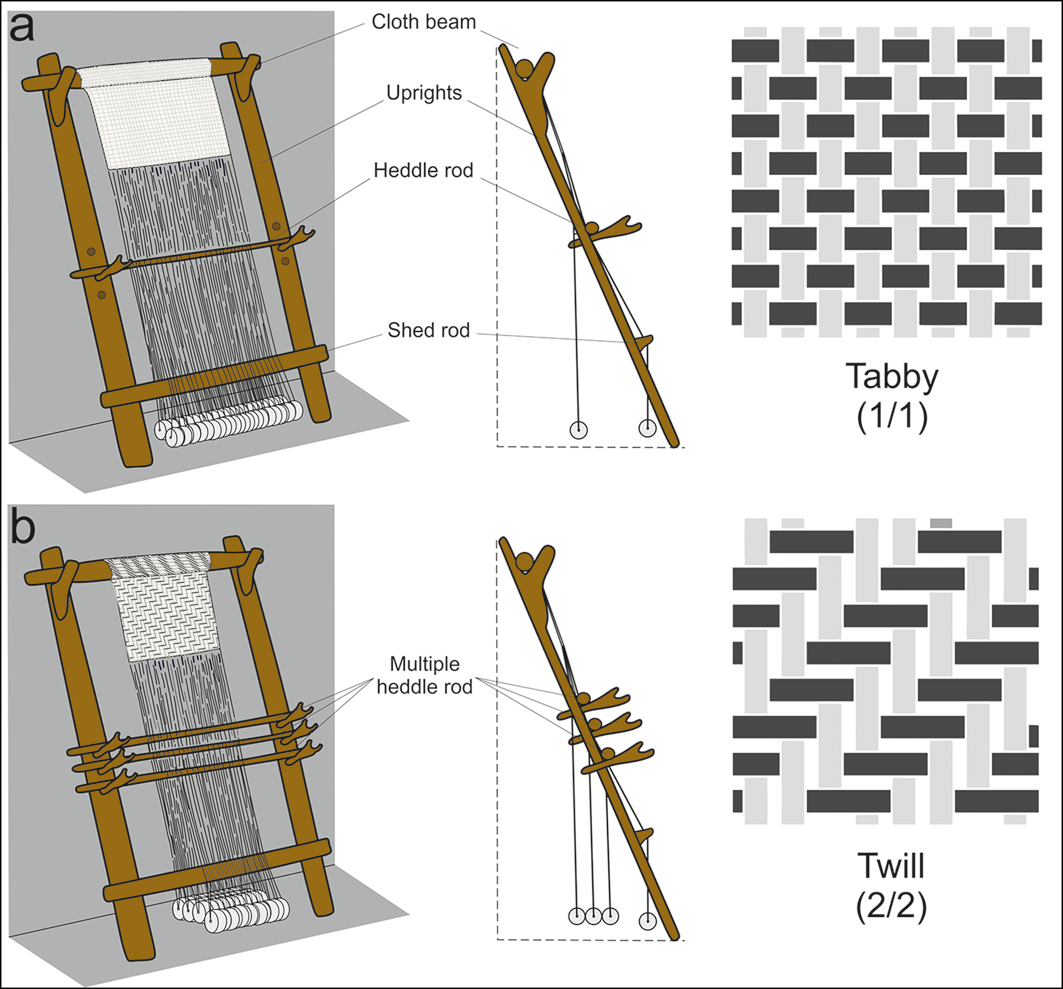
Weaving technique is also an important factor in the possible loom setup. Although there are many variations in the types of fabrics that can be produced, mainly depending on the fibres used, the warp-weighted loom would typically be configured with two rows of loom weights to produce a tabby weave—where each weft (horizontal) thread passes over and under a warp thread—or with four rows of loom weights to produce a more complex twill weave (2/2, chevron, diamond, etc.)—where each weft thread passes over and under two warp threads. Thus, the same number of loom weights placed in two rows to produce a tabby weave would occupy approximately twice the width of four rows of loom weights placed to produce a twill weave. Consequently, the threads are spaced more widely in the first instance, resulting in a more open weave, and grouped more closely in the second, resulting in a denser weave.
The loom weights
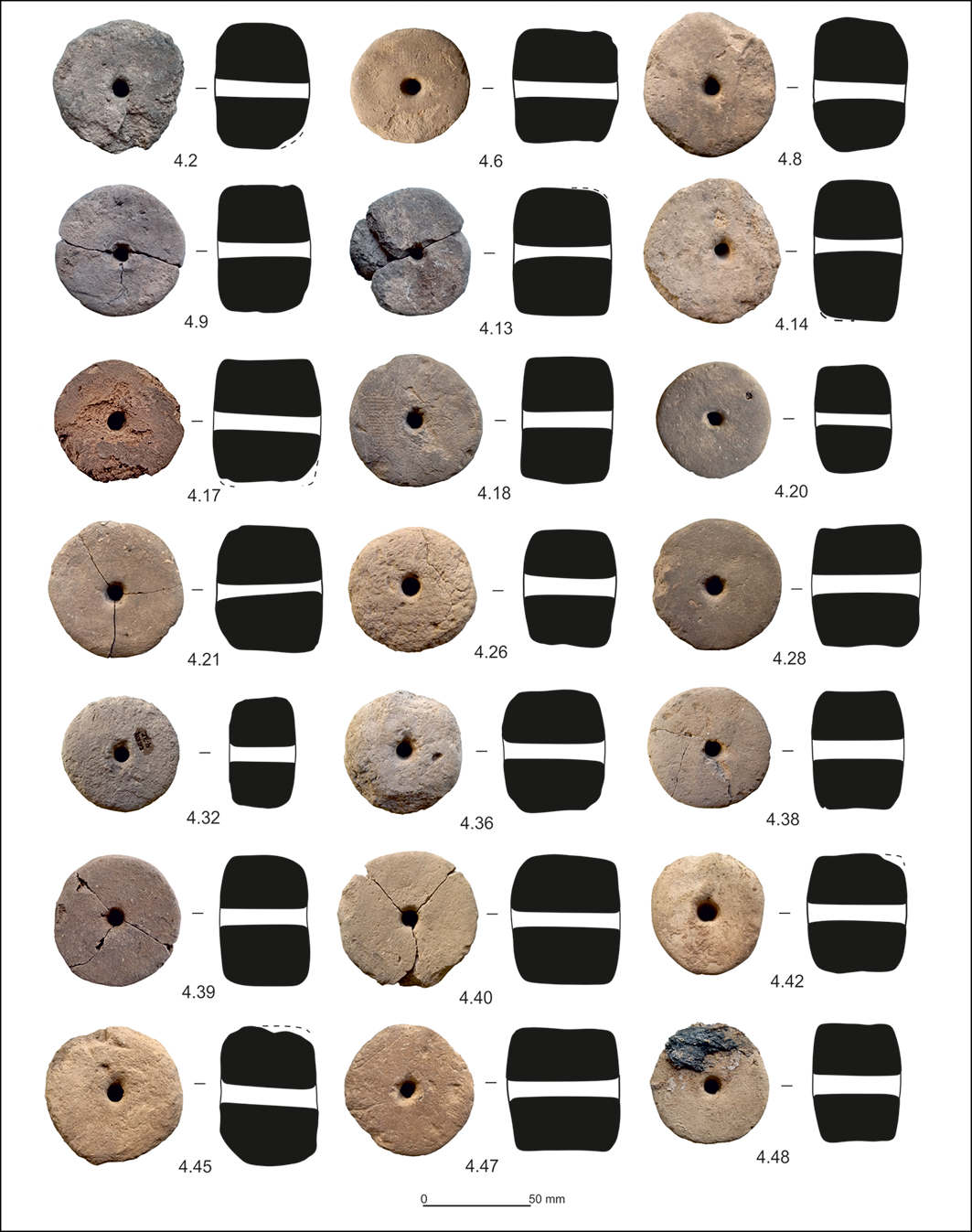
A total of 49 loom weights were found on the platform (Figure 3; Table S1). Forty-six—numbers 4.1–4.21 and 4.24–4.48—were clustered next to the charred timbers. Two others—4.22 and 4.23—were found in the same context, but 1.5m away from the main assemblage. An additional loom weight with similar characteristics (no. 2) was recovered from the platform, although it was part of the collapse that covered this zone of the settlement.
Loom weights that are complete and were documented on the raised platform of the circulation area (figure by authors).

Figure 3 Long description
The image presents a collection of ancient loom weights, each displayed in pairs. Each pair consists of a front view and a side view of the weights. The weights are circular with a central hole and exhibit varying degrees of wear and cracks. They are arranged in a grid pattern, with each pair numbered for identification. The weights appear to be made of a clay-like material and have a beige to light brown color. The side views show a horizontal white line, likely indicating a specific feature or measurement of the weights.
The loom weights are cylindrical in shape with a single central perforation, a type well documented in the south and east of Iberia during the second half of the second millennium BC—1600–1100/1000 BC (type 4A in Basso Rial et al. Reference Basso Rial2022). Similar dimensions and weights can be deduced for 44 of the loom weights, which are characterised by their small size and low weight compared with others found at Cabezo Redondo and at other Bronze Age sites in Iberia. Of this group, the full dimensions of 28 loom weights are known (Figure 3; Table S1). The maximum diameter ranges from 46–68mm, with most between 54 and 65mm. Thickness is broadly similar for most, between 40 and 47mm, with only eight pieces slightly above or below the average (ranging from 30–53mm).
Owing to their good state of preservation—more than half of the loom weights preserve over 90 per cent of their original volume—estimation of the likely original weight of these loom weights is possible. These range from 105–295g, with most weighing between 175 and 220g. Only five loom weights fall outside these parameters: no. 4.3, which is slightly more than half preserved, measures 72mm in diameter, 54mm in thickness, and has an estimated weight of around 400g; and nos. 2, 4.11, 4.22 and 4.23, which are substantially larger and heavier, with diameters between 91 and 97mm, thicknesses ranging from 53–58mm, and estimated weights between 700 and 950g.
The wooden structure
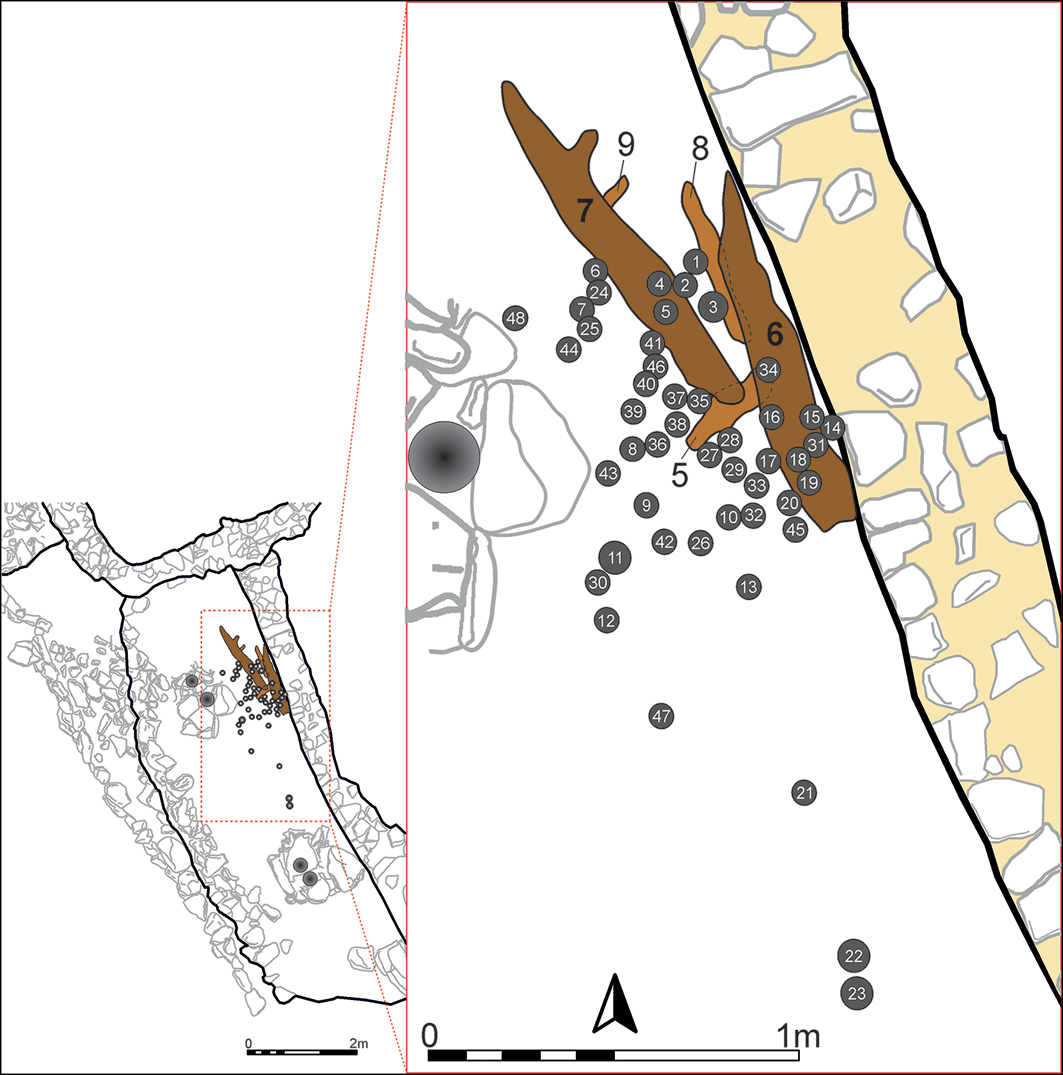
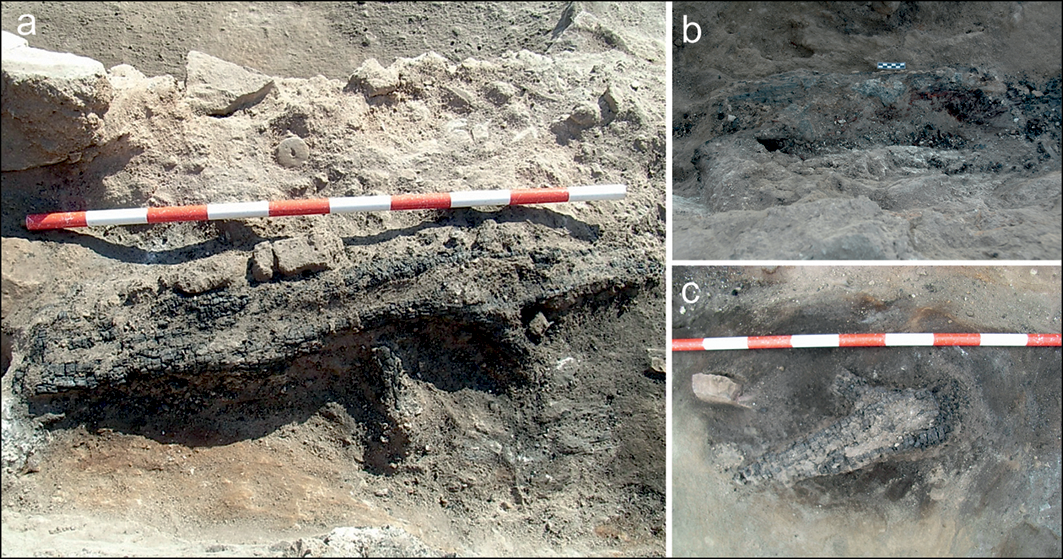
A group of charred woods—timbers 5, 6, 7, 8 and 9—which can be interpreted as the structure of a warp-weighted loom, was documented in association with the concentration of loom weights (Figure 4). The timbers are of different sizes and were found superimposed on each other, lying parallel to wall SU 08210. Timber 6 has a roughly rectangular cross-section, measuring 1m in length with an average width of about 0.12m (Figure 5b). During excavation it was described as ‘wedge-shaped’, with another timber (no. 5) inserted into it to form an acute angle. Timber 5 measures 0.35m in length, with the width of one end 90mm and the other 50mm.
Plan of the platform where the loom was located, detailing the positions of loom weights and wooden timbers (figure by authors).

Figure 4 Long description
The plan illustrates a platform where a loom was located, detailing the positions of various loom weights and wooden timbers. The loom weights are marked with numbers and are distributed across the platform, indicating the areas where they were used to keep the warp threads taut during weaving. The wooden timbers are depicted in a light yellow color, providing structural support for the loom. The layout shows the spatial arrangement and interaction between the loom weights and the wooden timbers, offering insights into the textile production process during the Bronze Age in south-eastern Iberia.
Different views of the loom timbers during excavation (figure by authors).

Figure 5 Long description
The image displays three different views of loom timbers during an archaeological excavation. The main view (a) shows a cross-sectional exposure of the timbers with a red and white measuring tape placed diagonally across the section for scale. The timbers appear to be embedded in the soil, with visible layers and textures indicating their age and use. The other two views (b and c) provide closer, more detailed perspectives of specific sections of the timbers, highlighting their structure and condition. The red and white measuring tape is also present in these close-up views, providing a sense of scale and dimension. The image captures the careful documentation process of these historical artifacts, which are significant for understanding textile production technologies from ancient times.
The three other pieces of wood—timbers 7, 8 and 9—were found beneath timbers 5 and 6. Timber 7 (Figure 5a) is 1.06m in length and 0.13m in width and, like timber 6, has a rectangular cross-section. One end of timber 7 preserves a wedge-shaped branch oriented toward the north-east. The similar forms and dimensions of timbers 6 and 7 might indicate that they constituted the upright beams of the loom, placed vertically next to wall SU 08210, but estimation of the original height of the loom is difficult due to the incomplete preservation of the full length of these timbers. During excavation, timber 8 was recovered from between timber 7 and the wall; it measures 0.54m in length and 0.08–0.13m in width, with a slightly rounded cross-section (Figure 5c). Timber 9 was found next to timber 7. It is smaller and in a poorer state of preservation, constraining further observations.
Cross-sections were taken from the four best-preserved timbers (nos. 5–8) to identify the species based on wood anatomy. Charcoal was manually broken without chemical treatment (Vernet et al. Reference Vernet1979) and each fragment was examined under a reflected light/dark-field optical microscope at magnifications ranging from 50×–1000×. Anatomical features were compared with plant anatomy references (Schweingruber Reference Schweingruber1990) and a modern comparative collection of charred wood. Specific features were also documented using a Hitachi S-4800 scanning electron microscope (SEM) at the Central Support Service for Experimental Research of the University of Valencia. Macroscopic examination with binoculars also helped to identify anatomical traits and determine which parts of the trunk were used to manufacture the different components of the loom.
Esparto
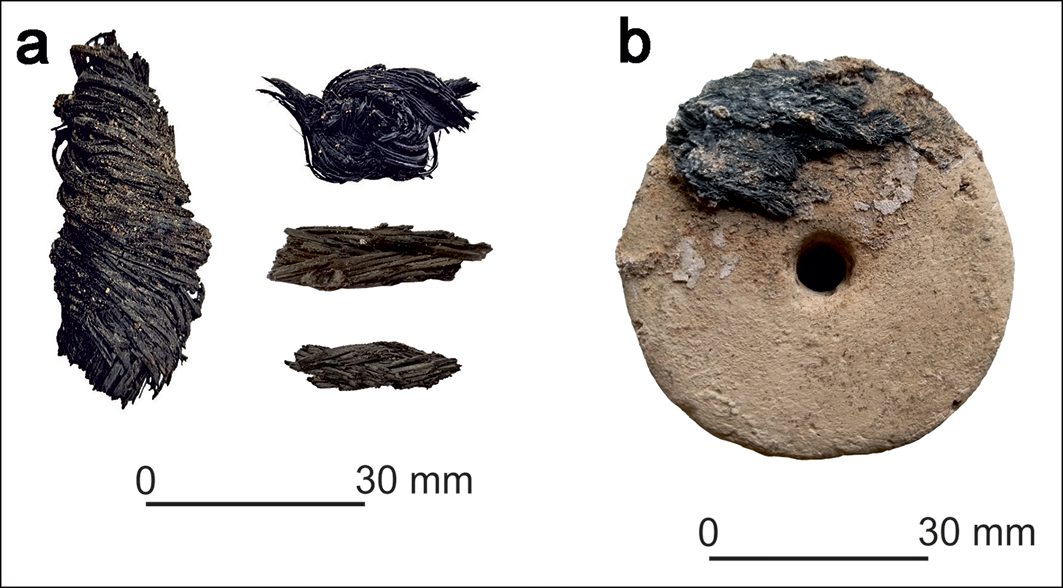
The remains of esparto grass (Macrochloa tenacissima) plant fibres were documented in association with the charred wood and loom weights. Most are braided and knotted rope fragments found in direct contact with the wooden timbers, especially timber 5, possibly indicating their role in securing the timbers (Figure 6a). Esparto grass is the most commonly used fibre in the Mediterranean region of Iberia for making items such as ropes, baskets, mats and footwear (Alfaro Giner Reference Alfaro Giner1984; Hernández Pérez et al. Reference Hernández Pérez2016: 99; Basso Rial et al. Reference Basso Rial2021: 330–31).
Evidence of esparto grass associated with the analysed context: a) esparto grass ropes located next to the wooden structure; b) charred esparto grass attached to loom weight 4.48 (figure by authors).

Charred esparto grass in the form of rope or disintegrated fibres was also found inside the central perforations of several loom weights (nos. 4.3, 4.17, 4.18, 4.26, 4.28 and 4.32). These small cords may have been used to tie the warp threads to each loom weight. Plaited esparto grass was attached to loom weight 4.48 (Figure 6b), which was in direct contact with the floor of the raised platform; the plaited fibres may therefore suggest that the surface on which the loom was placed was covered by a plant mat, a common form of floor covering in the houses at Cabezo Redondo (Alfaro Giner Reference Alfaro Giner1984: 170; Soler García Reference Soler García1987: 137; Hernández Pérez et al. Reference Hernández Pérez2016).
Spindle whorls
Four clay spindle whorls—three spherical and one biconical—were found on the raised platform (Basso Rial et al. Reference Basso Rial2023). These artefacts are instruments related to thread production, a process that precedes weaving in the production chain.
Results
Analysis of the loom weights
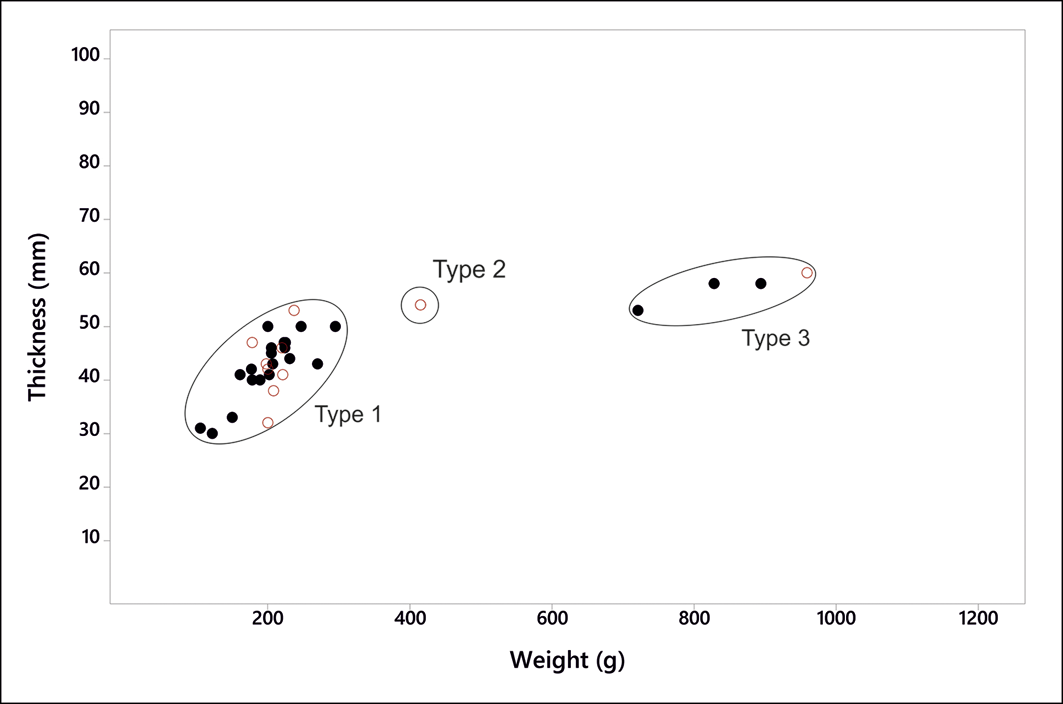
Three loom weight assemblages were identified based on differences in weight and thickness (Figure 7). Type 1 is the largest group, comprising the 28 best-preserved weights and another 16 that are incompletely preserved but have similar characteristics. The best-preserved examples provide an estimated average weight for this type of approximately 200g (median: 207g), with thicknesses ranging from 30–53mm. Type 2 consists of a single loom weight (no. 4.3), weighing approximately 400g and measuring 54mm in thickness. Type 3 includes the four largest (approximately 58mm thick) and heaviest (median: 850g) loom weights. Loom weight no. 4.11 was part of the main concentration, while nos. 2, 4.22 and 4.23 were found nearby. The predominance of type 1 loom weights suggests that they were actively used on the warp-weighted loom around the time of the fire. In contrast, the type 2 and 3 loom weights may have been stored nearby for potential future use in different configurations.
Grouping of loom weights by weight and thickness (n = 33). Black dots represent measured weights of well-preserved artefacts, open circles represent a hypothetical weight for less well-preserved artefacts (see Table S1) (figure by authors).

Figure 7 Long description
A scatter plot illustrates the grouping of loom weights by their weight and thickness. The x-axis represents weight in grams, ranging from 0 to 1200 grams, while the y-axis represents thickness in millimeters, ranging from 0 to 100 millimeters. The plot includes 33 data points, with black dots indicating measured weights of well-preserved artifacts and open circles representing hypothetical weights for less well-preserved artifacts. Three distinct clusters are labeled as Type 1, Type 2, and Type 3. Type 1 is located around 200 to 400 grams in weight and 30 to 50 millimeters in thickness. Type 2 is positioned around 400 grams in weight and 50 millimeters in thickness. Type 3 is situated around 800 to 1000 grams in weight and 50 to 60 millimeters in thickness. The plot highlights the variation in weight and thickness among different types of loom weights.
The quantity and good preservation of the type 1 loom weights permits speculation as to the size of the loom and the fabric produced, as well as the technical characteristics and quality of the textile. To produce a tabby weave using the type 1 loom weights, an arrangement in two rows of 22 would be required. Preserved fragments of this type of fabric are well documented for the Bronze Age in the Iberian Peninsula (Alfaro Giner Reference Alfaro Giner1984, Reference Alfaro Giner, Gleba and Mannering2012; Gleba & Harris Reference Gleba and Harris2019; Basso Rial et al. Reference Basso Rial2021). Given the combined thickness of the loom weights in both rows, this setup would produce a tabby fabric of about 1m wide. As each loom weight in this group is approximately 200g and averages 45mm in thickness, each would likely support 13–20 threads. Each thread would withstand a tension of between 12.5 and 15g. The resulting fabric would have a low thread density, with a thread count between 5–6 threads per cm (minimum) and 9–10 threads per cm (maximum). The relatively low tension per thread and moderate weight suggest that the threads were thin, probably not exceeding 0.5mm in thickness. The resulting textile would be quite open and delicate, similar to gauze or, if open only in the warp, to a weft-faced tabby (Figure 8a).
Hypothetical reconstruction of the analysed warp-weighted loom: a) with two rows of 22 weights each and a schematic representation of the resultant tabby weave; b) with four rows of 11 weights each and a schematic representation of the resultant twill weave (drawings by Ricardo Basso, inspired by the drawings of © A. Jeppsson and the CTR–University of Copenhagen).

Figure 8 Long description
The image shows two hypothetical reconstructions of warp-weighted looms. The first loom (a) features two rows of 22 weights each and a schematic representation of the resultant tabby weave. The second loom (b) has four rows of 11 weights each and a schematic representation of the resultant twill weave. The illustrations include labeled parts such as the cloth beam, uprights, heddle rod, and shed rod. The tabby weave is depicted as a grid of alternating dark and light squares, while the twill weave shows a diagonal pattern of dark and light bars.
Alternately, a twill fabric could have been produced to reduce the openness of the warp. A 2/2 twill weave would require four rows of 11 loom weights, with each supporting the same number of threads as in the previous configuration (13–20). The key difference between these two setups lies in the distribution of threads: four rows would allow roughly twice as many warp threads per cm but the fabric would be approximately half as wide. This would result in a narrower but denser and finer textile with a warp thread density ranging from 10–19 threads per cm (Figure 8b).
Wood analysis
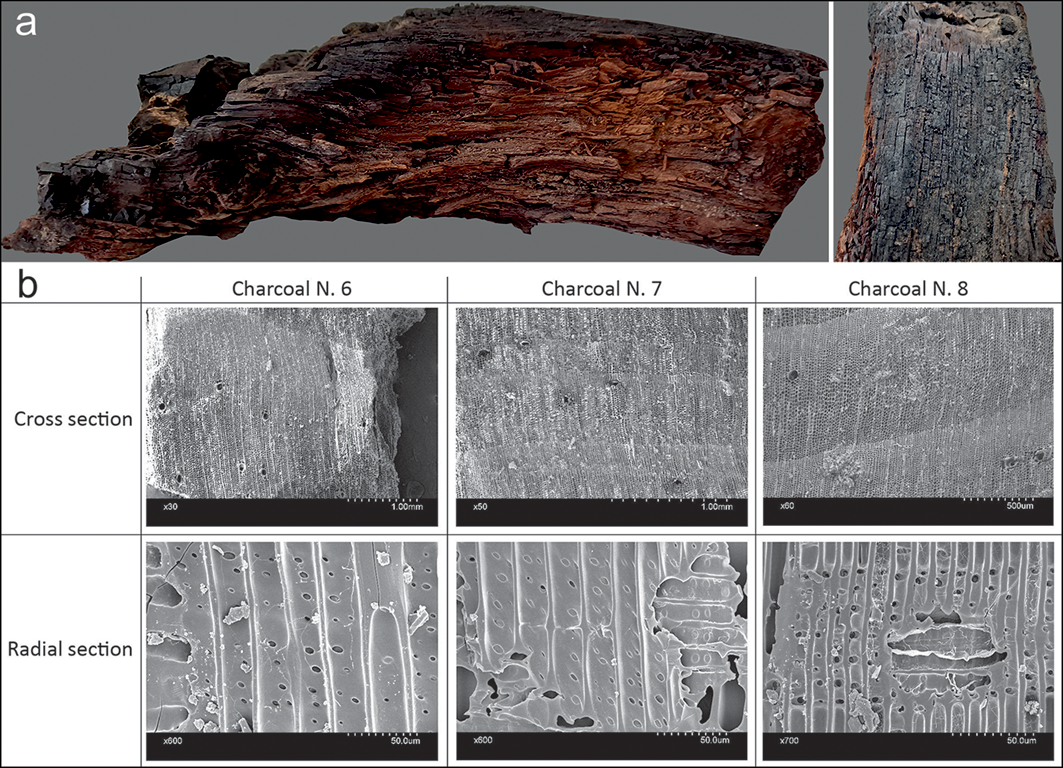
All analysed wood fragments belong to the same taxon: Aleppo pine (Pinus halepensis) (Figure 9). This species is known for having homoxyl wood (lacking specialised vessel elements and fibres) with resin-secreting canals distributed throughout the ring and heterogeneous rays in the radial section, with a crossfield containing two to five pinoid pits (Figure 9b) (Schweingruber Reference Schweingruber1990). The wood appears to have suffered substantial damage from xylophagous micro-organisms, as indicated by the presence of fungal hyphae. This is a common issue that can occur in wooden objects that may have been contaminated during their use. The observed weak curvature of the growth rings in all fragments suggests that the wood was obtained from long-lived trees that would provide wood of large diameter No fragments were found near the pith, suggesting that the wood likely came from the outer part of the tree trunk.
a) Different views of one of the best-preserved timbers (timber 6); and b) SEM images showing the main anatomical features of three wood pieces from the loom (figure by authors).

Figure 9 Long description
The image displays a well-preserved timber piece from two different angles. The left view shows the timber's lengthwise perspective, revealing its rough, weathered surface and internal structure. The right view presents a close-up of the timber's cross-section, highlighting its concentric growth rings and texture. Below, scanning electron microscope (SEM) images show cross-sections and radial sections of three wood pieces labeled as Charcoal Number 6, Charcoal Number 7, and Charcoal Number 8. Each section is magnified to reveal detailed anatomical features, such as cell structures and patterns, with measurements provided for scale.
The use of Aleppo pine as a raw material for this loom is consistent with the common practice in the Mediterranean region of the Iberian Peninsula, as this is one of the most prevalent pine species in the region. Pine was a frequently used resource in prehistoric settlements, serving a variety of purposes, including fuel and construction (e.g. Machado Yanes et al. Reference Machado Yanes2009; Carrión Marco & Grau Almero Reference Carrión Marco, Grau Almero, De Pedro and Soler2015).
Discussion
The data presented and analysed here confirm the documentation of a wooden warp-weighted loom that was in use with many loom weights when a fire affected the settlement of Cabezo Redondo around 1450 cal BC. This type of loom has been used for millennia, exhibiting a notable degree of structural similarity throughout this extensive period based on Greco-Roman iconographic representations and ethnographic descriptions (Barber Reference Barber1991). While it is challenging to ascertain the precise dimensions and form of the timbers for the Cabezo Redondo loom, it is nevertheless possible to interpret timbers 6 and 7, which are larger and have a roughly rectangular cross-section, as the remains of the upright posts, while timbers 5, 8 and 9, which are smaller in diameter, are likely to be the crossbeams (see Figure 8). The protruding branch at the end of timber 7 was possibly adapted for use as part of the structure to hold the upper beam.
The loom weights found alongside the wooden remains provide valuable insight into the development of textile production during the Bronze Age. From a typological perspective, the cylindrical, centrally perforated loom weight is the only type present across much of the Iberian Peninsula during the second half of the second millennium BC (Basso Rial et al. Reference Basso Rial2022). This type is also documented in other parts of Europe and the Mediterranean during the same period. Although cylindrical loom weights with a central perforation were used in various parts of Europe since the Middle Neolithic (Grömer Reference Grömer2016: figs. 57 & 61), their reappearance and widespread distribution in regions as distant as England (Haughton et al. Reference Haughton2021), northern Italy (Bazzanella et al. Reference Bazzanella2003) and Iberia suggests the contemporaneous and widespread use of this specific type during the Late Bronze Age.
Most of the loom weights associated with the loom documented at Cabezo Redondo are lighter than those found elsewhere at the site and are some of the lightest Bronze Age examples identified across the entire south-eastern Iberian Peninsula. In contrast to the usual weight range of 400–900g, these smaller pieces indicate a technical shift in textile production, possibly related to the manufacture of finer or more varied fabrics. A similar pattern is observed in the spindle whorls from Cabezo Redondo: lightweight examples and previously uncommon shapes, such as biconical and spherical forms, appear for the first time. These changes contrast with the earlier use of heavy, discoid spindle whorls, mainly associated with the production of flax thread, and support the hypothesis of an increasing adoption of wool as a textile fibre. Yet flax dominates preserved textile fragments, as shown by the tabby weaves documented in the region during the second millennium (Alfaro Giner Reference Alfaro Giner1984, Reference Alfaro Giner, Gleba and Mannering2012; Basso Rial et al. Reference Basso Rial2021); the only evidence of wool in Iberia comes from textile fragments from Tomb 121 of the Argaric site of Castellón Alto, dated between 1800 and 1700 cal BC (Molina González et al. Reference Molina González2003), which have not yet been published in detail.
The process of technical diversification in spinning and weaving has parallels in other areas of the Western Mediterranean during the mid-second millennium BC, such as the Terramare culture in northern Italy. The existence of cylindrical loom weights with central perforations is also observed in this region, along with an increase in the number of spindle whorls that is even more pronounced than in south-eastern Iberia. This proliferation has been interpreted as evidence of productive specialisation associated with the widespread use of wool at sites like Montale (Sabatini et al. Reference Sabatini2018). Although woollen textiles from the second millennium BC are rare in Europe, earlier examples, such as those from Clairvaux-les-Lacs (Switzerland) and Wiepenkathen (Germany), dated to the third millennium BC, indicate that wool was probably being worked in this period (Grömer Reference Grömer2016). Nevertheless, the extensive use of wool does not appear to consolidate until the mid-second millennium (Kristiansen & Stig Sørensen Reference Kristiansen, Stig Sørensen, Sabatini and Bergerbrant2019), when textiles continue to be mostly tabbies, as seen at Castione dei Marchesi (Italy) (Bazzanella et al. Reference Bazzanella2003) and in the burial of the Egtved Woman (Denmark) (Bender Jørgensen Reference Bender Jørgensen1986). The emergence of twill fabrics, and thus looms with multiple heddle rods, is linked to the widespread use of wool, which is easier to dye, allowing for patterned designs with different-coloured threads (Gleba Reference Gleba2008: 72). While twill fabrics did not become widespread in Europe until the early first millennium BC (Gleba Reference Gleba2008: 191), the earliest examples appear in Central Europe around 1500–1200 BC (Grömer Reference Grömer2016: 135), coinciding with the context of the loom at Cabezo Redondo.
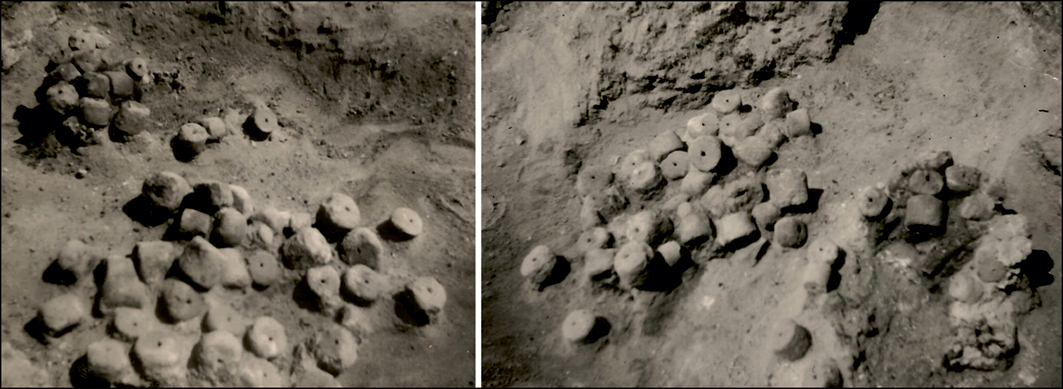
One hypothetical setup for the loom documented at Cabezo Redondo, based on the arrangement and characteristics of the associated loom weights, would produce twill fabrics. A configuration with only two rows of loom weights would allow the weaving of fine but open tabby fabrics, at least in the warp; however, this type of fabric—whether open tabby or weft-faced—is rare among the hundreds of Bronze Age textiles documented in Iberia (Alfaro Giner Reference Alfaro Giner1984; Basso Rial et al. Reference Basso Rial2021). In contrast, a setup with four rows of loom weights would have enabled the production of denser and more balanced twill fabrics. In one of the few surviving photographs of the other major concentration of loom weights uncovered at Cabezo Redondo (Figure 10), found in house XVIII, an arrangement of at least four lines of loom weights, reminiscent of looms with multiple heddle rods for producing twills, can be observed. These clues may point to the beginnings of substantial technical transformations in textile production, in line with processes observed in other regions of Europe and the Mediterranean, although the absence of preserved textile remains currently prevents confirmation.
Concentration of loom weights from House XVIII seen from different viewpoints (Soler García Reference Soler García1987: pl. 31).

Figure 10 Long description
The image consists of two black and white photos side by side. Each photo shows a concentration of cylindrical, centrally perforated loom weights scattered on a rough, uneven surface. The loom weights are clustered together, with some overlapping each other. The background appears to be a rocky or sandy terrain, possibly an archaeological site. The photos are taken from different angles, providing a comprehensive view of the loom weights' distribution and arrangement. These loom weights are significant as they provide valuable insight into the development of textile production during the Bronze Age. The cylindrical, centrally perforated loom weight is the only type present across much of the Iberian Peninsula during the second half of the second millennium BC. This type is also documented in other parts of Europe and the Mediterranean during the same period.
The recovery of several concentrations of loom weights from within interior spaces identified as domestic dwellings (houses XV, XVIII and XXXII) indicates that weaving was carried out by household groups, in contrast to the specialised production of metals, ivory or goldwork, which took place in non-residential contexts. However, the remains of the loom considered here were located on an exterior platform connected to houses XXXII and XXXIV, interpreted as an extension of domestic space into the outside area, generating a shared space where different household groups could co-operate in activities such as spinning, weaving and milling. Therefore, the presence of loom weights of various sizes and weights, which were used and stored on the analysed platform and in the other dwellings mentioned, suggests that textile production was diverse and fully embedded in everyday domestic practices.
Conclusions
The remains of Aleppo pine timbers, esparto grass ropes and clay loom weights excavated at Cabezo Redondo constitute one of the few archaeological discoveries of a vertical loom in which a substantial portion of the wooden structure is preserved. The association of these different elements permits a partial reconstruction of the morphology of these looms and allows us to propose technical and functional hypotheses regarding the types of fabrics that could have been produced—including an early potential for twills. The location of the loom, in a shared domestic space, reveals co-operative dynamics around textile production, suggesting a daily and decentralised activity in contrast to other specialised crafts such as metallurgy. The large number and variety of loom weights found in this locality and across the settlement reinforce the idea of widespread and complex textile production among domestic groups, where fibres like flax likely continued to be used prolifically while others, such as wool, began to gain increasing prominence. These findings situate Cabezo Redondo as a key site in the study of Bronze Age textile technology.
Acknowledgements
We are grateful to the Museo de Villena for their assistance in facilitating the study of the collection. We also thank María Lillo-Bernabeu and Zack Meyer for checking the translation and providing valuable feedback to improve the text.
Funding statement
This research was funded by the Spanish Ministry of Science, Innovation and Universities (MICIU/AEI/10.13039/501100011033) and by the European Regional Development Fund (FEDER) ‘A way to build Europe’, through the project ‘1500–900 cal BC: The last Bronze Age societies in the Levant of the Iberian Peninsula’ (PID2024-158760NB-I00), led by Gabriel García Atiénzar and F. Javier Jover Maestre. The work was carried out within the framework of a Juan de la Cierva postdoctoral contract awarded to Ricardo E. Basso Rial (JDC2023-052666-I) and a University Teacher Training grant (FPU) awarded to P. Martín de la Sierra Pareja (FPU19/00354), both funded by the Spanish Ministry of Science, Innovation and Universities. Funding for Open Access charge: Universidad de Granada.
Competing interests
The authors declare that they have no known competing financial interests or personal relationships that could have appeared to influence the work reported in this article.
Data availability
The authors confirm that all data generated or analysed during this study are included in this published article.
Online supplementary material (OSM)
To view supplementary material for this article, please visit https://doi.org/10.15184/aqy.2026.10312 and select the supplementary materials tab.
Author contributions: using CRediT categories
Ricardo E. Basso Rial: Conceptualization-Lead, Data curation-Equal, Formal analysis-Equal, Funding acquisition-Equal, Investigation-Lead, Methodology-Equal, Resources-Equal, Supervision-Equal, Validation-Equal, Visualization-Equal, Writing - original draft-Lead, Writing - review & editing-Lead. Gabriel García Atiénzar: Data curation-Equal, Formal analysis-Equal, Funding acquisition-Equal, Investigation-Equal, Methodology-Equal, Project administration-Lead, Resources-Equal, Supervision-Equal, Validation-Equal, Visualization-Equal, Writing - original draft-Equal, Writing - review & editing-Equal. Yolanda Carrión Marco: Investigation-Equal, Methodology-Equal, Supervision-Equal, Visualization-Equal, Writing - original draft-Equal, Writing - review & editing-Equal. Paula Martín de la Sierra Pareja: Investigation-Equal, Methodology-Equal, Supervision-Equal, Writing - original draft-Equal, Writing - review & editing-Equal. Virginia Barciela González: Funding acquisition-Equal, Writing - review & editing-Equal. Mauro S. Hernández Pérez: Funding acquisition-Equal, Writing - review & editing-Equal.


 Open access

