





Modern manufacturing technology has required – and continues to require – adequate training of personnel, especially considering that many of those currently working on the platform were, before 1959, log drivers on the Bistrița River, foresters, or peasant labourers who, aside from the tools of their trade passed down from father to son, had little exposure to anything else.Footnote 1
Introduction
The socialist transformation of Eastern Europe in the second half of the twentieth century was profoundly rooted in the project of industrialization – not only as an economic imperative, but as a political and social strategy aimed at reconfiguring everyday life. In the wake of World War II and under the emerging influence of Soviet-aligned models of development, countries across the region undertook rapid programmes of economic restructuring. These aimed not only to overcome backwardness and accelerate growth but to forge new social relations, institutions, and subjectivities.Footnote 2 In Romania, industrialization was cast as a civilizational leap: a way to overcome the agrarian past, eliminate class antagonisms, and cultivate a disciplined and ideologically aligned working class capable of embodying the future of socialism.Footnote 3
The question of socialist industrialization is rooted in the USSR’s class opposition between the peasantry and the proletariat. Stemming from debates on Soviet value theory, PreobrazhenskyFootnote 4 argued that industrialization would be possible only via primitive accumulation of a socialist kind. In opposition to Bukharin’sFootnote 5 ideas advocating a balance between smallholder food production and industrial development, Preobrazhensky championed the necessity of rapid industrialization: setting food prices below industrial products would ensure the proletariat’s cheap food supply while also converting the USSR’s large peasant population into waged labourers. The debate was effectively settled when Stalin adopted the goal of rapid accumulation but executed it through the speed and brutality of mass collectivization, a path that turned Preobrazhensky’s economic theory into a violent state mandate.Footnote 6
Stalin’s ideasFootnote 7 were largely adopted in post-war Romania through thinkers such as Hilel Kohn and Ion Rachmuth.Footnote 8 With land collectivization officially underway,Footnote 9 they both acknowledged that the rural population would play a major role in industrialization efforts, and rural household resources would have significant contributions in ensuring workforce subsistence. Furthermore, recognizing the existence of value in socialism (much like in capitalism), these planners also stressed profitability deficits in Romanian enterprises due to outdated technological capabilities. Considering the latter assumption, RachmuthFootnote 10 even proposed a “dual accumulation strategy” emphasizing lower wages and enterprise autonomy to raise profitability. Arguably, the possibility of lower wages rested on the idea that numerous industrial workers retained ties to their rural households.
In the late 1950s, the dual accumulation strategy began to yield results: “low wages exploded local labour markets, with workers switching jobs in search of not merely a cheaper life but also better working conditions, housing, and overall better prospects for moving up the skill ladder”.Footnote 11 Austerity policies kept wages below workers’ reproduction costs, while managerial decentralization granted enterprises relative autonomy. As GramaFootnote 12 notes, only in the late 1950s did plans for new productive investments emerge. Until then, efforts focused on expanding existing factories, technological upgrades, and managing wages. The first major investments of the 1960s introduced new production capacities and gradually shifted exports from raw materials to intermediate goods, while reducing food exports. Entering production in 1959, the flagship chemical plant in Săvinești was one such investment that exemplified the shift toward intermediate goods production.
1965 marked the rise to power of Nicolae Ceaușescu, but it also signalled a rupture with the Soviet Union and the pursuit of an autonomous industrial agenda. The Soviet decision to designate Romania primarily as an agricultural producer was met with resistance and ultimately rejected. This strategic shift occurred against the backdrop of a fourteen per cent increase in industrial production between 1958 and 1963, largely due to Gheorghiu-Dej’s (General Secretary of the Romanian Workers Party between 1955 and 1965) vision and government policies to intensify national industrial development – an approach that persisted throughout the socialist period.Footnote 13
Yet, this transformation was far from uniform or immediate. While post-war Romanian leaders envisioned a decisive break with rural social forms, the actual process of class formation was more protracted. Creating the working class that enabled socialist accumulation in Romania depended not on a clean rupture from peasant life but on the gradual incorporation of rural labour into industries. Workers entered the wage economy while often maintaining subsistence practices, commuting from villages, and participating in dual household structures that guaranteed access to other resources before ultimately settling in urban settings. Therefore, full proletarianization was never achieved, simply because industrialization outpaced the urban population that constituted the working class.Footnote 14 The peasant worker was always present, shaped by urban housing scarcity and the overall improvisational character of socialist planning.
While much scholarship has emphasized disillusionment, inefficiency, and symbolic compliance during socialism,Footnote 15 more recent work has complicated this picture, highlighting the ambivalence and adaptation that shaped workers’ everyday engagements with the industrial workplace.Footnote 16 Labour instability was a central feature of Romania’s post-war industrialization, employment in industrial enterprises was one among many survival strategies. Workers frequently changed jobs due to low wages, erratic production, and shortages of raw materials. Food shortages and periods of industrial stagnation prompted urban workers to leave the factories to engage in agricultural labour, where they could earn more than double the average factory wage.Footnote 17
Workers’ control over the labour process was often exercised through informal shopfloor solidarities, enabling skilled workers to manipulate wage norms and secure access to raw materials and better tools, often sustaining production amid shortages and managerial pressure.Footnote 18 Accounts from other socialist countries depict similar dynamics, albeit during “late socialism”.Footnote 19 Socialist labour cultures for East German and Hungarian workers were marked not only by growing alienation and disappointment, but also by ambivalence, adaptation, and pride. Workers could express discontent while also internalizing professional identities, social hierarchies, and the moral value of productive work. Ultimately, the working class was not a passive victim of systemic inefficiencies, but an active agent shaped by, and shaping, the world of factory life. This duality – between disillusionment and embeddedness – offers a compelling framework for interpreting local cases of stability and engagement.
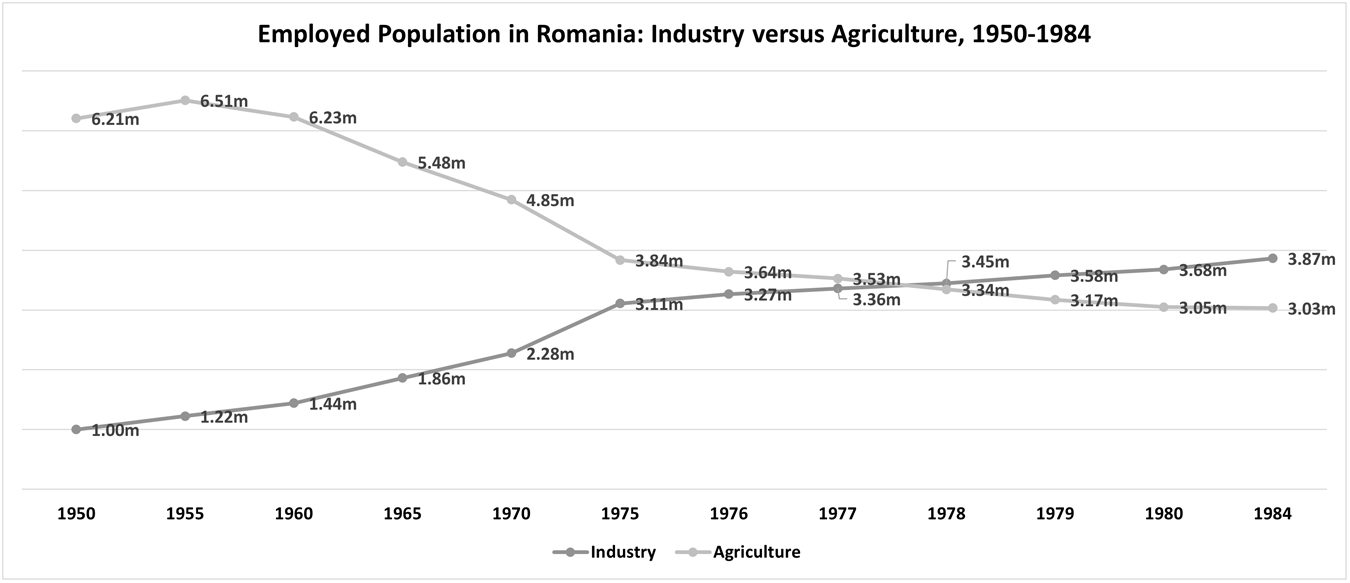
This paper contributes to debates about working class formation, subjectivity, and state planning during socialism. By temporally extending Cucu’sFootnote 20 analysis of postponed proletarianization in post-war Transylvania, this paper argues that it functioned as a sustained instrument of primitive socialist accumulation beyond the early socialist period. While it initially represented a form of accumulation by combining urban industrial wage labour with rural resources during early socialism (1945–1955), the Săvinești case shows the process persisting until 1989. The deficiencies depicted until the mid-1950s carried over to the following decades. In tune with Eyferth’s depiction of socialist accumulation,Footnote 21 the Romanian state utilized the rural household to subsidize industrial growth. Maintaining a rural foothold provided the “peasant-worker” with their own food and housing, thereby lowering the necessary labour costs. The local working class was constantly engaged in seasonal work, rural–urban commuting, faced urban housing shortages, unequal opportunities for certain social groups, and the overall ideological contradictions of the socialist state that often failed to realize its promises of proletarianization. As employment in industry increased and employment in agriculture decreased (see Figure 1), the proletarianization issue morphed from “endemic labour shortages”Footnote 22 to labour turnover and retention problems. In response, numerous studies on the subject emphasized the need to extend labour reserves to rural areas, culminating in the “urban area” concept: rural and urban areas were to be treated as integrated economic units that blurred rural–urban boundaries. These studies indirectly acknowledged the failures of socialist proletarianization.
Employed population in Romania’s agriculture and industry, 1950–1985.

Crucially, this study distinguishes between two interconnected but distinct facets of proletarianization: the structural process of economic dependence on wages and the subjective process of becoming a fully integrated member of the industrial working class. In the context of Săvinești, the socialist state’s strategy of “postponed” or “partial” proletarianization was a deliberate accumulation mechanism that kept workers tied to rural resources to cushion low wages and minimize the state’s investment in urban reproduction costs. Consequently, the formation of worker identity and industrial discipline – the subjective dimension – did not emerge from a clean rupture with the agrarian past but was negotiated through factory politics. In this environment, the informal authority and paternalistic mentorship of an “urban settler nucleus” served as the primary vehicle for social proletarianization, integrating a workforce that remained structurally tied to the village. This spatial reality was formalized through the “urban area”, where villages functioned as industrial dormitories, making commuting and access to urban housing central features of the lived experience of class formation. Between 1959 and 1989, these dynamics evolved from the moral investment and pride of the initial construction phase to a more complex struggle over labour turnover, retention, and shop-floor discipline as the workforce became increasingly fragmented between settled urbanites and rural commuters.
In addition, the generational gap between settled urban cohorts and commuting peasant workers created unequal opportunities for the latter. Echoing GramaFootnote 23 and Bartha’sFootnote 24 accounts of working-class reactivity during socialism, the Săvinești case shows not only how certain industrial workers could inhabit rural and urban logics simultaneously, but also how the informal authority of experienced workers – that formed the urban settler nucleus – shaped factory politics alongside local forms of commitment and legitimacy to industrial labour. Rather than enforcing discipline through the technocratic management prescribed by socialist ideology, the everyday operation of the factory rested on paternalistic systems of on-the-job training, informal mentorship, and moral leadership of experienced workers. Supervision and knowledge transmission were often more relational than technical, with foremen and early cohorts acting as intermediaries between state goals and shop-floor realities. Prestige and stability depended more on relations and loyalty to senior colleagues, and one’s position within factory networks than on performance or political credentials. However, these inequalities – between chemical operators, engineers and foremen, did not fundamentally undermine the system. On the contrary, they formed part of a negotiated structure of expectations, in which gradual upward mobility and recognition were accessible, if unevenly distributed.
Drawing on archival records, oral histories, and local media, the article traces the making of an industrial workforce in Săvinești between 1959 and 1989. It begins by situating proletarianization within broader theoretical and comparative debates, then turns to the national context of socialist industrialization and the mechanisms that shaped workers’ incorporation into industry. The analysis then examines the specific trajectories through which workers at Săvinești were recruited, trained, and integrated. The final section highlights how production relied not only on formal planning but on improvised shop-floor practices, informal supervision, and the authority of experienced workers.
In the sections that follow, the paper first outlines the historical and institutional context of industrial planning in Romania, with particular attention to the chemical sector. Second, the paper traces the evolution of the workforce at Săvinești through the lens of partial proletarianization. Third, it describes how informality played a role in shaping day-to-day activities with emphasis on coercion and paternalism. The last section presents the moral economy that motivated workers to first construct the industrial facilities, then continue working in them throughout the socialist period.
Partial, Semi- and Postponed Proletarianization as Accumulation Strategies
Proletarianization is defined as the historical process through which people lose control over the means of production and come to depend on waged labour.Footnote 25 This transformation has unfolded across diverse contexts – rural as well as urban – over several centuries, and not solely in industrial waged labour settings. Against teleological models that equate industrialization with a clean rupture from agrarian life, Tilly argues that the proximate mechanisms of proletarianization have been primitive accumulation as a continuous process rather than differentiation–social change resulting from labour specialization and separation of spheres (e.g. household and workplace).Footnote 26 Intermediate arrangements, where wage labour coexists with access to non-wage resources, are therefore not anomalies but recurrent configurations of labour mobilization. Van der LindenFootnote 27 adds to Tilly’s insights by emphasizing that proletarianization was driven not only by capital formation but also by state-building through taxation and protection of property rights. Similarly opposed to teleological accounts, he stresses that proletarianization unfolded in two distinct stages – first predominantly rural under decentralized capital formation, and later urban as industrial concentration reshaped labour markets – underscoring its non-linear and contingent character.
To position forms of proletarianization within global debates, it is useful to draw on world-systems theory and scholarship on colonial labour regimes. World-systems perspectives postulate that during feudal Poland, Czechia and Hungary, various “intermediate forms of [forced] labour” combined serfs’ agricultural labour with industrial labour when the lord’s estate expanded to both spheres. These developments show “the texture of the European division of labour to be getting more complex already in the sixteenth century”.Footnote 28
Comparative depictions also emerge from studies of colonialism and capitalism, which argue that coerced and “semi-free” labour were not just precapitalist remnants but integral to capitalist expansion. BoatcăFootnote 29 shows that labour regimes in Latin America and Eastern Europe, including forms of “second serfdom” – a reimposition of serf-like obligations under modern capitalist conditions – and state-controlled labour, functioned as integral components of capitalist accumulation in the world-system’s periphery. Brandon and SarkarFootnote 30 further argue that colonial labour systems – characterized by restricted mobility, coercion, and dual livelihoods (the simultaneous reliance on wage labour and subsistence production) – were central to the formation of the working class within the global division on labour, not deviations from capitalist norms.
Ultimately, Balibar and WallersteinFootnote 31 identify “partial” wage labour as a structural feature of the modern world-economy: households across the capitalist world-economy have historically relied on mixed forms of remuneration, combining wage labour with subsistence or informal income, making partial proletarianization a systemic feature. Why were most households historically only partially dependent on wages? To answer, WallersteinFootnote 32 contrasts two household types: those relying almost entirely on wages (proletarian) and those where wages form a smaller share of total income (semi-proletarian). The key difference lies in the minimum wage threshold each worker considers acceptable. In a fully proletarian household, wages must cover all basic needs for survival and reproduction, so the worker could refuse jobs that pay below this level. By contrast, in semi-proletarian households, other sources of income – such as subsistence farming or informal employment – reduce reliance on wages.Footnote 33
Peasant studies have also long debated the persistence and transformation of agrarian social forms under capital accumulation schemes, with writings framing the tension between household autonomy and differentiation. ChayanovFootnote 34 focused on the internal logic of peasant households, stressing how demographic cycles, gender roles, and generational dynamics shape production and reproduction. For him, household autonomy and self-exploitation – rather than wage dependence – explain the resilience of peasant farms under accumulation pressures. Such dynamics are not unique to socialism; they appear in capitalist contexts as well. Instead of predicting the displacement of peasant farms, KautskyFootnote 35 emphasized their persistence alongside large capitalist enterprises, conditioned by continuous adjustments in labour division and market participation. These classic positions framed proletarianization as either resisted or adaptable, but recent scholarship systematized these ideas under pluriactivity. Marsden,Footnote 36 for example, critiques structuralist models for ignoring the intricacies of pluriactivity in rural households – their strategies of combining agricultural production with ancillary income sources – which produce labour processes that remain only partially commoditized.
Agricultural pluriactivity cannot be understood as a purely “rural” phenomenon but as part of broader processes of capitalist restructuring, where wage income and agricultural work are central components of family reproduction strategies. Farming households adopt ambivalent strategies – maintaining small-scale farming while reallocating labour to other sectors – that blur the boundaries between rural and urban economies.Footnote 37 Despite the growth of wage income and industrial employment, the persistence of family farming illustrates how reproductive rationality, rooted in extended family cohesion, functioned as a critical subsidy for accumulation strategies. By maintaining subsistence plots and family labour in the village, rural households partially absorbed the costs of worker reproduction.Footnote 38
In post-war Romania, seventy-seven per cent of the population resided in rural areas where private land ownership sustained patriarchal household authority.Footnote 39 Between 1946 and 1957, the state instilled a mandatory quota system to control the food supply flowing from rural to urban areas. Serving as a structural prerequisite for collectivization, it dismantled the rural social fabric by transferring land ownership to state-managed collective farms. This system facilitated primitive accumulation by extracting agricultural surpluses to provide low-cost food for urban workers, directly subsidizing the regime’s policy of forced industrialization. By April 1962, the state officially declared the completion of the socialist transformation, having successfully socialized roughly ninety per cent of rural plots.Footnote 40 While collectivization dismantled household land ownership, the retention of dwellings and small subsistence plots (loturi în folosință) preserved a critical material foothold.
Postponed proletarianization was an analogous form of proletarianization, emerging from the state’s accumulation strategy. Rather than fully commodifying labour, the Romanian state deliberately slowed the proletarianization of the rural workforce, keeping peasants tied to land while “starving them enough” to compel partial wage dependence. This strategy relied on a rural–urban fabric producing multiple labour forms – wage labour, forced labour, and seasonal work – allowing factories to secure manpower without overwhelming urban infrastructure and shifting reproduction costs onto peasant households.Footnote 41 These perspectives provide a comparative frame for analysing Romanian socialism, not by collapsing it into capitalism, but by highlighting how different capital accumulation regimes – capitalist, colonial, and socialist – developed structurally analogous solutions to the problem of securing labour. However, contrary to state rhetoric, our claim is that the coexistence of industrial employment and subsistence practices in socialist Romania was not a transitional phase, but a structurally embedded condition shaped by planning priorities and infrastructural constraints.
Contextualizing Proletarianization in Socialist Romania
Proletarianization in socialist Romania unfolded through a set of institutional mechanisms that linked industrial expansion, rural transformation, and the state’s capacity to coordinate mobility, housing, and workplace integration. Sociological studies from the 1970s consistently show that the movement of rural workers into industry did not occur as a sudden break with agrarian life but through overlapping, often protracted transitions. Across regions and sectors, newly hired workers confronted inadequate housing, long commuting distances, and limited institutional support – factors that shaped the tempo, stability, and everyday experience of becoming industrial workers.Footnote 42
National surveys shed light on the social identities emerging from these conditions. Among these, Firuță’sFootnote 43 large-scale study stands out because she identified a distinct lifestyle among commuting workers (navetiști) – aptly named “transitional” – marked by mixed incomes, continued entrenchment in rural households, and behavioural norms shaped by rural communities. She distinguishes between a commuter lifestyle and a more urban-integrative one but emphasized that both constituted significant segments of the working class. This transitional lifestyle involved daily movement between village and city, reliance on self-produced food, and gradual exposure to urban cultural models. Far from being temporary, these dual identities persisted, shaping workplace behaviour, social integration, and workers’ expectations of advancement.
Studies from eastern Romania confirm the durability of these arrangements. In Vaslui and Bârlad, over ninety-seven per cent of commuting workers maintained rural residence and agricultural activity despite having completed vocational training.Footnote 44 Commuting agreements between communes and factories were not simply logistical solutions, but mechanisms that tied workers to industrial employment while maintaining their rural households. Reports from local newspapers document frequent delays in buses and trains, driver indiscipline, missed stops, and overburdened schedules, indicating that infrastructural weaknesses were integral to the everyday experience of proletarianization.Footnote 45 These challenges reinforced the marginality of commuting workers and often limited their involvement in factory social life.
Studies on migration further contextualize these patterns. Research in Gârbou (north-west Romania) and surrounding villages reconstructed migration trajectories for more than 2,400 individuals, showing a sharp rise in industrial migration after 1945, especially among youth entering vocational schools. Rural household structures shifted toward semi-agrarian and non-agrarian forms, with cooperatives increasingly relying on women and elderly workers as men moved into industry.Footnote 46 Gendered divisions of labour remained pronounced: in Drăguș (central Romania), men are documented to have commuted to industrial centres while women remained active in cooperative agriculture, sustaining mixed rural economies.Footnote 47
High turnover among new employees was also a recurring pattern. Research from enterprises such as the “Ceahlău” Mechanical Works in Piatra-Neamț reported that up to seventy per cent of newly hired workers left shortly after employment, typically citing misalignment between training and tasks, lack of basic amenities, and deficient management. One qualified young worker, recently demobilized from the army, complained of being reassigned to sweeping or carrying materials during production lulls, interpreting such tasks as a misuse of skills and a sign of disorganization.Footnote 48 Cernea et al.Footnote 49 also reported that 20–25 per cent of the workforce in certain enterprises was mobile, generating substantial costs for managers already dealing with labour shortages. As a result, enterprise leaders came to rely on a core group of “traditional” workers and engineers. Acts of indiscipline were also relatively common among newly urbanized populations. Absenteeism was especially prevalent, affecting around ten per cent of the workforce on average in some factories, particularly among urban workers. These trends persisted in subsequent decades, particularly amid ongoing shortages of skilled personnel.
Housing allocation played a decisive role in stabilizing the workforce. Scarce and tightly managed, housing served as a key mechanism through which workers were integrated into the industrial sphere. Studies show that marriage, family size, and perceived social stability often determined placement on housing lists, transforming material scarcity into a system of moral evaluation.Footnote 50 Housing thus institutionalized distinctions between settled industrial workers and those who remained in long-term commuting regimes. Other regions exhibited similar dynamics. In Podul Iloaiei (eastern Romania) and Bucharest, commuting workers were found to be equally productive but less socially integrated than resident workers, confirming that spatial and residential arrangements shaped access to institutional participation.Footnote 51 Although approximately one million urban housing units were built by 1977,Footnote 52 the “urban peasants” were still part of Cluj’s (north-west Romania) industrial landscape as well, with many enterprises employing commuting workers from nearby villages.Footnote 53
Urbanization occurred under conditions of acute housing shortages in the 1950s, with major worker districts constructed only in tandem with the expansion of industrial capacity. This phenomenon is well documented in cities like Cluj-NapocaFootnote 54 or Călan.Footnote 55 Despite limitations, the relocation of rural populations to urban areas represented an improvement in living conditions. Access to amenities such as central heating, electricity, running water, and gas constituted a substantial shift from the material realities of rural life.Footnote 56 Under these conditions, the number of waged workers rose significantly – from 2.1 million in 1950 to 8 million by 1989, of which 4.5 million were employed in industrial sectors.Footnote 57As evidenced in Figure 1, employment in agriculture decreased and was overtaken by industry in 1978.
Finally, studies on enterprises with labour deficit show that turnover among young rural workers stemmed not from labour scarcity but from poor working conditions, low occupational prestige, and weak integration into factory teams.Footnote 58 These findings highlight that proletarianization was shaped not only by state policy but by infrastructural constraints, workplace practices, and the persistence of rural attachments. Taken together, they show that proletarianization in Romania unfolded through nationally consistent mechanisms: staged integration, extended commuting regimes, selective housing allocation, and enduring ties to rural economies. Săvinești fits into this broader landscape as one of the many socialist industrial platforms that absorbed labour through these intertwined processes.
Persistent labour turnover and personnel fluctuation meant that the top-down implementation of the socialist revolution was not entirely legitimized. In response, planners embedded recruitment and retention within broader spatial policies, largely acknowledging the flaws of the socialist state’s proletarianization efforts. One key solution was the “urban area” concept, developed by Miron Constantinescu and Henri Stahl, which redefined urbanization as a continuum encompassing both towns and their rural hinterlands.Footnote 59 Rather than treating rural and urban as separate spheres, this approach integrated them into a single economic unit, linking industrial centres with surrounding villages through commuting and resource flows. Commuting was the mechanism that reinforced the dual-status worker, dependent on the factory wage but socially anchored in the village structure. The rural foothold was thus a necessary resource that made long-term commuting economically viable for both the worker and the state.
Factories relied heavily on rural labour reserves, formalizing arrangements with agricultural cooperatives to secure seasonal and long-term workers. Commuting networks – buses and trains – were organized around shift schedules, turning rural communities into functional dormitories for urban factories. Stahl explicitly argued that “we can no longer distinguish, as we used to, between a rural and an urban area”, emphasizing that rural localities should serve as satellites for industrial production and housing for workers.Footnote 60 This normative vision aimed to overcome rural “backwardness” through systematic investment while subordinating rural life to urban industrial growth.
The urban area concept thus operated as a policy tool for regulating labour supply and mitigating workforce instability. By embedding labour retention in spatial planning – through housing, transport, and social infrastructure – planners sought to transform class tensions into urban development challenges. Stahl’s idea of rural areas as dormitories captured the essence of this regime:Footnote 61 a socialist economy built on spatially integrated labour circuits where industrial wage work coexisted with rural livelihoods, ensuring flexibility for accumulation and continuity of production.
Moreover, these transformations raised both ideological and practical challenges. First, the massive influx of rural inhabitants into urban areas prompted concern about whether newcomers could internalize socialist values. In many areas, newly arrived rural populations eventually outnumbered pre-existing urban residents. Second, the economic direction pursued by the state required a skilled workforce. As a result, the education system received major investments, which yielded measurable outcomes: the share of the population with higher education increased by over fifty per cent between 1960 and 1966. General levels of schooling also improved; a minimum of basic education plus vocational or secondary training became a prerequisite for employment in most qualified positions. The number of students enrolled in primary education doubled between 1955 and 1977 to over 3 million. The establishment of industrially specialized vocational high schools further increased educational attainment, with over 600,000 students enrolled in such institutions by 1976.Footnote 62
These experiences – long commutes, unstable early employment, reliance on rural households, and slow, uneven integration into factory life – show that proletarianization beyond 1959 unfolded not via a generalized labour shortage as before, but through everyday negotiations of distance, housing scarcity, and mismatched skills. For many new industrial workers, becoming proletarian meant managing dual livelihoods, coordinating shifts with agricultural cycles, and navigating factory environments where turnover was high, and workplace hierarchies often unclear. These lived trajectories illuminate how socialist industrialization operated on the ground: the socialist accumulation strategy still relied on workers’ continued access to rural household resources, which cushioned low wages and allowed new industrial platforms such as Săvinești to function despite infrastructural shortages. Seen from the shop floor and the household, proletarianization thus mirrored the broader logic of socialist accumulation – industrial growth advancing through workers’ dual livelihoods rather than through a complete break from rural life.
Forms of Proletarianization in Săvinești
Romania’s planning committee designated the chemical industry as one of the primary sources of economic growth in the early years of the 1970s.Footnote 63 The decision was warranted by the shift away from heavy industry on the one hand, and the focus on more technologically advanced sectors on the other. As a result, investments gradually shifted from heavy industry and focused to a greater extent on industrial sectors driven by technological innovation.Footnote 64 Alongside the polyester producing enterprises near the city of Iași, the Săvinești platform was a hallmark of Romanian chemical production. The site was chosen due to its proximity to the Bâtca Doamnei hydro-electric power plant and the city of Piatra-Neamț’s available labour pool. Founded in 1958, the platform expanded significantly in the following decades, reaching a peak of approximately 14,000 employees spread across numerous enterprises.
Rhetorically, daily life both at the Săvinești platform and in the town of Piatra-Neamț was shaped and legitimized by the national prestige of the regional industrial complex. The platform’s nationally strategic status and technological level were also central to the rhetoric employed by socialist-era leaders. Among the various accounts surrounding regional planning practices, one notable anecdote involves the Prime Secretary of the Romanian Workers’ Party, Gheorghe Gheorghiu-Dej: during a visit to Piatra-Neamț, he is said to have stood on the top floor of the Ceahlăul Hotel – now the city centre – and gestured toward the location of future roads. At the time, these roads were primarily designed to facilitate transportation to and from Săvinești.
The first generation of workers at Săvinești emerged in 1958, with the construction of the Relon units (alongside Melana, one of two major enterprises producing synthetic fibres) initiated through the involvement of the Bucharest Assembly Enterprise (BAE), which took part in most of the platform’s construction projects. Construction work was carried out under the supervision of BAE engineers and consisted primarily of manual excavation – due to the lack of necessary machinery – followed by industrial infrastructure construction.Footnote 65 Working conditions during this early phase of industrial development were challenging. However, the presence of a core group of workers who contributed to the physical building of the plant, combined with the promise of future employment in a complex considered a flagship of Romanian industrialization, laid the foundation for the long-term rootedness of Săvinești’s labour force. In many respects, the construction sites of the late 1950s would go on to serve as the generational base for Neamț County’s industrial workforce until 1989 and beyond that would form the generational gap between established urban workers and recurring commuters.
Many core workers – especially those involved in the initial construction and early operation of the plant – experienced labour not as alienation but as a source of pride, professional identity, and moral investment. Participation in the socialist project was grounded in tangible achievements and symbolic milestones, such as the production of the first synthetic fibres. This stance emerged precisely as the accumulation strategy began to yield results in the early 1960s, and investment into new enterprises became possible. In this sense, Săvinești exemplifies a labour culture shaped not by disaffection,Footnote 66 but by embeddedness in a socialist project where commitment to work was sustained through participation and pride in building the future.Footnote 67
As the initial phase required labour for the infrastructure projects meant to accommodate the future means of production, work on the construction sites was carried out by newcomers with no prior training in the chemical field but drawn by the promise of a future career within what was already a renowned industrial project. As a former chief engineer of Melana recalled:
there was a shortage of staff, very few engineers […] some came from construction, a few experienced ones from Făgăraș (central Romania), and the rest of us were young […] specialists were valued, chief engineers, section leaders […] they would put you there regardless of whether you were a priest’s son.
Until the late 1960s, proletarianization was characterized by a “heroic” phase of moral investment, where labour was tied to the prestige of building a socialist flagship. From the 1970s onward, this shifted to a “disciplinary” phase, as the state struggled to integrate a massive influx of rural commuters who lacked the foundational loyalty of the initial settler core. The factories in Neamț County drew primarily on rural labour within a 30–40 km radius but also employed workers from Piatra-Neamț and more distant regions. Agreements were established between local administrations and the Săvinești enterprises. For instance, a specific village within a commune would sign an agreement with a factory to supply a fixed number of workers willing to commute. These agreements were explicitly referred to – for example, as “the Țibucani agreement”, a village north of to the city. Long-distance commuting often meant workers had to be at designated pick-up stations as early as 4.00 am, since shifts began at 5.30 am. The work schedule was organized in six- or eight-hour shifts, with the length of each shift determined by the level of pollution in the production area. Production was continuous, with six-hour shifts running from 6–12, 12–18, 18–0, and 0–6, and eight-hour shifts from 6–14, 14–22, and 22–6.Footnote 68
These agreements symbolized the lived experience of the individuals involved; being included in a rural–urban commuting agreement implied residence in a rural household and lack of urban housing. With urban expansion, many of these workers were gradually occupied apartments in newly built housing blocks and eventually relocated to Piatra-Neamț, thereby ending their dependence on such commuting arrangements. However, archival sources show such agreements persisted until 1989, as segments of the workforce were constantly listed as participants in commuting arrangements.Footnote 69
The transportation network was managed by the two major industrial plants in Săvinești. At the designated shift times, columns of buses lined up at the platform entrance, waiting for the outgoing shift. These were subsequently replaced by buses arriving at staggered intervals depending on distance, bringing in workers for the next shift. Commuting from the nearby city was also organized by bus. A respondent recalled columns of 30–40 back-to-back buses transporting workers to the platform.Footnote 70 The Piatra-Neamț–Săvinești route was operated three times daily following the shift schedule. In addition, commuting by train became possible once regular services were introduced: trains arrived from both the north (via Piatra-Neamț) and from Bacău, the largest city located approximately 50 kilometres to the south (Figure 2).
Locations associated with the chemical industry in Romania.

Skilled personnel with vocational training were transferred from other factories in the region or from Transylvania. A significant number of foremen – particularly mechanics and engineers – were, for example, transferred from Ocna Mureș, which hosted a specialized vocational school.Footnote 71 As in many newly industrialized areas in Romania,Footnote 72 the Săvinești platform initially attracted labour from nearby industrial centres, such as the Chemical Plant at Valea Călugărească and the refineries around Ploiești and Onești. However, qualified personnel transfers were rare. Nevertheless, by the late 1960s, there was less demand for trained professionals and more for unskilled labourers, primarily employed on the construction sites of adjacent industrial units. A common practice was the partial transfer of qualified staff from existing units to the newly established ones, with the remainder of the workforce made up of recent graduates. With a core nucleus in place, new recruits were placed under the supervision of experienced workers from the beginning, with the promise of formal employment that included accommodation in Piatra-Neamț.Footnote 73
In tune with the studies about the labour issues of the time, the structural issues in Săvinești were primarily related to personnel turnover and absenteeism, largely due to the lack of urban housing that, in turn, enforced rural-urban commuting. Due to these issues, management was also instructed to bring in groups from orphanages, organized in a regimented, almost military fashion in an effort to fulfil labour needs. However, these measures only added to the recurrent disciplinary challenges. The workforce included individuals deemed unfit or unreliable, including those with alcohol problems. Ultimately, these recruits became part of the same issue, rarely remaining employed: “they were oddballs, drunks […] they stayed a week or two and then disappeared again”.Footnote 74 “Peasant workers” were more susceptible to disciplinary measures due to fatigue from agricultural labour. Archival records document that they were often caught sleeping during inspections – incidents treated as “minor infractions” – alongside more common issues: alcohol consumption and smoking. In response, documents from 1965 proposed “personnel briefings” with rule enforcement in mind: staff meetings revisiting internal regulations, including potential sanctions applied by foremen and factory managers.Footnote 75
In May 1970, the plant’s press outlet started publishing its own internal bulletin,Footnote 76 which functioned as a disciplinary tool. It featured satirical content targeting absenteeism, tardiness, and failure to comply with disciplinary expectations. For instance, late arrivals were photographed, and the resulting materials were sent to the relevant foreman or factory manager. GramaFootnote 77 documents a similar phenomenon, noting that factory bulletins served as a key vehicle for disseminating the “productivity discourse”. These materials – created by party activists, journalists, or volunteers – adhered to a consistent editorial approach: they condemned laziness, ridiculed absenteeism, mocked undisciplined youth, celebrated hard work, and highlighted exemplary individuals as role models. In addition, employees were subjected to “investigative raids” for disciplinary violations – such as non-compliance with occupational safety norms or reading newspapers during work hours.Footnote 78 They were interviewed, and the audio recordings of these conversations were broadcast through the factory’s loudspeaker system. Sanctions for unjustified absences ranged from warnings and written reprimands to demotion or dismissal.
Proletarianization went hand in hand with urbanization, much like in other regions in the country.Footnote 79 Apartment block construction relied on funds allocated by Romania’s Central Planning Committee, while responsibility for the city’s construction rested with the leadership of the industrial enterprises. Once certain flats were completed, factory managers were also in charge of allocating apartments to workers. Arguably, considering the paternalistic work relations in place, allocation decisions also rested on informal relational statuses on the shopfloor. Depending on relational ties, the cycle of relocation from villages to Piatra-Neamț followed the pace of neighbourhood construction. Housing lists were compiled based on “contributions to production” – upon which senior staff had significant influence – and were categorized according to the number of rooms. In many cases, apartments were allocated per factory section, creating the real possibility that one’s coworker could also be a neighbour.Footnote 80 These factory politics – the informal hierarchies and paternalistic relations – acted as a compensatory mechanism for the lack of full economic proletarianization: the “becoming” of a worker was not driven by the threat of starvation, but by the social mediation of the urban settler nucleus on the shop floor.
Allocation decisions were also based on family circumstances, a factor detached from shopfloor relational status. Marriage often increased the likelihood of receiving housing, as well as the size of the apartment. Unmarried workers typically qualified for a studio or one-room apartment, while families with children were eligible for larger units depending on household size. For instance, families with at least one child were generally assigned to two-room apartments. The only exceptions were qualified specialists transferred from elsewhere – those deemed essential for specific factories could bypass the bureaucracy of the housing lists and receive apartments upon arrival.
The first wave of urban development was concentrated near the Piatra-Neamț city centre. A notable example here is the development of a residential neighbourhood referred to as the “German quarter” in the early 1960s, built for the German engineers from the Zimmer company, who oversaw the implementation of technological equipment at Relon and Melana plants. This residential zone formed the managerial core – and, by extension, the senior workforce – of the Săvinești factories, in circumstances comparable to the proletarianization of towns in Hungary via the so-called colonies.Footnote 81 Other projects included the construction of the Dărmănești district in the north, which would become its most populous neighbourhood. This was followed by the development of the Precista district in the south and the Mărăței district in the east. The construction pace was 10–20 apartment blocks per year, amounting to roughly 150 apartments per month.
Successive waves of centrally directed investment during the 1970s led to the construction of new factories within Săvinești’s enterprises.Footnote 82 The typical expansion strategy was to double the capacity of existing units. These decisions caused concern among factory management, as they directly disrupted production planning, including labour needs. As a chief engineer recalled: “the pace was so intense […] double the capacity! Those of us in charge were overwhelmed – we were just managing to stabilize the technology and workforce and then a new phase (of expansion) would come, requiring another 7,000–8,000 people”.Footnote 83 While efforts to expand the workforce were undeniable, the growing demand for labour was largely met by recurrent waves of rural–urban commuters.
Worker dormitories were also put in place to respond to the influx of commuting workers throughout the socialist period. However, dormitories were, on the one hand, temporary housing solutions and, on the other hand, often avoided due to poor living conditions.Footnote 84 For those who refused accommodation in worker dormitories, waiting several years for allocation of an apartment was a common occurrence. In Săvinești’s case, the delay also created the generational gap that would inscribe the shopfloor paternalism and unequal opportunities for newcomers. Once this transitional period ended for a specific generation, the new urban workers contributed to the town’s demographic growth. After having remained relatively stable prior to the socialist period, the population of Piatra-Neamț began to increase after 1956: the 1966 census recorded an increase of over 13,000 residents, and by 1977 the population had grown by more than 30,000, reaching 78,100. Growth peaked in 1992, at 123,360.Footnote 85
As large segments of the workforce constantly lacked adequate housing, commuting was inevitable. Daily commuting and seasonal migration to the factories combined agricultural with industrial labour. Typically, working seasonally implied industrial labour during the winter, when agricultural labour was impossible. While seasonal work during the winter was less common, working night shifts that allowed workers to continue agricultural labour during the day were exceedingly common in Săvinești. Nevertheless, these circumstances created large-scale workforce fluctuations that hindered industrial activities, especially during the summer months.
As the data indicates, proletarianization in Săvinești was not a sudden path to full urban-industrial life, but a durable process actively shaped by socialist Romania’s circumstances. Industrial wage labour went hand in hand with rural livelihoods, seasonal agricultural work and commuting. This arrangement was not only tolerated but institutionalized: formal agreements between villages and factories ensured a steady supply of commuting labour; transport systems were coordinated around shift schedules; and access to urban housing was both delayed and rationed due to endemic shortages. Rather than eliminating rural ties, the state managed them – stretching the boundaries of proletarian identity. In this context, becoming a worker did not necessarily mean ceasing to be a peasant. What emerged instead was a blended social position, in which industrial labour and rural life coexisted for decades under the logic of socialist development.
Informal Supervision between Coercion and Paternalism
The first strand of synthetic fibre was produced in 1959 using input materials imported from Germany. It was a highly anticipated event: “with great enthusiasm, people from the ministry, the party, everyone came and pulled that strand […] Romanian nylon! It was cutting-edge technology at the time, a completely new field, no one here had ever done anything like that before”.Footnote 86 The event’s importance was underscored by the ad-hoc workforce with predominantly young and relatively inexperienced operators, and a handful of chemical engineers transferred from other industrial centres. Apart from the defining moment, the improvised circumstances behind industrial production continued.
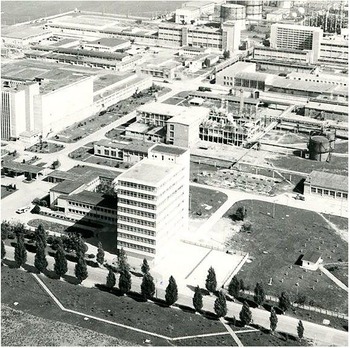
Once recruited, new employees were typically integrated through informal mentorship structures under the guidance of experienced colleagues – typically foremen – from previous generations or brought in from other facilities, many of whom had themselves been trained by German engineers from Zimmer, responsible for implementing the first installations in Săvinești (Figure 3).Footnote 87 In the absence of formal educational infrastructure, training for both engineers and skilled workers occurred directly on site and unfolded gradually, depending on the timeline of plant construction. Enterprises also organized evening courses focused on chemistry and technical subjects to supplement this workplace-based learning, reflecting a broader reliance on paternalistic and improvised modes of qualification (Figure 4).Footnote 88 Nonetheless, professional advancement could be rapid and not strictly determined by political background, if one adhered to the relational mode of organizing the shopfloor: so-called relationships (relații) with senior colleagues that enabled integration within worker groups with authority and influence, including the possibility of obtaining urban housing. Not all recruits could gravitate to the right circles, leaving them in a disadvantageous position that would hinder career progression and transitioning to an urban dweller.
Aerial view of the Săvinești platform.

Polyamide production (Relon) at Săvinești.

Positions in newly established factories were gradually filled over several years, either through transfers from other enterprises or by hiring young vocational school graduates. Such arrangements largely carried informal paternalistic work relations over to new factories as well:
the staff was halved; half remained in the old factory […] let’s say Melana II had 800 people; the new unit needed 1,000 people. We took 400 from the old ones – foremen, engineers – and completed the rest with school graduates. When there was someone who knew the work, they taught the others and they grew quickly […] this was the system: from small to large, with a core group that had already worked there.Footnote 89
Much like other socialist factories, the Săvinești plants functioned in ways comparable to capitalist enterprises. The production floor structured labour relations hierarchically, with foremen and managers issuing directives, and rank-and-file workers carrying them out: chemical operators reported to team leaders, who were under foremen, followed by sub-engineers or engineers, factory managers, and ultimately the plant directors – all operating within what official documents referred to as a “climate of perfect order and discipline”.Footnote 90 According to Melana‘s former chief engineer, the system resembled a military hierarchy – orders were treated as commands, and his responsibilities included enforcing discipline, overseeing technical parameters, inspecting stations, and maintaining control over the production environment.
Subordination was also stratified by occupational domain: chemists were regarded as superior to other specializations, at least symbolically. For example, electricians or mechanical foremen in certain sections reported to a chemical foreman who oversaw the main (chemical) production process. Chemists relied on other specialists for equipment maintenance. Consequently, factory and plant directors in chemical units were typically chemical engineers. These superiors often occupied positions within the regional party apparatus, a factor contributing to their shop-floor authority. Constant labour turnover and lack of skilled personnel created pressure perceivable as forms of work intensification: overtime, increased output norms, and bureaucratic work performance monitoring.Footnote 91
Another informal distinction existed among workers of the same occupational rank, commonly referred to as “chemists” and “textile workers”. Formally, both categories held the title of chemical operator, but the distinction stemmed from the production phase in which they were employed and the specific installations they operated. “Chemists” worked in the initial stages of production, where substances were mixed in reactors, while “textile workers” handled the final stages, such as fibre processing, spinning, stretching, and packaging.Footnote 92 Discursively, the chemical sections were considered “the soul of the [Săvinești] plant”,Footnote 93 deemed a crucial production stage that enabled other stages. In this imaginary, senior chemists represented authority figures that guided the entire production process. However, the differentiation was not hierarchical but informal, emerging from the spatial and procedural separation between work groups. Most chemical operators also worked in shifts due to the continuous nature of production, whereas “textile workers” and auxiliary staff typically worked only day shifts. In addition to chemical operators – the core segment of the workforce – female labour was primarily assigned to textile machines that processed the fibres resulting from the chemical production process. For example, of approximately 3,000 workers in a polyacrylic unit, 1,600 were women. Similar gender divisions and roles existed in other units.Footnote 94
Apart from informal shopfloor training, future chemical operators trained in Iași. In 1966, however, a chemistry section was introduced in Piatra-Neamț’s vocational school that accommodated only a small number of students, insufficient for the growing demand for skilled personnel. Nonetheless, the school spearheaded the development of the city’s education infrastructure. This began with the founding of another vocational school focused exclusively on chemical training: The Piatra-Neamț Chemical Industry School Group. It included a three-year programme and a foremen’s school, hosting 858 students in 1969 – a number that increased with the expansion of student dormitories in the early 1970s.Footnote 95
Teaching was organized in small groups, with a strong emphasis on practical training relevant to the professions associated with the two technological profiles (polyamide and polyacrylic) in Săvinești. Pressure from the Central Planning Committee ultimately led to directives that further expanded the educational programme, including the introduction of short-term specialization courses. The purpose was to speed up workforce specialization, as there was a constant need for chemical operators. For instance, during the 1971–1975 five-year plan, the rate of skilled workers at Săvinești stood at approximately fifty per cent – insufficient to meet production demands. As a result, in 1973, many workers enrolled in short-term courses to meet the operational needs of the factories. Each graduate was obligated to work for five years at the assigned enterprise following graduation. This applied to trained chemical operators for Săvinești as well.Footnote 96
Efforts to “improve worker performance” were aimed at “systematic deepening of the production process in order to increase labour productivity, reduce manufacturing costs, and improve product quality”.Footnote 97 For skilled workers, vocational training consisted of applied courses focused on phases of production and the technological processes including startup and shutdown procedures, as well as interventions in case of disruptions or malfunctions.Footnote 98 According to the same sources, after 1971, approximately 2,000 individuals took specialization courses for roles such as operators, lab technicians, and electricians; an additional 8,000 participated in supplementary qualification programmes, and 200 foremen and engineers undertook courses outside Piatra-Neamț.
Higher levels of specialization were made possible after the establishment of an engineering school affiliated with the Faculty of Industrial Chemistry at the Iași Polytechnic Institute, focusing on the “technology of macromolecular compounds”.Footnote 99 This level of education responded both to workforce trends (insufficient workers, staff turnover, promotions) and to technological developments (equipment upgrades, changes in production processes, and the diversification of product lines). During the mature phase of industrial development in the mid-1970s – with the expansion of the chemical industry marked by the emergence of other plants in cities such as Iași, Brăila, and Vaslui – this faculty began operating on a full-time basis. The training cycle for chemical engineers lasted five years. The title of engineer, however, could not be obtained in Piatra-Neamț; it required completion of technical studies in other cities, with Iași being the closest centre for Săvinești.Footnote 100 In Neamț County, only individuals with sufficient financial means could pursue higher education, and social mobility during the period of industrial expansion (approximately 1965–1980) remained relatively limited.Footnote 101
This upskilling was tied to the so-called categories (trepte) or qualification levels. Initially, there were six levels, later supplemented by a seventh level, introduced to extend the average time required to reach the top tier. Advancement was based on competence exams. A vocational school graduate would begin at the first level, becoming eligible for the second after three months. Advancement to higher levels occurred over longer intervals, with the difficulty of examinations increasing accordingly. An employee at the highest qualification level was effectively a foreman and could substitute for one when necessary. Maternity leaves were among the situations that required such replacements. For instance, correspondence from a 1967 archive list: “the number of female workers with medical exemptions or sick children has increased […] polyvalent [assumedly highly specialized] female work brigades have been activated to cover these gaps”.Footnote 102
Individual contributions to production were assessed through an annual scoring system applied to each position within the enterprise. Evaluations were conducted by section managers and foremen – typically senior staff with influence – as part of factory assessment committees. Workers with high scores were symbolically rewarded with a badge and publicly recognized on factory merit.Footnote 103 This practice fostered a moderate degree of competition among employees; scores mattered mainly to ambitious employees and were perceived as opportunities for career advancement. There were no penalties for low scores, and the rewards were symbolic rather than financial, unlike those associated with the formal qualification levels obtained via training.
At the same time, employees who had reached the “special” qualification level were required to participate in a foreman-level competition within five years. Failure to do so could result in demotion by one level, or, alternatively, postponement for another five years through various forms of “reclassification”. Backed by informal authority figures, workers in such positions would typically accede to superior ranks that could grant extra-professional privileges such as urban housing. A foreman recognized as particularly competent was considered equivalent in practice to an engineer or sub-engineer – roles that, in most cases, were held by factory managers.Footnote 104
For engineers, hierarchical progression – based on tenure and the informal recognition of merit by superiors – began with shift engineer, followed by lead technologist, and factory manager. Each production section was overseen by a factory manager, supported by a deputy, lead foremen, and foremen who coordinated the work of chemical operators. In addition to supervising subordinate engineers, the factory manager was responsible for ensuring the supply of raw materials. Each section also employed mechanics, electricians, automation specialists, and lab technicians. Laboratory staff were exclusively women and conducted technical analyses such as viscosity and temperature testing. Each unit had technical quality control (control tehnic de calitate or CTC) personnel tasked with inspecting and approving products. At certain times, a single CTC unit managed up to thirty tons of products per month.
Despite the issues regarding proletarianization and unequal shopfloor realities, work at Săvinești was generally regarded as desirable. Although the working environment posed risks due to exposure to hazardous substances, the labour itself was not physically demanding, and the platform had a good reputation mainly due to the advanced technologies in use at the time. Working as an operator at a Săvinești plant – particularly in the early 1960s, when it was the only producer of synthetic fibres in Romania – meant access to employment within a flagship plant of the chemical industry.
There were also attempts to reinforce social cohesion. Numerous cultural organizations and sports events were created to strengthen enterprise-based communities. Leisure was actively managed by plant directors and regarded as an important aspect of workforce management: “the worker’s morale – and thus their work enthusiasm – depends on how well they are mentally rejuvenated”.Footnote 105 Săvinești had dedicated hobby groups in photography, radio and television, tailoring, and more. The “Firicelul” Săvinești folk dance ensemble was nationally and even continentally renowned. Cultural-artistic contests were organized at the plant level, with teams of workers competing by factory sections. Events included traditional dance, folk and popular music performances, and poetry recitations. Sports activities were also coordinated through the “Relonul” Săvinești Sports Association.
Conclusions
The case of Săvinești shows that proletarianization under Romanian state socialism was neither a straightforward transition to an urban industrial class nor a stalled or incomplete project. Rather, it emerged through the concrete arrangements that linked industrial workplaces to rural households, commuting infrastructures, and selective access to urban housing. Workers entered industry while preserving forms of livelihood, mobility, and sociability shaped by their rural backgrounds. These continuities were not residual or accidental; they structured how the workforce was recruited, retained, and trained throughout the socialist period.
From the workers’ perspective, proletarianization unfolded through the routines and pressures of everyday life: long commutes, seasonal returns to agriculture, the struggle for urban housing, and reliance on informal mentorship to navigate factory hierarchies. In numerous instances, affinity to influential worker collectives and informal authority figures improved the chancs of transitioning to full-fledged proletarian, with urban housing and industrial employment. At the same time, personnel turnover, absenteeism, and uneven workplace integration reveal that class formation was continually negotiated at the intersection of housing shortages, planning constraints, and the practical demands of production.
Placing these findings within a broader European and global frame highlights that Romania’s trajectory was not exceptional. Across twentieth-century Europe – whether under socialism, or capitalist industrial restructuring – proletarianization commonly advanced through gradual labour incorporation, often relying on mixed livelihoods, limited wages, and delayed urban settlement.Footnote 106 Experiences documented in Hungary, East GermanyFootnote 107 and later in PortugalFootnote 108 similarly demonstrate that industrial labour coexisted with agricultural practices and that workers moved into factory employment through staged, often unstable transitions. Such parallels suggest that Romania’s pattern belonged to wider processes of class formation in semi-peripheral regions where industrial growth depended on the continued reproductive capacity of rural households.
Future research would benefit from comparative approaches that examine how different political economies – socialist, or capitalist – mobilized labour through similar mechanisms of commuting, selective housing allocation, vocational upskilling, and the moral valuation of productive work. Attention to these convergences can help decentre the distinction between socialist and capitalist paths to proletarianization, showing how workers across Europe navigated comparable pressures while producing distinct institutional and cultural forms of industrial life.
Acknowledgements
The author would like to thank Norbert Petrovici for his invaluable feedback to the initial drafts of the manuscript.
Funding statement
The project received no funding.



 Open access

