


Introduction
One-third of global mammal extinctions in the past 200 years have occurred in Australia, with most being from arid and semi-arid areas and involving species with a body weight of 35–5,500 g (Johnson & Isaac, Reference Johnson and Isaac2009). The mammalian extinction toll in Australia has been recognized since the 1930s (Finlayson, Reference Finlayson1935), and its causes and potential solutions have been debated for decades (McKenzie et al., Reference McKenzie, Burbidge, Baynes, Brereton, Dickman and Gordon2007; Woinarski et al., Reference Woinarski, Burbidge and Harrison2015). However, mammal populations continue to decline across Australia, and the conservation status of many species remains uncertain (Woinarski et al., Reference Woinarski, Burbidge and Harrison2015, Reference Woinarski, Garnett, Legge and Lindenmayer2017). Estimating abundance and detecting population trends are difficult because of a lack of survey effort across vast inaccessible habitats, temporal changes in abundance driven by climate oscillations and the cryptic nature of some species (Dickman et al., Reference Dickman, Mahon, Masters and Gibson1999; Letnic & Dickman, Reference Letnic and Dickman2010; Morton et al., Reference Morton, Smith, Dickman, Dunkerley, Friedel and McAllister2011). This problem is compounded by poor understanding of the magnitude of and interactions between the threats facing many species (Woinarski et al., Reference Woinarski, Burbidge and Harrison2014).
Such issues are common in conservation research across rangelands and are exemplified by the case of the yellow-footed rock-wallaby Petrogale xanthopus. The species was described from a specimen collected in the Flinders Ranges, South Australia, in the 1850s (Gray, Reference Gray1854). Seventy years passed before the species was collected in central-western Queensland at Terrachie Station, north-west of Quilpie, in 1922. These Queensland specimens were subsequently described as a new species, Petrogale celeris (Le Souef, Reference Le Souef1924). Five additional specimens were taken from Queensland during 1922–1931, but the taxon was not officially recorded again in Queensland until the 1970s, when anecdotal reports from graziers and kangaroo shooters were investigated (Gordon et al., Reference Gordon, McGreevy and Lawrie1978). During five visits to the region during 1973–1974, five animals were seen and dung was recorded on three properties north of Adavale. Surveys at the locations of reported sightings in the Enniskillen, Grey and McGregor ranges failed to detect the taxon, and the property owners from the type locality at Terrachie and nearby Mount Canaway stated that rock-wallabies had not been seen since the 1960s (Gordon et al., Reference Gordon, McGreevy and Lawrie1978).
The study by Gordon et al. (Reference Gordon, McGreevy and Lawrie1978) generated concern for the long-term persistence of the yellow-footed rock-wallaby in Queensland (Briscoe et al., Reference Briscoe, Calaby, Close, Maynes, Murtagh, Sharman, Groves and Ride1982; Archer et al., Reference Archer, Flannery and Grigg1985) and prompted surveys to ascertain the distribution, abundance and habitat of what was by then recognized as a subspecies of P. xanthopus endemic to Queensland (Gordon et al., Reference Gordon, McRae, Lim, Reimer and Porter1993; Eldridge, Reference Eldridge1997). During 1973–1987, Petrogale xanthopus celeris was recorded at 44 sites north and north-west of Adavale, but the subspecies was considered vulnerable to extinction because of property development and competition from sympatric herbivores, notably feral goats Capra hircus and the common wallaroo Osphranter robustus (Gordon et al., Reference Gordon, McRae, Lim, Reimer and Porter1993). Subsequent decades saw increases in goat and common wallaroo populations (Pople & Grigg, Reference Pople and Grigg2001; Pople & Froese, Reference Pople and Froese2012) and clearing of the fertile Acacia-dominated valleys between the ranges in eastern parts of the distribution of P. xanthopus celeris (Gordon et al., Reference Gordon, McRae, Lim, Reimer and Porter1993).
At 6–12 kg (Eldridge, Reference Eldridge, Baker and Gynther2023), adult yellow-footed rock-wallabies are outside the preferred prey weight range of the red fox Vulpes vulpes (Saunders et al., Reference Saunders, Coman, Kinnear and Braysher1995), but their joeys have a short pouch life and individuals are vulnerable to predation as juveniles and subadults (Sharp et al., Reference Sharp, Norton, Havelberg, Cliff and Marks2014). Feral cats Felis catus also predate juveniles in some rock-wallaby populations (Spencer, Reference Spencer1991; Read et al., Reference Read, Dagg and Moseby2018). Competition with goats for forage and habitat has been implicated in declines and could be linked to fox predation by forcing yellow-footed rock-wallabies to forage in suboptimal open habitats where predation is more likely (Hayward et al., Reference Hayward, Bellchambers, Herman, Bentley and Legge2011). The southern subspecies Petrogale xanthopus xanthopus has declined throughout its range in New South Wales (Lethbridge & Alexander, Reference Lethbridge and Alexander2008; Sharp et al., Reference Sharp, Norton, Havelberg, Cliff and Marks2014) and South Australia (Copley, Reference Copley1983) because of historical hunting for skins, predation by foxes, habitat modification from pastoral activities and competition with introduced herbivores. Intensive threat management has led to stabilization and recovery of at least some southern populations, and the most recent assessment for The Action Plan for Australian Mammals 2012 categorized this subspecies as Near Threatened [Conservation Dependent] (Woinarski et al., Reference Woinarski, Burbidge and Harrison2014). At the species level, P. xanthopus is categorized as Near Threatened on the IUCN Red List (Copley et al., Reference Copley, Ellis and van Weenen2016).
In contrast, there has been little targeted management of P. xanthopus celeris, and the subspecies is inferred to be undergoing continuing decline because of habitat degradation and predation (Woinarski et al., Reference Woinarski, Burbidge and Harrison2014). Its categorization as Vulnerable under the Commonwealth Environment Protection and Biodiversity Conservation Act 1999 within the last decade (Threatened Species Scientific Committee, 2016) reflects these concerns. Most published information on the subspecies comes from life history, population dynamics and dietary studies on colonies at Idalia National Park (Sharp, Reference Sharp2009, Reference Sharp2011) and Lisburne Station (Allen, Reference Allen2001) as well as genetic studies across a small number of subpopulations (Pope et al., Reference Pope, Sharp and Moritz1996; Smith et al., Reference Smith, Lethbridge, Allen and Andrew2023). The yellow-footed rock-wallaby is cryptic, occurs in remote and rugged mountain ranges and fluctuates in abundance relative to rainfall (Sharp & Norton, Reference Sharp and Norton2000; Lethbridge & Alexander, Reference Lethbridge and Alexander2008; Sharp & McCallum, Reference Sharp and McCallum2015), rendering an accurate conservation assessment impossible without repeated surveys across its entire distribution.
Here we present the results of surveys undertaken throughout the range of P. xanthopus celeris during 2010–2015 and 2020–2023, including revisits to historical sites and assessments of areas of potentially suitable habitat selected using satellite imagery and local knowledge. We compare our results with the 1970s–1980s surveys, to examine population trends over the past 50 years in relation to threats, thereby facilitating a more accurate conservation assessment to guide management of P. xanthopus celeris.
Study area
The Grey Range, together with smaller connected range systems, is composed of Tertiary sandstone and stretches 700 km through inland eastern Australia, from north-western New South Wales to central-western Queensland. Petrogale xanthopus celeris occurs in the northern part of the system, encompassing the Grey, Gowan, Yanyang, Macedon, Cheviot, Wallaroo, Edinburgh and Ambathala ranges, with outlying records from the south (McGregor and Coleman ranges near Eromanga and Thargomindah, 200 km south of Quilpie) and north-east (Warrego and Enniskillen ranges; Fig. 1). Its core distribution is in the central north of this area where the residual land system is broadest, stretching over 100 km from east to west. Elevations fall from 450 m altitude on tablelands in the north-east to just over 200 m in the south. The climate is semi-arid, with mean annual rainfall decreasing from 485 mm in the north-east to 250 mm in the south-west of the study area. Most rain falls during December–March. Summer temperatures are hot, with daily maxima throughout December–February averaging 35 °C and regularly exceeding 40 °C, whereas short winters are characterized by cold nights (often falling below 0 °C) and warm days.
Petrogale xanthopus celeris distribution, central-western Queensland, Australia, 2010–2023. The map shows major towns, rivers, ranges, national parks (NPs; hatched), the dingo barrier fence (dashed line) and more recent (post-2010) wild dog and macropod exclusion fences (grey lines), and sites where rock-wallabies were abundant, common, uncommon or absent during the 2010–2015 and 2020–2023 surveys. Where presence or abundance differed between survey periods, the more recent score is used.
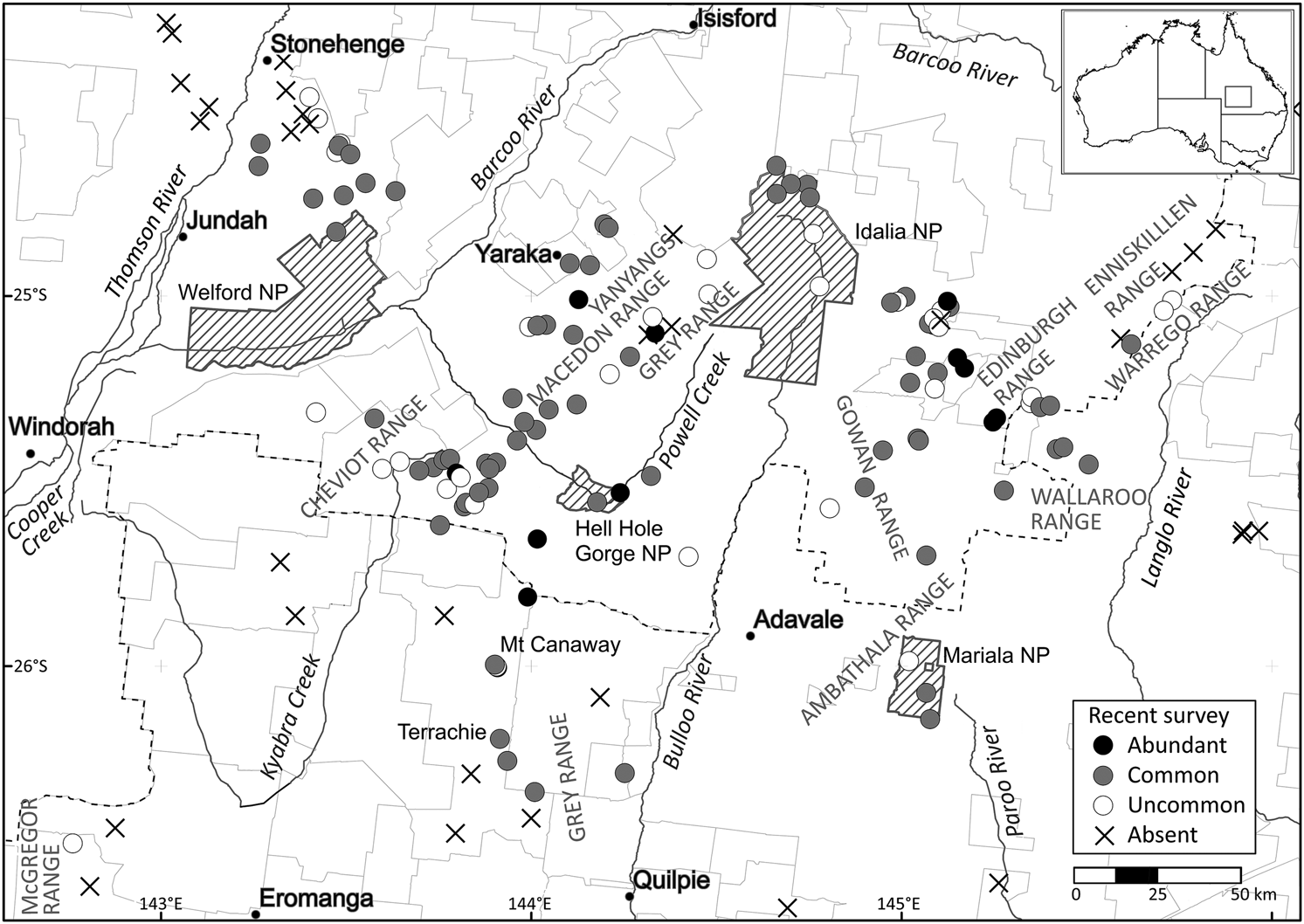
Seven major vegetation communities occur in the Grey Range and associated ranges (Silcock & Fensham, Reference Silcock and Fensham2014). Gorges and boulder fields form along the edges of escarpments, providing complex, sheltered diurnal habitats, which are preferred by P. xanthopus celeris (Gordon et al., Reference Gordon, McRae, Lim, Reimer and Porter1993). Acacia woodlands and shrublands dominate the slopes, tablelands and valleys. The valleys in the north-east have been extensively cleared and sown with introduced buffel grass Cenchrus ciliaris. Most of the study area is under commercial livestock grazing leases, although sheep and cattle are mostly restricted to valleys and lower slopes of the ranges. Four national parks occur within the study area (Fig. 1). Feral goats are common in some areas, and there are high numbers of common wallaroos and localized occurrences of feral horses Equus caballus throughout the area. Eastern grey kangaroos Macropus giganteus and red kangaroos Osphranter rufus are mostly restricted to the lower slopes and valleys. Dingoes Canis familiaris, cats and foxes occur throughout the study area, although little is known of their densities. Fires are rare because of naturally sparse groundcover, although some mulga Acacia aneura and shrubby tablelands may burn because of accumulation of vegetation biomass (mostly grasses) after exceptionally wet seasons.
Methods
Survey timing and participants
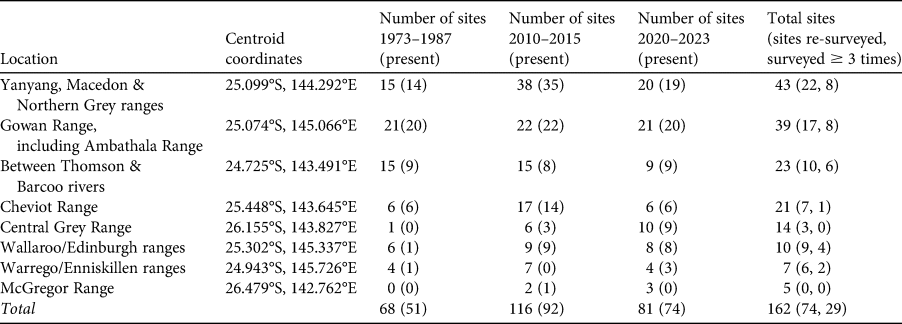
The present study involved two separate survey periods: May 2010–June 2015 (although mostly 2010–2013), and September 2020–June 2023 (Table 1). Details of the main participants in these surveys are provided in the Author contributions section, with others who assisted on single field trips named in the Acknowledgements section.
Locations and dates of surveys in three time periods for the yellow-footed rock-wallaby Petrogale xanthopus celeris in central-western Queensland, Australia (Fig. 1), ordered by total number of sites, with number of sites in each location and period (and in parentheses the number of sites at which the subspecies was located). Only sites that were > 1.5 km apart and those originally surveyed in the 1970s–1980s (Gordon et al., Reference Gordon, McGreevy and Lawrie1978, Reference Gordon, McRae, Lim, Reimer and Porter1993) that we could relocate accurately are included. Clusters of sites outside the known range of the subspecies and with only absences recorded were not assigned localities and are not shown (but are in Fig. 1).
Site relocation, additional site selection and survey methodology
We relocated sites previously surveyed opportunistically during the 1970s (Gordon et al., Reference Gordon, McGreevy and Lawrie1978) or by targeted searches undertaken during 1983–1987 (Gordon et al., Reference Gordon, McRae, Lim, Reimer and Porter1993) as accurately as possible using original site maps and notes and inspection of satellite imagery via Google Earth (Google, USA). We also surveyed locations of all other historical records. We located additional sites using Google Earth to detect deep gorges and dense vegetation. We surveyed another 35 sites for P. xanthopus celeris outside its known distribution (Fig. 1). Sites varied in size (0.5–2.0 ha) and were defined by habitat characteristics favoured by yellow-footed rock-wallabies, typically a gorge, boulder field or escarpment. Some sites encompassed multiple habitat elements. We placed sites at least 1.5 km apart (Sharp, Reference Sharp2009, showed that individuals typically have a home range of < 1 km2 but can travel up to 1.5 km to drink) or separated by > 1 km of unsuitable (non-range) habitat or an exclusion fence (Smith & Allen, Reference Smith and Allen2021) that would be impenetrable to P. xanthopus celeris. We only recorded time of site visit and total survey effort (person-minutes) in the 2020–2023 surveys; we calculated these data through GPS waypoint and photo times where possible for the 2010–2015 surveys, but these data are unknown for the 1970s–1980s surveys.
We based the data recorded at each site on the 1970s–1980s surveys (Gordon et al., Reference Gordon, McRae, Lim, Reimer and Porter1993) and included landscape features (presence or absence of the following: cliffs or gorges, fissures/passages in the rock face, rocky terraces, caves and boulders, and, where present, the estimated maximum height of cliffs and boulders); vegetation composition and structure on tablelands and slopes; total number of P. xanthopus celeris individuals sighted during survey site visits (we provide this as a minimum; if we suspected an individual could have been seen more than once, we did not recount it); maximum density of rock-wallaby dung per square metre; linear extent of rock-wallaby dung occurrence (i.e. the distance over which we observed dung on a walking transect along or through the typically linear landscape features being surveyed, measured by taking a GPS fix at the start and end of dung occurrence); and presence and abundance (based on number of individuals seen and abundance of dung) of other herbivores, specifically common wallaroos, feral goats and European rabbits Oryctolagus cuniculus. We ranked all of these as absent, uncommon (scattered dung and one or no animals seen) or common (dung abundant and/or > 1 individual sighted). Rock-wallaby dung is clearly distinguishable from dung of other macropods in the study area by its cylindrical shape, tapering to a narrow end (Triggs, Reference Triggs2004). The data are presented in Supplementary Table 1.
Data analysis
We calculated habitat scores for each site by summing the number of physical features present out of five: cliffs or gorges, fissures/passages, rocky terraces, caves/overhangs and boulders (Lim & Giles, Reference Lim and Giles1987). We derived a yellow-footed rock-wallaby abundance index after Gordon et al. (Reference Gordon, McRae, Lim, Reimer and Porter1993): absent (no dung or individuals sighted); uncommon (maximum density of faecal pellets 1–5/m2 and one or no individuals sighted); common (maximum density of faecal pellets 6–20/m2 and/or 2–4 individuals sighted); or abundant (maximum density of faecal pellets > 20/m2 and/or ≥ 5 individuals sighted). Where we attempted to relocate a 1970s–1980s site but habitat characteristics were substantially different between years we assumed that the site had not been accurately relocated and it was excluded from the time series analysis.
We obtained mean annual rainfall for each site from SILO, a modelled surface informed by a network of rainfall stations (Jeffrey et al., Reference Jeffrey, Carter, Moodie and Beswick2001). Rainfall varied considerably within and between survey periods. During the period of the original surveys (1973–1987) rainfall was above average through the 1970s, but most sites were visited during a dry period during 1983–1987. The first survey period of our study (2010–2015) had extremely high rainfall during September 2010–March 2011, with most sites visited during 2011–2012 having experienced their wettest summer in at least half a century. Most sites surveyed from 2013 onwards received below average rainfall in the 12 months prior to surveys. The second survey period reported here occurred in slightly below average (2020–2021) to well above average (2022–2023) rainfall.
We investigated water availability for each site visited during the 2010–2023 surveys using the current Effective Distance to Water dataset (Healy et al., Reference Healy, Tulloch and Fensham2020). This dataset provides a modelled surface that weights distance to water by the permanence of that water source. We calculated the mean effective distance to water at multiple buffer distances around each site to investigate water availability in terms of both the site (100 m radius around site) and regional (10 km radius around site) contexts. We calculated the maximum width of the range system within which each site occurred, in ArcGIS 10.0 (Esri, USA), using Regional Ecosystem mapping (Queensland Herbarium, 2021).
We assigned the status of the vegetation on the footslopes and valleys within 1.5 km (i.e. typical foraging distance; Sharp, Reference Sharp2009) of each site as cleared (> 90% of original woody vegetation cleared), partially cleared (10–90% of original woody vegetation cleared) or intact (< 10% of original woody vegetation cleared) through field notes supplemented by examination of May 2023 imagery provided on the Sentinel-2 browser (Sinergise Solutions, 2023). We determined whether there was a wild dog and macropod exclusion fence within 1.5 km of a site and whether a fence bisected mountain range habitat through examination of an exclusion fence GIS layer compiled by the Queensland Department of Agriculture and Fisheries (C. Wilson, unpubl. data, 2023), with unmapped exclusion fences observed in the field added.
We used χ 2 and Fisher's exact tests to determine whether a significant association existed between P. xanthopus celeris presence and abundance and any of the following factors: habitat score and characteristics, presence and abundance of other herbivores, clearing in valleys and the presence of exclusion fences. We also explored the influence of distance to water on yellow-footed rock-wallaby, common wallaroo and goat presence using Mann–Whitney U tests. We further explored the influence of the six individual habitat variables (cliffs, gorges, fissures/passages, rocky terraces, caves/overhangs and boulders) on rock-wallaby presence and abundance using decision trees. We performed all analyses using R 4.2.2 (R Core Team, 2022).
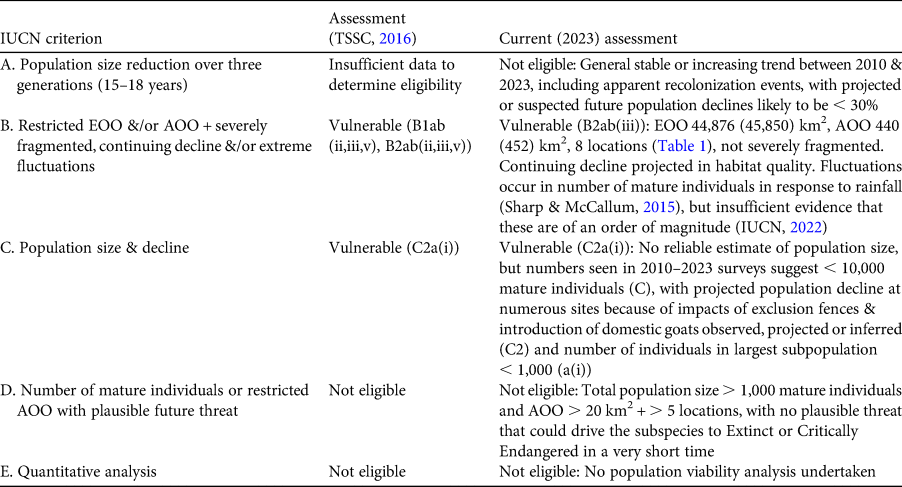
We used survey data to reassess the conservation status of P. xanthopus celeris with the IUCN Red List criteria (IUCN, Reference IUCN2022). We calculated extent of occurrence (EOO; minimum convex polygon) and area of occupancy (AOO; using a 2 × 2 km grid cell method) with GeoCat (IUCN, Reference IUCN2022), using only records from 2010 onwards. We followed Woinarski et al. (Reference Woinarski, Burbidge and Harrison2014) in defining generation length of the subspecies as 5–6 years.
Results
Distribution, abundance and habitat preferences
During 2010–2023 we surveyed 138 sites within the range of P. xanthopus celeris (116 in 2010–2015 and 81 in 2020–2023, including 59 sites that we visited in both periods). Where we recorded survey time, we spent a mean of 68 min at each site in the 2010s surveys and 45 min at each in the 2020s surveys (range 10–240 min). We detected yellow-footed rock-wallabies at least once at 115 of the 138 sites surveyed during 2010–2023 (Fig. 1), resulting in an EOO of 42,244 km2 and an AOO of 432 km2. During 197 site visits we observed the subspecies on 93 occasions (48%), with a total of at least 308 individuals sighted. For sites with evidence of rock-wallaby presence we observed a mean of 1.8 individuals per site (range 0–17). Forty per cent of sightings were of a single animal and 70% were of ≤ 3. We observed 10 or more individuals on six site visits. Yellow-footed rock-wallabies were abundant on 24 site visits, common on 88 site visits, uncommon on 54 site visits and absent on 31 site visits. We recorded dung pellets at low density (maximum 1–5/m2) on 64 site visits, at densities of 6–10/m2 on 47 site visits and at densities of > 10/m2 on 49 site visits. Dung extent ranged from a few metres to occurring continuously across distances of > 2 km.
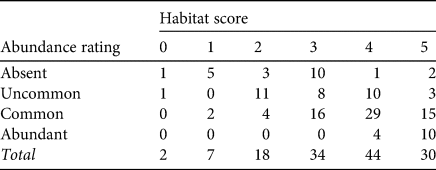
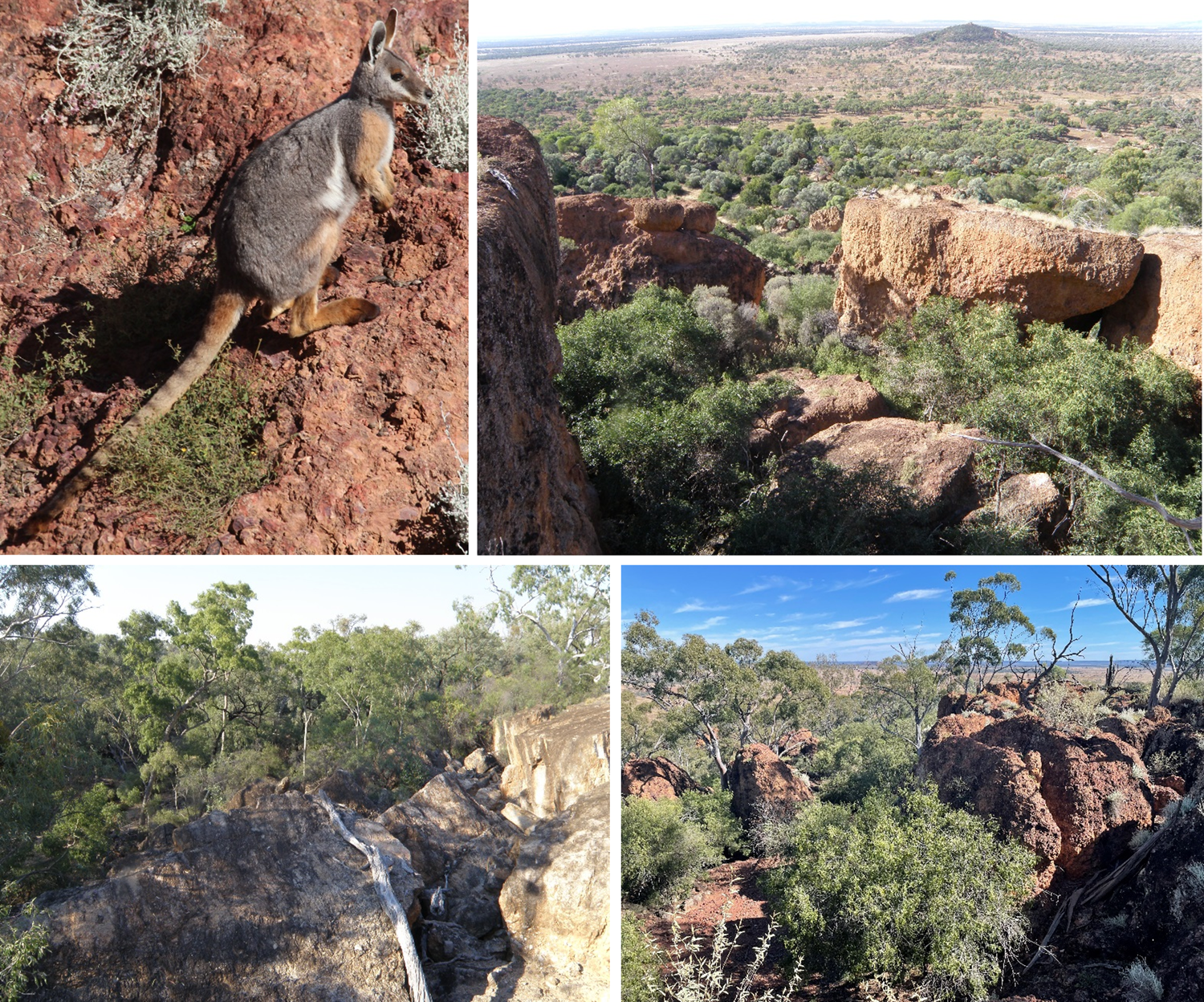
Habitat complexity was strongly associated with yellow-footed rock-wallaby presence (Fisher's exact test, P = 0.0003). At sites with high habitat scores, P. xanthopus celeris was common or abundant at 80% of sites with a habitat score of 5, at 77% of sites with a habitat score of 4 and at 47% of sites with a habitat score of 3. However, the subspecies was never common at sites with a habitat score of 0, and it was only common at two sites with a habitat score of 1 (Table 2). The subspecies was absent from only two sites with a habitat score of 5, both visited in 2013 and located in the north-east of the range of the subspecies where it had become locally extinct. We selected one of these high-quality sites for a successful re-introduction, which occurred in 2020 as part of a separate project. The results of χ 2 and Fisher's exact tests showed that five individual components of habitat score had a significant association with P. xanthopus celeris maximum abundance: rocky terraces (χ 2(3) = 25.43, P < 0.001), passages (χ 2(3) = 40.46, P < 0.001), caves (χ 2(3) = 15.57, P < 0.01), cliffs (Fisher's exact test, P = 0.0058) and boulders (Fisher's exact test, P = 0.014 ). Gorges did not have a significant association with abundance. Three habitat components had a significant association with P. xanthopus celeris presence: passages (χ 2(1) = 19.18, P < 0.001), boulders (Fisher's exact test, P = 0.0094) and cliffs (Fisher's exact test, P = 0.040). Decision tree analysis supported this, with passages and terraced boulder fields (Plate 1) being the most informative variables predicting P. xanthopus celeris presence.
Relationship of Petrogale xanthopus celeris abundance to habitat score, showing the number of sites in each category during the 2010–2015 and 2020–2023 surveys. Where sites were surveyed in both survey periods, the latest (2020–2023) habitat score and abundance are shown. Habitat characteristics were not recorded at three sites, so the total number of sites presented is 135. See text for definitions of abundance and habitat score (higher habitat scores indicate a greater number of physical features suitable for the subspecies).
Petrogale xanthopus celeris at Pete's Hill South, Wallaroo Range, August 2022 (photo: I.C. Gynther) and, clockwise from top right, favoured habitat of the species: terraced boulder fields with complex vegetation structure, Lisburne (photo: P.D. McRae) and Pete's Hill South, Lynbrydon (photo: I.C. Gynther); and deep boulder-strewn gorge, Bosses Gorge, north of Adavale (photo: P.D. McRae).
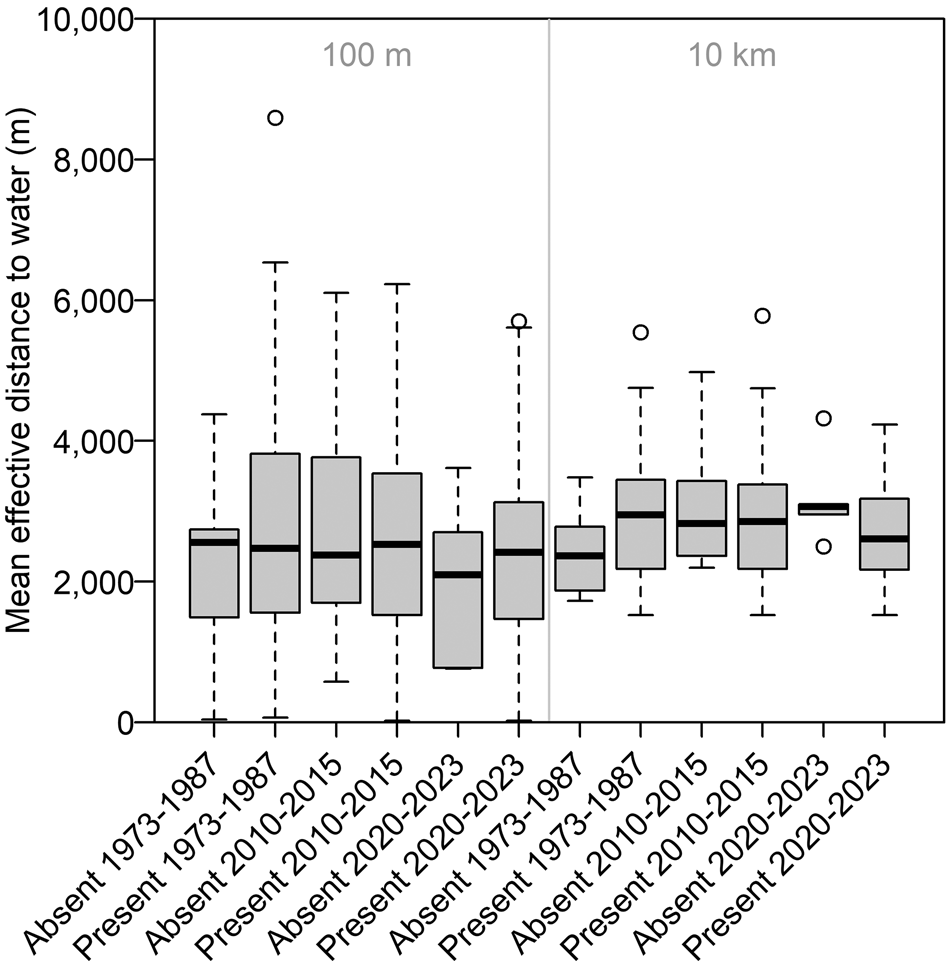
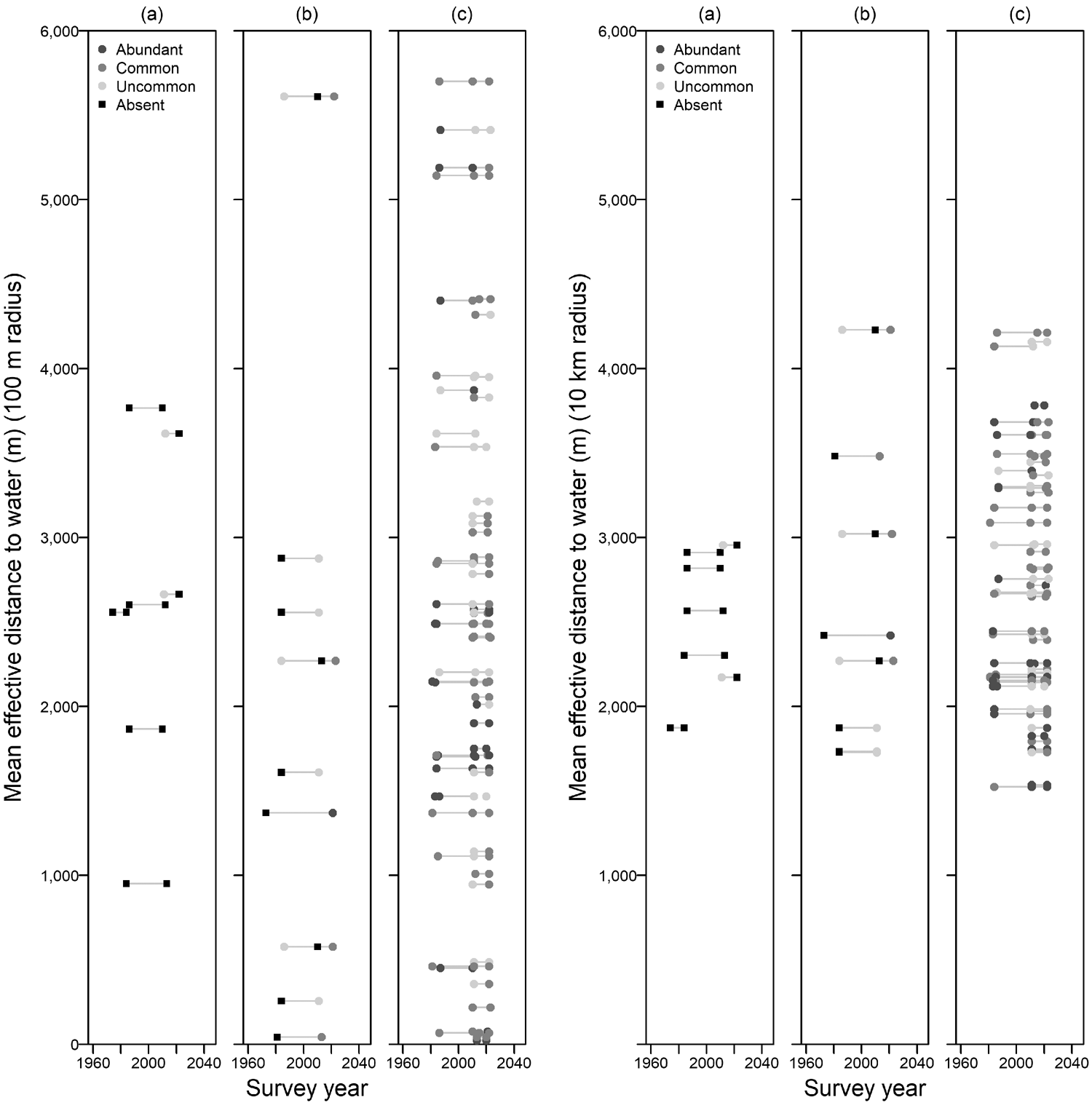
There was no significant difference between the mean effective distance to water for sites where P. xanthopus celeris was present and absent during the survey periods in the 2010s and 2020s (Fig. 2) at either the local (100 m) or the regional (10 km) scales, and we recorded the subspecies up to an effective distance of 6.2 km from permanent water. The mean effective distance to water was similar for presence and absence sites at both the local scale (means of 2.5 and 2.6 km for presence and absence, respectively) and regional scale (means of 2.8 and 3.0 km). A significant relationship existed between goat presence and effective distance to water (U = 901, P < 0.05) at the regional scale for the 2020s survey period (sites without goats had a higher mean effective distance to water than sites with goats) but not for the 2010s survey period. There were no significant differences in mean effective distance to water between sites where P. xanthopus celeris was absent in all survey periods, those where local extinctions were followed by recolonization or those where P. xanthopus celeris had maintained its presence (Fig. 3).
Boxplots showing differences in mean effective distance to water, with sites grouped by survey period (previous surveys: 1973–1987 from Gordon et al., Reference Gordon, McGreevy and Lawrie1978, Reference Gordon, McRae, Lim, Reimer and Porter1993; recent surveys: 2010–2015 and 2020–2023 from this study) and the presence or absence of Petrogale xanthopus celeris. Mean effective distance to water has been calculated for each site at the local (100 m) and regional scales (10 km). Outliers (outside the 75th/25th percentile value ± 1.5 × the interquartile range) are shown as open circles. There were no significant differences or consistent patterns in mean effective distance to water between the groups.
Comparison at the site level (left) and regional scale (right) of mean effective distance to water for (a) sites with possible local extinctions or persistent absences of Petrogale xanthopus celeris, (b) sites where populations were absent and have later recovered, and (c) sites where populations have persisted through time.
Changes in range and abundance over the past century
Petrogale xanthopus celeris was located at seven of the eight historical (pre-1970s) localities searched but was not seen at one of them (Orient, west of Thargomindah). The rediscovery of the subspecies at three southern sites (Terrachie, Mount Canaway and the McGregor Range, west of Eromanga), where it had been considered locally extinct in the 1970s–1980s, greatly increases the known range of P. xanthopus celeris. The last of these sites is c. 120 km west of the closest record (Terrachie), and surveys in residual habitat between these points found scant suitable habitat and no sign of rock-wallabies (Fig. 1).
The subspecies was reported to occur in the Warrego and Enniskillen ranges at the north-eastern extent of its distribution (Fig. 1) until the 1960s (I. Walker, pers. comm., August 2019). There was no sign of P. xanthopus celeris in this area in 1974, although low densities of dung were recorded on Forest Hill 20 km to the south-west in the same range system in 1984, and there were also reports in 1988 from Milray and Lumeah to the south (P.D. McRae, unpubl. data, 1988). No evidence of P. xanthopus celeris was detected at 10 sites surveyed in these range systems during 2013–2014 and in 2021, but the subspecies was found to be common at one of these sites and uncommon at two of them in 2023, indicating that it had apparently recolonized these sites at some point during the current decade. The locality of the anecdotal report from Orient, west of Thargomindah, was searched in 1973 and 2013 but did not appear to be suitable habitat.
Thirty-nine of the 68 sites surveyed during 1973–1987 (57%) were revisited between 2010 and 2023. Of the total of 162 sites surveyed during 1973–2023, 88 were visited once, 45 were visited twice, 27 were visited three times and two were visited four times (Table 1, Fig. 4). Of the 74 sites visited multiple times, P. xanthopus celeris was never detected at seven; these were excluded from further consideration. Of the 67 remaining revisited sites, no change in abundance was detected at 28 (42%). Petrogale xanthopus celeris was absent in 2022 from two sites where it had been uncommon during 2011–2012; these sites are within range systems where the subspecies remained common (Gowan and Grey ranges), and its 2022 absence may reflect natural dynamism in occupancy. There were apparent declines in abundance at eight sites (12%). Six of these declines were between the 1980s and 2010s; all of these sites that exhibited declines were revisited for a third time in 2022–2023 when abundance remained at the same level (common for three sites, uncommon for three sites). Two apparent declines occurred between the surveys conducted in the 2010s and 2020s. Six sites (9%) experienced declines in abundance between the 1980s and 2010s but subsequent recovery by 2023; three of these were near Yaraka, two near Stonehenge and one was in the Gowan Range (Fig. 4).
Sites visited during previous surveys (1973–1987; Gordon et al., Reference Gordon, McGreevy and Lawrie1978, Reference Gordon, McRae, Lim, Reimer and Porter1993) and this study (2010–2015, 2020–2023), with apparent trends in Petrogale xanthopus celeris abundance. Absence in all periods: 6 sites; presence in all periods with no change: 39 sites; decline: 7 sites; increase: 4 sites; recolonization: 9 sites; recovery by 2023 following declines in 1980s–2010s: 6 sites; translocations: 2 sites. Sites at Terrachie and in the McGregor Range to the south-west of the map area (absence reported in the 1970s–1980s; presence post-2009) are not shown, as absences in the earlier survey period may have been non-genuine. Hatched areas show national parks (NP).
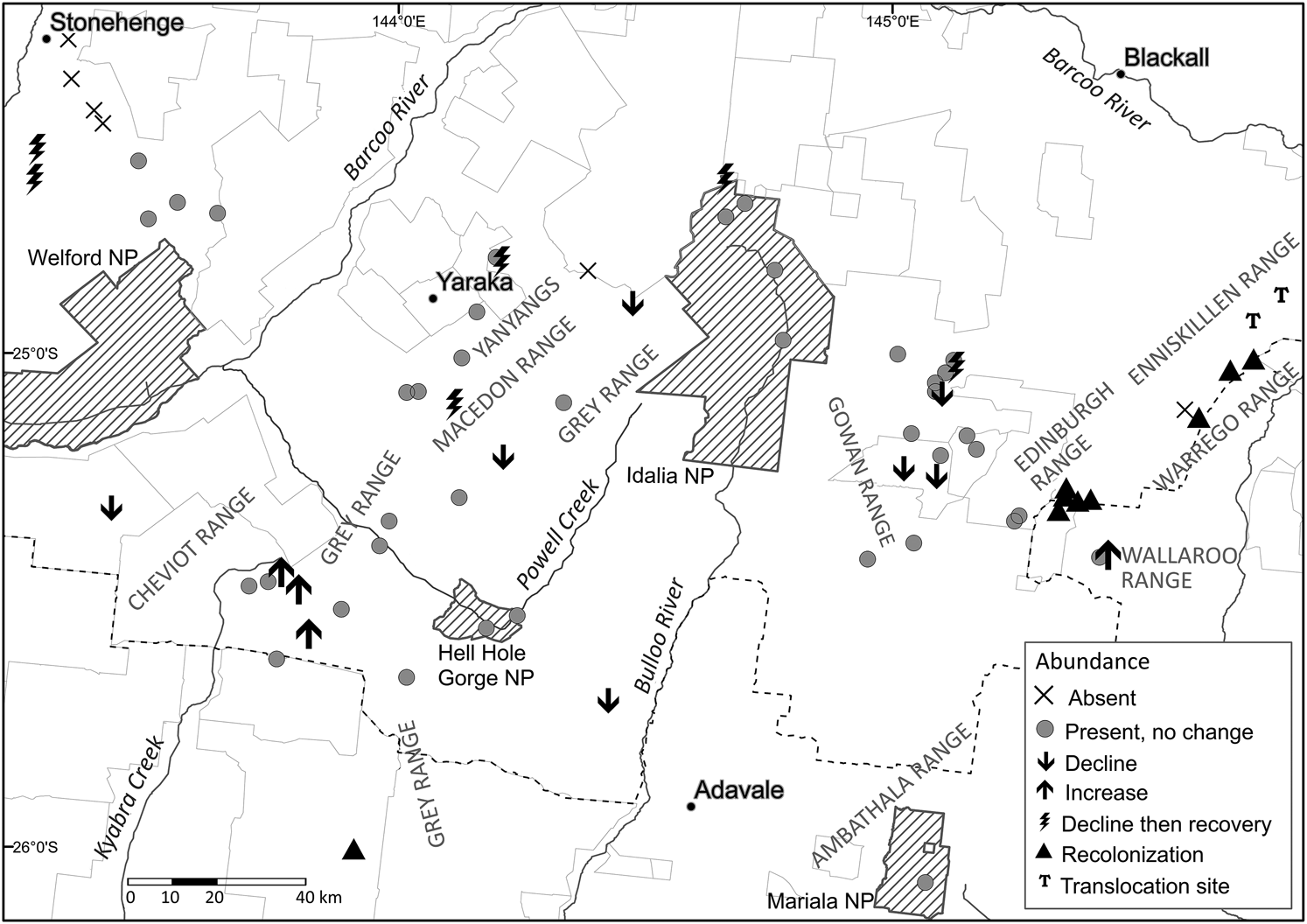
Three sites in the Cheviot Range had increases in P. xanthopus celeris abundance (one between 1987 and 2011 and two between 2010 and 2021). Recolonization occurred at eight sites in the Wallaroo, Edinburgh and Warrego ranges, near the north-eastern extent of the distribution of the subspecies. In the Wallaroo and Edinburgh ranges the taxon was present at only one site in the 1970s and 1980s, uncommon at five of nine sites surveyed in 2011 and common or abundant at the six survey sites in 2022.
Overall, the mean numbers of P. xanthopus celeris individuals observed at sites where they were present were lower in the 2010s (1.86/site) and 2020s (1.83/site) than in the 1970s–1980s (4.81/site), when 10 or more animals were seen at 11 sites. Six of these sites were revisited, and although P. xanthopus celeris was present at all of them, numbers of individuals sighted ranged from 0 (dung only detected) to > 10 per site. Across all sites surveyed, 10 or more animals were recorded at two sites in the 2010s and at four sites in the 2020s. Pete's Hill South was the only site with > 10 animals recorded during both survey periods. No data were available on time spent at sites during the surveys of the 1970s–1980s, but on average 1–2 sites were assessed per person or team per day. In contrast, 4–5 sites were typically visited per day during the 2010s and 2020s surveys, and it therefore seems probable that less time was spent at each site during these later surveys.
Threats to the yellow-footed rock-wallaby in Queensland
Common wallaroos were the most abundant sympatric herbivore in the study area, being present at all but two sites visited during 2010–2023 (noting that 10 sites did not have wallaroo presence recorded) and were common at 52% of these. A statistically significant association existed between wallaroo presence and yellow-footed rock-wallaby presence (χ 2(1) = 72.97, P < 0.001) and abundance (χ 2(3) = 50.83, P < 0.001). Goats occurred throughout the study area. They were most widespread in the 1970s–1980s and 2010s, occurring at 87 and 50% of sites, respectively, and being common or abundant at 56 and 25% of these, respectively. Goats only occurred at 35% of sites surveyed in the 2020s and were common at seven of them. No significant relationship was evident between yellow-footed rock-wallaby abundance and goat abundance (Fisher's exact test, P = 0.116). All sites recolonized by P. xanthopus celeris during this study had declining goat abundance, from common in the 1970s and 1980s to uncommon in 2011 and absent in 2022. Rabbits were present at 12 sites, mostly on tablelands.
The valleys and slopes adjacent to 24 sites had been broadscale-cleared, and a further 23 sites had been partially cleared. Clearing had occurred mostly in the north-east of the study area, and all except one site east of the Bulloo River and north of Adavale (Fig. 1) were surrounded by wholly or partially cleared land. Clearing proximate to residual habitat was not a significant variable predicting yellow-footed rock-wallaby presence or abundance within known yellow-footed rock-wallaby habitat during 2020–2023 (P > 0.05). Of the 115 sites with P. xanthopus celeris presence in the post-2009 surveys, 28 (24%) had exclusion fences within 2 km and 39 (34%) had exclusion fences within 3 km. In 35 of these cases the fence bisected residual habitat. Most sites were outside recent exclusion fences; only 19 were within these fences. For surveys from 2010 onwards no relationship was found between P. xanthopus celeris presence (Fisher's exact test, P = 0.057) or abundance (Fisher's exact test, P = 0.622) and proximity to an exclusion fence.
Discussion
Over the past 50 years, most P. xanthopus celeris subpopulations have remained stable, have increased or represent recolonizations of areas where the taxon was once considered locally extinct. This is despite the presence of foxes and cats, habitat modification and high numbers of feral goats in some locations. Our results are in contrast with the situation of some other rock-wallaby taxa elsewhere in Australia (Dovey et al., Reference Dovey, Wong and Bayne1997; Kinnear et al., Reference Kinnear, Pentland, Moore and Krebs2017) and the general trends of threatened mammals in Australia (Woinarski et al., Reference Woinarski, Burbidge and Harrison2014). The persistence, recolonization and localized recovery of P. xanthopus celeris have largely occurred in the absence of concerted conservation management, except for predator control in three national parks, the translocation of 24 individuals to Lambert Station in 1998 (Lapidge & Munn, Reference Lapidge and Munn2011) and smaller translocations to Mariala National Park and Lisburne and Ravensbourne stations during 2010–2020. The reduction in goat numbers has been a significant factor in the recovery of P. xanthopus celeris; however, this has mostly been driven by market forces, as discussed below.
The rugged nature of the yellow-footed rock-wallaby's core habitat and its agility within this habitat provide some protection from predators (McKenzie et al., Reference McKenzie, Burbidge, Baynes, Brereton, Dickman and Gordon2007; Tuft et al., Reference Tuft, Crowther, Connell, Müller and McArthur2011). Although dingoes are relatively common in the study area and were noted at many sites, they lack sufficient agility to take yellow-footed rock-wallabies in their rocky refuges (Copley, Reference Copley1983). They could, however, take some juveniles and dispersing adults. The mean weight of adult P. xanthopus celeris is at the upper weight range of mammals considered to be threatened by cat predation (Moseby et al., Reference Moseby, Peacock and Read2015), and although juveniles might occasionally be taken, there is no evidence of cat predation on rock-wallabies in the study area (Lapidge & Henshall, Reference Lapidge and Henshall2001). Foxes are associated with declines of the southern (nominate) subspecies (Copley, Reference Copley1983; Sharp et al., Reference Sharp, Norton, Havelberg, Cliff and Marks2014), and they have predated on translocated P. xanthopus celeris in the east of the current study area (Lapidge & Henshall, Reference Lapidge and Henshall2001), but they do not seem to be causing dramatic declines in the Queensland subspecies. This could be because subpopulation sizes remain above thresholds at which predation can drive them to extinction (Sinclair et al., Reference Sinclair, Pech, Dickman, Hik, Mahon and Newsome1998) or because foxes are in lower abundance in the study area compared to the locations where P. xanthopus xanthopus occurs (Stobo-Wilson et al., Reference Stobo-Wilson, Murphy, Legge, Caceres-Escobar, Chapple and Crawford2022). All except 15 sites at which P. xanthopus celeris was present occur outside the dingo barrier fence (Fig. 1), and there is some evidence to suggest that relatively high densities of dingoes outside the fence may limit fox numbers (Johnson et al., Reference Johnson, Isaac and Fisher2007; Letnic et al., Reference Letnic, Ritchie and Dickman2012). However, the ecological effects of dingoes remain under debate (Allen et al., Reference Allen, Fleming, Allen, Engeman, Ballard and Leung2013; Castle et al., Reference Castle, Kennedy and Allen2023).
Although common wallaroos were present at nearly all sites, they consume mainly grasses. Consequently, there is only dietary overlap with P. xanthopus celeris in good seasons (Dawson & Ellis, Reference Dawson and Ellis1979; Allen, Reference Allen2001). When grasses are no longer abundant at sites during dry periods, common wallaroos decline or disappear through mortality and migration (Allen, Reference Allen2001; Hornsby & Corlett, Reference Hornsby and Corlett2004). There is, however, significant dietary overlap between yellow-footed rock-wallabies and goats, whose diets are dominated by grasses and forbs (notably fleshy chenopod species) during wet years and by browse (mainly dry leaf fall from Acacia trees) in dry times (Dawson & Ellis, Reference Dawson and Ellis1979; Copley & Robinson, Reference Copley and Robinson1983; Allen, Reference Allen2001). Competition for food resources during dry times is likely to have adverse effects on Queensland yellow-footed rock-wallaby subpopulations, particularly in terms of juvenile survival (Sharp & McCallum, Reference Sharp and McCallum2015). Competition with goats for shelter has also contributed to declines in the nominate subspecies in New South Wales and South Australia (Copley, Reference Copley1983; Lim & Giles, Reference Lim and Giles1987).
Feral goats were abundant at most eastern sites throughout the 1980s and early 1990s, but numbers have fallen since c. 2010, as their increasing market value has incentivized mustering. Declines and local extinctions of P. xanthopus celeris at sites in the north-east of the current distribution of the subspecies between the 1960s and 2000 could reflect the effect of competition with goats, particularly during dry seasons. Three small 2020 translocations to gorges on Ravensbourne where goats were eradicated through mustering and shooting have been successful to date (R. Kerr, pers. comm., August 2023). The reappearance and/or increased abundance of rock-wallabies at several sites in the Warrego, Edinburgh, Wallaroo, Grey, Yanyang, Macedon and Cheviot ranges (Fig. 4) suggest that with good rainfall and the absence of high goat numbers P. xanthopus celeris can naturally recolonize areas of suitable habitat.
The effect of broadscale clearing of valleys between the ranges seems to be a less important factor than goat presence in the dynamics of the yellow-footed rock-wallaby in Queensland. Although this subspecies has a small home range (Sharp, Reference Sharp2009) and dispersal between subpopulations is apparently limited (Pope et al., Reference Pope, Sharp and Moritz1996), occasional observations of individuals moving between hills indicate some level of dispersal, and P. xanthopus celeris is known to forage on flats adjacent to hills (Sharp, Reference Sharp2009). Between the 1980s and 2023, yellow-footed rock-wallabies recolonized eight sites in the Edinburgh, Wallaroo and Warrego ranges, where clearing of valleys has been extensive; whether this was because of dispersal from a nearby (c. 10 km distant) translocation site in 1998 (Lapidge & Munn, Reference Lapidge and Munn2011) or stemmed from subpopulations to the west is unknown, but it suggests there is capacity for dispersal across cleared valleys. Nevertheless, predation is likely to be elevated in open areas (Lapidge & Henshall, Reference Lapidge and Henshall2001), and remnant habitat between subpopulations probably facilitates dispersal and provides shelter during feeding.
A significant change to the habitat within the study area over the past decade has been the widespread erection of exclusion fences, which are designed to exclude large macropods and dingoes. These fences would be virtually impassable for yellow-footed rock-wallabies, resulting in 25% of the sites surveyed having become isolated when they may once have been contiguous or formed metapopulations. Although rock-wallabies are adapted to living in small colonies, some movement and gene flow between colonies would be expected, and the long-term effects of these exclusion fences remain unknown (Smith & Allen, Reference Smith and Allen2021). Moreover, if a colony becomes locally extirpated because of predation or goat competition, these fences will prevent recolonization. Introduction of domestic goats within these fences is likely to have detrimental effects on rock-wallaby subpopulations, and the long-term effects of increased dingo control are also unknown.
Habitat characteristics are the strongest predictor of P. xanthopus celeris presence and abundance, with sheltered, complex sites being favoured. These habitats provide protection from predators and temperature extremes as well as relatively diverse foraging environments, and they are also favoured by P. xanthopus xanthopus (Copley, Reference Copley1983; Lim & Giles, Reference Lim and Giles1987) and populations of other rock-wallaby species across Australia (Telfer et al., Reference Telfer, Griffiths and Bowman2008; Ruykys, Reference Ruykys2017; Turpin et al., Reference Turpin, White, Dunlop and Bamford2018). Our results suggest that P. xanthopus celeris may fluctuate in abundance in habitat of low to moderate suitability but remain resident in high-quality habitat (habitat score of 4 or 5). The southern subspecies P. xanthopus xanthopus is restricted to areas close to permanent water (Copley, Reference Copley1983; Lim & Giles, Reference Lim and Giles1987), but there was no relationship between mean effective distance to water and P. xanthopus celeris occurrence or abundance. The summer-dominated rainfall pattern means there are likely to be ephemeral rock holes and fissures available during summer when water requirements by P. xanthopus celeris are higher, thus reducing the reliance of the subspecies on permanent water sources (Lapidge & Munn, Reference Lapidge and Munn2011). In addition, although yellow-footed rock-wallabies in the study area have been observed drinking at dams, springs and rock holes (Sharp, Reference Sharp2011; J.L. Silcock, pers. obs., 2012, 2022), their rates of water turnover in dry conditions are as low as those of any recorded marsupial (Lapidge & Munn, Reference Lapidge and Munn2011), and they may be able to derive most of their water requirements from their diet. Removal of fleshy chenopod species and other herbage by goats could have a significant impact on P. xanthopus celeris populations (I. Hume, pers. comm., October 2018). Increased water availability in the regional context may support higher goat populations, as shown by the significant relationship between mean effective distance to water and goat presence during the 2020s.
By 2023, the EOO and AOO of the subspecies had both increased because of recolonization of north-eastern sites. The EOO and AOO are likely to increase further by 2025, once 5 years have elapsed following the translocations made further north-east on Ravensbourne and these sites become eligible for inclusion in geographical range calculations (Table 3; IUCN, Reference IUCN2022). However, because of the existence of small subpopulations, < 10 suitable locations (as defined by the significant threat of goat competition), the population size of < 10,000 and there being < 1,000 animals in each subpopulation, as well as there being other known threats, P. xanthopus celeris remains eligible for categorization as Vulnerable under IUCN criteria B2ab(iii) and C2a(i) (Table 3). Habitat quality is predicted to decline because of the ongoing threat posed by goats, which have been introduced to numerous rock-wallaby localities since the erection of exclusion fences in the past decade. Given the evidence presented here, this is projected to result in declines of these rock-wallaby subpopulations. Potential P. xanthopus celeris habitat between the apparently isolated McGregor Range subpopulation and the main occurrence of the subspecies should be thoroughly surveyed, possibly via helicopter, which has proven to be an effective survey method in Idalia and Welford national parks (N. Finch, pers. comm., July 2023). Repeat surveys, including of a minimum subset of core monitoring sites, should occur approximately every decade to provide vital data on population trends and threats to inform future conservation management.
Reassessment of conservation status of P. xanthopus celeris using the IUCN Red List criteria (IUCN, Reference IUCN2022). Only records from 2010 onwards are included. Extent of occurrence (EOO) and area of occupancy (AOO) values that include Ravensbourne translocations (which will become eligible for inclusion in geographical range calculations in 2025, 5 years post-translocation; IUCN, Reference IUCN2022) are shown in parentheses.
Author contributions
Organization and leadership of the 2020s surveys, collation of data from the 1970s–2020s, writing: JLS; co-design of the original methodology, participation in the 1980s surveys, organization and leadership of the 2010–2015 surveys: PDM; 2010s surveys: JLS, ICG, AH, TLW, DM; 2020s surveys: JLS, ICG, AH, JM, TLW, RJF, AJH; data analysis: RJF, AJH; writing and revision: all authors.
Acknowledgements
Funding for this project was provided by Threatened Species Operations, Department of Environment, Science and Innovation, Queensland Government. Rodney Manthey, Neil Marks, David Akers, Ingrid Elmitt, Harry Macdermott, Boris Laffineur, Rod Fensham, Rosie Kerr, Shane Hume, Rebecca Richardson, Chloe Tully, Jim Wilson, Aisha Damali, Zainab Damali-Healy, Rowan Fairfax, Oliver Scully and Maree Tulley assisted with field surveys during 2010–2023. We thank the yellow-footed rock-wallaby researchers of the 1970s and 1980s, including Greg Gordon, Merv Parker, Gary Porter, Tony Paulsen, Gordon Wilkinson, Caroline Sandercoe, Jenny Curnow, Daryl Reimer, Ross Blick, G. Innes and K. Smith, for providing pioneering baseline data. Discussions with Ian Hume illuminated aspects of P. xanthopus celeris dynamics at Lisburne and Amaroo over the past 4 decades. Boris Laffineur accessed SILO data for the sites. Cameron Wilson provided a shapefile of exclusion fences. Jane McDonald commented on the text. We thank the landholders and managers for their hospitality and interest in this marsupial. JLS was funded by the National Environmental Science Program through the Threatened Species Recovery Hub during data collation, analysis and writing. PDM passed away suddenly in September 2018. We warmly acknowledge his contributions to yellow-footed rock-wallaby research and conservation and his love of the back country of western Queensland.
Conflicts of interests
None.
Ethical standards
This research abided by the Oryx guidelines on ethical standards.
Data availability
Survey data presented in this article are available in the Supplementary Material.


 Open access

