

1 Introduction
Eco-design targets the development of new and more environmental-friendly products that have the potential to result in innovative solutions with an enhanced sustainability performance (Crul & Diehl Reference Crul and Diehl2010), product service systems (PSS) (Reim, Parida & Örtqvist Reference Reim, Parida and Örtqvist2015; Vezzoli et al. Reference Vezzoli, Ceschin, Diehl and Kohtala2015; Pigosso & McAloone Reference Pigosso and McAloone2015; Haase, Pigosso & McAloone Reference Haase, Pigosso and McAloone2017) or the exploitation of the circular economy concept (Pigosso & McAloone Reference Pigosso and McAloone2017; Stål & Corvellec Reference Stål and Corvellec2018).
The goal of eco-design is to reduce the environmental impact in the entire product life cycle without compromising fundamental parameters such as functionality, quality and cost (Van Weenen Reference Van Weenen1995; Johansson Reference Johansson2002). Indeed, in order to be successful, eco-design initiatives cannot compromise other traditional product requirements and customer satisfaction levels (Belz & Peattie Reference Belz and Peattie2009). Market success is thus key for any eco-designed product (Skerlos Reference Skerlos2015). In cases of limited success, the product advantages are not experienced by people, and the replacement of less environmental-friendly products does not take place either, as highlighted, e.g. in Kieckhäfer, Wachter & Spengler (Reference Kieckhäfer, Wachter and Spengler2017) and She (Reference She2013). Conversely, successful products are capable of changing human behavior (Roy Reference Roy2016) with clear repercussions in terms of reinforcing environmental improvements. Eco-design has, therefore, to pose the objective of achieving successful solutions and the simultaneous improvement of environmental performance (Clark et al. Reference Clark, Kosoris, Hong and Crul2009).
Eco-design principles (EDPs) have been developed with the aim to support the design (or redesign) of products with an enhanced environmental performance, as illustrated in a plethora of contributions (Vezzoli & Manzini Reference Vezzoli and Manzini2008; Fiksel Reference Fiksel2009; Bovea & Pérez-Belis Reference Bovea and Pérez-Belis2012; Telenko et al. Reference Telenko, O’Rourke, Seepersad and Webber2016). As guidelines to support designers in the early product development stages, EDPs consolidate best practices for enhancing the environmental performance of products and are often categorized according to the life cycle stages. Despite the potential to lead to enhanced environmental performance, the extent to which eco-design leads to product success is still unclear. In fact, eco-design can, in some circumstances, lead to higher prices, lower quality and/or reduced performance (Olson Reference Olson2013), and drawbacks (Rodrigues et al. Reference Rodrigues, Pigosso, Andersen and McAloone2018), which is plainly inconsistent with stated eco-design goals.
In order to capture the effects of the implementation of EDPs in the product success, this exploratory study focuses on understanding the correlations between specific EDPs and success. For the sake of clarity, success is here intended as the tangible positive effects on people and markets enabled by new products. The main goal of the paper is to explore whether EDPs tend to favor success or decrease success chances – this is achieved with the support of statistical tools. The study is a first step toward drawing cause–effect relationships between the implementation of EDPs and success, which is outside of the scope of this paper.
The paper is structured as follows. Section 2 further elaborates on the research gap by means of a critical state of the art. Section 3 illustrates the research methodology with the definition of the key constructs and variables. A statistical analysis is performed in Section 4, which investigates the correlations between the implementation of EDPs and success. On the basis of the findings, Section 5 discusses design recommendations. Conclusions are drawn in Section 6.
2 Setting environmental objectives and (un)successful outcomes: a critical review
2.1 Sustainability as a success driver
Sustainable objectives are diffusedly seen as success triggers, if not as success preconditions. For instance, Bertoni (Reference Bertoni2017) remarks how sustainable features play a relevant role in successful market introduction. Varadarajan (Reference Varadarajan2017) conceptualizes the mechanisms that link sustainable product development to positive outcomes in terms of market penetration and customer retention. This is observed also in Jabbour et al. (Reference Jabbour, Jugend, de Sousa Jabbour, Gunasekaran and Latan2015), where sustainable product development practices prove to engender positive effects on market outcomes, among others. Sustainable product development and innovation is overall a source of revenue for companies (Carvalho, Silvestre & Cunningham Reference Carvalho, Silvestre and Cunningham2017). According to many experts, the application of EDPs adds value to the product (Figge & Hahn Reference Figge and Hahn2004). Chouinard, founding member of Patagonia, and colleagues (Chouinard, Ellison & Ridgeway Reference Chouinard, Ellison and Ridgeway2011) highlight how consumers appreciate that a part of the product price is directly ascribable to environmental benefits and social protection. In addition, Seebode, who was responsible for sustainability within Philips Research Laboratories, and colleagues (Seebode, Jeanrenaud & Bessant Reference Seebode, Jeanrenaud and Bessant2012) stress how sustainability underlies the current wave of innovation, which, in turn, guides companies toward a successful development. More explicitly, addressing the huge environmental problems humans face does not only result in an ethic endeavor, but it also opens up considerable business opportunities, which a group of leading companies are already capitalizing on Laszlo & Cescau (Reference Laszlo and Cescau2017). Klewitz & Hansen (Reference Klewitz and Hansen2014) claim that sustainable design paves the way to market success also by enabling differentiation. Dangelico, Pujari & Pontrandolfo (Reference Dangelico, Pujari and Pontrandolfo2017) stress the positive effect of eco-design on product success in consideration of the numerous innovative and successful green products on the marketplace. MacDonald & She (Reference MacDonald and She2015) remark how the boost of sustainable value is mostly supported by consumer empowerment, the stimulation of a sense of guilt, the satisfaction achieved in doing what is good and the association of the spirit of sacrifice to the common good. Thus, according to Gotzsch (Reference Gotzsch2008), many stakeholders perceive product sustainability as a value attribute and the rapid growth of the green market supports this thesis. Overall, creating value for customers and stakeholders through eco-design is deemed essential for long-term success in the market (Isaksson et al. Reference Isaksson, Bertoni, Hallstedt and Lavesson2015).
2.2 Issues faced by eco-designed products and services to penetrate the market
In contrast with the viewpoints above, it is worth noting that products with lower sustainability performance can still be successful, e.g. single-dose bars of soap provided by hotels, disposable razor blades and peeled fruit in plastic packaging. At the same time, many eco-designed products have only a modest market share (Goucher-Lambert & Cagan Reference Goucher-Lambert and Cagan2015), e.g. air-cushioned sofas, solid shampoo and organic containers, or are totally rejected by consumers (Hoffmann Reference Hoffmann2017). The profitability of eco-designed products is often hypothesized but not fully demonstrated (Plouffe et al. Reference Plouffe, Lanoie, Berneman and Vernier2011). The improvement of environmental performance is not seldom combined with the worsening of other characteristics, well perceived by customers (Luchs, Brower & Chitturi Reference Luchs, Brower and Chitturi2012). Similarly, Mattson et al. (Reference Mattson, Pack, Lofthouse and Bhamra2019) highlight the complexity of achieving environmental benefits in design without jeopardizing the economic and social dimensions of sustainability. According to D’Anna & Cascini (Reference D’Anna and Cascini2016), an increase of product cost is likely to take place to safeguard overall product performance when eco-design is in play. Furthermore, the main obstacles for the implementation of sustainability strategies result in doubts about realized benefits and uncertainties about user acceptance (Santolaria et al. Reference Santolaria, Oliver-Solà, Gasol, Morales-Pinzón and Rieradevall2011).
She & MacDonald (Reference She and MacDonald2018) verify that certain conditions have to be fulfilled in order to make sustainability-oriented product features understandable and drive people’s behavior change. Maccioni, Borgianni & Basso (Reference Maccioni, Borgianni and Basso2019) claim that sustainability-oriented product transformations might hinder the recognition of products, and this affects some dimensions of value perception negatively. This is suggested also by studies, e.g. Liedtke et al. (Reference Liedtke, Baedeker, Hasselkuß, Rohn and Grinewitschus2015), Hoffmann (Reference Hoffmann2017), Zimmerling, Purtik & Welpe (Reference Zimmerling, Purtik and Welpe2017) and Lofthouse & Prendeville (Reference Lofthouse and Prendeville2018), that encourage co-design and user integration for the development of new green products and services to favor the product’s understanding and behavior change. Consequently, designers are urged to increase their awareness of the possible alteration of the products’ value profiles brought by the implementation of EDPs, environmental-friendly policies or technologies, which, in turn, have important consequences on their perception (Ceschin & Gaziulusoy Reference Ceschin and Gaziulusoy2016; Xia et al. Reference Xia, Yu, Gao and Cheng2017) and consequent products’ success chances.
To this regard, Cluzel et al. (Reference Cluzel, Yannou, Millet and Leroy2016) underline that sacrificing success to implement EDPs is often counterproductive. For instance, as already mentioned, resources spent to manufacture products (implementing EDPs) that have not been sold are likely to exceed those that could have been potentially saved if the same products had been successful. This implies that the advantages of novel environmental-friendly products need to be considerable in order to have good chances to result in effective benefits – for the environment, companies and the society at large.
2.3 Literature gap and research question
The above literature review has elucidated several conflicting viewpoints on the relationship between success and eco-design implementation. These are summarized in the following:
(i) Environmental-friendly strategies applied to product design are a critical factor to achieve success.
(ii) Many new environmental-friendly products fail to achieve success and, therefore, sustainability goals.
(iii) The implementation of EDPs often conflicts with other product characteristics, resulting in the worsening of performance or the increase of costs.
(iv) Given the uncertainties about the adoption of new environmental-friendly products, these products have to clearly outperform their predecessors to be worthwhile.
Thus, the literature is not unanimous in stating that the application of eco-design strategies is always featured by successful results in terms of thriving in the market or affecting society positively. To date, factors that combine environmental sustainability and success have been mostly investigated in the fields of management (Shen et al. Reference Shen, Tam, Tam and Ji2010; Halila & Rundquist Reference Halila and Rundquist2011; Genç & Di Benedetto Reference Genç and Di Benedetto2015; Rebelo, Santos & Silva Reference Rebelo, Santos and Silva2016; Tabassi et al. Reference Tabassi, Roufechaei, Ramli, Bakar, Ismail and Pakir2016), economics (Avery Reference Avery2005; Boons et al. Reference Boons, Montalvo, Quist and Wagner2013; Bocken et al. Reference Bocken, Short, Rana and Evans2014; Piscicelli, Ludden & Cooper Reference Piscicelli, Ludden and Cooper2018) and strategic innovation (De Medeiros, Ribeiro & Cortimiglia Reference De Medeiros, Ribeiro and Cortimiglia2014; Baldassarre et al. Reference Baldassarre, Calabretta, Bocken and Jaskiewicz2017; Dangelico Reference Dangelico2017; Fellnhofer Reference Fellnhofer2017; França et al. Reference França, Broman, Robèrt, Basile and Trygg2017). However, the relationship between environmental endeavors and success has not been studied in product design to date – much literature, e.g. O’Hare et al. (Reference O’Hare, Dekoninck, McMahon and Turnbull2010), Yung et al. (Reference Yung, Chan, So, Wong, Choi and Yue2011) and Bovea & Pérez-Belis (Reference Bovea and Pérez-Belis2012), documents the successful implementation of eco-design in terms of effective environmental improvements but not their actual repercussions on the market or on the society.
In other terms, the literature has hitherto focused on conditions and actions facilitating the success of sustainable development initiatives at the company, business and industry levels, but the product dimension, e.g. what is changed in the product structure or in its provided benefits, has been taken into consideration only in user experience studies (Hoffmann Reference Hoffmann2017; Maccioni et al. Reference Maccioni, Borgianni and Basso2019). As aforementioned, this is of particular importance – the application of EDPs might lead to changes in the products’ structure, interaction with users, esthetics, affordance, etc. The product perception is therefore modified, boosting or undermining success chances. However, in the early design phases, the product as a complex whole is not developed enough to be experienced and evaluated (Telenko et al. Reference Telenko, O’Rourke, Seepersad and Webber2016). Therefore, on the one hand, EDPs are the only guidelines that a designer can apply in the early design phases when environmental friendliness is in play. On the other hand, methods that improve the acceptability of a product can only be exploited in the final stages of product development. This implies that knowledge to support the early design stages is lacking when the aims are both improving environmental performances and increasing success chances.
This literature gap represents the starting point and motivation for the research presented in the paper, which leads to the development of the following research question:
What is the correlation between EDP implementation in eco-designed products and their success?
3 Materials and methods
The aim of the study is to investigate the relationship between success and alternative patterns to achieve more environmental-friendly (and ultimately expectedly more sustainable) designs. At the product level, this means scrutinizing the link between EDPs and the success achieved by artifacts or services that have implemented these principles. The comparison of conditions that have brought to successful and unsuccessful experiences is common also in research in sustainability, e.g. the business models analyzed by Piscicelli et al. (Reference Piscicelli, Ludden and Cooper2018).
Also in design literature, e.g. Kim & Mauborgne (Reference Kim and Mauborgne2014) and Yilmaz et al. (Reference Yilmaz, Daly, Seifert and Gonzalez2016), it is common to extract evidence based on the ex-post analysis of products, design experiences and their effects. This research follows this approach in an original way for establishing links between the implementation of eco-design (through EDPs) and success. To this aim, the study deliberately isolates EDPs from all other possible factors potentially affecting success.
The exploration of the effects of the ‘if an EDP is implemented’ will enable subsequent studies targeting the ‘how an EDP is implemented’. Or, otherwise said, a first acquisition of knowledge is necessary for fields of investigation to mature and know the ‘hows’ and ‘whys’ in a second stage (Karlsson Reference Karlsson2016) since the exploratory phase has to precede the confirmatory stage of research where hypotheses are formulated and tested (de Groot Reference de Groot2014). As a result, the findings of the paper (EDPs that correlate to higher or lower success chances) can be just treasured in terms of design recommendations (Section 5). At a practical level, the EDPs that prove to favor success should be preferentially selected (or at least used without particular contraindications) by designers when devising new products and ideating new services. These indications can be considered valuable at the early design stages; here, designers decide product development directions and, with regard to enhancing environmental friendliness, select EDPs accordingly.
In order to analyze the relationship between EDPs and success appropriately, a database of products for which information about used principles and success level is known or inferable was created. Its logic, from the methodological viewpoint, is articulated in the three subsections that follow.
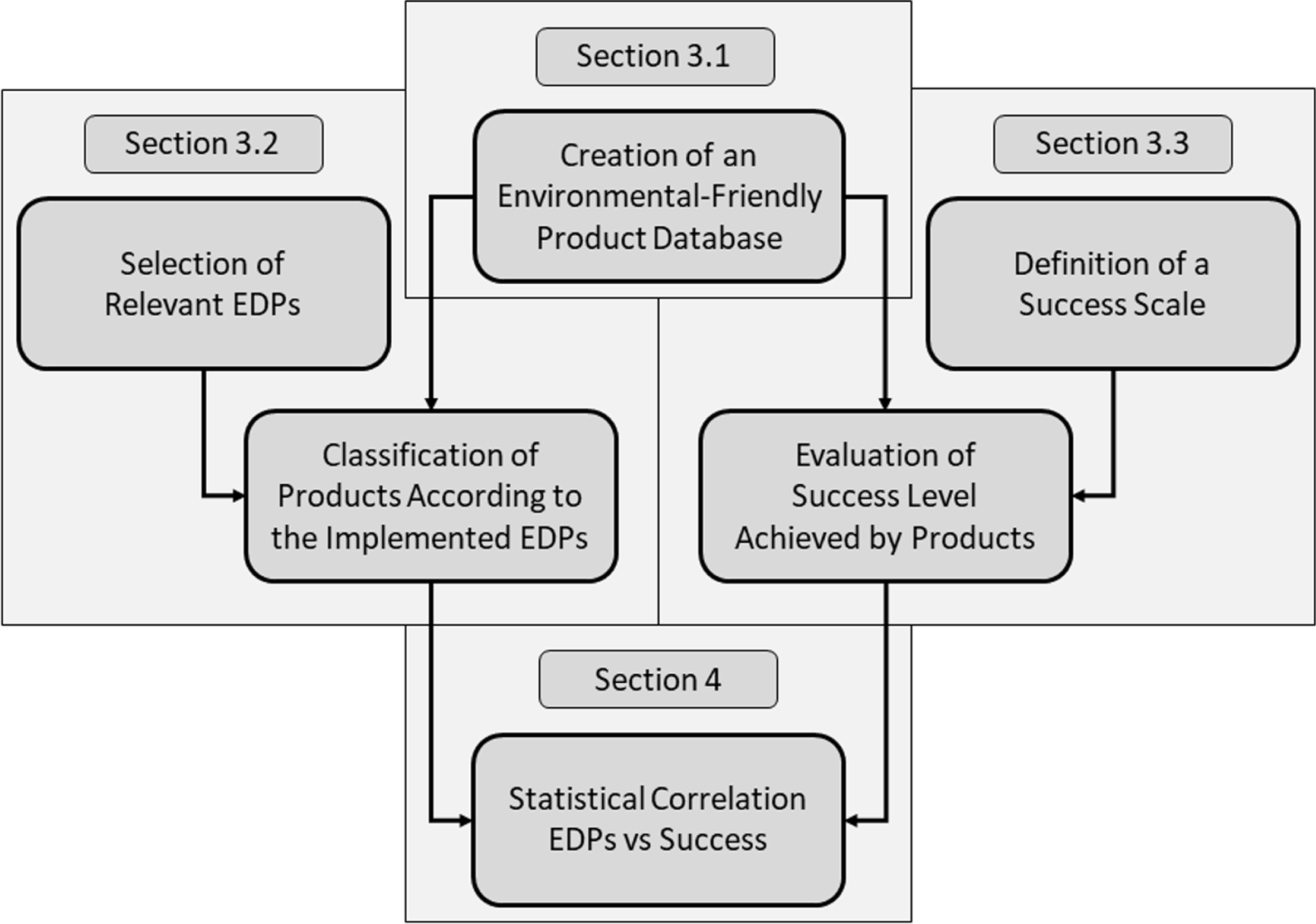
Initially, a set of products (sample of convenience) that, according to eco-design experts, display the implementation of EDPs are selected as boundary objects for the creation of a database (Section 3.1). The term ‘product’ is intended hereinafter as an original design deliverable that includes tangible artifacts, immaterial services and supplementary initiatives targeting the diffusion of green practices and behaviors. These products have been matched with acknowledged taxonomies of EDPs according to the environment-oriented design modifications they display (Section 3.2). Subsequently, a study of the success level achieved by the same sample of products was carried out (Section 3.3). In this way, it was possible to correlate the success level achieved and the specific EDPs implemented by means of statistical instruments. The described activities are summarized in Figure 1.
Methodological approach followed in the present study and indication of sections in which the various steps are described.
3.1 Selection of potentially environmental-friendly products
In order to describe sustainable value in its complexity and to make generalizable conclusions, the products to be included in the database have to represent a variety of industrial fields. In addition, the overall environmentally sustainable advantages shown by these products have to be exhibited and recognizable. In light of the above considerations, several scientific and web sources have been examined and selected. Many sources that use products to clarify the implementation of EDPs have emerged (Vezzoli & Manzini Reference Vezzoli and Manzini2008; Fiksel Reference Fiksel2009; Proctor Reference Proctor2009; Sempels & Hoffmann Reference Sempels and Hoffmann2013; Telenko et al. Reference Telenko, O’Rourke, Seepersad and Webber2016; Russo, Rizzi & Spreafico Reference Russo, Rizzi and Spreafico2017) and four of them were considered relevant to the scope of the study (Table 1) and sufficient to build a first sample of convenience for the present research. The discarded sources were either markedly oriented to specific industries, which could bias the sample as a consequence, or the majority of illustrated products were already included in the selected sources (overlaps were frequent among these four sources as well).
Selected sources for products implementing eco-design principles

Some products have been excluded from the database, which belong to the categories that follow.
(i) Ecological trademarks or brands, stories about the implementation of sustainable policies within organizations that are not embodied into specific products or services.
(ii) Structural optimizations and changes in industrial processes that are not recognizable in products and that cannot therefore lead to the perception of value – here, the implementation of the EDPs cannot be considered as a success driver.
(iii) Art displays with recycled/reused materials or other non-industrial applications, which represent not repeatable examples.
(iv) Products under current development, since a conclusive evaluation of their success cannot be made.
In light of the above considerations, 178 different products have been used for the final analysis, as apparent in the Excel file included in the supplementary material.
3.2 Selection of EDPs
Richest collections of EDPs can be found in Tischner & Charter (Reference Tischner and Charter2001), Bhamra & Lofthouse (Reference Bhamra and Lofthouse2007) and Vezzoli & Manzini (Reference Vezzoli and Manzini2008). Glavič & Lukman (Reference Glavič and Lukman2007) propose a shared terminology for principles, approaches and systems relevant to sustainability. Bovea & Pérez-Belis (Reference Bovea and Pérez-Belis2012) introduce a taxonomy of available eco-design tools according to, among others, the different design stages that best fit their application. Pigosso, McAloone & Rozenfeld (Reference Pigosso, McAloone and Rozenfeld2014) illustrate best practices for eco-design implementation, while, in a later publication (Pigosso, McAloone & Rozenfeld Reference Pigosso, McAloone and Rozenfeld2016), the same research team reports the main trends for eco-design tools and methods through a systematic literature review. Tyl et al. (Reference Tyl, Legardeur, Millet and Vallet2014) review eco-innovation and eco-ideation methods highlighting the large contribution of the TRIZ community (Altshuller Reference Altshuller1984).
In order to categorize the products through an appropriate design-oriented coding scheme, different sources proposing taxonomies were analyzed (Glavič & Lukman Reference Glavič and Lukman2007; Vezzoli & Manzini Reference Vezzoli and Manzini2008; Fiksel Reference Fiksel2009; Pigosso et al. Reference Pigosso, McAloone and Rozenfeld2014; Telenko et al. Reference Telenko, O’Rourke, Seepersad and Webber2016; Russo et al. Reference Russo, Rizzi and Spreafico2017). On the one hand, many EDPs are repeated across the surveyed sources. In addition, most of the illustrated principles are distantly related to the design field. The main EDPs that can be systematized in a design and operational perspective are reported in Vezzoli & Manzini (Reference Vezzoli and Manzini2008) and Russo et al. (Reference Russo, Rizzi and Spreafico2017). Therefore, EDPs were selected from these two references for the scopes of the present study. Furthermore, these sources were considered as the most appropriate ones since they strive to present comprehensive sets of EDPs, described according to a solution/life-cycle-oriented (in the former) and a problem/objective-oriented approach (in the latter). In other terms, they introduce complementary views on the implementation of eco-design options. The selected sets of EDPs assumedly ensure internal consistency since they are illustrated in the scientific literature. This consistency is here taken for granted and its verification is out of the scope of the paper although this aspect might affect the outcomes of the present study.
Overall, 76 EDPs were extracted from the two sources, 32 from the former and 44 from the latter (Table 2). It is worth noting that a product can implement more than one EDP, e.g. a concentrated detergent saves energy during the transportation, because it has a smaller volume and a lower weight for the same performance, and it requires a reduced use of material to achieve the desired result.
Additionally, the construction of the product database was also made using the examples presented by Vezzoli & Manzini (Reference Vezzoli and Manzini2008) and Russo et al. (Reference Russo, Rizzi and Spreafico2017). Therefore, the sources disclose some associations between the shown products and the EDPs they implement. The authors identified other associations as the implementation of additional principles was still reasonably recognizable. The insightful guidelines used to describe the EDPs supported the identification of these additional associations. For example, in order to illustrate the EDP ‘facilitating maintenance’, with reference to the guideline ‘facilitate the substitution of short-lived components’, Vezzoli & Manzini (Reference Vezzoli and Manzini2008) have chosen a toothbrush with replaceable brushes. Clearly, this kind of toothbrush facilitates repairing, reusing, disassembling and separating materials at the end of its life cycle, which represent additional EDPs than those reported in the original source. Additional examples of recognition of principles implemented in products are shown in Table 3. Any association between a product and an EDP required the agreement of all the authors after individual classifications and a final discussion leading to the pursuance of full consensus. The recognition of the presence of an implemented EDP did plainly take place when a structural, behavioral or functional modification of the product (with respect to its previous generation or a market standard) could be noticed. In other terms, the authors interpreted the designers’ intention of considering or neglecting an EDP for a new product version, which is consistently translated in a 0/1 variable for each EDP (see the supplementary material).
The effectiveness of EDP-driven changes in terms of measurable environmental performance cannot be assessed because detailed data about the product are not publicly available. These measures can be expressed in terms of environmental performance indicators (EPIs) (Issa et al. Reference Issa, Pigosso, McAloone and Rozenfeld2015) or process-oriented performance indicators (Rodrigues, Pigosso & McAloone Reference Rodrigues, Pigosso and McAloone2017). To this respect, it is worth pointing out that EDPs can be associated with multiple EPIs and vice versa. For instance, on the one hand, the implementation of the EDP minimizing material content or dematerialization, digitalization, miniaturization (P09 from Table 2) could lead to the improvement of EPIs as material consumption during production, toxic emissions and energy consumption during transport and use. On the other hand, the EPI material consumption can be improved also by implementing EDPs such as P11, P12 and P13 from Table 2. Therefore, studying the relationships between improved EPIs and success would result in an alternative to the present research but would support only to a limited extent designers who require information on the most effective ways to modify products. Therefore, beyond indicating the life-cycle stage in which the product family shows major environmental concerns (life-cycle profile), the supplementary material indicates the association of each product with all the identified EDPs, obtained in the same way as the examples illustrated in Table 3. As aforementioned, every product was coded by a set of binary values that mark the implementation of each considered EDP (1 if an EDP is implemented, 0 otherwise), which serves the scopes of the subsequent statistical analysis. Each EDP applied less than five times has been removed from the dataset as it could be considered poorly repeatable for the generation of new designs. Eventually, the final sample of classes used to describe the products in question includes 66 EDPs, as shown in Table 2: 31 items picked up from Vezzoli & Manzini (Reference Vezzoli and Manzini2008) and 35 items from Russo et al. (Reference Russo, Rizzi and Spreafico2017) with IDs 32–66.
List of eco-design principles analyzed in the present study

The two sets of principles are mostly independent from each other. Nevertheless, it can be argued that some of the principles above are undoubtedly similar, which could bring questions regarding their validity. Despite not being totally overlapping, some EDPs differ just in terms of conceptual nuances. Principle 12, for example, suggests ‘minimizing material consumption during usage’, while principle 33 proposes ‘reducing mass and volume of the product’. By taking a toilet bowl as an example, the former could address the reduction of water consumption during the use phase, while the latter focuses on the manufacturing stage by minimizing the amount of the structural material, commonly ceramics. Therefore, we argue that the two sources bring up a consolidated list of EDPs, which enables the monitoring of the mentioned nuances.
Example of recognition of EDPs implemented by a product on the basis of the available information

3.3 Products’ success assessment metrics
The literature lacks a clear and shared characterization of success (Moatari Kazerouni et al. Reference Moatari Kazerouni, Achiche, Hisarciklilar and Thomson2011). The determination of product success is troublesome because it depends on firms’ or designers’ goals (Maidique & Zirger Reference Maidique and Zirger1985) which are typically not disclosed. However, this consideration is arguable too, if we consider that products have exhibited large success despite the initial objectives being completely unpursued, e.g. the 3M’s Post-It story (Nemeth Reference Nemeth1997).
Factors featuring success irrespective of entrepreneurial goals are generally studied in academia (Bender & Marion Reference Bender and Marion2016; Machado Reference Machado2016), especially through empirical studies (Dinter Reference Dinter2013; Hernandez et al. Reference Hernandez, Schmidt, Kremer and Lin2014). Challenges of these research approaches include stating with certainty whether a product is a success or not (Song et al. Reference Song, Luo, Hoelttae-Otto, Seering and Otto2015). Success has actually a multidimensional nature and its evaluation is carried out through a variety of success indicators available in the literature (Cooper & Kleinschmidt Reference Cooper and Kleinschmidt1987; Hart Reference Hart1993; Griffin & Page Reference Griffin and Page1996). These indicators are both of financial (market share, revenues, return on investment, etc.) and non-financial nature (Hart Reference Hart1993).
With a closer look to sustainability, the need to redefine success and progress at national, corporate and individual level is highlighted in Vision 2050 (World Business Council for Sustainable Development 2010). Indeed, the aim of shifting the focus from profit/loss as indicators of success/failure to value creation in terms of personal and social well-being has been shared by many member companies of the World Business Council for Sustainable Development, including Philips. The latter, for instance, measures the success of its products by estimating the number of people positively affected by the solutions that are distributed and adopted. Philips considers the capability of improving peoples’ lives through green solutions (health ecosystem), healthcare solutions (medical products) and well-being solutions (physical and mental health, food and healthy home environment) as a success indicator (Roxana-Ioana Reference Roxana-Ioana2016). Therefore, its limitations are akin to financial outcomes used as a success criterion. Other metrics are used as well since ‘Philips uses Green Revenues as a measure of social and economic performance in addition to its environmental results. The use of this measure may be subject to limitations as it does not have a standardized meaning and similar measures could be determined differently by other companies’ (Philips annual report 2017). This statement confirms that success criteria are not universal and confirms the close relationship between sustainability and (economic) success, but, once again, no guidance is provided on assessing the success of a specific product at the operational level.
As information that claims the manifestation of success irrespective of the nature of success (financial or non-financial) can be found in the literature or on the web, the presence of such information can be used for the scopes of this study. The exploitation of literature knowledge to determine product success is not a new approach in the field (Borgianni et al. Reference Borgianni, Cascini, Pucillo and Rotini2013). In the latter contribution, the scholars built a product innovation database in order to investigate which actions led to success and which toward failure, therefore a binary value for the variable success. For this purpose, the scholars paid attention to balance the number of successes and failures, which was possible despite the literature’s tendency to highlight successful cases in contrast to failures (Haig Reference Haig2011). The replication of the same strategy applied in Borgianni et al. (Reference Borgianni, Cascini, Pucillo and Rotini2013) in the present work can give rise to a substantial unbalance between the number of failures and successes because the products to be analyzed have been chosen based on the presence of the implemented EDPs only.
Therefore, it is essential to grasp different nuances of success to characterize products and to avoid non-significant statistical results due to inappreciable differences among EDPs. Otherwise said, the success/failure dichotomy is insufficient to characterize the success achieved by the selected products. With respect to this issue, Maccioni & Borgianni (Reference Maccioni and Borgianni2018) have proposed an algorithm to characterize success in multiple classes and, at the same time, to limit the subjectivity of success assessment performed by researchers in product design. Success characterization is based on the verification of statements and circumstances about product success or presence of success indicators in different sources featured by an ordered degree of reliability. Although a margin of subjectivity is still present when interpreting statements extracted from scientific material and web sources, precise questions are posed to researchers with regard to the existence of specific conditions based on the information that has been retrieved. Answers to these questions drive toward the appropriate success class systematically. The conditions to be verified are the following:
(1) Information about the product is present in the literature or in the web (apart from the source used to individuate the product).
(2) The level of development or market maturity of the product permits a reliable evaluation of success.
(3) Scientific or web sources claim product failure or that the product remained to a prototype level for a ‘long enough period’ with no prospects of industrial development.
(4) It is explicitly affirmed that the product is a success, has thriven in the marketplace or its development has given rise to outstanding economic advantages.
(5) Information about failure has emerged in the literature or in the web.
(6) At least one of the relevant direct success indicators is fulfilled in the literature or in the web.
(7) At least one of the relevant indirect success indicators, unanimously supported by the literature, emerges in the databases (the existence of complementary products, the product is found into an imitation chain, similar products are successful, a patent is exploited in order for a commercial product to work, etc.).
(8) At least one of the relevant indirect success indicators, arguably supported by the literature, emerges in the databases (the product has won an award, the product is displayed in a museum collection, the product is successful in a restricted niche market, the product is successful in a very limited geographical or social context, etc.).
Therefore, according to the fulfillment of these different conditions, products can be classified according to a validated seven-level success scale, structured as follows:
(i) Level 1 (Failure): the information found about the product undeniably affirms that it is a flop; this outcome is achieved by satisfying condition (3) or meeting condition (5) when condition (6) is unfulfilled.
(ii) Level 2 (Oblivion): no general product information emerges after the search in the literature or in the web, i.e. condition (1) is not satisfied.
(iii) Level 3 (Disputable success): it emerges when conflicting information about success and failure is found. Both conditions (5) and (6) are satisfied.
(iv) Level 4 (Restricted success): success is suggested by information showing that argued indirect success indicators are fulfilled. Condition (8) is satisfied.
(v) Level 5 (Inferable success): success is suggested by information showing that undisputed indirect success indicators are fulfilled. Condition (7) is satisfied.
(vi) Level 6 (Web success): direct information about success is found in web sources only with respect to listed conditions; this takes place when condition (4) is satisfied or condition (6) is met while condition (5) is unmet.
(vii) Level 7 (Literature success): direct information about success is found in literature sources. With respect to listed conditions, this takes place when condition (4) is satisfied or condition (6) is met while condition (5) is unmet.
(viii) Not Evaluable: product information is found (condition (1) is met), but no information about success has emerged by searching in the pre-selected databases, or, in alternative, condition (2) is not satisfied because the maturity of the product is too low.
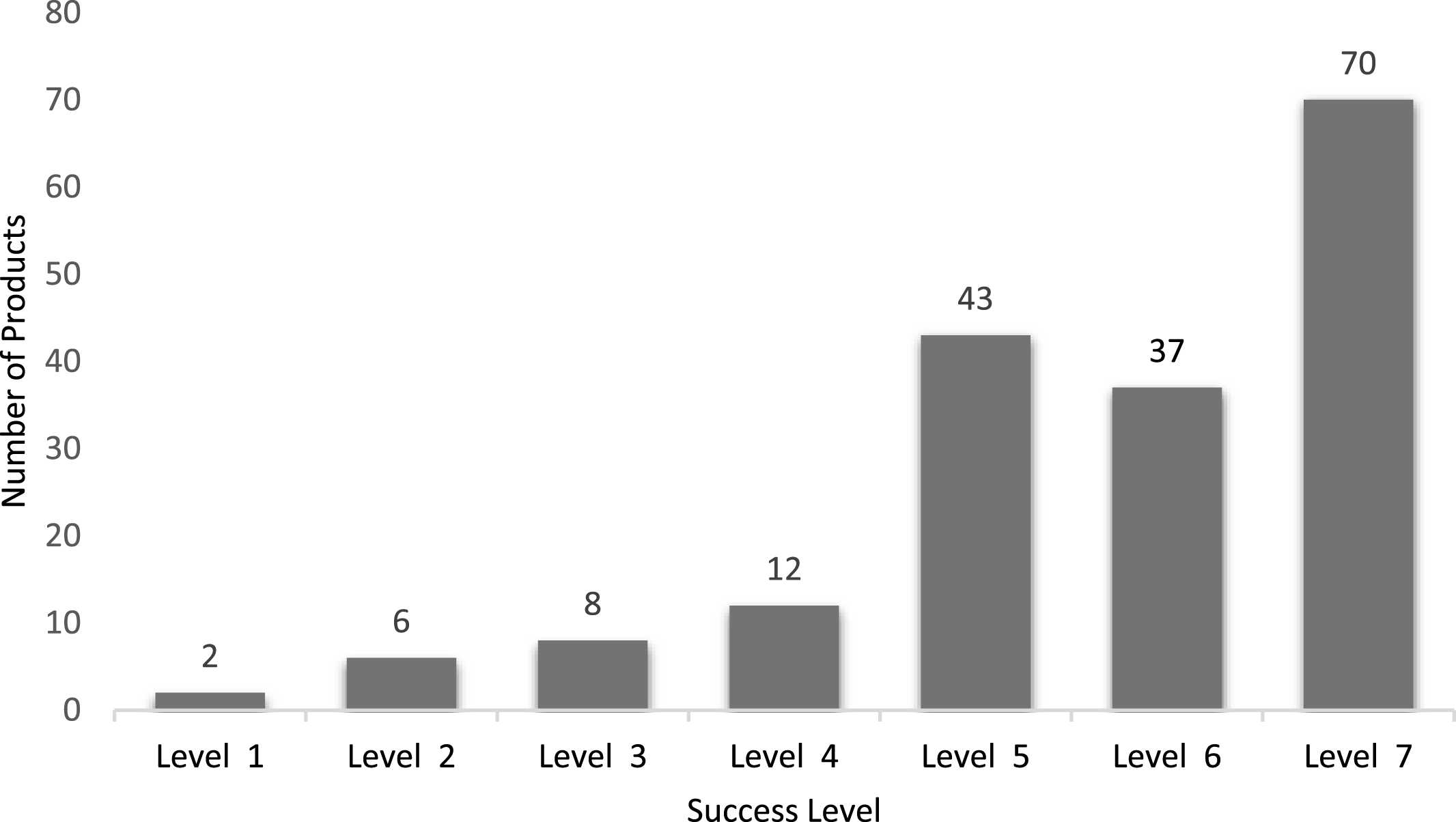
Examples of the attribution of a given success level are to be found in Table 4, which includes the information that has resulted critical for the classification of the products already presented in Table 3. Through the structured approach shown in Maccioni & Borgianni (Reference Maccioni and Borgianni2018), the products included in the database have been characterized according to the above classes. The distribution results are shown in Figure 2.
Example of success level attribution based on the information found

Distribution of the number of selected products implementing eco-design principles across different success levels.
4 Results
Based on the data presented in the supplementary material, it is possible to investigate the relationship between the success levels and the implemented EDPs. While implemented EDPs can be considered as dummy variables (regressors), the variable standing for the success level in the proposed scale is an ordinal variable (response). These data were statistically elaborated in order to address the research question, i.e. establishing whether EDPs are significant in terms of influencing success. Therefore, the scope is to discern which variables are relevant. Of course, it is relevant to capture both those EDPs that positively correlate with success and the ones that, conversely, negatively correlate with success.
The selection of significant variables can be performed with stepwise regressions, which are capable of identifying the factors that actually affect the response variable (success in this case). The literature reports examples of using stepwise regression methods to extract relevant variables in different fields including product design (Christensen, Kristensen & Reber Reference Christensen, Kristensen and Reber2015; Zhao & Freiheit Reference Zhao and Freiheit2017; Altavilla & Montagna Reference Altavilla and Montagna2018) and environmental studies (da Cunha Rodovalho, Lima & De Tomi Reference da Cunha Rodovalho, Lima and De Tomi2016; Zhang, Li & Feng Reference Zhang, Li and Feng2018).
More specifically, the relationship between success and EDPs was investigated with a stepwise ordered (because of the nature of the response) logistic regression by using the software Stata 13. A backward selection estimation was performed by setting at 0.05 (as a common rule of thumb) the significance threshold for the removal of the regressors from the model.
The output of the statistical process is the requested list of significant variables, which can be considered as success catalysts if the corresponding regression coefficient is positive and as success moderators if the related regression coefficient is negative.
Eco-design principles with a statistically significant role in terms of increasing or moderating success chances emerging from an analysis involving the whole sample of considered principles

The statistical exercise was repeated three times with different samples of variables featuring the EDPs. Table 5 shows the results of the regression made with all the involved 66 EDPs; significant EDPs are reported together with their corresponding $p$
-value (fourth column) and regression coefficient (fifth column). The latter is a metric to discern the power of the EDPs to favor or moderate success emergence. According to the nature of the statistical method (the family of logit functions), regression coefficients have to be read as log odds. In addition, according to the information present in the sources of principles, a column referring to the life-cycle stage in which the principle mainly reduces the environmental impact has been added (third column). By using the same illustration format, Tables 6 and 7 present the results of the regressions performed with the 31 EDPs from Vezzoli & Manzini (Reference Vezzoli and Manzini2008) and the 35 EDPs from Russo et al. (Reference Russo, Rizzi and Spreafico2017), respectively. The two sets have been analyzed separately too because of the recalled similarity among EDPs originating from the two different sets, which can potentially bias the resultsFootnote
1
.
$p$
-value (fourth column) and regression coefficient (fifth column). The latter is a metric to discern the power of the EDPs to favor or moderate success emergence. According to the nature of the statistical method (the family of logit functions), regression coefficients have to be read as log odds. In addition, according to the information present in the sources of principles, a column referring to the life-cycle stage in which the principle mainly reduces the environmental impact has been added (third column). By using the same illustration format, Tables 6 and 7 present the results of the regressions performed with the 31 EDPs from Vezzoli & Manzini (Reference Vezzoli and Manzini2008) and the 35 EDPs from Russo et al. (Reference Russo, Rizzi and Spreafico2017), respectively. The two sets have been analyzed separately too because of the recalled similarity among EDPs originating from the two different sets, which can potentially bias the resultsFootnote
1
.
Similarity phenomena caused the individuation of collinearity in the first statistical exercise; e.g. although EDPs 4 and 44 are distinguishable to some extent, the same products in the database implement them. It is also worth reminding that the two sources categorize the principles with a predominant solution- and problem-based orientation, respectively. Therefore, it makes sense to pay attention to outcomes illustrated in all the three tables to support the understanding of the link between eco-design and success.
Eco-design principles with a statistically significant role in terms of increasing or moderating success chances emerging from an analysis involving a partial sample of considered principles (Vezzoli & Manzini Reference Vezzoli and Manzini2008)

Eco-design principles with a statistically significant role in terms of increasing or moderating success chances emerging from an analysis involving a partial sample of considered principles (Russo et al. Reference Russo, Rizzi and Spreafico2017)

The results of the three different regressions can be considered consistent, although the set of EDPs included in Table 5 does not correspond to the union of the sets reported in Tables 6 and 7. The principles that have resulted statistically significant for the whole EDPs’ sample and a subset have emerged as success catalysts or moderators in both cases. With regard to the principles with a significant $p$
-value in a regression only, they exhibit conceptual similarities with other principles of the same type (catalyst or moderator) in many cases. Not seldom, this cluster of principles can support the interpretation of nuances about principles of different type, thus resolving a sort of conflict. Details and a wider interpretation of these results are to be found in the following section.
$p$
-value in a regression only, they exhibit conceptual similarities with other principles of the same type (catalyst or moderator) in many cases. Not seldom, this cluster of principles can support the interpretation of nuances about principles of different type, thus resolving a sort of conflict. Details and a wider interpretation of these results are to be found in the following section.
As for the explanatory power of the EDPs for the determination of success, $R^{2}$
scores are 0.114, 0.065 and 0.077 for the regression analyses concerning the significant EDPs from the whole set, Vezzoli & Manzini (Reference Vezzoli and Manzini2008) and Russo et al. (Reference Russo, Rizzi and Spreafico2017), respectively. Therefore, it can be inferred that the choice of the implemented EDPs justifies the display of success to an extent appraisable at 10%, while other factors are responsible for the residual percentage. As the present study is explorative, this outcome is satisfying since a part of the studied phenomenon (the success of eco-designed products) has been captured. However, the use of the regression coefficients for predicting the probability of achieving a given success level for a new product is inappropriate because it would neglect other factors that combine to play a fundamental role in the determination of success.
$R^{2}$
scores are 0.114, 0.065 and 0.077 for the regression analyses concerning the significant EDPs from the whole set, Vezzoli & Manzini (Reference Vezzoli and Manzini2008) and Russo et al. (Reference Russo, Rizzi and Spreafico2017), respectively. Therefore, it can be inferred that the choice of the implemented EDPs justifies the display of success to an extent appraisable at 10%, while other factors are responsible for the residual percentage. As the present study is explorative, this outcome is satisfying since a part of the studied phenomenon (the success of eco-designed products) has been captured. However, the use of the regression coefficients for predicting the probability of achieving a given success level for a new product is inappropriate because it would neglect other factors that combine to play a fundamental role in the determination of success.
5 Discussions
5.1 Interpretation of the results and design recommendations
Significant results able to classify some EDPs based on their positive or negative relationship with success have emerged from this study. As aforementioned, the reason why EDPs result as success catalysts or moderators is open to many interpretations. For instance, positive EDPs could present higher chances in contributing to a pleasurable user experience or higher possibility of being recognized, understood and valued by consumers. In addition, more successful EDPs could have higher chances of being embraced in the design of a product without conflicting with other performances or requirements; therefore, these EDPs may be, by their own nature, more prone to good implementation during design.
Specifically, relevant actions to facilitate end-of-life collection and transportation are good candidates for success (P22), especially if the end of life is supported by a service or the product enables the replacement of the necessary parts only (P65). To stress the relevance of the service dimension also in other product’s life phases, it can be underlined that principles underpinning PSS favor success (P08 and P30). The validity of this ‘rule’ across the whole product life cycle is limited by an unbalanced distribution of products with reference to life-cycle stages. Indeed, less than 7% of the analyzed products exhibits major impacts in the end of life (see the supplementary material).
Intuitively, the speed of delivery and the safety during transport/distribution are critical to success; this emerges also from the regressions (P39, P41 and P43 are success catalysts). However, principles involving packaging more closely have very different outcomes in terms of success chances despite the large amount of cases identified in the database. On the one hand, packaging has the main function of containing and protecting the product. P39, a success catalyst, suggests increasing safety performance in order to avoid any contamination, to optimize the transport space through a temporary variation of the product’s physical state and/or to extend product’s conservation. On the other hand, packaging disposal represents a serious environmental problem, and many design principles have been fine-tuned to design products with less packaging. In order to implement these principles, a product modification is often required and these alterations can have different effects on the chances of success. Indeed, through the implementation of P50 (the devising of multifunctional products), it has been possible to obtain positive results. Conversely, the implementation of P37 and P11, where the reduction of the packaging is associated with an excessive alteration of the product’s appearance or with a perception of less protection provided by the packaging, leads to negative results in terms of success. Therefore, the effects of the reduction of packaging on success should be favorably focused on in future studies.
The regressions highlight the product reliability as a success driver. P02 aims to design products that are reliable, simple, with few parts and with a reduced number of auxiliary components (P46). This would lead to prefer an integral design to a modular solution, but, at the same time, minimizing the overall number of different incompatible materials (P24) is a success moderator. By focusing on specific products from the database, the implementation of P24 might lead to success in limited contexts or to promote success just in some dimensions by compromising others. Conversely, observing the most successful cases of the products implementing P02 and P46, it is possible to notice that the increase in product reliability and/or the reduction of auxiliary components is not achieved with integral or modular design strategies but through a change of the physical functioning principle, e.g. iPod, Wi-Fi, touchscreen, electrical thermometer, etc.
As aforementioned, some conflicts seem to emerge because of nuances highly affecting success chances. Results apparently contradictory are P60 (catalyst) and P59 (moderator); the former suggests reducing the volume of the product during the use phase, while the latter addresses the reduction of the mass during the use phase. Similar reflections can be made for P44 (catalyst) and P56 (moderator); the former tends to modify the products for maintenance, while the latter involves designing repairable products. In order to shed a light on the effects of P59 and P60, it is useful to explain how and why the mass of a product can be reduced without substantially changing its volume and vice versa. For example, changing the volume of a sofa during its use would not lead to specific environmental benefits. Indeed, the product’s esthetic and ergonomic features are mostly characterized by its shape and volume. Therefore, it is possible to reduce its mass to improve its environmental impact. On the other hand, designing dynamic, nested or multifunctional products can often lead to a much larger reduction in volume than mass. However, mass reduction is still a fundamental objective for many product types (especially the ones with intense consumption of energy during the use phase, such as cars and airplanes, or those utilizing scarce and rare materials) and it being a success moderator requires more insightful investigations. As for P44 and P56, reparable products (P56) admit being damaged, while modifying products for maintenance (P44) comprises self-repairing products or products that do not require maintenance at all. In addition, while during maintenance there is no change of ownership before and after the operation, this does not always apply to ‘repair’. Indeed, P56 is often implemented by companies whose remanufacturing policies foresee the withdrawal of non-functioning products, their regeneration and reintroduction on the market. On the other hand, P44 allows product upgrades, diffusedly in concomitance with maintenance.
5.2 Other evidence emerging from the data analysis
When analyzing the application of the EDPs in the different products within the database, it can be noted that, on average, products implement at least a principle that refers to two different life cycle phases, which provides an indication of a system perspective, potentially to avoid burden shifting from one life-cycle stage to the other. Burden shifting is a well-studied phenomena in the eco-design knowledge area, and significant research has already been carried out in the field. Furthermore, when looking into the application of EDPs across the life-cycle stages, it can be noted that most of the applied principles focus on the use phase (338 recurrences), followed by end of life (179 recurrences), raw material and manufacturing (143) and finally distribution/packaging (40 recurrences). This distribution follows, to a large extent, the distribution of the proposed EDPs – with a slight unbalance toward the principles applied in the use phase. When looking into the distribution of the product hotspots, only 38% of the products are characterized by a strong impact during the use phase. One of the reasons for the apparent stronger focus on the application of EDPs focusing on the use phase might be due to the enhanced user perception during the use phase, which might be an important driver for product improvement.
5.3 Limitations
The presented results are inherently affected by some limitations, which are discussed below.
The indications of the success levels agreed by the authors are partially subjective, despite the fact that the method used attempts to systematize the process for the individuation of an appropriate success category. The selection of the implemented EDPs, beyond those indicated by the sources employed to build the product database, might suffer from similar subjectivity problems, although the attribution of EDPs benefits from their detailed description. In both cases, the authors have included examples of attributions (Tables 3 and 4), which allow the evaluation of the repeatability of the procedure. A full assessment of the robustness of this procedure can be made with the whole set of data provided in the supplementary material. The data included here allow for the repetition of the statistical regression or other analyses as well. Anyway, authors are available to share further details with interested readers, including the sources used for success evaluations and products’ characterization in terms of environmental benefits. This could strengthen the reliability of results by means of the evaluation of the inter-rater agreement for the involved variables and a sensitivity analysis, i.e. to which extent the attributions of the variables are consistent and incongruences affect the results in terms of individuating significant EDPs. In addition, by involving a larger number of evaluators, the study of the inter-rater reliability on perceivably implemented EDPs might lead to considering them as continuous variables instead of dummy ones.
Minor issues are also worth pointing out. As already clarified, the consistency and comprehensiveness of the selected EDPs sets are taken for granted. This requirement, if unfulfilled, can plainly affect statistical results as well. The large number of collected products has requested a time-consuming process for categorizing them both in terms of success and implementation of EDPs. However, their quantity does not ensure their general significance. An extension of the database of eco-designed products might benefit the present research and provide further indications about the robustness of the results. The selection of products from various industries represents a strength and a weakness at the same time. On the one hand, products from different industries could present different mechanisms and patterns that determine the achievement of success. If products from the same company are investigated with the presented approach, the study could benefit from the availability of numerical success indexes, such as market share or return on investment, which are seldom public. On the other hand, the variety of product domains is necessary for an adequate generalizability of the results. Eventually, different variables can replace EDPs as terms leveraged to match sustainable endeavors and product success. At the same time, different levels of granularity can be used as well for the sets of EDPs – both the reference sources include macro-categories and sub-classes. However, while the former would give rise to indications too general for supporting designers, a much larger database of products is necessary to work with the latter, which would likely jeopardize the feasibility of the present research.
6 Conclusions
While the literature highlights sustainability as a source of competitive advantage, eco-designed products are not immune to failure. Over the last decades, research has focused on the integration of eco-design into the product development process, with focus on the required resources, expertise, motivations, commitment and marketing capabilities necessary for sustainability-based projects. Nevertheless, product and design aspects, i.e. what customers directly interact with and choose to pay for, are surprisingly overlooked. The present paper is an exploratory study to fill this literature gap.
Specifically, the original contribution of the research is the provision of a better understanding of the link between EDPs, which are widespread in the eco-design literature, and the success of the developed products. A statistical analysis has revealed significant correlations. At the present stage, the study shows significant correlations between implemented EDPs and better/smaller chances to thrive in the marketplace. For instance, while many actions targeting the development of PSS increase the probability of success, the elimination or the drastic reduction of the packaging volume leads to opposite effects.
The motivations behind these relationships still have to be studied through future prescriptive research. However, designers can already benefit from the presented findings by selecting EDPs resulted as success catalysts and paying particular attention to the implementation of EDPs that tend to inhibit success if this is enabled by design constraints, which largely affect the design of sustainable products, e.g. Stark et al. (Reference Stark, Buchert, Neugebauer, Bonvoisin and Finkbeiner2017). To this respect, the main indications are to be found in Section 5.1, which can complement the selection criteria based on the major environmental benefits achieved according to products’ current criticalities.
Beyond striving to overcome the limitations illustrated in Section 5.3 and investigating the causes of the presented correlations, future work can be conducted as the amount and variety of data lend themselves to or represent a good starting point for different studies. It is worth exploring the relationship of success with several factors, such as the following:
(i) The interaction of a number of EDPs (as a possible metric of complexity of changes): in addition to understanding how the implementation of different principles affect each other, it would also be interesting to understand the role and correlation of trade-offs and synergies in the obtained product success.
(ii) The level of perceived implementation of EDPs as a continuous variable. Future work is planned to involve participants in an experiment aimed at understanding if experts perceive different levels of implementation of EDPs.
(iii) The radicalness of innovation: eco-design literature often emphasizes the potential of radical innovation for reaching enhanced environmental performance, when compared to incremental innovation. Future research should focus on understanding the correlation between success and innovation level, which can lead to a better understanding of the real contribution of innovation to enhanced systemic sustainability performance.
(iv) The consistency between the life-cycle profile, i.e. the most critical area for a certain product, and the life-cycle stage in which changes have been made: the correlation between the applied EDPs and the product/service environmental performance might shed light on the success of products where hotspots have been addressed in the selection of EDPs to be implemented.
The latter is particularly relevant in the field of eco-design, as we can suppose that whenever interventions have concerned the most critical life-cycle phase, major environmental benefits have been achieved. It is also deemed useful to identify the most successful principles in consideration of the life-cycle profile, but this analysis requires an extension of the product database, as certain phases (end of life was already mentioned) are currently featured by a limited number of products.
Acknowledgments
The study is conducted in the frame of the project few sECOnds funded by the Free University of Bozen-Bolzano with the call RTD2019. This work was supported by the Open Access Publishing Fund of the Free University of Bozen-Bolzano.
Supplementary material
Supplementary material is available at https://doi.org/10.1017/dsj.2019.24.
Web references
Web Reference 1: https://fourthdoor.co.uk/fourthdoor_2013/docs/design_and_make/FDR7_freeze_fria.pdf
Web Reference 2: http://christianspreafico.altervista.org/EcodesignMap/index.html
Web Reference 3: https://en.wikipedia.org/wiki/Solid_ink
Web Reference 4: http://www.promotedesign.it/progetti.php?pj=0000001554
Web Reference 5: http://www.ecoblog.it/post/1925/fria-il-frigo-che-prendeva-il-fresco-da-fuori
Web Reference 6: https://blogs.wsj.com/corporate-intelligence/2013/01/02/zipcar-entrepreneurial-genius-public-company-failure/
Web Reference 7: https://www.wri.org/blog/2013/01/zipcar%E2%80%99s-purchase-avis-car-sharing-success-or-failure
Web Reference 8: https://www.xerox.com/en-us/office/solid-ink#_overview
Web Reference 9: https://www.ikea.com/us/en/catalog/categories/departments/childrens_ikea/18723/
Web Reference 10: https://www.koppert.com/news-biological-systems/from-pioneer-to-market-leader-koppert-celebrates-its-fiftieth-anniversary/


 Open access

