



High rates of childhood obesity are a major public health concern in many developed countries, including Slovenia( 1 , 2 ). The number of overweight or obese infants and young children globally could rise to 70 million by 2025( 3 ). Children are becoming less physically active with a more sedentary lifestyle and are often exposed to nutritionally poor and energy-dense foods( 4 ). Energy-dense foods consumed by children are often very high in sugar and can, besides obesity, also lead to tooth decay, which is the most prevalent non-communicable disease in children worldwide( 5 – 7 ). Extensive advertising of ultra-processed energy-dense foods may play an important role in childhood obesity( 2 ). Especially in vulnerable populations, such as children, targeted marketing is recognised as a specific public health concern( Reference Grier and Kumanyika 8 ). Food marketing has a powerful influence on children’s behaviour; it affects their food preferences, consumption patterns, nutrition knowledge and overall well-being( Reference Cairns, Angus and Hastings 9 – Reference Block, Grier and Childers 12 ). To support policies for creating healthy food environments around the globe, monitoring guidelines were harmonised by the International Network for Food and Obesity/non-communicable diseases Research, Monitoring and Action Support (INFORMAS)( Reference Swinburn, Sacks and Vandevijvere 13 ). This is necessary not only to generate evidence and understand the extent of the problem, but also to evaluate the efficiency of different policy interventions( Reference Kelly, King and Baur 14 ).
While older children and especially adolescents worldwide increasingly use the Internet( 15 , 16 ), this is not the case for pre-school and younger school children with limited capacity to use/access its resources. Therefore, despite the press media’s lower impact on many population groups in the last decade, printed magazines remain popular among young children( Reference Rek 17 ). This applies to Slovenia where magazines are not only read in children’s spare time but also integrated into the educational curriculum( Reference Kroflič, Marjanovič Umek and Videmšek 18 ), making them a reputable educational tool and therefore trusted by parents and educators. The reach of popular Slovenian children’s magazines among 6- to 12-year-old school children is high, with some reaching almost 75 % of the child population( Reference Erjavec 19 ).
While the extent of food advertising to children on television has been a focus of several studies worldwide( Reference Adams, Tyrrell and White 20 – Reference Scully, Macken and Leddin 30 ), including Slovenia( Reference Korošec and Pravst 31 ), the advertising of foods in children’s and teens’ magazines (CTM) has received much less attention( Reference Jones, Gregory and Kervin 32 ). While risks of misleading advertising exist in all types of media, such risks are of great concern in print media where the line between editorial content and advertising can be quite blurred( Reference Jones and Kervin 11 , Reference Kraak and Pelletier 33 , Reference Chapman, Fairchild and Morgan 34 ). This makes children even more vulnerable to the effects of advertising as they are typically unable to properly distinguish editorial and marketing content( Reference Jones, Mannino and Green 35 ). Some reports show extreme cases where the number of food promotions (not clearly defined as advertisements) exceeds the number of actual food advertisements per edition( Reference Jones and Reid 36 ). Foods advertised in children’s magazines were mostly identified as ultra-processed with high energy density( Reference Jones, Gregory and Kervin 32 , Reference Kelly and Chapman 37 , Reference No, Kelly and Devi 38 ). In addition, it is shown that children can easily recall the foods seen in such advertisements( Reference King and Hill 39 ) and are more likely to choose them when available( Reference Jones and Kervin 11 ). Greater recall of such advertised food products is also relevant for their future consumption and dietary preferences( Reference King and Hill 39 , Reference Boyland, Nolan and Kelly 40 ); therefore, advertising foods with a favourable nutritional composition could have long-term positive effects for children’s health( Reference Dixon, Scully and Wakefield 41 , Reference Kraak, Kumanyika and Story 42 ).
Despite the growing importance of Internet media, the printed media generally remains an important channel for food marketing. For example, a 2014 US report showed that marketers still spend considerable amounts to advertise sugary drinks in magazines; in magazines, an above-average proportion of advertising was reported for fruit drinks and iced teas( 43 ). As magazines are also read by parents, magazine marketing can also influence parents’ perception and purchasing decisions, with many for example believing that certain drinks, particularly flavoured waters, fruit drinks and sports drinks, are healthy options for their children( Reference Munsell, Harris and Sarda 44 ) and children also prefer their taste( Reference Broughton, Fairchild and Morgan 45 ).
Initiatives to limit children’s exposure to the marketing of unhealthy foods started quite some time ago( 46 , 47 ). In Quebec, Canada, restrictions on advertising food to children under 13 years (including food advertising in print media) were introduced back in 1980( Reference Prowse 48 , Reference Le Bodo, Blouin and Dumas 49 ). Rigorous steps to limit advertising of foods high in sugar, energy, sodium or saturated fat were recently seen in Chile, where the government banned the sale of any of these products in schools as well as related advertising in media, including magazines aimed at children below 14 years of age( 50 ). In Europe, some countries also introduced restrictions on the advertising of foods not passing specific nutritional criteria; for example, different nutrient profiles were established to limit advertising of less healthy foods in the UK( 51 ), Denmark( 52 ) and Norway( 53 ). A major step towards a harmonised approach in this area was an initiative of the WHO Regional Office for Europe, which proposed a nutrient profile model for European countries( 54 ). A similar nutrient profile model was also developed by the WHO Regional Office for the Americas( 55 ).
After publication of the WHO Regional Office for Europe’s nutrient profile model (hereafter referred to as the ‘WHO Europe nutrient profile model’), and in line with Slovenian national Audiovisual Media Services Act( 56 ), new guidelines on advertising food to children were implemented in Slovenia in 2017( 57 ) but they apply only to audio-visual media communications like television advertising. While children’s magazines are still not subject to any specific regulation that would limit advertising of energy-dense foods, it might be the case that the regulation of broadcast media also affected other media. Further, the Slovenian food industry association accepted some voluntary limits on food advertising. A major set of such self-regulatory measures was accepted in 2015, particularly referring to sugar-sweetened beverages( 58 ), although the efficiency of this has yet to be evaluated. Besides print media, an even greater challenge is how to cover newer communication channels like the Internet and mobile applications( Reference Freeman, Kelly and Baur 59 ) in terms of both research and evaluation, but mainly of efficient regulation.
The primary objective of the present study was to investigate the extent of food marketing in CTM. We compared the situation between 2013 and 2017. All branded food references (BFR) were categorised and evaluated according to the WHO Europe nutrient profile model. A content analysis was also performed to seek insights into different food marketing techniques in CTM. The secondary objective was to compare food advertising in CTM with the advertising in paper media (newspapers, magazines) targeting the adult population.
Methods
Collection of advertising material
A repeated cross-sectional study was conducted in Slovenia. Data were collected separately for 2013 and 2017. The observation period for each year was from January to December (12 months). The sample of CTM for both years included all available issues of magazines for children and adolescents (aged 2–14 years) published in the observation period that are issued at least once in two months and distributed through news-stands. In the 2017 sample, the teen magazine Smrklja was excluded because it had vanished from the market. For comparison, we prepared a sample of printed media targeting the adult population. This sample was prepared using both daily newspapers and published magazines regularly issued in 2013 with a reach of at least 100 000 readers for the daily newspapers and weekly magazines, and 50 000 readers for the monthly/bimonthly magazines. Since data on the newspapers/magazines’ national readership and reach were not available for 2017, the criterion for including a newspaper/magazine in the 2017 sample was having been included in the 2013 sample (unless the newspaper/magazine was no longer on the market, or if the print run dropped below 5000). Additional newspapers/magazines with a circulation of over 25 000 issues were included, since data on reach were not available. The titles of the sampled magazines and newspapers are listed in Table 1.
Print media titles included in the present study
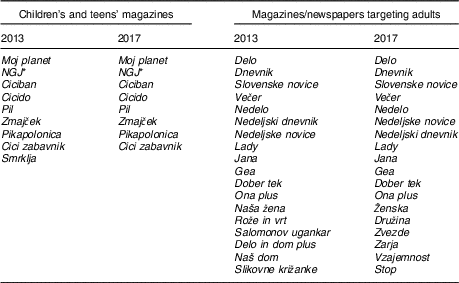
* NGJ: National Geographic Junior.
Only subscription newspapers/magazines were included for both years. For magazines, we included all issues published in the observation periods. With daily newspapers, we included twenty-four issues of each newspaper (four weeks during 2013 and 2017, one week per calendar season). The Sunday edition of a newspaper was also included, if available. Paper copies of the newspapers/magazines were obtained from the Slovenian national library (Ljubljana). The complete sample in 2013 included 100 issues of CTM and 321 issues of newspapers/magazines targeting adults. In 2017, the sample included eighty-three issues of CTM and 330 issues of other newspapers/magazines. For easier data collection and coding, an identification number was assigned to every issue of the magazines/newspapers in the sample.
Identification and classification of branded food reference data
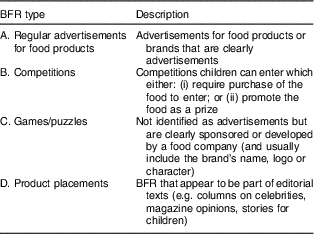
All pages of a selected issue were examined and searched for BFR data. A ‘branded food reference’ meant any form of a food product or brand name presentation where the brand was clearly visible, including food products found in pictures, recipes, games, as well as in advertisements and any kind of promotion. A trained research assistant went through each selected magazine/newspaper issue and looked for any BFR. Details of each BFR were extracted into a Microsoft® Excel 2016 (16.0) spreadsheet, including the name of the magazine/newspaper and day/month/issue (identification number), product name and producer/brand (if applicable). For the CTM, we also checked the type of a BFR’s marketing technique and coded it as an advertisement, product placement, game/puzzle or competition (see Table 2). The coding frame was taken from Jones et al.( Reference Jones, Gregory and Kervin 32 ) and slightly modified to fit the types of marketing techniques we found in the Slovenian CTM.
Food marketing techniques employed in the branded food references (BFR) in the children’s and teens’ magazines
Food categorisation
All food products appearing as BFR found in the CTM and magazines/newspapers for adults were classified in food categories provided in the WHO Europe nutrient profile model( 60 ). Two additional categories, ‘Miscellaneous’ and ‘Food supplements’, were included to enable foods not fitting into any of the seventeen WHO types to be categorised. The ‘Miscellaneous’ category mainly included alcoholic beverages and some baby foods, while ‘Food supplements’ included food supplements of all kinds.
To ensure inter-coder reliability, the second coder coded a random 5 % of issues from 2013 and 2017. Inter-coder reliability was needed to ensure the same rating for each object, to avoid discrepancies. Discrepancies were found in less than 3 % of identified food references, representing good agreement of 97 %( Reference Lombard, Snyder-Duch and Bracken 61 ). All discrepancies were discussed to ensure coding consistency.
Nutrient profiling using the WHO Europe nutrient profile model
All BFR were evaluated using the WHO Europe nutrient profile model( 60 ). This model was developed to support policy makers seeking to restrict the marketing of foods to children in European countries. It divides foods into seventeen different categories. While some categories are ‘permitted’ or ‘not permitted’ for advertising to children by default (i.e. ‘Edible ices’, ‘Fruit juices’=‘not permitted’; ‘Fresh and frozen meat, poultry, fish and similar’= ‘permitted’), others have set limits for amounts of certain nutrients that should not be exceeded in order marketing of such foods to be permitted (i.e. ‘Savoury snacks’, ‘Breakfast cereals’).
The data on the nutritional composition employed in the nutrient profiling were extracted from our online Composition and Labelling Information System (CLAS) database. The CLAS database was generated using food-labelling data and includes data on the nutritional composition of branded foods on the Slovenian market( 62 ). The database was first compiled in 2011, while further data collections came in 2015 and 2017. The database was described and used in our previous studies( Reference Zupanic, Miklavec and Kusar 63 – Reference Pravst, Lavrisa and Kusar 66 ). If an exact food product appearing in the BFR was not found in the CLAS database, it was matched with the most comparable generic food product from the database. The following nutritional composition data were extracted for all foods: energy value, total fats, saturated fats, sugars, added sugars, added sweeteners and salt. Nutrition profiling was not performed for BFR entailing miscellaneous foods and food supplements not included in the WHO Europe nutrient profile model. A χ 2 test was performed for statistical analysis to test the differences in extent of advertising, number of BFR and differences in BFR distribution among food categories comparing 2013 and 2017. A 95 % confidence level was used. A similar approach was used in other studies( Reference Kelly and Chapman 37 , Reference No, Kelly and Devi 38 ).
Results
The CTM with the highest proportion of food marketing (number of food advertisements v. all advertisements) in 2013 was Smrklja (23 %), followed by Cici zabavnik (19 %) and Ciciban (18 %). In general, the extent of advertisements decreased in 2017 as the numbers of both non-food and food advertisements of any type were notably lower than in 2013 (P<0·0001; see Table 3). In all magazines, except the teen magazine Pil, which was the CTM with the biggest share of food advertising in 2017 (11 %), the proportion of food advertising fell by over one-half. The average proportions of food marketing in 2013 and 2017 were 16 and 6 %, respectively. In both years, the magazines with the greatest share of food advertising were magazines targeting teenagers (Smrklja in 2013, Pil in 2017).
Food advertising v. non-food advertising in children’s and teens’ magazines in Slovenia in 2013 and 2017
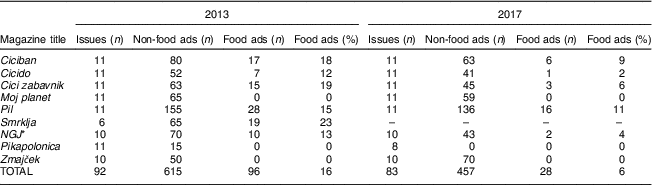
All issues of the children’s and teens’ magazines (n 92 in 2013, n 83 in 2017) published in Slovenia in the two years were analysed. The term ‘ads’ refers to all branded food reference types mentioned in Table 2.
* NGJ: National Geographic Junior.
In 2013, the dominant types of BFR were competitions and games/puzzles (Table 4). The penetration of such ‘blurred’ advertising was far higher (83 %) than of regular advertisements (17 %). Games and puzzles were the dominant food marketing categories in children’s magazines, and competitions in the teen magazines. Although the majority of food advertising (other than regular advertisements) in the CTM was labelled as advertising material according to the Slovenian Mass Media Law( 67 ), they typically used a small font and were positioned in a place with less attention by readers. The situation changed in 2017 when more than 60 % of all food advertising in CTM was regular advertisements. For example, the share of competitions, which in 2013 accounted for nearly half of food advertising, dropped to only 14 % in 2017. It is interesting that the proportion of games/puzzles dropped significantly in magazines for the youngest (Cicido, Ciciban, Cici zabavnik). Regular food advertisements were the dominant food marketing category in both children’s magazines and teens’ magazines in 2017.
Number of branded food references (BFR) according to BFR type in children’s and teens’ magazines in Slovenia in 2013 and 2017
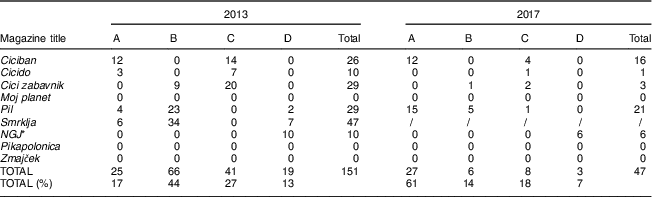
All issues of the children’s and teens’ magazines (n 92 in 2013, n 83 in 2017) published in Slovenia in the two years were analysed and the BFR categorised.
BFR type: A, regular advertisements for food products; B, competitions; C, games/puzzles; D, product placements.
* NGJ: National Geographic Junior.
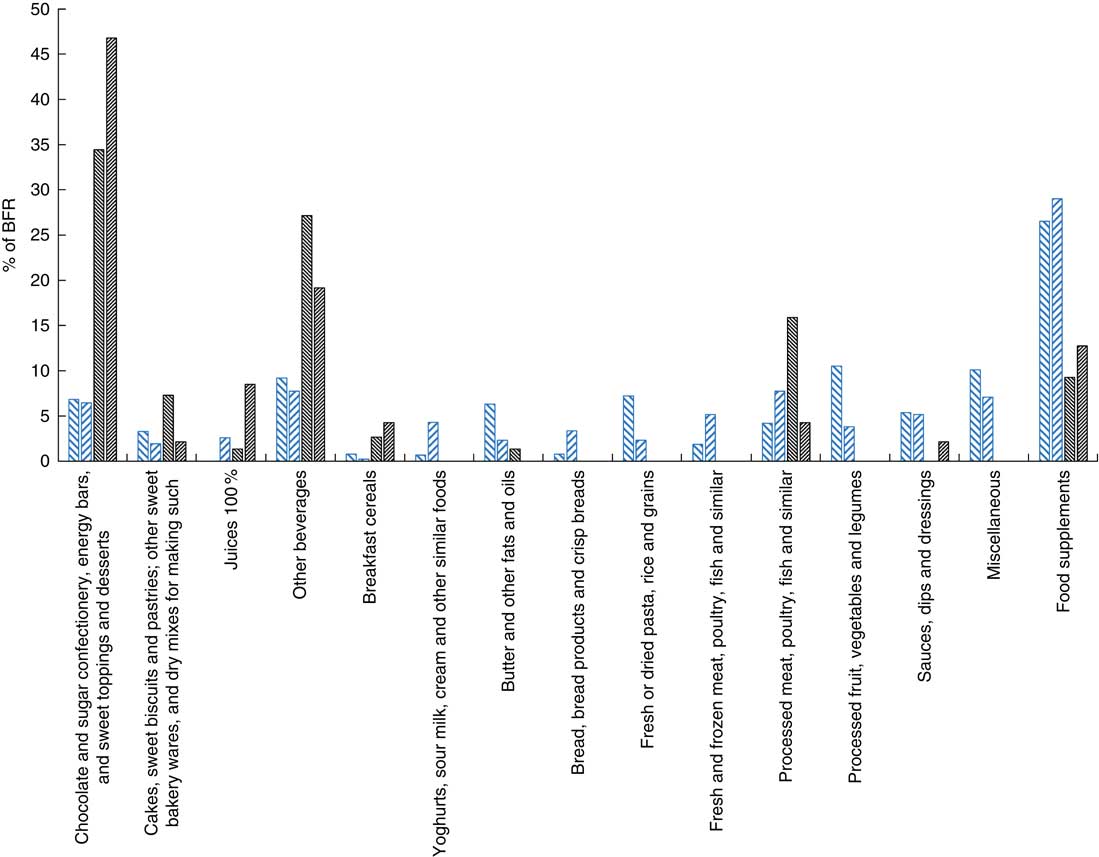
Altogether, 912 BFR were identified in 2013 and 1443 in 2017. Of those, we found 151 BFR in CTM in 2013 and forty-seven in 2017. In CTM, the number of BFR fell by roughly two-thirds between 2013 and 2017. On the other hand, in magazines/newspapers targeting adults the number of BFR increased drastically: from 761 BFR in 2013 to 1396 in 2017 (P<0·0001). Figure 1 shows the most advertised food categories in 2013 and 2017. While in the CTM only a few categories were dominant, the advertising in printed media targeting adults was quite dispersed in both years (P=0·3). The most advertised categories in the CTM were ‘Chocolate and confectionery’ (34 % in 2013 and 47 % in 2017) and ‘Other beverages’ (27 % in 2013 and 19 % in 2017), while ‘Food supplements’ (27 % in 2013 and 29 % in 2017) were most commonly advertised in newspapers/magazines targeting adults. While the ‘Processed meat’ category was also among the most commonly advertised categories in CTM in 2013 (16 %), this was no longer the case in 2017 (4 %).
(colour online) Distribution of branded food references (BFR) in children’s and teens’ magazines (CTM) and magazines/newspapers targeting adults in Slovenia in 2013 and 2017, according to the most advertised food categories:
 , magazines/newspapers targeting adults 2013;
  , magazines/newspapers targeting adults 2017;
  , CTM 2013;
  , CTM 2017. All issues of the CTM (n 92 in 2013, n 83 in 2017) and a selected sample of issues of adult-targeting magazines/newspapers (n 345 in 2013, n 330 in 2017) published in Slovenia in the two years were analysed and the BFR evaluated using the WHO Europe nutrient profile model
Although marketing in CTM dropped notably from 2013 to 2017, results of the nutrient profiling showed no improvement in favour of the nutritional quality of the advertised foods. As seen in Table 5, only three BFR were classed as ‘permitted’ by the WHO Europe nutrient profile model in 2013, while we found no ‘permitted’ BFR in the 2017 sample.
Number of branded food references and results of nutrient profiling of foods appearing in children’s and teens’ magazines in Slovenia in 2013 and 2017
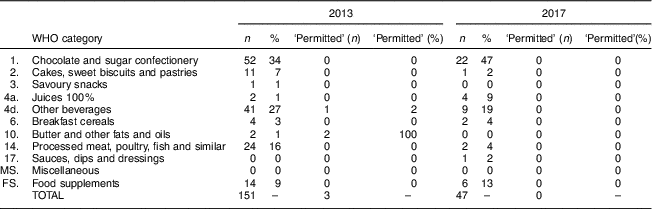
All issues of the children’s and teens’ magazines (n 92 in 2013, n 83 in 2017) published in Slovenia in the two years were analysed and evaluated using the WHO Europe nutrient profile model.
While the WHO Europe nutrient profile model was developed for restricting food marketing to children, we also employed this model for a much larger sample of BFR found in print media targeting adults. Noting that a considerable proportion of BFR were in the categories of ‘Food supplements’ and ‘Miscellaneous foods’ (35 % in 2013 and 29 % in 2017) which were not subject to nutrient profiling, a relatively high proportion of foods in other food categories in adult-targeting media was found to be ‘not permitted’ for advertising to children (according to the selected nutrient profiling model) in both 2013 (66 %) and 2017 (56 %).
Discussion
Branded food reference types
Our findings show the penetration of both food and non-food marketing in CTM was notably lower in 2017 than in 2013. In 2013, food reference types other than regular advertisements accounted for 83 % of all food promotions in the CTM (Table 4). Regular advertisements were far less common. According to the Slovenian Mass Media Law, all advertising content should be clearly recognisable and separated from the other content( 67 ). The Law also prohibits the manipulation of children and taking advantage of their lack of knowledge and experience to encourage them to buy products. When food marketing appears in the form of games, competitions or product placements, not only do children but also their parents find it harder to recognise that these are advertising. While labelling such food reference types as ‘advertisements’ might assist parents, children have limited reading capacities and do not understand that the purpose of advertising is to sell things, another reason making children a vulnerable target population. It is therefore quite encouraging that both the penetration and proportion of such advertising of foods dropped considerably from 2013 to 2017.
Younger children are also easily influenced by brand placement in games, resulting in a more positive brand image and higher top-of-mind awareness of the brand shown( Reference van Reijmersdal, Jansz and Peters 68 ). Children are also more likely to choose foods they have seen an advertisement for than non-advertised foods( Reference Jones and Kervin 11 ). Our observation about the lack of food promotion in the form of games in the teens’ magazines reveals that such a marketing technique is obviously not very efficient in this target group. Advertisers are therefore employing different approaches in teens’ magazines; for example, competitions where readers can participate in a prize draw in exchange for personal data like their name and home address. This enables the advertisers to continue with more direct promotions via other channels like post (i.e. delivery of advertised materials to their home address) or the Internet (i.e. email marketing). Similar findings to ours from 2013 emerged in studies from other countries where BFR were usually not clearly identified as advertisements and mostly formed part of the editorial content( Reference Jones, Gregory and Kervin 32 , Reference Jones and Reid 36 , Reference Kelly and Chapman 37 ). In contrast to the results of a UK study (2004/2005) where food advertising was not found in magazines targeting pre-school children (but was found in early school and pre-teen/teenage magazines)( Reference Cowburn and Boxer 69 ), in Slovenia food advertising was also found in CTM targeting young children in both 2013 and 2017.
The observed notable lowering of the overall number of any kind of food reference types as well as the number of non-food advertisements in CTM from 2013 to 2017 indicates that other communication channels are obviously gaining in importance. Online communication channels are in particular becoming very interesting for food marketers, as shown in studies conducted in other countries( Reference Boyland and Whalen 70 , Reference Thaichon and Quach 71 ). Unlike in traditional media, such as print media and television, online food marketers can use a variety of engaging techniques to directly interact with the user( Reference Vandevijvere, Sagar and Kelly 72 ). While in the past interaction with children was somewhat limited due to children’s (in)ability to use computers, the progress in smartphone and tablet applications and Internet accessibility facilitate easy use of new communication channels also by very young children. On the other hand, printed media is obviously still quite an attractive communication channel for targeting adults; we noted a considerable shift in the amount of overall food advertising in newspapers and magazines targeting the general population. It is interesting that compared with 2013 the marketing of food supplements in these print media had doubled in 2017.
Which kinds of foods are advertised?
In both years, the majority of BFR in the CTM data set involved foods with a less favourable nutritional composition. The most advertised food category was ‘Chocolate and confectionery’, representing 34 % of all BFR in 2013 and 47 % in 2017. This food category is by default not permitted for advertising according to the WHO Europe nutrient profile model. Although we observed fewer BFR in 2017, the presence of unhealthy foods is even more notable than in 2013 as not a single BFR found in a CTM was classed as ‘permitted’ by the WHO nutrient profile. The domination of foods with a less favourable nutritional composition in children’s magazines was also observed in other countries( Reference Jones, Gregory and Kervin 32 , Reference Kelly and Chapman 37 , Reference No, Kelly and Devi 38 , Reference Cowburn and Boxer 69 ), where the most advertised food categories in children’s magazines were also those that included chocolate and confectionery. In 2017, the second category, ‘Other beverages’, mostly included sugary drinks. The proportion of BFR involving food supplements rose considerably in 2017, when ‘Food supplements’ was the third most advertised category.
Quite a different advertising pattern was observed in magazines/newspapers targeting adults where ‘Food supplements’ was the most advertised food category, accounting for close to one-third of the BFR. It is of great concern that the marketing in CTM relates only to a few food categories that are almost exclusively linked to unhealthy foods. On the other hand, marketing in magazines/newspapers targeting adults is much more evenly distributed and more commonly includes the promotion of less processed foods (Fig. 1). However, the excessive marketing of food supplements is becoming a possible public health concern and should be further investigated.
The problem of children’s exposure to advertising of unhealthy foods also lies in children’s development of strong positive affect regarding such advertised food brands, as shown in a study by Kelly et al.( Reference Kelly, Freeman and King 73 ). This could importantly affect their eating habits and lead to an unhealthy dietary pattern in the future. Such advertising is even more worrying when materials are distributed in a credible environment; for example, if the distribution is made at school, like in Slovenia.
However, the marketing of unhealthy foods is an issue of global concern( 74 , Reference Sadeghirad, Duhaney and Motaghipisheh 75 ). Good practices are reported in Norway( Reference Bugge 76 ) with a lower prevalence of advertising of less healthy foods compared with other Western countries( Reference Kelly and Chapman 37 , Reference Marsh, Mhurchu and Maddson 77 ). This is largely due to the stricter rules on advertising of foods to children and the presence of a children’s ombudsman, for whom protecting children from advertising has been a high priority in recent years. Progress on this topic has also occurred in Slovenia with rules on television advertising of foods to children being enforced in January 2017, but the question remains of what will happen with advertising in other, non-broadcast media. There is a risk of the current extensive advertising of less healthy foods in children’s viewing times on television( Reference Korošec and Pravst 31 ) migrating over to less regulated channels. On one side, promotions of less healthy foods can migrate to primetime hours where television is watched by both adults and children( Reference Adams, Tyrrell and Adamson 78 ) while, on the other, advertisers might also be challenged to employ other channels. While our study indicates that CTM were not under additional advertising pressure, this might not be the case with other communication channels, particularly the Internet and mobile applications.
A strength of our study is that the data set contains all issues of the selected CTM in 2013 and 2017. Further, the 12-month observation period used enabled us to overcome seasonal variations in food advertising. The study protocol is very robust and facilitates changes in food advertising to be efficiently monitored over time. Yet, while a large observation allows a very reliable assessment of food advertising, such an approach also brings an important limitation – a huge amount of data for processing and analysing. The data collection and analyses entailed one replication only, but the validity of the results was confirmed on a sub-sample of investigated issues. Further, while all available issues of CTM were included in the study, we limited the inclusion of titles targeting adults – particularly for daily newspapers. However, we assured that the sample of adult-targeting issues included issues evenly distributed across the whole observation period, so that all parts of the year were equally covered to avoid seasonal changes. It should be noted that we focused only on the promotion of branded foods as they could be subject to restriction policies, although any policy restrictions on the promotion of non-branded foods would interfere with the constitutional freedom of the press.
Conclusions
The study results show that food advertising to children in CTM in Slovenia is mostly linked to foods with a less favourable composition, with ‘Chocolate and confectionery’ and ‘Other beverages’, including sugary drinks, being the most commonly advertised food categories. In CTM, food advertising is linked primarily to a small number of food categories, while in adult-targeted magazines advertising is much more evenly dispersed. However, in adult-targeted magazines ‘Food supplements’ cover nearly one-third of the BFR. In both CTM and adult-targeted magazines, the majority of BFR were classed as ‘not permitted’ by the WHO Europe nutrient profile model. In CTM, a significant change in promotion types is notable between 2013 and 2017, with regular advertisements being the leading food reference type in 2017 and other types, such as games/puzzles, competitions and product placements, in 2013. In the observed period, food advertising in CTM plummeted by two-thirds while in adult-targeted magazines it nearly doubled.
Given that marketing in CTM in Slovenia is decreasing, future research should also cover online media. Regulatory restrictions introduced in Slovenia in 2017 were intended to limit television marketing of foods to children, while other types of media such as print media and the Internet remain unregulated. A more efficient strategy to protect children from aggressive marketing techniques would not only cover television but a wider variety of possible advertising platforms. The efficiency of any such policy intervention should be carefully monitored to ensure not only children’s lower exposure to the marketing of foods with an unfavourable nutritional composition, but also to see whether such interventions in fact reduce the prevalence of obesity. The present study provides a robust protocol and cross-sectional data that will be very useful when both preparing new interventions and evaluating them.
Acknowledgements
Acknowledgements: The authors would like to thank food science and technology students from the Biotechnical Faculty of the University of Ljubljana, particularly Nika Žibrat, Ajda Kovačič, Tina Bergant and Miha Žužek for their help collecting the data, and Murray Bales for providing language assistance. Financial support: This study was funded by the Ministry of Health of the Republic of Slovenia and the Slovenian Research Agency (Research Programme P3-0395: Nutrition and Public Health; Research Project L3-9290: Sugars in human nutrition). The funding organisations had no role in the design, analysis or writing of this article. Conflict of interest: There are no other potential conflicts of interest to declare. The authors would, however, like to acknowledge that I.P. has led/participated in various other research projects in the area of nutrition/public health/food technology that were (co)funded by the Slovenian Research Agency, the Ministry of Health of the Republic of Slovenia, the Ministry of Agriculture, Forestry and Food of the Republic of Slovenia, and in the case of specific applied research projects, also by food businesses. Authorship: Ž.L., K.E. and I.P. all contributed to the design of the research. Ž.L. led the data collection, classification of foods and nutrient profiling, K.E. contributed to the design of classification of the advertisements, Ž.L. and I.P. collaborated in the data analyses. All authors read and approved the final manuscript. Ethics of human subject participation: Not applicable.



