


Human milk and animal milk are rich sources of bioactive oligosaccharides, which are of great interest to the functional food industry. Many biological activities have been reported for certain milk oligosaccharides including prebiotic activity, anti-adhesion effects, anti-inflammatory properties, glycome-modifying activity, and a role in brain development and growth-related characteristics of intestinal cells( Reference Bode, Kunz and Muhly-Reinholz 1 – Reference Wang, Yu and Karim 4 ).
Milk oligosaccharides are typically composed of three to ten monosaccharide units, including glucose (Glc), galactose (Gal) and N-acetyl-glucosamine (GlcNAc) as well as fucose and sialic acids. The core unit present at the reducing end of milk oligosaccharides is either lactose (Gal(β1–4)Glc) or N-acetyl-lactosamine (Gal(β1–4)GlcNAc)( Reference Urashima, Saito and Nakamura 5 ).
As the biological activity of milk oligosaccharides is dependent on their individual structural characteristics, a detailed knowledge of their composition is necessary. Human milk is a rich source of oligosaccharides (20 mg/l in colostrum; 12–13 mg/l in mature milk), and more than 200 structures have been identified so far( Reference Niñonuevo, Park and Yin 6 , Reference Urashima, Asakuma, Messer, Kamerling, Boons, Lee, Suzuki, Taniguchi and Voragen 7 ). Less is known about animal milk oligosaccharides as their concentration in milk is low. For example, the concentration of oligosaccharides in bovine colostrum is 1 g/l, whereas their concentration in mature milk is about 20-fold less( Reference Martinez-Ferez, Rudloff and Guadix 8 , Reference Nakamura, Kawase and Kimura 9 ). Using a combination of advanced analytical techniques, structural libraries of up to forty and even more than fifty bovine milk oligosaccharides( Reference Aldredge, Geronimo and Hua 10 – Reference Tao, Depeters and Freeman 12 ), twenty-nine porcine milk oligosaccharides( Reference Tao, Ochonicky and German 13 ), twenty caprine milk oligosaccharides( Reference Martinez-Ferez, Rudloff and Guadix 8 ) and twelve oligosaccharides from camel milk have recently been established( Reference Alhaj, Taufik and Handa 14 ). A few oligosaccharide structures have also been assigned for equine and ovine milk( Reference Urashima, Saito and Kimura 15 , Reference Urashima, Sakamoto and Ariga 16 ). In contrast to human milk, the content of fucosylated oligosaccharides is rather low in the milk of domestic animal species. Most of the oligosaccharides in animal milk are sialylated, containing N-acetylneuraminic acid (Neu5Ac) and/or N-glycolylneuraminic acid (Neu5Gc)( Reference Urashima, Saito and Nakamura 5 , Reference Urashima, Taufik and Fukuda 17 ).
The different analytical methods used to study milk oligosaccharides make comparative analysis of oligosaccharide profiles difficult. Therefore, we carried out a study to obtain a comprehensive overview of oligosaccharides present in the milk of cows, goats, sheep, pigs, horses and dromedary camels. A combination of weak anion-exchange chromatography, ultra-performance liquid chromatography–hydrophilic interaction liquid chromatography with fluorescence detection (UPLC-HILIC-FLD) and complementary quadrupole time-of-flight MS as well as exoglycosidase sequencing allowed for the determination of the oligosaccharide sequences and linkages as well as their relative quantification. A direct comparison of the oligosaccharide mixtures could contribute to a better understanding of possible differences in their biological effects and highlight the potential value of animal milk for commercial oligosaccharide extraction.
Materials and methods
Standards and chemicals
Milk oligosaccharide standards (2′-fucosyllactose (2′-FL), 3-FL, 3′-sialyllactose (3′-SL), 6′-SL, 6′-sialylated N-acetyllactosamine (6′-SLN), lacto-N-neo-tetraose (LNnT), lacto-N-tetraose (LNT), lacto-N-neo-hexaose (LNnH) and lacto-N-hexaose (LNH)) were purchased from Carbosynth Limited. Gal(β1–4)Gal(β1–4)Glc, Gal(β1–3)Gal(β1–4)Glc and Gal(β1–6)Gal(β1–4)Glc were purchased from Dextra Laboratories. Chemicals and solvents were obtained from Sigma-Aldrich and were of LC or LC–MS grade, respectively.
Isolation of animal milk oligosaccharides
Bovine colostrum from Holstein-Friesian cows and porcine colostrum from Landrace pigs were obtained on-site at Teagasc Food Research Centre, Moorepark (Fermoy, Cork, Ireland). Equine colostrum from Draught foster mares was kindly provided by Coolmore Stud (Fethard, County Tipperary), while ovine colostrum from Scottish black-faced mountain sheep was kindly donated by Cashel Irish Farmhouse Cheese Makers (Fethard, County Tipperary). Mature milk from goats was kindly donated by Ardsallagh Goat Farm (Carrigtwohill, County Cork). Mature milk from dromedary camels was kindly provided by King Faisal University (Saudi Arabia). After collection, the milk samples (n≥ 3) from each animal species were pooled. The isolation of oligosaccharides from pooled animal milk and colostrum samples was carried out as described previously( Reference Mariño, Lane and Abrahams 11 ). Briefly, the samples were defatted by centrifugation at 4°C (3850 g , 20 min, 4°C; Sorvall RC6 plus®). Caseins were precipitated at pH 4·6. After neutralisation, large peptides were removed by ultrafiltration (5 kDa molecular-weight cut-off, Millipore® Helicon S10 Spiral Cartridge; Millipore). The permeates were freeze-dried and stored at − 80°C until further processing. To remove lactose and residual peptides, the extracts were resolubilised in MilliQ® water and applied onto a Sephadex G-25 column (Pharmacia; 92 × 2·6 cm). Elution was carried out with deionised water (5 ml/min). Fractions were monitored for peptides according to the method of Bradford( Reference Bradford 18 ), and the lactose content was determined by high-performance anion-exchange chromatography( Reference Mariño, Lane and Abrahams 11 ). Fractions low in peptide and lactose content were pooled and used for further characterisation.
Fluorescent labelling of animal milk oligosaccharides with 2-aminobenzamide
Animal milk oligosaccharides were fluorescently derivatised via reductive amination with 2-aminobenzamide (2-AB) and sodium cyanoborohydride in 30 % (v/v) acetic acid–dimethyl sulphoxide. A volume of 5 μl of labelling mixture was used per approximately 5 μg oligosaccharides and incubated at 65°C for 2 h. The samples were purified by ascending paper chromatography in acetonitrile (ACN)( Reference Royle, Dwek, Rudd, Coligan, Dunn, Speicher and Wingfield 19 ).
Fractionation of neutral and acidic oligosaccharides by weak anion-exchange chromatography
Weak anion-exchange chromatography was carried out on a Waters BioSuiteTM DEAE anion-exchange column (7·5 × 75 mm; Waters), which was installed on a Waters 2795 Alliance system with a 2475 fluorescence detector (excitation wavelength (λex) 330 nm; emission wavelength (λem) 420 nm). Solvent A was composed of 20 % acetonitrile and solvent B was composed of 0·1 m-ammonium acetate buffer, pH 7·0, in 20 % (v/v) acetonitrile. The elution conditions were 100 % solvent A (0–5 min), a linear gradient of 100–0 % solvent A (5–20 min), and column regeneration and cleaning in 100 % solvent B (20–22·5 min) and 100 % solvent A (23–30 min). The flow rate applied was 0·75 ml/min. The samples were stored at 5°C before injection, and the column temperature was kept at 25°C. The samples were injected in water, and a fetuin-N-glycan standard was used for calibration.
Digestion of oligosaccharides with exoglycosidases and alkaline phosphatase
Sugar- and linkage-specific exoglycosidases as well as an alkaline phosphatase were used to determine the fine structure of the milk oligosaccharides. Alkaline phosphatase derived from calf intestine (EC 3.1.3.1), 20 mU/ml, was purchased from Roche. The exoglycosidases used (all purchased from ProZyme) were as follows: A. ureafaciens α(2–3/6/8) sialidase (EC 3.2.1.18), 1–2 U/ml; S. pneumoniae α(2–3)-sialidase recombinant in Escherichia coli (EC 3.2.1.18), 1 U/ml; bovine kidney α(1–2/3/4) fucosidase (EC 3.2.1.51), 1 U/ml; almond meal α(1–3/4) fucosidase (EC 3.2.1.111), 3 mU/ml; β(1–3/4)-galactosidase from bovine testis (EC 3.2.1.23), 2 U/ml; β(1–4)-galactosidase from S. pneumoniae (EC 3.2.1.23), 80 mU/ml; α(1–3/4)-galactosidase from coffee bean (EC 3.2.1.22), 0·5 U/ml; chicken liver α(1–3)-N-acetylgalactosaminidase (EC 3.2.1.49), 0·7 U/ml; jack bean β(1–2/3/4/6)-N-acetylhexosaminidase (EC 3.2.1.52), 10 mU/ml. All the enzymatic digestions were carried out using 2-AB-labelled milk oligosaccharides in 10 μl of solution containing enzymes at standard concentrations in the manufacturer's recommended buffers for 16 h at 37°C. After digestion, the enzymes were removed from the samples by filtration through a 10K microcentrifuge filter (Pall Life Sciences). The filtrate was dried in a Speed Vac and resuspended for analysis by UPLC-HILIC-FLD–(MS).
Oligosaccharide profiling by ultra-performance liquid chromatography–hydrophilic interaction liquid chromatography with fluorescence detection analysis
The 2-AB-labelled animal milk oligosaccharide mixtures were separated by ultra-performance liquid chromatography with fluorescence detection using a Waters BEH Glycan column (150 × 2·1 mm, 1·7 μm BEH (bridged ethylsiloxane/silica hybrid) particles), which was installed on a Waters H-Class instrument, consisting of a quaternary solvent manager, sample manager and fluorescence detector. Solvent A was composed of a 50 mm-ammonium formate buffer, pH 4·4, and solvent B was acetonitrile. The elution conditions were 12 % solvent A (0–1·5 min), 12–47 % solvent A (1·5–35 min), 70 % solvent A (35·5–36 min) and 12 % solvent A (36·5–40 min). The flow rate was 0·56 ml/min. The injection volume was 10 μl, and the samples were prepared in 80 % (v/v) acetonitrile. The samples were stored at 5°C before injection, and the separation temperature was 25°C. The fluorescence detection wavelengths were λex= 330 nm and λem= 420 nm with a data collection rate of 20 Hz. A dextran hydrolysate ladder was used to convert retention times into glucose unit (GU) values. All the data were processed using the Waters Empower 3 chromatography workstation software.
Characterisation of oligosaccharides by ultra-performance liquid chromatography–hydrophilic interaction liquid chromatography with fluorescence detection–MS/MS analysis
UPLC-HILIC-FLD–MS and mass fragmentation (MS/MS) analysis of the 2-AB-labelled animal milk oligosaccharide mixtures was carried out on a Waters Acquity instrument with fluorescence detection connected to a Waters XEVO QTOF instrument. The Waters Acquity system consists of a binary solvent manager, sample manager and fluorescence detector and is equipped with a Waters BEH Glycan column (150 × 1 mm, 1·7 μm BEH particles). The solvents, elution conditions, fluorescence detector settings, injection volume, sample preparation method, sample storage conditions and column temperature were the same as those used for the UPLC-HILIC-FLD analysis. MS analysis was carried out in negative mode. The source capillary voltage was set to 2 kV and the source temperature was 100°C. The collision energy ramp for mass fragmentation was 30–42 V. The mass range for MS was set to m/z 400–2000 and that for MS/MS was set to m/z 100–2000. Data were processed using MassLynx software version 4.1 (Waters).
Sialic acid speciation
Sialic acids were released by mild acid hydrolysis (2 m-acetic acid, 80°C, 2 h). To a 5 μl aliquot of the released solution, 20 μl of DMB (1,2-diamino-4,5-methylenedioxybenzene) labelling solution (DMB in mercaptoethanol and sodium dithionite; Ludger) were added, and the mixture was incubated for 3 h at 50°C in the dark. The reaction was quenched by adding 475 μl of water. The labelled samples were diluted 1:10 and analysed using reversed-phase UPLC on a Waters XBridge BEH C18 (150 × 2·1 mm inner diameter, 3·5 μm column) with fluorescence detection (λex =343 nm; λem= 448 nm).
Results
Analysis of milk oligosaccharides by ultra-performance liquid chromatography–hydrophilic interaction liquid chromatography with fluorescence detection analysis
In the present study, oligosaccharides were extracted from pooled colostrum samples from cows, sheep, pigs and horses and pooled mature milk samples from goats and dromedary camels.
A global overview of the UPLC-HILIC-FLD profiles of the 2-AB fluorescently labelled milk oligosaccharides from the different animal species is shown in Fig. 1. Retention times were converted into GU values, enabling the independent comparison of different oligosaccharide profiles and the incorporation of the structures in our public access database (GlycoBase 3.2.2)( 20 ). Distinct and well-separated profiles were obtained for all the species. The profiles of all the milk oligosaccharides from domestic animals were dominated by one or few sialyllactose isomers (A6, A9, A11 and A15; their structural characterisation is described below and in Table 2). Lactose is the main carbohydrate component in domestic animal milk( Reference Urashima, Saito and Nakamura 5 ). Before fluorescent labelling and analysis, the concentration of lactose in the samples was reduced by gel filtration. This procedure was essential to gain more signal intensity for the less-abundant milk oligosaccharides. As disaccharides other than lactose were also removed during sample preparation, they were not considered for characterisation and quantification.
(a) Ultra-performance liquid chromatography–hydrophilic interaction liquid chromatography with fluorescence detection profiles of 2-aminobenzamide-labelled free oligosaccharides from the milk of domestic animals. Major peaks are assigned according to Table 2 and their structures are given using (b) the Oxford symbol nomenclature( Reference Harvey, Merry and Royle 30 ). * Lactose (removed during sample preparation). GU, glucose unit reference values; Glc, glucose; GlcNAc, N-acetyl-glucosamine; Gal, galactose; GalNAc, N-acetyl-galactosamine; Fuc, fucose; HexNAc, N-acetyl-hexosamine; Neu5Gc, N-glycolylneuraminic acid; Neu5Ac, N-acetylneuraminic acid.

Ultra-performance liquid chromatography–hydrophilic interaction liquid chromatography with fluorescence detection profiles of 2-aminobenzamide-labelled neutral oligosaccharide pools from the milk of domestic animals. Major peaks are assigned according to Table 1. GU, glucose unit reference values.

Ultra-performance liquid chromatography–hydrophilic interaction liquid chromatography with fluorescence detection profiles of 2-aminobenzamide-labelled acidic oligosaccharide pools from the milk of domestic animals. Major peaks are assigned according to Table 2. GU, glucose unit reference values.

Prefractionation and structural analysis of animal milk oligosaccharides
Detailed analysis of the complex oligosaccharide mixtures required subfractionation into neutral and acidic oligosaccharide pools. Therefore, the 2-AB-labelled oligosaccharide mixtures were subjected to preparative weak anion-exchange chromatography before the UPLC-HILIC-FLD analysis. Fluorescent labelling is stoichiometric and allows for relative quantification. The relative proportions of neutral and acidic oligosaccharides in the subfractions were determined by peak quantification relative to the total baseline-integrated peak area set to 100 % (Tables 1 and 2). Subsequently, the relative proportions obtained for the subfractions were translated into total profiles to calculate the overall proportion of neutral and sialylated oligosaccharides (Table 4). The total oligosaccharide pools from the milk of all the domestic animals were composed of approximately 80–90 % acidic oligosaccharides (Table 4).
Structures and their relative abundances in the neutral oligosaccharide pools from animal milk

FLD, fluorescence detection; GU, glucose unit reference values; Fuc, fucose; Gal, galactose; Glc, glucose; FL, fucosyllactose; GlcNAc, N-acetyl-glucosamine; FLN, fucosyl-N-acetyl-lactosamine; GalNAc, N-acetylgalactosamine; LNnT, lacto-N-neo-tetraose; LNFP, lacto-N-fucopentaose; LNnP, lacto-N-novo-pentaose; LNnH, lacto-N-neo-hexaose; FLNH, fucosylated lacto-N-hexaose.
* Relative peak area and GU correspond to the average (av) observed for the respective species, which were each analysed in duplicate or triplicate (ΔGU(av)≤ 0·03).
† Oxford symbol nomenclature( Reference Harvey, Merry and Royle 30 ) (Fig. 1(b)).
‡ Structures also reported for human milk( Reference Niñonuevo, Park and Yin 6 , Reference Urashima, Asakuma, Messer, Kamerling, Boons, Lee, Suzuki, Taniguchi and Voragen 7 ).
§ Most recent reference was included for identified structures that were previously assigned for the respective milk samples.
∥ Co-eluting structures; relative abundance accounts for both structures.
Structures and their relative abundances in the acidic oligosaccharide pools from animal milk

FLD, fluorescence detection; GU, glucose unit reference values; Neu5Ac, N-acetylneuraminic acid; Gal, galactose; Glc, glucose; GlcNAc, N-acetyl-glucosamine; SLN, sialylated N-acetyllactosamine; SL, sialyllactose; Neu5Gc, N-glycolylneuraminic acid; GLN, glycolyl-N-acetyllactosamine; GL, glycoyl-lactose; Fuc, fucose; DSLN, disialyl-N-acetyllactosamine; DSL, disialyl-lactose; SLNnT, sialyl-lacto-N-neo-tetraose; GSL, glycolyl-sialyl-lactose; HexAc, hexuronic acid; DGL, diglycolyl-lactose; GLNnT, glycolyl-lacto-N-neo-teraose; SLNnP, sialyl-lacto-N-neo-pentaose; SLNnH, sialyl-lacto-N-neo-hexaose; GLNnP, glycolyl-lacto-N-neo-pentaose; GLNnH, glycolyl-lacto-N-neo-hexaose; DSLNnP, disialyl-lacto-N-neo-pentaose; DSLNnH, sialyl-lacto-N-neo-hexaose.
* Relative peak area and GU correspond to the average (av) observed for the respective species, which were each analysed in duplicate or triplicate (ΔGU(av)≤ 0·03).
† Oxford symbol nomenclature( Reference Harvey, Merry and Royle 30 ) (Fig. 1(b)).
‡ Most recent reference was included for identified structures that were previously assigned for the respective milk samples.
§ Structures also reported for human milk( Reference Niñonuevo, Park and Yin 6 , Reference Urashima, Asakuma, Messer, Kamerling, Boons, Lee, Suzuki, Taniguchi and Voragen 7 ).
∥ m/z observed ([M − 2H]2 −).
¶ Co-eluting structures; relative abundance accounts for both structures.
By means of exoglycosidase sequencing and subsequent analysis of the oligosaccharide profiles by the UPLC-HILIC-FLD–(MS/MS) analysis, twenty-nine neutral, forty-five sialylated and three phosphorylated structures were identified in animal milk (Tables 1–3). Detailed information on the specific mode of action of exoglycosidases on milk oligosaccharides has been reported in Mariño et al. ( Reference Mariño, Lane and Abrahams 11 ). Characteristic shifts in GU values upon exoglycosidase digestion allowed for detailed structural assignment of the animal milk oligosaccharides( Reference Mariño, Lane and Abrahams 11 ). Of the oligosaccharide structures assigned for domestic animal milk, thirteen have been identified previously in human milk( Reference Niñonuevo, Park and Yin 6 , Reference Urashima, Asakuma, Messer, Kamerling, Boons, Lee, Suzuki, Taniguchi and Voragen 7 ) and are highlighted in Tables 1 and 2.
Qualitative presence of phosphorylated oligosaccharides in the acidic oligosaccharide pools from animal milk
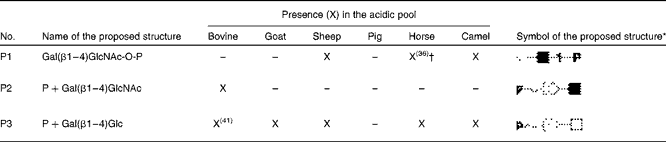
Gal, galactose; GlcNAc, N-acetyl-glucosamine; P, phosphate.
* Oxford symbol nomenclature( Reference Harvey, Merry and Royle 30 ) (Fig. 1(b)).
† Most recent reference was included for identified structures that were previously assigned for the respective milk samples.
Structural characterisation of neutral oligosaccharides from animal milk
Galactotrioses and galactotetraose. Galactotrioses (Gal(α1–3)Gal(β1–4)Glc, N6, Gal(β1–3)Gal(β1–4)Glc, N7, and Gal(β1–6)Gal(β1–4)Glc, N9, with N7 and N9 being identified previously in human milk( Reference Urashima, Asakuma, Messer, Kamerling, Boons, Lee, Suzuki, Taniguchi and Voragen 7 )) are the most abundant structures in the total neutral oligosaccharide pool. α-Galactotriose was selectively degraded by an α-specific galactosidase from coffee bean. Due to limitations in enzyme specificities, the (β1–3/6)-linked galactotrioses were identified by their respective standards. The (β1–4)-linked galactotriose (GU 2·74) was not detected in the milk of any of the animals. Trace amounts of an unknown galactotriose isomer (N10) and a galactotetrasaccharide (N13) were detected.
N-acetyl-hexosaminyl-lactoses. GalNAc(α1–3)Gal(β1–4)Glc (N4) and GlcNAc(β1–3)Gal(β1–4)Glc (N5) were identified with a β-N-acetylhexosaminidase-specific enzyme from jack bean and an α-N-acetylgalactosaminidase from chicken liver.
Lacto-N-neo-tetraose and iso-lacto-N-neo-tetraose. LNnT (Gal(β1–4)GlcNAc(β1–3)Gal(β1–4)Glc, N15), which is also present in human milk( Reference Urashima, Asakuma, Messer, Kamerling, Boons, Lee, Suzuki, Taniguchi and Voragen 7 ), and iso-LNnT (Gal(β1–4)GlcNAc(β1–6)Gal(β1–4)Glc, N16) were identified by their characteristic GU shifts following enzymatic digestion with a (β1–4)-specific galactosidase from S. pneumoniae.
Lacto-N-novo-pentaose and lacto-N-neo-hexaose. Gal(β1–4)GlcNAc(β1–6)(GlcNAc(β1–3))Gal(β1–4)Glc (N20), lacto-N-novo-pentaose I (LNnP I; Gal(β1–4)GlcNAc(β1–6)(Gal(β1–3))Gal(β1–4)Glc, N21) and LNnH (Gal(β1–4)GlcNAc(β1–6)(Gal(β1–4)GlcNAc(β1–3))Gal(β1–4)Glc, N24), the latter of which is present in human milk( Reference Urashima, Asakuma, Messer, Kamerling, Boons, Lee, Suzuki, Taniguchi and Voragen 7 ), were degraded to their characteristic tetrasaccharide and/or trisaccharide cores by a (β1–4)-specific galactosidase from S. pneumoniae and a (β1–3/4)-specific galactosidase from bovine testis. Structural isomers (N18, N19 and N22) and an N-acetyl-lactosamine derivative of LNnH (N23) were also observed with some of the structures potentially being linear oligosaccharides, such as para-LNnH (Gal(β1–4)GlcNAc(β1–3)Gal(β1–4)GlcNAc(β1–3)Gal(β1–4)Glc) in human milk( Reference Urashima, Asakuma, Messer, Kamerling, Boons, Lee, Suzuki, Taniguchi and Voragen 7 ).
α-Galactosylated lacto-N-novo-pentaose and lacto-N-neo-hexaose. α-Galactosylated LNnP (N25) and mono-α-galactosylated and di-α-galactosylated LNnH (N28 and N29) were identified by digestion with the α-specific galactosidase from coffee bean. α-Galactosylated oligosaccharides are not present in human milk( Reference Urashima, Asakuma, Messer, Kamerling, Boons, Lee, Suzuki, Taniguchi and Voragen 7 ), but di-α-galactosylated LNnH has been observed previously in the milk from polar bears( Reference Urashima, Yamashita and Nakamura 21 ).
Fucosylated oligosaccharides. In contrast to human milk, merely eight neutral fucosylated oligosaccharides were identified in the total neutral oligosaccharide pool from animal milk, including fucosyllactoses (2′-FL (Fuc(α1–2)Gal(β1–4)Glc, N1) and 3-FL (Gal(β1–4)(Fuc(α1–3))Glc, N2)), fucosyl-N-acetyl-lactosamine (3-FLN (Gal(β1–4)(Fuc(α1–3))GlcNAc, N3)), fucosyl-galactosaminyllactose (GalNAc(α1–3)(Fuc(α1–2))Gal(β1–4)Glc, N8), fucosylated galactotriose (N11), fucosylated LNnT (lacto-N-fucopentaose III; Gal(β1–4)(Fuc(α1–3))GlcNAc(β1–3)Gal(β1–4)Glc, N17) and fucosylated LNnH (FLNnH; N26 and N27) isomers. Except N3, N8 and N11, these fucosylated structures have also been reported for human milk( Reference Urashima, Asakuma, Messer, Kamerling, Boons, Lee, Suzuki, Taniguchi and Voragen 7 ). The fucosylated structures were identified with the aid of an (α1–3/4)-specific fucosidase from almond meal and an α(1–2/3/4)-specific fucosidase from bovine kidney.
Structural characterisation of acidic oligosaccharides from animal milk
Digestion of the samples with a sialidase from A. ureafaciens specific for (α2–3/6/8)-linkages and a recombinant sialidase from S. pneumoniae specific for (α2–3)-linkages provided linkage information on the underlying acidic structure. Due to the differences in mass (m/z), MS analysis could be used to differentiate between Neu5Ac- and Neu5Gc-containing oligosaccharides (m/z Neu5Ac: 309·11; m/z Neu5Gc: 325·10). The MS charge state of multisialylated oligosaccharides indicates whether the Neu5Ac/Neu5Gc residues are attached to different sugar units in the oligosaccharide (doubly charged ions; [M − 2H]2 −) or are sequentially attached (singly charged ions; [M − H]−).
The sialic acid composition of the animal milk oligosaccharides was determined by reversed-phase UPLC-UV after sample hydrolysis and DMB labelling. Major differences in the composition between animal species were observed. The acidic oligosaccharides from the milk of cows, pigs, horses and camels were decorated to ≥ 98 % with Neu5Ac, while Neu5Gc contributed to 64 and 94 % of the total sialic acid content in those from the milk of goats and sheep, respectively (Table 4). Neu5Ac is the sole sialic acid in human milk( Reference Urashima, Asakuma, Messer, Kamerling, Boons, Lee, Suzuki, Taniguchi and Voragen 7 ).
Overview of glycan structures in the milk of domestic animals identified in the present study (Number of structures and percentages)

UPLC-HILIC-FLD, ultra-performance liquid chromatography–hydrophilic interaction liquid chromatography with fluorescence detection; DMB, 1,2-diamino-4,5-methylenedioxybenzene; Neu5Ac, N-acetylneuraminic acid; Neu5Gc, N-glycolylneuraminic acid.
* Whereof one structure in the acidic oligosaccharide pool.
† Large structures: ≥ 6 monosaccharide units.
Sialylated lactose and N-acetyl-lactosamine. The total acidic oligosaccharide pool from animal milk was dominated by two pairs of sialylated lactose isomers, 3′-SL/6′-SL (Neu5Ac(α2–3)Gal(β1–4)Glc, A6/Neu5Ac(α2–6)Gal(β1–4)Glc, A11) and 3′GL/6′GL (Neu5Gc(α2–3)Gal(β1–4)Glc, A9/Neu5Gc(α2–6)Gal(β1–4)Glc, A15). In human milk, 3′-SL/6′-SL are also important components, but in contrast to animal milk, the 6′ isomer is more abundant than the 3′ isomer( Reference Urashima, Asakuma, Messer, Kamerling, Boons, Lee, Suzuki, Taniguchi and Voragen 7 ). Animal milk additionally contained two pairs of SLN isomers (3′/6′-SLN (Neu5Ac(α2–3)Gal(β1–4)GlcNAc, A5/Neu5Ac(α2–6)Gal(β1–4)GlcNAc, A8) and 3′/6′GLN (Neu5Gc(α2–6)Gal(β1–4)GlcNAc, A7/Neu5Gc(α2–6)Gal(β1–4)GlcNAc, A13)) as well as five disialylated lactoses/N-acetyl-lactosamines (A20, A21 A23, A25, A28 and A31). The presence of two acetylated sialyllactose isomers (A1 and A2) was confirmed by mass fragmentation, and traces of a fucosyl-sialyllactose (Neu5Ac(α2–3)Gal(β1–4)(Fuc(α1–3))Glc, A12) were identified by enzymatic digestion.
Sialylated galactotriose and hexosaminyl-lactose. In animal milk, two pairs of sialylated galactotriose isomers (3″/6′-Neu5Ac-galactotriose (A16 and A18) and 3″/6′-Neu5Gc-galactotriose (A17 and A19)) and two disialylgalactotrioses (3″-Neu5Ac-6’-Neu5Ac-galactotriose (A30) and 3″-Neu5Gc-6’-Neu5Gc-galactotriose (A33)) were identified. These isomers have not been detected in human milk( Reference Urashima, Asakuma, Messer, Kamerling, Boons, Lee, Suzuki, Taniguchi and Voragen 7 ) and had Gal(β1–3)Gal(β1–4)Glc backbone structures as revealed by sialidase digestion. Trace amounts of a galactotriose decorated with hexuronic acid were observed in camel milk (A24). As hexuronic acid is not a common milk oligosaccharide component, the oligosaccharide was assumed to be a degradation product or of different origin. In animal milk, two sialylated hexosaminyl-lactoses (3′/6′-Neu5Ac-hexosaminyl-lactose, A10 and A14) were also identified.
Sialylated lacto-N-neo-tetraose. In animal milk, 3′/6′-Neu5Ac-LNnT (A22/A26, the 6′-isomer has been identified previously in human milk( Reference Urashima, Asakuma, Messer, Kamerling, Boons, Lee, Suzuki, Taniguchi and Voragen 7 )) was identified and traces of a Neu5Gc-LNnT isomer (A29) were also observed.
Sialylated lacto-N-novo-pentaose and lacto-N-neo-hexaose. In the present study, fourteen monosialylated and disialylated isomers and derivatives of LNnP and LNnH were observed in the milk of different animals (A27, A32 and A34–A45, with 6′-sialyl-lacto-N-neo-hexaose (SLNnH) (A37) also being identified previously in human milk( Reference Urashima, Asakuma, Messer, Kamerling, Boons, Lee, Suzuki, Taniguchi and Voragen 7 )). The sialic acid residues are exclusively attached to the non-reducing terminal Gal units and located on different sugars in case of disialylation.
Structural characterisation of phosphorylated oligosaccharides in domestic animal milk
Phosphorylated oligosaccharides were identified with the help of a phosphatase sourced from calf intestine. To include oligosaccharides that are phosphorylated at the 1-O position of the reducing end sugar, the acidic oligosaccharide pools were incubated with calf-intestinal alkaline phosphatase before and after labelling the reducing end with fluorescent 2-AB. Glycans resulting from enzymatic digestion could be identified by their GU values in the UPLC-HILIC-FLD profiles. In contrast to human milk oligosaccharides, for which phosphorylation has not been observed( Reference Urashima, Asakuma, Messer, Kamerling, Boons, Lee, Suzuki, Taniguchi and Voragen 7 ), three phosphorylated structures were identified in animal milk in the present study (Table 3), namely N-acetyl-lactosamine-1-O-phosphate (P1), N-acetyl-lactosamine phosphate with phosphate group attached to a non-reducing position (P2) and lactose phosphate (P3).
Discussion
A structural library of neutral, fucosylated, sialylated and phosphorylated oligosaccharides from bovine, caprine, ovine, porcine, equine and dromedary camel milk was established in the present study. A total of forty-eight structures were identified in camel milk and forty-one structures were characterised in caprine milk. Furthermore, forty structures could be assigned for porcine and equine milk and thirty-eight and thirty-five structures were identified in ovine and bovine milk, respectively (Tables 1–4). Many of these oligosaccharides have not been reported previously, and many more could be present as it was not possible to assign all minor peaks, which accounted for less than 1 % of the total oligosaccharide content. Indeed, supplementary structures have been reported previously( Reference Urashima, Saito and Nakamura 5 , Reference Aldredge, Geronimo and Hua 10 , Reference Urashima, Taufik and Fukuda 17 ). This is particularly the case for bovine milk, which has been extensively studied and for which more than fifty structures have been identified, including interesting novel fucosylated structures present in minor proportions( Reference Aldredge, Geronimo and Hua 10 , Reference Mariño, Lane and Abrahams 11 ). The qualitative and quantitative composition of oligosaccharides in animal milk is variable and complicates the comparison between different studies and species. On the one hand, variations might be due to the use of different analytical techniques and oligosaccharide extraction methods. On the other hand, the milk oligosaccharide composition is subject to genetic variation, and the number and concentration of glycans decrease rapidly over the course of lactation( Reference Barile, Marotta and Chu 22 , Reference Tao, De Peters and German 23 ). The most significant decrease in bovine colostrum oligosaccharides can be observed during the first 12–24 h after calving( Reference Nakamura, Kawase and Kimura 9 , Reference Barile, Marotta and Chu 22 ). In particular, a shift towards a higher percentage of neutral glycans is observed in time. Whereas sialylation is >80 % in bovine colostrums, it decreases to approximately 40 % in milk collected after 6 d( Reference Barile, Marotta and Chu 22 ). Representative pools of colostrum milk (n≥ 3) were used in the present study, except for camels and goats, for which pooled mature milk (n≥ 3) was used. Indeed, twenty-three of the forty-five structures identified for camel milk belonged to the neutral oligosaccharide fraction, which had the highest number of neutral glycans observed for all the animal species in the present study and which might be due to the use of mature milk instead of colostrum. However, for mature caprine milk, the number and percentage of neutral oligosaccharides were comparable with what was found for colostrum milk from other animal species.
Our comparative analysis revealed not only many similarities but also species-specific characteristics. Sialylated oligosaccharides accounted for approximately 80–90 % of the total oligosaccharide pools from the milk of all domestic animals. The neutral and acidic oligosaccharides from bovine, caprine and ovine milk were mainly of short chain length. The proportion of Neu5Gc-containing oligosaccharides in the acidic oligosaccharide fraction of caprine (64 %) and ovine (94 %) milk was highest, whereas only traces of Neu5Gc-containing oligosaccharides were observed in the milk from pigs and camels. Compared with the milk from other animal species, that from horses and camels contained a more balanced mixture of shorter and larger oligosaccharides. Interestingly, milk oligosaccharides from dromedary camels were exceptionally diverse and included seven fucosylated structures. The oligosaccharide mixture in porcine milk is unique. Among all the milk samples of the domestic animal species investigated, porcine milk contained the highest percentage of neutral oligosaccharides (approximately 20 %) and the most abundant variety of monosialylated and disialylated large oligosaccharides. Porcine milk oligosaccharides come closest to the human milk oligosaccharide mixture, which clearly demonstrates that milk oligosaccharides are tailor-made for the postnatal development of certain gastrointestinal systems and that these molecules aid in the preparation for certain post-weaning diets by acting as early dietary fibres. Humans and pigs are monogastric and therefore large bowel fermenters, whereas cows, goats and sheep are ruminants; camels have a three-chambered digestive system and horses have an extended caecal digestive system. Furthermore, humans and pigs are omnivores, whereas all other species are herbivores. Pigs are considered to be excellent models for human large bowel fibre metabolism, and the similarity between the human and porcine milk glycomes reinforces their usefulness in studying early-life nutritional programming and development of the gastrointestinal system( Reference Guilloteau, Zabielski and Hammon 24 , Reference Topping and Clifton 25 ).
The present study further highlights the distinct difference between the nature and number of oligosaccharides in human and domestic animal milk, in general, with merely thirteen common oligosaccharides (Tables 1–4). Different from domestic animal milk oligosaccharides, approximately 70 % of the human milk oligosaccharides are neutral and largely fucosylated. Human milk oligosaccharides contain neither Neu5Gc nor (α1–3)-linked galactose, and these non-human structural components might cause immunogenic reactions upon human consumption( Reference Saleh, Embry and Nauli 26 , Reference Tangvoranuntakul, Gagneux and Diaz 27 ). In human milk, oligosaccharides of the lacto-N-biose type I structure (Gal(β1–3)GlcNAc) predominate over those containing the N-acetyllactosamine type II structure (Gal(β1–4)GlcNAc). The milk of domestic animals contains exclusively type II oligosaccharides. In the milk of few other species, such as chimpanzees and elephants, type I oligosaccharides predominate over type II( Reference Kunz, Rudloff and Schad 28 , Reference Urashima, Asakuma and Leo 29 ). Type I oligosaccharides are specific for human milk and may serve as substrates for beneficial bifidobacteria in breast-fed infants( Reference Urashima, Asakuma and Leo 29 ).
Despite the obvious differences between animal and human milk oligosaccharides, the present study clearly demonstrates that milk from domestic animals contains a much larger variety of complex oligosaccharides than previously thought. Therefore, domestic animal milk is a highly attractive source of bioactive oligosaccharides, which once extracted can be potentially used in medical and functional foods. To justify their use, additional studies on their biological functions are required. The advanced knowledge on their structural composition will certainly help to gain new insights into the complex biochemical pathways underlying their potential health-promoting properties.
Acknowledgements
The present study was carried out in the framework of the Alimentary Glycoscience Research Cluster. Galactotriose standards were kindly provided by Dr S. Austin (Nestlé Research Lausanne, Switzerland).
The present study was funded by Science Foundation Ireland (08/SRC/B1393). Science Foundation Ireland had no role in the design and analysis of the study or in the writing of this article.
The authors' contributions are as follows: S. A. carried out the sample analysis, interpreted the findings and prepared the manuscript; J. A. L. extracted the milk oligosaccharides from animal milk and K. M. contributed to the sample analysis; K. A. A. B. provided camel milk; S. D. C., R. M. H. and P. M. R. were scientific advisors; J. A. L., K. M., K. A. A. B., S. D. C., R. M. H. and P. M. R. carefully revised the manuscript.
None of the authors has any conflicts of interest to declare.



