





Introduction
Adoption is a legal process through which a child becomes the permanent and lawful child of person(s) other than their biological parents, acquiring all associated rights and responsibilities. Domestic adoption refers to cases where the child and adoptive parents are from the same country. International adoption involves placement across national borders, and kinship adoption occurs when a child is adopted by a relative. Adoption has been observed across historical periods, cultures, and also in other species, suggesting it may confer evolutionary advantages in certain circumstances (van IJzendoorn & Bakermans-Kranenburg, Reference van IJzendoorn and Bakermans-Kranenburg2024).
According to Palacios and Brodzinsky (Reference Palacios and Brodzinsky2010), research on adoption from a developmental psychopathology perspective has primarily focused on the negative impact of early adversity and on post-adoption developmental trajectories. Three major lines of research have emerged in the field. The first examined risks for psychosocial maladjustment by comparing adoptees to their non-adopted peers. The second explored the extent to which nurturing family environments can mitigate developmental delays linked to early adversity. More recently, research has adopted a multidisciplinary approach to understanding adoptees’ outcomes, examining developmental mechanisms, and adoptive family dynamics through behavioral, neurobiological, and genetic methods. The present systematic review focuses on longitudinal studies to investigate the pathways and mechanisms explaining adoptees’ developmental trajectories.
Early adversity and developmental outcomes in adoptees
Adoptees represent a heterogeneous group, with developmental risks shaped by pre-adoption experiences such as institutional care, prenatal substance exposure, maltreatment, or abandonment due to severe socioeconomic hardship. Conversely, some children are adopted in infancy with minimal or no exposure to pre-adoption adversity. As a result, adoptees differ widely in their developmental trajectories, with some demonstrating elevated vulnerability linked to early adversity, while others show patterns of adjustment comparable to non-adopted peers.
The detrimental effects of early adversity on psychological development and brain functioning are well-documented (McCrory et al., Reference McCrory, de Brito and Viding2010; van IJzendoorn et al., Reference van IJzendoorn, Bakermans-Kranenburg, Duschinsky, Fox, Goldman, Gunnar, Johnson, Nelson, Reijman, Skinner, Zeanah and Sonuga-Barke2020). For instance, a meta-analysis of 10 studies (N = 399) showed that institutional care was more frequently associated with insecure (d = 0.77) and disorganized (d = 0.76) attachment compared to family-reared peers (Lionetti et al., Reference Lionetti, Pastore and Barone2015). Beyond attachment, adoptees tend to underperform academically compared to children raised by their biological families, and are disproportionately represented among students experiencing learning difficulties, repeating grades, or requiring special educational support (Brown et al., Reference Brown, Waters and Shelton2017; van IJzendoorn et al., Reference van IJzendoorn, Juffer and Poelhuis2005). International adoptees are also more frequently referred to mental health services compared to non-adoptees, though differences are often small and may reflect pre-adoption risks, variations in service access, or heightened vigilance by adoptive parents and professionals (Juffer & van IJzendoorn, Reference Juffer and van IJzendoorn2005; van IJzendoorn & Juffer, Reference van IJzendoorn and Juffer2006). In adulthood, some adoptees tend to be twice as likely to attempt suicide (Campo-Arias et al., Reference Campo-Arias, Egurrola-Pedraza and Herazo2020) and report greater emotion regulation difficulties and psychiatric needs (Corral et al., Reference Corral, Herrero, Martín, Gordejuela and Herrero-Fernández2021). Meta-analyses further show that differences between adoptees and non-adoptees become more pronounced when mental health is assessed categorically rather than dimensionally (e.g., clinical diagnoses or scores above clinical cut-offs) (Askeland et al., Reference Askeland, Hysing, la Greca, Aarø, Tell and Sivertsen2017; Behle & Pinquart, Reference Behle and Pinquart2016).
In adoption research, age at adoption is commonly used as a proxy for early adversity, as it reflects the timing and duration of exposure to adverse conditions. However, findings regarding the predictive value of age at adoption are mixed. While some systematic reviews and meta-analyses have shown a linear association between institutional care and increased developmental difficulties (Julian, Reference Julian2013; van den Dries et al., Reference van den Dries, Juffer, van IJzendoorn and Bakermans-Kranenburg2009; van IJzendoorn et al., Reference van IJzendoorn, Bakermans-Kranenburg, Duschinsky, Fox, Goldman, Gunnar, Johnson, Nelson, Reijman, Skinner, Zeanah and Sonuga-Barke2020), others have found no significant effect of age at adoption on behavioral and mental health outcomes (Askeland et al., Reference Askeland, Hysing, la Greca, Aarø, Tell and Sivertsen2017; Juffer & van IJzendoorn, Reference Juffer and van IJzendoorn2005). Thus, while age at adoption is informative in some cases about the length of exposure to adversity, developmental trajectories are also shaped by ongoing experiences, biological, and genetic factors (van IJzendoorn et al., Reference van IJzendoorn, Bakermans-Kranenburg, Duschinsky, Fox, Goldman, Gunnar, Johnson, Nelson, Reijman, Skinner, Zeanah and Sonuga-Barke2020).
Adoption as an intervention
Adoption has been conceptualized as a powerful corrective experience to early adversity. In 2006, comprehensive and ground-breaking meta-analyses encompassing over 230,000 adopted and non-adopted children demonstrated substantial developmental gains following adoption across physical, cognitive, and psychological domains (Van IJzendoorn et al., Reference Van IJzendoorn, Bakermans-Kranenburg and Juffer2007; van IJzendoorn & Juffer, Reference van IJzendoorn and Juffer2006). In the cognitive domain, meta-analytical findings drawn from 17,767 adopted children suggest that adoptees’ IQ scores do not differ significantly from those observed in the general population (van IJzendoorn et al., Reference van IJzendoorn, Juffer and Poelhuis2005). More recent systematic reviews confirm that adoptees outperform children who remain in institutional care on measures of IQ, academic achievement, socioemotional and behavioral functioning, underscoring the protective role of adoption (Christoffersen, Reference Christoffersen2012; van IJzendoorn et al., Reference van IJzendoorn, Bakermans-Kranenburg, Duschinsky, Fox, Goldman, Gunnar, Johnson, Nelson, Reijman, Skinner, Zeanah and Sonuga-Barke2020). Attachment outcomes show a similar pattern: disorganized attachment decreases after adoption, while attachment security increases (Barone & Lionetti, Reference Barone and Lionetti2012; Vorria et al., Reference Vorria, Ntouma and Rutter2015). With respect to psychosocial functioning, the majority of adoptees show positive adjustment, with self-esteem comparable to non-adopted peers and only small differences in internalizing and externalizing difficulties (van IJzendoorn & Juffer, Reference van IJzendoorn and Juffer2006). Similarly, Askeland et al. (Reference Askeland, Hysing, la Greca, Aarø, Tell and Sivertsen2017) reported no significant increase in internalizing problems among internationally adopted adolescents and only small differences for externalizing difficulties compared to non-adoptees (k = 11, N = 17,919).
In summary, adoption represents a critical and effective intervention for children exposed to early adversity, often enabling substantial developmental gains. While the majority of adoptees are well adjusted, a subset of adoptees – often those with more pronounced pre-adoption adversity – experience enduring psychosocial difficulties, which may contribute to the group-level differences observed in some studies. Explaining this heterogeneity requires a nuanced account integrating pre-adoption histories with post-adoption contexts which can either exacerbate risk or mitigate earlier difficulties. A recent systematic review of 29 cross-sectional and 21 longitudinal studies identified several post-adoption factors that influence psychological adjustment in childhood and adolescence sometimes outweighing pre-adoptive risk in predicting developmental outcomes (Duncan et al., Reference Duncan, Woolgar, Ransley and Fearon2021). However, the review did not systematically examine developmental mechanisms and excluded genetic influences, limiting its ability to fully explain adopted individuals’ trajectories.
The present study
The present systematic review aims to: (a) identify and synthesize longitudinal studies examining adoption from early childhood through adolescence or adulthood, (b) explore developmental pathways that may explain adoptees’ developmental outcomes, and (c) inform future research and preventative interventions. Building on previous reviews, this study examines how individual, familial, and pre- and post-adoption factors shape adoptees’ developmental trajectories. By focusing on longitudinal studies, it aims to clarify mechanisms underlying long-term outcomes and inform targeted interventions, adoptive families, and future research.
Methods
Search strategy
The systematic review followed PRISMA guidelines (Page et al., Reference Page, McKenzie, Bossuyt, Boutron, Hoffmann, Mulrow, Shamseer, Tetzlaff, Akl, Brennan, Chou, Glanville, Grimshaw, Hróbjartsson, Lalu, Li, Loder, Mayo-Wilson, McDonald and Moher2021). Keywords related to adoption and longitudinal studies were combined into the following search strategy: (Adoption OR adoptive OR adoptees) AND (infan* OR child*) AND (adolescen* OR adult*) AND (longitudinal OR prospective OR follow-up). The initial search was conducted in May 2023 across PsycINFO, PubMed, Scopus, and Web of Science, without date limitations. The search specifically aimed to identify longitudinal studies following the same sample from early childhood into adolescence or adulthood, excluding cross-sectional reports. Once a longitudinal study was identified, reference lists of relevant papers were manually reviewed, and additional searches were conducted to locate follow-up reports. The same search strategy was repeated in September 2024 to update the results for records published since May 2023.
Criteria and procedure
Detailed inclusion and exclusion criteria are presented in Table 1. All identified records were exported to an EndNote library. After duplicate removal, titles and abstracts were screened to exclude papers not meeting inclusion criteria. Reports passing this initial screening were then retained for full-text review. The first author screened all identified reports from both searches, while the second author independently screened all reports selected for full-text review in the original search (N = 346 records). Inter-rater reliability was κ = .79, 95% CI [0.72, 0.85], and any discrepancies between reviewers were resolved by consensus.
Inclusion and exclusion criteria
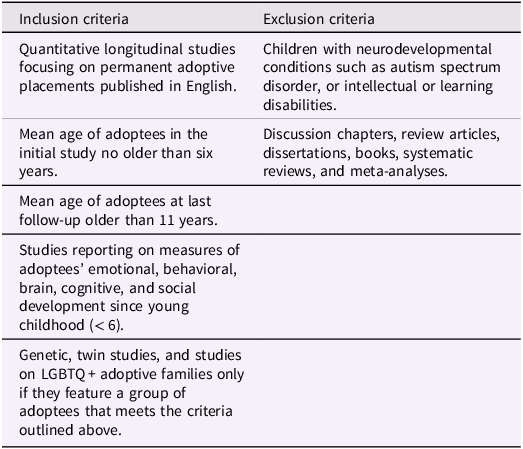
Data extraction
The first author extracted key data from the included reports, such as authors, titles, publication dates, sample size, retention rates, mean age at assessment, type of adoption, age at adoption, history of institutionalization or maltreatment, inclusion of a control group, measured variables, and main findings.
Risk of bias
The methodological quality of the included studies was assessed by the first author using an adapted version of the Joanna Briggs Institute Critical Appraisal Checklist for Cohort Studies (Moola et al., Reference Moola, Munn, Tufanaru, Aromataris, Sears, Sfetcu, Currie, Lisy, Qureshi, Mattis, Mu, Aromataris and Munn2020). Specifically, the first three items of the checklist relating to experimental comparison groups were omitted. Additionally, the eighth criterion, concerning the adequacy of follow-up duration, was excluded due to the inherent difficulty in defining a suitable developmental cut-off point in age-related follow-up assessments within developmental psychology.
The second author independently assessed an initial random subset of 25% of the included studies. While inter-rater agreement was perfect for the overall quality judgments (inclusion versus exclusion), reliability at the individual-item level was initially low (e.g., κ = .29 for evaluating the exploration of confounds). Discrepancies were mainly attributed to inconsistencies within the initial coding scheme. To resolve these discrepancies and enhance reliability, the second author independently rated an additional 5% of the reports, and the coding scheme was adjusted: ratings previously coded as either “unclear” or “no” were recoded as 0, whereas ratings previously coded as “yes” or “not applicable” were recoded as 1. After this adjustment, there was again perfect inter-rater agreement on overall quality ratings, and Cohen’s kappa for individual items exceeded .80.
Results
Search results and features of studies
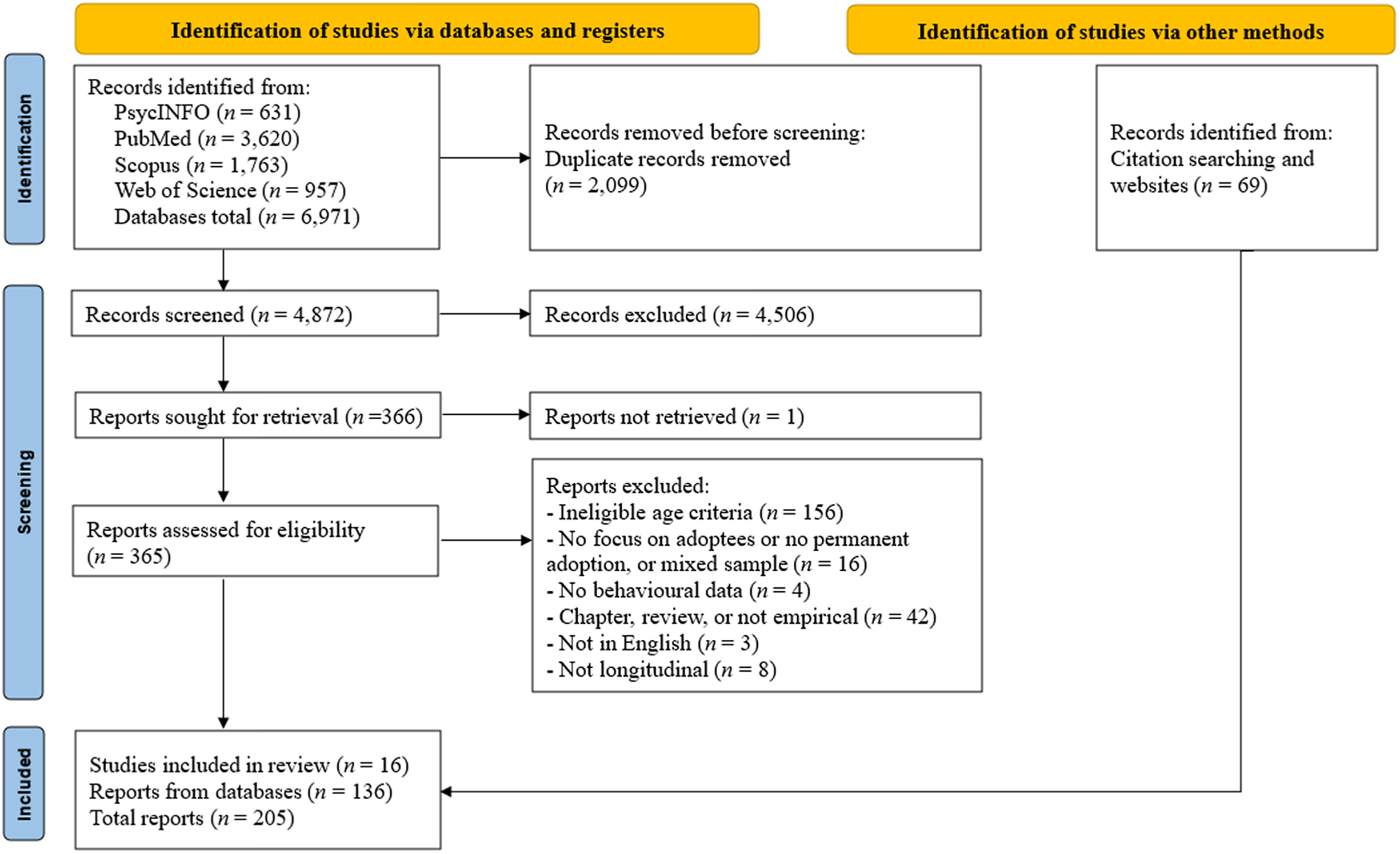
The search yielded a total of 6,971 records, with an additional 69 records identified through manual searches of the reference lists from included papers and relevant websites (see Figure 1). In total, 16 longitudinal studies (N = 3,073) following adoptees from childhood into adolescence or adulthood, reported across 205 papers, were included in the review (see Appendix Table 1 for significant longitudinal studies that were excluded). Sample information of the included studies is provided in Table 2. Sample sizes ranged from 28 to 1,269 adoptees at baseline (Barth, Reference Barth1991; Pace et al., Reference Pace, Zavattini and D’Alessio2012), and only three of the 16 studies followed participants from early childhood through to young adulthood (Nygaard et al., Reference Nygaard, Slinning, Moe, Fjell and Walhovd2020; Rhea et al., Reference Rhea, Bricker, Wadsworth and Corley2013; Schoenmaker et al., Reference Schoenmaker, Juffer, van IJzendoorn, Linting, van der Voort and Bakermans-Kranenburg2015).
PRISMA flow diagram of screening process.
Characteristics of the included studies (adopted group only)
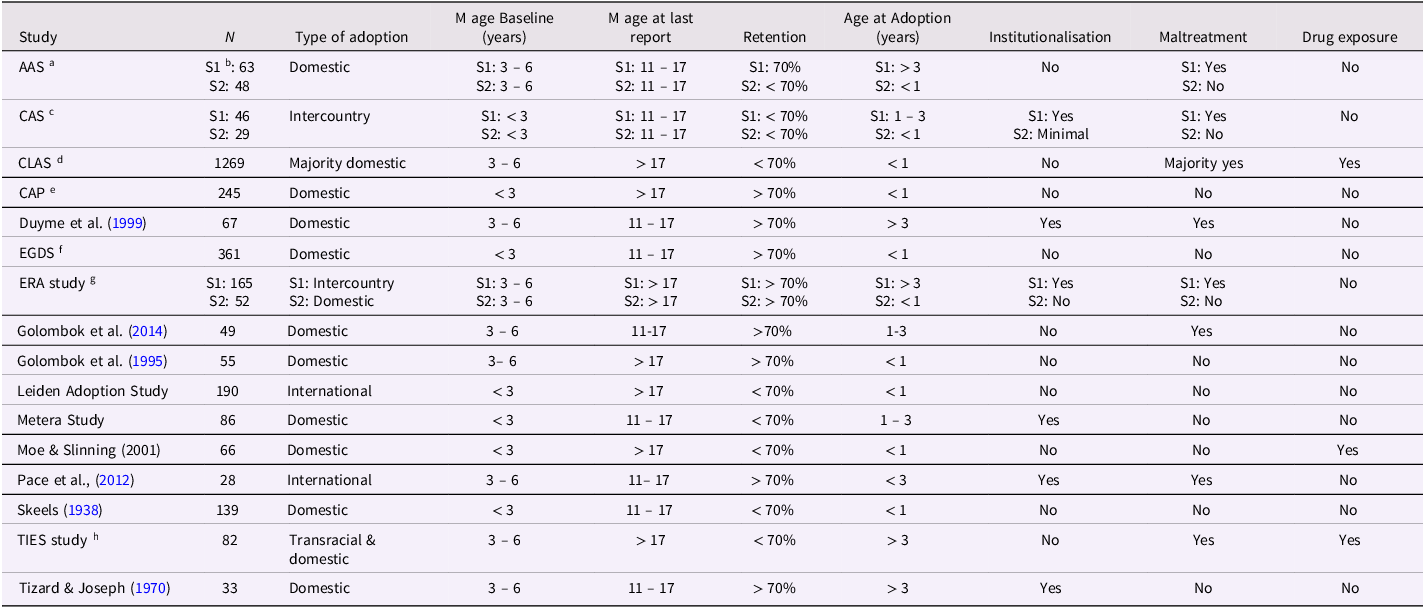
Note. Due to the longitudinal design of the studies some information may vary between publications.
a = Adoption and Attachment Study.
b = Sample.
c = Canada Adoption Study.
d = California Long-range Adoption Study.
e = Colorado Adoption Project.
f = Early Growth and Development Study.
g = English and Romanian Adoptee study.
h = Training, Intervention, Education, and Services.
The included studies exhibited substantial heterogeneity and due to the limited number of studies and variability in participants’ backgrounds, outcomes measured, and methodological approaches, performing a meta-analysis was not feasible. Instead, data are presented in a narrative synthesis to provide an overall understanding of adoptees’ developmental trajectories. Effect sizes are reported either as presented in the original papers or Cohen’s d was calculated from reported means and standard deviations. The regression coefficients and Pearson’s correlations reported herein were all statistically significant at p < .05.
Narrative review
Findings are organized by participants’ age: young childhood (< 6 years), middle childhood (6–11), adolescence (11–17), and late adolescence/young adulthood (17–25), with results presented by developmental domain.
Young childhood (From birth to age 6)
Cognitive and socio-cognitive development
Eleven (69%) of the 16 longitudinal studies investigated cognitive outcomes in children aged one to six years (Barth & Needell, Reference Barth and Needell1996; Chisholm, Reference Chisholm1998; Duyme et al., Reference Duyme, Dumaret and Tomkiewicz1999; Lavner et al., Reference Lavner, Waterman and Peplau2012; Moe, Reference Moe2002; O’Connor et al., Reference O’Connor, Rutter, Beckett, Keaveney and Kreppner2000b; Pace et al., Reference Pace, Zavattini and D’Alessio2012; Plomin & DeFries, Reference Plomin and DeFries1985; Skeels, Reference Skeels1938; Tizard & Rees, Reference Tizard and Rees1974; Vorria et al., Reference Vorria, Papaligoura, Dunn, IJzendoorn, Steele, Kontopoulou and Sarafidou2003). The most frequently utilized tools were the Bayley Scales of Infant Development Mental Scale (Bayley, Reference Bayley1993) and the McCarthy Scales of Children’s Abilities (McCarthy, Reference McCarthy1972).
Adoptees’ cognitive development exhibited a mixed pattern. Most children who had experienced institutionalization or prenatal substance exposure demonstrated consistently delayed cognitive development relative to control groups, with Cohen’s d ranging from 0.45 to 0.79 (Moe, Reference Moe2002; O’Connor et al., Reference O’Connor, Rutter, Beckett, Keaveney and Kreppner2000b; Tizard & Joseph, Reference Tizard and Joseph1970; Vorria et al., Reference Vorria, Papaligoura, Dunn, IJzendoorn, Steele, Kontopoulou and Sarafidou2003). However, prenatal drug exposure did not significantly influence subsequent school performance (Barth & Needell, Reference Barth and Needell1996). Adoptees exposed to minimal or no adversity showed cognitive development comparable to population norms (Plomin & DeFries, Reference Plomin and DeFries1985; Skeels, Reference Skeels1938).
Only two studies (13%), the English and Romanian Adoptee (ERA) and the Metera studies, evaluated socio-cognitive abilities. Findings indicated that adopted children had greater difficulties understanding emotions compared to non-adopted children (d = 0.76; Vorria et al., Reference Vorria, Papaligoura, Sarafidou, Kopakaki, Dunn, van IJzendoorn and Kontopoulou2006). Additionally, children adopted later exhibited significantly less pretend play, shared enjoyment, and fewer references to mental states compared to early adoptees (Kreppner et al., Reference Kreppner, O’Connor, Dunn and Andersen-Wood1999). Differences in pretend play and shared enjoyment remained significant even after controlling for cognitive and verbal abilities. Pretend play and shared enjoyment were negatively correlated with age at adoption (r = −.22, and r = −.25, respectively; Kreppner et al., Reference Kreppner, O’Connor, Dunn and Andersen-Wood1999).
Developmental pathways for cognitive outcomes were not explored in the included studies, although various predictors of IQ and socio-cognitive development were examined. In the Metera study, cognitive development in infancy and adoption status significantly predicted emotion understanding scores at age four (β = 0.34 and β = 0.20, respectively; Vorria et al., Reference Vorria, Papaligoura, Sarafidou, Kopakaki, Dunn, van IJzendoorn and Kontopoulou2006). Furthermore, securely attached children showed significantly higher IQ scores compared to insecurely attached peers (d = 0.66; Chisholm, Reference Chisholm1998). Prenatal substance exposure and gestational age were moderately correlated with general cognitive index scores (r = .37 and r = .33, respectively; Moe, Reference Moe2002). Among adoptees with minimal early adversity, small yet significant correlations were found between children’s IQ and both biological and adoptive mothers’ cognitive abilities at ages three (r = .18, r = .14) and four (r = .22, r = .18), suggesting the influence of both genetic and environmental factors on early cognitive development (Plomin & DeFries, Reference Plomin and DeFries1985).
Attachment
Seven (44%) of the 16 studies assessed attachment in adopted children (Chisholm, Reference Chisholm1998; Juffer & Rosenboom, Reference Juffer and Rosenboom1997; O’Connor et al., Reference O’Connor and Rutter2000c; Pace et al., Reference Pace, Zavattini and D’Alessio2012; Steele et al., Reference Steele, Hodges, Kaniuk, Hillman and Henderson2003; Tizard & Rees, Reference Tizard and Rees1975; Vorria et al., Reference Vorria, Papaligoura, Dunn, IJzendoorn, Steele, Kontopoulou and Sarafidou2003). Attachment was evaluated using both observational and representational methods (Ainsworth et al., Reference Ainsworth, Blehar, Waters and Wall1978; Cassidy et al., Reference Cassidy and Marvin1992; Green et al., Reference Green, Stanley, Smith and Goldwyn2000; Hodges & Hillman, Reference Hodges and Hillman2007).
Vorria et al. (Reference Vorria, Papaligoura, Dunn, IJzendoorn, Steele, Kontopoulou and Sarafidou2003) reported that 66% of infants assessed while still in the institution exhibited disorganized attachment. Atypical and disorganized attachment patterns were consistently identified among adopted children who had experienced prolonged institutional care and/or maltreatment (Chisholm, Reference Chisholm1998; Hillman et al., Reference Hillman, Hodges, Steele, Cirasola, Asquith and Kaniuk2020; O’Connor et al., Reference O’Connor, Marvin, Rutter, Olrick and Britner2003; Pace et al., Reference Pace, Di Folco, Guerriero and Muzi2019; Tizard & Rees, Reference Tizard and Rees1975).
Except for the ERA study, the three studies that included adoptees placed before one year of age indicated that early adoption serves as a protective factor against attachment insecurity (Chisholm, Reference Chisholm1998; Hodges et al., Reference Hodges, Steele, Hillman, Henderson and Kaniuk2003; Juffer & Rosenboom, Reference Juffer and Rosenboom1997). In the ERA study, 51.3% of children adopted after six months showed insecure-other attachments, compared to 38.5% adopted before six months from institutions and 16.3% of adoptees with no history of deprivation (O’Connor et al., Reference O’Connor, Marvin, Rutter, Olrick and Britner2003). Duration of institutional deprivation was correlated with attachment disorder symptoms (r = .30; O’Connor et al., Reference O’Connor and Rutter2000c). In three of the seven studies no significant effects of age at adoption on attachment were observed (Pace et al., Reference Pace, Zavattini and D’Alessio2012; Tizard & Rees, Reference Tizard and Rees1975; Vorria et al., Reference Vorria, Papaligoura, Sarafidou, Kopakaki, Dunn, van IJzendoorn and Kontopoulou2006).
Studies assessing attachment twice before age six, showed gradual improvement, with secure attachment increasing from 14 to 48% in six months post-adoption (Pace et al., Reference Pace, Zavattini and D’Alessio2012) and disorganized attachment dropping from 66 to 11% over three years post-adoption (Vorria et al., Reference Vorria, Papaligoura, Sarafidou, Kopakaki, Dunn, van IJzendoorn and Kontopoulou2006). Key influences included parental attachment, sensitivity, and mental health. Adoptive mothers’ idealization of their own mothers was the strongest predictor of disorganized attachment (β = 0.63; Pace et al., Reference Pace, Zavattini and D’Alessio2012), and maternal sensitivity at six months was negatively correlated with infant disorganization at 12 months (r = −.14; Juffer et al., Reference Juffer, Bakermans-Kranenburg and van IJzendoorn2005). Lower parenting stress was also linked to secure attachment (d = 0.71; Chisholm, Reference Chisholm1998).
Behavioral outcomes
Ten of the 16 studies (63%) examined behavioral outcomes during adoptees’ first six years of age (Barth & Needell, Reference Barth and Needell1996; Fisher et al., Reference Fisher, Ames, Chisholm and Savoie1997; Golombok et al., Reference Golombok, Cook, Bish and Murray1995, Reference Golombok, Mellish, Jennings, Casey, Tasker and Lamb2014; Harold et al., Reference Harold, Leve, Barrett, Elam, Neiderhiser, Natsuaki, Shaw, Reiss and Thapar2013; Lavner et al., Reference Lavner, Waterman and Peplau2012; Rutter et al., Reference Rutter, Kreppner and O’Connor2001; Slinning, Reference Slinning2004; Tizard & Rees, Reference Tizard and Rees1975; Vorria et al., Reference Vorria, Papaligoura, Sarafidou, Kopakaki, Dunn, van IJzendoorn and Kontopoulou2006). Data were obtained predominantly via parental and teacher reports, using measures such as the Strengths and Difficulties Questionnaire (SDQ; Goodman, Reference Goodman1997; Goodman et al., Reference Goodman, Meltzer and Bailey1998) or the Child Behaviour Checklist (CBCL; Achenbach & Edelbrock, Reference Achenbach and Edelbrock1981).
In four studies (Fisher et al., Reference Fisher, Ames, Chisholm and Savoie1997; Golombok et al., Reference Golombok, Mellish, Jennings, Casey, Tasker and Lamb2014; Kreppner et al., Reference Kreppner, O’Connor and Rutter2001; Slinning, Reference Slinning2004), adoptees showed higher externalizing symptoms than controls (d = 0.22–0.82), while five others found no significant differences in either externalizing or internalizing symptoms (Barth & Needell, Reference Barth and Needell1996; Golombok et al., Reference Golombok, Cook, Bish and Murray1995; Lavner et al., Reference Lavner, Waterman and Peplau2012; Tizard & Rees, Reference Tizard and Rees1975; Vorria et al., Reference Vorria, Papaligoura, Sarafidou, Kopakaki, Dunn, van IJzendoorn and Kontopoulou2006). Only the ERA study reported a rare quasi-autistic condition linked to severe early deprivation (Rutter et al., Reference Rutter, Andersen-Wood, Beckett, Bredenkamp, Castle, Groothues, Kreppner, Keaveney, Lord and O’Connor1999).
Although behavioral outcomes appeared influenced by developmental history, genetic factors, and parenting style, the interactive mechanisms among these factors remain unclear. Furthermore, only two studies examined parenting characteristics or dimensions in relation to child outcomes, limiting conclusions regarding mechanisms underlying behavioral difficulties. Nevertheless, preliminary evidence for gene–environment interactions emerged, particularly from the Early Growth and Development Study (EGDS).
In the ERA study, overactivity/inattention displayed high stability from age four to age six (r = .74) and at age six it was significantly correlated with age at adoption (r = .30), general cognitive index (r = .43), and attachment behaviors (r = .44; Kreppner et al., Reference Kreppner, O’Connor and Rutter2001). Increased parental stress (β = 0.58) and disciplinary aggression (β = 0.12) significantly predicted hyperactivity symptoms in adoptees (Golombok et al., Reference Golombok, Mellish, Jennings, Casey, Tasker and Lamb2014). Preliminary findings from the EGDS suggested that positive parenting might buffer genetic risks for callous-unemotional traits (Waller et al., Reference Waller, Trentacosta, Shaw, Neiderhiser, Ganiban, Reiss, Leve and Hyde2016), structured parenting differentially influenced behavioral outcomes depending on children’s genetic predispositions (Leve et al., Reference Leve, Harold, Ge, Neiderhiser, Shaw, Scaramella and Reiss2009), and impulsivity in children – partly influenced by biological mothers’ ADHD symptoms – could evoke higher levels of maternal hostility (Harold et al., Reference Harold, Leve, Barrett, Elam, Neiderhiser, Natsuaki, Shaw, Reiss and Thapar2013).
Middle childhood (Ages 6 to 11)
Cognitive and socio-cognitive development
Seven of the 16 studies (41%) examined cognitive development between the ages of six and 11 (Beckett et al., Reference Beckett, Maughan, Rutter, Castle, Colvert, Groothues, Kreppner, Stevens, O’Connor and Sonuga-Barke2006; Cyphers et al., Reference Cyphers, Fulker, Plomin and DeFries1989; Nygaard et al., Reference Nygaard, Moe, Slinning and Walhovd2015; Sellers et al., Reference Sellers, Harold, Smith, Neiderhiser, Reiss, Shaw, Natsuaki, Thapar and Leve2021; Skodak & Skeels, Reference Skodak and Skeels1945; Stams et al., Reference Stams, Juffer, Rispens and Hoksbergen2000; Tizard & Hodges, Reference Tizard and Hodges1978), but only the ERA study investigated socio-cognitive outcomes by assessing Theory of Mind (ToM) at age 11 (Colvert et al., Reference Colvert, Rutter, Kreppner, Beckett, Castle, Groothues, Hawkins, Stevens and Sonuga-Barke2008). Cognitive abilities were predominantly measured using standardized assessments, especially the Wechsler Intelligence Scale for Children (WISC; Wechsler, Reference Wechsler1991), occasionally accompanied by reading and maths achievement tests.
Except for the ERA study, no significant cognitive differences were found between adoptees and controls. Only the ERA and Leiden studies examined age at adoption, with contrasting results. Those adopted from institutions after 24 months had lower IQ scores both at age six and 11 compared to adoptees with no history of institutional deprivation (d = 1.40 and d = 1.29, respectively; Beckett et al., Reference Beckett, Maughan, Rutter, Castle, Colvert, Groothues, Kreppner, Stevens, O’Connor and Sonuga-Barke2006) and lower reading comprehension at age 11 (d = 1.54; Beckett et al., Reference Beckett, Maughan, Rutter, Castle, Colvert, Groothues, Hawkins, Kreppner, O’Connor, Stevens and Sonuga-Barke2007). Additionally, duration of institutional care was significantly correlated with poorer executive functioning (r = .26) and ToM at age 11 (r = −.37; Colvert et al., Reference Colvert, Rutter, Beckett, Castle, Groothues, Hawkins, Kreppner, O’connor, Stevens and Sonuga-Barke2008). Conversely, the Leiden study reported no significant association between age at adoption and IQ after controlling for country of origin (r = .08; Stams et al., Reference Stams, Juffer, Rispens and Hoksbergen2000).
Other predictors of cognitive outcomes included adoptees’ developmental status at adoption – both physically and psychologically – and prenatal opioid or polysubstance exposure (Beckett et al., Reference Beckett, Maughan, Rutter, Castle, Colvert, Groothues, Kreppner, Stevens, O’Connor and Sonuga-Barke2006, Reference Beckett, Maughan, Rutter, Castle, Colvert, Groothues, Hawkins, Kreppner, O’Connor, Stevens and Sonuga-Barke2007; Nygaard et al., Reference Nygaard, Moe, Slinning and Walhovd2015; Sellers et al., Reference Sellers, Harold, Smith, Neiderhiser, Reiss, Shaw, Natsuaki, Thapar and Leve2021; Stams et al., Reference Stams, Juffer, Rispens and Hoksbergen2000; Tizard & Hodges, Reference Tizard and Hodges1978). Specifically, head circumference at adoption emerged as the strongest predictor of IQ at age 11 in the ERA study (β = 0.31; Beckett et al., Reference Beckett, Maughan, Rutter, Castle, Colvert, Groothues, Kreppner, Stevens, O’Connor and Sonuga-Barke2006), and the Leiden study observed a small yet significant correlation between health status at adoption and IQ at age seven (r = .19; Stams et al., Reference Stams, Juffer, Rispens and Hoksbergen2000). Additionally, behavioral difficulties consistently affected later cognitive performance across three studies (Beckett et al., Reference Beckett, Maughan, Rutter, Castle, Colvert, Groothues, Hawkins, Kreppner, O’Connor, Stevens and Sonuga-Barke2007; Sellers et al., Reference Sellers, Harold, Smith, Neiderhiser, Reiss, Shaw, Natsuaki, Thapar and Leve2021; Tizard & Hodges, Reference Tizard and Hodges1978). For example, earlier externalizing symptoms negatively influenced subsequent IQ scores (r = −.56 and r = −.36; Beckett et al., Reference Beckett, Maughan, Rutter, Castle, Colvert, Groothues, Hawkins, Kreppner, O’Connor, Stevens and Sonuga-Barke2007; Tizard & Hodges, Reference Tizard and Hodges1978) and maths achievement (β = 0.16; Sellers et al., Reference Sellers, Harold, Smith, Neiderhiser, Reiss, Shaw, Natsuaki, Thapar and Leve2021). More complex developmental pathways were investigated by the EGDS, revealing noteworthy gene–environment correlations. For instance, Sellers et al. (Reference Sellers, Harold, Smith, Neiderhiser, Reiss, Shaw, Natsuaki, Thapar and Leve2021) identified that child impulsivity at age 4.5 years elicited higher parental hostility, which subsequently predicted elevated ADHD symptoms, negatively influencing maths performance at age seven.
Lastly, the findings indicated that both genetic and environmental factors contributed to cognitive development. In the Colorado Adoption Project (CAP), the IQ of biological parents accounted for 25% of the variance in adoptees’ verbal and spatial abilities (Cyphers et al., Reference Cyphers, Fulker, Plomin and DeFries1989). Similarly, in the EGDS, birth mothers’ verbal intelligence was positively correlated with children’s language skills at 27 months (r = .11) and seven years (r = .26; Cioffi et al., Reference Cioffi, Griffin, Natsuaki, Shaw, Reiss, Ganiban, Neiderhiser and Leve2021). In contrast, Skodak and Skeels (Reference Skodak and Skeels1945) demonstrated that adoption acted as a protective factor against cognitive impairment among children genetically at risk, as adoptees whose biological mothers had intellectual disabilities performed indistinguishably from adopted peers without genetic risk.
Attachment
Only two studies (13%) investigated attachment outcomes between ages six and 11 (Rutter et al., Reference Rutter, Colvert, Kreppner, Beckett, Castle, Groothues, Hawkins, O’connor, Stevens and Sonuga-barke2007; Hillman et al., Reference Hillman, Hodges, Steele, Cirasola, Asquith and Kaniuk2020). In the ERA study, attachment was assessed using a modified version of the Strange Situation procedure at age six, while disinhibited attachment behaviors were examined at both ages six and 11 (Rutter et al., Reference Rutter, Colvert, Kreppner, Beckett, Castle, Groothues, Hawkins, O’connor, Stevens and Sonuga-barke2007). In the Adoption and Attachment Study (AAS), attachment representations were evaluated using the Story Stem Assessment Profile (SSAP; Hodges & Hillman, Reference Hodges and Hillman2007).
In the ERA study, disinhibited attachment showed notable persistence: over half (54%) of adoptees displaying disinhibited attachment behaviors at age six continued exhibiting them at age 11. However, the prevalence of marked disinhibited attachment decreased significantly from 20.3% at age six to 9.9% at age 11. Duration of institutional care emerged as the strongest predictor of persistent disinhibited attachment: adoptees whose disinhibited attachment persisted to age 11 experienced institutionalization for a significantly longer period (mean = 19.36 months) compared to those whose behaviors did not persist (mean = 12.50 months; d = 0.61; Rutter et al., Reference Rutter, Colvert, Kreppner, Beckett, Castle, Groothues, Hawkins, O’connor, Stevens and Sonuga-barke2007). In the AAS, adoptees demonstrated a significant increase in secure attachment representations two years post-placement (d = 1.07), alongside a significant reduction in insecure attachment representations (d = 0.39; Hillman et al., Reference Hillman, Hodges, Steele, Cirasola, Asquith and Kaniuk2020).
Behavioral outcomes
Nine (56%) of the 16 studies reported behavioral outcomes for adoptees aged six to 11 years primarily relying on parental and teacher reports gathered through structured interviews and validated questionnaires (Colvert et al., Reference Colvert, Rutter, Beckett, Castle, Groothues, Hawkins, Kreppner, O’connor, Stevens and Sonuga-Barke2008; Coon et al., Reference Coon, Carey, Corley and Fulker1992; Le Mare et al., Reference Le Mare, Audet and Kurytnik2007; McAdams et al., Reference McAdams, Rijsdijk, Neiderhiser, Narusyte, Shaw, Natsuaki, Spotts, Ganiban, Reiss, Leve, Lichtenstein and Eley2015; Nadeem et al., Reference Nadeem, Waterman, Foster, Paczkowski, Belin and Miranda2017; Nygaard et al., Reference Nygaard, Slinning, Moe and Walhovd2016; Simmel et al., Reference Simmel, Barth and Brooks2007; Stams et al., Reference Stams, Juffer, Rispens and Hoksbergen2000; Tizard & Hodges, Reference Tizard and Hodges1978). The CBCL (Achenbach & Edelbrock, Reference Achenbach and Edelbrock1981) was the most frequently utilized assessment tool.
Two studies reported that the majority of adoptees functioned well behaviorally (Coon et al., Reference Coon, Carey, Corley and Fulker1992; Leve et al., Reference Leve, Anderson, Harold, Neiderhiser, Natsuaki, Shaw, Ganiban and Reiss2022), whereas several others consistently identified elevated behavioral difficulties among adoptees (Kreppner et al., Reference Kreppner, Rutter, Beckett, Castle, Colvert, Groothues, Hawkins, O’Connor, Stevens and Sonuga-Barke2007; Le Mare et al., Reference Le Mare, Audet and Kurytnik2007; Nadeem et al., Reference Nadeem, Waterman, Foster, Paczkowski, Belin and Miranda2017; Nygaard et al., Reference Nygaard, Slinning, Moe and Walhovd2016; Simmel, Reference Simmel2007; Stams et al., Reference Stams, Juffer, Rispens and Hoksbergen2000; Tizard & Hodges, Reference Tizard and Hodges1978). The type and severity of pre-adoption adversity were significantly associated with subsequent behavioral outcomes. Children with institutional care histories displayed notably higher levels of internalizing and externalizing problems compared to control groups, with medium-to-large effect sizes (Cohen’s d ranging from 0.47 to 0.69; Audet & Le Mare, Reference Audet and Le Mare2011; Kreppner et al., Reference Kreppner, Rutter, Beckett, Castle, Colvert, Groothues, Hawkins, O’Connor, Stevens and Sonuga-Barke2007; Tizard & Hodges, Reference Tizard and Hodges1978). Large differences were also observed between adoptees with and without prenatal drug exposure, particularly for internalizing (d = 0.57) and externalizing symptoms (d = 0.72; Nygaard et al., Reference Nygaard, Slinning, Moe and Walhovd2016).
Factors related specifically to adoption processes were not systematically investigated. One study reported no significant association between adoption openness and adoptees’ outcomes (Ahmadzadeh et al., Reference Ahmadzadeh, Eley, Leve, Shaw, Natsuaki, Reiss, Neiderhiser and McAdams2019). Adoptive parents’ readiness to adopt significantly mediated the relationship between pre-adoption adversity (e.g., maltreatment) and adoptees’ later adjustment difficulties, particularly pronounced for anxiety-depression and antisocial behaviors (Simmel et al., Reference Simmel, Barth and Brooks2007). In the Leiden study, behavioral difficulties among international adoptees correlated significantly with the children’s desire not to differ from peers (r = .30; Juffer, Reference Juffer2006).
Individual characteristics – including early behavioral problems and difficult temperament – consistently predicted later behavioral difficulties, highlighting a developmental continuity of vulnerability (Audet & Le Mare, Reference Audet and Le Mare2011; Colvert, Rutter, Beckett, et al., 2008; Coon et al., Reference Coon, Carey, Corley and Fulker1992; Le Mare et al., Reference Le Mare, Audet and Kurytnik2007; Stams et al., Reference Stams, Juffer, Rispens and Hoksbergen2000). For instance, early inattention/overactivity and longer duration of institutional care were significant predictors of inattention/overactivity symptoms at age 10.5 in the Canadian study (β = 0.65 and β = 0.33, respectively; Audet & Le Mare, Reference Audet and Le Mare2011). The Leiden study identified parental perceptions of their child’s difficult temperament as the strongest predictor of internalizing and externalizing difficulties (β = 0.22; Stams et al., Reference Stams, Juffer, Rispens and Hoksbergen2000). The CAP study similarly indicated that adoptees at risk for conduct disorder were significantly more likely to be described by their adoptive parents as temperamentally challenging during early childhood (d = 0.69; Coon et al., Reference Coon, Carey, Corley and Fulker1992).
Interactions between genetic influences, early vulnerabilities, parenting practices, and parental mental health were not systematically explored, leaving mechanisms underlying persistent vulnerability unclear. The EGDS and CAP studies provided some initial insights into gene–environment interactions, but a comprehensive understanding of the processes involved remains limited.
The EGDS provided preliminary evidence supporting both genetic and environmental contributions to adoptees’ behavioral adjustment. Specifically, birth mothers’ depressive symptoms predicted children’s internalizing (β = 0.15) and externalizing symptoms at age seven (β = 0.13), highlighting genetic effects (McAdams et al., Reference McAdams, Rijsdijk, Neiderhiser, Narusyte, Shaw, Natsuaki, Spotts, Ganiban, Reiss, Leve, Lichtenstein and Eley2015), while adoptive fathers’ anxiety predicted child anxiety at age eight, reflecting environmental influence (β = 0.10; Ahmadzadeh et al., Reference Ahmadzadeh, Eley, Leve, Shaw, Natsuaki, Reiss, Neiderhiser and McAdams2019). Although structured parenting by adoptive parents was not independently predictive of behavioral difficulties, it interacted with birth mothers’ psychopathology: higher levels of structured parenting were protective when birth mothers had higher psychopathology but linked to greater behavioral difficulties when birth mothers had lower psychopathology (Leve et al., Reference Leve, Anderson, Harold, Neiderhiser, Natsuaki, Shaw, Ganiban and Reiss2022). The CAP study also found that adoptive parents of children at-risk for conduct disorder showed more achievement-oriented parenting in early childhood compared to those of low-risk children (d = 0.56 and d = 0.63, respectively; Coon et al., Reference Coon, Carey, Corley and Fulker1992).
Adolescence (Ages 11 – 17)
Cognitive and socio-cognitive development
Eight (50%) of the 16 studies assessed cognitive development in adolescents aged 11 to 17, with only one also evaluating socio-cognitive skills (Bimmel et al., Reference Bimmel, van IJzendoorn, Bakermans-Kranenburg, Juffer and De Geus2008; Duyme et al., Reference Duyme, Dumaret and Tomkiewicz1999; Hodges & Tizard, Reference Hodges and Tizard1989a; Kumsta et al., Reference Kumsta, Marzi, Viana, Dempster, Crawford, Rutter, Mill and Sonuga-Barke2016; Pace et al., Reference Pace, Di Folco, Guerriero and Muzi2019; Plomin et al., Reference Plomin, Fulker, Corley and DeFries1997; Skodak & Skeels, Reference Skodak and Skeels1949; Vorria et al., Reference Vorria, Ntouma and Rutter2015). The WISC (Wechsler, Reference Wechsler1991) was the most frequently used measure.
Generally, the longer adoptees remained in their adoptive families, the more their cognitive outcomes improved, with IQ scores typically within the normative range. An exception was observed among adoptees in the ERA study who experienced extended institutional deprivation and showed deprivation-specific deficits, with IQ scores below 80 (Kumsta et al., Reference Kumsta, Kreppner, Kennedy, Knights, Rutter and Sonuga-Barke2015).
The influence of age at adoption on cognitive outcomes was not systematically explored, but early adoptions were associated with more favorable outcomes. In the ERA study, adoptees placed before six months of age showed significantly higher IQ and ToM compared to late adoptees (Kumsta et al., Reference Kumsta, Marzi, Viana, Dempster, Crawford, Rutter, Mill and Sonuga-Barke2016). Similarly, Hodges and Tizard (Reference Hodges and Tizard1989a) found that adoptees placed before four years of age displayed significantly higher IQ scores compared to those placed later. However, although Duyme et al. (Reference Duyme, Dumaret and Tomkiewicz1999) reported higher IQ scores among early adoptees, age at adoption itself did not emerge as a significant predictor.
Although epigenetic evidence was limited and exclusively derived from the ERA study, consistent evidence for genetic influences on IQ was provided by two studies. Specifically, the ERA study identified significant correlations between methylation differences in the top 100 differentially methylated positions and both ToM (r = −.89) and IQ scores (r = −.82), comparing individuals with prolonged versus shorter institutional deprivation (Kumsta et al., Reference Kumsta, Marzi, Viana, Dempster, Crawford, Rutter, Mill and Sonuga-Barke2016). In the CAP, correlations between adoptees’ IQ at age 16 and that of their adoptive and biological parents were r = .20 and r = .38, respectively. Genetic effects explained 56% of adolescents’ general cognitive abilities and 57% of reading performance (Plomin et al., Reference Plomin, Fulker, Corley and DeFries1997; Wadsworth et al., Reference Wadsworth, Corley, Hewitt and Defries2001). Similarly, Skodak and Skeels (Reference Skodak and Skeels1949) reported a moderate correlation between the IQ scores of adoptees and their biological parents (r = .44).
Other cross-sectional predictors of cognitive outcomes were explored inconsistently across studies, limiting clear conclusions about underlying developmental pathways. In the Leiden study, adolescents with aggressive or delinquent behaviors had lower IQs (d = 0.67, d = 0.68; Bimmel et al., Reference Bimmel, van IJzendoorn, Bakermans-Kranenburg, Juffer and De Geus2008). Secure attachment was linked to higher verbal IQ in one study (d = 1.28; Pace et al., Reference Pace, Di Folco, Guerriero and Muzi2019), but not in the Leiden sample (Beijersbergen et al., Reference Beijersbergen, Bakermans-Kranenburg, van IJzendoorn and Juffer2008). Socioeconomic status (SES) showed consistent effects: IQ correlated with parental social class (r = .27; Vorria et al., Reference Vorria, Ntouma and Rutter2015), and adoptees from higher SES families showed greater IQ gains (d = 0.80; Duyme et al., Reference Duyme, Dumaret and Tomkiewicz1999).
Attachment
Only five studies (31%) assessed attachment during adolescence, consistently demonstrating notable improvements. In the study by Pace et al. (Reference Pace, Di Folco, Guerriero and Muzi2019), previously observed disorganized attachment was no longer evident during adolescence. Similarly, in the Metera study, rates of disorganized attachment substantially decreased from 63% in infancy to just 6% in adolescence, alongside an increase in secure attachment from 29% in infancy to 50% in adolescence (Vorria et al., Reference Vorria, Ntouma, Vairami and Rutter2015). Pace et al. (Reference Pace, Di Folco, Guerriero and Muzi2019) reported comparable gains in attachment security, rising from 14% at adoption to 59% after approximately 6.8 years in adoptive placements. Additionally, adolescents classified as secure typically had mothers who also displayed secure attachment (77% concordance, r phi = .52; Pace et al., Reference Pace, Di Folco, Guerriero and Muzi2019). Hodges and Tizard (Reference Hodges and Tizard1989b) also found a significant improvement in overfriendly behaviors: of the 11 children perceived by parents as overfriendly at age eight, only two were rated so again at age 16. In the Leiden study, 61% of international adoptees showed attachment insecurity in adolescence (Beijersbergen et al., Reference Beijersbergen, Juffer, Bakermans-Kranenburg and van IJzendoorn2012). Across studies, age at adoption was unrelated to adolescent attachment (Beijersbergen et al., Reference Beijersbergen, Juffer, Bakermans-Kranenburg and van IJzendoorn2012; Pace et al., Reference Pace, Di Folco, Guerriero and Muzi2019; Vorria et al., Reference Vorria, Ntouma and Rutter2015). Only the Leiden study examined developmental pathways, identifying maternal sensitivity as a key predictor. Securely attached adolescents had more sensitive mothers (d = 0.40), and longitudinally, early sensitivity predicted stability of secure classifications, while increased sensitivity in adolescence was linked to shifts from insecure to secure attachment (Beijersbergen et al., Reference Beijersbergen, Juffer, Bakermans-Kranenburg and van IJzendoorn2012).
McConnachie et al. (Reference McConnachie, Ayed, Jadva, Lamb, Tasker and Golombok2020) explored attachment dimensionally using the Friends and Family Interview (FFI; Steele & Steele, Reference Steele, Steele, Kerns and Richardson2005), comparing adoptees raised by gay or lesbian parents with those raised by heterosexual parents as controls. Findings revealed that adolescents adopted by heterosexual parents displayed significantly higher levels of disorganized attachment (d = 0.70) and lower overall attachment security (d = 0.35) than adolescents adopted by gay parents.
Behavioral outcomes
Eleven of 16 studies (69%) reported behavioral outcomes during adolescence. Data were acquired from adoptees through self-report, as well as from their parents and teachers most frequently using the CBCL or SDQ. Across nine studies, adoptees consistently exhibited elevated internalizing and/or externalizing difficulties (Audet & Le Mare, Reference Audet and Le Mare2011; Bimmel et al., Reference Bimmel, van IJzendoorn, Bakermans-Kranenburg, Juffer and De Geus2008; Deater-Deckard & Plomin, Reference Deater-Deckard and Plomin1999; Hillman et al., Reference Hillman, Lajmi, Steele, Hodges, Simmonds and Kaniuk2023; Hodges & Tizard, Reference Hodges and Tizard1989a; Ji et al., Reference Ji, Brooks, Barth and Kim2010; McConnachie et al., Reference McConnachie, Ayed, Foley, Lamb, Jadva, Tasker and Golombok2021; Stevens et al., Reference Stevens, Kumsta, Kreppner, Brookes, Rutter and Sonuga-Barke2009; Vorria et al., Reference Vorria, Ntouma and Rutter2014), while two reported no significant differences: adoptees from the EGDS showed internalizing symptoms comparable to adolescents from rural, low-income US families (d = 0.01; Williams et al., Reference Williams, Oro, Blackwell, Liu, Miller, Ganiban, Neiderhiser, DeGarmo, Shaw, Chen, Natsuaki and Leve2024), and Golombok et al. (Reference Golombok, MacCallum and Goodman2001) observed no psychosocial differences between adoptees and adolescents conceived naturally or via in vitro fertilization (IVF). However, adoptees from other studies showed higher levels of overactivity compared to controls (effect sizes: d = 0.66 in Audet & Le Mare, Reference Audet and Le Mare2011; d = 1.0 in Vorria et al., Reference Vorria, Ntouma and Rutter2014), greater delinquency (Deater-Deckard & Plomin, Reference Deater-Deckard and Plomin1999), increased likelihood of clinically elevated externalizing behaviors compared to children remaining in stable out-of-home care (OR = 3.67; Villodas et al., Reference Villodas, Litrownik, Newton and Davis2016), and adoption status significantly predicted elevated anxiety/depression (β = −0.14), attention-deficit issues (β = −0.26), and aggression (β = −0.22; Gregory & O’Connor, Reference Gregory and O’Connor2002).
Although individual, familial, environmental, and genetic effects were explored, considerable variability across studies limited definitive conclusions regarding developmental mechanisms. Nevertheless, preliminary evidence suggested three broad patterns: (1) early developmental difficulties may have cascading effects on later behavioral outcomes (Audet & Le Mare, Reference Audet and Le Mare2011; Crea et al., Reference Crea, Barth, Guo and Brooks2008; Hodges & Tizard, Reference Hodges and Tizard1989a; Gregory & O’Connor, Reference Gregory and O’Connor2002; McConnachie et al., Reference McConnachie, Ayed, Foley, Lamb, Jadva, Tasker and Golombok2021; O’Connor et al., Reference O’Connor, Deater-Deckard, Fulker, Rutter and Plomin1998; Rutter et al., Reference Rutter, Kumsta, Schlotz and Sonuga-Barke2012; Sonuga-Barke & Rubia, Reference Sonuga-Barke and Rubia2008; Van der Voort et al., Reference van der Voort, Linting, Juffer, Bakermans-Kranenburg and van IJzendoorn2013, Reference van der Voort, Linting, Juffer, Bakermans-Kranenburg, Schoenmaker and van IJzendoorn2014; Vorria et al., Reference Vorria, Ntouma and Rutter2014); (2) parenting and family environment can offer protective influences (Audet & Le Mare, Reference Audet and Le Mare2011; Gresko et al., Reference Gresko, Rieselbach, Corley, Reynolds and Rhee2022; Hillman et al., Reference Hillman, Lajmi, Steele, Hodges, Simmonds and Kaniuk2023; Ji et al., Reference Ji, Brooks, Barth and Kim2010; Van der Voort et al., Reference van der Voort, Linting, Juffer, Bakermans-Kranenburg and van IJzendoorn2013, Reference van der Voort, Linting, Juffer, Bakermans-Kranenburg, Schoenmaker and van IJzendoorn2014; Williams et al., Reference Williams, Oro, Blackwell, Liu, Miller, Ganiban, Neiderhiser, DeGarmo, Shaw, Chen, Natsuaki and Leve2024); and (3) genetic influences, including gene–environment interactions, also affect adolescent behavioral outcomes (Kumsta et al., Reference Kumsta, Stevens, Brookes, Schlotz, Castle, Beckett, Kreppner, Rutter and Sonuga-Barke2010; O’Connor et al., Reference O’Connor, Deater-Deckard, Fulker, Rutter and Plomin1998, Reference O’Connor, Caspi, DeFries and Plomin2000a; Stevens et al., Reference Stevens, Kumsta, Kreppner, Brookes, Rutter and Sonuga-Barke2009).
The Leiden study provided detailed insights into developmental pathways in predicting behavioral outcomes. Specifically, the association between greater behavioral inhibition in middle childhood and anxious-depressed behavior in adolescence was mediated by behavioral inhibition in adolescence (indirect β = .27). However, maternal sensitivity in childhood indirectly served as a buffer against anxious-depressed behaviors in adolescence by lowering inhibition in adolescence (indirect β = −.11; van der Voort et al., Reference van der Voort, Linting, Juffer, Bakermans-Kranenburg, Schoenmaker and van IJzendoorn2014). For externalizing behaviors, effortful control during middle childhood indirectly predicted adolescent delinquency and aggression through effortful control in adolescence (indirect β = −0.21 and indirect β = −0.24 respectively; van der Voort et al., Reference van der Voort, Linting, Juffer, Bakermans-Kranenburg and van IJzendoorn2013). In the California study, maltreatment predicted depressive symptoms (β = 0.22), but family coherence reduced behavioral (β = −0.57) and depressive difficulties (β = −0.52; Ji et al., Reference Ji, Brooks, Barth and Kim2010). Sibling placements were linked to fewer clinical-level difficulties (20% vs. 37.5%; Hillman et al., Reference Hillman, Lajmi, Steele, Hodges, Simmonds and Kaniuk2023), and adoption satisfaction correlated with fewer conduct problems (r = −.29 child report; Nilsson et al., Reference Nilsson, Rhee, Corley, Rhea, Wadsworth and DeFries2011).
Both genetic and environmental effects and their interaction were demonstrated across CAP, EGDS, and ERA studies. Genetic influences appeared in the correlations for conduct disorder and substance dependence among biological siblings (r = .21 to .51), but not among adoptive siblings (Button et al., Reference Button, Rhee, Hewitt, Young, Corley and Stallings2007). Environmental effects emerged in the EGDS: in adoptive families, adolescents’ externalizing behaviors were associated with adoptive (but not biological) parents’ psychopathology (β = 2.07), and this association was fully mediated by parental hostility (β = 1.88; Oro et al., Reference Oro, Bates, Natsuaki, Neiderhiser, Ganiban, Shaw and Leve2024). Parental divorce predicted behavioral problems in both adoptive and biological families, but reduced achievement and adjustment only in the latter, suggesting passive gene–environment correlation (O’Connor et al., Reference O’Connor, Caspi, DeFries and Plomin2000a). Early externalizing behaviour elicited greater parental negativity, predicting later problems (r = .43; O’Connor et al., Reference O’Connor, Deater-Deckard, Fulker, Rutter and Plomin1998). In the ERA study, 5HTTLPR s/l and s/s genotypes amplified emotional difficulties among those exposed to deprivation (Kumsta et al., Reference Kumsta, Stevens, Brookes, Schlotz, Castle, Beckett, Kreppner, Rutter and Sonuga-Barke2010).
Young adulthood (Ages 17 to 25)
Cognitive and socio-cognitive development
Only four (25%) of the 16 studies assessed cognitive abilities during young adulthood (McClelland et al., Reference McClelland, Acock, Piccinin, Rhea and Stallings2013; Nygaard et al., Reference Nygaard, Slinning, Moe and Walhovd2017; Schoenmaker et al., Reference Schoenmaker, Juffer, van IJzendoorn, van den Dries, Linting, van der Voort and Bakermans-Kranenburg2015; Sonuga-Barke et al., Reference Sonuga-Barke, Kennedy, Kumsta, Knights, Golm, Rutter, Maughan, Schlotz and Kreppner2017). The Wechsler Abbreviated Scale of Intelligence (WASI; Wechsler, Reference Wechsler1999) was most frequently employed. Each study explored distinct developmental antecedents of cognitive outcomes in young adulthood, yielding heterogeneous results. Early deprivation or prenatal substance exposure (ERA, Nygaard) were linked to poorer outcomes compared to adoptees from lower-risk pre-adoption contexts (CAP, Leiden).
In the ERA study, cognitive development markedly improved by adulthood. Although mean IQ scores remained significantly lower for institutionally deprived than non-deprived adoptees (d = 0.77), most scores fell within the normal range and rates of IQ < 80 did not differ significantly (Sonuga-Barke et al., Reference Sonuga-Barke, Kennedy, Kumsta, Knights, Golm, Rutter, Maughan, Schlotz and Kreppner2017). Emotion recognition deficits in previously institutionalized adoptees were no longer significant after controlling for IQ (Golm et al., Reference Golm, Sarkar, Mackes, Fairchild, Mehta, Rutter and Sonuga-Barke2021). Prolonged deprivation (> 6 months) predicted lower educational attainment (40.3% vs. 19.0%; Sonuga-Barke et al., Reference Sonuga-Barke, Kennedy, Kumsta, Knights, Golm, Rutter, Maughan, Schlotz and Kreppner2017). Prenatal drug exposure also had lasting effects, including cognitive performance in adulthood (d = 0.96; Nygaard et al., Reference Nygaard, Slinning, Moe and Walhovd2017).
In the Leiden study, IQ was normal overall, but early malnutrition and somatic problems predicted lower cognitive scores. The effect of malnutrition attenuated over time (from β = −0.27 at age 7 to β = −0.12 at age 23), while somatic problems at age 14 predicted lower IQ at age 23 (β = −0.20; Schoenmaker et al., Reference Schoenmaker, Juffer, van IJzendoorn, Linting, van der Voort and Bakermans-Kranenburg2015). In the CAP study, attention span-persistence at age four predicted higher rates of tertiary education (48.7% by age 25), and adoption status was negatively correlated with performance in maths (r = −.16), reading (r = −.18), and college completion (r = −.21; McClelland et al., Reference McClelland, Acock, Piccinin, Rhea and Stallings2013).
Attachment
Attachment in adulthood was investigated by the Leiden study using the Attachment Script Assessment (Waters & Waters, Reference Waters and Waters2006) and by the ERA study using the Parental Attachment Questionnaire (Kenny et al., Reference Kenny1990, as cited in Kennedy et al., Reference Kennedy, Kreppner, Knights, Kumsta, Maughan, Golm, Hill, Rutter, Schlotz and Sonuga-Barke2017) and the Inventory of Parent and Peer Attachment (Armsden & Greenberg, Reference Armsden and Greenberg1987).
In the Leiden study, adult attachment security was significantly predicted by maternal sensitivity during infancy (β = 0.26) and middle childhood (β = 0.24), but not adolescence (Schoenmaker et al., Reference Schoenmaker, Juffer, van IJzendoorn, Linting, van der Voort and Bakermans-Kranenburg2015). In the ERA study, attachment security did not differ significantly between early and late adoptees. However, late adoptees (after six months) were six to seven times more likely to show persistent disinhibited social engagement (DSE) in adulthood. Among those with adolescent DSE, 64% continued to display symptoms as adults (Kennedy et al., Reference Kennedy, Kreppner, Knights, Kumsta, Maughan, Golm, Hill, Rutter, Schlotz and Sonuga-Barke2017).
Behavioral outcomes
Only five (31%) of the 16 studies examined behavioral outcomes in adulthood (Blake et al., Reference Blake, Tung, Langley and Waterman2018; Brooker et al., Reference Brooker, Berenbaum, Bricker, Corley and Wadsworth2012; Nygaard et al., Reference Nygaard, Slinning, Moe, Fjell and Walhovd2020; Schoenmaker et al., Reference Schoenmaker, Juffer, van IJzendoorn, van den Dries, Linting, van der Voort and Bakermans-Kranenburg2015; Sonuga-Barke et al., Reference Sonuga-Barke, Kennedy, Kumsta, Knights, Golm, Rutter, Maughan, Schlotz and Kreppner2017). Data were collected from adoptees and/or their parents via validated instruments and clinical interviews. All studies except one (Blake et al., Reference Blake, Tung, Langley and Waterman2018) reported that adoptees were at increased risk for psychological and behavioral difficulties, and some biological and environmental factors were identified as potential mediators or moderators of adult outcomes.
In the Training, Intervention, Education, and Services study, age at adoption predicted greater substance use in adolescence/young adulthood, although reactive temperament and sexual abuse were stronger predictors of externalizing problems (Tung et al., Reference Tung, Noroña, Lee, Langley and Waterman2018). In the ERA study, prolonged deprivation led to lasting reductions in brain volume, poorer cognitive performance, and elevated ADHD symptoms (Mackes et al., Reference Mackes, Golm, Sarkar, Kumsta, Rutter, Fairchild, Mehta, Sonuga-Barke, Sonuga-Barke, Kennedy, Kreppner, Knights, Kumsta, Maughan and Schlotz2020, Reference Mackes, Mehta, Beyh, Nkrumah, Golm, Sarkar, Fairchild, Dell’Acqua and Sonuga-Barke2022). Adoptees institutionalized for over six months showed increased emotional symptoms from age 15, persistent ADHD (Kennedy et al., Reference Kennedy, Kreppner, Knights, Kumsta, Maughan, Golm, Rutter, Schlotz and Sonuga-Barke2016), higher unemployment (36.1% vs. 14.3%), and greater mental health service use (43.1% vs. 9.5%; Sonuga-Barke et al., Reference Sonuga-Barke, Kennedy, Kumsta, Knights, Golm, Rutter, Maughan, Schlotz and Kreppner2017). Early deprivation also predicted neurodevelopmental difficulties (e.g., ADHD, Autism Spectrum Disorder symptoms), which increased vulnerability to bullying and internalizing symptoms (Rizeq et al., Reference Rizeq, Kennedy, Kreppner, Maughan and Sonuga-Barke2024). Emotional outcomes in adulthood were partially mediated by unemployment (β = 0.28) and peer relationship quality (β = 0.22; Golm et al., Reference Golm, Maughan, Barker, Hill, Kennedy, Knights, Kreppner, Kumsta, Schlotz, Rutter and Sonuga-Barke2020).
Adopted girls exhibited significantly higher rates of conduct problems (d = 0.45) and reached menarche earlier (d = 0.33) than non-adopted peers. Earlier menarche mediated the observed difference between adopted and control groups regarding earlier sexual initiation (Brooker et al., Reference Brooker, Berenbaum, Bricker, Corley and Wadsworth2012). Nygaard et al. (Reference Nygaard, Slinning, Moe, Fjell and Walhovd2020) identified that adoptees exposed prenatally to drugs had significantly increased risks of major depressive episodes, alcohol misuse, and ADHD compared to non-exposed adoptees (d > 0.60 for all outcomes). Finally, in the Leiden study, early malnutrition significantly predicted increased somatic problems at age 23 (β = −0.34), and cognitive abilities measured at ages seven and 14 indirectly influenced socioeconomic success at age 23 (Schoenmaker et al., Reference Schoenmaker, Juffer, van IJzendoorn, van den Dries, Linting, van der Voort and Bakermans-Kranenburg2015).
Discussion
The present systematic review aimed to (1) identify existing long-term longitudinal studies on adoption, (2) synthesize insights into adoptees’ developmental trajectories from early childhood to adulthood, and (3) inform future research and targeted interventions. Due to the relatively small number of included studies (k = 16), the diverse range of developmental outcomes assessed, and considerable heterogeneity in sample characteristics, it is currently challenging to draw definitive conclusions about the mechanisms underlying the heightened risks observed in some adoptees, particularly those with early adversity. Furthermore, the studies differed significantly in their research objectives, study designs, and explored variables. For instance, the CAP and EGDS primarily investigated behavioral genetics, whereas studies by Golombok employed adoptees from heterosexual families as control groups. Nevertheless, several consistent patterns emerged from these findings.
Cognitive and socio-cognitive development
Adoptees’ cognitive development is shaped by both pre- and post-adoption experiences. Institutionalized children consistently exhibited significant cognitive delays and lower IQ scores (Duyme et al., Reference Duyme, Dumaret and Tomkiewicz1999; Rutter et al., 1998; Tizard & Joseph, Reference Tizard and Joseph1970; Vorria et al., Reference Vorria, Papaligoura, Dunn, IJzendoorn, Steele, Kontopoulou and Sarafidou2003). Secure attachment, higher SES, and sensitive caregiving were associated with better outcomes (Chisholm, Reference Chisholm1998; Pace et al., Reference Pace, Di Folco, Guerriero and Muzi2019). In adoption studies, these effects can be attributed primarily to environmental influences, as the absence of genetic relatedness reduces confounding from heritable factors. Moreover, adoptive families may encounter distinctive circumstances, such as addressing children’s early histories of adversity, which may interact with protective factors in unique ways. This offers insights into developmental processes under conditions of early risk and non-genetic caregiving, while also highlighting both similarities and differences with non-adopted populations.
Genetic and epigenetic factors also influenced cognitive development, particularly in adolescence (Kumsta et al., Reference Kumsta, Marzi, Viana, Dempster, Crawford, Rutter, Mill and Sonuga-Barke2016; Plomin et al., Reference Plomin, Fulker, Corley and DeFries1997; Skodak & Skeels, Reference Skodak and Skeels1949). While the high heritability of cognitive abilities has been robustly demonstrated (Briley & Tucker-Drob, Reference Briley and Tucker-Drob2013; Haworth et al., Reference Haworth, Wright, Luciano, Martin, de Geus, van Beijsterveldt, Bartels, Posthuma, Boomsma, Davis, Kovas, Corley, DeFries, Hewitt, Olson, Rhea, Wadsworth, Iacono, McGue and Plomin2010), further research is necessary to replicate and clarify epigenetic effects on cognitive performance (Caramaschi et al., Reference Caramaschi, Neumann, Cardenas, Tindula, Alemany, Zillich, Pesce, Lahti, Havdahl, Mulder, Felix, Tiemeier, Sirignano, Frank, Witt, Rietschel, Deuschle, Huen, Eskenazi and Sharp2022).
Research addressing socio-cognitive development was relatively sparse and mainly on adoptees with early deprivation. The Metera study explored socio-cognitive outcomes during childhood, while the ERA study extended this examination into adulthood (Colvert et al., Reference Colvert, Rutter, Kreppner, Beckett, Castle, Groothues, Hawkins, Stevens and Sonuga-Barke2008; Golm et al., Reference Golm, Sarkar, Mackes, Fairchild, Mehta, Rutter and Sonuga-Barke2021; Vorria et al., Reference Vorria, Papaligoura, Sarafidou, Kopakaki, Dunn, van IJzendoorn and Kontopoulou2006). Both studies found lower performance on tasks assessing emotion recognition, facial expression interpretation, and ToM, with later age at adoption consistently linked to poorer socio-cognitive performance suggesting negative effects of prolonged early adversity. An adoption study not included in this review also reported a negative correlation between age at adoption and ToM, while also highlighting the critical role of parental reflective functioning (PRF). Children adopted by parents displaying lower PRF demonstrated poorer ToM (Malcorps et al., Reference Malcorps, Vliegen, Nijssens and Luyten2023). PRF supports socio-cognitive skills by providing a real-world model for understanding mental states through daily interactions. These findings suggest important avenues for further longitudinal research, especially on adolescents and adults who experienced early institutionalization or complex trauma, which may impair the development of reflective functioning.
Attachment
Studies consistently reported high rates of attachment security among participants adopted before their first year (Chisholm, Reference Chisholm1998; Hillman et al., Reference Hillman, Hodges, Steele, Cirasola, Asquith and Kaniuk2020; Juffer & Rosenboom, Reference Juffer and Rosenboom1997). This finding aligns with meta-analytic evidence indicating that children adopted younger than one year do not differ significantly in attachment security compared to non-adopted children (van den Dries et al., Reference van den Dries, Juffer, van IJzendoorn and Bakermans-Kranenburg2009). A second observation is the marked improvement in attachment following adoption, as demonstrated by significant decreases in disorganized attachment and increases in secure attachment classifications. However, it remains unclear which factors best predict secure attachment, although parental attachment, maternal sensitivity, and PRF have been associated with attachment outcomes in adoptees (Pace et al., Reference Pace, Di Folco, Guerriero and Muzi2019; Schoenmaker et al., Reference Schoenmaker, Juffer, van IJzendoorn, Linting, van der Voort and Bakermans-Kranenburg2015; Steele et al., Reference Steele, Hodges, Kaniuk, Steele, Hillman, Asquith, Steele and Steele2008).
Notably, PRF may be especially important in supporting adoptees who may engage in identity processes that include integrating histories of loss and separation. While these processes can evoke strong emotions (Grotevant, Reference Grotevant1997), supportive parenting can facilitate adaptive identity development. In this context, parents who accurately perceive and sensitively respond to their children’s emotional and developmental needs may facilitate secure attachment across developmental stages. Lastly, child temperament, genetic and epigenetic factors have also been shown to influence attachment outcomes (Caspers et al., Reference Caspers, Paradiso, Yucuis, Troutman, Arndt and Philibert2009; Fearon et al., Reference Fearon, Shmueli-Goetz, Viding, Fonagy and Plomin2014; Lionetti, Reference Lionetti2014; van IJzendoorn et al., Reference van IJzendoorn, Caspers, Bakermans-Kranenburg, Beach and Philibert2010).
Behavioral outcomes
Behavioral and psychological outcomes were the most frequently studied domain. Adoptees with significant early adversities, such as institutionalization or prenatal substance exposure, tended to show greater behavioral difficulties than both non-adopted peers and adoptees placed earlier from lower-risk backgrounds. However, outcomes varied even among those with institutional care, as illustrated by the contrast between the ERA study – where severe deprivation and malnutrition led to markedly poorer outcomes – and the Metera study, where institutional care was not characterized by severe deprivation or malnutrition and outcomes were more favorable.
Studies suggest that adopted children, especially those adopted after 24 months, show increased risk for hyperactivity, though emotional and conduct problems are generally comparable to peers (Golombok et al., Reference Golombok, Mellish, Jennings, Casey, Tasker and Lamb2014; Kreppner et al., Reference Kreppner, O’Connor and Rutter2001). By middle childhood, adoptees with histories of institutional care or maltreatment more commonly exhibited behavioral difficulties, frequently scoring above clinical thresholds (Tizard & Hodges, Reference Tizard and Hodges1978; Simmel et al., Reference Simmel, Barth and Brooks2007). Some studies reported higher rates of behavioral difficulties in adolescence relative to peers, although family cohesion and sensitive parenting appeared to function as protective factors (van der Voort et al., Reference van der Voort, Linting, Juffer, Bakermans-Kranenburg, Schoenmaker and van IJzendoorn2014; Ji et al., Reference Ji, Brooks, Barth and Kim2010). In adulthood, elevated problems were most evident among adoptees with prolonged exposure to severe early adversity, such as institutionalization or prenatal drug exposure (Sonuga-Barke et al., Reference Sonuga-Barke, Kennedy, Kumsta, Knights, Golm, Rutter, Maughan, Schlotz and Kreppner2017; Nygaard et al., Reference Nygaard, Slinning, Moe, Fjell and Walhovd2020).
The limited number of longitudinal studies and variability in predictors make it difficult to draw firm conclusions about developmental mechanisms. While pre-adoption adversity strongly influences outcomes, cumulative risks and post-adoption experiences also play a critical role. Early neurodevelopmental challenges may trigger behavioral difficulties that persist into adulthood, often reinforced by negative feedback loops in daily functioning, while genetic and gene–environment interactions are also found to exert an influence (Button et al., Reference Button, Rhee, Hewitt, Young, Corley and Stallings2007; Fearon et al., Reference Fearon, Reiss, Leve, Shaw, Scaramella, Ganiban and Neiderhiser2015; Kumsta et al., Reference Kumsta, Stevens, Brookes, Schlotz, Castle, Beckett, Kreppner, Rutter and Sonuga-Barke2010; O’Connor et al., Reference O’Connor, Deater-Deckard, Fulker, Rutter and Plomin1998; Stevens et al., Reference Stevens, Kumsta, Kreppner, Brookes, Rutter and Sonuga-Barke2009). Evidence from the EGDS, Leiden, and California studies demonstrated that positive parenting, maternal sensitivity, and family coherence effectively mitigated the negative outcomes associated with early adversity or genetic risk.
Limitations
This systematic review has several limitations. Firstly, the number of included longitudinal studies was small, constrained by inclusion and exclusion criteria. Heterogeneity in sample sizes, predictors, outcomes, and study designs precluded meta-analysis. Secondly, the included samples varied substantially in adoption contexts (e.g., domestic vs. international) and in the degree of pre-adoption adversity (e.g., maltreatment, prenatal substance exposure, institutional deprivation vs. low-risk adoptions in infancy). This heterogeneity complicates interpretation and limits generalisability. Thirdly, the understanding of adoptees’ development and psychosocial functioning in adulthood is further limited since most reviewed studies focused primarily on childhood and adolescence, with only six out of 16 studies extending to adulthood. Fourthly, potential cohort effects represent an important limitation: studies span diverse historical and policy contexts, including periods with markedly different adoption practices, institutional care standards, and post-adoption supports, which may constrain generalisability to contemporary settings and families. Fifthly, international adoptees were underrepresented, comprising only four of the 16 studies (25%), limiting insights into cross-cultural and racial dynamics. Lastly, some studies relied solely on parental reports at certain assessment points or follow-ups, highlighting the need for incorporating multi-method, multi-informant data to enrich findings.
Future research
Based on this review, several recommendations can guide future research directions:
Firstly, although many studies articulate clear theoretical rationales, pre-registration of research hypotheses and analysis plans is typically lacking, increasing potential bias risks. Future longitudinal studies should include detailed pre-registrations and adequately powered designs to enhance credibility and generalisability.
Secondly, there is a pressing need for adoption-specific longitudinal research to examine mechanisms of change, resilience, and vulnerability. The adoptive environment and adoption-specific processes – critical yet minimally addressed factors – should be prioritized. Important areas for future exploration could include adoptive parents’ expectations and mental representations of adoption, their satisfaction with adoption, and the ways in which openness and communication with birth families shape family dynamics. Research should also address how adoptive parents’ reflective functioning, attachment, and parenting practices may interact with children’s pre-adoption histories to influence long-term outcomes. From adoptees’ perspective, key areas could include identity development, experiences of openness and communication with birth families, and their subsequent functioning in close relationships and parenting roles in adulthood. These processes may be shaped not only by early pre-adoption risks, but also by the ways adoptees negotiate and internalize an adoptive identity, which can influence adjustment.
Thirdly, systematic collection of pre-adoption baseline data such as medical history, developmental status, caregiving environments, pre-adoption adversity, and birth parent background is essential for differentiating pre-existing vulnerabilities from post-adoption influences and would allow more precise identification of which subgroups of adoptees are at greatest risk.
Fourthly, longitudinal studies extending through adulthood and possibly mid-adulthood, are needed. Currently, critical life transitions such as adolescence to adulthood or becoming a parent remain underexplored. A practical approach could involve fewer but strategically timed assessments at key developmental milestones to capture these critical transitions.
Fifthly, employing diverse data collection methods (e.g., self-report, parent and teacher reports, clinical interviews, and observational measures) within multidisciplinary research frameworks involving genetics, neuroscience, psychology, and social sciences will enable a more comprehensive understanding of adoptees’ development. Incorporating Ecological Momentary Assessment (EMA) could also capture real-time experiences, interactions, and emotional states of adoptees. EMA could provide valuable insights into adoptive identity formation, relationship dynamics, and parental interactions.
Finally, future research should situate findings within contemporary and anticipated adoption trends. Although overall adoption numbers are declining, a growing proportion now involve children with complex needs and early adversity (Wiley, Reference Wiley2017), which may pose challenges for families and influence parent–child interactions. Research should also attend to diverse adoption types and family structures (e.g., open adoptions, single-parent, same-sex, assisted reproductive technology families), as these contexts could shape developmental trajectories in unique ways. Such comprehensive research could enhance targeted interventions and supports for adoptees and their families.
Conclusion and implications
The findings presented suggest that for adoptees with substantial early adversity (e.g., institutional rearing or neglect), developmental trajectories may involve both elements of recovery and persistent vulnerability, whereas adoptees placed in infancy with minimal adversity, such as those in the Colorado or Early Growth and Development studies, typically show outcomes comparable to non-adopted peers. Although 16 unique longitudinal studies have significantly contributed to the field of adoption research, conclusions regarding the mechanisms underlying ongoing vulnerability remain limited due to substantial heterogeneity across studies. While significant recovery has been observed, early adversities may have lasting effects, potentially interacting with genetic predispositions contributing to persistent psychosocial difficulties. Despite the recognized importance of adoption-related processes, these remain underexplored, and the developmental pathways, as well as the interactions between individual, familial, and social factors have yet to be systematically examined. Continuous support may be especially beneficial, particularly because post-adoption experiences may sometimes exert greater influence on developmental outcomes than pre-adoption adversities.
From a developmental theory perspective, our synthesis highlights adoption as a naturalistic quasi-experimental context for isolating the effects of early adversity, ongoing experiences, and genetic influences. In contrast, from a clinical and applied perspective, the findings underscore the importance of tailoring supports to adoptees’ histories and family contexts. These dual implications suggest that adoption research retains enduring value for developmental science by illuminating mechanisms relevant to other high-risk populations. At the same time, much of the evidence comes from heterogeneous samples, which limits generalisability and raises questions about for whom these findings are most applicable.
Although numerous interventions effectively support adoptive and foster families (Brodzinsky & Palacios, Reference Brodzinsky and Palacios2024), they are not uniformly effective across domains. Meta-analytic findings indicated that interventions effectively improved parental outcomes and reduced children’s behavioral difficulties but had limited success in promoting attachment security, improving child diurnal cortisol patterns, or preventing placement disruptions (Schoemaker et al., Reference Schoemaker, Wentholt, Goemans, Vermeer, Juffer and Alink2020). Consequently, there is a critical need for (a) enhanced specialized training for professionals and organizations working with adoptive families, addressing the unique challenges these families face (Brodzinsky et al., Reference Brodzinsky, Santa and Smith2016), and (b) the development and implementation of more targeted interventions to support adoptive families. Findings highlight the need for tailored support for adoptees with significant pre-adoption adversity, including interventions that address trauma histories, promote secure relationships, and support identity formation. These needs persist irrespective of broader demographic trends in adoption and are especially relevant as adoptive families become more diverse in structure and cultural background. Tailoring interventions to families’ needs and children’s characteristics could foster responsive environments that proactively address current and emerging challenges, thus promoting child development and family stability.
Lastly, longitudinal research predominantly focuses on children, with fewer studies extending into adolescence and adulthood. Adolescence represents a particularly challenging developmental stage for adoptees who often grapple with complex identity-related tasks (Brodzinsky, Reference Brodzinsky1987). Parental mental health, parenting quality, and adoption satisfaction could significantly impact adoptees’ outcomes but remain underexplored in longitudinal studies. Given that a proportion of adoptees have histories of complex trauma or developmental challenges, providing adoptive parents with ongoing support to maintain their reflective and responsive capacities is crucial. Mentalization based interventions may be particularly beneficial in enhancing the mental health and psychosocial functioning of both parents and adoptees (Midgley et al., Reference Midgley, Alayza, Lawrence and Bellew2018, Reference Midgley, Sprecher, Cirasola, Redfern, Pursch, Smith, Douglas and Martin2021; Vliegen et al., Reference Vliegen, Tang, Midgley, Luyten and Fonagy2023).
Supplementary material
The supplementary material for this article can be found at https://doi.org/10.1017/S0954579425100977.
Funding statement
This research received no specific grant from any funding agency, commercial, or not-for-profit sectors.
Competing interests
The authors declare none.
Pre-registration statement
This systematic review was part of the first author’s PhD and was not preregistered.
Data availability
Data extraction and quality assessment scores are available upon request from the first author.
AI statement
The first author used ChatGPT-5 to proofread the manuscript. All authors approved the final version.
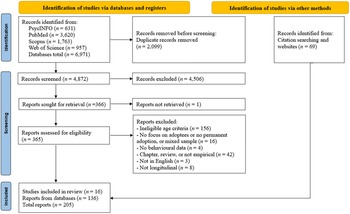
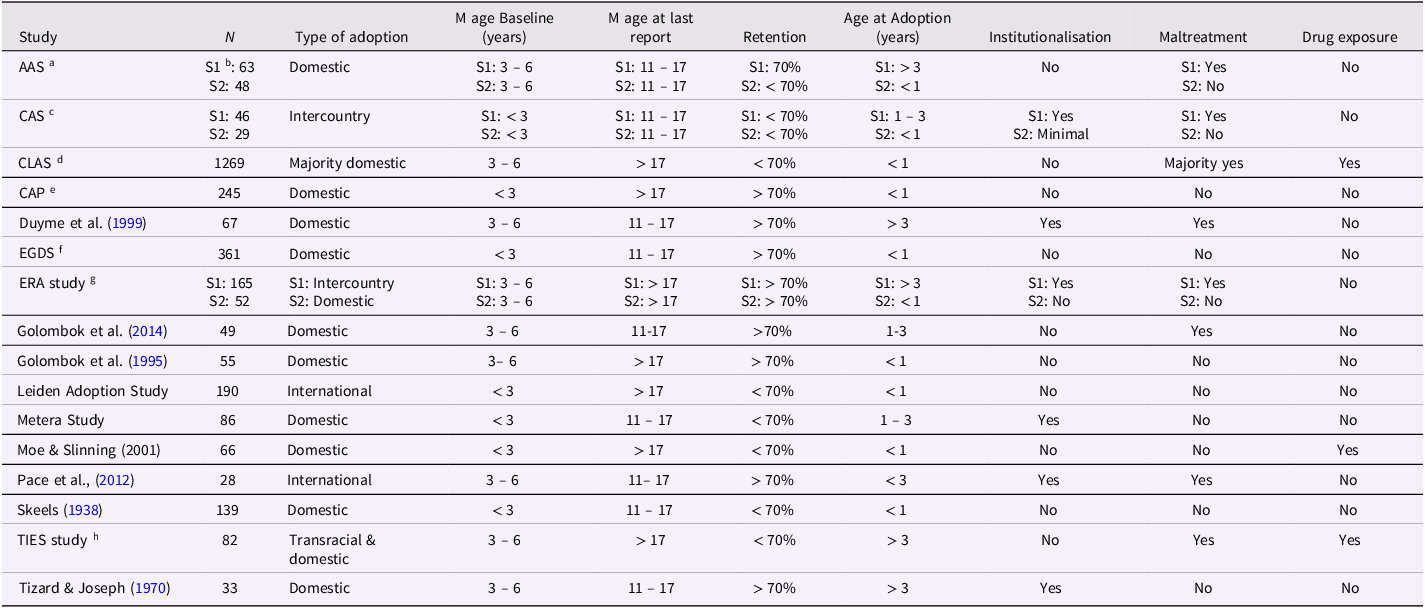


 Open access

