


India is experiencing a nutrition transition associated with a wider process of trade liberalization, urbanization and demographic change(Reference Popkin1,Reference Popkin2) . This process includes increases in energy consumption from sugar, fat and processed foods and has led to diets lacking in micronutrients(Reference Misra, Singhal and Sivakumar3,Reference Vepa4) . It contributes to increased burdens of overweight/obesity and non-communicable disease (NCD), including diabetes and CVD, which coexist with stunting and undernutrition(Reference Meenakshi5). Food policy interventions, therefore, need to balance concerns related to food security and undernutrition as well as overweight/obesity and diet-related NCD(Reference Thow, Kadiyala and Khandelwal6).
The transition to a ‘Westernized’ diet in developing countries is usually accompanied by increased consumption of vegetable edible oils(Reference Popkin1). In the case of India, following the liberalization of the edible oils sector in 1994, consumption of imported oils rose rapidly. Consumption of palm oil, which is not used in traditional Indian cooking and is mainly imported, increased from under 500 tonnes in 1994 to almost 10 million tonnes in 2016(7), or up to 40 % of total consumption. This makes India the largest importer of palm oil worldwide and the second largest consumer.
From the nutritional viewpoint, palm oil is an affordable source of energy which, however, is high in saturated fats compared with traditionally consumed oils such as rapeseed/mustard oils(Reference Downs, Thow and Ghosh-Jerath8). This has led to health concerns(Reference Shankar and Hawkes9,Reference Basu, Babiarz and Ebrahim10) because saturated fats have been linked to increased risk of CVD(Reference Mensink, Zock and Kester11–Reference Sun, Neelakantan and Wu13). A recent study has estimated that a tax on palm oil could save over 400 000 deaths from myocardial infarction(Reference Basu, Babiarz and Ebrahim10).
From a sustainability viewpoint, the dynamics in the Indian palm oil sector can also have important environmental implications in the supplying countries, mainly Malaysia and Indonesia, where palm oil cultivation has been linked to deforestation of tropical forests which are valuable carbon sinks and biodiversity reserves(Reference Agus, Gunarso and Sahardjo14). Reduced demand for unsustainable palm oil from the Indian market has been identified as a key step towards mitigating global environmental impacts of palm oil production(Reference Schleifer15,16) . Moreover, domestic production is also vulnerable, with low yield owing to factors like degraded soil, lack of access to good-quality seed, inefficient use of fertilizer and unsustainable irrigation(Reference Downs, Thow and Ghosh-Jerath17–Reference Mall, Singh and Gupta19).
Previous studies have used a value chains approach to identify opportunities and barriers to improve the supply of healthy oils in India(Reference Downs, Thow and Ghosh-Jerath8,Reference Downs, Thow and Ghosh-Jerath17) . Most recently, Shankar et al.(Reference Shankar, Thaiprasert and Gheewala20) analysed the opportunities and challenges for policies to promote healthy and sustainable oil consumption in Thailand. In the present study, we analyse the policy space for the promotion of healthy, sustainable oil consumption in the Indian edible oils sector, with a focus on healthy fat consumption, as shaped by the historical, international and political context. Further, the policy processes and the characteristics of key existing policies regulating the oils sector are also explored.
Methods
Theoretical framework
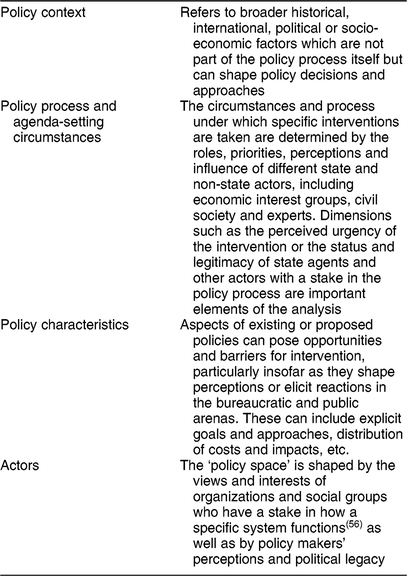
To analyse the policy space, we use a framework which situates itself between societal and state-centred approaches and has been used for policy space analysis of the dual burden of malnutrition in India(Reference Thow, Kadiyala and Khandelwal6,Reference Grindle and Thomas21) . Societal approaches assume that policy action is a reflection of social interests or the pressures of interest groups, leaving little room to account for initiative, leadership, training or ideology in policy making(Reference Nordlinger, Weiner and Huntington22). State-centred theories, on the contrary, assume that ‘policy occurs within bureaucratic organizations’(Reference Grindle and Thomas21). Policy space analysis bridges the gap between these approaches, providing a useful analytic lens, particularly when it comes to explaining ‘good policy’. This framework distinguishes between contextual factors, agenda-setting circumstances or policy processes and the characteristics of specific policy interventions, as outlined in Table 1.
Theoretical framework: policy space analysis
In the present study, we focus on policies directly addressing the edible oils sector or oil and fat consumption and operating at a sectoral level. These include both state policy and private or multi-stakeholder ‘collective’ regulatory frameworks(Reference Henson23). An analysis of ‘business-to business’ policies and standards of individual companies is beyond the study’s scope.
Sampling, data collection and analysis
The present study is based on the analysis of policy documents and semi-structured interviews with experts and stakeholders. The research protocol was approved by the ethical review boards of the London School of Hygiene and Tropical Medicine and the Public Health Foundation of India.
To determine sampling size, we aimed for adequate ‘information power’(Reference Malterud, Siersma and Guassora24). Guided by our theoretical framework we sought a small but highly informative and specific sample, and to include interviewees representing different interests, perspectives, expertise and viewpoints. In total, fourteen semi-structured interviews each of approximately 40 min duration were carried out in India with key experts and stakeholders from state, civil society, industry and academic sectors. Although the classification of actors is analogous to that used by Lang and Heasman(Reference Heasman and Lang25), we include as a distinct category academic experts, who play a role in providing advice to policy makers and government actors, as well as in interpreting policy. Written informed consent was obtained at the time of the interview and permission was sought for recording; this was granted in all but two cases in which detailed notes were taken.
We obtained our initial sample through a purposeful normative approach(Reference Marshall26), based on a representation of ‘how the system works’(Reference Hare and Pahl-Wostl27); in this case, corresponding to a simplified representation of the edible oils value chain (see online supplementary material). Additional interviewees were identified through snowballing. Interviewees were identified among senior representatives at the level of Director or CEO of the relevant institutions. The academics interviewed were experts with an established reputation, who also acted as policy advisors.
Interviews covered topics related to sectoral context, including perceptions about drivers and trends of oil consumption, the policy process (role and priorities of different state and non-state actors), as well as perceptions around different dimensions of sustainable nutrition, and characteristics of current interventions.
Interviews were transcribed verbatim and manually open coded using a combination of content and thematic analysis(Reference Ritchie and Spencer28), based on our theoretical framework(Reference Shankar, Thaiprasert and Gheewala20). Quotes in the text are marked with the following initials: CS (civil society), IN (Industry), S (State), Ac/P (academic expert/policy advisor).
Information obtained from interviews was complemented with the analysis of seventy documents including annual reports, resolutions, notifications and other official policy documents, as well as corporate reports (see Table 2)(Reference Bowen29). Documents were coded using similar themes to those used for interview analysis, also following our theoretical framework.
Main policy documents in the Indian edible oils sector
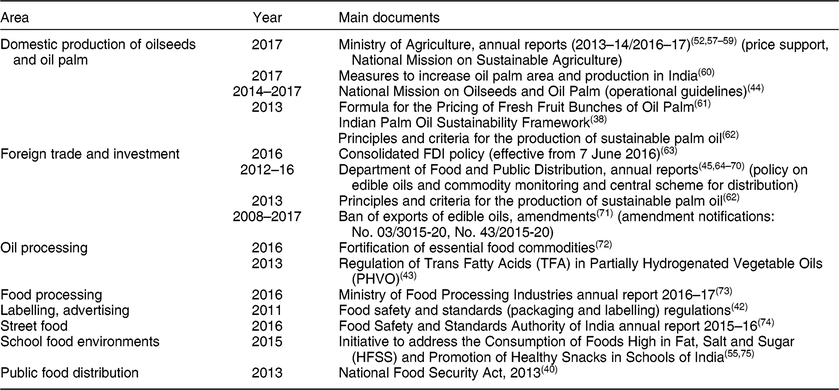
FDI, foreign direct investment.
Policy space analysis
Table 3 provides an overview of the opportunities and barriers for a sustainable nutrition agenda in the Indian edible oils sector, which are described in additional detail below.
Opportunities and barriers for a sustainable nutrition agenda in the Indian edible oils sector
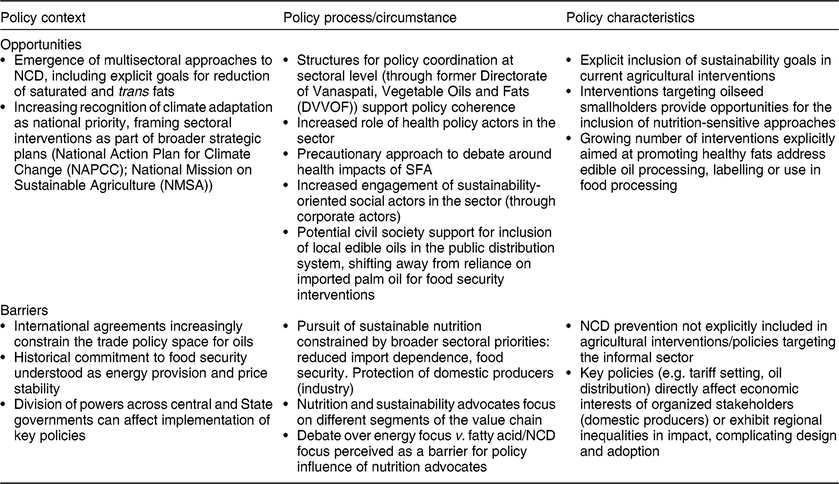
NCD, non-communicable disease.
Context
In this section we describe how broader international and national policy priorities can affect the space for promotion of sustainable healthy oil consumption in India.
Since liberalization of the oil sector in the early 1990s, trade policy has been shaped by participation in the World Trade Organization (WTO). Although the agreements establish high bound tariffsFootnote * for palm and other oils (300 %), the scope for effective protection has been limited by the relatively low bound tariff agreed for soyabean (45 %), which is a close substitute. More recently, palm oil bound tariff reductions (to 45 %) have been negotiated with South-East Asian nations(Reference Francis30). Close relationships with supplying countries, as part of India’s ‘Look East’ (now ‘Act East’) geopolitical strategy(Reference Singh31), have also played a historical role in the liberalization of palm oil imports, promoted by the Malaysian Palm Oil Council(Reference Rasiah and Chandra32).
Although liberalization has been partially driven by international geopolitical and economic concerns, the commitment to national food security has played an important role throughout India’s participation in trade agreements(Reference Chang33). This priority has been reinforced both nationally, with the approval of the National Food Security Act (2013), and internationally, with the leading role of India in the G33 group of countries, demanding greater flexibilities to defend food security within WTO(Reference Grant34). Although food security policy has focused mainly on cereals, oils are also considered an essential food commodity and oilseed and oil markets are monitored and managed as such, through policies that control prices and availability.
Both improving diets and sustainability are recognized as policy priorities in India. NCD prevention is increasingly recognized as a national concern, requiring multisectoral coordinated efforts(35), wherein diet is identified as the main risk factor for NCD and reduction in saturated fat consumption is an explicit policy goal(Reference Bachani36).
Efforts to improve sustainability in the oilseed sector are framed within the broader National Action Plan for Climate Change, which aims to address India’s vulnerability to climate change(37). The recent launch of a national sustainability framework in the palm oil sector follows and aligns with similar policy initiatives in Indonesia and Malaysia(38).
Finally, policy making in all areas needs to be understood in the context of a strong division of powers across central and state governments. We refer in our analysis to priorities, processes and actors operating at the central level that might conflict with those of specific state governments, and implementation and dynamics can vary greatly across states. Importantly, state governments can share responsibilities for funding and implementation, including extending or complementing central government policies or imposing exemptions. In the case of agricultural policy, for example, state governments share responsibility for funding and implementation of policies under the National Mission for Sustainable Agriculture(39). In the case of public distribution, individual States can choose whether to distribute edible oils, either through uptake of central schemes or through specific programmes(40). Regulation for packaging and labelling of edible oils is another example where norms are dictated at a central level but state governments can exempt specific oil products to protect small local producers(41).
Policy process and circumstance
In this section, we have analysed the key policy processes and priorities in the edible oils sector, as well as the role, influence and priorities of actors, focusing on the barriers and opportunities for the promotion of sustainable, healthy oil consumption.
Main priorities and processes driving policy in the edible oils sector
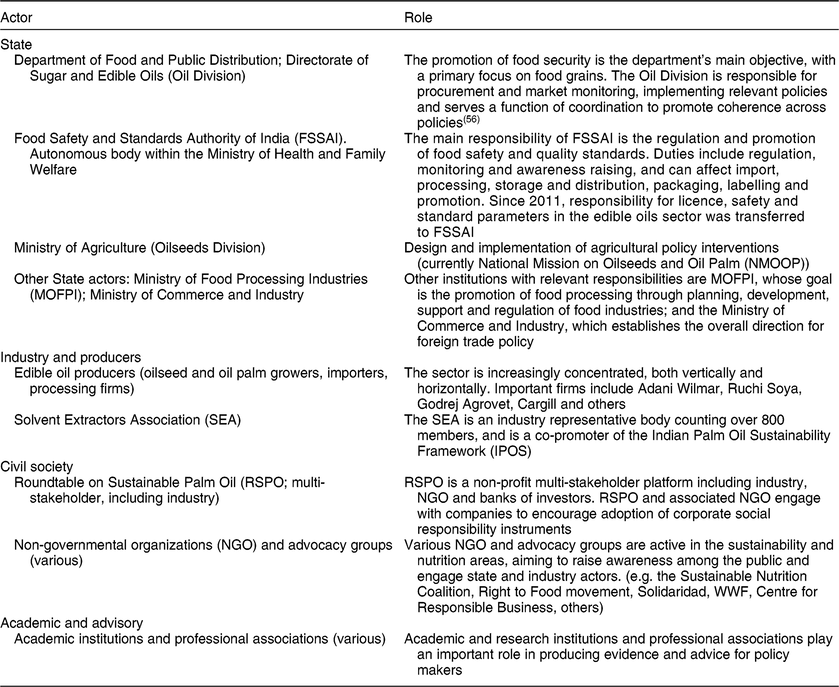
Table 4 shows the key institutions with relevant responsibilities in the oils sector.
Key institutions and roles in the Indian edible oils sector
Since 2011, the Food Safety and Standards Authority of India has been actively involved in the edible oils sector and has enumerated several health-oriented policies and regulations, including compulsory labelling of trans-fatty acids and saturated fat, stricter regulation of health claims and tighter norms for sales of blended oils(41–43). Sustainability in the domestic oilseed and oil palm sector is also increasingly recognized, with an emphasis on water conservation as a crucial element for expansion of domestic production(44).
Policy sources identified reduced import dependence as the main goal for edible oil policy. In addition, policy aims to protect domestic producers, with the oil processing industry being perceived as an influential actor in the sector. Both civil society and industry interviewees referred to this influence as exerted directly, through explicit demands and associated with access.
The sector is increasingly concentrated, both horizontally and vertically. Although the four largest firms are involved in all segments of the value chain from oilseed and oil palm production to import and processing, and remain the most powerful non-state actors in the sector, they are affected by the presence of large national and multinational food processing firms. These companies’ demand for oils and sourcing practices can play an important role in shaping incentives in the sector.
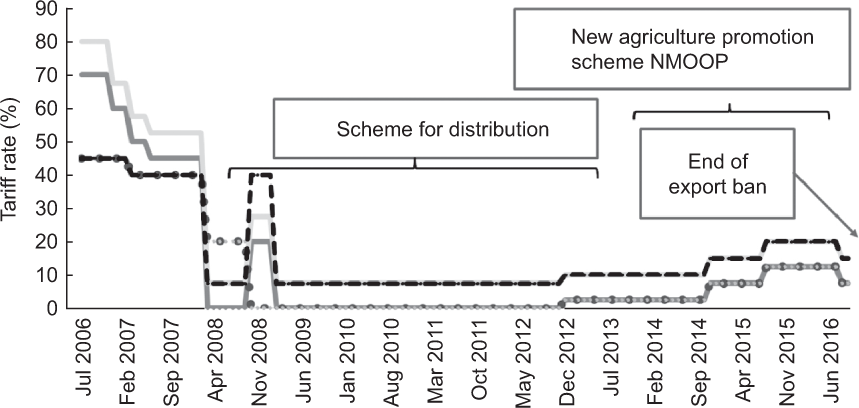
A history of intervention in the oils sector has created structures for its monitoring and coordination, operating through the Directorate of Vanaspati, Vegetable Oils and Fats (now Oil Division), which supports policy coherence at a sectoral level. Figure 1 shows some of the main policies in the sector (also shown in Tables 2 and 4), illustrating the coordinated sectoral approach, as well as the interaction of competing priorities. Progressive tariff reductions before the international food crisis are reinforced by the introduction of an export ban, and the approval of the scheme for distribution. In the last three years of the decade, progressive increases in tariff rates coincided with the implementation of the agricultural promotion scheme for oilseeds and oil palm (National Mission on Oilseeds and Oil Palm (NMOOP); see Fig. 1).
Some of the main policies in the Indian edible oils sector, 2006–2016:  , crude palm oil;
  , RBD palm olein;
  , crude soyabean oil;
  , refined soyabean oil (NMOOP, National Mission on Oilseeds and Oil Palm)
Despite a certain degree of policy coordination across different areas within the edible oils sector, the relative influence of the priorities described in this section will depend on the specific policy process. We identify three broad processes driving policy intervention in the edible oils sector. First, policy at a sectoral level can be described as an exercise in balancing out key priorities and interests as part of a business-as-usual approach, with policy makers balancing the interests of different stakeholders. One interviewee summarized this approach in the following terms: ‘the consumer, […] the farmers, as well as the industry, we are at the centre, so we have to keep a balance’ (P). Second, we identified a crisis approach where narrower interpretations of food security tend to be prioritized. This is the case of edible oil distribution which, unlike grains and sugar, is not covered by the Public Distribution System (PDS)(40). Since the early 1990s, vegetable oils have only occasionally been distributed to protect consumers from excessive price increases(45,46) . The reactive character of this type of policy process was conveyed by an interviewee who commented: ‘What happens in India is, the moment the prices peak, the government steps up, imports, through [public] procurement, and then flushes it into the PDS’ (CS).
Finally, the pursuit of medium- to long-term strategic goals including self-sufficiency, regional development or water conservation is typically articulated through strategic plans, defining policy goals in a 3- to 5-year period(44), and can alter the business-as-usual balance of priorities. This notion of an overarching strategic priority was conveyed by a former government official, currently heading a civil society organization, who explained:
‘We have an initial analysis, [of] whatever we depend on external countries for our requirement. [We] will reduce at least 20–25 % of our requirement by focusing on the edible oil policies […]. And so the government sets their own plan for the next five years.’ (CS)
Influence of non-state actors on nutrition-related policy
Scientific evidence on nutrition regarding edible oils is translated into policy through close contact between regulatory bodies and scientific experts, who regularly take on advisory roles. Awareness and knowledge on NCD prevention among policy makers in key departments can be a supportive factor for translation of nutrition evidence into practice. The interests of industry are taken into account by policy makers, as discussed previously, and interviewees mentioned how producers might attempt to influence implementation and pace of adoption in order to limit economic impacts, potentially applying pressure ‘to protect domestic producers by going slow on implementation’ (Ac/P). However, interviewees from different areas did not suggest an active role of industry in driving the overall direction of nutrition and health-oriented policy in the edible oils sector, which was considered to be shaped to a larger extent by technical advice.
Nevertheless, there are some challenges for the successful adoption of nutrition-oriented policies in the edible oils sector. The controversy around the health impacts of fatty acid consumption(Reference Mozaffarian47,Reference Wang, Li and Chiuve48) is important for the adoption of nutrition-oriented policies for palm oil, with scientific evidence often perceived as being unclear. As one expert put it, following the shift from an emphasis on dietary fats to an emphasis on sugar as a cause for NCD, policy makers are more likely to be sceptical about dietary guidelines, perceiving that ‘nutrition has been misleading you all along, for 50 years they have been based on fake science’ (Ac/P). However, the nutrition experts interviewed generally put emphasis on promoting balanced, culturally appropriate diets.
In the Indian context, the debate seems to focus more on whether to focus on energy intake, or to prioritize the quality of that energy, including balanced fatty acid consumption. Interviewees highlighted this perceived conflict, arguing that ‘the main problem with this is that when you say high fat, high sugar, they should be restricted, […] but that is the kind of food we are serving in the mid-day meal and ICDS [Integrated Child Development Services], because we want to overcome malnutrition’ (Ac/P). This controversy was perceived as problematic, given the increasing divergence in terms of quality of edible oils consumed across socio-economic groups.
One interviewee summarized the debate in the following terms:
‘[The] nutrition community itself is fairly divided on this. They would look at the point of view on undernutrition and say that calories are important, and fats can give higher amounts of calories, so why not have fats. The other [approach] […] the emphasis is shifted to the quality of fats rather than the quantity of fat.’ (Ac/P)
Finally, nutrition experts tend to advocate for downstreamFootnote * policies aimed at processing (regulation of trans-fatty acids, fortification) or food environments (including packaged food, school food and street food), focusing on advertising, labelling and consumer awareness. Although experts generally supported increased consumption of local oils, upstream policies were considered potentially impractical to deal with urgent concerns, with one expert commenting ‘Our agriculture policy has to be reconfigured to have greater production of healthier oils […] [but] at the moment, we cannot move in that direction’ (Ac/P).
Another interviewee argued for the recent policy focusing on edible oil fortification, referring to the limitations of upstream approaches:
‘Ultimately, we have to go for fortification, and that is the only solution that we have. At one of the conferences, a scientist said [to] grow green vegetables at the doorstep, so someone asked where is the door, and where is the step. Because it is very easy to say, but people living in slums, they cannot grow vegetables to eat at doorsteps.’ (Ac/P)
Aside from experts and nutrition advocacy coalitions, since 2001, food security policies have been strongly influenced by a network of civil society organizations and activists campaigning for the recognition of food and nutrition security as an economic and fundamental right(Reference Hertel49), as reflected in the National Food Security Act in 2013. This movement has argued for a broad approach to nutrition security, with a focus on dietary quality, beyond energy intake.
A prominent leader of the campaign and policy adviser commented on the potential support for the inclusion of oils as a regular supply within PDS:
‘We had insisted that edible oils should be part of the public distribution system, under the National Food Security Act. That unfortunately has not been the case, and we couldn’t incorporate it into the act. But there is a lot of discussion in the government of India, even today, around whether edible oil should be a part of the National Food Security Act.’ (CS)
This movement has generally supported local provision and production as part of its approach to nutrition security as a fundamental and economic right, linked to labour and gender rights(Reference Hertel49), highlighting upstream approaches as part of an agrarian transformational project.
Influence of non-state actors on sustainability-related policy
Sustainability concerns have typically been relatively low in the policy agenda for edible oils but are gaining traction partly due to the overall increased urgency around climate adaptation. In particular, the introduction of production methods and seed varieties that reduce water and fertilizer use is considered a priority in order to promote soil and water conservation, and to increase the resilience of oilseed production to droughts(Reference Jha, Suresh and Mathur18,39) .
In the case of palm oil, the edible oil processing industry has become increasingly interested in sustainability for two main reasons. First, domestic firms have been faced with increased pressure to adopt global sustainability certification schemes, such as the Roundtable on Sustainable Palm Oil (RSPO), to supply multinational food processing firms, which have acquired global commitments for sustainability. Seeing this to a certain extent as a business opportunity but lacking a consumer-based premium for sustainable products, the industry has started to demand policy support and tariff incentives for imports of sustainable oil, so that Indian firms will face ‘less duty on green oil, and higher duty on not so green oil’ (IN).
One interviewee from industry commented on their proposal to the government:
‘[We have proposed that the government should] make the import duties cheaper by 1 or 2 percent so that [we] have more incentive to import sustainable palm oil. If normal duty is 7·5 % CPO, if it is sustainable, you make it 6 %.’ (IN)
Second, the increased involvement of large processing firms in domestic cultivation of oil palm has also led to growing interest in sustainability initiatives. These companies perceive a comparative advantage for cultivation of sustainable palm in India, where it is mainly produced on previously cultivated land, potentially requiring no additional deforestation. In order to realize this perceived competitive advantage, domestic companies have sought policy support for the production of high-value-added sustainable certified products, mainly for the export market, including duty incentives: ‘[The government should] reduce the export duty for the sustainable palm oil, then once they do it […] we will request our government to reduce the import duty’ (IN).
Civil society actors advocating for sustainability mainly exert their influence through engagement with corporate actors, perceived as the most effective or feasible route given industry incentives and influence. In the case of import policy, potentially conflicting interests were also identified as a barrier for direct engagement with policy and for short-term policy action to promote sustainability.
Civil society actors pointed to the policy inertia created by the historical mandate to protect food security and control prices: ‘I don’t expect the government of India to implement any kind of regulations [to promote sustainable imports], because their primary concern is to ensure food security’ (CS). Only domestic producers, it was perceived, have sufficient influence to overcome this inertia and broaden the agenda for tariff setting.
However, in the context of domestic production, government involvement has been more direct, which was perceived as a positive development, creating an Indian Palm Oil Sustainability Framework (IPOS)(38) focused mainly on domestic production but which also includes oil imports and involves a collaboration among civil society, industry and government.
Policy characteristics
Relevant characteristics of a policy include not only explicit goals and criteria, but often concern the distribution of costs and impacts across social groups, stakeholders and regions, since these can elicit reactions to policy in social or bureaucratic arenas(Reference Nordlinger, Weiner and Huntington22).
Explicit inclusion of nutrition or sustainability criteria
Table 5 summarizes our results regarding the explicit inclusion of sustainability and nutrition goals within existing policies in the edible oils sector(Reference Swanson, Carter and Yount50).
Explicit inclusion of nutrition and sustainability criteria in key policies in the Indian edible oils sector
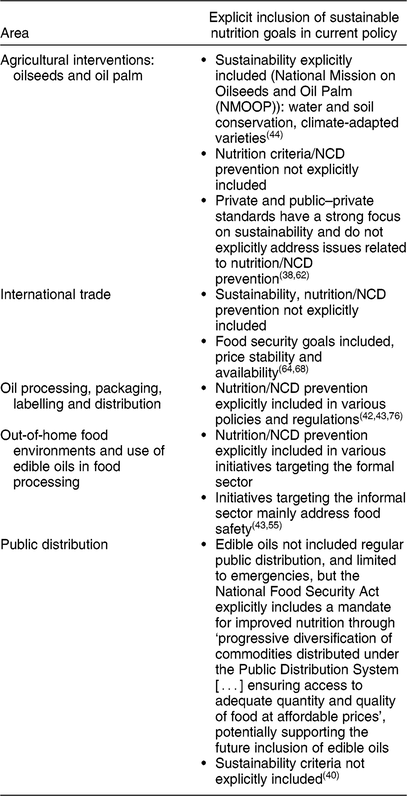
NCD, non-communicable disease.
Distribution of policy impacts and costs
Although their main aim is not re-distributional, some important interventions in the edible oils sector have a socio-economic impact gradient, disproportionately affecting lower income groups of consumers or producers. This needs to be considered when assessing the space for reform and the potential reactions in social and policy spheres. In particular, state-led agricultural input and production interventions in the oilseed sector directly engage with smallholders, which can potentially facilitate the introduction of nutrition-sensitive approaches aimed at vulnerable groups, such as promotion of intercropping, oil crop rotation schemes, provisions for strategic land conversion, farmer training or investment in seed variety improvement(44).
The recent move towards a corporate-led approach in the oil palm component of the NMOOP, however, can shift subsidies and policy focus towards larger producers, while potentially facilitating farmers’ access to funding from private investors. With respect to tariff changes or other policies directly affecting prices, palm oil being the cheapest oil in the market, the effects of price increases are most likely to be felt by lower-income households. However, palm oil is often consumed in blends or used for food processing, which can reduce consumers’ awareness of price fluctuations and the consequent potential for reaction in the social sphere. Distributional impacts are more visible in the case of public distribution, leading to increased civil society engagement, as discussed previously(Reference Pande and Houtzager51).
Perhaps more importantly, key sectoral interventions have marked geographical impact patterns which shape the space for intervention, agricultural interventions and public distribution being the clearest examples. Oil palm development schemes in North-Eastern States, for example, have a strong component of regional development(44). More generally, the costs of NMOOP are shared across central and State governments at a rate of 60:40 (90:10 for North-Eastern States) implying the need for a substantial degree of state–centre coordination(52). The impact of palm oil distribution on producers at a regional level is also important. State governments have sought to protect local producers from the impact of palm oil distribution at subsidized rates(53), leading to unequal geographical adoption of the latest distribution scheme. One policy maker identified this factor, along with reductions in domestic prices, as one of the reasons for irregular adoption of the scheme: ‘The different States wanted to distribute different oil. Gujarat wanted to distribute groundnut oil, and Kerala said they wanted to distribute coconut oil instead of palm oil. In 2013 only two states were taking oil, so the Scheme was terminated in September 2013’ (P).
Finally, in addition to broader socio-economic or geographical impact patterns, some policies directly impact on the economic interests of key organized stakeholders and, in particular, domestic producers including oil and food processing companies. For example, some interventions targeting food environments, such as compulsory initiatives to promote healthier processed food, can directly affect processing companies, typically requiring a degree of compromise with organized actors in the food industry. This has been the case with the implementation of the ban on trans fats(Reference Downs, Gupta and Ghosh-Jerath54) or ‘junk food’ in schools(55). This is also the case with import tariff changes, whose direct impacts on domestic producers are a key constraining element of the current policy space. In the case of private sustainability standards, the future success of different models is likely to depend on the costs they might impose on large domestic edible oil producers v. the advantages provided in terms of access to new markets and contracts with multinational food producers, reflecting the power structure discussed above (section ‘Influence of non-state actors on sustainability-related policy’).
Discussion and conclusions
We first discuss opportunities for the promotion of healthier, sustainable edible oils in India, as identified in our study, then discuss the main challenges and conclude with summary observations.
Overall, the implementation of a sectoral agenda for sustainable nutrition is supported by the emergence of multisectoral approaches to NCD prevention(35), as well as by the recognition of climate adaptation as a national priority(39). Moreover, the existence of structures for sectoral policy coordination can support the adoption of coherent, synergistic policies. The increased participation of health actors in the sector has resulted in an increased focus on NCD prevention, with policies addressing oil processing, labelling, distribution and utilization in food processing. Additionally, emergent rights-based civil society movements could provide an important support for the inclusion of local edible oils in the PDS, shifting away from reliance on palm oil for food security interventions. We also find increased engagement from sustainability-oriented civil society actors in the sector, where we see that policy influence is exerted mainly through collaboration with corporate actors in the oil processing industry. Finally, although current agricultural policies in the oilseed sector do not explicitly incorporate goals related to the promotion of healthy oil consumption, the characteristics of these interventions, which directly engage with smallholders, provide opportunities for the adoption of nutrition-sensitive approaches.
However, our analysis also identifies some important challenges. The space for trade policy is constrained by international agreements, while overall policy priorities in the edible oils sector are shaped by a history of intervention prioritizing food security. The policy space is also constrained by broader policy priorities including reduced import dependence, price stability, regional development and the protection of domestic producers, and shaped by the alignment of key policies (including tariffs, regulation of processing and ‘out of home’ environments and public distribution) with the objectives of organized industry stakeholder or individual state government priorities. Furthermore, we find that nutrition and sustainability-oriented civil society actors tend to focus on different segments within the sector, with sustainability advocates generally addressing upstream issues while nutrition actors tend to focus on downstream segments. Upstream supply-side policies, while viewed positively, are considered impractical as a solution to urgent nutrition-related concerns in the short term. This split might undermine the effectiveness of non-state actors in promoting these sustainable nutrition issues and reduce their ability to leverage the existing structures for sectoral policy coordination. Moreover, the debate between those arguing for a focus on energy from fat and those arguing for a focus on fatty acid quality is perceived as a barrier for the policy influence of nutrition experts in the oils sector. This corroborates previous findings regarding the split policy space for the dual burden of malnutrition in India(Reference Thow, Kadiyala and Khandelwal6).
The dynamics surrounding advocacy for sustainability illustrate the changing role of an organized corporate sector. The concerns and strategy of this sector increasingly align with those of global brands, as firms become more consolidated and internationally integrated, becoming active in the corporate social responsibility arena. This represents an important transformation in a sector traditionally dominated by small producers exclusively concerned with domestic or even local markets. Whether in terms of leveraging the corporate sector, or contending with its influence, this is a factor to consider when advocating for policies to promote sustainable, healthier oil consumption, as it is likely to further reshape the policy space.
The present study has some important limitations which should be considered when interpreting our findings. Firstly, we focus on policy at a national level, but many relevant policy processes occur at a state or local level and many of the phenomena discussed, including oilseed and oil palm cultivation, present important regional variation. Second, our focus on policy at a sectoral level limits the level of detail that can be devoted to individual policy processes. More detailed analysis of specific interventions and policy processes at a regional or state level might be the object of further study.
Overall, our analysis highlights important opportunities as well as some challenges for the promotion of sustainable, healthy oil consumption in the edible oils sector in India. The alignment of proposals with broader sectoral priorities including self-sufficiency, food security, the protection of domestic producers and regional development can be important for policy acceptability and successful implementation.
Increased involvement of nutrition advocates with upstream policies in the sector could potentially enhance coherence across policy goals relating to sustainability, energy sufficiency and NCD prevention, addressing perceived trade-offs which have been identified as a barrier for intervention. Systematic efforts towards identifying synergistic approaches, from agricultural production to distribution of edible oils, could also increase policy influence for advocates of both sustainability and nutrition.
Acknowledgements
Acknowledgements: The authors would like to acknowledge the insightful comments from two anonymous reviewers and from the editors. Financial support: This research was funded by a grant from the Wellcome Trust (grant number 103905/Z/14/Z) under its ‘Our Planet, Our Health’ initiative. The Wellcome Trust had no role in the design, analysis or writing of this article. Conflict of interest: The authors do not report any conflict of interest. Authorship: S.C., B.S. and S.M.D. contributed to formulating the research question and designing the study, all authors contributed to carrying out the study, S.C. wrote the article and all authors contributed to reviewing the final version. Ethics of human subject participation: This study was conducted according to the guidelines laid down in the Declaration of Helsinki and all procedures involving human subjects were approved by the London School of Hygiene and Tropical Medicine ethics committee and by the Institutional Ethics Committee of the Public Health Foundation of India. Written informed consent was obtained from all subjects.
Supplementary material
To view supplementary material for this article, please visit https://doi.org/10.1017/S1368980019001836



