



Non-communicable diseases represent a major public health challenge to Western countries, in part related to the continuing rise in the prevalence in obesity and overweight in the last decades( Reference Ng, Fleming and Robinson 1 , Reference Ogden, Carroll and Kit 2 ). The rising trend of these diseases has been accompanied by a concomitant rise in the share of processed foods in the diet( Reference Monteiro 3 , Reference Monteiro, Moubarac and Cannon 4 ). Processed foods are defined considering the series of technological modifications they undergo to increase their safety, shelf-life or palatability( Reference Weaver, Dwyer and Fulgoni 5 ). Some processes such as canning (in salt or oil) or fermenting have long been integrated in the food supply. However, technological innovations in recent years have prompted a wide range of novel processes, leading to the development and dissemination of ultra-processed foods (UPF). Several degrees in the processing of foods have therefore been identified( Reference Monteiro, Cannon and Levy 6 , Reference Steele, Baraldi and Louzada 7 ), with UPF being industrial formulations and represented by manufactured convenient and intensely palatable ‘ready-to-eat’ foods( Reference Poti, Mendez and Ng 8 , Reference Luiten, Steenhuis and Eyles 9 ). In Western countries, global industrial systems dominate the food supply, generating an important availability of these UPF( Reference Luiten, Steenhuis and Eyles 9 ). As such, UPF are widespread in the food supply, including in ‘healthy’ food groups such as fruits and vegetables (e.g. as pre-packaged soups). Dietary guidelines in Western countries, such as France, essentially refer to food group consumption in their disseminated booklets( 10 , 11 ). They promote the consumption of certain food groups (e.g. fruit and vegetables) and the limitation of others. Recommendations pertain, for example, to the limitation of certain foods with high content of fat, sugar or salt. Rising concern about the potential impact of UPF on health has, however, prompted some governments to take action and incorporate this novel dimension of foods within their dietary guidelines( 12 ). Indeed, UPF have been found to be associated to obesity and metabolic syndrome in recent studies( Reference Tavares, Fonseca and Rosa 13 – Reference Mendonca, Pimenta and Gea 15 ).
UPF have been described as higher in energy, saturated fat, sugar and sodium, and lower in nutrients( Reference Poti, Mendez and Ng 8 , Reference Luiten, Steenhuis and Eyles 9 ). Thus, diets rich in UPF usually exhibit high contents of sugar, lipids, saturated fats and sodium( Reference Louzada, Martins and Canella 16 ). As such, they are thought to be potential drivers for both obesity and metabolic syndrome( Reference Moodie, Stuckler and Monteiro 17 – Reference Moubarac, Martins and Claro 19 ). Beyond this nutritional aspect, processing itself is suggested to degrade the structure and characteristics of the original food, which could lead to adverse health effects( Reference Birlouez-Aragon, Morales and Fogliano 20 , Reference Fardet 21 ). Finally, UPF usually include additives (including colours and flavours) and use fractioning and recombining of food ingredients. However, dietary patterns according to the amount of UPF in the diet have only recently been described in Western countries, namely the UK, the USA and Canada( Reference Steele, Baraldi and Louzada 7 , Reference Louzada, Martins and Canella 16 , Reference Moubarac, Martins and Claro 19 , Reference Adams and White 22 , Reference Louzada, Baraldi and Steele 23 ), where they account for more than 50 % of the energy intake of the population.
The large range of available UPF in Western countries, as well as the development of UPF with ‘balanced’ dietary profiles (such as pre-packaged whole meals or non-sugared flavoured water), suggests that they may also be included in diets adhering to dietary guidelines, given that the processing dimension of foods is not used in dietary guidelines to define ‘healthy’ diets. Moreover, as ‘healthy’ alternatives within UPF represent a driver for industrial growth, their share within ‘healthy’ diets could be more important than expected( Reference Monteiro 24 ). Given that dietary guidelines focus exclusively on consumption of food groups, using a broad definition of these groups, individuals considered to have high adherence to dietary guidelines could also have high consumption of UPF. As such, compliance with dietary guidelines based on conventional definition of food groups would not necessarily represent optimal diets, since grouping would lump foods from various levels of processing.
Our objective was to investigate the proportion of UPF in the diet in a large sample from the French general population included in the NutriNet-Santé study. We aimed at describing the diet according to the level of UPF in the diet. Moreover, we aimed at investigating the relative contribution of each food group, as defined according to dietary guidelines, to the proportion of UPF in the overall study and in a subgroup of individuals with high adherence to nutritional recommendations. These latter analyses aimed at investigating whether dietary guidelines as they are currently defined would be consistent or not with optimal diets in terms of processing.
Materials and methods
Population
The NutriNet-Santé cohort study has previously been described in detail( Reference Hercberg, Castetbon and Czernichow 25 ). Briefly, its objective is to study the relationships between nutrition (combining diet and physical activity) and health and to investigate the determinants of dietary behaviour, using a large sample of more than 100 000 volunteers.
The NutriNet-Santé study is conducted according to the Declaration of Helsinki guidelines, and was approved by the Institutional Review Board of the French Institute for Health and Medical Research (IRB Inserm no. 0000388FWA00005831) and the ‘Commission Nationale de l’Informatique et des Libertés’ (CNIL no. 908450 and 909216). Electronic informed consent was obtained from each participant (EudraCT no. 2013-000929-31).
Data collection
At baseline and annually thereafter, using a secured web-based interface, participants have to answer questionnaires pertaining to their dietary habits (24 h records), health, sociodemographic characteristics, anthropometrics and physical activity. Additional questionnaires pertaining to determinants of dietary behaviour or risk exposure are regularly proposed in the study. In the present study, individuals who were included up to June 2014 and had completed three 24 h records at inclusion were eligible for participation. Individuals residing outside mainland France or with missing information about covariates (smoking status, physical activity or sociodemographic characteristics) were excluded.
Diet
At inclusion in the NutriNet-Santé study, participants have to fulfil three 24 h dietary records. The days for the records were selected at random in a two-week period, with one weekend day and two weekdays. The participants were asked to estimate the portion size for each reported food and beverage item using validated photographs( Reference Hercberg, Deheeger and Preziosi 26 ). Items in the database reflect usually consumed foods in the French diet( Reference Hercberg 27 ). The food database contains more than 3000 foods. During the completion of the record, participants have the possibility (optional) to indicate if the food was from a specific brand or home-prepared. Food group classification was computed by taking account of the classification of foods used in French dietary guidelines( 10 , 11 ). Noteworthy, for this classification, the contribution of food items to each food group is decomposed; for example, for ready-to-eat meals, vegetables contained in the meal contribute to the overall vegetable consumption. Nutrient intake was computed using a validated food composition table( Reference Hercberg 27 ). Under-reporters for energy intake were excluded using the Black method( Reference Black 28 ). Validation studies comparing the web-based dietary questionnaires with interviews by dietitians or biomarkers of nutritional status and with measured data (for anthropometry) showed a good validity of the collected data( Reference Lassale, Peneau and Touvier 29 – Reference Touvier, Kesse-Guyot and Mejean 32 ).
Food processing
Each food item in the food composition table of the NutriNet-Santé study (3022 foods and beverages) was categorized as ultra-processed or not based on the NOVA classification( Reference Monteiro, Cannon and Levy 6 , Reference Steele, Baraldi and Louzada 7 ). This categorization was performed by a team of three dietitians trained in nutritional epidemiology, supervised by researchers. Home-made and artisanal foods (including artisanal breads) were identified and decomposed using standardized recipes, and the classification was applied to their ingredients. In case of uncertainty, consensus was reached among the researchers. To help identifying home-made and artisanal foods, researchers and dietitians relied on the percentage of reported brand products consumed.
Covariates
Sociodemographic data were collected at baseline using self-administered questionnaires. Sex, age (<25 years, 25–44 years, 45–64 years, ≥65 years), education (<12 years, 12 years, 13–15 years, >15 years of education), marital status (in couple, single/divorced/widowed), income per household unit( 33 ) (<1200 €/month, 1200–2300 €/month, >2300 €/month), residence (rural, urban) and smoking status (current smoker, former smoker, never smoker) were collected.
Physical activity level was computed using self-declared data from the International Physical Activity Questionnaire, completed at baseline (low, moderate, high)( Reference Craig, Marshall and Sjostrom 34 ).
Self-reported weight and height were collected at baseline and were used to compute BMI (WHO categories: <18·5 kg/m2, 18·5–24·9 kg/m2, 25·0–29·9 kg/m2, ≥30·0 kg/m2)( 35 ).
Statistical analysis
The proportion (in weight, g/d) of UPF in the total diet (UPFp) was computed for each participant. Weight was considered to take better account of non-nutritional issues pertaining to processing of foods (e.g. neo-formed contaminants and alterations to the structure of raw foods). For comparison with international data, the proportion in energy of UPF was also computed (termed energy-weighted UPFp).
Associations between quartiles of UPFp and sociodemographic characteristics were estimated using multivariable multinomial logistic regression and mutually adjusted percentages for each sociodemographic category were computed. Food group consumption and nutrient intakes across quartiles of UPFp were investigated using multivariable linear regression adjusted for sociodemographic variables and energy intake. Nutrient intakes were adjusted for energy intake using the residual method( Reference Willett and Stampfer 36 ). P values for trend were computed using quartiles as continuous variables in the multivariable linear regressions.
The adherence to French nutritional recommendations was evaluated using the PNNS-GS (Programme National Nutrition Santé Guideline Score)( Reference Estaquio, Kesse-Guyot and Deschamps 37 ). Briefly, the PNNS-GS allocates points to participants for each of the thirteen PNNS recommendations on diet and physical activity. A penalty is attributed for excess energy intake( Reference Estaquio, Kesse-Guyot and Deschamps 37 ). This a priori score has been validated in a French cohort and serves as a reference score for the nutritional quality of the diet( Reference Estaquio, Kesse-Guyot and Deschamps 37 ). UPFp and PNNS-GS were partitioned in quartiles for analyses.
Participants in the fourth quartile of the PNNS-GS, reflecting healthier diets (‘Healthy’ group), were selected for a specific subgroup analysis to determine the importance of UPF in individuals with healthier lifestyles.
In both the overall sample and the ‘Healthy’ subgroup, the contribution of UPF from each food group was investigated across population-specific quartiles of UPFp using multivariable linear regressions adjusted for sociodemographic variables, energy intake and PNNS-GS for residual confounding. All analyses were replicated using energy-weighted UPFp.
All tests were two-sided and a P value <0·001 was considered significant, given the high number of statistical tests performed. Statistical analyses were performed using the statistical software package SAS version 9.3.
Results
Among the 95 942 individuals having three dietary records available at baseline, 74 470 had no missing data on sociodemographic, BMI and lifestyle data and were therefore included in the present study. The total sample was mainly female (77 % of the total sample), with a mean age of 43·8 (sd 14·4) years. Overall, UPF represented 18·4 % of the total amount of foods consumed by weight, and 35·9 % of total energy intake (data not shown). The Pearson correlation coefficient between quantity-weighted UPFp and energy-weighted UPFp was 0·69.
A higher consumption of UPF was independently associated with male gender, younger age, lower income, lower level of education, smoking, and overweight and obesity (all P<0·0001; see Table 1). Similar results were obtained when using energy-weighted UPFp (see online supplementary material, Supplemental Table 1). Compared with participants in the lowest quartile of UPFp, those in the highest quartile (consuming more than 23 % of their foods as UPF) consumed lower amounts of fruit and vegetables (difference between quartile 4 and quartile 1 of UPFp, Δ=−180·3 g/d), dairy products (Δ=−21·8 g/d) and beverages (Δ=−462·9 g/d), mainly tea, coffee or water (Δ=−591·5 g/d; all P<0·0001; Table 2). Conversely, they consumed higher amounts of sugary products (Δ=68·5 g/d) and soft drinks (Δ=98·6 g/d; all P<0·0001; Table 2). Similar results were obtained when using energy-weighted UPFp (see Supplemental Table 2).
Sociodemographic characteristics according to the proportion of ultra-processed food (UPFp) in the diet of adults from the French NutriNet-Santé cohort (n 74 470)
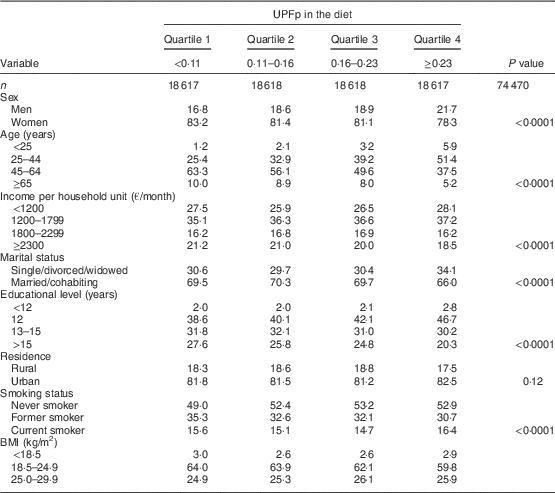
Percentages are mutually adjusted using multivariable logistic regression.
Food consumption (g/d) according to the proportion of ultra-processed food (UPFp) in the diet of adults from the French NutriNet-Santé cohort (n 74 470)
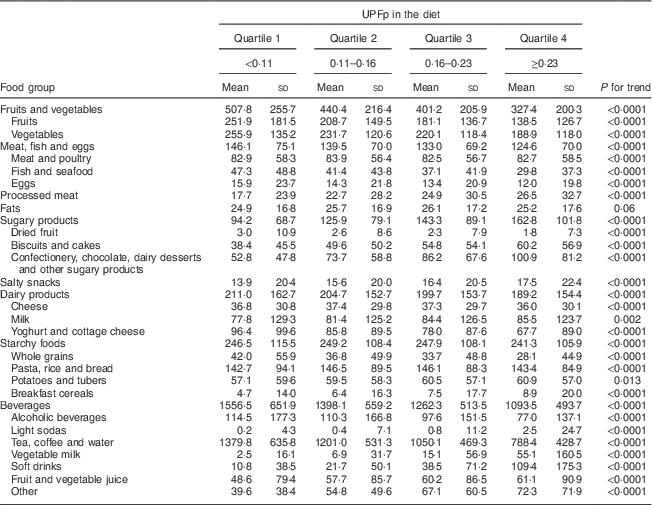
Adjusted for sex, age, educational level, income, marital status, smoking status, BMI classification and energy intake. P values for trend obtained with multivariable linear regression using quartiles as continuous variables.
Compared with participants in the lowest quartile of UPF, those in the highest quartile had an overall less balanced diet, as expressed by the PNNS-GS (Δ=−1·51 points). In terms of nutrient intakes, they had higher energy intake (Δ=610 kJ/d (145·7 kcal/d)), with higher energy intakes from carbohydrates and lipids (Δ=1·33 % and Δ=0·79 % of energy intake without alcohol) and lower energy intake from protein (Δ=−2·12 % of energy intake without alcohol; Table 3). They had also lower intakes of fibre (Δ=−4·04 g/d), β-carotene (Δ=−1019·6 μg/d), Ca (Δ=−87·8 mg/d), vitamin C (Δ=−22·8 mg/d) and folic acid (Δ=−55·6 μg/d), and higher intake of added sugar (Δ=17·1 g/d; Table 3). Similar results were obtained when using energy-weighted UPFp (see Supplemental Table 3).
Nutrient intake according to the proportion of ultra-processed food (UPFp) in the diet of adults from the French NutriNet-Santé cohort (n 74 470)
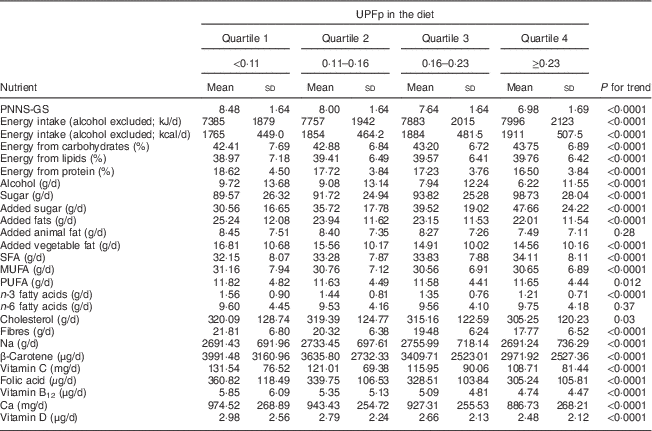
PNNS-GS, Programme National Nutrition Santé Guideline Score.
Adjusted for sex, age, educational level, income, marital status, smoking status, BMI classification and energy intake using the residual method. P values for trend obtained with multivariable linear regression using quartiles as continuous variables.
The proportion of consumption of each food group, using the conventional dietary guidelines approach, in the total amount of UPF varied greatly across quartiles of UPFp (Table 4). In particular, the contribution of sugary products to UPF consumption decreased from 27·9 % in quartile 1 of UPFp to 18·8 % in quartile 4, while the contribution of beverages to UPF consumption increased from 10·8 % in the first quartile to 30·5 % in the fourth quartile (mainly from soft drinks, which contributed from 2·5 to 13·2 %). The highest contributors to UPF consumption were confectionery, chocolate and dairy desserts (20·0 %), fruit and vegetables (12·7 %), biscuits and cakes (7·8 %), and pasta, rice and bread (7·0 %) in quartile 1; they were confectionery, chocolate and dairy desserts (13·3 %), soft drinks (13·2 %) and fruit and vegetables (11·8 %) in quartile 4. When using energy-weighted UPFp, the major contributors were confectionery (28·7 %) and biscuits and cakes (13·8 %; see Supplemental Table 4). The profiles of contributors were similar between the first and fourth quartiles of energy-weighted UPFp (see Supplemental Table 4).
Contribution (%) of each food group to the proportion of ultra-processed food (UPFp) in the diet of adults from the French NutriNet-Santé cohort (n 74 470)

PNNS-GS, Programme National Nutrition Santé Guideline Score.
Percentages are adjusted for sex, age, educational level, income, marital status, smoking status, BMI classification, energy intake and PNNS-GS. P values for trend obtained with multivariable linear regression using quartiles as continuous variables.
In the ‘Healthy’ group (i.e. participants with a high adherence to nutritional recommendations, based on the PNNS-GS), the proportion of UPF was 14·3 % of the total amount of foods. It varied between less than 9 % in the first quartile to more than 19 % in the last quartile (Table 5). In this group, the contribution of confectionery, chocolate and dairy decreased between the quantile 1 and quartile 4 of UPFp from 19·7 to 10·8 %, while the contribution of vegetables increased from 8·7 to 13·8 % and the contribution of tea, coffee and water increased from 3·6 to 11·2 % (Table 5). When using energy-weighted UPFp, profiles of contributors were similar across quartiles of UPF and similar in the ‘Healthy’ group to the entire sample (see Supplemental Table 5).
Contribution (%) of each food group to the proportion of ultra-processed food (UPFp) in the diet in the ‘Healthy’ group of adults from the French NutriNet-Santé cohort (n 18 167)
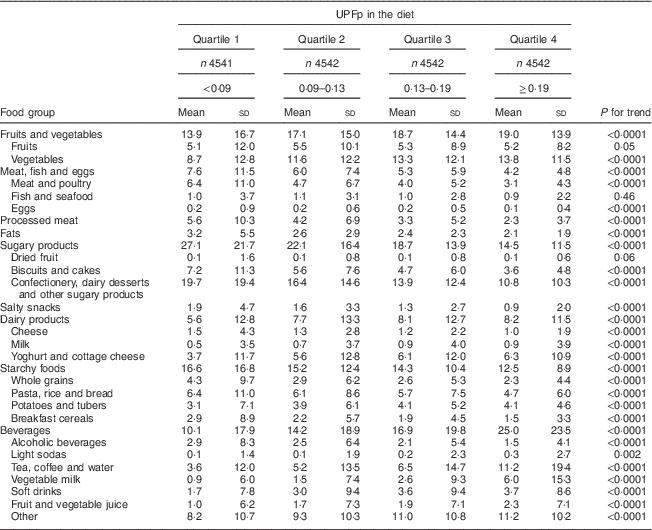
PNNS-GS, Programme National Nutrition Santé Guideline Score.
Adjusted for sex, age, educational level, income, marital status, smoking status, BMI classification, energy intake and PNNS-GS. P values for trend obtained with multivariable linear regression using quartiles as continuous variables.
Discussion
Our results show that, in France, UPF contribute an important amount to consumption, accounting for about 35·9 % of energy intake and 18·4 % of the amount consumed, and 45·4 % of energy intake and 23·8 % of the amount consumed when taking processed foods (Group 3.1) into account.
This proportion of energy intake from UPF is lower than what has been observed in other Western countries( Reference Steele, Baraldi and Louzada 7 , Reference Adams and White 22 ). Indeed, international data from representative dietary surveys or per capita consumption data suggest that UPF contribute an average of 53 % in the UK( Reference Adams and White 22 ), 57·9 % of energy intake in the USA( Reference Steele, Baraldi and Louzada 7 ) and up to 61·7 % in Canada( Reference Moubarac, Martins and Claro 19 ). The proportion of energy-weighted UPF in our sample appears to be between what has been observed in developing countries such as Brazil (29·6 %)( Reference Louzada, Baraldi and Steele 23 ) and the proportion observed in Western countries( Reference Steele, Baraldi and Louzada 7 , Reference Adams and White 22 ). France still holds a widespread dietary culture that has been recognized internationally by UNESCO( 38 ) and includes some norms concerning home-made cooking, promotion of whole foods and social gatherings for family meals. Moreover, some typical foods that are consumed in large amounts, such as bread, are consumed mainly from artisanal bakeries, rather than from industrial pre-packaged foods. These features might explain the lower proportion of UPF observed in our sample compared with other Western countries.
The UPFp variable that we used in the main analyses considers the proportion, in weight, of UPF in the diet. Such weighing tends to give a lower importance to energy-dense foods, which may be consumed in lower amounts but contribute importantly to energy intakes, and a higher importance to beverages and low-energy foods (e.g. vegetables), consumed in higher amounts. Given the higher energy density of UPF, such weighting lowers the total amount of UPF in the diet. The construction of the individual variable based on weight was elected for several reasons. Indeed, beyond their nutritional characteristics, UPF also exhibit higher levels of neo-formed contaminants resulting from heat processing( Reference Birlouez-Aragon, Morales and Fogliano 20 , Reference Mariotti, Granby and Rozowski 39 ). Such contaminants (e.g. acrylamide or furans) are considered potentially carcinogenic in man( Reference Friedman 40 – Reference Dybing and Sanner 42 ). Moreover, UPF are suggested to be less satiating than minimally processed foods, due in particular to the alteration of the food matrix through fractioning and recombining of ingredients( Reference Fardet 21 ), which could also be associated with the higher energy intake observed in diets rich in UPF. As both the presence of neo-formed contaminants and the satiety characteristics of UPF are likely more related to the total amount consumed rather than the energy density of foods, we considered that weight was a relevant variable to include in the exposure to UPF. Finally, a weighting based on energy intake from foods structurally discounts beverages with artificial sweeteners, which are highly processed foods but do not contribute to energy intakes. This is particularly apparent when considering the food groups contributing to the amounts consumed v. energy intakes. When using energy-weighted UPFp, major contributors were energy-dense foods, such as confectionery, chocolate, biscuits and cakes (contributing almost 50 % of the energy intake from UPF), while beverages contributed only less than 6 %. When using quantity-weighted UPFp, the contribution of the same energy-dense groups of foods decreased to 23 %, while the contribution of beverages (particularly soft drinks) increased to 18 %. More importantly, while the profile of food groups contributing to energy intake did not appear to vary according to the nutritional quality of the diet, it did vary when taking the amounts consumed into account. Especially non-sugared beverages contributed a high level to the quantity of foods consumed in the ‘Healthy’ group (up to 11 %), mainly from artificially sweetened flavoured water or tea, which was not apparent when using energy-weighted UPFp.
The proportion of UPF consumed in the diet varied widely according to sociodemographic profile. UPF consumption was more particularly associated with younger age and an overall lower socio-economic profile, objectifying social inequalities in food choice. UPF are widely available in Western countries( Reference Luiten, Steenhuis and Eyles 9 ) and constitute affordable ready-to-eat options, which can appeal to individuals with lower budgets or lower nutritional knowledge( Reference Moodie, Stuckler and Monteiro 17 ).
Consumption of UPF was also associated with a lower overall balance of the diet, with higher intakes of salty, fatty and sugary products, leading to higher intakes of added sugar and SFA and lower intakes of vitamins and minerals. Even in individuals with high adherence to nutritional guidelines, the proportion of UPF consumed varied considerably. However, the profile of foods contributing to UPFp consumption was different from the overall sample, as they included more fruit and vegetables and whole grains. These results tend to confirm the dual associations between the processing and nutritional dimensions of foods.
The main contributors to UPFp (in quantity) in our study were sugary products (accounting for 23·3 % of total UPFp), mainly confectionery (16·6 %); followed by starchy foods (14·4 %), mainly bread, pasta and rice (6·8 %); and fruit and vegetables (13·4 %), mainly vegetables (9·5 %). Soft drinks contributed 6·7 % of total UPFp; however, they were one of the main drivers for the difference between low consumers (quartile 1) and high consumers (quartile 4) of UPFp (contribution from 2·5 % in the first quartile to 13·2 % in the last quartile). These results are consistent to some extent with the main contributors to UPF consumption observed in other settings. Indeed, in the study by Moubarac et al. set in Canada, bread was the main contributor to UPF consumption, followed by confectionery and soft drinks( Reference Moubarac, Martins and Claro 19 ). In the study from Steele et al. set in the USA, the main contributors were breads and soft drinks( Reference Steele, Baraldi and Louzada 7 ). Finally, in the study from Louzada et al., set in Brazil, the main contributors were bread (9·2 % of total energy intake), pizzas, hamburger and sandwiches (4·7 %), and cakes and cookies (3·0 %)( Reference Louzada, Baraldi and Steele 23 ). The main differences observed in our setting appear to reside in the difference of UPFp from bread and fruit and vegetables. Indeed, in France, bread is mostly consumed from artisanal bakeries and as such does not contribute to UPF consumption. As for fruit and vegetables, our results show that fruit and vegetables from ready-to-eat meals or pre-packaged ultra-processed products contribute importantly to their overall consumption.
However, these results tend to suggest some form of homogenization of dietary patterns across countries in terms of UPF consumption. UPF usually correspond to high-energy-density ready-to-eat convenience foods, consumption of which increases rapidly along with the nutrition transition in both developed and developing countries( Reference Popkin and Gordon-Larsen 43 ). Most UPF are representative of the global food system delivered by transnational ‘Big Food’ companies that operate on a global scale (PepsiCo® and Coca-Cola® are examples of such companies)( Reference Moodie, Stuckler and Monteiro 17 , Reference Stuckler and Nestle 44 , Reference Stuckler, McKee and Ebrahim 45 ). The foods these companies produce are somewhat representative of the ‘Western’ diet, high in fat, sugar and sodium, that represents a trend towards globalization of diets at the world level( Reference Stuckler, McKee and Ebrahim 45 ). The fact that contributors to UPF consumption should appear overall consistent across countries tends to reflect this shift from traditional diets towards a more uniform Western diet. This contention is supported by the sociodemographic profiles we observed in high UPF consumers. UPF consumption is associated with younger age, objectifying a somewhat generational shift from traditional food patterns to more Westernized patterns.
A general assumption is that individuals adhering to nutritional recommendations would have lower consumption of UPF. Some studies even suggest that diets containing UPF cannot meet nutritional recommendations( Reference Moubarac, Martins and Claro 19 ). However, in our study, although the proportion of UPF in the diet was much lower in the ‘Healthy’ group (9·5 v. 18·4 % in the overall sample), it still exhibited a wide range and accounted for up to >19 % of the total amount consumed in this group (v. 21 % in the overall sample). These findings suggest that it is indeed possible to have both a high adherence to dietary guidelines and a high consumption of UPF, as dietary guidelines focus on consumption of food groups, using a broad nutritional definition, and do not take account of their type of processing. Moreover, though UPF typically include so-called ‘junk’ foods, they are ubiquitous in the food supply in Western countries and are therefore largely present in ‘healthy’ food groups such as whole grains or fruit and vegetables (e.g. ready-to-eat vegetable purée or soups). Therefore, considering these divergent dimensions of foods (the nutritional and the processing dimensions), fruit and vegetables from ready-to-eat ultra-processed products still contribute to overall fruit and vegetable consumption according to the dietary guidelines definition. Moreover, the production of ‘healthy’ processed foods – such as UPF enriched in micronutrients or reformulated industrial products – is one of the drivers for growth in market share for food companies( Reference Monteiro 24 , Reference Scrinis 46 ). As such, it is noteworthy that the contribution of fruit and vegetables to UPFp is higher in the ‘Healthy’ group.
These results may appear a challenge to public health initiatives. Overall, our results tend to show that dietary guidelines, using only conventional definitions of food groups, may not lead to optimal diets since they do not consider the extent and purpose of processing. Therefore, taking the processing dimension of foods into account may be of major importance within nutritional recommendations. Indeed, dietary guidelines in France and in most Western countries currently do not refer to processing of foods( Reference Fardet, Rock and Bassama 47 ). Moreover, public health initiatives tend to entice manufacturers to reformulate their products towards healthier compositions and promote innovation of ‘healthier’ alternatives. However, these alternatives, although nutritionally more appropriate, are still highly processed, yielding high contents of additives or neo-formed contaminants( Reference Monteiro 24 , Reference Fardet, Rock and Bassama 47 ). Disentangling the effects of processing between its nutritional dimension (addition of fat, sugar and sodium) and processing itself (through neo-formed contaminants, artificial additives, or the modification of the food structure (matrix effect)) is therefore necessary to build scientifically based and effective strategies towards manufacturers. The inclusion of recommendations pertaining to processing of foods may be a well-founded option if processing itself proves harmful beyond its sole nutritional dimension( Reference Fardet, Rock and Bassama 47 ).
To our knowledge, our study is the first to investigate the contribution of UPF in the diet in a French sample. Moreover, we were able to investigate the contribution of the various food groups to UPF consumption in a large sample of subjects with a high adherence to nutritional recommendations. This large number of subjects allowed us to observe a wide range in dietary patterns and to analyse subgroups with sufficient power. Finally, our study relied on dietary data from repeated dietary records, yielding more accurate measures of dietary intakes( Reference Lassale, Castetbon and Lapote 30 ).
Our study is subject to some limitations. First, although the dietary data from the 24 h records offered a range of more than 3000 food and beverage items, we did not have systematic access to the type of processing involved in the food. Thus, some subjectivity was involved in the classification process of the various foods. As a conservative approach was considered for the classification of foods (i.e. classifying foods for which the category was not obvious into the least processed group), it may have led to an underestimation of the proportion of UPF in the diet. However, as our results were overall consistent with other studies using individual dietary data, the magnitude of this bias can be considered low( Reference Steele, Baraldi and Louzada 7 , Reference Moubarac, Martins and Claro 19 , Reference Adams and White 22 , Reference Louzada, Baraldi and Steele 23 ).
A second limitation pertains to the type of classification we selected. Although it offers a good overview of the degree of processing in the diet, it does not take account of the type of processing involved in the manufacturing of the product. However, differing types of processing generate different classes of neo-formed contaminants and therefore different risks on health. The inclusion of this dimension of processing would further enhance our knowledge about the risks entailed by diets rich in UPF.
Finally, our study included volunteers from the general population. Self-selection may have led to the inclusion of individuals more aware of their diets, and therefore with healthier dietary patterns, than in the general population. Indeed, our sample included mainly women, who are known to be more concerned about diet. Thus, it may be hypothesized that the proportion of UPFp would be even higher in the general French population. Caution is therefore needed when considering generalizing our results.
Conclusion
Our results show that UPF play an important part in the diet in subjects from the French general population. Moreover, they appear important contributors to the diet even in groups with high adherence to nutritional recommendations. UPFp were especially consumed in young individuals with low socio-economic profiles, reflecting socio-economic disparities. Besides, UPFp are associated with unbalanced nutritional intakes. Their regular consumption is suggested to have adverse health consequences that should be further investigated.
Acknowledgements
Acknowledgements: The authors thank all the volunteers of the NutriNet-Santé cohort. They extend special thanks to Véronique Gourlet, Nathalie Arnault, Stephen Besseau, Laurent Bourhis, Yasmina Chelghoum, Than Duong Van, Younes Esseddik, Paul Flanzy, Charlie Ménard, Mac Rakotondrazafy and Fabien Szabo for their technical contribution to the NutriNet-Santé study. Financial support: The NutriNet-Santé study was supported by the following public institutions: Ministère de la Santé, Institut de Veille Sanitaire (InVS), Institut National de la Prévention et de l’Education pour la Santé (INPES), Fondation pour la Recherche Médicale (FRM), Institut de Recherche en Santé Publique (IRESP), Fondation ARC pour la recherche sur le cancer, Région Ile-de-France (CORDDIM), Institut National de la Santé et de la Recherche Médicale (INSERM), Institut National de la Recherche Agronomique (INRA), Conservatoire National des Arts et Métiers (CNAM) and Université Paris 13. The funders had no role in study design, data collection and analysis, decision to publish, or preparation of the manuscript. Study sponsors had no part in study design, collection, analysis, and interpretation of data and the writing of the article and the decision to submit it for publication. Conflict of interest: The authors have no conflict of interest to disclose. Researchers are independent from funders and sponsors. Authorship: C.J. wrote the statistical analysis plan, analysed the data, and drafted and revised the paper. She is the guarantor. L.M., C.M. and E.K.-G. participated in the statistical analysis plan, analysed the data and critically revised the paper for important intellectual content. B.A. and M.T. analysed the data and critically revised the paper for important intellectual content. S.H. designed the data collection tools, implemented the study, monitored data collection for the whole study and critically revised the draft paper for important intellectual content. All researchers had access to all data. All authors have read and approved the final manuscript. Ethics of human subject participation: The NutriNet-Santé study is conducted in accordance with the Declaration of Helsinki, and all procedures were approved by the Institutional Review Board of the French Institute for Health and Medical Research (IRB Inserm no. 0000388FWA00005831) and the Commission Nationale Informatique et Libertés (CNIL no. 908450 and 909216). Electronic informed consent was obtained from all participants (EudraCT registration no. 2013-000929-31).
Supplementary Material
To view supplementary material for this article, please visit https://doi.org/10.1017/S1368980017001367



