


Globally, exclusive breast-feeding for the first 6 months is one of the most effective preventive health measures available to reduce child morbidity and mortality( 1 – Reference Perez-Escamilla, Martinez and Segura-Perez 4 ). Compared with both non-breast-fed infants and mixed-fed infants, exclusively breast-fed infants are significantly less likely to develop diarrhoeal disease, a major cause of infant mortality, and experience a large risk reduction for other diseases as well( 1 , 3 , Reference Sankar, Sinha and Chowdury 5 – Reference Haroon, Jas and Salam 7 ). In the light of these important benefits, the WHO and UNICEF recommend exclusive breast-feeding, without any additional foods or fluids, for the first 6 months with continued breast-feeding for up to 2 years( 1 , Reference Saadeh 2 ).
Indonesia is the fourth largest country in the world with a population of 256 million( 8 ). Breast-feeding in Indonesia is almost universal, with 96 % of children under 2 years of age having ever been breast-fed( 9 , Reference Soekarjo and Zehner 10 ). However, only 42 % of infants aged 0–5 months are breast-fed exclusively( 9 , Reference Soekarjo and Zehner 10 ). Improving exclusive breast-feeding rates would provide a great public health benefit in Indonesia, especially because one in three households relies on an unsafe water source, increasing an infant’s risk of diarrhoea( 1 , 3 , Reference Sankar, Sinha and Chowdury 5 – Reference Haroon, Jas and Salam 7 , 11 ).
The Indonesian Parliament enacted legislation in 2009 calling for infants to be exclusively breast-fed for the first 6 months unless medically contraindicated( Reference Soekarjo and Zehner 10 , Reference Shetty 12 ). The law now states that any person intentionally obstructing breast-feeding may be punished with a monetary fine or with imprisonment for up to 1 year, and that any corporation intentionally obstructing breast-feeding may be subject to a larger fine( Reference Soekarjo and Zehner 10 ). However, the WHO International Code of Marketing of Breastmilk Substitutes, which bans advertising of breast-milk substitutes and free samples or direct marketing to families or health workers, has not yet been fully adopted by the Indonesian Government( Reference Soekarjo and Zehner 10 , 13 ).
Several studies have explored both positive and negative factors associated with breast-feeding initiation and duration in Indonesia. Susiloretni et al. found that mothers with a high level of breast-feeding knowledge had longer duration of exclusive breast-feeding, while lack of familial support and free infant formula samples were associated with shorter exclusive breast-feeding duration( Reference Susiloretni, Hadi and Prabandari 14 ). Other small studies have reported that exclusive breast-feeding was less common among babies delivered by caesarean section, those with complications during delivery, those delivered in a government or non-health facility and those with unsupportive family members( Reference Titaley, Loh and Prasetyo 15 – Reference Basrowi, Sulistomo and Adi 17 ).
Breast-feeding support that occurs in accordance with best practices such as the Baby-Friendly Hospital Initiative (BFHI) has been shown to increase exclusive breast-feeding rates( Reference Howe-Heyman and Lutenbacher 18 ). Although fewer than half of Indonesian births currently occur in a hospital, the proportion has been increasing steadily since 1994( Reference Titaley, Dibley and Roberts 19 ). As of 2011, only 8 % of state public hospitals in Indonesia complied with at least seven of the ten BFHI steps to successful breast-feeding( Reference Labbok 20 ). When compared with thirteen other developing countries, Indonesia had the fifth lowest percentage of hospitals to ever be certified as BFHI( Reference Labbok 20 ).
To obtain a comprehensive understanding of barriers to the early establishment of exclusive breast-feeding after delivery in hospital settings, our team conducted and analysed semi-structured interviews from a diverse group of stakeholders including local, district and national public health officials, doctors, midwives and nurses at birthing hospitals, hospital administrators, representatives from professional and community organizations, and mothers of infants recently born in an inpatient setting.
Methods
We conducted semi-structured interviews with fifty-four participants to explore attitudes, opinions and experiences regarding early breast-feeding support in Indonesian hospitals. We used qualitative methodology to identify themes related to barriers to the establishment of exclusive breast-feeding.
Participants
Participants were enrolled between January and June 2015 from three different Indonesian provinces: Jakarta, West Java and Banten. To adequately assess the full spectrum of barriers to exclusive breast-feeding during the birth hospitalization, we used typical case purposive sampling to identify potential participants from a wide variety of stakeholders and locations, including public health officials, hospital managers, clinicians, mothers and fathers, representing perspectives from public and private, as well as rural and urban, settings. Mothers and fathers were sampled within the first days postpartum.
Potentially eligible participants received a letter requesting their participation in the study. Those who expressed interest in study participation received a formal letter from the Center for Health Research, University of Indonesia explaining the study and the process of informed consent. If a potential participant continued to express interest in study participation, an interview was scheduled. A short explanation of the study was repeated in-person at the scheduled interview before participants were asked to sign written consent for study participation. Participants who were unable to complete the entire interview were excluded.
The study was conducted according to the guidelines laid down in the Declaration of Helsinki. All procedures involving human subjects were approved by the Research Ethical Committee of the Faculty of Public Health, University of Indonesia and conducted in accordance with the policies of the Institutional Review Board (formerly the Committee on Human Research) of the University of California–San Francisco. Written informed consent was obtained from all subjects.
Data collection
Data collection methodology was overseen by our study investigator from the Center for Health Research, University of Indonesia (F.H.A.). All interviews were conducted by research assistants who were fluent in Indonesian Bahasa and trained to administer the study’s interview guides. The interview guides covered the following topics: (i) current policy and practice regarding hospital support for early breast-feeding; (ii) implementation of recommended hospital breast-feeding practices (including the WHO’s Ten Steps to Successful Breastfeeding); and (iii) barriers to promoting early exclusive breast-feeding. Interview guides were tailored to the professional category of the participants (see online supplementary material, Supplemental Tables 1a–g). Interviews were conducted in Indonesian Bahasa, audio-recorded and transcribed, and then translated into English for analysis. All data presented herein were then back-translated into Indonesian by a bilingual investigator (F.H.A.).
Data analysis
Transcripts were analysed independently for major themes by two of the authors (S.C. and R.D.) using a line-by-line open coding process until thematic categories emerged. After generating an initial coding scheme including a range of observable categories, we then repeated the open coding process using an incident-by-incident coding technique and compared these two approaches in the completion of our open coding scheme. During the process of generating an initial coding scheme, coders attempted to identify links between thematic categories, and similarities and differences among thematic categories. All transcripts were coded by both coders, with discrepancies negotiated and resolved with consultation from V.J.F. and F.H.A.
Results
A total of fifty-four participants (five hospital administrators, eleven doctors, four midwives, six nurses, ten postpartum mothers, ten health department administrators, three representatives from professional organizations and five representatives from community support groups for breast-feeding) were interviewed across three Indonesian provinces: Jakarta (twenty participants from a total of three hospitals), Banten (fourteen participants from a total of two hospitals) and West Java (twenty participants from a total of three hospitals). Participants were 13 % male. Among the five community support group representatives, two were fathers. None of the participants either worked or had given birth in BFHI-certified hospitals. We identified five themes regarding barriers to early exclusive breast-feeding: breast-feeding education; marketing and influence of infant formula manufacturers; infrastructural barriers; hospital policy, protocol and government legislation; and perceived need for infant formula supplementation.
Breast-feeding education (Theme 1)
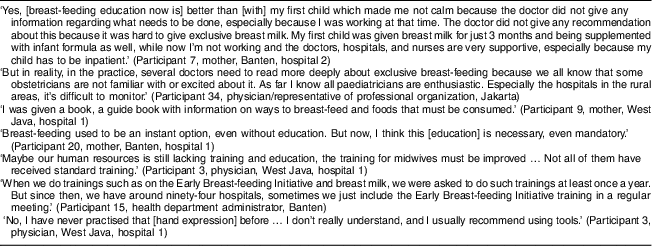
Mothers received a spectrum of breast-feeding support from the hospital staff (Table 1). Some mothers reported receiving good breast-feeding support in the hospital:
‘When the mothers want to breast-feed, they teach us how to do it.’ (Participant 7, mother, Banten, hospital 1)
Breast-feeding education (Theme 1): representative quotes from semi-structured interviews conducted with public health officials, hospital administrators, health-care professionals and parents (n 54) from eight hospitals in three Indonesian provinces (Jakarta, Banten, and West Java), April–June 2015
Other mothers reported a lack of support:
‘I think it [education] needs more attention; not every hospital supports breast-feeding for new mothers who have just given birth. Some hospitals resort to infant formula instead because it’s more practical.’ (Participant 52, mother/representative from community support group, Banten)
Many of the interviewed hospital staff reported a lack of breast-feeding education in their training. Out of the eighteen health professionals who were asked about their breast-feeding training in school, eleven said they received none or very minimal breast-feeding education:
‘Oh, I received nothing about breast-feeding.’ (Participant 1, nurse, Jakarta, hospital 1)
Staff also reported a lack of on-site training:
‘As long as I have worked at the Perinatal Unit, it’s been 3 years now, there’s no training whatsoever.’ (Participant 35, physician, Banten, hospital 2)
‘I heard once about the breast milk counselling training, but it’s for nurses, not for us.’ (Participant 13, midwife, Jakarta, hospital 1)
Many providers also reported never being trained in hand expression of breast milk:
‘We have never done it [hand expression] before here.’ (Participant 12, physician, Jakarta, hospital 2)
Breast-feeding training was often discussed in general staff meetings, instead of dedicated trainings.
Marketing and the influence of infant formula manufacturers (Theme 2)
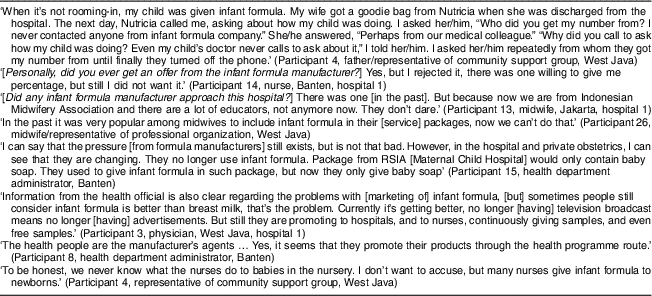
Participants observed that hospitals have tried to limit infant formula use after the implementation of breast-feeding laws (Table 2):
‘Because after knowing there is such a law, I stopped accepting any offers from the infant formula salesforce.’ (Participant 13, midwife, Jakarta, hospital 1)
Marketing and the influence of infant formula companies (Theme 2): representative quotes from semi-structured interviews conducted with public health officials, hospital administrators, health-care professionals and parents (n 54) from eight hospitals in Indonesian provinces (Jakarta, Banten, and West Java), April–June 2015
Some hospitals also reported not advertising brand names of infant formula:
‘Even though we have infant formula here, the infant formula is unlabelled, so the boxes are tossed away, then we place the milk in a place without a label. So, we just write [regular] infant formula, infant formula for baby with allergy, infant formula for low birth weight baby, so the brand is not there.’ (Participant 1, nurse, Jakarta, hospital 1)
Most hospital administrators stated that they did not have any partnership with infant formula companies:
‘As long as I have been here, none. We never ask for sponsorships.’ (Participant 40, hospital administrator, West Java, hospital 1)
However, some participants described that infant formula companies continue to have an influence on breast-feeding in and out of the hospital:
‘I see many midwives in clinic that work together with the milk company.’ (Participant 14, nurse, Banten, hospital 1)
A midwife reported that her recent breast-feeding training was received from a seminar organized by an infant formula manufacturer.
Many of the participants also reported a lack of control over hospital infant formula. Staff members directly interacting with mothers and infants said they had no part in hospital policy making, because infant formula was purchased and distributed by the other departments such as nutrition or pharmacy:
‘Maybe they come to the pharmacy, not to us.’ (Participant 28, nurse, West Java, hospital 3)
‘Infant formula is accepted by the nutrition section … so if the babies who have an indication to be given infant formula by the doctor, the infant formula must be retrieved from the nutrition department.’ (Participant 13, midwife, Jakarta, hospital 1)
Similarly, parents felt little control over whether their infants were fed infant formula while in the hospital:
‘Maybe to stop it from crying when I was not yet able to breast-feed, my baby was probably given infant formula … I don’t know.’ (Participant 10, mother, Jakarta, hospital 1)
A father reported that:
‘If it’s not rooming-in, we will never know whether the baby is given infant formula or not.’ (Participant 4, representative of community support group, West Java)
Infrastructural barriers (Theme 3)
Participants of all types reported infrastructural barriers that prevented successful breast-feeding (Table 3):
‘A common reason [for using formula] is that [mothers] are shy to breast-feed in public [wards].’ (Participant 12, physician, Jakarta, hospital 2)
‘In terms of rooming-in, we are limited by space as there are no specially allocated rooms for it.’ (Participant 40, hospital administrator, West Java, hospital 1)
Infrastructural barriers to early exclusive breast-feeding (Theme 3): representative quotes from semi-structured interviews conducted with public health officials, hospital administrators, health-care professionals and parents (n 54) from eight hospitals in three Indonesian provinces (Jakarta, Banten, and West Java), April–June 2015
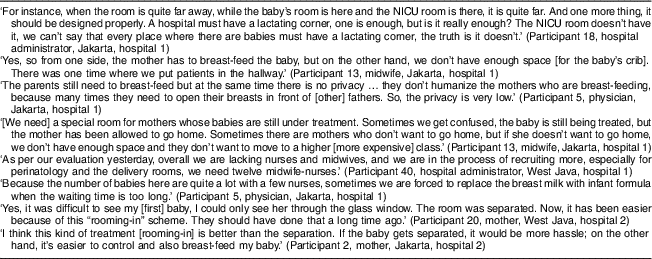
NICU, neonatal intensive care unit.
However, many mothers and staff expressed positive sentiments about rooming-in and the effect on breast-feeding:
‘So if the baby is born normally, we tend to treat them in the same room to strengthen the bond between mother and baby.’ (Participant 12, physician, Jakarta, hospital 2)
‘If the condition of the mother and baby allows it, then we do rooming-in. It has so many advantages, first the mother will become accustomed to taking care of the child, so she can be guided how to hold and breast-feed the baby. We can do direct education.’ (Participant 39, physician, West Java, hospital 1)
Mothers with infants in the neonatal intensive care unit reported a particularly hard time with infrastructure. Only two surveyed hospitals reported having a dedicated refrigerator to store breast milk if mothers had been discharged. Rapid turnover of trained staff was also a frequently reported obstacle to successful breast-feeding education and promotion:
‘That’s the problem, [staff] rotation and turnover are very fast. Sometimes [staff rotation] occurs two times, and a minimum of once a year.’ (Participant 8, health department administrator, Banten).
Further, a reported lack of lactation specialists contributed to a further understaffed and under-resourced health care environment:
‘We don’t have a special staff to handle lactation, so that the nurses on the Children’s Unit do double jobs.’ (Participant 46, physician, Jakarta, hospital 2)
Hospital protocol and policy/government legislation (Theme 4)
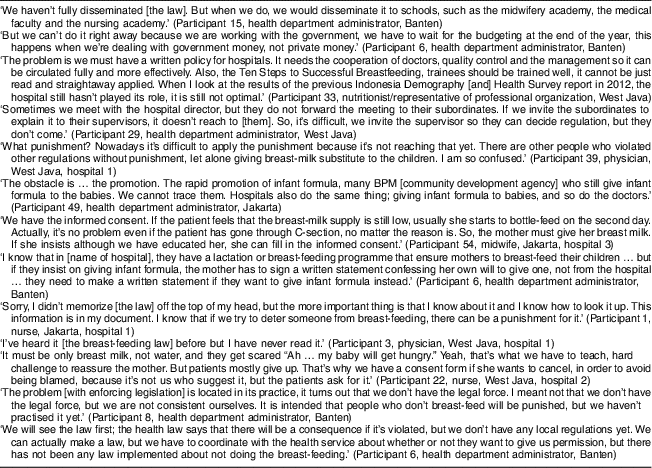
Most of the staff members had general knowledge of government legislation regarding breast-feeding but cannot recall specifics (Table 4):
‘I probably heard of [the breast-feeding law], but not too much into, so maybe I heard, but I forgot.’ (Participant 50, physician, Banten, hospital 1)
Hospital protocol and policy/government legislation (Theme 4): representative quotes from semi-structured interviews conducted with public health officials, hospital administrators, health-care professionals and parents (n 54) from eight hospitals in three Indonesian provinces (Jakarta, Banten, and West Java), April–June 2015
In terms of hospital policy regarding infant formula supplementation, some hospital staff members reported an informed consent policy whereby mothers who choose to supplement with infant formula are required to sign a consent form:
‘If we have to give infant formula to a baby, we’ll ask for the family’s consent, we’ll also need the family to fill in a form.’ (Participant 36, nurse, Banten, hospital 2)
Local governments/provinces reported some problems with breast-feeding implementation:
‘But there is still no punishment if the hospital doesn’t do exclusive breast-feeding, then there is still infant formula promotion, something like that. No punishment yet, or warning, still no.’ (Participant 29, health department administrator, West Java)
Perceived need for infant formula supplementation (Theme 5)
Many mothers and their families believed that breast milk is the healthiest option but were still comfortable turning to infant formula as a healthy alternative (Table 5):
‘They usually argue that their first child was fine getting infant formula. Even though we explain that breast milk has other nutrients that are irreplaceable by infant formula.’ (Participant 1, nurse, Jakarta, hospital 1)
Perceived need for infant formula supplementation (Theme 5): representative quotes from semi-structured interviews conducted with public health officials, hospital administrators, health-care professionals and parents (n 54) from eight hospitals in three Indonesian provinces (Jakarta, Banten, and West Java), April–June 2015
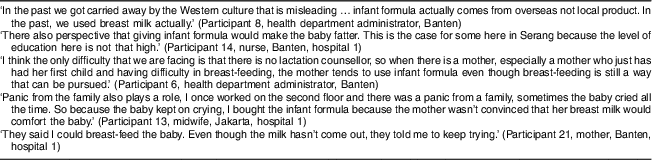
Mothers often reported concern over milk supply:
‘Breast milk is better than infant formula. But my problem has been about the breast milk is not enough.’ (Participant 2, mother, Jakarta, hospital 2)
Mothers reported mixed responses from staff; some staff did not know how to correctly support mothers prior to the onset of copious milk production and would simply encourage mothers to keep trying:
‘According to the nurses, we just have to keep breast-feeding, it will eventually come out.’ (Participant 47, mother, Jakarta, hospital 1)
Other mothers remembered staff being quick to provide infant formula.
Working mothers faced an especially difficult barrier to exclusive breast-feeding:
‘I don’t have any idea [of breast-feeding support groups] because I am working. I rarely make contact with my neighbours.’ (Participant 9, mother, West Java, hospital 1)
‘Maybe we would need it [infant formula] once or twice, for example when I’m out for work, because I don’t have time, while the baby needs to be fed all the time at home.’ (Participant 7, mother, Banten, hospital 1)
Some women felt breast-feeding at work was inappropriate:
‘I have a colleague in my office, I’m not saying that she’s wrong, but just improper. She pumped all the time and neglected her job. Friends were gossiping about her.’ (Participant 20, mother, West Java, hospital 2)
Discussion
In our study, participants reported a wide variety of barriers to exclusive breast-feeding including lack of breast-feeding education, infant formula marketing, hospital infrastructure, inadequate government and hospital policy, and a perceived need for infant formula supplementation. Participants reported both barriers that might be changed expeditiously and barriers for which change might be more difficult. For example, lack of clarity in hospital protocols for breast-feeding might be relatively straightforward to correct by revising such protocols. However, other barriers, such as lack of space for mothers and babies to room-in together, may be more costly or difficult to modify. Barriers such as maternal and provider perception of the need for infant formula supplementation have been previously reported to be difficult to overcome, but might be amenable to change with increased education and awareness. The BFHI has been shown to be effective at improving exclusive breast-feeding rates in settings where rates of exclusive breast-feeding have previously been low( Reference Howe-Heyman and Lutenbacher 18 , Reference Braun, Giugliani and Soares 21 , Reference Kramer, Guo and Platt 22 ). A comprehensive programme such as the BFHI may potentially provide great benefit because of its demonstrated ability to address multiple barriers to breast-feeding simultaneously, such as improving knowledge of health-care providers, improving hospital policy and improving maternal education( Reference VanDevanter, Gennaro and Budin 23 ).
Although our study identified many barriers to exclusive breast-feeding during the birth hospitalization, many facilitators were identified as well. Consistent with the high rates of initiation of at least some breast-feeding in Indonesia, breast-feeding (although perhaps not exclusive breast-feeding) was considered a normal part of the birth experience. Overall, participants perceived that a breast-feeding mother may need support and education, even while they may have been unsure how to deliver that support. Participants also had a general awareness of the federal legislation protecting breast-feeding and acknowledged its importance.
However, despite participants having a general awareness of existing policy and legislation in Indonesia, compliance with existing policies and legislation in support of exclusive breast-feeding was reported to be inconsistent, and participants did not describe actual enforcement of existing legislation. Inconsistent enforcement of breast-feeding-related legislation has been widely reported in other countries and may contribute substantially to the low rates of exclusive breast-feeding in Indonesia( Reference Berry and Gribble 24 , Reference Rollins, Bhandari and Hajeebhoy 25 ). Further, our study corroborates previous findings about the continuing impact of infant formula marketing on health workers and family decision making in regard to breast-feeding( Reference Hidayana, Februhartanty and Parady 26 ). Marketing of breast-milk substitutes targets mothers and health workers which undermines and disincentivizes breast-feeding, thus increasing costs at the household level( 13 ). To improve exclusive breast-feeding rates in Indonesia, the government should fully adopt and implement the WHO code banning advertising of breast-milk substitutes( Reference Odom, Li and Scanlon 27 , Reference Rempel, Rempel and KCJ 28 ). Stricter policy action from the government is required to suppress the encroachment of infant formula companies in health-care settings and their influence through community marketing and advertising.
Lack of accessibility to staff members with expertise in breast-feeding was cited by many participants as a major barrier to promotion of exclusive breast-feeding. Participants reported that specialist support from lactation consultants was lacking, while at the same time general medical staff such as physicians, nurses and midwives had not received training in breast-feeding support. Improving accessibility to staff members with expertise in breast-feeding might also help address other obstacles to exclusive breast-feeding such as inadequate maternal breast-feeding education and maternal perception of insufficient milk supply. Especially for first-time mothers, staff breast-feeding expertise may be essential in supporting optimal breast-feeding and promoting exclusivity because infant formula was often used when breast-feeding support was lacking. Our findings concur in this regard with previous studies in this area, which have shown that breast-feeding support provided by trained clinicians significantly improves maternal self-efficacy, duration of exclusive breast-feeding and confidence of staff when counselling mothers(29– Reference Labarere, Gelbert-Baudino and Ayral 31 ). Support from family members can also improve breast-feeding self-efficacy and duration of breast-feeding( Reference Odom, Li and Scanlon 27 , Reference Rempel, Rempel and KCJ 28 ), but our study participants did not describe many experiences related to family support. Further research is needed in this crucial area.
Our study has several important limitations. First, our participants were located in three Indonesian provinces. Since Indonesia is a large, socio-economically and culturally diverse country, further research is needed to determine if the factors identified in these three provinces are applicable in the other thirty-one provinces not studied. Second, all participants in our study consented to participate. It is possible that doctors, nurses and mothers who participated in these interviews might have a greater interest in and commitment to breast-feeding than those who did not participate. Perceived barriers to exclusive breast-feeding might be different for doctors, mothers and nurses who did not choose to participate. Third, our typical case sampling methodology may not have captured the full variation of barriers to exclusive breast-feeding and our sample size was too limited to allow us to compare barriers by location. In addition, we did not collect demographic information on participants. Additional sampling methods with larger sample sizes and demographic data collection may be necessary to obtain a more complete understanding of barriers and how these may vary between hospitals and provinces.
Conclusion
Our study identified multiple factors that may present barriers to exclusive breast-feeding in Indonesia, including infant formula marketing, hospital protocol, legislation, infrastructure problems, lack of breast-feeding education and perceived need for infant formula supplementation. Interventions such as the BFHI may help address these barriers by providing improved breast-feeding education, developing breast-feeding policies and addressing maternal and provider concerns about the perceived need for infant formula. Further research is needed to examine whether implementation of the BFHI or other system-level interventions, including improved clinical guidelines, can increase rates of exclusive breast-feeding in Indonesia.
Acknowledgements
Acknowledgments: The authors would gratefully like to thank Dr Sabarinah Prasetyo for her contribution to the conception of the study and its methodology, Dr Utami Roesli who conceptualized the study, Ms Hikmah Kurniasari for her help with developing the research infrastructure and Dr Wiyarni Pambudi who assisted with recruitment and data collection. Financial support: This work was supported by the US Agency for International Development (USAID) (grant number AID-OAA-A-11-00012). USAID had no role in the design, analysis or writing of this article. Conflicts of interest: The authors declare no conflict of interest. Authorship: V.J.F. participated in study design and data analysis and revised the manuscript for important scientific content. S.C. and R.D. participated in data analysis and drafted the manuscript. F.H.A. conceived and designed this study, participated in data analysis and revised the manuscript for important scientific content. H.H. and F.Y. participated in data collection and analysis and revised the manuscript for important scientific content. Ethics of human subject participation: This study was conducted according to the guidelines laid down in the Declaration of Helsinki. All procedures involving human subjects were approved by the Research Ethical Committee of the Faculty of Public Health, University of Indonesia and conducted in accordance with the policies of the Institutional Review Board (formerly the Committee on Human Research) of the University of California–San Francisco. Written informed consent was obtained from all subjects.
Supplementary material
To view supplementary material for this article, please visit https://doi.org/10.1017/S1368980018001453



