


Health research and lesbian, gay, bisexual and transgender people
Historically there has been a lack of research focused on the health and well-being of sexual and gender minority (SGM) individuals, such as lesbian, gay, bisexual and transgender (LGBT) people and those questioning their sexuality or gender( Reference Boehmer1). Between 1989 and 2011, for example, projects focused on LGBT health comprised only 0·5 % (n 628) of all studies funded by the primary agency of the US government responsible for health research (the National Institutes of Health)( Reference Coulter, Kenst and Bowen2). Of these, only 9·7 % of funded LGBT projects (n 61) explicitly included people under 18 years of age( Reference Coulter, Kenst and Bowen2). Furthermore, most international studies (of both adults and young people) in the field of LGBT health have relied upon convenience-based samples( Reference Lucassen, Merry and Robinson3– Reference Gonzales, Przedworski and Henning-Smith5) or population-based surveys that are limited in size or geographic scope( Reference Gonzales, Przedworski and Henning-Smith5). However, the available population-based data suggest numerous disparities between SGM youth and their peers who are heterosexual or exclusively opposite-sex-attracted and experience congruence between their gender identity and natal sex (hereafter ‘heterosexual cisgender youth’ for brevity). Such disparities are particularly apparent in the area of youth mental health. For instance, there is now robust international evidence that sexual minority youth are at an elevated risk of depressive symptoms or depressive disorder( Reference Lucassen, Stasiak and Samra6), with risk particularly elevated among females as compared with males( Reference Lucassen, Stasiak and Samra6). The population-based studies of gender-diverse adults and young people published to date have also consistently documented a high prevalence of adverse health outcomes( Reference Reisner, Poteat and Keatley7). From a theoretical standpoint, Meyer’s minority stress model has been widely cited to explain the high rates of health issues experienced by SGM individuals( Reference Meyer8). According to the model, the mistreatment and resulting distress that LGBT people experience increase their risk for a range of negative health outcomes( Reference Denny, Lucassen and Stuart9– Reference Austin, Ziyadeh and Corliss11).
Body size and weight, and the nutrition and activity behaviours of lesbian, gay, bisexual and transgender youth
One area of disparity in health that has had relatively little investigation concerns body size, weight, nutrition and physical activity and LGBT young people. A systematic review of research (to July 2017) exploring weight-control behaviours, eating habits, BMI and physical activity among sexual minority youth( Reference Miller and Luk12) highlighted that little research in the field has been conducted outside the USA and that only one cited study included transgender individuals( Reference Diemer, Grant and Munn-Chernoff13). Also apparent were several key differences or variations between male and female sexual minority youth( Reference Miller and Luk12). For example, the majority of studies (fifteen out of seventeen) reported no differences in BMI between sexual minority and heterosexual males( Reference Miller and Luk12), whereas, in line with earlier work focused on adults, sexual minority females were shown to be at greater risk of being overweight or obese than heterosexual females( Reference Austin, Ziyadeh and Corliss11, Reference Miller and Luk12, Reference Bowen, Balsam and Ender14).
Body size and weight are affected by a young person’s diet, but the few studies that have explored differences in dietary intake by sexual orientation have primarily assessed fruit and vegetable consumption( Reference VanKim, Austin and Jun15). While female sexual minority youth in the USA report higher BMI than their heterosexual peers( Reference Austin, Ziyadeh and Corliss11), results from the Youth Risk Behavior Survey (YRBS) highlighted that sexual minority youth as a group were more likely to meet recommendations for fruits and vegetables compared with heterosexual youth( Reference Rosario, Corliss and Everett16). This finding may reflect that, irrespective of sexuality, very few students in that study (< 7 %) actually consumed ‘5+ fruits & vegetables’ daily( Reference Rosario, Corliss and Everett16). Another study from the USA( Reference McElroy and Jordan17) found no significant differences in fruit and vegetable consumption between lesbian, bisexual and sexuality-questioning female college students and their heterosexual peers, while noting that sexual minority students were significantly heavier. This may be explained in part by the fast-food consumption behaviours of sexual minority youth, another understudied area. Indeed, one large longitudinal US study found that female sexual minority youth consumed significantly more fast food than heterosexual females, while male sexual minority youth consumed significantly less fast food than heterosexual males( Reference Katz-Wise, Jun and Corliss18). Another factor that may influence the nutrition of LGBT young people is participation in family meals. Generally speaking, young people who eat with their family five or more times per week are likely to consume more fruit and vegetables and have better eating habits than those who do not( Reference Utter, Denny and Robinson19, Reference Fulkerson, Kubik and Story20). Research indicates that SGM youth are less likely to get along with their family( Reference Clark, Lucassen and Bullen21, Reference Lucassen, Clark and Denny22), which could reduce the likelihood of shared family meals.
BMI is also affected by physical activity and other weight-control behaviours, and the BMI differences noted in relation to SGM young people may reflect disparities in such behaviours. For instance, sexual minority young people report less physical activity and sporting engagement( Reference Miller and Luk12, Reference Calzo, Roberts and Corliss23) than heterosexual controls. Results from a study of over 12 000 youth aged 12–22 years (the Growing Up Today Study (GUTS)) indicated that sexual minority participants were significantly less likely to engage in physical activity and participate in team sports than heterosexual youth( Reference Calzo, Roberts and Corliss23). Some young people also engage in unhealthy methods of weight control, including restrictive dieting, purging and using diet pills( Reference Austin, Nelson and Birkett10, Reference Miller and Luk12). The large-scale YRBS in the USA indicated an elevated risk of unhealthy weight-control behaviours among male and female sexual minority youth, relative to their heterosexual peers( Reference Austin, Nelson and Birkett10). However, a gender pattern has emerged across studies in this area. Whereas sexual minority males show a consistently elevated risk of unhealthy weight-control methods in comparison with heterosexual males, there is a less consistent pattern of differences in these behaviours between sexual minority and heterosexual females( Reference Miller and Luk12).
Developmental factors and lesbian, gay, bisexual and transgender youth
Research exploring the challenges relevant to the health of LGBT youth is needed, as studies conducted among LGBT adults cannot always be generalized. As such, it is important to consider how sexual orientation and gender identity are defined, since this requires an appreciation of several factors, including developmental considerations. In relation to sexuality, most high-school students in a range of Western countries report that they have not had sexual intercourse( Reference Clark, Fleming and Bullen24); in New Zealand (NZ), fewer than one-quarter of high-school students reported ever having had sex( Reference Clark, Lucassen and Fleming25). It is therefore unsuitable to use sexual behaviour as the main means of determining an adolescent’s sexuality. After reviewing school-based health surveys, Saewyc and colleagues instead suggested that if a health and well-being survey could only include one item about sexuality, this should ask about sexual attraction( Reference Saewyc, Bauer and Skay26). Contrary to this recommendation, those researching LGBT young people’s weight-control behaviours, eating habits, BMI or physical activity have not routinely used sexual attraction as a measure in studies that included a heterosexual referent group. Instead, they have often used sexual identity and/or sexual behaviour to determine sexuality( Reference Austin, Nelson and Birkett10, Reference Ackard, Fedio and Neumark-Sztainer27– Reference Watson, Adjei and Saewyc30). Despite this lack of consistency in defining sexuality, comparisons across studies remain possible as, irrespective of how sexuality is established, same-sex attraction and sexual attraction to more than one gender are highly correlated with sexual behaviour that is not exclusively heterosexual and self-identification as lesbian, gay or bisexual( Reference Hatzenbuehler, McLaughlin and Nolen-Hoeksema31). To date, transgender and other gender minority individuals (i.e. those youth whose gender identity and natal sex differ and those that do not identify with a male/female binary) are largely excluded from population-based surveys. For example, in their 2016 review of the health burden and needs of transgender populations internationally for a special issue of The Lancet, Reisner and colleagues noted ‘a dearth of research about transgender children, adolescents, and young people’( Reference Reisner, Poteat and Keatley7) (p. 422). Encouragingly, the period following publication of that review has seen a rapid increase in population-based studies of gender-diverse young people, especially in research from North America in the field of mental health( Reference Day, Fish and Perez-Brumer32– Reference Veale, Watson and Peter35).
The current study
In order to move towards health equality for SGM young people, robust data are needed. While aspects of inequalities between LGBT and heterosexual cisgender individuals are well documented in the international literature, far less is known about such inequalities in NZ( Reference Treharne and Adams36). A 2017 review of research on LGBT health in NZ concluded that the focus has largely been on gay men’s sexual health, primarily in relation to HIV( Reference Treharne and Adams36) – this is understandable given the sizeable challenges that remain around HIV prevention and ensuring timely HIV diagnoses in NZ( Reference Dickson, Lee and Foster37). To date, there has been no population-based research conducted in Australasia to explore the weight-control behaviours, eating habits, BMI and physical activity levels of LGBT youth compared with those of their heterosexual cisgender peers( Reference Miller and Luk12). Additionally, prior population-based research in this area has not included gender minority youth under 18 years of age. To the best of our knowledge, only two studies have included gender-diverse young people, but this has been for research conducted with college-aged students in the USA( Reference Diemer, Grant and Munn-Chernoff13, Reference VanKim, Erickson and Eisenberg38). Given the lack of local and gender-diverse-inclusive research in this field, the aim of the current study was to determine, using robust, nationally representative data, whether SGM secondary-school students in NZ differ in regard to body size and weight, nutrition and activity behaviours by sex compared with heterosexual cisgender students. We studied a range of salient factors selected for their potential synergistic effects and their role as risk factors for chronic health issues( Reference Pearson, Atkin and Biddle39), such as BMI, because NZ has persistently high rates of adolescents being overweight and obese( Reference Utter, Haines and Denny40). We investigated differences in outcomes between male and female students, as prior work conducted with young people generally in NZ( Reference Utter, Denny and Percival41) and internationally has highlighted considerable sex variations in a range of these phenomena. We also compared male and female SGM students, as a systematic review and meta-analysis in the field of LGBT youth mental health has previously highlighted significant differences( Reference Lucassen, Stasiak and Samra6). We hypothesized that SGM students in NZ would have higher odds of adverse health outcomes than heterosexual cisgender youth, in line with the almost exclusively USA-based research on these topics to date.
Methods
Youth’12 is a cross-sectional, self-administered questionnaire, conducted with a representative sample of NZ secondary-school students in 2012. In total, 125 schools were randomly selected to participate. Of these, ninety-one schools (73 %) took part and 8500 students (68 %) participated. The University of Auckland Human Participants Ethics Committee granted ethical approval for the study (ref. 2011/206). Students completed the survey at school using multimedia, computer-assisted, self-interviewing technology on Internet-enabled tablets( Reference Denny, Milfont and Utter42). Questions were presented in English and te reo Māori (the indigenous language of NZ) text, which was read out loud via a voice-over (students could hear only the voice-over for their own survey on individualized headphones). To ensure students’ privacy, the survey was administered in locations such as their school hall or gymnasium, seating was arranged to ensure sufficient distance between students and no school staff were present. Detailed descriptions of the survey methods are available elsewhere( Reference Clark, Fleming and Bullen24) (see also http://www.fmhs.auckland.ac.nz/faculty/ahrg/).
Measures
Demographic information
At the beginning of the survey, participants were asked ‘What sex are you?’ (with the response options of ‘male’ or ‘female’ only) and their age in years. The number of SGM participants by age group (e.g. 13 years or younger, 14 years, 15 years, 16 years and 17 years or older) was small, therefore age was categorized as above or below 16 years (in NZ students can leave school from the age of 16 years). Students indicated their ethnic group(s) using the NZ Census standard 2001/2006 ethnicity questions( 43). Those who chose more than one ethnicity were assigned a single ethnic group, based on the Statistics NZ ethnicity prioritization method( Reference Lang44). Hence, for data analyses, ethnicity was grouped as European, Māori, Pacific, Asian and ‘Other’ ethnicity. Socio-economic deprivation was measured using the NZ Deprivation Index (NZDep2006)( Reference Salmond, Crampton and Sutton45) for the census area unit in which the student lived. NZDep2006 combines eight dimensions of deprivation derived from the NZ Census( Reference Salmond, Crampton and Sutton45). For data analyses, students were grouped into one of three deprivation bands indicating low (NZ Census deprivation deciles 1–3), medium (deciles 4–7) and high (deciles 8–10) levels of deprivation.
Sexuality was determined by the question ‘Who are you sexually attracted to?’ (response options: ‘the opposite sex’, ‘the same sex’, ‘both sexes’, ‘I’m not sure’, ‘neither’ and ‘I don’t understand this question’). Whether a student was transgender was determined by the question ‘Do you think you are transgender? This is a girl who feels like she should have been a boy, or a boy who feels like he should have been a girl (e.g. Trans, Queen, Fa’afafine, Whakawahine, Tangata ira Tane, Genderqueer)?’ (response options: ‘yes’, ‘no’, ‘not sure’ and ‘I don’t understand this question’). Students were categorized as heterosexual cisgender if they reported being sexually attracted to the opposite sex and that they were not transgender. Students were categorized as SGM youth if they were sexually attracted to the same sex, both sexes or not sure of their sexual attraction/s, or if they were transgender or not sure if they were transgender. The ‘not sure’ students were thus categorized as prior research indicates that their mental health and psychosocial needs are similar to those of other SGM youth( Reference Lucassen, Merry and Robinson3, Reference Clark, Lucassen and Bullen21). Students were excluded if they did not answer the sexual attraction question or the question asking if they were transgender, or if they responded ‘I don’t understand this question’ to either item.
Weight control, unhealthy weight control and BMI
Students were categorized as having ‘tried to lose weight’ if they answered ‘yes’ to the question ‘In the last 12 months have you ever tried to lose weight?’. Students who had tried to lose weight were categorized as using ‘unhealthy weight control’ if they answered ‘yes’ to one or more of the following weight-loss strategies in the past 12 months: (i) ‘I fasted or did not eat for more than a day’; (ii) ‘I skipped one or more meals a day’; (iii) ‘I smoked cigarettes’; (iv) ‘I took diet pills or other pills’; or (v) ‘I made myself vomit’. These five items were used as prior research identifies them as ‘red flags’ for unhealthy weight control( Reference Utter, Denny and Robinson46) and there is growing concern about weight-control behaviours among NZ young people( Reference Utter, Haines and Denny40). Trained research staff measured each student’s height and weight individually behind privacy screens, using portable digital scales and stadiometers. Students wore light clothing and no shoes. These measurements were used to calculate BMI as [weight (kg)]/[height (m)]2. BMI categories (i.e. underweight, healthy weight, overweight and obese) were determined using the age- and sex-specific BMI cut-offs established by Cole and Lobstein( Reference Cole and Lobstein47).
Diet, physical activity and participation in sports teams
Students were categorized as consuming ‘frequent fast food and takeaways’ if they reported eating from ‘A fast-food place (e.g. McDonald’s, KFC, Burger King, Subway, Pizza Hut)’ or ‘Other takeaways or fast-food shops (e.g. fish and chips, Chinese takeaways) [typically corner-shop low-cost and high-fat establishments in NZ]’ more than four times per week. Fruit and vegetable consumption was assessed by a series of questions about the frequency of consumption of ‘fruit’, ‘potatoes, kumara [indigenous sweet potatoes], taro [a tropical root vegetable], etc.’ and ‘vegetables (not including potatoes, kumara, taro)’. Students were categorized as meeting the recommendation for ‘5+ fruits & vegetables’ per day if they reported consuming, as recommended by the NZ Ministry of Health( 48), fruit twice daily or more often, and vegetables or potatoes, kumara or taro three times daily or more often. They were categorized as eating ‘family meals together’ if they responded ‘five or more times’ to the question ‘During the past 7 days, how many times did all, or most, of your family living in your house eat a meal together?’. Physical activity levels, including daily physical activity and also whether a student was physically inactive, was assessed with a single question: ‘During the past 7 days, on how many days were you physically active for a total of at least 60 minutes per day? (add up all the time you spend in any kind of physical activity that increases your heart rate and makes you breathe hard some of the time)’, with responses ranging from ‘0 days’ to ‘7 days’. Students who responded ‘7 days’ were categorized as engaging in ‘daily physical activity’; those who responded ‘0 days’ were categorized as ‘physically inactive’. ‘Participation in a school sports team’ was defined as an affirmative response to the question ‘Do you belong to any school sports teams?’.
Sample
Overall, 8500 students participated in Youth’12, with more female than male participants (due to more single-sex female schools than single-sex male schools taking part). Students were excluded from the current study (n 731) if they: did not answer the question ‘What sex are you?’ (n 3); did not understand the sexual attraction question (n 178); did not understand the question asking if they were transgender (n 137); or did not respond to either of these questions (i.e. the remainder). Therefore, the total sample for the current study was 7769 students.
Analyses
Students were recruited using a two-stage clustered sample design, with unequal probabilities of selection. In all analyses the data were, therefore, weighted by the inverse probability of selection and the variance of estimates was adjusted to allow for correlated data from the same schools. The χ 2 test was used to test differences between SGM students and heterosexual cisgender students on three categorical variables: age category (≤15 and ≥16 years), ethnicity group and level of deprivation (based on NZDep2006). Results were categorized by sex as there are considerable differences in weight-control behaviours, BMI, eating habits and physical activity levels between male and female youth. Total numbers and weighted percentages were calculated for the selected outcomes, which were all determined a priori. Adjusted multiple logistic regression models were used to investigate the associations for male and female SGM students in comparison with male and female heterosexual cisgender students for the selected outcomes. Male and female SGM students were also compared using adjusted multiple logistic regression models. Possible confounders were included in the adjusted models, as prior work has reinforced key differences for youth, particularly in terms of BMI, ethnicity and levels of deprivation( Reference Utter, Denny and Crengle49). Hence, for ‘tried to lose weight’ and ‘unhealthy weight control’, age, ethnicity, socio-economic deprivation and BMI were included in the adjusted models. For all other outcomes, age, ethnicity and socio-economic deprivation were included. All analyses were carried out using the statistical software package Stata version 14.
Results
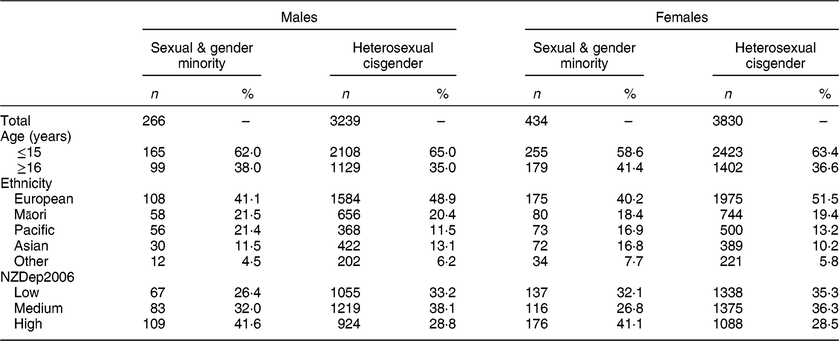
In total, 91·0 % of students were heterosexual cisgender (n 7069) and 9·0 % were SGM students (n 700). SGM students were older (P = 0·011), less likely to be European (P < 0·001) and more likely to experience high levels of socio-economic deprivation (P < 0·001) than their heterosexual cisgender peers. Of the SGM students, 318 (4·1 % of the overall total and 45·4 % of the minority students) were either not sure of their sexual attraction/s or not sure whether or not they were transgender (see Table 1).
Demographics of male and female secondary-school students, comparing sexual and gender minority students with heterosexual cisgender students; Youth’12 nationally representative health survey, New Zealand, 2012
NZDep2006, New Zealand Deprivation Index.
n are unweighted, while % are weighted.
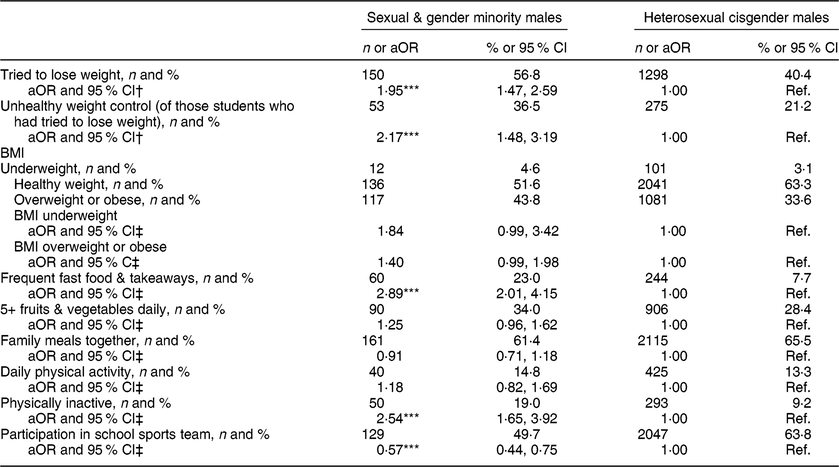
Table 2 provides the numbers and weighted percentages, as well as the adjusted OR with 95 % CI, for the selected outcomes, comparing SGM males with heterosexual cisgender males. Over half of the SGM male participants had tried to lose weight, of which approximately a third had engaged in unhealthy weight-control behaviours. Numbers were small (i.e. ≤50) for several variables. SGM male students were significantly more likely to have tried to lose weight, have engaged in unhealthy weight control, have frequently consumed fast food and takeaways, and be physically inactive, in comparison with heterosexual cisgender male students. They were also significantly less likely to have participated in a school sports team. There were no significant differences between SGM males and heterosexual cisgender males in terms of BMI, consumption of 5+ fruits and vegetables daily, family meals together and daily physical activity.
Associations between body size and weight, nutrition and activity behaviours among secondary-school students, comparing male sexual and gender minority students with male heterosexual cisgender students; Youth’12 nationally representative health survey, New Zealand, 2012
aOR, adjusted OR; Ref., reference category; NZDep2006, New Zealand Deprivation Index.
n are unweighted, while % are weighted.
*P < 0·05, **P < 0·01, ***P < 0·001.
† Adjusted for age, ethnicity, NZDep2006 and BMI.
‡ Adjusted for age, ethnicity and NZDep2006.
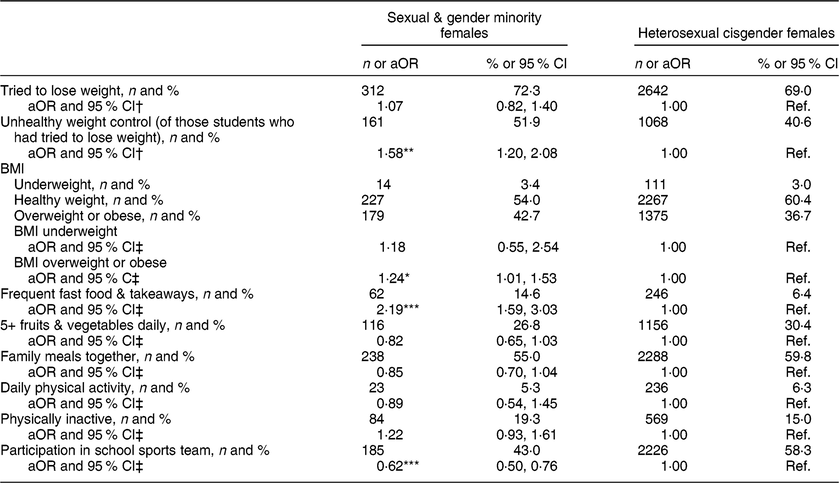
Table 3 compares the body size and weight, nutrition and activity behaviours of SGM females with those of heterosexual cisgender females. Again, numbers were small (i.e. ≤50) for a couple of variables. Almost half of the SGM female participants were overweight or obese, and of the SGM females who had tried to lose weight, over half had engaged in unhealthy weight-control behaviours. SGM female students were significantly more likely to have engaged in unhealthy weight control, be overweight or obese, and have frequently consumed fast food and takeaways, in comparison with their heterosexual cisgender female peers. They were also significantly less likely to participate in a school sports team. There were no significant differences between SGM females and heterosexual cisgender females in relation to trying to lose weight, consumption of 5+ fruits and vegetables daily, family meals together, daily physical activity and physical inactivity.
Associations between body size and weight, nutrition and activity behaviours among secondary-school students, comparing female sexual and gender minority students with female heterosexual cisgender students; Youth’12 nationally representative health survey, New Zealand, 2012
aOR, adjusted OR; Ref., reference category; NZDep2006, New Zealand Deprivation Index.
n are unweighted, while % are weighted.
*P < 0·05, **P < 0·01, ***P < 0·001.
† Adjusted for age, ethnicity, NZDep2006 and BMI.
‡ Adjusted for age, ethnicity and NZDep2006.
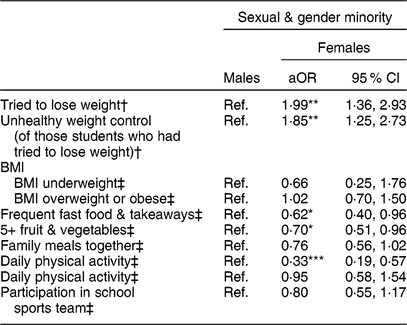
Comparing male and female SGM students highlighted a general trend, such that females experience higher odds of health and well-being issues. Female SGM students were significantly more likely to have tried to lose weight, and to have engaged in unhealthy weight control, relative to their male counterparts. They were also less likely to have eaten 5+ fruits and vegetables daily and to have engaged in daily physical activity. Sexual minority males were more likely to have frequently consumed fast food and takeaways than sexual minority females (see Table 4).
Associations between body size and weight, nutrition and activity behaviours among secondary-school students, comparing male and female sexual and gender minority students; Youth’12 nationally representative health survey, New Zealand, 2012
aOR, adjusted OR; Ref., reference category; NZDep2006, New Zealand Deprivation Index.
*P < 0·05, **P < 0·01, ***P < 0·001.
† Adjusted for age, ethnicity, NZDep2006 and BMI.
‡ Adjusted for age, ethnicity and NZDep2006.
Discussion
Principal results
SGM youth in the current nationally representative sample from NZ had higher odds of adverse health outcomes related to weight-control behaviours, poor diet and lower levels of physical activity than other students. When male and female SGM students were compared with their heterosexual cisgender peers, they were significantly more likely to engage in unhealthy weight control and frequently consume fast food and takeaways. They were also significantly less likely to participate in school sports teams.
Comparisons to prior international research
The results of the present study align with the findings of prior research in two key ways. First, in line with most earlier studies, our study indicates that there were no significant differences in BMI between young SGM and heterosexual cisgender males in NZ( Reference Miller and Luk12), whereas young female SGM individuals were at greater odds of being overweight or obese than their heterosexual cisgender peers, again in line with previous work( Reference Austin, Ziyadeh and Corliss11, Reference Miller and Luk12, Reference Bowen, Balsam and Ender14). Second, in line with GUTS, the current results indicate that SGM participants were significantly less likely to engage in school sports teams than heterosexual cisgender youth( Reference Calzo, Roberts and Corliss23). In the current study there were no differences in fruit and vegetable consumption, which is consistent with findings from research conducted with university students in the USA( Reference McElroy and Jordan17), but contrasts with results from the YRBS that suggest that sexual minority students are more likely to meet recommendations for fruit and vegetable consumption( Reference Rosario, Corliss and Everett16). The latter discrepancy likely reflects differences in measuring fruit and vegetable consumption between the two studies from the USA.
Although little has been published in relation to fast-food consumption for SGM youth, the current results differ from those from GUTS( Reference Katz-Wise, Jun and Corliss18), as both male and female SGM youth were more likely to consume fast food than their heterosexual peers. SGM males were also significantly more likely to consume fast food than SGM females. These findings highlight a need for future work to explore targeted interventions to reduce fast-food consumption by SGM young people, especially males.
In relation to weight-control behaviours, earlier research indicates that sexual minority males appear to be at considerable risk of disordered eating behaviours, with the results for comparable females less clear( Reference Miller and Luk12). While our findings indicate that SGM males are more likely to engage in unhealthy weight-control behaviours, they show that SGM females are also more likely to engage in these behaviours compared with other females and compared with SGM males.
Implications
Minority stress theory is useful in understanding the health issues reported in the present study. For instance, stress-related coping behaviours can include consoling dietary behaviours and certain sedentary activities( Reference Austin, Ziyadeh and Corliss11), which may lead to weight gain and obesity. There is some support for the minority stress theory in our data, given the increased challenges reported by SGM students. For example, it has been hypothesized that female SGM individuals may be more likely to be overweight than their male counterparts because of gender differences in managing minority-related stress. Specifically, females are thought to be more likely than males to adopt specific coping behaviours linked with weight gain (e.g. disinhibited eating)( Reference Austin, Ziyadeh and Corliss11).
There are a range of compelling sociocultural factors that may also help to explain the current findings. Numerous studies suggest that gendered cultural standards have a powerful effect on weight- and shape-related health indicators( Reference Austin, Ziyadeh and Calzo50). Although SGM individuals are frequently gender-role non-conforming( Reference Austin, Ziyadeh and Calzo50), the strong cultural forces linked to masculinity and femininity can help to explain certain patterns when SGM people are compared with heterosexual cisgender people. For instance, the findings from the current study do not appear to support the assumption that SGM youth assigned female sex at birth are unaffected by the powerful social discourses surrounding how girls should look, even if they are gender diverse. Equally, although some SGM youth assigned male sex at birth may identify as girls and women, the results suggest that their early socialization, in which they were ostensibly treated as boys, may have been protective against some of the problematic discourses surrounding the weight and size of girls’ and women’s bodies. These findings suggest that efforts to address harmful expectations around appearance must include a focus on children.
Relatedly, some unhealthy weight control among SGM males may be a result of these males attempting to meet certain sociocultural ideals of attractiveness. For example, in a study with adults, gay men were more likely to idealize a thinner body shape than heterosexual men( Reference Smith, Hawkeswood and Bodell51). The pressure to meet this ideal may mean that young sexual minority males are more likely to employ body management practices, including those that are unhealthy, that result in a lower BMI. Youth’12 data currently do not allow for a full exploration of problematic body management practices outside of BMI (e.g. compulsive exercising for weight gain or muscle bulking) related to meeting the masculine ideal to be muscular. However, prior work suggests that male sexual minority individuals can over-conform to cultural norms in an attempt to become more physically powerful and muscular, and thus ‘fit in’ within cis-heteronormative society( Reference Kimmel and Mahalik52). Hence, public health nutritionists will need to consider that weight-control issues may manifest in various ways among SGM males.
Ironically, because SGM females are expected to be non-conforming in relation to their gender, athletic ability is often considered to be a stereotypical trait, particularly for lesbians( Reference Blinde and Taub53, Reference Sartore and Cunningham54). However, the current results indicate that female SGM students were less likely to participate in a school sports team. This lack of sports involvement may be a result of SGM females actively avoiding sports as a means of staying ‘closeted’( Reference Calzo, Roberts and Corliss23) and because team sports are frequently an unwelcoming context for ‘socializing and reinforcing homophobia [and presumably biphobia and transphobia] due to Western cultural expectations related to athleticism, gender norms, and sexual orientation’( Reference Calzo, Roberts and Corliss23) (p. 18). The current results also support prior international findings that male SGM students systematically report lower engagement in school sporting activities( Reference Calzo, Roberts and Corliss23).
Physical activity is important for all youth as adolescence is a crucial life stage for establishing health-promoting behaviours that contribute to current and future well-being. However, evidence suggests that adolescence is a time of substantial declines in physical activity, and that physical activity and inactivity track from adolescence to adulthood( Reference Dumith, Gigante and Domingues55). Mitigating declines in activity is important for this age group overall and for SGM youth in particular, due to greater demonstrated need. Addressing these issues during adolescence represents a life-stage-dependent opportunity for substantial gains in individuals’ current and future health. Public health nutritionists and other professionals should strive towards making team sports environments more supportive of SGM students, for example by helping to establish non-gendered sports teams, providing uniforms that are inclusive of SGM youth and ensuring that changing-room environments are safe for all.
Strengths and limitations
The current study has several strengths. First, data are drawn from a large nationally representative sample of NZ secondary-school students, including SGM youth. This is in contrast to convenience-based studies, in which samples are recruited on the basis of sexuality or gender identity. Second, Youth’12 was subject to extensive pilot and field testing before the survey was conducted. Third, student BMI was measured objectively, rather than by self-reported height and weight.
Limitations must also be considered. First, self-report was used for all items other than BMI, introducing the potential for bias. Second, the small numbers of SGM students endorsing some outcomes (e.g. being underweight and daily physical activity) resulted in a risk of a type 2 error (i.e. we may have been underpowered to detect some differences). Third, because students could select their sex as only male or female for the item ‘What sex are you?’ and the question about whether a student was transgender was a separate item, we cannot, therefore, be sure how gender minority students interpreted these questions. Did they respond to the first question based on their natal sex (i.e. sex assigned at birth)? Or based on their gender identity at the time of the survey? Thus, there is a chance that some gender minority students reported their assigned sex as their current gender identity. Moreover, many gender minority youths have a gender identity outside the male/female binary. The item designed to capture sexual attractions has similar limitations. For example, a transgender student whose natal sex is female, gender identity is male and is attracted to males, may state an attraction to the same sex. Although we surveyed students about whether they were transgender, we did not ask participants whether or not they were intersex (i.e. born with variations in sex characteristics that do not fit the typical definitions for male or female bodies). Despite these challenges, our data demonstrate robust differences that would most likely be strengthened by the use of more definitive items on sex, gender and sexuality.
Conclusion
To the best of our knowledge, there have been no prior published nationally representative studies of SGM youth outside the USA in relation to BMI, weight-control behaviours, nutrition and activity levels. In NZ, compared with their peers, SGM students have higher odds of adverse health outcomes related to weight-control behaviours, a poor diet and low levels of physical activity. Female SGM students appear to have particularly high needs. Health professionals, including public health nutritionists, must recognize and help work towards addressing the challenges facing sexual and gender minorities.
Acknowledgements
Acknowledgements: The authors would like to thank the schools and students that participated in Youth’12. They would also like to thank Kylie Sutcliffe for her feedback on earlier drafts of this paper. Financial support: Youth’12 was funded by the Ministries of Youth Development, Social Development, Health, Education, Justice; the Department of Labour, Families Commission; and the Alcohol Advisory Council. The authors also acknowledge Toshiba (Australia) Pty. Limited. M.S. is supported by a Health Research Council of New Zealand (HRCNZ) Sir Charles Hercus Research Fellowship (grant number 17/013). The HRCNZ and the funders of Youth’12 had no role in the design, analysis or writing of this article. Conflict of interest: None. Authorship: M.F.G.L. and A.M.G. conceived the study and conducted the analyses. M.F.G.L. drafted the manuscript. T.C., J.F., S.D., T.F., M.S. and J.U. participated in the conception and design of the study and its analyses, and together with A.M.G. assisted M.F.G.L. to draft the paper. T.C. was the principal investigator for the Youth’12 project and S.D., T.F. and J.U. were co-investigators. Ethics of human subject participation: All procedures performed in our study involving student participants were in accordance with the ethical standards of the University of Auckland Human Participants Ethics committee. Informed consent was obtained from the principal of each participating school as well as from all participating students.
Author ORCIDs
Mathijs Lucassen, 0000-0001-6958-3468. Aravinda Meera Guntupalli, 0000-0002-4879-2110. Terryann Clark, 0000-0001-5499-5080. John Fenaughty, 0000-0002-6261-3975. Simon Denny, 0000-0001-6986-7196. Theresa Fleming, 0000-0002-5174-9359. Melody Smith, 0000-0002-2846-6430. Jennifer Utter, 0000-0001-9472-5595.



