


The regulation of adequate and optimal dietary intake for the progressive growth of children is a significant challenge, particularly considering the high prevalence of childhood overweight/obesity worldwide( Reference Abarca-Gómez, Abdeen and Hamid 1 , Reference Ng, Fleming and Robinson 2 ). One factor possibly contributing to the present obesity epidemic and the rapid increase in the rate of obesity is the increased consumption of foods at restaurants, which includes fast foods, large meal portion sizes and high food energy densities( Reference Rosenheck 3 – Reference Diliberti, Bordi and Conklin 5 ).
Although the prevalence of obesity among Japanese schoolchildren is approximately 10 % and has slightly decreased since the 2000s( Reference Shirasawa, Ochiai and Nanri 6 , Reference Yoshinaga, Ichiki and Tanaka 7 ), the dietary intake at out-of-school environments among Japanese children has been a possible cause of inappropriate nutritional intake linked not only with obesity but also CVD. A recent nationwide epidemiological study reported that the dietary intake on a typical day when school lunch is offered was associated with favourable nutrient quality, particularly concerning vitamin and mineral contents, as compared with those on non-school days( Reference Asakura and Sasaki 8 ). In Japan, the school lunch is considered an integral component of the education programme. All children are provided the same menu under the regulation for the nutrient quality of school lunch (Standards for the School Lunch Program (SLP))( 9 ). Hence, they can learn about the well-balanced and healthier diet, and it may prevent inequity in the dietary intake of children. However, despite consuming school lunches, inappropriate intakes of fat (29·9–47·7 %), dietary fibre (18·1–76·1 %), and salt (97–100 %) were observed for non-negligible proportions of Japanese schoolchildren( Reference Asakura and Sasaki 8 ). These results suggest that the dietary quality consumed either at home or in the out-of-home environment (except school) may be inappropriate considering CVD risk factors, albeit that the traditional Japanese meal is known as the healthier diet having the characteristics of small portion, low energy and low fat( Reference Gabriel, Ninomiya and Uneyama 10 ).
Eating out has been considered a possible factor associated with such inappropriate nutrient intake. In prior reports from Western countries, the characteristic of meals offered to children at restaurants (i.e. kids’ meals) was the high energy, fat and sodium contents( Reference Semnani-Azad, Scourboutakos and L’Abbé 11 – Reference Sliwa, Anzman-Frasca and Lynskey 16 ). Also, meals offered at table-service restaurants included more fruits and vegetables but had larger portion size than those at quick-service restaurants( Reference Reeves, Wake and Zick 14 , Reference Serrano and Jedda 17 ). In fact, nutrient intake on the days of fast-food consumption was associated with high intakes of energy, fat, sugar and sodium and low intakes of dietary fibre and vitamins( Reference Pereira, Ludwig and Bowman 18 , Reference Paeratakul, Ferdinand and Champagne 19 ). Eating out has been a common dietary habit among the Japanese population. In prior reports among Japanese children, 19–36 % of them ate out one or more times per week( Reference Sato, Suzuki and Chiba 20 , Reference Hazano, Nakanishi and Nozue 21 ). This percentage is similar the UK’s report that 19·0 % of children aged 1·5–18 years ate out one or more times per week( Reference Adams, Goffe and Brown 22 ). For overcoming inappropriate nutrient intake among Japanese children, clarification of the impact of consuming restaurant-served kids’ meals is strongly required. However, to date, no studies have shown the impact of kids’ meals on nutrient intake among Japanese children. Moreover, little is known about whether the nutritional quality of kids’ meals in Japan is inappropriate, like those in Western countries( Reference Semnani-Azad, Scourboutakos and L’Abbé 11 – Reference Sliwa, Anzman-Frasca and Lynskey 16 , Reference Pereira, Ludwig and Bowman 18 , Reference Paeratakul, Ferdinand and Champagne 19 ).
The present study described the characteristics of kids’ meals offered at restaurants commonly available in Japan and analysed the relationship between those characteristics and the fat and salt contents. The nutritional quality assessment of kids’ meals may provide useful evidence in future research on the impact of kids’ meals on the nutritional intake of Japanese children.
Methods
Selection of restaurants
Based on the annual sales in 2016 reported in two publications( 23 , 24 ), the major companies that operated chain restaurant brand(s) (i.e. fast-food, quick-serve or table-service restaurants) in Japan and which were ranked within the top ten in each restaurant style listed were identified. In this initial search operation, a total of 212 restaurants from twenty-six companies were identified.
Data collection
Data were collected from the websites of the subject companies and operated chain restaurant brands in the study period of October to November 2017.
Briefly, the restaurants were first categorized by their styles and types. Three major styles were thereby identified and defined as ‘Western-style’ (e.g. Western-origin chain restaurants, steak restaurants, burger shops and Italian restaurants), ‘Japanese-style’ (i.e. chain restaurants offering Japanese-style meals and Asian-origin meals customized in accordance with the preference of Japanese children) and ‘mixed-style’ (i.e. restaurants offering both Japanese- and Western-style meals). Two types of restaurants were majorly identified and defined as ‘fast food’ (i.e. those offering self/quick service) and ‘table service’ (i.e. those offering waiter/table service).
Second, the kids’ meals offered in each restaurant were identified. In general, the standard preparation of the kids’ meal described on the website was considered as a single portion. If the main dishes, side dishes, soft drinks/beverages and desserts were selectable from multiple choices and their nutrient data were available, all possible combinations were assessed as separate menu items. Otherwise, the assessment of kids’ meals was performed in accordance with the descriptions and nutrient data detailed on the website. The choices for sauce/dressing for the main/side dishes and add-ons/toppings were not considered in the nutritional data. Similarly, free refills of bread, salad or soft drinks/beverages were not considered in the nutritional data, because one portion size of these items could not be defined from the information available on the website.
The characteristics of the kids’ meals such as price, meal type, sides, incentives and health claim were mainly extracted. The meal type consisted of eight types as follows: ‘noodle with soup’, ‘curry and rice’, ‘rice-based’, ‘fish-based’, ‘meat-based’, ‘burger/sandwich’, ‘pasta-based’ and ‘pancake’. Also, each kids’ meal was checked to determine whether the menu included a side dish consisting of vegetables or fries (see online supplementary material, Supplemental Table 1). Since incentives likely increase the frequency of kids’ meal consumption as well as develop an unhealthy eating pattern contributing to child obesity( Reference Harris, Pomeranz and Lobstein 25 , Reference Longacre, Drake and Titus 26 ), whether the kids’ meal was offered with a free soft drink/beverage, dessert or toy was checked. In addition, whether the kids’ meal was offered with a health claim (e.g. ‘low energy’, ‘low fat’, ‘low sodium’) was also identified.
Nutritional data were also excerpted from companies’ and restaurants’ websites. A restaurant-defined single portion of each kids’ meal was subjected to assessment. All nutrients reported on the website for each kids’ meal were basically excerpted, but inquiries via email/telephone were made when the details on energy (kJ), protein (g), fat (g), carbohydrate (g) or salt (g) content of the dishes were not reported on the website. The latest information about energy-providing nutrients (such as protein, fat and carbohydrate) reported in response to the inquiries were used for calculation of energy values by adaptation of general coefficients (i.e. 16·7, 37·7 and 16·7 kJ per 1 g for protein, fat and carbohydrate, respectively) rather than using the information reported on the website. Information regarding the fat content, SFA and trans-fatty acids was also excerpted, whenever possible. When only sodium content (mg) was reported instead of salt content (g), the salt equivalent value was calculated by using the following formula: salt (g)=2·54 × sodium (mg)/1000.
Before the analysis, for the selection of kids’ meals that are widely available in Japan, chain restaurants that met the following criteria were excluded from the first 212 chain restaurants identified: restaurants with fewer than three outlets (n 49) and those with outlets located in fewer than five of all forty-seven prefectures (n 21). In addition, buffet restaurants, coffee shops, bakery shops, convenience food shops and bars were excluded (n 56). Restaurants that neither offered kids’ meals (n 27) nor reported nutritional data for menu items (n 17) were also excluded.
Finally, 438 kids’ meals offered by forty-two chain restaurant brands from across twenty food-service companies were assessed in the present study.
Statistical analysis
Descriptive statistics for the characteristics of kids’ meals by restaurant style were first calculated. For assessment of the nutritional adequacy of each kids’ meal, the nutrient regulation imposed by the Gakkou Kyushoku Jissi Kijyun (Standards for the SLP) was used as a standard reference( 9 ). The SLP indicated standard nutrient contents of meals offered as school lunches for four different age categories of children (6–7, 8–9, 10–11 and 12–14 years). For the energy content, the SLP standard values for the lowest age category (6–7 years: 2218 kJ (530 kcal)) and highest age category (12–14 years: 3431 kJ (820 kcal)) were used for comparison. Kids’ meals whose energy content exceeded the respective SLP’s standard value were considered to be inappropriate. The protein content was assessed similarly. The SLP’s standard for the protein content at 20 g for the age group 6–7 years and 30 g for the age group 12–14 years was used for assessment. The percentage of energy from fat (fat E%) was calculated for each kids’ meal, and the kids’ meal was considered inappropriate in its fat content if the fat E% exceeded the upper limit (30 %) of the SLP regulation (range: 25–30 %). For salt content, the SLP’s standard at <2 g for the age group 6–7 years and <3 g for the age group 12–14 years was used for assessment. Thus, the salt content equal to or more than those standards was considered inappropriate.
In the next step, two separate linear mixed models were used for the evaluation of the association between the characteristics of kids’ meals and the fat E% or salt content. It was speculated that the nutritional data of kids’ meals were correlated to each other within the restaurant because more than one kids’ meal was offered at every restaurant. Therefore, as Model 0, the random intercepts for the company level and restaurant level were first included in the model to test and adjust for the potential correlation among kids’ meal data. If the correlation was observed, significant company- and restaurant-level variance would be observed. The model could include and adjust for these variances in the further analysis regarding the relationship between kids’ meal characteristics and the nutrient contents.
The nutrient content of kids’ meals might be associated with the type of kids’ meal. On the other hand, the relationship between the nutrient contents and the type of meal might be confounded by other characteristics such as the inclusion of sides and incentives. Thus, Model 1 included price, energy (if adequate) and the type of kids’ meal. Then Model 2 additionally included sides (fries or vegetables) and incentives (sugar-sweetened beverage, dessert or toy) to assess the confounding. If significant restaurant-level variance was still observed in the result of Model 2, the nutrient contents of kids’ meals might be influenced by restaurant-level characteristics. Hence, the effect of the type and the style of the restaurant were assessed in Model 3. At the same time, Model 3 would be able to show what percentage of the restaurant-level variance was explained by the difference in the style and type of restaurants. These results may be useful to discuss the contextual effects derived from the style or type of restaurant on the nutrient contents of kids’ meals( Reference Diez Roux 27 ).
All statistical analyses were conducted with the statistical software package SAS version 9.4 and P<0·05 was considered statistically significant.
Results
The mean energy in 438 kids’ meals was 2113 (sd 657) kJ (505 (sd 157) kcal), and this trend was consistent across different restaurant styles. ‘Burger/sandwich’ (29·0 %) and ‘meat-based’ (27·6 %) were the most common types of kids’ meal served. As a side dish, 59.4 % of the kids’ meals contained fries, while 35.5 % of them contained vegetables. More than 50 % of kids’ meals were offered with an incentive such as a sugar-sweetened beverage (71·7 %), dessert (51·4 %) or toy (63·0 %; Table 1). Only three brands reported the portion size (weight) of the kids’ meal and none reported regarding the presence of saturated or trans-fatty acids on their websites.
Characteristics of meals offered to children (kids’ meals) at chain restaurants in Japan, overall and by restaurant style, October–November 2017
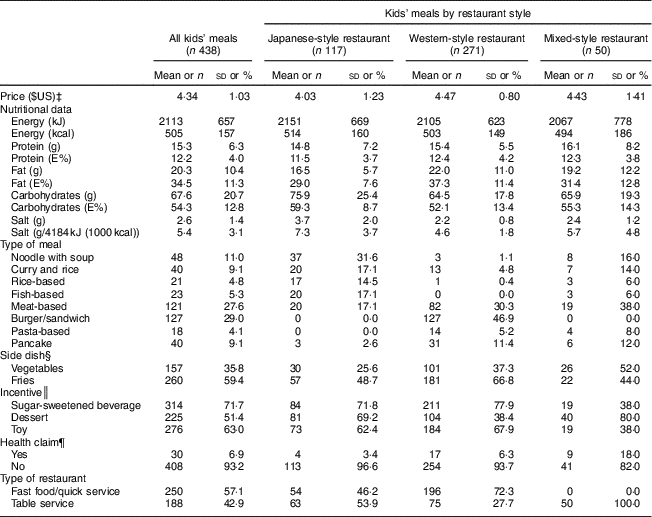
E%, percentage of energy.
Kids’ meals from forty-two chain restaurant brands from across twenty food-service companies were assessed. Continuous variables are presented as mean and sd; categorical variables are presented as n and %.
‡ $US 1=¥JP 110.
§ The number of kids’ meals that were offered with a side dish, including vegetables or fries.
║ The number of kids’ meals that were offered with a sugar-sweetened beverage, dessert or toy incentive.
¶ Health claims (e.g. ‘low energy’, ‘low fat’ or ‘low salt’) provided in the description of the kids’ meal in the companies’ or brands’ websites.
About 60 % of kids’ meals met the energy content of ≤2218 kJ and almost all meals met that of ≤3431 kJ (Table 2). Also, 40·6 % of the kids’ meals had appropriate fat E%, and 34·5 and 71·5 % of kids’ meals had salt content of <2 and <3 g, respectively. Regarding protein, 15·8 % of kids’ meals met the protein content of ≥20 g but only 1·6 % of kids’ meals met that of ≥30 g (Table 2). Finally, 15·5 % (n 68) of the kids’ meals met the multiple SLP standard values for energy, fat and salt contents (Table 2). In the assessment based on meal style, lower percentage of appropriate fat E% was observed for ‘meat-based’ meals (19·8 %) and ‘burger/sandwich’ (24·4 %; Table 3). Lower percentages of appropriate salt content were observed for ‘noodle with soup’ (12·5 %), ‘rice-based’ meals (23·8 %), ‘fish-based’ meals (13·0 %) and ‘burger/sandwich’ (1·6 %; Table 3). Also, the most appropriate meals regarding protein content were the ‘meat-based’ (33·9 %) and ‘fish-based’ (43·5 %) kids’ meals (Table 3).
Percentage of meals offered to children (kids’ meals) at chain restaurants in Japan meeting the Standard for the School Lunch Program (SLP), overall and by restaurant style, October–November 2017
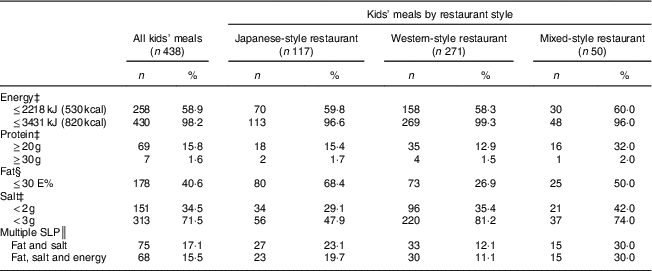
E%, percentage of energy.
Kids’ meals from forty-two chain restaurant brands from across twenty food-service companies were assessed.
‡ The SLP was used for adequacy assessment of energy, protein and salt contents per one meal of the lowest (6–7 years: ≤2218 kJ (530 kcal), ≥20 g of protein and <2 g of salt content) and the highest age category (12–14 years: ≤3431 kJ (820 kcal), ≥30 g of protein and <3 g of salt content).
§ The SLP was used for fat content per one meal (≤30 E% from fat for all age categories).
║ The percentage of kids’ meals meeting multiple standards of the SLP. The standard for energy and salt content was used for the lowest age category (6–7 years: ≤2218 kJ (530 kcal) and <2 g of salt content).
Nutritional data and percentage of meals offered to children (kids’ meals) at chain restaurants in Japan meeting the Standard for the School Lunch Program (SLP), by meal type, October–November 2017
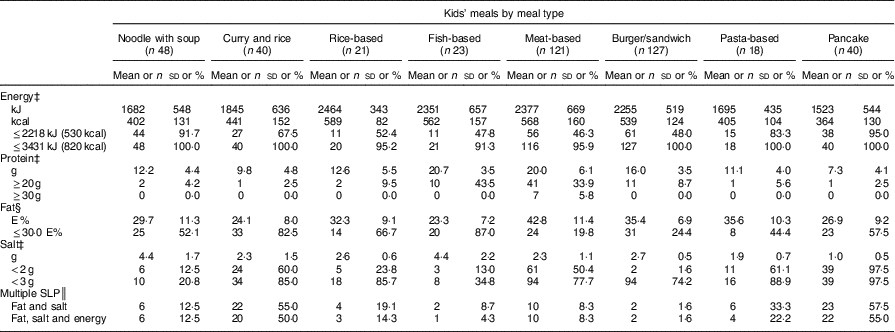
E%, percentage of energy.
Kids’ meals from forty-two chain restaurant brands from across twenty food-service companies were assessed. Continuous variables (nutritional data) are presented as mean and sd; categorical variables are presented as n and %.
‡ The SLP was used for adequacy assessment of energy, protein and salt contents per one meal of the lowest (6–7 years: ≤2218 kJ (530 kcal), ≥20 g of protein and <2 g of salt content) and the highest age category (12–14 years: ≤3431 kJ (820 kcal), ≥30 g of protein and <3 g of salt content).
§ The SLP was used for fat content per one meal (≤30 E% from fat for all age categories).
║ The percentage of kids’ meals meeting multiple standards of the SLP. The standard for energy and salt content was used for the lowest age category (6–7 years: ≤2218 kJ and <2 g of salt content).
Since significant restaurant-level variance was observed in fat E% (21·7, P<0·05) and salt content (1·3, P<0·05), further analysis still used the linear mixed model (Table 4). Compared with ‘burger/sandwich’, fat E% was higher in ‘meat-based’ meals but lower in ‘curry and rice’, ‘fish-based’ meals and ‘pancake’. Also, salt content was higher in ‘noodle with soup’ and ‘fish-based’ meals but lower in ‘meat-based’ meals and ‘pancake’ (Table 4). Inclusion of sides and incentives in the model did not alter these relationships. The inclusion of fries as a side dish was significantly associated with an increase in fat E% (β=8·8; 95 % CI 6·6, 11·0) but associated with a decrease in salt content (β=−0·5; 95 % CI −0·8, −0·2; Table 4). In addition, the ‘Japanese-style’ (restaurant-level characteristic) was significantly associated with a decrease in fat E% (β=−6·2; 95 % CI −11·0, −1·4) but associated with an increase in salt content (β=0·7; 95 % CI 0·06, 1·3). At the same time, 39 % of the restaurant-level variance of fat E% was explained by the type and style of restaurant (Model 2, 24 % v. Model 3, 63 %). Sixty-nine per cent of restaurant-level variance was explained by the kids’ meal characteristic regarding salt content. An additional 8 % was explained by the type and style of restaurant regarding salt content (Model 2, 69 % v. Model 3, 77 %; Table 4).
Association of meal and restaurant characteristics with percentage of energy from fat and salt content of meals offered to children (kids’ meals) at chain restaurants in Japan, October–November 2017

Kids’ meals from forty-two chain restaurant brands from across twenty food-service companies were assessed.
* Statistically significant based on 95 % CI (P<0·05).
† Marginal association based on 95 % CI (P<0·10).
‡ Kids’ meals offered with a side dish, including vegetables or fries.
§ Kids’ meals offered with a sugar-sweetened beverage, dessert or toy incentive.
║ Percentage reduction of the restaurant-level variance from Model 0.
Discussion
The present study aimed at assessing the nutritional quality of kids’ meals offered at Japanese chain restaurants. More than half of the kids’ meals being served in the subject restaurants had inappropriate fat and salt contents, with reference to the SLP. The inappropriateness varied across different types of kids’ meal and different styles of restaurant. Overall, the kids’ meals offered at Japanese-style restaurants were low in fat content, but high in salt content, as compared with meals offered at Western-style restaurants. In addition, the availability of nutritional information, such as the SFA content, the portion size and any health claims, was limited. These results suggest that the nutrient contents of kids’ meals in Japan can be improved in lieu of the fact that the high availability of kids’ meals in most restaurants may pose a health risk through inappropriate fat and salt intakes among Japanese children.
The kids’ meals in Japanese-style restaurants had low fat content but high salt content compared with those served in Western-style restaurants (Tables 4). The cause of the low fat content of Japanese kids’ meals may be the low usage of meat. A recent study suggested that the main sources of SFA intake among Japanese children are meat, dairy products and confectioneries( Reference Asakura and Sasaki 28 ). Thus, a kids’ meal which contains less meat or fewer dairy products is considered a low-fat meal. Compared with the Western-style restaurants, ‘noodle with soup’, ‘rice-based’ meal and ‘fish-based’ meal were commonly offered at the Japanese-style restaurants (Table 1). These meals are consisting mainly of staple foods and fish. In these meals, energy from carbohydrate and protein may account for large percentages compared with the contribution from fat. In contrast, the types of kids’ meal commonly offered at Western-style restaurants were ‘meat-based’ meal and ‘burger/sandwich’. These meals including meat had higher fat E% than the other types of meal (Tables 3 and 4).
Such difference in the fat content of kids’ meals by restaurant style might be derived from the difference in dietary characteristics of Western and East Asian countries( Reference Zhou, Stamler and Dennis 29 ). Gabriel et al. mentioned that the traditional Japanese diet is offered with the combination of cooked rice, soup, main and sides( Reference Gabriel, Ninomiya and Uneyama 10 ). The relatively small portion size of main and side dishes including fish and vegetables is also mentioned as a characteristic of the traditional Japanese diet( Reference Gabriel, Ninomiya and Uneyama 10 ). These characteristics may be associated with low usage of meat and the low fat content of the Japanese-style kids’ meal.
However, on the other hand, characteristics of the traditional Japanese diet may also link with the high salt content of the Japanese-style kids’ meal. Asakura et al. reported that dietary salt consumed from seasonings, fish and noodles accounts for more than 70 % of the habitual salt intake in the Japanese population( Reference Asakura, Uechi and Masayasu 30 ). The source of salt intake in Japan represents quite a difference from Western countries whose main source of salt intake is breads( Reference Anderson, Appel and Okuda 31 ). The traditional Japanese diet commonly includes soup cooked with several seasonings such as soya source, miso and soup stock( Reference Gabriel, Ninomiya and Uneyama 10 ). Also, noodles are generally served in a hot soup or with a dipping sauce. Thus, the meal including noodles or soup tends to contain much salt. Since almost all kids’ meals categorized into ‘noodle with soup’ and ‘fish-based’ meal were from the Japanese-style restaurants, the salt content of the kids’ meals might be higher in the Japanese-style restaurant compared with the Western-style restaurants (Table 4). As a population approach, chain restaurants should reduce the salt content in kids’ meals in all outlets across Japan at the same time. Also, a gradual reduction of salt would not reduce customer satisfaction( Reference He, Brinsden and MacGregor 32 ).
The difference in nutrient contents between kids’ meals offered at Japanese-style and Western-style restaurants was well presented in the statistical model of the current study. The Japanese restaurant style was significantly associated with low fat E% and high salt content of the kids’ meals (Table 4). At the same time, the difference in restaurant style explained approximately 40 and 8 % of between-restaurant variations in fat E% and salt content of the kids’ meals, respectively. These results suggest that the kids’ meals offered at the Japanese-style restaurants were potentially influenced by the characteristics of the traditional Japanese-style diet. Also, they suggest that the inappropriate fat E% and high salt content were derived from different cultural contexts of the Western and the Japanese diet.
The protein content of kids’ meals should be improved in addition to the fat E% and salt contents. Only 15·8 % of kids’ meals met the ≥20 g of protein content regulated by the SLP. However, most of the kids’ meals meeting the SLP for protein content were ‘meat-based’ meals and ‘burger/sandwich’, which were inappropriate regarding high fat E% (Table 3). Positive consideration is needed about the use of lean meat or more plant-based protein in kids’ meals while considering the appropriateness of fat E%. To date, a nationwide study has shown that schoolchildren consume a sufficient amount of protein( Reference Asakura and Sasaki 8 ). Careful monitoring of the relationship between the frequency of eating out and insufficient protein intake is also needed to ensure the adequate and optimal dietary intake for the progressive growth of Japanese children.
Much room for improvement was recognized with respect to the availability of nutritional information about kids’ meals in Japan. Almost all restaurants did not report the meal’s portion size (or weight of the meal) on their websites. Large portion size and high energy density (i.e. the energy content per unit weight of food) may affect weight gain( Reference Rosenheck 3 – Reference Diliberti, Bordi and Conklin 5 ). Moreover, children are likely to underestimate their energy consumption in the restaurant setting( Reference Block, Condon and Kleinman 33 ). The lack of information on portion size may make it difficult for a consumer to select a healthier food, as well as affect the detailed dietary assessment by food record, food recall and FFQ. Although children’s SFA intake exceeds the tentative dietary goal for adults (<7 E%) in Japan and the major SFA source is meat and dairy products( Reference Asakura and Sasaki 28 ), none of the restaurants reported the SFA content of kids’ meals on their websites, although ‘meat-based’ meal was the major type of kids’ meal identified. On the contrary, a kids’ meal, which is high in fat E%, was likely to be offered with a free toy incentive (Table 4), indicating that children are likely to have such meals more, which may increase their SFA consumption( Reference Longacre, Drake and Titus 26 ). The relationship between the inclusion of a toy and fat E% was not statistically significant in Model 3 (Table 4). Since the significant relationship was observed in Model 2, the statistical power to detect the association might be reduced due to the inclusion of additional variables. The point estimate and its direction suggested that kids’ meals high in fat E% were offered with toys. Several measures such as the establishment of nutritional criteria( Reference Otten, Saelens and Kapphahn 34 ), menu labelling( Reference Tandon, Zhou and Chan 35 , Reference Ahn, Park and Lee 36 ) and toy ordinance( Reference Otten, Saelens and Kapphahn 34 ) may contribute to healthier food choices at eateries. Further research is needed to assess whether these measures can contribute significantly to achieving appropriate nutrient intake among Japanese children.
The results of the present study are consistent with reports from Western countries. The energy and fat contents of kids’ meals in Japan were comparable to or slightly lower than those reported for restaurants in Western countries. The mean energy content of kids’ meals offered at restaurants was 1883–3347 kJ (450–800 kcal) in the USA and Canada( Reference Semnani-Azad, Scourboutakos and L’Abbé 11 – Reference Wu and Sturm 13 , Reference O’Donnell, Hoerr and Mendoza 15 , Reference Sliwa, Anzman-Frasca and Lynskey 16 ). These are slightly higher than the present study, which reported the mean energy content of kids’ meals as 2113 (sd 657) kJ (505 (sd 157) kcal; Table 1). The mean fat content of kids’ meals was 17·4–33 g in Western countries( Reference Semnani-Azad, Scourboutakos and L’Abbé 11 – Reference Sliwa, Anzman-Frasca and Lynskey 16 ), which is slightly higher than or comparable to 20·3 g in Japan (Table 1). The mean salt content of kids’ meals served at Japanese-style restaurants was 3·7 g, which is higher compared with 1·3–3·2 g of mean salt content in the kids’ meals of Western countries( Reference Semnani-Azad, Scourboutakos and L’Abbé 11 – Reference Sliwa, Anzman-Frasca and Lynskey 16 ). Cumulatively, the nutrient contents of the kids’ meals in Japan may be characterized by at least two different cultural contexts which have different shortcomings regarding CVD risk factors. For the establishment of regulation on the nutrient contents of kids’ meals in Japan, a careful consideration based on the understanding of Western and Japanese dietary cultural contexts will be needed.
To the best of the author’s knowledge, the present study is the first to assess the nutritional quality of kids’ meals offered in Japan across an assortment of restaurants with Western and Asian cultural characteristics. In addition, kids’ meals were extracted from restaurants that were widely distributed across Japan to ensure the inclusion of kids’ meals that were consumed by the majority of Japanese children.
The present study has several limitations. First, the low comprehensiveness of a typical kids’ meal may have induced bias in data interpretation. Only those kids’ meals whose nutritional information was available on the restaurants’ websites were assessed, while takeaway meals were not included in the present study. A more rigorous study needs to be performed on a large variety of kids’ meals that are consumed away from home and which may contribute to health risk due to inappropriate nutrient intake among Japanese children. Second, an arbitrary grouping of kids’ meals may have caused misclassification, which affects comparability with past reports. In fact, an international collaboration to track the nutrition composition of fast foods has proposed a categorization system( Reference Dunford 37 ). However, in Japan, the majority of kids’ meals offered at Japanese-style restaurants could only be categorized as ‘Asian-other’ group by this system. Therefore, the present study used an original categorization system for more detailed assessment of kids’ meals in Japan. Third, only a limited number of nutrients were assessed in the present study. While the SLP regulates several other nutrients such as iron, calcium and vitamins, only the contents of macronutrients and salt were assessed in the current study because of the low availability of nutrient information on the respective restaurants’ websites. However, the inappropriateness of macronutrient and salt intakes was identified as a priority regarding public health issues among Japanese children( Reference Asakura and Sasaki 8 , Reference Asakura and Sasaki 28 ). Finally, the situation of kids’ meals in Japan revealed by the present study could be tentative under the possibility of replacement or modification of kids’ meals by each of the assessed brands. Thus, the particular basic kids’ meal should be used for monitoring of the nutritional quality of kids’ meals at restaurants( Reference Moran, Block and Goshev 38 – Reference Rudelt, French and Harnack 40 ).
Conclusion
The characteristics of the restaurant-served kids’ meals in Japan were high fat E% and high salt content. These might be derived from the different dietary cultural contexts of Westerners and the Japanese.
Acknowledgements
Financial support: This research received no specific grant from any funding agency in the public, commercial or not-for-profit sectors. Conflict of interest: None. Authorship: All processes of the current research were conducted by K.U. Ethics of human subject participation: Not applicable.
Supplementary material
To view supplementary material for this article, please visit https://doi.org/10.1017/S1368980018001891



