


A. Introduction
Society’s view of what constitutes as sexually transgressive behavior is constantly changing. For example, at the beginning of the 20th century the offense of rape in the Netherlands, and many other European countries, covered only the unlawful sexual penetration of a woman by a man. If a woman was married, criminal law would not protect her from rape by her own husband.Footnote 1 As a result of changing attitudes, in the 1980s−1990s rape provisions were expanded to include marital rape within the scope of criminal law, and in many cases a more gender-neutral provision was adopted, recognizing that both women and men could be victims of rape.Footnote 2 In many cases, however, the so-called coercive model was still maintained.Footnote 3 Under the influence of inter alia the #metoo-movement and the Council of Europe Convention on preventing and combating violence against women and domestic violence (hereinafter: Istanbul Convention), many European countries are now further modernizing their sexual assault laws by abolishing the coercive model and opting for a consent-based model instead.Footnote 4 This latest modernization of the offense of rape has confronted national legislators with the important question of how to construct the new criminal provisions on rape.
Within the criminalization process, an important question is whether and under which circumstances criminalization is legitimate and justified. To answer that question, many legal scholars have attempted to develop sets of criminalization principles.Footnote 5 Criminalization principles provide an argumentative framework that facilitates the criminalization process by balancing arguments for and against criminalization and by structuring the criminalization debate.Footnote 6 However, these sets of principles are often confined to the question of whether certain conduct should be criminalized.Footnote 7 If this question is answered affirmatively, they do not answer the question of how criminalization should subsequently take place, even though the manner in which criminalization takes place, that is, the structure and design of the criminal provision, has a major impact on the functioning of the criminal law. After all, criminal provisions should communicate what conduct is punishable and, consequently, is subject to criminal prosecution.
In practice, legislative proposals are regularly criticized for the way in which criminal provisions are drafted. In the Netherlands, for example, the proposal to have a separate criminal provision of sex against the will alongside the criminal provision of rape met resistance. According to stakeholders and victims, a separate provision on sex against the will did not do justice to the seriousness of the offense, even if there is no coercion, but only involuntary participation in the sexual intercourse—he conduct—should qualify as rape.Footnote 8 In addition, the Council for the Judiciary (Raad voor de rechtspraak) stated that some concepts and provisions are unnecessarily vague and that the provisions are difficult to apply.Footnote 9
The forgoing touches on a broader question of how conduct is criminalized and requires further research into the principles underlying the design of a criminal provision or offense construction. The purpose of this Article is to conduct an initial exploratory study to identify which offense construction principles are at play in the offense construction of rape at the national level, to which part of the provision these principles apply, that is, prohibition, legal classification, or sanction, and how these principles interact with each other. In this way, the principles underlying the design of our criminal law can be clarified.
To answer these questions, legal comparison research is combined with a legal empirical analysis. These research methods are explained in detail in Section B. The results of the comparative legal empirical study are then presented in Section C. The objective of Section C is not to provide an exhaustive description of the scope or meaning of the rape provision in selected countries. Instead, the objective is to illustrate which offense construction principles can be identified in the various legislative procedures. In addition, the section will identify and explain the main differences and similarities in the use of offense construction principles. Section D combines the results of the comparative legal empirical research to provide an initial picture of which principles play a role in the construction of criminalization, and how this may improve the quality of law. The Article ends with some concluding remarks in Section E.
B. Methodology
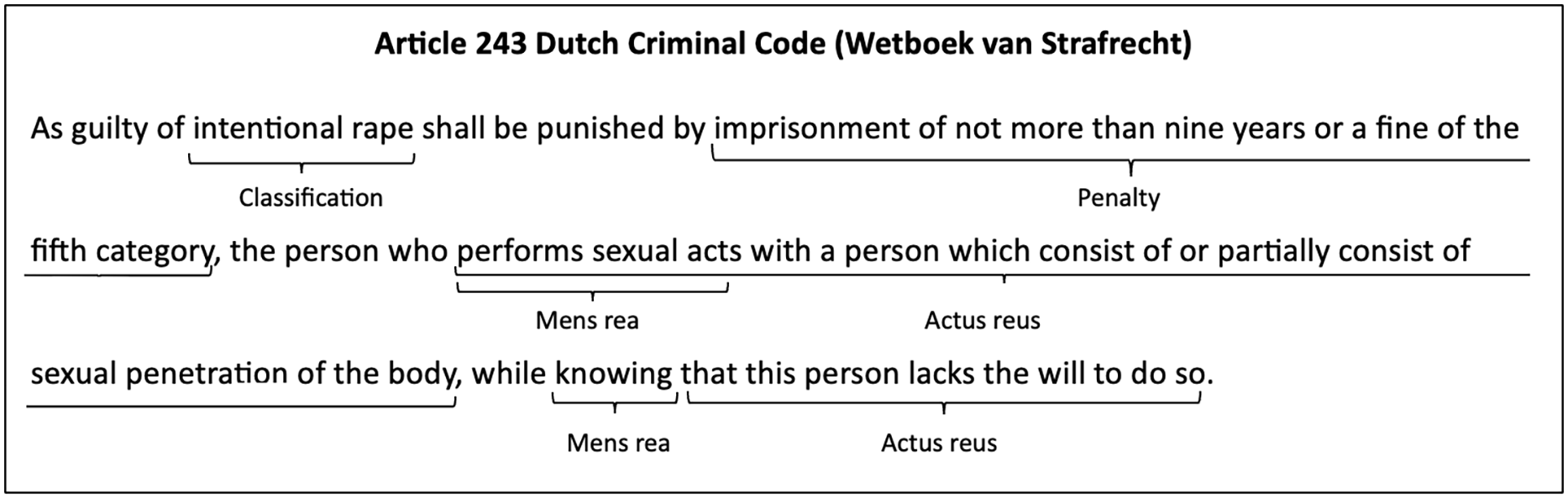
This first explanatory study of offense construction principles is part of a larger research project on offense construction principles in the national and EU legal orders. This first phase of the project identifies the categories of arguments that underpin the construction and design of criminal law. To this end, various national and EU criminal provisions are systematically analyzed in a comparative legal context. In selecting the criminal provisions, several aspects were taken into account, such as whether there is a recent legislative proposal and the legal interest to be protected. The provision on rape was chosen because this provision has recently been amended in the Netherlands and some other EU Member States. In addition, this provision protects one of the core legal goods in criminal law, namely the physical, and sexual, integrity of persons. Moreover, in the selected countries, the provision consists of a prohibition, legal classification, and a sanction. As an example, see Figure 1, which schematically depicts the components of Article 243 of the Dutch Criminal Code.
Elements of the criminal provision
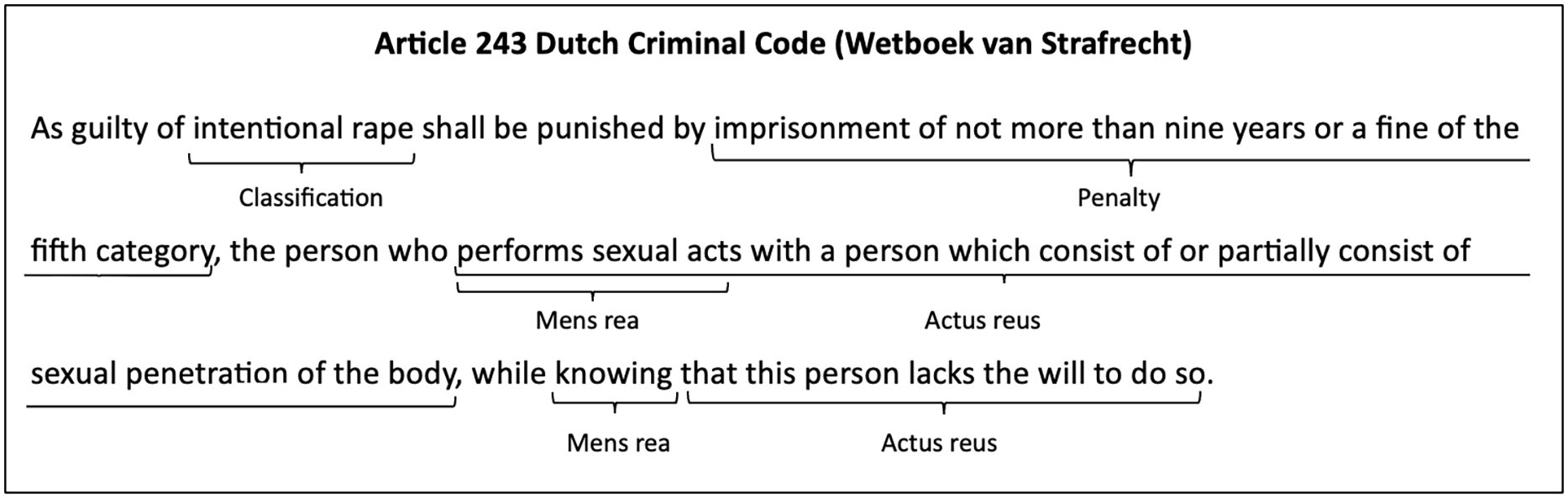
The empirical legal method is used to answer the questions of (1) which principles play a role in the construction of the rape provision, (2) to which part of the criminal provision—prohibition, legal classification, or sanction— these principles apply, and (3) how these principles interact with each other. This methodological approach offers insight into the principles that guide legislators in the construction of criminal offenses. To answer these questions, the explanatory memoranda on the criminalization of rape in Belgium, Germany, the Netherlands, and Sweden were systematically analyzed. After all, the explanatory memorandum contains the legislator’s reasoning for the proposed criminal provision, which may also include comments on previous versions of the proposed criminalization. In the software program, Atlas.ti, the various arguments used by the legislator for the offense construction were categorized through thematic and open coding.Footnote 10
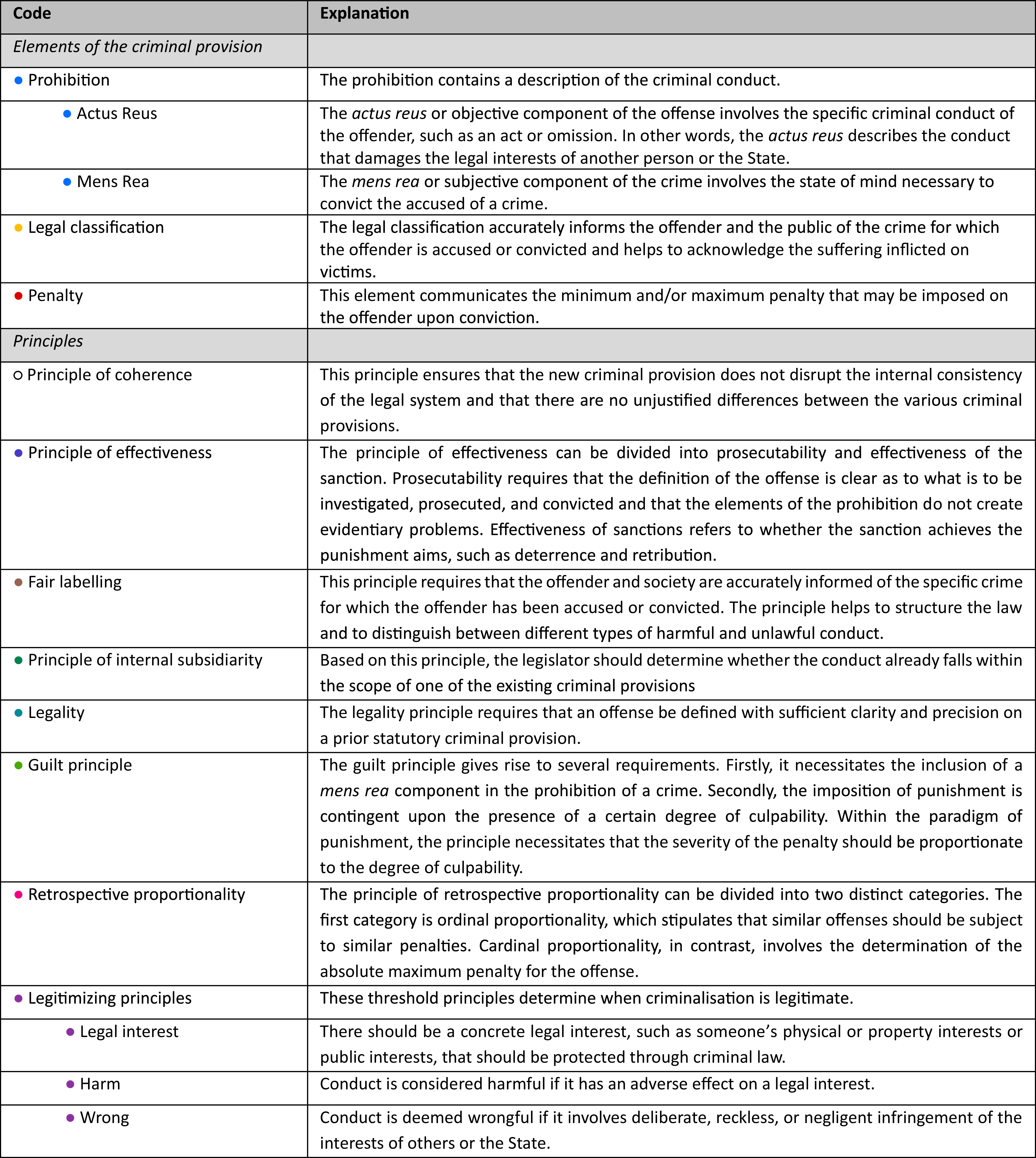
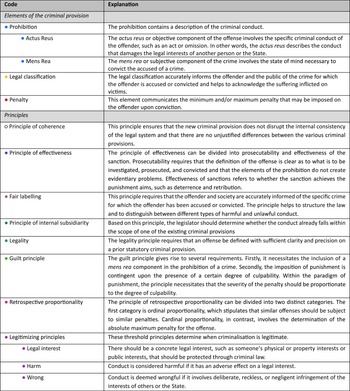
Thematic coding involves analyzing data based on a codebook that is compiled in advance. The codebook consists of the various offense construction principles, and the different elements of criminal provision. The offense construction principles that I have identified in earlier research provided the initial basis for the codebook.Footnote 11 I identified five principles: internal subsidiarity and the related principle of fair labeling, legality, effectiveness, and retrospective proportionality.Footnote 12 In addition, the different elements of the criminal provision were added: the prohibiton, which consists of an actus reus and mens rea, the legal classification, and the sanction. During the coding of the explanatory memoranda, the codebook was further developed to include the principles that were identified in the process, namely the principle of coherence and the guilt principles, as well as the legitimating principles: harm, wrong, and Rechtsgut. After each adaption of the codebook, the documents were recoded according to the updated codebook (cyclic-iterative analysis).Footnote 13 See Figure 2 for the complete codebook and an explanation of the different codes.
Codebook
In order to avoid knowledge gaps, this research combines a systematic analysis with a comparative legal study. A systematic analysis based on the explanatory memorandum of one State alone has some limitations. First, the quality of the explanatory memorandum is highly dependent on the quality and expertise of the legislative officials in the Ministry of Justice or members of parliament, and on the political climate. Moreover, the explanatory memorandum does not contain all considerations for the design of the criminal provision, but only those that the legislator considers to be decisive.
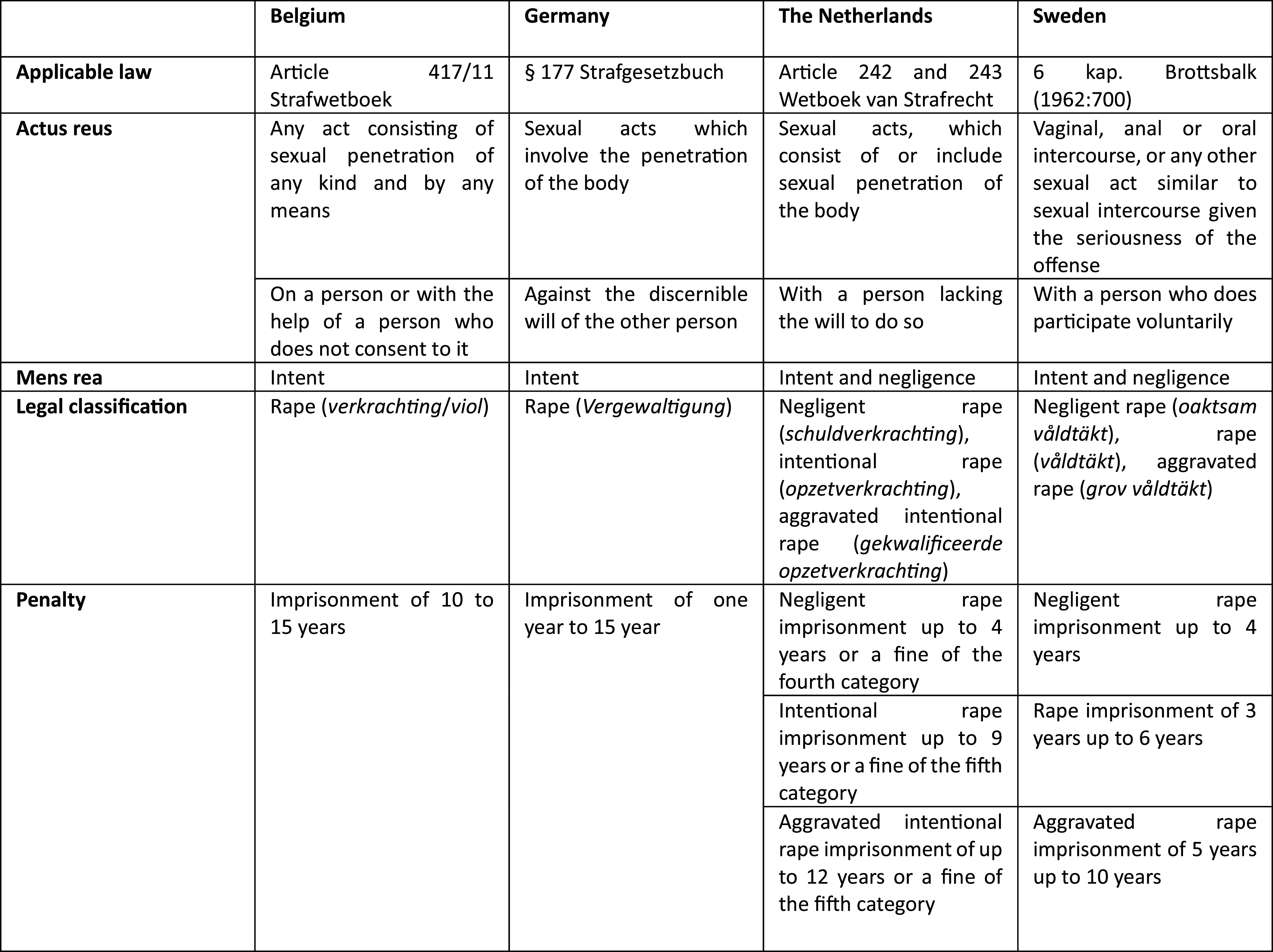
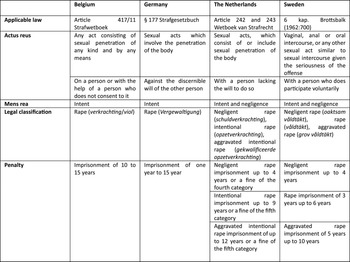
The selection of countries was based on (1) whether there has been a recent proposal to modernize or adapt the rape provision, and (2) whether an explanatory memorandum to the legislative proposal was available. Based on these criteria France for example did not qualify, because they have not changed their criminal provision on rape as to date. Spain did not qualify either because they have no explanatory memorandum available. On the basis of these selection criteria, Belgium, Germany, the Netherlands, and Sweden were selected for the systematic comparative legal analysis. Figure 3 shows the main characteristics of the rape provision by country.
Schematic overview of the criminal provision of rape in Belgium, Germany, the Netherlands and Sweden
Belgium already proposed a consent-based rape offense in 1982.Footnote 14 The aim was to give a broader definition of rape by making consent the decisive element of the prohibition, and thus protecting the personal integrity of a person, and to protect all victims, regardless of their gender.Footnote 15 In 2022, anticipating the modernization of the Belgium Criminal Code (Strafwetboek) the criminal provision on rape was updated to modern day standards. The proposal introduced a definition of consent in relation to the right of sexual self-determination, Article 417/5.Footnote 16 In addition, the provision of rape was amended to make it gender-neutral, to include third person participation, and to expand the scope to any act consisting or partly consisting of sexual penetration of any kind and by any means.Footnote 17
Germany’s criminal law on rape was based on a coercive model until 2016. Lack of consent did not suffice for criminal liability for sexual acts; the victim must have been coerced by the perpetrator.Footnote 18 Over the years the coercive-based model was criticized by feminists. Moreover, with the signing of the Istanbul Convention, Germany was required to criminalize non-consensual sexual acts.Footnote 19 In what is described as “an unusual legislative process,” Germany introduced a “no means no”-model, which requires some form of communication by the victim, rather than exclusively focusing on consent as a mental state.Footnote 20 Under § 177 (6) of the German Criminal Code (Strafgesetzbuch), rape is considered an aggravating circumstance of sexual assault. It no longer presupposes that the victim must have been coerced but requires one of the six versions of sexual assault, § 177 (1) and (2), plus penetration.Footnote 21
New sexual assault legislation in the Netherlands entered into force on July 1, 2024 after a long legislative process. Until then, the Dutch criminalization of rape was based on the coercive model. In light of the changed social norm, that sexual contact should be voluntary, equal, and based on mutual consent, and after the entering into force of the Istanbul Convention, modernization of the criminal law on sexual assault was necessary.Footnote 22 The initial plan was to introduce a separate criminalization of sex against the will.Footnote 23 This proposal was heavily criticized by stakeholders, such as Amnesty International and the Victim Aid Fund (fonds slachtofferhulp), stating that sex without consent should be qualified as rape.Footnote 24 Consequently, the rape provision was broadened to include sex against the will, which does not require that the victim was coerced. The Dutch law introduces an attitudinal model, which focuses exclusively on consent as a mental state, and thus places the responsibility primarily with the person initiating the sexual acts.Footnote 25 In addition, the proposal expanded the scope of rape to include, inter alia, sexual acts with a third party and introduced a separate provision on negligent rape.Footnote 26
Sweden already started the discussion of introducing a consent-based model in 2014. A legislative proposal followed in 2017, which introduced a new definition of rape. Rape now includes vaginal, anal, or oral penetration that is performed “with a person who is not participating voluntarily.”Footnote 27 To assess voluntariness, particular consideration is given to a person’s acts and expressions. The Swedish model has been characterized as deviating from both communication models and mixed models.Footnote 28 The rape provision was further expanded to include sexual acts with a third person. Lastly, Sweden introduced a separate provision criminalizing negligent rape.Footnote 29
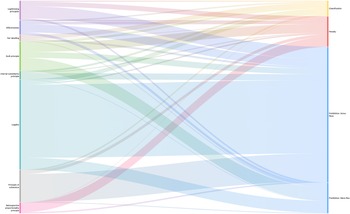
The legal comparative analysis is based on the four-step method of Gorlé et al.Footnote 30 First, the results of the systematic analysis of the different criminal provisions on rape in each country are described. These results are also presented schematically in a Sankey diagram, which visualizes the interaction between the different principles and elements of the criminal provision. Second, the collected material is compared. Third, the identified differences and similarities between the principles underlying the offense construction in the examined countries are explained in Section C. Finally, an evaluative assessment is made of the use of the offense construction principles and the ways in which these principles could contribute to improving the quality of criminal law in Section D.
C. A Systematic Analysis of the New Rape Provision in Belgium, Germany, the Netherlands, and Sweden from a Legal Comparative Perspective
I. Introduction
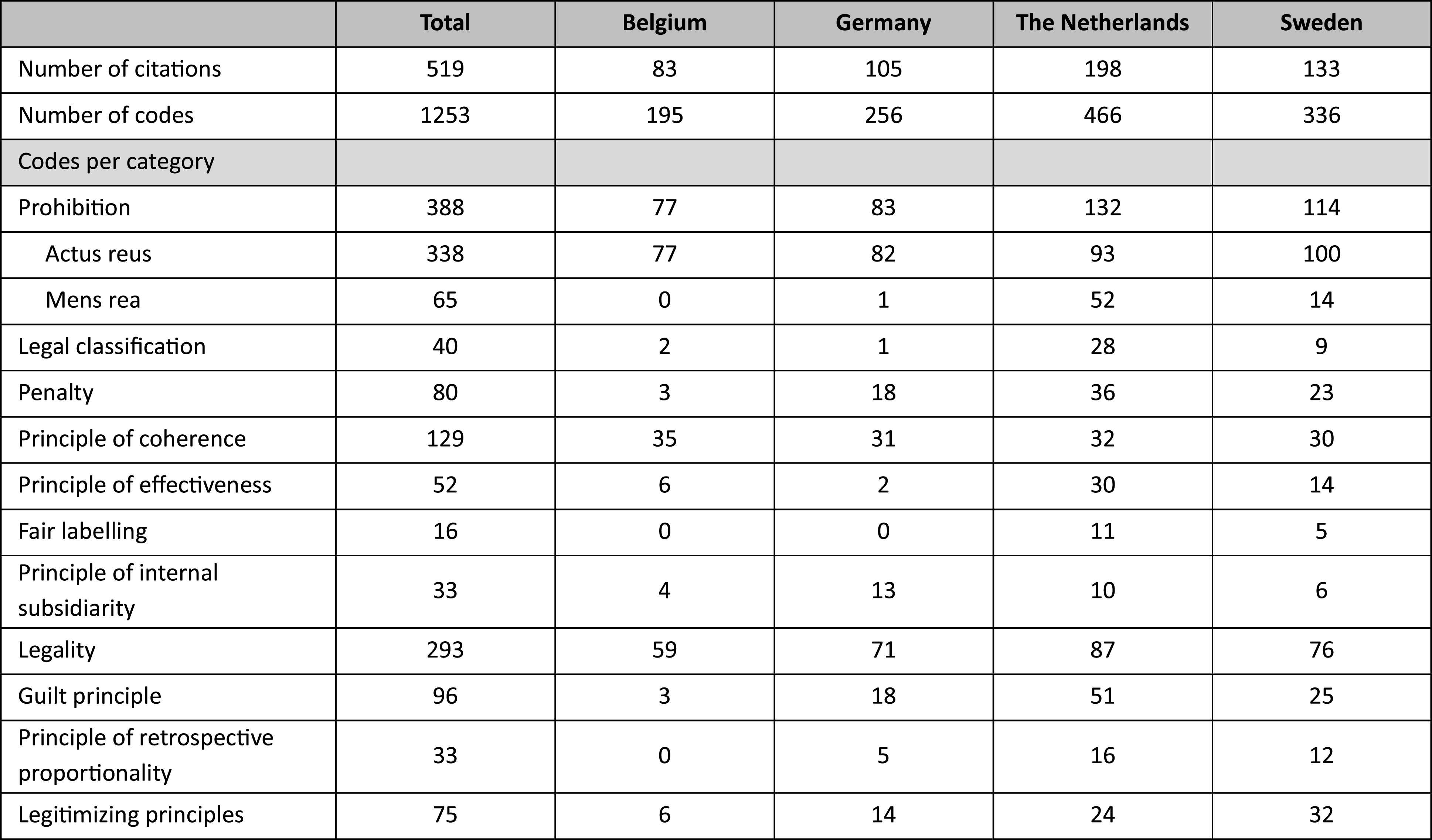
As explained above, Belgium, Germany, the Netherlands, and Sweden have introduced new legislation in recent years to modernize and broaden the scope of the criminal provisions on sexual offenses, including the provision on rape. For this study, the explanatory memoranda that formed the basis of the legislative changes were systematically analyzed.Footnote 31 The analysis yielded a total of 519 citations. Each citation was coded using a codebook to determine to which part of the criminal provision and which principle the citation referred. It may happen that a legislative argument touches on several principles, such as the principle of legality and the principle of coherence. In such a case the citation has several codes. In total, 1253 codes were assigned to the citations. The complete overview of the systematic analysis is shown in Figure 4.
Schematic overview of the systematic analysis
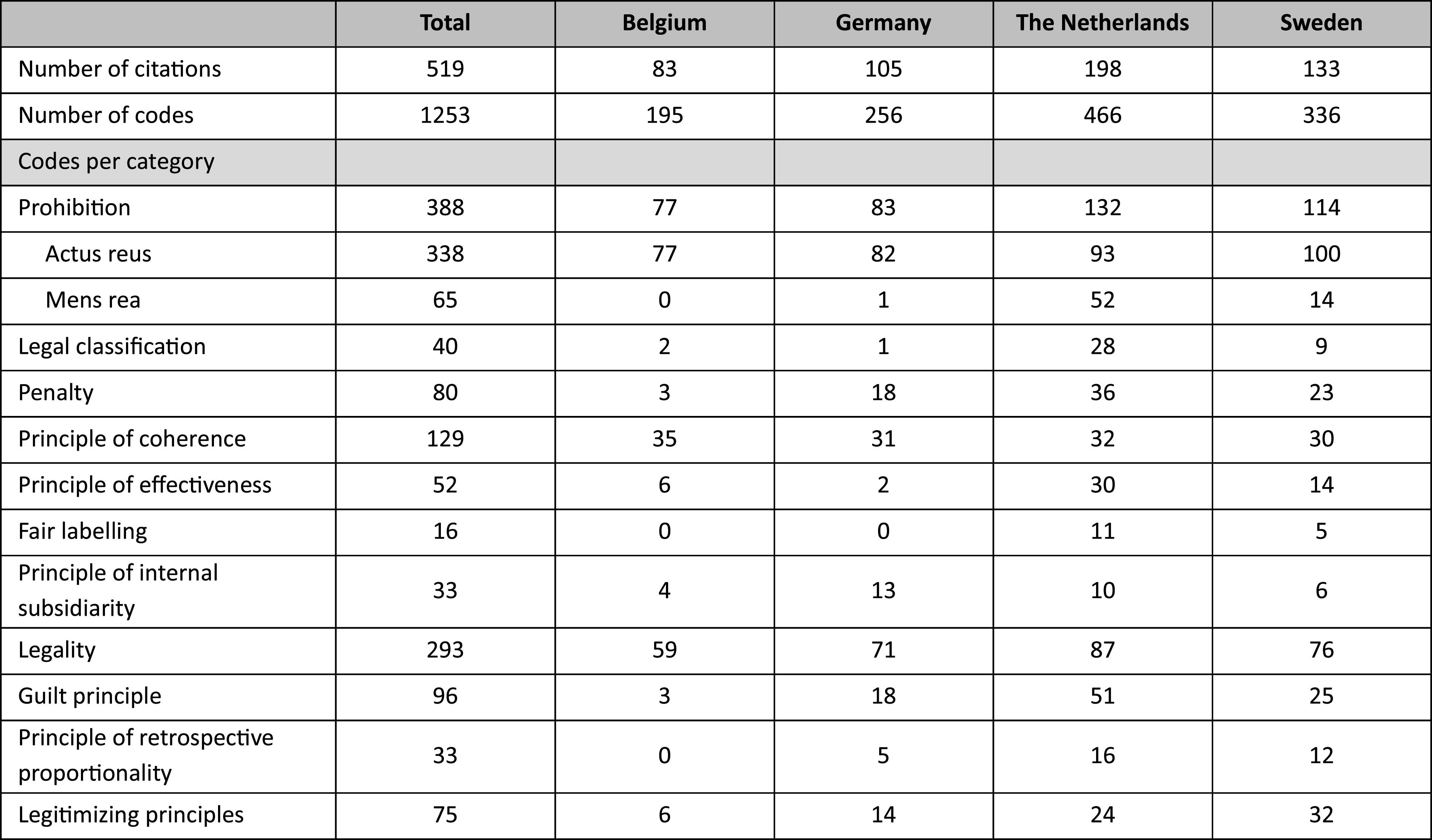
Figure 4 Long description
The table presents a systematic analysis of legislative arguments related to criminal provisions on sexual offenses in Belgium, Germany, the Netherlands, and Sweden. It includes data on the number of citations and codes assigned to these arguments. The table has 12 rows and 6 columns. The columns are labeled as Total, Belgium, Germany, The Netherlands, and Sweden. The rows are labeled as Number of citations, Number of codes, Codes per category, Prohibition, Actus reus, Mens rea, Legal classification, Penalty, Principle of coherence, Principle of effectiveness, Fair labelling, Principle of internal subsidiarity, Legality, Guilt principle, Principle of retrospective proportionality, and Legitimizing principles. Each row provides specific values for each country and the total. For example, the row labeled Number of citations shows 519 total citations, with 83 for Belgium, 105 for Germany, 198 for The Netherlands, and 133 for Sweden. The row labeled Number of codes shows 1253 total codes, with 195 for Belgium, 256 for Germany, 466 for The Netherlands, and 336 for Sweden. The table provides a detailed breakdown of how legislative arguments are categorized and coded across different principles and countries.
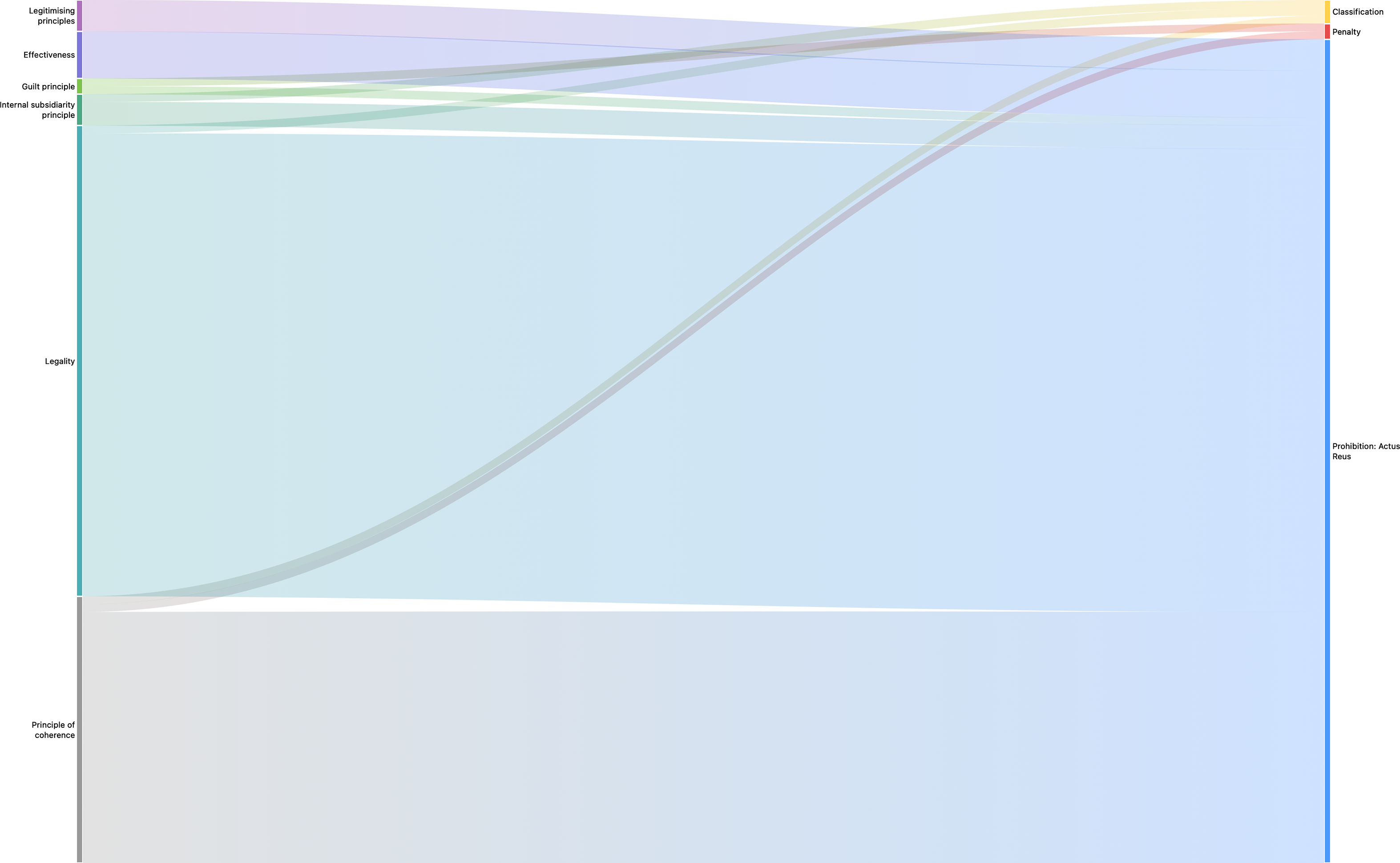
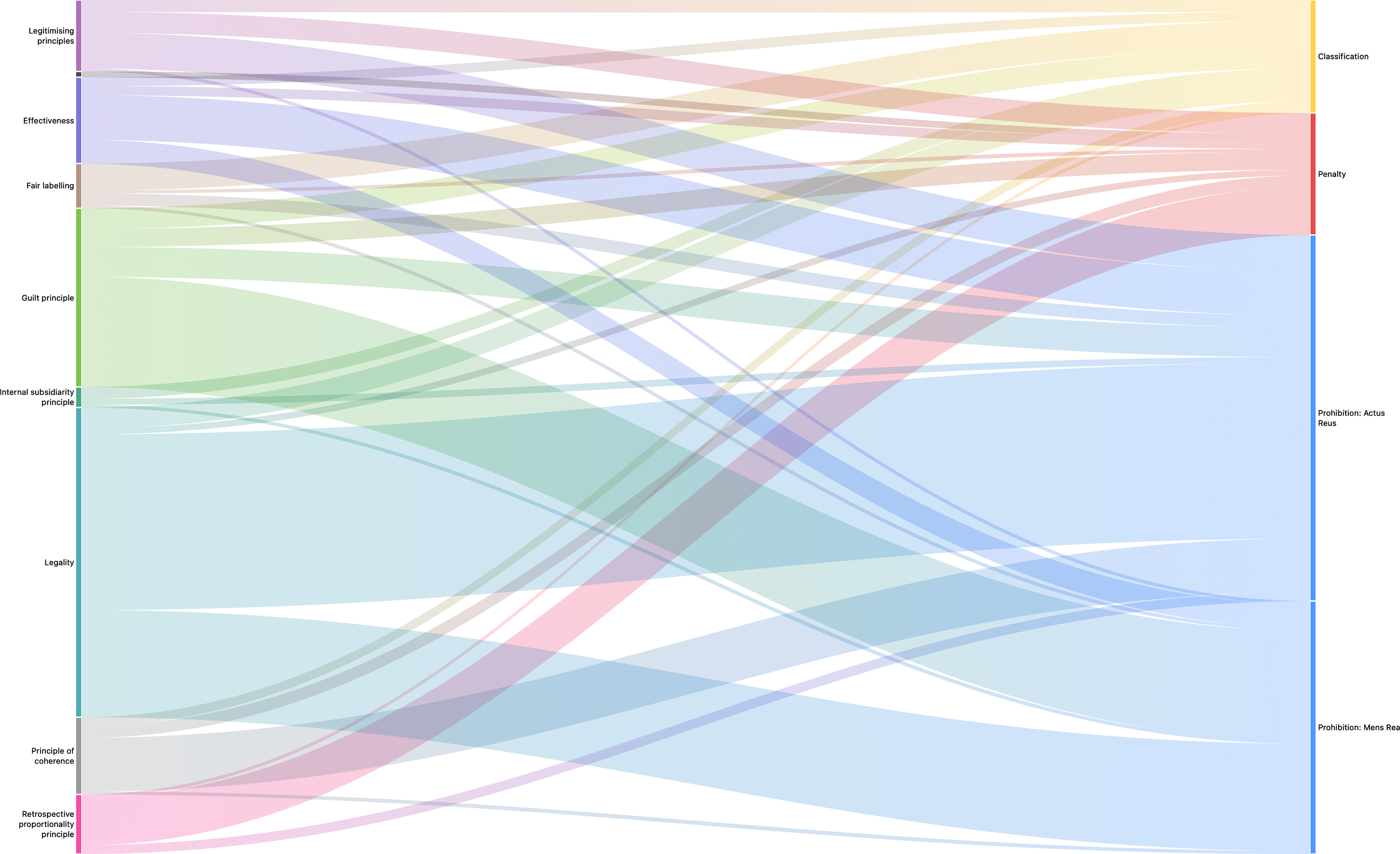
The following subsections describe the results of the systematic analysis of each country’s explanatory memorandum. In addition, a Sankey diagram generated from the data in Atlas.ti is used to visualize the interaction between the different principles and elements of the criminal provisions, Figures 5-8. The following sections do not provide a complete description of the meaning of the different constituent elements of the criminal provisions. They do, however, provide insight into the categories of arguments that underpin the design of the criminal provision, thereby identifying the principles at play in the offense construction. This section is the prelude to an evaluative assessment of how these offense construction principles are used and how they could contribute to the quality of criminal provisions.
Use of offense construction principles in Belgium
Use of offense construction principles in Germany
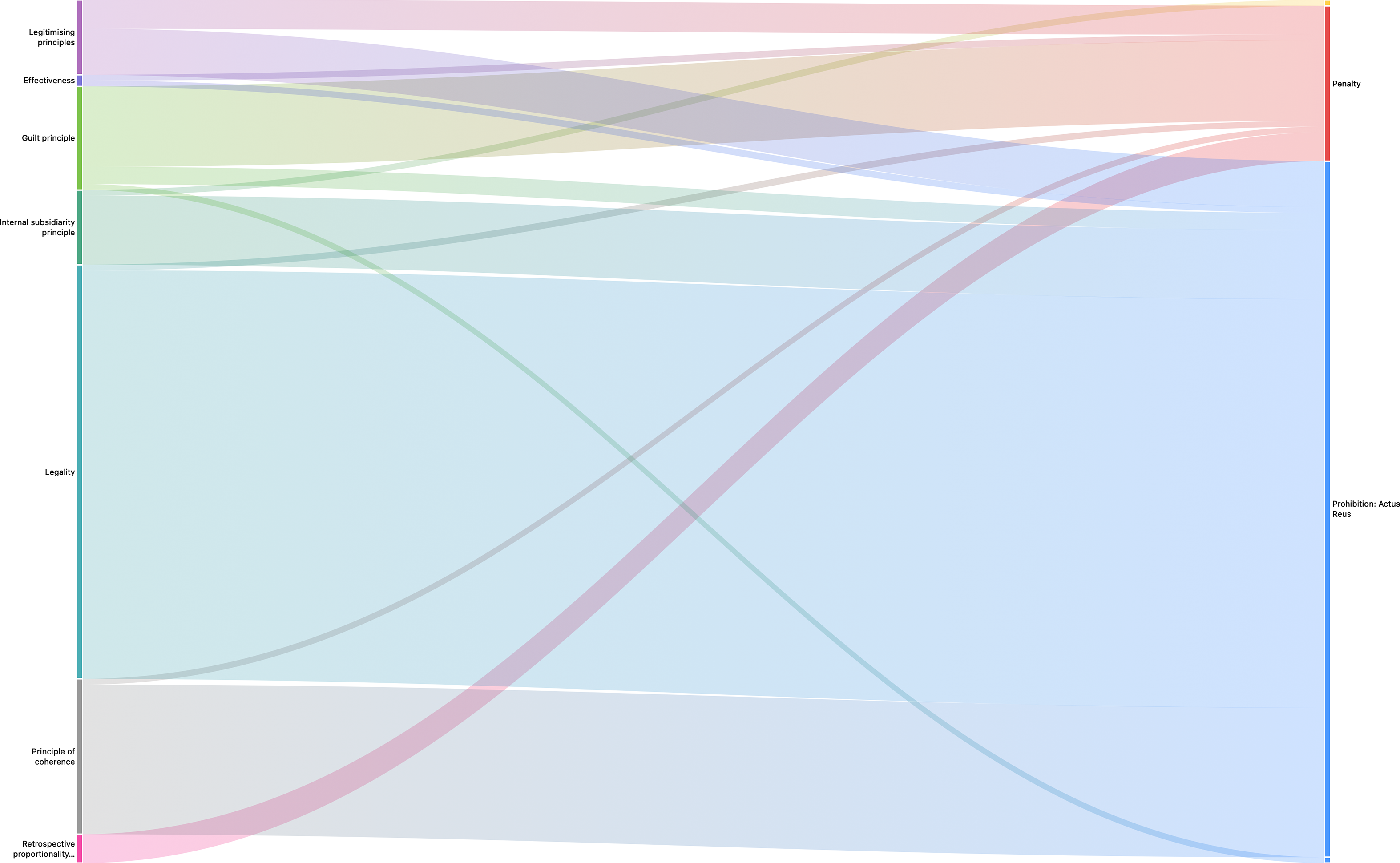
Figure 6 Long description
A Venn diagram illustrating the use of offense construction principles in Germany. The diagram features multiple overlapping sets, each representing different principles. The sets include Legitimizing principles, Effectiveness, Guilt principle, Internal subsidiarity principle, Legality, Principle of subsidiarity, Retrospective proportionality, Penalty, and Prohibition. Actus reus. Each set overlaps with others to varying degrees, indicating the interconnectedness of these principles. The overlaps signify the areas where multiple principles are applied simultaneously. The diagram uses different colors to distinguish between the sets, with each color representing a specific principle. The overlaps are shaded to show the interaction between the principles.
Use of offense construction principles in the Netherlands
Use of offense construction principles in the Sweden
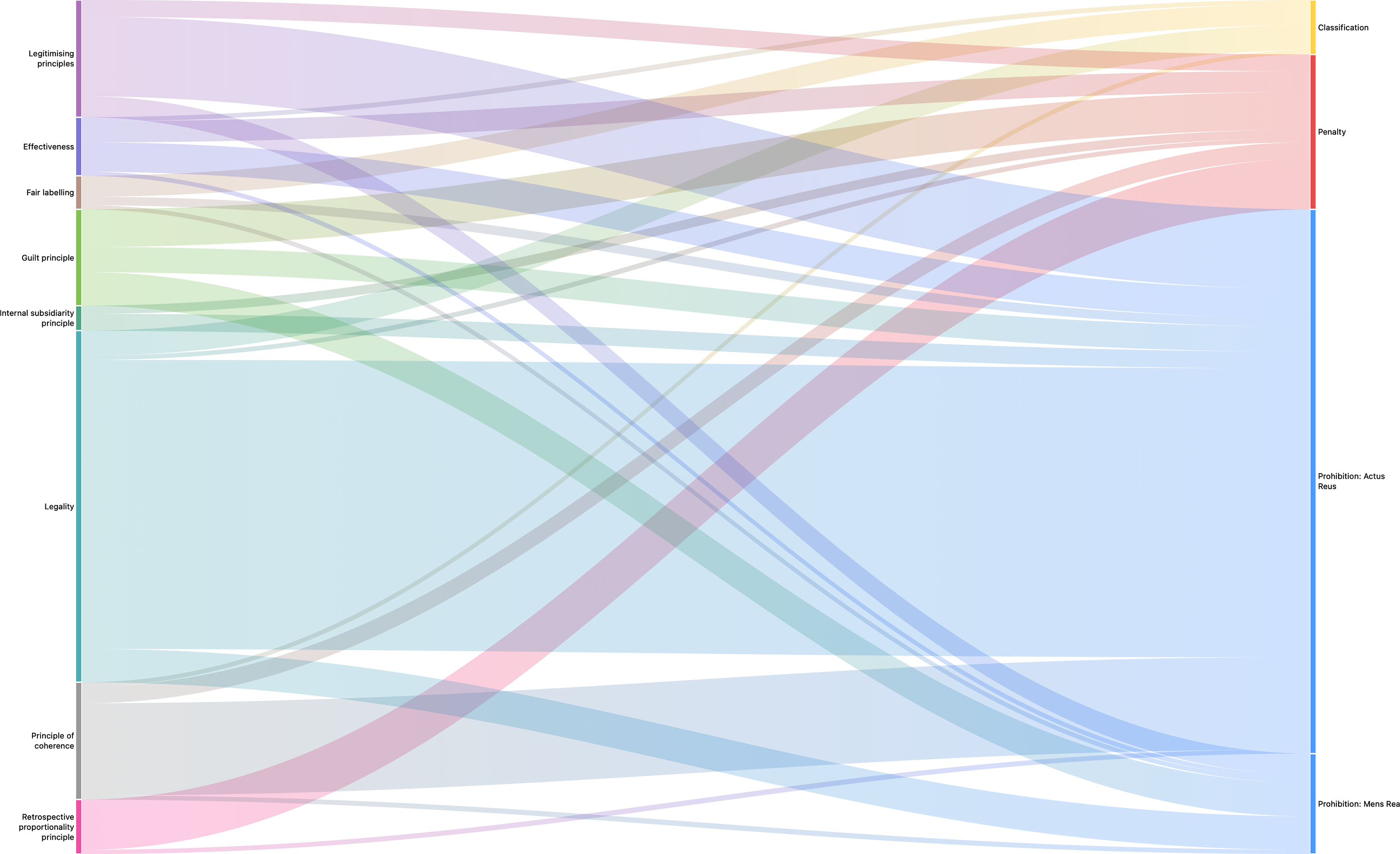
Figure 8 Long description
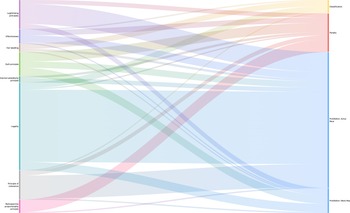
A Sankey diagram visualizes the interaction between different principles and elements of criminal provisions. The diagram features multiple colored streams connecting various principles on the left to elements of criminal provisions on the right. The principles include Legitimizing principles, Effectiveness, Fair labeling, Guilt principle, Internal subsidiarity principle, Legality, Principle of coherence, and Retrospective proportionality principle. The elements of criminal provisions include Classification, Penalty, Prohibition: Actus Reus, and Prohibition: Mens Rea. Each stream represents the flow or interaction between a principle and an element, with the width of the stream indicating the strength or quantity of the interaction. The diagram uses different colors to distinguish between the various principles and their connections to the elements of criminal provisions.
II. The Construction of the Offense of Rape in Belgium
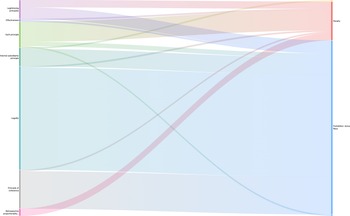
The Belgian explanatory memorandum contains a limited number of reflections on the design of the criminal provision. The explanatory memorandum pays the most attention to the objective side of the offense (actus reus). Within this context the memorandum mainly discusses the meaning and scope of the various components of the prohibition, such as the meaning of “sexual penetration” and “consent.” This explanation is primarily related to the principle of legality, which requires sufficient legal clarity.Footnote 32 In addition, the legislator explicitly indicates how the proposed legislation is consistent with case law and existing terminology and pays attention to the place of the provision within the Criminal Code. These considerations therefore relate to the principle of coherence.Footnote 33
The legal classification has not changed under the legislative proposal, which may explain the limited explanation.Footnote 34 It does, however, address the categorization of sexual offenses. Prior to 2021, these offenses were classified as “crimes against family order and public morality.” The proposal places these offenses in a new category of “sexual crimes,” which are considered particularly serious crimes. The arguments for this new categorization are related to the principle of coherence as well.Footnote 35
The Belgian explanatory memorandum does not address the mens rea element of the criminal prohibition. In Belgium, a crime requires intent, unless it is explicitly stated that culpa is also sufficient. Therefore, the mens rea element needs to be addressed only if a negligent variant is introduced.Footnote 36 The increase in the maximum penalty for rape is also not explained in detail.Footnote 37
Figure 5 provides a visual representation of the interaction between the elements of the criminal provision and the principles of offense construction.
III. The Construction of the Offense of Rape in Germany
In Germany, the transition from a coercive to a consensual model required further clarification of the proposed criminal legislation.Footnote 38 As a possible consequence, arguments related to the offense construction are mostly related to principles that contribute to the clarity and accessibility of criminal law, such as the principle of legality, internal subsidiarity, and the principle of coherence.Footnote 39 The focus of the explanatory memorandum is mostly on the actus reus by providing further explanations on the meaning and scope of the various components of the actus reus.Footnote 40
There is very little explanation of the meaning and scope of the mens rea element. With regard to intent, the explanatory memorandum states in only one sentence that the perpetrator acted intentionally when they accepted that the sexual act was carried out against the objectively recognizable will of the victim.Footnote 41 Negligent rape is not criminalized and therefore does not require further explanation.
The definition of rape remains unchanged under the legislative proposal.Footnote 42 The explanatory memorandum simply states that rape is a form of sexual violence that refers to sexual intercourse or similar acts, regardless of whether the victim was coerced.Footnote 43
Finally, the explanation on the chosen penalty is also limited. Germany has a general maximum penalty and special minimum penalties, so the explanatory memorandum goes into only the chosen minimum penalty.Footnote 44 The minimum penalty for rape is related to the minimum penalty for sexual assault.Footnote 45 This is determined by the internal coherence of the various penalties and the degree of culpability. Arguments regarding the legitimacy of criminalization and retrospective proportionality are also taken into account.
Figure 6 provides a visual representation of the interaction between the elements of the criminal provision and the identified offense construction principles.
IV. The Construction of the Offense of Rape in the Netherlands
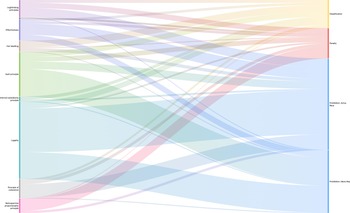
The Dutch explanatory memorandum is characterized by a detailed explanation on the construction of the criminal provision. The explanatory memorandum pays close attention to all aspects of the criminal provisions, and the choices made are supported by a range of categories of arguments. This approach aligns with a more general development in Dutch legislative practice, in which more and more attention is being paid to the quality of the legislation.Footnote 46
In the Netherlands, too, most attention is paid to the meaning and scope of the actus reus. The components of the actus reus are highlighted from the perspective of the principles of legality, coherence, effectiveness, and guilt.Footnote 47 In light of the criminalization of negligent rape, the meaning and scope of the mens rea elements are also discussed in more detail. The rationales underpinning the decisions of the legislator related to the principles of legality guilt and effectiveness.Footnote 48
The legal classification deals with the distinction between intentional rape, negligent rape, and aggravated rape. The reasons for this distinction in classification are related to the principle of guilt and the principle of fair labeling.Footnote 49 In addition, the principle of legality plays an important role; after all, the qualification must clearly and precisely communicate what the suspect is accused of.Footnote 50
Finally, the relationship between the maximum penalties for the various sexual offenses is clarified. This is the legislator’s response to the problem of imbalance between the different maximum penalties for sexual offenses as identified by the study conducted for the Research and Data Centre of the Ministry of Justice and Security.Footnote 51 The considerations underlying the choice of maximum penalties are mainly related to the principles of retrospective proportionality and legality.Footnote 52
Figure 7 provides a visual representation of the interaction between the elements of the criminal provision and the identified offense construction principles.
V. The Construction of the Offense of Rape in Sweden
The Swedish explanatory memorandum devotes most of its attention to the scope and meaning of the definition of the offense. Several categories or arguments are presented, which are related to the principle of legality, internal subsidiarity, coherence, and legitimacy.Footnote 53
The criminalization of non-sexual acts in Sweden also led to a reevaluation of the legal classification of rape. In the end, the legislator decided not to change the classification of rape because the term “rape” has a clear and significant meaning in society. Moreover, changing the classification could signal to society that the offense is less serious than rape.Footnote 54 In this context, the principles of legality, culpability, and fair labeling play an important role. The question of how to classify negligent rape was also considered. Here, the difference between intentional rape and negligent rape is particularly important to the legal classification. The legal classification of negligent rape communicates that it is a less serious offense, negligent act, and it also communicates in relation to which conduct the negligent act was committed, rape.Footnote 55 In this respect, the principle of guilt and internal subsidiarity play an important role.
The penalty for rape remained the same under the new criminal provision. However, the minimum sentence for aggravated rape was increased from four to five years. The average sentences imposed were considered disproportionate to the seriousness of the crime committed (37.5 months up to 69 months). The maximum penalty for negligent rape was set at four years. The underpinnings of the proposed penalties here are related to the principles of retrospective proportionality and the principle of guilt.Footnote 56
Figure 8 illustrates the interaction between the elements of the criminal provision and the identified offense construction principles.
VI. The Offense of Rape from a Comparative Legal Perspective
A closer look at the explanations for the offense construction reveals a sliding scale between countries where a lot of explanation is given for the offense construction—the Netherlands and Sweden—and countries where the explanation is less comprehensive—Germany and Belgium. Although the explanation varies between countries, there are also similarities in the use of offense construction principles.
First, most of the arguments in support of the offense construction fall into the category of the principle of legality. This is understandable, given that the justifications are supposed to contribute to the clarity and accessibility of criminal law. Second, legitimizing principles—harm, wrong, and legal interest —are important in the construction of the offense. Indeed, a well-defined criminal offense requires the legislator to have a clear picture of the wrongful conduct that harms a particular legal interest. Finally, with regard to the principle of coherence, the legislator must ensure that the introduction of a new criminal provision fits into the existing legal system, so that legal unity can be guaranteed.Footnote 57 Ultimately, this increases the clarity and accessibility of the legislation as well. This may also be the reason why in all the countries studied, the legislator tries to align new criminal provisions as much as possible with the terminology that is already used in the Criminal Code, other laws, case law, or European and international legislation.
There are also differences between the explanatory memoranda. In Belgium and Germany, the primary focus is on formulating the actus reus of the prohibition. Little or no attention is paid to the other elements of the criminal provision. For example, the principle of guilt becomes more important when the legislator decides to criminalize negligent rape in addition to intentional rape. The introduction of a separate criminalization of negligent rape requires that the legislator also justifies its choice. Moreover, in such a case the penalty must be differentiated according to the specific criminal reproach against the accused. For this reason, the principle of guilt plays a greater role in the Netherlands and Sweden. In addition, the introduction of negligent rape in these countries leads legislators to consider the specific legal classification of the offense. Therefore, the principle of fair labeling also plays a greater role in the Netherlands and Sweden.
D. Offense Construction Principles as Foundations of the Criminal Provision
I. Introduction
The previous section described the categories of arguments that underlie the design of the criminal provision of rape in Belgium, Germany, the Netherlands, and Sweden. Figure 9 provides an overview of the principles identified in the four countries studied and how they interact with the elements of the criminal provision. This section assesses how the use of these principles can contribute to improving the quality of the design of criminal provisions. It also examines how the different principles interact when designing the criminal provision.
Overall use of offense construction principles in Belgium, Germany Sweden and the Netherlands
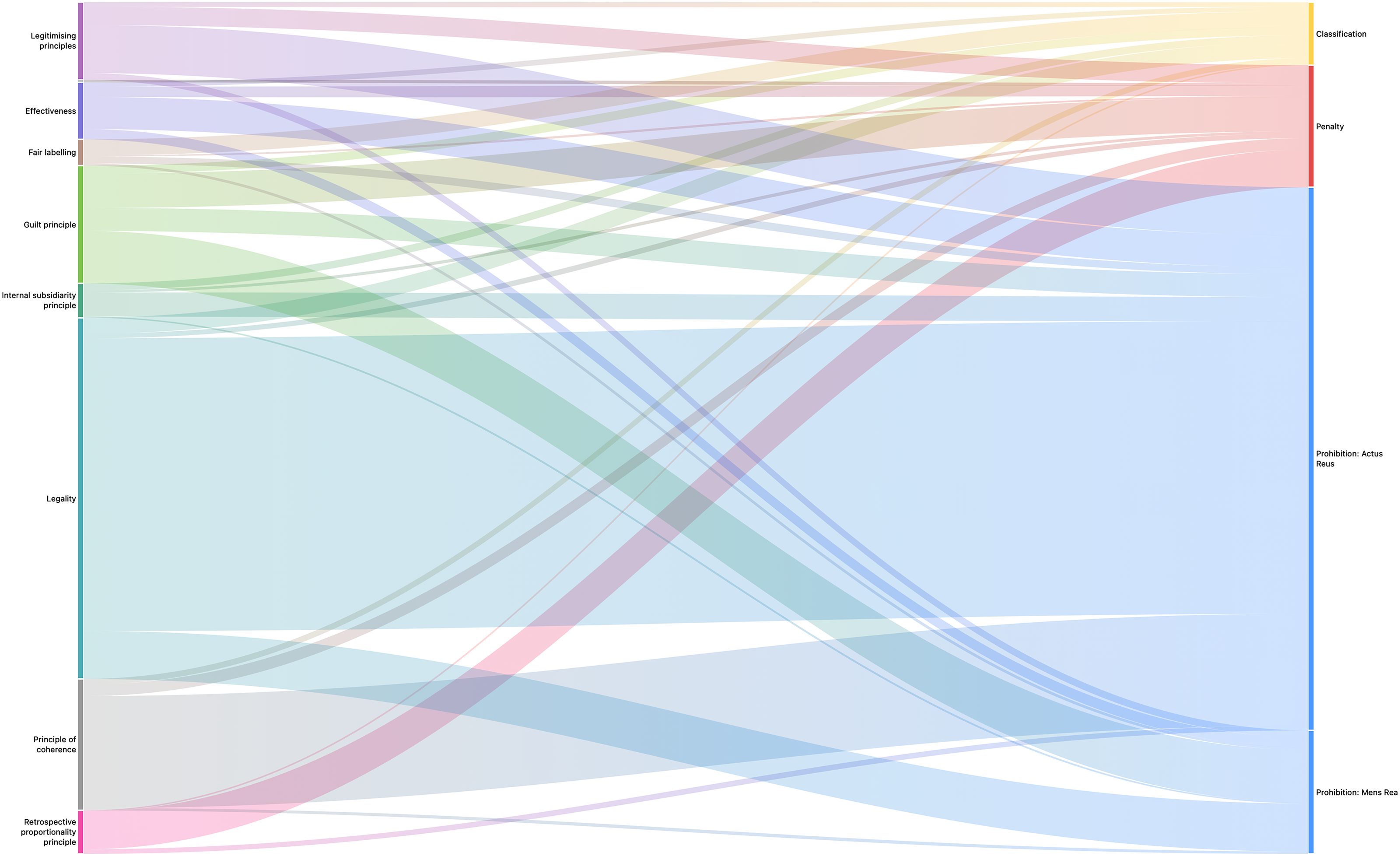
The following subsections will discuss each of the elements of the criminal provision such as criminal prohibition, legal classification, and penalty. Each subsection begins with a brief introduction to the function of the element of the criminal provision so that the operationalization and assessment of the various principles identified can be placed in this context.
II. Offense Construction Principles and the Criminal Prohibition
1. Actus Reus
The actus reus comprises the physical conduct of the offender, such as an act or omission. In other words, the actus reus describes the conduct that harms the legal interest of another person or the state. Consequently, the actus reus is regarded as the objective aspect of the offense definition. Criminalization requires that the actus reus be defined as clearly as possible. Citizens must know what conduct will trigger a government response, and the police and judiciary must know what conduct should be investigated, prosecuted, and convicted.Footnote 58 It is therefore self-evident that the explanatory memorandum should pay particular attention to the principle of legality, internal subsidiarity, coherence, and effectiveness. This also serves the purpose of the explanatory memorandum, which is to provide insight into the meaning and aim of the proposed legislation.
The principle of legality necessitates that each criminal offense be defined in a sufficiently clear and precise manner.Footnote 59 To this end, the legislator provides a detailed explanation of the meaning and scope of the various components of the actus reus. However, an examination of the explanatory memoranda indicates that the legislator does not undertake a thorough examination to ascertain whether the proposed actus reus complies with the requirements of the legality principle. In more than half of the cases, the legislator merely provides an isolated explanation and interpretation of a single component.Footnote 60 In the Swedish explanatory memorandum, for instance, the legislator offers an interpretation of “sexual acts”:
The term “sexual act” is defined as having essentially the same meaning as “sexual intercourse,” yet it is augmented by an additional element. For an act to be classified as a “sexual act,” there must be a reasonable degree of prolonged contact with the genitals of the other person, or between the body of another person and one’s own genitals.Footnote 61
The advent of such justifications is more likely to occur in the context of components that are not already embedded within the legal framework, that do not originate form treaties or case law, or that do not seamlessly align with existing legal paradigms. The extent to which an explanation contributes to the principle of legality is contingent, at least in part, on its quality. An explanation that states consent can be given verbally of non-verbally offers minimal guidance in assessing whether there has been consent to specific sexual acts.Footnote 62 The principle of legality is most effectively realized when the legislator engages with other principles concurrently, such as the principle of coherence, the internal subsidiarity principle, and the effectiveness principle.
The principle of coherence, which is fundamental to the legislative process, necessitates that lawmakers ensure that the proposed criminal provision does not disrupt the internal consistency of the legal system. Furthermore, it is imperative that there are no unwarranted differences between different criminal provisions. In this regard, legislators frequently employ preexisting terminology, such as “violence” and “sexual penetration.”Footnote 63 In addition, legislators seek to align the interpretation of these constituents with prevailing case law.Footnote 64 This practice ensures the preservation of established legal practice and of the existing legal framework. It is therefore vital to consider the principle of coherence when formulating criminal provisions.
Further clarity can be attained by explicitly delineating the different criminal provisions in instances of overlap. In accordance with the principle of internal subsidiarity, the legislator must examine existing legislation to determine whether the conduct in question is already covered or can be brought under existing criminal law, thereby achieving the necessary demarcation between the various criminal provisions.Footnote 65 To illustrate, the criminalization of rape, in contrast to that of sexual assault, necessitates not only sexual acts but also penetration.Footnote 66 The expanded scope of the new criminalization of rape necessitates the clarification of which acts will fall under the new rape provisions and which acts will be punishable under existing criminal provisions.Footnote 67 Such clarifications enable a more precise understanding of the scope of new and existing criminal legislation.
The principle of effectiveness, in the sense of prosecutability, can also provide further insight into the meaning and scope of the actus reus. This principle considers the practical advantages of a clear definition of offenses for law enforcement, prosecutors, and the judiciary.Footnote 68 Consequently, it can be regarded as an equivalent to the principle of legality. The explanatory memoranda examined demonstrate that the practical application of the principle of effectiveness focuses primarily on the provability of the offense. In particular, the perspective of the judge is considered here. Within this framework, the legislator provides as much guidance as possible for the judicial assessment of whether a specific case involves rape. The legislator may provide general guidelines, for example, that the assessment must take place on the basis of the concrete circumstances of the case.Footnote 69 This places the responsibility for further interpretation and operationalization of the component on the court. It is important, however, to note that such generic guidelines offer minimal guidance for judicial interpretation.Footnote 70 Another possibility is that the legislator formulates more specific criteria. In such a case, the legislator takes responsibility of the further interpretation of the constituent’s meaning and scope, thereby offering greater insight into its intended implications.Footnote 71 With the transition from a coercive model to a consent-based model, the legislator has emphasized that the crime of rape should be easier to prove because coercion is no longer a requirement.Footnote 72 This is a signal to the courts to adopt a less stringent evidentiary standard for the actus reus. When it comes to law enforcement, however, this perspective needs to be nuanced. For instance, the Dutch legislator has noted that the adoption of a consent-based model does not inherently simplify the process of evidence collection, particularly in scenarios where the victim’s testimony is contradicted by the suspect. Thus, the lower standard of consent does not necessarily result in a better collection of evidence.Footnote 73
Finally, the systematic analysis reveals that the design of the actus reus appears to be related to the principles of legitimization such as harm, wrong, and legal interest. In the context of the legitimization of criminalization, the legislator must always assess whether there is wrongful conduct that harms a specific legal interest.Footnote 74 This assessment offers valuable insights into the identification of the conduct that should be subjected to criminalization. These insights can then guide the design of the actus reus.Footnote 75 For instance, the Belgian legislator considers the new definition of rape to attach particular importance to the concept of “lack of consent,” stating that “in the absence of consent, the act becomes a direct violation of the integrity of the person.”Footnote 76 It is therefore evident that in Belgium, the protection of sexual integrity is realized through the component of “lack of consent.”
2. Mens Rea
Mens rea is defined as the state of mind that is required to convict a defendant of a crime.Footnote 77 This element can manifest in three distinct forms: intent, recklessness, or negligence. Mens rea is therefore closely related to the wrongfulness of the conduct, which involves “the deliberate, reckless or negligent violation of the interests of other persons (or the state).”Footnote 78 Typically, a mens rea element is required only in case of a felony and not in case of a misdemeanor.Footnote 79 Consequently, the criminalization of conduct as a felony necessitates that the legislator determines whether to criminalize solely intentional conduct or to also include reckless and/or negligent conduct. An analysis of the legal systems examined reveals that crimes in principle always require that the acts were committed intentionally.Footnote 80 Consequently, the choice of a specific mens rea component is only required if the legislator opts to introduce a negligent variant.
In view of the above, the decision to criminalize negligent rape warrants further explanation on the incorporation of negligence. To this end, the legislator may examine the specific criminal reproach in question. In Sweden, for instance, the legislator has explicitly stated that the criminalization of negligent rape is predicated on the notion that sexual abuse is such a grave offense, also in light of the significant psychological harm that can be inflicted on the victim or the risk thereof—referencing the harm principle—that even negligent acts should be subject to punishment. According to the legislator, the distinction between intentional and negligent conduct is therefore irrelevant in this context. This assertion serves as a basis for the justification of the adoption of a negligent variant.Footnote 81
The circumstances under which, according to the legislator, intent or negligence exist are discussed in more detail as well. The extent to which the concept of mens rea is discussed varies across the countries examined in this study. For example, the Belgian explanatory memorandum does not provide an explanation of the meaning of the mens rea component: intent. In Germany, the subject of intent is addressed in a single sentence. Conversely, the Swedish explanatory memorandum places particular emphasis on culpa. By contrast, the Dutch explanatory memorandum is the most comprehensive, addressing both components. It is noteworthy that in countries that criminalize both intentional and negligent rape, there is an inherent invitation for further reflection on the conceptual intricacies of these notions.Footnote 82 In this context, the categories of arguments relate to the principle of legality and effectiveness.
In accordance with the principle of legality, the legislator provides a comprehensive explanation of the meaning and scope of intent or negligence. This explanation may consist primarily of a general definition of the mens rea component, in connection to the actus rues of the rape provision. To illustrate, the German legislator explains in general terms that the requirement of intent is satisfied if the perpetrator at least accepts that the sexual act is performed against the objectively discernible will of the victim.Footnote 83 Nevertheless, this statement does not elaborate on the specific instances in which this condition is met.Footnote 84 The explanation may also consist of a general definition combined with more specific examples of cases that would constitute as intentional or negligent rape. For instance, in response to inquiries from stakeholdersFootnote 85 regarding the interpretation and scope of intent and negligence as outlined in the preliminary proposal on the Sexual Offenses Act,Footnote 86 the Dutch legislator has opted to provide more concrete examples of these two categories of rape.Footnote 87 These numerous and sometimes contradictory examples in the Dutch explanatory memorandum, however, seem to undermine, rather than contribute to, the principle of legality. In this way, the memorandum creates more questions than it resolves.
Considerations in light of the effectiveness principle, such as prosecutability of the offense, do not provide further clarity on the meaning and scope of the mens rea element. Consequently, the assessment factors provided to the judge remain quite general in nature. For instance, the Swedish explanatory memorandum asserts that the determination of whether the act qualifies as negligent rape depends on the specific circumstances of the case, and that only those acts that are “clearly punishable” should fall within the scope of criminal law: “Negligent acts in an individual case must therefore be truly reprehensible.”Footnote 88 Nevertheless, this does not provide a clear answer as to when an act can be considered negligent. This ambiguity may be ascribed to the legislator’s acknowledgement that “the determination of whether the suspect committed negligent or intentional rape in borderline cases depends on the precise assessment of the court.”Footnote 89
III. Offense Construction Principles and the Legal Classification of the Offense
The legislator may choose to incorporate a legal classification of the conduct into the criminal provision, such as rape, assault, theft, or manslaughter. This nomenclature serves to provide both the offender and the public with a precise understanding of the nature of the crime for which the offender has been convicted. This practice also acknowledges the suffering inflicted upon victims.Footnote 90 The legal classification functions as a significant constraint on the interpretation of the crime, thereby ensuring that the legal definition does not become subject to interpretation that is contradictory or otherwise disconnected from the original meaning.Footnote 91
In the context of rape provisions, the classification plays an important signaling role and contributes to the delineation of the offense. The systematic analysis reveals a correlation between classification and the principle of legality. The potency of legality arguments is strengthened when they are combined with other principles, such as the principle of internal subsidiarity and the principle of coherence. For instance, the Dutch legislator has indicated that the distinction between sexual assault and rape lies in the sexual penetration of the body. This distinction offers insight into the specific conduct that constitutes rape, thereby distinguishing it from sexual assault.Footnote 92 Additionally, arguments concerning legality and consistency may provide a rationale for maintaining the classification of rape. For instance, the Swedish government has determined that,
the legislation pertaining to sexual crimes is already designed in such a manner that criminal liability for rape encompasses a considerably broader scope of acts than those committed by violence or threats of violence. Assuming the term “violence” in common parlance can be defined more broadly to encompass more than just physical violence, it follows that the term “rape” for the most serious sexual crimes may not be perceived as misleading.Footnote 93
Moreover,
the term “rape,” which has traditionally been reserved for the most serious sexual crimes, possesses a distinct social meaning that is not necessarily based on the legal criteria for the crime. The most compelling argument for maintaining the classification of “rape” is the clear signal value it conveys, reflecting the severity of the crime. The substitution of “rape” with “sexual violence” in legal discourse and legislation bears the risk that the crime is perceived as less severe.Footnote 94
Furthermore, arguments pertaining to the principle of fair labeling are of great importance. This fundamental principle dictates that the classification and description of a crime must align with its severity, and that penalties should reflect the severity of the offense. The Dutch explanatory memorandum, for example, asserts that the designation of sexual offenses “on the one hand do justice to what has happened to the victim and on the other hand express the severity of the acts to be distinguished by categorizing them with the most appropriate nomenclature.”Footnote 95 The Swedish legislator similarly underscores the necessity of ensuring that the legal classification of an offense “clearly reflects both the lower mens rea element [negligence] and the intentional crimes to which the provision applies. Furthermore, from the offender’s perspective, it may be advantageous to clarify whether the sexual act is classified as rape or sexual assault.”Footnote 96
These examples provide further insight into the interplay between the classification of the offense and the principle of guilt. Indeed, the guilt principle assists in delineating the boundaries of criminal liability by determining the specific criminal reproach.Footnote 97 This reproach, in turn, determines how to classify the offense. In this regard, the Dutch legislator has articulated that “the more severe the reproach, the more severe the legal classification of the criminal conduct.”Footnote 98 Consequently, negligent rape has its own separate criminal provision, with its own classification that is based on the nature of the criminal reproach.Footnote 99 In this way, the guilt principle serves as a foundational framework for delineating and distinguishing between various forms of harmful and wrongful conduct.
IV. Offense Construction Principles and the Penalty Scales
The last element of the criminal provision is the penalty that may be imposed. In the light of nullum crimen, nulla poene sine praevia lege poenali, there can be no punishment without law, no punishment without a crime, and no crime without a legal provision.Footnote 100 Therefore, legality is required for both crime and punishment. Consequently, the legislator must establish a legal framework for the minimum ormaximum penalty and the conditions under which it may be imposed.Footnote 101 The system of penalties and the discretion granted to the judge reflect the confidence of the legislator in the judiciary.Footnote 102
The principles of retrospective proportionality and the principle of guilt appear to have the greatest impact on the penalty. The principle of retrospective proportionality requires the legislator to weigh the proposed penalty against the seriousness of the crime. Thus, the legislator must ensure that similar crimes carry similar penalties—ordinal proportionality—and determine what the absolute punishment for the crime should be—cardinal proportionality.Footnote 103 In this sense, the Swedish legislator takes the seriousness of the crime as a fundamental starting point for determining the punishment for sexual crimes: “The punishment should [therefore] reflect how reprehensible a particular crime is.”Footnote 104 More serious crimes should be punished more severely than less serious crimes, and similar crimes should be punished equally severely: The penalty for a crime is thus a measure of how serious the legislator considers the particular type of crime in relation to other crimes.”Footnote 105 This raises the question of how the legislator then operationalizes these general principles.
In Germany and the Netherlands, the legislator has taken the old penalty for rape by coercion as a starting point.Footnote 106 Then, depending on the degree of culpability, the maximum or minimum penalty is determined.Footnote 107 In Germany, for example, the minimum penalty for the basic offenses ranges from six months to ten years imprisonment, with “additional aggravating factors that increase the severity of the crime to be taken into account separately.”Footnote 108 The Dutch legislator also takes into account the seriousness of the crime, in particular the extent to which the sexual integrity of the victim has been violated: “Higher maximum penalties shall be attached to the commission of more severe acts consisting of sexual penetration of the body.”Footnote 109 Similarly, the Swedish legislator states that rape is a very serious violation of another person’s sexual integrity.
That the protection of sexual integrity is relatively highly valued is demonstrated by the fact that rape already carries a higher minimum sentence than, for example, grievous bodily harm. Therefore, according to the legislator, it cannot be concluded from direct comparisons with other types of crimes that a minimum sentence of three years would be disproportionately high.Footnote 110
Consequently, examples of a relationship between the scales of punishment and the legitimizing principles of harm, wrong, and legal interest can also be found in the various explanatory memoranda. The seriousness of the crime depends largely on the wrongful conduct that harms a specific legal interest. For example, in the case of forcing a person to perform or tolerate a sexual act by means of a threat, the German legislator is of the opinion that the range of punishment should extend from three months to three years in order to be able to punish even minor misconduct in accordance with the degree of culpability.Footnote 111 With regard to the notion of harmfulness, the Dutch legislator states that “the high statutory maximum penalties in the proposal reflect the serious harm caused to victims of sexual offenses in comparison to other crimes.”Footnote 112 Therefore, the range of the penalty scale must always be considered in the light of the criminal conduct.
In addition, legislators consider whether the judge has sufficient discretion to impose an appropriate sentence in an individual case. For example, the Dutch legislator considers that the new maximum penalties for the various sexual assault and rape offenses “enable the prosecution and the judiciary to determine a sentence appropriate to the nature and seriousness of the criminal conduct.”Footnote 113 The Swedish explanatory memorandum states “that a maximum penalty of four years’ imprisonment still provides sufficient room for an appropriate sentence even in the most serious cases of negligent rape.”Footnote 114 This does not explain how the legislature reached this conclusion. It does, however, express that the legislature values the judge’s freedom in sentencing.
Nevertheless, some important considerations are also missing in the explanatory memoranda. First, there is no consideration of the effectiveness of the penalty in light of investigative powers. This concerns whether the proposed penalty allows for the use of certain coercive measures, such as DNA testing and testing for sexually transmitted diseases. There is likely no mention of this because the proposed penalties already exceed the threshold for the use of these coercive measures. Second, there is no consideration of the deterrent effect of the penalty. The legislator does not explain how the chosen sanction can contribute to specific and general prevention. Finally, the long-term effects of a sanction—such as damage to reputation or consequences for the application for a Certificate of Good Conduct—are not taken into account when determining the sanction.
E. Closing Remarks
This Article presents the results of the first exploratory study of the principles underlying the design of a criminal provision. Using comparative legal empirical research, it identifies the principles that play a role in the construction of the criminal provision of rape at the national level, to which part of the criminal provision—prohibition, legal classification, or sanction—these principles apply, and how these principles interact with each other.
The study indicates that legislators employ a variety of arguments to justify the design of the criminal provision. In accordance with the objective of the explanatory memorandum, this justification is principally aimed to provide insight into the meaning and scope of the proposed legislation. Consequently, principles that facilitate the comprehensibility of the proposal, such as the principle of legality, the principle of coherence, the internal subsidiarity principle, and the principle of effectiveness play a central role in the formulation and design of the criminal provision. The actus reus of the prohibition receives the most attention. The actus reus describes the conduct that provokes a government response, thereby providing clarity for citizens, law enforcement, and the judicial system on what conduct will be investigated, prosecuted, and convicted. Moreover, the explanation is stronger when these principles are not operationalized in isolation, but in relation to other principles. In the context of legality, for instance, an explanation is rendered more robust when it aligns with existing terminology and definitions, such as the principle of coherence.
Nonetheless, the quality of explanations given is also a critical factor in this regard. The present research suggests that there do not seem to be any requirements for the quality of the explanatory memoranda. In certain instances, the legislator offers a standalone explanation and interpretation of a constituent element but fails to provide any insight as to when this constituent element is fulfilled. For example, the fact that consent can be given verbally or non-verbally does not clarify when consent to the sexual acts was then given. Furthermore, the quality of the criminal provision does not necessarily increase when more examples are given by the legislator, particularly when these examples exhibit inherent contradictions. Consequently, further research is imperative to examine the influence of offense construction principles on the legislative process. A question that arises is whether offense construction principles should serve merely as an argumentative framework for legislators, or whether they should impose specific obligations on the offense construction process.
Further research into the construction and design of different offenses and the underlying principles that inform them is necessary to answer this question. It is expected that the outcomes will vary according to the nature of the offense. For example, there are other interests at stake with property offenses compared to offenses that infringe upon the physical integrity of persons. Moreover, in the context of digital crimes, the investigative powers necessary for the investigation must be taken into account. Further research into design of the criminal provision and the principles underlying it will offer valuable insights into the role of these principles in the offense construction process.
Acknowledgements
The author declares none.
Competing Interests
The author declares none.
Funding Statement
This publication is part of the research project “Criminalisation under construction. Towards a uniform set of offence construction principles in the Dutch and EU legal orders,” which was made possible by a postdoctoral fellowship-grant of the Max Planck Institute for Crime, Security and Law. Open access funding provided by Vrije Universiteit Amsterdam
Sanne Buisman is an Associate Professor of Criminal Law at the Department of Criminal Law at the Vrije Universiteit Amsterdam in the Netherlands.
Annex 1: List of figures and tables
Figure 1: Elements of the criminal provision
Figure 2: Codebook
Figure 3: Schematic overview of the criminal provision of rape in Belgium, Germany, the Netherlands and Sweden
Figure 4: Schematic overview of the systematic analysis
Figure 5: Use of offense construction principles in Belgium
Figure 6: Use of offense construction principles in Germany
Figure 7: Use of offense construction principles in the Netherlands
Figure 8: Use of offense construction principles in the Sweden
Figure 9: Overall use of offense construction principles in Belgium, Germany Sweden and the Netherlands
Annex 2: Criminal provisions
Belgium
Article 417/5 New Belgium Criminal Code (Nieuw Strafwetboek)
Consent presupposes that it is freely given. Whether this is the case, will be assessed in the light of the circumstances of the case. Consent may be withdrawn at any time before or during the sexual act.
Consent is not given if the sexual act has been committed by taking advantage of the victim’s vulnerable state due to, inter alia, fear, the influence of alcohol, narcotics, psychotropic substances, or any other substance having a similar effect, an illness, or a situation of disability, which has affected the free will. In any case, consent is not given if the sexual act is the result of a threat, physical or psychological violence, coercion, surprise, deception, or any other criminal act.
In any case, consent is not given if the sexual act is committed against an unconscious or sleeping victim.
Article 417/11 New Belgium Criminal Code (Nieuw Strafwetboek)
Rape is any act consisting or partially consisting of sexual penetration of any kind and by any means, committed against a person or with the help of a person who does not consent to it.
This crime is punishable by 10 to 15 years imprisonment.
Germany
Section 177 German Criminal Code (Strafgesetzbuch)
(1) Whoever, against a person’s discernible will, performs sexual acts on that person or has that person perform sexual acts on them, or causes that person to perform or acquiesce to sexual acts being performed on or by a third person incurs a penalty of imprisonment for a term of between six months and five years.
(2) Whoever performs sexual acts on another person or has that person perform sexual acts, or causes that person to perform or acquiesce to sexual acts being performed on or by a third person incurs the same penalty if
-
1. the offender exploits the fact that the person is not able to form or express a contrary will,
-
2. the offender exploits the fact that the person is significantly impaired in respect of the ability to form or express a will due to said person’s physical or mental condition, unless the offender has obtained the consent of that person,
-
3. the offender exploits an element of surprise,
-
4. the offender exploits a situation in which the victim is threatened with serious harm in case of offering resistance or
-
5. the offender has coerced the person to perform or acquiesce to the sexual acts by threatening serious harm.
(3) The attempt is punishable.
(4) The penalty is imprisonment for a term of at least one year if the inability to form or express a will is due to the victim’s illness or disability.
(5) The penalty is imprisonment for a term of at least one year if the offender
-
1. uses force against the victim,
-
2. threatens the victim with a present danger to life or limb or
-
3. exploits a situation in which the victim is unprotected and at the mercy of the offender’s influence.
(6) In especially serious cases, the penalty is imprisonment for a term of at least two years. An especially serious case typically occurs where
-
1. the offender has sexual intercourse with the victim or has the victim have sexual intercourse or commits such similar sexual acts on the victim or has the victim commit them on them which are particularly degrading for the victim, especially if they involve penetration of the body (rape), or
-
2. the offense is committed jointly by more than one person.
(7) The penalty is imprisonment for a term of at least three years if the offender
-
1. carries a weapon or other dangerous implement,
-
2. otherwise carries an instrument or other means for the purpose of preventing or overcoming the resistance of another person by force or threat of force or
-
3. places the victim at risk of serious damage to health.
(8) The penalty is imprisonment for a term of at least five years if
-
1. the offender uses a weapon or other dangerous implement during the commission of the offense or
-
2. the offender
-
a) seriously physically abuses the victim during the offense or
-
b) by committing the offense places the victim in danger of death.
(9) In less serious cases under subsections (1) and (2), the penalty is imprisonment for a term of between three months and three years, in less serious cases under subsections (4) and (5) imprisonment for a term of between six months and 10 years, and in less serious cases under subsections (7) and (8) imprisonment for a term of between one year and 10 years.
The Netherlands
Article 242 Dutch Criminal Code (Wetboek van Strafrecht)
As guilty of negligence rape shall be punished with imprisonment of up to four years or a fine of the fourth category, the person who performs sexual acts, which consists or partially consists of sexual penetration of the body, when he has serious reason to believe that the person lacks the will to do so.
Article 243 Dutch Criminal Code (Wetboek van Strafrecht)
1. As guilty of intentional rape shall be punished with imprisonment of up to nine years or a fifth category fine, the person who performs sexual acts, which consist or partially consist of sexual penetration of the body, when he knows that the person lacks the will to do so.
2. The person who commits the crime described in the first paragraph, preceded accompanied or followed by coercion, violence or threat, shall be punished as guilty of aggravated intentional rape with imprisonment for up to twelve years or a fifth category fine.
Article 244 Dutch Criminal Code (Wetboek van Strafrecht)
For the application of the crimes described in Articles 240 to 243, a person lacks the will to engage in sexual activity if he or she is in a state of unconsciousness, diminished consciousness, or physical incapacity, or has such a mental disorder, psychogeriatric disorder, or mental disability that he or she is unable or insufficiently able to determine or express a will regarding sexual activity or to resist it.
Sweden
Chapter 6, Section 1 Swedish Criminal Code (Brottsbalken)
A person who performs vaginal, anal or oral intercourse, or some other sexual act that in view of the seriousness of the violation is comparable to sexual intercourse, with a person who is not participating voluntarily is guilty of rape and is sentenced to imprisonment for at least three and at most six years. The same applies to a person who induces another person who is not participating voluntarily to undertake or submit to such an act. When assessing whether or not participation is voluntary or not, particular consideration is given to whether voluntariness was expressed by word or deed or in some other way. A person can never be considered to be participating voluntarily if:
-
1. their participation is a result of assault, other violence or a threat of a criminal act, a threat to bring a prosecution against or report another person for an offense, or a threat to give detrimental information about another person;
-
2. the perpetrator improperly exploits the fact that the person is in a particularly vulnerable situation due to unconsciousness, sleep, grave fear, influence of alcohol or drugs, illness, bodily injury, mental disturbance or otherwise in view of the circumstances; or
-
3. the perpetrator induces the person to participate by seriously abusing the person’s position of dependence on the perpetrator.
If the offense is less serious, the sentence is imprisonment for at least six months and at most for years.
If an offense referred to in the first paragraph is gross, the person is guilty of gross rape and is sentenced to imprisonment for at least five and at most ten years. When assessing whether the offense is gross, particular consideration is given to whether the perpetrator used violence or a threat of a particularly serious nature, or whether more than one person assaulted the victim or took apart in the assault in some other way or whether, in view of the method used or the young age of the victim or otherwise, the perpetrator exhibited particular ruthlessness or brutality.
Chapter 6, Section 1a Swedish Criminal Code (Brottsbalken)
A person who commits an act referred to in Section 1 and is grossly negligent regarding the circumstance that the other person is nots participating voluntarily is guilty of negligent rape and is sentenced to imprisonment for at most four years.
If, in view of the circumstances, the act is less serious, the person is not held responsible.


 Open access

