


According to the WHO guidelines, breast-feeding offers optimal nutrition for an infant and exclusive breast-feeding is recommended for the first 6 months of life( 1 ). Research has shown that breast-feeding may have additional advantages; breast-fed children are more likely than formula-fed children to accept novel tastes, including vegetables, later in life( Reference Burnier, Dubois and Girard 2 – Reference Armstrong, Abraham and Squair 8 ). However, not all studies show evidence for this relationship( Reference Caton, Blundell and Ahern 9 – Reference De Kroon, Renders and Buskermolen 11 ). The relationship between breast-feeding history and vegetable consumption later in life is particularly relevant because a high vegetable intake is associated with a reduced risk of multiple diseases such as diabetes, CVD and some types of cancer( Reference De Kroon, Renders and Buskermolen 11 – Reference Victora, Bahl and Barros 15 ). Nevertheless, children’s vegetable intake is far below that recommended in many countries( Reference Hulshof and Ter Doest 16 – Reference Yngve, Wolf and Poortvliet 19 ) and previous studies have shown that increasing children’s vegetable intake is a challenging task( Reference Yngve, Wolf and Poortvliet 19 – Reference Zeinstra, Koelen and Kok 22 ). Therefore, it is important to investigate whether breast-feeding indeed has the potential to influence children’s vegetable intake at a later age.
The majority of studies investigating the relationship between breast-feeding history and later vegetable consumption are cohort studies involving retrospective research, meaning that children’s vegetable consumption measures are based on FFQ completed by parents/carers about a previous period. These self-reported data can cause an information bias, leading to over- or under-reporting of the child’s actual vegetable consumption. Using actual intake data is more reliable. Such data have been collected in the EU research programme HabEat, which examined how food habits are formed in infants and young children with a focus on fruits and vegetables. Within this project, ten intervention studies were performed in three European countries( Reference de Wild, de Graaf and Boshuizen 23 – Reference Zeinstra, Valesca and Kremer 25 ). All these studies aimed to increase vegetable intake in 2–6-year-old children and investigated the effectiveness of different strategies, such as imitation of a child idol or a teacher, choice-offering, involving the children in vegetable preparation and repeated exposure in combination with sensory variation, taking individual child and parental characteristics into account.
In the present study, data for 750 children aged between 2 and 6 years from Denmark, Greece and the Netherlands were collated and analysed. The main objective was to investigate whether breast-feeding duration, with maternal education and age and sex of the child as covariates, predicts vegetable intake during an eating session in 2–6-year-old children. As the secondary objective, we investigated whether child eating behaviour characteristics such as vegetable liking, food neophobia, enjoyment of food, food fussiness, satiety responsiveness and food responsiveness correlate with children’s vegetable consumption.
Materials and methods
Participants
The analyses were based on data from ten experimental studies involving 2–6-year-old children, performed between 2011 and 2014 at four institutions in three countries: Denmark (two studies), Greece (three studies) and the Netherlands (five studies). The studies were performed in naturalistic settings such as daycare centres, primary schools, the home environment and a restaurant. Target vegetables used in the studies were carrots, Chinese radishes, sugar snaps, corn, cucumbers, tomatoes, peas, green beans, broccoli, cauliflower and string beans. Vegetables were served as a snack, or at lunch or dinner time. All studies were conducted according to the guidelines laid down in the Declaration of Helsinki and written parental informed consent was provided by the parents for all participating children in the three countries.
Vegetable intake
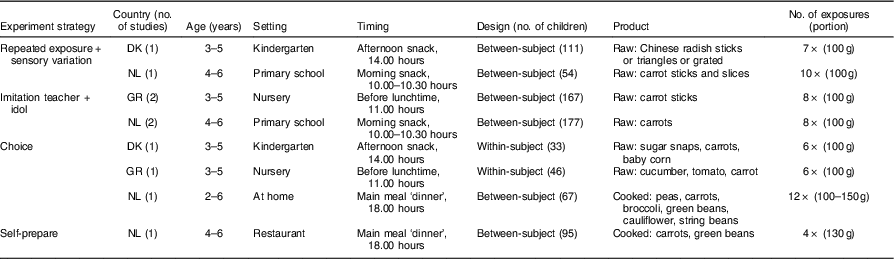
Vegetable intake was measured before and after the intervention and during the intervention sessions. An overview of the design of each study is shown in Table 1. Intake during the first session of the target vegetable was used as main outcome measure for the present analyses. This initial vegetable intake was used as the dependent variable in the current data analyses. Hereafter, we refer to baseline or first exposure intake as ‘initial vegetable intake’. Intake in grams was calculated by pre- and post-weighing the servings and subtracting leftovers from the offered portion. In all experiments, children were offered a portion of 100 g of vegetables, except for two Dutch studies which offered 130 g and 150 g, respectively. Therefore, initial vegetable intake was converted to a ratio measure (100 %) to compare the data from all ten studies.
Overview of the designs of the ten studies performed in three countries (Denmark (DK), Greece (GR) and the Netherlands (NL)) within the European HabEat project, with vegetable intake as main outcome, 2011–2014
Demographic variables
Before the start of each study, parents completed questionnaires at home on demographics and child eating behaviour characteristics. Parents reported their child’s date of birth, sex, weight and height, and maternal educational level. Child BMI (BMI Z-scores) were calculated using the WHO anthropometric calculator( 26 ). For comparison and consistency reasons and to ensure similar categories, maternal education level was rescaled from a six- or seven-category scale to a three-category scale: low, middle and high (‘low’ is primary and/or secondary school; ‘middle’ is vocational education; ‘high’ is higher vocational education and/or university degree).
Child eating behaviour characteristics
Breast-feeding history was assessed via two questions: ‘breast-fed yes/no’ and ‘duration of breast-feeding’. Breast-feeding duration was ascertained in weeks, except in the Greek sample, where seven categories were used (i.e. ‘0=no bf, ‘1=<1 week bf’, ‘2=1–4 weeks bf’, ‘3=1–3 months bf’, ‘4=3–6 months bf’, ‘5=6–9 months bf’, ‘6=9–12 months bf’ and ‘7=>12 months bf’), which were rescaled to weeks, taking the midpoint of the range as acutal duration. In addition, parents were asked to report their child’s vegetable liking on a 5-point scale ranging from ‘1=totally dislikes’ to ‘5=totally likes’. In Greece, vegetable liking was scored on a 7-point scale and consequently rescaled to a 5-point scale for comparison reasons. To assess the child’s eating behaviour, parents completed the seven dimensions of the validated Child Eating Behaviour Questionnaire (CEBQ)( Reference Wardle, Guthrie and Sanderson 27 ) and the six-item version of the Food Neophobia Scale for Children (CFNS)( Reference Pliner 28 , Reference Cooke, Carnell and Wardle 29 ). For the current data analyses, we used four dimensions of the CEBQ: food fussiness (FF; six items), satiety responsiveness (SR; five items), food responsiveness (FR; five items) and enjoyment of food (EF; four items). Items were scored on a 5-point scale ranging from ‘1=never’ to ‘5=always’ and averaged across the items. Higher scores correspond with a stronger expression of the characteristic. The six statements of the CFNS were scored on a 5-point scale from ‘1=strongly disagree’ to ‘5=strongly agree’ and averaged across the items. Higher scores indicate stronger food neophobia. In total, data for 1107 children were initially included in the data set. Excluding children with missing data for breast-feeding history (n 273) and/or initial vegetable intake (n 161) resulted in data of 750 children included for statistical analyses.
Statistics
Data analysis
The statistical software package IBM SPSS Statistics version 22 was used to analyse the data. The α level for significance was set at P<0·05. The assumption of normal distribution of the data was met for some variables, but not for all. Therefore, we did run logistic regression and non-parametric tests (Kruskal–Wallis, Mann–Whitney tests and Spearman) besides the parametric tests. Because these yielded similar results as the parametric tests, the parametric results (ANOVA and Pearson’s correlation) are reported. Means per country were calculated to investigate potential differences between the countries in initial vegetable intake, demographics and eating behaviour characteristics. Differences between the countries regarding age, BMI Z-score, vegetable liking and the children’s eating characteristics were examined using ANOVA with the Tukey post hoc test. Differences between the countries in sex distribution, percentages of children who were breast-fed (yes/no) and maternal education were analysed by using χ 2 tests.
Modelling intake by breast-feeding duration
The child’s initial vegetable intake was modelled per country by using breast-feeding duration, age of the child, sex of the child and maternal education as predictor variables. Apart from breast-feeding duration, maternal education, age of the child and sex of the child were included in the model as separate factors (covariates), on the assumption that age and sex are related to children’s vegetable intake (e.g. older children eat more, as do boys) but are causally unrelated to breast-feeding duration( Reference Ocké, Van Rossum and Fransen 17 – Reference Yngve, Wolf and Poortvliet 19 , Reference Cooke and Wardle 30 ). Maternal education is a possible confounding factor and therefore included in our model( Reference Scott and Binns 31 , Reference Gudnadottir, Sigurdur Gunnarsson and Thorsdottir 32 ). We used general linear model analyses to predict vegetable intake.
Vegetable liking is also known to be related to vegetable intake( Reference Cooke, Wardle and Gibson 10 ). Apart from a direct effect on intake, vegetable liking may be connected to vegetable intake indirectly, via breast-feeding duration, i.e. that breast-fed children are more likely to accept novel tastes. For this reason, it is difficult to disentangle the effects of breast-feeding duration and vegetable liking on vegetable intake. Therefore, vegetable liking was not included in the main model, but was taken into account together with other factors that are thought to be associated with vegetable intake, such as child eating behaviour characteristics. Pearson correlation coefficients were calculated to examine the relationships between these factors.
Results
Demographic variables
Table 2 describes the characteristics of the study sample overall and per country.
Characteristics of the study participants, overall and per country, from the ten studies performed in three countries within the European HabEat project, 2011–2014
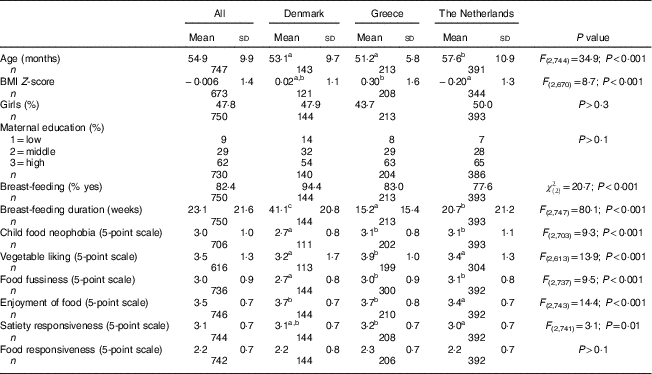
a,b,cMean values within a row with unlike superscript letters were significantly different (P<0·05).
No significant differences between the three countries were found for sex of the child (P > 0·3) and maternal education (P > 0·1). The distribution of maternal education showed a high percentage of the highest level of education overall and per country (see Table 2). Significant differences between countries were found for age (P<0·001) and BMI Z-score (P<0·001). Dutch children were on average 4·5–6·5 months older than Danish children and Greek children. BMI Z-score was lower in the Netherlands compared with children in Greece (P<0·001). BMI Z-score did not differ significantly between Denmark and the other two countries (see Table 2).
Child eating behaviour characteristics
A significant difference between the three countries was found for the percentage of children being breast-fed (P<0·001). In the Danish population, the percentage of mothers who initiated breast-feeding was higher (94·4 %) than in Greece (83·0 %) and the Netherlands (77·6 %). Also, breast-feeding duration differed significantly between the three countries (P<0·001). Danish children were breast-fed significantly longer than Dutch and Greek children, respectively 41·1 (sd 20·8) weeks, 20·7 (sd 21·2) weeks and 15·2 (sd 15·4) weeks (all P<0·001). Greek children scored higher on vegetable liking than Dutch and Danish children (P<0·001) with a mean score of 3·9 (sd 1·0) v. 3·4 (sd 1·3; P<0·001) and 3·2 (sd 1·7; P=0·01), respectively. Danish children were less neophobic (2·7 (sd 0·8)) than Dutch and Greek children (both 3·1; P<0·001; see Table 2).
Differences between the countries were also observed for food enjoyment (P<0·001), satiety responsiveness (P=0·01) and food fussiness (P<0·001), see Table 2 for scores. No significant differences (P > 0·1) were found for food responsiveness. Overall, we noticed significant differences between the countries for most variables, indicating heterogeneous sample populations in the different countries. Consequently, the model to predict vegetable intake was run per country.
Modelling vegetable intake at age 2–6 years old by breast-feeding duration
Table 3 shows the significant predictors of initial vegetable intake per country. Breast-feeding duration was a significant predictor in Denmark (B BF=0·35; P=0·005) and the Netherlands (B BF=0·18; P=0·047), where a longer breast-feeding duration predicted a higher initial vegetable intake, but not in Greece (P=0·17). Age of the child and maternal education were not significant predictors of initial vegetable intake in any of the three countries. Sex of the child was a marginal predictor (B boys=8·92; P=0·09) for children’s initial vegetable intake in Denmark only.
Regression coefficients (B) and their standard errors for breast-feeding (weeks), age of the child (months), maternal education and sex of the child, per country, in predicting later vegetable intake (grams) among 2–6-year-old children in the ten studies performed in three countries within the European HabEat project, 2011–2014
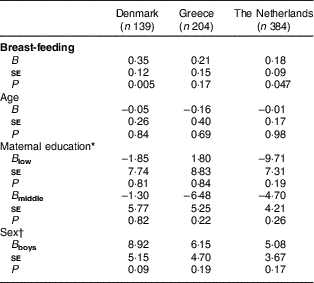
* Reference is high education.
† Reference is girls.
The outcome of the Danish model implies that each additional week of breast-feeding duration resulted in an increase in vegetable consumption of 0·35 g (see beta coefficients in Table 3). Hence, a child who had been breast-fed for 1 year (52 weeks) ate on average 18 g more vegetables than a child who had not been breast-fed. For the Netherlands, the model showed an increase of 0·18 g of vegetable intake for each additional week of breast-feeding, indicating that Dutch children who had been breast-fed for 1 year ate 9 g more vegetables than Dutch children who had not been breast-fed.
Correlations
Table 4 shows the Pearson correlations representing the relationship between initial vegetable intake and child (eating behaviour) characteristics per country. There was no significant relationship between intake and age, or between intake and BMI Z-score, for any country (see Table 4). Neither were satiety responsiveness and food responsiveness correlated with vegetable intake in any of the three countries. All countries showed an inverse relationship between food neophobia and children’s vegetable intake (respectively in Denmark, Greece and the Netherlands with a Pearson correlation of −0·31, −0·19 and −0·27; all P<0·01) and a moderately strong correlation between vegetable liking and intake (respectively, 0·30, 0·43 and 0·33; P<0·01). Food fussiness was positively correlated with children’s vegetable intake only in the Netherlands (P<0·001) and enjoyment of food was positively correlated with children’s vegetable intake also only in the Netherlands (P<0·001).
Pearson’s correlations (r) between child (eating behaviour) characteristics and initial vegetable intake, per country, among 2–6-year-old children in the ten studies performed in three countries within the European HabEat project, 2011–2014
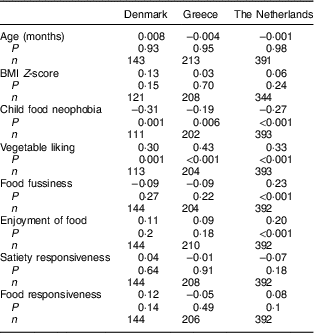
These results indicate that children with a higher vegetable liking ate more vegetables, and more neophobic children had a lower initial vegetable intake, as did children with higher scores on food fussiness (the Netherlands). Furthermore, Dutch children who enjoyed food more had a higher initial vegetable intake.
Discussion
The aim of the current study was to investigate whether breast-feeding duration has the potential to influence vegetable intake at age 2–6 years. Breast-feeding duration was positively associated with later vegetable intake during an eating session at a later age in Denmark and the Netherlands, but not in Greece. Children who were breast-fed for a longer period consumed more vegetables. We noticed differences in the outcome of this relationship across and between the countries. Overall, this indicates that the relationship between breast-feeding duration and later vegetable intake exists but is not straightforward. Age of the child, maternal education and sex of the child did not predict vegetable intake in our sample.
The mixed findings across European countries found in the current study are in line with other HabEat research that reported mixed findings on the relationship between breast-feeding and vegetable intake across four European cohorts( Reference de Lauzon-Guillain, Jones and Oliveira 33 ). For vegetables, a positive relationship was found for children breast-fed for 3–6 months (v. never breast-fed) in France and the UK, but the association was not significant in Greece and Portugal. One possible explanation for these country differences is the way vegetable intake was measured. Each country used its own FFQ to assess the children’s diet, which differed in the number of questions asked to assess vegetable consumption. They used as the main outcome whether a child did or did not reach a certain eating frequency of vegetables per day. In our study, vegetable intake was measured in the same way across the studies and reflected actual vegetable intake in grams. Consequently, this could not have biased our outcome, and therefore it is less likely that this has affected the differences that we found across the countries. However, it is important to note that vegetable intake in our study reflects intake of a particular vegetable during an eating session at a given day, which is indicative of a child’s vegetable eating habits (usual intake) but not fully representative. Still, recent research showed that children – who were good vegetable eaters according to their parents – also had a higher intake of three different vegetables at the pre-test of an experiment( Reference Zeinstra, Vrijhof and Kremer 34 ).
In contrast to our study, Cooke et al. did not find a significant relationship between breast-feeding and vegetable consumption among 2–6-year-olds in the UK; breast-feeding (‘breast-fed only’ or ‘breast- and bottle-fed’) was a significant predictor of children’s fruit intake compared with bottle-fed children, but this was not the case for vegetable intake( Reference Cooke, Wardle and Gibson 10 ). In Cooke’s study, other factors such as sex, enjoyment of food, food neophobia and parental intake played a role in children’s vegetable intake. A very similar study to ours within the HabEat programme was that by Caton et al., where vegetable intake was also actually measured during experiments performed in Denmark, France, the Netherlands and the UK. They reported that child eating behaviour characteristics were significant predictors of initial vegetable intake: younger children who enjoyed food more and scored lower on satiety responsiveness consumed more vegetables( Reference Caton, Blundell and Ahern 9 ). Additionally, their results showed that younger children were less fussy, enjoyed food more and had lower satiety responsiveness, characteristics which contributed to increased acceptance of a novel food (i.e. artichoke purée). Contrary to our results, breast-feeding duration did not influence initial vegetable intake in their study. Differences in the definition of breast-feeding duration between the studies could have mediated or confounded the effect. Caton et al. defined breast-feeding duration as the period of exclusive breast-feeding (i.e. until formula or food was introduced), whereas in our study breast-feeding duration was defined as the total period of any breast-feeding. Our study showed that child eating behaviour characteristics such as food neophobia, food fussiness, enjoyment of food and vegetable liking were also associated with vegetable intake. Children who were more neophobic and food fussy had a lower initial vegetable intake, whereas children who enjoyed food more and liked vegetables more had a higher vegetable intake, which is in line with previous studies reporting this( Reference Cooke, Wardle and Gibson 10 , Reference Cooke, Carnell and Wardle 29 , Reference Howard, Mallan and Byrne 35 ). All these studies point to the fact that, besides breast-feeding, other factors such as child eating behaviour characteristics seem to play a role in predicting later vegetable intake and these need to be taken into account.
There are several explanations for the observed differences in the effect of breast-feeding duration on children’s vegetable intake across the three European countries. First, the observed differences between the countries are likely mediated by breast-feeding practices; average breast-feeding duration was longest in Denmark, followed by the Netherlands and then Greece. Differences and variations in breast-feeding duration between the countries can be in part explained by cultural and social aspects. To illustrate this: women in Denmark typically take 9–12 months’ maternity leave, whereas Greek and Dutch policies prescribe shorter maternity leave, for a period of 17 and 16 weeks respectively. Once mothers are back to work, it may be more difficult for them to continue breast-feeding.
Second, the relationship between breast-feeding and vegetable consumption is complex. Research has shown that flavours like carrot, garlic, vanilla, ethanol and nicotine transfer via breast milk to the infant( Reference Mennella, Jagnow and Beauchamp 4 , Reference Mennella 36 – Reference Mennella and Beauchamp 41 ). However, whether other flavours are also transferred via breast milk is less clear. The positive effect of breast-feeding may also be related to the continuous variation in mothers’ milk concerning flavour diversity and intensity, because of mothers’ dietary variety. Therefore, it is likely that the maternal diet facilitates the offspring’s reaction to flavours via experience through breast-feeding( Reference Hausner, Nicklaus and Issanchou 6 ). Correspondingly, variety in a child’s diet early in life seems to improve acceptance of new foods. Maier et al. emphasized that the combination of breast-feeding and a high variety was most effective in increasing intake of new foods, including vegetables, directly after weaning, 2 months later and at 6 years( Reference Maier, Chabanet and Schaal 3 , Reference Maier-Noth, Schaal and Leathwood 42 ). Although Lange et al. did not find an effect of exclusive breast-feeding on higher acceptance of new foods in general, the effect was significant for acceptance of vegetables( Reference Lange, Visalli and Jacob 43 ). Both studies stress the importance of offering variety early in life in combination with breast-feeding as powerful mechanisms for later vegetable acceptance.
A third possible explanation is that, as children get older, other aspects become more important for vegetable intake and start to overrule an early effect of breast-feeding duration on later vegetable intake. An example of such a factor could be food neophobia that develops around the age of 2 years and commonly peaks between 2 and 6 years of age( Reference Cashdan 44 , Reference Cashdan 45 ). Although the present study did not show that age of the child was a predictor of children’s vegetable intake, we know that during the period of 2–6 years, eating behaviour can be influenced by many different emerging factors such as peer pressure and more foods/meals provided out of the home. Enjoyment of food, availability and parental vegetable intake are also considered important factors regarding children’s vegetable intake that may overrule the effect of breast-feeding( Reference Cooke, Wardle and Gibson 10 , Reference Rasmussen, Krolner and Klepp 46 , Reference van der Horst 47 ). Finally, cultural differences in timing and type of complementary feeding practices may have contributed to the differences found between countries in the present study.
Strengths of the current study are that the data used in the analyses were based on actual vegetable intake, that data were collected in a similar way across studies and that all experiments were conducted in a naturalistic setting. To our knowledge, Caton et al.’s recent study is the only other example where actual vegetable intake in relation to breast-feeding was investigated based on different experiments( Reference Caton, Blundell and Ahern 9 ). Most studies are based on self-reported and/or retrospective data on vegetable consumption in which FFQ or recalls are used, often only asking for frequency or servings per day, but these are not the most precise instruments to assess vegetable consumption( Reference Burnier, Dubois and Girard 2 , Reference Möller, de Hoog and van Eijsden 7 , Reference Cooke, Wardle and Gibson 10 , Reference de Lauzon-Guillain, Jones and Oliveira 33 , Reference Perrine, Galuska and Thompson 48 ).
Limitations of the present study include the self-reported information about breast-feeding history in a retrospective way, which may not be as accurate as prospective report. However, maternal recall of breast-feeding is generally considered to be reliable when breast-feeding is recalled after a short period of ≤3 years( Reference Li, Scanlon and Serdula 49 ). The recall period in the current study ranged from 2 to 6 years depending on the age of the child and the duration of breast-feeding. Breast-feeding duration as reported herein was not limited to exclusive breast-feeding but referred to any breast-feeding (including breast-feeding combined with bottle-feeding or complementary feeding); therefore, the intensity and the exact quantity of the breast-feeding stays unknown. Another limitation is that in the Greek sample, breast-feeding duration was reported by using a scale representing ranges instead of using absolute numbers, which could have explained the non-association between breast-feeding duration and vegetable intake among Greek children. Another limitation is the differences in experimental setting, i.e. type of meal (snack, lunch, dinner time) and type of setting (daycare centre, primary school, home environment, restaurant), which could have affected the outcome. Due to cultural habits, childeren may be more used to consume vegetables at a certain moment of the day or in a certain environment. Furthermore, the maternal education in our sample was relatively high. It remains unclear whether the positive relationship between breast-feeding duration and vegetable intake in our study can be extrapolated to less educated populations. Future research among more diverse samples regarding education level is recommended. Additionally, 32 % of the initial sample was excluded from the analyses due to non-completed questionnaires. It is possible that non-completion occurred more frequently among lower educated participants, which could have affected our outcome. Finally, no information was collected on other maternal characteristics such as motivation to breast-feed, motivation to serve a varied diet to their infant or desire for the child’s well-being in terms of a healthy diet. These characteristics may have confounded the observed association between breast-feeding duration and initial vegetable intake.
Conclusion
To conclude, breast-feeding duration was related to children’s vegetable intake during an eating session at age 2–6-years in Denmark and the Netherlands, but not in Greece. Our results further show that that a complex mix of factors such as vegetable liking and certain child eating behaviour characteristics (like food neophobia and enjoyment of food) also influence 2–6-year-old children’s vegetable intake. Besides the promotion of breast-feeding, public health efforts should focus on the promotion of additional strategies such as repeated exposure and offering variety early in life as ways to stimulate children’s vegetable intake, especially in countries where mothers tend to breast-feed for shorter periods. Further research should continue in this area to develop effective interventions with the aim to encourage children to eat sufficient vegetables which starts at a young age.
Acknowledgements
Acknowledgements: The authors thank all the families who participated in the studies throughout Europe. Special thanks are extended to Dr Sylvie Issanchou of the Institut National de la Recherche Agronomique (INRA), France for her advice, Dr Hendriek Boshuizen for her statistical advice and Catherine O’Dea for her contribution to the manuscript. Financial support: The present study was part of the HabEat programme aimed at understanding the development and key learning mechanism of food habits in young children. This research was supported by the European Community’s Seventh Framework Programme (FP7/2007-2013, grant number 245012-HabEat). The European Community had no role in the design, analysis or writing of this article. Conflict of interest: None. Authorship: G.G.Z., G.J. and V.W.T.d.W. formulated the research questions; A.O., V.C., G.G.Z. and V.W.T.d.W. collected the data; E.B., G.G.Z., G.J. and V.W.T.d.W. analysed and interpreted the data; G.G.Z., G.J. and V.W.T.d.W. drafted the manuscript; all authors revised and approved the final manuscript. Ethics of human subject participation: This study was conducted according to the guidelines laid down in the Declaration of Helsinki and all procedures involving human subjects were approved by the Institutional Review Boards of the local universities (Wageningen University, Wageningen, the Netherlands and the Harokopio University, Athens, Greece). The Danish experiments, which were performed by the University of Copenhagen, Denmark, did not require formal approval. Written parental informed consent was obtained from all participating children in the three countries.



