



Sustainability is a relatively recent concept in food policy. Since the late 1990s, there has been mounting evidence about the environmental impacts of food production, distribution and consumption processes( 1 ). The food system encompasses the actors, institutions and processes that influence the way in which agricultural products are produced, processed and distributed( 2 , Reference Tansey and Worsley 3 ). Food system activities are estimated to contribute between 19 and 29 % of global greenhouse gas emissions( Reference Vermeulen, Campbell and Ingram 4 ) and have been leading to soil degradation and reductions in biodiversity as the global food supply has become more homogenized( Reference Khoury, Bjorkman and Dempewolf 5 ). Homogenization, enabled by the industrialization of the food system, has been driven by the need to produce more food, more efficiently. This productionist way of thinking, and related policies, have often triumphed at the expense of ecological considerations of food quality and the environment( Reference Lang and Heasman 6 ).
A large body of nutritional epidemiological evidence now links a Western dietary pattern to the rise of non-communicable diseases including diabetes, CVD and some cancers( Reference Popkin 7 , Reference Ezzati and Riboli 8 ). Components of global trade including subsidies, tariffs and trade agreements influence the configuration and power-play of the food system( Reference Freudenberg 9 ), which produces malnutrition (both over- and undernutrition)( Reference Pinstrup-Anderson 10 ) and is the result of a ‘deeply dysfunctional’ food system( Reference De Schutter 11 ). Around the world, two billion people suffer from micronutrient deficiencies while over a billion are overweight or obese( 12 , 13 ). The health, environmental and economic impacts of this food system have informed strong calls for change with a focus on sustainability( 1 , Reference Bloom, Cafiero and Jane-Llopis 14 ).
There have been calls for the development of a ‘whole of government’ approach to national food policy in Australia( 15 ). From late 2010 to 2013, the Australian Government developed a National Food Plan (NFP), led by the federal Department of Agriculture, Forestry and Fisheries. The NFP involved the publication of an Issues Paper in June 2011( 16 ), a Green Paper in July 2012( 17 ) and a White Paper in May 2013 entitled National Food Plan – Our Food Future ( 18 ). At the Issues Paper and Green Paper stages, stakeholders were asked a number of questions and publicly contributed to the policy development process by providing their answers via submissions, meetings, roundtables and social media initiatives. These data were collated and used to inform the next stage of the NFP process. Sustainability was a central concept in the NFP: according to both the White (p. 14 and 16)( 18 ) and Green Papers (p. 2)( 17 ), the Government’s ‘vision for Australia’s food system is a sustainable, globally competitive, resilient food supply supporting access to nutritious and affordable food’.
However, defining what ‘sustainability’ might look like in practice is difficult. Despite the term being generally understood in a broader context as having three pillars (social, environmental and economic)( 19 ), its meaning often remains vague and it has been adopted and co-opted by multiple competing interests( Reference Bell and Morse 20 ). The broad definition of sustainability in the Green Paper was environmentally focused: ‘the capacity for development that can be sustained into the future without destroying the environment in the process’( 17 ). However, government is one of many actors in the food system, subjected to a constant jostle between differing and often competing interests( Reference Lang, Barling and Caraher 21 ). Other actors include the food industry and civil society, with each actor framing its views according to its values. Framing has implications for the way actors make sense of and try to influence their world. Frames can be identified from narratives describing an issue, its consequences and policy solutions( Reference Jerneck and Olsson 22 , Reference Lawrence 23 ). Given the inherently political nature of policy making, an awareness of the way a policy problem – in this case, sustainability – is framed, and how this influences action, is a vital step towards creating a common understanding between food system actors.
The 2010–2013 process to develop the NFP produced a clear articulation of the food policy positions of a wide range of stakeholders. It thus represents a rich source of data about the actors operating within food policy and the ways in which they frame sustainability within the food system. Alongside government, the food industry and civil society organizations (CSO) are the two most important groups shaping food policy( Reference Lang and Heasman 6 , 18 , Reference Swinburn 24 ). The aim of the present study was to examine the way in which food industry actors and CSO, directly involved in the food system, framed sustainability in the development of Australia’s NFP by analysing their submissions to the Green Paper. The submissions to the Green Paper represent the final stage of public consultation. We focused on these as a representation of stakeholders’ views closest in time to the finished policy document, the White Paper.
Methods
Setting
A ‘green paper’ is a government discussion paper and one way for government to gauge public acceptability for a policy proposal, especially when there are multiple stakeholders with different values and views( Reference Althaus, Bridgman and Davis 25 ). The Australian public was invited to submit responses to the NFP Green Paper between 17 July 2012 and 30 September 2012, and its responses were guided by a series of consultation questions listed in the NFP Green Paper (pp. 256–261)( 17 ). Submissions were published on the open website of the Australian Government Department of Agriculture, with the exception of those that did not provide permission to make their submission publicly available (n 35)( 26 ).
Study design
Of the 366 published submissions( 26 ) from a broad range of actors, we excluded those identified by name as belonging to an individual (n 96), government and other organizations identified by name, where the food system was unlikely to be a core purpose of the organization (n 102). The remaining submissions were screened to identify if the submitter was directly involved with the food system as a food industry or CSO stakeholder. Actors were identified as being directly involved in the food system if they were involved in, or concerned with, the production, processing or distribution of food. Overall, we examined 124 written submissions (1420 pages).
The food industry was defined as commercial entities, and associations representing commercial food entities, with direct involvement in the food system, which included the following sectors: agricultural inputs (e.g. seeds, fertilizer, etc.), agricultural production, primary and secondary food processing, food distribution, trade and transport, and food retailing( Reference Lang and Heasman 6 , 27 , Reference Jenkin, Signal and Thomson 28 ). In total, seventy-three food industry submissions were included in our sample.
CSO submitters were defined as non-government organizations and other organizations with direct involvement in the food system, but not through commercial activity( 29 ). They included non-government organizations, community-based organizations, professional associations, trade unions, foundations and civil society movements with a core purpose and direct interest in the food system. In total, fifty-one CSO submissions were included in our sample.
Analysis
A framing matrix adapted from Jenkin et al.( Reference Jenkin, Signal and Thomson 28 ) and Kwan( Reference Kwan 30 ) was used to guide the analysis (Table 1), by facilitating the systematic examination of the way industry and CSO actors depicted sustainability in the context of the NFP. The framing matrix was issue-oriented( 31 ) in that it considered how sustainability was positioned by focusing on descriptors and representations of sustainability (overall description and importance of sustainability) and policy solutions. Underlying values (appeals to principles) denoted the outlook of the actors and the drivers (main drivers) were the key factors actors identified as inducements to addressing sustainability( Reference Jenkin, Signal and Thomson 28 , Reference Kwan 30 , 31 ).
Framing matrix used to analyse the framing of sustainability in the process of developing the Australian National Food Plan
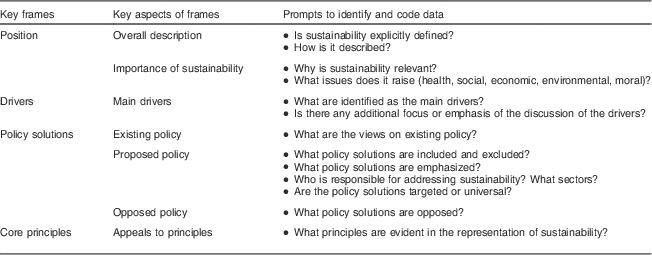
Submissions were open-coded and organized using NVivo software version 10. Two authors (S.M.D. and H.T.) each coded half of the industry and CSO data using an inductive approach. After the first fifteen submissions had been coded, codes were cross-checked by the two authors and applied to the framing matrix. The framing matrix was used to provide prompts to the authors to identify and systematically code data, but also to compare/contrast/review coding between the two authors within the frames (position, drivers, core principles, policy solutions). Two authors (S.M.D. and H.T.) compared the coded data across and within the frames, and subsequently organized and combined codes into key themes. Together, all authors (S.M.D., H.T., J.C.K.) organized the key themes within the framing matrix to report the results.
Results
Only three of the 124 submissions reviewed included an explicit definition of sustainability. There were several similarities between industry and CSO in terms of their framing of sustainability; however, there were also differences (Table 2). These similarities and differences are discussed in more detail below. A major theme that ran throughout the analysis was the tension among the environmental, health and economic aspects of sustainability, especially that between environmental degradation and agricultural production. As one industry actor stated: ‘sustainability does not quite get the attention it deserves’ (Maartje Sevenster Environmental Consultancy and Edge Environment).
Key similarities and differences in the framing of sustainability between Australian industry and civil society organizations in submissions from the National Food Plan Green Paper
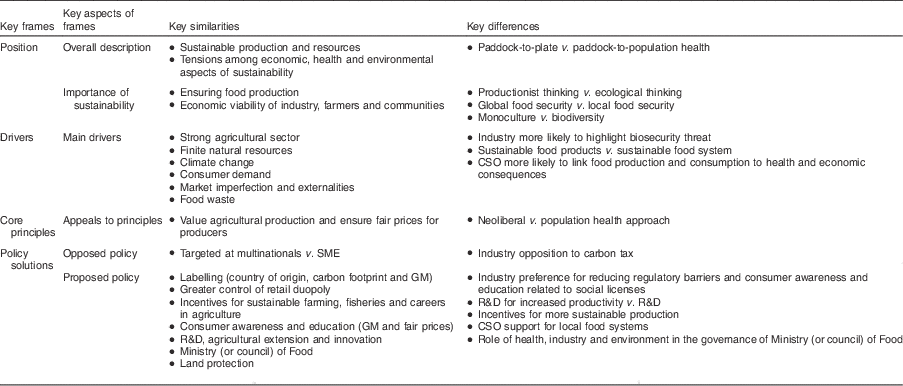
SME, small and medium enterprises; R&D, research and development; CSO, civil society organizations.
Positioning of sustainability
Both CSO and industry described sustainability in terms of farming and fishery practices and maintaining natural resources. However, there was a clear difference in the use of sustainability between industry and CSO. While industry actors described it in terms of productivity, profit growth and competitive advantage, CSO more often described it in terms of a healthy food system with lower environmental and social impacts. While industry actors described a ‘paddock-to-plate’ approach, CSO took this a step further: ‘paddock to population health’ (to use the expression coined by the Australian Chronic Disease Prevention Alliance). However, there were some exceptions in the framing of sustainability by industry members whose brand is closely linked to selling healthier food and products. For example, Sanitarium, a health food company, stated: ‘that the issue of a sustainable food supply can no longer continue to be divorced from sustained population health, ignored or delayed.’ CSO, and some industry actors, also described sustainability in terms of how, and what, food is produced. One CSO stated: ‘Disconnected from the true costs of food production, the price of food is artificially low, ignoring externalities such as environmental impact, declining public health and the erosion of rural and remote communities’ (Friends of the Earth Adelaide submission).
Both industry and CSO described the importance of sustainability in terms of ensuring adequate food production and the economic viability of farms (including ageing farmers and their livelihoods) and regional communities. However, there were some distinctions in the framing of sustainability in the food system between the two groups. Industry focused on the quantity of food produced (i.e. providing enough energy), while CSO described sustainability in terms of quality, including retaining biodiversity and ensuring access to affordable nutritious foods (i.e. providing sufficient nutrients). Moreover, the focus of industry was typically on enough energy both nationally and globally, while CSO emphasized the importance of adequate nutrition and shorter, sustainable supply chains for local, rural and regional communities.
Drivers of sustainability
Similarities in the identified drivers of sustainability were the need for a strong agricultural sector in the face of tensions due to finite resources (land, oil, water, high quality soil) and the challenges of climate change and food waste. Although there were some exceptions, both industry and CSO mentioned the imperfect market (i.e. market failure, buyer distortion and not full disclosure) and the externalities of food production as a driver of unsustainable practices. In particular, they referred to intensive agricultural practices, impositions on trade (industry submitters only) and the imbalance of power between the supermarkets and primary producers, which can limit the viability of local agriculture by forcing out smaller producers.
Consumer demand was described as a driver in both groups of actors but in slightly different ways. Industry actors described a consumer trend for sustainable food products, whereas CSO described an increase in consumers’ desire to reconnect with their food and where it comes from. Industry actors were more likely to identify biosecurity risks, and threats to food production, from unresolved tensions between coal mining and agricultural production for the use of finite land, or from the use (or lack of use) of biotechnology such as GM crops, as key drivers of sustainability for their industry. By contrast, CSO were more likely to identify non-communicable diseases and obesity as a driver of sustainability, particularly in the context of increased costs to the health system and reduced productivity due to lower participation in the workforce. Although a small number of industry members mentioned non-communicable diseases as a driver of sustainability, most did not mention their potential economic impacts.
Core principles of sustainability
Both industry and CSO indicated the need for consumers to value agricultural production and to ensure that producers obtained fair prices. ‘Consumers expect environment and social issues to be looked after, but are generally unwilling to pay any premium… Consumers need to value the food they purchase, beyond short-term price concerns’ (Australian Dairy Council). However, there were key differences in their underlying values: industry actors had a more neoliberal approach to sustainability, while CSO took a population health approach. For example, Food Fairness Illawarra, a CSO, stated: ‘We are all impoverished by a system that encourages waste, over-consumption, and misuse of natural resources for products with negligible nutritional value’. This can be contrasted with an industry approach, for example: ‘Poor diet, over eating are not relative [sic] to a National Food Plan Initiative as they are either personal choices or are the result of individual economic decisions’ (Crichton Maxwell Pty Ltd).
Policy solutions to address sustainability
There were mixed views on whether or not the proposed national nutrition policy should be integrated into the NFP. Most CSO indicated that they thought it should be integrated, whereas there were mixed views from industry. For example, the National Farmers Federation (NFF) stated: ‘the NFF believes that aspects of the food plan related to food consumption and driven by public health concerns are different to the physical production and supply of food, and should be dealt with through different, but complementary strategies.’ In contrast, the Australian Chronic Disease Prevention Alliance envisaged a food plan to ‘promote a safe, nutritious, affordable, secure and environmentally sustainable food system’.
The main issues raised by CSO in their responses to the Green Paper were: (i) the disconnect among nutrition, food production and the environment; (ii) the focus on economic sustainability; and (iii) the need for more structural changes to the food system, rather than the ‘business as usual’ approach described as ‘treadmill thinking’ (Biological Farmers of Australia). The Public Health Association of Australia stated: ‘Australia’s National Food Plan should present an innovative total overhaul of the food system rather than tinkering at the edges to bring marginal economic improvements to the current system. New vision and new goals to meet specific objectives for the health of the population and the sustainability of our entire food system are imperative.’ Several industry members, and a few CSO, indicated that the Green Paper put too much emphasis on multinationals (emphasizing productivity and competitiveness) and was not geared towards smallholders and/or small and medium enterprises (emphasizing economic, community viability).
Both industry and CSO proposed several policies targeted at improving sustainability within the NFP. Incentives for sustainable farming and fisheries and for younger generations to pursue careers in agriculture, protecting peri-urban land for agricultural production and reducing the control of the food supply chain by Australian retailers were key policy areas identified by industry and CSO. There was also support by both groups for a food ministry, council or committee; however, there was disagreement between actors on the proposed governance structures. Some industry members wanted to ‘include strong industry representation with decision making influence’ (Food South Australia), whereas overwhelmingly CSO wanted more health representation and requested that the council or committee should report directly to the Prime Minister. However, industry actors producing products marketed as ‘healthier’ (horticulture, dairy, healthier processed foods, etc.) did not agree that agriculture should be emphasized at the expense of other sectors fundamental to the food system, particularly public health.
Industry and CSO also agreed on the need for greater consumer awareness and education, particularly in relation to GM foods and fair prices. Industry members also indicated the need for consumer education in terms of a ‘social licence to operate’ (i.e. the informal approval that consumers grant to the activities of an organization) with a particular reference to fisheries. Both groups acknowledged that improved labelling (GM, environmental footprint and country of origin) would help improve consumer awareness about the sustainability of the food they purchase. This was seen as a way for the industry to market ‘clean and green’ (Australian Food and Grocery Council) Australian products within the country and abroad. The need for research and development (R&D), agricultural extension and innovation was noted by both industry and CSO. However, while industry highlighted the need for R&D in order to increase productivity and adapt to climate change and variability, CSO placed more emphasis on its role in developing sustainable farming practices. Moreover, CSO stressed the need for support of local and ‘short’ supply chains (including community gardens and farmers’ markets), in order to produce food in a more sustainable way.
An important difference between industry and CSO related to greater industry support for reducing regulatory barriers and improving coordination between state and federal and import and export regulation. Likewise, regulation covering imported foods, particularly in the context of maintaining biosecurity, was a recurrent theme in industry submissions compared with submissions from CSO.
Discussion
Sustainability was an explicit goal of the Australian Government’s NFP( 18 ). We found that food industry and CSO stakeholders understood the term differently; this has implications for policy development. CSO were more likely to make the link between the food supply and population health, while industry was more likely to focus on the economic dimensions of sustainability. However, both groups supported a whole-of-government approach to an NFP and shared a desire for consumers to appreciate the true value of their food. These similarities suggest a possible entry point for integrating sustainability goals within the food system, despite the existence of different frames.
One practical approach to achieving this is ‘shared value’, as described by Porter and Kramer( Reference Porter and Kramer 32 ). Shared value asks that stakeholders recognize that the health of the economy, the environment and people are intertwined. Adopting a shared value approach can incentivize innovation in solving societal and environmental issues, by framing these as a way to increase profit( Reference Wilburn and Wilburn 33 ). However, as discussed below, the NFP’s own framing of sustainability emphasized economic value and treated it as a dimension separate from health and the environment. As noted by many CSO submissions, this was a missed opportunity to implement an integrated approach to sustainability.
Furthermore, since the change of government in September 2013, there appears to have been a shift away from, rather than towards greater integration of sustainability in the food system. The new government shelved the NFP, and released an Agricultural Competitiveness Issues Paper in February 2014( 34 ) and Green Paper in October 2014( 35 ). These are preparation for the Agricultural Competitiveness White Paper( 29 ) which will focus on the role of agriculture in achieving greater economic growth and prosperity by increasing innovation, productivity, investment and trade( 34 ). The Agricultural Competitiveness Issues Paper gives little attention to sustainability. Indeed, the words ‘sustainability’ or ‘sustainable’ appear five times, two of which are in the context of ‘debt sustainability’ (i.e. in relation to servicing farm debt) and the other in the context of competitiveness (i.e. efficient and optimal use of resources to achieve sustainable improvements in living standards and profit)( 34 ). Furthermore, the official policy note from the Australian Government on its G20 website positions ‘sustainability’ as describing economic growth alone( Reference Williams 36 ). This repurposing of the word ‘sustainable’ illustrates the highly political nature of this policy area, in which key concepts and definitions themselves are contested.
Positioning sustainability
The 1987 Brundtland Commission defined sustainable development as that which ‘meets the needs of the present without compromising the ability of future generations to meet their own needs’( 37 ). This classic definition is usually understood to comprise three ‘pillars’ of sustainability: economic, social and environmental( Reference Jackson 38 ). However, what this means for policy implementation remains highly contested and sustainability has been called ‘perhaps the most challenging policy concept ever developed’( Reference Omann and Spangenberg 39 ).
The Australian Government’s framing of sustainability shifted during the NFP process. Initially, the Issues Paper framed sustainability as relating to several dimensions of the natural resource base: social and economic sustainability of communities; climate change impacts, adaptation and mitigation; and the environmental performance of the food supply chain( 16 ). By the Green Paper stage of the policy cycle, this frame had become narrower and more focused on the economic dimension. Of sustainability, the Green Paper simply stated: ‘a strong natural resource base [which is] essential to Australia’s capacity to sustainably produce food and will help ensure the ongoing productive capacity of our farmland and fisheries for the wellbeing of future generations’ (p. 6)( 17 ). It went on to position market approaches as the best means of securing sustainability, stating that ‘In relation to environmental sustainability… the government believes commercial imperative, combined with other government measures (such as environmental legislation and natural resource management initiatives), is adequate to ensure food production systems operate in a manner suited to Australia’s natural resource base’ (p. 116)( 17 ).
We found few explicit definitions of sustainability in the responses of the industry and CSO actors. Instead, the prompts in the framing matrix provided a way of systematically interpreting the meaning given to sustainability. While industry and CSO described it in terms of the environment and social pillars, industry focused on the economic pillar. This tension, between the environmental impacts of agriculture and the achievement of a nutritious and economically viable food system, has been recognized at the level of international governance( 40 ), in policies and dietary guidelines proposed by countries such as the UK( 41 ), Sweden( 42 ) and the Netherlands( 43 ), and by public health professionals( Reference Selvey and Carey 44 – Reference Friel, Barosh and Lawrence 47 ).
The tension was further apparent in our findings on how different food policy actors framed the importance of sustainability. Many industry actors described sustainability in terms of enabling food production, while CSO described a sustainable food system as one enabling access to affordable, nutritious foods. The CSO framing of sustainability is more aligned with an ecological public health perspective( Reference Lang, Barling and Caraher 21 , Reference Rayner and Lang 48 ). This will mean going beyond a single-minded focus on production. We found growing acknowledgement by CSO that the challenge of producing enough food has now been overtaken by the need to reform the structural drivers that enable its equitable distribution, its environmental impacts and the pursuit of good nutrition and health( Reference Friel and Baker 49 ).
Industry is not a homogeneous entity but is made up of very different industry sectors and companies operating within the sectors. We found subtle differences in framing within the industry actors, according to industry sector. For example, the dairy industry framed sustainability in a way that more closely resembled the perspective taken by CSO. Acknowledging that the Australian dairy industry imposes a relatively large environmental burden, second to meat( Reference Friel, Barosh and Lawrence 47 ), the sustainability strategic framework for the Australian dairy business( 50 ) comprehensively sets out the three pillars of sustainability. Similarly, a handful of multinational food companies are leading the field in adopting a shared value approach (e.g. Nestlé, Unilever, Dow and Danone)( Reference Pfitzer, Bockstette and Stamp 51 ). An example of a smaller enterprise is Sundrop Farms in South Australia, which has begun turning sunlight and seawater into clean food, water and energy. Energy from the sun is used to desalinate seawater, which is then used to supply freshwater to the greenhouse where the company grows fruits and vegetables( Reference Mathews 52 ). By linking the production of clean energy, water and food, it has developed an economically viable means of sustainably producing healthy foods. Achievements like these at the level of individual enterprise demonstrate the potential of a shared value approach. However, in order to scale these examples up and implement them more broadly, the challenge will lie in companies moving from a project-based approach to sustainability, to one that positions sustainability at the core of their business( Reference Eccles and Serafeim 53 ).
Increasing cross-sectoral collaboration and governance
Industry and CSO were generally supportive of a whole-of-government approach to addressing sustainability within the NFP, but there was some disagreement on the priority that should be given to health interests. This is a challenge that has dogged food policy for at least a century – debates in the Victorian State Parliament as far back as 1905 revolved around whether food safety should be overseen by the department of health or the department of agriculture( 54 ). Giving greater priority to health or to the environment in the development of Australian food policy will require inter-sectoral and inter-departmental approaches to food policy, posing a challenge to this notoriously ‘siloed’ policy arena( Reference Lang, Barling and Caraher 21 ). Both CSO and industry identified the creation of a Ministry of Food as a possible means of integrating across sectors. Many CSO expressed a preference for such a Ministry to report directly to the Prime Minister. Such a portfolio could overcome a certain amount of policy jostling by setting out clear priorities within the food system and actively seeking opportunities for shared value, including sustainability.
Proposed policies to support a sustainable food system
We found some consensus between actors about the types of policies that would improve the sustainability of the food system. In particular, there was strong support for investing in R&D to facilitate improvements in productivity, adaptation to climate change and the development of sustainable and local farming practices. A coherent set of policies from government to promote innovation throughout the food system is a fundamental requirement for public health nutrition and environmental sustainability innovation. For example, in Brazil, 30 % of food procured for school lunches must be purchased from local farmers( Reference Aranha 55 ). This policy provides economic stability to local farmers and improves the dietary intake of schoolchildren. Local councils in the Illawarra region of New South Wales, Australia, have adopted a food strategy which described how the community, local businesses and organizations can work together towards a ‘vibrant, sustainable local food system that is resilient, prosperous, fair and secure’( 56 ). Similarly, in Melbourne, Australia, the local government has developed a ‘Food City’ policy ‘to improve people’s health and wellbeing by creating a food system that is secure, healthy, sustainable, thriving and socially inclusive’( 57 ). As part of the initiative, the city positions itself as taking a role in research, regulation, advocacy and leadership, partnerships, education and the community aspect of a ‘food city’ – many of the areas for intervention identified by NFP submitters. By taking a more holistic view of the food system and its sustainability, Australia could innovatively address some of the key areas identified by industry and CSO to improve the sustainability of the food system.
Creating consumer demand for sustainably produced food
Increasing consumer demand for sustainably produced food and food products has the potential to reorient the food system towards more sustainable production. However, consumers expect the food industry and government to lead on sustainability and to adopt coherent policies throughout the food system( 58 ). We found common ground between CSO and industry in their definition of consumer demand as a driver of sustainability and their support for encouraging consumers to value sustainably produced foods, with some feeling consumers should be willing to pay a premium for sustainably produced foods and others fearing that consumers were unwilling to pay for the true cost of their food. However, as reported in a large European study, the price of food tends to trump concerns over sustainability in consumers’ purchasing decisions (although it noted the importance of country context)( Reference Grunert, Hieke and Wills 59 ). The food industry in particular plays a crucial role in shaping consumers’ perception of the value – and appropriate cost – of good food. While campaigns such as Coles Supermarkets’ ‘everyday low pricing’( 60 ) have served to lower consumers’ expectations of what they should be paying for food, they also suggest a way forward. Our findings of common ground on this issue suggest an opportunity for advertising or marketing campaigns that instead seek to make the case for paying the true cost of healthy and sustainable food. This is an inevitably complex equation, and cost is likely to remain a barrier in lower socio-economic pockets of the population( Reference Friel and Baker 49 ).
Limitations and strengths
A relatively large number (n 96) of submissions came from private individuals and these displayed little, if any, consistency in terms of stating their affiliation. We excluded these from the analysis, as it was difficult to tell whether the individuals were speaking for an organization or on their own behalf. Our analysis was limited to those submissions from industry and CSO that were publicly available. However, we reviewed 124 submissions with 1420 pages in a systematic way and it is unlikely that the eight submissions we could identify by name from industry or CSO, and not publicly available, would change our findings. Our industry grouping was diverse; however, we open-coded industry responses separately and our analyses allowed for us to identify (and report) conflicting views which we have highlighted throughout the manuscript. Lastly, our approach assigned equal weight to each submission, whereas clearly some industry and CSO organizations have a much louder voice and more influence in the policy development process.
Conclusion
Sustainability was a key goal of the NFP, but its meaning shifted throughout the policy process. Examining the framing of sustainability by two key groups of actors in their submissions to the NFP allowed us to identify areas of synergy and tension, and may point towards productive future policy directions. We found reason for optimism in some clear opportunities for creating shared value. We were encouraged by instances of agreement on the best approaches to governance and policy options aimed at addressing sustainability within the food system. The Australian Government should continue to invest in R&D in sustainable farming practices and promote local food systems. Local governments are already taking the lead in this area and the state and federal governments have a larger role to play in terms of supporting these best practices and promoting wider uptake.
However, despite pockets of optimism there is an urgent need for a shared vision of sustainability if Australia is to have a coherent food policy framework that actively integrates production, nutrition and the environment. Nevertheless, given the competing interests of actors and the current power imbalance in favour of economic interests, achieving this will be difficult. It will likely only happen when all three pillars of sustainability become central to business models.
Acknowledgements
Acknowledgements: The authors thank Dr Justin McNab and Professor Stephen Leeder for providing feedback on an earlier version of this manuscript. Financial support: This research received no specific grant from any funding agency in the public, commercial or not-for-profit sectors. H.T. receives a postgraduate scholarship award from the National Health and Medical Research Council Australia. J.C.K. receives funding from The University of Sydney via an Australian Postgraduate Award, as well as from the Charles Perkins Centre and Sydney Law School. S.M.D. receives funding from the Canadian Institutes of Health Research and the Commonwealth Government Endeavour International Postgraduate Award. Conflict of interest: The authors have no conflict of interest in relation to this work. Authorship: H.T., J.C.K. and S.M.D. jointly conceived of the study. H.T. and S.M.D. analysed the data and all authors participated in the manuscript preparation. Ethics of human subject participation: Ethical approval was not required.



