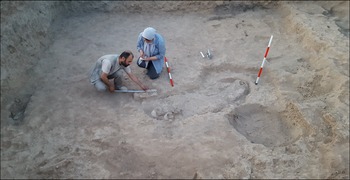
Ali Vahdati and Raha Resaleh measure Grave 5 in Trench 1 at the Bronze Age settlement and cemetery site of Kalat-e Yavar, Iran. Responsibility for the rescue excavations undertaken here was assigned to three specialists. They had never collaborated in the field before, and were based at different institutions, but came together due to their diverse yet complementary expertise. Vahdati, an expert in Bronze Age material culture based at the regional Bojnord office of the Islamic Republic of Iran’s Ministry of Cultural Heritage, Tourism and Handicraft Organisation, requested the involvement of Kourosh Mohammadhani from Shahid Beheshti University, who was responsible for the geophysical survey of the site and subsequently served as co-director of the excavation. They were then joined in the field by Zeinab Mahjoub, a research student at Mazandaran University, who is now studying the metal finds as part of her doctorate, co-supervised by Vahdati. Photograph: Kalat-e Yavar Excavation Project.

Frontispiece 1 Long description
Two individuals, Ali Vahdati and Raha Resaleh, are seen measuring Grave 5 in Trench 1 at the Bronze Age settlement and cemetery site of Kalat-e Yavar, Iran. They are using tools to take precise measurements of the grave. The site is surrounded by excavated earth and various archaeological artifacts are visible around the grave. The individuals are focused on their work, indicating a careful and methodical approach to the excavation process.
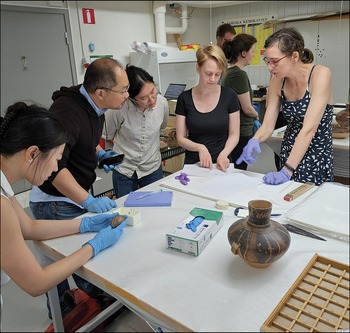
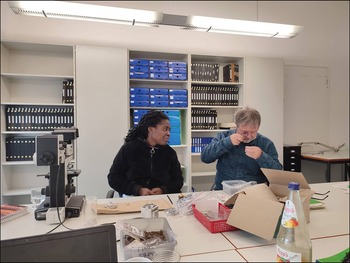
Members of the ‘Excavating Andersson’ research team—Jada Ko, Michel Lee, Yu Zhuang, Anna Schottländer and Anke Hein (from left to right), plus Andrew Womack and Katherine Brunson (in the background)—study the Andersson Collection of Chinese ceramics and faunal remains, housed in the Museum of Far Eastern Antiquities in Stockholm, Sweden. This team’s story began at a ceramic petrography workshop in Hamburg, when Ole Stilborg (a specialist in ceramology affiliated with Stockholm University) mentioned to Anke Hein (an expert in Chinese archaeology) that he would love to look at Chinese ceramics in the museum. They visited together in 2016, recognised the research potential of the collection and undertook a pilot study. However, due to retirement, Stilborg did not remain on the project for long. Hein therefore reached out to her established collaborator, Andrew Womack, who had already undertaken petrographic work on Chinese ceramics. They then brought on board two zooarchaeologists, Kate Brunson and Jada Ko. Over the course of a decade, various other researchers have come in and out of the team, mostly students joining for a season or two. Photograph: Excavating Andersson project.

Frontispiece 2 Long description
A group of researchers, including Jada Ko, Michel Lee, Yu Zhuang, Anna Schottlnder, and Anke Hein from left to right, plus Andrew Womack and Katherine Brunson in the background, are examining the Andersson Collection of Chinese ceramics and faunal remains. They are in a laboratory at the Museum of Far Eastern Antiquities in Stockholm, Sweden. The researchers are wearing gloves and are focused on various artifacts and documents spread out on a table. The table has items such as a vase, gloves, and other tools used for their study.
Understanding teams and teamwork
 Solo research and authorship is declining in nearly all disciplines, while teams are increasingly dominating the production of knowledge.Footnote 1 It is striking, then, that information on how teams form, develop and function is hard to find in most archaeological publications, even though teamwork is fundamental to the outcomes of most research projects and to the personal development of their members. Understandably, given word limits, authors of academic articles prioritise presenting their scientific research over details about their teams, concise acknowledgements of which appear only around the edges of the main text. But insights into the constituencies and complexities of teams and teamwork enrich our understanding of the archaeological process.
This has been demonstrated by various ethnographies of archaeological practice, including by reflexive studies of the construction of archaeological knowledge by research teams working at Çatalhöyük, TürkiyeFootnote 2. These wide-ranging studies have explored topics spanning community and Indigenous archaeology, labour and expertise, information flow and reasoning, teaching and apprenticeship, gender and diversity, wellbeing and (dis)ability. In contrast, the ‘science of team science’, which has been developed in disciplines such as public health, psychology and management, is more concerned with measuring the success of science teams.Footnote 3 Their definitions of ‘team’ centre on a group of two or more members working together on a particular activity—and helping one another by pooling resources, knowledge and skills—to achieve a shared goal. It is, however, acknowledged that there are many kinds of teams, with different sizes, objectives, durations, organisational structures, disciplinary scopes and resources. The goal of these team-science studies is to enhance the effectiveness of teams to achieve more numerous, more efficient and better-quality products or services and greater rewards.Footnote 4 Advocating this way of thinking, and the potential of collaborative researchers to identify and address important research questions, Jeff Altschul and colleagues have argued that the “‘team science’ approach, combined with the lessons learned from synthesis centers in ecology and other fields, needs to be heeded in archaeology”.Footnote 5
Informed by these contrasting perspectives on team archaeology, my interest here focuses on the archaeological teams that publish reports about their research projects. I wrote to corresponding authors and co-authors of the 12 Project Gallery pieces published in the June issue of Antiquity to find out more about their research teams working in different parts of the world. (None of them comprise commercial archaeology teams, although a few of their members work commercially.) My questions were varied but centred on trying to clarify whether my understandings of the origins, forms and functioning of their teams—based on the information provided in their articles and on related webpages—were accurate. I did not seek to evaluate the scientific success of those teams. Everyone I contacted replied with enthusiasm, appreciating the interest taken in their collaborations and the opportunity to reflect on them, and consequently freely shared explanations and photographs of their teams in action. My prior knowledge always turned out to be partial, with the reality being more complex and interesting. Indeed, I would have liked to ask more questions but chose not to over-intrude on their busy working lives, with the exception of Dan Lawrence, who kindly commented on a draft of this text. The following is what I learnt.
Forming teams
Researchers tend to work with past collaborators, and funders tend to favour proposals from applicants with a track record of collaboration. In archaeology, which is often described as a small world, new research teams emerge out of pre-existing networks and working relations. Authorities and principal investigators usually reach out to key contacts (Frontispiece 1), especially people with whom they have previously collaborated successfully and built up trust—relationships that are often sustained over many years. Those contacts may, in turn, bring on board their collaborators and volunteers. At the same time, early career researchers (and even the more established ones) often continue to work with the supervisors of their doctoral research and/or their professors’ close collaborators, and include them in new projects—relationships that are frequently marked by enduring respect, gratitude and loyalty. In some cultures of archaeology, however, a fine line may separate these productive relations from cronyism and nepotism, which exclude the best researchers from teams, lower academic standards and stifle innovation.
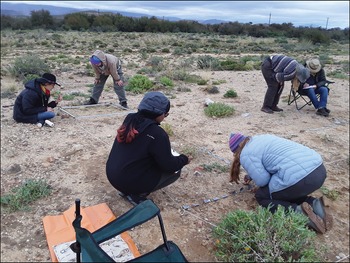
Members of the University of Cape Town’s Archaeology Club survey an artefact scatter at Wolwekraal Nature Reserve, South Africa. Photograph: Sue Milton-Dean.

Figure 1 Long description
In a dry, open landscape, several individuals are engaged in an archaeological survey at Wolwekraal Nature Reserve in South Africa. They are spread out across the terrain, examining the ground and taking notes. Some are crouching or kneeling, while others are sitting on folding chairs. The area is sparsely vegetated with small bushes and shrubs, and the sky is overcast, suggesting a cloudy day. The individuals are dressed in warm clothing, indicating cool weather conditions.
A positive process has benefitted the Mersin project in Iran.Footnote 6 Since 2014, salvage excavations of the Achaemenid cemetery have been led by Mehrdad Malekzadeh of the Iranian Centre for Archaeological Research in Tehran, in association with the experienced field archaeologist, Reza Naseri of the University of Zabol, both of whom have collaborated closely for many years. For the most recent excavation campaign (2020–2024), Naseri contacted his long-term Italian collaborator, Roberto Dan, of the International Association for Mediterranean and Oriental Studies (ISMEO), who drew in members of the research network of experts that he co-ordinates, including talented early career researchers.
An even more personal and informal process occurred in the formation of the archaeological survey of the Wolwekraal Nature Reserve in South Africa.Footnote 7 In 2022, landowner and ecologist, Sue Milton-Dean, asked Liora Kolska Horwitz to undertake an archaeological survey of her property. Horwitz, a zooarchaeologist affiliated with the Hebrew University of Jerusalem, Israel, was originally an undergraduate at the University of Cape Town and has remained in contact with people there. So, Sue and Liora contacted John Parkington at the university, secured Ashley Christowitz as a Masters student to undertake research on the Wolwekraal sites, and brought in Cedric Poggenpoel and Stephen Wessels, a long-term collaborator and a PhD student of Parkington with expertise in geomatics, respectively. The fieldwork that followed involved student members of the university’s Archaeology Club (Figure 1).
Team developments and dynamics
Highly productive research teams are often stable and long-lasting, being sustained by established processes, past successes and strong social ties. Nevertheless, project teams are also dynamic and can develop, decline, close or reactivate organically over time, gaining new members and losing others in response to opportunities and constraints, notably around funding (Frontispiece 2). Those teams with a mix of established collaborators and newcomers tend to be the most creative and innovative, and the least susceptible to groupthink.Footnote 8
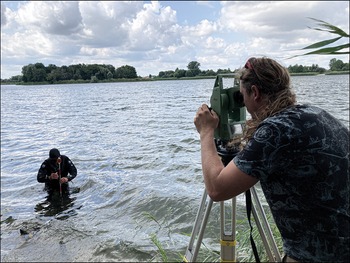
Matusz Popek and Konrad Lewek, from the Centre for Underwater Archaeology, Nicolaus Copernicus University, use a land-based total station to document the submerged upper layers of a collapsed early medieval stronghold at Lednicki Ostrów on Lake Lednica, Poland. Photograph: Katarzyna Niedźwiedź.

Figure 2 Long description
A person stands on the shore of a lake, operating a land-based total station to document submerged ruins. Another individual, wearing a wetsuit, stands in the water holding a measuring rod. The scene is set against a backdrop of trees and a partly cloudy sky. The total station is mounted on a tripod, and the person operating it appears to be focused on the device. The individual in the water seems to be assisting with measurements, indicating a collaborative effort in underwater archaeological documentation.
The resilience of the team documenting the underwater remains of the early medieval settlement complex of Lednicki Ostrów on Lednica Lake, Poland, is particularly impressive. Underwater archaeology has taken place here since 1982, in collaboration with the Museum of the First Piasts at Lednica. The project is led by Andrzej Pydyn, a Polish underwater archaeologist and director of the Centre for Underwater Archaeology at Nicolaus Copernicus University, Toruń, Poland. Although the Centre has seen various institutional ups and downs, Pydyn’s research team has persisted, with archaeology students and other volunteers bolstering the workforce when required (Figure 2).
Similarly, the small Africanist team in the Institute of Archaeology of the University of South Bohemia, Czechia, has grown gradually. It already had an established formal research partnership with the University of Dakar, Senegal. It then expanded in 2022 to incorporate Patricia Ayipey—a graduate of the University of Ghana—as a funded doctoral student supervised by archaeobotanist Jaromír Beneš to develop her Likpe Kukurantumi Archaeological Project (Figure 3). Beneš drew upon his European network to bring in Alexa Höhn of Goethe-Universität Frankfurt am Main, Germany, to strengthen the team’s expertise in charcoal identification, while Ayipey invited Dela Kuma—an Africanist archaeologist based at the University of Pittsburgh, USA—to gather ethnographic data on foodways in her study areaFootnote 9.
Patricia Ayipey and Jaromír Beneš of the University of South Bohemia, Czechia, examine charred seeds from the Late Iron Age settlement of Likpe Kukurantumi, Ghana, while visiting their collaborator, Alexa Höhn, at Goethe-Universität Frankfurt am Main, Germany. Photograph: Patricia Ayipey.

Figure 3 Long description
Patricia Ayipeya and Jaromr Bene of the University of South Bohemia, Czechia, are closely examining charred seeds from the Late Iron Age settlement of Likpe Kukurantumi, Ghana. They are in a laboratory setting, with Patricia Ayipeya holding a magnifying glass to inspect the seeds. The laboratory is equipped with various tools and containers, including a microscope, plastic containers, and a bottle of juice. The background features shelves filled with blue and black folders and binders, indicating an organized workspace. The scene captures a moment of collaborative research and scientific investigation.
Slightly differently, another PhD student, Emma Messinger of the University of Pittsburgh, helped bring about a small sub-project to investigate early Maya chert caching at Cahal Pech, Belize. She worked closely with the resources and extended team of the well-established Belize Valley Archaeological Reconnaissance (BVAR) Project, which has been conducting research in central Belize since 1988Footnote 10 (Figure 4).
Marc Bermann pushes a Ground Penetrating Radar cart while Mark Porter sets out the grid (in the background) at the Maya site of Cahal Pech, Belize. Photograph: Claire Ebert.

Figure 4 Long description
A man wearing a cap and a dark shirt pushes a Ground Penetrating Radar cart on a grassy area. In the background, another man is seen setting up a grid with yellow strings and red markers. The scene is set in a forested area with trees and an ancient stone structure visible in the distance.
All these Antiquity Project Gallery teams present themselves as success stories, including through their photographs that reveal positive, and often close and communicative, collaborative work in the field and lab. But we should spare a thought for the dynamics of teams that do not work so well, not least to better define the kinds of archaeological teams we want to promote. Some teams may not gel intellectually, particularly interdisciplinary teams in which data and ideas fail to bridge gaps. From a managerial perspective, unsuccessful teams may also be broadly characterised by poorly defined roles and responsibilities, lack of commitment to set goals, breakdowns in communication, personal conflicts, lack of trust, avoidance of debate, poor performance, lack of personal accountability, low morale and motivation, absenteeism and high rates of staff turnover. But there can also be abuses of power in teams and whistleblowing is not easy in the close-knit world of archaeology. However, unacceptable behaviours—including excessive drinking of alcohol, distasteful humour, discrimination, harassment and assault (including sexual), particularly during fieldwork—are now, thankfully, being called out, resulting in stronger safety policies and proceduresFootnote 11.
Team composition and diversity
Although heterogeneous groups sometimes lack cohesion and common vocabulary, team-science studies indicate that scientifically, demographically, culturally and psychologically diverse teams outperform homogeneous ones because they process information better, are more innovative, adaptable and resilient, and benefit from the communication of diverse worldviews and opinionsFootnote 12. Archaeology teams vary on this scale but generally combine individuals who bring complementary but diverse experience, knowledge, skills and funding.
Archaeological research team membership and expertise usually transcend disciplinary and related institutional boundaries. This is often encouraged by major funders, in the belief that an increasingly interdisciplinary future will enable science to solve big, socially relevant problems. Consequently, archaeological projects that are competing for funding and acceptance by prominent science journals often describe their work as ‘interdisciplinary’. In practice, however, cross-disciplinary researchers and teams can still encounter more challenges than uni-disciplinary teams when applying for grants, seeking promotions or submitting papers to major journals.Footnote 13
Students frequently play a vital part in archaeology teams, undertaking unpaid labour, either voluntarily or as part of programmes of study and research. For example, the contribution of several archaeology students and local workers is recognised as essential to the implementation of the archaeological excavation of the Bronze Age settlement and cemetery site of Kalat-e Yavar, Iran (Frontispiece 1).Footnote 14
Members of local and Indigenous communities, who not only facilitate the logistics of visiting archaeologists but also sometimes participate directly in their work, as well as citizen scientists, are now being given greater credit as active members of extended research teams. This trend can be regarded, in part, as the outcome of the much-debated ethical principles and practices of participatory archaeology and of growing attention given to decoloniality, including critical thinking about foreign fieldwork teams.Footnote 15 This shift in emphasis and power is exemplified well by the Likpe Kukurantumi Archaeological Project in Ghana, which acknowledges that the support of the Likpe Kukurantumi community has been fundamental to the success of the project.Footnote 16 Formal permission for the fieldwork was secured by engagement with traditional authorities, who also ensured that the research was conducted collaboratively and respectfully by all parties. Community members also enriched interpretations of the research into the earthwork and settlement by sharing extensive local knowledge and oral histories. The BVAR Project has also established a multi-generational relationship with the site of Cahal Pech and the surrounding community in the Cayo district, working closely, for example, with the Cayo Tour Guides Association to make the research results accessible to the public.Footnote 17 Project co-director, Jaime Awe, has been a motivating force here, having grown up in Cayo and then becoming the first Belizian to be awarded a PhD in archaeology.
Research teams comprising a mix of genders produce more novel and highly cited publications than those of single-sex teams.Footnote 18 However, women in research teams are significantly less likely than men to be credited with authorship.Footnote 19 Furthermore, gender imbalance stubbornly remains a feature of many archaeological teams and journal publications.Footnote 20 Of the 12 author teams featured in Antiquity’s June Project Gallery, nine have more male than female authors, one is gender balanced and two have more female authors, while only four have female lead authors. The Likpe Kukurantumi Archaeological Project stands out, with the lead author and three of the four authors being female. Ayipey states that this was not a deliberate choice—relevant expertise and collaboration were the guiding criteria—although she does acknowledge that the predominance of female team members is a positive and meaningful aspect of the project.Footnote 21
The practice of working with one’s spouse or partner in a research team can be traced far back into the history of archaeology and has been subject to feminist critique for limiting the progression, and undervaluing the contribution, of womenFootnote 22. This practice still occurs today, albeit with greater recognition of women’s work. This is the case on the Şika Rika 5 Project, Türkiye, a field survey and salvage excavation project investigating prehistoric remains in south-eastern Anatolia, directed by Ergül Kodaş of Mardin Artuklu University.Footnote 23 Charlotte Labedan Kodaş, who is an associate researcher at Université Paris Nanterre, France, has been collaborating on Kodaş’s projects since 2017, has actively participated in the fieldwork, artefact studies and writing up of the Şika Rika 5 Project, is credited as second author, and happens to be married to Ergül Kodaş.
Individuals, particularly of higher academic rank who tend to participate in wider networks, can belong to more than one research team. For example, Claire Ebert is co-author on two of the Project Gallery pieces published in this issue of Antiquity. The professional and personal advantages for such individuals are evident but there are also benefits for projects that are informed by a wider pool of expertise, although funders can be sensitive around the multiple time commitments of team members.
Status and leadership
Founding members of teams are frequently accorded reverence, even after they cease to be active participants in the work. Generally, their research teams are composed of individuals spanning the range of academic seniority, from emeritus professors to undergraduate students. The more senior tend to take the lead, but not always. For example, Patricia Ayipey, a doctoral candidate, is firmly acknowledged as project lead, first author and corresponding author for the Likpe Kukurantumi Archaeological Project in Ghana and has been active in recruiting team members and securing funding, with the support of her supervisor, Jaromír Beneš.Footnote 24
Leadership styles vary between generations, cultures and teams. In field archaeology, at least, powerful and charismatic leaders, who control (or do not worry about) all the details, use the team to execute their vision and then claim all the good ideas, are falling out of favour. One might even question the ongoing tradition of naming scientific laboratories after their leader because it can overshadow the contributions of the postdoctoral researchers and graduate students who perform most of the day-to-day research in them. More acceptable are transformational and emotionally intelligent leaders, who set a good example, communicate effectively, inspire and motivate others with a shared vision and common goals, stimulate them to be creative and to challenge preconceptions, and draw out their full potential. Not that all archaeological leaders are formally trained in these principles—good leadership often comes naturally.
Team size, management and functioning
Most teams undertaking archaeological research around the world are small (perhaps 2–10 individuals, with two or three times that number for longer-term excavation projects), and operate with low budgets, supplemented by goodwill and rewarded by personal satisfaction. Yet their results underpin the ecosystem of archaeological knowledge production; more prominent, big data, synthesis projects depend on their results.Footnote 25 According to the science of team science, small teams are relatively cohesive, communicative, personal and non-hierarchical, and therefore more likely to generate new, disruptive research ideas or breakthroughs.Footnote 26 In contrast, larger research teams tend to develop existing ideas yet be more productive and impactful. However, as teams increase in size, their risks can increase and their success degrade. This is particularly due to challenges around communication and co-ordination, which can sometimes result in the development of subgroups (pragmatic as they may be) and inter-personal conflicts, conservative outcomes or grand-scale mistakes.Footnote 27 Questions are therefore being asked in team studies about the cost-effectiveness of big-team science initiatives involving between 50 and 200 investigators. Perhaps the same questions might be asked of high-performance global research consortia led by national centres of excellence with massive funding, which promise to deliver superior results and transform understandings of the human past.Footnote 28
Larger and better-funded teams are generally structured and managed more formally and hierarchically than smaller ones. This is the case with Project WEAR, a five-year project funded by the German Research Foundation and the Austrian Science Fund to investigate, through a new multi-proxy approach, the function of Neolithic stone adzes and axes in Central Europe.Footnote 29 Laura Dietrich, based at the Objectlab at Martin Luther University Halle-Wittenberg, Germany, co-ordinates the project. She holds weekly meetings with her Halle team, which has established a highly structured yet flexible workflow of axe-use experiments, data transfer and geometric modelling. The working relations, trust and enthusiasm of the group have been strengthened by visits to key archaeological sites and participation in international conferences. Dietrich also holds monthly online meetings and bi-annual in-person workshops with the full team, which includes a semi-autonomous group led by Michael Brandl, an expert in the provenance of lithic raw materials based at the Austrian Archaeological Institute.Footnote 30
Contributions and divisions of labour within larger teams such as this reflect a combination of project responsibilities and specialist roles. This is also evident with the URBank project, for which an international consortium of urban archaeologists, historians, urban studies scholars and earth system scientists is developing an open access database of past urban data intended to be used as a resource for studying global urbanism across human history.Footnote 31 The project and its group reflect the ‘team science’ ethos and funding of the Coalition for Archaeological Synthesis (CfAS)Footnote 32, which initiated the original project design workshop on urban adaptation to environmental change at the Amerind Museum in 2024, before enabling Patrick Roberts, Director at the Max Planck Institute for Geoanthropology, in Jena, Germany, to take the lead and formally launch the project in 2025. The parts played by the various project members are explicitly defined in the author list and author credits of the team’s Project Gallery piece.
Such formal recognition of the range of scholarly contributions to research is increasingly being codified and quantified by publishers in response to growing tensions in the scientific community over ‘fair attribution’. This has resulted in a Contributor Roles Taxonomy (CRediT) and new ethical guidance that help to define and apportion authorship and to acknowledge individuals who do not meet authorship criteria but have made substantive contributions to the work.Footnote 33 Adoption of this format varies across and within disciplines. So, some corresponding authors may choose to include all team members as authors, and to provide vague information on individual contributions, partly to avoid conflict and maintain unity, but also as a reflection of overlapping roles and responsibilities within small teams. However, one outcome may be the publication of fewer ‘hyperauthored’ journal articles by big international consortia, such as those working on ancient DNA studiesFootnote 34.
The unethical practice of lead authors including ‘courtesy’ or ‘gift’ authors, who have not contributed significantly to the research and writing, is rare in archaeology. I suspect more than a few of us have heard of potentially negative peer reviewers being strategically added as authors or in the acknowledgements of papers, and of doctoral students feeling obliged to include their professors as co-, even first, authors. But this is not the case with our June Project Gallery articles. For example, the inclusion of 12 authors on the Mariwan Archaeological Survey paper genuinely reflects the diversity of specialists required to identify and analyse the wide range of cultural materials found during the survey, which span the Palaeolithic to the Islamic periods (Figure 5).Footnote 35
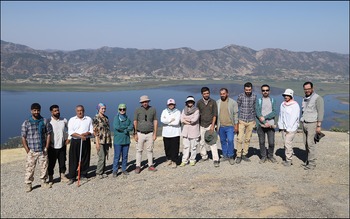
Members of the 2024 Mariwan Archaeological Survey team, affiliated with the University of Tehran’s Department of Archaeology, reach the edge of their survey area, bordered by Lake Zrebar and the Zagros Mountains, Iran. Photograph: Hossein Faghihzadeh. Copyright: Mariwan Archaeological Survey.

Figure 5 Long description
A group of people, likely members of an archaeological survey team, stand on a rocky terrain near the edge of their survey area. Behind them, a large lake, identified as Lake Zrebar, stretches out, bordered by the Zagros Mountains in the distance. The individuals are dressed in casual outdoor clothing, suggesting they are engaged in fieldwork. The scene captures the natural beauty and rugged landscape of the survey area in Iran.
Geographic and organisational dispersion
Teams rarely exist in one place. National teams can be composed of experts drawn from different institutions, while international teams also span national boundaries. The use of technology is essential to them, both to communicate and to work virtually on shared digital datasets. But near-constant electronic communication, including across different time zones, is burdensome. Only occasionally do some team members come together in person. For example, due to limited funding, core members of the ‘Excavating Andersson’ project have managed to spend only about one week each year working together in person: at the Museum of Far Eastern Antiquities, at conferences and during other projects.Footnote 36 Nevertheless, the cohesiveness of dispersed teams can be strong, particularly when members get on well and enjoy working together, but also when there are shared cultural expectations and allegiances. For instance, the four authors of the project centred on the Eneolithic and Bronze Age burial mound of Revova 3, Ukraine, all originate from that country, even though three are currently based abroad, in the USA, Germany and NorwayFootnote 37. Early career researchers are particularly mobile, often thanks to fellowships funded by European agencies and universities that host visiting scholars, particularly from countries prioritised for support. The researchers benefit from face-to-face interactions that are important to the development of new collaborations and of their careers, although repeated mobility can be at the expense of their personal lives.Footnote 38
Political constraints and armed conflicts in various parts of the world, including Ukraine and Iran, which place restrictions on the ability of some team members to travel to their research regions, are adding to the trend towards more hybrid and flexible working practices. These are beneficial, but do not mitigate the suffering and sacrifice of highly motivated researchers impacted by war. In response to my request for photographs, one of my contacts replied: “I am displaced from Ukraine with the war and have no access to my home computer at the moment. I am sorry.”Footnote 39
The case of Iran is particularly pertinent, given restrictions on Western missions undertaking research here and the recent military conflict.Footnote 40 Archaeological fieldwork within Iran is generally undertaken by national teams. This is the case, for example, with the excavations carried out at the Bronze Age site of Kalat-e Yavar, under the auspices of the Ministry of Cultural Heritage, Tourism and Handicrafts.Footnote 41 Nevertheless, long-established collaborations between Iranian and international archaeologists have been maintained. Notably, ISMEO has continued to provide an institutional umbrella for collaborations between Iranian and Italian archaeologists. The latter include Roberto Dan and colleagues who have—working remotely—helped to transform into standardised datasets the primary field records of salvage excavations initiated by the Iranian Centre for Archaeological Research at the Achaemenid cemetery of Mersin in north-central Iran, and to interpret and publish this local evidence in a broader scholarly context.Footnote 42 In-person and remote contacts have also been facilitated by the mobility of Iranian early career researchers. For example, Mohammad Masoumian, co-director of the Mariwan Archaeological Survey in north-west Iran, is hosted as a post-doctoral researcher by the Institute for Ancient Near Eastern Studies and Near Eastern Archaeology at Westfälische Wilhelms-Universität Münster, Germany. Since 2018, he has successfully developed a collaborative international team of experts, who share access to the survey’s materials, including a wide range of ceramics, through a regularly maintained database.Footnote 43 This is particularly valuable in the chronological assessment of those finds. In these ways, teams combining the data, expertise and skills of both Iranian and foreign specialists have worked productively and equitably, as reflected in their co-authored publications. Past, present and future wars in the Middle East have unwitting consequences on all of this.
Concluding thoughts
Although archaeology is, almost inherently, a team activity, we should not take teams and teamwork for granted. Teams are worth examining because they help construct the shared archaeological data, interpretations and knowledge we depend on, as well as members’ careers and wellbeing. Archaeological teams often transcend boundaries, are highly varied and dynamic. One size or structure does not fit all, and big is not always best. The establishment of well-integrated, strong and resilient teams and networks—characterised by personal contact, mutual trust and respect—is vital, especially where funding is limited and when politics and war get in the way. Occasionally, individuals abuse their positions of power within teams; more of us should have the courage to call out their unacceptable behaviours. Opening teams to new leadership styles, digital technologies and a greater diversity of members and perspectives are constructive ways forward; so too is acknowledging the significant contributions that community members, students and early career researchers make to archaeological research teams. But neither archaeological ethnographies nor the science of team science offer all the answers to what makes a dream team. The real stories of archaeological teams and teamwork are much more complex and human. Perhaps we should tell them more often.
Antiquity Prize and Ben Cullen Prize 2026
Each year, the Antiquity Trust recognises the two best articles published in the previous volume through the award of the Antiquity Prize and the Ben Cullen Prize. To identify this year’s winners, a shortlist of articles published in 2025 was drawn up by our Editorial Advisory Board, then the Antiquity Trustees and Directors cast their votes.
The winners of this year’s Antiquity Prize are Alan Williams and colleagues for their article From Land’s End to the Levant: did Britain’s tin sources transform the Bronze Age in Europe and the Mediterranean? published in the June issue (405). Through the application of a novel combination of three independent analyses (trace element, lead and tin isotopes), the authors’ response to their question is that the rich and accessible tin ores in south-west Britain did indeed play a fundamental role in the transition from copper to full tin-bronze metallurgy across Europe and the Mediterranean during the second millennium BC.
The Ben Cullen Prize goes to Rick Schulting and colleagues for their article ‘The darker angels of our nature’: Early Bronze Age butchered human remains from Charterhouse Warren, Somerset, UK, published in the February issue (403). The authors document and try to make sense of the assemblage of human remains from Charterhouse Warren, where at least 37 men, women and children were killed and butchered, their disarticulated remains thrown into a 15m-deep natural shaft, probably in a single event of mass violence unprecedented in British prehistory.
Congratulations to our victorious teams! Their prize-winning articles are now available to read for free via our website (www.antiquity.ac.uk/open/prizes), where you can also find previous winners.