


Introduction
The central Andes are a key area for palaeoclimate and palaeoatmosphere research, since they are located in a transition zone between two atmospheric circulation systems, the extratropical Westerlies receiving moisture from the Pacific and the tropical circulation with a continental/Atlantic moisture source. the two circulation systems are separated by one of the Earth’s driest regions, the so-called ``South American Arid Diagonal’’ (23–28˚S; Reference SchwerdtfegerSchwerdtfeger, 1970; see also mean annual precipitation in Fig. 1). In addition, the central Andes are strongly influenced by El Niño–Southern Oscillation (ENSO) events, resulting in major perturbations of rainfall regimes during the El Niño phase, with abnormally high precipitation in southwestern Ecuador and in the northwestern Peruvian desert region (Reference Quinn, Neal, Bradley and JonesQuinn and Neal, 1992) as well as in central Chile, while the Altiplano of southern Peru and Bolivia experiences dramatic droughts (Reference OrtliebOrtlieb, 1995). In order to study palaeoclimate in this key area, information deduced from high-elevation glaciers and ice caps is of immense value (see, e.g., Reference Thompson, Henderson, Mosley-Thompson, Lin, Diaz and MarkgrafThompson and others, 2000b). However, to reconstruct climate variability on seasonal to interannual time-scales, the full and unchanged seasonality of precipitation must be preserved on the glacier. It is known that strong winds and melting may cause substantial loss of information in Alpine ice-core records (e.g. Reference SchottererSchotterer and others, 1977). Comparison of ice-core time series with long-term records of isotope-in-precipitation measurements or even air-chemistry data allows a reliable assessment to be made of their suitability for climate and environmental studies, at least under present-day conditions (Reference SchottererSchotterer and others, 1997, 2001; Reference Schwikowski, Brütsch, Gäggeler and SchottererSchwikowski and others, 1999). Glaciochemical records made it possible to reconstruct the anthropogenic increase of air pollutants at Fiescherhorn glacier (3890ma.s.l.; Reference Schwikowski, Brütsch, Gäggeler and SchottererSchwikowski and others, 1999), Grenzgletscher (4200ma.s.l.; Reference Eichler, Schwikowski and GäggelerEichler and others, 2000), Colle Gnifetti (4450ma.s.l.; Reference Döscher, Gäggeler, Schotterer and SchwikowskiDöscher and others, 1996) and Col du Dôme in the Mont Blanc massif (4250ma.s.l.; Reference Preunkert, Wagenbach, Legrand and VincentPreunkert and others, 2000). Annual layers were derived from variations in the isotopic composition of the water molecule (δ18O, δD, 3H) and the concentration of ammonium. the variations of the different parameters at these mid-latitude glaciers are mainly due to the seasonally varying temperature (δ18O and δD), stability of the atmosphere (ammonium and tritium) and emission source strength (ammonium).
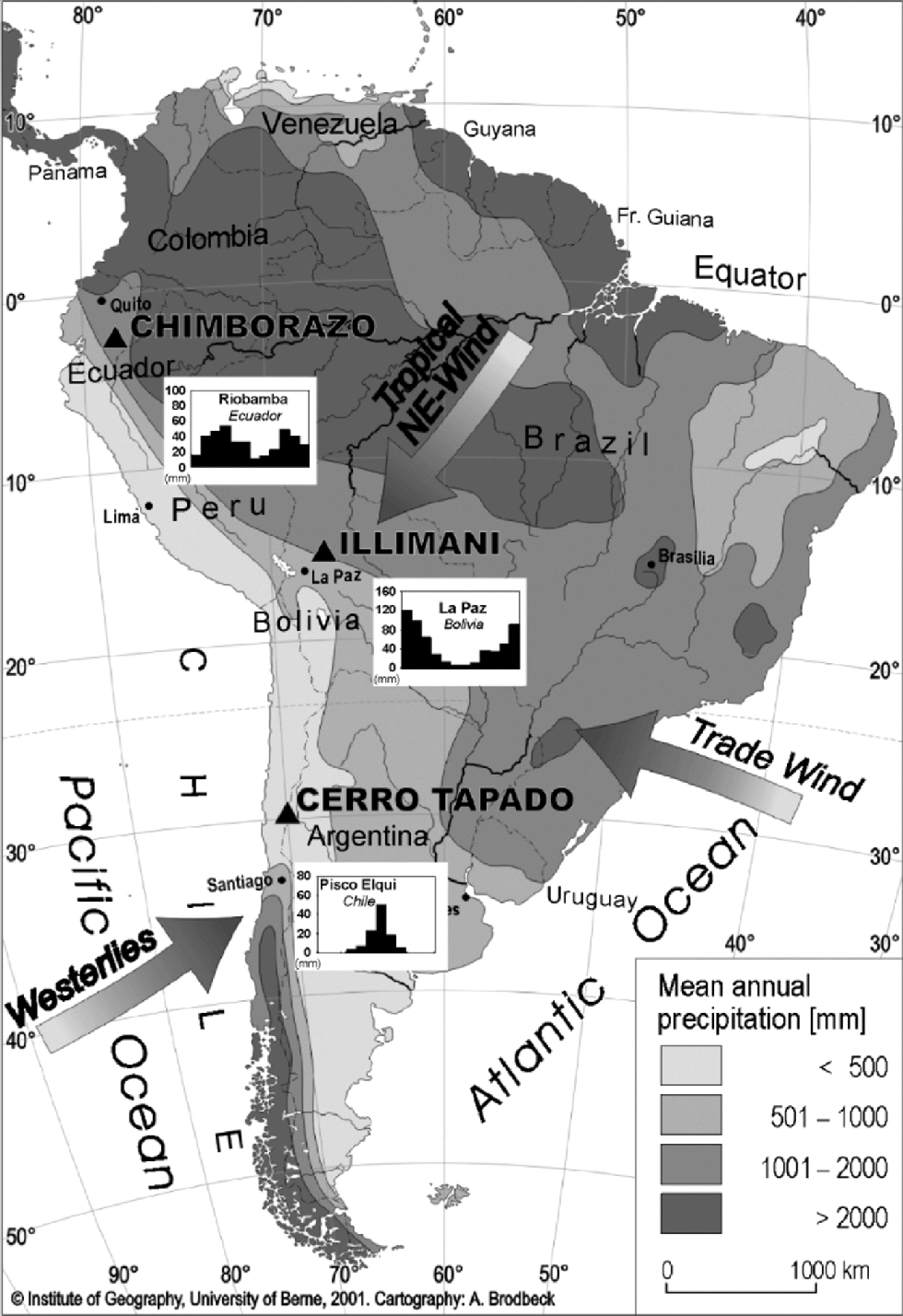
Fig. 1 Map of South America showing mean annual precipitation in grey scales along with the locations of Chimborazo, Illimani and Cerro Tapado. In addition, inserts give regional annual precipitation distribution (January –December) from the stations Riobamba, Ecuador, La Paz, Bolivia, and Pisco Elqui, Chile.
In the tropics and subtropics the situation is different because the seasonality is manifested in humidity and precipitation rather than in temperature, resulting in wet and dry seasons. A distinct variability of δ18O as well as dust and major-ion concentrations was observed, for instance, in an ice core from the Huascarán, Peru (Reference Thompson, Henderson, Mosley-Thompson, Lin, Diaz and MarkgrafThompson and others, 2000b), with higher concentrations and less negative δ18O values attributed to the dry winter season (May–October), but more negative δ18O values ascribed to water-vapour loss over the Amazon basin during the wet summer season (Reference Thompson, Mosley-Thompson and HendersonThompson and others, 2000a).
However, post-depositional alterations of the ice-core signal were also reported from the Andes (Reference Grootes, Stuiver, Thompson and Mosley-ThompsonGrootes and others, 1989), and one important aim of a joint Swiss/ French ice-core drilling campaign between 1998 and 2000 was to establish a better understanding of such effects. for this purpose, several ice cores were drilled on Cerro Tapado, Chile, Illimani, Bolivia, and Chimborazo, Ecuador. to document the influence of sublimation on chemical constituents and stable isotopes, additional surface experiments were carried out on Cerro Tapado and Illimani. These experiments revealed a strong modification of the chemical constituents (Reference Ginot, Kull, Schwikowski, Schotterer, Pouyaud and GäggelerGinot and others, 2001), whereas the stable-isotope signature remained more or less unaffected (Reference Stichler, Schotterer, Fröhlich, Ginot, Kull and GäggelerStichler and others, 2001).
In the following, we compare the glaciochemical records of shallow cores to see whether they represent the climate and environmental conditions of their respective areas. A detailed interpretation concerning water molecule isotopes is given elsewhere (Reference Stichler, Schotterer, Fröhlich, Ginot, Kull and GäggelerStichler and others, 2001).
Site Description and Fieldwork
The glaciers on Chimborazo ( 1˚28’ S, 78˚50’W; 6310 m), Illimani (16˚39’ S, 67˚47’W; 6430 m) and Cerro Tapado (30˚08’ S, 69˚55’W; 5536 m) were selected as ice-coring sites because they are affected by different precipitation regimes (see Table 1 for detailed site description). Chimborazo and Illimani are located within the tropical circulation system, north of the ``SouthAmerican Arid Diagonal’’. This region is dominated by summer precipitation (October–March) with an Atlantic moisture source (Fig.1). Because of the air-mass circulation pattern and topography of this region, Chimborazo also receives precipitation from the Pacific (e.g.Reference Vuille, Bradley and KeimigVuille and others, 2000). In contrast, CerroTapado is located south of the ``South American Arid Diagonal’’ in an area influenced by extratropical Westerlies bringing in Pacific moisture. Although winter precipitation predominates (May–September), sporadic summer precipitation from the southeast at high altitudes is also possible (Reference SchwerdtfegerSchwerdtfeger,1970; Reference BegertBegert, 1999).
Table 1. Site description and record characteristics
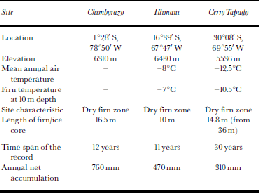
The short cores 10–15m in length were drilled with a small version of the fast electromechanical lightweight ice-coring system (FELICS; 58 mm ice-core diameter; Reference Ginot, Stampfli, Stampfli, Schwikowski and GäggelerGinot and others, 2002, in press) and a U.S. Army Snow, Ice and Permafrost Research Establishment (SIPRE) drill (76mm ice-core diameter), respectively. for Cerro Tapado the upper part of a 36m core reaching the bedrock was used in this study (see Table1).
The samples were shipped frozen to Switzerland and analyzed continuously with 5 cm resolution (1.5 cm for Cerro Tapado) for concentrations of major-ionic species by ion chromatography, for stable isotopes by mass spectrometry, and for tritium by direct measurements in a proportional counter (10 cm resolution).
Glaciochemical Records
In Figure 2 the records of chloride and nitrate are plotted together with δ18O to qualitatively illustrate the variability in the precipitation regime on Chimborazo, Cerro Tapado and Illimani, respectively.
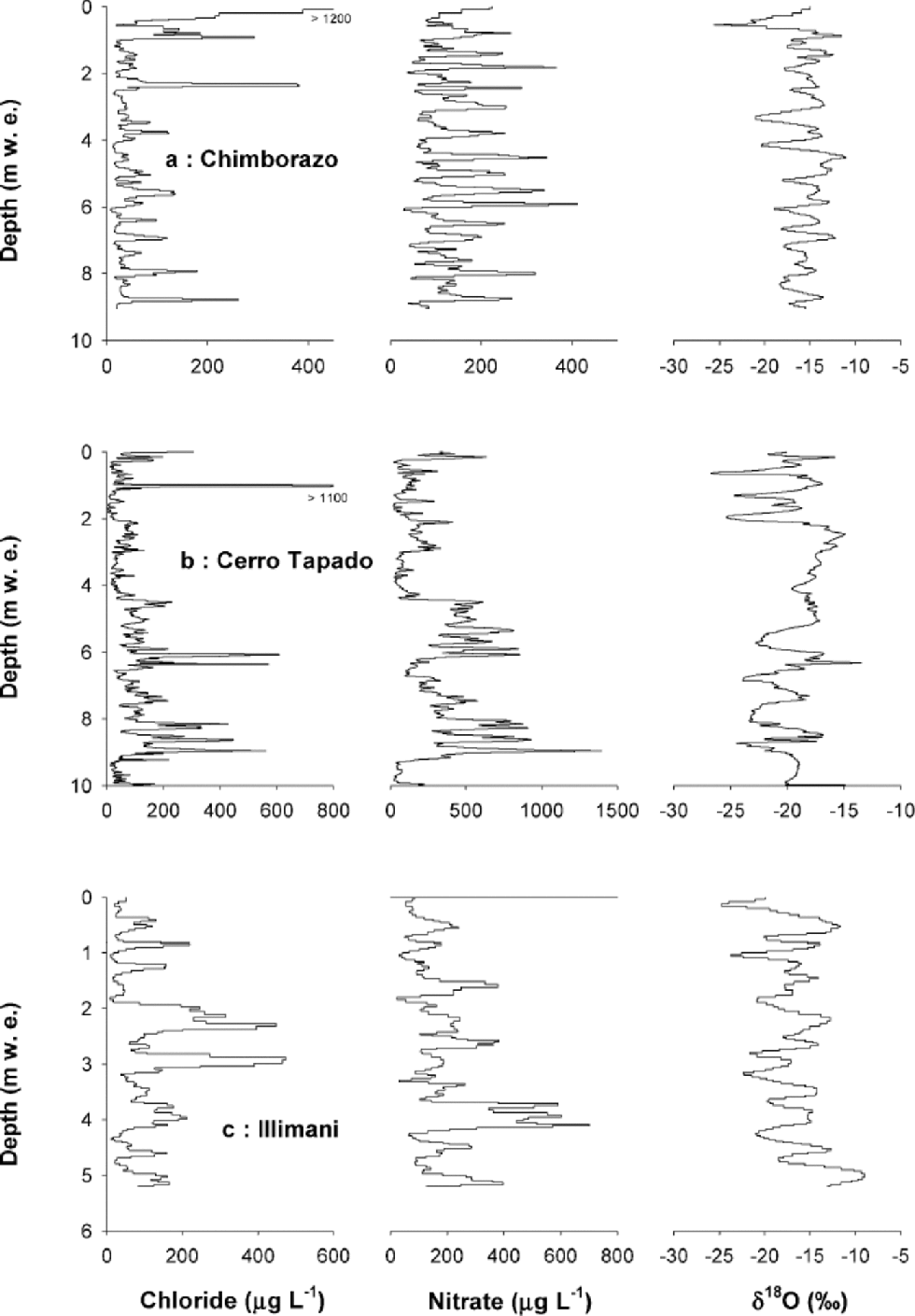
Fig. 2 Records of chloride and nitrate concentrations and δ18O values from the shallow cores from Chimborazo (a), Cerro Tapado (b) and Illimani (c). Individual values were smoothed with a three-point (1, 2, 1) filter to optimize signal-to-noise ratio.
According to previous studies (Reference Garcia, Villaba, Araguás-Araguás and RosanskiGarcia and others, 1998) and the Global Network for Isotopes in Precipitation (GNIP, the International Atomic Energy Agency (IAEA), Vienna), the annual δ18O double peak observed in precipitation over Ecuador may be caused by the advance and retreat of the Inter-Tropical Convergence Zone (ITCZ). the movement of the ITCZ also results in a bimodal annual distribution of precipitation amount in the Chimborazo region (data from Riobamba station; Fig. 1). In the Illimani region (data from La Paz) and the Cerro Tapado region (data from Santiago) the δ18O follows a summer and a winter precipitation regime, respectively, with more negative values during the rainy season. the summer and winter precipitation regimes are also obvious in the annual distributions of precipitation amount at nearby sites (La Paz and Pisco Elqui, respectively; Fig. 1). to what extent the δ18O variations in the ice cores mirror the seasonal cycle of the precipitation data is still under investigation.We know that precipitation regimes at high altitudes are probably not directly comparable with those from lowlands. for instance, detailed tritium measurements from the Cerro Tapado core and satellite image investigations (Reference BegertBegert, 1999) indicate that although most of the precipitation is accumulated during winter, sporadichigh-altitude convective precipitation events might occur in summer. However, a distinct seasonal cycle in the Cerro Tapado δ18O record is absent. This is due to lack of variation in the prevailing high condensation level, which results in rather uniform δ18O values. the δ18O variations shown in Figure 2b are ascribed instead to alternating humid and dry phases during El Niño/La Niña events. the following interpretation attempts to relate the glaciochemical records to the individual precipitation regimes.
The aerosol-related species chloride and nitrate were selected as tracers for air masses of primarily marine or continental origin (Reference Saltzman and DelmasSaltzman, 1995; Reference ThompsonThompson and others, 1998), respectively. In the Chimborazo record, strong fluctuations of the concentrations of the chemical tracers are observed (Fig. 2a). the ice-core parameters nitrate and δ18O are correlated (correlation coefficient for linear regression of nitrate (logarithmic data) and δ18O:  i.e. high concentrations of nitrate are generally accompanied by less negative δ18O values. the fluctuations are attributed to the annual precipitation distribution, with two wet and dry seasons resulting in a double peak of δ18O and nitrate. Chloride exhibits concentration peaks during the periods of less negative δ18O values, resulting in a comparable bimodal shape. However, the chloride peaks are much narrower than the nitrate peaks (correlation coefficient for linear regression of chloride and nitrate using logarithmic data:
  and one of the maximums forming the bimodal shape is much less pronounced than the other. the low concentrations during the wet seasons (more negative δ18O values) could indicate a scavenging effect, i.e. an efficient removal of aerosol particles during persistent precipitation, resulting in significant dilution of aerosol-related chemical tracers. However, no sufficiently long periods with low concentrations are observed in the record to support the hypothesis of long-lasting heavy-precipitation events. This could also suggest that the removal of aerosol particles from the air masses in the wet season might already occur in the source area (e.g. in the coastal region and in the Amazon basin or at lower elevations at Chimborazo). the more pronounced chloride peaks point to an input of sea salt, which we attribute to precipitation with the Pacific Ocean as source. the distance from Chimborazo to the Pacific is only about 100 km, whereas the Atlantic is a few thousand kilometres away and transport of sea salt over such a large distance is not expected.
The influence of the two different source areas is also obvious from the records of methanesulphonate (MSA) and formate, as illustrated in Figure 3.MSA has a short lifetime in the atmosphere and is produced by oceanic biota (see, e.g., Reference Lelieveld, Roelofs, Ganzeveld, Feichter and RodheLelieveld and others, 1997), whereas formate originates mainly from vegetation emissions. Both species show concentration peaks that are not correlated (correlation coefficient using logarithmic data:  We attribute the formate peaks to a source area of the precipitating air masses in the Amazon basin, transported to Chimborazo with the easterly high-altitude wind circulation. on the other hand, the highest concentrations of MSA indicate a Pacific Ocean moisture source related to precipitation occurring from February to May. This hypothesis is supported by the fact that most MSA peaks coincide with chloride peaks. A perfect correlation is not expected, since the marine air-mass tracers are emitted by two different processes: chloride concentration is related to wind-speed-dependent sea-spray formation, whereas MSA concentration is determined by oceanic biomass productivity and atmospheric oxidation processes (Reference Saltzman and DelmasSaltzman, 1995). Unlike MSA and formate, nitrate is not useful as a tracer for different air masses, since the sources are widely distributed and are not specific to a single air-mass trajectory. A pronounced concentration increase of chloride is noted in the topmost 0.5 m of the core, which was also observed for sulphate and fluoride (not shown). This we ascribe to emissions of the two Ecuadorian volcanoes Guagua Pichincha (0˚17’ S, 78˚60’ W) and Tungurahua (1˚47’ S, 78˚44’W), which erupted on 6 October 1999, 2 months before the core was recovered, and which were active in October and November 1999. A tentative layer counting results in 12 ±1years for the 9 m w.e. of the core, corresponding to a mean annual net accumulation of 0.76 ±0.07 mw.e. a–1 (Table 1).

Fig. 3 Magnification of the 3–7mw.e. segment of the Chimborazo glaciochemical record showing MSA and formate in addition to the chloride and nitrate concentrations. Individual values were smoothed with a three-point (1, 2, 1) filter to optimize signal-to-noise ratio.
In contrast to Chimborazo, the glaciochemical record from Cerro Tapado is characterized by less regular fluctuations of chloride and nitrate concentrations, which show a much higher amplitude. Chloride and nitrate are well correlated  logarithmic data) (Fig. 2b). Due to the generally drier conditions at the southern rim of the dry axis, this record is clearly affected by post-depositional sublimation and by dry deposition. Both effects strongly modulate the records of chemical tracers. the evolution of concentrations of chemical species dependent on sublimation was observed in a 5 day surface snow experiment performed at the Cerro Tapado drilling site (Reference Ginot, Kull, Schwikowski, Schotterer, Pouyaud and GäggelerGinot and others, 2001). Species irreversibly trapped in the snow were significantly enriched in the surface layer by sublimation of the water matrix (Cl–, SO4
2–, K+) and by sublimation and dry deposition (Ca2+, Mg2+, Na+, CH3SO3
–, C2O4
2–). Species present in a volatile form, such as HCOOH and CH3COOH, were released from the snow (Reference Ginot, Kull, Schwikowski, Schotterer, Pouyaud and GäggelerGinot and others, 2001). Nitrate was also irreversibly deposited during this experiment, but might be released from the snow surface during long exposure times. Sublimation rates as high as 2– 4 mmw.e. d–1 were measured in February 1999, resulting in a doubling of chloride concentrations in the 1cm surface snow layer in about 3 days due to removal of the water matrix. An annual sublimation rate of 490 mmwas estimated based on a mass-balance model (Reference Ginot, Kull, Schwikowski, Schotterer, Pouyaud and GäggelerGinot and others, 2001). Thus, strong secondary processes modulate the chloride and nitrate fluctuations in the glaciochemical record. the fluctuations do not represent a variation in the air-mass composition, in the moisture and emission source area or a seasonal effect. Due to the above-mentioned fact that the prevailing high condensation level does not produce a distinct seasonal cycle in stable isotopes, the maximum tritium activity in 1964–67, resulting from thermonuclear test series, was used for dating of the Cerro Tapado core. This results in a mean annual net accumulation of approximately 0.3 mw.e. a–1 (Table 1).
logarithmic data) (Fig. 2b). Due to the generally drier conditions at the southern rim of the dry axis, this record is clearly affected by post-depositional sublimation and by dry deposition. Both effects strongly modulate the records of chemical tracers. the evolution of concentrations of chemical species dependent on sublimation was observed in a 5 day surface snow experiment performed at the Cerro Tapado drilling site (Reference Ginot, Kull, Schwikowski, Schotterer, Pouyaud and GäggelerGinot and others, 2001). Species irreversibly trapped in the snow were significantly enriched in the surface layer by sublimation of the water matrix (Cl–, SO4
2–, K+) and by sublimation and dry deposition (Ca2+, Mg2+, Na+, CH3SO3
–, C2O4
2–). Species present in a volatile form, such as HCOOH and CH3COOH, were released from the snow (Reference Ginot, Kull, Schwikowski, Schotterer, Pouyaud and GäggelerGinot and others, 2001). Nitrate was also irreversibly deposited during this experiment, but might be released from the snow surface during long exposure times. Sublimation rates as high as 2– 4 mmw.e. d–1 were measured in February 1999, resulting in a doubling of chloride concentrations in the 1cm surface snow layer in about 3 days due to removal of the water matrix. An annual sublimation rate of 490 mmwas estimated based on a mass-balance model (Reference Ginot, Kull, Schwikowski, Schotterer, Pouyaud and GäggelerGinot and others, 2001). Thus, strong secondary processes modulate the chloride and nitrate fluctuations in the glaciochemical record. the fluctuations do not represent a variation in the air-mass composition, in the moisture and emission source area or a seasonal effect. Due to the above-mentioned fact that the prevailing high condensation level does not produce a distinct seasonal cycle in stable isotopes, the maximum tritium activity in 1964–67, resulting from thermonuclear test series, was used for dating of the Cerro Tapado core. This results in a mean annual net accumulation of approximately 0.3 mw.e. a–1 (Table 1).
Regarding amplitude and regularity of chloride and nitrate fluctuations, the glaciochemical record from Illimani (Fig. 2c) represents an intermediate case. Peaks in the nitrate and chloride concentrations are generally broad and coincide with those of δ18O. Following the argumentation for Chimborazo, the peaks in the concentrations of chemical tracers and δ18O seem to be due to drier winter conditions in the Amazonbasin. the broad peaks suggest a limited influence of sublimation on the glaciochemical records, since the effect of sublimation is manifested only in thin layers (see Cerro Tapado record, Fig. 2b). Only a few such thin layers were observed on top of broad concentrations peaks (see, e.g., three sublimation-induced horizons in nitrate and chloride between 3.6 and 4.3mw.e. in Figure 2c). A limited influence of sublimation is also evident from sublimation rates, which are lower than on Cerro Tapado. Sublimation of only 1.2 mm w.e. d–1 was measured during the 1999 dry season. the nitrate record is less regular than that from Chimborazo, probably due to a stronger interannual variation of precipitation and air-mass circulation. Nevertheless, the correlation between nitrate and chloride is better  logarithmic data), indicating a joint transport of both tracers to the glacier. the relatively high chloride concentrations might indicate an input from local salt flats (salars). By relating the δ18O variability in the ice core to the existing GNIP data from La Paz, a combined layer counting results in approximately 11years for 5.2 mw.e., corresponding to a mean annual net accumulation of 0.47w.e. a–1 (Table1).
Inventory of Chemical Impurities
In order to compare the inventory of chemical impurities of the different glaciers, the 5th, 10th, 25th, 50th (median), 75th, 90th and 95th percentiles as well as the arithmetic mean values of the concentrations over the entire cores were calculated. Results are shown in Figure 4 in the form of box plots. for the comparison we focus on the robust median values to compensate for the effect of post-depositional processes. We thereby assume that post-depositional processes did not significantly influence the samples representing the 50% lowest concentrations. This conservative assumption is based on the finding that only the topmost few centimetres (<10% of the annually net accumulated snow) show the influence of sublimation and dry deposition as illustrated by concentration profiles of nitrate and chloride in a snow pit from Cerro Tapado (Fig. 5).

Fig. 4 Statistical distributions of concentrations of various ionic species in the shallow cores from CerroTapado, Illimani and Chimborazo.The black points indicate the 5th and 95th percentiles, the error bars the 10th and 90th percentiles, the box the 25th and 75th percentiles, and the line and the dashed line the median and arithmetic mean values (concentrations in mg L-1). A number of samples showed concentrations below the detection limits of the analytical method for acetate, oxalate, fluoride and MSA (1.0, 0.5, 0.3, 1.0 mg L-11, respectively). In these cases, the respective detection limits were used to calculate the distributions.
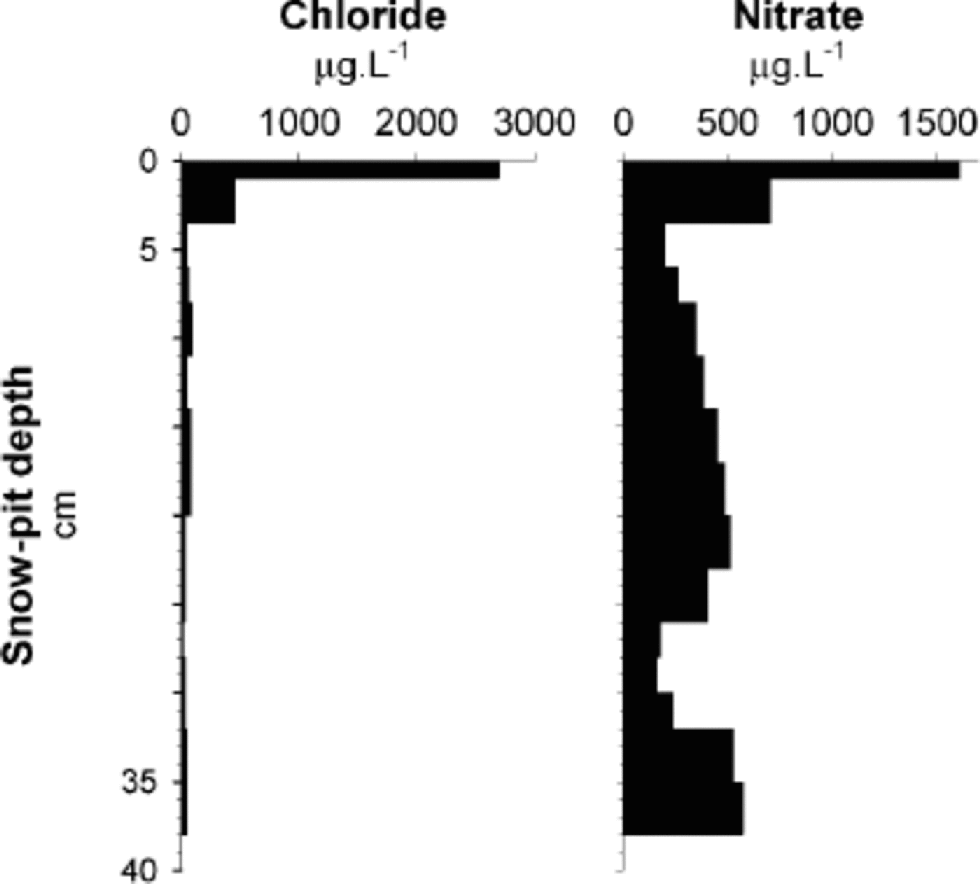
Fig. 5 Nitrate and chloride concentration profiles in a snow pit from the Cerro Tapado covering the net accumulation of the hydrological year 1998/99.
In the sequence Cerro Tapado–Illimani–Chimborazo, the medians of calcium, magnesium, sulphate and nitrate decrease. Thus, the input of mineral dust as indicated by calcium and magnesium is strongest on CerroTapado. This also explains the sequence of sulphate, which is well correlated with calcium and magnesium (correlation coefficient between sulphate and calcium: Cerro Tapado:  Illimani:
  Chimborazo:
  logarithmic data). the good correlation suggests local sources of mineral dust from surrounding volcanic rocks. the pattern of nitrate medians is difficult to explain, but the similarity to the dust tracers could indicate an input as mineral nitrate, at least at Cerro Tapado, or an adsorption of HNO3 on the surface of alkaline dust particles (Reference WolffWolff,1984).
Medians of ammonium, formate, oxalate, acetate and fluoride follow an opposite sequence: they are highest at Chimborazo. Thus, the contribution of species originating from biogenic emissions or biomass burning in the Amazon basin (ammonium, formate, oxalate, acetate) to the chemical composition of precipitation is most significant at Chimborazo and of minor importance at Cerro Tapado. the tendency in the fluoride medians might be caused by emissions of hydrofluoric acid from nearby volcanoes.
For sodium and chloride, the Illimani core shows the highest median values, followed by Cerro Tapado and Chimborazo. It is not immediately obvious why the input of sea salt is largest at Illimani, which is located too far away from the Atlantic Ocean for a significant sea-salt aerosol transport. on the other hand, the world’s largest salt flat, Salar de Uyuni (~12500 km2), is situated only about 200 km south of Illimani. We therefore attribute the high sodium and chloride concentrations at Illimani to salts eroded by wind over the salt flat and subsequently deposited on Illimani during the drier season with southeasterly winds. Although Cerro Tapado and Chimborazo are located at comparable distances from the Pacific Ocean (150 and 100 km, respectively), sea-salt input on Cerro Tapado is larger. This reflects the situation at Chimborazo, with moisture originating from the Atlantic and the Pacific, causing a dilution of the sea-salt input with precipitation from the Pacific. This hypothesis is corroborated by the medians of MSA, which are highest at Cerro Tapado.Thus, the glaciochemical records at Cerro Tapado contain the most direct signal of air masses from the Pacific Ocean. the low MSA concentrations in the Illimani ice core support the interpretation that the sea salt originated from local salt flats, which do not produce MSA.
For potassium, the highest median value was observed in the Illimani core, as was also the case for the salt tracers sodium and chloride. However, the second highest potassium median was found for the Chimborazo core, in contrast to sea-salt and mineral components with the lowest medians. This indicates that sea salt and mineral dust were not the only sources of potassium on Chimborazo. A significant contribution to the potassium concentration might come from biomass burning in the Amazon basin, which affects only Illimani and Chimborazo.
Summary and Conclusions
The comparison of glaciochemical records from the Andean glaciers on Chimborazo, Illimani and Cerro Tapado demonstrated that seasonal variations in ice-core parameters may be observed even when a strong seasonal cycle of temperature is absent. However, the seasonality can only be preserved in the glaciochemical record when precipitation containing the environmental signal is actually deposited during the different seasons. This is the case on Chimborazo, where two wet seasons are interrupted by drier periods with discontinuous precipitation. on Illimani, there is a stronger contrast between the wet and dry seasons, and in the dry season the glacier receives less precipitation than Chimborazo, resulting in a less regular variation of ice-core parameters. the extreme case is Cerro Tapado, with generally drier conditions. on Cerro Tapado, secondary processes such as sublimation and dry deposition during long dry periods induce the main variations in the concentrations of chemical tracers. Although these variations might be used to identify annual layers, they do not reflect different composition of precipitation occurring during different seasons in the year.
Chemical tracers may be used to establish qualitative signatures of air masses with different origin. Increased amounts of biomass emission tracers (ammonium, formate, acetate, oxalate, potassium) indicate a dominant contribution of precipitation originating in the Amazon basin on Chimborazo and Illimani. on the other hand, high concentrations of sea-salt components and MSA indicate a predominant Pacific moisture source on Cerro Tapado.
Thus, the selected ice-core sites provide useful information on different precipitation regimes. However, in order to study short-term interannual climate variability as related to ENSO, a more quantitative approach combining stable isotopes and mass-balance modelling would be necessary. In any case, a look at glaciochemical records from more than a single site is helpful since local and post-depositional and site-specific effects may imprint a strong signature on the individual records.
Acknowledgements
We would like to thank J. Quinteros (Direcciόn General de Aguas), A. Giannini (Universidad de Chile, Santiago) and B. Zweife. (ETH Zürich) for their contribution to the fieldwork. the help of M. Grosjean (University of Bern) and A. River. (Universidad de Chile, Santiago) in organizing our expedition, as well as the active support of H. P. Erismann, Swiss ambassador in Santiago de Chile, is gratefully acknowledged. Appreciation is expressed to the Chilean Army (Regimiento de Infantería No. 21 ``Arica’’) for supporting the fieldwork, to Swisscargo for transporting the ice samples and to the Argauer Zentralmolkerei for storing the ice. the comments of C. Zdanowicz and G. Holdswort. improved the clarity of the paper, and we are grateful for their suggestions. This work was carried out in the framework of the Swiss National Science Foundation, Project No. 21-50854.97.



