Dietary supplements (DS) are defined as ‘foodstuffs the purpose of which is to supplement the normal diet and which are concentrated sources of nutrients or other substances with a nutritional or physiological effect, alone or in combination, marketed in dose form […]’ (European Directive 2002/46/CE). In the USA, DS use is widespread and well documented(Reference Bailey, Gahche and Lentino1–Reference Murphy, Wilkens and Monroe4). In Europe, several studies have also investigated the determinants and prevalence of DS use, and showed that DS use was lower than that in the USA(Reference Skeie, Braaten and Hjartaker5–Reference Mileva-Peceva, Zafirova-Ivanovska and Milev7). However, such knowledge as regards the French context is largely lacking. Since health and nutrition-related behaviours may strongly vary from one country to another, it is important to conduct country-specific studies regarding DS use. Traditionally in France, DS use has not been a practice as common as in other European countries or in the USA, partly due to the underlying differences in attitudes towards diet and nutrition. The few existing French studies about DS use were based on very small samples(Reference Touvier, Boutron-Ruault and Volatier8), are outdated(Reference Gahche, Bailey and Burt2) or were restricted to specific subgroups(Reference Picciano and McGuire9, Reference Touvier, Kesse and Volatier10). In 2005(11) and 2006(Reference Pilorin and Hebel12), DS use was assessed in nationally representative samples of the French population, but the findings of these two studies have not been disseminated internationally. In addition, they were based on a relatively small sample of subjects, thereby not allowing specific analyses on DS use in population subgroups. These studies have suggested that the proportion of DS users increased steadily over time, and also revealed several sociodemographic and lifestyle correlates of DS use, such as a higher intake of fruits and vegetables, with a lower BMI and higher levels of physical activity. If DS use is indeed associated with several sociodemographic, economic, lifestyle and dietary factors, a precise assessment of these associations and of DS users’ profile is an important parameter for future aetiological studies on nutritional intake, DS use and chronic disease risk. The objectives of the present study were to provide updated and detailed data on DS use and to explore sociodemographic, lifestyle and dietary correlates of DS use in the NutriNet-Santé study, which involves a large cohort of French volunteers. We also evaluated the role of physicians in the motivation for DS purchases and the proportion of self-medication, as limited information was available on this topic in France(Reference Touvier, Dufour and Gourillon13, 14). Finally, growing evidence of increased cancer risk exists regarding the association between tobacco smoking and the use of some DS such as β-carotene supplements(Reference Albanes, Heinonen and Taylor15–Reference Touvier, Kesse and Clavel-Chapelon17). Thus, we also described DS use (types, motivations, self-medication, etc.) according to smoking status.
Methods
Study population
The NutriNet-Santé study is the first Web-based, general population, prospective observational cohort study worldwide aimed at elucidating the link between nutrition and health. Specifically, it was launched in France in the spring of 2009 to evaluate the determinants of eating behaviour and the relationship between nutrition and chronic disease risk(Reference Hercberg, Castetbon and Czernichow18). Participants were recruited by a vast multimedia campaign. Inclusion criteria pertain to residence in France, age ≥ 18 years and access to the Internet. Registration and participation took place online using a dedicated web site (www.etude-nutrinet-sante.fr). By January 2012, 102 988 volunteers had completed all of the baseline questionnaires and were included in the study. Follow-up is planned for at least 10 years. The present study was approved by the International Research Board of the French Institute for Health and Medical Research (IRB Inserm no. 0000388FWA00005831) and the ‘Commission Nationale de l'Informatique et des Libertés’ (CNIL no. 908450 and no. 909216).
Data collection
Participants filled in self-administered, Web-based questionnaires at baseline and then regularly during the follow-up. Written informed consert was obtained from all subjects.
Dietary supplement use
The questionnaire regarding DS use was administered 2 months after inclusion. In the present study, we considered as DS both true DS and medicinal supplements (supplements considered as pharmaceutical products in France, and mainly composed of vitamins and minerals). Participants were asked whether they were currently taking any supplement at least 3 d/week at the time of the DS questionnaire (‘current DS users’), and were also asked to specify the type of DS using a list of thirty-four different nutrients and substances. They were also asked whether they took any DS in the past 12 months (at least once). The frequency and duration of use for each DS was assessed, thereby permitting the calculation of the average number of days of use in the last 12 months and the overall duration of use. The questionnaire also included assessment of the circumstances and motivations for DS use, the physician's role in DS purchases and the seasonality of DS use.
Sociodemographic, lifestyle and behavioural data
At inclusion, self-administered questionnaires collected data on sociodemographic and lifestyle characteristics, including age, sex, marital status, number of children, education, occupation, smoking status, anthropometry, following a restrictive diet, pregnancy and menopause in women, and leisure-time physical activity (estimated with the International Physical Activity Questionnaire(Reference Craig, Marshall and Sjöström19)). The instruments were tested against traditional assessment methods (paper or interview by a health professional)(Reference Vergnaud, Touvier and Mejean20–Reference Touvier, Mejean and Kesse-Guyot22).
Dietary data
At inclusion, participants were asked to complete three non-consecutive, self-administered, Web-based 24 h dietary records, the days for which were randomly assigned during a 2-week period (2 d during the week and 1 d during the weekend). Participants were included in the NutriNet-Santé cohort if they provided at least one 24 h dietary record at baseline. All foods and beverages consumed at breakfast, lunch or dinner were recorded. For foods with potentially high nutrient variability, participants were also asked to provide the brand name. Participants estimated the portion size for each reported food and beverage item using validated photographs(Reference Hercberg, Deheeger and Preziosi23). A comparison of the Web-based dietary assessment with a traditional dietitian's interview showed good agreement between the two methods(Reference Touvier, Kesse-Guyot and Mejean21). Daily dietary intakes of various nutrients were calculated using the ‘NutriNet-Santé’ food composition table, which included more than 2500 different foods.
Knowledge of official nutritional recommendations as provided in the ‘French National Nutrition and Health Program’(24) was also assessed. It pertained to recommendations regarding five main food groups (fruits and vegetables, dairy products, meat, fish and starchy food). Finally, a specific questionnaire was used to assess the opinion and behaviour of the participants towards organic food consumption.
Statistical analyses
All participants of the cohort who were included before January 2012 and who answered the DS questionnaire were included in the analyses (n 79 786). Proportions of DS users (current users and users of at least one supplement during the past 12 months), types of DS consumed by current users, frequency, circumstances, motivations and seasonality of use were described in the full sample and also by smoking status (current, former and never smokers).
OR and 95 % CI were calculated by age- and sex-adjusted logistic regression analyses comparing DS users (i.e. those who reported DS use at least once during the past 12 months) and non-users regarding their sociodemographic characteristics (age, sex, geographical region, marital status, number of children, education and occupation), lifestyle and behavioural factors (smoking status, BMI, current practice of a restrictive diet, leisure-time physical activity, pregnancy, self-perceived emotional state and physical pain, knowledge of official nutritional recommendations and organic food consumption). P values from the Wald test were provided. Tests for linear trend were performed using the ordinal score on categories of each variable.
Only subjects who provided three dietary records at baseline and who were normo-energy reporters according to the Goldberg criterion(Reference Black25) were included in the analysis relative to dietary data. The mean daily intakes of twenty-three different food groups, dietary micro- and macronutrients, energy, dietary fibre and alcohol were compared by logistic regression analyses between DS users and non-users after adjustment for sex, age and energy intake. The proportion of subjects with reported intake below the estimated average requirement for the French population(Reference Martin26) was estimated for each nutrient by sex. It was established that, at the population level, this proportion represents an unbiased estimate of the proportion of subjects whose intake is below their respective requirements, also called ‘prevalence of inadequacy’(Reference Carriquiry27). When an individual has intake below his/her requirement, this may lead to a risk of chronic insufficient intake, and possibly, deficiency. The measurement error model proposed by the National Research Council(28) and developed by Nusser et al. (Reference Nusser, Carriquiry and Dodd29) was applied to the observed daily dietary intake, in order to remove the effects of day-to-day intake variability. The prevalence of inadequate dietary nutrient intake was then compared between DS users and non-users in men and women by logistic regressions adjusted for age and energy intake.
A P value < 0·05 was considered as significant in all statistical tests. All tests were two-sided. All analyses were carried out with SAS software (release 9.1; SAS Institute, Inc.).
Results
Proportion of dietary supplement users, type, motivations and circumstances of dietary supplement use
The average age of the participants (n 79 786) was 45·2 (sd 14·5) years and women constituted 76 % of the sample. Among the study population, 32·4 % were executives or had an intellectual profession, 30·0 % were employees, 25·9 % had an intermediate profession, 5·3 % were unemployed, 3·2 % were manual workers, 2·8 % were self-employed and 0·4 % were farmers. The proportions of overweight (not including obesity) and obese subjects were 22 and 10 %, respectively.
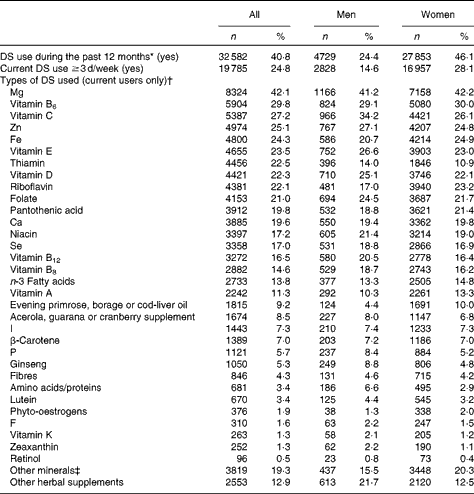
DS use among men and women is presented in Table 1. About 41 % of the subjects reported the use of at least one DS during the 12 months preceding the survey. About 25 % of the respondents were current users (DS use at least 3 d/week at the time of the DS questionnaire: 28·1 % in women and 14·6 % in men). In current DS users, Mg, vitamin B6, vitamin C, Zn and Fe were the most frequently used nutrients, whereas n-3 fatty acids and herbal supplement use were relatively low (Table 1).
Table 1 Dietary supplement (DS) use in men (n 19 398) and women (n 60 388) in the NutriNet-Santé cohort study, 2012 (Number of subjects and percentages)

* ≥ 1 DS during the 12 months preceding the DS questionnaire.
† Nutrients and other substances were taken alone or in combination.
‡ K, Cu, Li, Mn, Ce and others.
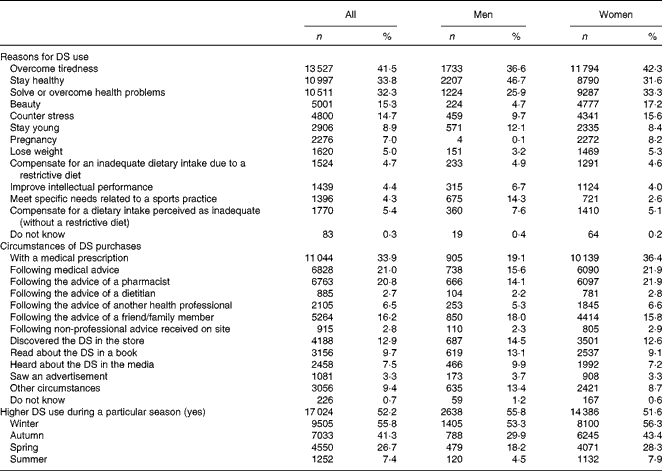
Motivations, circumstances of DS purchases and seasonality are presented in Table 2. The main reasons for DS use were to ‘overcome tiredness’ and to ‘stay healthy’, whereas ‘compensating for an inadequate dietary intake’ was quoted by only 5·4 % of the DS users. DS were mainly purchased with a prescription, following medical advice or a recommendation by a pharmacist. DS use was increased during the autumn and winter months.
Table 2 Reasons for use, circumstances of dietary supplement (DS) purchases and seasonality of use in DS users in the NutriNet-Santé cohort study (n 32 582; men n 4729, women n 27 853), 2012* (Number of subjects and percentages)
* In subjects who reported use of ≥ 1 DS during the 12 months preceding the DS questionnaire.
In the last 12 months, 61 359 DS were declared by the participants. Among them, 41·0 % were used for less than 1 year, 22·1 % were used 1–2 years, 19·3 % were used over 3–5 years, 9·8 % were used 5–10 years and 7·8 % were used for more than 10 years. In the last 12 months, the average duration of DS use was 94·7 (se 108) d (data not shown).
Sociodemographic, lifestyle and behavioural correlates of dietary supplement use
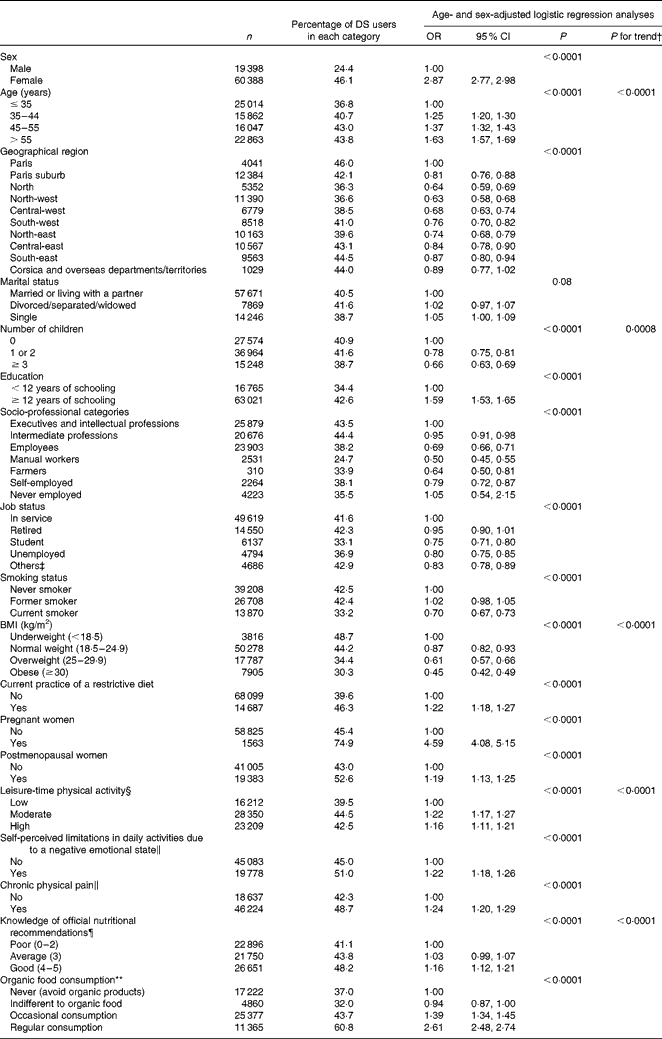
When compared with non-users, DS users were more likely to be women, older, more educated, better employed and more physically active (Table 3). DS use decreased with the number of children. Users were more likely to be non-smokers, to have a lower BMI and to follow a restrictive diet. Women who took supplements were more likely to be pregnant or postmenopausal. Users were more likely to report emotional problems, physical pain, increased familiarity with official nutritional recommendations (recommendations of the French National Nutrition and Health Program) and organic food consumption.
Table 3 Sociodemographic, lifestyle and behavioural correlates of dietary supplement (DS) use in the NutriNet-Santé cohort, 2012 (n 32 582 DS users* and 47 204 non-users) (Number of subjects and percentages; odds ratios and 95 % confidence intervals)
* DS users were defined as subjects who used ≥ 1 DS during the 12 months preceding the DS questionnaire.
† Tests for linear trend were performed using the ordinal score on categories of each variable. DS users were compared with non-users for all the characteristics. The probability of being a DS user is modelled.
‡ Sabbatical leave, preparation for an examination, homemaker, illness.
§ Because of missing values, sample sizes were 28 876 supplement users and 38 895 non-users.
∥ Because of missing values, sample sizes were 30 374 supplement users and 34 487 non-users.
¶ From the French National Nutrition and Health Program. Because of missing values, sample sizes were 31 780 supplement users and 39 517 non-users.
** Determined by multiple correspondence analysis using data from the organic food consumption measure (five clusters defined by the first three discriminant axes). Because of missing values, sample sizes were 25 947 supplement users and 32 877 non-users.
Dietary supplement use according to smoking status
In the study population, 17·4 % were current smokers and 33·5 % were former smokers. When compared with never smokers, current smokers were less likely to be current DS users (OR 0·76, 95 % CI 0·72, 0·80; data not shown) or to have used DS during the past 12 months (Table 3). The proportion of current DS users was 19·0 % in smokers, 27·2 % in former smokers and 25·2 % in never smokers. Hierarchy of nutrients consumed (Mg, vitamin B6 and vitamin C) was the same regardless of the smoking status (data not shown). β-Carotene supplement use was low overall (1·5 % in smokers, 2·0 % in former smoker and 1·7 % in never smokers, P= 0·25).
Motivations for DS use differed between current and never smokers (data not shown). Current smokers were less likely to indicate reasons such as ‘overcome health problems’ or ‘meet specific needs related to a sports practice’ (33·1 and 3·9 %, respectively), and were more likely to give reasons such as ‘to counter stress’ (17·5 %), ‘to lose weight’ (7·3 %), ‘to improve intellectual performance’ (6·1 %) and ‘to compensate for an inadequate diet’ (6·5 %). In total, 7·3 % of current smokers used DS because of specific needs related to pregnancy (almost as much as in never smokers: 7·7 %). When compared with never smokers, current smokers were more likely to self-medicate with DS, whereas having a medical prescription or receiving advice by a dietitian was reported by 30·9 and 2·4 %, respectively (v. 36·3 and 3·2 %, respectively, among never smokers). Also, current smokers were more likely to purchase DS following non-medical advice (i.e. from a friend/parent) than were non-smokers or former smokers (17·4, 14·4 and 13·8 %, respectively; data not shown).
Dietary intake associated with dietary supplement use
Among the 79 786 subjects with available DS data, 55 569 provided three dietary records and were normo-energy reporters, and thus were included in the following analyses.
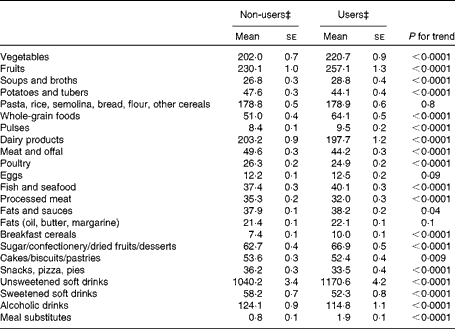
Daily food intakes in DS users and non-users are compared in Table 4. Overall, DS users had a healthier diet than non-users – they ate more vegetables, fruits, soups/broth, whole-grain foods, pulses, fish/seafood, breakfast cereals, sugar/confectionery and meal substitutes, and drank more unsweetened drinks. They also ate less potatoes, dairy products, meat and offal, poultry, processed meat, cakes/biscuits/pastries, snacks/pizzas and drank less alcoholic beverages.
Table 4 Comparison of daily food intake (g/d) in dietary supplement (DS) users* (n 24 191) and non-users (n 31 378) in the NutriNet-Santé cohort study† (Mean values with their standard errors)
* DS users were defined as subjects who used ≥ 1 DS during the 12 months preceding the DS questionnaire.
† In subjects with three dietary records at baseline.
‡ Logistic regression analysis comparing DS users and non-users with adjustment for sex, age and energy intake.
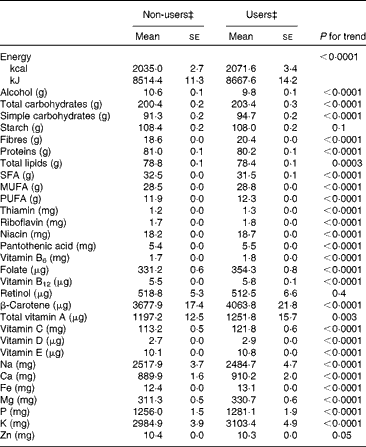
Daily dietary energy and nutrient intake in DS users and non-users are compared in Table 5. DS users had higher food intakes of energy, total and simple carbohydrates, fibres, unsaturated fatty acids, but had lower intakes of alcohol, proteins, total lipids and SFA. They also had higher dietary intakes for most vitamins and minerals (i.e. thiamin, riboflavin, niacin, pantothenic acid, vitamin B6, folate, vitamin B12, β-carotene, vitamins A, C, D and E, Ca, Fe, Mg, P and K). DS users had lower intakes of Na than did DS non-users.
Table 5 Comparison of daily dietary energy and nutrient intake in dietary supplement (DS) users*(n 24 191) and non-users (n 31 378) in the NutriNet-Santé cohort study† (Mean values with their standard errors)
* DS users were defined as subjects who used ≥ 1 DS during the 12 months preceding the DS questionnaire.
† In subjects with three dietary records at baseline.
‡ Logistic regression analysis (performed to derive the P value for the comparison between DS users and non-users) was adjusted for sex, age and energy intake.
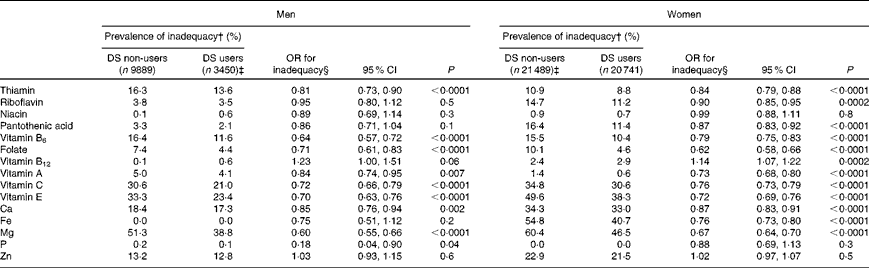
The prevalences of dietary nutrient inadequacy (intakes from food) in DS users and non-users were compared by sex in Table 6. The prevalence of inadequacy was statistically significantly lower in DS users compared with non-users regarding most nutrients (thiamin, folate, vitamins B6, A, C and E, Ca and Mg in men and women, plus riboflavin, pantothenic acid and Fe in women only). Only the prevalence of inadequacy for vitamin B12 intake was higher in women DS users than in non-users.
Table 6 Comparison of the prevalence of dietary nutrient inadequacy stratified by sex and dietary supplement (DS) use in the NutriNet-Santé cohort study* (Odds ratios and 95 % confidence intervals)
* In subjects with three dietary records at baseline.
† The probability of dietary nutrient intakes below the estimated average requirements for the French population.
‡ DS users were defined as subjects who used ≥ 1 DS during the 12 months preceding the DS questionnaire.
§ Logistic regression analysis comparing DS users and non-users, adjusted for age and energy intake. Reference, DS non-users.
Discussion
The present study sheds light on DS use in a large sample of French adults. In the present analyses, Mg emerged as the most frequently used supplement, followed by vitamins B6 and C, which is in accordance with the results from the Comportements et consommations alimentaires en France (CCAF) study(30). The principal reason cited for DS use in the present study was ‘to overcome tiredness’, in line with the results of the ECCA (Enquête sur les Consommateurs de Compléments Alimentaires) study(Reference Touvier, Dufour and Gourillon13). There was consistency between the most frequently cited DS used and the main reasons for use. Indeed, the European Food Safety Authority has recently recognised a causal relationship between some nutrient deficiency (notably Mg, vitamin C and vitamin B6) and fatigue, thus authorising claims related to the management of fatigue as regards dietary products that contain at least 15 % of the RDA/100 g(31–33). In contrast, a well-founded reason that could motivate DS use (i.e. ‘to compensate for inadequate dietary intake’) was cited by only 10·1 % of the users. In addition, specific conditions (often associated with physical or psychological discomfort) such as undergoing a restrictive diet, pregnancy, menopause and chronic emotional or physical pain were associated with a higher DS use in the present study. DS use did not appear to be a temporary trend, as it was often reported over a long period of time, suggesting that long-term effects on health are possible. Winter was also reported as the main season for DS use in the INCA2 (Étude Individuelle Nationale des Consommations Alimentaires 2) and the ECCA studies(Reference Touvier, Boutron-Ruault and Volatier8, 14).
About half of the DS users were self-medicated, whereas 21 % of the DS purchases followed medical advice and another 33 % were purchased with a prescription. In addition, the role of the pharmacist was noteworthy, as it represented more than 20 % of the reported motivations for DS purchases. These results were in accordance with the INCA2 study(14), where medical prescription or advice represented 52 % and advice from a pharmacist represented 18 %. It has been suggested that pharmacists might be ill-equipped to counsel patients on these products and an ethical issue stemming from the profit motive may occur(Reference Boon, Hirschkorn and Griener34).
Concerning the sociodemographic, lifestyle and behavioural profile of DS users, several studies in other developed countries have also found that supplement users were more often women(Reference Touvier, Boutron-Ruault and Volatier8, Reference Pilorin and Hebel12), older(Reference Satia-Abouta, Kristal and Patterson35), had a higher level of education(Reference Mileva-Peceva, Zafirova-Ivanovska and Milev7), belonged to a higher socio-professional category(Reference Murphy and Poos36) and lived in small-sized households(Reference Touvier, Boutron-Ruault and Volatier8). Lower BMI(Reference Touvier, Boutron-Ruault and Volatier8), higher leisure-time physical activity levels(Reference Gardiner, Kemper and Legedza3, Reference Touvier, Kesse and Volatier10) and healthier lifestyle among users than non-users(Reference Bailey and Fulgoni37–Reference Mullie, Clarys and Hulens39) have also been reported. In addition, we observed, for the first time in France, that DS users were more likely to report increased knowledge of nutritional recommendations and increased organic food consumption, adding consistency to the ‘healthy DS users’ profile.
As reported previously, using another French cohort, we observed that current smokers were less likely to be DS users than were non-smokers(Reference Touvier, Kesse and Volatier10), which is consistent with a healthier lifestyle. However, DS use in smokers was non-negligible (19 %), despite the fact that the potential health effects of DS use in association with tobacco smoking are not well known. Notably, it has been shown that β-carotene supplements increase cancer risk in smokers(Reference Druesne-Pecollo, Latino-Martel and Norat16, Reference Jeon, Myung and Lee40). β-Carotene DS use was low in the present study, but interestingly, it was not lower among smokers, despite the demonstrated cancer risk in that subgroup. This finding suggests that smokers might not be aware of that risk, or that health care professionals might not be well informed(Reference Ventola41). The most commonly used DS were the same regardless of smoking status, but the reasons for use differed. When compared with never smokers, smokers were more likely to use DS to overcome stress, to lose weight, to compensate for inadequate dietary intake and were more likely to self-medicate, which increases the potential risks associated with DS use in this sub-population.
Considering food and dietary nutrient intake, DS users had a healthier diet than non-users, as observed previously(Reference Gahche, Bailey and Burt2, Reference Pilorin and Hebel12, Reference Reinert, Rohrmann and Becker38, Reference Tetens, Biltoft-Jensen and Spagner42). The prevalence of inadequate dietary nutrient intake was also lower in DS users compared with non-users for most micronutrients, in both men and women, as reported previously(Reference Touvier, Boutron-Ruault and Volatier8, Reference Bailey and Fulgoni37, Reference Shakur, Tarasuk and Corey43), except for vitamin B12 in women. In fact, DS users ate less meat than did non-users, meat being a major contributor of vitamin B12 intake.
The present study highlighted a risk of insufficient dietary intakes as regards several nutrients in the whole population study. Increased nutrient intake through tablets or pills under medical supervision is justified under certain physiological situations (such as pregnancy). However, several arguments encourage caution regarding supplement use for the general population. They pertain to the quality and safety of DS(Reference Palmer, Haller and McKinney44), the absence of clear benefits in chronic disease management in well-nourished populations, the need–use disparity (i.e. increased DS use by those who have the least need for them, as shown in the present study), the behavioural impact (e.g. people might believe that DS use can act as a substitute for a diversified and balanced diet) and the potential deleterious effects of some DS in certain population subgroups (e.g. β-carotene use in smokers(Reference Albanes, Heinonen and Taylor15–Reference Touvier, Kesse and Clavel-Chapelon17), or DS–drug interactions in individuals taking certain medications(Reference Tsai, Lin and Simon Pickard45, Reference Hardy46)). Thus, the official recommendation for the general population is to increase dietary variety(Reference Maillot, Vieux and Ferguson47) and improve healthy food choices rather than to use DS in order to achieve adequate nutrient intakes.
Several limitations of the present study should be mentioned. Caution is needed in extrapolating the present results to the general population, as the present study was based on a volunteer sample. Participants were primarily women, mostly belonging to the highest socio-professional categories than the general population. For instance, the proportion of DS users in the present study was slightly higher than the prevalence of DS use assessed in the French INCA2 study (2006) using a nationally representative sample. Similarly, the percentage of organic food consumers in the present study was higher than that in the general population (about 60 % in the NutriNet-Santé study compared with 43 % in a representative French study(48)). This could partly be attributed to sample composition (i.e. the large proportion of women in the present study, who tend to consume more DS(11, Reference Touvier, Dufour and Gourillon13, 14) and organic foods(48), than men) and to the self-selection of participants in a nutrition-focused study. However, the present Web-based study allowed the inclusion of subjects from lower socio-professional categories, who are usually difficult to reach. Next, significant associations occurring purely by chance cannot be excluded. However, the present results are hypothesis-driven and supported by available data in the literature. The number of statistically significant results observed in the present study was far above the 5 % error of the first kind and most of them were highly significant (P< 0·0001). Finally, data collection is based on self-administered questionnaires and the DS questionnaire might engender a memory bias because subjects were asked for the motivations and circumstances of their DS purchases over the past 12 months.
In conclusion, the NutriNet-Santé study provided new and detailed information on DS use. Overall, the present results suggest that DS users had an overall healthier profile (in terms of diet, smoking status, physical activity and other parameters) and better knowledge of nutritional recommendations. This is consistent with the findings observed in other developed countries(Reference Gardiner, Kemper and Legedza3, Reference Bailey and Fulgoni37–Reference Mullie, Clarys and Hulens39, Reference Beitz, Mensink and Hintzpeter49, Reference McNaughton, Mishra and Paul50), which suggests that despite very different behaviours, opinions and culture regarding food, health and nutrition, the profile of DS users is overall stable across such countries. The present study also highlighted the importance of self-medication practices regarding DS use (more than 45 %). The large sample of subjects allowed analysing subgroups of interest (such as smokers), for whom some DS may increase the risk regarding chronic pathologies such as cancer. Current smokers used less DS than did non-smokers, but their DS consumption was substantial (19·0 %) and they were more likely to self-medicate. Finally, the correlates of DS use highlighted in the present study could be useful in properly controlling for potential confounders in future prospective aetiological studies on the relationship between DS use and chronic disease.
Acknowledgements
The NutriNet-Santé cohort study is funded by the following public institutions: Ministère de la Santé (DGS); Institut de Veille Sanitaire (InVS); Institut National de la Prévention et de l'Education pour la Santé (INPES); Fondation pour la Recherche Médicale (FRM); Institut National de la santé et de la Recherche Médicale (INSERM); Institut National de la Recherche agronomique (INRA); Conservatoire National des Arts et Métiers (CNAM); Paris 13 University. The authors' responsibilities were as follows: C. P. and M. T. designed the research; C. P., M. T. and S. H. conducted the research; C. P. analysed the data and led the writing; M. T. supervised the study; V. A. A., S. P., E. K.-G., C. L., S. H. and M. T. contributed to the data interpretation and revised each draft for important intellectual content; M. T. had primary responsibility for the final content. All authors read and approved the final manuscript. The authors declare that there are no conflicts of interest.