





Policy Significance Statement
This systematic review identifies the technological, organizational, and institutional factors driving blockchain adoption in emerging markets. Findings highlight that infrastructure modernization, regulatory clarity, and innovation-supportive policies are the most consequential levers for policymakers. By targeting these levers, governments can strengthen transparency, lower transaction costs, and broaden financial inclusion in markets that have historically faced systemic inefficiency, opacity, and limited access to cross-border payment. Recommendations are calibrated to institutional and infrastructural maturity rather than presented as one-size-fits-all prescriptions, supporting context-specific interventions across Sub-Saharan Africa, South and Southeast Asia, and Latin America. The review provides policy-relevant guidance for sustainable blockchain implementation aligned with each region’s regulatory and developmental capacity.
1. Introduction
1.1. Key definitions and scope
Blockchain is commonly defined as a distributed ledger technology that enables the recording of transactions across a shared database maintained by multiple participants. Although the term blockchain itself does not appear in Nakamoto (Reference Nakamoto2008), the white paper introduced the architectural primitive—a peer-to-peer electronic cash system maintained without a trusted third party—that subsequent scholarship and institutional bodies would come to label as blockchain. The World Bank defines blockchain as a distributed registry of financial transactions and asset tracking within a business ecosystem, while the OECD characterizes it as a distributed ledger technology grounded in cryptography that ensures integrity and transparency. On the basis of these views, this article adopts a technology-neutral definition of blockchain that focuses on four essential properties: a shared, append-only register; agreement among distributed members; cryptographic integrity through hash-linked blocks; and programmability via smart contracts. This definition supports but goes beyond cryptocurrency-focused interpretations (Nakamoto, Reference Nakamoto2008) and aligns with enterprise-focused definitions emphasizing auditability, governance, and institutional responsibility (Pilkington Reference Pilkington, Olleros and Zhegu2016; Yeoh, Reference Yeoh2017; Janssen et al., Reference Janssen, Weerakkody, Ismagilova, Sivarajah and Irani2020).
FinTech refers to financial innovation that is made possible by technology, resulting in a new business model, usage, processes, or products that have significant implications on financial markets and financial institutions (Arner et al. Reference Arner, Barberis and Buckley2016). In this general FinTech environment, blockchain is a core technology supporting certain types of decentralized financial innovation. As applicable, this review compares traditional platform-based FinTech architecture and blockchain-based smart contract architecture to marginalize the operational and governance implications of decentralized finance, uniquely based on Chen et al. (Reference Chen, Liu, Yan, Hu and Shi2021).
Lastly, this article differentiates the phenomenon of adoption and implementation using information systems literature and the Technology-Organization-Environment (TOE) model. The process of adoption of an organization is the choice and desire of an organization to implement blockchain technology, which includes awareness, assessment, and initiating acceptance. The implementation, in its turn, refers to the post-adoption that involves technical implementation of the blockchain systems, integration into the organizational processes, and routinization into the daily business (Janssen et al., Reference Janssen, Weerakkody, Ismagilova, Sivarajah and Irani2020). Throughout this review, attention is paid to whether empirical findings relate to adoption antecedents or to implementation outcomes, as this distinction is particularly important in emerging markets where initial adoption does not always translate into sustained or effective use.
The rest of this article is structured as follows. Section 2 provides background on the use of blockchain in emerging markets, the research questions, and the findings’ implications. Section 3 analyzes the corresponding literature and presents the theory, paying particular attention to the TOE model. Section 4 provides the methodology, including the systematic literature review process and data analysis. The results are offered in Section 5, which outlines the main technological, organizational, and institutional variables that affect the adoption of blockchain and their effects. Section 6 addresses these findings according to the theories that are relevant to it, including TOE, Innovation Diffusion, and Disruptive Innovation. Section 7 provides practical suggestions with regard to policymakers and financial institutions. Lastly, Section 8 is a conclusion presenting the contributions, limitations, and recommendations for further research.
2. Blockchain in emerging markets
The rise of digital infrastructure in emerging markets is transforming economic activities, and internet penetration and accessibility in these regions are growing to more than 60 percent in 2025, and the number of mobile broadband subscriptions is almost doubling (ITU 2023; GSMA 2024). Within this online growth, a technology known as blockchain, which was first proposed by Nakamoto (Reference Nakamoto2008) in Bitcoin, has shown tremendous transformative opportunities, especially in the financial services market and other data-intensive industries. Nawari and Ravindran (Reference Nawari and Ravindran2019) define blockchain as a digital storage that is decentralized, protecting data assets and recording network transactions that are shared among participants without getting a central authority.
Since emphasis is on emerging markets, the definition of the latter is necessary. With Evans (Reference Evans2018), the emerging markets are those economies that are currently fast industrializing and deepening financial markets, that are generally low-income per-capita, but have higher growth rates, increasing GDP, and institutional transitions underway. Although blockchain usage is on the rise, the underlying reasons that have led to higher usage in the new markets are underresearched. The transparency of blockchain, the impossibility to alter the public or private register, lowers fraud levels and promotes responsibility, which is more than essential in places where corruption and fund mismanagement are common phenomena (Pilkington Reference Pilkington, Olleros and Zhegu2016; Schmidt and Wagner, Reference Schmidt and Wagner2019; Yeoh, Reference Yeoh2017). Also, the use of blockchain in a transaction reduces costs related to the middleman, making financial services accessible and affordable (Sarmah, Reference Sarmah2018; Prewett et al. Reference Prewett, Prescott and Phillips2020).
However, unique challenges persist, including regulatory uncertainty, privacy and security risks, and systemic barriers that limit widespread blockchain implementation (Aslam et al., Reference Aslam, Saleem, Khan and Kim2021). This systematic literature review aims to identify the key factors influencing blockchain adoption and evaluate its reported impact in emerging markets.
The research questions guiding the study are:
-
i. Research Question 1: What technological, organizational, and institutional factors influence blockchain adoption in emerging markets?
-
ii. Research Question 2: How do the factors in RQ1 influence the perceived impact of blockchain technology in emerging markets?
This research has policy implications relevant to policymakers in emerging markets in terms of developing and implementing appropriate regulation of innovation activities to protect consumers while at the same time encouraging the development of FinTech service providers. Blockchain technology and digital assets are growing quickly; therefore, with few exceptions, they create prospects and issues in nations with advancing financial structures. The findings from this study also offer significant insights for financial institutions by identifying key possibilities of blockchain technology in the context of increasing transparency and decreasing organizational costs. The various sectors of banking and finance in the emerging markets present some challenges, like high charges for transactions, high levels of opacity, and slow transaction completion, especially in sectors like remittances and cross-border payments.
3. Related works
3.1. Theoretical framework
3.1.1. The Technology-Organization-Environment (TOE)
The Technology-Organization-Environment (TOE) framework, introduced by Tornatzky and Fleischer (Reference Tornatzky and Fleischer1990), offers a comprehensive lens to understand how organizations adopt and implement innovations by examining three interrelated contexts: technology, organization, and environment. Traditionally, the TOE framework has been used as an organizing taxonomy to categorize factors influencing adoption decisions, but this study seeks to deepen its theoretical contribution by exploring how these dimensions interact and operate in the distinct context of emerging markets.
The technological situation involves the current technological situation within a firm, as well as the current technologies that are available, as well as those that are not yet implemented. This situation defines the viability and extent of blockchain implementation because the requirement to fit in the existing system, security, and perceived utility determine the organizational readiness to innovate. Organizational context deals with organizational structures, resources, leadership, and culture that improve or hinder adoption. It is important to have effective coordination mechanisms, including cross-functional teams and innovation-supportive leadership. Nevertheless, organizational size does not go hand in hand with being the predictor of adoption, and, therefore, resource availability along with culture might be more central factors (Malik Reference Malik, Chadhar, Vatanasakdakul and Chetty2021).
The environmental context deals with the external forces and opportunities, including competitive forces, the maturity of the industry, regulatory regimes, and the accessibility of talented labor and service companies. This situation is especially complicated in emerging markets, where the nature of institutional instability, regulatory ambiguity, and incoherent market structures are typical (Seshadrinathan and Chandra, Reference Seshadrinathan and Chandra2021; Lin, Reference Lin2024). The theoretical framework of this research is that the causal relationship between the TOE dimensions and the adoption of blockchain in application in emerging economies works differently than in developed ones. An example is organizations that may have a high dependence on technological affordances and internal organizational competencies used to jump past development phases to utilize blockchain to avoid infrastructural imbalances and outmoded systems where institutions are weak or underdeveloped. This is unlike the institutional environments that are more stable, and incremental innovation is prevalent.
Environmental context factors with particular importance to institutions in the emerging markets include the fact that regulatory frameworks can be ambiguous or developing, and enforcement mechanisms are not as reliable. It increases the risk of the unpredictability of blockchain adoption, yet opens unprecedented chances of disruption, due to the transparency and decentralization of blockchain being able to replace poor institutional trust (Yeoh, Reference Yeoh2017; Taherdoost, Reference Taherdoost2022). The institutional environment’s dual role as both a barrier and enabler suggests potential scope conditions for the TOE framework’s applicability, while the model provides a valuable foundation; its dimensions may carry differing weights or interact in novel ways in emerging contexts.
Thus, this study extends TOE beyond a static taxonomy toward a dynamic theory that acknowledges contextual contingencies, particularly the elevated importance of institutional factors and the phenomenon of leapfrogging. Applying TOE in this manner allows for a nuanced understanding of blockchain adoption that reflects the distinct socioeconomic and regulatory realities of emerging markets, offering both theoretical refinement and practical insights.
3.2. Drivers of blockchain adoption
Blockchain technology is a relatively new technology for which there is limited research on its application. Although some of these studies, like Lu et al. (Reference Lu, Yeh and Kuo2024) on the Taiwan banking sector, Chittipaka et al. (Reference Chittipaka, Kumar, Sivarajah, Bowden and Baral2023) on the supply chain management, and Boateng et al. (Reference Boateng, Asare, Sekyere, Akude and Walden2023) on the Technology Acceptance Model (TAM) and the Innovation Diffusion Theory (IDT), offer important perspectives into the adoption of blockchain in the banking industry of Taiwan, their conclusions need more in-depth inquiries on their applicability and relevance to a broader context. Lu et al. (Reference Lu, Yeh and Kuo2024) concentrated on the technological and transactional elements that impacted the adoption of blockchain in the Taiwanese banking industry. Technological factors centered on the main features of blockchain technology, such as relative advantage, compatibility, complexity, and system integration, also outlined the degree of perfection of blockchain integration in the current systems and the opportunities it would offer in streamlining the efficiency and operation processes. Organizational factors were the nature and resources of firms, including sufficient resources, size of firms, and effective top management support, which were central to facilitating adoption. However, the analysis presented by Lu et al. (Reference Lu, Yeh and Kuo2024), though comprehensive, remains rooted in resource-based assumptions that may not hold in settings where digital infrastructure and skilled labor are scarce. Chittipaka et al. (Reference Chittipaka, Kumar, Sivarajah, Bowden and Baral2023) provided a comprehensive operationalization of TOE constructs. The inclusion of factors such as business partner pressure and regulatory pressure as part of the environmental dimension reflects how external factors often affect blockchain adoption. However, despite the comprehensive scope of this study, the sectoral focus on supply chain limits the broader applicability of the findings in the finance sector in emerging markets. Boateng et al. (Reference Boateng, Asare, Sekyere, Akude and Walden2023) applied TAM and IDT as the theoretical framework of the study, and while the framework attempts to reconcile user-centric and innovation-centric paradigms, it still lacks the organizational and environmental depth found in TOE, a theory applied in this study.
Aslam et al. (Reference Aslam, Saleem, Khan and Kim2021) focused on the factors affecting blockchain adoption in the oil industry. The factors discussed included the ability of an organization to meet the cost requirements of implementing blockchain technology. While this economic lens is important, the analysis is overly reductive, failing to interrogate how financial constraints intersect with other critical adoption barriers such as technological complexity, regulatory ambiguity, or resistance to organizational change (Kumar Reference Kumar, Tahir, Kumar, Zia, Memon and Mahmood2019). Moreover, cost as a standalone factor risks oversimplifying the adoption process, reducing it to a binary of affordability rather than addressing how strategic value and long-term ROI might influence decision-making differently across firm types (Salmon and Myers, Reference Salmon and Myers2019; Queiroz et al., Reference Queiroz, Fosso Wamba, De Bourmont and Telles2021). Orji et al. (Reference Orji, Kusi-Sarpong, Huang and Vazquez-Brust2020) determined the factors influencing blockchain adoption in freight logistics. The study discussed organizational factors such as the availability of training facilities to ensure employees can adapt to blockchain systems, tailored to the firm’s specific requirements. Top management support is pivotal in providing direction, resources, and necessities during and after blockchain adoption. Firm size also impacts adoption, as larger firms generally have more resources to implement strategic changes, while smaller firms are often hesitant due to perceived risks. However, Orji et al. (Reference Orji, Kusi-Sarpong, Huang and Vazquez-Brust2020) treat adoption as a linear process driven by internal capacity and tool availability, with insufficient attention to external environmental pressures such as regulatory requirements and cybersecurity risks. Moreover, the focus on the freight industry limits its applicability in the finance sector in emerging markets.
Other studies focused on analyzing how a given factor affected blockchain adoption in isolation. For instance, Davis et al. (Reference Davis, Lennerfors and Tolstoy2022), in their study on the perceived impact of infrastructure on the adoption of blockchain within a given institution, noted that any blockchain-based system relies on functioning and reliable technology, including internet connectivity. While using private or public blockchains may reduce some of this dependency, infrastructure remains a crucial concern for implementation, especially in Africa. A country’s infrastructure significantly determines the extent to which blockchain technology can realize benefits (Kshetri Reference Kshetri2021). While internet connectivity and reliable technology are essential for blockchain, the studies simplify the issue by not addressing the broader infrastructure needs, such as data centers, cloud services, and hardware required for advanced blockchain applications. The study also neglects other factors that affect blockchain adoption, including organizational and external factors in the context of emerging markets.
Another factor identified was the lack of understanding of how blockchain technology works within an organization. Queiroz and Fosso Wamba (Reference Queiroz and Fosso Wamba2019) noted that most stakeholders in small and medium-sized enterprises (SMEs) lack awareness regarding the functionality of blockchain technology and its potential advantages for business beginnings. A study involving 160 entrepreneurs across six emerging African economies (South Africa, Kenya, Rwanda, Ethiopia, Nigeria, and Uganda) indicated that blockchain was perceived similarly to cryptocurrencies like Bitcoin, with the volatile nature of cryptocurrencies and their susceptibility to value manipulation raising concerns regarding trust and privacy (Balci & Surucu-Balci Reference Balci and Surucu-Balci2021). However, the view in these studies misses the broader applicability of blockchain technology, such as improving transparency and security in business processes. The overemphasis on cryptocurrency issues might also lead to missed opportunities to explore how blockchain can enhance efficiency and reduce fraud in the finance sector.
3.3. Gaps in the literature
While a substantial body of literature examines blockchain’s transformative potential and adoption drivers, relatively few studies systematically investigate the factors influencing blockchain adoption in emerging markets. Although infrastructure is frequently acknowledged as a critical barrier, empirical attention remains skewed toward developed economies, leaving the infrastructural realities of emerging markets, such as intermittent connectivity, unreliable power supply, and limited digital backbones, insufficiently theorized and evidenced (United Nations Economic Commission for Latin America and the Caribbean [CEPAL] 2021; Kshetri Reference Kshetri2021). Existing studies also tend to focus on isolated sectors or single-country contexts, including Taiwan’s banking industry (Lu et al., Reference Lu, Yeh and Kuo2024) and extractive industries such as oil and gas (Aslam et al., Reference Aslam, Saleem, Khan and Kim2021), thereby offering limited generalizability across heterogeneous emerging markets.
Moreover, much of the literature examines technological, organizational, and institutional determinants in isolation, rather than analyzing how these dimensions interact to shape adoption trajectories (Orji et al., Reference Orji, Kusi-Sarpong, Huang and Vazquez-Brust2020; Davis et al., Reference Davis, Lennerfors and Tolstoy2022). Institutional trust and government policy are widely cited as critical enablers (Montecchi et al. Reference Montecchi, Plangger and Etter2019), yet there remains a lack of nuanced analysis of how these factors operate in politically volatile or institutionally weak environments, where regulatory ambiguity and enforcement gaps are common. Importantly, underdeveloped streams of research highlight blockchain’s relevance beyond financial services, particularly at the infrastructure layer, where blockchain is increasingly deployed to support decentralized, resilient digital systems. Recent work demonstrates blockchain-enabled infrastructure applications in Internet of Things (IoT) environments, where distributed ledgers enhance data integrity, interoperability, and trust across heterogeneous devices and networks (Zhou et al., Reference Zhou, Li, Zhang, Sun and Xu2023a). Such studies indicate that blockchain adoption factors extend beyond firm-level efficiency gains to include system-level concerns such as scalability, latency, governance, and infrastructure resilience. Similarly, research on blockchain-supported decentralized naming services and peer-to-peer communication protocols illustrates how adoption drivers intersect with core digital infrastructure rather than sector-specific use cases alone (Zhou et al., Reference Zhou, Guo, Xu, Zhang, Fan and Zhang2023b).
Additional interdisciplinary work links blockchain adoption to copyright-aware knowledge sharing and collaborative innovation infrastructures, emphasizing the role of institutional design and incentive alignment in nonfinancial domains (Guo et al., Reference Guo, Zhou, Xu, Fan, Zhang and Zhang2022). Evaluation-oriented studies further propose multi-criteria decision frameworks for assessing blockchain-enabled infrastructures, offering insights into how stakeholders assess risks, benefits, and feasibility under conditions of uncertainty (Tang et al., Reference Tang, Zhuang and Zhang2025). Socio-legal perspectives, such as Recordism, reinforce the view that blockchain adoption is embedded within broader social, legal, and technological systems, rather than confined to transactional efficiency alone (Li et al., Reference Li, Xu, Fang, Zhao and Zhang2022).
This study addresses these gaps by systematically examining the technological, organizational, and institutional factors influencing blockchain adoption in emerging markets (Research Question 1), while explicitly recognizing adoption as a multilevel process shaped by infrastructural and institutional constraints. By focusing exclusively on emerging markets, the review captures context-specific dynamics that are often obscured in global or developed-economy-focused analyses. Furthermore, the study investigates how these factors jointly influence the perceived impact of blockchain adoption (Research Question 2), thereby responding to the limited empirical linkage between adoption drivers and practical outcomes. In doing so, the study provides theoretically grounded and policy-relevant insights for organizations and policymakers seeking to leverage blockchain for sustainable development and digital infrastructure transformation in emerging economies.
4. Methodology
To answer the research questions, this present study conducted a systematic literature review to identify the drivers of blockchain adoption and the perceived impact of blockchain adoption in emerging markets. This study followed the guidelines outlined by Okoli (Reference Okoli2015) and Kitchenham and Brereton (2013). The review process was conducted in stages: search strategy, inclusion and exclusion criteria, screening and selection, and data extraction and analysis. The subsequent sections provide the details for each stage. The review protocol was not prospectively registered in a public repository before study commencement.
4.1. Search strategy
A comprehensive search of electronic databases was conducted for peer-reviewed journal articles between 2009 (when blockchain was introduced) and November 2024. The databases applied for this search included Google Scholar, ScienceDirect, Web of Science, Scopus, IEEE Xplore, Springer, and Emerald, as summarized in Table 1. Scopus and Web of Science provide extensive coverage of peer-reviewed journals across disciplines, while IEEE Xplore focuses on technical aspects, such as system integration and security. Springer and ScienceDirect emphasize high-quality academic studies in business and emerging technologies, and Emerald specializes in organizational behavior and management insights. Google Scholar broadens the scope by capturing gray literature, conference papers, and preprints. This study applied multiple databases in line with recommendations by Ewald et al. (2022) so that it maximizes available data and considers all available literature. It also reduces the risk of missing critical literature useful for the study. However, despite the extensive database coverage, potential biases include disciplinary overrepresentation, such as technical studies in IEEE Xplore or business-focused research in Emerald, as well as language bias due to prioritizing English publications.
Summary of the number of articles from each database
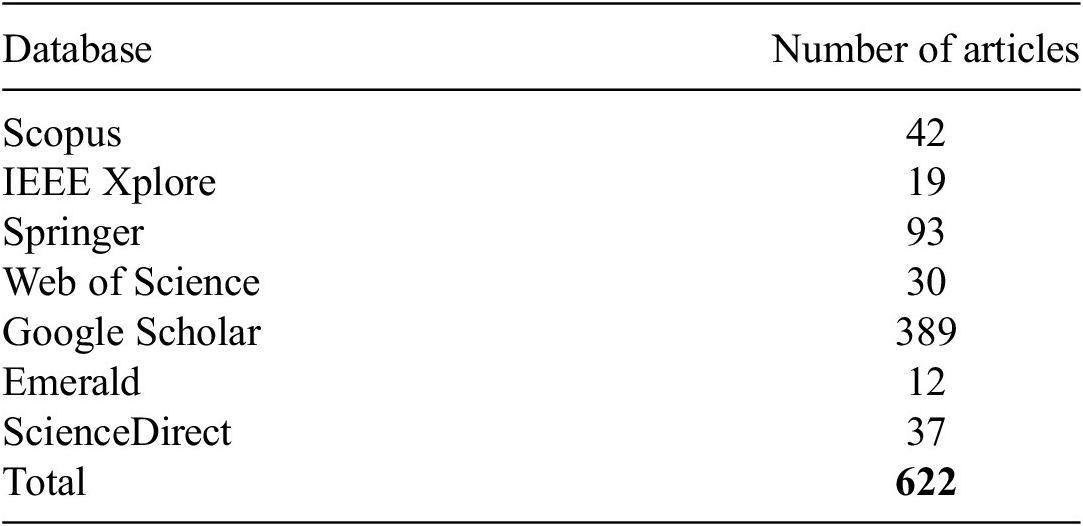
Table 1. Long description
From the top row downward, the left column lists databases: Scopus, I E E E Xplore, Springer, Web of Science, Google Scholar, Emerald, ScienceDirect, and Total. The right column shows article counts: Scopus 42, I E E E Xplore 19, Springer 93, Web of Science 30, Google Scholar 389, Emerald 12, ScienceDirect 37, and Total 622. Google Scholar has the largest number, Emerald the smallest. The table is framed with horizontal lines.
The search terms combined relevant keywords about blockchain technology, as summarized in Table 2.
The search was performed using the articles’ titles, abstracts, and keywords
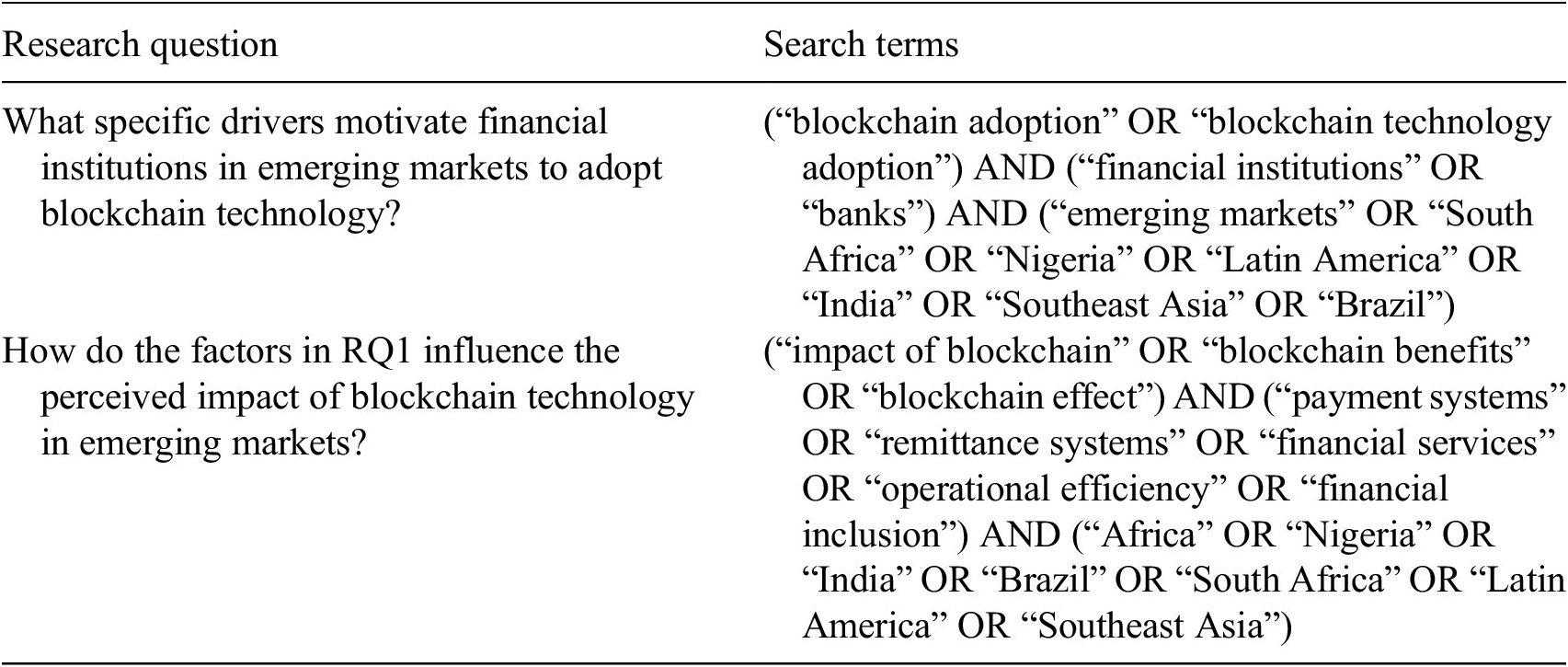
Table 2. Long description
From the top row, the left column states the research question: ‘What specific drivers motivate financial institutions in emerging markets to adopt blockchain technology?’ The right column lists search terms: ‘blockchain adoption’ or ‘blockchain technology adoption’ and ‘financial institutions’ or ‘banks’ and ‘emerging markets’ or ‘South Africa’ or ‘Nigeria’ or ‘Latin America’ or ‘India’ or ‘Southeast Asia’ or ‘Brazil’. The second row’s left column asks: ‘How do the factors in R Q 1 influence the perceived impact of blockchain technology in emerging markets?’ The right column provides search terms: ‘impact of blockchain’ or ‘blockchain benefits’ or ‘blockchain effect’ and ‘payment systems’ or ‘remittance systems’ or ‘financial services’ or ‘operational efficiency’ or ‘financial inclusion’ and ‘Africa’ or ‘Nigeria’ or ‘India’ or ‘Brazil’ or ‘South Africa’ or ‘Latin America’ or ‘Southeast Asia’.
An advanced search on Google Scholar, Springer, and ScienceDirect was done, as it returned more relevant articles.
4.2. Inclusion and exclusion criteria
Specific inclusion and exclusion criteria were applied to ensure the relevance of the articles selected for the study. The inclusion and exclusion criteria were carefully designed to ensure the relevance, quality, and accessibility of the articles selected for the study. Articles written in English were included to facilitate comprehensive analysis and accessibility for review, acknowledging the language limitations that may affect the understanding of non-English articles. However, restricting the review to English-language sources introduces a potential publication and language bias, since many emerging market contexts publish relevant work in regional or local languages. As a result, valuable insights from non-English studies may be underrepresented. This limitation is consistent with prior systematic reviews (Kitchenham & Brereton Reference Kitchenham and Brereton2013; Okoli Reference Okoli2015), but future work could reduce this bias by incorporating translation tools or engaging multilingual review teams to capture a more representative evidence base.
Only full-text articles, whether open-access or subscription-based, were considered to ensure a thorough analysis of the content. Empirical studies focusing on the drivers of blockchain adoption in financial institutions were prioritized to maintain alignment with the study’s objectives, while studies solely discussing cryptocurrency without clear links to blockchain adoption were excluded to avoid deviation from the research scope. The exclusion of articles published before 2009 is justified as blockchain technology, although conceptually discussed earlier, gained prominence with Bitcoin’s introduction in 2009. This marked the first practical application of blockchain, rendering pre-2009 discussions less relevant to the current adoption dynamics. The criteria are summarized in Table 3.
Inclusion and exclusion criteria
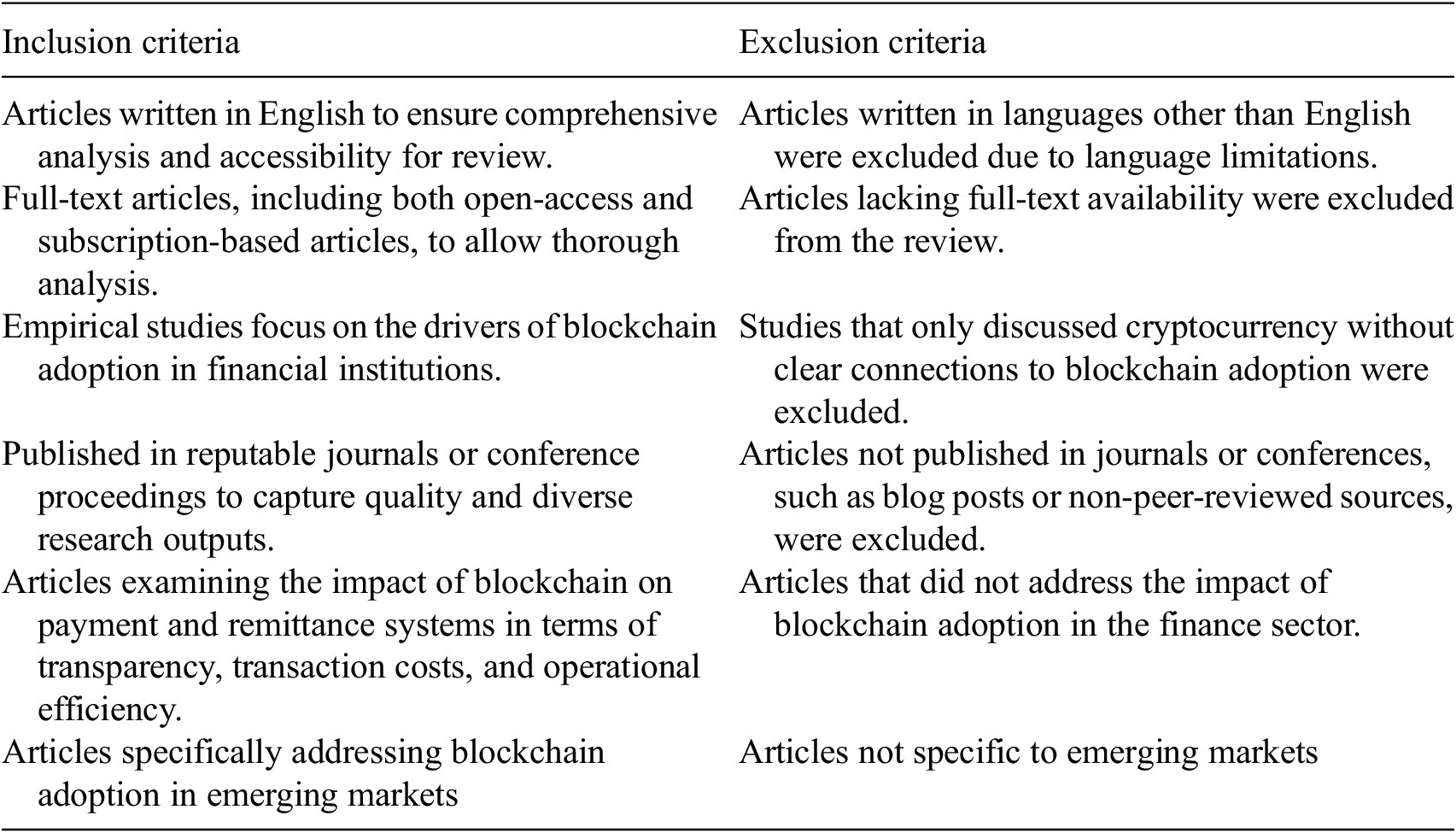
Table 3. Long description
Starting from the top row, the left column lists inclusion criteria: articles written in English, full-text articles (open-access or subscription), empirical studies on blockchain adoption drivers in financial institutions, publications in reputable journals or conferences, articles examining blockchain’s impact on payment and remittance systems regarding transparency, transaction costs, and operational efficiency, and articles specifically addressing blockchain adoption in emerging markets. The right column lists exclusion criteria: articles written in languages other than English, articles lacking full-text availability, studies discussing only cryptocurrency without clear links to blockchain adoption, articles not published in journals or conferences (such as blog posts or non-peer-reviewed sources), articles not addressing blockchain’s impact in the finance sector, and articles not specific to emerging markets. Each inclusion criterion is directly paired with its exclusion counterpart in the same row.
4.3 Screening and selection
A systematic process was applied to identify and remove duplicates. EndNote 20 software was applied to remove the duplicates based on title and author information. A manual removal process was also done to ensure no duplicates were overlooked during selection. The remaining articles were selected based on the inclusion and exclusion criteria. Any disagreements about inclusion were resolved via discussion until consensus among authors was reached.
4.4 Data extraction and analysis
After selecting the relevant articles, key information on drivers and perceived impact was extracted. To enhance the rigor and consistency of the data extraction process, a structured extraction protocol was applied. A pilot test was conducted on a subset of the selected articles to refine the coding framework, clarify category definitions, and ensure alignment with the research questions. Following this pilot phase, the finalized extraction scheme was applied consistently across all included studies. Coding consistency was assessed through independent extraction of a sample of articles, with discrepancies discussed and resolved through consensus to ensure shared interpretation and reliability of the extracted data.
The drivers influencing the adoption of blockchain technology were identified and categorized into main groups based on recurring patterns across the articles. To ensure the rigor of our systematic review, the PRISMA (Preferred Reporting Items for Systematic Reviews and Meta-Analyses) guidelines, as incorporated in the review on blockchain technology, were followed to enhance the reliability and validity of findings. As shown in Figure 1, the PRISMA 2020 flow diagram illustrates the identification, screening, eligibility, and inclusion of studies (Page et al., Reference Page, McKenzie, Bossuyt, Boutron, Hoffmann, Mulrow, Shamseer, Tetzlaff, Akl, Brennan, Chou, Glanville, Grimshaw, Hróbjartsson, Lalu, Li, Loder, Mayo-Wilson, McDonald, McGuinness, Stewart, Thomas, Tricco, Welch, Whiting and Moher2021).
PRISMA flow diagram showing the identification, screening, eligibility, and inclusion of studies.
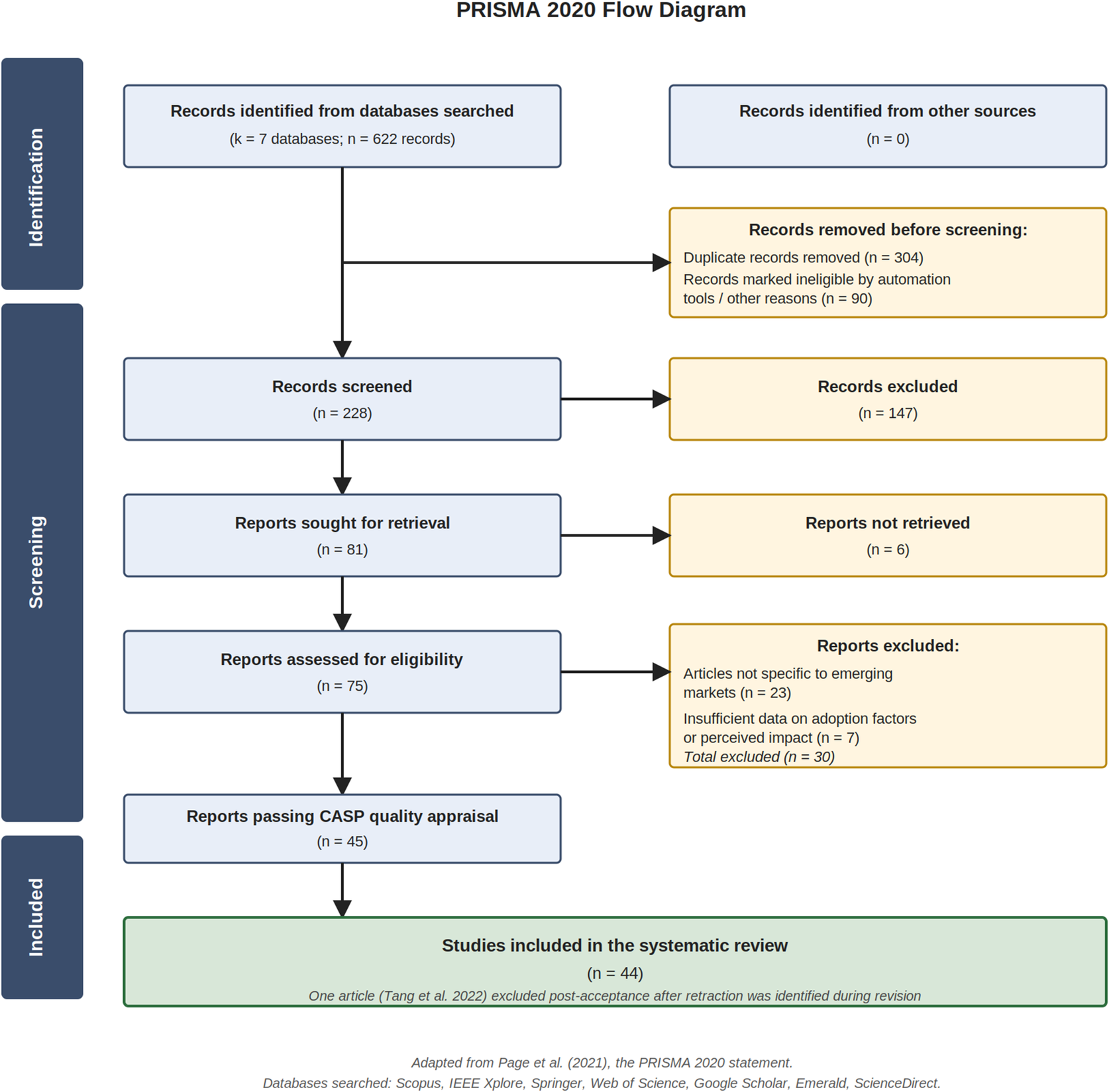
Figure 1. Long description
Starting at the top, the flowchart is divided into three vertical sections: Identification, Screening, and Included. Under Identification, the left box states Records identified from databases searched (k equals 7 databases; n equals 622 records). The right box states Records identified from other sources (n equals 0). An arrow from the left box points right to a box labeled Records removed before screening, listing Duplicate records removed (n equals 304) and Records marked ineligible by automation tools or other reasons (n equals 90). The main downward arrow leads to Records screened (n equals 228). From here, a rightward arrow points to Records excluded (n equals 147). The downward arrow continues to Reports sought for retrieval (n equals 81), with a rightward arrow to Reports not retrieved (n equals 6). The downward arrow leads to Reports assessed for eligibility (n equals 75). A rightward arrow points to Reports excluded, listing Articles not specific to emerging markets (n equals 23) and Insufficient data on adoption factors or perceived impact (n equals 7), with Total excluded (n equals 30). The downward arrow continues to Reports passing C A S P quality appraisal (n equals 45). The final box at the bottom, in green, states Studies included in the systematic review (n equals 44), with a note that one article (Tang et al. 2022) was excluded post-acceptance after retraction was identified during revision. The flowchart is adapted from Page et al. (2021), the P R I S M A 2020 statement. Databases searched are listed as Scopus, I E E E Xplore, Springer, Web of Science, Google Scholar, Emerald, ScienceDirect.
A total of n = 44 articles was retained as the final coded list to answer the research questions. The original 45 included articles were reduced to 44 following the removal of 1 retracted article (identified during this revision), as detailed in Section 4.5. Coding was based on several characteristics: authors, publication year, methods, countries, factors, domains, theories/models, research aims, and participants.
To complement the inclusion-stage coding, the authors conducted a multi-coded reexamination of TOE dimension coverage across the 44 included articles. Each article was counted in every TOE dimension that received substantive treatment, defined as more than a passing mention or as central to the article’s framework or findings, rather than being assigned to a single primary category. During this revision, Anthropic Claude (Opus 4.7, accessed via claude.ai in April 2026) was used to support an initial coding pass, which the authors reviewed, verified, and finalized against the article abstracts and the manuscript’s source characterizations. Final coding decisions and all counts reported in Section 5.1 are the authors’ responsibility. This multi-coded reexamination is reported alongside, and does not replace, the inter-rater reliability statistic (Cohen’s κ = 0.78) reported in Section 4.5, which pertains to the inclusion decision rather than to factor categorization.
Given the diverse ways in which perceived impact was operationalized across these studies, including constructs such as perceived usefulness from TAM, qualitative measures of trust and transparency, efficiency metrics, and macro-level economic outcomes, this review employs a thematic synthesis approach. This approach recognizes perceived impact as a broad, subjective evaluation of blockchain’s benefits and risks by stakeholders, rather than a single uniform construct. Accordingly, the review treats the factors influencing adoption as antecedents shaping stakeholder expectations and acceptance rather than as direct performance determinants. The absence of longitudinal data across studies means causal claims are cautiously framed, emphasizing associations and potential mechanisms rather than definitive causality.
4.5. Quality appraisal and reliability
To ensure methodological rigor, all included articles underwent quality appraisal using the Critical Appraisal Skills Programme CASP checklist. Two independent reviewers screened and assessed studies, with disagreements resolved through discussion until consensus was reached. Inter-rater reliability was calculated using Cohen’s kappa, yielding a substantial agreement score of 0.78 on a 20% subset of articles. This dual coding and quality appraisal process strengthened the validity of the review findings. As an additional safeguard introduced during revision, the included article set was cross-checked against the Retraction Watch database (retractionwatch.com); one article was identified as retracted and removed from the included set, leaving 44 articles in the final analysis.
5. Results
This section presents a contextualized analysis of the key factors influencing blockchain adoption in emerging markets. While much of the existing literature identifies common technological, organizational, and institutional factors, this study emphasizes how these factors uniquely manifest in emerging economies, often amplifying their influence or introducing new adoption dynamics.
RQ1: What are the factors affecting the adoption of blockchain technology in emerging markets?
5.1. Factors affecting blockchain adoption
Three major factors affecting the adoption of blockchain technology were identified from the literature: (i) technological factors, (ii) organizational factors, and (iii) institutional factors. Guided by the Technology–Organization–Environment (TOE) framework, the analysis applied a theory-driven categorization of adoption factors into technological, organizational, and institutional dimensions. Within these predefined categories, specific themes and sub-factors emerged inductively from recurring patterns in the reviewed articles. Because most articles in this literature substantively address two or three TOE dimensions simultaneously, factor coverage was multi-coded: an article was counted within a category when the dimension was substantively treated (more than a passing mention or central to the article’s framework or findings) rather than restricted to a single primary classification. Under this multi-coded approach, technological factors were substantively addressed in 44 of 44 articles (100%), organizational factors in 33 of 44 articles (75%), and institutional/environmental factors in 38 of 44 articles (86%). The summed total of 115 reflects that most articles addressed multiple TOE dimensions (mean ≈ 2.6 dimensions per article; 64% of articles addressed all three). The 100% technological coverage figure is structural to this literature, since every blockchain adoption study addresses technical attributes; this pattern is consistent with prior TOE-based meta-reviews (Marengo and Pagano, Reference Marengo and Pagano2023). While organizational and institutional factors are well represented at the article level, we note that the depth of organizational evidence is more variable than the technological evidence across the included literature, with several studies treating organizational factors as moderating or contextual rather than as primary determinants. Conclusions and policy recommendations regarding organizational determinants should therefore be read as evidence-supported but with lower convergence than technological findings—a point also visible in Table 4’s “Evidence Convergence” column, where organizational factors more frequently show “Mixed” or “Moderate” convergence.
Summary of factors affecting blockchain adoption
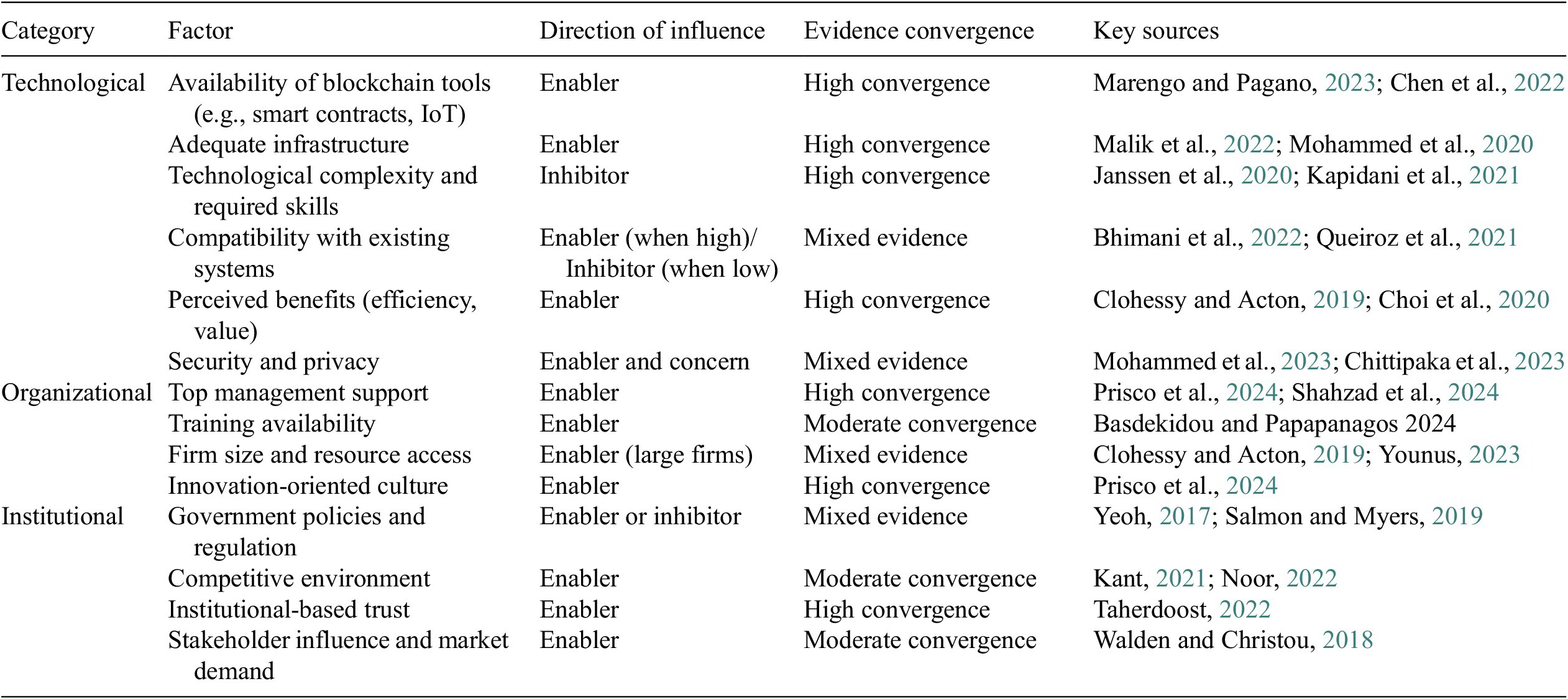
Table 4. Long description
The table has five columns labeled from left to right as Category, Factor, Direction of influence, Evidence convergence, and Key sources. The first section, Technological, lists six factors: Availability of blockchain tools such as smart contracts and IoT, Adequate infrastructure, Technological complexity and required skills, Compatibility with existing systems, Perceived benefits including efficiency and value, and Security and privacy. For each factor, the direction of influence is specified as Enabler, Inhibitor, Enabler or Inhibitor depending on context, or Enabler and concern. Evidence convergence is noted as High convergence, Moderate convergence, or Mixed evidence. Key sources are cited for each factor, including Marengo and Pagano 2023, Chen et al. 2022, Malik et al. 2022, Mohammed et al. 2020 and 2023, Janssen et al. 2020, Kapidani et al. 2021, Bhimani et al. 2022, Queiroz et al. 2021, Clohessy and Acton 2019, Choi et al. 2020, and Chittipaka et al. 2023. The Organizational section lists four factors: Top management support, Training availability, Firm size and resource access, and Innovation-oriented culture. Directions of influence are Enabler or Enabler for large firms, with evidence convergence ranging from High to Moderate or Mixed. Key sources include Prisco et al. 2024, Shahzad et al. 2024, Basdekidou and Papapanagos 2024, Younus 2023, and Clohessy and Acton 2019. The Institutional section lists four factors: Government policies and regulation, Competitive environment, Institutional-based trust, and Stakeholder influence and market demand. Directions of influence are Enabler, Inhibitor, or both, with evidence convergence as Mixed, Moderate, or High. Key sources include Yeoh 2017, Salmon and Myers 2019, Kant 2021, Noor 2022, Taherdoost 2022, and Walden and Christou 2018. Each row aligns the factor with its corresponding direction, evidence, and references.
5.1.1. Technological factors
Emerging markets often face infrastructural limitations and uneven technological readiness, which make technological factors particularly influential in blockchain adoption. For example, while access to smart contracts and the Internet of Things (IoT) is seen as an enabler globally (Marengo and Pagano, Reference Marengo and Pagano2023), in emerging markets, their perceived impact is constrained by underdeveloped digital ecosystems and unreliable internet connectivity (Malik et al., Reference Malik, Chadhar, Chetty and Vatanasakdakul2022). Technological complexity is another critical factor, as blockchain adoption requires specific skills and expertise. The ability to easily test and observe the technology also significantly impacts its adoption in emerging markets (Chen et al., Reference Chen, Miraz, Gazi, Rahaman, Habib and Hossain2022). Compatibility, or how seamlessly blockchain integrates with existing platforms in the sector, further influences its implementation.
Incompatibility with existing systems can result in costly, time-consuming processes and disrupt the operations in financial institutions (Mohammed et al., Reference Mohammed, Potdar and Yang2020). However, the perceived benefits of blockchain, such as increased value and efficiency, make it an appealing option for the industry (Bhimani et al., Reference Bhimani, Hausken and Arif2022). Blockchain’s peer-to-peer architecture offers added value compared to traditional centralized systems (Kumar Bhardwaj et al., Reference Kumar Bhardwaj, Garg and Gajpal2021), while automation through features like smart contracts enhances operational efficiency (Queiroz et al., Reference Queiroz, Fosso Wamba, De Bourmont and Telles2021). Security and privacy concerns are particularly salient in emerging markets with high cybercrime rates and weak data protection laws. In these contexts, trust in technology becomes even more essential for adoption.
5.1.2. Organizational factors
Organizational readiness in emerging markets is often shaped by resource limitations, rigid hierarchies, and limited access to innovation support. Top management support remains a universal prerequisite, but in emerging economies, this support is frequently hampered by risk aversion and a lack of blockchain literacy at leadership levels. The availability of training facilities is crucial, as blockchain remains a relatively new and misunderstood technology in these contexts. Emerging market firms, especially SMEs, are disproportionately affected by the resource-intensiveness of adoption, including costs related to training, system upgrades, and process transformation.
Firm size influences the adoption of blockchain technology, with more employees leading to higher output (Prisco et al., Reference Prisco, Abdallah, Morande and Gheith2024). Larger companies, with more employees and higher output, can more easily access the resources needed to adjust their business strategies and implement blockchain for competitive advantages (Clohessy & Acton.2019; Shahzad et al., Reference Shahzad, Zhang, Ashfaq, Zafar and Ahmad2024). In contrast, smaller firms often hesitate to adopt new technologies due to limited resources and the perceived risks of providing employee training or altering their operations. Organizational culture also affects the adoption of blockchain technology, where a culture that supports innovation and growth is more likely to support blockchain adoption than a culture that does not. Factors such as resource availability and allocation, including budget and skilled personnel, play a significant role in successful implementation.
5.1.3. Institutional factors
Institutional environments in emerging markets are often more volatile, fragmented, and underregulated than in developed economies, making institutional factors both highly influential and less predictable. Many financial institutions in these markets are adopting blockchain technology to gain a competitive advantage by improving operational efficiency, transparency, and security features increasingly demanded by consumers (Kant, Reference Kant2021; Noor, Reference Noor2022). For instance, Brazil’s Banco do Brasil and India’s State Bank of India have implemented blockchain-based systems to streamline transactions and enhance transparency, helping them stand out in their competitive environments (Ronaghi, Reference Ronaghi2022; Mohammed et al., Reference Mohammed, De-Pablos-Heredero and Montes Botella2023). Similarly, Nigeria’s Access Bank leverages blockchain for more efficient cross-border payments, responding to market needs while boosting its competitive position (Kshetri Reference Kshetri2021).
Regulatory and legal factors are also essential considerations for blockchain adoption. Organizations must navigate the regulatory environment and ensure compliance with applicable laws and regulations. Regulations that support blockchain adoption promote growth in financial institutions, while restrictive policies may hinder the adoption of blockchain technology. Depending on the type of regulations in a given emerging market, Yeoh (Reference Yeoh2017) indicated that some emerging markets are more advanced in blockchain adoption than others. Institutional-based trust is also an important factor to take into consideration. Perceived trust in blockchain technology, including its immutability and resistance to tampering, is crucial for organizations and individuals to have confidence in using it (Taherdoost, Reference Taherdoost2022). This is because trust suggests to consumers that the technology will operate transparently and efficiently to meet their needs. While several factors show strong convergence in both direction and importance, others, particularly institutional and organizational variables, exhibit mixed evidence, reflecting contextual variation across emerging markets. These factors are summarized in Table 4.
5.2. Commonalities of these factors across emerging markets
While common factors recur across contexts, their salience varies markedly by region and use case. For example, regulatory uncertainty tends to be the dominant constraint in many Sub-Saharan African and Latin American contexts, whereas infrastructure readiness, such as broadband reliability, data center and cloud availability, is comparatively more binding in lower-income markets and rural areas (Yeoh, Reference Yeoh2017; Kshetri Reference Kshetri2021; Salmon and Myers, Reference Salmon and Myers2019). In parts of South and Southeast Asia, rapidly evolving FinTech ecosystems and public digital infrastructure can offset organizational inertia, but data-protection and cross-border compliance considerations become more prominent (Clohessy and Acton, Reference Clohessy and Acton2019; Aslam et al., Reference Aslam, Saleem, Khan and Kim2021; Queiroz et al., Reference Queiroz, Fosso Wamba, De Bourmont and Telles2021). These patterns indicate that similar factors interact with different institutional baselines, producing distinct adoption pathways rather than a single emerging market trajectory (Kshetri Reference Kshetri2021; Yeoh, Reference Yeoh2017; Queiroz et al., Reference Queiroz, Fosso Wamba, De Bourmont and Telles2021).
The most prevalent factor for adopting blockchain technology, identified across 10 emerging markets, was regulatory factors. This was followed by the availability of infrastructure across six emerging markets, indicating the importance of infrastructure and resources to support blockchain adoption. The availability of training facilities also emerged as a significant factor, indicating the importance of acquiring the necessary skills and knowledge for blockchain adoption in emerging markets. The common factors are summarized in Table 5. Table 6 summarizes the enabling and inhibiting factors across the technological, organizational, and institutional dimensions of the TOE framework.
RQ2: How do the factors discussed affect the perceived impact of blockchain technology in emerging markets?
Common factors across countries
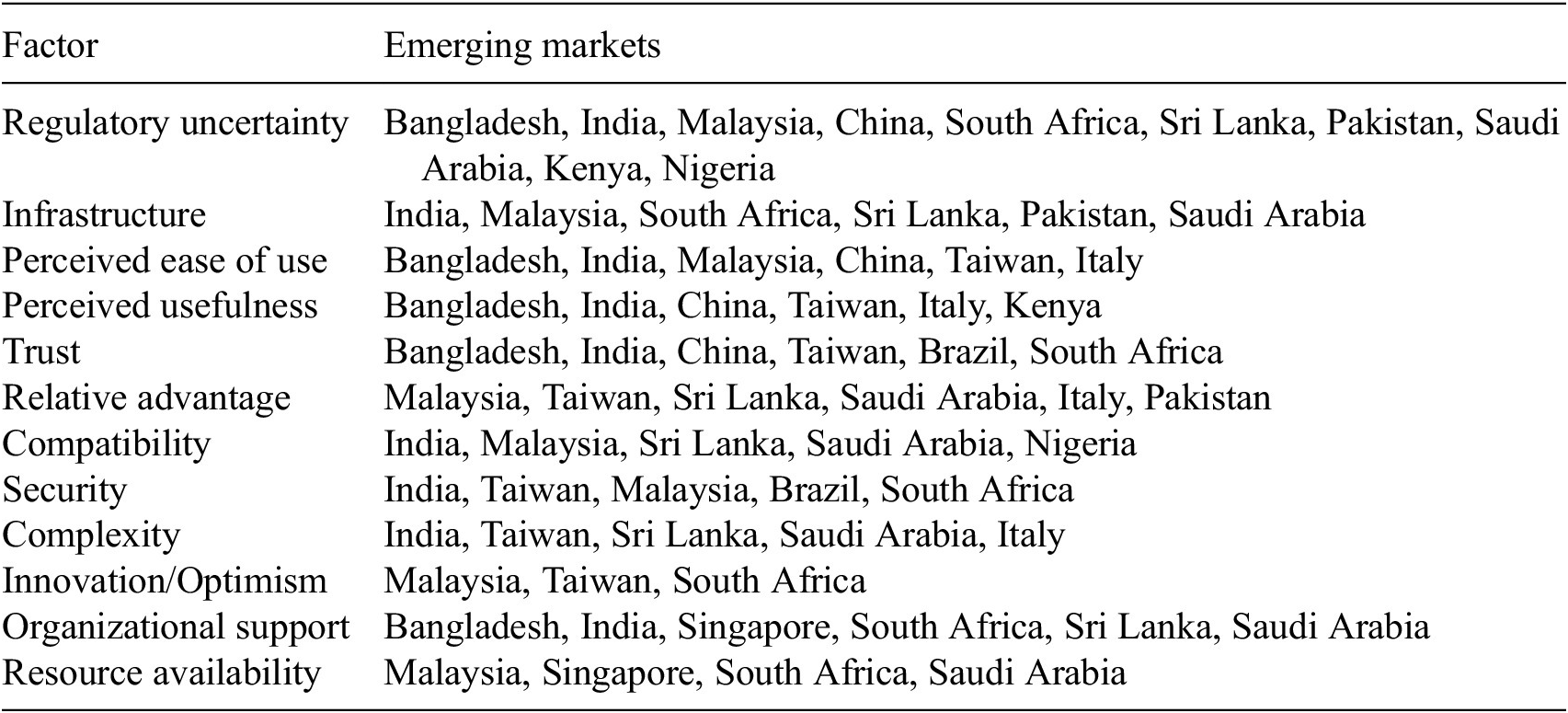
Table 5. Long description
The table header has Factor in the left column and Emerging markets in the right column. From top to bottom, the factors and their associated countries are as follows. Regulatory uncertainty: Bangladesh, India, Malaysia, China, South Africa, Sri Lanka, Pakistan, Saudi Arabia, Kenya, Nigeria. Infrastructure: India, Malaysia, South Africa, Sri Lanka, Pakistan, Saudi Arabia. Perceived ease of use: Bangladesh, India, Malaysia, China, Taiwan, Italy. Perceived usefulness: Bangladesh, India, China, Taiwan, Italy, Kenya. Trust: Bangladesh, India, China, Taiwan, Brazil, South Africa. Relative advantage: Malaysia, Taiwan, Sri Lanka, Saudi Arabia, Italy, Pakistan. Compatibility: India, Malaysia, Sri Lanka, Saudi Arabia, Nigeria. Security: India, Taiwan, Malaysia, Brazil, South Africa. Complexity: India, Taiwan, Sri Lanka, Saudi Arabia, Italy. Innovation or Optimism: Malaysia, Taiwan, South Africa. Organizational support: Bangladesh, India, Singapore, South Africa, Sri Lanka, Saudi Arabia. Resource availability: Malaysia, Singapore, South Africa, Saudi Arabia.
Summary of enabling and inhibiting factors
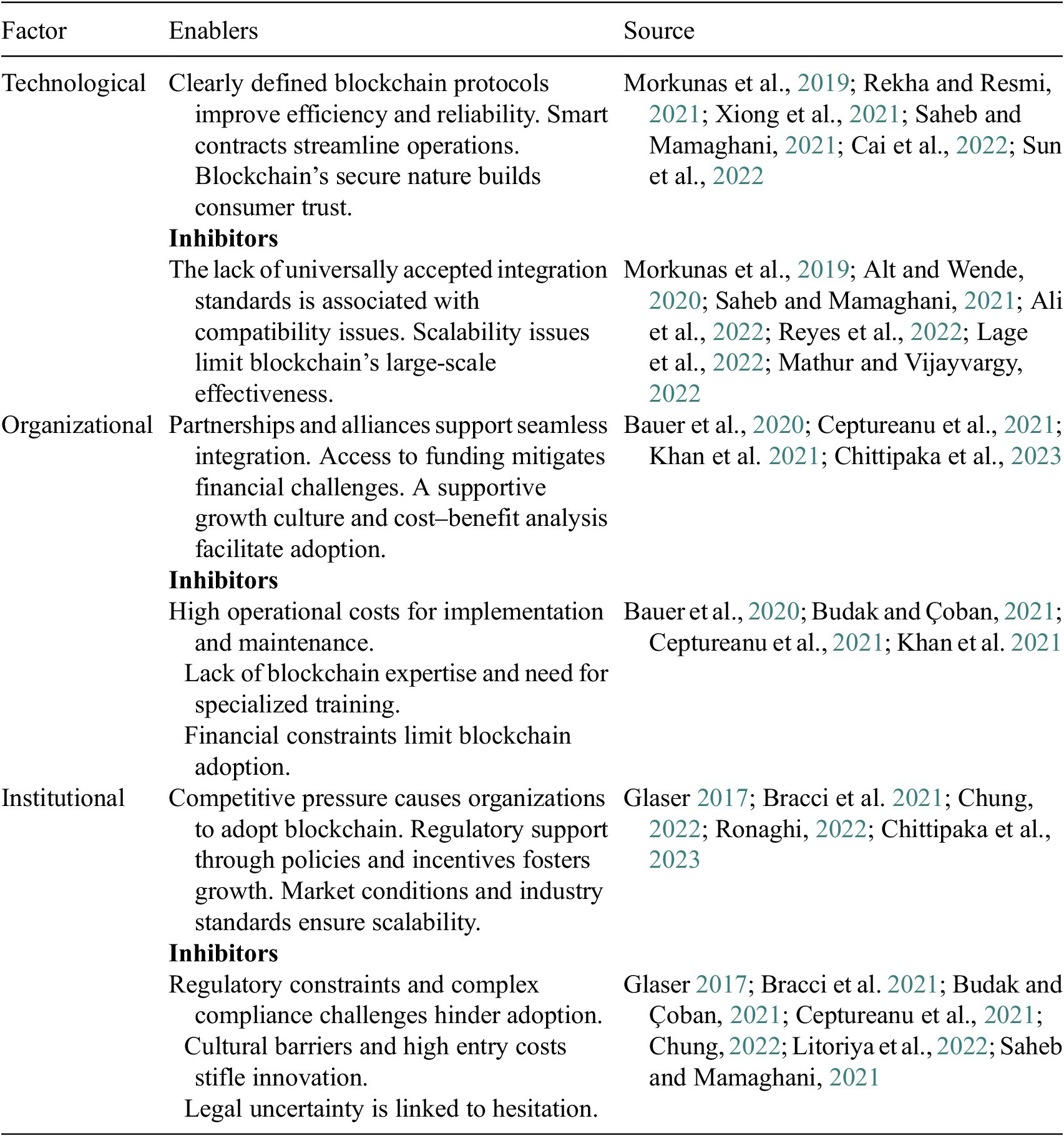
Table 6. Long description
From top to bottom, the table has three columns labeled Factor, Enablers, and Source. The first main row is Technological. Enablers listed are clearly defined blockchain protocols improve efficiency and reliability, smart contracts streamline operations, and blockchain’s secure nature builds consumer trust. Sources are Morkunas et al. 2019, Rekha and Resmi 2021, Xiong et al. 2021, Saheb and Mamaghani 2021, Cai et al. 2022, Sun et al. 2022. The next row under Technological lists Inhibitors, with the lack of universally accepted integration standards associated with compatibility issues and scalability issues limiting blockchain’s large-scale effectiveness. Sources are Morkunas et al. 2019, Alt and Wende 2020, Saheb and Mamaghani 2021, Ali et al. 2022, Reyes et al. 2022, Lage et al. 2022, Mathur and Vijayvargy 2022. The next main row is Organizational. Enablers are partnerships and alliances support seamless integration, access to funding mitigates financial challenges, and a supportive growth culture and cost–benefit analysis facilitate adoption. Sources are Bauer et al. 2020, Ceptureanu et al. 2021, Khan et al. 2021, Chittipaka et al. 2023. The following row under Organizational lists Inhibitors, which are high operational costs for implementation and maintenance, lack of blockchain expertise and need for specialized training, and financial constraints limit blockchain adoption. Sources are Bauer et al. 2020, Budak and Çoban 2021, Ceptureanu et al. 2021, Khan et al. 2021. The next main row is Institutional. Enablers are competitive pressure causes organizations to adopt blockchain, regulatory support through policies and incentives fosters growth, and market conditions and industry standards ensure scalability. Sources are Glaser 2017, Bracci et al. 2021, Chung 2022, Ronaghi 2022, Chittipaka et al. 2023. The final row under Institutional lists Inhibitors, which are regulatory constraints and complex compliance challenges hinder adoption, cultural barriers and high entry costs stifle innovation, and legal uncertainty is linked to hesitation. Sources are Glaser 2017, Bracci et al. 2021, Budak and Çoban 2021, Ceptureanu et al. 2021, Chung 2022, Litoriya et al. 2022, Saheb and Mamaghani 2021.
For this research question, of the 44 included articles, 22 provided sufficient evidence on perceived impact to inform RQ2. These 22 articles were analyzed to determine how the factors outlined in Table 4 influenced the perceived impact of blockchain technology. This analysis examined whether these factors served as enablers or inhibitors of blockchain adoption in emerging markets.
5.3. Influence of the factors affecting blockchain adoption on the perceived impact in emerging markets
This subsection synthesizes how the TOE factors identified in Section 5.1 relate to the perceived impact of blockchain adoption. Before presenting that synthesis, we briefly clarify what we mean by perceived impact and the pathway through which adoption antecedents operate on it. Drawing on the Technology Acceptance Model (Davis, Reference Davis1989) and Innovation Diffusion Theory (Rogers, Reference Rogers2003), perceived impact is defined here as the stakeholder’s subjective evaluation of realized or anticipated benefit from blockchain implementation—a construct distinct from the binary fact of adoption itself. It encompasses dimensions including perceived usefulness, relative advantage, trust, transparency, and reduced transaction friction. The causal pathway is conceptualized as a two-stage process: TOE-level antecedents shape the adoption decision, which in turn produces an implementation experience whose outcomes feedback as perceived impact, supporting either deeper institutionalization or abandonment (Janssen et al., Reference Janssen, Weerakkody, Ismagilova, Sivarajah and Irani2020). Importantly, in emerging markets, the institutional and infrastructural conditions that shape antecedents also condition the implementation experience, meaning that the same TOE factors operate at both stages of the pathway. More specifically, the synthesis traces plausible pathways by which TOE factors shape perceived usefulness, trust, efficiency, transparency, and inclusion: technological factors primarily shape perceived operational value (efficiency, security, and scalability); organizational factors shape implementation feasibility and absorptive capacity (training, leadership, and resources); and institutional factors shape legitimacy, trust, and regulatory confidence (compliance, government support, and market acceptance). These three pathways are not mutually exclusive but are interpreted in this synthesis as the dominant mechanisms by which each TOE dimension is reported to influence perceived impact in the reviewed literature. Two boundary conditions warrant noting. First, because most reviewed studies are cross-sectional, the available evidence cannot fully separate antecedents from outcomes; we therefore frame the relationships below as associations and plausible mechanisms rather than as established causal chains. Second, several studies operationalize perceived-impact constructs (such as perceived usefulness) as proxies for adoption likelihood, blurring the antecedent-outcome distinction. With these scope conditions in mind, the concept of perceived impact in the reviewed literature encompasses diverse interpretations, including constructs such as perceived usefulness, ease of use, trust-building, transparency, operational efficiency, and broader economic and institutional outcomes. This diversity introduces challenges in synthesizing a coherent construct, as these dimensions may function as antecedents, moderators, or adoption outcomes. Survey-based studies typically quantify perceived impact through user-centric constructs like usefulness and relative advantage, which capture practical assessments of blockchain’s value and adoption intent (Clohessy and Acton, Reference Clohessy and Acton2019; Queiroz et al., Reference Queiroz, Fosso Wamba, De Bourmont and Telles2021). In contrast, qualitative case studies highlight blockchain’s role in fostering trust, enhancing transparency, and reducing fraud, critical factors in emerging markets with weak institutional trust and opaque financial systems (Pilkington 2016; Yeoh, Reference Yeoh2017). Broader regional analyses underscore reported impacts on financial inclusion, cost reduction, and regulatory preparedness, which are essential for expanding access and participation in emerging economies (Kshetri Reference Kshetri2021; Aslam et al., Reference Aslam, Saleem, Khan and Kim2021).
Given the infrastructural challenges and regulatory uncertainties typical in emerging markets, stakeholders’ subjective perceptions of blockchain’s benefits and risks strongly influence whether projects advance from adoption intent to sustained implementation. Therefore, addressing technological, organizational, and institutional factors is vital to shaping positive perceptions and successful blockchain adoption in these contexts.
5.3.1. Technological factors
Technology as an enabler of blockchain adoption: Cai et al. (Reference Cai, Marrone and Linnenluecke2022), Morkunas et al. (Reference Morkunas, Paschen and Boon2019), and Saheb and Mamaghani (Reference Saheb and Mamaghani2021) indicated that clearly defined blockchain protocols could significantly influence the efficiency and reliability of transactions, which lays the groundwork for the operational efficiency of blockchain technology. Technologies such as smart contracts are useful in streamlining operations and diminishing the need for intermediaries. The secure nature of blockchain technology also mitigates the concerns of data breaches and a lack of data privacy, which is essential in building consumer trust. Ongoing research and development are crucial for maintaining innovation and ensuring blockchain technology stays at the forefront of digital transformation (Xiong et al., Reference Xiong, Lam, Kumar, Ngai, Xiu and Wang2021; Sun et al., Reference Sun, Shahzad and Razzaq2022). Additionally, the move toward decentralization provides organizations with fewer central points of failure and increased transparency, which are essential for building a strong and transparent digital ecosystem (Rekha and Resmi, Reference Rekha and Resmi2021; Saheb and Mamaghani, Reference Saheb and Mamaghani2021; Cai et al., Reference Cai, Marrone and Linnenluecke2022).
Technology as an inhibitor for blockchain adoption: One-way technology acts as an inhibitor for blockchain adoption through the lack of universally accepted standards for integration, leading to system compatibility issues. Organizations face significant challenges when integrating blockchain into their existing IT infrastructures, often requiring major modifications or complete overhauls (Morkunas et al., Reference Morkunas, Paschen and Boon2019; Saheb and Mamaghani, Reference Saheb and Mamaghani2021; Ali et al., Reference Ali, Shin and Song2022; Reyes et al., Reference Reyes, Gravier, Jaska and Visich2022). Scalability issues also pose a major barrier, as difficulties in expanding blockchain systems to handle large-scale operations can limit their effectiveness (Alt and Wende, Reference Alt and Wende2020; Ali et al., Reference Ali, Shin and Song2022; Lage et al., Reference Lage, Saiz-Santos and Zarzuelo2022; Mathur and Vijayvargy, Reference Mathur and Vijayvargy2022; Reyes et al., Reference Reyes, Gravier, Jaska and Visich2022).
5.3.2. Organizational factors
Organizational factors as enablers for blockchain adoption: Organizational factors, such as collaborations through partnerships and alliances, allow for seamless blockchain integration, as it creates a supportive ecosystem. Access to funding also plays a significant role for organizations intending to implement BT, mitigating the financial challenges associated with its deployment (Chittipaka et al., Reference Chittipaka, Kumar, Sivarajah, Bowden and Baral2023; Khan et al. Reference Khan, Godil, Jabbour, Shujaat, Razzaq and Yu2021). An organization with a culture that supports growth, such as those that conduct cost-benefit analysis of blockchain adoption, allows for better integration as compared to organizations that do not.
Organizational factors as inhibitors for blockchain adoption: Inhibiting factors to blockchain adoption include high operational costs for implementation and maintenance, which pose a major barrier (Bauer et al., Reference Bauer, Zavolokina, Leisibach and Schwabe2020; Budak and Çoban, Reference Budak and Çoban2021; Ceptureanu et al., Reference Ceptureanu, Cerqueti, Alexandru, Popescu, Dhesi and Ceptureanu2021). Additionally, a significant shortage of blockchain expertise within the workforce highlights the need for specialized training (Ceptureanu et al., Reference Ceptureanu, Cerqueti, Alexandru, Popescu, Dhesi and Ceptureanu2021; Khan et al. Reference Khan, Godil, Jabbour, Shujaat, Razzaq and Yu2021). Financial constraints and the challenge of attracting and retaining skilled professionals further limit organizations’ ability to adopt and effectively utilize blockchain technology.
5.3.3. Institutional factors
Institutional factors as enablers for blockchain adoption: Enabling factors include competitive pressure, which motivates organizations to maintain a market edge (Chittipaka et al., Reference Chittipaka, Kumar, Sivarajah, Bowden and Baral2023). Regulatory support through government policies and incentives is crucial in fostering blockchain growth (Ronaghi, Reference Ronaghi2022; Chittipaka et al., Reference Chittipaka, Kumar, Sivarajah, Bowden and Baral2023). Financial subsidies, grants, and favorable regulations further strengthen the blockchain ecosystem’s development (Chittipaka et al., Reference Chittipaka, Kumar, Sivarajah, Bowden and Baral2023). Market conditions and industry standards also support blockchain adoption, ensuring scalability and interoperability across applications (Bauer et al., Reference Bauer, Zavolokina, Leisibach and Schwabe2020; Ronaghi, Reference Ronaghi2022). Additionally, ecosystem support encourages collaboration and innovation, driving progress within the blockchain domain.
Institutional factors as inhibitors for blockchain adoption: Inhibiting factors for blockchain adoption include regulatory constraints, where existing laws and regulations may limit or complicate its use (Chung, Reference Chung2022; Glaser Reference Glaser2017; Litoriya et al., Reference Litoriya, Arora, Bajaj, Gulati, Misra and Tyagi2022). Compliance challenges due to conflicting and complex regulations deter adoption (Saheb and Mamaghani, Reference Saheb and Mamaghani2021). Cultural barriers within organizations and industries can also hinder blockchain acceptance (Litoriya et al., Reference Litoriya, Arora, Bajaj, Gulati, Misra and Tyagi2022). High entry costs and regulatory hurdles prevent new entrants, stifling innovation and competition (Budak and Çoban, Reference Budak and Çoban2021; Ceptureanu et al., Reference Ceptureanu, Cerqueti, Alexandru, Popescu, Dhesi and Ceptureanu2021; Chung, Reference Chung2022). Additionally, legal uncertainty, due to unclear frameworks, creates hesitation for organizations considering blockchain adoption (Bracci et al. Reference Bracci, Tallaki, Ievoli and Diplotti2021; Ceptureanu et al., Reference Ceptureanu, Cerqueti, Alexandru, Popescu, Dhesi and Ceptureanu2021).
Emerging markets differ significantly in their technological infrastructure, organizational capacity, and institutional frameworks, influencing how blockchain adoption unfolds in various regions. Table 7 provides a comparative analysis highlighting key variations in the enablers and inhibitors of blockchain adoption across different emerging markets.
Comparative analysis of enablers and inhibitors in different emerging markets
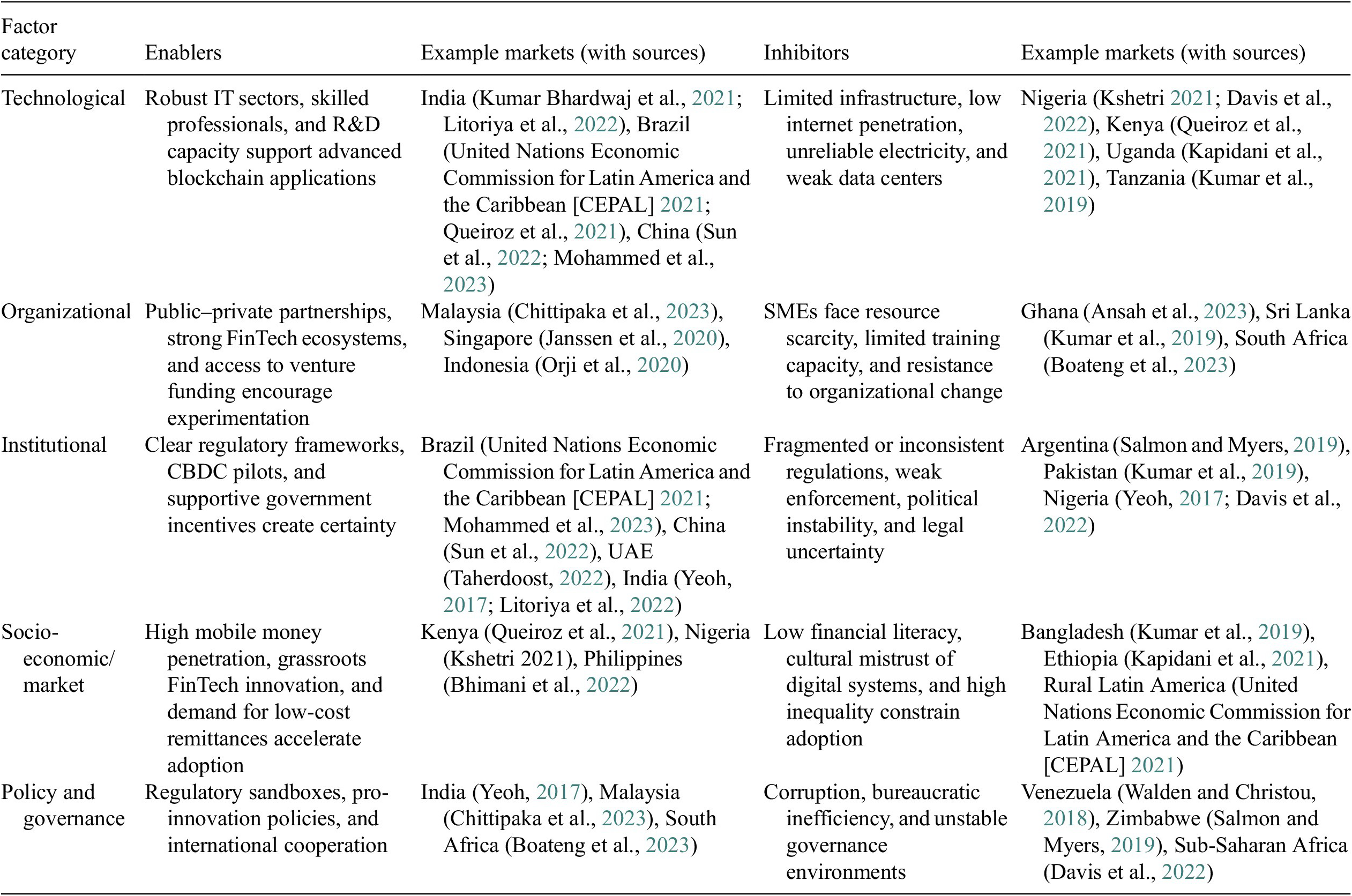
Table 7. Long description
Starting from the top row, the table has five columns: Factor category, Enablers, Example markets with sources, Inhibitors, and Example markets with sources. The first row, Technological, lists enablers as robust IT sectors, skilled professionals, and R and D capacity, with India, Brazil, and China as examples. Inhibitors are limited infrastructure, low internet penetration, unreliable electricity, and weak data centers, with Nigeria, Kenya, Uganda, and Tanzania as examples. The second row, Organizational, lists enablers as public–private partnerships, strong FinTech ecosystems, and access to venture funding, with Malaysia, Singapore, and Indonesia as examples. Inhibitors are resource scarcity for S M Es, limited training, and resistance to change, with Ghana, Sri Lanka, and South Africa as examples. The third row, Institutional, lists enablers as clear regulatory frameworks, C B D C pilots, and government incentives, with Brazil, China, U A E, and India as examples. Inhibitors are fragmented regulations, weak enforcement, political instability, and legal uncertainty, with Argentina, Pakistan, and Nigeria as examples. The fourth row, Socio-economic or market, lists enablers as high mobile money penetration, grassroots FinTech innovation, and demand for low-cost remittances, with Kenya, Nigeria, and the Philippines as examples. Inhibitors are low financial literacy, cultural mistrust of digital systems, and high inequality, with Bangladesh, Ethiopia, and rural Latin America as examples. The fifth row, Policy and governance, lists enablers as regulatory sandboxes, pro-innovation policies, and international cooperation, with India, Malaysia, and South Africa as examples. Inhibitors are corruption, bureaucratic inefficiency, and unstable governance, with Venezuela, Zimbabwe, and Sub-Saharan Africa as examples.
The comparative evidence demonstrates that blockchain adoption in emerging markets is highly context-dependent, shaped by differences in technological readiness, organizational capacity, and institutional environments. Table 7 expands on these variations by highlighting region- and country-specific enablers and inhibitors. For instance, India, Brazil, and China benefit from robust IT sectors, skilled labor, and government-backed innovation programs (Sun et al., Reference Sun, Shahzad and Razzaq2022; Lin, Reference Lin2024), while countries such as Nigeria, Kenya, and Uganda continue to face challenges of inadequate infrastructure, unreliable connectivity, and weak data centers (Kshetri 2021; Davis et al., Reference Davis, Lennerfors and Tolstoy2022).
At the organizational level, markets like Malaysia, Singapore, and Indonesia leverage vibrant FinTech ecosystems and public–private partnerships to drive adoption (Clohessy and Acton, Reference Clohessy and Acton2019; Chittipaka et al., Reference Chittipaka, Kumar, Sivarajah, Bowden and Baral2023), whereas Ghana, Sri Lanka, and South Africa struggle with limited resources among SMEs and organizational resistance to change (Orji et al., Reference Orji, Kusi-Sarpong, Huang and Vazquez-Brust2020; Prisco et al., Reference Prisco, Abdallah, Morande and Gheith2024). Institutional and regulatory factors also diverge widely: Brazil, China, and the UAE are experimenting with supportive policies and central bank pilots (Ronaghi, Reference Ronaghi2022; Mohammed et al., Reference Mohammed, De-Pablos-Heredero and Montes Botella2023), while Argentina and Pakistan face fragmented frameworks, enforcement gaps, and political instability (Yeoh, Reference Yeoh2017; Salmon and Myers, Reference Salmon and Myers2019).
Beyond technological and institutional conditions, socio-economic drivers, such as mobile money penetration and the demand for affordable remittances in Kenya, Nigeria, and the Philippines, emerge as strong catalysts for blockchain adoption (Balci & Surucu-Balci 2021; Queiroz et al., Reference Queiroz, Fosso Wamba, De Bourmont and Telles2021). Yet in regions marked by low financial literacy, cultural skepticism toward digital systems, or high inequality, like Bangladesh, Ethiopia, rural Latin America, these same factors inhibit uptake (Kshetri 2021; Ansah et al., Reference Ansah, Voss, Asiama and Wuni2023). Finally, governance contexts strongly influence outcomes: India and South Africa illustrate how regulatory sandboxes and innovation-friendly policies can accelerate adoption (Noor, Reference Noor2022; Chittipaka et al., Reference Chittipaka, Kumar, Sivarajah, Bowden and Baral2023), while Venezuela and Zimbabwe highlight how corruption and bureaucratic inefficiency can create systemic barriers (Walden and Christou, Reference Walden and Christou2018; Aslam et al., Reference Aslam, Saleem, Khan and Kim2021). This comparative perspective underscores that emerging markets cannot be treated as a homogeneous category. Instead, blockchain adoption patterns reflect the interaction of structural enablers, institutional design, and socioeconomic conditions unique to each region. Recognizing these differences is crucial for tailoring both policy recommendations and industry strategies, ensuring that interventions are context-specific rather than one-size-fits-all.
However, this comparative analysis also highlights the substantial heterogeneity across emerging markets, which challenges the common practice of treating these regions as a homogeneous group. Emerging markets vary widely in terms of infrastructure maturity, institutional quality, and stages of development, raising questions about the appropriateness of aggregating them without stratification. The initial research questions did not explicitly incorporate such comparative dimensions, which limits the granularity of insights and the ability to draw differentiated conclusions. Although Table 7 provides source-linked examples of country-specific enablers and inhibitors, it does not provide a full study-to-country traceability matrix for every comparative claim, which limits the granularity of cross-country comparisons. Future research should explicitly integrate stratified analyses to better capture the nuanced dynamics shaping blockchain adoption in diverse emerging market contexts.
6. Discussion
The findings highlight how technological, organizational, and institutional factors collectively influence the adoption of blockchain technology in emerging markets. Technological factors, such as the availability of blockchain tools (e.g., smart contracts and IoT), infrastructure support, and compatibility with existing systems, play a significant role. Disruptive Innovation Theory explains how new technologies initially serve niche markets before reshaping entire industries (Christensen et al., Reference Christensen, Raynor and McDonald2015; Si and Chen, Reference Si and Chen2020). Blockchain’s peer-to-peer architecture, automation through smart contracts, and security features exemplify its potential to disrupt traditional payment and remittance systems. These technologies reduce reliance on intermediaries, lowering costs and increasing transparency. For example, in emerging markets like Kenya and Nigeria, where financial systems often face inefficiencies, blockchain can leapfrog traditional methods, much like how mobile banking transformed access to financial services. However, technological complexity, compatibility with existing systems, and infrastructure limitations can slow its diffusion. According to Innovation Diffusion Theory, innovations spread faster when perceived as simple and compatible with existing norms (Saadatmand and Daim, Reference Saadatmand and Daim2019). Addressing these challenges through investments in training facilities, improving infrastructure, and developing user-friendly tools is crucial for blockchain to realize its disruptive potential (Choi et al., Reference Choi, Chung, Seyha and Young2020; Malik et al., Reference Malik, Chadhar, Vatanasakdakul and Chetty2021). Organizational factors, including support from top management, training facilities, firm size, and a culture that fosters innovation, are crucial for successful blockchain adoption. Larger firms with more resources are generally better positioned to implement blockchain, while smaller organizations face challenges due to limited resources and expertise. Institutional factors like regulatory support, competitive pressures, and market demand influence blockchain adoption. Favorable regulations and government incentives can drive adoption, while restrictive policies and regulatory uncertainty hinder it.
These factors also affect the perceived impact of blockchain technology. Technologically, blockchain can enhance operational efficiency, transparency, and security, contributing to digital transformation in emerging markets. However, compatibility and scalability issues and the lack of universally accepted standards pose significant challenges (Kant, Reference Kant2021; Younus, Reference Younus2023). Organizationally, factors like financial constraints, high operational costs, and a shortage of skilled professionals can inhibit adoption, while collaborations and access to funding can facilitate it. Institutionally, regulatory support and market conditions enable blockchain adoption, while regulatory barriers, compliance challenges, and legal uncertainty can create obstacles. These factors shape both how blockchain technology is adopted and how its impact is perceived in emerging markets.
7. Implications for practice
The results of this review show that recommendations for blockchain implementation should be context-dependent and responsive to variations in institutional maturity, economic modernization, and national regulatory capacity across emerging markets. Accordingly, the practical implications are explicitly differentiated by institutional quality, infrastructure maturity, regulatory capacity, and market structure, rather than presented as uniform prescriptions. Stakeholders should avoid applying generic adoption frameworks and instead tailor blockchain strategies to their governance structures, infrastructure readiness, and sector-specific priorities.
Policymakers face differentiated priorities depending on institutional capacity, infrastructure maturity, and regulatory development stage. Regulatory sandboxes and pilot programs are most suitable in low and lower-middle-income countries with little regulatory experience and weak digital infrastructures, especially in the high-impact sectors of payments, remittance, and the provision of public services (Noor, Reference Noor2022; Chittipaka et al., Reference Chittipaka, Kumar, Sivarajah, Bowden and Baral2023). By contrast, the emerging economies that belong to the upper-middle-income segment and have more developed legal frameworks can concentrate on formalizing sector-related blockchain regulations and enhancing coordination between financial regulators. Infrastructure investment is still fundamental in any context, but in places where there are ongoing electricity and connectivity issues, the development of basic digital connectivity should be part of the partnership between the government and the industry before advanced blockchain infrastructure is deployed (Kshetri 2021; Davis et al., Reference Davis, Lennerfors and Tolstoy2022). On the regional side, the economies that belong to trading blocks like the ASEAN, the ECOWAS, or the MERCOSUR can be helped to be integrated via regulatory harmonization efforts to enable cross-border blockchain interoperability, whereas the countries that are not members of the trading blocks might consider focusing on bilateral agreements (Yeoh, Reference Yeoh2017; Salmon and Myers, Reference Salmon and Myers2019). The strategy of building capacity of the specific area should also be custom-made, where vocational training is considered the priority in the areas with skills shortage, and the advancement in research is adopted in more developed innovation platforms (Clohessy and Acton, Reference Clohessy and Acton2019; Ceptureanu et al., Reference Ceptureanu, Cerqueti, Alexandru, Popescu, Dhesi and Ceptureanu2021).
For financial institutions, recommended adoption pathways differ systematically by market structure, institutional trust environment, and resource availability. In Sub-Saharan Africa, where the cost of remittances is high and financial inclusion rates are low, blockchain-based solutions for cross-border payments are particularly valuable. Supply chain finance and provenance tracking applications are more applicable in Asian manufacturing and logistics ecosystems with more advanced manufacturing and logistics infrastructure, which is found in emerging markets. Digital identity and KYC/AML solutions based on blockchain are especially topical in the Latin American situation, when the regulatory compliance and identification of the identities turn out to be a recurrent issue (Pilkington 2016; Prewett et al. 2020). The high implementation costs can be addressed by the institutions with a limited resource base through consortia or collaborations with FinTech companies, and by larger institutions in more developed economies by proprietary or hybrid models (Orji et al., Reference Orji, Kusi-Sarpong, Huang and Vazquez-Brust2020; Queiroz et al., Reference Queiroz, Fosso Wamba, De Bourmont and Telles2021). Also, the transparency and auditability advantages of blockchain may be proactively used in the context of lower institutional trust countries to improve legitimacy and trustworthiness among stakeholders, and in the context of higher levels, may serve as the more potent drivers of adoption (Yeoh, Reference Yeoh2017; Taherdoost, Reference Taherdoost2022). Taken together, these findings indicate that blockchain policy and implementation strategies in emerging markets must be calibrated to context-specific institutional, infrastructural, and regulatory conditions, rather than transferred wholesale across countries or regions.
8. Conclusion
While this review provides a comprehensive synthesis, future research must move beyond broad calls for additional studies and instead adopt more context-specific and methodologically innovative approaches. Comparative case studies across regions such as Sub-Saharan Africa, South Asia, and Latin America would help illuminate how distinct regulatory environments, technological infrastructures, and socioeconomic conditions shape blockchain adoption differently. Longitudinal research is also needed to trace adoption trajectories over time, since most existing studies are cross-sectional and therefore unable to capture the dynamics of scaling and institutionalization (Clohessy and Acton, Reference Clohessy and Acton2019; Orji et al., Reference Orji, Kusi-Sarpong, Huang and Vazquez-Brust2020).
Methodological advances could include mixed-methods research designs that combine large-scale surveys with qualitative interviews of policymakers and industry leaders, allowing scholars to triangulate quantitative adoption metrics with the lived experiences of implementation. Future research might also explore experimental or quasi-experimental designs that evaluate the perceived impact of regulatory sandboxes, subsidy programs, or training interventions on adoption outcomes (Ceptureanu et al., Reference Ceptureanu, Cerqueti, Alexandru, Popescu, Dhesi and Ceptureanu2021; Chittipaka et al., Reference Chittipaka, Kumar, Sivarajah, Bowden and Baral2023). Additionally, the review protocol was not prospectively registered, which may increase the risk of selection and reporting bias. Future systematic reviews in this domain should consider protocol pre-registration to enhance transparency and methodological rigor.
It is also noteworthy that 44 articles were retained in this study out of a total of 622 (a 7% retention rate), which can be unsatisfactory in terms of completeness. Although the inclusion criteria ensured relevance, the review also incorporated formal methodological safeguards. All included studies underwent quality appraisal using the CASP checklist, and inter-rater reliability was assessed on a 20% subset of articles, yielding substantial agreement (Cohen’s κ = 0.78). Disagreements were resolved through discussion and consensus. Nevertheless, the relatively low retention rate (44 of 622 studies, ~7%) and the restriction to English-language publications may still introduce selection and geographic bias, which should be considered when interpreting the findings. Additionally, the review may have overlooked important research published in Portuguese, Mandarin, Spanish, and Arabic, which are common languages used in emerging markets, potentially limiting the generalizability of the findings. Future systematic reviews should expand language coverage and apply uniform quality evaluation to improve the strength and representativeness of findings in this field.
Comparative claims about blockchain implementation in emerging markets should therefore be interpreted with caution, given the substantial heterogeneity across this category. The emerging markets are also very different in terms of the level of technological infrastructure, institutional quality, and economic development. These critical dimensions were not stratified in our study in these markets, and thus, this restricts the specificity and applicability of certain findings. While Table 7 provides representative, source-linked examples of country-level enablers and inhibitors, it does not exhaustively map each comparative claim to a unique subset of included studies. Future systematic reviews could strengthen comparative validity by implementing fully stratified analyses and study-to-country traceability matrices that explicitly link individual findings to institutional, infrastructure, and developmental classifications. This weakness limits our ability to evaluate the strength of these arguments and suggests that future systematic reviews should adopt clearer citation practices, as well as comparative frameworks that can take into account the contextual diversity.
Theoretically, there is scope to build on the TOE framework by integrating insights from Institutional Theory to account for regulatory and cultural pressures and Disruptive Innovation Theory to explain leapfrogging in emerging markets. Such theoretical integration would provide a richer understanding of how blockchain adoption is shaped not only by organizational and technological factors but also by institutional logics, socio-political contexts, and the disruptive potential of new technologies (Christensen et al., Reference Christensen, Raynor and McDonald2015; Saadatmand and Daim, Reference Saadatmand and Daim2019). Finally, scholars should examine blockchain adoption at both the organizational and individual levels, since the drivers and barriers faced by firms may differ markedly from those experienced by end users or entrepreneurs.
Data availability statement
This study is a systematic literature review utilizing previously published research available publicly through academic databases (Scopus, IEEE Xplore, Springer, Web of Science, Google Scholar, Emerald, and ScienceDirect). No new primary datasets were generated or analyzed during this research. All references and methodological steps necessary to replicate the study are fully detailed within the manuscript. As the study does not produce new empirical data, there are no datasets to deposit in a repository or assign a DOI.
Acknowledgments
The authors made use of Anthropic Claude (Opus 4.7, accessed via claude.ai) and OpenAI ChatGPT (accessed via chat.openai.com) during the preparation of this revision in April 2026. These tools were used to assist with editorial review, formatting and consistency checks, revision-response drafting, and section-structure review. As noted in Section 4.4, Claude was also used to support an initial coding pass for the TOE dimension re-examination. All AI-assisted outputs were reviewed, verified, and edited by the authors. All scientific content, analytical decisions, coding decisions, interpretations, and conclusions remain the sole responsibility of the authors.
Author contribution
Conceptualization: I.S., E.A. Methodology: I.S., E.A. Investigation: I.S. (initial title and abstract screening of all records); I.S., E.A. (independent full-text review for eligibility). Data curation: I.S., E.A. Formal analysis: I.S., E.A. (E.A. independently double-coded 20% of full-text articles to ensure consistency; disagreements resolved through discussion and consensus). Writing—original draft: I.S. Writing—review and editing: I.S., E.A. All authors approved the final submitted draft.
Funding statement
This research received no specific grant from any funding agency in the public, commercial, or not-for-profit sectors.
Competing interests
The authors declare no competing interests.
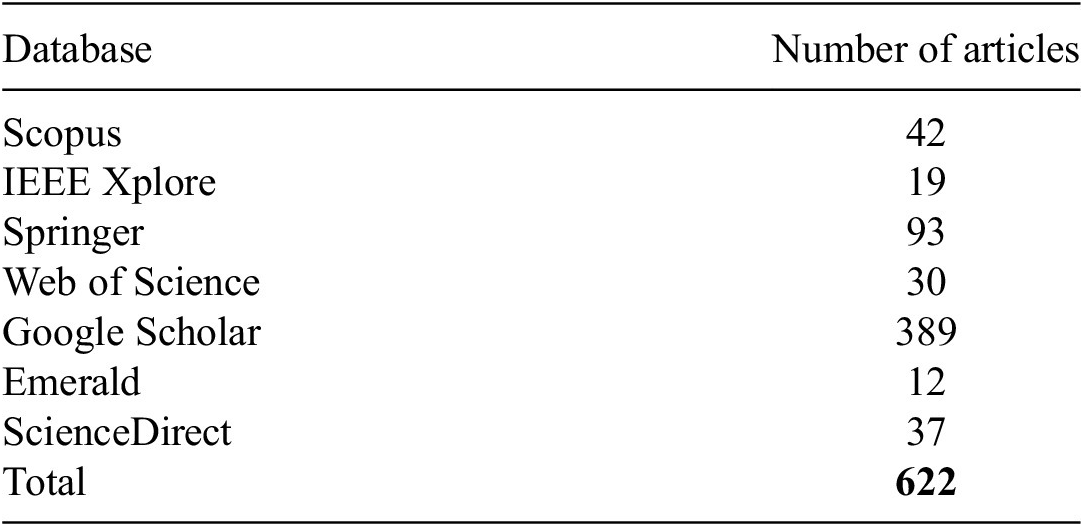
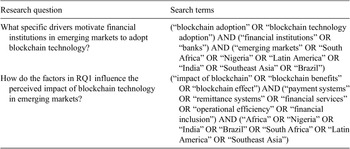
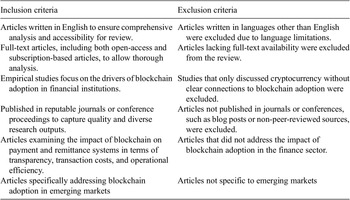
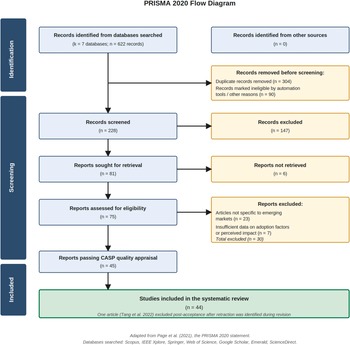
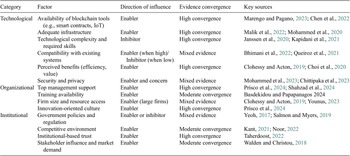
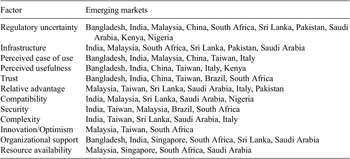
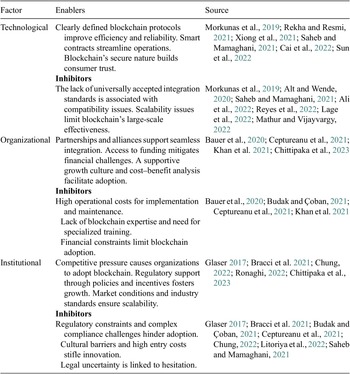
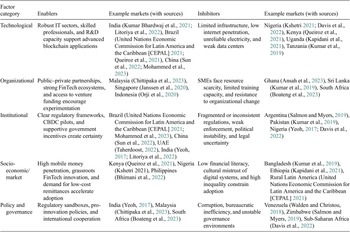

 Open access


Comments
No Comments have been published for this article.