




Organ craftsmanship and music in sustainability perspective
Germany is a nation extraordinarily rich in organ craftsmanship and organ music; both constitute an inextricably symbiotic relation. Comprising roughly 50,000 playable instruments, there are approximately 400 artisan organ-building workshops, including 2,800 employees, 180 apprentices/trainees, as well as 3,500 full-time-employed and tens of thousands free-lancing and/or voluntary organists.Footnote 1 However, in addition to these figures, the following remarks highlight the fascinating art and craftsmanship of building such magnificent masterpieces in history of music.Footnote 2 As Antje Vollmer, theologian and former vice president of the German Parliament (Bundestag), explains,
[t]he sound [of an organ] makes us sometimes believe that churches had been built around their organs: Almost no boundaries to the top, to the left and to the right as much colour as possible. None other instrument provides as much cosmos.Footnote 3
Germany is considered one of the world’s leading countries of advancing pipe organ craftsmanship and music. Both combine the know-how of dealing with natural resources and traditional craftsmanship with the latest innovative technologies of the corresponding age.Footnote 4 Furthermore, organ music has been an integral part of ecclesiastical liturgy since the Middle Ages; thus, there “can be no doubt that many of the early organ-builders were ecclesiastics. Even down to a comparatively late period, … the latter continued to exercise a considerable influence over the art.”Footnote 5 Ever since, ingenious, state-of-the-art, and trend- and standard-setting organ builders, like Arp Schnitger, Andreas and Gottfried Silbermann, and Friedrich Ladegast,Footnote 6 have inspired famous composers,Footnote 7 such as Samuel Scheidt, Georg Böhm, Dietrich Buxtehude, Johann Sebastian Bach, Franz Liszt, Max Reger, and Felix Mendelssohn Bartholdy, within Germany and beyond.Footnote 8 As Christoph Wulf, vice president of the Deutsche UNESCO-Kommission, describes,
[e]ach organ is one of a kind, since it is solely built for the architectural volume it is intended for to sound. The highly specialized knowledge and particular abilities required to construct organs and to perform organ music had been evolved by craftsmen, composers and musicians over centuries. Organ culture is considered a traditional mode of culture that originates in Germany, above all. In these parts the agility of organ culture of craftsmanship and music can be noticed in numerous architectural styles of locally and regionally bound organ craftsmanship, manifold compositions and performance styles as well as professional training opportunities in academia and/or confessional institutions. Involved stakeholders represent in an awe-inspiring manner and on a daily basis how tradition and innovation may accord with each other.Footnote 9
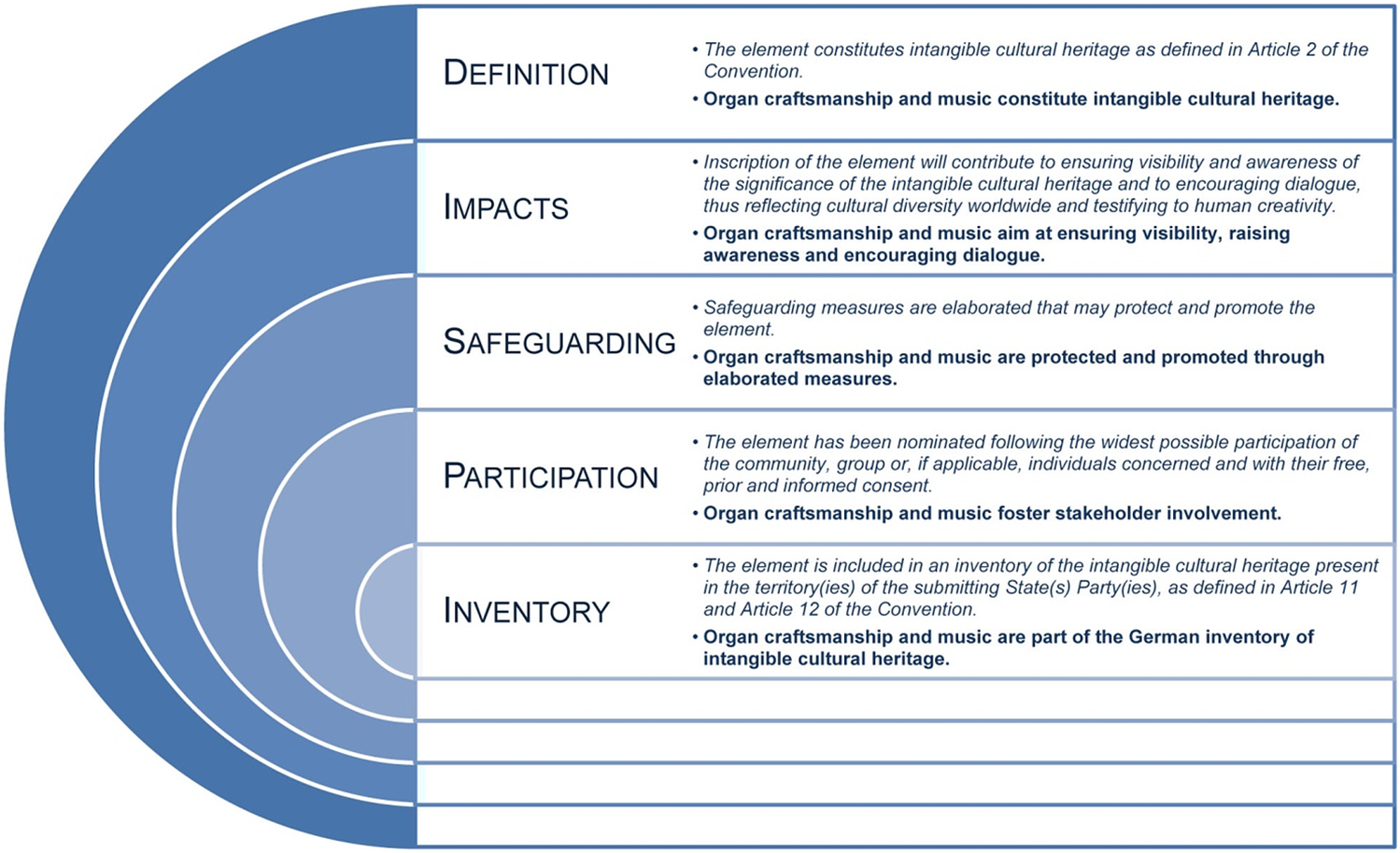
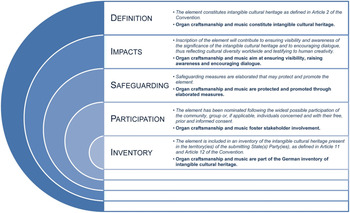
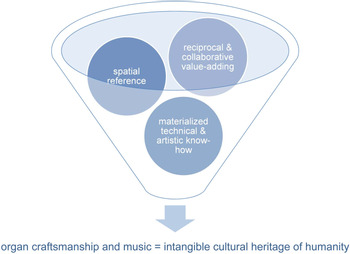
By nominating, approving, and inscribing organ craftsmanship and music (Inscription no. 01277) on the Representative List of the Intangible Cultural Heritage of Humanity, a notional gap between cultural heritage and cultural sustainability has instantaneously been bridged.Footnote 10 Serving as a particularly vivid case for sustainable heritage, among others,Footnote 11 the nexus between intangible cultural heritage and sustainable development is particularly accentuated by addressing aspects of preservation and promotion of cultural heritage (see Figure 1).Footnote 12
Listing criteria for inscription of organ craftsmanship and music as intangible cultural heritage (figure provided by the author; adapted with courtesy of Waldkircher Orgelstiftung et al. Reference Orgelstiftung2018).
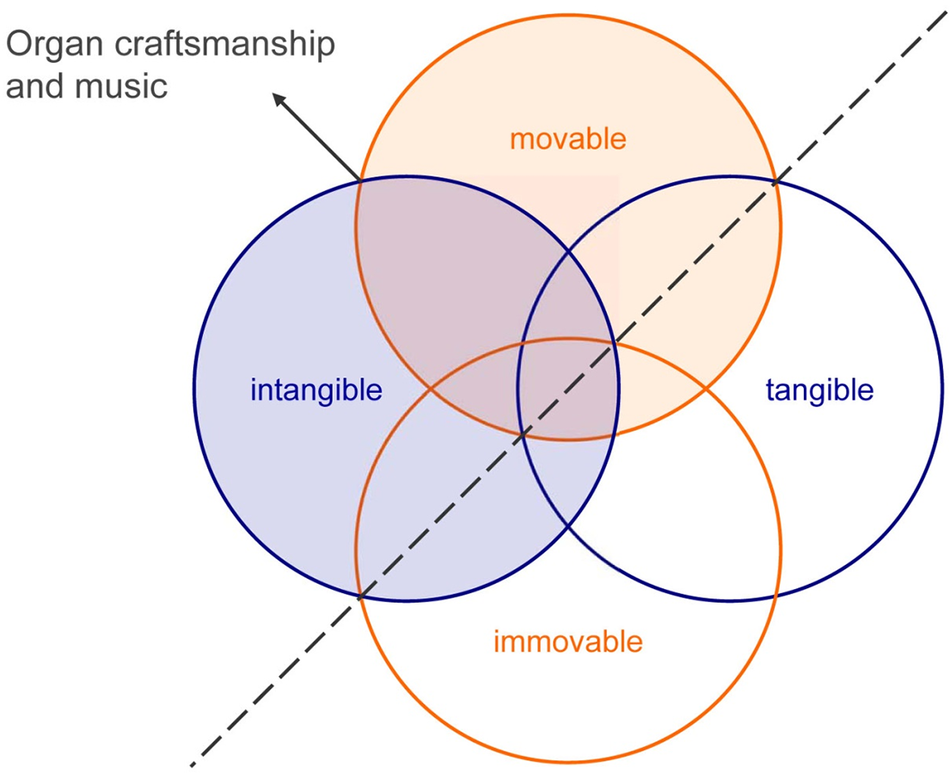
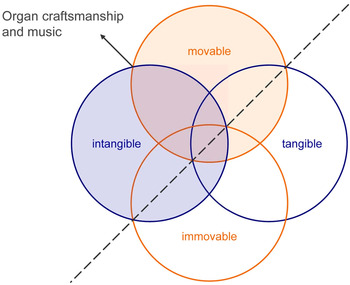
How does the inscription of organ craftsmanship and music in UNESCO’s Representative List of the Intangible Cultural Heritage of Humanity influence the perception and self-concept of organ craftsmanship and music, both in theoretic-intellectual and in virtual terms? In the first place, organ craftsmanship and music can be embedded into the dual contexts of cultural sustainability and intangible cultural heritage. Even though the heritage listing is primarily based on an intangible rationale of performing aspects, tangible aspects are also touched upon, including the resulting effects and instruments: “Modes of intangible heritage essentially depend upon human knowledge and capability. They both reflect creativity and inventive talent, and convey identity and continuity. They have been passed down generations, and have been reshaped time and again. Intangible heritage is often the basis for tangible cultural heritage” (see Figure 2).Footnote 13 These modalities can be subsumed under the tangibility-intangibility rationale describing practices “physical to the extent that they are experienced and that these experiences become culturally shared.”Footnote 14 With regard to organ craftsmanship and music, sustainability advocates are requested to avoid the pitfall of reducing the multifaceted complexity of the crafts music-based experience to simple sustainability propagandaFootnote 15 since “nothing is more boring than music [and its respective structure] made solely for the purpose of achieving some simple, tangible effect.”Footnote 16
Aspects of cultural heritage in view of organ craftsmanship and music (figure provided by the author).
The nexus of music and sustainability – music sustainability – is evident and well explored.Footnote 17 Referring to normative frameworks on the cultural dimension of sustainability both pertain to organizational cultures eligible to foster and promote creative, community-based resilience, which are commonly subsumed under cultural vitality and eco-cultural resilience.Footnote 18 They perfectly illustrate the crosscutting notion of sustainability that stands for a civilizational orientation in general. Referred to as cultures of sustainability, organ craftsmanship and music represents a musical culture of sustainability sui generis. Footnote 19 Which elements are pivotal in normative terms? First, shared musical practice enhances certain social group cohesion and equity.Footnote 20 Second, musical performance and improvisation enhances social creativity, preventing and resolving disputes, restoring peace and security, and achieving lasting peace, e.g. West-Eastern Divan Orchestra.Footnote 21 Third, it is therefore regarded key quality for sustainability transformation in organizations.Footnote 22
Liaising craftsmanship with sustainability is encouraged through cultural policies which relate to both traditional arts and handicraft, and socio-cultural traditions fostering intangible heritage through both recognizing and rewarding living national treasures.Footnote 23 Referred to as sustainable cultural diversity – that is, respecting, protecting, and maintaining the multiplicity of cultural expressions around the globe today and in the future – the principle of sustainability extends to the recognition of cultural diversity as sources of creativity and sustainable development – that is, recognizing organ craftsmanship as a culture of innovation in terms of relatively persistent and often normative patterns of thought, behavior, and relationship to raise the expectancy of social action [crafting routines] and to take on important functions of orientation, motivation, coordination, and legitimization in the course of innovation processes [technology transfer].Footnote 24 In accordance with the principle of sustainability, cultural diversity in expression, practice, and heritage is considered an asset and constitutes an essential aspect of the cultural capital of societies; thus, culture integrates into sustainable development as a resource and as property.Footnote 25
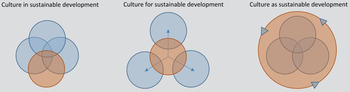
In the second place, organ craftsmanship and music can be related to sustainable development, in particular (see Figure 3). In this respect, culture has evolved from a niche topic into a meaningful driver of the international policy framework.Footnote 26 Over the intervening years, normative settings on the cultural dimension of sustainability have emerged,Footnote 27 diligently paying heed to socio-cultural indicators,Footnote 28 to the effect that culture has turned into a determining strategic driver for positioning in terms of:Footnote 29
-
• a supportive and self-promoting role (culture in sustainable development);
-
• a framing, contextualizing, and mediating mode (culture for sustainable development); and
-
• a foundational and structural framework as underlying dimension (culture as sustainable development).Footnote 30
The essential fourth dimension of sustainability: Culture in/for/as sustainable development (courtesy of Dessein et al. Reference Dessein, Soini, Fairclough and Horlings2015, 29).

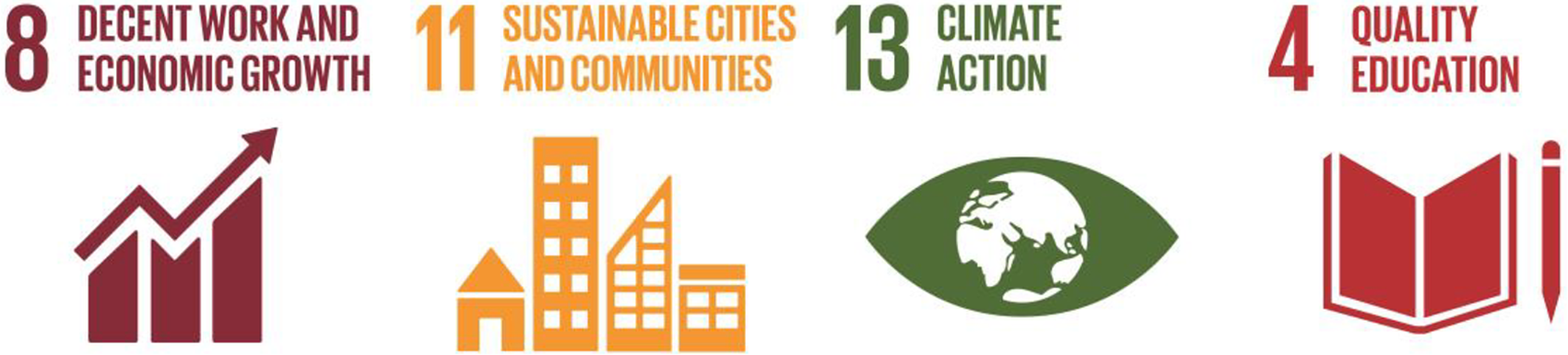
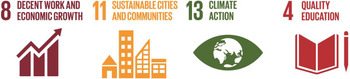
Cultural and creative industries, such as organ craftsmanship and music, address culture for sustainable development through the promotion of sustained, inclusive, and sustainable economic growth, full and productive employment, and decent work for all (Sustainable Development Goal no. [SDG] 8).Footnote 31 Both manufacturers and their artisan organ-building workshops,Footnote 32 and organ-music performers contribute to a local/regional cultural industry by providing decent and inclusive employment opportunities and sustainable livelihoods for assignments in creative, manual, and/or service-oriented fields of productive employment and/or decent work, such as cultural tourism and heritage conservation.Footnote 33 Thus, higher levels of economic productivity are to be achieved through diversification, technological upgrading, and innovation, including through a focus on high value-added and labor-intensive sectors (SDG Target 8.2) and development-oriented policies that can be promoted to support productive activities, decent job creation, entrepreneurship, creativity, and innovation and to encourage the formalization and growth of micro-, small-, and medium-sized enterprises, including through access to financial services (SDG Target 8.3).Footnote 34
More significantly, the intangible heritage of organ craftsmanship and music displays culture as sustainable development by making cities and human settlements inclusive, safe, resilient, and sustainable (SDG 11).Footnote 35 Notably by merging performing with the tangible aspects of a reasonable momentum, promising assets are available to strengthen efforts to protect and safeguard the world’s cultural and natural heritage accordingly (SDG Target 11.4).Footnote 36 Organ craftsmanship is closely attributed to specialized knowledge [quality-driven] and practices [ability] concerning nature and the use of resources.Footnote 37 Preferably applying wooden materials – that is, as “most used and most critical material in pipe organ construction … for all of the major internal parts: the wind-chests, which house the mechanisms necessary to control the pipes, the bellows, and the wooden pipes”Footnote 38 – since affordable construction components bear anticipated environmental impacts – that is, through carbon capture and sequestration – in the safeguarding of intangible cultural heritage, both in the past and in the present. Thus, taking urgent action to combat climate change and its impacts (SDG 13) has always been on the unwritten agenda of responsible organ builders for pure ecological sensitivity and economic necessity.Footnote 39 Resulting from an awareness of, as well as the regulation of, harmful or ethically problematic resources for components – for example, lead, ivory, or toxic adhesives – these materials are either on decline or being managed responsibly. In addition, given the fact that organs are comparably long-lasting instruments, thus, opting for “the best and most durable materials is crucial for a pipe organ. For such a complex and costly instrument that should last for centuries, investing in quality materials is a must.”Footnote 40 Raising awareness vis-à-vis strengthening [community-based] resilience and adaptive capacity to natural disasters and climate change (SDG Target 13.1) are effectively promulgated through international stakeholder dialogues, music performances, and on-site symposia.
Ensuring inclusive and equitable quality education and promoting lifelong learning opportunities for all are part of the job descriptions of both organ builders and performing organists (SDG 4).Footnote 41 They are artists, supply-chain, production, and event-marketing managers, controllers, sales experts, and administrators simultaneously. Moreover, changing the technical and interpretative requirements calls for highly motivated youth and adults who have relevant skills, including technical and vocational skills, for employment, decent jobs, and entrepreneurship (SDG Target 4.4).Footnote 42 Transmitting outstanding craftsmanship and artistic interpretation beyond cultural boundaries within a globalized contextFootnote 43 demands a sense of acquired knowledge and skills needed to promote sustainable development and an appreciation of cultural diversity (SDG Target 4.7) (see Figure 4).Footnote 44
Intangible cultural heritage aspects of organ craftsmanship
It is organ craftsmanship and music that has tremendously shaped Germany’s musical landscape and instrument-making industries for centuries. Thus, there are numerous related traditions in the country. What makes organ craftsmanship and music unique is the fact that both are closely intertwined. This is primarily because each instrument is designed and created specifically for the architectural space or context in which it is played. Consequently, each organ performance is a triple statement made by the organ builder, the performing artist, and the ambience. Hence, spatial reference is of the utmost importance.Footnote 45
As a result, there are highly specialized knowledge and technical skills related to the practice that have been developed by ingenious craftspeople, composers, and musicians collaborating over time. This process of reciprocal and collaborative value adding has made these context-bound, mostly informally transmitted knowledge and skills significant markers of group identity.Footnote 46 Taking the example of intonation as the tonal tuning of an organ, it needs to be investigated to which extent there is meaningful influence of adopting, making use of, and transmitting technical knowledge on developing specific sets of social identity of organ builders. In a similar vein, it may be discussed whether there are interdependences between the existing identities and the specific modes of dealing with know-how transfer in trade-related – that is, manually dominated – professions.Footnote 47
Trans-cultural and almost universal by its very nature, organ music is a widespread language that primarily recreates a balance of mind and is therefore prone to foster inter-religious understanding across denominations or inclinations.Footnote 48 Organs are being built and played in manifold contexts around the globe, often beyond faith-based institutions representing Christianity.Footnote 49 Constructing and playing an organ is primarily about its sound and music and, to a lesser extent, about disseminating missionary content; this idea becomes plausible when taking into account the increasing variety of organs being built beyond purely religious contexts – in concert halls, for instance.Footnote 50 Even though mostly associated with church services, concerts, and modern cultural events, organ music is additionally performed during important community-building festivities or highly contextual niches or hot spots. For instance, Johann Sebastian Bach’s Toccata and Fugue in D minor (BWV 565) is certainly not only considered one of the most famous works in the organ repertoire, proven by overwhelming reception in terms of interpretation, transcriptions/arrangements or recordings, but, at the same time, it serves as a sample of the quintessential, one-and-only, intuitive organ sound.Footnote 51 There are 400 medium-sized establishments of craftspeople in Germany that guarantee its viability, visibility, and transmission as well as some larger family-owned workshops. Materialized technical and artistic know-how is transmitted in a dual way, through a direct teacher-student experience, complemented by a training experience in vocational schools and/or universities. In such a way, apprentices gain multifaceted practical experience through organ-construction workshops and indispensable theoretical knowledge in vocational training schools at the same time.Footnote 52 Sensitizing efforts for safeguarding organ-building culture and music between tradition and innovation further include teaching at universities and music academies through conferences and presentations via the media (see Figure 5).Footnote 53
Characteristics of organ craftsmanship and organ music for intangible heritage inscription (provided by the author).
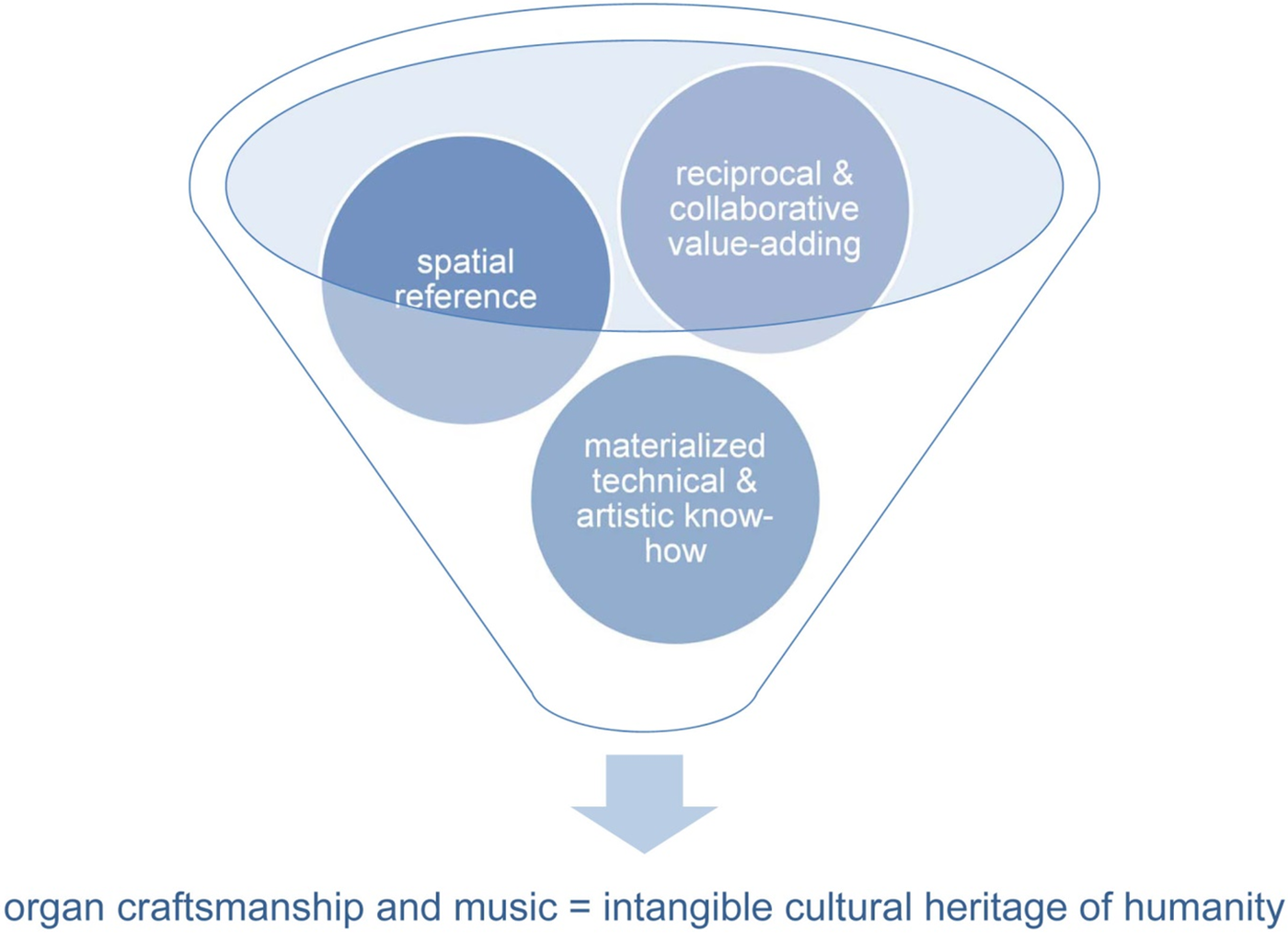
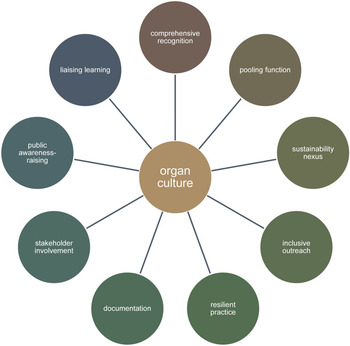
Both the shift of perspective toward craftsmanship and the valuation of implicit knowledge underline the tremendous sustainability and innovation potential that originates from materialized know-how. Based on a firm cultural and historic foundation, excellence in craftsmanship may successfully evolve. Both know-how and tacit knowledge play a vital role because of the fact that acquiring know-how and excellence influences people’s identity and gives distinction to their newly created items of property. Assuming that excellence does not arise from perpetuation and replication but, rather, from continuing creation, items of craftsmanship evolve within frictions of tradition and innovation.Footnote 54 Approving organ craftsmanship and music for intangible cultural heritage of humanity has several motivations, which are illustrated in Figure 6.
Reasons of approving organ culture for intangible cultural heritage of humanity (provided by the author; adapted with courtesy of UNESCO 2017b, 20–21).
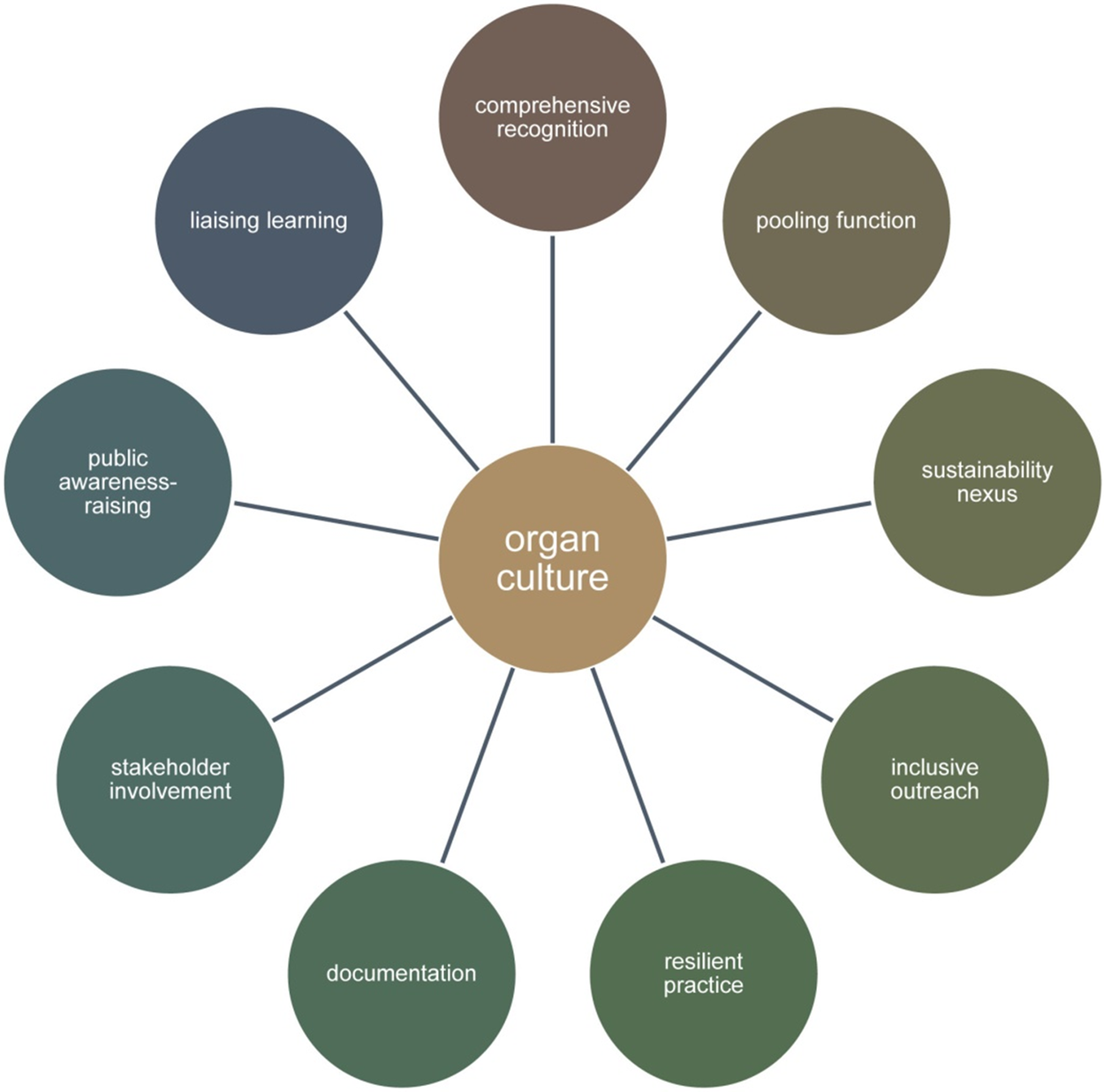
Taking into account the described dual context of cultural sustainability and intangible cultural heritage, the intention is to elucidate how the inscription of organ craftsmanship and music – representing explicit prototypes of each context – in UNESCO’s Representative List of the Intangible Cultural Heritage of Humanity has influenced the perception and self-concept of organ craftsmanship and music, both in theoretic-intellectual and virtual terms? Including organ craftsmanship and music in UNESCO’s Representative List of the Intangible Cultural Heritage of Humanity amounts to the following research propositions:
-
• appreciating sustainable value creation vis-à-vis the quadruple bottom-line of addressing economic, environmental, societal aspects of sustainability, adding culture “as a more or less self-standing or freestanding fourth pillar”;Footnote 55
-
• claiming substantial rights for safeguarding and invoking/activating heritage;Footnote 56
-
• enhancing visibility of performing organists, assigned organ builders, frequent practitioners, and nominated organ experts; and
-
• enabling the passion and self-positioning of organ craftsmanship and music.Footnote 57
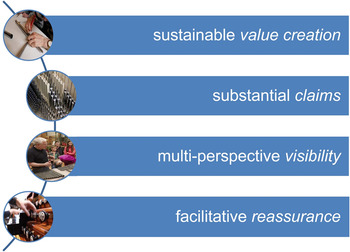
Narrative first-hand accounts with two organ craftspeople/organ builders have been conducted as expert interviews – that is, assessment referring to highly productive sources in case studies for eliciting valuable, directly relevant information for tendency-finding analysis.Footnote 58 Conducted in a semi-structured way, these interviews are evaluated in line with the principles of qualitative data analysis.Footnote 59 Selecting diverse interviewees guaranteed holistic insights on the issues and served to demonstrate different experiences and opinions.Footnote 60 Hence, interviewed experts – that is, individuals firmly rooted in specific functional or experiential knowledge systems that are clearly delimitable by issue. This allowed me to structure their particular notions and interpretations of the sphere of action in a concise, activating, and connecting manner compared to other individuals,Footnote 61 who had different, well-defined expertise.Footnote 62 The envisaged interviewees were craftspeople/organ builders in management positions in regional or international business contexts, and these interviews allowed me to obtain elucidating, up-to-date information through confidential facts and figures as well as to examine underlying notions and perceptions of organ craftsmanship and music.Footnote 63 Given these research propositions, the four focal issues illustrated in Figure 7 were represented, analyzed, and assessed in the questionnaire.
Propositions and fields of research (provided by the author; adapted with courtesy of Deutsche UNESCO-Kommission 2017; Deutsche UNESCO-Kommission 2018b; Wünning Reference Wünning2017).

Differing in size, product-service portfolio, number of employees, sales’ revenue, business philosophy and historic stages, the two company profiles representative of organ craftsmanship and music were selected according to a twofold scope/outreach:
-
• Kristian Wegscheider of Orgelbau Wegscheider Dresden was chosen as an interviewee because he provides a rather regional perspective of organ craftsmanship;Footnote 64 and
-
• Philipp Klais of Orgelbau Klais Bonn was chosen as an interviewee because he provides an international perspective of organ craftsmanship.Footnote 65
Orgelbau Wegscheider Dresden is a medium-sized workshop of organ craftsmanship owned by Kristian Wegscheider. Founded as spin-off in 1989 in the aftermaths of German Democratic Republic, the company comprises 17 employees, today generating an annual sales’ revenue of one million euro. Due to crafting tradition, individual socialization, preferred organ style, and the specific ratio of new design in favor of historically informed restoration, the company’s managing director is particularly committed and dedicated to the Baltic region. Moreover, the workshop’s business philosophy can be described as decent, partially understated, and highly professional in terms of materials/resources used and traditional techniques applied; each instrument is one of a kind; irregularities both in surface finish and length/width of scale are purposefully applied and intended in order to prevent the resulting instruments from inanimate perfectionism. It follows from the specific understanding of cultural-artistic diversity: organs are dialects that originate from creative expression within limits. Thus, organ craftsmanship [Orgelbaukunst] is interpreted as an art form exclusively evolving within confined spaces;Footnote 66 if necessary, those limits can be redefined or stretched to a certain extent only. Projects are primarily run at the regional level within Germany and, in selected cases, beyond. The company’s range of operations is within Europe, extending to Vienna/Austria, the former German-speaking parts of Poland, Iceland, representing the organ culture native to northern Germany, or the Czech Republic with its Bohemian tradition. Innovation is the embodied reminiscence and rediscovery of ancestors’ manual and intellectual know-how. In contrast, innovation defined as technological progress – for example, making use of digitization through CAN-Bus [controller area network] interfaces or electronically supported combination pistons/buttons or sequencers on the organ console – but this is considered less significant; hence, mechanical solutions are preferred. Restoring and preserving historic masterpieces often requires collaborative efforts; thus, the company is open-mined to business joint ventures. According to the principle of all for one and one for all, some seminal restoration projects – both independent and collaborative – have been accomplished in Dresden, Hamburg-Neuenfelde, Stralsund, Merseburg, Lengefeld, and Harbke, to name just a few.Footnote 67
Orgelbau Klais Bonn, or, more precisely, Johannes Klais Orgelbau GmbH & Co. KG, represents a family-owned company, currently headed by Philipp Klais in the fourth generation. The medium-sized workshop of organ craftsmanship comprises 64 employees, including 12 trainees, with an annual sales’ revenue ranging from between 6 and 9 million euro is prestigious and rich in a long-term crafting tradition dating back to 1882. Distinct periods of style, design, and/or degree of technical innovation in craftsmanship correlate with the particular affinity of respective workshop principals. Whereas projects had predominantly been realized within Germany until the late 1990s, the company’s global expansion has increasingly shifted the company’s strategic direction since the beginning of the 2000s. In addition to its neighboring European countries, with the exception of France, critical market shares are held in the Asian countries of China, Taiwan, and South Korea and, in particular, in North and South American and Latin American countries and selected in countries of the Middle East, such as Oman and Israel. Both secular concert halls and sacred sites have commissioned organs;Footnote 68 churches still outweigh concert halls by far, even though there is reasonable momentum and promising business opportunity for the latter, stimulated through highly prestigious and visible lighthouse projects, such like Elbphilharmonie in Hamburg, the Kölner Philharmonie in Cologne, the Symphony Hall Birmingham, the Philharmonie im Gasteig in Munich, and the Georg-Friedrich Händel-Halle in Halle/Saale, Germany.
Considering the volume of each manufactured instrument, Klais organs resemble multipurpose masterpieces that are extraordinarily rich in timbres of stops.Footnote 69 Following the ideal of a complex tonal sound sculpture, recombining/blending stops renders possible the variety of artistic styles, pluralistic performing characters, and the broad range of instrumental literature, on the one hand, and a certain mainstream standard for renowned, frequent organ performers, on the other. An organ’s sound pattern is adapted to the room acoustics by intonation; sometimes, specific tone colors/stops/registers are commissioned or donated to taste in order to add a supplementary culture-bound touch. Constructing new and maintaining existing instruments is at the core of the business activities; restorations do play a vital role at the aficionado level.
To conclude, on the one hand, organ builders are past-bound custodians of cultural heritage of craftsmanship practices with broker qualities to the present, which becomes particularly manifest when preserving and restoring masterpieces of organ craftsmanship by applying traditional techniques. On the other hand, organ builders are value-based, future-thinking visionaries gifted with both true intuition of technological process innovation and entrepreneurial talent for continuing workshop existence. This past-present-future continuum of organ craftsmanship notably coincides with the notion of cultural sustainability in the context of intangible cultural heritage – that is, intergenerationally shared practice for enhancing social creativity and fostering sustainability transformation in organizations.Footnote 70
Experts’ takes on organ craftsmanship
In reference to the earlier claims, four corresponding fields of research were considered for the experts’ comments and opinions: sustainable value creation, substantial claims, multi-perspective visibility, and facilitative reassurance.
Appreciating sustainable value creation
“Craftspeople operating in organ workshops live up to passionate nerds in their professional lives, they are fully convinced, truly inspired and highly specialized aficionados.”Footnote 71 The value-adding scope of organ craftsmanship can be defined as a creative and contemporary reflection of translated or transmitted organ-building know-how in all its occurring facets by adapting to changing cultural landscapes, by requiring a historically informed attitude of respectfully dealing with instruments from the past in different regional settings, by merging the two organ strands of artistic creation with manual perfection, and through making sounds tangible/perceivable.Footnote 72 Reconciling craft with art requires the certain charming vagueness or fuzziness Footnote 73 that combines perfection orientation with intentional irregularities simultaneously. Put bluntly, too much perfectionism may potentially extinguish aura.
The business values lived up to in the context of organ craftsmanship comprise grassroots’ values – that is, respect in terms of fostering teamwork, coping with diversity of opinions, taking responsibility for resources and cultural contexts, articulating a traditional orientation, and convincing leadership in artistic expression, true ambition, specialized task-sharing, and a sense of cooperation/collaboration. The involved sustainability aspects are closely related to the leading principle/core activity of organ craftsmanship – that is, building instruments in a forward-looking manner, which requires the utmost duration of ecologically harmless materials in terms of environmental sustainability, adequate remuneration and locally effective policies in terms of societal sustainability, and conveyed cultural knowledge and know-how in terms of cultural sustainability, involving enthusiasm of and for performing culturally adapted music without the need for currying favor. In order to maintain a well-balanced intuition for handling such unique value chains, renowned organ builders are concerned with retaining control of their complex processes of value creation. In other words, outsourcing services or value-adding steps are associated with losing competence over generations.Footnote 74
The dual inscription of organ craftsmanship in conjunction with organ music represents the ideal synthesis of artwork with manual crafting techniques [synthesis of the arts], thus combining sacred and/or secular interiors with dedicated spaces for music performance.Footnote 75 In this respect, “constructing organs is barely considered as business model with the primary objective of value creation, but the professionalized passion to build instruments that reach people in liturgically, regionally and culturally adapted contexts.”Footnote 76 Hence, the masterpieces epitomizing organ craftsmanship mainly date back to the seventeenth century and are typically bound to central Europe.
The ever-prevailing challenge of organ craftsmanship lies in the specific technology of handling a huge mechanical dimension. Thus, the key aspects of manual abilities [handwerkliches Erfahrungswissen] connected with organ craftsmanship encompass universal manual crafting abilities and specific expert skills of the so-called touché;Footnote 77 intellectual abilities comprise profound artistic and musical understanding, a service-oriented attitude for guiding/consulting customers and organists, a manually and historically informed awareness, and the capacity for correlating recent/novel paradigms or developments/evolutions in craftsmanship with a state-of-the-art cultural organ landscape.Footnote 78 As Philipp Klais explains, “[t]he most important intellectual ability in the context of organ craftsmanship is imagining the tonal language in advance through learned techniques and lot of implemented experience.”Footnote 79 This is why the distinction between tangible and intangible, and artistic and technical/crafting, aspects in the course of creating value appears to be artificial and arbitrary; hence, more important than classifying is the conclusion that organ craftsmanship and organ music are both facilitating services,Footnote 80 they can be characterized by the uno-actu principle – that is, adding value while instantly doing something, such as crafting instruments or performing music.Footnote 81
Claiming substantial rights for safeguarding and invoking/activating heritage
The corporate mandate of safeguarding heritage is very much intertwined with the workshop philosophy,Footnote 82 since synthesizing/reconciling aspects of art with craftsmanship is at the core of the heritage-listing agenda: “First, organs are treasures of animation; they must to be used and played. Second, organs are unbiased brokers; they can liaise with people through emotions. Third, organs are change agents; they may instantly shift recipient’s habits and needs.”Footnote 83 The expectations associated with the inscription of organ craftsmanship and music include raising awareness and attention in order to increasingly take notice of organs as music, not necessarily as faith-based instruments,Footnote 84 contributing to business success, requesting rewarding opportunities in vocational training – for example, Oscar-Walcker-Schule in LudwigsburgFootnote 85 – and addressing regular or extraordinary public-sector financing.
As Kristian Wegscheider stated, “[t]hese steps have gradually changed the organ’s image in order to make queen or king approachable, tangible and inviting – in few words: lifting it from the distant platform.”Footnote 86 The intangible impacts induced by the listing – that is, beneficial responsibility or accountability effects, such as reputational gains or making organ craftsmanship and music publicly available, clearly outweigh tangible/material effects – that is, beneficial changes in economic terms, such as demand, order situation, or sales revenue; in a nutshell, listing is associated more with obligation than with award or coronation even!
The personal involvement and commitment in safeguarding organ craftsmanship is indispensable;Footnote 87 it includes close personal ties, get-togethers on a regular basis, stakeholder dialogues, and public relations for image/sponsoring purposes, coordination among performing artists and music colleges or academies of music, communicating success stories, using role models as best practices for shifting roles and recipient’s habits and needs, making sure instruments are accessible and played well, and inspiring brokers or mediators for congregations in spiritual transformation.
The individual accentuations are considered the only viable, self-reliant option to create momentum and to run self-contained activities of making the organs approachable and inviting in a down-to-earth manner,Footnote 88 as well as safeguarding policies, including programs for younger target groups, walk-in access, real organ-touching experiences, and a uniform inventory of both organs and company workshops.Footnote 89 Hence, the main associations of both craftspeople and practitioners, such as the Vereinigung der Orgelsachverständigen Deutschlands (German Association of Organ Experts, VOD), the Gesellschaft der Orgelfreunde (Society of Friends of the Organ), the Bund Deutscher Orgelbaumeister (Federation of German Organ Builders, BDO), and the Internationale Arbeitsgemeinschaft für Orgeldokumentation (International Association for Organ Documentation, IAOD), are only marginally involved to date. The role of vocational training is of the utmost importance in order to provide attractive professional opportunities and to transfer know-how and enthusiasm for organ craftsmanship, complying with the three most essential requirements of quality, sustainability/future thinking, and passion.Footnote 90
The unique selling proposition for the future can be described as intrinsically driven, self-reliant, and authentic positioning that will ultimately result in higher standards and value propositions. Moreover, organ craftsmanship and music enable substantially floating spaces with sound by requiring only one single player, which tremendously facilitates the making collective experiences. As Philipp Klais shared, “[t]here is hope that inscribing organ craftsmanship raises awareness and attention at the same time in order to increasingly take notice of organs as music and not necessarily as old-fashioned, faith-based instruments.”Footnote 91
Enhancing visibility of performing organists, assigned organ builders, frequent practitioners, and nominated organ experts
Klais also explained that “[o]rgan affiliates are enabling unique collective experiences by floating spaces with sound by one single player only.”Footnote 92 However, public perception of both organ craftsmanship and music status quo is limited; currently, organ craftsmanship is hardly perceived in public, which is still slightly different to organ music; both are considered niches of cultural-artistic expression, in need of increasing publicity and affection for more embeddedness in modern, diversified and multi-cultural contexts of society;Footnote 93 the prospects as intangible heritage remain vague and ambivalent, avoiding the pitfalls to preserve techniques in a museum-like way instead of keeping traditions visibly alive. The value of the intangible cultural heritage of organ craftsmanship and music deserves more sensual attention,Footnote 94 by highlighting the charm of changing perspectives and resuming universal communication across language barriers; for this purpose, formats need to be customized, including individual lighthouse projects of enjoyable music education,Footnote 95 such as performing organ music beyond sacred spaces in unexpected surroundings and in small bits as brilliant, easy-to-digest appetizers.
The stakeholders – that is, performing organists, the assigned organ builders, the frequent practitioners, and the nominated organ experts – are conducive to preserve and promote organ craftsmanship and music.Footnote 96 As Kristian Wegscheider shared, “[n]ew formats should be provided in addition to existing ones.”Footnote 97 Related activities or policies need to be revisited in order to have an impact on enhanced recognition, branding, imaging, and appraisal; recitals need to be offered on a regular basis in a redesigned manner; innovation needs to connect with the conventional, making organ craftsmanship and music sensually tangible.
The intergenerational evolution that has shaped organ building needs to be updated in order that it can contribute to public awareness, perception, and an image for future generations, and this will mainly be achieved by providing attractive apprenticeship opportunities, which will have reciprocal appeal and success, providing adequate pre-selection of potential candidates and offering conducive mindsets of underlining joy and enthusiasm rather than burden sharing.Footnote 98 Hence, as Wegscheider explains, “promoting appeal by embodying authenticity and pride for music is a vantage point.”Footnote 99 The personalities of craftspeople of organ building are holistically balanced and enthusiastic about the fascination of connecting the intangible with tangible heritage, often adding some sense of eccentric craziness; more of these authentic brokers are called for. In a nutshell, this is the essence for embodied learning.Footnote 100
The catchy and attractive appeal of organ craftsmanship and music vis-à-vis the informed public is mainly induced by its quality of living heritageFootnote 101 that bridges the gap between cognitive messages of the spoken word and emotional impacts of music; as a result, it generates promising momentum and potential for stakeholder dialogues among future generations, provides opportunities for accessing important decision makers in politics, business, or the media, and enables broadcasting and best-practice storytelling.
Enabling reassurance of passion and self-positioning with organ craftsmanship and music
As Philipp Klais revealed, “[b]eing an organ builder is much more associated with gratitude than pride.”Footnote 102 Moreover, the mastery of organ building is also considered a cross-generational obligation. Gifted with multiple talents and tasks, craftspeople are sometimes perceived as crazy freaks,Footnote 103 who concurrently embody some functions of business people, communication managers, marketing experts, controllers, freelance musicians, or lecturers with managing qualities of balancing leadership and team play, socioeconomic responsibility and accountability, and claims of creative and evocative self-fulfillment. The professional standing or reputation compared to other professions of craftsmanship remains exotic; organ building is frequently attributed to a niche culture for a manageable group of interested/addicted stakeholders from another era. As Kristian Wegscheider puts it bluntly, “the lobbying capital of craftspeople in terms of perception and recognition is rather limited.”Footnote 104
The self-image among organ craftspeople in the light of competing companies on the market is based on respect, despite fierce competition; organ craftspeople consider themselves to be enthusiastic, variegated, and diversified artists that either reconcile different historic styles of last resort for sensual enrichment or polarize these styles with their instruments. The requirements and demands articulated by contracting bodies/clients do not exert influence on the company’s value proposition, intrinsically driven mindset, or convinced/convicted code of conduct. Put differently, within the guild, understatement is usually recommended – that is, refraining from temptations of mainstream uniformity and compensating identity-based helplessness for solely satisfying external demands.
The business activities from a short-term perspective are assumed to be influenced little by listing organ craftsmanship and music because preserving and promoting heritage is more of a perceived obligation than an opportunity; albeit, positive, disseminating effects and new opportunities are expected, particularly in the context of a company’s succession. The changing attitude toward the organ builder’s profession in line with the inscription aims at better-qualified and more inspired people. As Philipp Klais explains, “[c]urrently, organ culture is a tempting niche that enables creative liberties, particularly with respect to vocational and continuing education.”Footnote 105
The message intended for future generations of organ craftspeople is threefold: first, stay addicted to music; second, keep an eye on the details in organ craftsmanship; and, third, promote congregational singing and get-togethers. Making organ craftsmanship future-proof deserves the best, animated people, while increasing both the number and quality of stakeholder groups; this requires reasonable remuneration, attractive continuing education formats, know-how transfer with communicating interfaces, and professional documentation. The general affiliation to both instrument and organ music from an organ builder’s perspective is characterized as a tempting niche that enables creative liberties, fosters safeguarding technologies, encourages transferring know-how, calls for the documentation of workshop processes, and strives for elaborating on corresponding technical literature.Footnote 106
The specific social identity or mindset of organ builders remains vague; there is no unambiguous, societal profiling of mindset of organ craftspeople; generally speaking, most values are commonly shared among organ builders; modes of cooperation, observation, and assessment are commonly shared business practices, possibly including some charming sort of cliquism. Footnote 107
Conclusions
Linking organ craftsmanship and music with sustainability is evident, but it is novel and innovative in this field; sustainable value creation is appreciated, predominantly by addressing cultural, environmental, and societal aspects of sustainability. Currently, the visibility of organ craftsmanship and music is limited; both are niches of cultural-artistic expression and aspects of living heritage that are to be highlighted further. Yet there are promising signs and efforts to be announced and shared since
[t]he organ is the instrument of the year 2021! It is thus the first keyboard instrument to be declared Instrument of the Year. The organ is considered the queen of instruments and is the largest of all musical instruments, the deepest and highest, the loudest and quietest. In Organ Year 2021, the goal is to draw curiosity and attention to the instrument and its many facets.Footnote 108
Which conclusions can be drawn given the intention of elucidating how the inscription of organ craftsmanship and music in UNESCO’s Representative List of the Intangible Cultural Heritage of Humanity has influenced the perception and self-concept of organ craftsmanship and music, both in theoretic-intellectual and virtual terms?
-
• From a theoretic-intellectual point of view, the nexus between organ craftsmanship and music and sustainability in each of its quadruple aspects is evident. In practical terms, sustainable value creation is fully appreciated, predominantly by addressing cultural (conformity, landscape, technique, values, traditions), environmental (resources, components), and societal (employment, apprenticeship, remuneration) aspects of sustainability.
-
• Aspects of claiming substantial rights for safeguarding organ craftsmanship and music are implicitly considered uno actu in line with the actual, value-adding processes of crafting and/or performing (quality, future thinking, passion). In contrast, momentum and commitment of invoking and activating heritage are explicitly requested from the stakeholders involved (formats, public relations, financing, best practices).
-
• Currently, the visibility of organ craftsmanship and music is rather limited; both are niches of cultural-artistic expression, aspects of living heritage (access, tangibility, brokerage, coverage) that are to be highlighted mutually by performing organists, assigned organ builders, frequent practitioners, and nominated organ experts.
-
• Ranging from veiled pride and professionalized understated organ craftsmanship and music reveals an ambivalent image of reassurance. Multitasking aptitudes, enriched with the utmost individual passion (skills, competences, inspiration, enthusiasm, creation) are in apparent disaccord with self-effacing, matter-of-fact attributes of self-positioning (gratitude, obligation, cliquism).
Inscribing organ craftsmanship and music in UNESCO’s Representative List of the Intangible Cultural Heritage of Humanity positively influences the perception and self-concept of organ craftsmanship and music. This concept primarily applies to fully recognizing the nexus with sustainability aspects but similarly allows drawing invaluable conclusions from the multifaceted notions of organ craftsmanship and music in terms of heritage definition, safeguarding requirements, visibility and awareness-raising, and insights into professional contexts and job profiles. Inscribed organs and organ-crafting cultures have reciprocally influenced and enriched Europe since the Baroque era. Adding to this perception, in fact, the German organ cultural tradition extends from the Netherlands to Finland, from Eastern Europe to the Balkans, and from South Tyrol to Switzerland, to Alsace-Lorraine, and, finally, to Belgium. This regional-cultural concept is consequently referred to as the landscape of organ culture, which has globally been paid tribute to in the end.Footnote 109 Presumably, most of the protagonists in the vibrant field of organ craftsmanship and music would agree that “the aim and final end of all music should be none other than the glory of God and the refreshment of the soul.”Footnote 110
Acknowledgments
Throughout this research, I have had the privilege to work with many people whose contributions deserve special mention. My appreciation goes to those who have substantially enriched this project. For that reason, it is my obligation and pleasure to convey my gratitude to all of them in this humble acknowledgment. First, I wish to record my utmost gratitude to the interviewees and organ builders Kristian Wegscheider (chief executive officer, Orgelbau Wegscheider Dresden) and Philipp Klais (chief executive officer, Johannes Klais Orgelbau GmbH & Co. KG) for their inspiring narratives, intuition, and enthusiasm, supportive advice, never-ending patience, and invaluable insights in their daily craftspeople’s routines. Special thanks are particularly due to those distinguished experts who have made considerable efforts toward the provision of valuable insider information through informal briefings, chats, or spontaneous telephone calls. In this respect, I wish to extend my appreciation and gratitude to the experts both in organ craftsmanship and in music and intangible cultural heritage: Michael Gerhard Kaufmann, member of the executive committee of the Vereinigung der Orgelsachverständigen Deutschlands (German Association of Organ Experts, VOD), Alexander Steinhilber (deputy director of the State Representation of Hamburg in Berlin and former head of the Elbphilharmonie project team), and Matthias Neef and Benjamin Hanke, both representatives of the Deutsche UNESCO-Kommission (German Commission for UNESCO, DUK). Facilitating research for learning about recent developments in intangible heritage matters has kindly been rendered possible through invaluably stimulating off-the-record exchange with my dear colleague Sylvia Maus (UNESCO Chair in International Relations, Technische Universität Dresden). Last but not least, my appreciation as passionate, freelance church musician shows for her majesty herself, the queen of sounds, for enjoying myriad, intimate audiences. Thanks for this uplifting privilege of vibrant diletti musicali!

 Open access

