1. Introduction
Code-switching is a common phenomenon that bilingual speakers regularly engage in. When bilinguals code-switch, words from two languages are used within a single discourse. In some studies, code-switching has been distinguished from code-mixing – code-mixing is defined as a practice of mixing languages in a single sentence while code-switching can occur either within or across sentence boundaries within a single discourse or constituent (e.g., Brice & Anderson, Reference Brice and Anderson1999; Meisel, Reference Meisel1989; Muysken, Reference Muysken2000; Nicoladis & Genesee, Reference Nicoladis and Genesee1997). In other studies, as well as the present study, code-switching and code-mixing are synonymously regarded as an alternation of two languages within the same speech act (Bokamba, Reference Bokamba1989; Clyne, Reference Clyne1987; Genesee, Reference Genesee1989; Genesee, Paradis & Crago, Reference Genesee, Paradis and Crago2004; Poplack, Reference Poplack, Smelser and Baltes2001).
Code-switching has been well studied in bilingual adults, particularly with regard to the grammatical and communicative functions of the behavior (e.g., Cantone, Reference Cantone2007; Gumperz, Reference Gumperz and Dil1971; MacSwan, Reference MacSwan2014; MacSwan & McAlister, Reference MacSwan and McAlister2010; McClure, Reference McClure1977; Poplack, Reference Poplack1980). The complexity of bilingual adults’ code-switching generally reveals a sophisticated knowledge of the grammars of both languages and reflects the adults’ competency in using them appropriately. However, there has been much debate with respect to what children's code-switching behavior suggests about their linguistic competency.
Early studies on children's language alternation behaviors postulated that bilingual children mix or switch languages because 1) they are confused or 2) they are linguistically incompetent. According to proponents of the position that bilingual children mix languages because they are confused and cannot differentiate between the two languages (e.g., the Unitary Language System Hypothesis in young children aged 3 years and below; Genesee, Reference Genesee1989), the lexicons and grammars of both languages in young bilingual children first exist in one single system, and only gradually develop into two separate linguistic systems by a process of language differentiation. In this framework, young bilingual children's mixing of two different language elements within the same utterance was seen as evidence of the pre-separation stage and, thus, was argued to be a reflection of their inability to differentiate two language systems (Köppe & Meisel, Reference Köppe and Meisel1995; Redlinger & Park, Reference Redlinger and Park1980; Volterra & Taeschner, Reference Volterra and Taeschner1978). For example, Redlinger and Park (Reference Redlinger and Park1980) studied four 2-year-old bilingual children over five to nine months and suggested that the children experienced various stages of language differentiation. The children would start off with high rates of language mixing as they do not separate their two language systems. The high language mixing rates would then gradually decline as these children move from an undifferentiated single language system to two distinct language systems. Proponents of this position argued that the decrease in the language-mixing rate is, therefore, positively related to language development, at least for children aged 3 years and below.
Other researchers claimed that bilingual children code-switch not because they cannot differentiate the two language systems, but because they lack the lexical, grammatical and/or pragmatic competence in one or both of the languages known. Several studies have found that bilingual children aged between 2 to 6 years code-switch in order to fill in their lexical gaps – they tend to insert words from one language into another language when they do not have the translation equivalents (e.g., Deuchar & Quay, Reference Deuchar and Quay2000; Cantone, Reference Cantone2007; Lindholm & Padilla, Reference Lindholm and Padilla1978; see Nicoladis & Genesee, Reference Nicoladis and Genesee1997, for a review). Further, Bernardini and Schlyter (Reference Bernardini and Schlyter2004), who examined code-mixing patterns of five Swedish–French/Italian children aged 2 to 4 years, posited that children code-switch because they are not yet competent in structuring grammatical sentences in their “weaker” language. In addition, Vihman (Reference Vihman1985) suggested that a young bilingual child aged 3 years old or younger would not be focused on the situational context when developing a dual lexicon. As such, the child may code-switch inappropriately during this period, reflecting the absence of pragmatic competence.
Recent studies, however, have provided more complex and contradictory evidence. First, many studies have failed to confirm the Unitary Language System Hypothesis. Results suggest that young bilingual children are able to differentiate their two language systems from an early age and their code-switched utterances are systematic and conform to the grammatical constraints of each known language (e.g., MacSwan, Reference MacSwan1999; Meisel, Reference Meisel1994; Nicoladis & Genesee, Reference Nicoladis and Genesee1997; Paradis, Nicoladis & Genesee, Reference Paradis, Nicoladis and Genesee2000; van Gelderen & MacSwan, Reference van Gelderen and MacSwan2008). Genesee (Reference Genesee1989) argued that, contrary to the Unitary Language System Hypothesis, young bilingual children are able to use their developing language systems differentially in contextually sensitive ways. Second, case studies have found that children's code-switching behavior illustrates a good understanding of the grammatical systems of both languages. For example, 2- to 4-year-old French–English bilingual children displayed code-switching patterns that were largely similar to that of their adult counterparts – grammatical constraints were adhered to in mixing patterns that involved sentential negation and pronominal subjects (Paradis et al., Reference Paradis, Nicoladis and Genesee2000). Siri's data in Lanza (Reference Lanza1992) indicated that the two-year-old did not use the inflections of both languages interchangeably. English grammatical morphemes were only used with English lexical morphemes, such as “looks”, but Norwegian grammatical morphemes were used with both Norwegian and English words, such as “looker” and “husk er”. Results from Cantone (Reference Cantone2007) also revealed how all instances of Italian–German code-switching in 2- to 5-year-old children in her corpus were grammatical. Furthermore, an English–Spanish bilingual child, M, exhibited language-specific syntax and morphology in both her pure and mixed utterances before the age of 3 years (Deuchar & Quay, Reference Deuchar and Quay1998). Therefore, the results of studies such as the aforementioned suggest that bilingual children's code-switching behavior does not indicate an inability to differentiate their two language systems or a lack of linguistic competency. Instead, they strongly suggest that children's code-switching behavior illustrates that they possess adequate grammatical knowledge of both languages.
Additionally, numerous studies have demonstrated that bilingual children are pragmatically competent and can code-switch according to the situation and interlocutor (e.g., Genesee, Boivin & Nicoladis, Reference Genesee, Boivin and Nicoladis1996). Even though bilingual children below the age of 4 years have more single-noun insertions in their mixed utterances, these utterances reflect their awareness of social norms (De Houwer, Reference De Houwer, Kroll and de Groot2005). For example, Siri code-switched in bilingual contexts but not in monolingual contexts, thereby reflecting her sensitivity to the social demands of the conversation (Lanza, Reference Lanza1992). Two-year-old bilingual children were also able to adjust their rates of code-switching according to that of their interlocutors (Comeau, Genesee & Lapaquette, Reference Comeau, Genesee and Lapaquette2003), suggesting that they are sensitive to the language choices of their interlocutors. Bilingual children's code-switched utterances were also found to be in accordance with the language socialization practices in their families. Chung (Reference Chung2006) found that a 4.5-year-old and an 11-year-old Korean-American (who were regularly exposed to both Korean and English before age 3) switched between the two languages when conversing with their family members who had different language preferences. This facilitated communication and comprehension between the family members despite these different preferences. Moreover, Vu, Bailey and Howes (Reference Vu, Bailey and Howes2010) found that 4.5- to 5.5-year-old Spanish–English bilingual children code-switched in their attempts to draw the interviewer's attention or to change speaking roles. These studies show that bilingual children have the pragmatic competence to adjust their code-switching behavior appropriately depending on the situational contexts.
Some researchers have attempted to examine the code-switching-linguistic-competency relationship through investigating whether code-switching in elicited narratives can be a marker of language impairment (LI). Iluz-Cohen and Walters (Reference Iluz-Cohen and Walters2012) found that 5- and 6-year-old Hebrew–English bilingual children with LI code-switched more than bilingual children with typical language development (TLD). Using the Bilingual English–Spanish Oral Screener (BESOS), Greene, Peña, and Badore (Reference Greene, Peña and Bedore2012) found that 5-year-old children's risk status for language impairment affected their code-mixing frequency. With the English screener, children who were identified as at-risk of LI code-switched more than the no-risk group. Interestingly, the no-risk group code-switched more on the Spanish screener than the at-risk group. The authors cited limited awareness of the social interaction and challenges in suppressing the irrelevant language as possible explanations for these findings. Contrary to these findings, Gutiérrez-Clellen, Simon-Cereijido and Erickson Leone (Reference Gutiérrez-Clellen, Simon-Cereijido and Erickson Leone2009) did not find any differences in the use of code-switching between 5- to 6-year-old bilingual children with LI and those with TLD. Clearly, the inconsistent findings across studies call for more research to be conducted in these areas.
Thus, despite earlier attempts to understand the nature of bilingual children's code-switching, the relationship between children's code-switching and linguistic competency remains not well understood, or at best, controversial (Baetens Beardsmore, Reference Baetens Beardsmore, Gopinathan, Kam, Pakir and Saravanan1998; Kamwangamalu & Leng, Reference Kamwangamalu and Lee1991; Ong & Zhang, Reference Ong and Zhang2010). Furthermore, no study has investigated children's code-switching behavior in bilingual preschool settings, especially for children who spend a significant amount of their awake time at these centers, and at a time when their language skills are becoming more complex. Most research on children's code-switching behavior consists of case studies of parent-child interactions or is based on children's narrative samples in a laboratory setting. Information on groups of children's code-switching behavior in a larger natural language environment would be relevant and important to understand the effects of code-switching on bilingual children's language development. Many children spend approximately 10 hours a day or more away from home, such as in childcare or daycare centers. Their language development is, thus, largely influenced by their interactions in this larger and more complex environment (Chung, Reference Chung2006; Comeau et al., Reference Comeau, Genesee and Lapaquette2003; Nicoladis & Genesee, Reference Nicoladis and Genesee1997). In short, code-switching in such sociolinguistic contexts has not yet been adequately examined. The present study, therefore, seeks to fill these gaps by investigating the relationship between children's code-switching and linguistic competency in preschool settings and adopting a quantitative approach toward the analysis of children's language behavior. Measures of 55 English–Mandarin children's spontaneous speech were obtained through five 3-hour observation sessions in two childcare centers. Information on the children's receptive vocabulary was also obtained. In addition, teachers’ assessments of the children's language competency in English and Mandarin were collected approximately six months after the observation sessions in order to ascertain whether any predictive relationship exists between code-switching and linguistic competency.
2. Method
Participants
Fifty-five English–Mandarin bilingual children aged between 5;5 to 6;7 (M = 6.06, SD = 0.34) from two private childcare centers in SingaporeFootnote 1 (33 from Center 1 and 22 from Center 2; 25 females, 30 males) were observed during their classroom activities. Four additional participants were excluded either because they had very low attendance during the observation days that resulted in very little recording time (less than 5% of the total recording time in the center) or because he or she spoke fewer than ten utterances throughout the entire observation session. Both childcare centers conducted classroom activities in English and MandarinFootnote 2.
Parents completed a demographic and language background questionnaire prior to the observation session. The questionnaire asked about the age and gender of the child, the language first acquired by the child, and the amount of time (in percentage) their child hears or speaks a language in a typical week (see Yow & Markman, Reference Yow and Markman2016). The average amount of English and Mandarin exposure children had at home as reported by the parents was 55.30% (SD = 19.93%) and 41.80% (SD = 20.15%) respectively. All children were reported as simultaneous bilinguals (i.e., acquiring two languages at age 3 or younger), except for one who was reported as a sequential bilingual. Preliminary analysis found that including the single sequential bilingual child did not change the results significantly, thus all children were included in the final analyses. In addition, parents reported their highest education level as a measure of socioeconomic status (SES), ranging from 0 (no formal education) to 5 (postgraduate degree). The average parental highest education level was 3.98 (SD = 0.54).
Procedure
Parents were informed about the study and were requested to complete the language background questionnaires that were distributed with the teacher-parent communication book. The observation was conducted for about three hours each day across five different days in each childcare center. We were thus able to record children's conversations in different settings throughout the week, such as during meal times, craft sessions, and free play. Teachers split children from their respective childcare center into two groups of 2 to 6 as part of their normal preschool routine. Two research assistants each followed and recorded one group of children with a video camera that also had an audio recorder attached to it throughout the recording duration. The research assistants held the camera and audio recorder as close to the children as possible without interrupting their activities. As the audio and video recording were meant to be as naturalistic as possible, there was no form of intervention from the researchers during the entire recording duration. The video recordings were transcribed and crosschecked with the audio recordings, especially when the conversations were unclear from the video recordings. After the observation sessions ended, children were tested individually on their receptive vocabulary using the Peabody Picture Vocabulary Test (4th Edition; PPVT-IV; Dunn & Dunn, Reference Dunn and Dunn2007). The respective teachers were asked to complete a short questionnaire on the language competency of those children who participated in the study approximately six months after the observation sessions ended (see section on Materials).
Materials
Measure of receptive language competency
The Peabody Picture Vocabulary Test (4th Edition; PPVT-IV; Dunn & Dunn, Reference Dunn and Dunn2007) was administered individually to assess children's receptive English vocabulary. Each child was instructed to point to one of four pictures that depicted the word spoken by the experimenter. Eleven children from Center 1 and five children from Center 2 did not complete the PPVT. Raw scores were converted to age-based standard scores according to the manual. The average standardized score was 100.69 (SD = 12.33). As there is currently no equivalent approved version in Mandarin, the same task was not conducted in Mandarin.
Teachers’ report of language competency
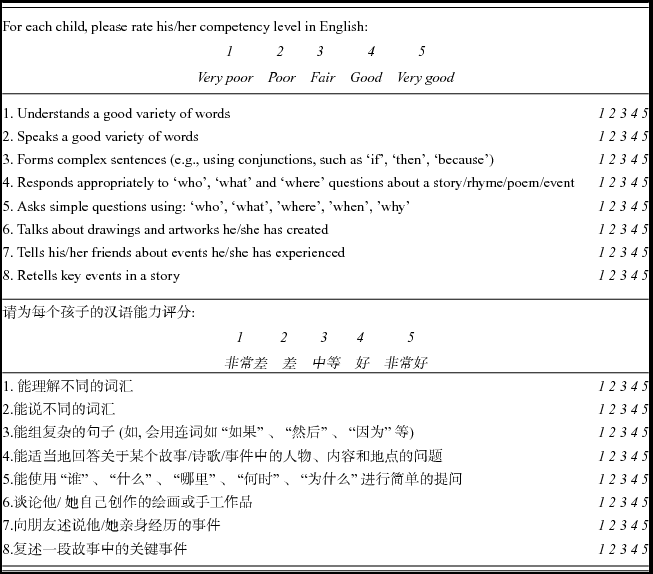
Teachers were asked to rate the students’ expressive and receptive language competencies from 1 (very poor) to 5 (very good) approximately six months after the observation session ended. This questionnaire consisted of eight items (Table A1), which we developed based on the Language and Literacy section of the curriculum framework for kindergartens in Singapore (Singapore Ministry of Education, 2012). Examples include “he or she talks about drawings and artworks he or she has created” (expressive) and “he or she understands a good variety of words” (receptive). English teachers assessed English language competency while Mandarin teachers assessed Mandarin language competency of the respective children in their charge. The average teacher's rating of English and Mandarin competency was 3.75 (SD = 0.95) and 3.85 (SD = 0.79) respectively.
Transcription
Children's utterances during the observation sessions were transcribed in accordance with CHAT and the transcriptions were analyzed using CLAN (MacWhinney, Reference MacWhinney2000). Four additional research assistants, who were also native language speakers of English and Mandarin, were involved in the transcription and checking process. All videos were divided among the six research assistants. The research assistants independently transcribed the videos assigned to them. In accordance with the transcription and reliability checking methods detailed in Lust and Blume (Reference Lust and Blume2016), a different research assistant (i.e., second transcriber) checked through each transcription for errors or missing data. All transcriptions were checked sentence by sentence by crosschecking the video and audio recordings. When there were discrepancies, the second transcriber would discuss them with the first transcriber before making changes to the transcriptions. A third transcriber was involved if the first two transcribers could not come to an agreement.
In all transcriptions, onomatopoeia (imitation of sounds, e.g., “woof woof”) and ambiguous communicators that can be used in either English or Mandarin, such as “uh”/“哦”, “ah”/“啊”, “oh”/“噢”, Singlish Footnote 3 particles (e.g., “meh”, “la”, “na”, see Rubdy, Reference Rubdy2007) were marked as non-words and thus automatically excluded from all analyses. Words that were not English or Mandarin were also marked as non-words (e.g., “chaota”, a Hokkien word which means burnt). All forms of routinized speech, such as standardized greetings before meal, text or nursery-rhyme reading, and games with standard lyrics (e.g., “scissors paper stone”) were excluded from the analyses as well. The basic unit of our analyses is an utterance, which is defined as “a word or group of words with a single intonation contour” (Lanza, Reference Lanza1992, p. 638). A pure utterance (either in English or Mandarin) consists of words only in one language, and excludes single proper nouns, intra-sentential switches, and utterances that contain translations and imitations of other languages.
Expressive language measures: Number of different word roots (NDWR) per minute
Lemma or word roots have often been used as a measure of children's lexical development (Hewitt, Hammer, Yont & Tomblin, Reference Hewitt, Hammer, Yont and Tomblin2005; Thordardottir, Reference Thordardottir2005; Watkins, Kelly, Harbers & Hollis, Reference Watkins, Kelly, Harbers and Hollis1995). We computed this measure separately in English and Mandarin from the transcription data. For English, different words originating from the same word root (e.g., ‘eat-ate-eaten’) were considered as a single word root. NDWR was divided by the recording duration of each individual child because the recording duration varied from child to child (see Aukrust & Rydland, Reference Aukrust and Rydland2011). Proper nouns (e.g., “Tangled”–the title of an English movie, “小兔跳楼” (xiao3tu4tiao4lou2)–the name of a local hand game) and unintelligible words were excluded from the computation of this measure.
Expressive language measures: Mean length of pure utterances (MLU)
Mean length of utterances (MLU) for English and Mandarin were calculated from the transcription data based on the guidelines provided in CHAT and CLAN (MacWhinney, Reference MacWhinney2000). MLU, the ratio of morphemes over utterances (Brown, Reference Brown1973), is frequently used as a measure of sentence complexity (Klee, Stokes, Wong, Fletcher & Gavin, Reference Klee, Stokes, Wong, Fletcher and Gavin2004; Mishina-Mori, Reference Mishina-Mori2011; Thordardottir, Reference Thordardottir2005). Some researchers have noted that MLU is only meaningful until approximately 4 to 5 morphemes (Bernstein & Tiegerman-Farber, Reference Bernstein and Tiegerman-Farber1997), while others have claimed that MLU is a valid measure even into the grade school years (Jones, Weismer & Schumacher, 2000; Miller, Frieberg, Rolland & Reves, Reference Miller, Frieberg, Rolland and Reves1992). As there is currently no consensus on the age limit and morpheme-count limit of MLU (the mean MLUs in our study fall in the range of 4 to 5 morphemes: MeanEnglish MLU = 5.07; MeanMandarin MLU = 4.26), we proceeded to calculate both English and Mandarin MLU for our study and analyses.
Utterances included in the computation of MLU were those that only consisted of English or Mandarin words (i.e., pure utterances in English and Mandarin). Utterances with unintelligible words were included in the analysis, but the unintelligible words were excluded from the morpheme count. This approach was employed because noise from the environment decreased the intelligibility of many words (see Thordardottir, Reference Thordardottir2005); both childcare centers had open classrooms and thus, voices of children in other groups or classrooms sometimes interfered with the recordings.
Code-switching measures
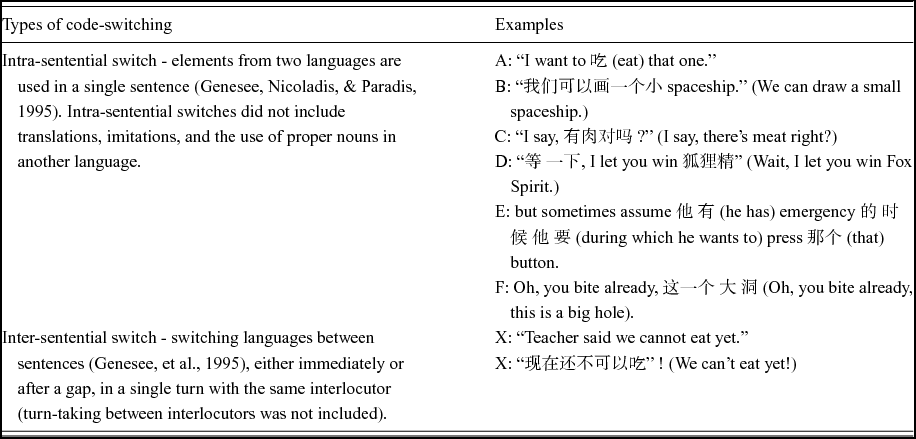
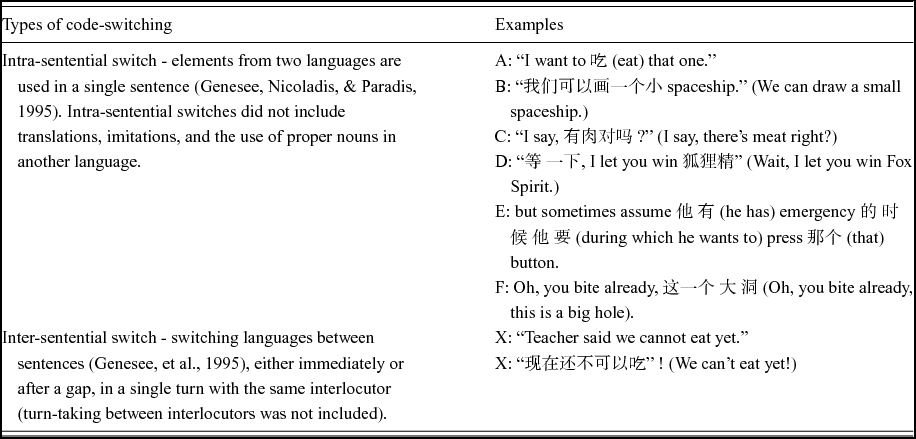
We coded two types of code-switching from the children's utterances: intra-sentential switches and inter-sentential switches (see Table 1). The total amount of code-switched utterances was the sum of both types of code-switching. The percentage of the total number of code-switched utterances made by each child was obtained by dividing the total number of code-switched utterances by the total number of utterances spoken by each child.
Types and Examples of Code-switching.
3. Results
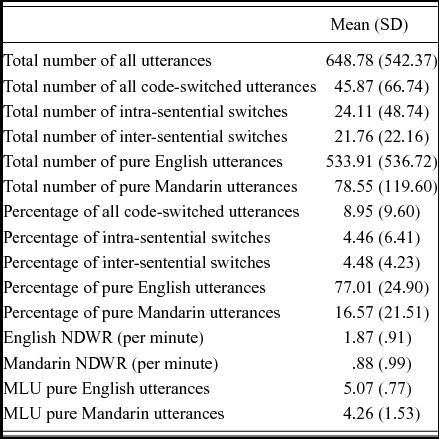
A total duration of 21:16:43 hours and 30:09:48 hours of observation in Center 1 and Center 2, respectively, was transcribed and analyzed. An average of 648.78 utterances per child was recorded (SD = 542.37; see Table 2). The number of observed switches (intra-sentential and inter-sentential switches) in our sample of children constituted a small percentage of their total utterances (M = 8.95%, SD = 9.60, range = .23% to 33.83%.). There was no child who did not code-switch at all. Of the code-switched utterances, children engaged in similar amounts of intra-sentential switches and inter-sentential switches (M = 4.46% and 4.48% respectively). Children also produced a greater number of pure English utterances than pure Mandarin utterances and code-switch utterances (M = 77.01% vs. 16.57% and 8.95%, respectively), and a greater amount of English NDWR per minute and MLU than Mandarin NDWR per minute and MLU (M = 1.87 and 5.07 vs. .88 and 4.26), reflecting the population's dominance in English language. Preliminary analysis showed that both types of code-switched utterances (i.e., intrasentential and intersentential switches) did not differ in their relationship with the other measures of language competency, hence they were combined as the total number of code-switched utterances in subsequent analyses. Children varied in how much they spoke during the observation period, so the total number of code-switched utterances is divided by the total number of utterances to obtain a percentage of code-switched utterances for each child. In addition, we observed that the teachers themselves did not code-switch when they interacted with the children. The teachers also did not explicitly encourage or discourage code-switching from the children, although they made efforts to speak in only one language to the children.
Measures of Children's Spontaneous Speech.
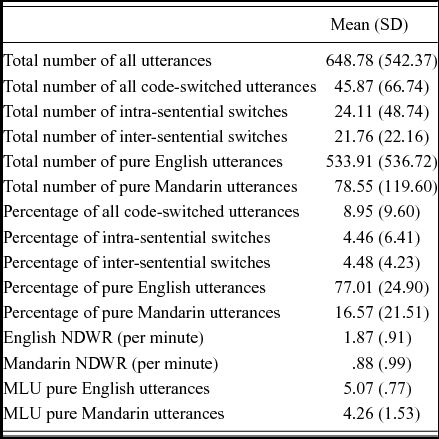
Note: The total number of all utterances is the sum of intra-sentential switch utterances, pure English utterances, pure Mandarin utterances, and other utterances such as single proper nouns, translation, and imitation. Inter-sentential switch utterances comprise only pure utterances.
Correlational analyses
As some of the measures of interest were not normally distributed, Spearman correlations were used. Partial correlations, controlled for age, between the various measures of language competency and percentage of code-switched utterances were conducted (Table 3). No significant correlations between measures of English competency (MLU of pure English utterances, English NDWR per minute, and English PPVT) and percentage of code-switched utterances were found. Thus, the amount of code-switched utterances was not significantly related to both the expressive and receptive measures of English competency. On the other hand, correlations between measures of Mandarin competency (MLU of pure Mandarin utterances, and Mandarin NDWR per minute) and percentage of code-switched utterances were positive and significant, r = .72 and r = .91, respectively, ps < .001, indicating that children who code-switched more also produced Mandarin sentences that are more complex and consist of a larger variety of words than children who code-switched less.
Spearman Partial Correlations between Measures of Language Competency and Percentage of Code-Switched Utterances (controlled for age).
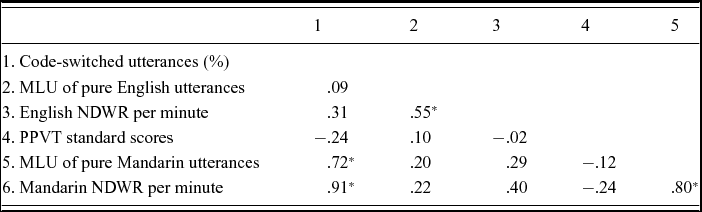
*Bonferroni corrected p value = .003
Do children code-switch because of poor language competency?
If children code-switch because they are weak in a language, then their language competency (i.e., NDWR per minute and PPVT) would negatively predict the amount of code-switching (i.e., percentage of code-switched utterances) they engaged in. To test this hypothesis, two multiple hierarchical regressions were conducted, one controlled for age and home English exposure, and the other controlled for age and home Mandarin exposure, since home English exposure and home Mandarin Exposure were highly negatively correlated with each other (r = −.96, p < .001). The two control variables were entered in Step 1 and the language competency variables were entered in Step 2. We noted that the field has not reached a consensus about the usefulness of MLU in measuring language complexity in children aged 5 to 6 years old. Nevertheless, separate regression analyses were conducted with and without MLU as one of the language predictors and similar results were obtained. Given also that NDWR per minute was highly correlated with MLU (rs = .55 to .81, ps < .01), we thus presented the regression analyses that included only NDWR per minute as a language predictor of code-switching. The change in R2 was significant in Step 2 for both regression models (see Table 4a for regression analysis controlled for age and home English exposure, and Table 4b for regression analysis controlled for age and home Mandarin exposure). Both final regression models significantly predicted the percentage of code-switched utterances, F(5, 30) = 11.87, p < .001 (home English exposure), and F(5, 30) = 11.79, p < .001 (home Mandarin exposure), accounting for 66.4% and 66.3% of the variance, respectively. However, only Mandarin NDWR per minute significantly and positively predicted the percentage of code-switched utterances, over and beyond age and home language exposure: β = .79, t(30) = 5.09, p < .001 (home English exposure), and β = .76, t(30) = 5.34, p < .001 (home Mandarin exposure). English NDWR per minute and PPVT were not significant predictors of the percentage of code-switched utterances (ps > .10).
Summary of Hierarchical Regression Analysis for Language Competency Variables Predicting Percentage of Code-Switched Utterances when Home English Exposure is controlled for.

*p < .05, **p < .01, ***p < .001
Note: Similar results were obtained if Mandarin MLU and English MLU were included in Step 2: Mandarin NDWR per minute remained significant (β = .50, t(28) = 3.00, p =.006) while English NDWR per minute and PPVT standard scores remained non-significant (β = .17, t(28) = 1.34, p = .19 and β = −.04, t(28) = −.36, p = .72, respectively).
Summary of Hierarchical Regression Analysis for Language Competency Variables Predicting Percentage of Code-Switched Utterances when Home Mandarin Exposure is controlled for.
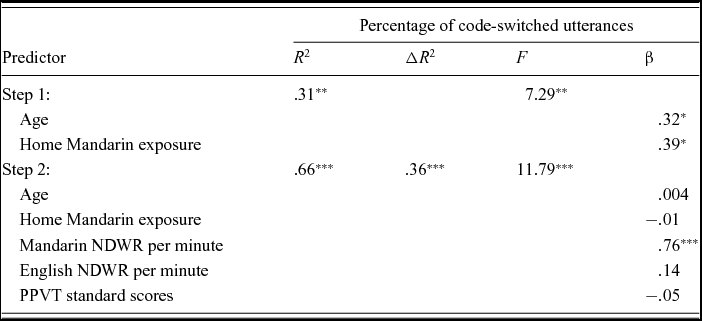
*p < .05, **p < .01, ***p < .001
Note: Similar results were obtained if Mandarin MLU and English MLU were included in Step 2: Mandarin NDWR per minute remained significant (β = .46, t(28) = 2.85, p =.008) while English NDWR per minute and PPVT standard scores remained non-significant (β = −.20, t(28) = 1.30, p = .21 and β = −.02, t(28) = −.17, p = .87, respectively).
Does code-switching affect language competency?
Another important question that the current literature has not yet been able to address is whether code-switching would negatively affect language development in bilingual children. Here, we analyzed teachers’ ratings of the children's English and Mandarin competency approximately six months after the observation sessions. First, Spearman correlation analyses (controlled for age) between measures of language competency, percentage of code-switched utterances, and teachers’ ratings were conducted. Teachers’ ratings of both English and Mandarin competency were positively correlated with the various measures of language competency and code-switched utterances, except English PPVT (see Table 5 and 6). Next, separate three-step hierarchical regression analyses were used to examine whether the percentage of code-switched utterances and the other measures of language competency obtained during the observation sessions (i.e., time 1 - T1) predicted teachers’ ratings of language competency 6 months later (i.e., time 2 - T2). Age was entered in Step 1 as a control variable. Percentage of code-switched utterances at T1 was entered in Step 2, to examine whether this variable is significant in predicting teachers’ ratings of language competency at T2 on its own (controlled for age). Finally, language competency variables at T1 (i.e., NDWR per minute and PPVT for English) were added in Step 3 as predictors of teachers’ ratings of language competency at T2. As with earlier regression analyses, we obtained similar results with and without MLU as one of the language predictors, thus we included only NDWR per minute, and not MLU, as one of the predictors of teachers’ ratings of language competency in our final regression analyses.
Spearman Partial Correlations between Measures of English Language Competency, Percentage of Code-Switched Utterances and Teachers’ Ratings of English Language Competency (controlled for age).
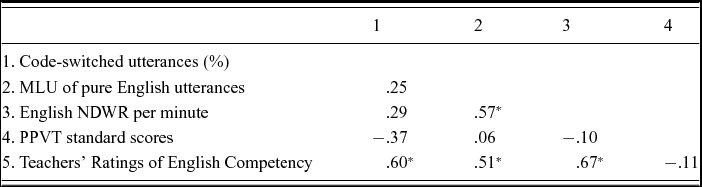
*Bonferroni corrected p value = .005
Spearman Partial Correlations between Measures of Mandarin Language Competency and Percentage of Code-Switched Utterances and Teachers’ Ratings of Mandarin Language Competency (controlled for age).
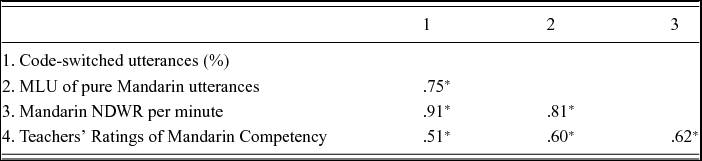
*Bonferroni corrected p value = .008
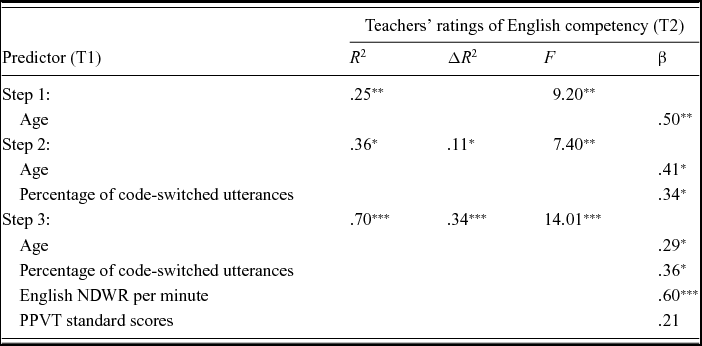
For teachers’ ratings of English competency at T2, the change in R2 was significant when the percentage of code-switched utterances at T1 was added in Step 2 and when English NDWR per minute and PPVT standard scores at T1 were added in Step 3 (see Table 7). The final regression model with four predictors at T1 (age, percentage of code-switched utterances, English NDWR per minute, and PPVT) significantly predicted teachers’ ratings of English competency at T2, F(4, 24) = 14.01, p < .001, and accounted for 70.0% of the variance. Both percentage of code-switched utterances and English NDWR per minute at T1 were significant predictors of teacher's ratings of English competency at T2, β = .36, t(24) = 2.81, p = .01, and β = .60, t(24) = 5.15, p < .001, respectively.
Summary of Hierarchical Regression Analysis for Language Variables at Time 1 (T1) Predicting Teachers’ Ratings of English Competency at Time 2 (T2).
*p < .05, **p < .01, ***p < .001
Note: Similar results were obtained if English MLU was included in Step 3: Percentage of code-switched utterances and English NDWR per minute remained significant (β = .34, t(23) = 2.67, p = .014, and β = .50, t(23) = 3.03, p = .006, respectively), while PPVT standard scores remained non-significant (β = .17, t(23) = 1.34, p = .19).
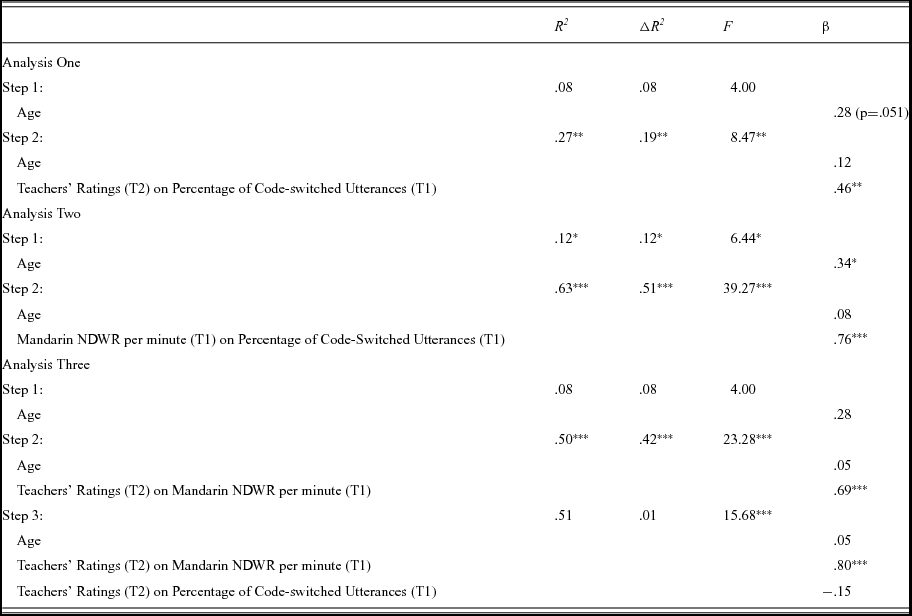
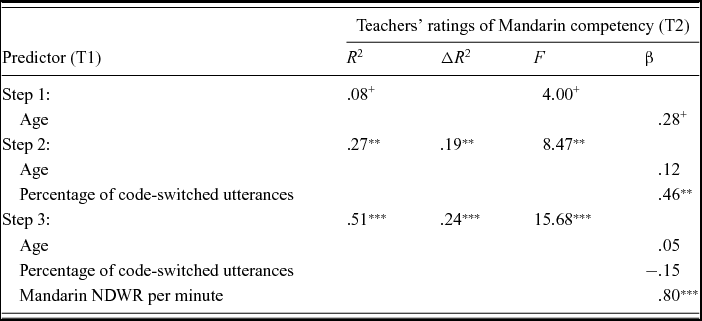
For teachers’ ratings of Mandarin competency at T2, the change in R2 was also significant when the percentage of code-switched utterances at T1 was added in Step 2, and when Mandarin NDWR per minute at T1 was added in Step 3 (see Table 8). The final regression model with three predictors at T1 (age, percentage of code-switched utterances, and Mandarin NDWR per minute) significantly predicted teachers’ ratings of Mandarin competency at T2, F(3, 46) = 15.68, p < .001, and accounted for 50.6% of the variance. Mandarin NDWR per minute at T1 significantly predicted teachers’ ratings of Mandarin competency at T2, β = .80, t(46) = 4.73, p < .001. While percentage of code-switched utterances at T1 was a significant predictor of teachers’ rating of Mandarin competency at T2 in Step 2, it was no longer significant when Mandarin NDWR per minute was added to the model in Step 3.
Summary of Hierarchical Regression Analysis for Language Variables at Time 1 (T1) Predicting Teachers’ Ratings of Mandarin Competency at Time 2 (T2).
*p < .05, **p < .01, ***p < .001, +p = .051
Note: Similar results were obtained if Mandarin MLU was included in Step 3: Mandarin NDWR per minute remained significant (β = .68, t(45) = 3.45, p =.001), while percentage of code-switched utterances remained non-significant (β = −.18, t(45) = −1.06, p = .29).
As percentage of code-switched utterances was no longer significant after Mandarin NDWR per minute was added to the model, it is possible that Mandarin NDWR per minute mediated the relationship between teachers’ ratings of Mandarin competency and code-switched utterances. A mediation analysis was conducted using a four-step approach in hierarchical regressions (Baron & Kenny, Reference Baron and Kenny1986). Controlled for age, the percentage of code-switched utterances and Mandarin NDWR per minute at T1 individually predicted teachers’ ratings of Mandarin competency at T2, β = .46, t(47) = 3.47, p = .001, and β = .69, t(47) = 6.27, p < .001, respectively (see Figure 1 and Table A2 for the detailed regressions). The percentage of code-switched utterances also significantly predicted Mandarin NDWR per minute at T1, β = .76, t(47) = 7.98, p < .001. However, the percentage of code-switched utterances was no longer significant when Mandarin NDWR per minute was controlled for, β = −.15, t(45) = −.86, p = .39. Thus, Mandarin NDWR per minute at T1 fully mediated the relationship between percentage of code-switched utterances at T1 and teachers’ ratings of Mandarin competency at T2. The mediation effect of Mandarin NDWR per minute at T1 suggests that the amount of code-switched utterances indirectly leads to higher levels of Mandarin competency six months later through higher Mandarin NDWR per minute during the observation period.
Mediation effect of Mandarin NDWR per minute.

4. General discussion
The present study investigated the relationship between children's code-switching behaviour and their language competency in preschool settings. Five- to six-year-old English–Mandarin bilinguals were observed across five days in their childcare centers. The types and amount of code-switched utterances produced by children in their daily conversations, along with their NDWR per minute and MLU for English and Mandarin were measured and analyzed. In addition to the observation sessions, children were administered the English PPVT, and teachers were asked to rate the children's English and Mandarin language competency six months after the observation sessions.
Despite lower levels of proficiency in expressive Mandarin as compared to expressive English, results indicated that the number of code-switched utterances was positively related to Mandarin expressive language competency (NDWR per minute), over and above home language exposure. In other words, children who code-switched more tended to produce a larger variety of Mandarin words, even though this bilingual population is less dominant in Mandarin compared to English. In addition, English language competency (both expressive and receptive) was not significantly related to the amount of code-switched utterances. This is consistent with recent studies that showed that code-switching is not a result of language incompetency (e.g., Cantone, Reference Cantone2007). Most importantly, analyses conducted with teachers’ ratings of children's language competences for Mandarin and English showed that the amount of code-switched utterances (over and beyond the current levels of expressive English) positively predicted children's English and Mandarin competency six months later, but the latter relationship is mediated by their current levels of expressive Mandarin.
These findings illustrate that, contrary to popular belief, code-switching in bilingual children does not signal linguistic incompetency. Rather, code-switching is positively associated with language competency. These findings put forward the possibility that children may be using code-switching as a platform to aid the development of their languages, especially the weaker one. Young bilingual children may not be able to express themselves fully and accurately in both of their languages yet. Code-switching thus allows them to explore and use both languages (the weaker language with the stronger one) while keeping the intended meaning intact. This is in line with the Ivy Hypothesis, which argues that children code-switch to improve their weaker language by using the grammatical structure they have acquired in their stronger language (e.g., Bernardini & Schlyter, Reference Bernardini and Schlyter2004; Gawlitzek-Maiwald & Tracy, Reference Gawlitzek-Maiwald and Tracy1996). Bernardini and Schlyter (Reference Bernardini and Schlyter2004) found that the majority of the mixed utterances produced by Swedish–Italian and Swedish–French bilingual children consisted of single words or simple phrases in their weaker language combined with more complex phrases from their stronger language. Additional support for this hypothesis comes from a study illustrating syntactic transfers of wh in-situ interrogatives and prenominal relative clauses from Cantonese to English in a Cantonese–English bilingual child during the period when his Cantonese syntactic development was significantly ahead of his English syntactic development (Yip & Matthews, Reference Yip and Matthews2000). Thus, code-switching can be used as a scaffold for the weaker language, where more complex syntactic structures from the stronger language are used in combination with lexical items and simpler syntactic structures from the weaker language.
This argument that code-switching may be helpful to young bilingual learners is not dissimilar to that proposed by researchers on translanguaging. According to Garcia and Wei (2013), translanguaging refers to the idea that bilingual speakers have one linguistic repertoire that holds concepts socially constructed from both languages. Research on translanguaging, which focused mainly on the use of translanguaging within the classroom context, have found that translanguaging facilitates deeper thinking in bilingual students, and can be used by teachers to aid bilingual speakers in subjects taught in their weaker language (e.g., Creese & Blackledge, Reference Creese and Blackledge2010; Hornberger & Link, Reference Hornberger and Link2012). Teachers can leverage on the bilingual students’ stronger language to provide the students with a platform to participate, elaborate on their thought processes and raise questions. This is similar to our proposal that code-switching allows young bilingual children to leverage on their stronger language in daily communications and dual language learning contexts. It provides young bilingual children with an alternative tool to express their thoughts, feelings, and ideas. For these young learners of two languages, code-switching can be used as a form of communicative support and as a way to expand these emergent bilinguals’ understanding and linguistic competency.
This follows that, despite mounting concerns about the potential negative impacts of parental code-switching on an infant's language development (Byers-Heinlein, Reference Byers-Heinlein2013), children's code-switching behaviour itself does not necessarily indicate linguistic incompetency, nor will it negatively affect children's language development. Research has shown that language input from parents and teachers are critical to children's language development, in terms of vocabulary size (Bowers & Vasilyeva, Reference Bowers and Vasilyeva2011; Hammer, Davison, Lawrence & Miccio, Reference Hammer, Davison, Lawrence and Miccio2009; Hoff, Reference Hoff2006; Hoff, Core, Place, Rumiche, Señor & Parra, Reference Hoff, Core, Place, Rumiche, Señor and Parra2012; Hurtado, Marchman & Fernald, Reference Hurtado, Marchman and Fernald2008), grammatical development (Blom, Reference Blom2010; Bohman, Bedore, Peña, Mendez-Perez & Gillam, Reference Bohman, Bedore, Peña, Mendez-Perez and Gillam2010) and comprehension skills (Dickinson & Porche, Reference Dickinson and Porche2011; Huttenlocher, Vasilyeva, Cymerman & Levine, Reference Huttenlocher, Vasilyeva, Cymerman and Levine2002). However, children's usage of the language(s) is also an important factor in language development. Studies, for example, found that increasing the use of a second language is associated with improved proficiency in that language (Freed, Segalowitz & Dewey, Reference Freed, Segalowitz and Dewey2004; Martinsen, Baker, Bown & Johnson, Reference Martinsen, Baker, Bown and Johnson2011). Thus, while it remains important that the language input children receive should accurately reflect the linguistic characteristics of the target languages, bilingual children's regular use of both languages should be highly encouraged too, even if it involves switching between the two languages. Our results elucidate that the act of code-switching by children may have provided them with a way to engage both their languages more frequently, particularly the weaker language. To put it simply, code-switching in a multilingual environment may present bilingual children with opportunities to use both their languages in ways that a pure language environment alone would not be able to provide them with. This, in turn, has a positive outcome on language development with improved proficiency.
Language and literacy development guidelines from the local curriculum framework were used in this study to create a teacher's rating scale to measure children's language competencies. This scale is relevant to the local context and it captures the major receptive and expressive language proficiency requirements as expected of a 6-year-old. Similar uses of teachers’ assessment of children's language skills are often employed in both research and educational settings (e.g., August, Shanahan & Escamilla, Reference August, Shanahan and Escamilla2009; Sundberg & Partington, Reference Sundberg and Partington1998). Nevertheless, this scale has some limitations. First, the rating scale is not a standardized measurement of language competency. Second, teachers’ ratings could be subjective and were based on retrospective reporting. Thus, measures of children's language competency based on teachers’ ratings may not reflect children's full extent of their language ability. However, finding an assessment tool that has been validated for use in multiple languages, in this case English and Mandarin, is a challenge. Standardized measures of language ability such as the Peabody Picture Vocabulary Test (Dunn & Dunn, Reference Dunn and Dunn2007), subtests of Woodcock-Johnson Tests of Achievement (Woodcock, McGrew & Mather, Reference Woodcock, McGrew and Mather2001), and Clinical Evaluation of Language Fundamental Preschool (CELF; Wiig, Secord & Semel, Reference Wiig, Secord and Semel2004) are available in English but not in Mandarin. Even if they are available in Mandarin, there remains a possibility that the materials of these language assessment tools may not be appropriate for the local children and thus may not accurately reflect their true language ability (Brebner, Rickard-Liow & McCormack, Reference Brebner, Rickard-Liow, McCormack and Lind2000; Carter, Lees, Murira, Gona, Neville & Newton, Reference Carter, Lees, Murira, Gona, Neville and Newton2005). Furthermore, researchers have not agreed on the assessment tools that are best for assessing the language ability of bilingual children (e.g., Bedore & Pena, Reference Bedore and Pena2008; Gutiérrez-Clellen, Reference Gutiérrez-Clellen2002; Saenz & Huer, Reference Saenz and Huer2003), and published self-report tools are not appropriate for use by children (e.g., LEAP-Q; Marian, Blumenfeld & Kaushanskaya, Reference Marian, Blumenfeld and Kaushanskaya2007). Taking these challenges into consideration, we believe that our teacher's rating scale of language competency is a relatively appropriate language measure in this context, albeit with limitations. Future studies should consider replicating the present study with a different population of children where standardized language assessment tools in both languages are available and well tested.
It is worth noting that a bilingual child's exposure to his or her two languages may vary a lot during six months due to external factors, such as changed input at home or at school, or internal factors, such as when the child identifies himself or herself more with one language's culture or when the child refuses to speak in one language, Such factors may affect a child's code-switching behavior as well. While we agree that bilingualism could vary substantially in an individual within six months, we believe that the bilingual status of the children in our study is relatively stable throughout the study. The children in our study had been in the same preschool for the past 6 months with no known significant changes to their family or parental background, or to their preschool routines and teachers. Thus, it is unlikely that these children experienced a significant change in their language environments. Nevertheless, future studies should consider collecting information about possible external and internal factors affecting children's language balance during the period of study, such as through additional parental and teachers’ surveys.
We have earlier raised the possibility that the use of MLU to assess children's language complexity in this study may be limited due to a ceiling in age and morpheme count. Compounding this issue is the challenge of computing MLU as an indicator of language competence across two typologically different languages like English and Mandarin. The difficulty in using MLU to assess children's English language complexity is particularly noted in the case of Singapore Colloquial English (SCE). Two common features of SCE are the absence of subject, for example, (e.g., “(That car) very expensive, you know”) and the deletion of the copula ‘be’ (e.g., “that boat ø very short one”) (Leimgruber, Reference Leimgruber2011). Thus, the use of English MLU to assess children's English language complexity in this context may be limited. Future investigations examining whether code-switching affects children's syntactic development of their two languages could employ more specific measures other than MLU, e.g., an elicited imitation task to assess sentence formation (Lust, Chien & Flynn, Reference Lust, Chien, Flynn and Lust1987; Lust, Flynn & Foley, Reference Lust, Flynn, Foley, McDaniel, McKee and Cairns1996), the truth-value judgment task (Lust & Blume, Reference Lust and Blume2016), or an adaptation of adult syntactic complexity tasks that use not just length measures but also ratio measures such as sub-clauses/sentence (e.g., Bulté & Housen, Reference Bulté and Housen2012; Norris & Ortega, Reference Norris and Ortega2009).
Children code-switch for various reasons. Future studies can tap on multiple age groups or conduct a longitudinal study to further investigate the developmental shifts in the use of code-switched utterances. For example, studies that have found that children engaged in code-switching behavior in order to fill their lexical gaps considered younger children typically around or before the age of 3 years (Cantone, Reference Cantone2007). Studies that have found that children make use of code-switches for sociocultural or pragmatic purposes have focused mainly on older children (Chung, Reference Chung2006; Reyes, Reference Reyes2004; Vu et al., Reference Vu, Bailey and Howes2010). It is logical that very young bilingual children first start off with a limited lexicon, and would, therefore, code-switch when they do not have the translation equivalent of a particular concept (De Houwer, Reference De Houwer, Kroll and de Groot2005; Cantone, Reference Cantone2007). After acquiring a sizeable lexicon in both languages and learning their sociolinguistic rules and cultural practices, older bilingual children would begin to code-switch depending on the social demands of the conversation (Nicoladis & Genesee, Reference Nicoladis and Genesee1997). The children in our study were 5 to 6 years of age and were likely aware, to some degree, of the sociolinguistic rules used in their community. Including multiple age groups in future studies would shed light on the developmental trends in bilingual children's code-switching behavior.
In conclusion, the goal of the present study was to further elucidate the relationship between bilingual children's code-switching behavior in their larger language environment and their linguistic competency. Debate about whether bilingual children's code-switching behavior reflects their linguistic incompetency is ongoing. The present study is the first attempt to investigate this relationship using a quantitative approach. Findings from the present study provide counter-evidence against the linguistic incompetency hypothesis – there was no indication that bilingual children's code-switching behavior was a result of their linguistic incompetency. Instead, bilingual children's code-switching behavior suggests greater language competency. The findings from the present study provide an alternative perspective on the linguistic incompetency hypothesis – that, far from being debilitating, code-switching plays an important and positive role in language development of bilingual children, especially in the context of the larger language environment.
Supplementary material
To view supplementary material for this article, please visit https://doi.org/10.1017/S1366728917000335
Questionnaire for Teacher's Ratings of Language Competency.
Summary of Mediation Analysis of Mandarin NDWR Per Minute.