

INTRODUCTION
Recent research suggests that the rise of born again Christian movements across sub-Saharan African states has significant implications for democratization, ethnic politics, and civil society in the region (c.f., McCauley Reference McCauley2013; Reference McCauley2014; Grossman Reference Grossman2015; McClendon and Riedl Reference McClendon and Riedl2015). Indeed, a broad literature in political science has demonstrated that religious views can influence individuals’ levels and forms of political participation, partisan identities, policy preferences, and political beliefs.Footnote 1 Yet, despite the well-noted significance of religion for politics in other parts of the world, comparative political scientists have tended to leave questions about the political role of religion—especially new African Pentecostal movements—understudied.Footnote 2 One partial explanation for this lack of attention may stem from the dearth of reliable, relevant survey data on Pentecostals political attitudes and behavior. As we discuss below, existing surveys that include questions about politics have generally lacked large samples of Pentecostals. By contrast, surveys that focus on minority religious groups have often excluded questions about partisan politics.
The main contribution of this paper is to advance the understanding of Pentecostal Christianity and African politics by presenting and analyzing original survey data that allow us to address questions about Pentecostal political preferences and participation in a contemporary sub-Saharan context. Specifically, we explore relationships between Pentecostal church membership, partisan preferences, and formal political behavior, as well as Pentecostals’ degree of geographic dispersal (concentration) in Zambia (N = 1,500), a majority-Christian nation.
We find that Zambian members of Pentecostal churches were generally more politically interested and engaged than all other Zambians, including religious and non-religious alike. Despite high levels of political engagement, however, Pentecostals in our sample were less likely to contact political officials. This finding is consistent with recent qualitative (c.f., Haynes Reference Haynes2015a) and experimental findings (c.f., McCauley Reference McCauley2013; Reference McCauley2014) about political authority in Pentecostal congregations, which we discuss in Section 2. We also find suggestive evidence that non-urban Pentecostals were geographically concentrated and reported relatively unified partisan preferences. This is an important finding, as it implies that Pentecostals may constitute meaningful voting blocs; it is also possible that Pentecostalism spreads more rapidly in close-knit communities with shared political identities. Overall, our findings indicate that a plethora of valuable insights can be gained through additional panel data collection and analysis that builds upon the findings presented here.
Below, we clarify what we mean by Pentecostalism and explain its relationship to other born-again movements and Christian traditions. We then delimit the scope of “political” attitudes and behaviors addressed in this paper, namely formal (i.e., conventional) behaviors such as voting, and attitudes such as partisan preference. In studying formal political participation, however, we do not seek to undercut the rich body of qualitative scholarship that explores the dynamic boundaries of the “political” with respect to African religion. We then introduce the case of Zambia and describe our data and methodological approach in Section 5. In Section 6, we present key findings including both descriptive statistics and regression analysis of the original survey data. In Section 6.4, we put these findings in broader, cross-national context by exploring the best available cross-national data on relevant topics. We conclude with a discussion of future research.
CONTEXT AND DEFINITIONS
Sub-Saharan Africa has experienced a demographic explosion of Christianity in recent decades: Whereas only two contemporary sub-Saharan states were majority-Christian in 1950 (notably, the settler colonies of South Africa and Namibia), 21 were majority-Christian by 1970, and at least 25 of the region's 40 largest countries are majority-Christian today (World Christian Database (WCD) Reference Johnson and Zurlo2015).Footnote 3 The growth of Christianity was spurred in part by the growth of Independent, Pentecostal, and Charismatic Christian movements (defined below). Since 2010, the Pew Forum (2010) notes that Pentecostal and Charismatic Christianity have been the fastest growing religious groups in sub-Saharan Africa, with estimates suggesting that as many as 26% of the region's 565 million Christians identify as Pentecostal or neo-Pentecostal, and nearly one in 10 African Christians are self-identified Charismatic members of the older Catholic or mainline Protestant churches (Pew Forum 2010; WCD Reference Johnson and Zurlo2015).Footnote 4
Before defining these traditions, it should be emphasized that born again traditions often overlap, and some believers are “doubly affiliated,” meaning that they regularly attend services at multiple churches (c.f., Cheyeka et al. Reference Cheyeka, Hinfelaar and Udelhoven2014).Footnote 5 Some researchers advocate for more research on the diversity of beliefs and practices within Pentecostal, Charismatic, and Evangelical traditions (Ibid.). In this paper, we follow influential scholarship (c.f., Freston Reference Freston2004; Reference Freston, Sanneh and McClymond2016; Ranger Reference Ranger2008), as well as leading theologians and demographers (Bebbington Reference Bebbington1989; Pew Forum 2010; WCD Reference Johnson and Zurlo2015) in characterizing churches as Pentecostal if they endorse and promote personal relationships with God, as well as members actively receiving “the gifts of the Holy Spirit,” such as prophecy, faith healing, and glossolalia. Pentecostals may therefore belong to one of the older, transnational, self-described Pentecostal churches (e.g., Assemblies of God), or one of the smaller locally initiated African Pentecostal churches, many of which were established since the early 1990s (c.f., Pew Forum 2010; Haynes Reference Haynes2015a).
Another key characteristic of Pentecostalism in many African contexts concerns traditional African religion and spiritual beliefs. Pentecostal leaders condemn traditional religion, spirituality, and even some tribal customs as demonic (c.f., Ayegboyin and Ishola Reference Ayegboyin and Ishola1997; Meyer Reference Meyer2004). This positions Pentecostal churches in opposition to African Independent Churches, or AICs, which are distinguished by their reverence for African traditions, such as honoring ancestor spirits. Hence, Pentecostal Christianity is quite distinct from AICs, such as Zion or Apostolic churches.
Similarly, religious studies scholars and demographers distinguish Pentecostalism from Evangelical Christianity, which is typically associated with older mission traditions, such as the Baptist, Methodist, and Lutheran churches (c.f., WCD Reference Johnson and Zurlo2015). With a capital “e,” Evangelicalism refers to born again Protestants who emphasize personal relationships with God but believe that gifts of the Holy Spirit were only experienced in biblical times. In this way, Evangelicals differ from Pentecostals, for whom experiencing the gifts of the Holy Spirit (e.g., speaking in tongues, prophesying, and engaging in faith healing) are central worship practices. Additionally, Pentecostals are distinct from Charismatic Christians, i.e., members of Catholic or mainline Protestant churches (e.g., Anglican-derived), who embrace beliefs and practices associated with Pentecostalism, but do so from within Charismatic sub-groups of these older churches (Ibid).Footnote 6
Though these categorical distinctions sometimes blur in believers’ lives, they are important for social science research. For instance, although the beliefs and practices of believers may overlap across Christian traditions, church members support and are exposed to widely differing religious institutions, which also tend to have different political affiliations and roles in public life. Consider, for instance, variation in transnational ties, hierarchical leadership structure, and training requirements for clergy in locally initiated Pentecostal, older Evangelical, and the Catholic Church, respectively. There is evidence that such institutional differences matter for religious communities (c.f., Kalyvas Reference Kalyvas2000; Sperber Reference Sperber2016; also see Patterson and Kuperus Reference Patterson and Kuperus2016).
Additionally, embracing the ideal type definitions described above enables scholars to use survey research methods to gain important insights into the possible relationships between religion and politics (e.g., partisanship and participation in elections). While surveys alone cannot comprehensively illuminate complex religio-political dynamics,Footnote 7 social scientists should nevertheless use survey research to study religion and African politics, much as we study religion and politics in other parts of the world. To date, however, few if any large-scale academic survey studies have reliably identified and examined the political interest, engagement, and partisanship of African Pentecostals.Footnote 8
Part of the explanation for this lacuna is that the Afrobarometer Survey—the major cross-country survey of individual African citizens that asks about partisanship and conventional forms of political engagement—has not reliably distinguished Pentecostals from Charismatics and other Christians. Specifically, the Afrobarometer records whether a respondent identifies simply as Christian or as a Catholic, Anglican, Pentecostal, Orthodox, African Independent, etc., and allows respondents to select one of these undefined religious labels. Since Pentecostals consider their churches to be non-denominational, Pentecostals may self-identify simply as Christian (not “Pentecostal”). Yet, lapsed Christians also identify broadly as “Christian,” especially if they lack active church membership. As a result, the key response categories of “Christian” and “Pentecostal” are difficult to interpret in existing data. Moreover, if scholars restrict analysis to the self-identified “Pentecostals” in Afrobarometer samples, there are typically too few observations for meaningful analysis.
Alternatively, the World Values Survey and the Pew Forum's 2010 survey offer far more refined measures of religious affiliation and identity, but do not ask about partisanship. These studies also cover dramatically fewer country-years in the sub-Saharan region than Afrobarometer. Therefore, the main contribution of this article is to examine formal political correlates of Pentecostal church membership using original survey data collected with this purpose in mind. In Section 6.3 we compare our results to the few questions that the Pew Forum's recent surveys posed regarding formal political participation.
What We Know About Pentecostalism and African Politics
Despite the lack of survey research on the topic, an extant body of ethnographic, historical, and some more recent experimental research describes some of the socio-cultural implications of Pentecostal growth in the region. This literature makes two broad points that are particularly relevant here. First, anthropologists have documented that African Pentecostals often reject the liberal distinction between the “personal” and the “political” (for discussion, see contributions in Bompani and Valois Reference Bompani and Valois2017b). Rather, Pentecostals often view the practice of their faith, and especially their attempts to evangelize (spread) Pentecostalism to others, as their primary mode of “political” engagement. These ideas flow logically from the belief that formal politics (i.e., conventional party politics and modes of political participation, like voting) is largely tainted by corruption, and can only be transformed into something morally pure after society members themselves embrace transformative religious change, i.e., by becoming “born again” and accepting Jesus Christ as their savior, as Pentecostals do. In this sense, the personal—the way one lives their life—is political insofar as it reflects moral commitments that define individuals’ conduct in society. Particularly in states where governments are associated with mass corruption, violence, repression, or dysfunction, such an individualistic, pious view has had an intuitive appeal for many.
Interestingly, however, as Pentecostals have grown in number in some sub-Saharan states, they have become increasingly visible in formal or “conventional politics” (Pew 2006; 2010). This is often explained as a more coordinated effort by umbrella associations of church leaders who believe that if their co-religionists are elected or appointed to powerful positions in government, they will be able to positively influence governance. As a new, interdisciplinary volume explored (Bompani and Valois Reference Bompani and Valois2017b), these Pentecostals seek to establish a new kind of “Christian citizenship” in their countries—often by having elected leaders declare the country “officially Christian,” and by placing morally upright Christians in positions of power to lead the country. Pentecostals in many African states seek to promote their religious beliefs by getting fellow Pentecostals elected, not only because they believe Pentecostals will abstain from corruption, but because they also want Pentecostal politicians to use the organs of the state to help promote born again Christian values as a salve for the nation's ills (c.f., Gifford Reference Gifford1998; Bompani and Valois Reference Bompani and Valois2017a).
Without disputing the findings described above, we seek to complement them in this article by exploring the possibility that Pentecostal citizens express distinctive views about electoral politics (also termed conventional politics), and engage in unique patterns of participation in formal politics. Specifically, we consider individuals’ self-reported views about different parties and forms of government, their willingness to participate in electoral politics (i.e., by identifying with a party, voting, or contacting their representatives), and the degree to which they report feeling interested in or following news about formal political outcomes. Of course, it is possible that even if Pentecostals share similar partisan preferences and patterns of participation, they may also perceive these forms of participation as less important than evangelizing (seeking to spread their religious beliefs). Although we investigate the former kind of politics in this paper, we do not contest the significance of the latter, nor do we suggest that more pious forms of “politics” are of diminished significance for Pentecostals who engage actively in formal politics.
The second important point to note here relates to the first: Mindful of local variation and changes in African Pentecostalism over time, these studies also tend to emphasize a dualism or ambivalence in African Pentecostals’ relationship to (conventionally defined) political attitudes and behaviors (c.f., Marshall Reference Marshall2009). Summarizing this literature, Haynes (Reference Haynes2015a) concludes that “Pentecostal ritual life both draws believers into democratic, open-ended and largely egalitarian religious communities, and produces clear distinctions between individuals, resulting in differentiated, hierarchical structures” (Reference Haynes2015a, p. 274). Contemporary African Pentecostalism is thus seen to embody “a tension between democratic and authoritarian instantiations of the Holy Spirit” (Ibid., 289; also see Kalu Reference Kalu2008; Ranger Reference Ranger2008; Marshall Reference Marshall2009; Haynes Reference Haynes2015b). Extant research, in other words, implies that Pentecostalism may simultaneously encourage pro- and anti-democratic political influence simultaneously. Far from making it politically irrelevant, this ambivalence opens up important new questions about how Pentecostal movements may eventually influence the fate of liberal democratic ideals in many backsliding African electoral democracies.
Descriptive and experimental studies from Kenya are consistent with the idea that Pentecostals embrace new pairings of political attitudes. McClendon and Riedl (Reference McClendon and Riedl2015), for instance, evaluated the impact of Pentecostal messages on individuals’ reported aversion to inequity and their self-efficacy. Self-efficacy is often associated with political participation and, by extension, democracy. By contrast, tolerance of inequity is often linked to tolerance for antidemocratic elite behavior. The authors found that randomly exposing individuals to Pentecostal messages caused immediate boosts in self-efficacy and decreased aversion to inequity. Hence, these findings resonate with the apparent paradox of Pentecostal political engagement: On the one hand, Pentecostals may develop social attitudes and behavioral tools that make them more efficacious as individuals, but their religious praxis may simultaneously undermine an interest in greater equality.
A partial explanation for this paradox is found in a second strand of the literature, which focuses on top-down, seemingly quid-pro-quo relationships between some political elites and Pentecostal leaders (c.f., Maxwell Reference Maxwell2000; Gifford Reference Gifford2009; Sperber Reference Sperber2016). Although these studies acknowledge that instrumental reasons never fully eclipse non-instrumental and expressive reasons for religious participation,Footnote 9 they argue that instrumental elite linkages nevertheless facilitate clientelism and antidemocratic political practices. In Cote D'Ivoire, for instance, Pentecostal elites with ties to ruling politicians promoted electoral violence to defend the politicians’ tenure in office (Mayrargue Reference Mayrargue, André and Marshall-Fratani2001; McGovern Reference McGovern2011, 67–101). In other African countries, favored Pentecostal leaders have been tied to electoral manipulation and illiberal constitutional amendments (c.f., Smith Reference Smith2010, 214; Gifford Reference Gifford2004; Cheyeka Reference Cheyeka, Jan Bart, Hinfelaar and Macola2008). In countries like Zambia, Pentecostal leaders publicly admitted that their brethren promoted the ruling party and decried opposition leaders before elections in hopes of “political recognition,” such as government appointments, cash, media access, and public promotion.Footnote 10 At other times, Pentecostal and political leaders advocated illiberal reforms, such as restricted LGBTQ rights and declaring nations officially Christian, tactics that increased the popularity of elites’ religious groups and political parties. Campaigns against LGBTQ rights have been so prominent in recent years that van Klinken and Chitando (Reference Van Klinken and Chitando2016) described them as a new form of Pentecostal nationalism, wherein “homosexuality is considered to be a threat to the purity of the nation and is associated with the Devil” (Reference Van Klinken and Chitando2016, p. 259; also see Grossman Reference Grossman2015; Bompani and Valois Reference Bompani and Valois2017a).
Again, the cross-disciplinary studies cited above do not claim that instrumental reasoning trumps expressive motivation for individual Pentecostals; rather they illuminate the simultaneous reality that many prominent Pentecostal leaders have engaged in illiberal partnerships with African politicians. As in David Maxwell's historical research on Pentecostalism in Zimbabwe, research on former Kenyan President Daniel Arap Moi, underscored how a political leader's relationship with Pentecostal pastors such as Arthur Kitonga, the founder of one of Kenya's largest Pentecostal churches, enabled politicians to prolong undemocratic policies, and yielded financial and socio-political gains for the Pentecostal elites (c.f., Ranger Reference Ranger2008, p. 82; Gifford Reference Gifford2009).
Implications for Formal Political Participation and Partisanship
Although sub-Saharan states are characterized by low levels of partisan attachment,Footnote 11 research discussed above implies that Pentecostals may be more prone to partisan attachment than their peers. Yet, given significant state-level variation in party institutionalization (Riedl Reference Riedl2014), and an apparent increase in party-level strategies to build allegiant constituencies (Bratton and Kimenyi Reference Bratton and Kimenyi2008; Cheeseman and Larmer Reference Cheeseman and Larmer2015; Gadjanova Reference Gadjanova2015), it seems more reasonable to expect that Pentecostals will constitute voting blocs only where relatively strong parties have cultivated linkages to Pentecostals through elites (pastors).
Unfortunately, questions about the relationship between Pentecostal church membership and partisanship remain unanswered, as scholars lack survey data to address them. The analysis that follows begins to address these questions, an important first step toward future cross-country and time-series analysis. Like other scholars studying politics and religion in the region (c.f., Trinitapoli and Weinreb Reference Trinitapoli and Weinreb2012; Manglos and Weinreb Reference Manglos and Weinreb2013), we present cross-sectional analyses with limited ability to illuminate causal relationships. Rather, our aim in this paper is to address pertinent first-order questions that help justify the expansion of survey research on Pentecostals in the region, such as: Do Pentecostals’ patterns of political participation and partisanship vary systematically from other religious groups? If so, how politically engaged are Pentecostals? Are distinct outcomes driven by religious factors, such as higher religiosity, or other demographic differences across religious groups? To what extent are non-urban Pentecostals concentrated geographically, and do they share consistent voting patterns?
National context is, of course, important for any study that seeks to address these questions. In this paper, we limit our exploration to the single case of Zambia, an overwhelmingly and officially Christian nation. The data we analyze come primarily from (Hern, Forth Coming)’s representative field survey (described below). We also draw on multiple years of mixed-methods field research in Zambia (Sperber, Reference Sperber2016), as well as ethnographic and demographic resources to interpret and contextualize these data. We demonstrate, however, that existing cross-national evidence is broadly consistent with our findings, which implies that our results have some external validity. Further, we offer evidence below that Zambia shares many relevant structural similarities to other sub-Saharan states. Of course, the Zambian case is potentially unique in certain ways, but we have found no evidence that, prima fascie, findings about Pentecostals in the Zambian case should be expected to differ systematically from most other African states. Below we introduce the Zambian case and explain our case selection before detailing our data and methods.
THE CASE OF ZAMBIA: A “CHRISTIAN NATION”
Case Selection
National and regional contexts play important roles in conditioning how religious identities relate to congregants’ social attitudes (McCauley Reference McCauley2014; Manglos-Weber et al. Reference Manglos-Weber, Mooney, Bollen and Roos2016). We therefore interpret our findings with caution and engage the question of external validity in depth in Section 6.3. Additionally, in this section, we briefly consider the ways in which the case of Zambia is similar to and different from other African cases. Zambia shares several broad structural features with other African states, including its historical experiences of relatively peaceful transition from single to multiparty elections after the Cold War (c.f., Gifford Reference Gifford1995) and neoliberal privatization and public-sector retrenchment in the 1990s, which were followed by periods of increased unemployment and inequality (c.f., Gould Reference Gould2010). Also, as in numerous other African states, Zambia's Catholic and mainline Protestant churches played prominent roles in facilitating the country's transition to multiparty electoral democracy in the 1990s (Toft, Philpott and Shah Reference Toft, Philpott and Shah2011, p. 96). In Zambia, the larger established churches had the support of the country's relatively small but notable body of Evangelical churches, which united under an umbrella body called the Evangelical Fellowship of Zambia (EFZ) (Phiri Reference Phiri and Terence2008). That Zambia's first President in the post-Cold War multiparty era was a fervent Evangelical-turned-Pentecostal makes Zambia distinct among African states, but it is worth noting that politicians in countries as far flung as Benin, Cote D'Ivoire, Kenya, Liberia, Malawi, and South Africa have embraced the same kind of outspoken born again public persona in their bids to obtain or maintain political support.
Additionally, like a majority of sub-Saharan states, Zambia is majority-Christian (Pew Forum 2010; WCD Reference Johnson and Zurlo2015). According to Zambia's most recent available census (ZCSO 2012), at least 85% of Zambians identify as Christian. Roughly one in five Zambians identified as Catholic, the largest single denomination or religious group in Zambia. All other Christians in the census were classified only as “Protestant,” with the Anglican-derived United Church of Zambia (UCZ) widely recognized as the largest single Protestant church. As in numerous other sub-Saharan contexts, the share of Zambian Christians grew substantially during the 1980s, and even more rapidly during the 1990s (Pew Forum 2010; WCD Reference Johnson and Zurlo2015). This growth is partly attributed to political and economic deterioration during the 1980s, when many Africans sought out the relative safety and service provision associated with the major churches—a phenomenon documented across many African countries, such as Cameroon, where Bayart (Reference Bayart and Chabal1986) conducted widely resonant research on the church and politics (also see Phiri Reference Phiri1999; Cheyeka Reference Cheyeka, Jan Bart, Hinfelaar and Macola2008; Phiri Reference Phiri and Terence2008).
By the 1990s, it was Pentecostal churches—both old and new—that were growing rapidly (or, as locals often say, “mushrooming”) in many African states, including Zambia (Pew Forum 2010). Converts to Pentecostalism in recent decades appear to come primarily from the older churches, such as the Catholic, mainline Protestant, and possibly also the older Evangelical churches. While the profound religious demographic shifts that took place in many African states in the post-Cold War period remain understudied, evidence in the Zambian case suggests that they were linked to the reintroduction of multiparty politics (Cheyeka Reference Cheyeka, Jan Bart, Hinfelaar and Macola2008; Phiri Reference Phiri and Terence2008; Sperber Reference Sperber2016; Reference Sperber, Barbara and Valois2017). It is to Zambian national politics to which we turn below.
Zambia's Political Context
After gaining independence from Great Britain in 1964, Zambia experienced a brief period of multiparty rule before transitioning to a single party regime under then-president Kenneth Kaunda. Decades later, as the Cold War came to a close and economic crisis rocked the country (Ferguson Reference Ferguson1999), the Catholic and mainline Protestant churches worked alongside the less populous Evangelical churches to pressure Kaunda's one-party state to democratize. In Zambia, these churches operated through larger, denominational umbrella organizations. The Zambian Catholic Church operates through the Zambian Episcopal Conference (ZEC), mainline Protestant churches unite under the Council of Churches in Zambia (CCZ), and the EFZ represents a far more decentralized network of older Evangelical churches, and, increasingly, Pentecostal ones.
Beginning in the 1980s, these three church umbrella organizations supported the Movement for Multiparty Democracy (MMD), an emerging political organization that drew support from miners’ unions, student groups, and some members of the business community. In 1991, incumbent President Kaunda finally agreed to compete in free and fair elections against his political rival, former trade union leader, and fervent Evangelical, Frederick Chiluba. Chiluba ran on the ticket of the new MMD party, which was formed in the image of the MMD movement. After Kaunda suffered resounding defeat at the ballot box, Zambian church leaders mediated the first peaceful transfer of power in the country in over a generation (Carter Center 2006). Some scholars argued that the MMD's landslide victory derived partly from the public “perception that the previous government under Kenneth Kaunda threatened the Church” (Haynes Reference Haynes1996, 97–98).
Like other third-wave founding elections, however, alternation of power did not augur political norms and supporting institutions required for democratic consolidation. Instead, newly elected President Chiluba's administration quickly “deteriorated into a kleptocracy … (in which) the personal interest of the executive eclipsed his stewardship of the common good” (Gould Reference Gould2010, 10). Chiluba's kleptocracy was powered in part by his administration's manipulation of structural adjustment programs: As Chiluba oversaw the privatization of Zambia's massive state-owned mining sector, ruling elites enriched themselves by exploiting the privatization of these formerly public assets. While government officials denied public funds to support social services, allegedly redirecting these public funds for their personal use, Zambian citizens experienced evermore crushing poverty (Gould Reference Gould2010, p. 282). Indeed, just 3 years after Chiluba was elected, Zambia's GDP per capita reached its nadir, worth a mere 54% of its 1967 value (World Bank 2016). Yet, despite this crisis, Chiluba and other MMD politicians were re-elected in 1996.
How did the Chiluba administration weather the socio-economic devastation associated with their policies during the early 1990s, which was worse than the economic crises that wreaked havoc on Kaunda's regime in the late 1980s? Scholars of this period of Zambian history point to the President's cultivation of a new religio-political constituency, centered on Pentecostal Christians. Chiluba underwent a born again conversion experience while imprisoned for his political activities during the 1980s. Yet, he remained a loyal member of the widely influential mainline Protestant UCZ until soon after his election, when he left UCZ—and with it, its fiercely pro-poor and pro-democratic umbrella body (CCZ)—to begin attending Pentecostal churches affiliated with EFZ.
A spectacular manifestation of Chiluba's cultivation of a Pentecostal political constituency occurred 2 months into his first term, when he called for a “celebration of praise” at the State House. On national television, he proceeded to declare that Zambia was, henceforth, a “Christian Nation.” He stated:
I have entered into a covenant law with the living God. … I declare today that I submit myself as president to the lordship of Jesus Christ. I likewise submit the government and the entire nation of Zambia to the lordship of Jesus Christ. I further declare that Zambia is a Christian nation that will seek to be governed by the righteous principles of the Word of God. (Hinfelaar Reference Hinfelaar and Hari2011, p. 50).
The public declaration came as a surprise to the leaders of the Catholic and mainline Protestant churches, who subsequently opposed the declaration (Gifford Reference Gifford1995; Phiri Reference Phiri1999). Through jointly issued statements, ZEC and CCZ argued that if Chiluba really wanted to make Zambia a Christian nation, he should do so in deed—by caring for the poor and refraining from corruption—and not through illiberal pronouncements that conjured fears of state religion and religious persecution (Gifford Reference Gifford1998; Cheyeka Reference Cheyeka, Jan Bart, Hinfelaar and Macola2008).
In stark contrast, Pentecostal leaders loudly supported the declaration, hailing it as a sign that Pentecostal Christianity was the truest and most Zambian form of Christianity. Many born again leaders also correctly perceived that the declaration would enhance their social and political status and provide material resources and unprecedented opportunities to expand their church membership. For instance, Chiluba appointed numerous prominent Pentecostals to government positions (Gifford Reference Gifford1998, p. 201), and established a Ministry of christian Affairs, known colloquially as “Chiluba's slush fund” (Ibid). Like most of his successors, he used the slush fund to funnel public resources to Pentecostal opinion-makers, which they in turn used to grow their ranks (Ibid; Cheyeka Reference Cheyeka, Jan Bart, Hinfelaar and Macola2008; Mumba Reference Mumba and Mutesa2010). Pentecostals also received access to state-run television production facilities and airtime, while Catholic Media Services’ application for a TV station was ignored for nearly a decade.
The Christian Nation Declaration continued to influence public discourse, as Chiluba prepared to amend the Constitution to officially reflect his personal dedication. Concurrently, MMD parliament sought to amend the Constitution to prohibit Chiluba's main rival (Kaunda) from contesting the 1996 elections (NDI 1996; Carter Center 2006). Upon their passage, CCZ and ZEC mourned this amendment as antidemocratic, while EFZ focused primarily on praising the Christian Nation Declaration (c.f., Gifford Reference Gifford1998; Phiri Reference Phiri1999).
After Chiluba left office, he was succeeded by the far less fervent Levy Mwanawasa (2001–2008). During that time, however, MMD party leaders ensured that the office of Vice President was held by the country's most prominent Pentecostal televangelist, Nevers Mumba. Under Rupiah Banda (2008–2011), the MMD continued to seek legitimation and electoral support through Pentecostal intermediaries. During the 2000s, for instance, Pentecostals were significantly more likely to obtain tax-free business licenses, local political appointments, public media access, and in some areas, urban land plots than their non-Pentecostal counterparts (Sperber Reference Sperber2016). When the MMD narrowly lost the presidency in 2011, a group of prominent Pentecostal pastors went so far as to publically apologize for some of the Pentecostal leadership that had accepted material rewards in return for their electoral support. In 2012, Mumba, the former Pentecostal televangelist, was pronounced MMD party president—a position he continues to hold at the time of this writing. During these periods, the MMD government sought to regulate and constrain some local civil society organizations, despite maintaining de jure protection of freedom of association (Elone Reference Elone2010, 4–5).
In the face of politicized religion and threats to free civil society (such as the 2009 NGO Bill), the Catholic and mainline Protestant churches (often supported by the leadership of older Evangelical churches through the EFZ) fought back. In particular, the older churches mobilized grassroots movements to promote democratic reform, prevent democratic backsliding, and to work toward free and fair elections. The Catholic Church's Peace and Justice Commission trained thousands of Zambian citizens to register and sensitize voters to their rights, and to observe elections—which they have done by the thousands in recent years.
Many credit the activism of the older churches—especially the Catholic Church's leadership organizing grassroots election observers—with the success of the relatively free and fair 2011 elections. Incredibly, after 20 years in power, the MMD was narrowly defeated in 2011 by the Patriotic Front (PF) party. However, the election of the PF underscored the salience of religion in politics in new ways. During his first months in office, the newly elected President, Michael Sata, a lifelong Catholic, attempted to deregister the most transparently politicized, pro-MMD conglomerate of Pentecostal churches (Sperber Reference Sperber2016).
After Sata died in office during his first term, the PF experienced turbulent succession struggles, with Edward Lungu emerging Sata's successor in the State House. As Lungu, the unlikely incumbent candidate, prepared for his first campaign season in 2016, he combined two tactics reminiscent of Chilibua's presidency: top-down repression of opposition and free media, alongside of overt courting of Pentecostal Zambians. After he announced construction of a new “national church,” which would give Pentecostals (and their favored politicians) a new sacred space in which to hold national events other than the Anglican or Catholic Cathedrals, Lungu became the first politician in Zambia's Third Republic to receive the active endorsement of an explicitly partisan religious group, namely the Pentecostal “Christians for Lungu.”Footnote 12
The subsequent 2016 elections were the most controversial and violent since Zambia's transition to multipartism in 1991. Using all the advantages afforded to incumbents, Lungu eked out a precariously narrow victory, followed by an unsuccessful challenge from the opposition in the courts. At the time of this writing, Lungu continues to work closely with Pentecostal leaders on a series of religio-political policy initiatives. This includes, for instance, the creation of a new government Ministry focused on religious affairs. Interviews with Zambian civil society leaders, journalists, and academics in December 2018 made it clear that the similarities between Lungu and Chiluba are not lost on Zambians, with a Zambian journalist summarizing, “Lungu is using Chiluba's playbook, down to the recreation of the religious slush fund to manufacture support.”Footnote 13
Although we do not have data on Pentecostal preferences in the last elections, recent events indicate that Pentecostals’ partisan affiliation with the MMD may not have been very sticky. To what extent had Pentecostals internalized support for the MMD prior to the 2011 elections, and how did they adjust that support, if at all, after the MMD's defeat in 2011? Did Pentecostals invoke the same scripture that previously justified support for the MMD, namely, Romans (13:1), “Everyone must summit himself to the governing authorities, for there is no authority except that which God has established”? Below we articulate hypotheses that we examine using survey data collected in 2013, 2 years after the MMD's narrow defeat, and yet prior to the ascent of Edward Lungu (PF), a new cultivator of Pentecostal support.
EMPIRICAL EXPECTATIONS
Until 2011, it was commonly accepted that Pentecostals would support MMD candidates over others, but it is not entirely obvious how religion would track with partisanship following the Zambia's unconventional 2011 elections. On the one hand, Pentecostals may have felt a partisan attachment to the MMD and might therefore have continued to prefer the MMD even after they lost power. On the other hand, Zambian Pentecostal leaders regularly embraced the notion (during MMD rule) that God selects the nation's leaders. The role of churches, Pentecostal leaders argued, was to support “the government of the day.” If this logic holds, then we would expect Pentecostals to embrace the PF after their win. Alternatively, Pentecostals might have chosen a third path and disengaged from politics altogether following the MMD's loss in 2011.
We attempt to adjudicate between the three empirical possibilities above by exploring correlations between self-reported Pentecostal church membership and political variables included in an original individual-level survey study conducted in Zambia in 2013–2014. Expanding on the question of political engagement, we consider partisanship as well as two other questions: (1) How politically active were Pentecostals surrounding the 2011 election? (2) What types of political actions (if any) were Pentecostals most likely to engage in?
Of course, caution is warranted when drawing generalizations from any case study. Yet, key features of the Zambian case are structurally consistent with its peer countries: Incumbents’ adoption of Pentecostal rhetoric and attempts to inculcate Pentecostal religious-cum-political authority coincided with worsening poverty, social crises, and elite corruption, all spurred by neoliberal privatization associated with structural adjustment. While Zambia has unique attributes, the data we present in Section 6.3 indicate that at least some of the political corollaries of Pentecostal church membership in Zambia generalizes to other African countries. Moreover, recent events in Zambia (described above) indicate that it was not some unique Charismatic connection to Frederick Chiluba that animated the apparent ties between Pentecostals and Zambia's prior ruling party, since we have seen subsequently that a new political player with considerably less experience than Chiluba has cultivated Pentecostal support using almost identical strategies. Our findings may therefore be generalizable, though future research is required to evaluate this possibility.
DATA AND METHODS
Site Selection and Survey Methodology
The following section presents the analysis using data from a survey conducted by Hern across four districts in Zambia, including Livingstone and Kazungula Districts in Southern Province, Kabwe District in Central Province, and Solwezi District in Northwestern Province (Hern, Reference Hernforthcoming). The survey included 1,500 respondents and was administered between October 2013 and February 2014. In each province, enumerators surveyed 500 respondents, stratified according to urban/rural residence and sex.Footnote 14 Originally conducted as part of a larger study of political participation, the study used a stratified random sample of households across urban and rural constituencies in the three provinces, selected purposively for varying levels of economic development. In each district, the sample was stratified using the government's urban and rural constituency designations. Enumerators recruited an equal number of respondents from each urban and rural constituency within 2½ h of travel time from the district's town center using a random walk household sampling strategy. The response rate was 83%.Footnote 15
The site selection for this survey excluded Zambia's major urban areas in Lusaka and the Copperbelt. However, the sample was equally divided between urban and rural constituencies around Zambia's smaller cities of Livingstone, Kabwe, and Solwezi. In Kabwe, many residents have close ties to Lusaka and travel there frequently. In Solwezi, many respondents indicated having migrated from the Copperbelt once the Kansanshi mine re-opened. While exclusion of Lusaka and the Copperbelt results in the exclusion of strictly urban Zambian Pentecostals, we are confident that the respondents included in the sample reflect much of Zambia's diversity, particularly taking into account the ties between Zambia's smaller and larger cities.
Coding Religion in the Data
Respondents were first asked if they belonged to any religion. Three respondents refused to answer, 58 (<4% of the sample) reported “not belonging to any religion,” and 15 individuals reported belonging to a religion, but declined to name the religious group with which they affiliate. If respondents replied in the affirmative to this first question, they were then asked “what kind of church, mosque, synagogue, or temple do you go to?” Responses were recorded verbatim, and the authors subsequently coded these according to (1) world religion and (2) Christian tradition (e.g., Catholic, mainline Protestant, Pentecostal, Evangelical).Footnote 16
Our coding scheme mirrors the categories that Zambians use to describe Christian traditions in their country. This includes a distinction between older traditional Evangelical churches (e.g., Baptist, Lutheran, and Methodist) and Pentecostal churches (including both the older, international Pentecostal churches, such as the Assemblies of God, and smaller Pentecostal churches, which often have “international,” “global,” “Jesus,” or “Holy Spirit” in their names), but no further distinction within the community of self-described Pentecostal churches.Footnote 17 In Section 6, we report descriptive statistics for these groups, along with other major Christian blocs in Zambia, such as the Seventh Day Adventists (SDA), Jehovah's Witnesses, and New Apostolic Church. These latter three churches represent relatively strict international Christian denominations, and their church institutions are believed to abstain from any direct political engagement.Footnote 18
Based on this coding, we generated a binary variable equal to 1 if respondents reported attending a Pentecostal church, and 0 otherwise. In robustness checks, we recode this variable to combine Pentecostals and self-described Evangelicals, and also to combine Pentecostals and members of the New Apostolic Church. Results are robust to these alternative coding schemes. Yet, as we discuss below, we find evidence that Pentecostal church membership correlates with distinct political characteristics, which indicates that our preferred classifications are justified by the data.
Notably, no respondents reported adhering to non-Christian religions, such as Islam. This is consistent with the most recently available census data, which found that only 1% of Zambians identified as Muslim, and that there were no other numerically prominent non-Christian groups in the country (Zambian Central Statistical Office, 2012). Additionally, it is plausible that Zambian Muslims tend to live in urban areas, and hence were less likely to be included in this survey sample. Lastly, it is possible that the 15 respondents who reported belonging to a faith tradition and declined to name the religious institution to which they belonged identified as Muslim, but either lived too far from a mosque to attend services regularly, or simply preferred to keep their minority religious status private.
Variables and Modeling Strategy
We examine the relationship between membership in a Pentecostal church and four dependent variables: voting, contacting local officials, political interest, and party preference. During the survey enumeration period (2013–2014), Zambia's next presidential election was scheduled for 2016. The sitting president subsequently died in office, triggering a special election, but at the time of the survey that was unforeseen. Vote16 is a binary variable that takes the value of 1 if respondents reported intention to vote in the 2016 election, 0 otherwise. ContactLocal is another binary variable that takes the value of 1 if respondents reported ever trying to contact a local government official, 0 otherwise. PoliticalInterest is an α-scaled index including two ordinal variables: one that asks whether respondents ever talked about politics and another that asks whether they were interested in politics. Each variable is scaled 0–3 (never to always). Because they are highly correlated (average inter-item covariance of 0.73), we use Cronbach's α to generate a single scaled variable, standardized around a mean of zero with a variance of one. Finally, PreferOpposition is another binary variable that takes the value of 1 if respondents reported preference for an opposition party, and 0 if they preferred the incumbent PF. The 378 respondents who reported no party preference are dropped from these models. This included 20% of Pentecostals in our sample.Footnote 19
In each model, the primary explanatory variable is Pentecostal (described above). We model the three binary outcome variables—Vote16, ContactLocal, and PreferOpposition—using logistic regression. Coefficients are expressed as odds ratios for ease of interpretation. We model PoliticalInterest, a continuous index, using OLS. We cluster standard errors in each model by the unit of stratification, i.e., the Ward (village). Standard control variables were included in each model, including dummies for urban residence, sex, formal employment,Footnote 20 age, education, and tribe. Province-level fixed-effects account for unobserved variation across the three provinces surveyed.
RESULTS
Descriptive Differences
Table 1 presents descriptive statistics for all of the major religious groups present in the survey data. Of the 95% who reported religious belonging, the largest religious groups included Pentecostals (representing 24.5% of our final sample), Catholics (20.3%), mainline Protestants (17.2%), and Evangelicals (e.g., Baptists and Methodists, 7.4%). Although Zambian Census data have not distinguished Pentecostals from mainline Protestants or Evangelicals, it generally finds that roughly 20% of the national population identifies as Catholic, which corresponds almost exactly to the share of Catholics in our sample, giving us greater confidence in the degree to which our sample reflects the broader Zambian population.
Descriptive statistics by religious group
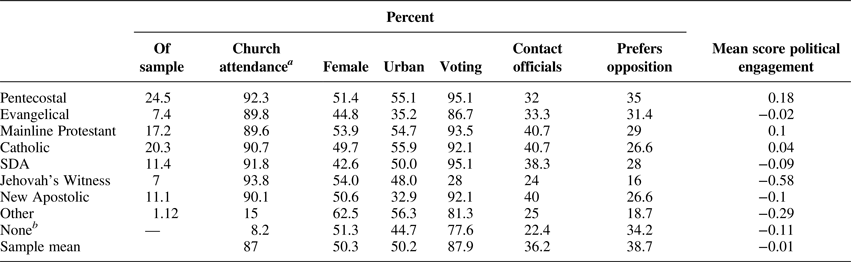
a Church attendance denotes the percentage of respondents who reported attending religious services at least once per week. The category “other” includes the very small number of Zion church members (African Independent Churches) as well as several observations who reported ambiguous church names. In addition, three responses to our binary question concerning religious belonging were missing, which means that while the total sample included 1,502 individuals, our main analyses focus on the 1,441 Christian respondents for whom we have the necessary data.
b Of the total survey sample, 5.1% reported that they did not actively belong to a religious group. We include the Nones for descriptive comparison in this table but exclude them from samples used in regression analyses. Column 2 identifies the percentage of each religious group in our regression analyses.
Interestingly, Pentecostals were not significantly more likely to report attendance at religious services than many other large religious groups, such as the Catholics and mainline Protestants. Similarly, both the gender and urban/rural breakdown of Pentecostals was comparable to other large religious groups, as well, with roughly 50% of Pentecostals identifying as female, and a slightly higher rate of urban dwellers than rural Pentecostal respondents. With more than 95% of Pentecostals reporting intention to vote in 2016 and receiving correspondingly high scores for political engagement (e.g., regularity of talking about politics and self-reported interest in politics), Pentecostals appear to be more politically engaged than other religious groups, with one puzzling exception: Pentecostals were significantly less likely to report having contacted a political official. Pentecostals reported the highest levels of support for an opposition party.
Pentecostals differed from the members of older Evangelical churches in terms of self-reported political engagement and intention to vote. The Evangelical sample is small, however, and disproportionately rural, which makes direct comparison difficult. It is also worth noting here that, as one would expect, Jehovah's Witnesses were significantly less likely to report any types of political involvement. This corresponds with their doctrinal prohibition on participation in politics, and increases our confidence that individuals felt comfortable to report both relatively high and low levels of participation in our survey.
These descriptive statistics correspond with the main findings of the regression analyses presented below: Overall, we find that Pentecostals in our sample reported higher than average levels of political interest and were more likely to report intention to vote in 2016, but were less likely to have contacted political officials. They were also more likely to support the previous ruling party (MMD), and less likely to support the incumbent party (PF). We explore each of these findings in turn.
Political Engagement
Table 2 displays the results of OLS regression predicting PoliticalInterest. Model I was a bivariate regression without any control variables. Including individual-level control variables (model II) leaves results virtually unchanged. Adding fixed effects for province and individuals’ reported tribal identity (model III) does not change the direction or statistical significance of the coefficient, but reduces its magnitude. These results are also robust to the inclusion of the religious “nones” in the sample, and alternative coding of the variable “Pentecostal” (e.g., coding Evangelicals or New Apostolic Church members as Pentecostals). As expected, however, coding Evangelicals as Pentecostals dampens the magnitude and significance of our results, which underscores the political differences across these groups.
Correlates of political interest
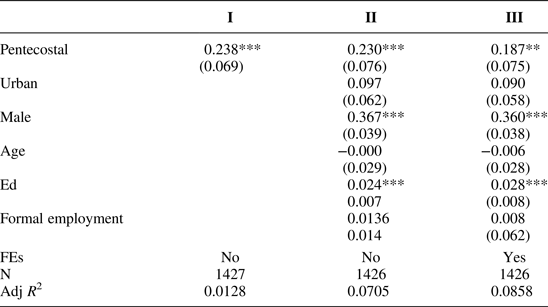
Notes: OLS including a constant term (not shown), with SEs clustered by ward (the unit of stratification). SEs parenthesized. Significance denoted by *if p < 0.10, **if p < 0.05, ***if p < 0.01.
In order to determine whether Pentecostals’ higher degree of political interest translates to a higher level of political participation, we use logistic regression to estimate the relationship between Pentecostalism and two binary outcome variables: Vote16 and ContactLocal. These results, displayed as odds ratios in Table 3, indicate that Pentecostals are nearly four times as likely to express an intention to vote than non-Pentecostals, but about 30% less likely to report contacting local government officials. Notably, residents of Southern Province, a hotbed of opposition activity, and members of the Tonga and Luvale tribes are also significantly more likely to express intention to vote. Vote intention therefore appears to correlate with publicly voiced group-level dissatisfaction with the government.
Correlates of political participation
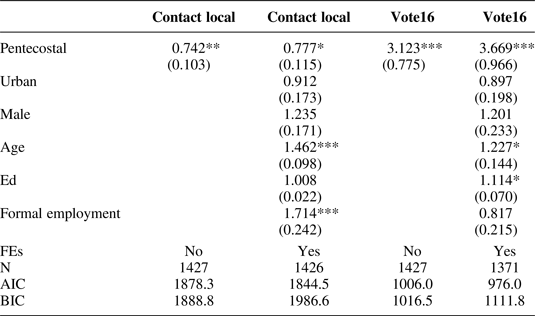
Notes: Logit models including a constant term (not show), with SEs clustered by ward (the unit of stratification) and exponentiated coefficients. SEs parenthesized. Significance denoted by *if p < 0.10, **if p < 0.05, ***if p < 0.01.
Party Preference
Dissatisfaction with the current government may explain, in part, why Pentecostals have higher levels of political interest and a greater likelihood of expressing intention to vote, but are less likely to report contacting officials. Indeed, models presented in Table 4 reveal that Pentecostals were significantly more likely to express a preference for an opposition party, e.g., the MMD, than the PF. This relationship is robust to the addition of individual-level control variables (model II) but loses statistical significance when we include fixed effects for province and tribe (model III). As with the results presented above, these findings are robust to inclusion of the religious “nones” in the sample and alternative coding of the variable “Pentecostal.”
Correlates of party preference
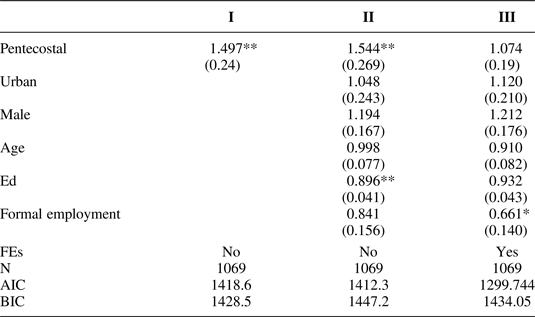
Notes: OLS including a constant term (not show), with SEs clustered by ward (the unit of stratification). SEs are in parentheses. Significance denoted by *if p < 0.10, **if p < 0.05, ***if p < 0.01.
Religious belonging is concentrated along regional lines within our sample. This is an artifact of patterns of missionary settlement in colonial Zambia, wherein missionaries from different churches and denominations often overlapped with tribal and linguistic identities.Footnote 21 This, in itself, is an intriguing finding that was difficult to assess empirically prior to this study. Specifically, Pentecostals in our sample are largely concentrated in Northwestern Province, where people were four times more likely to prefer opposition over the ruling PF party. Similarly, the tribes most likely to express preference for opposition were the Tonga and Toka-Leya of the Southern Province (usual suspects), alongside the Kaonde (concentrated in the Northwestern Province) and the Lamba (concentrated in the Copperbelt). Many Kaonde were longtime residents of Northwestern Province, a historically neglected outpost that has received little government attention. The Lamba are likely to be migrants from the Copperbelt. While the incumbent PF originally had a base of support in the Copperbelt, declining global copper prices and the perception that the government was not adequately protecting laborers from foreign mine owners may account for this turn of opinion. The Kaonde and Lamba are concentrated in Northwest Province and each of these groups has a disproportionate number of Pentecostals, explaining why province and tribe fixed effects mute the significance of the relationship between Pentecostalism and opposition party support.
Does Pentecostal religious identity influence party support? What role does long-run political alienation from the “center” play in spurring either opposition party ID or Pentecostal religious identity? Our survey data do not allow us to address these questions. Yet, the findings that we can present with confidence—higher rates of political interest, lower rates of contacting political officials, and geographic concentration of Pentecostals—all point to the importance of sustained, panel data collection to illuminate the relationship between religious and party identifications over time. Such research must include more provinces and larger samples within surveyed areas to improve statistical inference.
Cross-National Context
As discussed above, one might expect Pentecostal congregants to have a unique pattern of political behavior in Zambia because of church leaders’ history of close relationships with the MMD. However, evidence from other countries suggests that Pentecostals may have distinct patterns of participation in other countries as well, though country context is important for understanding how these patterns manifest. Despite the imperfections of widely available survey data (discussed in Section 2), data collected by the Pew Forum (2009–2010) allow us to examine whether Pentecostals’ political preferences tend—on average—to differ from other Christians’ across a wider number of sub-Saharan countries. In what follows, we examine this alternative, cross-country data source and find that the self-reported political orientations of Pentecostals across sub-Saharan states differ systematically from other Christians. These findings underscore the value that future data collection efforts would have by allowing us to learn more about the differences we uncover below.
Specifically, we consider the Pew Forum's cross-sectional, cross-national, individual-level survey study, which was published in 2010. Although this study did not ask about partisanship or voting behavior, it included several broadly political questions. These asked participants to report their views on: (1) the desirability of “Biblical Law” (which we take to be a relatively antidemocratic position, but discuss more fully below),Footnote 22 (2) the acceptability of voting for politicians who belong to other faiths, (3) the desirability of democracy over other forms of governance, and (4) the extent to which respondents believed that strong—implicitly undemocratic—leadership is occasionally warranted. Because we are interested in the political roles of different Christian groups, we exclude countries where Christians comprise <30% of the population. The countries that are included in the analysis are therefore: Botswana, Ghana, Kenya, Liberia, Mozambique, Nigeria, Rwanda, South Africa, Tanzania, Uganda, and Zambia. We exclude Cameroon because the government has actively repressed Pentecostal churches in recent years, which makes it less likely that Pentecostal participants identified themselves as such.
To evaluate the degree to which Pentecostals’ responses differed from adherents of other Christian traditions we ran two logit models for each of the four questions described above for a total of eight models. All models included a constant term and country-level fixed effects. Figure 1 presents the results on the coefficient of interest in each model. Solid dots represent coefficients on the variable Pentecostal in models without controls. Hollow dots represent coefficients on Pentecostal in models with controls for gender, urban/rural residence, education, and hunger (as a proxy for poverty).
Pentecostals’ political attitudes
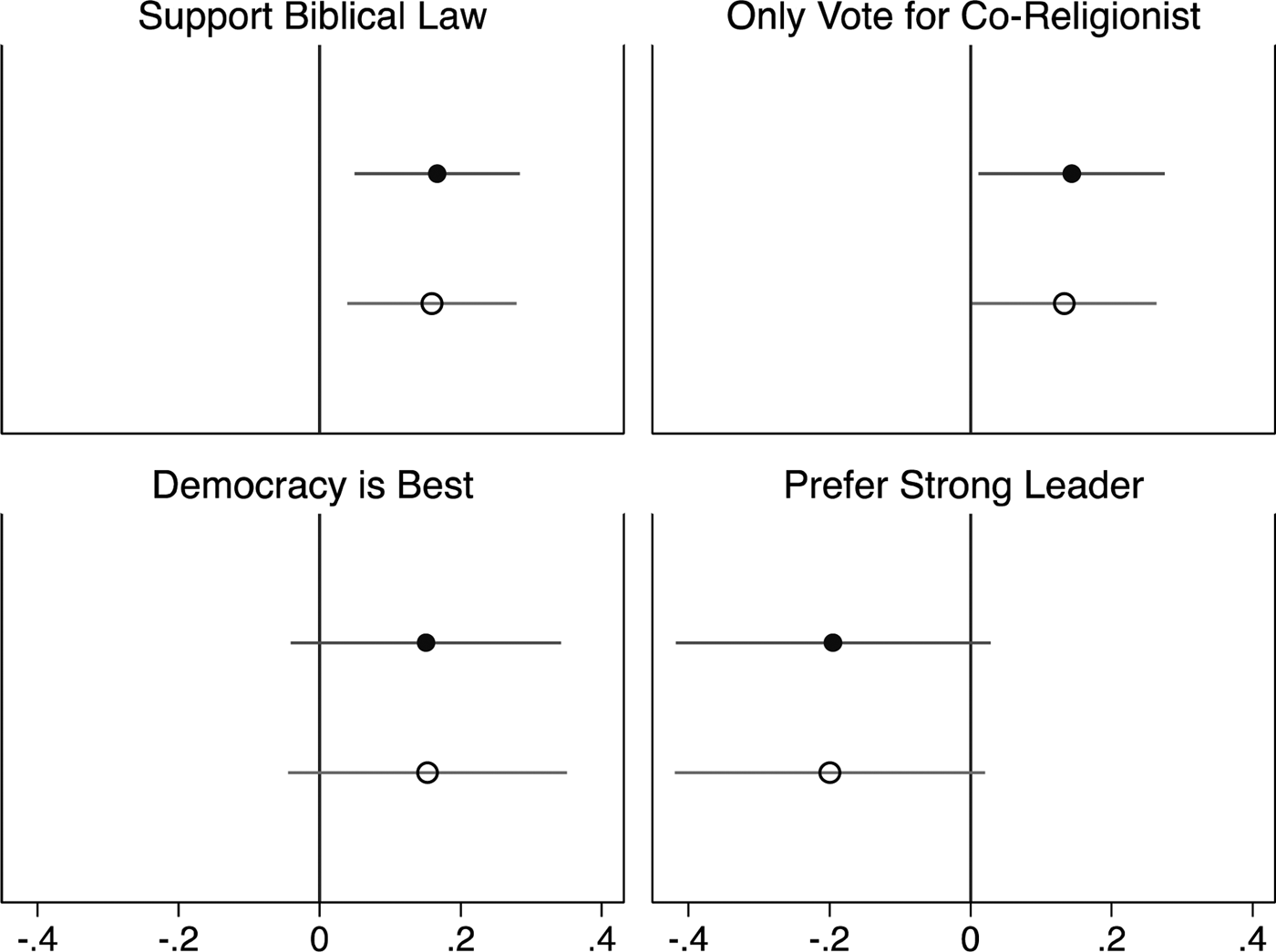
We find that Pentecostals were significantly more likely to support “Biblical law” than other Christians and were significantly more likely than all fellow citizens to report that they would only vote for co-religionist politicians. Although these findings were not statistically significant, Pentecostals were also more likely to report support for democratic government and to reject the notion that strong leadership is sometimes necessary.
Interestingly, Pentecostal religious identity correlates both with self-reported preference for democracy and support for Biblical law and co-religionist politicians. This juxtaposition of explicit support for democracy and illiberal preferences is consistent with the idea that Pentecostalism embodies political ambivalence discussed in Section 2. However, it is unclear how to interpret self-reported preference for “Biblical law,” especially in the absence of information about local contexts. Support for religious legal codes challenges conventional liberal, Western conceptions of democracy. But the results of this brief investigation of available, cross-country survey data strongly indicate that sub-Saharan Pentecostals do not perceive a conflict between the ideal of democracy, on the one hand, and support for Biblical law and preference for coreligionists, on the other.
To fully unpack how Pentecostals understood the questions posed by the Pew Forum would require further research. The ethnographic literature discussed earlier in this paper offers insights into how specific communities and pastors engage similar questions. Our purpose in this section, however, is not to engage normative arguments about religion and democracy. Rather we present these findings to offer evidence beyond the case of Zambia that Pentecostals endorse systematically different political views than other Christians—at least on some measures. Additionally, the fact that Pentecostals in the Pew survey strongly endorsed an illiberal vision of democracy may resonate with our finding that Zambian Pentecostals reported high levels of political interest, but refrained from equally high levels of direct, conventional engagement with political leaders. Ultimately, this exploration of available cross-national data underscores the need for further data collection to tease out the complex dynamics of political belief and behavior among Pentecostals in sub-Saharan African countries.
CONCLUSION
The analysis presented here advances understanding of an increasingly salient but understudied phenomenon: the apparent rise of politicized Pentecostalism in sub-Saharan Africa. Using original data collected across three provinces in Zambia, we find evidence that Pentecostals are more likely to report political interest—a finding that cuts against earlier studies that portrayed Pentecostals as apolitical or focused on other-worldly concerns. At the same time, however, we find evidence that Pentecostals in our sample are geographically concentrated, and that they are also significantly less likely to contact political officials than their peers—virtually all of whom report membership in other Christian denominations.
Though we find some support for the stylized fact that Pentecostals are more likely to support the MMD party—which was heavily pro-Pentecostal while in power from 1992 to 2011—we cannot infer with certainty that religious identification drives this finding due to the geographic concentration of Pentecostals in our sample. The most important take-away from this article is therefore the call for broader data collection concerning the relationship between party politics, religious change, and policy outcomes (e.g., service provision) in sub-Saharan states.
The broader implication of this work is to call attention to the political importance of Christian denominations in African countries. While our data constrain our ability to make causal claims, we are able to demonstrate that Pentecostals exhibit political behavior that is distinct from non-Pentecostals and members of other Christian denominations. While scholars of African politics have taken seriously other elements of identity for understanding political outcomes in Africa's electoral regimes, the distinction between different Christian denominations has been understudied. Our findings indicate that a more fine-grained analysis of religion is necessary to illuminate political behavior in African countries.



