Introduction
Under temperate climatic conditions, goats are generally used for milk production and kids represent only a secondary product (Knights and Garcia, Reference Knights and Garcia1997). Young are removed from their mother soon after birth and artificially reared, allowing the farmer to process all the milk produced by the dam. On the other hand, in subtropical and tropical developing countries, kids are reared by their dam and meat production is generally the main objective (Food and Agriculture Organisation, 1982; Ferrando and Boza, Reference Ferrando and Boza1990; Knights and Garcia, Reference Knights and Garcia1997). Therefore, in these countries, most breeders start milking when the kids have grown enough to be sold for slaughter, at between 1 and 2 months of age. Nevertheless, some producers also practice early weaning of the kids, even though the mothers are milked only once a day. This implies that the kids are reared artificially and therefore there is an extra cost due to the purchase of the milk substitute and to the work necessary for feeding the kids, as well as possible welfare problems due to the early and complete rupture of the mother-young bond.
In dairy animals, there are indications that the presence of a mother-young relationship is beneficial for milk production. Thus, in some breeds of cattle, the presence of the young is necessary for lactation to be maintained (Le Neindre, Reference Le Neindre1984) or for milk ejection to occur (Alvarez et al., Reference Alvarez, Saucedo, Arriaga and Preston1980). Also, the presence of the young can modulate the release of galactopoïetic hormones following udder stimulation. The release of PRL and GH was higher in cows milked three times a day and also sucked three times a day, than in cows only milked six times a day (Bar-Peled et al., Reference Bar-Peled, Maltz, Bruckental, Folman, Kali, Gacitua and Lehrer1995). In addition, in this same study, milk production was found to be higher in milked and sucked cows than in milked-only cows. A positive effect of the presence of the calf on PRL release has also been reported in nursing cows by Perez et al. (Reference Perez, Jimenez de Perez, Poindron, Le Neindre and Ravault1985), although not by others (Akers and Lefcourt, Reference Akers and Lefcourt1984). In small dairy ruminants, maintaining some mother-young interaction during lactation also appears to have beneficial effects on milk production: when milking is combined with restricted mother-young contact in goats and sheep, it does not significantly reduce the quantity of milk obtained by milking (Folman et al., Reference Folman, Volcani and Eyal1966; Morag et al., Reference Morag, Raz and Eyal1970; Hadjipanayiotou, Reference Hadjipanayiotou1985; Papachirtoforou, Reference Papachirtoforou1990; Peris et al., Reference Peris, Caja, Such, Casals, Ferret and Torre1997), and can even lead to a higher milk collection (Hadjipanayiotou and Louca, Reference Hadjipanayiotou and Louca1976). However, to our knowledge the possible beneficial consequences of maintaining some mother-young contact on milk production in goats, when the udder is emptied by milking only once daily, have not been investigated in previous research. The effects of such a management procedure on PRL and GH release also remain unknown, although it has been reported in rodents that the interval between nursing episodes can influence the hormonal response in the mother (Grosvenor et al., Reference Grosvenor, Mena and Whitworth1979).
In Mexico, as in many subtropical and tropical developing countries, collected milk represents an important source of food for the community and may be in some cases the main source of income for the producers (Hoyos et al., Reference Hoyos, Saenz and Salinas1991). However, this is also often associated with kid meat production, and the first 30 to 60 days of lactation are generally not taken advantage of for milk collection, because this period is entirely dedicated to the consumption of milk by the kids (Cepeda, Reference Cepeda1993). Whether kids could readily adapt to restricted periods of suckling from an earlier stage in life is not known. This may well be the case, given their early hiding behaviour and the initially low suckling rhythms associated with it (Rudge, Reference Rudge1970; Coblentz, Reference Coblentz1974; McDougall, Reference McDougall1975; Lickliter, Reference Lickliter1984). However, such an adaptation may be more stressful after the 1st week of life, since these suckling frequencies are much higher from the 2nd week post partum onwards (Lévy and Alexandre, Reference Lévy and Alexandre1985; Delgadillo et al., Reference Delgadillo, Poindron, Krehbiel, Duarte and Rosales1997). Therefore, imposing a limited time of daily mother-kid interaction with one daily milking may allow some increase of milk collected in traditional management systems found in Mexico and other developing countries. Nevertheless, it is also necessary to assess to which extent the mother and the young can adapt to daily-restricted mother-young contact.
Therefore, an experiment was carried out in dairy goats to investigate to what extent a restriction of daily mother-young interactions starting on day 4 post partum, could be compatible with an adequate development of the kids and one daily collection of milk. To this end, growth of the kids and milk collected by one daily machine-milking were compared over the first 2 months of lactation in goats and their kids allowed 10 h, 5 h or no mother-young contact, while a group of mothers and kids allowed permanent interactions and no milking was used as positive control. Also, given the results reported in cattle, we investigated if the restriction or suppression of mother-young interactions could affect the PRL and GH response to udder stimulation in goats placed under these experimental conditions.
Material and methods
Location
The study was conducted during the months of January to April at the Facultad de Estudios Superiores (FESC-UNAM) of Cuautitlán Izcalli in the State of Mexico, Mexico (latitude: 19°N; 2240 m above sea level; average temperature during the study: from 12 to 16°C).
Animals, management conditions and experimental design
Animals were 45 Alpine goats maintained under intensive management (5 m2 per dam) in four corrals (one for each group) provided with shade. They were fed twice daily with lucerne hay and commercial concentrate (Generaleche, Purina Mexico, 140 g/kg of crude protein), according to their physiological requirements (National Research Council, 1981), and had free access to water and mineral blocks. At parturition, kids were weighed and identified by ear tagging, and the mothers were allocated to one of the following four groups.
Control group (C)
Three primiparous and 10 multiparous goats (prolificacy: 1.7 ± 0.2), left in permanent contact with their kids. Five goats reared one kid, seven reared twins and one had triplets.
10 hours group (10H)
Three primiparous and eight multiparous goats (prolificacy: 1.6 ± 0.2), left in daily contact with their kids from 1000 h to 2000 h and machine-milked once daily in the morning at 0800 h. Five goats reared one kid, five reared twins and one reared triplets.
5 hours group (5H)
Three primiparous and eight multiparous goats (prolificacy: 1.7 ± 0.2), left in daily contact with their kids from 1500 h to 2000 h, and milked once daily in the morning at 0800 h. Five goats reared one kid, four reared twins and two reared triplets.
Milking only group (MO)
Three primiparous and seven multiparous goats (prolificacy 1.7 ± 0.2) permanently separated from their kids on day 4 post partum and milked once daily in the morning at 0800 h. Four goats reared one kid, five reared twins and one reared triplets.
Taking into account all mothers, there was no effect of parity of goats on the prolificacy. The treatments started on day 4 post partum and the study ended on day 60 of lactation. On day 4, kids from the MO group were totally separated from their dam and kept in a separate pen, in which they were bottle-fed ad libitum twice daily with the milk obtained from the mothers of this same group. In the two groups with restricted contact, kids were progressively accustomed to daily separation, in order to reach the scheduled restriction on day 7, when the measurements were initiated. In addition to the access to the feed given to the dams in the control group, in the three other groups the kids also had free access to lucerne hay and concentrate during the whole study in the daily periods when they were separated from their mothers. The machine milking routine and the milker were the same during the whole study in all groups. The milking machine was an Alfa-Laval with a HP 102 pulsator. The number of pulsations was 85 per min and the vacuum was set at 42 kPa.
Production parameters
Total collected milk
In the three groups in which milking was performed, we measured the total quantity of milk obtained (kg) from day 7 to day 60 of the study by summing up the daily quantity obtained during machine milking. Measures were taken from day 7 post partum up to the end of the study at 60 days of lactation.
Total milk production in a 24-h period
This was estimated at day 37 of lactation over a period of 24 h by the method of differential body weight of the kids before and after sucking (Ricordeau et al., Reference Ricordeau, Boccard and Denamur1960) in the C, 10H and 5H groups. In the MO group these values were obtained by two machine-milkings at 12-h intervals. The details of the procedure are shown in Table 1. In all groups, the udder was first emptied in the morning before initiating the measurements. In all cases, hand milking was performed to extract any residual milk after each suckling or milking and this weight was added to that of the corresponding measurement. Total milk production for the 24-h period was calculated by summing up the quantities obtained during the measurements from 1030 h (nursing groups) or 1930 h (MO group) and the following ones, up to the next morning.
Methods used to estimate goat milk production in each experimental group

† C: control group, permanent contact with kids; 10H: 10 h of mother-young contact per day; 5H: 5 h of mother-young contact per day; MO: milking only group, no mother-young contact.
Kids body weight
In all groups, kids were weighed weekly and daily growth rates were calculated. Weighing was performed in the morning, before the kids of the restrained group were reunited with their mothers and before feeding of the MO kids.
Hormonal response to udder stimulation at 35 days of lactation
The PRL and GH responses to udder stimulation were estimated on five (three with single, S, and two with twins, T), 6 (1S and 5T), 4 (2S and 2T), and 5 (1 S and 4 T) multiparous females from the C, 10H, 5H and MO groups, respectively. On day 35 of lactation, serial blood samplings were carried out in these females at the time of controlled udder stimulation. Nursing dams were sampled in an individual pen (2 × 2 m), located inside the pen in which the goat and her kid(s) were normally kept during the study; MO females were sampled in the milking parlour. Ninety minutes before the onset of the samplings, a heparinised catheter was inserted into the jugular vein under local anaesthesia. Ten samples were taken at − 1.0, − 0.5,+0.5,+1.0,+1.5,+2,+3,+4,+6,+10 and +15 min relative to the onset of udder stimulation. Stimulation occurred during 4 min in the presence of the kid(s) with free suckling (C, 10H and 5H groups), or during the 3 min of milking (MO group). In the case of mothers with twins, both kids were used for stimulation of the udder. All blood samplings were carried out in the morning, starting between 0900 and 1100 h. In all cases, the kids were removed from their mother at 2000 h on the previous night. At the time of sampling, previous to the udder stimulation, the kids were brought to a holding pen, 2 m away from the dams, and the goats were able to see and hear their young. Each blood sample was collected in a different syringe, after which the blood was put in a heparinised vacutainer tube, maintained on ice after the sampling. At the end of each sampling period, the tubes were centrifuged at 4000 r.p.m. at 4°C and the plasma was stored at -20°C until hormonal assay.
Hormonal assays
Plasma PRL and GH concentrations were determined by radio-immunoassay in accordance to the methods described by Kann (Reference Kann1971) and Lacroix et al. (Reference Lacroix, Devinoy, Servely, Puissant and Kann1996), respectively. The detection threshold for PRL was 1.24 ng/ml and the inter- and intra-assay coefficients of variation were 4.5% and 12.6% respectively. For GH, these coefficients were 11% and 5.8% respectively, with a sensitivity of 0.62 ng/ml.
Statistical analysis
Global effects of group and time on hormonal concentrations (PRL and GH) were analysed through two-way anova for repeated measures (nursing regimen as between-factor and time of sampling as within-factor). Comparisons of basal and maximal concentrations, amplitude of the response and time of maximal response were carried out using non-parametric tests (Kruskall-Wallis, Mann-Whitney and Wilcoxon tests) because of the relatively small sampling size. The total of milk collected during the study and milk production at 37 day postpartum were analysed by one-way anova for group effect and in case of a significant effect of treatment, comparisons of means were performed using the post hoc LSD test. Changes in live weight of kids were analysed by two-way anova for repeated measures (treatment as between-factor and time of experiment as within-factor; Systat 7.0, Statistical Packages for the Social Sciences, 2000). In addition, post hoc LSD tests were carried out whenever significant differences were found. Results are expressed as mean ± standard error.
Results
Total amount of milk collected through milking
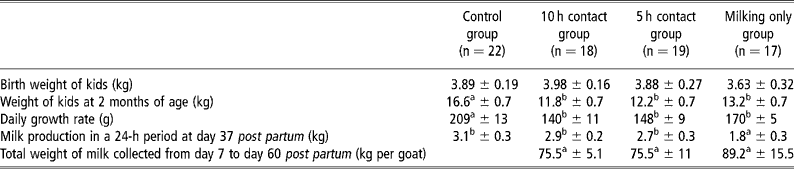
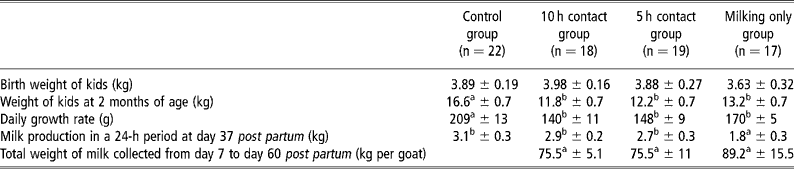
No significant differences were found between the three groups that underwent machine milking in the total quantity of milk collected per goat during the whole study (from day 7 to day 60 post partum; P = 0.61; Table 2).
Effects of various degrees of daily mother-young contact during the first 2 months of lactation on kid growth and doe milk production (means ±s.e.)
a,bDifferent superscripts within a row indicate significant differences between treatments (P < 0.05).
Daily milk production at 37 days post partum
The milk production on day 37 post partum was significantly lower in the MO group compared with that in the C, 10H and 5H groups (Table 2; P < 0.05).
Weaning weights and daily growth rate of the kids (Table 2)
Birth weight of the kids did not differ between groups (P = 0.77). In addition to an obvious effect of time, the anova revealed a significant effect of treatment (P < 0.01), as well as an interaction between treatment and time (P < 0.01) on the increase of weight of the kids during the study. The post hoc analysis showed that the weaning weights in the C group were higher than in the 10H, 5H or MO groups (P ≤ 0.03 in all cases; LSD test). With respect to daily weight gains, the results differed between groups in a similar way: the daily weight gains in the C group were higher than in the three other groups (P ≤ 0.01 in all cases; LSD test), while these three latter ones did not differ significantly.
Hormonal response to udder stimulation at 37 days of lactation
The hormonal response of PRL and GH to udder stimulation in the four groups is summarised in Figures 1 and 2 and in Table 3. The basal concentrations (mean of the two pre-stimulation values) of PRL were significantly different between groups (C: 31.3 ± 3.4 ng/ml; 10H: 99.6 ± 34.8 ng/ml; 5H: 242.0 ± 78.2 ng/ml; MO: 40.5 ± 6.7 ng/ml; P = 0.02). In the 5H group, these concentrations were significantly higher than in the C or MO groups (P < 0.05), while the difference did not reach significance between 5H and 10H groups (P = 0.14) or between C and MO groups (P = 0.11). In all groups, the maximum concentrations obtained following udder stimulation were higher than the pre-stimulation concentrations (Table 3) and the differences were significant in all groups except the 5H group (P = 0.14). Maximum concentrations were reached at times ranging from 3.3 ± 2.3 min in the 5H group to 9.0 ± 1.9 min in the MO group, which did not differ significantly (P = 0.18) between groups. Also, no significant differences were found between groups in the amplitude of the response (difference between the maximum value and the pre-stimulation value; P = 0.94). When considering the evolution of the concentrations of PRL during sampling, the anova revealed a significant effect of group (P = 0.04) and an interaction group × time (P < 0.01).
Plasma prolactin concentrations (PRL, mean ± s.e.) released in response to udder stimulation by 4 min of suckling (C, 10H and 5H groups) or 3 min of machine milking (MO group) in goats submitted to different durations of mother-young interaction (C = free mother-kid interaction; 10H = 10 h of mother-kid interaction per day and one machine milking; 5H = 5 h of mother-kid interaction per day and one machine milking; MO = no mother-kid interaction and only one machine milking per day). Two-way anova showed a significant effect of the group (P = 0.04) and a significant interaction between the time of sampling and group (P = 0.01).

Plasma growth hormone concentrations (GH, mean ± s.e.) released in response to udder stimulation by 4 min of suckling (C, 10H and 5H groups) or 3 min of machine milking (MO group) of goats submitted to different durations of mother-young interaction (C = free mother-kid interaction; 10H = 10 h of mother-kid interaction per day and one machine milking; 5H = 5 h of mother-kid interaction per day and one machine milking; MO = no mother-kid interaction and only one machine milking per day). Two-way anova revealed a tendency for group and time of sampling effects (P = 0.07 and P = 0.06).

Differences between basal pre-stimulation and maximum plasma concentrations of prolactin (PRL) and growth hormone (GH) during the 15 min following the start of udder stimulation† in goats on day 35 of lactation, when submitted to various degrees of daily mother-young contact (medians and quartiles of concentrations measured in plasma)

† Udder stimulation consisted of 4 min nursing by own kids in groups with young and of 3 min machine-milking in the milking only group.
Concerning GH, there was a significant difference between groups in the concentrations found before stimulation (P = 0.04; Table 3). The concentrations found in the control group (3.7 ± 0.5 ng/ml) were significantly lower than in any other group (P < 0.05), while the three other groups did not differ one from another (10H: 9.1 ± 2.5 ng/ml; 5H: 11.3 ± 3.0 ng/ml; MO: 10.0 ± 2.1 ng/ml; P>0.40). Maximum concentrations were reached between 3.7 ± 1.9 min after beginning of stimulation (C group) and 9.8 ± 2.4 min (MO group), and no differences were found between groups for this variable. Maximum concentrations were higher than basal pre-stimulation concentrations in all groups (Table 3), although the difference did not reach significance in the 5H group, despite the fact that it was highest in this group (P = 0.07). Also, differences between groups were found in the amplitude of the response. This amplitude was significantly lower in the C group (2.2 ± 0.6 ng/ml) than in the 10H and 5H groups (10.7 ± 4.1 ng/ml and 23.6 ± 10.6 ng/ml respectively, P < 0.05). The 5H group also tended to differ from the MO group, although the difference did not reach significance (7.2 ± 3.0 ng/ml, P = 0.09). These differences were also reflected in the results of the anova, which showed that GH release over time tended to be affected by the nursing mode (P = 0.07) and by time of sampling (P = 0.06), although no significant interaction was found between these two factors.
Discussion
The results of the present study indicate that the manipulation of the daily mother-young contact duration between dairy goats and their kids has significant repercussions, both for the mothers and the kids.
Milk production
In dams, restricting nursing allowed milk to be collected in early lactation, and there were no differences between 10 and 5 h of daily contact with their kids. In contrast, in a traditional management, milking would have started only at 30 to 45 days post partum, after taking the kids away from their dam. Also, even though the quantity of milk collected was 15% lower in the 10H and 5H contact groups than in the MO group, this difference was not significant. While this may have been partly due to the high within-group variation observed for this variable, it is also certainly related to the fact that the total 24 h production of milk on day 37 of lactation was significantly higher in the three groups in which the goats had some degree of contact with their young. Indeed, milk production per 24 h was about 60% higher at 37 days in the three groups with some mother-young contact than in the MO group. Milk synthesis by the udder is highly dependent on the local effect of previous udder evacuation (goats: Wilde and Knight (Reference Wilde and Knight1990); cattle: Stelwagen and Knight (Reference Stelwagen and Knight1997)) and is particularly pronounced when changing from once to twice daily milking, as this can lead to a 26 to 46% increase in milk yield (Mocqot and Guillimin, Reference Mocqot and Guillimin1975; Papachristoforou et al., Reference Papachristoforou, Roushias and Mavrogenis1982; Wilde and Knight, Reference Wilde and Knight1990). In the present experiment nursing allowed a milk production equivalent to that obtained with twice daily milking, thus allowing kids to be reared without significant loss in milk collection. In addition, the absence of a difference in milk production at day 37 between mothers kept permanently with their kids (in which nursing occurs at about hourly intervals) (Lévy and Alexandre, Reference Lévy and Alexandre1985; Delgadillo et al., Reference Delgadillo, Poindron, Krehbiel, Duarte and Rosales1997; Hernández, Reference Hernández2001) and mothers where interactions were restricted to 10 or even 5 h/day, indicates that as little as 5 h of mother-young interactions are sufficient to promote an adequate evacuation and udder stimulation for optimal milk synthesis and production.
Plasma PRL and GH concentrations during udder stimulation
There was a significant effect of restricting mother-young contact to 5 h/day on the pre-stimulation basal concentrations of PRL, while no clear differences were found between the response to suckling in mothers left in permanent contact with their young and the response to milking in females submitted to milking only. The results were similar for GH, except that mothers totally separated from their young (MO group) also showed higher basal concentrations than the control group. The higher basal concentrations of PRL and GH found in dams experiencing restricted contact with their kids, and more especially in the 5 h contact group, are consistent with the maintenance of milk production associated with the galactopoïetic effects of these hormones.
The presence of maternal behaviour does not appear to be in itself an important factor in facilitating the release of PRL and GH in the goat, since the hormonal responses to machine milking in goats totally separated from their kids were not significantly lower than those induced by nursing in goats kept in permanent contact with them. This appears to be at variance with results reported in cattle. For example, the PRL response was weaker in cows milked in the presence of their calf than when the young was absent (Gordon et al., Reference Gordon, Goodman, Tucker and Convey1979; Akers and Lefcourt, Reference Akers and Lefcourt1982 and Reference Akers and Lefcourt1984).
Growth of the kids
Restricting daily mother-young interactions to 5 or 10 h reduced kid growth by 20% to 33% compared with that of kids staying permanently with their non-milked dams. Such a reduction is not very surprising, since it was associated with one collection of milk through milking that reduced by about half the quantity of milk that the young could consume, compared with that available to kids of the control group. The situation was similar in the MO group, in which the quantity of milk consumed by the kids was limited to a similar extent by the reduced production that occurs with one milking per day, as this is 54 to 74% of that obtained by twice daily evacuation of the udder (Mocqot and Guillimin, Reference Mocqot and Guillimin1975; Papachristoforou et al., Reference Papachristoforou, Roushias and Mavrogenis1982; Wilde and Knight, Reference Wilde and Knight1990). Our results are also in agreement with those previously reported in ewes and goats by Hadjipanayiotou and Louca (Reference Hadjipanayiotou and Louca1976). On the other hand, other studies report a growth rate in lambs with restricted access to their dam similar to that found in lambs with permanent access to their mothers (Folch and Blasco, Reference Folch and Blasco1987; Mandiki et al., Reference Mandiki, Bister and Paquay1990). Nevertheless, the differences of management between experiments can probably account for these differences. In those latter studies, the period of mother-young contact was divided into two or more phases during the day, and no milking was performed. This allowed some time for milk synthesis and re-accumulation, and therefore the lambs consumed a major quantity of cisternal milk in each suckling session, thus obtaining growth rates similar to those of lambs that suckled freely. Similarly in cattle, the daily weight gain of calves is higher when some time of re-accumulation is allowed after milking before reuniting the calves with their dams (Pérez, Reference Pérez1992).
The most likely factor that allowed the kids of the three experimental groups to partially compensate for the reduction in milk availability is a difference in concentrate consumption. Kids reared with their dam can start ingesting concentrate at about 3 weeks of age (Lévy and Alexandre, Reference Lévy and Alexandre1985). The kids in the three groups in which machine milking was performed had ad libitum access to concentrate, whereas in the control group this access was limited to the time when mothers were fed. Therefore, it is likely that the kids of the three former groups began to ingest concentrate earlier and consumed significantly larger quantities of it than the controls, even though this parameter was not measured.
General conclusion
The results of the present study indicate that an early collection of milk can be made in nursing goats without a major effect on the growth of the kids. The reduced growth rate of the kids would largely be compensated by the milk collected through milking and by removing the need for artificial milk that would be necessary to feed the kids if there was complete mother-young separation. This management system appears potentially attractive not only for producers of kid meat, but also for dairy farmers that normally would perform one daily milking, as is often the case in developing countries. In addition, maintaining the mother-young relationship is likely to have positive consequences on the welfare of the mothers and their young. However, the present results were obtained in optimal breeding conditions, in that the dams were of a dairy type, provided with adequate feed and that the kids had access to concentrate and good quality forage. It would be important to investigate whether similar results would be obtained in more extensive conditions found in semi-arid climates, in goats with a lower milk potential and with reduced supplementary feeding.
Acknowledgements
The authors wish to thank M.Sc. Rosalba Soto and Facultad de Estudios Superiores Cuautitlán UNAM, for providing the animals. We are also grateful to Martha Segundo and Diego Rueda for the care of animals. This study was supported by PAPIIT-UNAM, Grant IN212796. H. Hernandez was supported by CONACyT scholarship for doctoral studies.