




This article is concerned with the school museum as it developed in Britain from the second half of the nineteenth century, with a particular focus on the period from the 1880s to the First World War. As an object of study, the school museum has received remarkably little attention from historians of education. While the role of object-based learning within nature study has been the focus of research by historians of science, its connection with the development of school museums has been neglected in comparison with issues such as the relationship between natural theology and evolutionary thought or the role of visual technologies in education. However, the museum as an idea, as a set of practices, and as an institution played a significant role in educational theory and practice during this period, both nationally and internationally. This article seeks to provide a context for understanding this development in the British case, using the supply of materials to school museums as our point of entry. By exploring the role of a national museum – the Museum of Economic Botany at Kew – in the dispersal of objects to schools, we seek to make a wider argument for a renewed focus on the school museum as an object of historical study in its own right.
On 11 February 1909, the headmaster of the boys’ department of the Gloucester Road London County Council School, in Peckham, was supplied with a set of twenty-nine ‘miscellaneous specimens’ for classroom use by Kew's Museum of Economic Botany. This event was recorded in Kew's ‘specimens distributed’ books, which documented the dispersal of museum objects to hundreds of schools across the British Isles in the three decades leading up to the First World War.Footnote 1 While the details of this particular donation are not recorded, tangible evidence of the use of museum objects at this school comes in the form of a letter to Kew from the same teacher in April 1914:
For several years I have endeavoured to teach a certain amount of Geography by means of an Exhibition of Products of the Empire, believing the children remember well things they see and handle. For this purpose I gather as many Natural and Artificial (Manufactured) objects as possible and for two weeks round ‘Empire Day’ I hold an Exhibition … Enclosed are photographs showing former exhibits.Footnote 2
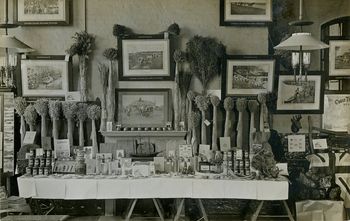
One of the accompanying photographs (Figure 1) gives an indication of the effort devoted at this school to the display of plants and their products.Footnote 3 In miniature, such displays evoked the larger-scale exhibits of raw materials and commodities alongside maps, models, and illustrations found in international exhibitions of the period. The routine supply of ‘miscellaneous specimens’ from Kew to British schools was thus part of a wider process through which schools, museums, and exhibitions pooled materials and practices in a shared project of object-based learning about nature and empire.
Exhibition of Canadian resources and products at Gloucester Road Boys School, c. 1909

Ever since its foundation in 1847, Kew's Museum of Economic Botany had supplied materials to other institutions – including museums and schools – though some time elapsed before the development of an effective infrastructure to support the systematic dispersal of material.Footnote 4 From the 1880s, the flow of objects from Kew to schools increased significantly, remaining at high levels until the First World War. In total, 640 individual schools and 29 school boards (responsible for several schools in a district), mainly in England and Wales, received upwards of 20,000 specimens during this period.Footnote 5 We argue in this article that this scheme owed much to wider changes in educational policy and practice emerging in the later decades of the nineteenth century, specifically the application of ideas of object-based learning associated with the growth of the school museum.
The research we present here draws on a multiplicity of different sources to tell a much broader story about the interlocking intellectual, institutional, and individual histories that worked to shape the school museum in late nineteenth- and early twentieth-century Britain. Approaching this from the perspective of Kew's role as a supplier of specimens is enabled by a rich seam of surviving archival resources in the form of school letter books containing correspondence from teachers. These letters – in combination with exit books documenting the flow of material in and out of Kew's museums – enable us not only to explore what we might (anachronistically) term ‘museums outreach’ in this period, but also to gain insights into the practical working of knowledge economies at a time when calls for object-focused teaching was placing increased demands on schools. Examining these letters and exit books alongside a selected range of school log books, reports, and educational periodicals, we seek to understand the ways in which teachers exercised curatorial authority and so to situate schools as significant though now neglected sites for museological enterprise. In considering the local contexts of school museum formation, the article draws selectively on a wider archive of school records available locally, in London (London Metropolitan Archives), Preston (Lancashire Record Office), and Truro (Cornwall Record Office). These materials give some indication of the variety of ways in which school museums came into being, across a range of different kinds of schools and locations.
The article is organized as follows. In the first section we examine the parallel histories of the museum and the school in order to provide a wider context for understanding the emergence of the school museum. In the second section, we discuss the role of the museum in the nature study movement of the late nineteenth and early twentieth centuries, highlighting the need for research on actual practices as well as visionary proposals. In the third section, we give an overview of Kew's provision of specimens to schools, examining the patterns of distribution and exploring the mechanisms of dispersal, and situating them in relation to other major national schemes. In the fourth section, we consider teachers’ uses of museum objects in the classroom, moving further away from programmes and policies to issues of practice. Finally, we return to the wider historiographical context to consider the prospects for a global history of the school museum.
I
The expansion of museums during the long nineteenth century has often been seen in the wider context of an emergent ‘exhibitionary complex’ as represented by the Great Exhibition of 1851, inaugurating what Tony Bennett calls ‘a new pedagogic relation between state and people’. In this view, events such as the opening of the South Kensington Museum in 1857 helped to install the museum as an ‘instrument of public education’.Footnote 6 Following Bennett, historians of education have argued that world's fairs offered models for new approaches to pedagogy by providing opportunities to demonstrate the educational potential of instruction through the display of, and interaction with, ‘common things’.Footnote 7 Conversely, subsequent innovations within museum practice, such as the ‘New Museum Idea’ of William Flower at the British Museum (Natural History),Footnote 8 demonstrated the key role that education played in reformulating strategies for museum display. In separating specialist research collections from those for the general public, Flower advocated ‘more effective pedagogical displays’ for lay museum audiences.Footnote 9 Clear labelling, the avoidance of duplicates, and ‘no crowding of specimens one behind the other’,Footnote 10 all signified a new approach to the visual economy of the museum that ‘would leave the visitor with no doubt as to what was what or why it was there’.Footnote 11
However, aside from these general arguments about the pedagogic functions of museums, historians have paid little attention to the actual mechanisms by which museums and schools were brought into closer relation with each other during this period. This is surprising, given the evidence of increasing collaboration between museums and schools. After 1894, when museum visits were formally approved by the Education Department, such outings became an increasingly common aspect of schooling in England and Wales. However, while the growing educational role of museums has begun to receive increasing attention from museum historians,Footnote 12 there has been little consideration of the extended lives of objects once they entered the classroom. Historians of education for their part have begun to consider the flow of tools and technologies into and out of schools, including, in some instances, the school museum. These themes, moreover, are by no means confined to national histories. In her study of the wall chart in late nineteenth-century Brazil, France, and Portugal, for example, Diana Gonçalves Vidal highlights not only the permeable meaning of the word ‘museum’ but also the ‘transnational relations, entanglements and dependencies’ that characterized an ever-growing and increasingly global market for educational goods in this period.Footnote 13
The relationship between the display strategies deployed in international exhibitions and in the classroom has received some attention from historians of education.Footnote 14 However, in this context there is an important distinction to be made between pedagogical museums – that is, museums that served the specific purpose of teacher training through the display of new educational technologies – and the school museum, as it actually existed in school classrooms in many parts of the world.Footnote 15 Both kinds of museum were promoted in the educational press. Throughout this article we make reference to the importance of teaching periodicals in the formation and circulation of curatorial knowledge among teachers, drawing upon other work that has shown the importance of print economies in the constitution of professional networks.Footnote 16 Object-centred pedagogy as mediated through print proved a critical stimulus for the take-up of Kew's schools scheme, as well as a key means by which teachers both accessed and channelled their curatorial expertise.
In this article, we approach the ‘school museum’ in a broad sense, as a domain of ideas and techniques increasingly evident in educational practice from the mid-nineteenth century. The school museum concept was dynamic and flexible, drawing heavily upon museological conventions for display and associated with a variety of devices for the storage of objects within the classroom – from individual trays and cabinets even to whole rooms dedicated to the display of objects. It was also closely connected with some key themes in the history of education in this period, including the rise of the object lesson, the emergence of nature study, and the growing emphasis on imperial frames of reference. More generally, it reflected an increasingly synergistic relationship between the space of the museum and that of the school, and the didactic strategies for display and engagement that crossed the increasingly porous boundaries between the two.
The movement of objects out of museums was often part of a broader project for the diffusion of new forms of knowledge, taste, or practice originating from within the museum project. This can clearly be seen, for example, in the work of the South Kensington Museum's Circulation Department or the India Office's ‘trade museums’ of South Asian textiles.Footnote 17 Moreover, the impulse for change also came from beyond the museum. Melanie Keene's work is useful here as it dissects the close relationship between the new object-centred pedagogies and approaches to child-rearing from the late eighteenth century onwards. Keene emphasizes the importance of sensory learning, the conversational transmission of knowledge, and everyday objects in the development of what she terms ‘familiar science’, themes which were also prominent in the late Victorian discourse of science education.Footnote 18 In common with many historians of education, Keene highlights the development of the object lesson usually associated with the writings of Johann Heinrich Pestalozzi (1746–1820). Here the Pestalozzian idea of ‘sense training’ emphasized the child's senses as part of an experiential learning approach. The role of the teacher within such a scheme was to order nature in such a way that it was rendered both knowable and also intellectually, spiritually, and morally beneficial for the child.Footnote 19 The revival of Pestalozzian ideas in late Victorian Britain was associated with wider developments in the field of educational psychology – particularly the work of Pestalozzi's student Friedrich Fröbel – that sought to ‘make education natural’ through thing-based instruction.Footnote 20 The emergence of the Kindergarten movement, too, saw object-based teaching gain currency among pedagogues as a suitable means by which to develop the mental faculties of the very young. Indeed, by 1890 one teacher wrote that ‘the possession of a [school museum] [is a] sine qua non’ for the infant teacher.Footnote 21
The multiple contexts in which objects could potentially be deployed made them an attractive option for both elementary and infant school teachers, who could add and expand to their teaching collection as they saw fit. The humble cup of tea, for example, could teach Victorian children about the importance of chemical experimentation or the principles of steam power.Footnote 22 At the same time that Thomas Huxley was drawing on the pedagogy of common objects in his popular science lectures during the 1860s,Footnote 23 schoolteachers were being encouraged to ground their lessons in familiar objects so that children could better understand the wider world. Moreover, as Keene suggests, everyday commodities also came to be presented as useful in teaching children how ‘the “common” things of life were dependent on, and helped forge, the British Empire’.Footnote 24 Parna Sengupta has shown how the object lesson was characterized by ‘cultural and epistemological assumptions that were fundamentally informed by Britain's imperial identity’.Footnote 25 Here, for example, the ‘pungency and odor’ of spices such as pepper ‘metaphorically [spoke] to the cultures of those who grew it in South and Southeast Asia’.Footnote 26 Sengupta's study reminds us of the commodity chains and networks in which the object lesson was embedded, and the ways in which such objects were immersed in racialized vocabularies and ways of knowing.
In the case of British education, Pestalozzianism clearly served to further a number of ideological objectives, with proponents often modifying or selecting only certain aspects of the system.Footnote 27 Many have argued that British Pestalozzianism arose less from a genuine commitment to Pestalozzi's philosophy than from a more general concern with ‘transmitting useful knowledge’.Footnote 28 This is an important qualifier, as it hints at the complex genealogy of the object lesson in this period, as well as the pragmatic considerations that often frustrated the incorporation of object lessons into the classroom. As our discussion of the Kew dispersal scheme makes clear, these pressures – typically emerging from a scarcity of available resources – were a challenge faced by schools and museums alike.
II
The idea of the object lesson was given new life within the nature study movement of the late nineteenth and early twentieth centuries.Footnote 29 Like the school museum itself, nature study took a wide variety of forms, though at its heart it was a commitment to a holistic view of the natural world. This was to be achieved through a variety of means, including countryside rambles, or museum visits where natural history collections could help substitute for fields and hedgerows. The growth of this movement, in Britain as well as America, depended upon the material resources and expertise found in museums. Sally Gregory Kohlstedt has shown how classroom nature study in Progressive-era America was regularly supplemented through the delivery of specialist school programmes by museums. Initiatives in this area included specimen loan schemes, teacher-training programmes, and child-centric displays. In the early years of the movement, such collaboration was relatively informal and ad hoc. However, the growing presence of nature study in the curriculum necessitated the establishment of more formal partnerships between museums and schools. Here, both specimens and expertise were shared.Footnote 30
In the British context, the pedagogical potential of the museum in visionary schemes of nature study, as in the work of Patrick Geddes, deserves further consideration.Footnote 31 At a 1902 conference accompanying an exhibition on the subject of nature study held in the Royal Botanic Society's gardens, Regent's Park (which incidentally included a prize for the best exhibit from a school museum), Geddes spoke optimistically of an ‘educational revolution’ in the field, while others presented the civic museum as an integral part of new approaches to scientific education.Footnote 32 Geddes's own involvement in promoting such museums is evident in his role in establishing a botanical museum in Dundee soon after his appointment as professor of botany in 1888 (a box of specimens including fruits, seeds, gums, bark, and resin which Geddes received from Kew in 1889 may well have been intended for display there).Footnote 33 However, alongside visionary schemes such as those of Geddes were to be found a profusion of local initiatives which brought museums, schools, and nature study together in less visible but arguably more significant ways.
The history of the nature study movement in England and Wales in the decades around 1900 is a story of local innovation combined – not always successfully – with the efforts of national bodies such as the School Nature Study Union (SNSU). In places such as Liverpool, Manchester, Leeds, Sheffield, and Salford, teacher-training programmes, travelling museums, and loan box schemes were used to promote the benefits of classroom nature study.Footnote 34 The SNSU attempted to co-ordinate such developments, whether through devising museum-based activities for schoolchildren, by providing advice to teachers on how to procure and store specimens, or by arranging museum visits for its members. Within the classroom itself, live and dried plant specimens, together with raw, processed, and manufactured objects, were deemed suitable for object lessons insofar as they met the requirements of adaptability, mobility, and familiarity. Adaptability required that specimens be deployed across a range of different pedagogical agendas, whether within nature study or within other subjects such as geography. Mobility required that plant specimens be easily received, transported, stored, and displayed by teachers. Familiarity, as discussed, involved the seeing and handling of ordinary objects as a way of educating children.
The advantages offered by school museums in the teaching of object lessons were increasingly emphasized by school inspectors during the 1880s and 1890s. The growing consensus over the need for practical object lessons is evident in the Education Department's 1895 circular which criticized the prescriptive object lesson based simply on textual and visual aids. Instead, it stressed that ‘the chief interest should centre on the Object itself’.Footnote 35 Surviving school logbooks provide evidence of attempts to deliver more systematic and organized object lessons within more structured curricula, in which botanical subjects featured frequently. Between 1893 and 1895, for example, Liskeard Infants’ School in Cornwall provided lessons on cotton, tea, maize, potatoes, flax, ‘common fruits’, cocoa cultivation, and the pine tree, in which they were careful to record their use of specimens.Footnote 36 The school subsequently received around twenty-four specimens from the Kew Museum in 1899.Footnote 37
Increasing interaction between museum and school is also evident in the growing emphasis on wall posters and maps as didactic devices in the classroom.Footnote 38 Of particular interest here are the affinities between educational displays in a museum context – for example, dioramas depicting the cultivation of crops or the manufacture of commoditiesFootnote 39 – and their equivalents in the classroom. These included postcards produced for classroom use, devoted to subjects as diverse as the flowers of Palestine and the groundnut industry of west Africa.Footnote 40 As this example suggests, the visual display of information in a variety of formats played an important role in the teaching of geography, most notably commercial geography: the study of the transformation of natural resources into commodities and their circulation around the globe.Footnote 41 The depiction of the material transformation of nature through forms of labour which were globally varied and often racialized brings us closer to the field of knowledge defined by the museum at Kew: namely, economic botany.
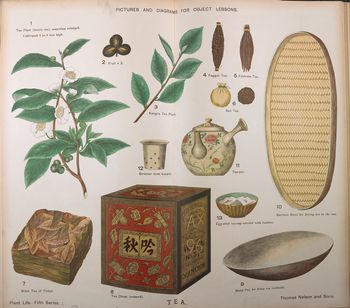
In terms of display culture, the hallmark of the Museum of Economic Botany was the illustrative series. Here the juxtaposition of botanical specimens and manufactured goods was intended to highlight ‘the processes by which plants could be transformed into objects of use to people’, thereby providing ‘a scenario in which both nature and culture formed part of a single plant–based continuum’.Footnote 42 The key point is that the technique of the illustrative series was capable of being extended as a pedagogic tool well beyond the museum into the classroom through the use of wallcharts and the exhibition of materials.Footnote 43 A notable set of such wallcharts intended for school use was designed to illustrate a series of ‘object lessons’ published by Mordecai Cubitt Cooke, Kew's resident mycologist (see Figure 2). By tying together text with numbered illustrations, wallcharts such as Cooke's provided an easy-to-follow narrative that directed the eye towards all stages of the cultivation, manufacture, and consumption of plants. These kinds of texts gave teachers a ready-made strategy for displaying plant specimens that had first been popularized at Kew. Cooke's wallchart also shows how object lessons were facilitated by innovation in classroom technologies from the late nineteenth century onwards. As historians have shown, the wallchart and the blackboard were both accompaniments and substitutes for objects in the classroom.Footnote 44 The school museum itself was only one response to the challenge of the new object-based pedagogy.
‘Pictures and diagrams for object lessons: tea’

III
In 1894, the Teachers’ Aid published an article by George Singleton, a Sussex schoolteacher, describing a collection received from Kew for classroom use. ‘They represent a small museum in themselves’, wrote Singleton, ‘and are most valuable, consisting as they do of seeds, fibres, beans, and vegetable curios from all parts of the world.’Footnote 45 The journal's promotion of the Kew scheme played an important part in the multiplication of requests by teachers for specimens.Footnote 46 Between 1885 and 1916, Kew's Museum of Economic Botany distributed around 20,000 specimens to a total of 640 schools and 29 school boards in Britain and Ireland, the vast majority of these dispersals representing single donations from 1890 onwards. Figure 3 shows the pattern of dispersals for the period between 1890 and 1916. The data is presented in two ways: first, in terms of the frequency of donations (or ‘events’); second, in terms of the number of objects. The difference between the two series reflects variation in the size of individual donations (including a small number of unusually large-scale dispersals to just a few local education authorities in 1911).Footnote 47
Dispersals from the Kew Museum to schools and school boards, 1890–1916: (a) frequency of donations, (b) number of objects

Analysis of the geography of dispersals indicates that Kew's programme penetrated nearly every part of Britain's educational landscape, albeit some parts more deeply than others. Board and voluntary elementary schools accounted for 80 per cent of the recipients, reflecting their numerical dominance of the sector.Footnote 48 The vast majority of dispersals were concentrated in England and Wales, with only a small minority of recipient schools in Scotland and Ireland (Figure 4). Examining the geographical distribution of schools further at the county level, it is clear that the scheme was adopted in many different regions, especially in London. This reflects in part the concentration of educational provision: in 1895, there were well over 700,000 pupils attending voluntary and board schools in the capital.Footnote 49 However, even allowing for the distribution of the population of school age, the take-up of the scheme was somewhat over-represented in schools in London and the South-East.
The geography of dispersals from the Kew Museum to schools and school boards, 1890–1916: (a) Great Britain and Ireland, (b) London

What governed take-up of the scheme by schools and the timing of dispersals? Evidence in the Kew archives indicates that there is a close correspondence between the schools that made such requests and those that received specimens, suggesting that the pattern of dispersals was demand-led. However, a considerable time could elapse between the date of request and that of donation. From 1894, when requests for specimens soared from a handful to well over two hundred per annum, a significant backlog developed. Over the preceding four years, demand from schools had been sporadic, with only thirty-two requests for specimens. Between 1894 and 1899, however, Kew received around 400 requests for specimens, taking on average nearly four years to fulfil them. By 1903, requests made in that year had dropped to a more manageable nine: as a result, the average delay in response was reduced to fifteen days. A further spike in requests in 1904 (to 128), in response to further publicity in the Teacher's Aid,Footnote 50 resulted in another dramatic increase in waiting time, to nearly three years for requests received in that year. Archival evidence suggests that Kew was not prepared for the flood of applications from schools for museum specimens in either 1894 or 1904, and responded to them only ‘as material becomes available’.Footnote 51 Kew's director, William Thiselton Dyer, wrote in 1899 that ‘The amount of material for distribution is limited’, the result being that ‘some time may elapse before each application is completed’.Footnote 52
Considering the logistical difficulties in responding to such large numbers of requests, therefore, it is worth considering what benefits the schools scheme presented to Kew. In the mid-1870s the crowded state of its museums had prompted a renewed emphasis on the disposal of duplicates.Footnote 53 The emergence of the school scheme could therefore be seen in part as an opportunistic response to storage pressures. Yet the recirculation of museum objects often had a more positive function, as Catherine Nichols has shown in the case of the Smithsonian's ethnographic duplicates: ‘Curators viewed the objects they distributed as benefitting the development of civic institutions throughout the nation, establishing anthropology as a field of study in the public arena, and engendering an interest amongst students in natural history, anthropological collecting, and interpretive practices.’Footnote 54
In the case of Kew, it is clear that demand was externally driven rather than institution-led. Attitudes towards the schools distribution scheme were also arguably shaped by a continuing ambivalence at Kew about its hybrid role as scientific institution, public garden, and space of popular pedagogy.Footnote 55 Along with unruly working-class visitors, schoolchildren were blamed for helping to ‘crowd the museum to suffocation’ in the early 1870s.Footnote 56 The disorderliness of children continued to trouble Kew authorities well into the twentieth century: in 1929 its director reported with alarm that schoolchildren ‘are unable to resist the temptation to tear or otherwise destroy card labels’ when passing through the museums.Footnote 57
This said, it is clear that the programme of school dispersals had a positive impact on Kew's relationships with schools. Kew was undoubtedly a popular destination for teachers and pupils, including those who had received specimens from the museum. For example, Hackford Road Board School in south-west London – which received fifteen timber specimens from Kew in 1895Footnote 58 – is recorded as having made several visits: once in 1894, then again in 1896, and in 1903.Footnote 59 School parties were also exempted from having to pay the entrance fee reintroduced in 1931, evidence that Kew was keen to encourage school visits.Footnote 60
Kew's support in supplying specimens for the establishment or supply of school museums offered a number of benefits for both museum and school. The cultivation of the museum-goers of the future through the school museum provided teachers with a key rationale for donations from institutions such as Kew. One teacher thus wrote of how the gift of duplicates ‘serve[d] to prepare generations of scholars to embrace the educational advantages offered by the various museums and galleries throughout the country’.Footnote 61 Others framed the donation of specimens as enhancing their schools’ relationship with Kew: ‘we have at various times brought batches of our children to the museums at Kew, and have found their interest much quickened by the visit’, wrote one headmaster in 1891, ‘so we are now trying … to provide a museum which may always be available for their use’.Footnote 62 Kew's labelling of its specimens with ‘clear description[s]’ further reinforced its authority as a centre of knowledge about the resources and products of empire.Footnote 63 Finally, by styling their own museums as satellites of Kew's, teachers could easily emphasize the mutual benefits that arose from the distribution of specimens.Footnote 64
After the First World War, the number of Kew dispersals to schools dwindled until eventually it disappeared: in response to a request for timber specimens made in July 1936, Fleet Road School in London was thus informed that ‘no regular practice is made at Kew of providing specimens for schools’.Footnote 65 This overall pattern of dispersal needs to be seen in a wider context. During this period there were a number of other bodies actively involved in promoting specimen donation, loan, and circulation schemes at local and national levels, notably the London County Council (LCC) and the Imperial Institute. Seen in this light, the reduced reach and intensity of Kew's own programme after 1914 and its eventual winding down by the 1930s might be seen less as a sign of the scheme's failure than as evidence that similar ends were being achieved through different means. Thus Mr Chase of the Gloucester Road School, Peckham, whose receipt of specimens in 1909 provided the opening vignette for this article, had a later request turned down: he was informed in 1914 that Kew's specimen stock was very small, and was referred to the LCC.Footnote 66
The LCC's school botany scheme had its origins in the activities of the London School Board, which promoted the incorporation of systematic object lessons into the elementary curriculum. From 1877, Kew was one of a number of sources of specimens sent to the board's store in Hyde Park for distribution to schools across the capital.Footnote 67 The LCC's own scheme was formally instituted in 1898, with the aim of supplying both fresh and dried botanical specimens to London board schools. Teachers received weekly lists of available plants, which were then delivered to schools in parcels.Footnote 68 The scheme expanded steadily in the opening years of the twentieth century, so that by 1905 it was regularly providing specimens to more than 500 schools. Ensuring that supply matched demand was a continual challenge, however: in order to manage this, the scheme employed collectors,Footnote 69 and sought special arrangements with nurserymen and florists,Footnote 70 as well as botanical gardens. Its superintendent, Mr Williams, had extensive experience both as a gardener and as a student and teacher of science, including being awarded a certificate in geographical botany from Kew before taking up his post at the LCC in 1899.Footnote 71
Williams used his Kew connections in support of the scheme: boxes for surplus cuttings and specimens were placed within the gardens, as at several other sites including the Chelsea Physic Garden.Footnote 72 In addition, the Kew Museum made two substantial donations to the scheme in 1900 and 1902.Footnote 73 The first consisted of 149 specimens of wood and 54 ‘miscellaneous museum duplicates’.Footnote 74 The second included 36 specimens of wood, ‘each specimen being large enough to cut up into a number of smaller ones’, and 842 specimens of ‘various fruits, seeds, etc.’Footnote 75 However, while Kew contributed significantly to the sourcing of the scheme, the LCC's resources – with its full-time staff, central organization, and routine systems of supply – ensured that it was much better placed to provide a routine service for schools.
The history of the Imperial Institute's specimen supply scheme tells a similar story. Kew was a regular donor of specimens to the institute from 1892 to 1931, many of which would have been destined for its gallery display. After 1925, following a change in its governance, new emphasis was placed at the institute on the educational role of its galleries (notably through a series of newly designed dioramas) and associated activities in promoting popular understanding of the empire and its resources.Footnote 76 The director during this period, Sir William Furse, portrayed the museum displays as a vital means of promoting imperial knowledge:
If classes from our schools are brought to the Institute systematically to be taught their lessons … they will see how and where in the Empire such things as sugar, fruits, tea, coffee and wheat are produced; they will gain an idea of what a rubber plantation looks like in Malaya; how important is sisal in East Africa, copra in the Solomon Islands, and palm oil in Nigeria, and what commodities of daily use each of these tropical products is turned into.Footnote 77
In 1926 the institute established an educational subcommittee, consisting of delegates from the Board of Education, the LCC, the National Union of Teachers, and various other bodies, to advise it on the redevelopment of the galleries.Footnote 78 During the next few years, the institute also introduced an extensive school film programme, a lantern-slide loan scheme, and essay competitions for schoolchildren. Complementing all these activities was a schools specimen service, advertised in leaflets to schools from at least 1928. In its early stages, as at Kew, the scheme consisted primarily of the distribution of duplicates, some of which may well have originated from Kew.Footnote 79 However, its scale and management quickly surpassed that of Kew. Like the LCC, the institute regularly renewed its stock for schools.Footnote 80 Its specimens list was extensive and coherently organized, with botanical specimens being classed by both country of origin and use. Under ‘East Africa’, for example, were included such crops as barley, cocoa beans, coir, sisal hemp, chillies, and cloves.Footnote 81 By the 1930s, the institute's scheme was far more significant than Kew's own, reflecting the institute's efforts to enhance its status as an educational resource.
IV
There are many ways of writing the history of the school museum. One perspective is offered by its advocates, museum missionaries seeking to promote the idea of object-based learning in schools; another by those institutions, at Kew and many other places, which supplied its materials through circulation schemes of the sort examined above. Distinct from both these perspectives, however, are those of the practitioners themselves – the teachers actually responsible for planning, managing, and operating the museum in the classroom. Understanding their role is a crucial part of any attempt to re-evaluate the historical significance of the school museum: this role had three distinct, though overlapping, aspects. As curators, teachers were required to consider how best to collect, store, and display objects. Linked to this, they had to learn how to ‘craft’ the space of the museum through the construction of cupboards, labels, and models, often improvising with the materials to hand. And finally, as consumers, they were involved in the purchase or ordering of ready-made cabinets and other devices for the storage of museum objects.
A wealth of local evidence suggests that specimens of plants and plant-derived products were supplied to school museums from a wide variety of sources, including collectors, traders, municipal authorities, missionaries, teachers, and parents. ‘Be persistent in begging, and the museum will grow’, advised one teacher in 1889.Footnote 82 The diversity of resources that teachers were available to draw upon is well illustrated in the case of the schoolmaster George Singleton (discussed above), who with his wife, Ruth, ran the Earl of Egmont's School in Midhurst, Sussex.Footnote 83 A prodigious collector, curator, and (not least) advocate of school museums, Singleton cultivated relationships with a varied assortment of donors. He provides perhaps the best example of how teachers self-consciously fashioned themselves as both museum-makers and ‘museum hunters’.Footnote 84 He sourced his own school museum collection, which included a bewildering array of products, ranging from church bells to gloves and cutlery, from nearly a hundred different manufacturers. Economic botany specimens also featured heavily, including samples showing the manufacture of linen, spices, paper, grasses, sugar, tobacco, cotton, and India rubber.Footnote 85 Some of these Singleton had himself acquired from Kew. In February 1894, he made a request for ‘woods, seeds &c’ for his ‘very large’ museum: approximately thirty specimens were duly despatched ten days later.Footnote 86 It was this donation that Singleton was to describe in the May edition of the Teacher's Aid as ‘a small museum’ in itself, prompting (as discussed above) a large number of teachers to send similar requests to Kew.Footnote 87
This and many other examples indicate the important role that curatorship played in the self-fashioning of teachers’ professional identities. In this context, attempting to follow a shared approach to the care and display of objects helped to reinforce a sense of common cause, and shared standards, among teachers and museum professionals. Advice to teachers in the educational press extended, for example, to instructions on the dangers of dust and on the need for ensuring the security of museum cupboards.Footnote 88 What one East London teacher, Clara Grant, referred to as ‘loving labour’ on the part of the teacher-curator provides early evidence of what Mariona Moncunill-Piñas has identified as the consumption, production, and naturalization of museological conventions by those beyond the world of the professional museum who nonetheless involve themselves in ‘the practice of museum making’.Footnote 89
However, there was considerable variety in the collection and curation strategies of teachers. While teacher-curators such as Singleton were somewhat opportunistic in their approach to collecting, others adopted a more selective approach to collection and display. A good example of this is provided by the case of Richard Balchin, headmaster of the Gloucester Road Board School in Peckham in the 1880s and 1890s (and incidentally the predecessor of Mr Chase, with whom this article began). Balchin arranged for two object lessons per week to be taught in his school. Glass cases and cupboards were provided in each classroom, six cabinets housing distinct collections of mineral, botanical, entomological, and other specimens.Footnote 90 Balchin's approach to display signalled his commitment to a museological style that prioritized visual clarity and accessibility over volume and diversity, embodying a more functional approach to museum-making. As Balchin argued, ‘in some schools there are some remarkable collections of curiosities. But they neither delight nor ornament; and they appear to be of no use to anybody – mere rag, bone and bottle shops. A school museum must, first of all, be of some use.’Footnote 91 Balchin thus situated the development of the school museum within a much larger historical narrative about the changing character of the museum as it had evolved from a ‘cabinet of curiosities’ towards a more rational mode of collection and curation. Within this configuration, museums emerged once more as devices for the cultivation of taste: ‘What specimens there are should be neatly arranged; for it must be remembered that the whole thing is continually under the eyes of the boys, always under their contemplation, and the growing faculty of “correct taste” is largely influenced by what the eye most frequently dwells upon.’Footnote 92
Through such curatorial strategies, Balchin sought to make both school museums and his pupils respectable. He was not alone in investing the school museum with such significance. In many of their letters to Kew, teachers highlighted the edifying potential of the school museum for working-class children. ‘Infant children from poor homes have no conception of the reality without seeing or handling’, wrote one Yorkshire teacher to Kew in 1894, ‘[and] the poor specimen is worth to them a dozen descriptions’.Footnote 93
Despite the overwhelmingly positive associations of the idea of the school museum, however, its translation into practice involved the negotiation of formidable obstacles, especially given the limited space and resources available to most teachers. If, as Martin Lawn suggests, ‘object lessons begat objects which begat cabinets’, the spatial disposition of the classroom posed an obvious problem.Footnote 94 A few schools, especially those which were well resourced, had the capacity to create dedicated rooms for their museums: these included Christ's Hospital and St Bede's, Manchester.Footnote 95 However, the shortage of space and dedicated staff put this beyond the reach of most schools: in these cases the virtually ubiquitous solution was the humble museum cupboard. A typical example can be seen in Figure 5, from a 1908 photograph of an art lesson in Myrdle Street Council School in London, where the museum cupboard can be clearly seen in the background of a large hall. As one schools inspector wrote in 1902, ‘most departments possess glazed cupboards called, euphemistically, “museums”’.Footnote 96 Existing cupboards often provided the necessary space for the school museum, especially in its early stages of development or where funds did not permit the purchase of a special cabinet.Footnote 97 In other cases, teachers resorted to crafting their own cupboards.Footnote 98
Myrdle Street Central School museum, Whitechapel, 1908, detail from photograph of an art class

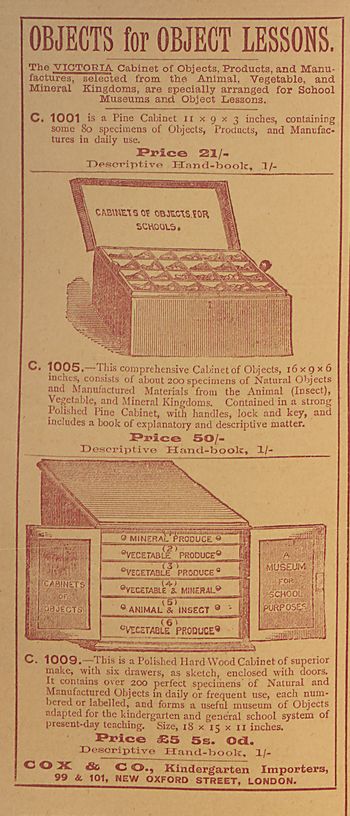
For those teachers unable or unwilling to invest time in the accumulation of a collection, small portable museums complete with ready-made collections were also available to purchase. By the 1890s, the London-based ‘Kindergarten importers’ Cox & Co. provided three different kinds of model of school museum. The first, which cost a guinea, was a small pine cabinet containing around eighty specimens ‘specially arranged for School Museums and Object Lessons’. The second consisted of a small, upright box with segmented sections containing ‘about 200 specimens of Natural Objects from the Animal (Insect), Vegetable and Mineral Kingdoms’; it cost fifty shillings. The final, larger model comprised six display drawers containing the same, but was a costlier purchase at around five pounds (see Figure 6).Footnote 99 The design of the largest model bears obvious parallels with contemporary museum furniture, a telling example of the ways in which the museum could and did enter the classroom through new ‘technologies of presentation’.Footnote 100
Cox & Co.’s cabinet of objects for schools, with drawers for mineral, vegetable, and animal products, 1897

Specialist guidance on how to display school museum specimens usually stressed the importance of clear taxonomic organization. Ensuring that the specimens were visible was a key factor in the design of the school museum cupboard. Sloping, adjustable shelves meant that objects could be easily seen.Footnote 101 Others advised on how to keep school museums visually stimulating by using toys for dioramic displays, complaining of school museums composed of ‘dreary rows of bottles’ that produced a ‘depressing effect of a doctor's surgery without the life-giving properties of the same’.Footnote 102 Such complaints reflected a broader concern with the visual and aesthetic qualities of the classroom in this period. A good local example of this is provided by the case of William Charles Bird, headmaster of Poltair School in Cornwall. Bird's school museum began in 1894 with a collection of objects including cocoa, mustard, starch, and soap displayed on the school walls.Footnote 103 ‘They [the specimens] have been sent for placing in cupboards – many of them – to be used occasionally’, he wrote, ‘but they are worthy of a permanent case for hanging on the walls.’Footnote 104 Such curatorial practices provide clear evidence of the role that the school museum played in a much broader history of classroom decoration, suggesting the objectives that the school museum could help fulfil beyond the popularization and consolidation of the object lesson.
In the preceding account of school museums seen from a classroom perspective, teachers have been portrayed as both consumers and producers of museological ideas and practices. In the process of creating such museums, teachers not only curated, crafted, and consumed objects, but also worked to navigate (and at times complicate) the boundary between the school and the museum. Here, teachers such as Singleton, Balchin, and Bird acted not only as custodians of school museum specimens but also as critical intermediary figures who helped to shape the way in which children encountered these objects through their curatorial labour. The history of the school museum is therefore closely connected with broader themes relating to the professionalization and self-fashioning of teachers. Understanding the significance of Kew's dispersal scheme from the perspective of the classroom requires us to recognize the multiple connections and differences between the history of the school museum and that of museums more generally.
V
During the period between 1880 and 1914, the idea of the school museum as an active resource for object-based learning in the classroom was promoted by a diverse range of educational theorists and policy-makers. As evidenced in the archives of individual schools and the pages of the educational press, it also undoubtedly appealed to large numbers of teachers. In between the worlds of policy and of practice were institutions and commercial enterprises which found themselves – with varying degrees of organization and of longevity – in the business of supplying these museums with materials, including wall cabinets, display cases, specimens, artefacts, and instruments, as well as interpretative and didactic displays. Among the various suppliers of museum objects, Kew occupied a small but significant place, providing a conduit through which objects sourced from all over the world found their way into classrooms across the country. So, for example, a single box of specimens received by Wilberforce School in Kilburn, north-west London, from Kew in March 1893, contained extracts from Jamaican mangrove bark, a sponge from tropical west Africa, coffee from Honduras, medical and ornamental plants from Vanuatu, Sal tree resin from Assam, bark cloth from the Pacific, the seeds of a fruit tree from Manila, models of apples and plums, and botanical prints.Footnote 105 For the curators at Kew, such an array of objects realized in miniature a much larger idea associated with the systematic display of the uses of so-called ‘economic plants’. For the teachers and pupils who requested them, however, these objects may have had other meanings and uses which can be glimpsed via extant archival material and through close reading of the educational press. By emphasizing the different positions of the suppliers and recipients of such material, we are making a point fundamental to studies of the circulation of museum objects more generally: that is, that the significance of objects changes as they travel through different sites and contexts.
By taking economic botany as our theme, and the Kew museum as our exemplar, we have also highlighted the colonial and imperial contexts in which the idea of the school museum was promoted. The teaching of commercial geography through the display and handling of economic plants was a lesson in the production of imperial knowledge: botany as a resource, cultivated there, by those people, consumed here by us. And, as the example of Wilberforce School indicates, it also provided materials for ways of thinking about identity and difference, about the local and the exotic. While the realization of the school museum in a British context often had inescapably imperial connotations, we also need to remember that its popularity as an idea extended well beyond British shores: indeed, we could say that it was in this period that the school museum itself emerged as a global form. Suggestive work in other contexts – from nature study in the USA, through the uses of the terrestrial globe in South Asia, to pedagogic practices in Brazil, France, and PortugalFootnote 106 – indicates that there is more work to be done on the international as well as national contexts of the market in new educational technologies.
In this article, we hope to have demonstrated the significance of the school museum as an object of study, exploring some of the questions that it raises about the idea and practice of object-based learning. However, the wider history of the school museum has yet to be written. In comparison, the history of such subjects as the use of visual aids in the classroom, or of fieldwork beyond its walls, is rather more developed. This is perhaps because in both cases such technologies and practices have continued to be associated with innovation within the elementary school curriculum. In contrast, the increasing emphasis on the importance of school visits to museums during the twentieth century (and the expansion of museum education departments that accompanied it) helped to remove the incentive for schools to maintain their own collections of specimens and artefacts. And yet, in its original form, the idea of the school museum was closely integrated within a wider set of educational technologies and practices, including the extensive use of visual aids and the practice of fieldwork. The development of new approaches to object-based pedagogy in recent years, as well as the widespread adoption of ideas of co-curatorship within the heritage sector, suggests that further historical work on the relationship between educational practice and museum pedagogy is long overdue.



 Open access

